Death toll nears 800 after Himalayan glacier collapse | News
Specialised search-and-rescue teams join recovery operations in Nepal and China as floodwaters and severe weather hamper search efforts.
Published On 30 Aug 2026
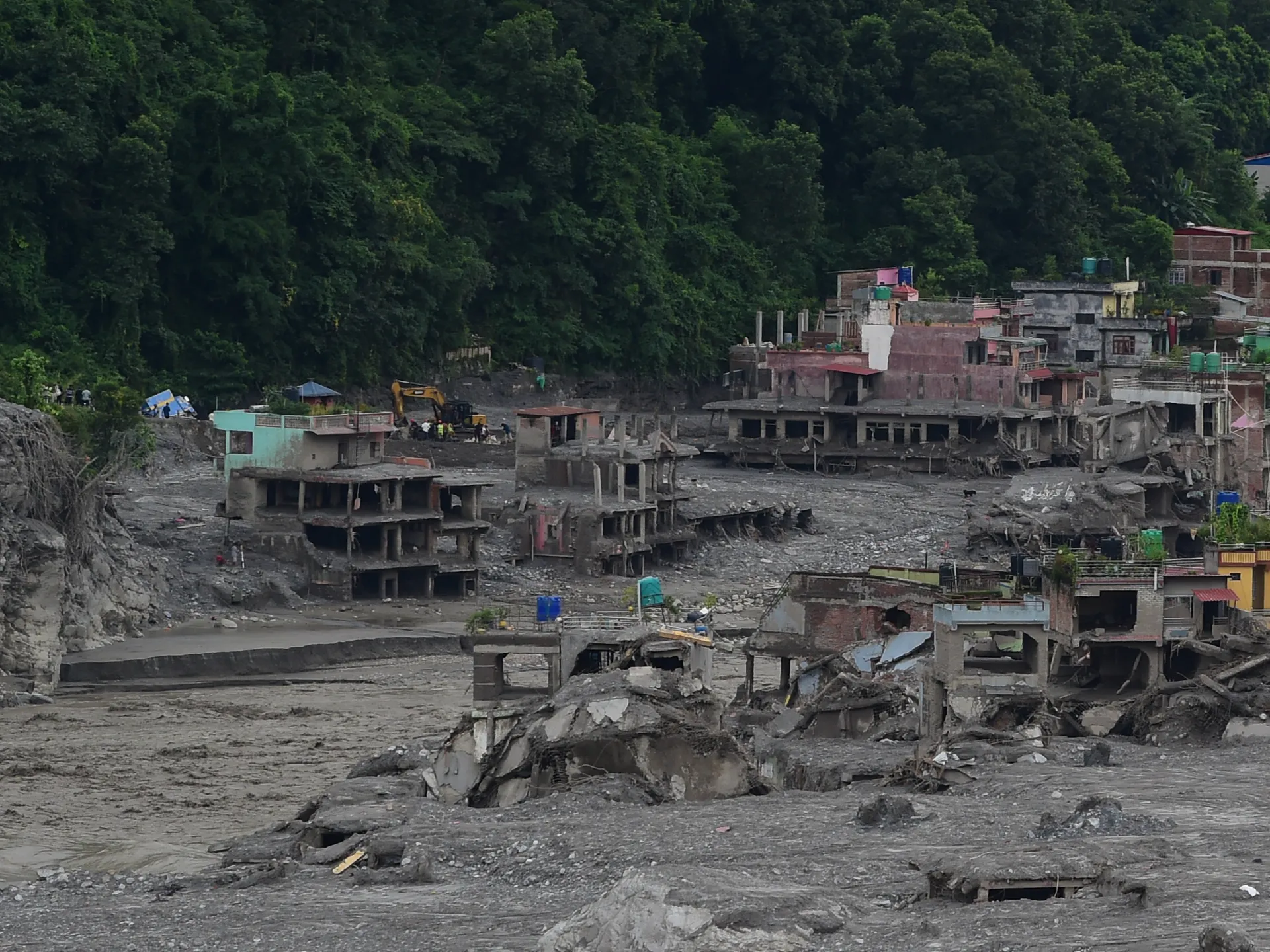
At least 797 people have been killed and 3,048 others remain missing after a glacier collapsed in the Himalayas, sending water and debris tearing through several villages.
Nepal announced an updated death toll of 781 on Sunday, with 2,502 people missing, including 592 foreign nationals. In China, state broadcaster CCTV reported 16 deaths and 546 people missing, including 261 foreigners.
Recommended Stories
list of 3 itemsend of list
The disaster occurred on Wednesday when part of a glacier at an altitude of roughly 5,200 metres (17,000 feet) collapsed, plunging around 1,200m (3,900ft) and gathering rock and debris before slamming into the Lende River.
Rescue operations have been suspended repeatedly since Friday due to poor weather and fears of fresh flooding. The disaster created a lake across the border between Nepal and China that has begun overflowing into Nepal’s Lhende and Trishuli Rivers.
More than 100 workers are also believed to be trapped inside several hydropower tunnels.
Burials start
Authorities in Nepal began burying some of the victims on Sunday after taking DNA samples to allow for future identification. Many bodies were carried away by the floodwaters, leaving families unable to locate and identify their relatives. Mass burials for hundreds of unidentified victims are taking place in Nepal’s scenic Chitwan district, known for its forests and rivers.
According to the Red Cross, about 90,000 people in Nepal are likely affected by the disaster.
Specialised teams from India, China, and South Korea have joined the search-and-rescue efforts. Malaysia is also deploying its Special Malaysia Disaster Assistance Search and Rescue Team (SMART) and contributing $1m in recovery assistance.
International funding has begun to arrive, with the European Union promising $2.3m on Friday. The International Federation of Red Cross and Red Crescent Societies (IFRC) has allocated more than $1m and launched an emergency appeal for $31m.