To understand the dedication and determination of football players from unbeaten Cleveland High, let’s review the commitment of backup quarterback Julio Avalos. He was so excited after guiding the Cavaliers to a 14-9 win over City Section power Birmingham that he spent all night watching film.
Asked what time he finally decided to go to sleep, Avalos said, “4 a.m.”
The entire offensive line eats together at lunch in the cafeteria.
“You see people hiding their food,” one lineman quipped.
They also get together on Thursdays for pasta night, where one player acknowledged eating “six to eight” chocolate chip cookies to close out a night of shared love for carbohydrates.
Then there’s the 34-year-old coach Mario Guzman. It’s been decades since a young coach armed with a teaching credential has pulled off the kind of breakthrough season in the City Section that Cleveland is enjoying, at a time when the City has lost such historic coaching figures as Robert Garrett, Angelo Gasca, Lorenzo Hernandez, Paul Knox and Mike Walsh.
Think back to 1992 when Troy Starr of Taft was 30 years old and took his team to the City 3-A final after a winless 1991 season.
If Cleveland (7-0) wins out and captures the West Valley League title, the Cavaliers likely will receive the No. 2 seeding behind defending champion Carson in the City Section Open Division playoffs. Cleveland never plays in the Open Division.
“I told him, ‘Good luck, baby,’” Birmingham coach Jim Rose said of his message to Guzman.
“They have 30 seniors. That’s a huge help,” Rose said. “He’s got his guys believing in what they do as a program. Their identity is to pound the ball on offense. The first two series, we gave up touchdowns. One thing about Cleveland is they always get athletes, but they put it together this season. He’s got enough big guys and enough speed to get it going.”
Cleveland also went on the road to beat another City power, Crenshaw, 24-18. Each win came with Avalos at quarterback, replacing the injured Domenik Fuentes. Avalos normally plays receiver, but he had to fill in last season when Fuentes got hurt before returning for the playoffs.
Cleveland’s offensive line has been a strength, including, from left, right tackle Carlos Gomez, right guard Carter Fitzgerald, center Pedro Castaneda, center Adam Garbisch, left guard Jovanni Orellana and left tackle Josue Fonseca.
(Eric Sondheimer / Los Angeles Times )
Guzman was caught by surprise last season when he didn’t prepare for losing Fuentes, so all summer, he vowed to never again to be without a fully ready backup quarterback. Fuentes returned on Friday night to pass for 208 yards and three touchdowns in a 37-20 win over El Camino Real.
Cleveland has multiple running backs, led by Moyosoreoluwa Odebunmi. The defense features middle linebacker Joseph Hurtado, who Rose said is impressive as a tackler.
Guzman is a third-year coach who was an assistant under former coach Peter Gunny. Guzman graduated from Grant and served as an assistant there for several years while going to Valley College, Cal State Northridge and National University to gain a teaching credential. His wife, Elizabeth, helps out with her cooking skills during preseason practices. She’s a prekindergarten teacher for ages 4 and 5, which means she has lots of patience.
The wife of Cleveland football coach Mario Guzman, Elizabeth, is cracking 15 dozen eggs for Thanksgiving practice. City DII finalists. Cooking for 60 players. 25 pounds pancake mix. A new tradition at Cleveland. pic.twitter.com/4QAKZ0pjal
“She was fired up,” Guzman said about the Birmingham game. “She wanted a headset.”
TK Drayton, who’s been in Cleveland’s program for four years, said of Guzman, “He loves us outside of sports. He checks on you. You want to go the extra mile for him.”
Discipline has been big for Guzman, whether that means players show up to weight training wearing all black or making sure they never walk when heading to the practice field.
Guzman also has integrity. He’s the last adult to leave Cleveland after games. Sometimes it takes until nearly midnight for the final player to be picked up by a parent. Guzman waits with him. Yes, it would be easy for Guzman to give the player a ride home, but that’s against LAUSD rules for teachers and coaches.
“All you can do is watch,” Guzman said.
The players have placed their trust in Guzman, as have parents. He’s delivering.
BY October, the hot summer weather starts to dwindle out, as autumn begins to creep in.
But if you’re looking to relive those dizzy sunshine highs, there are some fantastic short-haul holiday deals we’ve found that will cost you as little as £135 each.
October is the perfect time for some European heat to escape the chillier UKCredit: On The Beach HolidaysFrom heated pools to nearby beaches – some of these deals are from £135ppCredit: On The Beach Holidays
Temperatures in these spots still hit the mid-twenties, meaning eating al fresco is a completely normal decision rather than a cold survival test.
But a dirt-cheap package is only half the story – once you land, you still want to afford lunch or a crisp, cold beer without breaking the bank.
So, I’ve factored in local resort prices too, so your spending money goes miles further.
Hot weather, cheap booze, and a break from chilly UK – what more could you want?
1. Carvoeiro, Portugal – from £135pp
Taking the top spot on our board for the absolute cheapest October escape is Carvoeiro.
It’s the Algarve at its finest: gorgeous views over the sea, white-walled village streets, and long, lazy outdoor lunches that take up the entire afternoon.
October serves up temperatures in the mid-twenties, and local cafés serve up cold Super Bock beers for just over £2.50.
And here, you get a full spacious apartment rather than a standard hotel room.
But my favourite feature, by far, is its heated indoor pool – so if you get a rogue, overcast hour in late October, you can retreat for a warm swim without missing a beat.
Colina Village is the most affordable deal we found for a five night holidayCredit: On The Beach Holidays
2. Sunny Beach, Bulgaria – £145pp
Sunny Beach pairs a huge beach with some of the lowest local prices in Europe – local beach venues serve up large glasses of wine for just over £3, meaning you can stay out for dinner without keeping a nervous eye on your bank balance.
The early-October forecast shows reliable 24C highs, which sounds a whole lot better than putting the central heating on at home.
The kitchenette layout in these apartments is ideal for grabbing quick poolside breakfasts before heading down to the sea. Lovely jubbly.
A stay at Aparthotel Cote Da Zure is the perfect base to explore BulgariaCredit: On The Beach Holidays
3. Acharavi, Corfu – £150pp
Acharavi sits on Corfu’s scenic northern coast, serving up a gorgeous beach and a slow, authentic Greek pace. Perfect for an October wind-down.
October temperatures hover right around 23C here, and you can grab five nights room-only at Tzilios Studios for £150pp, flying direct from London Gatwick on October 13, 2026.
And I should say, room-only is the smart play here as it means you can explore the Greek tavernas for breakfast rather than sticking to a hotel clock, and evening beers with a view cost around £5.
The hotel also sits barely 400 metres from the sand and features its own quiet garden pool area surrounded by olive trees. A proper bit of me.
Have a swim in the pool before heading to a Greek taverna for an affordable dinnerCredit: On The Beach Holidays
4. Zaton, Croatia – £155pp
Zaton combines crystal-clear water with direct access to the historic streets of Zadar, where you combine beach time paired with proper local sightseeing, and October highs here regularly touch 26C.
Waterfront restaurants down by the harbour sell local draught beers for around four quid.
But back at the hotel, you get access to nine pools, a massive beach area, authentic Croatian food and top-shelf cocktails, so I wouldn’t blame you if you never left…
26C and a beer by the pool – how better to spend a holiday in Croatia?Credit: On The Beach Holidays
5. Icmeler, Turkey – £155pp
Icmeler wraps around a green, mountain-backed bay that delivers a far more relaxed atmosphere than neighbouring Marmaris – and October highs of 26C.
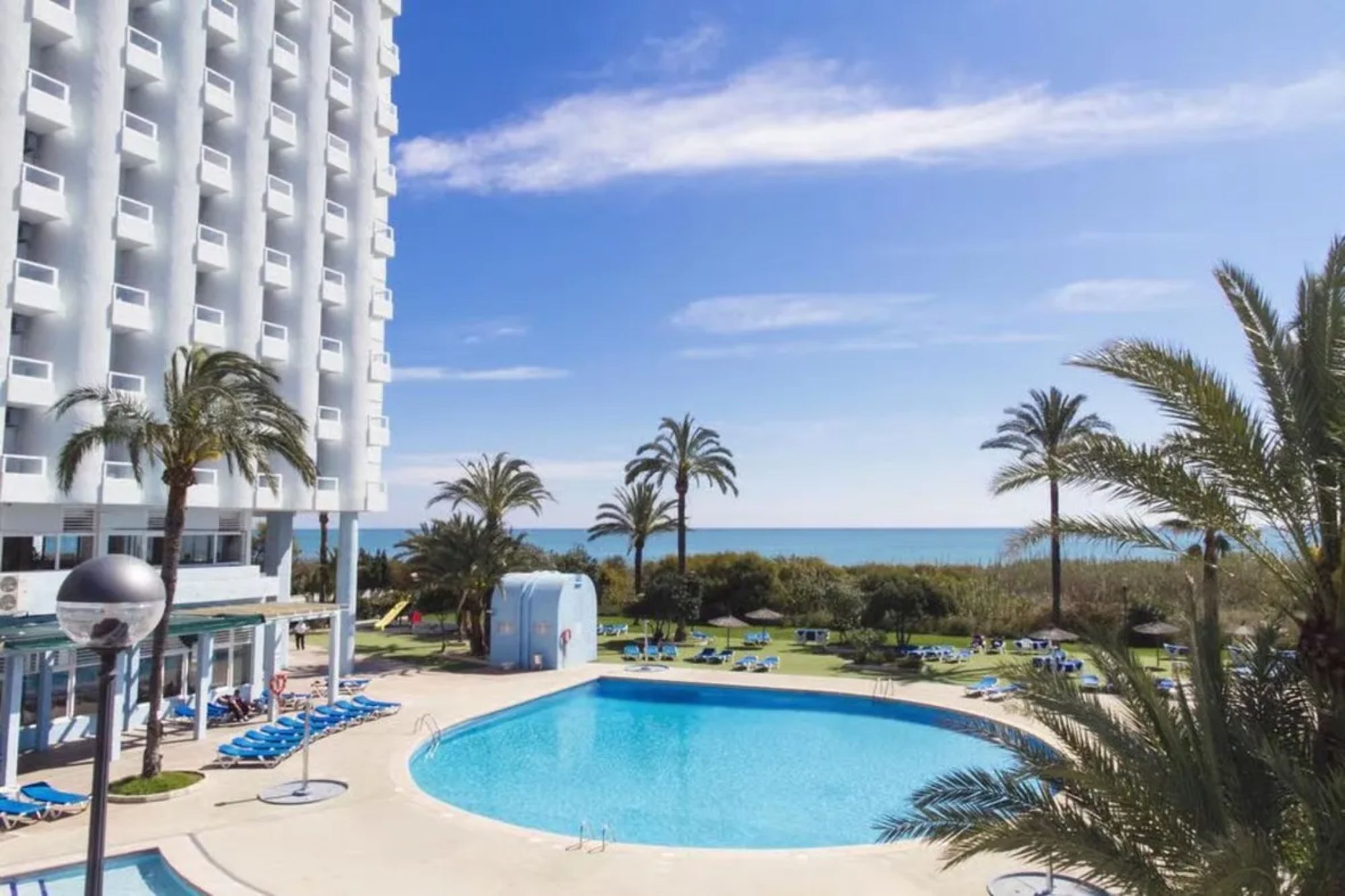
Local beachfront bodegas offer glasses of regional Spanish wine for around £3, with the hotel set up right by the beach and literally steps directly out onto the sand.
Playas de Guardamar is right by the beach (and some wine-selling bodegas)Credit: On The Beach Holidays
7. Manilva, Spain – £160pp
Manilva is a peaceful Costa del Sol spot built for quiet beach stops and finding low-key seafood spots that don’t charge tourist-trap prices.
Along with 26C highs in October, local tapas bars near the hotel serve up cold draught beer for under £3 a pint.
This is another hotel where you’re bagging yourself a brilliant apartment as your room, and each has a wide, covered terrace with an outdoor dining table, giving you a brilliant private space for alfresco drinks overlooking the coast.
Try Pierre & Vacances Terrazas Costa del Sol on the Costa del Sol for a quieter, less touristy resortCredit: On The Beach Holidays
8. El Arenal, Majorca – £170pp
Majorca typically holds onto 23C weather well into October, making it ideal for a low-cost break where the agenda consists purely of warm weather, a few drinks and good food.
Early this October, I tracked down five nights at Ahoi! Urban Beach for £170pp, flying direct from London Stansted on a bed-and-breakfast basis.
This deal even takes care of breakfast upfront so you can get straight out each day and local beach bars serve up pints for less than four quid.
This hotel has recently received a modern, boutique refurbishment, and it feels far sleeker than standard budget options – I love that it sits just two streets back from the main beach strip. Ideal.
Majorca doesn’t have to be expensive, and Ahoi! Urban Beach even throws in breakfastCredit: On The Beach Holidays
9. Tholos, Rhodes – £170pp
Rhodes is one of my absolute favourite spots for wringing every last drop of summer out of the year, with October temperatures comfortably averaging 24C and Tholos (also known as Theologos) on the west coast is far quieter than Faliraki, making it an ideal base for exploring the island.
You can grab five nights at Sunlight Studios for £170pp, flying direct from London Stansted on October 15, 2026 on a self-catering basis.
Local tavernas line the village in Tholos, where a large glass of local Greek wine costs around the £4 mark.
But the standout feature at Sunlight Studios is the layout: every room comes with a private balcony looking out towards the sea, allowing you to catch the famous west-coast Mediterranean sunsets right from your room.
Swap Faliraki for Tholos on Rhodes – it’s one of my favourite spotsCredit: On The Beach Holidays
10. Agadir, Morocco – £175pp
If guaranteed heat is your non-negotiable, Agadir is where I’d send you first in Autumn.
October here serves up consistent 26C sunshine alongside a massive, golden beach and a flat seafront promenade that’s ideal for evening walks.
Local prices here are remarkably cheap too – head down to the traditional fishing port and you can grab a plate of freshly grilled local fish for around 60 dirhams, which is roughly £4.80.
The hotel itself sits a short ten-minute stroll from the main beach, but the real insider win is its massive, quiet garden pool terrace.
And because it stays sheltered from Atlantic breezes, the pool gives you a perfect suntrap to tan, dip, dry and repeat all week.
Agadir has a fantastic beach to explore, and hotels are very affordableCredit: TripAdvisor
WHEN there’s a chill in the air but you still fancy a trip to the seaside, you have to visit this one destination – it’s the warmest in the UK and HAS the least rain.
Not to mention it has some incredible beaches and the world’s biggest Wetherspoons – so it’s the perfect place for a break on the coast this September.
Kent is the warmest spot along the UK coastline in autumn – you can head to BroadstairsCredit: AlamyOr visit Margate which is also home to the world’s largest WetherspoonsCredit: Alamy
Away Resorts has found the best UK seaside spots by analysing average daytime temperature, sea water temperature, rainfall and in top spot, is Kent.
Kate Watts from Away Resorts said: “September can be a brilliant time to enjoy everything the UK has to offer.”
Sign up for the Travel newsletter
Thank you!
She continued: “Our research highlights that you don’t need to go abroad to catch the last of the sun.
“From the Kent Coast to the Isle of Wight, Pembrokeshire to Cornwall, there are plenty of destinations around the UK where Brits can make the most of the coast before autumn arrives.”
Thanks to it being the warmest destination with temperatures of 19C and only 11 days of rain – Kent is the best place to visit in autumn.
And luckily, there are plenty of coastal spots within the county to choose from.
If you’re after a traditional seaside experience, head to Broadstairs.
It has seven sandy beaches and bays including Viking Bay – lots have traditional beach huts and stripy deck chairs.
One must-do is to pop into Morelli’s Gelato, a retro ice cream parlour, for some mega sweet treats – it first opened in 1932.
As for what else you can do there, Deputy Travel Editor Kara Godfrey who hails from Kent tells us her favourite spots in Broadstairs.
Away Resorts has found the warmest spots along the UK coastlineCredit: Away Resorts
She said: “Bar Ingo is my favourite restaurant in Kent, offering Basque small plates with some of the friendliest staff (and in this year’s OpenTable Top 100), and I can never leave Arrowsmiths without picking up a few gifts for myself.
“You can also explore its history via Charles Dickens, exploring his home and namesake pub after he spent some time there.
“But come for Viking Bay, a rare sandy beach in Kent, with some fish and chips from The Mermaid or even a surf lesson or two and embrace the seaside town life.
“Make sure to stay at Smith’s Townhouse – having only opened last year, its one of the coolest in town without the price tag (with some of the best coffee in town too).”
Ramsgate is where you’ll find a soft sandy beach backed by the world’s biggest Wetherspoons.
Called the Victoria Pavilion, arguably the best views are up the top on the enormous rooftop terrace which looks over the coast.
The Old Neptune is right on the beach front in WhitstableCredit: AlamyDon’t miss the Folkestone Mermaid by the beach frontCredit: Alamy
Whitstable is another popular seaside town where you’ll find oyster shops, posh charity shops and art galleries.
One of the most beautiful beach pubs is there, called The Old Neptune; punters love it as they can enjoy a pint right on the sand.
Margate has been nicknamed Shoreditch on Sea thanks to its fancy wine bars, cafes and fine dining restaurants.
Or if you want a bit of nostalgia, head into the Dreamland theme park that visitors say is like ‘stepping back in time’ thanks to its vintage fairground rides.
Don’t miss Folkestone either which was voted Time Out’s best UK place to visit last year.
It has trendy shops and coffee spots on its brightly coloured high street and heading down to the beach don’t miss the Folkestone Mermaid – like they have in Copenhagen.
Italy’s ancient cave city looks like something out of a storybook – and with October highs of up to 27C and no summer crowds, it could be the perfect autumn holiday destination for Brits
Whether it’s half-term breaks, cheaper shoulder-season deals or simply the lure of warm sunshine and guaranteed blue skies, searches and bookings tend to rise for last-minute getaways. From beach classics in Spain, Greece and Turkey to longer-haul hotspots, October has become the month when many of us “jet off” to swap jumpers and drizzle for one more hit of heat.
Italy boasts no shortage of places that deliver a sunshine fix well into autumn – from Rome’s ancient sights and café-lined piazzas to Venice’s dreamy canals and waterside walks. But if you’re after something that feels a little less “done” than the usual hotspots, Matera could be the perfect pick.
Tucked away in the southern region of Basilicata, the city is best known for its Sassi – ancient cave dwellings carved into the rock, now transformed into atmospheric hotels, restaurants and tiny bars.
It’s the kind of place made for slow exploring: cobbled lanes that twist between honey-coloured stone buildings, viewpoints that open up over terraced rooftops, and little squares where you can stop for a coffee or aperitivo in the late-afternoon sun.
Crucially, Matera tends to be calmer than Italy’s headline destinations, especially outside peak summer, which means you can soak up the scenery without battling huge queues.
October is also a great time to visit if you prefer sightseeing without the intense heat, with mild days that suit everything from wandering the old town to taking a day trip into the surrounding countryside.
And while Matera has a distinctly old-world feel, it still has plenty going on – from cosy trattorias serving local specialities to cultural sites and museums that dig into the city’s long, unusual history. For travellers looking to extend summer without the crowds, it’s an autumn escape that ticks a lot of boxes.
Content cannot be displayed without consent
Kathy, a travel content creator from New York, shared a video on TikTok offering viewers a captivating glimpse of Matera, widely known as the ‘City of Stone’.
The short clip showcases the cave dwellings and a narrow lane running alongside the stunning stone structures perched on a clifftop.
Her TikTok post caption reads: “Matera, a truly magical historical city like no other city. The oldest city in Italy and possibly all of Europe. It’s 9,000 years old!
“I highly recommend staying at least one night to fully experience the magic. Sunset is stunning, dinner in the cave-like restaurants is memorable, and sunrise is even better.”
The travel enthusiast described Matera as “truly breathtaking” and “easily one of [her] favourite places to visit while traveling through Puglia.
And judging by the comments section, people agreed with her. One travel fan wrote: “One of the most beautiful places I have visited, truly amazing.”
Another said: “Currently in Matera now, one of my favourite places we [have] visited. And a third added: “Dreamy!”