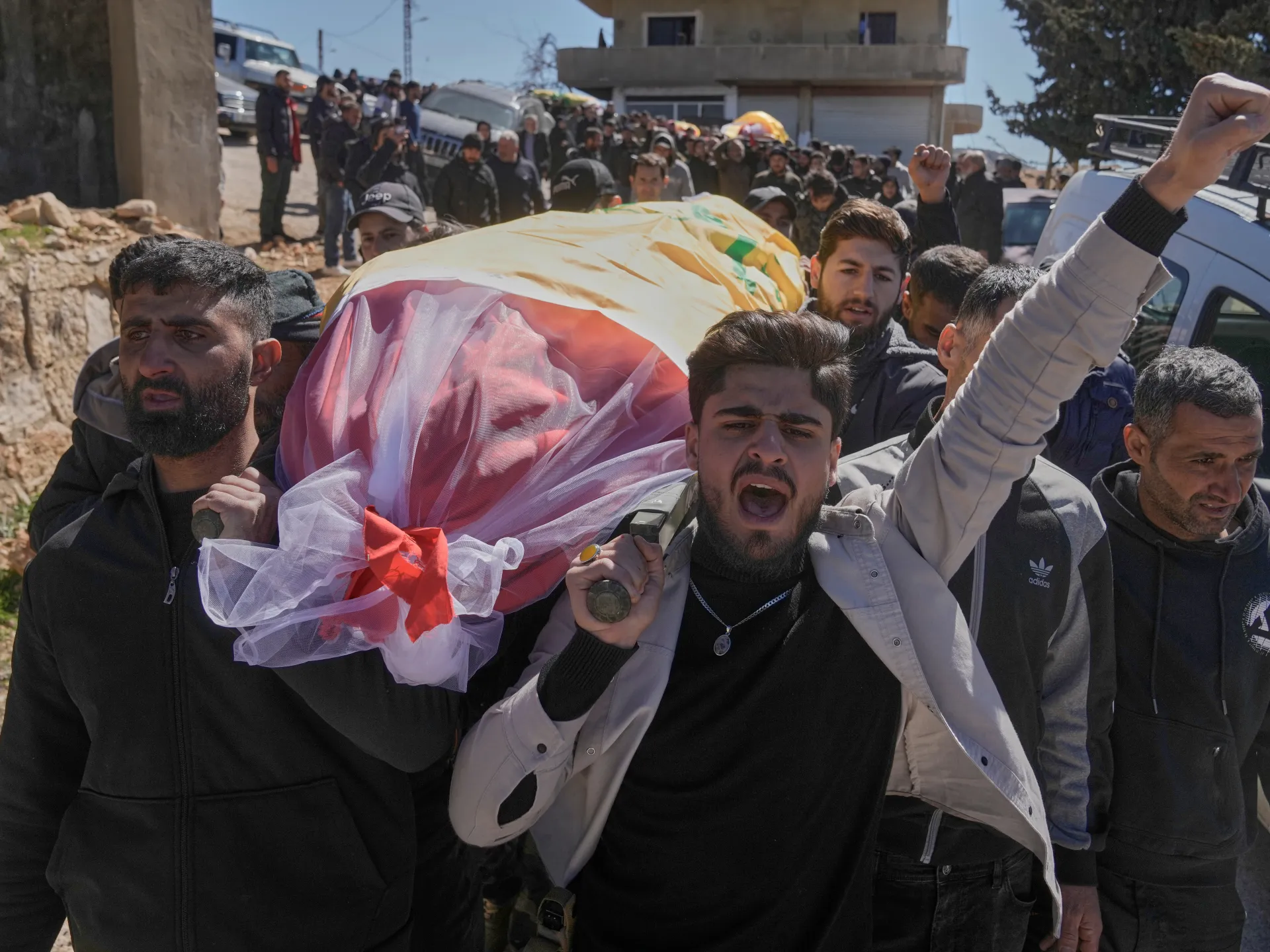
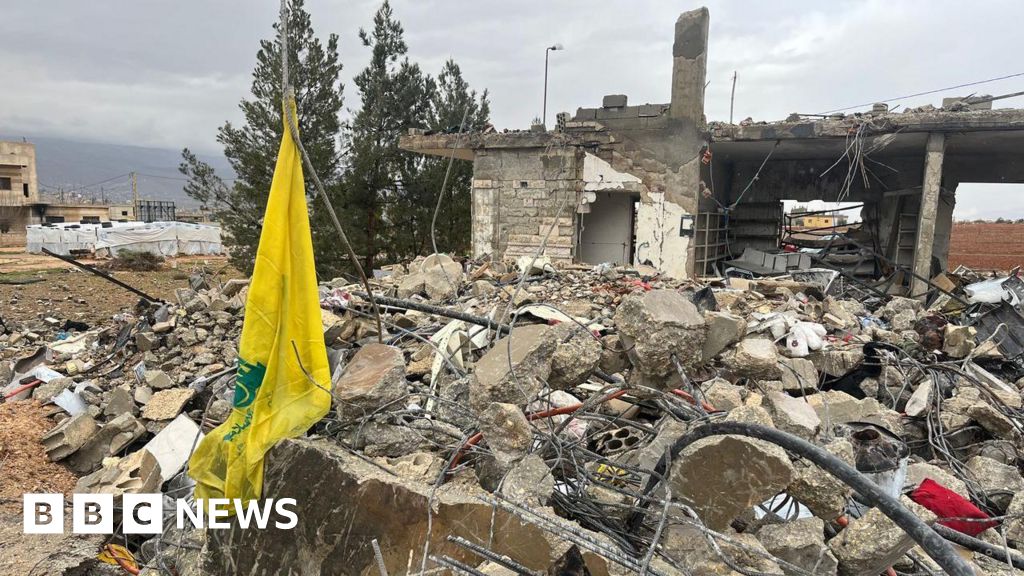
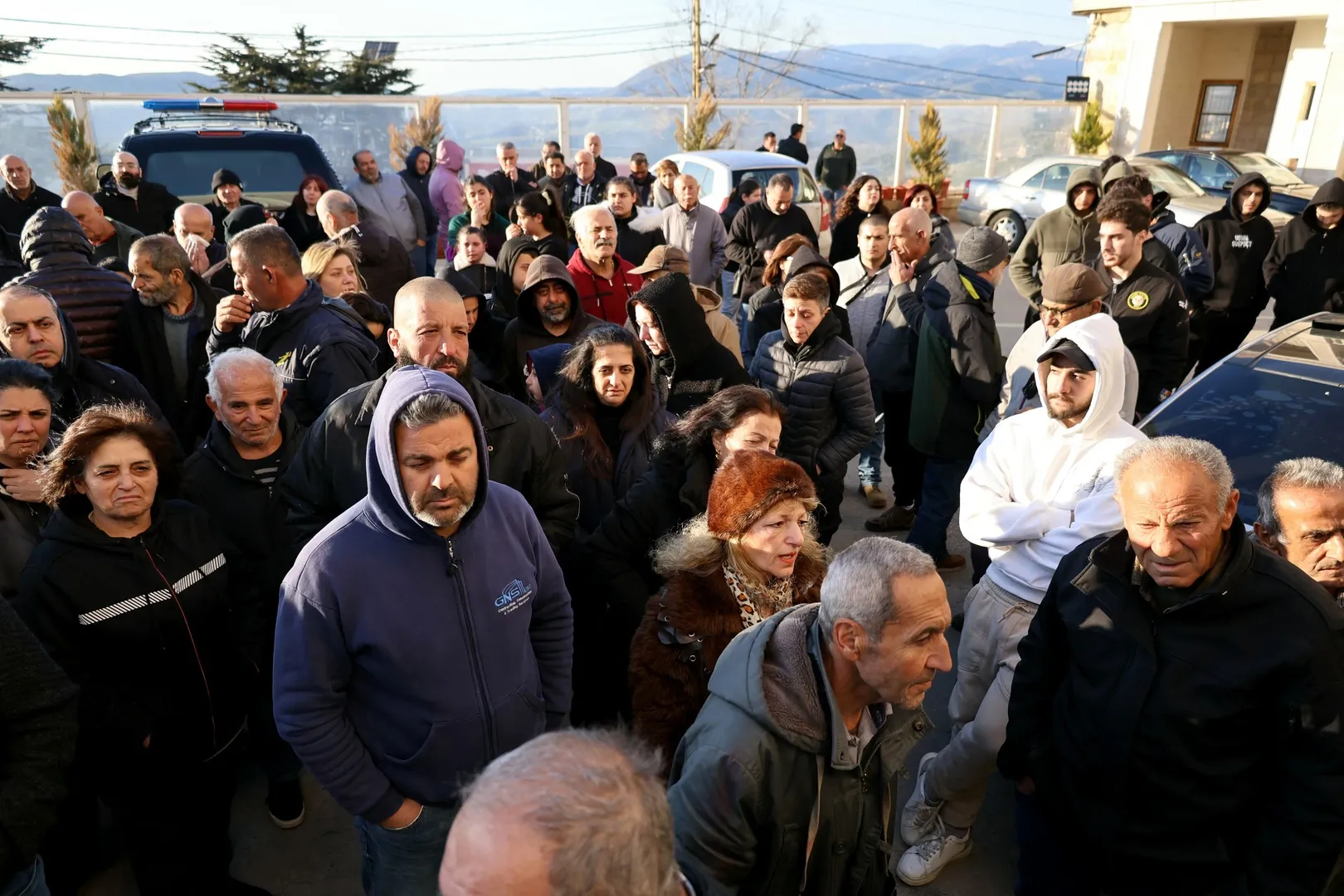
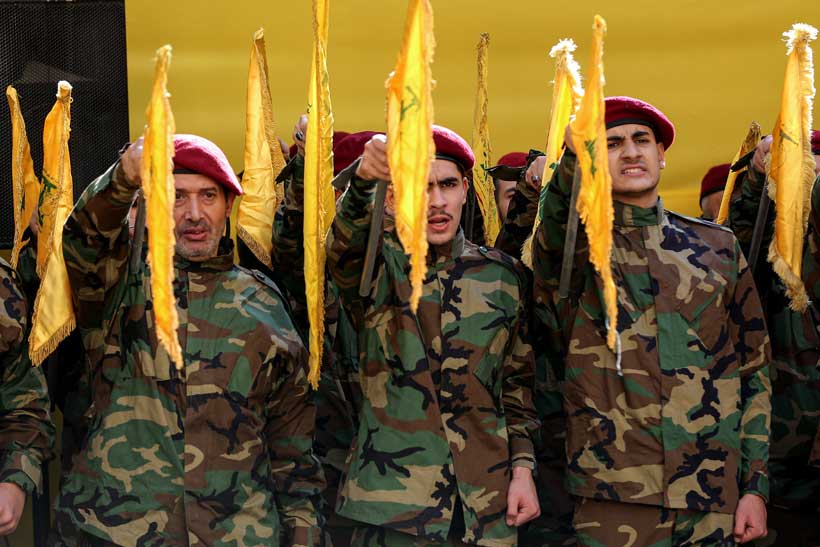
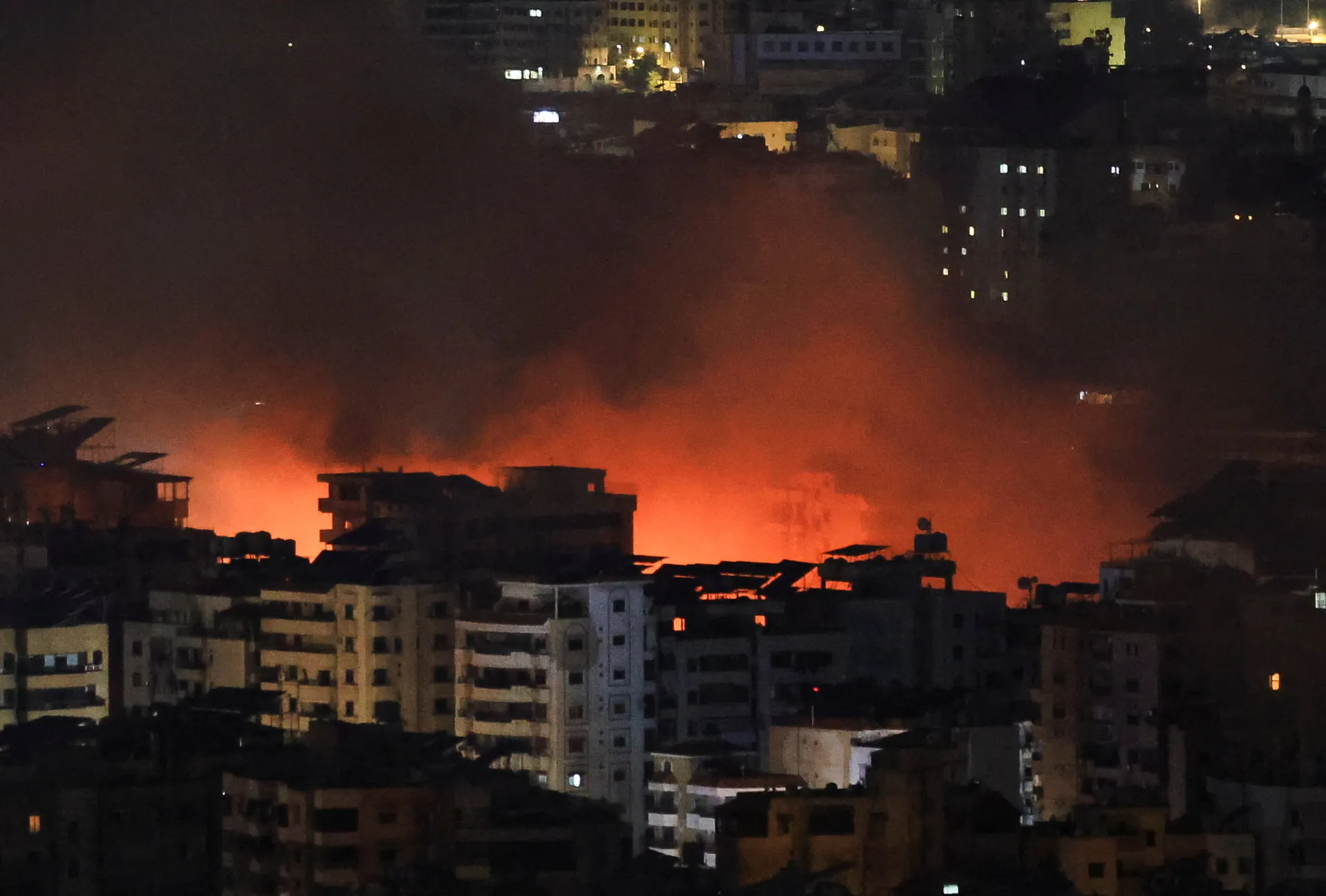
After Israel’s bombing of Beirut’s southern suburb of Dahiyeh, Palestinian refugee Dalal Dawali once again finds herself forcibly displaced. She and her children joined hundreds of families fleeing to Beddawi camp in north Lebanon. Al Jazeera’s Justin Salhani tells her story.
Beirut, Lebanon – The accusation from Lebanon’s prime minister that Iran’s Islamic Revolutionary Guard Corps (IRGC) is in charge of Hezbollah’s operations against Israel comes as relations between the Shia group and the Lebanese government are at their lowest in years.
But, according to analysts, that animosity does not mean that Prime Minister Nawaf Salam was incorrect in his analysis of the situation.
Recommended Stories
list of 3 itemsend of list
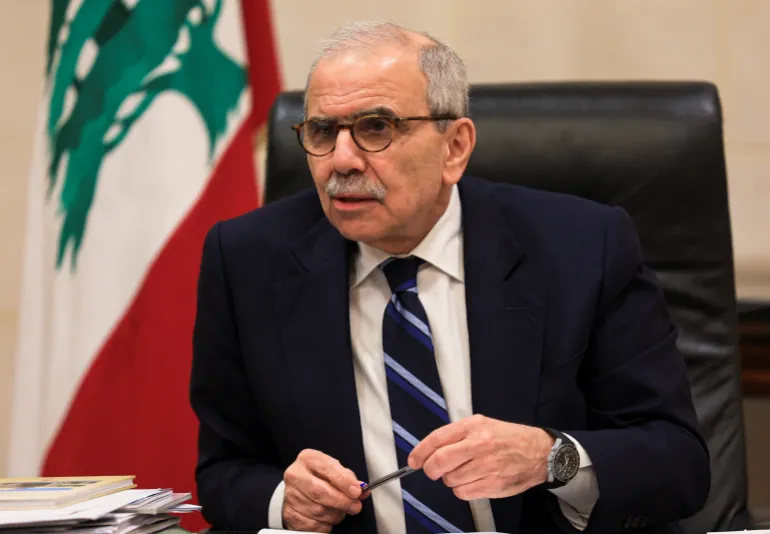
In comments made on Sunday to the Saudi Arabian television station al-Hadath, Salam said that the IRGC – a branch of Iran’s military that answers directly to that country’s supreme leader – was directing Hezbollah in its fight against Israel, and in launching drones at Cyprus from Lebanon.
Israel’s latest attacks on Lebanon have, since they started in early March, killed more than 1,000 people and displaced at least 1.2 million, more than 20 percent of the country’s population. Human Rights Watch researchers say the mass displacement alone could amount to a war crime.
While Salam’s claims might be hard to definitively prove, analysis from experts and reporting suggest that the IRGC has played a crucial role in Hezbollah’s preparations for reentering the war waged against Lebanon since 2023.
IRGC calling the shots
In his interview with al-Hadath, Salam accused the IRGC of “managing the military operation in Lebanon” and of firing a drone at a British Air Force base in Cyprus, earlier this month. He accused IRGC officials of entering Lebanon with false passports.
On March 2, Hezbollah fired six rockets across the border. The group said that it was in response to the assassination of Iran’s Supreme Leader Ali Khamenei on February 28, and a response to more than a year of unanswered Israeli aggression on Lebanon, which had killed hundreds.
The move shocked much of Lebanon’s population and political establishment, after Hezbollah had reportedly given assurances to its allies in government, including Parliament Speaker Nabih Berri, that it would not enter the war in support of Iran, its close ideological ally.
The Lebanese government – which had already been moving to disarm Hezbollah – responded by banning the powerful group’s military activities and asking some Iranians believed to have links to the IRGC to leave. But the action has had little impact on the ground, where Hezbollah continues its war efforts against Israel, including battling the Israeli military on the ground in southern Lebanon – the fight that Salam believes is managed by the IRGC.
Ties between the IRGC and Hezbollah are longstanding.
Hezbollah was founded in 1982, three years after the Islamic revolution in Iran. The group was created in coordination with the IRGC and has since counted Iran as its benefactor and spiritual guide.
Immediately after a November 2024 ceasefire between Hezbollah and Israel, Iran sent IRGC officers to Lebanon to conduct a post-war audit and restructure, according to reporting by the Reuters news agency.
Hezbollah’s chain of command was reportedly restructured from a hierarchical one to smaller cells with greater decisional autonomy, something also practised by the IRGC and known as the “mosaic” defence.
Nicholas Blanford, a nonresident senior fellow with the Atlantic Council, said that sources in Hezbollah and the Lebanese government had told him that the original Hezbollah rocket attack on March 2 was conducted by the Islamic Resistance, Hezbollah’s military wing, possibly in direct coordination with the Quds Force, the IRGC’s foreign unit. Hezbollah’s senior leadership may not have been aware of the plans for the attack.
“I think the IRGC is calling the shots,” Blanford told Al Jazeera. “They are working together.”
Lebanese government out of options
On Tuesday, Lebanon’s Foreign Minister Youssef Rajji declared the Iranian ambassador to Lebanon a persona non grata and gave him until Sunday to leave the country.
The move indicates that Lebanon is trying to counter Iranian influence in Lebanon and came just hours after Israel’s Defence Minister, Israel Katz, announced that his country’s military would create a “security zone” in southern Lebanon stretching to the Litani River, roughly 30km (20 miles) north of the Israeli border – essentially an illegal occupation of the area.
But analysts and experts said there is little Lebanon can do before the war with Israel ends.
The Lebanese government had worked under heavy international pressure to disarm Hezbollah during the ceasefire period from November 2024 until earlier this month. But Israel violated the ceasefire more than 10,000 times, according to UN peacekeepers in Lebanon. For any progress to be made on disarmament, analysts said, Israel cannot continue attacking Lebanon.
“What the Lebanese government was supposed to do was a gradual disarmament of the party, which is also something that many Lebanese would like to happen,” Ziad Majed, a Lebanese political scientist, told Al Jazeera. “However, it cannot happen while Israel is bombing.”
However, the attacks don’t seem likely to cease in the short term. US President Donald Trump said that his envoys, Steve Witkoff and Jared Kushner, had engaged in talks with Iran on Monday over a possible end to the war. Iran subsequently denied that talks took place.
Many in Lebanon believe that Israel’s campaign in Lebanon won’t be included in any potential agreement between Iran, the US, and Israel to end the war. Katz’s statement on Tuesday seems to suggest Israel plans to carry on its invasion of southern Lebanon until its forces reach the Litani River.
Hezbollah’s threats
The government’s efforts to retake control of southern Lebanon may be even more difficult now that it is dealing with a reemboldened Hezbollah.
Mahmoud Qamati, deputy head of Hezbollah’s political council, compared the Lebanese government to France’s World War II Vichy government, which collaborated with the Nazis. Qamati was criticised for his comments, but later said they were misinterpreted.
More ominous comments came from Wafiq Safa, who was until recently the head of Hezbollah’s Liaison and Coordination Unit. He sent a message to the Lebanese government during a recent press interview.
“We will force the government to backtrack on the decision to ban the party’s military activities after the war, regardless of the method,” he said.
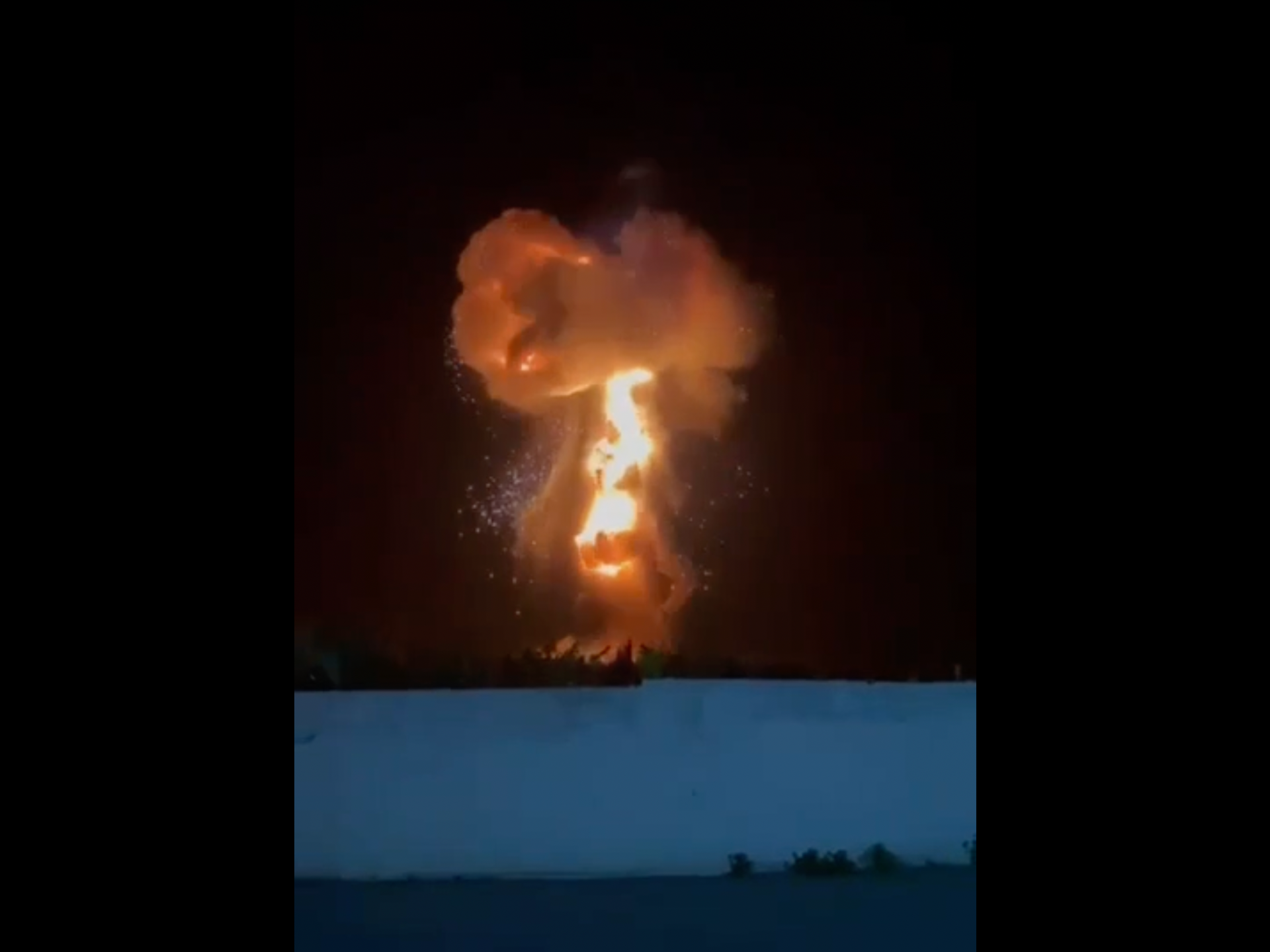
An Israeli attack has hit a petrol station in southern Lebanon, near the Rashidieh Camp for Palestinian refugees, triggering a huge explosion and fire. The Israeli army had issued forced displacement orders to residents.
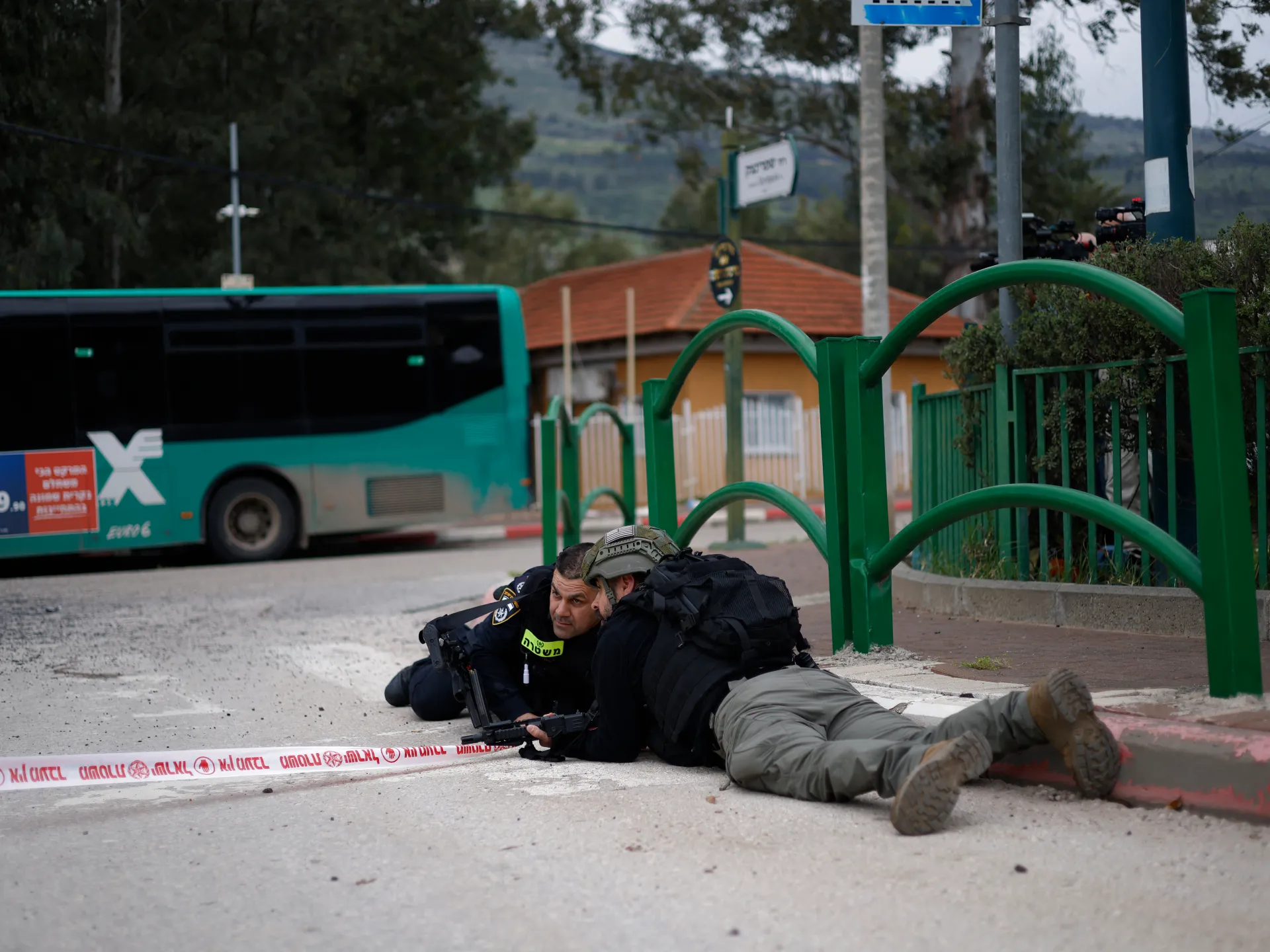
Israeli President Isaac Herzog was forced to take cover as a missile struck nearby shortly after he gave a press conference in the northern Israeli town of Kiryat Shmona. During the speech, Herzog aid Israel cannot return to last year’s ceasefire and must secure “strategic depth inside Lebanon.”
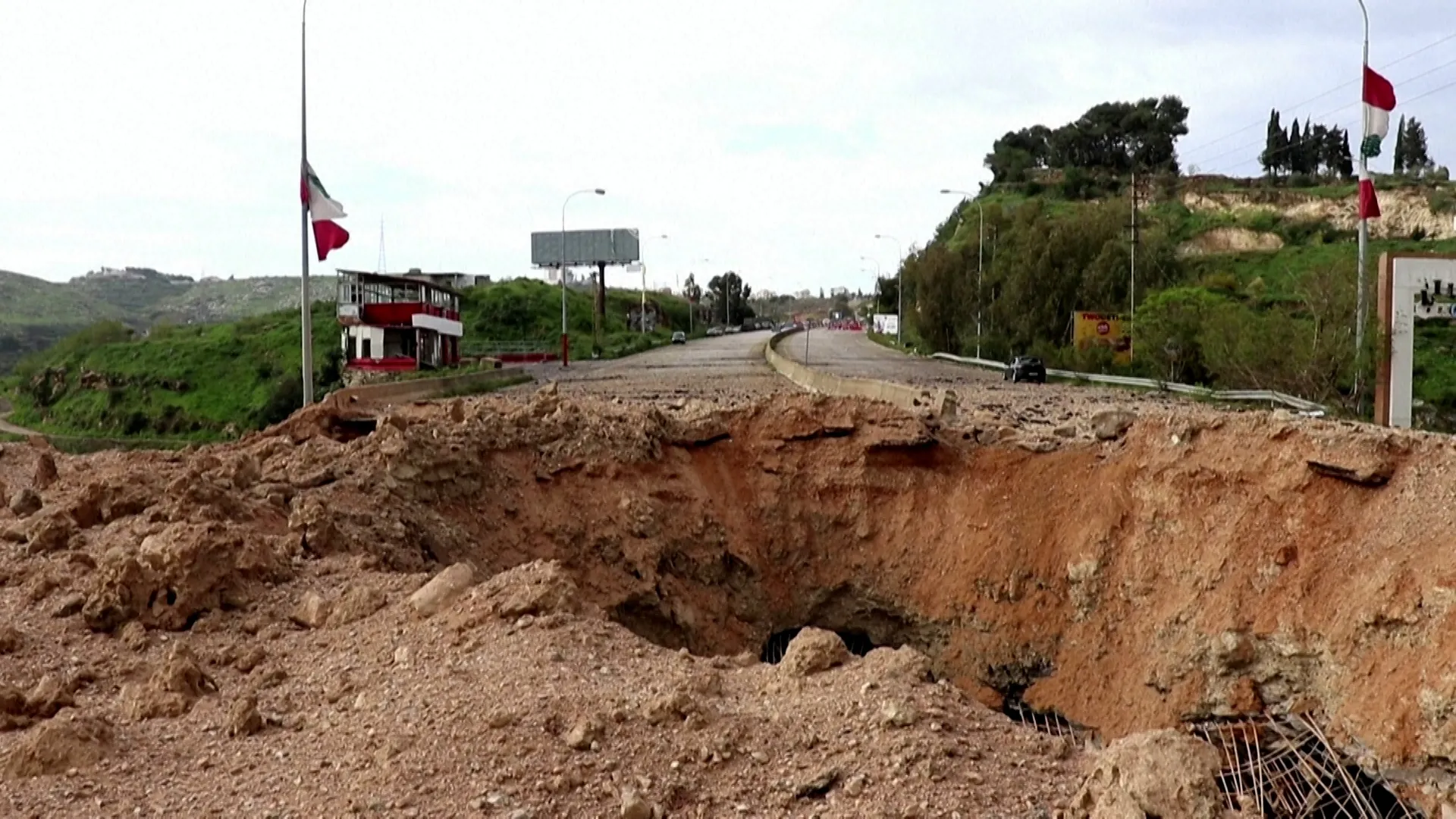
Lebanon fears that Israel’s attack on Qasmiyeh Bridge, a key crossing linking the south to the rest of the country, could be a “prelude to a ground invasion”. The damage caused in the attack could cut off access for civilians, aid and supplies.
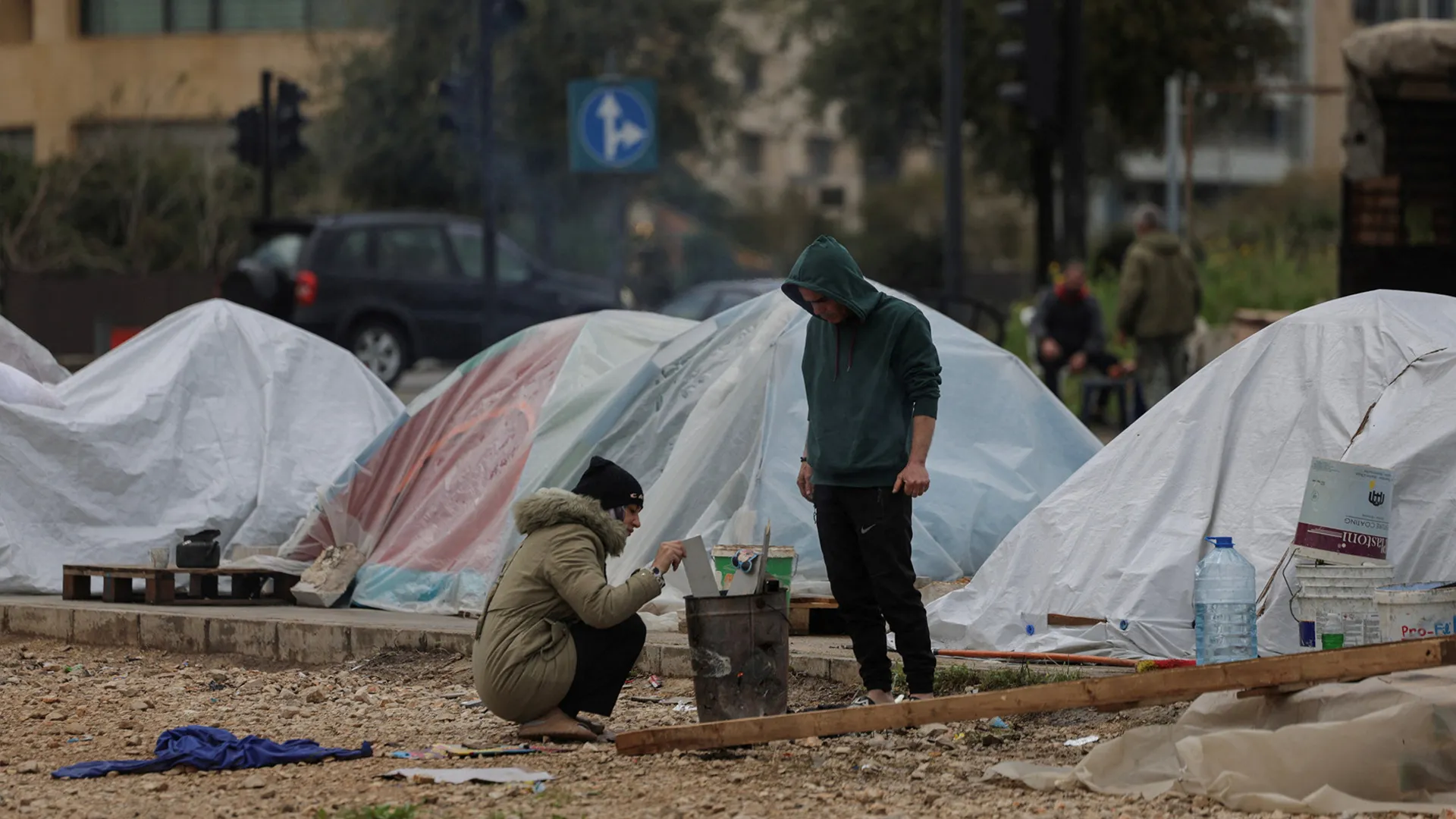
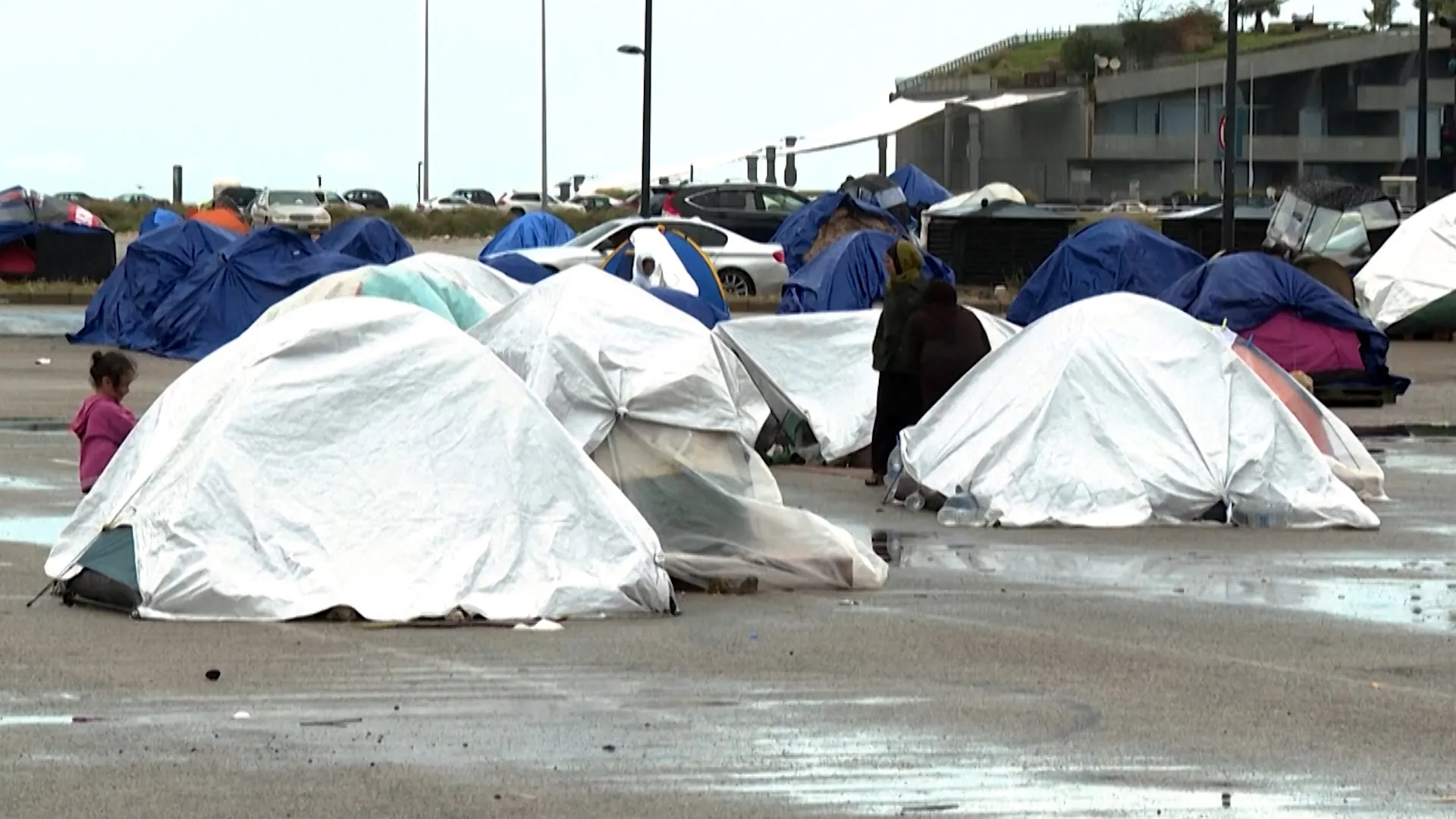
Families displaced by Israeli strikes are sheltering in tents across Beirut, as rain falls, with residents describing difficult conditions, limited aid and uncertainty over when they can return.
For years, Beirut’s southern suburb has been spoken about as though it were a world apart: A Hezbollah bastion, a target, a warning, or a battlefield. But in Arabic, the word “dahiyeh” simply means “the suburb”.
The word itself is ordinary. What makes it extraordinary in Lebanon is its history.
Recommended Stories
list of 4 itemsend of list
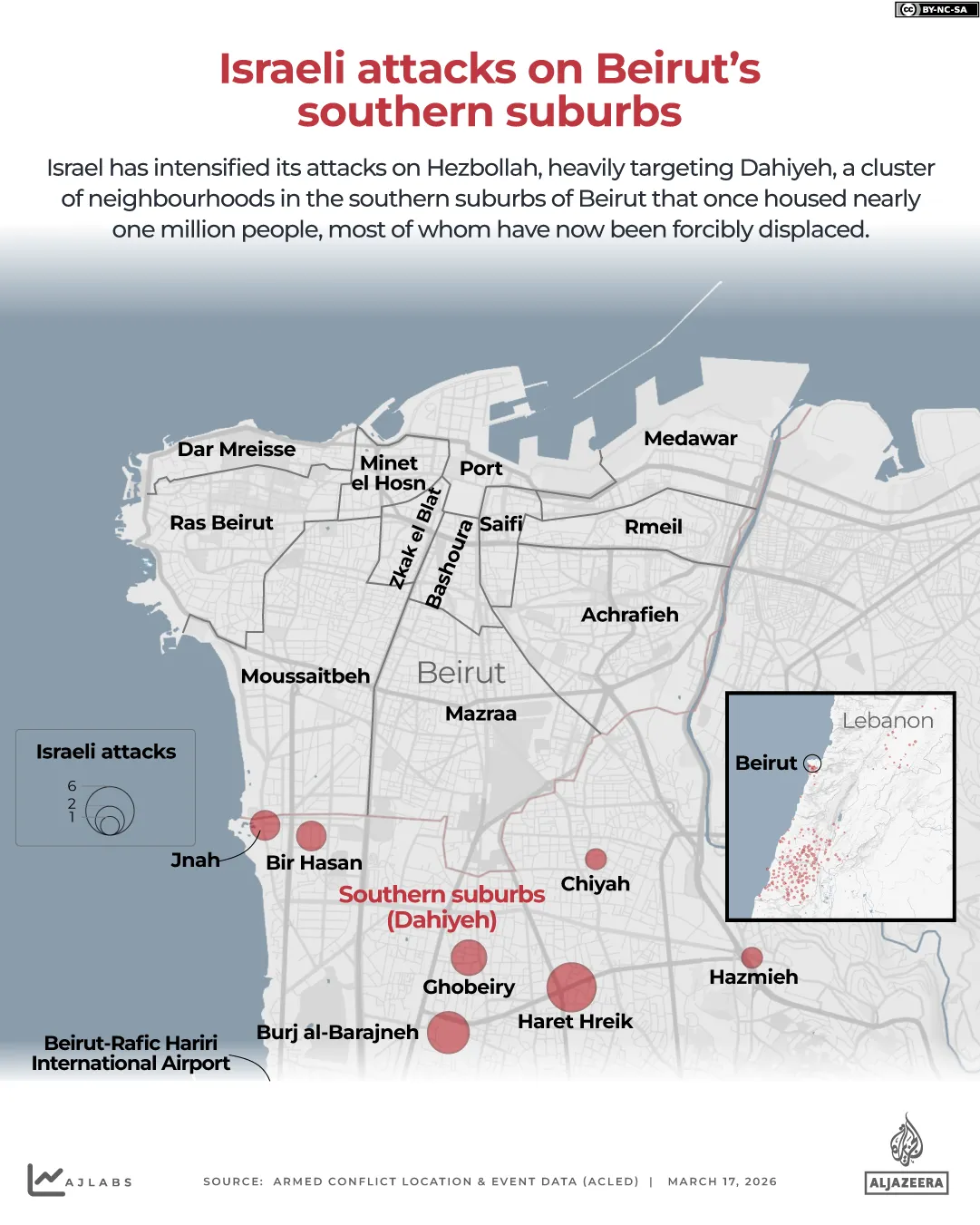
When the Lebanese speak of Dahiyeh, they do not mean any suburb of their capital city. They mean southern Beirut in particular – a dense belt of neighbourhoods that grew from villages, fields, informal housing and municipal edges into a major extension of the city.
Dahiyeh – in size nearly as big as municipal Beirut – has been shaped by migration and displacement in the past 50 years. While many moved there in search of work or housing, most of the others were pushed there by wars, political unrest, evictions and a general sense of being neglected by the Lebanese state.
The social geography of Lebanon, which gained independence from French colonisers in 1943, began to be transformed in 1948 when Israel’s establishment saw the expulsion of more than 700,000 Palestinians from their land in what is commonly referred to as the Nakba. After Israel’s further occupation of Palestinian lands in 1967 and the expulsion of Palestinian fighters from Jordan in 1970, southern Lebanon and parts of Beirut became increasingly bound up with the Palestinian national movement.
Beirut’s ‘belt of misery’
Dahiyeh’s growth, however, accelerated after 1975, when the Lebanese civil war broke out. People displaced from other parts of Beirut moved south. The subsequent Israeli attacks and invasions in 1978 and 1982 drove more people to the edge of the capital. In that sense, Dahiyeh was not just a destination for “migrants”. It was also a refuge for the uprooted, the poor, and those repeatedly forced to start over.
Studies by scholars such as Mona Harb, professor of urban studies and politics at the American University of Beirut (AUB), show how a common noun – Dahiyeh – gradually evolved into a distinct political space: A stigmatised periphery marked in the Lebanese imagination as Beirut’s “belt of misery” that hardened into a territory with its own social and political significance. Today, it is part of Greater Beirut, woven into the capital geographically, economically and socially, even if the country’s politics may have treated the area as an outlier.
Harb’s work explicitly frames the southern suburb as a politically produced urban territory rather than just a space outside Beirut. To understand how that happened, one has to begin with the making of modern Lebanon.
Under the French Mandate, and later through the political order consolidated at independence in 1943, power in Lebanon was distributed through a sectarian system that heavily favoured the established elites, especially the Maronite Christians, who dominated the presidency and other key positions. The system not only created inequality, but also formalised and reproduced it.
Rural Lebanon, especially the south and the Bekaa Valley, remained underdeveloped and politically neglected for decades. Among those most affected were Lebanon’s Shia community, who were disproportionately concentrated in the poorer agricultural regions and had less access to state investments, infrastructure and patronage than the more privileged urban and mountainous centres. Scholars say it was not simply a temporary developmental gap, but a long history of marginalisation that defined the country’s politics.
A man photographs the rubble of buildings destroyed by Israel in Dahiyeh [Hassan Ammar/AP]
Israeli attacks on Palestinian positions inside Lebanon repeatedly hit the surrounding Lebanese communities as well, mainly in the south. For the Shia in southern Lebanon, these attacks sharpened a bitter awareness: They were living on the front lines of a bitter regional conflict, while they were also being denied equal economic rights and meaningful political inclusion in Lebanon itself.
Out of that reality emerged a new form of Shia political mobilisation centred not only on identity, but also on deprivation, dignity and state neglect. That mobilisation found its earliest expression in Harakat al-Mahroumin, the Movement of the Deprived, founded by Imam Musa al-Sadr in the 1970s. Al-Sadr became a towering figure of modern Lebanese Shia politics because he gave social, religious and political forms to grievances building up for decades. That movement later grew an armed wing: Amal.
Al-Sadr’s mysterious disappearance during a 1978 trip to Libya remains unresolved and politically contested to this day. What is not contested is his historical importance. He helped turn the Shia of Lebanon from a neglected rural underclass into an organised political constituency demanding equal rights, representation, and a defining national presence.
The rise of Hezbollah
The 1982 Israeli invasion of Lebanon changed the Shia political landscape yet again. Israel’s siege of Beirut, the departure of Palestinian icon Yasser Arafat and his Palestine Liberation Organization forces, and Syria’s desire to dominate Lebanon all intensified divisions within Lebanese society.
Amal, which meanwhile had grown closer to Damascus to get weapons, money and political backing, remained a major force. But new Islamist movements emerged from within and around it, shaped by the Israeli occupation, disillusionment with older leaderships, and increasing support from Iran’s Islamic Revolutionary Guard Corps, especially in the Bekaa region.
Over time, these currents crystallised into Hezbollah. The split within the Shia movement was less theological and more about political strategy, defined by questions over aligning more closely with Syria, solidarity with the Palestinians, and general resistance against the Israeli occupation. Differences between Amal and Hezbollah over these questions turned violent in the 1980s, an intra-Shia fighting that Lebanese often recall as “a war among brothers”.
As Hezbollah grew stronger, Dahiyeh became much more than a residential belt. It turned into an urban heartland of a social and political force. Hezbollah built institutions there: Offices, schools, clinics, welfare networks and media infrastructure. Amal also had a presence, but the common shorthand that reduces Dahiyeh to a “Hezbollah stronghold” always conceals more than it reveals.
Today, Dahiyeh hosts a Shia majority, but also has a small minority of Palestinians and other Lebanese communities, including Christians. It bleeds physically into what is known as Greater Beirut, including its Christian and mixed areas. So when the suburb is bombed, it is not some isolated military island that is hit, but a deeply inhabited part of urban Beirut.
That is precisely why Dahiyeh is so central to the Israeli military’s thinking. During the 2006 war, large sections of the southern suburb, especially Haret Hreik, were devastated by Israel. The destruction became so emblematic that Israeli military strategists came up with what came to be known as the Dahiyeh Doctrine: Use of overwhelming force and large-scale destruction of areas associated with an armed group, with the aim of generating deterrence and putting pressure on residents supporting the group. Rights activists and legal scholars say the doctrine violates international humanitarian law, as civilian neighbourhoods and infrastructure do not become legitimate targets simply because an armed group is embedded among the population.
That Israeli pattern, however, has intensified since October 2023, when a genocidal war on Gaza and attacks on Lebanon began. Meanwhile, the killing of Hezbollah leader Hassan Nasrallah in an Israeli strike in late 2024 eroded Dahiyeh’s resistance. That erosion is more visible in the ongoing Israeli attacks on Beirut and southern Lebanon, where more than a million people have registered as displaced since March 2. The old formula – that Dahiyeh was the principal red line and that any strikes there could be deterred by Hezbollah’s threats of retaliatory strikes on several Israeli cities – no longer holds.
Once again, Dahiyeh has become a focal point of the war, with repeated bombardment sending plumes of smoke over a place that many outsiders still describe as a world apart, but which is in fact woven into Beirut’s daily life. Built over decades by the poor, the migrants and the repeatedly uprooted – and shaped by the politics of marginalisation against those whom al‑Sadr once named “the deprived” – Dahiyeh has long served as both a refuge and a front line. Today, it is again being made to carry the costs of a conflict larger than itself.
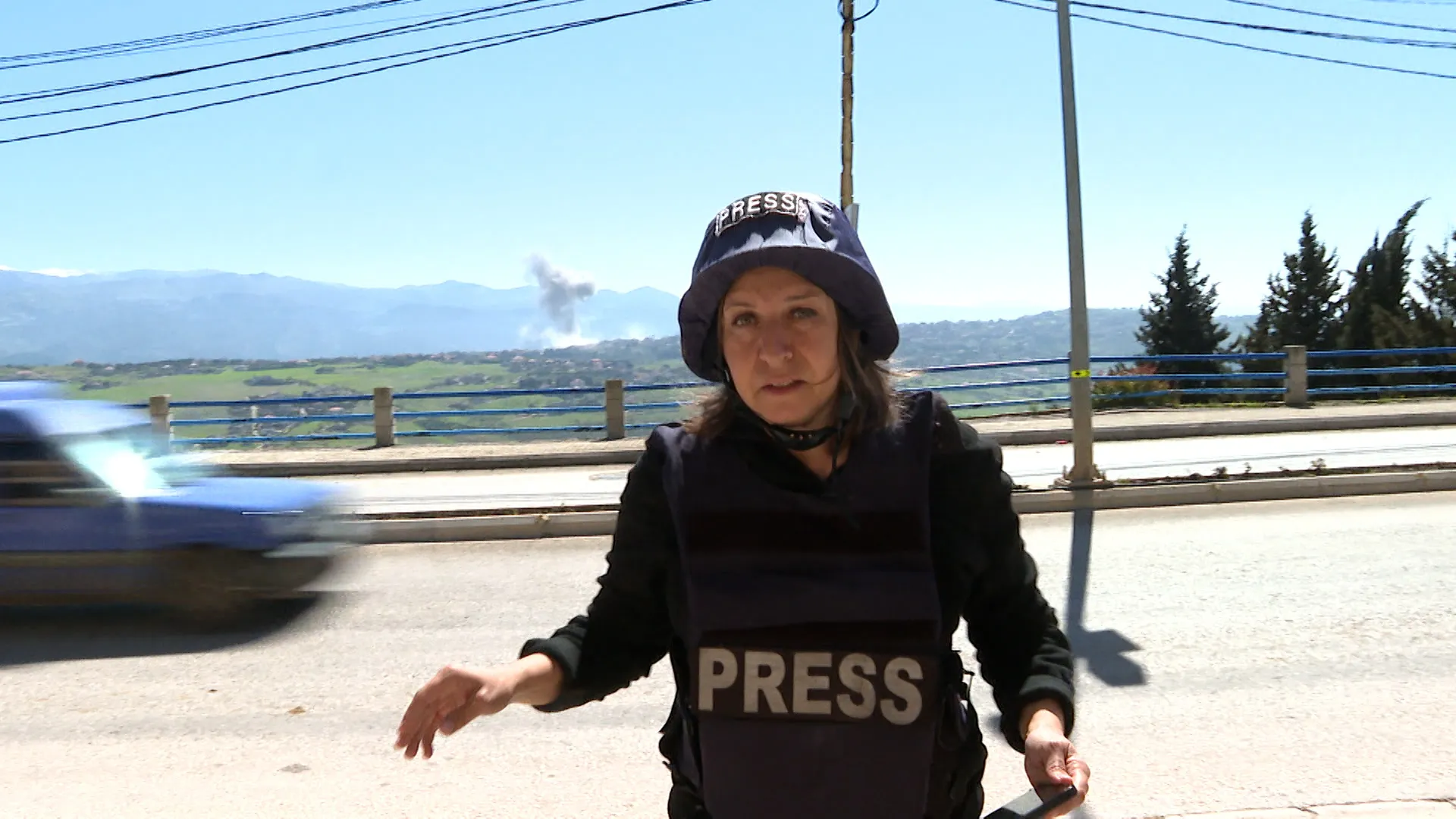
The Israeli military has launched waves of air raids across southern Lebanon after announcing “limited and targeted ground operations” against Hezbollah positions. Al Jazeera’s Zeina Khodr is in Marjayoun, which has been turned into an active war zone following clashes.
‘For 40 years, we’re protecting you’: US President Donald Trump criticises allies’ reluctance to commit forces to open the key waterway for Gulf oil exports.
Israeli forces have attacked multiple towns in southern Lebanon after announcing “limited and targeted ground operations” against Hezbollah. Israel has warned residents will not be able to return to their homes until the military says so.
Iran stepped up its targeting of Gulf neighbors, attacking and setting on fire a fuel tank close to Dubai International Airport, forcing flights to be suspended, and the key Fujairah oil export hub on the UAE’s east coast, on the supposed “safe” side of the Strait of Hormuz. Photo by Stringer/EPA
March 16 (UPI) — Emergency services in the United Arab Emirates were battling a major blaze at the country’s strategically key Fujairah oil export hub on Monday morning after the second drone strike on the facility in two days.
Emirate of Fujairah authorities said in a post on X that no one had been hurt in the attack on the Fujairah Industrial Petroleum Zone and that efforts were ongoing to bring the fire under control. They appealed to people to refrain from spreading misinformation.
“Civil defense teams in the Emirate immediately responded to the incident and are continuing their efforts to control it. The competent authorities call on the public not to circulate rumours and to obtain information only from official sources,” wrote the Fujairah Media Office.
The facility is strategically important because it is the only oil export terminal on the UAE’s eastern coast, located on the Gulf of Oman, the “good” end of the Strait of Hormuz.
Critically, it means oil tankers servicing the port do not need to run the gauntlet of the 21-mile-wide sea lane that Iran has effectively closed.
An approximately 250-mile-long cross-country oil pipeline from Habshan, a key onshore field 80 miles southwest of Abu Dhabi, feeds as much as 1.8 million barrels per day of crude into Fujairah.
However, Iran’s Islamic Revolutionary Guard Corps threatened ports, docks, military facilities and other “legitimate”U.S. targets in the UAE while the state media uged workers and residents in and around Fujairah, Jebel Ali and Khalifa ports to evacuate due to the presence of U.S. military forces.
Monday’s incident, following on from a separate strike and fire on Saturday, highlighted how exposed Fujairah — one of the world’s key crude oil and fuel storage hubs — was to Iranian threats.
The UAE has been repeatedly targeted by Iranian drones and missiles since the United States launched its airborne offensive against Iran on Feb. 28.
A drone attack earlier Monday that forced the temporary grounding of all flights at Dubai International Airport after a fire erupted in a fuel tank close by and an announcement by Israel that it was nowhere near done with hitting Iran indicated the war was likely headed into a third week.
Israel also announced plans for an expansion of its ground offensive in Lebanon against Hezbollah operatives and strongholds after the Iranian proxy group attacked Israel with rockets and missiles on March 2, two days into the war.
An Israeli bombing campaign and targeted actions by ground forces has already forced hundreds of thousands of civilians in the country to flee their homes and killed more than 850, more than 170 of them women and children, according to the Lebanon Health Ministry.
European Union foreign ministers were set to meet on Monday in Brussels to discuss the situation in the region as oil prices continued their upward trajectory with the benchmark Brent crude futures briefly hitting $106 per barrel during trade on Monday.
Shipping of oil, gas and all cargo through the Strait of Hormuz remains stalled despite calls by U.S. President Donald Trump at the weekend for countries that get their oil from Gulf producers to step up and help restart movement of ships in and out of the Persian Gulf.
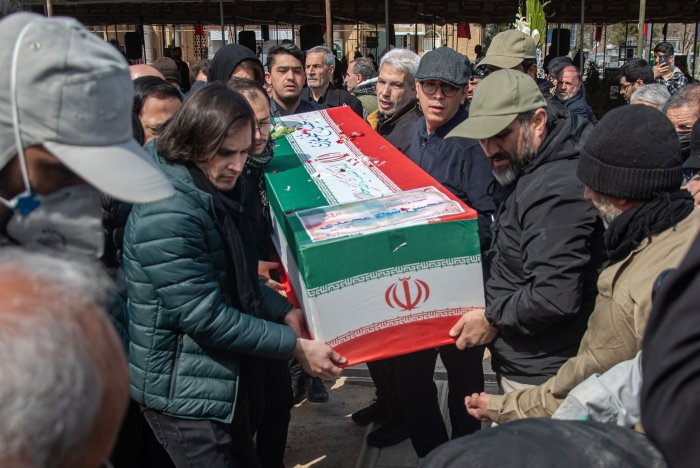
Iranians attend a funeral for a person killed in recent U.S.-Israel airstrikes at Behesht-e Zahra cemetery on the southern outskirts of Tehran in Iran on March 9, 2026. Photo by Hossein Esmaeili/UPI | License Photo
March 16 (UPI) — The Israeli military announced Monday that soldiers were conducting “limited and targeted ground operations” in southern Lebanon against Hezbollah, amid its larger war against the militant organization’s backer, Iran.
Israeli troops were reported in Lebanon earlier this month, but Monday’s announcement appears to formalize and broaden the mission. The language in the announcement was also consistent with other reports that Israel may be planning to significantly expand its ground operation.
“This activity is part of broader defensive efforts to establish and strengthen a forward defensive posture, which includes the dismantling of terrorist infrastructure and the elimination of terrorists operating in the area, to create an additional layer of security for residents of northern Israel,” the IDF said in a social media statement.
Israel has been attacking Hezbollah in Lebanon for years, and launched a ground operation there in October 2024 that ended with a fragile cease-fire, with both sides accusing the other of violations. Fighting erupted again late last month after the United States and Israel launched a war against Iran.
Specifics about the ground operation were minimal, including the day it began, with the IDF stating on Telegram that the troops entered Lebanon “in recent days.”
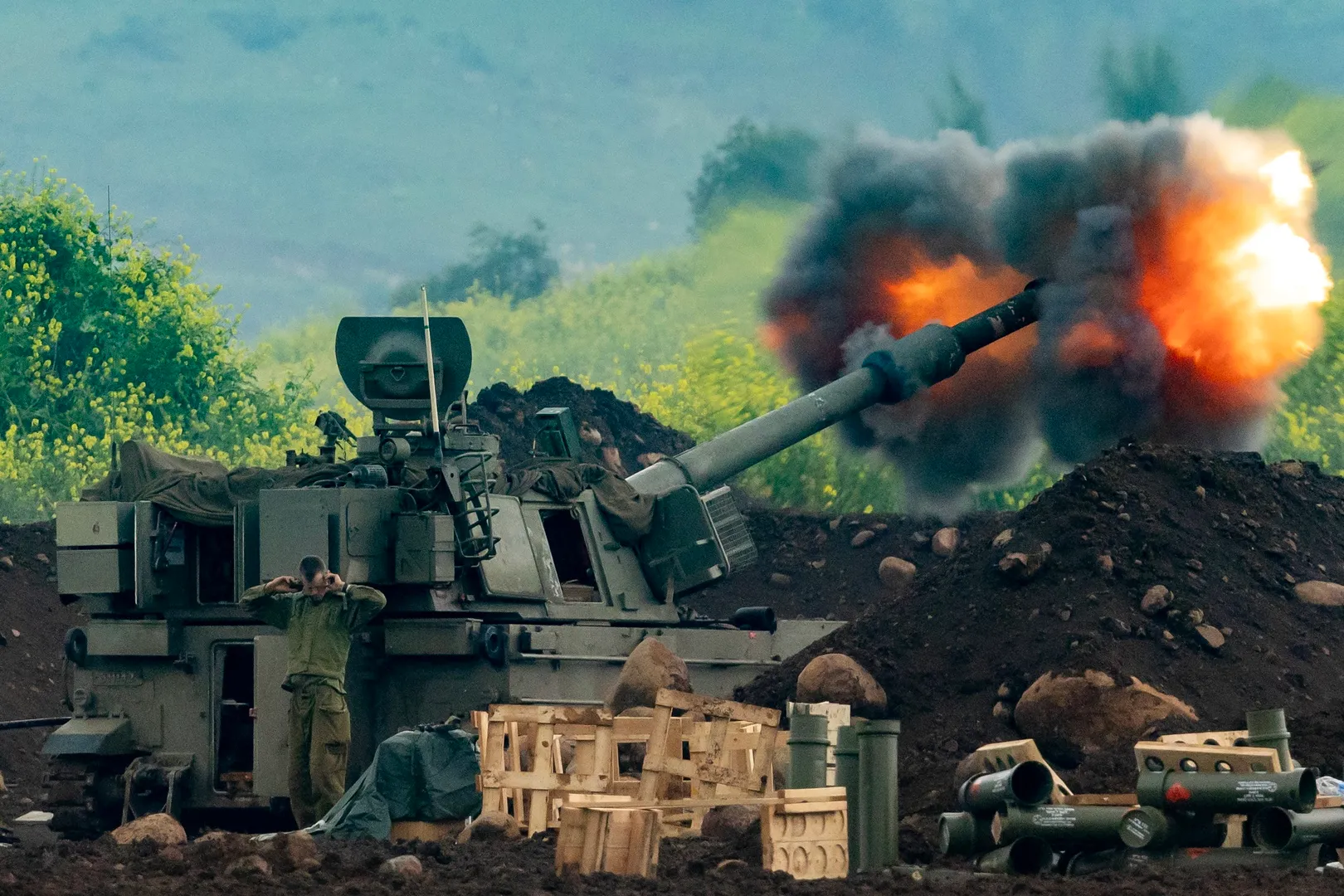
Troops from the 91st Division are conducting what the Israel Defense Forces called “limited and targeted ground operations” against Iran-backed Hezbollah strongholds.
Videos of the operation taken from apparent night-vision cameras worn by the soldiers and distributed by the IDF online show Israeli forces and military vehicles seemingly operating in southern Lebanon.
The operation was aimed at enhancing the forward defense area and was part of broader efforts to strengthen Israel’s forward defensive posture, the IDF said, which is consistent with reporting by Axios that Israel plans to seize all of Lebanon south of the Litani River and will be a major operation.
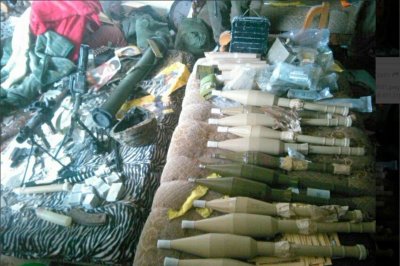
The IDF said airstrikes were conducted before the soldiers of the 91st Division moved in, with a Hezbollah site attacked on Saturday. Troops on Sunday searched the area and found a storage facility housing dozens of rockets, explosive devices and guns, it said in a Monday update on the operation.
Photos included in the release show rockets laid upon a couch inside a debris-filled residence.
Two Hezbollah operatives were also killed, it said, stating the militants had advanced on the Israeli troops.
“The IDF will continue to operate with determination against the Hezbollah terrorist organization following its deliberate decision to attack Israel on behalf of the Iranian regime,” the IDF said.
“The IDF will not tolerate any harm to the residents of the State of Israel.”
במסגרת מאמץ משימת ההגנה הקדמית: כוחות צה”ל חיסלו מחבלים ואיתרו מצבור אמצעי לחימה של מחבלי ארגון הטרור חיזבאללה
במהלך פעילות מבצעית של אוגדה 91, חיל האוויר תקף מבנה צבאי של ארגון הטרור חיזבאללה בו זוהתה פעילות של מחבלי הארגון בסוף השבוע.
אתמול, הכוחות סרקו במרחב המבנה ואיתרו בו… pic.twitter.com/IfLTvjhIZp— צבא ההגנה לישראל (@idfonline) March 16, 2026
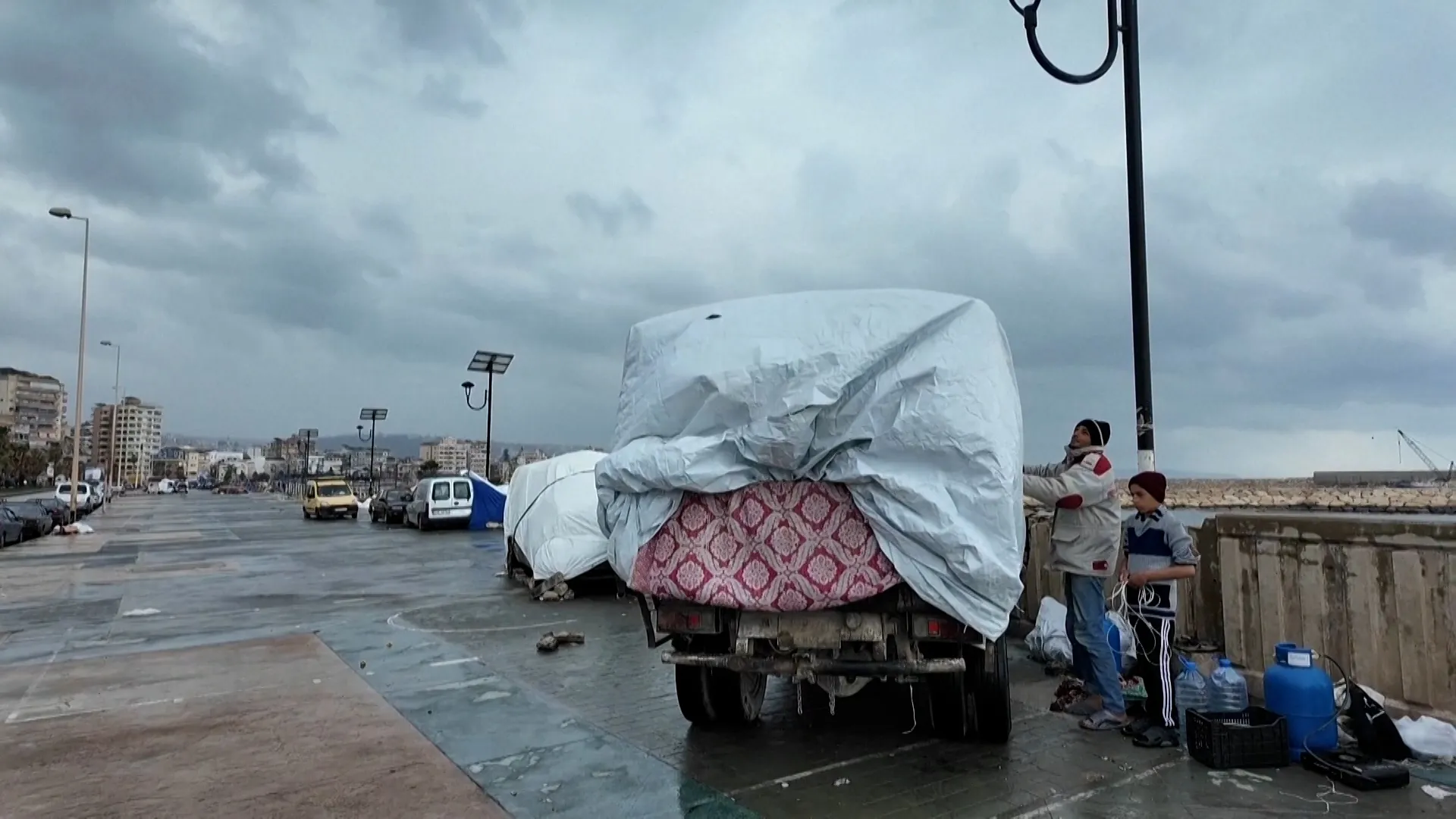
Displaced families in Sidon are turning their vehicles into makeshift shelters, covering them with tarp to shield themselves from the rain after failing to find space in local schools. Hundreds of thousands have been forced from their homes as Israel’s offensive in Lebanon intensifies.
A relative tells BBC those killed were civilians and not Hezbollah operatives, but the Israel Defence Forces says it was targeting “terrorist infrastructure”.
A Maronite Catholic priest has been killed by Israeli tank fire after it targeted a home in southern Lebanon. Father Pierre al-Rahi was reportedly killed when an Israeli tank fired on the home of a local couple a second time after several people had rushed there to try to help.
Hezbollah reported on Monday that its fighters engaged Israeli troops in eastern Lebanon during an overnight airborne raid, marking the second such operation in the area in recent days. The conflict between Israel and the Iran-backed group has drawn Lebanon deeper into the regional war, which began after Hezbollah opened fire to avenge the killing of Iran’s former supreme leader.
The Israeli military has not immediately commented on the latest Hezbollah claim. In previous operations, the military carried out airstrikes across Hezbollah-controlled southern Beirut, including targeting financial institutions like Al-Qard Al-Hassan. Lebanese authorities report nearly 400 people have been killed in the country since March 2, including 83 children and 42 women, though the toll does not distinguish combatants from civilians. Israel confirmed two soldier deaths in southern Lebanon—the first Israeli military casualties since the outbreak of hostilities.
Expanding Operations
Hezbollah stated that around 15 Israeli helicopters flew over eastern Lebanon after midnight, deploying troops observed approaching Lebanese territory from Syria. The region, the Bekaa Valley, is a stronghold of Hezbollah’s political and security apparatus. This follows a similar Israeli raid near Nabi Chit on March 2–3, which Lebanese officials said killed 41 people. Israel described that previous operation as an attempt to recover the remains of Ron Arad, a navigator missing since 1986.
Civilian Displacement and Urban Strikes
The war has prompted mass displacement, with hundreds of thousands fleeing southern Lebanon and Beirut’s southern suburbs, known as Dahiyeh. Israeli strikes have also hit locations outside Hezbollah strongholds. On Sunday, a drone strike in Beirut’s Rouche seafront district reportedly killed five senior commanders of Iran’s Revolutionary Guards Quds Force, illustrating the widening geographic and operational scope of the conflict.
Strategic Posturing
Israel has reinforced its military presence in southern Lebanon, establishing forward defensive positions in anticipation of potential Hezbollah attacks into Israel. The military maintains troops at five positions in the region, a posture originating from the 2024 war with Hezbollah.
Analysis: Escalation Risks
The repeated incursions and airstrikes signal a deepening and increasingly unpredictable phase of the Israel-Hezbollah conflict. Hezbollah’s engagement of Israeli forces in eastern Lebanon demonstrates its capacity to operate beyond the southern front, potentially broadening the battlefield.
For Israel, the operations appear aimed at both tactical objectives such as neutralizing high-value targets—and broader deterrence, signaling its intent to strike Hezbollah assets and Iranian-linked operatives throughout Lebanon. For Lebanese civilians, however, the widening conflict exacerbates humanitarian pressures, including casualties, mass displacement, and infrastructure destruction.
The situation underscores the risk of further regional escalation, with Syria and Iran-linked actors already drawn into the conflict, raising the possibility of a protracted war with extensive human and geopolitical costs.
Lebanon’s Hezbollah group urges Israelis to evacuate border areas as Israel continues to bomb the country.
The death toll from Israeli attacks on Lebanon this week has risen to at least 123 people, the Lebanese Ministry of Public Health says, as a new wave of strikes pounded the country and Hezbollah warned Israeli residents to evacuate towns within 5km (3 miles) of their northern border, in one of the fiercest fronts in the wider United States-Israel war on Iran.
“The toll from the Israeli aggression on Monday … increased to 123 martyrs and 683 wounded,” a ministry statement said on Thursday.
Recommended Stories
list of 4 itemsend of list
Lebanese state media said early on Friday that Israel had launched air strikes on several towns in southern Lebanon.
“Enemy warplanes launched nighttime strikes on the towns of Srifa, Aita al-Shaab, Touline, as-Sawana and Majdal Selem,” the official National News Agency (NNA) reported.
Another strike hit the eastern Lebanese town of Douris at dawn, the NNA said.
Hezbollah’s message to evacuate the border areas came less than a day after Israel threatened residents that they should leave Beirut’s southern suburbs, prompting a huge exodus from a swath of the capital’s densely populated area known as Dahiyeh, where some half a million people live.
The Israeli army said it has conducted 26 rounds of attacks in Dahiyeh. It claims to have hit various infrastructure used by Hezbollah, including the headquarters of the group’s Executive Council and a warehouse with drones.
“Your military’s aggression against Lebanese sovereignty and safe citizens, the destruction of civilian infrastructure and the expulsion campaign it is carrying out will not go unchallenged,” Hezbollah said.
Hezbollah claimed responsibility for a wave of attacks early on Friday on Israeli ground forces, including those who have entered Lebanon’s territory in recent days.
In a statement on Telegram, Hezbollah said its fighters had attacked Israeli forces in several areas, including Maroun al-Ras and Kfar Kila, within Lebanese territory.
Hezbollah also attacked Israel’s Yoav military camp in the occupied Golan Heights and a navy base in Israel’s Haifa port, the statement said.
There were no immediate reports of casualties.
Israel has said it will not evacuate its border towns and has sent more soldiers into Lebanon, claiming it was a defensive measure meant to protect its citizens who live nearby.
In contrast, tens of thousands of people in Lebanon have fled their homes after threats from Israel, with a mass exodus from Beirut’s southern suburbs leaving the area “almost empty”, the NNA said.
Hundreds of displaced families were left to seek shelter on a Beirut beach, where they waited despondently – many for the second time, after evacuating during a 2024 war between Israel and Hezbollah.
‘We are not animals’
Zeina Khodr, reporting from Beirut, said the humanitarian crisis is growing rapidly, as people seeking shelter can be seen “on the side of the roads on almost every corner”.
“There aren’t enough schools to shelter the hundreds of thousands of people who were forced to flee their homes after Israel’s forced displacement threat for Beirut’s southern suburbs yesterday,” she said.
“People are telling us: ‘We are not animals; we are human beings, our children are cold.’”
She noted that the Lebanese government has opened a number of shelters and told people to head to the north of the country.
Khodr added: “But many do not have any means of transport. It’s not just Lebanese who live in Beirut’s southern suburbs, but also Syrian refugees and Palestinian refugees.”
Lebanon was pulled into the war in the Middle East on Monday, as Hezbollah opened fire, prompting Israeli air strikes focused on Beirut’s southern suburbs and on southern and eastern Lebanon.
The war has rekindled fighting between Israel and Iran-allied Hezbollah fighters, and Israel launched a series of air raids late on Thursday into Friday in the southern suburbs of Beirut and other areas.
Hezbollah has been attacking Israel as it pummels southern Lebanon and parts of Beirut.
Lebanon is once again drawn into a war many of its leaders say is not their fight.
Against the government’s warnings, Hezbollah has joined Iran in its conflict with Israel. The armed group says it has a right to respond as part of what it calls a resistance campaign.
Recommended Stories
list of 3 itemsend of list
However, this time, the Lebanese government has responded by deciding to ban Hezbollah’s military activities and demanding that it disarm. The group has not heeded that warning.
Now, as the war between the US, Israel and Iran widens to Lebanon, can Hezbollah’s involvement be of any real help to Tehran?
And what price will Lebanon pay as a result?
Presenter: James Bays
Guests:
Heiko Wimmen – Project director for Iraq, Syria and Lebanon at the International Crisis Group
Nimrod Novik – Member of the leadership of Commanders for Israel’s Security
Nabeel Khoury – Non-resident fellow at the Arab Center Washington DC
Analysts said that the Lebanese government’s decision, while difficult to implement, might have a decisive impact on the future of Lebanon. Some say it was a necessary step to bring decisions related to security and defence under the central government’s control, while others argue it raises the spectre of internal strife.
Imad Salamey, a political scientist at the Lebanese American University, said that implementation of the government’s decision to disarm Hezbollah was “more plausible today than in previous years because the decision reflects unusually broad national backing, including from within the Shia political sphere”.
“Amal’s vote in favour signals that support for consolidating arms under state authority is no longer framed purely as a sectarian or anti-resistance demand, but increasingly as a state-stabilisation necessity – especially amid economic collapse and regional escalation,” he said, referring to the other Lebanese Shia Muslim group headed by Parliament Speaker Nabih Berri.
But Michael Young, a Lebanon expert at the Carnegie Middle East Center, said the decision was easier said than done.
“Implementation is going to he much more complicated. The army is not enthusiastic to enter into a fight with Hezbollah,” Young told Al Jazeera.
“It’s good that the state has taken this decision, but it is not good that the army seems very reluctant to implement this decision,” he added.
The Iran-backed Hezbollah effectively joined the war that the United States and Israel started against Iran on Saturday when it launched a barrage of rockets and drones towards northern Israel on Monday, saying it was acting to avenge the killing of Iran’s Supreme Leader Ayatollah Ali Khamenei in Tehran and Israel’s near-daily attacks on Lebanon.
Israel responded by hitting Beirut’s southern suburbs with loud attacks that woke many of the city’s residents up, and issued evacuation warnings for more than 50 towns, displacing tens of thousands of people from their homes.
Hezbollah’s military actions banned
As this unfolded, Salam’s cabinet met and debated the events before the prime minister called an emergency news conference.
“We announce a ban on Hezbollah’s military activities and restrict its role to the political sphere,” Salam said in a news conference on Monday after the meeting.
“We declare our rejection of any military or security operations launched from Lebanese territory outside the framework of legitimate institutions.”
Lebanese Prime Minister Nawaf Salam speaks to journalists at the government headquarters in Beirut, Lebanon, December 3, 2025 [Mohamed Azakir/Reuters]
He added that all of Hezbollah’s military or security activities are “illegal” and said security forces would “prevent any attacks originating from Lebanese territory” against Israel or other states.
“We declare our commitment to the cessation of hostilities and the resumption of negotiations,” he said.
The statement was the strongest stance against Hezbollah to date and even gained the support of Parliament Speaker, and longtime staunch Hezbollah ally, Nabih Berri, who leads the Amal Movement.
Justice Minister Adel Nassar, meanwhile, ordered the arrest of the people who ordered the attack.
A ‘landmark’ decision
Hezbollah has been Lebanon’s strongest political and military force for decades. But the 2023-2024 war with Israel devastated the group. Hezbollah lost the majority of its military leadership, including longtime Secretary-General Hassan Nasrallah.
Since the end of that war, a debate over Hezbollah’s weapons and role has ensued. Salam’s government has promised to disarm Hezbollah, while the group itself only accepted giving up its arms south of the Litani River that cuts across southern Lebanon.
Despite a November 2024 ceasefire agreement, Israel continued to attack south and east Lebanon almost daily. But since Hezbollah’s retaliation, Israel has started bombing Beirut’s suburbs again. On Monday alone, Israel killed more than 52 people, wounded more than 150 others, struck targets all over Lebanon, and gave evacuation orders for more than 50 Lebanese towns.
While Hezbollah’s first attack on Israel in over a year took many by surprise, Israel’s violent response did not.
Critics of Hezbollah pointed out that the group had acted recklessly and gave Israel an excuse to unleash its fury on Lebanon. Israel has also spoken about a potential ground invasion.
For analysts, the Lebanese government’s decision was a clear indication of how far the group has fallen since 2024.
“The government’s decision to officially ban all Hezbollah activities represents a landmark shift in the position of the government toward disarming Hezbollah,” Dania Arayssi, a senior analyst at New Lines Institute for Strategy and Policy, told Al Jazeera. “This is a further reaffirmation that Hezbollah has lost a lot, if not all, its political power and influence in the Lebanese government.”
Arayssi said Hezbollah’s diminished status since 2024 also meant that the likelihood of a clash between the group and the Lebanese Armed Forces (LAF) was minimal.
“I don’t think there is a possibility of this leading to internal strife,” she said.
Hezbollah challenges Salam’s government
Hezbollah did not welcome the announcement.
The head of Hezbollah’s Parliamentary Bloc, Mohammad Raad, dispelled rumours of his assassination on Monday evening when he released a statement dismissing the government’s decision.
“We see no justification for Prime Minister Salam and his government to take bombastic decisions against Lebanese citizens who reject the occupation and accuse them of violating the peace that the enemy itself has denied and refused to uphold for a year and four months,” Raad said in a statement. “[Israel] has imposed a state of daily war on the Lebanese people.”
“The Lebanese were expecting a decision to ban aggression, but instead they are faced with a decision to ban the rejection of aggression,” Raad added.
Jawad Salhab, a political researcher and analyst, called the government’s move “a grave betrayal of the Lebanese people and a grave betrayal of the Lebanese state, whose sovereignty has been violated for 15 months.”
“Fifteen months of strategic patience have cost us more than 500 martyrs, while this Zionist enemy has persisted in its aggression against Lebanon and its sovereignty by air, land, and sea,” he said.
Overnight on Monday, leading into Tuesday, Israel struck targets around Lebanon, including the southern suburbs of the capital Beirut. In one strike, Israel targeted al-Manar, Hezbollah’s television station.
Then, on Tuesday morning, Hezbollah attacked Israel again, in what will be interpreted as a clear challenge to Salam’s announcement.
The Lebanese army had been tasked with an earlier government decision to disarm Hezbollah and said in January that it completed the first phase south of the Litani River. But Hezbollah has refused to move along with phase two, set to take place between the Litani and the Awali River, which is near the city of Sidon.
Nicholas Blanford, a nonresident senior fellow with the US-based Atlantic Council, told Al Jazeera that the government’s move was a “bold step” but one that might be difficult to enforce.
“How can they implement the decision?” Blanford asked, adding that it increased the potential for internal conflict.
A damaged apartment in a building following an Israeli airstrike in Al Jamous, in Dahieh, southern suburbs of Beirut, Lebanon, on Monday, March 2, 2026. Photo by Wael Hamzeh/EPA
March 1 (UPI) — The Israeli military was attacking Hezbollah targets in neighboring Lebanon, amid worries that its war with the United States against Iran may escalate and spill across the region.
The Israel Defense Forces announced its military offensive hours after sirens triggered by projectiles launched from Lebanon sounded throughout northern Israel.
The Israeli strikes were retaliatory, the IDF said in a statement.
Strikes targeted senior Hezbollah operatives in the capital, Beirut, according to the Israeli Air Force, which said it also struck “a key terrorist” in southern Lebanon.
“Hezbollah opened a campaign against Israel overnight, and is fully responsible for any escalation,” IDF Chief of General Staff Lt. Gen. Eyal Zamir said in a statement.
“Any enemy that threatens our security will pay a heavy price — we will not allow any harm to come to the people of Israel and our northern border.”
In an update, the IDF said targets included command and control centers, launch sites and senior Hezbollah operatives.
In the recorded statement, an IDF spokesperson said they were prepared for a Hezbollah response prior to attacking Iran on Saturday.
The spokesperson said Israeli fighter jets were continuing to strike Iran.
According to Lebanon’s Health Ministry, at least 31 people were killed and 149 wounded in the overnight attacks in the country’s south and Beirut’s Dahiyeh district, the state-run National News Agency reported.
It said 11 were killed and 58 injured in south Lebanon and 20 killed and 91 injured in the southern suburbs.
The strikes come less than 48 hours after the United States and Israel began their military operation to force regime change in Iran. Iran’s spiritual leader, Ayatollah Ali Khamenei, was killed in the strikes, along with other senior officials. Iran will form a three-member interim council until a new leader is chosen, according to the semi-official Tasnim News Agency.
Iran has responded by attacking U.S. bases throughout the Middle East. Tehran’s proxy militias have also launched attacks, including Hezbollah.
Three U.S. service members were killed and five seriously injured in Kuwait. At least nine Israelis were killed in strikes in Beit Shemesh, located about 20 miles west of Jerusalem, Israel’s Magen David Adom emergency service said in a statement. More than 20 were injured in the strike.
In Iran, more than 200 people have been killed, according to state media citing the Red Crescent. The Iran Mission to the United Nations said more than 150 school children were killed in a strike on a school in the southern city of Minab.
Lebanese Prime Minister Nawaf Salam condemned the launching of rockets from southern Lebanon toward Israel.
He described the Hezbollah strikes as “an irresponsible and suspicious act that endangers Lebanon’s security and safety and provides Israel with pretexts to continue its attacks.”
“We will not allow the country to be dragged into new adventures, and we will take all necessary measures to stop the perpetrators and protect the Lebanese.”
The killing of Iranian Supreme Leader Ali Khamenei in a United States-Israeli air campaign has sent shockwaves through the Middle East, decapitating the leadership of the “axis of resistance” at its most critical moment.
For decades, this network of groups allied with Iran was Tehran’s forward line of defence. But today, with its commander-in-chief dead and its logistical arteries cut, the alliance looks less like a unified war machine and more like a series of isolated islands.
Recommended Stories
list of 4 itemsend of list
Hassan Ahmadian, a professor at the University of Tehran, warned that the era of strategic patience is over and the Iranian government is now prepared to “burn everything” in response to the attacks.
While Tehran promised to retaliate against the US and Israel “with a force they have never experienced before”, the reaction from its key proxies in Lebanon, Yemen and Iraq revealed a deep hesitation driven by local existential threats that may outweigh their ideological loyalty to a fallen leader.
Hezbollah: Walking between raindrops
In Beirut, the response from Hezbollah, long considered the crown jewel among Iran’s regional allies, has been cautiously calibrated.
After Sunday’s announcement of Khamenei’s death, the group issued a statement condemning the attack as the “height of criminality”. However, Al Jazeera correspondent in Beirut Mazen Ibrahim noted that the language used was defensive, not offensive.
“If one dismantles the linguistic structure of the statement, the complexity of Hezbollah’s position becomes clear,” Ibrahim said. “The secretary-general spoke of ‘confronting aggression’, which refers to a defensive posture. … He did not explicitly threaten to attack Israel or launch revenge operations.”
This caution is rooted in a new strategic reality. Since the collapse of Bashar al-Assad’s government in Syria in late 2024, the “land bridge” that supplied Hezbollah has been severed. Ali Akbar Dareini, a Tehran-based researcher, noted that this loss “cut the ground link with Lebanon”, leaving the group physically isolated.
Now with top leaders of Iran’s Islamic Revolutionary Guard Corps (IRGC) killed alongside Khamenei, Hezbollah appears paralysed – caught between a battered domestic front in Lebanon and a vacuum of orders from Tehran.
The Houthis: Solidarity meets survival
In Yemen, the Houthis face an even more volatile calculus.
In his first televised address after the strikes on Iran began on Saturday, the group’s leader, Abdel-Malik al-Houthi, declared his forces “fully prepared for any developments”. Yet his rhetoric notably emphasised that “Iran is strong” and “its response will be decisive,” a phrasing that analysts interpreted as an attempt to deflect the immediate burden of war away from the Houthis.
The Houthis are under immense pressure. While they have successfully disrupted Red Sea shipping and fired missiles at Tel Aviv, they now face a renewed threat at home.
The internationally recognised Yemeni government, having won a power struggle against southern separatists, has sensed a shift in momentum. Defence Minister Taher al-Aqili recently declared: “The index of operations is heading towards the capital, Sanaa,” which the Houthis control. The statement signalled a potential ground offensive to retake Houthi territory.
This places the Houthis in a bind. While Houthi negotiator Mohammed Abdulsalam recently met with Iranian official Ali Larijani in Muscat, Oman, to discuss “unity of the arenas”, the reality on the ground is different. Engaging in a war for Iran could leave the Houthis’ home front exposed to government forces backed by regional rivals.
“Expanding the circle of targeting will only result in expanding the circle of confrontation,” the Houthi-affiliated Supreme Political Council warned in a statement that threatened escalation but also implicitly acknowledged the high cost of a wider war.
Iraq: The internal time bomb
Perhaps nowhere is the dilemma more acute than in Iraq, where the lines between the state and the “resistance” are dangerously blurred.
Iran-aligned militias, many of which operate under the state-sanctioned Popular Mobilisation Forces, are now caught in a direct standoff with the US. Tensions have simmered since late 2024 when Ibrahim Al-Sumaidaie, an adviser to Iraq’s prime minister, revealed that Washington had threatened to dismantle these groups by force, a warning that led to his resignation under pressure from militia leaders.
Today, that threat looms larger than ever. Unlike Hezbollah or the Houthis, these groups are technically part of the Iraqi security apparatus. A retaliation from Iraqi soil would not just risk a militia war but also a direct conflict between the US and the Iraqi state.
With the IRGC commanders who once mediated these tensions now dead, the “restraining hand” is gone. Isolated militia leaders may now decide to strike US bases of their own accord, dragging Baghdad into a war the government has desperately tried to avoid.
Resistance without a head
Khamenei’s assassination has essentially shattered the command-and-control structure of the “axis of resistance”.
The network was built on three pillars: the ideological authority of the supreme leader, the logistical coordination of the IRGC and the geographic connection through Syria. Today, all three are broken.
“The most important damage to Iran’s security interests is the severing of the ground link,” Dareini said. With Khamenei gone, the “spiritual link” is also severed.
What remains is a fragmented landscape. In Lebanon, Hezbollah is too exhausted to open a northern front. In Yemen, the Houthis face a potential domestic offensive. In Iraq, militias risk collapsing the state they live in.
When the dust settles in Tehran, the region will face a dangerous unpredictability. The “axis of resistance” is no longer a coordinated army. It is a collection of angry, heavily armed militias, each calculating its own survival in a world where the orders from Tehran have suddenly stopped coming.