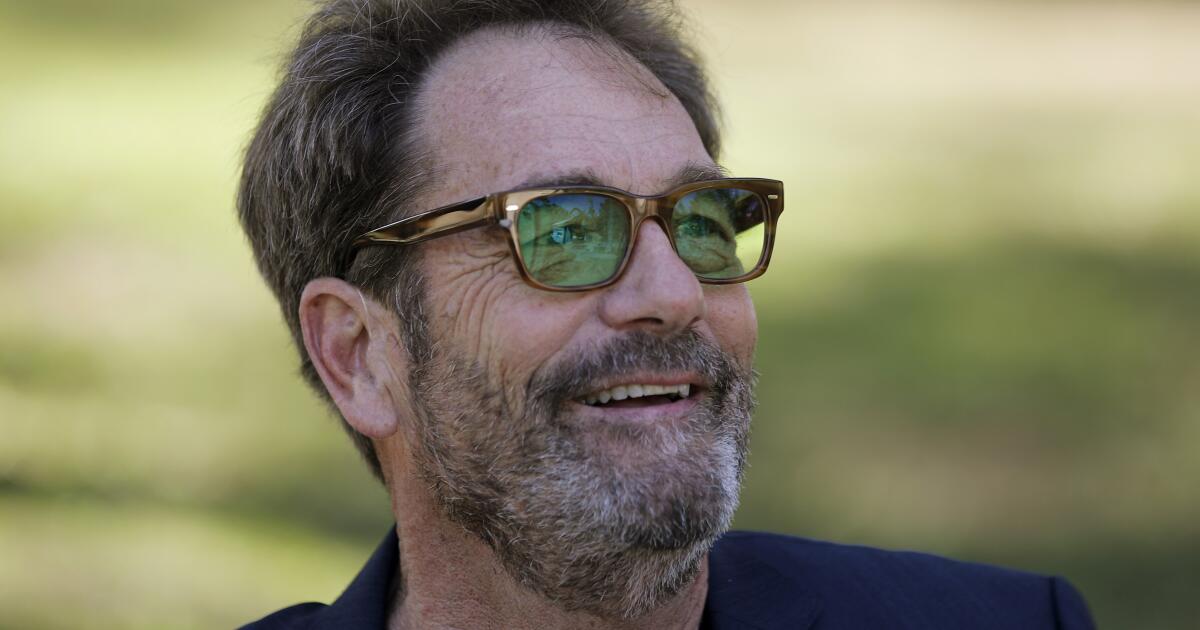
Huey Lewis shared just how much his relationship to music has changed in a recent podcast interview.
“I’m basically deaf,” the former lead singer of Huey Lewis and the News said in an episode of the “Inside of You” podcast released Tuesday. “My life has changed immeasurably. I can’t hear music. Music is not part of my life anymore, which is a hard pill to swallow.”
Lewis explained that he uses a cochlear implant to help him hear and understand speech, but he is unable to distinguish pitch because of the way the device operates.
“My cochlear implant, it breaks everything down into digital bits so I can understand,” he said. “Speech is easier to listen to than music. Music occurs in all frequencies, with overtones and harmonics and everything. It comes at you in a lot of different frequencies, so it distorts for me … It makes pitch impossible to hear.”
”The Power of Love” singer explained that because of this, he can no longer enjoy music.
“When I cook or I have people over for dinner, I always used to play them music,” he said. “I have a great collection of old big band stuff and old New Orleans jazz and I don’t play it at all anymore. … It’s weird. I can hear the beat, I know what’s going on. But I can’t enjoy it.”
“Music used to be so much fun,” he added. But “it just ends up being frustrating for me when I can’t enjoy it. I can’t feel the warmth.”
Lewis previously discussed his struggles with hearing loss with The Times. The “Hip to Be Square” singer said his Meniere’s disease diagnosis in early 2018 was “brutal.”
“When it first happened, I thought I might as well kill myself,” Lewis said in the 2020 interview, which described him as being “surprisingly upbeat” for someone whose life was so deeply affected by the diagnosis. Meniere’s disease is a disorder of the inner ear that can cause severe dizziness, ringing in the ears, hearing loss and ears feeling congested, according to the NIH. Not much is known about its causes and there is not yet a cure.
While it’s clear that Lewis misses aspects of his musician life, he also appears to appreciate having time for his other passions since his life doesn’t revolve around being on the road performing 75 to 100 shows a year.
“I fish a lot,” Lewis said in the “Inside of You” podcast. “I love to fly fish and I love Mother Nature. I get out there by myself in a stream and I’m conducting nature with my fly rod and it’s just a wonderful thing. I love to do it, and hearing not required.”
Everyone knew going in that Lionel Messi would be the narrative centerpiece of the 2026 World Cup. Easily the most recognized name in the competition, Messi is considered by many to be the greatest soccer player of all time and, as the captain of 2022 winner Argentina, he is the reigning World Cup champ. At 18, he scored his first World Cup goal in 2006 and has competed in every World Cup since. He celebrated his 39th birthday before this year’s knockout rounds began, so it’s not unreasonable to assume that this will be his last.
No matter what Messi did, or failed to do, it would be News. Everyone with even a passing interest in the event knew this. Including me.
But I didn’t expect to completely fall for the guy. He’s a professional male athlete, for heaven’s sake, and I don’t emotionally invest in professional male athletes. Admire some of them, sure; watch with bated breath and then scream in astonishment when they pull off some amazing feat or another, absolutely. But the only athletes that have ever touched my heart have been women — Nadia Comăneci; Billie Jean King and the Title IX-sparking stars of women’s tennis; Dorothy Hamill; Brandi Chastain and 1999 Women’s World Cup winners; Venus and Serena Williams; Simone Biles; Caitlin Clark.
But here I am, at age 62, truly, madly, deeply in love with Lionel Messi.
I know, I know, me and half the world. Which normally would serve as an effective prophylactic. I am habitually wary of super-intense fandoms and the men who inspire them; stadiums filled with people chanting a single name inevitably set off internal alarm bells. As I have asked several times in columns throughout the years, how many “heroes” must we watch falter under pressure or be exposed for decidedly unheroic acts before we wise up and get out of the pedestal-placement business?
Yet here I am, stalking him on Instagram, up all hours flicking through interviews and career highlight clips. (I even watched the Apple TV docuseries “Messi Meets America”!) Here I am, literally praying to God, who clearly has more important things to do, for Argentina to advance and screaming Messi’s name every time he scores, assists or pretty much does anything at all.
In a matter of weeks, I have become addicted not just to watching the man play but seeing how he reacts when a shot is made or a game won.
Every World Cup player is happy when they or their team scores, but Messi is delighted. Like a kid seeing a puppy under the tree on Christmas morning. Like he cannot believe this wonderful thing that has just happened even if he was the one who sweat and ran and defied physics to make it happen.
His smile is infectious and even when he is running toward the stands, arms spread wide, after making some impossible shot or other, it never seems self-congratulatory. He is simply filled with joy and wants to spread it around. The field, the stadium, the world.
And his hugs. Long, deep, radiating emotion, utterly unself-conscious. Everyone needs to find someone who hugs them like Messi hugs people — teammates, coaches, opposing players, young fans. I could watch videos of him hugging his mentor and former teammate Ronaldinho or Argentina coach Lionel Scaloni all day long. (I’m not saying I have, nor am I saying I haven’t.)
Sometimes the hype gets a bit nauseating — former teammates who claim he never makes a mistake, commentators who refer to him as superhuman (despite the fact that he has missed as many penalty kicks as he has made in this World Cup). Whether Messi himself agrees that he is the GOAT is none of my business, but he doesn’t act like many sports stars who have received similar adulation. He doesn’t peacock, he doesn’t preen; he is visibly angry with himself when he doesn’t produce. He isn’t perfect — in various past games, he has gotten into heated disputes and shoving matches and famously (and many believe deservedly) taunted Netherlands coach Louis van Gaal during World Cup 2022. But for a man who has been such a star for so long, he presents himself as simply a player among players. The captain, certainly, but not the most important person on the field.
That is the most lovable, and superhuman, thing about him.
It feels pretty basic, not to mention embarrassing, to have a sudden summer crush on Messi, but I don’t care. He’s married to his childhood sweetheart, has three adorable sons and a picture of his mother tattooed on his back. He lets his teammates hoist him in the air and allows sports commentators to regularly (and lovingly) refer to him as “Little Messi.” He gets angry sometimes, but in this tournament he has yet to noticeably hector the refs or rumble with his opponents. He wants to win, obviously, but his joy comes from playing the game well rather than defeating another team.
That’s why, despite my newfound addiction to Messi delight, the moment I loved him best was when he didn’t celebrate at all. In the round of 32, Argentina (No. 2 in FIFA rankings) seemed guaranteed a win over Cape Verde (67). But even with Messi’s early goal, the game was a nail-biter, with Cape Verde scoring two brilliant goals while their goalie Vozinha made eight saves, including four shots (one of them a free kick) from Messi. After Argentina won in additional playing time, there was none of the usual jubilation. Instead, a subdued Messi walked to the midfield to shake hands with his opponents, a sign of exhaustion, no doubt, but also of respect. He hugged Vozinha and told him that his country should be proud of him.
The exuberance was back Tuesday, however, when, after trailing Egypt for most of the round of 16 game, Argentina managed to pull off the comeback of the tournament, going from a 0-2 deficit to a 3-2 win after the 79th minute, with Messi scoring the tying goal.
This time, the smiles, the hugs, the radiant joy filling Atlanta Stadium could have powered the entire state of Georgia. This time, Messi was so happy, he wept.
So did I. The World Cup is over in less than two weeks, and France and Spain are currently the 1-2 favorites to win the thing. My love for Messi is, after all, just a summer romance.
And as with any summer romance, I want it to last forever.
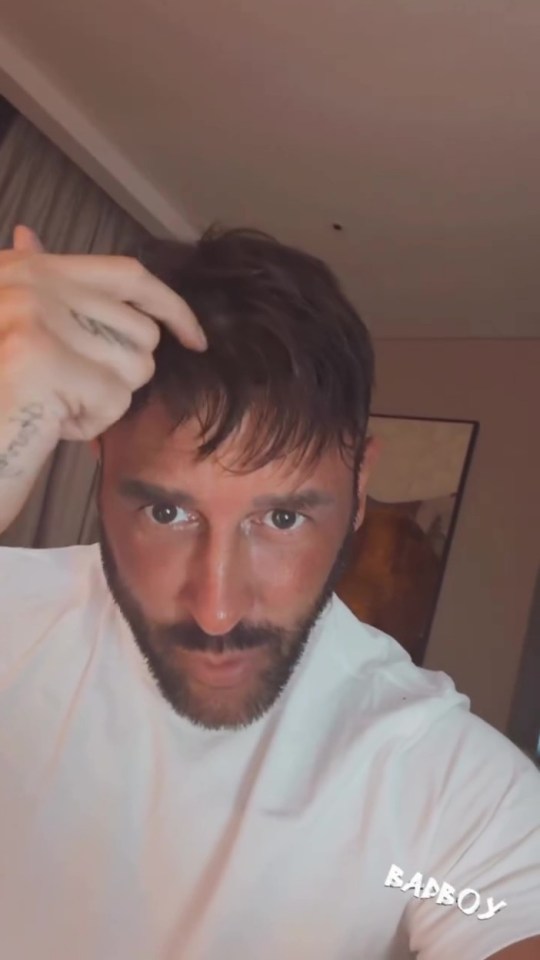
Lee has confessed he’s going bald – blaming his thinning hair on prison foodCredit: InstagramKatie Price’s husband recently spent time in Dubai’s notorious Al Awir prisonCredit: Instagram
In a new social media clip, the conman told followers he will be exposing “60 people from the celeb world” who have been talking bad about him recently.
During the video, Lee pointed to his head and showed off a bald spot before saying: “I’m going bald. What the f**k?”
Calling out Lee’s recent debunked claims he’s adopted Katie’s five children and landed a part in EastEnders, she said: “He’s saying he’s adopting the kids now.
“He is actually one of those people that I look at and I’m like, ‘erghhhhh’.”
Vogue continued: “He’s taking the p**s out of everybody.
“This is why I have such a problem with it, I’ve likened it to being really stupid.
“He’s trying to make people seem stupid and think that we actually believe his b******t and I can’t bear it.
“I feel like he doesn’t even have two brain cells to rub together, that’s how I feel about him and I hate being dragged down to his level.”
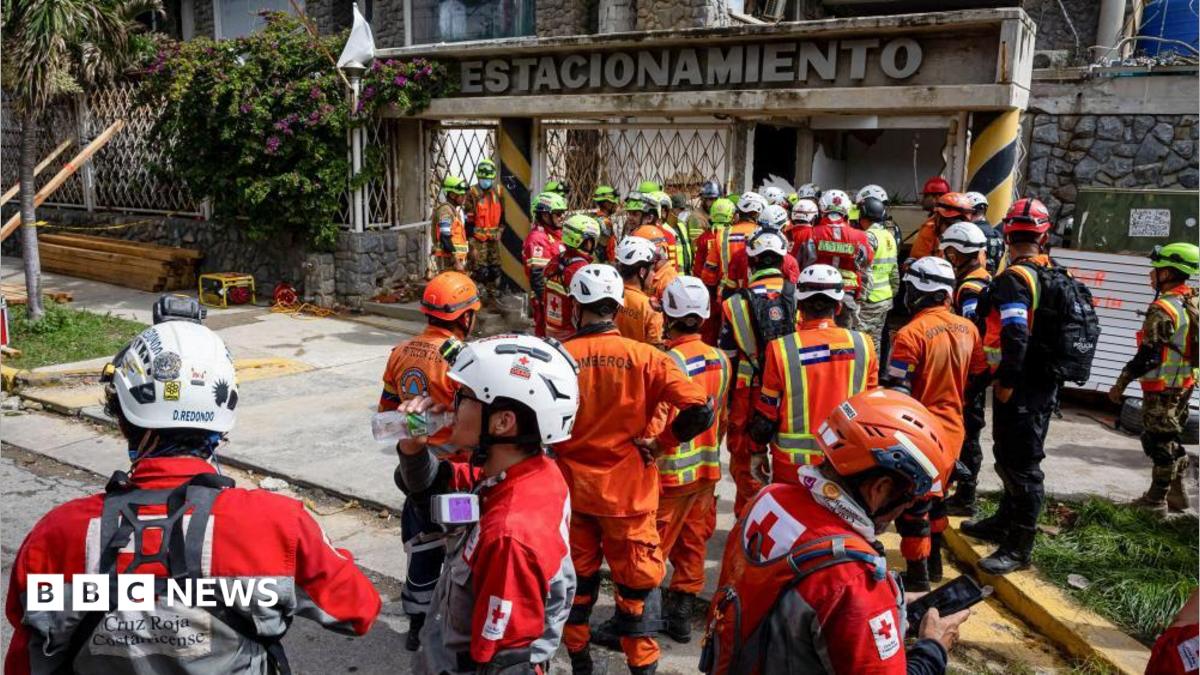
Rescue teams from seven countries are inching towards a man who survived the twin earthquakes that struck Venezuela eight days ago.
Emergency workers located security guard Hernán Gil on Saturday beneath the ruins of a multi-storey car park in Catia La Mar, but have only been able to make visual contact with him in the last hours.
Despite being buried under nine-metre-deep, highly unstable rubble, rescuers say that Gil, who is in his 40s, is “in good spirits” and cheering them on.
His wife has described his survival as “a miracle”. Almost 2,300 people are confirmed to have died in the quakes which hit Venezuela on 24 June, and tens of thousands are still missing.
Hundreds of rescuers have been working against the clock to free Gil since he was located more than 100 hours ago.
Teams from Venezuela, Chile, Costa Rica, El Salvador, Mexico, Portugal and the United States are on the ground trying to free him.
Chilean firefighter Exequiel Gallardo said that he was “hopeful that we can do the rescue within the next few more hours”.
He told the BBC at the scene that there were still technical challenges they needed to overcome, including breaking a concrete slab to allow them to extract Gil.
“I have been a rescue worker for 22 years, and this is without doubt the most complex and technically difficult which I’ve had to tackle,” he said.
Parts of the access ducts rescuers built to reach him have collapsed several times, highlighting the dangers the work poses to the rescuers as well as Gil.
Overnight, the search teams were finally able to establish visual contact with Gil.
In footage recorded by a small camera inserted into the rubble where Gil is trapped, a Chilean firefighter can be heard asking Gil to turn his head towards the camera.
One of his eyes is bloodshot and he is wearing a face mask, which rescuers had earlier passed to him through a small hole to protect him from the dust and debris created by their efforts to free him.
The firefighter also asks him to don goggles to protect his eyes as rescuers continue to carefully dig away at the rubble surrounding him.
METALLICA roadies were forced to intervene when a fan jumped on stage at the heavy metal band’s gig in Glasgow.
The US-based group are currently on their M72 World Tour and performed to 56,000 fans at Hampden Park last week.
Sign up for the Showbiz newsletter
Thank you!
A Metallica fan caused chaos at their gig in Glasgow when he jumped on the stageCredit: Tiktok/codyr0slOne member of the security team was forced to shove him downCredit: Tiktok/codyr0sl
But one Metallica fan ended up missing most of the show as he was apprehended by security when he jumped on stage before the concert started.
A tense clip posted on social media showed the animated concert-goer aggressively refusing instructions to get down.
In the end one of the security team was to shove the man from the stage with him being caught by another roadie.
In a separate clip the troublemaker was escorted from the venue by police as fans rushed to comment on the shock events.
The over-excited fan was later seen being led out by security and police officersCredit: Tiktok/ovik8088The band have been levelling stadiums around Europe with their hard rockCredit: Getty
One wrote: “How to waste your night in one easy swoop.”
And someone else said: “Money well spent [eye-roll emoji].”
A source said earlier this year: “Metallica having a residency at the Sphere is all anyone is talking about on the Strip.
“They have been to see the bosses and met all the tech team to talk through and plan out a show in principle.
“The contracts are still to be signed but we were told they are 90 per cent there. Metallica will bring a different feel to a show there and there is a lot of excitement from bosses at the Sphere about what this could look like.”
June 29 (UPI) — As Speaker of the House Mike Johnson prepared to send a bipartisan, landmark housing affordability bill to President Donald Trump‘s desk on Monday, the president told reporters that he remains undecided on whether to sign it.
“When I look at the (housing) bill, it’s a bill,” Trump said to reporters Monday, The Hill reported. “When I look at the SAVE America Act, it’s about saving America.”
The housing bill is “a yawn,” the president said. “To me, compared to the SAVE America Act, everything is a big yawn.”
The housing bill’s provisions include measures that encourage renovating older homes, encourage communities to build more housing through funding and grant programs, cut some red-tape issues around building housing and effectively ban private equity from buying up single-family homes.
When canceling the original signing of the bill, Trump said he wouldn’t sign it until Congress passed the SAVE America Act, which would require voters to prove their citizenship before they register to vote
Critics say the controversial act could disenfranchise millions of Americans, and Republicans have said that they don’t have the votes to pass it.
Trump acknowledged this Monday, The Hill reported, saying the SAVE America Act is “probably not going to happen because we have four Republican senators, maybe five, that just won’t vote for it. It’s crazy.”
The president said that the housing bill’s bipartisan backing was part of his issue with it.
“It’s very bipartisan — that means the Democrats like it,”he said. “They’re getting things that I wouldn’t necessarily agree to.”
Speaker Johnson, a Republican, said Sunday that he believed Trump would sign the housing bill after it was sent to him, “because we’re delivering for the people, and that’s what he wants to do.”
If Trump does not sign the bill, it could still go into effect. The U.S. Constitution stipulates that a bill will become law automatically if a president does not take action for 10 days, as long as Congress is in session.
Trump could also veto the bill. If that happens, Congress has the power to override the veto by passing the act by a two-thirds vote in both the House and Senate.
If you buy books linked on our site, The Times may earn a commission from Bookshop.org, whose fees support independent bookstores.
Before her death in 1993, Mabel McKay — one of the last living dreamers of the Pomo Indian people — shared a prophecy while driving through the Sonoma hills. One day, this paradise would burn.
“Everything is going to go dry. Everything will burn. That’s my latest vision,” she said, gesturing to the idyllic landscape.
Startled, writer Greg Sarris asked what could be done to stop it.
“You live the best way you know how,” McKay replied.
Since her passing, Sonoma County experienced the most destructive wildfires in California history in 2017, only for another, more destructive fire to surpass it a year later. “She always used to say, ‘Whether you believe it or not, it’s true,’” Sarris recalls.
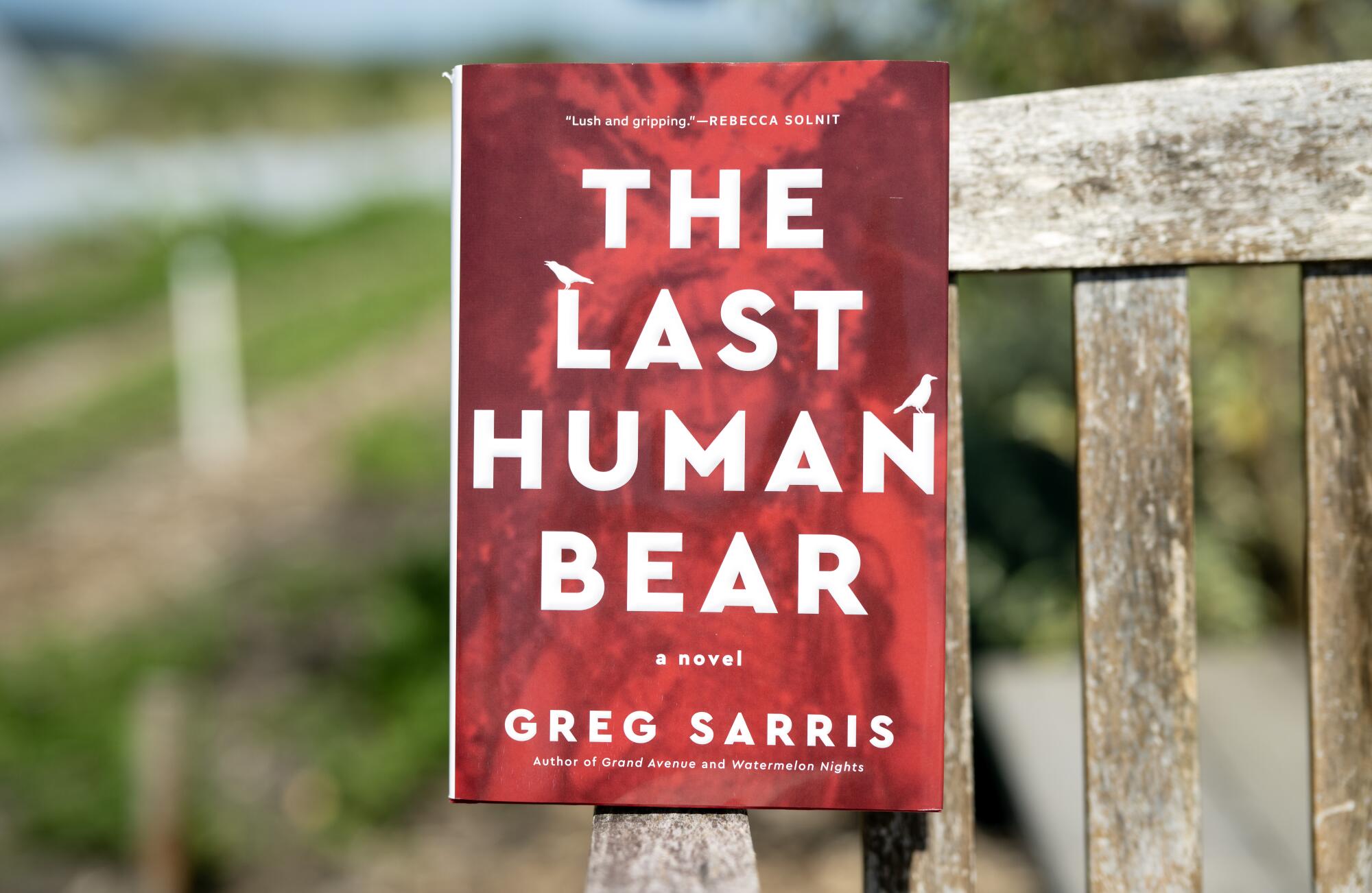
McKay and her visions are the inspiration behind Sarris’ latest work. His first novel in 28 years, “The Last Human Bear,” is loosely based on the spiritual leader McKay, whose wisdom and companionship served as a refuge to Sarris during a tumultuous childhood in Sonoma County.
A reluctant casino mogul
On a Monday morning in California, Sarris sits in his sleek office at the Federated Indians of Graton Rancheria in Rohnert Park. Sarris, 74, has served as chairman of the Federated Indians of Graton Rancheria for more than 30 years. In his office, diplomas and academic certificates crowd the walls. A framed poster for the 2023 film “Joan Baez: I Am a Noise” hangs nearby — she’s a close friend. Behind him, an American flag ripples in the distance outside the window, blurred by the summer heat.
Just up the road sits a multibillion-dollar tribe-owned casino, Graton Resort & Casino — a project the writer oversees. “I had never been in a casino. I have a PhD in modern thought and literature from Stanford,” says Sarris.
How does an accomplished author find himself at the helm of a multibillion-dollar casino enterprise? It’s a question that still puzzles Sarris. “I told them if we can raise our people and become a platform for social justice and environmental stewardship to benefit Indian and non-Indian alike, I’ll do it.”
Before his stint as a reluctant casino mogul, Sarris was a prolific author and university professor at UCLA and Sonoma State. In 2023, he was appointed a regent of the University of California by Gavin Newsom. Over the course of his career, he published six books, and his novel “Grand Avenue” became an HBO original film in 1996.
California’s Native history: revisited
From early in his career, Sarris wanted to depict Indians as he knew them, rather than as Hollywood depicted them. “We’ve been erased by Hollywood, because the idea of Indians has always been Plains Indians or Southwest,” Sarris explains. “It’s easier for Americans to access Buffalo Bill.”
Greg Sarris’ new novel “The Last Human Bear.”
(Josh Edelson / For The Times)
“California Indians have always been left out of the picture,” says Sarris.
“The Last Human Bear” is Sarris’ latest attempt to revive the legacy of California’s Native history. The novel follows Mary Hatcher, a Pomo Indian in Sonoma County, from Prohibition through the 21st century. It’s told in the first person through Hatcher’s compelling voice as she narrates the horror and heartbreak of her lifetime over the course of a century, echoing William Faulkner’s literary style, which influenced Sarris.
‘California Indians have always been left out of the picture,’ says Sarris.
“I’m curious why you want to know about me,” reads the first line. The novel unfolds like an oral storytelling tradition, driven by a voice that Sarris painstakingly crafted, evoking his conversation with McKay. “The voice comes. I have to call it, almost like a spirit,” says Sarris. “I wanted it to feel like an oral story.”
Hatcher — a Pomo shape-shifter who dodges prejudice by passing as Mexican in the novel — is a thorny protagonist, often cunning, scheming and unforgiving. “An American Indian woman is as richly complicated as anybody else. I wanted to show this rich and complicated character who’s negotiated a history that she’s showing you,” says Sarris.
Acclaimed Northern California writer and activist Rebecca Solnit, who has authored 17 books and is a friend of Sarris’, says that she was fascinated by his ability to evoke so many aspects of female life in “The Last Human Bear.” Solnit was especially moved by Sarris’ rendering of California’s tragic history. “It’s shocking, given how rich California’s Indigenous cultures were — 99 different language groups, mythologies, belief systems and linguistic traditions. Every North American Indigenous language family is represented in California. It’s weird how this history has been erased, and how horrific what happened was.”
Climate change and ongoing ecological disasters have made Indigenous perspectives more vital than ever, the author argues. “I think Indigenous people have been hugely influential in giving us a point of view in which we were never separate from nature,” she says. According to Solnit, Sarris’ novels are part of a broader resurgence of interest in Native culture.
In the early chapters of the “The Last Human Bear,” the protagonist gets a job on a ranch by posing as Mexican, since Indians were forbidden from working as housekeepers. What follows is a tale of tension, deception and a forbidden love that sours, reminiscent of Brontë novels.
Sarris hopes that the novel illuminates an uncomfortable history of Sonoma County that remains largely invisible, looming beneath the soil of wine country. The novel offers “a history of this county that a lot of people haven’t seen,” says Sarris.
“There were more Indian people right where we’re sitting per capita than anywhere else in the entire New World outside Mexico City, which was the Aztec capital,” says Sarris. “The genocide was so horrendous.”
Identity, revenge and a search for home are themes that arise throughout the novel — subjects Sarris knows well in his own life.
Greg Sarris feeds chickens at an organic farm across the street from Graton Resort & Casino, which he heads, in Rhonert Park.
(Josh Edelson / For The Times)
Uncovering a hidden Native heritage
In 1952, Sarris’ teenage mother gave him up for adoption, her family hoping to evade the embarrassment of their Jewish daughter becoming pregnant by a Native American Filipino man. Sarris grew up in a white family in Santa Rosa alongside three siblings. His adopted father, George Sarris, became abusive, causing Greg to flee the house with his adopted mother’s blessing. “God bless her. She let me go out and live on ranches and run with other people to get away from him.”
It was in these formative years that Greg became acquainted with Native American people in Santa Rosa, always feeling a mysterious pull toward them. It was these years that also shaped his sensibility as a writer. “I was a lost kid on the streets, so I was always paying attention to everyone, listening, and people would tell me stories.”
Native Americans lived on the fringe of town, often practicing healing ceremonies that were frowned upon by white Catholic families in the suburbs Sarris explains. “When I was 15, I met Mabel McKay, who I wrote the book about. I knew she did some of those strange things that I heard about, but I liked her,” he says. “I had no idea that I was related to these people. I thought I was a mixed-blood Mexican or Spanish.”
At age 30, Sarris uncovered the identities of his birth parents and learned of his Native heritage. He learned his birth mother was buried in a pauper’s grave at the Calvary Catholic Cemetery in Santa Rosa, with “nothing to mark her grave but an upside-down horseshoe that has her name in it.” In the opening pages of the novel, a dedication to her: Bunny Hartman.
Excitedly, Sarris presented proof of his Indian heritage to McKay, his trusted confidant. “I thought it was a big deal that I had Indian blood,” says Sarris. He showed McKay a photo of his father, which she met with indifference. Naturally, Sarris was disappointed. “She told me something later: ‘You’re never any more Indian than your experience.’”
A lifelong outsider
Questions surrounding the legitimacy of Sarris’ heritage haunted him for decades and ultimately informed the novel. Being adopted by a white family, only to be shunned by the Native community, perpetuated his lifelong feeling of being an outsider. “I keep thinking maybe I just got in with this group of people and my Indian relatives so that I would feel rejected again,” he says. “We gravitate towards what we know as home emotionally.”
“I didn’t grow up on a reservation. I’m fair-skinned,” he says. “Being adopted, it feeds into that feeling of not being good enough,” he says, adding: “Illegitimacy is a medicine in the end.”
In the Native American literary community, Sarris has often felt excluded from discourse. When in doubt, he reminds himself of his involvement with the tribe. “Who among them have done this much for their people?” he asks. “Who among them has given this much time and sacrificed a writing career for their people?”
Jane Fonda, the two-time Academy Award-winning actress and activist, struck up a friendship with Sarris through a shared cause. “We met during the campaign to secure health and safety setbacks that would finally prevent oil wells from being drilled within 3,200 feet of a community. Greg and the federated tribes helped us win that fight against Big Oil,” Fonda explained in an email.
“I can tell from his books and my time with him that he embodies indigenous wisdom and beliefs,” Fonda says. “I see Greg Sarris as a man who embodies the best of two worlds — the mercantile culture of Western civilization and the indigenous world that knows we are part of nature and interdependent with it. It’s a rare and valuable combination.”
Greg Sarris, who holds a PhD in literature from Stanford, inside the casino he works for to help fund his tribe’s future.
(Josh Edelson / For The Times)
Inside the polarizing casino kingdom
The Graton Resort & Casino, launched by Sarris over 12 years ago, now plays a vital role in supporting the Pomo Indian community. “I promised early on: roof over everyone’s head, an insurance policy in every pocket and a college degree paid for,” he says. “We give $2.5 million a year in perpetuity to the University of California, so that all California Indians can go to the University of California tuition-free.” The casino has funded theater programs, youth writing intensives and revenue sharing with neighboring tribes.
On the car ride to the casino, Sarris is riffing on his friendship with Grateful Dead member Mickey Hart, who bought Sarris a quarter horse as a gift. In the casino, Sarris eagerly greets his employees with a friendliness that betrays his repeated insistence that he’s a reclusive writer. He points out blown-glass flower sculptures, an embellishment he once saw at the Four Seasons in Paris. He walks past the baccarat room, where he hosts high rollers from Beijing, whom he boasts, “play $100,000 in a hand.”
Early on, news of the casino’s construction caused waves of controversy across Sonoma County — some of which resulted in death threats against Sarris’ life. Concerns that a casino would invite debauchery into the county circulated, which Sarris points out is ironic for a community predicated on wine: “Beyond whether gambling is right or wrong, what is implicit is their privilege and elitism,” says Sarris. “People were getting scared because these brown people, who were the poorest in Sonoma County, are suddenly going to have power.”
Admittedly, Sarris says their newfound wealth has not been without repercussions in the tribe. “People who have been traumatized with generational poverty are the most vulnerable to the lure of materialism,” he says.
When time catches up
In the final chapters of “The Human Bear,” the protagonist, at the end of her life, recalls: “Human Bears often like to even the score before they die.” Revenge is futile, she concludes. “If I was going to avenge our people, I would have to poison nearabout all of history.”
Sarris recalls a similar epiphany he had speaking with McKay. He explains Pomo Indians believed that each action had a consequence. “Ethnographers always said we’re a culture predicated on black magic and fear. No, we were cultures predicated on profound respect for the complexity of all life,” says Sarris.
Then, white men came and seemingly bent the laws of natural order. “The Kashaya Pomo word for white people was ‘miracles’, because they came in and killed everything and did all these things. Nothing could come back to them,” says Sarris.
He explained to McKay that he thought of the white man’s fate differently. “Look, there’s no water. There’s no air. Everything’s poison,” he says, gesturing around him to this vast, broken world. “It’s all come back. It just took time.”
Connors is a culture journalist from Sonoma County. She covers books, food, entertainment and offbeat Los Angeles. She’s currently at work on a book of essays about tourism in all its forms.
JOEL CORRY is on the brink of his biggest collaboration yet, after striking up a bond with Jennifer Lopez.
He’s worked with, and remixed songs from, some of the biggest names on the planet, including Charli XCX, Raye and Sir Elton John.
Sign up for the Showbiz newsletter
Thank you!
Joel Corry is on the brink of his biggest collaboration yet, after striking up a bond with Jennifer LopezCredit: GettyJoel caught J-Lo’s attention after remixing her 2005 single Get Right, before he remixed her David Guetta collaboration Save Me Tonight in MarchCredit: Bryce Hall
But Joel caught J-Lo’s attention in December after remixing her 2005 single Get Right, before he remixed her David Guetta collaboration Save Me Tonight in March.
And after flying Bizarre’s Jack out to Ibiza to join him for a mad 24 hours on the party island, Joel says he’s working on getting a studio date with her.
“I’m still in touch with J-Lo and her team, and we’re trying to work on new music together,” Joel says.
“She loves dance music and doing a remix for Get Right for her last year was an honour.
“It was amazing to meet her and build that friendship.
“I look forward to her doing more of that.”
Of his close friend David, Joel adds: “I talk to him all the time.
“I am playing with him in a few weeks at Ushuaïa.
“He books me back every year to support him at Ushuaïa.
“He’s the best.
“He’s the King of Ibiza.”
Before he nails down his time with J-Lo, Joel has another project up his sleeve — and we did not see it coming.
He has recorded a track with Aleksandr Orlov, the animated aristocratic Russian meerkat who has been fronting ads with his “simples” catchphrase for Compare the Market since 2009.
Together they’re launching a bid for No1 with Simples featuring Scrufizzer [Joel Corry Remix].
Joel says with a laugh: “Listen, you know I’m the king of the summer bangers.
Joel says he’s working on getting a studio date with J-LoCredit: GettyJoel flew Bizarre’s Jack Hardwick out to Ibiza to join him for a mad 24 hours on the party islandCredit: Supplied
“And for Aleksandr the meerkat, it’s always been his dream to have a summer banger.
“So I’m just helping him out.
“Aleksandr for No1.”
Joel has big ambitions for his animated pal too, and is hoping ITV calls him up for a performance in the Love Island villa, three years after he played there with Becky Hill.
“I’ve done Love Island but we need to get the meerkat on Love Island,” Joel says.
“He would clean up in the villa, wouldn’t he?
“I’d love to go back and, this time, we’ll bring Aleksandr.”
During Jack’s whirlwind trip to Ibiza, he joined Joel in the DJ booth for his set at Wayne Lineker’s infamous O Beach, where he premiered Simples live.
He was accompanied by his girlfriend Coco Lodge, who found fame on series eight of Love Island, the same year he performed.
While he kept tight-lipped as to whether a proposal is on the cards, Joel has his heart set on Ibiza for the big day.
He says: “I’ve always said if I was ever gonna get married, Ibiza would be the place to do it.
“It has a special place in my heart.
“The first time I came here was when I was in my early twenties, and I’ve been back every year since.
“I’ve had residencies here for the last few years, and this is definitely my happy place.
“I think it’d be a perfect place to get married.”
While I’m sure Joel’s brother will be his best man, I wouldn’t put it past Aleksandr to wangle himself a role as ring bearer if all goes well with their track.
GREG James has confirmed his Radio 1 show return and revealed that he’s ‘exhausted’ as he shared an update on his dad’s recent open heart surgeries.
The radio star, 40, was missing from the Radio 1 Breakfast, which airs weekdays from 7am to 10:30am, on Wednesday and Thursday (18 June 2026).
Sign up for the Showbiz newsletter
Thank you!
Greg James shared an update following on from his dad’s open heart surgeriesCredit: InstagramThe star has also confirmed when he will be back presenting Radio 1 BreakfastCredit: Getty
Greg took to his Instagram story this morning to reveal the heart-breaking reason why – and admitted that he’s “in no fit state” because his father Alan Milward has undergone heart surgery.
Then this afternoon, he decided to give his 1.3m followers on the social media platform an update.
Sharing a selfie from a sauna, Greg wrote: “Hello from the sauna! I felt daft updating on all of this but because it was such a loud part of the comic relief challenge, I feel like it’s nice to be honest about it all.
“Just to say, my dad is responsive, just about conscious and being looked after amazingly.
Greg pictured with his dad AlanCredit: InstagramGreg took to his Instagram page to share why he wasn’t on the radio on Wednesday and ThursdayCredit: @greg_james/Instagram
“Obviously, after two open heart surgeries in three months, he’s not out of the woods by a long way, but we’re hopeful he’ll be fixed and we can all just get on with life.
“Which is what I’m gonna try and do.
“I won’t keep updating on here about it all as quite frankly, we’re all exhausted by it and it’s going to be a long road to recovery.”
He then went on to share exactly when he’ll be back on the radio – and fans don’t have long to wait.
The presenter later explained that he was ‘no fit state to be on the radio’Credit: @greg_james/InstagramEarlier this year Greg took part in a 1,000km tandem bike ride for Red Nose Day and opened up about his dad’s strokeCredit: instagram/@bbcradio1
Greg continued: “I’ve wanted to make sure my mum is OK so it’s been nice to spend loads of time with her and my big sis, but I’m back to the show tomorrow and I can’t wait.
“Thank you again for the most amazing load of messages.
“It’s genuinely very comforting.”
It comes after Greg told fans yesterday: “Hello from my mum’s garden! I wasn’t on the breakfast show today as my dad was in for another go at heart surgery (it’s been a wild few months and I didn’t want to bore you with it all).
“But here we are. Back to square one. Waiting for news and staying distracted and keeping calm by making water features.
“All being well, back on tomorrow morning.”
However Greg later revealed Alan’s surgery took “much longer” than they’d expected so he would be taking another day off.
He said: “What a great day! An absolute hoot in ICU.
“Surgery was much longer than everyone hoped. Big up my mum and my big sis. And the surgeons. And the NHS. What a gang. We’ve all gone mad.
“Real talk, surgery went ok but he’s far from out of the woods so I’m gonna take it easy tomorrow and hopefully back on Friday.
“Plus, I’m in no fit state to be on the radio. I mean, look at me, I’m posting photos from intensive care ffs. Thank you for your lovely messages.”
In March Greg had to cancel his show and rush home after Alan suffered a stroke during a planned heart operation.
He later opened up about his dad’s struggles during his 1,000km tandem bike ride for Red Nose Day.
He said: “I feel elated. I feel a bit overwhelmed by all these people who just turned up out of nowhere. I just burst into tears as I was going up to Blaenavon. It was all a bit much.
“Just thought about… I just thought about everything. Just thought about my dad, thought about my mum. It got way too much. It’s so silly. It must have been the altitude.”
GREG James has revealed the heartbreaking reason he’s been missing from his Radio 1 show for two days saying he’s “in no fit state” to be on air.
The 40-year-old was absent from his Radio 1 Breakfast show on Wednesday and also missed Thursday’s edition.
Sign up for the Showbiz newsletter
Thank you!
Greg has revealed the heartbreaking reason he’s been absent from his Radio 1 showCredit: Getty ImagesHe told fans he’s ‘in no fit state’ to be on air as dad Alan undergoes heart surgeryCredit: @greg_james/Instagram
Greg took to social media to tell fans he’s been supporting his family while his father Alan Milward undergoes heart surgery.
Writing on Instagram, the presenter said: “Hello from my mum’s garden! I wasn’t on the breakfast show today as my dad was in for another go at heart surgery (it’s been a wild few months and I didn’t want to bore you with it all).
“But here we are. Back to square one. Waiting for news and staying distracted and keeping calm by making water features.
Greg was forced to cancel a show in March and rush home when Alan suffered a strokeCredit: InstagramJust a week later he got emotional during a mammoth Red Nose Day challenge as he opened up about his dadCredit: Instagram
However Greg later revealed Alan’s surgery took “much longer” than they’d expected so he would be taking another day off.
He said: “What a great day! An absolute hoot in ICU.
“Surgery was much longer than everyone hoped. Big up my mum and my big sis. And the surgeons. And the NHS. What a gang. We’ve all gone mad.
“Real talk, surgery went ok but he’s far from out of the woods so I’m gonna take it easy tomorrow and hopefully back on Friday.
“Plus, I’m in no fit state to be on the radio. I mean, look at me, I’m posting photos from intensive care ffs. Thank you for your lovely messages.”
In March Greg had to cancel his show and rush home after Alansuffered a strokeduring a planned heart operation.
He later opened up about his dad’s struggles during his 1,000km tandem bike ride for Red Nose Day.
He said: “I feel elated. I feel a bit overwhelmed by all these people who just turned up out of nowhere. I just burst into tears as I was going up to Blaenavon. It was all a bit much.
“Just thought about… I just thought about everything. Just thought about my dad, thought about my mum. It got way too much. It’s so silly. It must have been the altitude.”
TEDDY SWIMS says he is glad he was 30 years old before achieving global success – otherwise he could have gone off the rails.
The US star, whose single Lose Control sent his profile rocketing in 2023, said he doesn’t understand how younger stars like Benson Boone have coped with their early fame.
Sign up for the Showbiz newsletter
Thank you!
Teddy Swims says he is glad he was 30 years old before achieving global success – otherwise he could have gone off the railsCredit: GettyTeddy said he doesn’t understand how younger stars like Benson Boone have coped with their early fameCredit: Getty
Teddy explained: “He’s crushing it at, like, 23. If they would have gave me that at 23, I would have sent that straight up my nose.
“Thank God it happened to me at the time it did and I’m capable of understanding this and taking it seriously.
“I’d have probably been so terrible about it. I’d have spun out immediately if I’d been given that at such a young age.”
Since then though, Teddy’s had further hits with The Door and Bad Dreams, but doesn’t let success get to his head.
He said: “I try not to hang up my diamond or platinum records in my house, because I feel like I’ll just be looking at them and be like, ‘My best days are behind me,’ or something.
“So I try just to keep my head down and keep rocking.”
Asked if they’re in storage, he confessed: “A lot of them I’ve given to my family on Christmas. It saves me a little money there too.
“You know, my aunt’s got The Door gold record from a year ago.”
A real beauty spot, Maya
Maya Jama is clearly feline fine as she turns up the heat in a skimpy leopard-print mini dressCredit: Shutterstock EditorialMaya flaunted her curves in a tiny bikiniCredit: Instagram
MAYA JAMA is clearly feline fine as she turns up the heat in a skimpy leopard-print mini dress.
The Love Island host sizzled as she fronted the dating show’s ITV2 spin-off Aftersun in the slinky number.
Maya, who previously dated grime star Stormzy, split from her Manchester City footballer boyfriend Ruben Dias in April after 18 months together.
But she clearly isn’t moping around, and has been on holiday in Ibiza, where she flaunted her curves in a tiny bikini.
Maya said of the break-up: “I’m an all-or-nothing girl, I don’t casually date, so yes, I will love loudly or not at all – and if it ends, it ends. I decided a long time ago not to base my life decisions on public opinions.”
Sounds like she’s got the dating game sussed.
Jack Whitehall has apologised to Becky HillCredit: GettyJack called her a ‘Wetherspoons Whitney’Credit: Getty
JACK WHITEHALL has apologised to Becky Hill for calling her a “Wetherspoons Whitney”, claiming the pair “had a chuckle” about his dig – despite her writing diss track Daddy’s Range Rover about him.
I revealed last month how Becky has penned the song all about him making her the butt of a joke while he hosted the 2024 Brits.
Jack says: “I think my biggest surprise is it’s taken so long for some- one to write a diss track about me. I apologised when I saw her.”
Becky doesn’t sound like she sees the funny side, however – blasting the “privately educated nepo baby”.
Jesy’s hol of a look
Little Mix singer Jesy Nelson celebrated her 35th birthday pondering what is coming next for herPerrie Edwards got married to Alex Oxlade-Chamberlain in Portugal over the weekendCredit: Refer to Caption
LITTLE MIX singer Jesy Nelson celebrated her 35th birthday pondering what is coming next for her.
Holidaying with friends, she mused: “Whatever will chapter 35 bring?”
Well, it is unlikely to bring a reunion with her estranged former bandmates.
Jesy was not a guest at Perrie Edwards’ wedding to Alex Oxlade-Chamberlain in Portugal over the weekend, after Perrie said Jesy made her “blood boil” by claiming she felt unsupported during a mental health crisis.
Whatever comes next, it’s going to be a page-turner.
LEAH LETS LOOSE IN IBIZA
Leah Williamson made the most of her break from the game by enjoying a wild girls’ trip to IbizaCredit: Getty
ENGLAND women’s football captain Leah Williamson made the most of her break from the game by enjoying a wild girls’ trip to Ibiza.
I’m told the Arsenal player let her hair down at the White Isle’s most legendary club Pikes last week.
Then on Friday night she let loose at Calvin Harris’ residency at superclub Ushuaia, where she partied with pals and her model girlfriend Elle Smith.
One onlooker told me: “Leah was having a great time doing shots with her mates – she was really living her best life.”
A calf injury meant she was ruled out of the last Lionesses squad, and it sounds like she is still feeling the effects as Leah wasn’t dancing as much as her mates.
But I reckon a blow-out in Ibiza might be just what she needs before getting her head back in the game.
FRESH off a collaboration with Ed Sheeran, Martin Garrix has teamed up with Madonna.
The Dutch DJ debuted Bizarre, one of the tracks from Madge’s highly anticipated Confessions II album, during a New York party.
From the clip I’ve heard, it sounds like an absolute beast.
ASTON: MY BOY’S READY TO HAVE BITE AT POP STARDOM
Aston Merrygold and son Grayson JaxCredit: InstagramThe JLS star with the children’s bookCredit: Supplied
JLS star Aston Merrygold reckons he could have the next Justin Bieber on his hands in the form of his talented eldest son.
He revealed that eight-year-old Grayson Jax is already showing serious star potential.
The Beat Again singer said: “My oldest is full-on – he’s ready, he wants to do everything. He’s so much better than I ever was. Little Justin Bieber on the way.”
While fans wait to see if another Merrygold is about to hit the charts, Aston is juggling life as a musician with being a hands-on dad to his three children and setting a good example.
The singer has teamed up with Bupa Dental Care to launch the kids’ story and audiobook The Dentist’s Apprentice, aimed at helping youngsters overcome fears over check-ups on their teeth.
Aston said: “The whole premise is about trying to get rid of dental anxiety that young people have.
“Having all that pent-up anxious energy is not healthy for anyone. The dentist is about check-ups, it’s about prevention.”
Aston will soon be back on the road with JLS for their UK tour.
They are playing eight more shows, ending in Derby on August 29.
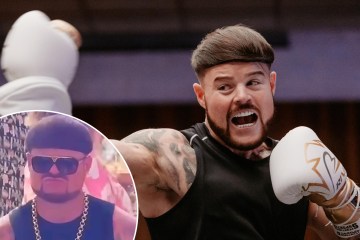
THE Ibiza Final Boss piqued the interest of the masses after he was spotted boozing it up on the party isle last August.
While most Ibiza goers like to indulge in the lifestyle Jack Kay found viral fame for his trancelike dance moves and good old-fashioned bowl haircut.
Sign up for the Showbiz newsletter
Thank you!
Ibiza Final Boss shot to fame last summer after fans spotted him living it up on the party isleCredit: instagram/@jack.kayy1Jack Kay told fans that he’s ‘not worried’ about ‘staying relevant’ despite his overnight fameCredit: The Sun
Jack, 26, who was seen donning a vest, shades, and a blingy chain, was famed for perfectly round trim, which became the subject of thousands of comments.
The former builder has now opened up on the hefty amount he’s insured his hair for – and it’s seven figures.
He claimed: “Obviously it’s my USP so I have been looking to get it insured and I’ve insured it for a million pound.”
The 26-year-old claimed he’s had his barnet insured for a million poundsCredit: GettyJack told The Sun he’s ‘made a killing’ since finding fame and has huge projects in the pipelineCredit: instagram/jack.kayy1
Celebs often get parts of their bodies insured if it’s a huge money maker for them.
While the Ibiza Final Boss’ life turned on its head over night, he told The Sun he’s not worried about “staying relevant.”
For influencers and viral internet stars overnight fame doesn’t usually last long with some desperate to stay in the spotlight.
But Jack, from Newcastle, would be “happy,” if it all ended tomorrow.
Jack said: “I’m not worried about staying relevant.
“I’ve signed a multi-fight deal, my agents got big things happening for us like end of this year starting next year as well. So I’m not worried about that.
“Even if it all ends tomorrow, which it won’t but if it was I’m happy with that I’ve made a killing do you know what I mean I’ve smashed it.”
He acknowledged that his time in the public eye won’t last forever but he’ll certainly be making the most of it two stepping across Ibiza this summer.
Jack added: “Listen nothing lasts forever does it so you’ve just gotta strike while the iron’s hot and make the most of it.”
The Sidemen’s Josh Bradley has revealed he’s set to become a dad for the first time as his wife is expecting baby boyCredit: InstagramThe streamer took to Instagram to share a series of sweet snaps and captioned them: “Mum and Dad for real this time”Credit: Instagram
In the snaps, Josh and his wife Freya Nightingale brimmed with happiness as they shared their joyous news with their followers.
After smashing a pink and blue gender reveal cake, the delighted couple shared they were having a baby boy.
The happy pair also posted a sweet image of their baby scan to their family and fans.
Fans flocked to comment and one wrote: “Announcement & gender reveal in one. YUPPPPP love you both so muuuuchhhh. Coolest parents.”
The loved up couple also shared an image of their baby’s scanCredit: InstagramThe excited parents shared their gender reveal with their family and fansCredit: InstagramJosh and his wife were overjoyed with the news that they were having a baby boyCredit: InstagramIn bombshell news the Britain’s Got Talent judge revealed he had recorded his last video with his matesCredit: The Sidemen/Instagram
Another said: “Yes!!! Congrats!!!”
A third added: “Amazing news.”
A fourth wrote: “Oh my god!!! Huge congratulations to you both. This is the most amazing news.”
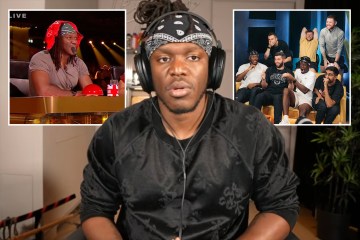
While a fifth said: “KSI left and now Josh and Freya are having a baby, the good news can’t stop coming.”
The Sidemen put up a long post on their social media which seemed to criticise the way in which KSI did it.
They wrote: “Ideally, we would have loved the opportunity to give JJ the send off he deserved, a proper farewell video, time for everyone to process it, and a chance to celebrate everything we’ve built together.
“Unfortunately JJ released the news before we had agreed on a mutual way of letting our audience know.”
In the video KSI posted he said: “This is honestly the hardest video I’ve ever had to make in my life.