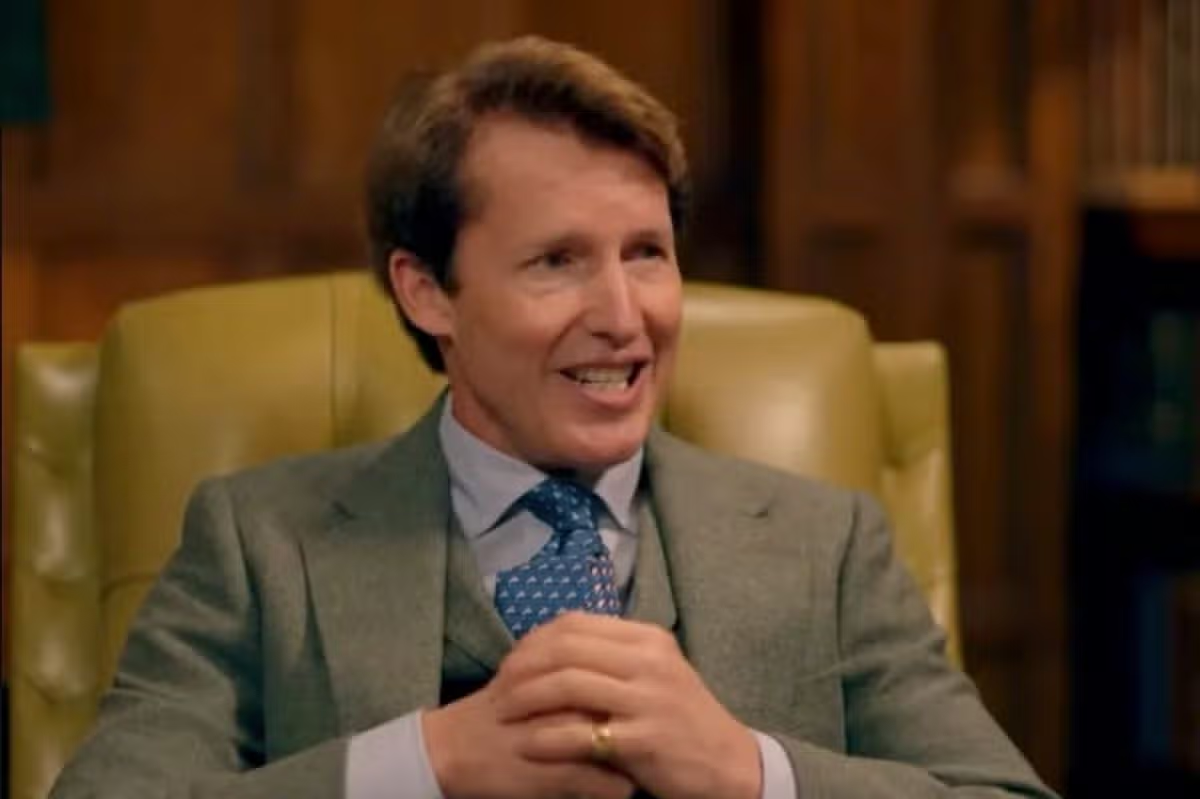
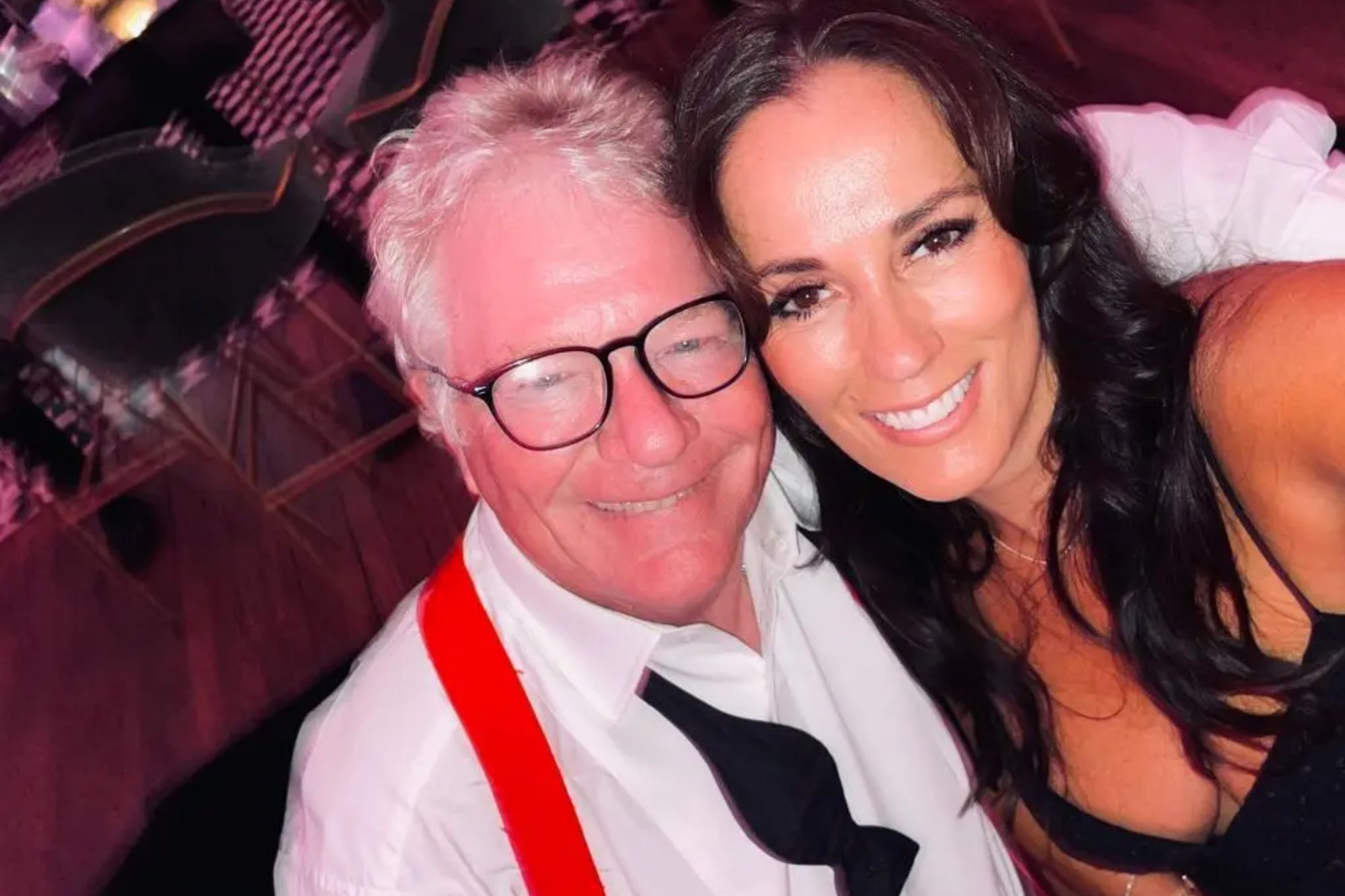
Celebrity Traitors star James Blunt made a major move at the Round Table in the latest episode of the BBC show, which left Hannah Fry and Jerry Hall vulnerable for murder
10:38, 08 Oct 2026Updated 10:38, 08 Oct 2026
James Blunt has admitted to some serious skulduggery in Celebrity Traitors(Image: BBC)
James Blunt has admitted to some serious skulduggery on Celebrity Traitors that only fan managed to rumble.
The You’re Beautiful crooner, 52, is among a slew of stars who have signed up for the second series of the BBC show, which kicked off this month.
Last week, James made a very subtle move at the Round Table, while his co-stars, Hannah Fry and Jerry Hall were vulnerable for murder to save the one he wanted to stay in the game.
After the rest of the Faithfuls received a shield to keep them safe, the singer claimed in front of the cast that he was suspicious of maths whizz, Hannah, while dramatically declaring that the ‘most obvious solution is often truest’.
Musing over the likelihood of one murder and a recruitment, James proposed the perfect plan would be to murder one threat to the Traitors – Amol Rajan – and recruit an even bigger threat – Hannah.
The nail-biting episode ended on a cliffhanger. However, James has now taken to Instagram admitting that mentioning Hannah was actually a ruse to stop her from being murdered as he needed her on side.
One eagled-eyed viewer posted: “I’d like to think it’s a tactic to keep her in the game. If her name is brought up the Traitors are less likely to murder her.”
Confirming that this was his game plan all along, James replied: “Bingo!”
We don’t know if Hannah, stays or not, however some fans reckon she must have survived another night on the show after James appeared to let the cat out of the bag online.
Fans are also wondering if thespian Richard E. Grant has been given the chop after the tense Round Table ended without any votes.
Richard was in journalist Amol’s bad books after being the first murder of the actor last week.
Speaking on Radio 4 today, Amol said that Richard, 69, apologised to him and admitted that he went “completely mad” filming the BBC show.
“Absolutely [I played it all wrong],” he said. “There is generally a tactic that is applicable and effective – you’ve got to try and stay schtum. And the one or two things I might say in my defence are: you know how these things work—it’s all in the edit.
“Also, lots of people were having a go at Richard, we all had a go at him because he said he was a traitor, which has never happened before and is a completely ludicrous thing to do.”
Revealing the pair had lunch together to clear the air, Amol concluded: “So it wasn’t just me doing it. I actually had a lunch with him (it was all filmed in Spring) a few weeks ago, and I did ask him and he said, ‘I’m so sorry, I went completely mad and thought you were a threat.'”
A quick glance from the sidewalk shows a midsize home in the Valley. Fallen leaves from a large tree scatter across the neatly trimmed front lawn. It’s just like any other house in a suburban neighborhood outside of Los Angeles.
Inside, there’s a whole network TV operation going on.
The three-bedroom chateau is packed with people. Every inch of space in the house is being used to make “Good Night With Ben Gleib” happen. The living room TV displays the multiple angles of cameras spread across the house. The pantry doubles as a control room while the backyard shed was turned into a venue for the musical guest.
It’s not a traditional late-night talk show. It’s not on a legacy network, it isn’t filmed in a studio, and the U.S. president isn’t calling the host a “deranged lunatic.”
Share via
This show is filmed in a room of Gleib’s house that was converted into an 18-seat studio. The host drinks a cocktail as he delivers his topical monologue in front of blue drapes, and after the taping concludes the cameras continue to roll and capture the nightcap, where Gleib mingles with audience members.
Rather than following the traditional path — from stand-up or sketch comedy to eventually landing behind a late-night desk — Gleib built his own opportunity and releases it on YouTube, a trend becoming more prominent in the comedy world.
“The landscape has changed very largely,” Gleib said. “It’s hard to make your mark in TV and a stand-up appearance on late night doesn’t change your career like it use to, you really have to find creative ways to create your dream career.”
Production staff controls the taping of the show “Good Night With Ben Gleib” on Sept. 16.
(Brian Feinzimer / For The Times)
Since “Lazy Sunday” from “Saturday Night Live” hit the airwaves and caught a second wind on YouTube, the comedy landscape “had changed forever,” according to Seth Meyers.
“What made it so great then and still today is that it was an instant hit but also felt DIY in a way things hadn’t for so long,” said the “Late Night” host in an interview with GQ.
Social media platforms like YouTube have helped make it easier for anyone with a camera to create original content and spread it to the masses. The hashtag “comedy” has 20 billion views on TikTok and genres such as stand-up and sketch comedy grow every year, according to Business Insider. Meanwhile, late-night television has taken a dip in audience and ad revenue.
The old guard of comedy is changing and the DIY movement has transformed fame in the comedy world. Comics no longer have to wait to get stage time on a late-night talk show, they just need to get it done, said Nicole Blaine, owner of the Crow comedy club. It is also inexpensive to create digital content. With platforms like TikTok, Instagram and YouTube, the ability to be seen is easier, she added.
“I don’t think you can count on anyone to ‘make it,’” Blaine said. “I think you literally have to make it yourself and I do believe that the industry [is] paying attention behind the scenes in more ways than the artists know.
“You want to be your own showrunner,” she added.
Makeup artist Lisa Lopez gets musical guest Ada Pasternak ready in the kitchen of Ben Gleib’s home, also the set of “Good Night.”
(Brian Feinzimer / For The Times)
Representation comes and goes, but the fan base a comedian creates for themselves stays with them, Blaine said. Creating digital content for social media to back up a career in stand-up demonstrates that success is completely within the control of comics, she continued.
The DIY formula relies on taking advantage of the skills each performer has and using them to self-produce material to build a fan base, a concept that comedian Emmy Browning is putting into practice. Using her background in screenwriting, she pitched “Hands!” to the Elysian Theater and performed it for its Spaghetti Festival, designed to showcase new work, within three months.
“I essentially wrote, cast, directed, produced, got a crew together …,” she said. “It was just a crazy team of people that came together for no money to make this thing happen.”
“Hands!” spoofs FX’s “The Bear,” while satirizing TV conventions, like the will-they-won’t-they romantic plotlines, multicamera operation and filming in front of a live studio audience. Browning’s show was performed live while a camera crew shot different angles that were being projected on screens located on stage.
It made the stream of the show feel like an actual live performance. Now the stream can be seen by anyone, anywhere in the world, at any time. Browning said when her comic friends began to create clips for social media, they were able to travel around the country and perform for the fans they’ve garnered from their content.
“There are so many different ways and opportunities to be seen first,” Browning said. “…If you have the stamina to generate content online that promotes yourself, you can really make a living or create a fan base yourself.”
Self-producing isn’t only about promotion, it’s about creative ownership.
“There’s nothing as creatively freeing as being your own boss and not having to conform to network notes or the comedic ideas and opinions of people who have never been comedians and have never been recognized for their comedy skills,” Gleib said.
Guests are interviewed during the taping of “Good Night With Ben Gleib.”
(Brian Feinzimer / For The Times)
The sentiment is shared by Ron Lynch, a comedian known for voicing Hugo, the neurotic health inspector in Fox’s animated series “Bob’s Burgers,” who’s produced a variety show at the Elysian Theater called “Tomorrow!” for 20 years now.
The show gives participants the opportunity to do whatever they want, within a five-minute time frame. Half the acts are stand-ups, the other half “are just weird.”
“We’re not responsible for sponsors or anything like that,” Lynch said. “We can basically do whatever we want.”
Self-producing allows creators to explore their voice without any limitations.
“What we do is provide entertainment,” Lynch said.
In the new DIY era, it is not a matter of when a performer will make it, but rather how much a performer really wants it, Blaine said. It’s a lot of work that needs to get done, even after a day job, but it will separate the people who want it badly over those not wanting to put in the time, she added.
It isn’t about landing a late-night talk show, it is about creating.
“It isn’t easy,” Blaine said. “But artists will always find a way if we really want to do it.”
The DIY movement also comes with big risks that will not work unless the comedian believes in it, said Gleib. His team is putting a lot on the shoulders of the comedian to reinvent late night and make it a lucrative business.
And if the big swing doesn’t work?
“I’ll have to come crawling back to the traditional entertainment industry, hoping that I still have a place there,” he added.
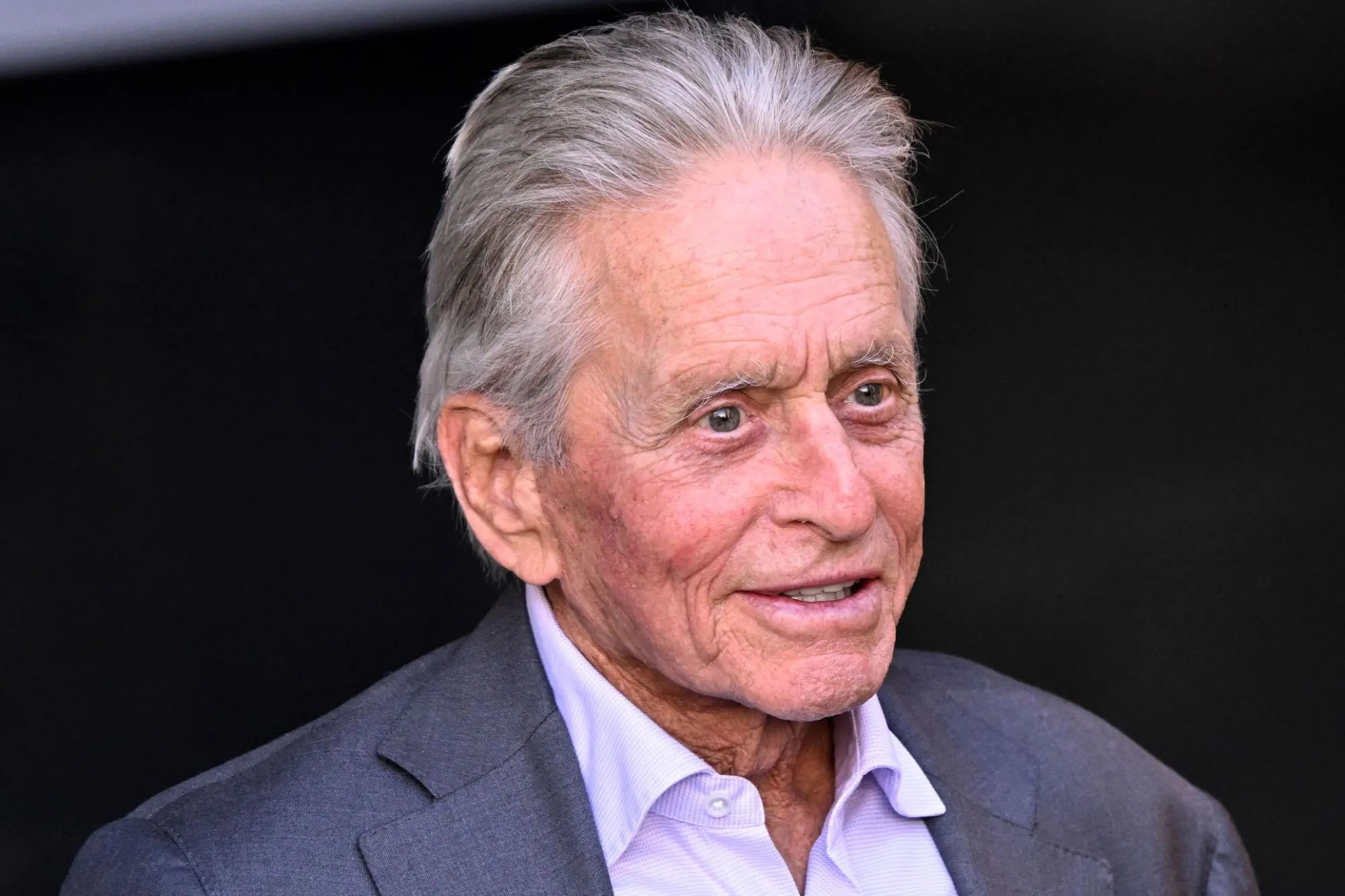
MICHAEL Douglas has denied he’s a sex addict and said he was a “healthy product of the Sixties” after his affair revelation with Kathleen Turner.
The actor, 82, confessed to having a relationship with Kathleen as they filmed their 1984 action flick Romancing The Stone.
Michael Douglas has denied he’s a ‘sex addict’ in his new bookCredit: GettyThe actor revealed he had an affair with Kathleen Turner when he was married to his first wifeCredit: DHUB_Search_Shutterstock_Editorial_NUK
At the time, Michael was married to his first wife Diandra Luker.
The Basic Instinct star opened up about his colourful love life and insisted he was not a “sex addict” despite his multiple flings.
Sign up for the Showbiz newsletter
Thank you!
Speaking to The Times, he was asked if he ever wondered why he had slept with so many women.
Michael replied: “I don’t know if I slept with so many women, I don’t see it that way. No, not me, no. I was a healthy product of the Sixties.”
The actor insisted he was ‘ a healthy product of the Sixties’Credit: DHUB_Search_Shutterstock_Editorial_NUKThe Wall Street star is now smitten and happily married to Catherine Zeta JonesCredit: AFP
He added: “My curiosity is why, of all countries, of all the press that I do, why are the Brits so consumed with the issues of sex?”
In the nineties, it was reported that Michael had entered rehab for a sex addiction.
But Michael has said in an excerpt from his upcoming memoir One Helluva Ride: “I was never a ***ing sex addict.”
Shared by People, Michael dished about his extramarital romance with Kathleen.
Michael penned: “Kathleen was smart, funny, and sexy with a deep, sultry voice that became her signature.
“I instantly liked her, and we were immediately attracted to each other.”
Michael then claimed that his marriage to Diandra “was in a bad place” and that he had been having an affair with Romancing The Stone screenwriter Diane Thomas prior to meeting Kathleen.
In the book, he described himself as “technically married, but separated” as he had an affair with Kathleen.
He noted that audiences spotted their chemistry, and they were forced to deny everything and put it down to them both being “terrible flirts” due to him being married.
“It was a lie meant to protect my wife and son, a lie we told the world for 40 years.”
In his book, Michael confessed: “The truth is that during the production of Romancing the Stone, Kathleen and I fell hard for each other and began a relationship.”
He said that their relationship “grew naturally” and noted how much they respected and cared for one another, “and how attracted we were to each other”.
Michael added: “Like every other guy in the world at the time, I was knocked sideways by Kathleen….”
They continued their romance until it fizzled out when his wife visited on set and made it clear to Kathleen they were still married.
Diandra warned her off and Kathleen “didn’t want to interfere”.
Although their romantic relationship was over, they continued to star in movies together until 1989.
His first marriage to film producer Diandra Luker lasted from 1977 to 2000.
After 18 years together, Diandra filed for divorce in 1995, leading to a protracted legal separation which was finalised in 2000.
Michael is now smitten and happily married to Catherine Zeta Jones.
Catherine and Michael first met in August 1998 at the Deauville American Film Festival in France.
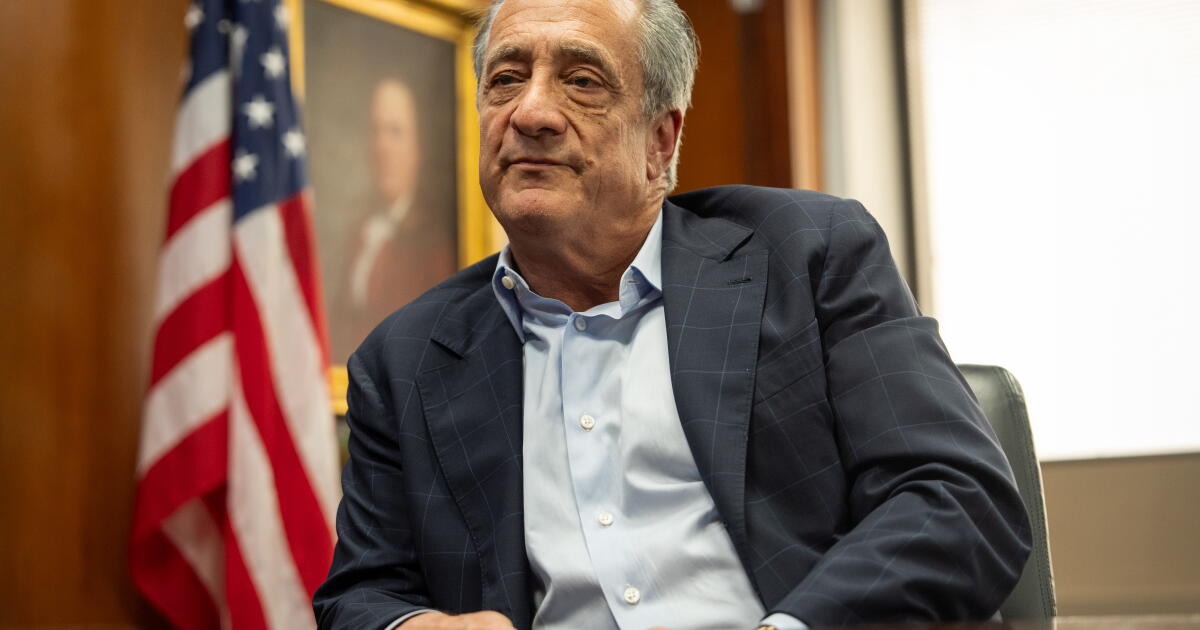
WASHINGTON — Long before he was the top official at the U.S. Postal Service, David Steiner was a corporate executive surfing mid-oughts television when he came across Donald Trump on “The Apprentice.”
He was unimpressed.
“If that is leadership, if that’s what we’re telling people that our culture and our media portrays as leadership, we’re screwed,” Steiner, then the CEO of Waste Management, said during a 2007 speech at the University of Arkansas Clinton School of Public Service. “If that’s leadership, count me out.”
“And for God’s sake,” he added to laughter, “if I have to get my hair to look like that, if I have to do that to be a leader, you can definitely count me out.”
Nearly two decades later, Trump has migrated from reality television to the presidency. And onetime detractors — Vice President JD Vance, Secretary of State Marco Rubio and Sen. Ted Cruz of Texas, for example — now loyally execute his agenda.
Trump’s effort to use the Postal Service as a tool to reshape American elections is testing whether Steiner will follow a similar path.
Independent or a Trump ‘pawn’?
When Trump signed an executive order restricting mail ballots this year, Steiner moved quickly to finalize a rule implementing the measure, arguing he had little choice. But after the U.S. Supreme Court rejected the effort, Steiner told The Associated Press that work had stopped on one of the plan’s most controversial elements, a government portal for voter rolls.
He refused to endorse the Republican president’s order as sound policy, saying he was focused on implementation and letting the courts ultimately decide the matter.
“I don’t get to decide what rules that are put on us that I decide to accept or not accept,” he said. “We are an independent agency of the executive branch.”
The episode prompted fierce criticism of Steiner for allowing Trump to deploy an agency designed to be shielded from politics.
Jena Griswold, Colorado’s Democratic secretary of state, called him a “Trump lackey.” Nevada Secretary of State Cisco Aguilar, a Democrat, recently asked Congress to deploy observers to ensure postal workers can scan envelopes holding mail ballots without disruption, saying the Trump administration “has attempted to weaponize federal agencies to interfere in our elections, and the leadership at USPS is going along with it.”
Sen. Elissa Slotkin, D-Mich., accused Steiner of being a Trump “pawn” during a congressional hearing this summer. Dozens of congressional Democrats have pressed Steiner to reveal his interactions with the White House during the development of the mail ballot rule.
Some Republicans have joined in the criticism. Sen. Josh Hawley of Missouri, incensed by abandoned mail, called for Steiner’s resignation and introduced legislation to block him from receiving a bonus.
During a lengthy interview, Steiner seemed surprised at points by his reception in Washington. He insisted he wasn’t a “political person” and said he had no intention of stepping down despite the criticism. He dismissed heated congressional appearances as “theater” at odds with more substantive private interactions on Capitol Hill.
Steiner was chagrined, however, at the mention of his 2007 remarks on Trump, delivered well before he launched a political career. Steiner recalled speaking at the university but said he didn’t remember his comments, acknowledging a tendency to be “flippant.”
“That’s funny,” he said. “I don’t recall it.”
The White House didn’t respond to a request for comment on Steiner’s remarks or his stewardship of the Postal Service.
Steiner didn’t follow the traditional path to power in Trump’s Washington
The Postal Service dates to Benjamin Franklin, the first postmaster general, whose portrait and bust are displayed in Steiner’s office overlooking the Washington Wharf. The agency has more than 630,000 employees, dwarfing many Cabinet departments.
While the quickest way to top jobs in Trump’s Washington is often by writing big checks, the 66-year-old Steiner doesn’t appear to have followed that course. He has largely donated to Republicans but also gave to John Kerry’s Democratic presidential campaign in 2004. Unlike his predecessor as postmaster general, Louis DeJoy, Steiner was not a major GOP donor or Trump backer.
Born in Oakland, California, as one of eight children to a father who spent his career at Chevron, Steiner worked in corporate and securities law before moving to Waste Management in 2000. He became CEO in 2004 and ran the company for 12 years. He was also a longtime director at FedEx, where board chairman Brad Martin recalled him as “outcome oriented” and rarely political.
“He’s going to follow the rules. He’s going to follow the law,” Martin said. “I don’t recall us ever talking politics.”
By the time a headhunter contacted Steiner about the postmaster general job, he was largely removed from daily corporate life and initially demurred.
“I talked to my wife, and we both agreed I was happily retired,” he said.
He changed his mind, he said, during a visit to the beaches of Normandy, feeling a sense of civic duty.
Now at the Postal Service, he earns about $346,000 in annual salary along with a relocation bonus that amounts to half his salary, far less than the $17 million in compensation he earned during his final year at Waste Management. His current role is designed to exist one layer removed from the political process, reporting to a board of governors that is selected by the president and confirmed by the Senate.
He was hired in 2025 by a board that was made up of five members, three of whom were Democrats. All but one were appointed by President Joe Biden. That makeup could change as four Trump nominees — all Republicans — await Senate confirmation. Steiner can be fired only by the board.
Steiner said he first met Trump along with Commerce Secretary Howard Lutnick at the board’s urging after he was already selected as postmaster general. Since then, he described a minimal relationship with the White House.
“We don’t fly on the radar,” he said.
That is, until Trump revived his effort in March to crack down on mail voting. Steiner said he “wasn’t in on the development piece” of the order and first saw it about a month before it was signed.
“They gave it to us to say, ‘Have your lawyers look at it, and how do you operationalize it?’” Steiner said.
The portal spurred a massive development effort inside the Postal Service while some states criticized it as federal overreach. A whistleblower report released by Sen. Richard Blumenthal, D-Conn., argued the system was hastily built and riddled with errors, though Steiner said he was confident it could have been unveiled around Sept. 15.
“The heavy lifting was clearly, clearly the IT work,” Steiner said.
Challenges ahead for the Postal Service
Though the Supreme Court dispensed with the rule, the dynamics for the Postal Service don’t get easier.
The agency posted a $9 billion net loss last year, and Steiner has warned it could soon run out of cash unless Congress lifts a $15 billion borrowing cap. Political hurdles have prevented potential cost savings from cutting service or closing some post offices.
And while Trump’s executive order won’t take effect, the Postal Service will still play a critical role in this year’s elections. There are mounting concerns that mail ballots could be rejected for late postmarks. Steiner encouraged voters to get their ballots in a week before the election to avoid problems.
The Postal Service is a rare corner of government still viewed favorably with more than half of Americans, 56%, saying it was doing an “excellent” or “good” job in a Gallup poll conducted last year. That could change if the agency is seen as increasingly political.
Steiner, however, said Americans will judge the Postal Service by their experience of it.
“What they care about is when they get that wedding invitation after the wedding or when they send a package and it disappears,” he said. “If we want to have the trust of the American public, let’s be the best service provider. Everything else is noise.”
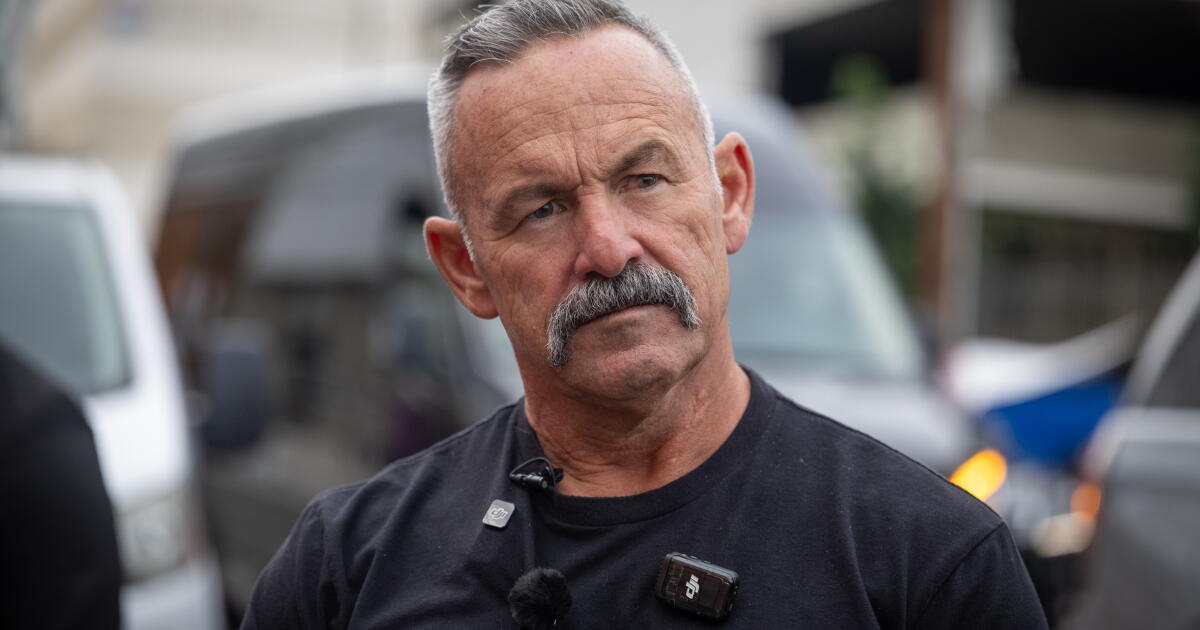
SACRAMENTO — Riverside County Sheriff Chad Bianco got slapped down Thursday by the California Supreme Court in not one but two cases. Ouch.
First, the court told Bianco to return more than 600,000 ballots he had seized as part of an ill-conceived, conspiracy-laden “investigation” into voter fraud — making it clear it was the sheriff who was the criminal.
“The seizure of the ballots was unlawful,” the court wrote, before ordering Bianco to give them back to the registrar of voters and “refrain from further handling of the ballots except as necessary to comply with our order.”
Then the court, in a separate case, told Bianco he’s not a law unto himself, and in fact does have a boss in the form of the state Atty. Gen. Rob Bonta. Bonta had previously ordered Bianco to pause his investigation, and Bianco largely ignored him.
While the high-profile lawsuit about Bianco’s seizure of hundreds of thousands of ballots from last year’s special election on redistricting has grabbed headlines, the second case about the authority of the state attorney general to oversee all California sheriffs and district attorneys is equally powerful.
It’s the first time the court has weighed in on a long-running debate in California over whether elected sheriffs have to answer to anyone. Not only did Bianco lose for election deniers everywhere in the first case, he also managed to clarify for all California sheriffs in the second case that they are not as powerful as some would like to believe.
Combined, the two opinions by the state’s highest court give another layer of assurance to Golden State residents that the integrity of the November midterm elections is as secure as the state can make it — some welcome news in a national landscape where free and fair elections are increasingly at risk.
The quiet advocate
Before we get into what the ruling means for midterms in California, there are two overlooked bits that make these cases even more interesting.
First, gubernatorial candidate and former Atty. Gen. Xavier Becerra has been closely involved in the ballot-seizing case, but also pretty quiet about it.
Whenever a politician does something good and doesn’t advertise it, it always catches my attention. Politicians, especially ones running for office, aren’t big on modesty.
But Becerra has not spent a lot of time talking about this, even though he is actually a working attorney on this case, as an advisor to the UCLA Voting Rights Project. He came up with ideas, he participated — this wasn’t just a put-my-name-on-it role, I’ve been told by folks who know.
And it’s not the first time Becerra has helped the Voting Rights Project in a major endeavor. It was their work that helped define the legal arguments that made Proposition 50 happen. That’s last year’s ballot initiative that redrew California voting maps to favor Democrats, in response to a Texas effort to gerrymander in favor of Republicans. It was Proposition 50 ballots that Bianco seized.
“Today the California Supreme Court handed voters a great victory,” Becerra said in a statement from the voting project. “The Court knocked election deniers off their feet and strengthened our hand in election protection just ahead of the November vote. We must use every lever at our disposal to beat back voter interference and intimidation.”
That line about knocking election deniers is not hyperbole. In some far-right, conspiracy-rich circles, Bianco’s cowboy-saving-the-day routine was viewed as heroic. Maybe even something to emulate.
Across the country, there are rumblings — including from President Trump — about seizing ballots from past or future elections. While this ruling is firmly rooted in California law, most states have similar chains of custody when it comes to ballots. So it’s likely to at least make other would-be-Biancos pause.
In a later interview, Becerra told me that the Voting Rights Project was “the one thing I decided I would do after I came home from being secretary in Washington, D.C.,” whether he ran for office or not, “just because I so believe in the work that they do.”
He said as he campaigns this year, he’s seeing anxiety in minority communities from that interference and intimidation, maybe even fear that could pressure some legal voters to sit this one out.
“It makes it tough when you’ve got all these things standing in your way before you even get to thinking about going to vote,” Becerra said. “The Latino community, other communities, mostly under-served communities, I always tell them, we’re not rich. The way we win these things is by voting.”
The Liu concurrence
The second fact that caught my attention was a concurring opinion on the ballot case by Justice Goodwin Liu.
While the court was unanimous in its findings, Liu wrote his own opinion highlighting how the Riverside registrar of voters was “caught between a rock and a hard place” when the sheriff of his own county showed up with a warrant, guns and “enough trucks to remove several pallets of materials.”
That trifecta, Liu wrote, left the registrar little room for dissent — but that’s a problem.
Liu’s point seemed to be that with the current state of our president making election denial chic, our voting officials need to step up. He said the registrar should have come directly to the court for relief, and not left it to the Voting Rights Project and other plaintiffs.
“It is a lot to ask of our election officials that they not only do their jobs competently but also stand ready to sue anyone who unlawfully interferes with their duties,” Liu wrote. “Yet here we are.”
Since Bianco seized the ballots, state law has been changed. This session, legislators passed (and Gov. Gavin Newsom signed) at least 13 laws pertaining to election security, including making it a felony to break the chain of ballot custody, and ensuring that local election officials immediately contact the state in instances when that is threatened. Those laws will offer protection to election officials if a situation like this comes up again.
But Liu’s point is still valid. Being an election official is no longer a sleepy little job, but a front-line battle for democracy, and for “our democracy to flourish, our elections must be conducted in accordance with the law.”
As Bonta put it, “if you can imagine it, we are ready for it.”
I’m not quite that confident — and definitely concerned for contests outside of the Golden State — but Thursday’s rulings are a reminder that the law still holds, even when lawmen try to break it.
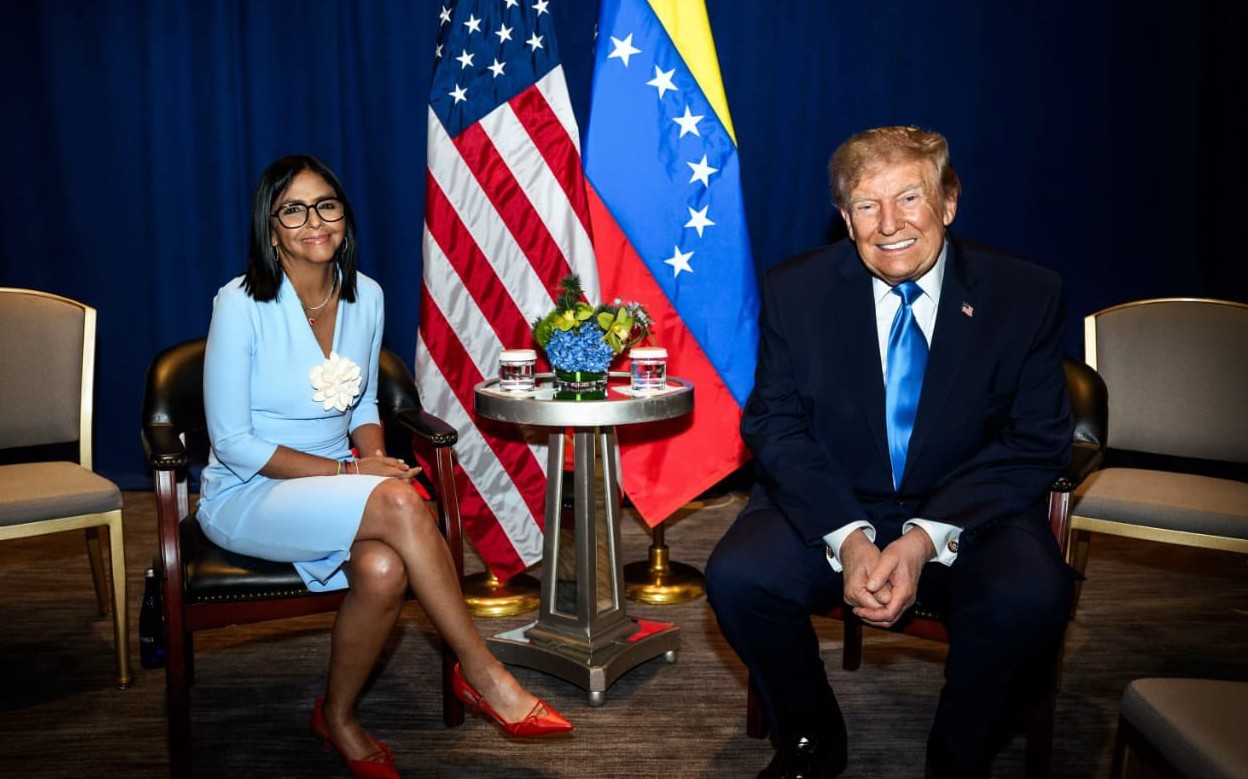
On the same day Delcy Rodríguez was in New York meeting Donald Trump and representing Venezuela at the United Nations, María Corina Machado was trying, unsuccessfully, to get closer to her own country.
It was her third attempt in barely 24 hours. First came a planned maritime departure from Panama, which was canceled after the company operating the vessel reported mechanical problems. Then came an attempted flight to Aruba, from where Machado intended to continue by sea. Finally, there was another flight plan, this time for Curaçao. That trip did not happen either. Her team now says she has attempted to return to Venezuela seven times since she left in December 2025 to get her Nobel Prize in Oslo.
The exact responsibility for the latest failures remains unclear. But what happened during previous attempts is better documented. Axios reported in July that the Trump administration’s position was that third countries should not help Machado enter Venezuela. When Deputy Secretary of State Chris Landau appeared to tell the Dutch government otherwise, officials in Washington corrected the message. Curaçao withdrew permission for Machado’s plane to land while she was already in the air. According to the same account, Secretary of State Marco Rubio subsequently reiterated the policy to Machado personally.
This sits awkwardly beside Washington’s public position. Rubio said this month that Machado, as a Venezuelan citizen, has every right to return “whenever she wants.” A State Department official told Congress in July that the US would not obstruct her return. Trump himself has denied telling her to stay away.
After World War II, keeping Emperor Hirohito in power did not mean preserving his capacity to decide who could participate in Japanese politics.
All of those statements may be technically true. The US does not issue Venezuelan visas and cannot legally forbid a Venezuelan citizen from entering Venezuela. But Machado cannot teleport into Caracas. Getting home requires aircraft, airports, territorial waters, neighboring governments and, increasingly, governments that want to know Washington’s position before helping her. There is a meaningful difference between saying that the US will not prohibit her return and telling American partners that facilitating it is not US policy.
This would already be an odd arrangement for any opposition leader. It is stranger still in Machado’s case. She is hardly a geopolitical threat to Washington. She has gone out of her way to present a democratic Venezuela as a close strategic partner of the US. In December, she said explicitly that America would be Venezuela’s “main ally.” She has spoken about opening the country to Western investment, rebuilding the energy sector with foreign capital and transforming Venezuela from a security liability into a partner for the US. After Maduro’s removal, she publicly thanked Trump and Rubio and described the outcome as a potential “win-win” for both countries.
Yet Reuters reported last week that US officials remain wary of her return because they fear her presence could disrupt the transition Washington is supporting around Rodríguez. Machado’s movement is not part of the current US-backed negotiating mechanism, while Delcy’s government has become Washington’s main Venezuelan interlocutor.
That raises a question that goes beyond Machado.
The postwar parallel
The Trump administration has repeatedly defended its approach as a matter of sequencing. Venezuela needs stability first, then economic recovery and reconciliation, and “ultimately democratic transition.” The White House argues that rebuilding the economy is a precondition for elections rather than a substitute for them.
There is a serious argument behind that position. Venezuela inherited a devastated public administration, a crippled oil industry, enormous external debt and institutions hollowed out by years of authoritarian rule. Abruptly dismantling the bureaucracy, military hierarchy or State-owned companies could reproduce some of the worst mistakes made in other post-authoritarian or post-conflict transitions. A functioning State matters.
But preserving the State is not the historical equivalent of preserving the regime.
After World War II, the United States repeatedly confronted versions of this distinction. In Japan, the occupation retained Emperor Hirohito partly because American planners believed institutional continuity could make the transition less destabilizing. But keeping the emperor did not mean preserving the emperor’s capacity to decide who could participate in Japanese politics. On October 4, 1945, General Douglas MacArthur ordered the Japanese government to remove restrictions on political and civil liberties and release political prisoners. Among those released were prominent Japanese Communists who had been imprisoned by the old order. American officials later acknowledged that the resulting political opening was so broad that some Japanese mistakenly concluded that the occupation itself favored the Communist Party.
When it comes to the geopolitical role of the US, the Trump administration depicts itself as the decisive actor reshaping Venezuela. When questions turn to the lack of institutional reforms, Venezuela’s sovereignty becomes a much more convenient explanation for the limits of American responsibility.
Something similar happened in Italy. The Allies initially worked through King Vittorio Emanuele III and Marshal Pietro Badoglio because they needed an Italian government capable of administering the country during the war. At the same time, political exiles were allowed to come home and anti-Fascist parties returned to public life. The contrast is particularly striking in the case of Palmiro Togliatti, the leader of the Italian Communist Party and a former senior official of the Communist International. When Togliatti sought to return from Moscow in 1944, the US State Department explicitly said it had “no objection.” He returned and soon participated in the new political order.
Neither Japan nor Italy offer a blueprint for Venezuela. The historical circumstances were radically different, and American occupation policy was hardly politically neutral. But the underlying distinction is useful. Administrative continuity did not require preserving the old regime’s monopoly over politics. The State could survive while the political system opened around it.
That is precisely where Washington’s current Venezuelan policy becomes harder to understand.
The art of deflecting
Keeping experienced civil servants at their desks is State continuity. Avoiding a wholesale purge of the armed forces may be State continuity. Keeping PDVSA pumping oil while new rules are negotiated is State continuity. None of those choices inherently require preventing opposition politicians from returning, organizing, or campaigning.
And Venezuela’s political opening remains incomplete. A UN Fact-Finding mission reported this month that, despite prisoner releases and some liberalization, the structures responsible for years of repression remain largely intact. Officials linked to previous abuses remain in important positions, restrictive laws survive and arbitrary detention and mistreatment have not disappeared.
This makes the widening gap between economic opening and political opening particularly important. Washington is moving rapidly on the former. Rodríguez traveled to New York accompanied by officials discussing oil, mining, debt restructuring and access to international financial institutions. American companies are negotiating their return to Venezuela’s energy sector. Trump has made the oil agreement one of the centerpieces of his foreign-policy narrative.
At the United Nations this week, Trump went further. After celebrating Maduro’s capture, the release of prisoners and Washington’s relationship with Venezuela’s current leaders, he described the new oil arrangement in unmistakably triumphalist terms. “It was a war,” he said, before invoking the old expression: “to the victor belong the spoils.” He then presented Venezuela as proof that the US would once again impose its power against threats in the Western Hemisphere.
If Machado returns, travels freely, organizes her movement, holds rallies and begins preparing for an eventual presidential campaign, Delcy’s continued presence can still be understood as part of an administrative transition.
The rhetoric creates an uncomfortable asymmetry. When discussing oil, geopolitical alignment or American power, the administration depicts itself as the decisive actor reshaping Venezuela. When questions turn to the remaining coercive apparatus, restrictions on political competition or the continued exclusion of important opposition actors, Venezuela’s sovereignty becomes a much more convenient explanation for the limits of American responsibility.
Washington cannot have unlimited responsibility for everything that happens inside Venezuela. Delcy Rodríguez still controls a government, a bureaucracy and a security apparatus of its own. But the US plainly possesses enormous leverage over the political and economic environment in which that government operates. The history of Machado’s attempts to return suggests that this influence may extend even to whether neighboring governments are prepared to help a Venezuelan opposition leader reach her country.
That is why Machado’s return matters beyond Machado herself.
If she returns, travels freely, organizes her movement, holds rallies and begins preparing for an eventual presidential campaign, Delcy’s continued presence can still be understood as part of an administrative transition: an imperfect bridge between the regime that existed under Maduro and a genuinely competitive political order.
If her return continues to be regarded as destabilizing, however, the logic starts to invert. Political competition itself becomes a threat to stability. The government is no longer merely being preserved so that the State can function while politics reopens; political reopening is being limited because it might endanger the government being preserved.
Venezuela does not need another collapse of the State. But avoiding State collapse and protecting the political equilibrium inherited from chavismo are two different objectives.
The distinction between them may ultimately define this transition.
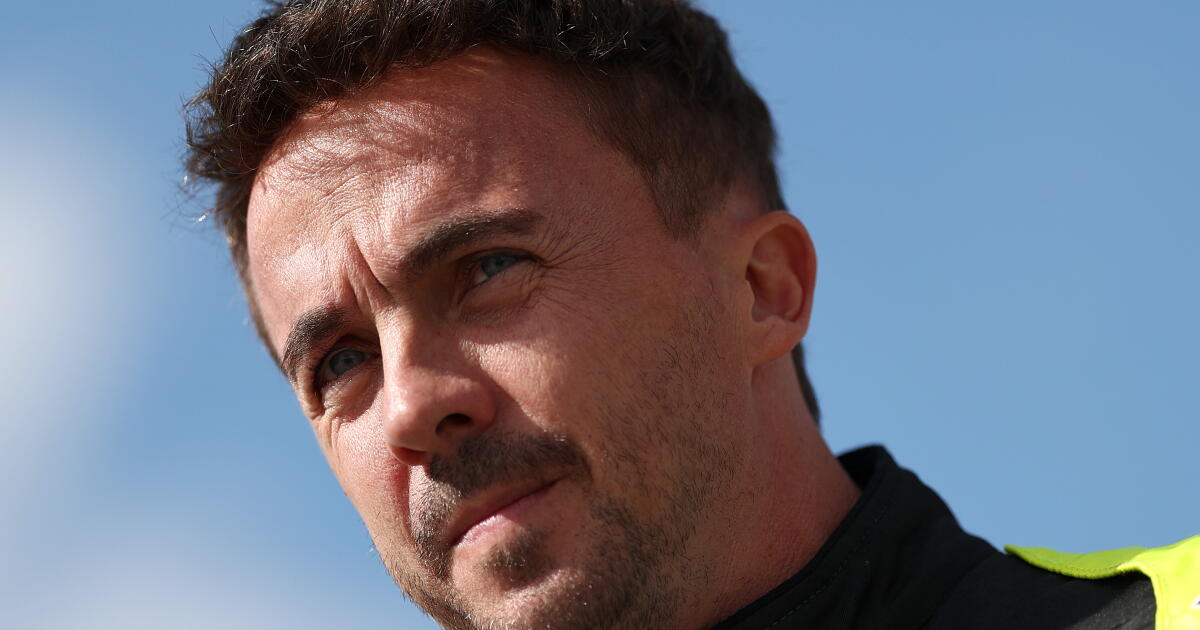
Frankie Muniz had a vulnerable moment on social media Friday, revealing he’s hit rock bottom following the announcement of his split from wife Paige Price.
The “Malcolm in the Middle” star announced he and Price were calling it quits after seven years of marriage in July, and now the actor is revealing he’s experienced some painful introspection in recent weeks.
“The last 6 weeks of my life have been a nightmare I’m praying to wake up from,” he wrote on Instagram. “Everything felt heavy, unclear, and like it was falling apart at the same time. I wouldn’t wish this season on anyone.”
He continued that despite the painful experience, “the unexpected gift in the middle of it is that I’ve had nowhere to hide.”
The actor-turned-race car driver said he’s spent the last several weeks reflecting and can now see the areas of his life where he thinks he can improve.
“I want to become a better version of me. Not the polished version I show the world … the actual one,” he wrote.
“I read that sometimes hitting rock bottom is the thing that wakes you up. It forces the changes you needed to make all along so you can live the best life possible. That idea has been sitting with me. In five years I believe I’ll look back at this exact low point and feel grateful for it, because the high I’ll be standing on then only exists because I went through this.”
He told his followers that this period isn’t the end of the story, but the catalyst for change.
“It’s the part where I start doing the work … the uncomfortable, unglamorous, necessary work. I’m choosing to treat this season as the foundation, not the finish line.”
Shortly after Muniz’s post, Price posted an Instagram story with a message that some followers speculated may be a response to the actor’s admission.
“Life is all about perspective. If you ask the grass, the zebra is the monster and the lion is the protector,” Price wrote.
Muniz is best known for his titular starring role in the beloved Fox sitcom “Malcolm in the Middle,” which ran for seven seasons in the early aughts. In April, the series returned for a four-episode reunion arc on Hulu starring returning fan favorites Bryan Cranston as Hal, Jane Kaczmarek as Lois and a couple of Malcolm’s TV siblings.
In 2006, when “Malcolm in the Middle” wrapped, Muniz transitioned away from acting and pursued race car driving.
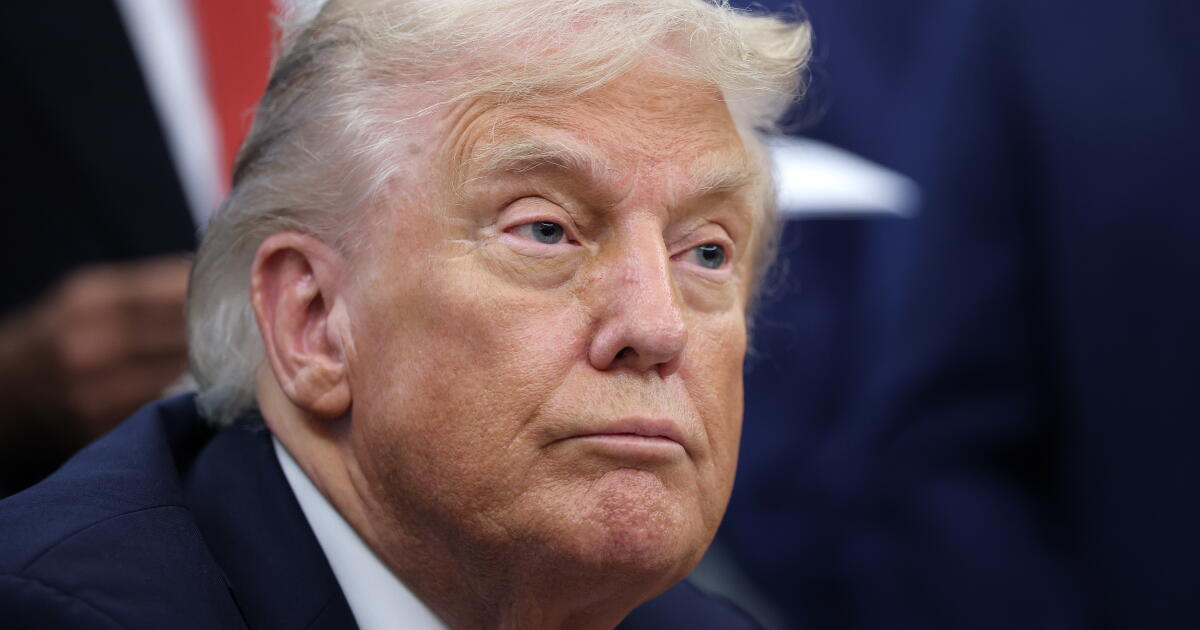
President Trump announced Friday he intends to ban CNN, MS NOW, Politico and other news outlets from covering the White House, his strongest threat yet against a free press.
In a statement on Truth Social, Trump attacked the the reporting of the three outlets which he described as “FAKE NEWS!”
“Media Outlets shouldn’t be able to constantly write or report FICTION and LIES when they’re covering the President of the United States of America,” Trump said.
How a ban would be enacted remains to be seen. In 2018, the White House tried to ban journalist Jim Acosta, then working for CNN, but a court ordered that his press credential be restored.
Trump has stepped up his attacks on the press during his second term. Federal Communications Commissioner Brendan Carr has threatened the broadcast licenses of outlets Trump dislikes. Carr has called for a review of ABC’s TV licenses, which the Walt Disney Co.-owned network is challenging in court.
After the post circulated, Trump held a press briefing from the Oval Office to discuss drug pricing. According to the pool reporter, no journalist was removed from the press room.
Trump was asked about the Truth Social post. He responded by further attacking the three outlets. He did not cite any specific report that led to his call for a ban.
“I dislike dishonest press,” he said.
Trump’s remarks generated an an immediate outcry from press freedom groups.
“It’s difficult to imagine a more blatant violation of the First Amendment than Trump banning news outlets from the People’s House for criticizing the government,” Seth Stern, chief of advocacy at Freedom of the Press Foundation, said in a statement.
“It’s also hard to imagine a dumber move. The historically unpopular president has been retaliating against the press for years, but it hasn’t helped him.”
Stephen McGann has opened-up about his character, Dr. Turner, being played by a new actor for the drama’s prequel
Call the Midwife wraps up in emotional finale
Call the Midwife legend Stephen McGann has claimed he “cannot see” the resemblance as a new actor steps into the role of Dr. Turner.
The 12th season of the much-loved BBC period drama, based on the memoirs of Jennifer Worth, concluded earlier this year with a heartbreaking finale. The death of Sister Monica Joan (Judy Parfitt) left viewers devastated, while the future of Nonnatus House remained uncertain due to advances in the NHS.
Before the show returns with season 16, a prequel titled Sisters in Arms is set to air this festive season. The three-part mini-series will be set during the London Blitz and follow familiar characters in the early stages of their careers, including Dr. Patrick Turner.
The adored GP first arrived in Poplar during the debut episode of Call the Midwife, which aired in 2012, and has since remained a favourite among fans. The character will appear in the prequel, with This Town actor Ben Rose portraying a young Patrick Turner.
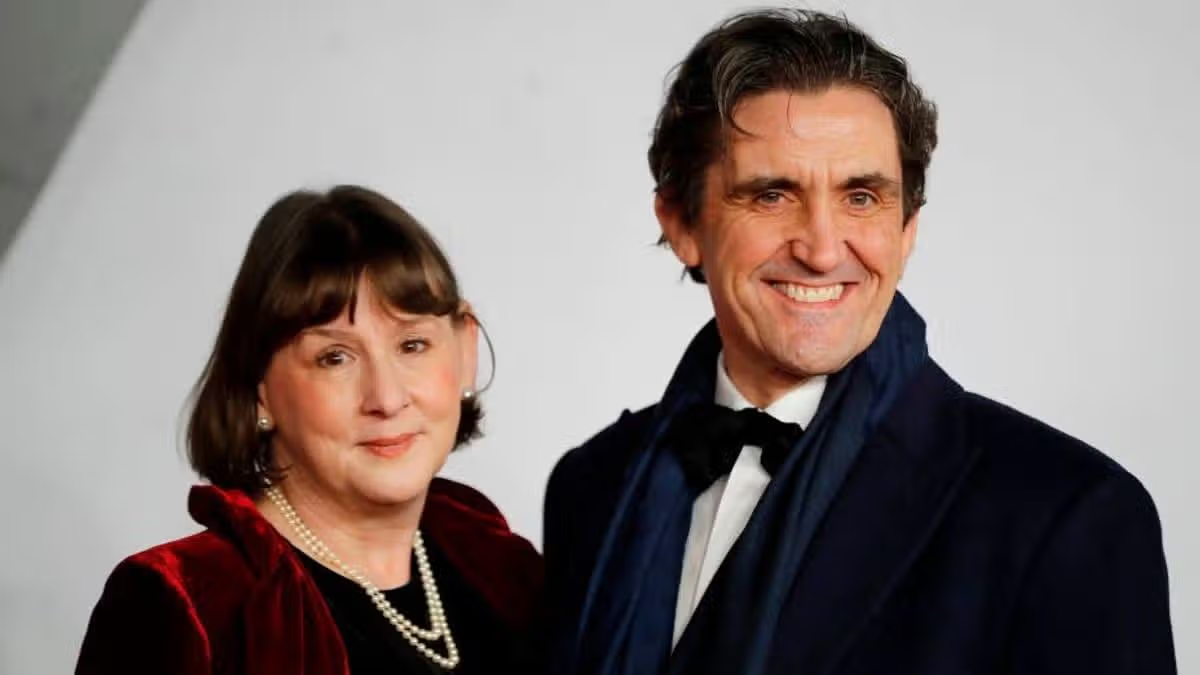
Speaking about Sisters in Arms, Stephen, 63, has offered a playful glimpse into his marriage with the show’s creator, Heidi Thomas, who thinks Ben Rose is the spitting image of her husband. “I think he’s the image of Steve,” Heidi told Radio Times. “Steve can’t see any resemblance, so the audience are going to have to draw their own conclusions.”
Stephen was quick to chime in: “Do you know what happened? I’m in my house, and when the final casting was confirmed, my good lady wife and my son were conferring, going, ‘Oh, he looks like Dad, doesn’t he? Doesn’t he look like Dad?'”
Heidi laughed: “He does, he does, but you can’t see it, can you, love?” Stephen then confirmed: “I can’t see it at all.”
Stephen and Heidi first crossed paths in 1988 and exchanged vows two years later, when they were both 27. They spent their honeymoon in Tuscany before settling down in a quaint cottage in rural Essex, before moving to Cambridge. The couple share one son, Dominic. As per Stephen’s memoir, A History of My Family in Seven Maladies, he first encountered Heidi when he auditioned for her new play at the Liverpool Playhouse.
What is Sisters in Arms about?
Call the Midwife will turn back the clock to World War II as bombs rain down in Poplar, East London, at a time when the National Health Service was non-existent. Set in 1939, it will see three familiar nuns in the early stages of their careers.
According to the BBC’s synopsis: “In September 1939, Sister Monica Joan is in her prime, Sister Julienne and Sister Evangelina are young and zealous, and Nonnatus House is the beating heart of Poplar.
“Together with Sister Alice, and local GP Dr Kit, the nuns dedicate their lives to mothers, babies and those in need. But there is no gas and air, no penicillin, no cure for TB, and no welfare state. Then war is declared – and life gets even harder.”
It adds: “While bombs rain from the sky, women give birth underground, families are shattered, children run wild, and whole streets are reduced to rubble. But courage, compassion and resilience triumph as the community unites in its efforts to survive.”
Created, written, and executive produced by Heidi Thomas, Sisters in Arms welcomes a new cast, including Coronation Street’s Hayley Cropper star Julie Hesmondhalgh as Sister Alice.
Theatre star Helena Wilson is taking on the role of a young Sister Julienne, though the original actress, Jenny Agutter, will be narrating the miniseries. Ami Metcalf, who played Lynette in the first Christmas special, is returning as Betty Buckle, the first wife of Fred Buckle, now played by Ciaran Bowling. Ben Rose also takes on the role of Dr. Turner.
The BBC has confirmed that Sisters in Arms will air on BBC One and iPlayer this Christmas, though the exact days and times are yet to be confirmed.
Call the Midwife is available to stream on BBC iPlayer
MEXICO CITY — He’s been called the “MAGA man” of Latin America, a brash political provocateur whose social media assaults boosted right-wing campaigns from his native Argentina to Central America.
His career as political consultant and co-founder of an ultra-right online outlet made him a rich man and helped elect Trump-aligned politicians across the region. The Economist gave him the “MAGA Man” label, while political commentators gave him another nickname — the “Steve Bannon of Latin America” — a nod to the longtime Trump ally and advisor.
Now, however, Fernando Cerimedo, 45, sits in a maximum-security prison in Bolivia, accused of masterminding a murder-for-hire plot: The attempted femicide of his pregnant mistress, Nadia Beller, 33, a Bolivian lawyer and activist.
It’s a stunning collapse for a onetime ad man with a dodgy reputation who rose to become the go-to digital campaign guru for Latin America’s ascendant right wing. Cerimedo’s signature boasts, exaggerations and peddling of false election-fraud narratives reflected those of his political model, President Trump.
Cerimedo also is another example of how right-wing political operatives outside the United States — as recently in Colombia and Germany — have adopted Trumpian tactics and messaging.
The fall of the “King Midas of the Latin American right,” said Daniel Matamala, a prominent Chilean journalist, stunned “the ecosystem of fake news, bots, trolls and disinformation that has taken this region by storm in recent years.” Speaking on his podcast, Matamala added, “The name of Cerimedo looms like a ghost over the summit of the radical right.”
The Aug. 17 attack on Beller was a seemingly well-planned ambush that was captured by security cameras, the grainy images widely disseminated on social media.
One of two would-be assassins dressed as fast-food deliverymen pulled out a pistol and shot Beller point blank outside a hotel in the eastern Bolivian city of Santa Cruz. She fell to the ground and, according to her account, feigned death. The next day, at dawn, Cerimedo was arrested as he was about to board a plane to Buenos Aires.
Cerimedo set up the hit, prosecutors charge, in a nefarious attempt at damage control. Beller had threatened to expose his alleged criminal behavior and physically abusive behavior toward her while revealing Cerimedo, a married man with two children, as the father of her unborn child.
Cerimedo is also under investigation for alleged illegal enrichment and potential links to cocaine trafficking.
He has denied any wrongdoing.
Even before Cerimedo’s arrest, Latin American journalists had begun unmasking Cerimedo as a prodigious purveyor of fake news — about himself. New reports revealed that his frequent boasts about U.S. connections — that he attended Harvard, trained with U.S. Navy SEALs, worked in the Obama White House — were fanciful.
“He certainly exaggerated things,” said Damian Merlo, a Miami-based consultant who worked with Cerimedo on the 2023 campaign of Argentine President Javier Milei, a Trump favorite. “I never really got the impression that Cerimedo was ‘MAGA’s man in Latin America.’ The guy could hardly speak English! But that’s how he sold himself.”
Many times, the sales pitch worked. It was Cerimedo who helped broker then-candidate Milei’s celebrated 2023 interview with Tucker Carlson, at the time a Trump confidant, an appearance that thrust Milei into the international spotlight.
Like Milei, Cerimedo seemed to relish any proximity to Trump-land.
In February, at the inaugural “Hispanic Prosperity Gala” — a right-wing pep rally held at Trump’s Mar-a-Lago estate — Cerimedo was honored as “Hispanic Political Consultant of the Year.’” From the podium, he spoke of Latin America’s “culture war” and the need to ensure that “the left never again returns” to governments that have elected conservative leaders.
Switching to heavily accented English, Cerimedo gave a shout-out to Brad Parscale, Trump’s former campaign manager, whom Cerimedo thanked for “believing [in] me all the time and giving me your technology.”
Parscale declined to comment.
Fernando Cerimedo, an advisor to the National Party, points at a map of Honduras on Dec. 1, 2025, one day after voters went to the polls to elect Nasry Asfura president.
(Moises Castillo / Associated Press)
Both Cerimedo and Parscale were involved in last year’s campaign that resulted in the election of Honduran President Nasry Asfura, whom Trump backed publicly.
Last year, Cerimedo was a key player in the election of Bolivian President Rodrigo Paz, the center-right, U.S.-educated son of a former president who transitioned from Marxist firebrand to moderate. The ascension of Paz broke almost two decades of leftist rule by the Movement for Socialism party of ex-President Evo Morales.
Cerimedo had no official capacity in Paz’s government, but he enjoyed insider status. He accompanied Paz in March to Trump’s anti-narco “Shield of the Americas” summit, a confab of mostly conservative leaders at Trump’s Doral resort in south Florida.
Among the items found in searches of Cerimedo-linked properties, authorities say, was a business card listing him as Paz’s “chief adviser” — a nonexistent post.
“Mr. Cerimedo never had the authorization to represent … the presidency, the government or my family,” a deeply discomfited Paz said in Facebook message last month.
How exactly Cerimedo got into politics — and how he became a right-wing rabble-rouser — remains somewhat opaque. According to media accounts, he worked a series of uninspiring jobs — including stints as a taxi driver, a schoolteacher and an employee of insurance and computer firms — before veering into advertising. In 2019, he assisted the campaigns of several leftist Peronist candidates in provincial races in Argentina, and later founded his own consultancy, Numen.
Cerimedo first gained prominence in neighboring Brazil. That’s where he championed false election-fraud narratives following the narrow reelection defeat in 2022 of President Jair Bolsonaro — a MAGA stalwart — in his reelection bid against Luiz Inácio Lula da Silva, a leftist. Cerimedo’s “Brazil Was Stolen” livestream exacerbated the sense of outrage among Bolsonaro loyalists, who took to the streets in mass protests.
The Brazil exposure helped catapult Cerimedo into successful presidential campaigns in Argentina (Milei), Honduras (Asfura) and Bolivia (Paz). His arrest prompted Chilean lawmakers to create a commission to investigate Cerimedo’s possible role in that nation’s recent electoral shift to the right.
With Cerimedo’s name now toxic, Paz, Milei and other former allies have distanced themselves.
Also ditching Cerimedo was his close partner, Javier Negre, a right-wing Spanish media entrepreneur who, in 2024, purchased 50% ownership of Cerimedo’s La Derecha Diario (The Daily Right), an online, Spanish-language MAGA megaphone. The site strongly backed Colombian President Abelardo de la Espriella — who had Trump’s support — during his tight campaign this summer.
Following Cerimedo’s arrest, Negre announced that he had bought out his former partner in La Derecha Diario.
In Bolivia, the Cerimedo scandal has taken on the character of a Latin American telenovela.
A recovering Beller, shot three times in her upper body, granted interviews from her hospital bed, dishing on her lover’s alleged brutality and criminality.
According to Beller’s testimony to authorities, Cerimedo tricked her into the near-fatal rendezvous outside the hotel. He told her that a source was waiting to share details about the purported rape of a 13-year-old, she said. The supposed rapist? Bolivian ex-President Morales — a despised figure on the Latin American right.
The case has seen the once high-flying Cerimedo reduced to a slumping presence in a hoodie as authorities have shuffled the baldish, heavyset figure to hearings and lockups. Last week, he was transferred while awaiting trial to Bolivia’s maximum-security Chonchocoro prison, infamous for its high-altitude, ill-heated confines.
“I want to see my children!” a sobbing Cerimedo declared at one point in earshot of the media.
His legal team has pushed back. A defense lawyer, Margarita Arce, questioned whether Cerimedo had impregnated Beller and asserted to reporters that Beller staged a “self-inflicted attack” to smear Cerimedo and undermine the Bolivian government.
But prosecutors have sided with Beller, who told the Argentine daily Clarín: “Fernando Cerimedo wanted to kill me because I can tell everything that I know.”
Times staff writer Ana Ceballos in Washington and special correspondents Andrés D’Alessandro in Buenos Aires and Cecilia Sánchez Vidal in Mexico City contributed to this report.
COMEDIAN Jim Davidson has called off his sixth wedding to his fiancée Natasha after secretly separating – and exclusively revealed to The Sun the reasons behind the split.
The Celebrity Big Brotherstar, 72, was set to wed at Hampton Court Palace last year – and ending it all has come at quite a cost.
Jim Davidson has separated from his fiancée NatashaCredit: NewsquestThe pair, who have a 23-year age-gap, had planned to at wed Hampton Court Palace
The palatial venue, where all six of King Henry VIII’s wives lived during their marriages, was an amusing nod to Jim’s string of failed marriages – but Davidson and Natasha, 49, have now lost their £10k deposit.
Despite plans to marry six times like the former King of England, funnyman Jim confirmed the engagement is off.
He told The Sun: “There’s no bad blood. Natasha is the most caring and dutiful person.
“It’s not like we’re splitting up because we don’t love each other anymore.
“It’s a sort of a grown-up separation. The timing’s not right because she has so much time for everybody and how can you knock that?”
Jim and Natasha pictured with Reform MP Lee Anderson MPCredit: LeeAndersonMP_/xJim, who won Celebrity Big Brother in 2014, is newly singleCredit: Alamy
The smitten comic later introduced her to pals at Reform leader Nigel Farage’s birthday party saying he was going to make her his sixth wife – despite previously admitting his divorces had cost him around £60million.
He even renamed his £350,000 yacht – previously called Princess Mitchie after his ex-wife Michelle Cotton – Lady Natasha in honour of his new love.
However, the former Big Break and Generation Game host says the couple are no longer in a relationship ahead of their third anniversary.
He told us: “We still speak every other day, but whether we’ll ever find room to see one another again, I don’t know.
“She is very dutiful. She puts family first. And of course she has three children and now a grandson as well.
“She is just so busy and so I’m very busy as well. I’ve just finished a tour and my a*** is shaped like my car seat after travelling around the country. I get out of the car and I walk like I’m still in it.
“Our busy lives mean we’ve not been seeing one another. I previously fitted into her life because I’m hardly ever around myself.
“But there’s no bad feelings. I do love her. She’s fantastic.
“She’s the best friend you could ever have. She’s the best mother you could ever have.
“She’s the best daughter you could ever have. And I’m so proud that she was my girlfriend up until now.”
Jim – who was awarded an OBE in the 2001 New Year Honours – launched the Ustreme streaming channel after a successful stint recording short videos during Covid when he was unable to perform live and had no idea how audiences would respond.
The content includes exclusive stand-up shows and in-depth interviews with the aim of “making people laugh like they used to”.
Natasha’s new series is set to air on Jim’s website, where she jokingly refers to herself as the ‘future ex Mrs Davidson’.
Jim continued: “We planned to get married last year and even booked Hampton Court Palace, which we thought was great because Natasha would be the sixth wife and she thought that was hysterical.
The comedian is going on tour in DecemberCredit: PR HandoutJim pictured in 1976 on New FacesCredit: Rex
“But these days we just don’t have the time to see each other and split up every month.
“So going forward, we might end up seeing each other again, or we might draw a line under it because it’s not practical for the pair of us.
“I said to her, ‘Are you going to give me my jewellery back? and she told me, ‘If you want it back, I’ll just get it from someone else’,” Jim laughed.
“She’s a beautiful girl. How she found time for me, I’ve no idea. She does everything for everybody and asks nothing for herself.”
Ruling out there being another potential wife-to-be on the cards, Jim joked: “The only thing that’s in my life now is a Hyundai Santa Fe and a dressing room.”
Natasha’s new eight-part series launches in October, interviewing an array of celebrity guests.
Meanwhile Jim Davidson – The Christmas Cracker Tour – launches on December 2.
Jim’s five wives and a fiancee
JIM married his childhood sweetheart Sue Walpole in 1971 at the age of 17 after she became pregnant with their daughter Sarah.
The marriage only lasted a year, and they divorced in 1972.
Jim wed second wife Julie Gullick in 1981 and had his second child, Cameron, but split five years later.
Jim wed TV presenter Alison Holloway in 1987, but the marriage was hit with rumours of infidelity and was over by 1989.
One of Jim’s most successful relationships was a 10-year marriage to former Page Three girl Tracy Hilton – the mum of his three youngest children – Charlie, Fred, and Elsie.
Jim married his fifth wife Michelle Cotton in 2009 with hopes that she was ‘the one’.
During an interview on Piers Morgan’s Life Stories, the host asked him about his wife, and Jim replied: “She is a very nice person. She’s impatient, she’s fiery like me.
“I hope I’m with Michelle for the rest of my life, there’s no one better I’d want to spend the rest of my life with. Liz Hurley, perhaps?”
However in 2023, the comedian revealed they had split up, with their divorce finalised in 2024.
He said in an interview posted on ustreme.com: “There you go, the divorce came through today, so it’s done. I’m divorced again, my fifth divorce.
“The house has been sold and that will be going through in March, fingers crossed.