Iran war fuels S. Korean tanker bet as shipping heir’s strategy pays off

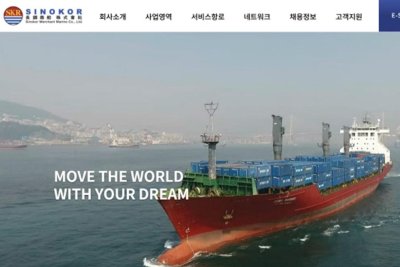
The homepage of South Korean shipping company Sinokor Merchant Marine (Janggeum Shipping) is shown in this screenshot. Captured by Asia Today from Sinokor website
March 16 (Asia Today) — A bold bet by a South Korean shipping heir on ultra-large oil tankers is paying off handsomely as the war involving Iran disrupts global energy markets and drives tanker demand sharply higher.
Bloomberg reported that Sinokor Merchant Marine, a major South Korean shipping company, positioned itself to profit from the crisis after securing a large fleet of very large crude carriers (VLCCs) months before the conflict escalated.
The strategy was led by Jeong Ga-hyun, a director at Sinokor Petrochemical and the son of Sinokor Chairman Jeong Tae-soon, according to the report.
Bloomberg described the move as an unprecedented large-scale bet in the global tanker market, executed well before the outbreak of the Iran conflict.
Tankers deployed to Gulf before war
On Jan. 29, weeks before the war erupted in late February, Sinokor reportedly deployed at least six empty VLCCs to the Persian Gulf, positioning them to wait for cargo.
After disruptions in the Strait of Hormuz pushed tanker demand and charter rates sharply higher, the strategy began generating massive returns.
The Strait of Hormuz is one of the world’s most critical energy chokepoints, handling roughly 20% of global oil shipments.
Tanker rates surge to $500,000 a day
With oil exports disrupted and storage facilities across the Middle East filling rapidly, oil producers have increasingly turned to tankers as floating storage units.
According to Bloomberg, Sinokor is now chartering vessels for about $500,000 per day, roughly ten times last year’s average tanker rates.
Industry estimates suggest that by late February the company controlled around 150 VLCCs, representing roughly 40% of available tankers not already tied up in sanctions or long-term contracts.
Quiet heir behind massive shipping strategy
Jeong is known in the shipping industry as the low-profile heir to one of South Korea’s major maritime families.
Bloomberg reported that he rarely appears publicly and is known internally for a military-style management approach. Industry anecdotes even describe him challenging employees and business partners to arm-wrestling contests.
Oil supply disruptions reshape tanker market
The Iran war has dramatically altered global oil transportation patterns, forcing ships to reroute and increasing the need for offshore storage.
Under those conditions, Sinokor’s aggressive tanker acquisition strategy is now being viewed as one of the biggest winners of the crisis, Bloomberg said.
WSJ: Sinokor among winners of Hormuz crisis
The Wall Street Journal earlier identified Sinokor as one of the companies benefiting from the Strait of Hormuz tensions.
According to the newspaper, the company purchased dozens of oil tankers and deployed some of them to the Gulf region even before the conflict intensified.
Sources told the Journal that Sinokor is leasing several vessels to ADNOC, the United Arab Emirates’ state-owned oil company, to be used as floating storage facilities.
These vessels can earn up to $500,000 per day in charter fees, the report said.
As land-based storage in Gulf oil-producing countries approaches capacity, producers have increasingly stored crude at sea. Drilling firms in Iraq and Kuwait have even slowed production due to storage shortages.
The WSJ also noted that Greek shipping magnate George Prokopiou adopted a similar strategy, sending at least five tankers to the Strait of Hormuz through his company Dynacom, which is reportedly earning up to $440,000 per day – about four times pre-war rates.
— Reported by Asia Today; translated by UPI
© Asia Today. Unauthorized reproduction or redistribution prohibited.
Original Korean report: https://www.asiatoday.co.kr/kn/view.php?key=20260316010004394