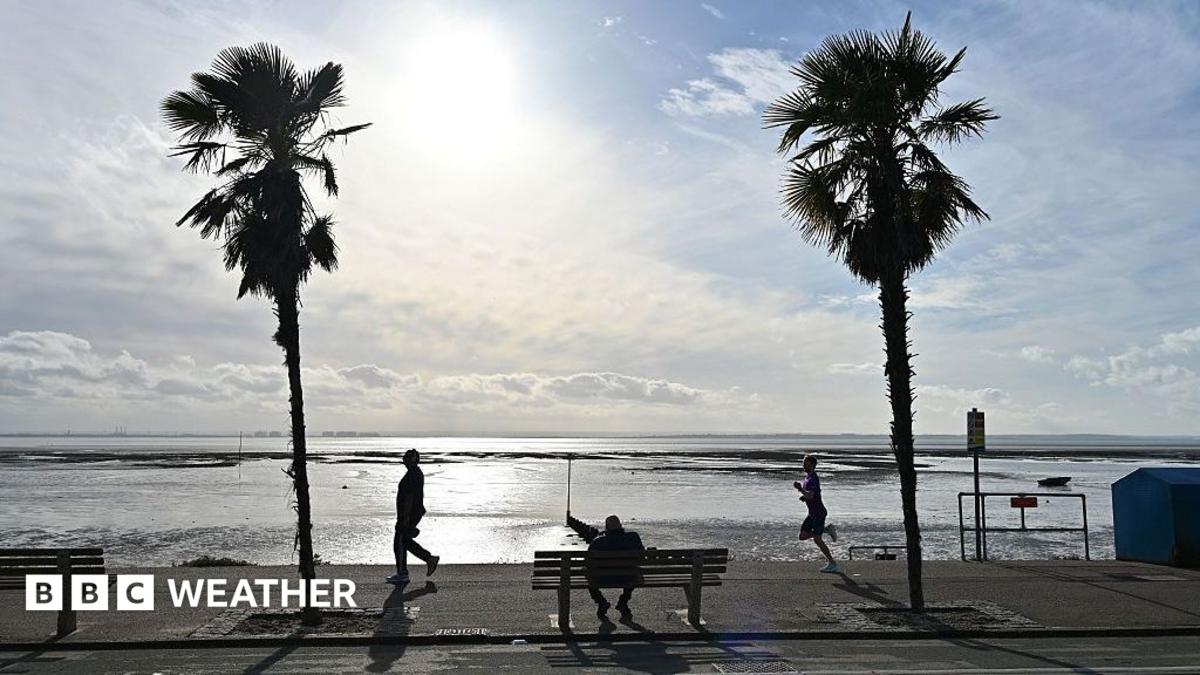

Heatwave

New Spain warning as people told ‘take extreme precautions’

A new alert has been issued in Spain

People in Spain have received another urgent warning following a national emergency declaration earlier this week.

Thousands were forced to flee their homes as wildfires tore through sections of the country, although many have since been permitted to return. A new alert from Spain’s national weather agency, posted on X on Wednesday morning, cautions that additional fires could break out. The message, initially published in Spanish, reads: “With the new heatwave, today the fire danger will be very high or extreme in most of the country.

“Take extreme precautions.” Temperatures are forecast to reach 41C today in the central province of Toledo, where residents from nine of 11 evacuated towns were given the all-clear to return home on Tuesday.

Madrid is bracing for highs of 38C, while Zaragoza is predicted to see the mercury climb to 40C, according to the Met Office. Seville, Malaga, and Palma are expected to experience highs of 37C, 33C, and 33C, respectively.

Content cannot be displayed without consent

The UK government hasn’t issued any blanket warnings for Spain, though it is advising holidaymakers to remain alert. The Foreign, Commonwealth and Development Office (FCDO) continues to urge Brits in wildfire-affected areas to “follow instructions from local authorities and emergency services at all times; check updates from the emergency services; and call 112 if you need emergency help”.

On Tuesday, Spain’s Interior Minister urged people: “Don’t let your guard down” adding that “a spark, a moment of carelessness, or an oversight can change anything”. The FCDO guidance states: “Make sure cigarette ends are properly extinguished, do not light barbecues and do not leave empty bottles behind. You can be heavily fined for not following the rules against lighting outdoor barbecues in forest areas.

“Make sure you know the rules if considering a barbecue.”

Source link

Gironde wildfires flare up as French region braces for new 40C heatwave

On Tuesday morning the Gironde prefect ordered a new evacuation of all camping sites near the coast at Lacanau, while those in the nearby town were allowed to stay put but told to prepare for sudden evacuation.

About 4,000 tourists told to leave the area are in addition to the 220,000 people evacuated around France in recent days.

An estimated 240 homes and houses have been destroyed, officials have said.

By midday on Tuesday firefighters were already intervening in various parts of the region to tackle fires that were picking up again.

A 23-year-old man who was arrested on suspicion of starting a fire in the Var region. is now facing 15 years’ imprisonment. Interior Minister Laurent Nuñez said that 184 people had been arrested since 6 July in connection with the fires.

Peggy Plouhinec, the general director of Château Picque Caillou – one of the few wine estates on the west side of Bordeaux – told the BBC that her business chose to close at the weekend because of the smoke, but that the situation had improved since then and that a bout of rain on Sunday night had helped.

While her vineyards were not at risk, she said tourists had “deserted” the region.

“The hospitality sector will be impacted this summer, that’s for sure,” she added. “What is happening is unprecedented. We’re lucky that we haven’t been too affected yet, but the business will still suffer from the lower numbers of tourists.”

“But many people have lost their homes or their businesses, not to mention the firefighters who have been hard at work for weeks now and who must be exhausted.”

One resident of Cap Ferret, which was evacuated late last week, told French media that his main concern now was for the peninsula he lived in, rather than the big city city inland.

“Everyone talks about saving Bordeaux, but in Bordeaux there’s nothing but concrete. Have you ever seen concrete burn?”

“Here, there are only trees… and when you see all that has burned, it’s a catastrophe.”

Additional reporting by Xavier Pallas

Source link

France and Spain brace for heatwave that could worsen raging wildfires | Climate Crisis News

Both countries expect to see temperatures soar into Wednesday, which could cause the blazes to spread.

The spread of wildfires in France and Spain that had come dangerously close to the cities of Bordeaux and Madrid appears to be slowing, authorities say, but they are bracing for yet another stifling heatwave this week, which could fan the flames of current blazes and ignite new ones.

Nearly 4,000 people were evacuated from tourist sites in the Lacanau area of the Gironde region in southwestern France on Tuesday, bringing the total number who have fled Gironde to well over a quarter of a million. The wine-growing region, which includes the historic city of Bordeaux is the worst affected in France by the wildfires

Recommended Stories

list of 3 itemsend of list

“We are at a point of fragility,” Eric Brocardi, spokesperson for France’s national firefighters federation, told BFMTV on Tuesday. “We will continue attacking this fire despite the forecast rise in temperatures.”

Images posted by the French newspaper Le Figaro showed ash on a beach in Lacanau. Sophie Brocas, Gironde’s prefect, has banned all sporting and cultural events until August 8.

France’s fourth heatwave of 2026 is expected to begin on Tuesday as temperatures are forecast to reach as high as 40 degrees Celsius (104 degrees Fahrenheit) in the coming days. When the heatwave reaches Spain on Wednesday, temperatures are expected to be even hotter there.

In Spain, 116,000 people have had to leave their homes since the wildfires began, but some have since been able to return. In the central province of Toledo, people from nine of 11 evacuated towns were allowed to go back to their homes on Tuesday.

Interior Minister Fernando Grande-Marlaska said people “can be a little more at ease” after progress overnight in tackling the many blazes in the country, which are mostly concentrated in central Spain.

Firefighters are also dealing with blazes in the neighbouring provinces of Avila and Toledo. About 800sq km (310sq miles) of land have burned.

One Spanish evacuee from the east of the country told the Reuters news agency he had witnessed “total chaos”.

“It was like in the movies where hell cracked the ground open, and you see the red hell.”

The scorching heat has renewed concerns about climate change with Spanish Prime Minister Pedro Sanchez describing the fires as “the most painful expression of a climate emergency”.

Sanchez said authorities are beginning “to see the light at the end of the tunnel in the fight against wildfires” but cautioned that the upcoming heatwave still has to be dealt with.

Source link

Heatwave drives major wildfires across North Africa | Newsfeed

NewsFeed

Extreme heat and strong winds are fuelling a wave of wildfires across North Africa, with major fires burning in Tunisia, Algeria and Morocco. Tunisia has called in international firefighting aircraft as crews battle fires threatening forests, farmland and nearby communities.

Source link

Best type of staycation is crowned as school summer break gets underway ahead of scorching heatwave

Seven in 10 people asked said they loved camping, rising to 85% of those under 30

Camping is the pitch perfect way to spend a staycation, especially if you are younger, a survey suggests.

Seven in 10 people asked said they loved camping, rising to 85% of those under 30. The top spot is the National Trust’s campsite at Great Langdale beneath Langdale Pikes in the Lake District.

It took 28% of the votes from the 2,000 Brits asked in the poll, with Watermouth Valley in Devon second (19%), followed by Red Squirrel in Glencoe, Scotland, (18%) and Loch Lomond and The Trossachs National Park on 17%. The Duchess’s Meadow in the Peak District and Cloud Farm in Devon both got 14%.

Nearly a quarter believe Britain is the best place in the world to pitch a tent. The main attractions are reconnecting with nature (45%), spending more time in the UK (44%), enjoying time with family (37%), and saving money (33%).

Other draws include getting away from it all (31%), peace and quiet (29%), the great out-doors (23%), gazing at the stars (21%), and waking to the sound of birdsong (19%).

George Wallis, of Isuzu UK which commissioned the poll, said: “The findings have highlighted some wonderful places in the UK. The UK is one of the most beautiful countries in the world, it’s no surprise loading up and heading somewhere remote remains timeless.”

Source link

Heatwave hell sparks summer of chaos as THOUSANDS queue for holidays and wildfires force Brits to flee hotels

As 6.3 million people embark on road trips, the UKHSA has issued a yellow heat health alert with a risk to life for the elderly and vulnerable

More than six million people are hitting the roads as the summer holidays begin – battling 30C temperatures and nose-to-tail traffic jams.

The AA predicts 6.3 million of us will make journeys between now and Thursday. Yellow heat health alerts are in place across much of the country until tomorrow morning and the UK Health Security Agency is warning of minor impacts on health and social care services and an increased risk to life for vulnerable people.

The Port of Dover is braced for its busiest weekend of the summer. Holidaymakers faced gridlock as they waited for ferries today, and tomorrow is set to be the same. Ferry company DFDS said its wait times at Dover were up to 60 minutes at border controls.

But officials hope it will be smooth sailing compared to the May half-term getaway, when waiting times hit four-and-a-half hours due to technical issues with thenew border check Entry Exit System.

The RAC’s Simon Williams warned: “Drivers should be ready for some very busy roads this weekend and expect delays. The best advice is to plan journeys and think about setting off earlier or later in the day to avoid traffic jams.”

Opting to stay at home this week will also come with its challenges. Millions of Brits are now subject to hosepipe bans and a drought has been officially declared for large parts of north and mid-Wales.

The rest of Wales, along with much of central, southern and eastern England, is in the “prolonged dry weather” ­category – one stage below a drought. But parts of Britain might be in for some light relief from Sunday, as high pressure retreats and brings outbreaks of rain.

Showers could be heavy in the north and the west of the UK, with 20mm possible in parts of north west Scotland. The rain will be much patchier further south and east, with large swathes of England and Wales forecast to get just a few millimetres at most. And it’s likely some locations in the south of England will not see a drop.

The Met Office’s Dan Suri said: “After a prolonged spell of hot, dry and settled weather, some will see a temporary change this weekend as weather fronts move south east across the UK. While some areas, particularly in the north and west, will see rain and showers, many places are likely to receive ­relatively little rainfall.

“For much of southern England, dry conditions are expected to remain the ­dominant feature, with ­temperatures recovering quickly next week and the potential for very warm or locally hot weather to return.”

Meanwhile, British holidaymakers were among thousands evacuated from the Cap Ferret peninsula as wildfires raged across south-west France. Tens of thousands are being forced to leave the upmarket resort, including hundreds escaping by boat.

Headmaster David Morton, 53, from Gloucester, was holidaying in the coastal village of Petit Piquey with his wife and sons when they received an emergency text message at 3am.

He said: “We got in our car, packed everything up as quickly as we could… and then set off and joined a very long, slow-moving queue of traffic. We could see several fires in the distance. The whole forest was on fire.”

The fire has so far consumed around 10,000 hectares – nearly the size of the city of Manchester – with water-bombing planes deployed in a bid to keep the flames under control. French Interior Minister Laurent Nunez said 40,000 people either had been or were preparing to evacuate from the Cap Ferret peninsula.

Firefighters also battled blazes in Le Porge and Lacanau in the Gironde department of south-west France, while smoke from the fires dominated the skyline in nearby Biscarrosse.

Elsewhere in Europe, Spain has declared a national emergency after 20,000 people were forced to flee due to fires near Madrid, while the Italian island of Sicily has also been hit.

Source link

Dozens of Spanish beaches closed as extreme heat alert threatens thermal blowout

Brits heading out to Spain may want to rethink their travel plans ahead of soaring temperatures, as they experience a different kind of holiday without a safe trip to the beach

Tourists hoping to catch a tan on the beach in Spain may be disappointed to learn that close to 27 beaches so far will in fact be a tourist-free zone as the scorching heat takes a hold.

The Costa Blanca is set to see a huge beach ban this week amidst dangerous weather warnings to protect locals’ and tourists’ safety.

Spain’s national weather agency, AEMET, has predicted strong storms and gusts of wind, which have the potential to cause thermal blowouts. As a result, local councils are forcing shutdowns as Alicante is set to see its most dangerous weather days of the summer in the final week of July.

Thermal bursts, or blowouts, are a phenomenon in which precipitation evaporates as it crosses dry air in warm environments. This phenomenon causes a sudden spike in temperature and strong winds.

Inland temperatures are forecast to reach up to 45 degrees, and the province remains under a yellow weather warning, as thunderstorms could bring hazardous conditions to the area.

Three municipalities in total, including Alicante, Guardamar del Segura, and Orihuela, have decided to raise red flags on their beaches to prevent the potential risks caused by the extreme shift in weather, Mercia Today suggests.

Orihulea City Council confirmed that all beaches along the coast will be closed from 5pm, July 23, with the red flags banning all swimming activity.

This restriction affects the likes of Punta Prima Beach, Cala Mosca, Cala Estaca, Cala Bosque, Cala Capitan and Cala Cerrada, as well as any coves in the area.

Meanwhile, Alicante City Council has also activated emergency measures, where all municipal beaches will be closed for visitors, along with parks, gardens and wooded areas.

The ban affects popular tourist beaches such as Postiguet, San Juan Beach, Urbanova-El Saladar, Aguamarga, La Almadraba and Albufereta, according to the Olive Press.

All three councils have supposedly asked that beachgoers remove the likes of umbrellas and any other objects that have the potential to be thrown around by the strong gusts of wind.

Authorities are advising tourists to avoid unnecessary travel and steer clear of beaches and exposed coastal areas for their own safety. Although, as things stand, there is no official statement that advises against travel to any parts of Spain due to the heatwave.

If you are someone travelling out to Spain amidst these extreme temperatures or travelling around the country during the hottest days, you should take general precautions to avoid the sun.

Typically, the hottest hours are from 11am to 3pm, so it’s best to avoid this time if possible, all while staying hydrated and wearing sunscreen and light, breathable clothing.

As for your villa, holiday home or hotel space, be sure to bring inside any parasols, outdoor furniture, plant pots and loose objects that live on any balconies or terraces. If the thunderstorms develop, it is best to stay indoors where possible and most definitely avoid walking near exposed costal spots.

The adjoining municipalities of Santa Pola and Torrevieja have yet to make a statement over their beaches, but this could change.

Source link

The hidden health risk you face when getting in a car this summer

With temperatures growing ever higher as the sun continues to bake Britain, skin experts and the car industry are combining to issue important health advice for motorists

Millions of Brits are unknowingly putting themselves at risk of sunburn every time they get behind the wheel.

New research has found that 47% of motorists take no precautions against UV exposure despite an estimated 14million experiencing sunburn while travelling by car. Around one in three (31%) said they didn’t even realise it was possible to get sunburnt inside a vehicle, according to the survey by Autotrader and the British Skin Foundation.

While modern windscreens block the vast majority of UVB radiation, many side windows can still allow significant levels of UVA rays into the vehicle. Dr Zainab Laftah, consultant dermatologist and spokesperson for the British Skin Foundation, said: “A common misconception is that being inside a vehicle provides complete protection from the sun.

“In reality, both short periods of intense UV exposure and repeated exposure over time contribute to an increased risk of skin cancer. While standard car windscreens block most UVB radiation, the amount of UVA that enters a vehicle varies depending on the type, thickness and tint of the glass.

“This means a significant amount of UVA can still penetrate vehicle windows, contributing to cumulative skin damage, premature skin ageing, pigmentation changes and an increased risk of skin cancer over time.”

While UVB rays are those primarily responsible for sunburn, UVA rays can cause deep skin damage and heighten the risk of skin cancer. Dr Laftah’s warning comes as demand for open-top motoring rises with the temperature. During the May heatwave, searches for convertibles on Autotrader increased by 8 per cent week-on-week, with models including the Porsche 911, Mazda MX-5 and Mercedes-Benz SL among the most-viewed vehicles on the platform.

She said that those driving convertibles need to be even more wary – and take care they know how long they are spending in the sun. “Many drivers also underestimate how long they’re exposed during everyday journeys, particularly on longer drives or when sitting in traffic,” she said.

“For drivers of convertibles and other open-top vehicles, the risk is even greater because the face, scalp, neck, arms and hands are exposed to direct sunlight for prolonged periods.”

The stark warning follows separate British Skin Foundation research from 2025 which found that a third of Brits had already been sunburnt by early summer. The same proportion (31%) admitted they simply “couldn’t be bothered” to wear sunscreen in sunny weather.

Rory Reid, YouTube director at Autotrader, continued: “Nothing beats driving with the roof down on a sunny day, and every time the weather improves, we see demand for convertibles climb. What many people don’t realise is that spending time behind the wheel can expose them to harmful UV rays, even inside the car.

“Whether you’re driving to work, heading off on holiday or simply enjoying the sunshine, applying sunscreen should be as much a part of your journey as checking your tyre pressures, topping up your screen wash or making sure you’ve got water in the car.”

To browse the UK’s widest choice of new and used cars, including convertibles, visit here.

How to stay safe behind the wheel

  • Apply a broad-spectrum sunscreen with SPF30 or higher to all exposed skin at least 15 minutes before setting off, paying particular attention to often-forgotten areas including the ears, neck, scalp, hands and forearms.
  • Reapply sunscreen during longer journeys, particularly if you’re spending extended periods behind the wheel.
  • Consider UV-filtering window films if you drive frequently or spend long periods in the car.
  • If driving a convertible or other open-top vehicle, keep the roof up during peak UV hours (12pm–2pm) where possible, wear protective clothing and ensure all exposed skin is covered with high-factor sunscreen.
  • Wear UV-protective sunglasses to protect both your eyes and the delicate skin around them.

Source link

Holidaymakers given Spain heatwave alert as temperatures could reach ‘brutal’ 47C

Spain is in the grip of a major heatwave in summer 2026, with temperatures forecast to reach up to 47C in some parts of the country as UK tourists on holiday in Spain are warned to take precautions against the ‘brutal’ heat

Spain is currently in the grip of an intense, official heatwave. The country’s State Meteorological Agency (AEMET) has issued strict weather warnings as its third significant heatwave of the summer builds across the Iberian Peninsula. The extreme weather event officially commenced on Tuesday, 21 July 2026, and is predicted to reach its peak on Thursday, 23 July 2026. Some respite is anticipated from Friday (24 July) onwards, with milder weekend conditions expected.

Temperatures are forecast to locally hit or surpass 44C to 45C (and possibly reach 47C) across southern and southeastern mainland Spain. A comprehensive network of weather warnings has been issued nationwide. Red Alerts (extreme danger) remain in force for the worst-affected areas in Andalusia and Extremadura, while Orange Alerts blanket major regions including Madrid, Aragon, Catalonia, and Castile-La Mancha.

The heatwave is being fuelled by an enormous “heat dome” drawing dry, scorching air straight from the Sahara Desert. This has triggered a severe Calima (Saharan dust storm), producing murky skies, locking in elevated temperatures overnight (“tropical nights”), and substantially degrading local air quality.

Content cannot be displayed without consent

TikTok user Leanne, from Belfast, recently documented her experience in the sweltering conditions during her holiday to Majorca.

The DJ, who has amassed more than 19,000 followers, informed them in a video: “So, if you’re coming to Majorca on holiday in the next few days, you might be thinking, ‘What’s the weather like?’.

“We arrived on Monday and the last two days were really overcast, but very, very warm. It’s 8:35pm and it’s 34C.”

Leanne, who was perched on her hotel balcony at the time, explained she was beside the sea, yet even with the coastal breeze, it’s “still boiling”.

Nevertheless, she pointed out that all the hotels have excellent air conditioning, so you can always retreat indoors if you’re concerned about the outdoor temperatures being too intense.

She also revealed that she’s been “drinking loads of iced cocktails” to help stay refreshed.

Leanne continued: “So yeah, if you’re coming out in the next few days, be prepared – it is hot – but you can cool down, and enjoy your holiday.”

Other holidaymakers currently in Spain confessed they were finding the heat challenging in the comments section.

One person posted: “We are here now too and never felt anything like it! The strawberry daiquiris are medicinal at this point.”

While another shared: “I left on Sunday, it was so hot we were in Alcudia and there was no air. Was 34C but feels like 41C. Could only wear factor 50.”

A third remarked: “Got back from Cala Bona yesterday, the humidity has been brutal.”

With parched and scorching conditions taking hold, authorities have issued urgent warnings about an extreme risk of wildfires, with blazes already breaking out in areas including Zaragoza and Guadalajara.

Safety guidance for tourists and locals

Health officials are strongly urging people to take immediate steps to protect themselves:

  • Avoid direct sun exposure during peak afternoon hours (12pm to 5pm).
  • Drink plenty of water continuously to avoid heat exhaustion.
  • Shelter in air-conditioned public spaces or indoor cultural venues during peak heat hours.

Source link

Europe facing 50C horror heatwaves this summer as British tourists urged to rethink holidays

Experts have warned parts of Southern Europe could exceed 50C this summer or next, with holidaymakers urged to rethink holiday destinations or could be forced to spend their vacation indoors

A sweltering 50C heatwave could hit parts of Europe as experts warned British holidaymakers to prepare for dangerous conditions this summer.

Holidaymakers heading to the Mediterranean have been warned temperatures could soar to 50C, with experts saying the record-breaking heat seen across southern Europe may only be the beginning. Large parts of Spain have already endured temperatures of 44C in recent days, while the heat has fuelled wildfires across Spain and France, forcing thousands of people to flee their homes.

Professor Bill McGuire, Emeritus Professor of Geophysical & Climate Hazards at UCL said even hotter weather could be yet to come. He said: “It would be no surprise if 50C was exceeded, either later this summer or next year, when the heating impact of the unprecedented El Niño building in the Pacific will be at its greatest.”

He urged anyone travelling to the Mediterranean to be prepared to spend far more time indoors than they might have planned. He told the Daily Mail: “I wouldn’t say that they would be a total write-off, but I think holidaymakers will need to be prepared to spend a lot of time in air-conditioned hotel rooms, due to it simply being too hot to do anything outside.”

The highest air temperature ever officially recorded in Europe is 48.8C, set in Sicily in 2021. Before that, the record stood at 48C, recorded in Elefsina and Athens in 1977.

Professor Hanna Cloke, Regius Professor of Meteorology and Climate Science at the University of Reading, said parts of Spain and Portugal could see temperatures climb into the high 40s. She said: “Temperatures in the high 40s are possible in the hottest parts of Spain and Portugal. And where humidity is high it can feel even hotter than that, well above what the thermometer says. That’s the kind of heat that kills.”

She urged holidaymakers to take extra care if temperatures continued to climb. She said: “The old and vulnerable need to be very careful; keeping out of the sun and drinking plenty of water, as they can easily suffer and become ill in 40C+ temperatures.”

Professor McGuire said there was “no doubt whatsoever” climate change was driving the extreme heat. He said: “Europe is heating faster than any other continent as we continue to add more than 40 billion tonnes of CO2 to the atmosphere every year – equivalent to the weight of 800,000 Titanics.

“The average temperature of Europe is now more than 2°C hotter than it was 100 years ago, and high temperature extremes are going up even faster. Heatwaves are getting hotter and longer, and taking many thousands of lives every year.

“But this isn’t the new normal, this is just the beginning. Summers across the Mediterranean region are just going to keep on getting hotter as long as we continue to do next to nothing in terms of reining in carbon emissions.”

Source link

Does travel insurance pay out for a wildfire or extreme weather?

If your destination falls victim to a wildfire or other extreme event, what should you do, and can you get your money back? A consultant for independent financial research company Defaqto has explained what Brits need to look out for

Many Brits will be heading off to Spain for the busy summer season in the coming weeks, and no doubt seeing the headlines about wildfires will cause some alarm if you’ve got a holiday booked.

Wildfires broke out in the Almería province of Spain last week. So far 13 people have been confirmed dead, among them, seven Britons. Almeria is part of the Andalusia region, and is popular with expats and holidaymakers. The Foreign, Commonwealth & Development Office (FCDO) recently updated its advice for anyone travelling to Spain.

It said: “If you are in an area affected by the wildfire follow instructions from local authorities and emergency services at all times, avoid travelling into or through the affected area, and follow updates from the emergency services.”

People who were planning trips to Andalusia and other areas of Southern Europe suffering from wildfires and other extreme weather events may be wondering where this leaves them. Anna-Marie Duthie, an insight consultant at independent financial research company Defaqto, gave her thoughts.

Anna-Marie said: “If your airline cancels your flight due to wildfires, they should offer you the chance to rebook, or provide a full refund. If your holiday was booked as a package, this refund should cover all elements — flights, accommodation and transfers.

“But if you’ve booked everything separately, you’ll need to deal with each provider independently. Your airline may refund your flight, but your accommodation provider may not if the property is unaffected. This is why it’s essential to speak directly with providers in the first instance and check with your insurance provider regarding the cover they include.”

Travellers should regularly check the FCDO website to see tailored advice for their destination and ensure no travel warnings are in place. Anna-Marie said: “If government advice changes, advising against travel to the area after you have booked your trip, then you may be covered for cancellation or curtailment.

“You may also be covered for additional travel and accommodation costs should your trip be disrupted due to a catastrophic event, if your insurer offers this cover or you’ve paid to include it.”

Anna-Marie believes that extreme weather events could affect the travel insurance industry in future, saying: “Whilst it’s difficult to know exactly how travel insurance may change over the next decade, longer term there is a chance that we may end up seeing less insurable destinations and increased premiums. What we do know, however, is that travel insurers are used to having to adapt to an ever-changing world.”

But she added: “It is unlikely and we are yet to see any immediate changes to policies because of the current heatwave. It is unlikely insurance providers will change their policies in the near future to incorporate extreme heat. Current clauses may refer to ‘severe’ or ‘extreme’ weather, but the definitions for these can vary and currently no providers go as far as to specify criteria such as maximum temperatures.

“Where the heat causes events such as the current wildfires, this is a separate consideration and would be classed as a catastrophe or natural disaster. Cover for this will all depend on your insurer’s definitions and extent of benefits.”

Have a story you want to share? Email us at webtravel@reachplc.com

Source link

Seven of the UK’s most beautiful woods and forests to escape the heatwaves

WHILE many will be hitting beaches across the UK, we’ve got an idea to help you swerve the crowds.

These glorious woods and forests are perfect for escaping the current heatwave, with plenty of dappled shade for lovely treks and picnics.

Enjoy action with a bike trail in Haldon Forest Credit: visitdartmoor.co.uk
Children run for fun in Alice Holt Forest Credit: © Nick Whittle. All Rights Reserved.

Here, Sophie Swietochowski looks at seven great days out . . . 

WESTONBIRT ARBORETUM

One of the UK’s largest and most glorious arboretums, Westonbirt, in Gloucestershire, is much more than just a forest.

More than 2,500 species are thriving here and some of the trees in this 240-hectare space are so ancient, they’ve weathered almost 2,000 years of change.

Why not grab a sandwich from the cafe and take a pew next to the arboretum’s oldest tree — a small-leaved lime in the Silk Wood area.

WAIL OF A TIME

I drove Irish Route 66 with deserted golden beaches and pirate-like islands


TEMPTED?

Tiny ‘Bali of Europe’ town with stunning beaches, €3 cocktails and £20 flights

HALDON FOREST PARK

Devon’s beaches are likely to be packed in the coming weeks, but this fabulous park is a great alternative.

There are plenty of shaded areas, plus kids can be kept entertained along the Room on the Broom activity trail.

Pack a coolbox of goodies and take advantage of the many picnic spots.

BEDGEBURY NATIONAL PINETUM & FOREST

This haven in Kent is the largest pinetum in the entire world, and its collection of conifers is renowned globally.

Now is the best time to visit, as the team have mowed grassy paths to help visitors explore, while also sheltering beneath the giant trees.

HAMSTERLEY FOREST

Kids can slip off their shoes and go for a paddle after tiring themselves out at the outdoor Viking Wildplay, which is pretty well shaded
Hamsterley Forest in County Durham has a river running through its centre Credit: Alamy

If you would prefer to cool off by water, this forest in County Durham has a river running through its centre.

Kids can slip off their shoes and go for a paddle after tiring themselves out at the outdoor Viking Wildplay, which is pretty well shaded.

If you do want to stroll the trails, they are mostly wheelchair-accessible and pram-friendly.

ALICE HOLT FOREST

Worried about how you’re going to amuse the kids over the summer months?

Then make a beeline for this forest in Hampshire.

It’s an adventurer’s paradise with nature and play trails galore and even a Go Ape course, sheltered by the surrounding trees.

Make sure to check the events page ahead of your visit to find out what’s happening that week.

DELAMERE FOREST

This gorgeous spot in Cheshire is a wonderful spot for nature enthusiasts.

Major work has gone into restoring the hidden pools within the forest to encourage the return of the White-Faced Darter dragonfly — one of the rarest in the UK.

This forest is likely to be one of the coolest of the bunch, too, thanks to the many peat bogs and moss carpets that keep the forest floor damp.

FINESHADE WOOD

Both the kids and Fido will love this gloriously sheltered spot in Northamptonshire.

You’ll be sharing the 516 hectares with deer, dragonflies and butterflies, and keep an eye out through the tree canopy for the buzzards soaring overhead.

When the heat gets too much, the on-site Grounds Cafe is loaded with ice cream — and there’s even some doggy-friendly scoops, so no one misses out.

  • For more details on any of the sites featured on this page, head online to forestryengland.uk.

Source link

Foreign Office updates Spain travel with stark ‘wildfire’ alert for Brits

A 93-year-old British woman has died in hospital after suffering burns to about 20% of her body in the Spanish wildfires. Her death was confirmed on Sunday afternoon, bringing the total number of fatalities from the fires to 13.

A stark warning has been issued to Brits travelling to Spain as the country continues to battle ferocious wildfires.

A 93-year-old British woman has died following injuries sustained in the deadly wildfires that tore through southern Spain, authorities confirmed this morning. The Andalusian government revealed the woman was rushed to hospital on Friday after sustaining burns to roughly 20% of her body.

Her death was confirmed on Sunday afternoon, pushing the total death toll from the blazes to 13.

The UK’s Foreign, Commonwealth and Development Office (FCDO) has issued a travel alert regarding the fires in Los Gallardos, Almería, in Andalucía. It urges those in the area to:

  • follow instructions from local authorities and emergency services at all times
  • avoid travelling into or through the affected area
  • follow updates from the emergency services
  • for emergencies, call 112

Have you been impacted by the wildfires? Email webtravel@reachplc.com

The FCDO notes that anyone concerned about someone in the area can call +34 677 904 624 provided by the Psychological Intervention Group for Emergencies and Disasters. English speaking staff are available. Consular assistance can be found by calling +34 917 146 300 if you’re in Spain, and +44 (0)20 7008 5000 if you’re in the UK.

At least four victims in Andalusia are believed to be British, after four bodies were discovered in a burnt-out vehicle with its steering wheel on the right-hand side.

This comes after reports on Sunday that two British hikers were found alive but severely burnt. The man and woman, who remain unnamed, are believed to have suffered burns to 40% of their bodies, according to Spanish national broadcaster RTVE.

The pair was located by a Civil Guard team, who revealed they had already swept the area, but had a gut feeling they needed to return. Speaking to RTVE, the Civil Guard officers described finding the two British nationals alive just as darkness was closing in.

Sergeant Pedro Barre told the broadcaster: “That experience we accumulate over the years is what tells you: take another look, give it one last try, check again just in case.”

He explained that the team called out and blew whistles, before eventually detecting a noise they initially thought might be an echo.

Fellow rescuer Rafael Zea added that given the severity of the couple’s injuries, it must have taken a “Titanic effort” for them to raise their voices loud enough to be heard. Firefighters and emergency services helped rescue the pair after more than two hours trapped.

Both individuals are currently reported to be in a serious condition in hospital, though their lives are not thought to be at risk. Spanish authorities believe all the victims were foreign tourists, who are thought to have attempted to escape on foot after apparently abandoning their vehicles and trying to flee through rugged terrain.

Antonio Sanz, head of Andalusia’s emergency services, previously said that authorities had completed post-mortem examinations and DNA samples were collected to identify them.

Spain has been hit by frequent and severe heatwaves in recent years, with temperatures regularly soaring above 40C. In June, Spain endured several days of record-breaking heat, with more than 1,000 excess deaths attributed to the scorching conditions.

Dr Thomas Smith, Associate Professor in Environmental Geography, London School of Economics and Political Science, explained why Spain is suffering so intensely from the fires.

“The extreme wildfire behaviour we’re seeing in Spain is closely linked to the extreme heatwave weather conditions. Fire behaviour (how quickly a fire spreads and how intensely it burns) is heavily influenced by the weather. Research shows that key measures such as rate of spread and the size of flames increase exponentially as fire weather becomes more severe, meaning that relatively small increases in extreme fire weather can produce disproportionately more dangerous fires,” he said.

“When weather conditions reach record-breaking levels, we should expect the potential for record-breaking fire behaviour, particularly when strong winds are present to accelerate fire spread and make suppression much more difficult.

“Climate change is increasing the frequency and intensity of the extreme heat and fire weather conditions that create these dangerous environments. While individual fires are influenced by many factors, including ignition sources, vegetation, and land management, climate change is inextricably linked to the record-breaking weather that is driving the conditions for these extreme wildfires.”

Source link

Red Cross shares 9-hour rule that could help you sleep and cope during heatwave

There’s also a handy hack you should try – and it involves socks

The British Red Cross has highlighted something many of us already know: “it can be difficult to sleep in a heatwave”.

However, what fewer people realise is that the amount of sleep you get can influence how your body copes with the heat – and we’re not just talking about your mood.

It explains: “If it’s too hot or too cold, your internal body temperature may be affected, disrupting your ability to fall asleep and stay asleep. This is important as getting good-quality sleep during a heatwave helps your body recover, stay cool, and maintain overall physical and mental health.

For people in vulnerable groups, getting sufficient rest is especially important. Good-quality rest can help support the immune system, improve energy levels, promote heart health, and help the body manage the additional strain caused by extreme heat.

How can I sleep during a heatwave?

Discussing how to sleep during a heatwave and periods of high temperatures, it is important to aim for the recommended seven to nine hours of sleep each night. With temperatures expected to rise across the UK this week, this is a timely reminder of the importance of prioritising rest during hot weather.

It explains: “According to the NHS, an adult usually needs between seven to nine hours sleep a night. However, this will change depending on age, health and personal circumstances. Teenagers, children and babies need more sleep than others.”

In fact, a lack of sleep, even for one night, can impact your health and may negatively affect your:

  • immune system
  • alertness and reaction times
  • attention
  • cognitive ability
  • mood changes and irritability
  • anxiety and depression
  • quality of life and social activity

The NHS notes that there are signs and symptoms of sleep problems you should keep an eye out for.

You may:

  • find it difficult to fall asleep
  • lie awake for long periods at night
  • wake up several times during the night
  • wake up early and be unable to get back to sleep
  • feel down or have a lower mood
  • have difficulty concentrating
  • be more irritable than usual

It adds: “Longer-term sleep problems can affect our relationships and social life, and leave us feeling tired all the time, eating more and not able to do daily tasks.”

If you regularly struggle to sleep and find it difficult to get at least seven hours of rest, consider speaking to your GP. This is particularly important if poor sleep is starting to affect your daily life and wellbeing.

Did you know that cooling your feet may help you feel cooler overall? The Red Cross suggests placing a pair of socks in the fridge during the day and putting them on before bed to create a refreshing cooling effect as you wind down for the night.

You can read more about how to stay cool and sleep during a heatwave here.

Source link

Jesy Nelson breaks down in tears as she reveals mum guilt over twins’ struggle during heatwave

JESY Nelson has broken fans’ hearts as she confessed she’s been “crying all day” with mum guilt.

The mum-of-two has opened up on how her baby girls are struggling amid the high temperatures.

NINTCHDBPICT001089647592
Pop star Jesy has now opened up on her mum guilt Credit: Instagram
NINTCHDBPICT001094506457
Jesy Nelson confessed putting her baby girls into their spinal jackets and splints in this heat has left her feeling ‘heartbroken’ Credit: Jesy Nelson/Instagram

Taking to social media, she told her 10million followers that she is utterly heartbroken over having to put the twins into thick spinal jackets and splints in this heat.

Pop star Jesy shared a glimpse of the girls laying down in their rockers wearing their supports.

She penned over the clip: “I’ve cried all day. Imagine having to wear a spinal jacket and splints in this heat.

“I cannot even begin to tell you how much this breaks my heart into a million pieces. But, if I don’t put them on every day, their spines and feet will only deteriorate and get worse.”

PROUD MUM

Jesy Nelson shares her daughter’s milestone moment amid heartbreaking SMA battle


in the mix

Jesy Nelson shows off rock hard abs in a bikini as she wails ‘take me back’

“These will never correct their spine or feet, it will only prevent it from getting any worse,” continued Jesy.

“Once again no future SMA babies need to suffer like this if they are given the heel prick test and treatment from birth!”

Despite the temperatures soaring above 30 degrees this week, the girls looked content waving their little hands around and taking in their living room.

Dani Dyer wrote in the comments: “Oh Jesy. You are doing amazing,” followed by two red heart emojis.

Billie Shepherd said: “Sending you all so much love. Super mumma, you are amazing.”

“They will still face every obstacle with the biggest smile. They have the best mummy ever and that’s all they need,” one fan penned.

The former Little Mix star’s baby girls – Story Monroe and Ocean Jade – are both battling Spinal Muscular Atrophy (SMA) Type 1 – the most severe form of a rare disease affecting muscle strength and movement.

Both Jesy and her ex-fiancé Zion Foster were told their twins were unlikely to ever walk, and may face serious breathing and swallowing difficulties.

Despite the slim odds, she shared a sweet picture of one of their daughters sitting up in a chair all by herself.

Since Jesy’s babies were diagnosed with SMA she has been tirelessly campaigning to make it mandatory for all newborns to receive a heel-prick to determine whether or not they have the disease.

If SMA is caught early the condition is usually treatable but when left undiagnosed it can be life-threatening and cause death within two years.

A fan told Jesy of her work in her comments: “Want to thank you – just had a baby in Scotland and got the SMA heel prick test as standard. Midwives personally named you and the work you’ve done as to why it’s now offered.”

Source link

UK bakes in 35C highs as heatwave to continue next week

The current heatwave is not expected to break any daily temperature records, however, on Thursday the Met Office announced there have been eight days in 2026 where the heat has reached or exceeded 34C.

There were two in the May heatwave, four in June’s and so far two in this one, which is a record for the calendar year, surpassing 1976 and 2020. A further 34C plus reading is anticipated on Friday.

During June’s heatwave, temperatures peaked at 37.7C in Lingwood, Norfolk, smashing the previous June record of 35.6C.

Wales also recorded its hottest June day with 35.9C in Cardiff, while Northern Ireland equalled its June record with 30.8C in Castlederg, County Tyrone.

Scotland fell just slightly short of hitting its all-time June record which was 32.2C set in 1893. In June its top temperature was 31.2C at Threave, in Dumfries and Galloway.

In this July heatwave the highest temperature so far this time has been 35.5C at Wisley in Surrey, on Thursday.

Although temperatures will drop off a little into the weekend, many places will still reach the official heatwave thresholds through much of next week.

People may be drawing comparisons with 1976, where the UK saw 16 consecutive days above 30C, but this record is not likely to be broken.

The highest temperature recorded in the UK was during the unprecedented heatwave of 2022, when an astonishing 40.3C was recorded in Coningsby, Lincolnshire.

Source link

‘We have nothing to cool off with’: French heatwave exposes inequalities | Weather News

Paris and Chamonix, France – Ibrahim Doukanthi prepares to plunge into the Canal Saint-Denis. It is almost noon, and the temperature in the Paris region is nearing 30 degrees Celsius (86F).

He grew up just north of Saint-Denis, one of France’s poorest municipalities, and now lives in La Plaine, hundreds of metres from the Stade de France, the country’s national stadium.

Recommended Stories

list of 4 itemsend of list

“The water here is completely normal,” he said. “It’s just that it’s green, so you don’t know what’s in it – that’s what makes it a bit scary.”

He has been jumping into the canal – technically not open to swimmers – to cool off during the recent heatwaves.

Like many residents of Paris’s sprawling, historically disinvested suburbs, Doukanthi had to be creative to beat the heat while living in an apartment building without air conditioning.

“What I do is take the spray bottles – I call them ‘pshit-pshit’ – fill them with water, spray myself down, then sit in front of the fan,” he said. “It cools you off like crazy.”

Ibrahim heatwave
Ibrahim Doukanthi has been trying to cool off in a canal during France’s heatwave [Phineas Rueckert/Al Jazeera]

Sitting in the shade at a flea market in Saint-Denis, Natifa Segli, a municipal employee, criticised the government’s response to the heatwave.

“I don’t feel like we learned the lesson from the 2003 heatwave. Here we are in 2026, and this heatwave was horrible,” she said. “Even at work, we weren’t sheltered. The temperatures in the offices were very, very hot.”

For Segli, the only consistent solution is to avoid the sun. “We’re going to stay in the shade,” she said of an upcoming heatwave, expected later this week.

‘We really have nothing to cool off with’

In areas like Saint-Denis, access to cooling infrastructure is unevenly spread, Louiza Ammari, a childcare worker who lives in social housing, told Al Jazeera.

In her building, police banned residents from setting up an inflatable pool for children. As renters, her family is not allowed to install air conditioning. Though one municipal pool opened free swimming hours, she could not go because it does not allow burkinis.

“We really have nothing to cool off with,” she said.

Louiza heatwave
Louiza Ammari tries to protect herself from the blazing sun under an umbrella [Phineas Rueckert/Al Jazeera]

In France, there were 2,025 additional deaths during the last heatwave, the week of June 22 – a week-over-week increase of 30 percent nationwide and 62 percent in the Paris region, according to the national public health agency.

Extreme heat highlights existing inequalities, according to Bruno Villalba, a political science professor at AgroParisTech Paris-Saclay, specialising in political ecology and environmental policy.

“The heatwave is merely a symptom of social vulnerability, particularly in terms of housing,” Villalba told Al Jazeera.

Wealthier people can insulate their homes, afford a portable air-conditioning unit, eat fresh produce, or even leave the city for vacation when it gets too hot, options that are unavailable to many others.

“It’s up to the government to step in,” Villalba said.

“They tell us, ‘Stay hydrated, don’t stay in the sun, drink water,’” he said. “The French government did not sufficiently anticipate the acceleration of climate change.”

‘We are not all equally exposed’

There is a pervasive misconception of “universality” when it comes to climate deregulation, noted Mael Ginsburger, a lecturer at Universite Paris Cite focused on inequalities linked to the ecological transition.

Although experienced by everyone, more vulnerable populations have limited resources to mitigate heatwave conditions.

“We are not all equally exposed, just as we are not all equally responsible. There are significant inequalities in carbon emissions,” Ginsburger said. “Not everyone is equally capable of adapting, and there are certain groups that face multiple vulnerabilities linked to poor health, for example.”

Among wealthy households in France, 70 percent consider their homes properly insulated to combat heat, compared with 46 percent of lower-income households, according to Ginsburger’s research. More people report now suffering from heat in the summer – 66 percent – than cold in the winter, 46 percent.

“Overcrowded housing is much more likely to be in poor condition and have extremely poor insulation,” Ginsburger said. “These are populations facing a combination of overcrowding in dilapidated housing located in areas like Marseille and Lyon that are particularly vulnerable to heat.

“We’re sticking with this same approach of small steps rather than a structural approach that would actually require a more far-reaching overhaul of [building] infrastructure.”

For the homeless, the ramifications of heatwaves can be even worse.

“People who are outside don’t have a moment’s respite. They are suffocating in a concrete jungle where there is no simple, effective way to escape the intense heat. On asphalt, the perceived temperature can often rise to 45-50 degrees,” Paul Alauzy, at NGO Medecins du Monde, or Doctors of the World, told Al Jazeera.

He is a member of Le Revers, an activist group that formed during the 2024 Paris Olympics to bring awareness to the conditions faced by unhoused people in the Paris region.

“We’re asking for long-term policies designed to protect as many people as possible and reduce the number of people living on the streets, precisely to shield them from the harsh weather,” Alauzy said. “Once again, the authorities are stubbornly resorting to reactive, weather-dependent management.”

During heatwaves and cold snaps, French officials usually add a few emergency shelters and install temporary water stations.

“This is obviously not nearly enough,” Alauzy said.

Not all parks and natural spaces, essential for cooling down, are accessible to all.

“Trees, which are natural tools for regulating temperatures, have been effectively pushed out of our cities,” Villalba said, especially in deprived areas.

In places like Saint-Denis, schools and other public infrastructure are insufficiently equipped, said Ammari, the childcare worker.

‘Definitely an advantage to be at an altitude’

Even in the mountains, temperatures rose above 30C during the last heatwave, about 10C (18F) above normal end-of-June temperatures.

In Chamonix, the Bossons Glacier above town visibly shrank and conditions along popular routes up Mont Blanc and neighbouring peaks are becoming dangerous due to rockfall risks.

But nights are not stifling, and locals and visitors in the Alps sleep comfortably.

There are forested trails and a river fed by glacial melt that cools the surrounding area.

“In Chamonix, like in many mountain towns, it’s definitely an advantage to be at an altitude of 1,000 metres [3,280 feet] and to have the forest a few minutes from home,” Jean-Michel Bouteille, who recently retired from his role as director of municipal services in Chamonix, told Al Jazeera. “We’re a town of 9,000 people, but we still have nearby green spaces that are free and easily accessible.”

Although the mountain weather is not oppressive, climate change is felt in Chamonix.

“We have temperatures much higher than in previous years, which is leading to significant consequences. The Bossons Glacier is a disaster,” said Bouteille, who has lived in the valley for 26 years.

Source link

UK lido with lazy river that reminds people of Greece is reopening ahead of heatwave

The lido is a beloved outdoor swimming pool for families, and with its Mediterranean-inspired design and 300-metre lazy river, it’s reminiscent of a luxury hotel pool abroad

A lido that is often likened to pools found in Greece and across the Mediterranean has opened its doors for the summer season, just in time for the third expected heatwave to hit the UK.

The pool has been loved by local families ever since it first welcomed visitors in 1896, and nowadays draws tourists from far and wide too. It’s not difficult to understand why.

One glance at the lido, with its strikingly blue waters, splashpad and 300 metre-long lazy river, and you’d be forgiven for thinking you were lounging at an overseas hotel pool.

Yet this dazzling blue pool is actually tucked away in Kent, just over an hour from London. The Strand Lido in Gillingham also holds the unique distinction of being the only riverside saltwater pool in the entire UK.

Fed directly from the River Medway, the water is filtered and chlorinated to ensure it’s perfectly safe for swimmers of all ages. The Lido Guide wrote about the Strand: “Nothing about the exterior gives away what lies within. What lies within is a riot of Mediterranean-resort-style colour and fun. Any children in the party will be completely unable to contain their excitement.

“The whole thing is a freeform riot of bright white painted concrete, edged in royal blue, that gives the treated river water that fills the pool a hue that is more reminiscent of Greece than Kent.”

There are six 25-metre long lanes for swimming, alongside a paddling pool for toddlers and enjoyable extras such as water fountains. As the pool is unheated, it operates on a seasonal basis only, and it reopened for 2026 on May 23.

The pool then opens at weekends until the school summer holidays, when it operates daily before closing at some point in September. Tickets must be booked online through the Medway Council website to secure your spot at this much-loved pool.

During opening days, the pool offers two sessions: the first from 10.30am to 1.30pm and the second from 2.30pm to 5.30pm. There’s also a free to use Splash Pad in the park that has the same opening hours as the lido.

Alongside the pool itself, the complex boasts sunbathing and relaxation areas, a café serving food — though you’re more than welcome to bring a picnic and enjoy it in one of the park’s shaded spots — as well as play areas. There are changing rooms, poolside showers and a shop stocking inflatables, though you can also bring your own rubber ring.

The Strand Leisure Park is also home to a miniature railway that operates seasonally, trundling around the park on sunny days, along with plenty of riverside walks to explore.

One glowing review read: “We travelled from Suffolk and booked the afternoon session. Stopped for some lunch on the way. Lovely day out. Pool has a lazy river, kids pool and adult pool, changing rooms, toilets, café. Lots of space to set up camp for the afternoon but not a lot of shade.”

Another visitor commented: “Very good few hours. Looks like we are on holiday. Lazy river all around the outside (take a rubber ring). “

Have a story you want to share? Email us at webtravel@reachplc.com

Source link

Masses of Iranians defy heatwave on second day of Khamenei’s funeral | US-Israel war on Iran

NewsFeed

Iran has marked the second day of funeral processions for its late Supreme Leader Ali Khamenei. Masses of supporters came to view his body despite a sweltering heatwave, with water misters installed at Tehran’s Grand Mosalla Hall and volunteers distributing cold drinks to mourners.

Source link

Best Western serves up free breakfast for sports fans and staycationers in July

From World Cup watch parties to spa breaks and seaside getaways, guests can enjoy a slap-up breakfast on the house

If this current heatwave has got folks fantasising about a proper summer getaway, they’re certainly not alone. There’s something about not having to make the bed or sort out breakfast that makes a morning on holiday feel infinitely more relaxing.

But with household budgets under pressure, finding a getaway that won’t break the bank is more crucial than ever. Hotel breakfasts alone can easily set a family back £40 or more per day, which is why Best Western’s latest summer offer really catches the eye.

Holidaymakers who book a break with Best Western before the end of July can bag a free breakfast for the duration of their stay. To help you capitalise on this, we’ve explored how a tasty start to the day can be teamed up with their newly launched “GEMS” (Great Experiences, Memorable Stays) packages.

READ MORE:

With the 2026 World Cup currently taking over our screens, attempting to host watch parties in a stuffy living room isn’t exactly appealing. With selected Best Western locations offering dedicated sports packages or lounge bars, escaping for a football-watching break could prove an inspired choice, reports Wales Online.

These convenient bundles combine a hotel room with local experiences, meals or added extras, making the entire trip simpler to arrange. Whether you’re sticking closer to home in Wales or venturing further afield, here are some of the smartest ways to maximise the offer this summer.

Enjoy a free breakfast at over 200 Best Western properties

Best Western breakfast

FREE

Best Western

Book the deal

The deal ends on July 28.

Of course, the UK is also home to some of the finest golf courses in the world, and many Best Western hotels provide specially designed packages for golfers. Trade the confines of the office for the fairways with a package that includes your stay and course access.

If the summer heat is leaving you feeling more exhausted than energised, a spa package might be exactly what you need. Guests can enjoy a short break with accommodation and spa access, with optional treatments available at a selection of Signature Collection Hotels.

These include a Sunday Slowdown Spa Break at Ringwood Hall Hotel and Spa, a Twilight Spa Escape at Moor Hall Hotel or an Afternoon Tea and Spa Experience at Castle Bromwich Hall Hotel.

As temperatures rise, many Brits are drawn towards the coast. Best Western boasts a range of seaside hotels positioned along some of the UK’s most breathtaking coastlines, including Brighton, Blackpool, Newquay and Scarborough. Before venturing out to build sandcastles in the sun, a complimentary breakfast awaits.

City breaks are equally popular with families seeking entertainment during the summer holidays. With over 200 Best Western properties scattered across the UK, there are as many as 12 places to stay in London, with many more in sought-after destinations such as York, Manchester, Bristol and Edinburgh, offering numerous heritage and urban escapes.

With a growing number of Brits opting to holiday on home soil this summer, Macdonald Hotels is offering a range of breaks for golf enthusiasts and spa-goers, with discounts available at selected venues. For families seeking great-value getaways with entertainment and activities on their doorstep, Parkdean Resorts boasts more than 65 parks in coastal spots across the UK.

One guest who stayed at the Best Western Aberavon Beach Hotel described it as a “Brilliant hotel”, adding: ” A first class experience, pleasant stay, staff very helpful, rooms good, breakfast just what you want, good place to stay.”

Another traveller who opted for a more tranquil semi-rural stay near the Heritage Coastline chose the Premier Heronston Hotel and Spa, saying: “We were looking for somewhere to stay that was local to a beach and luckily this hotel is near Ogmore by Sea. We had a lovely, spacious room. We have 2 small children, and the hotel went above and beyond to help us with all our needs.”

A third guest who stayed at the upscale Best Western Lamphey Court Hotel and Spa remarked: “Absolutely spot on. The staff on arrival were excellent, kind and patient. Went out of their way to accommodate us. Nothing was hurried. Room was spacious and spotless. I wanted to take the bed home. Food in both restaurants was really good and breakfast although buffet style was all fresh ( I’m a fussy breakfast eater ) A perfect stay – trying to find an excuse to go back.”

Not every visitor was quite so enthusiastic, however, with one reviewer of the Pontypool Metro Hotel commenting: “The views from the hotel are not brilliant, however, everything else was very good. The room was spacious and clean and tidy. The staff were friendly and efficient. The lounge area was small but adequate. Breakfast was well-cooked and tasty. All in all a very satisfactory stay.”

A separate guest who stayed at the very same hotel offered a contrasting perspective, writing: “I came and stayed here when I was setting up a new retail store on the park. Safe car park, friendly staff. The bar is 24/7 which for me was great as I was working overnight shifts. Thank you for an easy stay, my partner and I are already planning to come back.”

Source link

America250: How the US heatwave will affect Fourth of July celebrations | Climate News

The United States is about to celebrate its 250th birthday, but as millions across the country prepare to gather this weekend for parades, concerts and festivals, an intense heat wave has settled over much of the eastern US.

Officials across the region are warning that the extreme heat could pose serious health risks over the Fourth of July weekend.

Recommended Stories

list of 3 itemsend of list

Here’s what you need to know about how the weather will affect the celebrations.

What is America’s 250th anniversary?

It has been 250 years since the United States adopted the Declaration of Independence on July 4, 1776. Unlike a typical Independence Day, this year’s celebrations are unfolding on a much bigger scale, capping years of preparation and planning.

Landing in the midst of a highly polarised moment in American politics, planning for the anniversary has also been contentious.

A decade ago, Congress tasked a bipartisan commission known as America250 with organising the celebrations.

But last year, US President Donald Trump issued an executive order to put his own “Freedom 250” planning committee in charge of many of the anniversary’s marquee events, including the Great American State Fair on the National Mall.

Initially, a variety of musicians were announced as performers for the fair, including country singer Martina McBride, the soul group The Commodores and the pop duo Milli Vanilli. But many withdrew in late May and early June over concerns over the fair’s affiliation with Trump.

Last week, in lieu of the performers, the US president delivered a speech to open the fair, billing himself as the “Number One Attraction anywhere in the World”.

He has also promised to mark the July 4 holiday in Washington, DC, with “the most spectacular TRUMP RALLY of them all”.

WASHINGTON, DC - JULY 03: American flags are planted in the ground in front of a banner of U.S. President Donald Trump, hanging from the U.S. Department of Labor building, ahead of July 4th festivities on July 03, 2026, in Washington, DC. A fireworks show will begin around 10:30 p.m on July 4th as the city deals with extreme heat warnings. Joe Raedle/Getty Images/AFP (Photo by JOE RAEDLE / GETTY IMAGES NORTH AMERICA / Getty Images via AFP)
The Department of Labor building in Washington, DC, displays US flags on the eve of July 4th festivities [Joe Raedle/Getty Images/AFP]

What will celebrations look like across the country?

Among thousands of smaller, locally organised celebrations nationwide — including historical reenactments, picnics, concerts and fireworks displays — some of the highest-profile events include:

  • Washington, DC: Hundreds of thousands are expected to arrive in the city, where the Great American State Fair will be held along the National Mall, the 2.5 km (1.5 mile) promenade linking the US Capitol to the Washington Monument. It will feature state pavilions, food, live music and a Ferris wheel. Trump has also promised “the largest fireworks show in history.” Around one million people attended the fireworks display for the US’s bicentennial anniversary in 1976.
  • Los Angeles: As part of its America’s Block Party event, America250 will hold a benefit concert hosted by Queen Latifah, featuring artists such as Chris Stapleton, Maren Morris and the Smashing Pumpkins.
  • Philadelphia: The city where the Declaration of Independence was signed is hosting one of the country’s biggest commemorations, including the burial of a 400kg (900 pounds) time capsule, containing artefacts from across the country, meant to be opened at the next semiquincentennial in 250 years.
  • New York: More than 40 tall ships are expected to sail into New York Harbour with almost 20,000 sailors aboard, while more than 200 aircraft fly overhead.
  • Boston: Celebrations will include the annual Boston Pops Fireworks Spectacular — a free concert followed by a fireworks display — and a public reading of the Declaration of Independence from the balcony where it was first read aloud to Bostonians in 1776.

How will the heat affect celebrations?

Some celebrations are already being disrupted, with organisers forced to adapt to extreme heat.

On Friday, the Great American State Fair temporarily closed as temperatures reached over 39 degrees Celsius (102 degrees Fahrenheit) in parts of Washington, DC.

But the capital was not the only area affected by the extreme heat.

In Philadelphia, for example, officials announced that the Salute to Independence Semiquincentennial Parade was cancelled, after initially planning to shorten the route to mitigate heat-related risks.

A celebration in Pennsylvania’s Lower Windsor Township was also rescheduled for July 8, while in nearby Norristown, officials cancelled another parade, citing safety concerns.

The heat is also affecting transportation. Amtrak announced several train cancellations in the northeast region and warned that other trains could face delays due to high temperatures, which can affect railway infrastructure.

“Extreme heat can cause rail, bridge and overhead wires to expand,” it said in a statement on Thursday. “As a precaution, Amtrak may enact heat restrictions, which can require locomotive engineers to operate trains at lower speeds, resulting in potential delays.”

What will it actually feel like outside?

While air temperatures in cities such as Philadelphia and Boston are expected to reach around 38 degrees Celsius (100 degrees Fahrenheit), high humidity can make it feel significantly hotter.

That’s because humidity makes it harder for sweat to evaporate and cool the body. Weather agencies use the heat index, often called the “feels like” temperature, to estimate what people will actually be experiencing.

Experts also warn that cities can become even hotter than forecasts suggest as concrete, asphalt and steel absorb heat.

“The number on your phone may actually not reflect the true temperature profile that you’re going out into,” Vijay Limaye, a climate scientist at the Natural Resources Defense Council, told The Associated Press.

What precautions are officials taking?

Aside from changing or cancelling some Fourth of July events, cities across the eastern United States are rolling out broader measures to help people cope with the heat.

In New York City, for example, more than 200 teams of government workers and volunteers are checking on homeless residents and directing people to hundreds of cooling centres, including public buildings, mobile cooling vans and outdoor sites equipped with misting fans.

Mayor Zohran Mamdani urged people to stay inside and avoid “extraordinary temperatures”. He also asked residents to set their air conditioners to 26 degrees Celsius (78 Fahrenheit) to avoid straining the power grid.

Boston is offering residents free admission to several air-conditioned museums, while Providence, Rhode Island, has extended hours at public pools and water parks.

How can people stay safe?

The National Weather Service (NWS) recommends drinking a lot of water, even if you don’t feel thirsty, especially if you’re spending an extended amount of time outside and taking hourly breaks in shade or air conditioning.

Health authorities also urge people to occasionally check in on seniors and other vulnerable populations.

Alcohol can make dehydration worse, so experts also recommend limiting drinking during long outdoor events.

Signs of heat illness include cramping, rapid pulse, heavy sweating, hot red skin, dizziness, confusion, nausea and vomiting, according to the NWS. If you see any of those warning signs, seek medical attention immediately.

Source link