Heathrow Airport

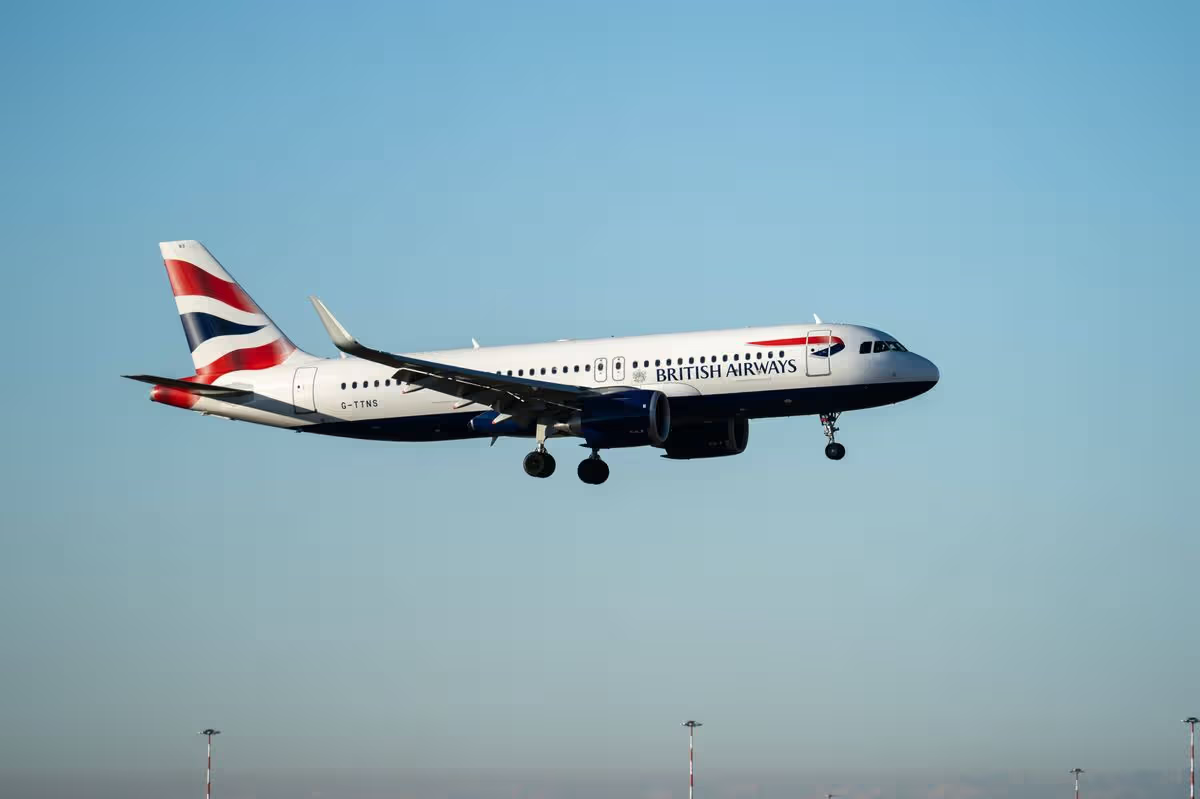
British Airways makes major announcement as airline launches flights to Australia’s Melbourne

The popular airline has made the big announcement to relaunch the daily flights as part of its winter expansion, serving travellers and residents of both countries

British Airways have made a huge announcement that they are relaunching daily flights to a popular city for UK passengers – ahead of a couple of huge worldwide sporting events.

The airline will be returning to Melbourne after a 20-year hiatus.

BA made the announcement on Tuesday, March 17 that flights will be starting in January 2027.

Ensure our latest headlines always appear at the top of your Google Search by making us a Preferred Source. Click here to activate or add us as your Preferred Source in your Google search settings.

The flights will commence flights to Melbourne from January 9, 2027, launching in time for the Australian Open and the Melbourne Grand Prix. Flights will operate year-round from London Heathrow, via Kuala Lumpur, on a daily basis.

Passengers will be able to choose from First, World Traveller (economy), World Traveller Plus (premium economy), and Club World (business class) in both directions.

Return fares start from £1,130 (including taxes and carrier fees) and are on sale from today.

The UK airline halted all services from Melbourne Airport in March 2006 with other companies being relied on for people to make the London-Melbourne journey.

Melbourne Airport Chief Executive Officer Lorie Argus said the announcement underscored Melbourne’s place as Australia’s largest and best connected 24-hour gateway.

“We are thrilled to welcome British Airways back to Melbourne Airport and we’re incredibly excited about what this extra choice means for travellers and exporters,” she said.

“British Airways is one of the world’s most recognisable airlines and in its more than 100 years of flying has earned a well-deserved reputation for excellence and reliability.

“With the largest choice of airlines flying to the UK and Europe, 24-hour operations and the shortest minimum connection time of any Australian airport, Melbourne Airport is now the clear choice for Europeans heading to Australia or Australians looking to travel abroad.

“London is one of the world’s great global cities and a critical hub for business, tourism and education, while Melbourne was last week voted Time Out’s “best city in the world” as well as being home to the largest British expat community in Australia, so there will be no shortage of two-way demand.”

The move is part of a significant planned expansion to BA’s network for winter 2026, with the addition of Colombo in Sri Lanka as well.

Source link

British Airways cancels hundreds of flights ‘until later this year’ with major cities impacted

The scale of the disruption to aviation caused by the US and Israeli attack on Iran has been enormous. Of the 38,193 flights that were scheduled to fly out or into the Middle East since February 28, 21,915 have been cancelled

British Airways has cancelled hundreds of flights to countries across the Middle East as the war in Iran rages.

This afternoon, the UK’s flag carrier announced it would reduce its flight schedule across the region and cancel flights to certain cities. BA bosses have decided to ground all flights to Abu Dhabi in the United Arab Emirates until “later this year”.

Although the airline hasn’t said how many services have been cancelled, given its daily services to Abu Dhabi prior to the war, the total number of flights grounded comfortably stretches into the hundreds.

“Due to the continuing uncertainty of the situation in the Middle East and airspace instability, we’ve had to temporarily reduce our flying schedule in the region. We’ve cancelled all flights to and from Amman, Bahrain, Doha, Dubai and Tel Aviv until later this month and to and from Abu Dhabi until later this year. We’re keeping the situation under constant review and are in touch with our customers to offer them a range of options,” the statement from BA reads.

READ MORE: US military has ‘lost’ six nuclear bombs and there are fears they could fall into enemy handsREAD MORE: Iran war travel expert Simon Calder issues Emirates ‘flights will be resuming’ update

“We have limited seats remaining on our repatriation flights from Oman (Muscat) to London Heathrow on 11 and 12 March for customers with an existing booking. Following these dates, the flights will pause due to reduced demand but will be kept under continuous review.”

The scale of the disruption to aviation caused by the US and Israeli attack on Iran has been enormous. Of the 38,193 flights that were scheduled to fly out or into the Middle East since February 28, 21,915 have been cancelled. The latest figures show that most routes are getting back to close to normal. Of the 4,783 flights scheduled for today, 1,107 were or are expected to be cancelled.

If you are due to fly from or to the Middle East in the coming days, make sure you check your airline’s website for instructions and the Foreign Office website for the latest advice.

What have the airlines said?

  • Aegean Airlines – Greece’s largest carrier cancelled flights to Tel Aviv until March 20; Beirut, Erbil and Baghdad until March 25; Dubai and Abu Dhabi until March 19; and Riyadh until March 14.
  • Air France–KLM – Air France cancelled flights to Tel Aviv and Beirut through March 13, and to Dubai and Riyadh until March 12. KLM suspended flights to Dubai, Riyadh and Dammam until March 10, and to Tel Aviv for the rest of the winter season.
  • Cathay Pacific – Cancelled all flights to and from Dubai and Riyadh until March 31.
  • Delta – Cancelled flights from New York to Tel Aviv until March 22 and from Tel Aviv to New York until March 23.
  • Emirates – Operating a reduced flight schedule but expects to return to full operations within days, depending on airspace availability and operational requirements.
  • Etihad Airways – Resumed a limited commercial flight schedule between Abu Dhabi and several key destinations.
  • Iberia Express cancelled all flights to and from Tel Aviv through March 10.
  • Lufthansa Group – Lufthansa, Austrian Airlines, Swiss and Brussels Airlines suspended Tel Aviv flights through April 2 and Beirut flights through March 28. Flights to Tehran are suspended until April 30, and to Amman, Erbil, Dammam, Dubai and Abu Dhabi until March 15.
  • Norwegian Air – Now plans to start flights to Tel Aviv and Beirut on June 15, instead of the previously scheduled April 1 and April 4.
  • Qatar Airways – Operating a limited schedule to and from Doha, with some flights resuming from March 9 following temporary authorisation from Qatar’s civil aviation authority.
  • Saudia Airlines – Suspended flights to Amman, Kuwait, Abu Dhabi, Doha and Bahrain until March 10, and to Moscow and Peshawar until March 15. Limited operations to Dubai have resumed.
  • Wizz Air – Suspended flights to Israel until March 29, and flights from mainland Europe to Dubai, Abu Dhabi, Amman and Jeddah until mid-September.

Source link

British Airways’ ‘fully booked’ update as Middle East travel chaos continues

British Airways has warned all services from Oman up until March 7 are now fully booked as the scramble to return from the Middle East continues amid regional tensions

British Airways has issued a warning that flights returning to the UK are ‘fully booked’ as the rush to get back from the Middle East intensifies.

In its most recent public statement, the UK’s flag carrier cautioned that all services departing from Oman through to 7 March are now completely full.

“Flights from Muscat on 5, 6 and 7 March are now fully booked. We will continue to review the situation and, if we are able to, we will add additional services,” a BA spokesperson stated at 2.14pm on Wednesday.

Oman is the nearest nation to major hubs, including Dubai and Abu Dhabi, with accessible airspace. Out of the 136 flights scheduled to depart from Oman today, just 14 have been axed so far. This stands in stark contrast to the UAE, Bahrain, Kuwait, Iraq and Lebanon, where most flights remain grounded.

READ MORE: Majorca set to introduce new cap on tourist numbers over summer monthsREAD MORE: FCDO travel advice updated for Thailand, Dubai and 8 other countries amid Iran tensions

The latest guidance from BA reads: “We remain unable to operate flights from Abu Dhabi, Amman, Bahrain, Doha, Dubai and Tel Aviv. We have scheduled further flights from Oman (Muscat) to London Heathrow departing on 6 and 7 March.

“Flights are for our customers with an existing booking who are in Oman or the UAE. If you wish to travel on one of these flights, please contact us via our dedicated phone line on +44 203 467 3854. Our teams will also be getting in touch with our customers.”

One BA flight bound for London Heathrow left Muscat after just a short delay this morning. Another is scheduled to leave at 2.30am local time tomorrow, and a third at the same time on Saturday.

Home Office minister Alex Norris has announced that a Government-chartered plane, which failed to depart from Muscat, is now scheduled to leave for the UK on Thursday.

However, he was unable to provide an exact departure time.

Mr Norris expressed confidence that the first Government rescue flight departing Oman amidst the escalating conflict in the Middle East would take off on Thursday, following an overnight delay. When questioned by LBC about the reason for the delay, he explained: “It didn’t take off because there are operational reasons… about getting passengers on board, and it wasn’t able to happen in the time that it had to happen. So that’s now going to go today instead.”

Earlier on BBC Breakfast, Mr Norris said: “We made sure we got them (the passengers) hotel rooms for the night as well, and we are facilitating and rebooking today’s flight. We hope that they do, and there’s multiple flights after it as well.”

In other news, Defence Secretary John Healey is en route to Cyprus in an attempt to defuse tensions with the island’s government following a drone strike on the British base RAF Akrotiri.

Mr Healey is expected to land in Cyprus later on Thursday. His visit follows the Cypriot high commissioner to Britain expressing his disappointment at the UK Government’s response to defending the island.

On Monday night, a hangar at RAF Akrotiri was struck by an Iranian-made Shahed drone, launched from Beirut in Lebanon, according to Cypriot officials. Two further drones detected on Monday were sh.

Shot down by British warplanes that took off from Akrotiri.

The UK has deployed air defence destroyer HMS Dragon to aid in the protection of Cyprus, although the Type 45 warship isn’t expected to set sail until next week.

Wildcat helicopters equipped with anti-drone capabilities have also been sent to the island and are anticipated to arrive this week.

In other developments in the conflict:

– Iran’s ambassador Seyed Ali Mousavi was summoned by the UK Government on Wednesday.

– A US submarine sank an Iranian warship in the Indian Ocean.

– Iran persisted in launching attacks at countries across the region, with Saudi Arabia and Kuwait targeted with missiles and drones.

– Western officials reported that the rate of Iranian missile strikes had declined, estimating that Tehran had several more days of capability to continue based on the current firing rate – although they warned that the decrease could also be a result of Iran trying to conserve its stockpiles.

– Turkey reported that a “ballistic munition” launched towards it from Iran was intercepted by Nato air defences.

– Economic uncertainty continued over the conflict in a region that plays a crucial role in international oil and gas supplies.

Source link

Travel expert Simon Calder issues Emirates, Etihad and Qatar Airways latest ‘development’ update

Simon Calder said it ‘possibly points the way forward’ but there was still a long way to go

A travel expert has provided an update on when flights to and from the Middle East might resume normal service. Flights continue to be severely disrupted due to the US-Israeli strikes on Iran, which started over the weekend.

It is estimated that around 300,000 Brits are currently in the Gulf region. Airspace closures in the Middle East have led to numerous commercial flights being grounded, with over a third of today’s (Monday, March 2) scheduled flights to the area cancelled.

Major airlines such as British Airways, Virgin Atlantic, Qatar Airways, Etihad, and Emirates are among those to have cancelled flights. The Foreign, Commonwealth and Development Office is presently advising against all but essential travel to the United Arab Emirates.

Travel journalist Simon Calder gave an update on the Independent’s Instagram page about how the situation might unfold. He stated: “Day three of the crisis in the Gulf, which has seen all air operations cease at the key hubs of Dubai, Doha, and Abu Dhabi, and tens of thousands of passengers stranded as a result trying to head back to the UK.

Content cannot be displayed without consent

“The latest news is not encouraging from the airlines; Qatar Airways has just said we’re not going to tell you any more updates until Tuesday morning. Emirates says we will not be flying anything before 3:00 on Monday-I think it’s extremely unlikely that that will happen; similar story from Etihad, who are based in Abu Dhabi.

“At the moment, though, obey the Foreign Office advice, and if you are booked to travel on one of those airlines-Emirates, Etihad, or Qatar Airways-your flight will not be operating today, and I fear that it might be some time before we see those planes back in the sky.”

READ MORE: Aviation expert Alex Macheras predicts when Emirates, BA, and Qatar Airways flights might resumeREAD MORE: Travel expert Simon Calder explains when Dubai, Emirates and Qatar flights could resume

It is believed that out of the 300,000 Brits in the region, approximately 100,000 may require evacuation back to the UK. British citizens are being advised to heed the instructions of local authorities and keep a close eye on the Foreign Office’s travel advice, which officials anticipate will change rapidly.

One current proposal is that individuals may be transported overland to countries such as Oman and Saudi Arabia, before catching flights back from there. At present, these countries do not have any travel warnings against them.

Mr Calder added: “One development overnight, though, I think possibly points the way forward. A British Airways Boeing 787 flew out overnight from London Heathrow to Oman and landed at Muscat-that is the airport where there is no Foreign Office warning at the moment.

“It took on board pilots and cabin crew from British Airways who were stranded in the UAE when airspace was closed. Now, you might be thinking, ‘well, why didn’t they bring back any passengers?’ but there’s a good reason for that..

“The Foreign Office says, ‘no, you should not travel anywhere if you are in the UAE”. However, if the crisis drags on-and unfortunately, it shows every sign of doing that-then I fear we are going to be in a situation where the best option is to organise an airlift from Muscat, possibly another one also from Saudi Arabia for people travelling overland from Qatar.”

Source link

Ryanair, easyJet, TUI, BA and Jet2 updates as Cyprus airport evacuated

Passengers have been evacuated from Paphos International Airport in Cyprus amid reports of an unidentified drone flying into its airspace. Here are the latest updates from airlines with flights to the island.

Paphos International Airport in Cyprus ordered an ‘immediate and total evacuation’ this morning (March 2) amid reports that an unidentified drone had been flown into its restricted airspace.

Some European airlines including easyJet have already been cancelling their flights to Larnaca International Airport, a major hub for package holidays, after a drone strike hit the RAF base in Akrotiri in Cyprus.

Cyprus is a popular destination for Brits, with over 1.3 million visiting each year, and with the busy Easter period on the way, many holidaymakers may be wondering how this will affect their travel plans. Around 60 flights have been cancelled to the island today, and airlines will be closely monitoring the situation in order to make a decision on resuming flights in the coming days and weeks.

Check out updates from airlines including British Airways and easyJet below. Travellers to the island should also keep up to date with FCDO advice for Cyprus, as the situation is likely to change quickly.

British Airways (BA)

BA said in its latest statement: “We are closely monitoring the situation and have cancelled a number of flights to the Middle East. We understand it is a difficult time for customers in affected destinations and we are in contact with them to offer reassurance and support. Safety is our top priority and we will only operate a flight if it is safe to do so.”

It added: “We have cancelled flights to Amman, Abu Dhabi, Bahrain, Dubai, Doha and Tel Aviv up to and including the 05 March and today’s Larnaca service [March 2].

“We have actioned a flexible customer booking policy which allows all customers due to travel between London Heathrow and Abu Dhabi, Amman, Bahrain, Doha, Dubai, Tel Aviv in the coming days the option to change their flights for free or get a refund. Customers travelling to Larnaca can rebook for free.

“We are advising customers to check their flight status on BA.com for the latest updates before travelling to the airport due to the evolving situation.”

EasyJet

EasyJet has been advising passengers on X (formerly Twitter) to check its Flight Tracker for the latest information on whether their Cyprus flight will be delayed or cancelled.

An easyJet spokesperson told The Express: “Due to the events overnight affecting the RAF base in Akrotiri in Cyprus, as a precaution, three return flights between Paphos and Larnaca and the UK today will not be operating.

“Flights from 3 March are currently operating as planned but we would advise customers due to travel to and from Cyprus over the coming days to check our flight tracker for the latest information.

“We are doing all we can to minimise the impact for our customers and are providing options for rebooking including on other airlines or a refund as well as hotel accommodation and meals for those who require them.”

TUI

A TUI spokesperson said: “The safety of our customers is our highest priority, and we are closely monitoring the situation in the middle east and surrounding regions. We are currently operating our Cyprus program as planned, but as this is an evolving situation, that could be subject to change.” Paphos and Larnaca airport shows TUI flights scheduled from Wednesday onwards, with no cancellations or delays showing at the time of writing.

TUI has also previously released a statement for customers due to fly out to the UAE or Qatar up to and including March 8, advising: “our pre-travel team will be in contact with you ahead of your departure date.” It also advises: “We are working though bookings in date order and will call you to discuss your options. However, if you would prefer, please call us on 0203 451 2688.” Should the current situation extend to Cyprus, it’s likely the process would be the same.

READ MORE: Emirates, British Airways and Wizz Air’s latest updates on UAE flight cancellationsREAD MORE: What travel insurance will actually cover if you’re affected by UAE travel chaos

Jet2

Jet2 flights scheduled for Tuesday and Wednesday (March 3 and 4) are not yet showing as cancelled or delayed on the Paphos Airport website. Customers who have asked for advice via Jet2’s official X account have been advised to contact the Jet2 pre-travel team via Whatsapp to discuss their options.

Ensure our latest stories always appear at the top of your Google Search by making us a Preferred Source. Click here to activate or add us as your Preferred Source in your Google search settings.

Source link

Travel expert Simon Calder issues three-word advice for Brits caught up in Iran attacks

Thousands of Brits are thought to be stranded in the Middle East after US and Israeli airstrikes on Iran

A travel expert has issued three words of crucial advice for people stranded in the Middle East following US and Israeli air strikes on Iran. Simon Calder made the remarks after hundreds of thousands of travellers found themselves stuck in destinations such as Qatar and Abu Dhabi in the wake of the attacks.

Numerous airlines, including British Airways, Emirates, and Qatar Airways, grounded flights following Iranian retaliatory strikes throughout the region. When flights will resume normal service remains unclear, with thousands of Britons believed to be stranded.

Speaking on Radio 5 Live, Mr Calder had three key words he urged travellers to follow: “At the moment, the best advice I have for anyone who is stuck in various parts of the world is: just be patient.”

The situation will be resolved – I hope, very much sooner rather than later,” he added. “What we have seen is the extraordinary sight of the big three of Middle Eastern hubs – Dubai International, Doha, and Abu Dhabi – all closing because of the retaliatory strikes from Iran. We have never seen that. The last thing of this scale we saw in this area like that here was the Covid pandemic.

READ MORE: Travel expert Simon Calder predicts when BA, Etihad and Emirates flights will resume after Iran attackREAD MORE: Nationwide customers’ three steps needed to qualify for free £100 payout

“Consider this. More than a quarter of a million passengers were due (on Saturday) to fly to and through Dubai International Airport alone. It is bigger than Heathrow Airport, handles more passengers, and everyone is desperate to get where they need to be.

“I have been speaking to people who were about to take off, they had the ‘boarding complete’ announcement, and suddenly the captain said, ‘Sorry, airspace closed, we are staying here’. It took them three hours to get off the aircraft because they all had to be processed through immigration, leaving them in a place where they really didn’t want to be. Many of them were just off a previous flight a few hours before and were waiting to travel on to their final destination of London Heathrow.”

It was subsequently confirmed that Iranian Supreme Leader Ayatollah Ali Khamenei was killed in the strikes, casting serious doubt over the future of the Islamic Republic. The death of Mr Khamenei, following decades in power, has triggered furious scenes across other parts of the Middle East and beyond, heightening the threat of potential regional instability.

Dubai International ranks as the world’s busiest airport, processing roughly 250,000 passengers daily. Doha Airport in Qatar handles approximately 150,000 travellers each day, meaning enormous travel chaos as both airports continue to be affected.

Doha holds particular significance for British passengers flying to and from the Middle East, Asia and the UK. Mr Calder went on to say: “Some people are in the difficult position of being stranded on the wrong side, and they are trying to get back to the UK but finding that air passenger rights rules – which are great when you are flying from Europe – don’t work the same way when you are flying to Europe on a non-UK or non-EU airline.

“They can basically just say, ‘well, good luck, we’ll try and get you there in a week or you can take a refund’. It’s really, really difficult Airlines like Emirates, Etihad, Qatar Airways, they are not legally obliged to find hotel accommodation for all these stranded passengers and get them back as soon as possible but hopefully they will do so.

“The other problem for people whose flights have been cancelled, when flights resume, they go to the back of the queue. If flights resume on Monday, anybody who has a flight booked on Monday will fly on Monday, and people whose flights were cancelled over the weekend – and we are talking hundreds of thousands now – they are going to be finding that they are at the back of the queue, scrabbling for whatever available seats there are.”

Source link

Dubai airport chaos: British Airways cancels Middle East flights amid airspace closures

British Airways has cancelled flights to Tel Aviv, Bahrain and Amman with passengers offered free changes or refunds – as travellers are warned they may need to ‘get creative’ amid mass disruption

Travellers will need to “get creative” if they want to fly in the coming days, an expert has cautioned, with hundreds of thousands of people stranded or rerouted to alternative airports following widespread airspace closures throughout the Middle East.

Israel, Qatar, Syria, Iran, Iraq, Kuwait and Bahrain have all closed their airspaces. Flight tracking website FlightRadar24 recorded no flight activity over the United Arab Emirates, with the UAE government announcing a “temporary and partial closure” of its airspace.

British Airways has confirmed flights to Tel Aviv and Bahrain will remain suspended until next week, whilst flights to Amman, Jordan, were scrapped on Saturday.

READ MORE: Donald Trump tells Iran ‘better not’ strike after Ayatollah Khamenei killedREAD MORE: Dubai airport chaos: Emirates confirms when flights will resume as Brits scramble to flee

Ensure our latest headlines always appear at the top of your Google Search by making us a Preferred Source. Click here to activate or add us as your Preferred Source in your Google search settings.

This resulted in the shutdown of crucial hub airports in Dubai, Abu Dhabi and Doha, and the scrapping of over 1,000 flights by leading Middle Eastern carriers, reports the Express.

The three principal airlines operating from those airports – Emirates, Qatar Airways and Etihad – typically handle approximately 90,000 passengers daily through those hubs, with even greater numbers of travellers bound for Middle Eastern destinations, according to aviation analytics firm Cirium. Dubai international airport ranks as the world’s busiest airport for international flights.

Aviation industry analyst and president of Atmosphere Research Group Henry Harteveldt said, via AP: “For travellers, there’s no way to sugarcoat this… you should prepare for delays or cancellations for the next few days as these attacks evolve and hopefully end.

“Travellers should anticipate that there will be a lot of disruptions,” he said, before adding: “To be honest, if you haven’t left home, chances are you won’t be leaving home if you’re supposed to travel to or through these destinations for at least several days, if not longer. And if you are returning home, you will have to be very creative about how you get home.”

BRITISH AIRWAYS: FULL STATEMENT ON FLIGHTS TO AND FROM THE MIDDLE EAST.

BA released an official statement on its website late on Saturday (February 28) for passengers who may be affected by the rapidly developing situation in the Middle East.

Here is the statement in full:. “We are closely monitoring the situation and have cancelled a number of our flights to the Middle East. Safety is always our top priority and we would never operate a flight unless it was safe to do so.

“If you are due to fly between London Heathrow and Abu Dhabi, Amman, Bahrain, Doha, Dubai or Tel Aviv you can change your flight free of charge up to and including 6 March. Customers travelling up to and including 4 March may also request a full refund.

“Should you wish to do so, please ring our contact centres on 0800 727 800 within the UK or 020 3250 0145 where a member of our team will be happy to assist. You can also find useful information, including details of your consumer rights, at ba.com/helpme..

“Thank you for your understanding and we look forward to welcoming you on board soon.”

BA’s statement comes as airlines serving the Middle East cancelled or diverted flights en masse on Saturday in the wake of US and Israeli airstrikes against on Iran.

Iran hit back by launching a wave of attacks, targeting Israel and four Gulf Arab nations hosting US military bases – Bahrain, Kuwait, Qatar and the UAE.

British Airways, Virgin Atlantic and Wizz Air were amongst the carriers to reduce their schedules to Middle Eastern destinations, citing safety concerns. The UK Foreign Office urged British nationals in Bahrain, Qatar, Kuwait and the United Arab Emirates (UAE) to immediately shelter in place following explosions.

UK Foreign Office issues advice for Britons trapped in Dubai.

For any Britons currently in the UAE, the Foreign Office released new guidance overnight.

All citizens already present in the UAE are strongly encouraged to notify the UK government by registering their presence to receive further updates as the situation continues to develop across the Middle East. “Due to reported missile attacks, British nationals in the UAE should immediately shelter in place. Remain indoors in a secure location, avoid all travel and follow instructions from the local authorities.”

The FDCO also advised British nationals in the UAE to take sensible precautions, taking into account their own personal circumstances.

  • – Read the UK Government’s fact sheet If you’re affected by a crisis abroad. This includes guidance on how to prepare for a crisis with suggestions on what you might include in your emergency supplies and what to do in a crisis.
  • – Follow advice from the local authorities and sign up to receive information and alerts. Read the FDCO fact sheet: National Emergency Crisis and Disaster Management Authority’s guidance across numerous emergencies.
  • – Sign up to FCDO Travel Advice to get email notifications on updates as they happen.

Follow our live blog for the latest travel updates by clicking here.

Source link

Some people ‘legally can’t travel’ without new digital permission – are you impacted?

Every relevant person travelling must obtain an ETA, including babies and children

Travellers frequently face changing regulations when crossing international borders. Now, Heathrow Airport has issued a reminder about some essential new requirements now in effect.

Under the changes, an Electronic Travel Authorisation (ETA) has become a legal necessity for certain people from this month. This £16 charge permits travellers to enter the UK for tourism, family visits and other purposes for up to six months.

On X, formerly Twitter, the major airport announced this week: “Starting tomorrow, 25 February, whether your final destination is the UK or are connecting via Heathrow, eligible visitors will need an ETA (Electronic Travel Authorisation).

“Find out more on http://GOV.UK.” It then also stressed: “From 25 February, you can’t legally travel without an Electronic Travel Authorisation. Exemptions apply.”

Content cannot be displayed without consent

Whilst most UK visitors will require an ETA or visa to enter the UK, this depends on your nationality and purpose of travel. For example, an ETA is usually necessary if you’re arriving from Europe, the USA, Australia, Canada and selected other countries.

Every person travelling must obtain an ETA, including babies and children. Therefore, for a family of four, you’ll probably need to pay £64 altogether, whilst a family of six will generally pay £96. Visitors may apply for an ETA on behalf of others.

Anyone holding a British or Irish passport, or who has permission to work, live, or study in the UK, won’t need an ETA. According to official Government advice, other exemptions include:

It’s important to remember that having an ETA does not guarantee entry to the UK. Those with a criminal record or who have previously been denied entry should consider applying for a Standard Visitor visa instead.

Beyond this, the UK Government highlights exactly what can and can’t be done with an ETA. For instance, the ETA allows:

Meanwhile, these five things are not permitted with an ETA:

  • Staying in the UK for longer than six months
  • Doing paid or unpaid work for a UK company or as a self-employed person, unless you’re doing a permitted paid engagement or event or work on the Creative Worker visa concession
  • Claiming public funds (benefits)
  • Living in the UK through frequent or successive visits
  • Marrying or registering a civil partnership, or giving notice of marriage or civil partnership – a Marriage Visitor visa is needed

Travellers can apply for the £16 ETA online or via the UK ETA app. To complete this, they’ll need a passport, an email address, and a payment option, including Apple Pay and Google Pay.

The fee is non-refundable after an application has been submitted. For further details,head to GOV.UK here.

Ensure our latest headlines always appear at the top of your Google Search by making us a Preferred Source. Click here to activate or add us as your Preferred Source in your Google search settings.

Source link

Banned food and drink that’ll get you stopped at every UK airport

Holidaygoers returning home need to be careful about what they bring back

With the February half-term still underway for many regions across the country, plenty of families will be eagerly packing their bags for some much-needed winter sun. For anyone keen to bring back goodies for their friends and relatives, there are certain rules they need to follow to avoid being stopped at UK airports.

In a recent warning by the Department for Environment, Food and Rural Affairs (DEFRA), the government agency urged holiday-goers to be mindful of what they try to bring back home. In a post on Facebook, a statement reads: “Travelling back from a half term trip abroad?

“To protect UK farmers and animals from diseases like Foot and Mouth, meat and dairy products can’t be brought into Great Britain. Check the rules before travelling.”

There are numerous guidelines on the Gov.uk website regarding bringing food into Great Britain, including rules on meat, dairy, fish, fruit, vegetables, nuts, seeds, and pet food. You can bring the following into Great Britain from any country without any restrictions:

  • bread, but not sandwiches filled with meat or dairy products
  • cakes without fresh cream
  • biscuits
  • chocolate and confectionery, but not those made with a lot of unprocessed dairy ingredients
  • pasta and noodles, but not if mixed or filled with meat or meat products
  • packaged soup, stocks and flavourings
  • processed and packaged plant products, such as packaged salads and frozen plant material
  • food supplements containing small amounts of an animal product, such as fish oil capsules

There are restrictions on bringing meat, dairy, fish and animal products and fruit, vegetables, nuts and seeds into Great Britain from abroad. If you’re bringing in any food or animal products protected by the Convention on International Trade in Endangered Species of Wild Fauna and Flora (CITES), you may need to apply for a CITES permit.

Meat, dairy, fish and animal products

The rules on bringing meat, dairy, fish and other animal products depend on the country you’re bringing it from. From the EU, Switzerland, Norway, Iceland, Liechtenstein, the Faroe Islands and Greenland, you can bring in the following for personal use:

  • fish
  • poultry, for example, chicken, duck, goose and any other products made from these meats
  • other animal products, for example, eggs and honey

Due to recent and ongoing outbreaks of animal diseases in the EU, there are rules about bringing in most meats and all dairy products. You are allowed to bring in a maximum of 2kg per person of powdered baby milk, baby food, or special food required for medical reasons. You can only bring these items if they don’t need to be kept cold before using, and they must be in branded, unopened packages (unless you are currently using them).

There are restrictions on meat, dairy and animal products for human consumption. You cannot bring in any of the following:

  • cheese, milk and dairy products like butter and yoghurt
  • pork
  • beef
  • lamb
  • mutton
  • goat
  • venison
  • other products made from these meats, for example sausages

If you’re bringing food from a country outside the EU, Switzerland, Norway, Iceland, Liechtenstein, the Faroe Islands and Greenland, the following rules apply. You cannot bring in:

  • meat or meat products
  • milk or milk-based products, except powdered infant milk, infant food or special food needed for medical reasons

You can bring in up to 2kg per person of:

  • honey
  • powdered infant milk, infant food, or special food (including pet food) needed for medical reasons – you can only bring it in if it does not need to be refrigerated before use, and is in branded, unopened packaging (unless in current use)
  • live mussels or oysters
  • snails – these must be preserved or shelled, cooked and prepared
  • frogs’ legs – these must be the back (hind) part of the frog with the skin and internal organs removed
  • insect protein

You can bring in up to 20kg per person in total of fish, including:

  • fresh fish – must be gutted
  • fish products
  • processed fish – must be dried, cooked, cured or smoked
  • lobsters
  • prawns

You cannot bring in caviar unless you have a CITES permit.

Fruit, vegetables, nuts and seeds

The rules on bringing fruit, vegetables, nuts and seeds depend on the country you’re bringing it from. From the EU, Switzerland or Liechtenstein, you can bring in the following for personal use:

  • fruit
  • vegetables
  • nuts and seeds

From other countries outside the EU you cannot bring in most fruit or vegetables unless you have a ‘phytosanitary’ (plant health) certificate for them. You can get a certificate from the plant health authorities in the country you’re leaving. You can only bring in the following without a phytosanitary certificate:

  • pineapple
  • kiwi
  • coconut
  • citrus fruits, such as oranges, lemons, limes and grapefruit
  • kumquat
  • persimmon
  • durian
  • curry leaves
  • banana and plantain
  • mango
  • dates
  • passion fruit
  • guava
  • processed and packaged plant products, such as packaged salads or frozen plant material
  • peeled and processed nuts or nut butters
  • certain grains, such as rice

Pet food

The rules on bringing pet food depend on the country you’re bringing it from. From the EU, Switzerland, Norway, Iceland, Liechtenstein, the Faroe Islands and Greenland. You cannot bring in pet food if it contains meat or other animal products from pig, cow, sheep, goat or deer.

You can bring in pet food made with other ingredients (for example, chicken) if it is commercially packaged with the manufacturer’s name and address. You can bring up to 2kg per person. From countries outside the EU you cannot bring in pet food, unless your pet needs it for health-related reasons.

You can bring in up to 2kg per person of pet food needed for health-related reasons, from any country. The pet food must:

  • not need to be refrigerated before use
  • be in branded, unopened packaging (unless it is currently in use)

Your pet must be travelling with you. You should have evidence that the pet food is needed for health-related reasons, such as a letter from your vet. Contact the Animal and Plant Health Agency (APHA) if you want to bring in more than 2kg of health-related pet food per person.

You’ll need to provide:

  • details of why you cannot buy the specific pet food in Great Britain
  • a letter from your vet confirming your pet needs this specific food

Check if you need a CITES permit

You may need to apply for a permit or certificate if you’re bringing any food or animal products protected by the Convention on International Trade in Endangered Species of Wild Fauna and Flora (CITES) into Great Britain. This includes foods such as caviar and eel fillets and beauty products containing caviar extract. Check if you need a CITES permit.

You can apply for a CITES permit online. When travelling to Great Britain, you’ll need to arrive at one of the ports or airports that handles CITES items. Border Force can seize your items if you do not have a CITES permit and they think you’ve brought them into the country illegally.

Source link

Storm Hernando: Travel chaos as flights cancelled at major UK airports

Hundreds of flights departing and arriving in the UK have been cancelled across several airports due to dangerous weather conditions with passengers advised to contact their airlines

Flights departing and arriving at several UK airports have been cancelled due to dangerous weather conditions.

Storm Hernando is causing chaos in the USA and, as a result, hundreds of flights have been cancelled on Monday, February 23.

The weather conditions on the east coast of the USA have already caused thousands of flights to and from the region to be cancelled.

Ensure our latest headlines always appear at the top of your Google Search by making us a Preferred Source. Click here to activate or add us as your Preferred Source in your Google search settings.

Flights from London Heathrow, London Gatwick, Manchester Airport, Edinburgh Airport and Dublin Airport have all been impacted by the storm.

The National Weather Service has warned: “A major winter storm is expected to bring heavy snow, strong winds, and coastal flooding across the Mid-Atlantic and north-east that may cause impossible travel conditions and power outages.”

Flights to JFK airport in New York, Newark airport in New Jersey and Boston airport are affected.

A huge 32 flights leaving from London Heathrow to JFK on Monday, February 23 have been cancelled. As well as departing flights, arrivals from the US destination have also been cancelled.

Three direct flights from Manchester have also been impacted. In Scotland, 35 flights that depart from Edinburgh have the second leg of their flight cancelled.

Posting on X, Dublin Airport said: “Due to adverse weather (Storm Hernando) on the east coast of the US, airlines have cancelled a number of flights due to operate to/from Dublin Airport on Monday.”

Dublin Airport said airlines had cancelled seven outbound and six inbound flights so far as a result of the storm.

Passengers have been advised to contact their airlines for the latest updates.

Source link