
HBO

‘Industry’ HBO is TV’s last golden age drama. Emmy voters, pay heed

One day, when people say “they don’t make ’em like they used to,” they will be saying it about “Industry.”

First filmed before the pandemic and launched in its throes, a survivor of the era of streaming wars, corporate consolidation and Hollywood strikes, HBO’s addictively dissolute workplace drama remains as ambitious and authoritative as ever. Indeed, despite being divided from predecessors like “Mad Men,” “Succession” and “The Leftovers” by a series of epochal crises, it more closely resembles a vestigial tail of the medium’s past than most of its current counterparts: Out of place and out of time, “Industry” can best be understood as the last great drama of TV’s golden age.

Cast member and “Game of Thrones” alum Kit Harington, resident expert on series that reshaped the medium, agrees that “Industry” is a bit of a throwback in this respect.

“If you scroll back to ‘Game of Thrones’ in the first two seasons, it wasn’t a massive Goliath success, and it exploded after Season 3 with the Red Wedding. I think there’s a similar story going on here,” he says. “So often in TV at the moment, you’re given one season and everyone needs to pack in f— everything to get people hooked. But they’re burning through too much story. Season 2 is then done; the characters haven’t got anywhere to go. I think this is where this show has been successful, is that it was given that time to breathe.”

Earlier this spring, I convened “Industry’s” creators and cast in a conference room at The Times to walk me through its evolution into one of the best shows on television, and what to expect from its impending end.

Marisa Abela, left, Kit Harington and Myha'la.

Marisa Abela, left, Kit Harington and Myha’la.

(Jason Armond / Los Angeles Times)

‘What the f— are you thinking, guys?’

A trading-floor knife fight of hot, young strivers, or “grads,” competing for a permanent place at the fictional Pierpoint investment bank, the first season of “Industry,” filmed in 2019, premiered in the waning months of 2020 as a warped love letter to office culture. But for Konrad Kay and Mickey Down, the emerging writers at the helm, the voice of the series didn’t fully take shape until they’d found their main cast, including Myha’la, as hard-charging American Harper Stern, and Marisa Abela, as privileged publishing heiress Yasmin Kara-Hanani.

Kay: Season 1, me and Mickey were really green.

Down: We actually pitched HBO on the idea that it was going to be eight episodes, it was going to be in different months, and the big-bang dramatics were going to happen between the episodes. A bit like “Boyhood.” Huge things would happen in between episodes, and the episode would be about the reaction to those huge things. And they were like, “What the f— are you thinking, guys?” It was so antidramatic.

Abela: I had a lot of rounds of auditioning for Yasmin. They weren’t sure about me at all. I think part of it was because they were quite hellbent on her being vulnerable, on her being soft, and that was what I was playing in those first two, three episodes. … And what happens in any functional collaboration is you start to see what they really want from you — what it is that they need from your character. And in those moments of conflict, the moments of change, Yasmin has to stand up for herself at some point, otherwise it’s too wet.

Mickey Down.

Mickey Down.

(Jason Armond / Los Angeles Times)

Down: Yasmin was all vulnerability masked by Prada in script, and then you came in and you were very hard. [Laughs.]

Abela: There is one scene with [Yasmin’s abusive supervisor] Kenny [played by Conor MacNeill] in Season 2 where … Yasmin turns around to him and tells him to f— off, basically: “You don’t have a disease, you’re a narcissist, with a new excuse to lord it over people. You’re weak.” I think that’s the first time that Yasmin became a gangster. I was watching “Real Housewives of New Jersey” at the time, being completely honest. She can go really mob wife really quick.

Myha’la: I had almost the exact opposite experience in terms of finding or deciding who Harper was. When I read the scripts initially, I just thought, “There’s no way in hell that Harper can’t be steely and [on offense], because she’s clearly feeling out of her depth, and as a young woman of color going into a new space like this, you can’t show up like you’re vulnerable. You’re already expected to do poorly.” … On the page, Harper was an anxious person when I first met her in the pilot episode. She was sweaty and clammy and stammering. And I just thought, “Hell no!”

Down: Sometimes when we write the character, we focus on one thing, and then the actor comes in and then that one thing we thought the character was becomes the artifice that they have to play.

Harington: Great TV writers genuinely learn their actors as well as their characters, and they tie those things in as it goes through.

Abela: As much as they know how we speak now, we know how they speak. If Yasmin has a “F— off,” I know what they want with that. If she says “F— off,” it’s very different to “F— you.”

Down: It’s like playing the piano with the foot pedal, blindfolded.

Kay: When you get super-talented actors doing your writing, you sort of fall in love with them doing everything. There’s no story we can’t tell with them.

‘Am I being fired?’

The series’ second season, which opens with Pierpoint’s post-COVID return to office, found the grads established enough to become “active characters,” and the creators confident enough to begin breaking the mold they’d set for themselves in Season 1. From the nail-biting trade sequence with which Harper wins over hedge fund manager Jesse Bloom (Jay Duplass) to her firing from Pierpoint in the Season 2 finale, it marked the arrival of “Industry’s” distinctive, go-for-broke aesthetic.

Kay: [In] Season 2 we were still figuring out what the show was, and we had Jami O’Brien as our co-showrunner, who really professionalized me and Mickey towards the American system, towards how to be producers, curbed some of our more bombastic instincts, made us more professional in terms of some of the style of the writing we were doing, found a cleaner version of the show and a cleaner version of the story.

Konrad Kay.

Konrad Kay.

(Jason Armond / Los Angeles Times)

Down: [The Bloom trade] was one of the first times in the show where we were like, “Wow, we’ve actually created something kind of singular,” in that we were able to create scenes of people trading, [using] financial jargon that no one understands, and make it feel like a car chase. The contrast between the Harper that’s on the trading floor being able to be in command of that with all the people looking at her, and then the Harper that’s in the loo afterwards in floods of tears, that for me was kind of the moment where we thought that we had a completely 3D, rounded character.

Myha’la: If you asked me to do the Jesse Bloom trade scene again, I’d piss myself. Because at least when I did it two seasons ago, I could have anxiety and fear percolating inside me. If I had to do it today, I’d have to do it confidently, and I would have to try really hard because so much of the language is truly blind memorization and being able to juggle particularly the f— phones. … You have to get the choreo[graphy] so good and you have to know the words so well so that you can do the important part, and that’s the subtext — communicating the feelings of the thing, which are not in the words. Which I love. It is so hard.

Harington: When you first read the scripts, you can’t understand a lot of what’s on the page. … You look at it, you go, “This is f— impossible.”

Myha'la.

Myha’la.

(Jason Armond / Los Angeles Times)

Myha’la: This is not spoon-feeding the audience. “I’m sorry that you’re hurting because I know last summer your mom died in a car crash.” They don’t do that.

Kay: Do you know who hates that about us? Network executives. [Laughs.]

Down: We had a kind of mantra the first season especially, and then going into the second, that we would never have a scene that didn’t have one of our four main leads in it. And then, just for the necessity of the storytelling, we said, “We have to pop out of that perspective.” I don’t think HBO realized what a big decision that was, because I don’t think they’d actually realized we’d kept this mantra that we were never going to go away from the perspective of the grads.

Kay: It’s also where we broke the rule of, “We’re not going to just tell the bottom-up story; we’re going to go to the top.” When we sold the show, we were like, “This is a bottom-up story,” and then by that point we were like, “Actually, we have these older characters who might have these really rich inner lives that we should also explore.”

Myha’la: We blew the s— up. [Harper’s firing] forced us all outside the bank, which was dangerous and scary for me and really exciting and was how we got to see all the other things that Mickey and Konrad are capable of doing. I think they didn’t tell me before, so I was like, “Am I being fired?” [Laughs.]

Down: We thought we were all being fired. The reason the show evolves so much is because we basically never know whether we’re coming back, so we just blow up everything. We try to leave the audience with a satisfying conclusion. And then we get renewed, and then we have to basically write ourselves out of a corner. So Harper getting fired could have ended the whole show.

‘Oh, poor Henry’

Given time to develop its characters, refine its style and grow its audience, “Industry” returned for Season 3 with all the trappings of a series that had finally arrived: effusive critical acclaim, proliferating fan accounts and buzzy arcs by Sarah Goldberg and Harington, as playboy and erstwhile greenenergy executive Henry Muck. Had it premiered just a few years later, “Industry” may have ended up on the chopping block before finding its footing; instead, it was allowed to achieve “terminal velocity.”

Kay: What happened between Seasons 2 and 3 was, we got renewed. We didn’t think we were going to get renewed. We operated from the principle of, “We might never get to do this again.” And that was incredibly freeing for me and Mickey because it was just like, “We’re gonna get eight hours, let’s just do everything we possibly can within that eight hours. Let’s indulge every creative impulse we’ve ever had. Let’s take the stabilizers off the story. Let’s not necessarily keep it within Pierpoint.” What we felt like was a perfect marriage of creative latitude, trust in ourselves and the right point in our arc of writing the show and directing and producing. We reached terminal velocity, where we could actually do all of the stuff that we were pretending we could do in the first two seasons.

Kit Harington.

Kit Harington.

(Jason Armond / Los Angeles Times)

Harington: When I joined up in Season 3, I had a good handful of friends who watched the show. It may be bigger than you think it was from the inside. It’s been fascinating for me, joining when I did and seeing it grow again … We all want to do stuff that people actually watch. We’d be lying if we said we didn’t. We’ve all done jobs that we really love and no one’s f— seen. When there’s a focus in on something that you know is good and you love, that’s more rare than you think. I started in this job in “Game of Thrones” and just assumed, “That’s, like, how jobs go. You get invited to the Emmys every year and everyone frigging watches it.”

Kay: The softness in Henry was a function of Kit playing the character and us writing to that vulnerability. There’s a totally different version of that character which never unlocks that kind of thinking in me and [Mickey].

Harington: You know that moment where it’s all going to s— with Lumi and he just gets up and he’s like, “None of this is real” and he f— off? For me, that was it. Because it was like, “Wait a minute, he can’t just leave the f— room” — and he does. I think that kind of sums him up. I got a handle of him properly then, and that was quite an early one we shot.

Down: He has a sense of entitlement most of the other characters don’t have.

Myha’la: But you still manage to make me feel bad for you. I’m like, “Oh, poor Henry.” Do you know what I mean? Isn’t that psychotic?

Down: I said it to him in an email recently. Somehow he managed to make an ex-Tory minister who bankrupted his company twice and needed bailouts from the British public — [a] junkie, adulterer — the most vulnerable and probably most empathetic character on the show, in some respects.

Harington: He’s one of the few characters who is actually trying to do good. Even if it’s about him being perceived as doing good. … It’s also very smartly done in how you demarcate addiction and drug-taking. You’ve got most of the characters, who can kind of put it down, but then you’ve got Rishi [a Pierpoint trader played by Sagar Radia] and Henry, who are a different kettle of fish. And also how it creeps up.

Kay: As a sober person playing that stuff, is there a psychic trigger in your brain that sort of feels like it’s happening?

Harington: I was very worried about coming in and doing some of this stuff, but quite quickly realized I was A) sober enough for long enough to go back there safely; and B) it was a sort of muscle memory, a lot of it. I get to exorcise this stuff in my job. How many ex-addicts get to do that? It was a kind of cathartic thing.

Marisa Abela.

Marisa Abela.

(Jason Armond / Los Angeles Times)

Abela: There’s a real freedom that comes with drugs, alcohol, whatever it is, for the character. Those are the moments when you can really open the lid on something.

Myha’la: When you’re f— up, you’re uninhibited, so you can do your own thing, but I think you’re also taking the other person at face value. I feel like it sort of takes the judgment away. It creates a kind of childlike innocence.

Down: If you’re in a situation like that, you can skip like five stages of relationship if there’s a big bag of drugs in front of you. That’s something we try to capture.

‘Where we leave the characters feels so perfect’

Earlier this year, HBO announced that “Industry” had been renewed for a fifth and final season. But it was Season 4 — which finds Harper and Yasmin’s friendship in tatters, Yasmin and Henry’s marriage at an end, and the structure of the show evolving yet again to draw on new characters and genre influences — that led Down and Kay to determine that the series’ time had come.

Kay: We did think to ourselves, “OK, so we’re going to do a Season 4, which means the show is a kind of success in and of itself, which means we can start to think about ending. If you get four seasons, you’re probably going to get five. So we felt that it created latitude there. What we thought to ourselves was, “We meet these two women in the pilot. If you’re going to spend five seasons of TV with them, what is the starkest contrast you can do between how you meet them and where they end up?” … When we started, the show was about not having power. Five seasons in, they have it. Then what do you do with it? The phrase me and Mickey have been talking about is this idea of “arrival fallacy.” You climb and climb, you’re at the top of the mountain. Is there another peak? Do I sit here and enjoy the view?

Down: We’re writing Season 5 right now, and without giving too much away, we’re approaching that season very differently in terms of how information’s parceled out.

Kay: It’s very dense, though, isn’t it? Honestly, it might be the densest season. There’s a lot of theology in it, actually.

Down: We talked about doing a sixth [season], and then quite honestly we thought that was going to be diminishing returns. … We would have been pulling our punches constantly. This has been one of the most creatively fulfilling versions of the show, because we are writing towards a conclusion that we know is the conclusion. We’re thinking of images for the last 10 minutes that we know are going to be what the audience is left with, and that’s really, really thrilling for us as writers. I’ve never once thought, “God, I wish we were doing a sixth one,” as much as I love writing and making the show. Where we leave the characters feels so perfect.

The Envelope June 16, 2026 issue cover featuring cast and creators from "Industry"

Source link

Justice Dept. approves Paramount’s acquisition of Warner Bros.

The U.S. Justice Department has cleared the way for Paramount Skydance’s $111-billion purchase of Warner Bros. Discovery — a major milestone that moves David Ellison closer to his goal.

After a months-long review, Justice Department antitrust regulators on Friday concluded the combination would not violate federal anticompetition laws. Approval had been expected because President Trump — who has friendly ties with Ellison and his father, tech billionaire Larry Ellison — favors the deal.

The government stopped short of asking Paramount to make concessions or divestitures.

Buying Warner Bros. would allow Paramount — Hollywood’s smallest major company — to bulk up with such prestigious properties as HBO, CNN, HGTV and Food Network. Those would be combined with properties Paramount already owns, including CBS, Comedy Central, Nickelodeon and MTV.

The deal would put two historic film studios and two prominent news organizations under the same roof. It would give Paramount four streaming services, including HBO Max, and dozens of cable channels.

In its four-page closing statement, the Justice Department emphasized that career antitrust regulators — not political appointees — had performed a rigorous review, sifting through some two million documents the government received from dozens of sources, including third-party organizations.

They conducted meetings and deposed senior-level executives and other witnesses.

“These investigative efforts all led to the same conclusion: the film and television industry is highly dynamic, and the proposed transaction is not likely to harm competition or American consumers,” Justice Department regulators wrote in their summary.

Regulators zeroed in on three potential areas of concern. They looked at whether the merger would give Paramount too much power in the streaming video-on-demand market; the traditional linear television channel space; as well as in “studio development, production, or distribution of films for theatrical release,” the Justice Department said.

Competition in streaming would not be crimped, according to the regulators.

“To the contrary, the combined firm is likely to increase competition by offering consumers a more robust competitive alternative to the larger [streaming] offerings,” they wrote.

The antitrust division also found that theatrical distribution and opportunities for creators, including writers and actors, would not be harmed as long as the combined company maintained current production levels.

Ellison has promised to continue releasing 30 films a year with a combined Warner Bros.-Paramount studio. He also has said he would protect the HBO brand.

The proposed merger is controversial because many in Hollywood fear it will bring thousands of job losses, which was the result of past consolidations, including Walt Disney Co.’s 2019 takeover of Fox entertainment properties. More than 5,000 entertainment industry workers, including Jane Fonda, J.J. Abrams, Javier Bardem and Mark Ruffalo, have signed an open letter calling for the merger to be blocked.

There’s a political dimension as well. Paramount’s standing with the Trump administration (Paramount+ is set to televise Sunday’s UFC fight spectacle at the White House to celebrate Trump’s birthday as part of the company’s relationship with the UFC) has given left-leaning groups pause.

They worry about collapsing CNN and CBS News into one unit, particularly after all the turmoil that has ensued at CBS News since the Ellison family bought Paramount in August and installed Bari Weiss as CBS News editor in chief.

This month witnessed a dramatic shakeup at the iconic “60 Minutes,” with top executives and three well-known correspondents tossed out.

“We’ve already seen how far Paramount and the Ellison family are willing to go to diminish a once-proud network and news organization like CBS,” Craig Aaron, co-chief executive of the progressive group Free Press, said in a statement. His group fears the Ellisons would “do worse if they get their hands on Warner Bros., HBO, CNN and all the rest.”

Paramount, for its part, said it was grateful for “the Department of Justice’s thorough review of this transaction, as well as the work of the other agencies that have completed their reviews and provided clearance to date.”

“This deal is pro-competitive, resulting in a stronger company better positioned to compete against dominant technology platforms in an industry increasingly defined by intense competition for audiences, talent, technology, and investment,” Paramount said. “We remain focused on completing the transaction as soon as possible and delivering its benefits to consumers, creators, and the entertainment industry as a whole.”

Paramount wants to finalize its purchase by September.

With Friday’s victory, Paramount is staying on that timetable, but regulators in Europe and Britain have opened their own regulatory investigations and are expected to make their own determinations in the coming months.

Separately, California Atty. Gen. Rob Bonta and other state attorneys general have been scrutinizing the proposed merger, and are widely expected to file a lawsuit, perhaps as early as this month, to try to block it.

Paramount applied for Justice Department approval in December — more than two months before it edged out Netflix in the Warner sweepstakes.

In its statement, the Justice Department said it began its review last fall when it was clear Warner Bros. was in play. Regulators said they were familiar with Warner’s businesses, because the division had scrutinized four other mergers involving the company, dating back to the disastrous AOL-Time Warner merger in 2001.

Paramount’s deal would mark the third time Warner has changed hands in the last decade. AT&T bought the company in 2018 and then sold it to the smaller Discovery four years later. That deal left Warner Bros. burdened by debt, setting the stage for the Ellison takeover.

Justice Department approval could complicate efforts by Bonta and other state attorneys general to block the deal. Should Bonta or others sue, they would have to convince a judge that the nation’s top antitrust regulators failed to make a proper finding despite their lengthy review.

That may pose a high bar for the state officials, who are facing political pressure to stop the deal.

“State AGs must block this merger,” U.S. Sen. Elizabeth Warren (D-Mass.) said in a statement Friday, adding that the Justice Department’s approval was “terrible news for every American who doesn’t want Trump-aligned billionaires to control what they watch and how much they pay.”

The Justice Department said state attorney general offices had participated in its investigation, which allowed federal and state officials “to share information with each other and for the States to attend and participate in the [antitrust] Division’s depositions.”

Last month, David Ellison appeared before the regulators in a two-hour session.

Paramount’s Chief Legal Officer Makan Delrahim, who previously served as the nation’s top antitrust regulator during the first Trump administration, also was busy quarterbacking Paramount’s outreach with regulators.

Source link

Why ‘Harry Potter’ star Gary Oldman thinks HBO show is a ‘great idea’

Maybe you can use a laugh this morning. Maybe you’re still deep in your feelings, thinking about the “Hacks” series finale and that shot of Hannah Einbinder looking at Jean Smart on the dance floor, grief seeping into her eyes. Maybe you’re lamenting the chaos at our treasured national parks. Hell … maybe you took out a loan to buy a tomato over the weekend.

If you’re feeling down, Gary Oldman would like a word. And that word is: Hufflepuff.

I’m Glenn Whipp, columnist for the Los Angeles Times and host of The Envelope newsletter, back in your inbox for the next few weeks as we navigate our way through Emmy season.

Sign up for The Envelope

Get exclusive awards season news, in-depth interviews and columnist Glenn Whipp’s must-read analysis straight to your inbox.

Digital cover story: The world according to Gary

The Envelope digital cover featuring Gary Oldman

(Jennifer McCord / For The Times)

Gary Oldman is a Hufflepuff.

Never mind that the 68-year-old actor, who played the rebellious, impulsive wizard Sirius Black in the Harry Potter film franchise, couldn’t tell you the difference between a Hufflepuff and, say, a Gryffindor.

When journalist Josh Horowitz reads a list of core personality qualities — loyalty, hard work, patience, fairness, dedication — and asks Oldman if that describes him, he nods his head.

You’re a Hufflepuff.

“I’m a Hufflepuff?” Oldman says, trying the word on for size. He likes it. “I’m a Hufflepuff!”

This video clip is a favorite of mine, one I could watch on a loop for the sheer delight Oldman takes in pronouncing the word Hufflepuff.

It’s easy to see why Oldman takes such pleasure in being a granddad these days, one of the things we talked about at length not long ago for an Envelope digital cover story. He can access his silly side with ease.

I asked Oldman about the upcoming HBO “Harry Potter” television series, a decade-spanning endeavor that will spend a season adapting each of J.K. Rowling’s seven fantasy books.

“I’ve seen a trailer for it, and I think it’s a great idea,” Oldman says. “They’re doing the whole book, which I love, because there were a lot of wonderful things, fabric and character detail, we had to lose for the sake of telling the story in two hours.”

Would Oldman be keen to don a distressed velvet overcoat again and participate in the reboot?

“I don’t think they want any of us from the movies contaminating or muddying the waters,” Oldman says, pleasantly. “Besides, I’m too old.”

But with AI, is anyone too old now? Oldman could drop into “Harry Potter and the Prisoner of Azkaban” and look like he hasn’t aged a day since the movie was released 22 years ago.

“I don’t know where we’re going with it because it seems to advance every week,” Oldman says. He ponders the advances made since Martin Scorsese used digital deaging in his 2019 film “The Irishman.”

“I think that was the least successful thing about it,” Oldman says of the technology, “and I’ve been a huge Martin Scorsese fan forever. Ultimately, I don’t know why they wanted to make [Robert] De Niro’s eyes blue.” He pauses, considering the change and why it bothered him. “I guess it’s a blue-eyed Irishman. If I had one negative takeaway, it would be that.”

Oldman prefers directors like Christopher Nolan, whom he worked with on the “Dark Knight” movies and “Oppenheimer,” who think technology should be used sparingly to enhance the storytelling.

“Otherwise it leaves me a bit cold,” he says. “You’re just looking at ones and zeroes.”

“I don’t want to be replaced entirely,” Oldman continues, shaking his head. “I don’t think anyone does.”

Read more coverage of ‘Slow Horses’

Source link

Jason Bateman’s 2026 Emmy chances, by the numbers

Jason Bateman could snag limited series Emmy nominations for his lead role as a deep-in-debt barman on Netflix’s “Black Rabbit” and supporting role as a sexually adventurous weatherman on HBO’s “DTF St. Louis.” Drawing more than one nomination in a year has been the norm for Bateman.

14

Bateman’s previous Emmy nominations encompass acting, directing and producing.

1

His lone Emmy win came in 2019, for directing an episode of his Netflix crime drama “Ozark.”

21

The former child actor’s first nomination, as lead of the Fox (later Netflix) comedy “Arrested Development,” came in 2005. Bateman’s adult “comeback” has lasted 21 years and counting.

4

Times he has received multiple nominations in a year, most often for acting in, directing and producing “Ozark.”

2

“Black Rabbit” and “DTF St. Louis” would mark his second time receiving acting nominations for different shows in the same year.

2020

Bateman competed for drama lead for “Ozark” and guest actor for HBO’s “The Outsider.”

0-for-7

Bateman is overdue for an acting Emmy. His brilliant straight-man work in “Arrested Development” lost out to Emmy juggernauts Tony Shalhoub (“Monk”) in 2005 and Jim Parsons (“The Big Bang Theory”) in 2013.

3-for-13

The Actor Awards have been kinder: Bateman won three lead actor statuettes for “Ozark.”

2026

The guilds already have spoken on “Black Rabbit,” with Bateman receiving Actor, DGA and PGA nominations.

5

Also a producer on “DTF St. Louis,” Bateman has a shot at five Emmy nominations this year.

Source link

Two real-life priests inspired HBO crime drama ‘Task’

I come from a family of priests and devoted Catholics. Catholicism is the blood in my veins. My father was not a disciplinarian, but if you lived under his roof you went to church. Saturday evening or Sunday morning, didn’t matter, you went. My four siblings and I were not miscreants, but we drank beer and sneaked out, and I was once cited for stealing liquor. I can’t recall my father ever yelling at me for anything other than missing Mass.

My great-uncle Dan was a diocesan priest at St. Charles Borromeo in Drexel Hill, Pa. Dan was a fire-and-brimstone hard-liner. Every Thursday we’d gather as a family for a roast beef dinner at my grandmother’s house. Dan would drink Manhattans — plenty — and if someone expressed a view of God contrary to his own, he’d say, “It’s awfully hot down there.” “There” meant hell. My uncle Ed, my mother’s eldest brother, was an Augustinian. Patient, compassionate, inclusive, Ed’s God was very different from Dan’s. While discussing God, Ed would quote Michael Himes, “There is nothing we can do to make God not love us,” and the Trappist monk Thomas Merton, “Mercy, within Mercy, within Mercy.”

Sports was in my family too — basketball, specifically — and I came to view Dan and Ed as head and assistant coach, respectively. The head coach shouting harsh critiques from the sideline, the assistant coach there to put his arm around you when you made it, crestfallen and ashamed, back to the bench. I loved them both, but I aligned with Ed’s view of God. Dan passed away a decade ago. Ed has since left the priesthood and married a kind and patient woman named Kathy. Over the years, Ed’s views on God have changed drastically. We meet for dinner once a month to talk about life and faith, and it was during one of our conversations that “Task” was born.

Mark Ruffalo in "Task."

Mark Ruffalo in “Task.”

(Peter Kramer / HBO)

Tom Brandis, played by the singular Mark Ruffalo, is a former priest-turned-FBI agent who has lost his faith. Everything he held as truth in his life has come crashing down in the wake of a family tragedy. Tom believes he was called by God to adopt two children, Emily and Ethan. Adopting these children has resulted in the death of his wife, Susan. Matricide. What kind of God allows that? I have struggled with my Catholic faith over the years, but nothing has perplexed me more than the idea of suffering. The poet Archibald MacLeish wrote, “If God is God, He is not good / If God is good, He is not God.” The message is clear: If God is God, the author of everything, then He created evil and suffering and therefore cannot be good.

In “Task,” I wanted to explore a crisis of faith with honesty and without easy answers, because that is exactly how I have found my own faith journey — arduous and circuitous. I believe in God, but I find that belief tested daily. Faith and religion are separable. Tom’s journey in “Task” is a journey of faith. In the fifth episode, Tom is kidnapped by the criminal Robbie Prendergast, played by the brilliant Tom Pelphrey. During a long and tense car ride to the Poconos, Robbie tells Tom that he doesn’t believe in God. Never has. God is an idea conjured to make life bearable. “There’s nothing after this life,” Robbie says. Tom doesn’t argue. His own beliefs have veered in that direction. The car pulls into a secluded, wooded area. Facing death, Tom suddenly wants to call his son, Ethan, and forgive him. Robbie doesn’t allow it. Instead, he walks Tom to the edge of the woods, tells him he’s a decent man, and sets him free. Because Robbie has his own plan: to sacrifice his life in the hopes of providing a better one for his family. It’s through Robbie’s act of mercy that Tom regains faith. He believes in goodness again.

Brad Ingelsby.

Brad Ingelsby.

(Ian Spanier / For The Times)

In the final episode, Tom finds himself taking care of a young and suddenly parentless boy, Sam. Sam reminds him of his own son, Ethan. Sam wants to live with Tom. And Tom desperately wants Sam to stay with him. But Tom also recognizes that Sam would be better served in the care of a young family capable of meeting his needs. Sam shouldn’t be stuck with an old man like him. Tom lets Sam go; he believes the boy will be taken care of. That is Tom’s act of faith.

When Ed and I met for dinner last month, we talked about how his idea of God has changed over the years. He no longer sees God as a bearded white man tallying our sins and waiting to judge us in heaven. He thought God was everywhere, all the time. The love that exists between people. He thought he could feel God right then, among us at the table as we laughed. We talked about Camp Mystic. The young girls swept away. Why, God? They were there to serve You. We didn’t have any answers. We never do. But the food and wine were good, and we talked about great-uncle Dan, about how he was so different from us but how much we loved him anyway, and how, when he drank Manhattans — plenty — he could turn harsh and opinionated, but it didn’t matter because he loved God. He loved Him with his whole heart, and we thought about the unimpeachable dignity of that and what an amazing gift it would be — to believe and never doubt.

Source link

‘Harry Potter’ TV show recasting: Gracie Cochrane leaves series

Gracie Cochrane won’t be enrolling in Hogwarts this fall.

HBO announced that Cochrane will depart the upcoming “Harry Potter” series ahead of Season 2. Cochrane played Ron Weasley’s (Alastair Stout) younger sister, Ginny, in “Harry Potter and the Philosopher’s Stone.” Cochrane and her family attributed the “challenging decision” to “unforeseen circumstances.”

“Her time as part of the ‘Harry Potter’ world has been truly wonderful, and she is deeply grateful to [casting director] Lucy Bevan and the entire production team for creating such an unforgettable experience,” the Cochrane family said in a statement. “Gracie is very excited about the opportunities her future holds.”

HBO said they “wish Gracie and her family the best.”

“We support Gracie Cochrane and her family’s decision not to return for the next season of HBO’s ‘Harry Potter’ series, and we are grateful for her work on season one of the show,” HBO wrote in a statement.

Tristan Harland, Gabriel Harland, Ruari Spooner, Gracie Cochrane and Alastair Stout.

Tristan Harland, Gabriel Harland, Ruari Spooner, Gracie Cochrane and Alastair Stout.

(HBO)

The HBO series was greenlit for a second season in early May, months ahead of its Christmas Day premiere later this year. If the sophomore season follows J.K. Rowling’s second book, “Harry Potter and the Chamber of Secrets” (the first season is adapted from the first novel), Ginny will begin her first year at Hogwarts in Season 2.

Cochrane was cast following a massive undertaking by HBO to find young actors for the show. HBO reviewed more than 32,000 auditions before selecting Dominic McLaughlin to play the boy who lived. The cast was filled out with West End performers, like Arabella Stanton (Hermione Granger), first-time actors like Amos Kitson (Dudley Dursley) and longtime stars including John Lithgow, who will play Albus Dumbledore.

HBO Chairman Casey Bloys explained that they expected a lot of “interest” in the cast because of the cultural prominence of the “Harry Potter” franchise.

“Interest can tip over into more unpleasant and aggressive behavior,” Bloys told Deadline, alluding to racist backlash over the casting of Paapa Essiedu as Professor Snape. “We talked to them about what to expect … but any kind of security that’s needed is an unfortunate aspect of doing IP shows. We just try to be mindful and monitor it.”

In March, HBO released its first trailer for the show, which included a peek at the redheaded Weasley family saying goodbye to Ron at Platform 9¾ before he boarded the Hogwarts Express. The trailer also teased Harry’s acceptance letter from Hogwarts and his wand and Nimbus broom.

Source link

Warner Bros. shareholders approve controversial $111-billion Paramount takeover

Paramount Skydance’s proposed takeover of Warner Bros. Discovery cleared a major hurdle Thursday as Warner stockholders overwhelmingly embraced the $111-billion deal.

Approval was expected. Paramount Chairman David Ellison’s proposal would pay Warner investors $31 a share — four times the price of the company’s stock a year ago. Warner Bros. officials did not disclose the precise vote count during the nine-minute special shareholder meeting beyond saying the merger “received sufficient votes and has overwhelmingly passed.”

Paramount offered the generous premium to compete with, and ultimately triumph over, Netflix, which withdrew from the auction in late February after Ellison’s father, Oracle billionaire Larry Ellison, agreed to guarantee the financing of his son’s deal.

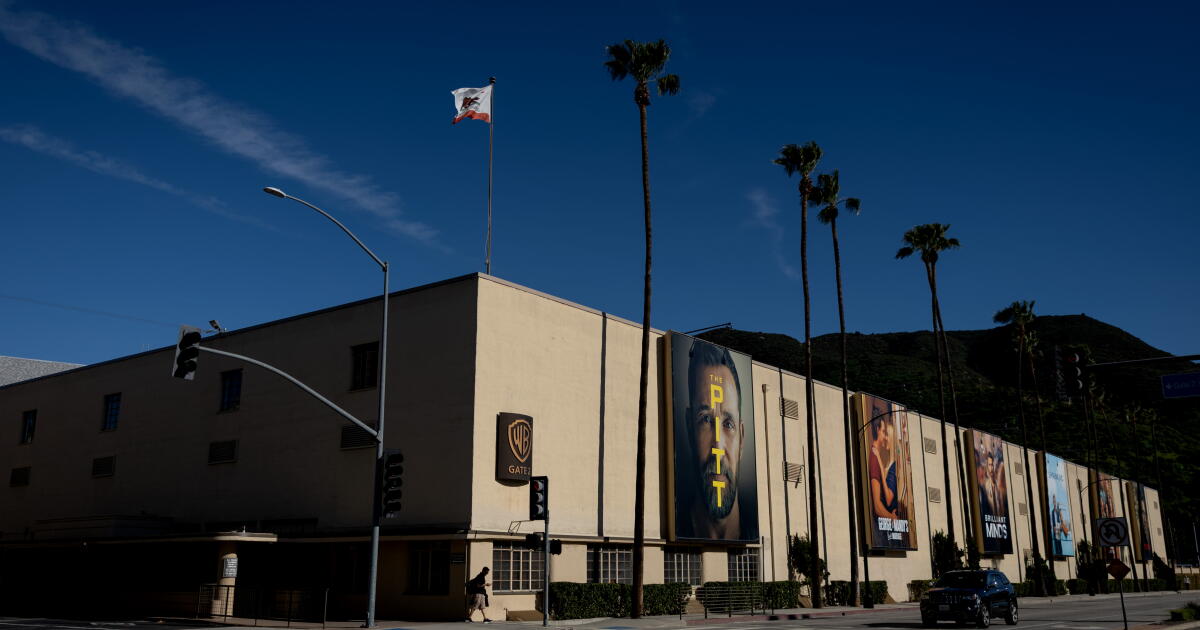
The merger would create a new Hollywood behemoth by giving Paramount, which owns CBS and the Melrose Avenue film studio, such valuable assets as HBO, HBO Max, CNN, TBS, Food Network and Warner Bros.’ film and television studios in Burbank. Warner controls beloved TV shows, franchises and movies, including “Casablanca,” Harry Potter, D.C. Comics, “Game of Thrones,” “Euphoria,” “The Pitt,” and “Rooster.”

“Shareholder approval marks another important milestone towards completing our acquisition of Warner Bros. Discovery, building on our successful equity and debt syndications and progress across regulatory approvals,” Paramount said Thursday in a statement. “We look forward to closing the transaction in the coming months and realizing the creation of a next-generation media and entertainment company that better serves both the creative community and consumers.”

Paramount now must secure regulatory approvals in the U.S. and abroad. Ellison, who is poised to honor President Trump with a dinner Thursday evening in Washington, hopes to complete the deal by late summer.

Shareholders, however, made known their disdain for Warner Chief Executive David Zaslav’s proposed golden parachute, which could swell to $887 million, depending on when the transaction closes. His cash, stock and options would be valued at more than $550 million. Warner board members also agreed to pay his tax bill, which could approach $330 million, should the merger be completed by year’s end.

Shareholders, in a non-binding vote, voted against Zaslav’s package.

Paramount’s deal has encountered significant opposition in Hollywood and beyond.

More than 4,000 filmmakers, actors and industry workers, including Ben Stiller, Bryan Cranston, Ted Danson, J.J. Abrams and Kristen Stewart have signed an open letter asking California Atty. Gen. Rob Bonta and other regulators to block the deal.

Opponents fear the consolidation would be lead to massive layoffs and diminish the quality of programming that Warner Bros., CNN and HBO are known for. Hollywood has sustained thousands of layoffs over the last six years; the film production economy hasn’t recovered from shutdowns during the 2023 labor strikes.

“This is already an incredibly consolidated industry where writers have seen merger after merger leave fewer and fewer companies in control of what our members can get paid to write,” Michele Mulroney, president of the Writers Guild of America West, said Wednesday during a press briefing organized by Free Press and other progressive groups that oppose the merger.

“A combined Warner Bros. and Paramount would create a media behemoth with tremendous leverage to reduce content, to raise prices, to increase control of production, to suppress member compensation, worsen working conditions and silence the voices of our members,” Mulroney said.

Trump has long agitated for changes at CNN, and few expect his Justice Department to block the transaction. Defense Department Secretary Pete Hegseth echoed the sentiment. “The sooner David Ellison takes over that network the better,” Hegseth told reporters in March.

It’s unclear whether Bonta or other state attorney generals will file a lawsuit to try to stop the deal. Bonta previously told The Times that his office is reviewing the consolidation.

“This deal can get blocked. I personally think it will get blocked — or undone,” Alvaro Bedoya, former Federal Trade Commission member who now serves as a senior adviser to the American Economic Liberties Project, told reporters Wednesday. He pointed to other proposed mergers that unraveled due to fierce opposition, including the proposed combinations of grocery giants Kroger and Albertson’s.

David Ellison has promised to keep HBO entact and the Paramount and Warner Bros. movie studios humming. He promised cinema owners last week that a combined Paramount-Warner Bros. would release 30 movies into theaters each year.

“This transaction uniquely brings together complementary strengths to create a company that can greenlight more projects, back bold ideas, support talent across multiple stages of their careers,” Paramount said in a statement to push back on the opposition. The company would have the power to “bring stories to audiences at a truly global scale — while strengthening competition by ensuring multiple scaled players are investing in creative talent.”

To finance the Warner takeover, Ellison’s billionaire father, Larry Ellison, has agreed to guarantee the $45.7 billion in equity needed. Bank of America, Citibank and Apollo Global have agreed to provide Paramount with more than $54 billion in debt financing.

Paramount has enlisted a former Trump administration official, lawyer Makan Delrahim, who served as Trump’s antitrust chief during the president’s first term.

In a confident move, Delrahim filed to win the Justice Department’s blessing in December — even though Paramount didn’t have an agreement with Warner Bros. Discovery’s board at the time. In February, a key deadline for the Justice Department to raise issues with Paramount’s proposed Warner takeover passed without comment from the Trump regulators.

Source link

Larry David talks ‘Seinfeld,’ ‘Curb Your Enthusiasm,’ new HBO series

Inside the ornate Bovard Auditorium, Larry David kept a full audience in stitches as he discussed the creation and legacy of his improv hit, “Curb Your Enthusiasm,” which concluded in 2024 after 12 seasons.

In a conversation with Lorraine Ali — who wrote “No Lessons Learned: The Making of Curb Your Enthusiasm,” which retraces the show’s long run with cast interviews, episode guides and behind-the-scenes material — David reflected on the separation between himself and the abrasive on-screen persona he adopted for more than two decades.

“I wish I was that Larry David,” he said.

David spoke about the outrageous audition process for “Curb,” wherein actors tried to navigate a brief written scenario without any dialogue to guide them as David lambasted them in character. Out of this process came iconic one-liners and beloved characters, such as Leon, played by J.B. Smoove.

“People bring out certain things, and when I would act with them, some of them would make me seem funny,” David said. “I go, ‘Oh, that’s good — let’s give him a part.’”

David cited “Palestinian Chicken” as one of his favorite episodes of the show. In the episode, David is caught between a delicious new Palestinian chicken restaurant, a Palestinian girlfriend and an outraged inner circle of Jewish friends.

He also spoke briefly about his upcoming episodic HBO series, “Life, Larry and the Pursuit of Happiness,” a historical spoof that will retrace United States history for the country’s 250th founding anniversary. The series will premiere on Aug. 7.

“A lot of wigs, costumes, beards — fake beards,” David said. “Nothing worse than fake beards.”

The controversial ending of “Seinfeld,” which David co-wrote with comedian Jerry Seinfeld, was polarizing among fans when it was released, David said. After a recent rewatch, however, David said he thought it was “pretty good,” to a round of applause from the audience.

Near the end of the panel, an audience member asked a question some definitely had on their mind: Will “Seinfeld” ever get a reunion?

“No,” David replied without missing a beat.

Source link