Hardened

Trump puts onus on Iran’s authorities as they project hardened stance | Conflict News

Tehran, Iran – Iran’s authorities and state media project that they are less interested than before the war in negotiations with the United States if they go beyond their accepted terms, as mediated talks failed to materialise in Pakistan.

Foreign Minister Abbas Araghchi met senior Pakistani officials in Islamabad on Saturday and left for Oman, to be later bound for Russia. The top diplomat, who was not joined by Parliament Speaker Mohammad Bagher Ghalibaf like in a previous round of negotiations earlier this month, said he was “yet to see if the US is truly serious about diplomacy”.

Recommended Stories

list of 3 itemsend of list

Envoys Steve Witkoff and Jared Kushner had been expected in Pakistan after the White House said Iran asked for a second round of direct negotiations, but US President Donald Trump cancelled the trip and said, “we have all the cards, they have none” while reiterating his claim about “infighting and confusion” among Iran’s leadership.

“If they want to talk, all they have to do is call!!!” Trump wrote in an online post, continuing to put the onus on Iran’s leadership.

Amid a state-imposed near-total internet shutdown in Iran, nearing two months, officials and the supporters of the Islamic Republic emphasise that they are united in opposing any concessions to Trump.

The US president said earlier this week he was in “no rush” to reach an agreement with Iranian leadership, whom he claimed, without evidence, were “fighting like cats and dogs” among themselves.

Since Trump highlighted the perceived fractures, military, security, judiciary and government authorities in Iran have been releasing synchronised messages with near-identical wording to proclaim absolute unity.

The messages, circulated through state media and even using similar graphics and fonts but with different colours, claim that everyone in the country is “revolutionary” and exercises “complete obedience” to Supreme Leader Mojtaba Khamenei.

The authorities also claim that more than 30 million people – a third of Iran’s total population – have registered in a state-run campaign to express readiness to “sacrifice” their lives if necessary, but they have not provided any documentation to prove this.

The Khatam al-Anbiya Central Headquarters of the Islamic Revolutionary Guard Corps (IRGC) said on Saturday afternoon that armed forces would retaliate against the US if it continues its “blockade, banditry and piracy” in Iran’s southern waters.

“We are prepared and determined to monitor the behaviour and movement of the enemies in the region and maintain management and control of the strategic Strait of Hormuz, and to inflict more severe damages on the American-Zionist enemies in case of another aggression,” read its statement.

The IRGC on Saturday took a state television presenter to broadcast near two vessels seized days earlier in the strait to report that Iran exercised “total control” over the waterway.

Police officers stand guard behind a barricade near Serena Hotel, as Pakistan prepares to host the U.S. and Iran for the second round of peace talks, in Islamabad, Pakistan, April 25, 2026. REUTERS/Asim Hafeez
Police officers stand guard behind a barricade near Serena Hotel, as Pakistan prepares to host the US and Iran for the second round of peace talks, in Islamabad, Pakistan, April 25, 2026 [Asim Hafeez/Reuters]

Iranian authorities continue to call on their supporters, including paramilitary forces, to take to the streets every night in order to maintain control.

In a rally in downtown Tehran on Friday night, Meysam Motiei, a prominent state-backed religious singer with links to the supreme leader’s office, told the crowds that anyone stuck in factional infighting during times of war “has not grown up yet”.

“If anyone from any group or faction, especially in the name of being a revolutionary, tries to disturb the unity of the people, they will get a slap in the face by the people,” he asserted.

But in ultraconservative Mashhad in northeast Iran, where a shrine considered holy for Shia Muslims is located along with powerful religious and economic foundations, some were still preaching aggressively against the possibility of former reformist and moderate leaders retaking power.

“They have instructed us to keep unity with incumbent officials, not these two people,” a speaker told a gathering crowd on Friday night in a clip shared by state-linked media, in reference to former President Hassan Rouhani and his foreign minister, Mohammad Javad Zarif.

“We are not afraid of B-2s and B-52s; we are afraid of dishonourables who have no concern for the homeland. Wherever Trump makes a mess, Zarif comes and blabbers away,” he said, about the diplomat who led nuclear talks that led to a now-expired landmark accord with world powers in 2015.

Iran’s judiciary continues to execute dissidents, and on Saturday announced the hanging of Erfan Kiani, who was arrested during the nationwide protests in January when thousands were killed.

The judiciary described him as “Mossad’s hired knife-wielder” and said he was accused of destroying property, arson and more in downtown Tehran.

Iranian Foreign Minister Abbas Araqchi meets Pakistan’s Army Chief, Field Marshal Asim Munir
Iranian Foreign Minister Abbas Araghchi meets Pakistan Army Chief Field Marshal Asim Munir, in a location given as Islamabad, Pakistan, released April 25, 2026 [Seyed Abbas Araghchi via Telegram/Handout via Reuters]

No nuclear talks?

Iranian state media reports indicate that the US naval blockade of Iran’s ports is undermining the ceasefire extended by Trump and allowing the more hardline voices in Tehran to come out on top.

The Tasnim and Fars news agencies, affiliated with the IRGC, argued against allowing any nuclear negotiations to take place with the US, even though Trump and Israel’s Prime Minister Benjamin Netanyahu started the war with the predominant goal of preventing a nuclear-armed Iran. Tehran has consistently stressed that its nuclear programme is peaceful, although some Iranian leaders have called for the development of a bomb.

“The negotiations with the US are strictly to end the war, and Iran does not consider the nuclear issue to be part of the talks,” Tasnim said, claiming that time was not on Washington’s side due to the tumult in global markets resulting from the war.

Khamenei has not directly commented on more negotiations, but Ali Khezrian, another representative of Tehran in the hardline-dominated parliament, told state media on Thursday that Khamenei was “opposed to any extension of negotiations” under threats from the US and Israel.

Israel’s Defence Minister Israel Katz earlier this week adopted Trump’s apocalyptic messaging, and said armed forces are awaiting a greenlight from the US to “return Iran to the age of darkness and stone by blowing up central energy and electricity facilities and crushing national economic infrastructure”.

There are currently three US aircraft carriers and their supporting vessels in the Middle East region, according to the US military, which marks the first time this has happened since the buildup to the 2003 invasion of Iraq.

But Mahmoud Nabavian, a senior black-turban cleric and hardline member of parliament who was a part of the large Iranian delegation in the first round of talks, said it was a “strategic mistake” to even include the nuclear issue.

He told state media that this allowed the US to raise demands like a 20-year suspension of enrichment, and shipping Iran’s buried high-enriched uranium abroad.

“From now on, entering any negotiations with the US is pure damage and has no interest for the Iranian nation,” he said earlier this week, adding that oil sales were providing the government with a “full hand”.

Mohammad Saeedi, the Friday prayer imam of ultraconservative Qom, located south of Tehran, said in reference to the US that it would be “meaningless and unfair to sit down behind the negotiating table with a symbol of corruption”.

Iranian flags with photo of mojtaba
Women hold Iranian flags and a portrait of Supreme Leader Ayatollah Mojtaba Khamenei during a state-organised rally in support of the supreme leader marking National Girl’s Day in Tehran, Iran, Friday, April 17, 2026 [Vahid Salemi/AP]

Civilian infrastructure in danger

The government of relatively moderate President Masoud Pezeshkian has signalled concern about the potential impacts of systematic targeting of more civilian infrastructure, especially power plants, in case the war continues.

“We have a simple request from the people: to reduce their consumption of power and energy. For now, we have no need for these dear people to sacrifice their lives, but we need to control consumption,” the president said on Saturday. “They have hit our infrastructure and blockaded us, so the people become dissatisfied.”

Mohammad Allahdad, the head of Tavanir, the government-owned mother company for development and operation of Iran’s power grid, told state television that it would pay a reward to citizens who would report any theft and illegal use of electricity.

First Vice President Mohammadreza Aref said, “We will build Iran back more glorious” through unity after previous infrastructure attacks that hit oil and gas facilities, steel producers, petrochemical firms, aluminium factories, energy facilities, as well as airports, naval ports, bridges and railway networks.

The government reopened Tehran’s Imam Khomeini Airport for limited foreign-bound flights on Saturday, including those taking people to the Hajj pilgrimage in Saudi Arabia, despite the potential of war resuming.

Source link

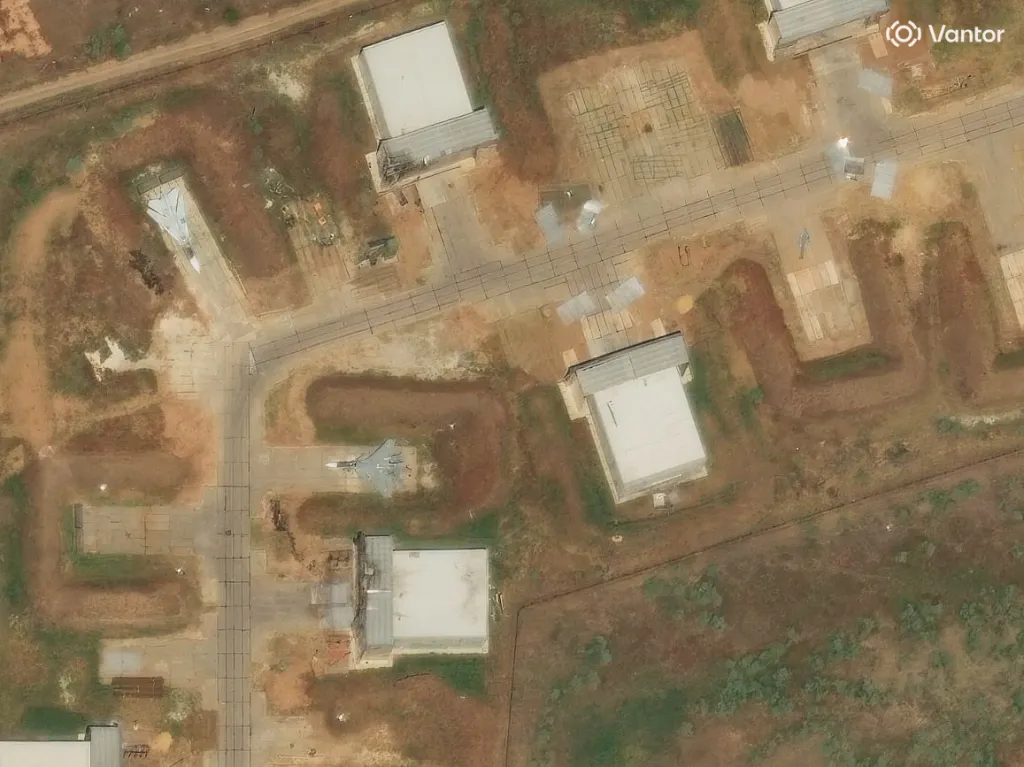
Hardened Underground Facilities Now Being Sought For Al Udeid Air Base

With its facilities in the Middle East frequently targeted by Iranian missiles and drones, U.S. Central Command is looking for better ways to protect its troops and capabilities. This week, the command and its subordinate units put out two calls for information from companies that can design and provide hardened infrastructure, including underground facilities, as well as shelters. The need for hardened shelters is something that The War Zone has been raising for years, especially when it pertains to aircraft.

The moves come as 13 U.S. troops have been killed, more than 300 wounded and facilities and equipment like radar systems and aircraft have been destroyed and damaged since the launch of Epic Fury on Feb. 28.

The attacks have been so intense that they’ve forced “many American troops to relocate to hotels and office spaces throughout the region,” The New York Times reported on Thursday, citing military personnel and American officials. “So now much of the land-based military is, in essence, fighting the war while working remotely, with the exception of fighter pilots and crews operating and maintaining warplanes and conducting strikes.”

You can see video from one of those Iranian attacks, on the U.S. Navy base in Bahrain, below.

The troop relocations spurred Iran’s powerful Speaker of the Parliament Mohamed Bagher Ghalibaf to mock the U.S. war effort in a post on X.

How can the US, which can’t even protect its own soldiers at its bases in the region and instead leaves them stashed away in hotels and parks, protect them on our soil?

— محمدباقر قالیباف | MB Ghalibaf (@mb_ghalibaf) March 27, 2026

One of the shelter sources sought requests from CENTCOM this week is a long-term seven-year project while the other is for more immediate protection. Neither addresses the issue of protecting aircraft.

On Wednesday, U.S. Air Forces Central (AFCENT) put out a call for vendors who are able to help bolster force protection at Al Udeid Air Base in Qatar, the largest American military installation in the Middle East. Like many other bases in the region, it has come under frequent attack from Iran. AFCENT is seeking information from companies able to plan and design “a hardened, underground, secure, Combat Center Building…and squadron operations buildings supporting a variety of airframe and missions to include, but not limited to, bombers, fighters, and unmanned aircraft systems for intelligence, surveillance, and reconnaissance (ISR).”

The sources sought solicitation, which could lead to a sole-source contract award, states that the plan may also seek construction of additional facilities, including administrative offices, command and control facilities, operational readiness and life support facilities for specialized personnel, elevators, and a parking garage. However, there is a long lead time for this project, even if it gets approved. A contract solicitation won’t be issued until April 2027, with the award anticipated in January 2028. 

A U.S. Air Force KC-135 Stratotanker takes off on a newly reopened runway at Al Udeid Air Base, Qatar, Nov. 1, 2023. Due to the joint efforts of the Qatari contractors and the Airmen of the 379th Air Expeditionary Wing, the project was completed two weeks early. (U.S. Air Force photo by Senior Airman Sarah Williams)
CENTCOM is looking for companies who can design a hardened, underground sheltered command center at Al Udeid. (U.S. Air Force photo by Senior Airman Sarah Williams) Senior Airman Sarah Williams

The underground shelter plan for Al Udeid is part of Strategic Master Plan 2040 (SMP2040), “a portfolio of over 170 Qatar-funded projects worth $10 billion that will be carried out from the first quarter of 2026 until 2040,” according to AFCENT. “Most of the projects are designed and will be constructed by Qatar with a few being U.S.-designed and constructed.”

It is unclear whether the new shelter project was spurred by current events, but a Feb. 3 AFCENT release on SMP2040 makes no mention of such structures. That fact that the plan will take years to come to fruition also raises questions about why it had not been unveiled sooner, given that Al Udeid has long been known to be a target of potential Iranian attacks. It is also not publicly known whether the proposed Combat Center Building at Al Udeid will replace or augment the current Combined Air Operations Center (CAOC) that serves as a command and control headquarters for U.S. and allied aircraft operating across the Middle East. We’ve reached out to AFCENT for clarification, but they deferred us to CENTCOM, which declined comment.

Al Udeid, just 175 miles from Iran across the Persian Gulf, has already been hit by Iran, suffering damage to a radar and buildings during Epic Fury and forcing the relocation of troops. Last year, Iran launched 10 ballistic missiles at the base in retaliation for the Operation Midnight Hammer strike on Iranian nuclear facilities. That incident spurred what was at the time the largest volley of Patriot interceptors ever expended by the U.S. for one single event.

Attacks on and damage to Al Udeid from Iranian missiles can be seen below.

This satellite imagery is noteworthy. It appears to show at least two precise impact points on a large bunker used by U.S. forces at Al Udeid Air Base in Qatar 🇶🇦, located at 25°06’45.71″N 51°20’43.17″E.

Curious which munitions were used in that strike. https://t.co/unbsGZmZUc pic.twitter.com/CItRQjA9gr

— Egypt’s Intel Observer (@EGYOSINT) March 13, 2026

In a more immediate request, CENTCOM is looking for vendors capable of providing “prefabricated, transportable, hardened shelter systems designed to protect personnel from blast and fragmentation threats,” according to a sources sought posting on Monday. “All proposed solutions must be deliverable to the Aqaba Air Cargo Terminal at King Hussein International Airport in Aqaba, Jordan.”

Unlike the Al Udeid plan, CENTCOM is looking for a quick turnaround on these shelters, asking that vendors submit “three potential delivery options reflecting estimated timelines of 3 days, 15 days, and 30 days.”

“Responses shall include a comprehensive description of the materials used in fabrication, including composition, structural design, and any reinforcement features,” according to the solicitation. “Vendors must also clearly identify the protection level of each proposed bunker, including the highest level of threat (e.g., blast force, fragmentation, or ballistic impact) the system is designed to withstand.”

The total quantity of these shelters is currently unknown and vendors are being asked to provide pricing structures “that reflect any available economies of scale.” The timeline for this project is unclear. Responses are due today, but there is no contract award deadline listed in the solicitation. CENTCOM declined our request for details, citing operational security concerns.

“Vendors are requested to submit three potential delivery options reflecting estimated timelines of 3 days, 15 days, and 30 days.”

“The USG’s review of documentation priorities are delivery timeline first, followed by protection level of the bunker systems.”

— 1st ETSG/TKO

— Carter Johnston (@__CJohnston__) March 23, 2026

As noted earlier in this story, we have long wondered why the U.S. military has not done more to protect its assets by building hardened shelters, particularly for aircraft.  For years now, U.S. military officials have often pushed back on the utility and cost-effectiveness of investing more in the physical hardening of bases and other critical facilities, especially shelters to shield aircraft from drones and other threats.

The most recent incident took place earlier this month when Barksdale Air Force Base in Louisiana experienced waves of drone incursions. The base is home of B-52 Stratofortress bombers and nuclear weapons storage facilities, and is a key part of the airborne leg of America’s nuclear triad.

I have spent a good part of my career just getting people to believe this was actually happening. Now we are here. With 15 drones, you can lose roughly 1/4 of the B-52 force as it sits idle on the ground. This was always the most concerning scenario. Time to move to hardening.… https://t.co/bBgE5taas9

— Tyler Rogoway (@Aviation_Intel) March 20, 2026

One of the biggest concerns we have raised over the years is the lack of shelters at the massive and highly strategic Andersen Air Force Base on the island of Guam. The base, a key location for U.S. power projection in the Pacific, will be a prime target for Chinese long-range missiles in the event of a war.

Friday morning, retired Air Force Lt. Gen. David Deptula, now dean of the Mitchell Institute, concurred with our concerns about the lack of shelters and other hardened infrastructure.

“It absolutely has been needed and I made that case back when [Al Udeid] was being built,” Deptula told us. “But it’s all about money. That, along with not hardening aircraft shelters in Guam.

Deputla added that he tried to get hardened shelters built in Guam back when he was Director of Air and Space Operations for Pacific Air Forces more than 20 years ago.

“We were passed over due to other priorities at the time,” he explained.

As for the concept for hardened infrastructure at Al Udeid, Deptula said he was not aware of the plan, “but it is too little too late for this war.”

The reluctance about hardened shelters may be starting to change. Last year, the U.S. Army Corps of Engineers (USACE) announced anti-drone updates to the Modular Protective System-Overhead Cover (MPS-OHC). MPS-OHC was originally developed during the Global War on Terror era in response to indirect fire threats like artillery shells, rockets, and mortar rounds that U.S. forces were facing in Afghanistan and Iraq. The modular shelters, while still hardened, could provide a more temporary and cost-effective way to protect aircraft, other equipment and personnel from drones.

A Modular Protective System-Overhead Cover. (US Army Corps of Engineers)

Meanwhile, weeks before Epic Fury was launched, the Pentagon released new guidelines for hardening civilian and military facilities in the homeland from the growing threat from small drones that The War Zone has long warned about. These concerns have been spurred by years of incursions over U.S. bases and critical facilities and were hammered home by Ukraine’s 2025 near-field attack, dubbed Operation Spider Web, that wiped out a large number of Russia’s bombers with concealed arrays of drones stashed near airbases.

Epic Fury, of course, presents a different threat as U.S. bases get hit by ballistic missiles and large drones like Shahed-136s, in addition to first-person view (FPV) drones. Regardless, this conflict has once again highlighted the need to find better ways of protecting American troops and assets.

Contact the author: howard@thewarzone.com

Howard is a Senior Staff Writer for The War Zone, and a former Senior Managing Editor for Military Times. Prior to this, he covered military affairs for the Tampa Bay Times as a Senior Writer. Howard’s work has appeared in various publications including Yahoo News, RealClearDefense, and Air Force Times.


Source link