hailed

Beautiful market town hailed as England’s ‘loveliest’ with some of the UK’s best food

The spot is famed for its cobbled streets, Norman castle and stunning architecture

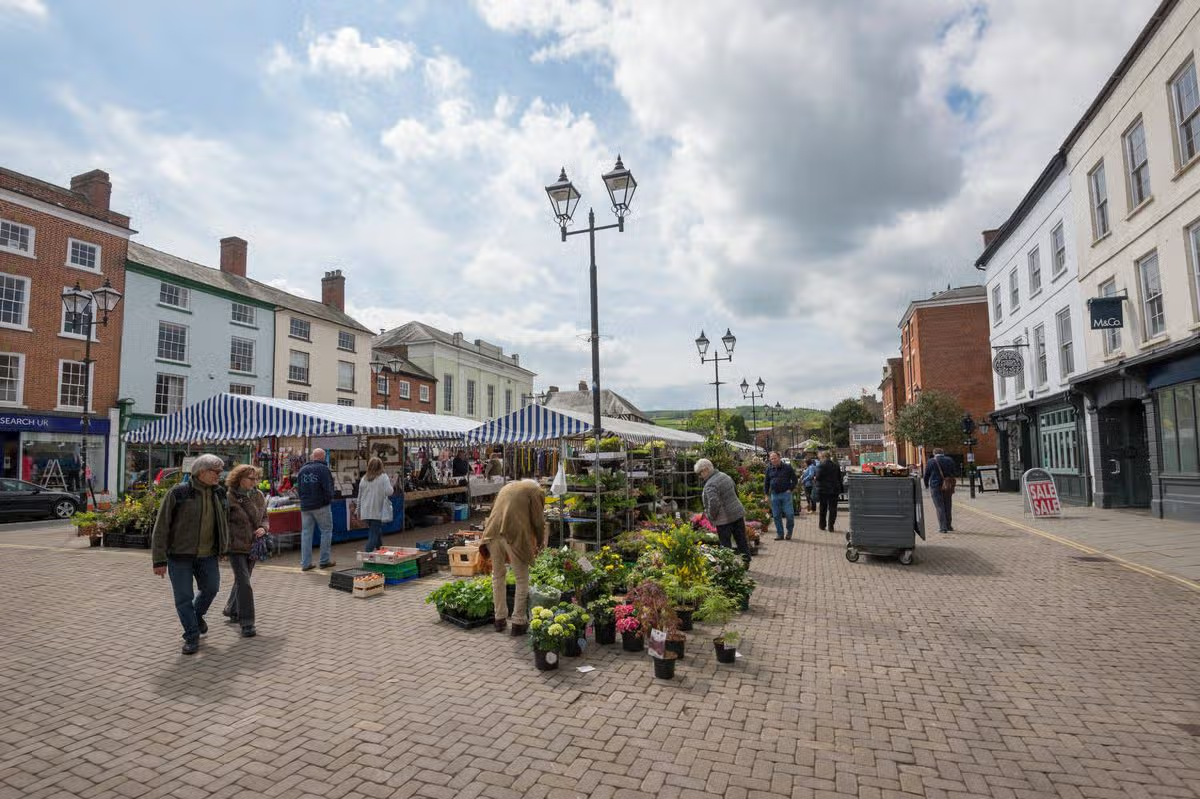
Long hailed by poet John Betjeman as “the loveliest town in England,” Ludlow has also earned a global reputation as a premier food and drink destination. With over 500 listed buildings and a skyline dominated by a Norman castle, Ludlow effortlessly blends ancient, storybook charm with a modern appeal.

Winding cobblestone streets lead visitors to delis, bakeries, welcoming pubs and acclaimed restaurants.

Frequently dubbed the “food and drink capital of the Marches”, Ludlow’s thriving hospitality scene is fuelled by its impressive variety of locally sourced produce. In 2024, a Which? Travel survey of more than 9,000 people asked respondents to rate the food and drink in their favourite inland towns and villages.

Ludlow came out on top as the nation’s highest-rated destination for food and drink, standing as the only inland town to achieve a full five stars in that category, reports the Express.

Ensure our latest travel stories always appear at the top of your Google Search by making us a Preferred Source. Click here to activate or add us as a Preferred Source in your Google search settings

As Which? Travel put it, “Instead of a handful of high-end eateries, there’s a culture of local produce as well as numerous pubs and cafes, served by people who care about the food.”

This ethos is reflected on every plate, with an emphasis on fresh, locally sourced ingredients and menus that change with the seasons.

TripAdvisor currently ranks Old Downton Lodge as Ludlow’s finest restaurant, while waterside favourite CSONS is another beloved choice for relaxed, quality dining, along with Kin Kitchen and The French Pantry for café and bistro-style fare. Pub lovers are spoilt for choice with options including The Queens and The Boot Inn, both of which are highly rated on TripAdvisor.

Experts from Ludlow Distillery note that the town’s food and drink scene benefits greatly from a thriving network of local producers, ranging from artisan cheesemakers and bakers to craft brewers and distillers.

They stated: “The strength of this offering is best seen (and tasted) by a visit to the Local to Ludlow Market in the Castle Square (where growers and makers based within 30 miles of the town sell a range of high-quality and carefully selected produce), and the award-winning Broad Bean fine food delicatessen on Broad Street.”

The town proudly champions ‘Slow Food’, a global grassroots movement with thousands of members worldwide that brings together a love of good food with a commitment to community values.

In recent years, the movement in Ludlow has gone from strength to strength.

Slow Food Ludlow Marches offers activities throughout the year, including visits, talks, demonstrations, meals and Taste Workshops at Ludlow Food Festival in September.

Ludlow Food Festival ranks among the town’s most celebrated annual events, regularly drawing around 15,000 visitors to Ludlow Castle over three days.

Both locals and visitors alike can look forward to the Winter Festival at Ludlow Castle. Taking place between 27 and 29 November 2026, the event showcases local entertainment, mulled wine, and much-loved highlights from the Ludlow Food Festival.

Head along on the second or fourth Thursday of the month to discover the Ludlow Local Produce Market, a vibrant showcase of food and drink made within a 30-mile radius.

The stalls champion sustainability and seasonality, turning an ordinary shopping trip into a thoroughly enjoyable afternoon out.

Outside of Shropshire, Wells was named runner-up for inland dining by Which? Travel.

Other destinations receiving recognition include Lavenham in Suffolk, Llangollen in Denbighshire, Stamford in Lincolnshire, and Cartmel in Cumbria. Each offers its own distinctive flavour of a foodie escape.
Source link

Crime thriller hailed ‘masterpiece for the ages’ on Film4 tonight

The neo-noir crime classic has an almost perfect rating on Rotten Tomatoes and fans say it is one of the greatest films ever made

It was a film which cemented the blossoming careers of two of the world’s biggest actors, has a near perfect rating on Rotten Tomatoes and was nominated for a huge nine Oscars – and now it’s airing on Film4 tonight.

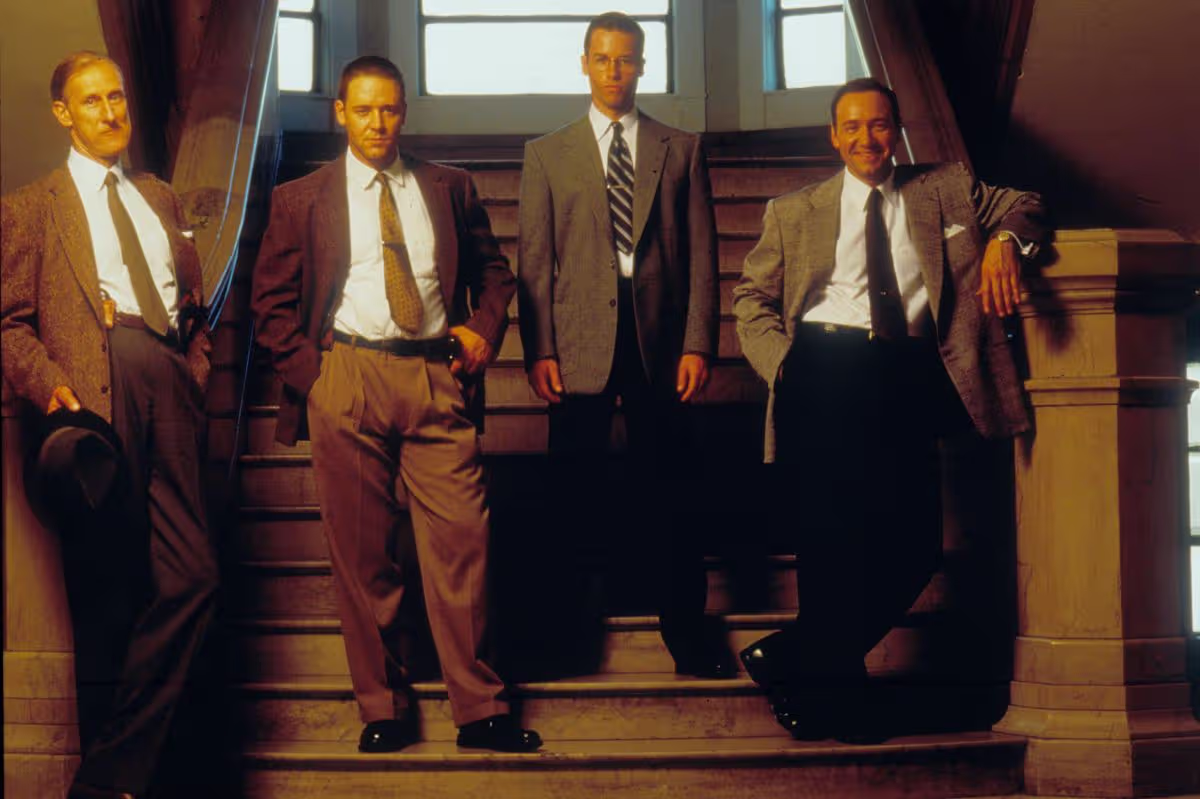
LA Confidential is a noir crime thriller starring Kim Basinger, Kevin Spacey, Danny DeVito and Australian actors, Guy Pierce and Russell Crowe, in what would become a breakthrough role for both of them.

Based on James Ellroy’s novel, the film was directed by Curtis Hanson, who also co-wrote the script with Brian Helgeland. Set in the Los Angeles that gives the movie its title LA Confidential is the story of a group of police officers in the 1950s and deals with corruption and the world of Hollywood celebrity.

LA Confidential was nominated for Best Picture, Best Director, Best Supporting Actress, Best Screenplay, Best Cinematography, Best Original Score, Best Sound and Best Film Editing at the Academy Awards and walked away with Oscars for Kim Basinger for Best Supporting Actress and Best Screenplay. It is often cited as one of the best films to have lost the Best Picture Oscar.

The film also has an incredibly rare, almost perfect rating on the film review website, Rotten Tomatoes, standing at a 99 percent approval rating.

One critic said: “Writer-director Curtis Hanson’s adaptation of the James Ellroy novel wasn’t merely one of the two or three greatest movies of the 1990s; it stands as a masterpiece for the ages.”

Another added: “The flawless ensemble…, the masterfully written story, the vibrant yet gritty vision of 1950s LA – most everything clicks in this fittingly cynical and undeniably seductive period crime thriller that still maintains its style and sizzle.”

While a third wrote: “Adapted from a novel said to be unadaptable and set in a genre that has seemed increasingly played out, it brings clarity and life to its art and to life. That’s a pretty good definition of a masterpiece, isn’t it?”

Fans of the film were equally as lavish in their praise from the movie. One wrote: “A masterclass in crime noir. L.A. Confidential is one of those movies that reminds you why people love cinema. The cast is phenomenal, the acting is excellent, and the production design makes every scene feel authentic. The writing, dialogue, editing, and score all come together to create a gripping crime noir that never loses momentum.”

Another said: “A mystery thriller that moves like few others. The twists and turns will be obvious to any average movie goer, but the plot was never the focus. This is a clear cut character piece and here, few can rival the masterclass work on display. The cast is flawless, the script is magnificent and Hanson’s directing somehow weaves all of it together so it’s not only (structurally) a marvel, but wildly entertaining.”

While a third added: “L.A. Confidential is, without a doubt, the best film of the ’90s, and one of the best films ever made. Curtis Hanson was a much better director than Speilberg or Tarantino. Great script, the story is riveting, the dialogue is smart and funny, and the characters are written in three if not four dimensions. One can almost forgive the casting of DeVito, who did a good job. There should have been several sequels.”

LA Confidential is on Film 4 at 12.45am this morning.

Source link

HIV prevention drug hailed as breakthrough, but who gets access? | Science and Technology News

A medicine injected just twice a year could transform the fight against HIV.

In a 2024 clinical trial involving more than 2,000 young women in South Africa and Uganda, no participants who received lenacapavir contracted HIV.

Recommended Stories

list of 4 itemsend of list

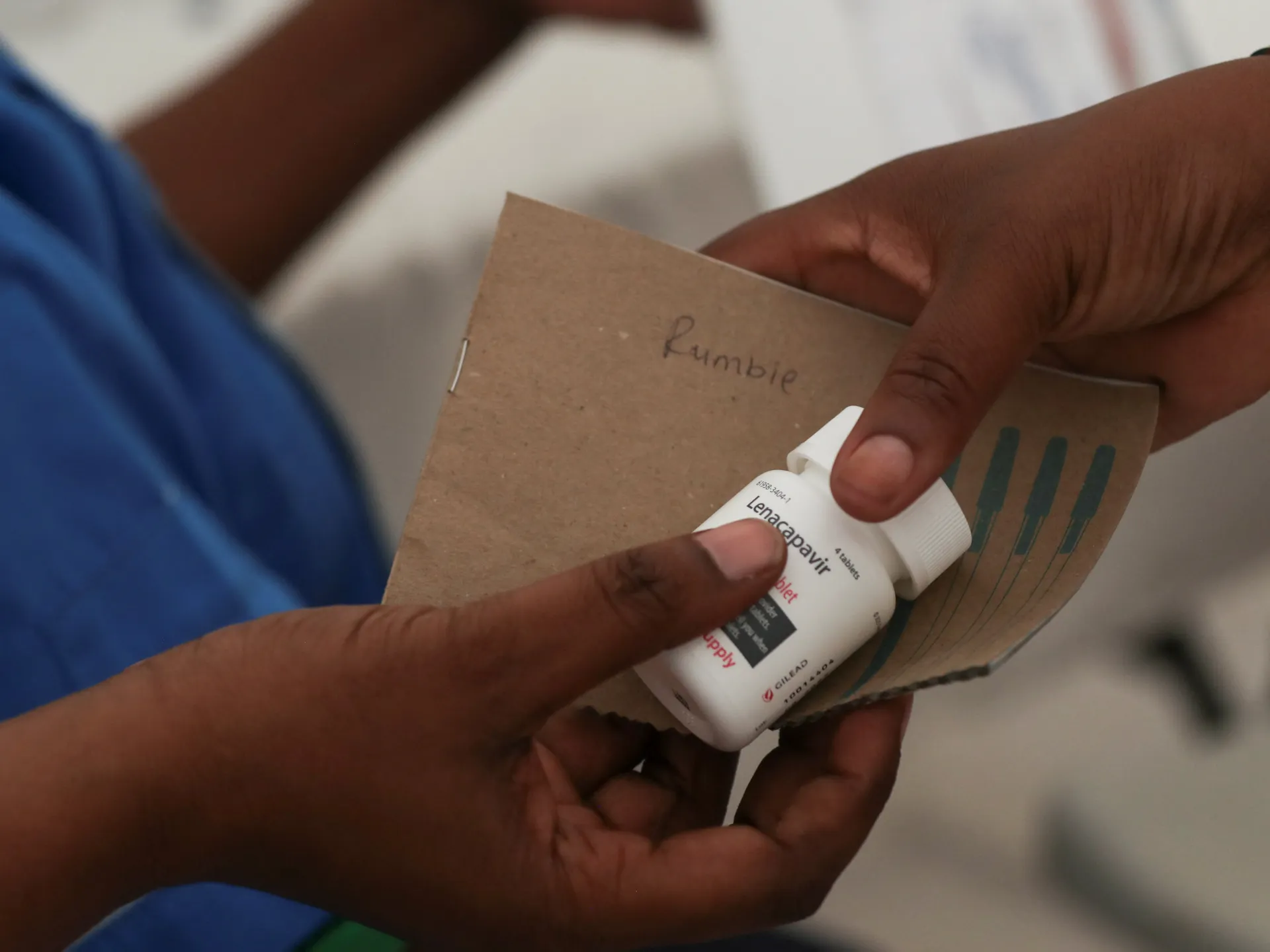
Developed by United States pharmaceutical company Gilead Sciences, the injectable drug can be used to prevent HIV.

“It’s the most innovative tool that has reached the HIV arena for the last decade, because it’s the closest we have [to] a vaccine,” Carlota Baptista da Silva, global HIV lead at Doctors Without Borders (known by its French initials, MSF), told Al Jazeera.

The World Health Organization has recommended the long-acting injectable as an additional form of pre-exposure prophylaxis, or PrEP – medicine to reduce the risk of getting HIV.

But the arrival of the drug comes at a challenging juncture in the global fight against HIV.

International funding for HIV fell 18 percent in 2025, to $7.3bn, its lowest level in nearly two decades, according to the United Nations programme on HIV/AIDS (UNAIDS). The squeeze has already hit prevention programmes: The number of people receiving medicine to reduce risk fell from 1.4 million in 2024 to 1.1 million in 2025.

That makes the arrival of a highly effective, twice-yearly prevention option significant. The question of who can access it is now more urgent.

For MSF, the scientific question has largely been answered: lenacapavir can prevent HIV with remarkable efficacy.

The fight now is whether the rules governing manufacture, price and supply will allow that scientific breakthrough to reach the people who need it.

Why some countries are excluded

In the United States, lenacapavir costs about $28,000 per person annually. Generic versions are expected to cost about $40 a year.

A generic version is a copy of the original drug made by another manufacturer after the patent holder licenses the technology. It contains the same active ingredient, but it can be produced and sold at a much lower price.

In June 2025, the US Food and Drug Administration (FDA) approved lenacapavir for HIV prevention, giving people the option of an injection twice a year. But in several low- and middle-income countries, access to cheaper versions is not expected at scale until 2027.

Gilead is supplying its own version of lenacapavir at no profit for programmes supported by the Global Fund and the US President’s Emergency Plan for AIDS Relief (PEPFAR), with rollouts under way in countries including South Africa, Kenya, Zambia, Nigeria and Eswatini.

These are not the cheaper generic versions expected to cost about $40 per person a year. Gilead has licensed six manufacturers to produce those, with large-scale generic rollout expected in 2027.

At least 26 middle-income countries are excluded from Gilead’s generics agreement, MSF says, including countries with rising HIV infections and some that helped test the drug. Among them are Brazil, Mexico, Argentina and Peru.

“People should not really help generate the evidence for breakthrough medicine and then find that their country is excluded from affordable generic access,” da Silva said.

According to MSF, countries excluded from the licence accounted for close to 23 percent of new HIV infections globally in 2023.

Gilead has since announced a separate agreement with the Pan American Health Organization, creating an access pathway for 14 Latin American and Caribbean countries outside its generic licensing territory, including Brazil, Mexico, Argentina and Peru.

MSF argues that leaves those countries dependent on Gilead rather than able to automatically buy the cheaper generics.

MSF says it still cannot buy the drug

For more than a year, MSF says it has sought permission to purchase lenacapavir directly from Gilead for its medical programmes, without demanding a discounted price.

“Despite those requests, Gilead has not allowed MSF to purchase this medicine directly,” da Silva said.

That matters particularly in humanitarian emergencies, she argues. People displaced by conflict or disaster may struggle to take a prevention pill every day, while sexual violence and other vulnerabilities can increase the risk of HIV.

Daily PrEP pills are already available as an alternative to the injection. But unlike lenacapavir, they need to be taken consistently to provide protection. An injection offering six months of protection could be particularly valuable.

“People living through conflict [and] humanitarian crises cannot be the last in line for medical innovation,” da Silva said.

Gilead declined Al Jazeera’s request for an interview due to scheduling constraints.  In its emailed statement, it said its access strategy combines no-profit supplies, royalty-free licensing and regional agreements. It didn’t reply to questions about why it won’t sell its drug to MSF, or why certain countries were excluded from its generics agreement.

The company plans to provide enough lenacapavir for up to three million people through 2028 as generic manufacturers scale up production, with large-scale generic rollout expected in 2027.

MSF says that is nowhere near the scale required, pointing to projections that close to 20 million people worldwide need access to PrEP to substantially reduce new HIV infections. That includes all forms of PrEP, not just lenacapavir.

But countries left outside Gilead’s generic licensing deal may have another option.

Can governments bypass the patent barriers?

World Trade Organization (WTO) rules allow governments, in some cases, to bypass a drug company’s patent so cheaper versions of a medicine can be made or imported without the company’s permission.

They can also authorise government use of patents and challenge patents they consider weak or unjustified. The 2001 Doha Declaration affirmed WTO members’ right to use such safeguards to protect public health.

Brazil has used them before in the fight against HIV. In 2007, after negotiations with pharmaceutical company Merck over the price of the HIV drug efavirenz failed, Brazil issued a compulsory licence allowing it to access cheaper generic versions of the medicine.

Nearly two decades later, activists are urging Brazil to consider using those powers again for lenacapavir if patent barriers prevent affordable generic access.

MSF says governments excluded from Gilead’s licence could consider those same legal safeguards for lenacapavir, including compulsory licensing, government-use authorisations and challenges to patents.

It is also calling on Gilead to ensure its agreements with generic manufacturers do not prevent them from supplying countries where patent barriers have been removed through such measures.

For MSF, the stakes go beyond lenacapavir. The way the drug is made available could determine whether one of the greatest advances in HIV prevention in decades reaches people based on need, rather than where they live or what their health systems can afford.

“For a humanitarian medical organisation, we should not have to spend more than a year trying to find a way to buy a WHO-recommended medicine,” da Silva said.

Source link