Ten months after a coup, military leaders say the referendum is designed to stabilise future civilian governments.
Published On 30 Aug 202630 Aug 2026
Ballot counting is under way in a referendum in Guinea-Bissau that could significantly boost the presidency’s power.
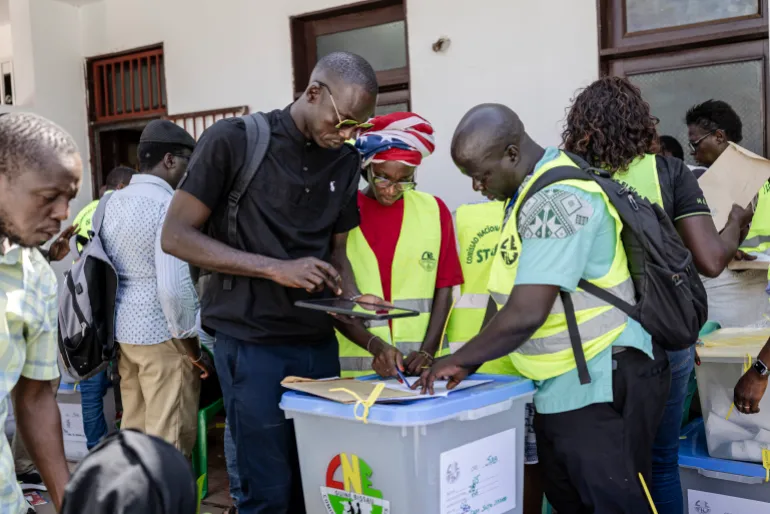
Citizens of the West African nation took to the polls on Sunday to vote on a new constitution that would reform the country’s political system ahead of elections later this year.
Turnout “exceeded” 55 percent and the poll took place “without any incidents that would call into question the credibility of the vote”, Idrissa Djalo, executive secretary of the National Electoral Commission, told a news briefing on Sunday.
The military government says it seeks to stabilise institutions before presidential and parliamentary elections, scheduled for December 6, designed to hand power back to a civilian government.
The new constitution, which citizens were asked to approve on Sunday, would switch Guinea-Bissau’s political system from a parliamentary to a presidential one.
It would abandon the system by which prime ministers came from the parliamentary majority, an approach that has led to uncomfortable power-sharing.
The new system would also allow the head of state to appoint and dismiss the prime minister and members of the government, and to dissolve parliament.
On Sunday, voters answered “yes” or “no” to the question: “Do you agree with the entry into force of the new constitution approved by the National Transitional Council?”
“What we want after this referendum is to allow whoever wins the elections to see out their mandate without hindrance,” military leader and transitional President General Horta Inta-A Na Man said.
Under the transitional charter he upholds, Inta-A Na Man is barred from running in elections.
The referendum follows years of political instability. In the November 2025 presidential election, both candidates declared victory and accused each other of electoral interference. The coup happened one day after.
Voters in Guinea-Bissau will decide on August 30 whether to approve a new constitution that would significantly strengthen the presidency and reshape the country’s electoral system.
The vote comes nine months after the military seized power and installed General Horta Inta-A Na Man as transitional president, and just more than three months before presidential and legislative elections scheduled for December 6.
Supporters of the reform say it would provide clearer lines of authority and help address years of political instability and disputes between state institutions. Critics argue that it would concentrate too much power in the presidency and have questioned the process through which the draft was produced.
The African Party for the Independence of Guinea and Cape Verde (PAIGC), one of Guinea-Bissau’s main opposition parties, has rejected the referendum and called for a boycott.
The referendum will determine whether the constitution approved by the National Transitional Council (CNT) enters into force and provides the framework for the country’s return to elected government.
Why is Guinea-Bissau changing its constitution?
The process began after the November 26, 2025, military coup.
Presidential and legislative elections had been held three days earlier. The military seized power while the electoral process was still under way, one day before the electoral commission was due to announce the presidential results.
Horta, then army chief of staff, became transitional president.
The transition charter established a National Transitional Council (CNT), which was given legislative powers during the transition. The council approved the proposed constitutional text on January 13, 2026.
Guinea-Bissau is a small Portuguese-speaking country on the West African coast, bordered by Senegal to the north and Guinea to the east and south. It gained independence from Portugal in 1974 and has experienced repeated coups and political crises since independence.
Under the existing constitution, Guinea-Bissau operates a semi-presidential system in which executive authority is shared between the president and prime minister.
The proposed constitution would substantially alter Guinea-Bissau’s existing semi-presidential system, giving the president significantly greater executive authority and reducing the prime minister’s role in government.
What would change?
Under the proposed constitution, the president would have greater control over the government, including the appointment and dismissal of the prime minister and members of the government.
The president would also chair the Council of Ministers and have the power to create or abolish ministries.
The proposed constitution would reduce parliament from 102 seats to 65 and cut the number of electoral constituencies from 29 to 12.
It would also introduce new requirements for presidential candidates.
The referendum will determine the constitutional framework under which Guinea-Bissau’s next elected president and parliament will govern [Patrick Meinhardt/AFP]
Candidates would have to have lived permanently in Guinea-Bissau for the five years preceding an election. They would also have to pay a 50 million West African CFA franc deposit, or approximately $90,000.
Political parties sponsoring presidential candidates would need at least 5,000 members, including at least 300 in each region.
The proposed constitution would also establish a Constitutional Court.
Why is a stronger presidency controversial?
Guinea-Bissau’s political system has repeatedly been marked by disputes between presidents, prime ministers and parliament.
Supporters of the reform argue that giving the president clearer authority over the government could reduce institutional conflicts and make decision-making more effective.
Critics fear that concentrating executive authority in the presidency would weaken parliament and other checks on government, significantly altering the balance between the executive and legislature.
Critics have also raised concerns about the proposed reduction in the number of electoral constituencies, arguing that it could affect political representation and weaken parties that rely on strong local support.
The new financial and membership requirements have likewise drawn criticism from those who argue that they could make it harder for smaller political movements to contest presidential elections.
There is a separate dispute over how the constitution was produced.
The draft was prepared during a military-led transition rather than by a restored elected parliament. Opposition parties and civil society groups have criticised the process and questioned whether the drafting process was sufficiently inclusive.
Is the referendum about Horta Inta-A Na Man?
Horta has led the transition since the coup, but the referendum is not simply a vote on his political future.
The transition framework bars the transitional president and prime minister from running in the elections at the end of the transition.
The immediate issue is therefore what powers the next elected president will have.
If the constitution passes, the president elected in December would have considerably greater authority over the government than under the existing constitutional system.
Why does the timing matter?
The referendum comes before the presidential and legislative elections scheduled for December 6.
Voters will therefore decide the proposed constitutional framework before choosing the leaders who are expected to govern under it.
That means the next president and parliament could take office under rules drawn up during the military-led transition.
For the transitional authorities, the referendum is part of the process leading to a return to elected government.
For opponents, the timing raises the question of whether a military-led authority should determine fundamental political rules before elected institutions are restored.
What would a yes or no vote mean?
A yes vote would bring the proposed constitution into force, including stronger presidential powers, a smaller parliament, fewer electoral constituencies and new requirements for presidential candidates.
A no vote would reject the proposed constitution, leaving the question of constitutional reform unresolved.
At stake is not simply whether Guinea-Bissau adopts a new constitution, but how much power the presidency should hold when the country returns to elected government.

![The referendum will determine the constitutional framework under which Guinea-Bissau’s next elected president and parliament will govern [PATRICK MEINHARDT / AFP]](https://i0.wp.com/occasionaldigest.com/wp-content/uploads/2026/08/afp_692748369f11-1764182070.jpg?w=640&ssl=1)