Venezuela: Rodríguez Courts European Investment as US Greenlights Diluent Exports
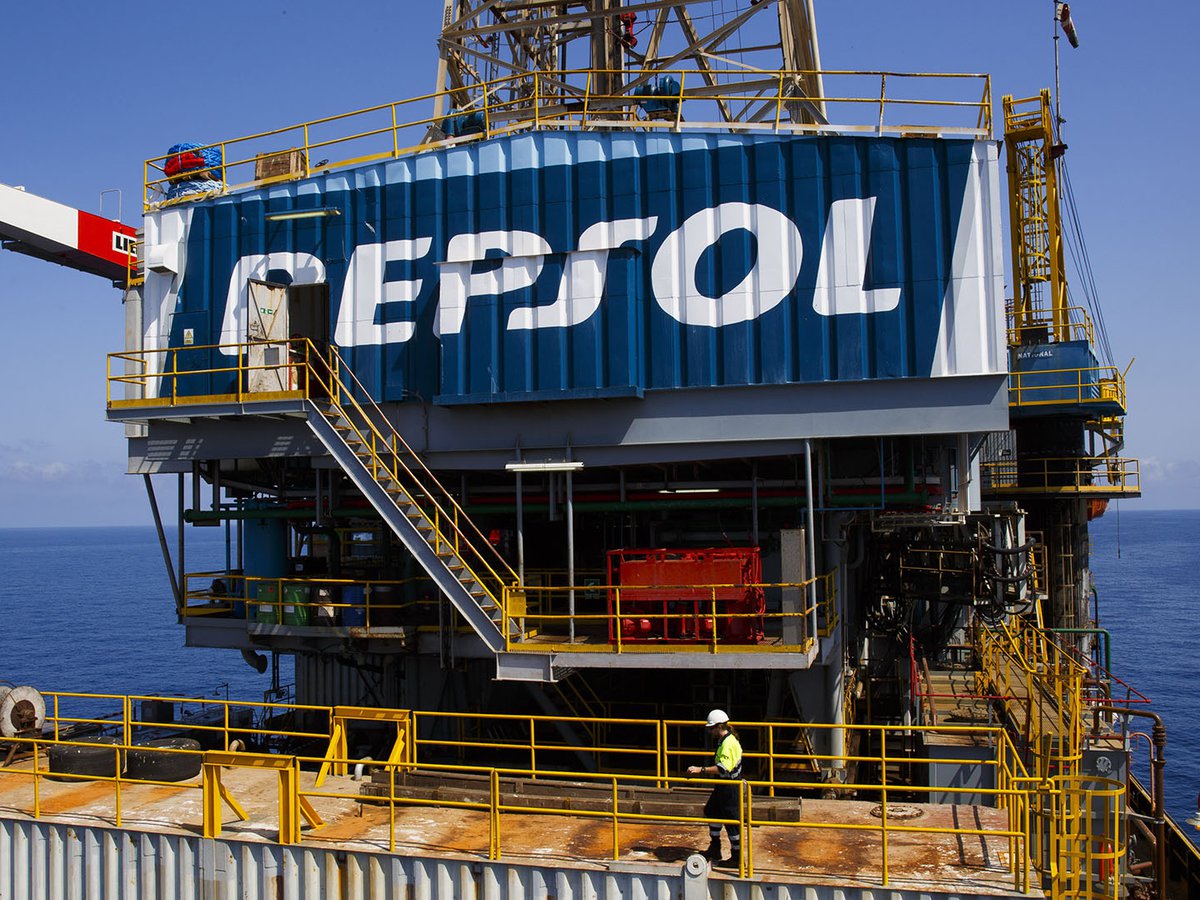
Repsol holds stakes in multiple oil and gas ventures in Venezuela. (Archive)
Caracas, February 6, 2026 (venezuelanalysis.com) – Venezuelan Acting President Delcy Rodríguez held meetings with oil executives from Repsol (Spain) and Maurel & Prom (France) on Wednesday as part of ongoing efforts to secure energy investments amid US pressure and unilateral sanctions.
“We discussed the models established in the reformed Hydrocarbon Law to strengthen production and build solid alliances toward economic growth,” Rodríguez wrote on social media.
State oil company PDVSA, represented at the meetings by its president, Héctor Obregón, touted the prospects of establishing “strategic alliances” and “win-win cooperation” with the foreign multinational corporations.
The Rodríguez administration recently pushed a sweeping reform of Venezuela’s Hydrocarbon Law. Corporations are set to have increased control over crude extraction and exports, while the Venezuelan executive can discretionally reduce taxes and royalties and lease out oil projects in exchange for a cut of production.
Venezuelan leaders have defended the pro-business reform as a step forward to attract investment for a key industry that has been hard hit by US coercive measures, including financial sanctions and an export embargo, since 2017, as part of efforts to strangle the Venezuelan economy and bring about regime change.
Former President Hugo Chávez had overhauled oil legislation in 2001 to reestablish the state’s primacy over the sector with mandatory majority stakes in joint ventures, increased fiscal contributions, and a leading PDVSA operational role. Increased revenues financed the Bolivarian government’s aggressive social programs of the 2000s, which dramatically reduced poverty and expanded access to healthcare, housing, and education for the popular classes.
Repsol and Maurel & Prom currently hold stakes in several oil and natural gas joint ventures in the South American country. The two firms, as well as Italy’s Eni, have operated in a stop-start fashion in recent years as a result of US sanctions.
The European companies have consistently lobbied for increased control and benefits in their projects in the molds now established in the reformed energy legislation.
Since launching military attacks and kidnapping Venezuelan President Nicolás Maduro on January 3, the Trump administration has vowed to take control of the Venezuelan oil sector and impose favorable conditions for US corporations. Senior US officials have praised Caracas’ oil reform.
According to reports, the White House has dictated that proceeds from Venezuelan crude sales be deposited in US-run accounts in Qatar, with an initial agreement comprising 30-50 million barrels of oil that had built up in Venezuelan storage as a result of a US naval blockade since December.
On Tuesday, the US Treasury Department issued a license allowing Venezuelan imports of US diluents required to upgrade extra-heavy crude into exportable blends. On January 27, Washington issued a sanctions waiver allowing US companies to purchase and market Venezuelan crude. The exemption requires payments to be made to US-controlled accounts and bars dealings with firms from Russia, Iran, Cuba, and North Korea.
The US Treasury is additionally preparing a license to allow US companies to extract Venezuelan oil, according to Bloomberg.
The White House has urged US corporations to invest in the Venezuelan oil sector and promised favorable conditions. However, executives have expressed reservations over significant new investments. According to Reuters, US refiners have likewise not been able to absorb the sudden surge of Venezuelan heavy crude supplies, while Canadian WCS crude remains a competitive alternative.
Vitol and Trafigura, two commodities traders picked by the White House to lift Venezuelan oil, have offered cargoes to European and Asian customers as well. India’s Reliance Industries is reportedly set to purchase 2 million barrels. In recent years, the refining giant has looked to Venezuela as a potential crude supplier but seen imports repeatedly curtailed by US threats of secondary sanctions.
US authorities have reportedly delivered US $500 million from an initial sale to Venezuelan private banks, which are offering the foreign currency in auctions that are said to prioritize private sector food and healthcare importers. Nevertheless, Venezuelan and US officials have not disclosed details about the remaining funds in a deal estimated at $1.2-2 billion.
Besides controlling crude sales, the Trump administration has also sought to impose conditions on the Venezuelan government’s spending of oil revenues. On Tuesday, US Treasury Secretary Scott Bessent told House Representatives that the flow of oil funds will be subject to outside audits.
US Secretary of State Marco Rubio had told a Senate committee last week that US authorities would scrutinize Caracas’ public expenditure and claimed that Venezuelan leaders needed to submit a “budget request” in order to access the country’s oil proceeds.
Washington’s attempted takeover of the Venezuelan oil industry also has an expressed goal of reducing the presence of Russian and Chinese companies. On Thursday, Russian Foreign Minister Sergei Lavrov told media that the country’s enterprises are being “openly forced out” of the Caribbean nation at the behest of the US.
In mid-January, the US’ naval blockade drove away Chinese-flagged tankers on their way to Venezuela. With crude shipments partly used to offset longterm oil-for-loan agreements, Beijing has reportedly sought assurances of the repayment of debts estimated at $10-20 billion. For their part, independent Chinese refiners have moved to replace Venezuelan supplies with Iranian heavy crude.