Reaction to Tiger Woods’ car crash and driving under the influence arrest last month ranged from sadness to dismay to exasperation. Few observers, however, expressed surprise.
Although widely recognized as perhaps the greatest golfer of all time, Woods, 50, has been in a downward spiral personally and professionally for years.
His struggles with prescription drugs became public in 2017 when police found him asleep at the wheel of his car with the engine running near his Jupiter, Fla., home. Multiple painkillers, sleep aids and THC were detected in his system. Woods checked into rehab shortly after that incident, saying his efforts to manage insomnia and pain from his staggering number of surgeries on his own was a mistake.
Now, though, he’s again in rehab, likely in Switzerland after his private jet landed in Zurich on Friday, according to reports. The latest crash is the fourth major incident involving Woods behind the wheel since 2009.
“I feel bad for Tiger,” fellow golf great Jack Nicklaus told the Palm Beach Post. “He’s been taking painkillers for a long time and I don’t know how much pain he’s in. But I don’t think he’d be taking them if he didn’t need them.”
Woods’ current pivot to recovery follows a barrage of headlines about his rollover crash and unfocused, hiccups-laden aftermath captured on police officers’ body cameras that included a phone call to President Trump, failed field sobriety tests, handcuffs and a drive to jail in the back seat of a squad car.
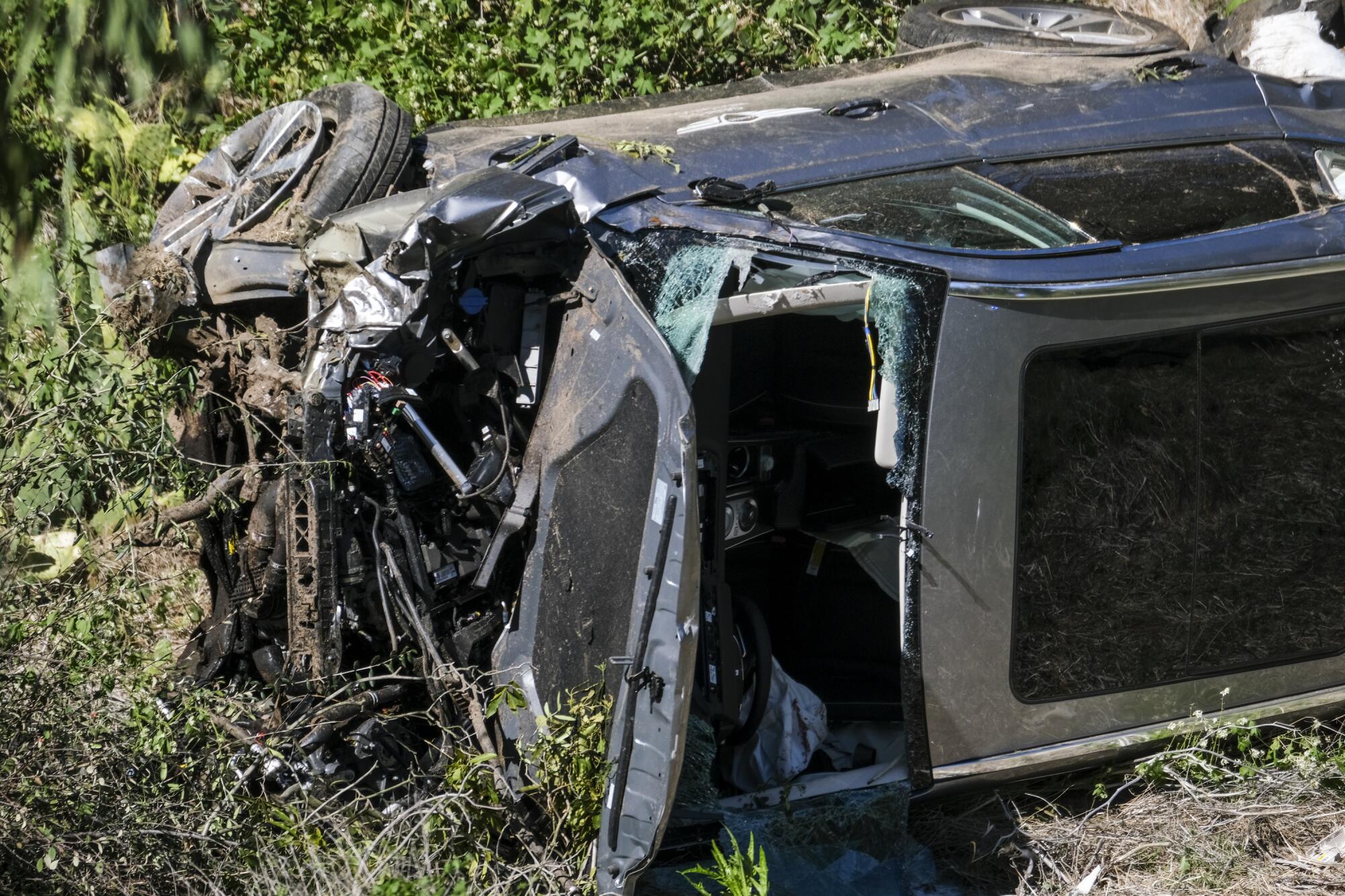
A vehicle rests on its side after a rollover accident involving golfer Tiger Woods along a road in Rancho Palos Verdes on Feb. 23, 2021. Woods suffered leg injuries that required surgery.
(Ringo H.W. Chiu / Associated Press)
The episode also provides an opportunity to reflect on Woods’ meteoric rise, sustained excellence and precipitous decline on the golf course, his scandal-plagued personal life and what the future might hold.
What does this latest episode say about Tiger Woods and where does he goes from here?
Prodigy to supremacy
Born Eldrick Tont Woods on Dec. 30, 1975, Tiger was given his nickname by his father, Earl, a U.S. Army lieutenant colonel and Green Beret who served in Vietnam. Earl’s combat partner was nicknamed Tiger and it was passed along.
Earl was deployed in the 1960s to the same base in Thailand where Kultida Punsawad worked as a secretary. They married and settled in the Orange County town of Cypress after the war. Tiger was their only child.
“When Tiger was 10 months old, I unstrapped him out of his high chair and he walked over and hit the ball,” Earl recalled on an HBO documentary about his son. “I said, ‘Oh my God, I’ve got something special.’ ”
Amateur Tiger Woods, right, talks with his father, Earl Woods, after practice for the Masters golf tournament at the Augusta National Golf Club in the 1990s.
(Amy Sancetta / Associated Press)
That soon became apparent to everyone. At age 5, Woods showed his golfing prowess on the television show “That’s Incredible.” At 6, he played a televised two-hole exhibition at Calabasas Country Club with legendary golfer Sam Snead, whose record of 82 PGA Tour victories would be equaled by Woods nearly 40 years later.
Life wasn’t all manicured greens. The only black child in his kindergarten class, he was tied to a tree by sixth graders, The Times’ Bill Plaschke reported. Woods played in his first national junior tournament at 13 in Texarkana, Ark., and a local reporter accused him of participating only because he wanted to integrate the local country club.
His excellence eventually stifled racism and quieted critics. As a high school sophomore in 1992, Woods became the youngest golfer to play in a PGA Tour event, shooting a one-over-par 72 at Riviera Country Club in Los Angeles.
He first hurt his back during that historic round, pulling a muscle while hitting out of deep rough. Afterward he remained on site for treatment, foreshadowing what would be a career-threatening battle with back injuries that includes seven surgeries since 2014 — several microdiscectomies, a 2017 lumbar fusion and most recently a lumbar disc replacement performed in October 2025.
“Tiger Woods’ experience with spinal disease highlights a real and under-recognized issue among modern-era golfers,” said Dr. Corey Walker of the Barrow Neurological Institute. “Tiger’s use of the mechanics of the modern-day swing places a tremendous strain on the back.”
The high-torque swing emphasizes maximum rotation of Woods’ shoulders relative to his hips. It’s tough on his spine but also results in long drives and low scores.
Bothersome backs are common among golfers. Scotland-based osteopath Gavin Routledge, who has teamed with renowned golf coach Gary Nicol in developing a treatment program for spinal injuries, views Woods’ medical history as particularly telling.
“I honestly can’t see a way out for him,” Routledge told Golfweek. “We have known for decades that once you have one disc surgery, the chances of having another are substantially higher, especially if you use the fusion technique like Tiger. It’s a domino effect.”
Woods had no such worries in the mid-1990s. Amid winning three consecutive U.S. Amateur titles, he attended Stanford but left in 1996 after two years and turned pro at 20, smiling and saying “Hello, world” at his introductory news conference.
By 2000, he became the youngest golfer to complete the career Grand Slam of winning the Tour’s four majors and only the fifth ever to do so, following Ben Hogan, Gene Sarazen, Gary Player, and Nicklaus.
His dominance accelerated quickly, and nearly every year from 1997 to 2013 he won at least four and as many as nine tournament championships. He had his first back surgery in 2014 and the victories ceased until he shocked the sports world in 2019 by winning the Masters — the tournament considered the pinnacle of golf — for the fifth time, but the first in 14 years.
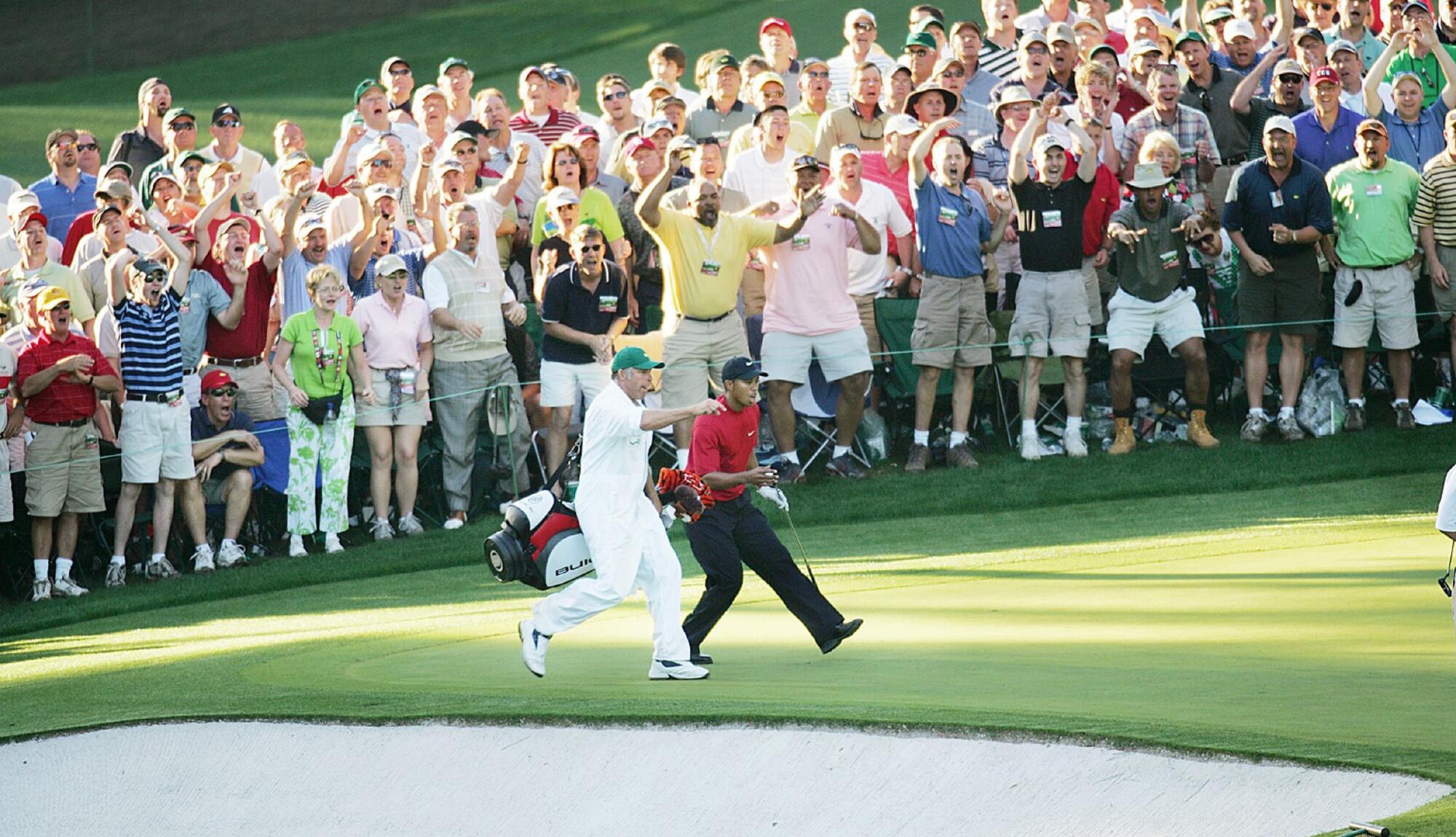
Tiger Woods and caddie Steve Williams watch Woods’ chip shot teeter at the edge of the cup before dropping in the 16th hole during the final round of the 2005 Masters tournament.
(Al Tielemans / Sports Illustrated via Getty Images)
“It’s overwhelming, just because of what has transpired,” Woods said. “It’s unreal to experience this.”
A few months later he won the inaugural PGA Tour event in Japan to tie Snead’s record of 82 career titles, hoisting the trophy 23 years to the day of his first Tour title at the 1996 Las Vegas Invitational. It was his last victory.
Comeback attempts have been infrequent and unsuccessful, measured against the standards he set for decades. All the while, his injuries mounted and personal life deteriorated.
Losing his grip
Even with his career at its pinnacle and before his back became chronically balky, Woods found his way onto tabloid headlines. It all started with his first public car accident.
Woods crashed his Cadillac Escalade into a fire hydrant outside his home in Isleworth, Fla., at 2:30 a.m. Nov. 27, 2009. He was treated at a hospital with minor injuries and the incident turned out to be the culmination of a whirlwind of missteps that revealed Woods having affairs with several women outside of his marriage to Swedish model Elin Nordegren, the mother of his two children.
Additional reporting identified Woods as a regular at the Mansion, a club for high rollers at the MGM Grand casino in Las Vegas, where he had a $1 million betting limit and played blackjack at $25,000 a hand with NBA superstars Michael Jordan and Charles Barkley.
Woods admitted in 2010 that he had a sex addiction and spent 45 days at an inpatient program in Hattiesburg, Miss. He and Nordegren divorced.
The turmoil took a toll on Woods’ golf game for two years, but he rebounded, winning three tournaments in 2012 and five in 2013. It wasn’t until his first back surgery in 2014 that his career plummeted for good.
Research indicates that retirees who define themselves primarily through their careers are vulnerable to prolonged distress. Few have had a professional life so clearly defined and wildly successful as Woods.
Tiger Woods hits from the fairway at the Riviera Country Club during the second round of the Genesis Invitational on Friday, Feb. 16, 2024 in Pacific Palisades.
(Gina Ferazzi / Los Angeles Times)
While not officially retired — he planned to play in this week’s Masters until his rollover crash and arrest — his last PGA Tour event was the Open Championship in Scotland in July 2024.
His most formidable obstacles to another comeback might be physical. Woods walks with a limp after suffering extensive damage to his right leg and ankle from a near-fatal single-car crash in Rancho Palos Verdes in 2021. And his most serious back surgery took place only six months ago.
Woods’ more immediate concern seems to be kicking his use of addictive opioid painkillers. A judge in Martin County, Fla., granted his request to seek treatment outside the U.S. He also turned down the role of United States Ryder Cup captain in 2027.
“I know and understand the seriousness of the situation I find myself in today,” Woods said in a statement. “I am stepping away for a period of time to seek treatment and focus on my health. This is necessary in order for me to prioritize my well-being and work toward lasting recovery.
“I’m committed to taking the time needed to return to a healthier, stronger, and more focused place, both personally and professionally. I appreciate your understanding and support, and ask for privacy for my family, loved ones and myself at this time.”
What now?
Woods will continue to make a sizable impact on golf even if he never sets another ball on a tee.
He serves as Founder and CEO of TGR, a multibrand enterprise that includes a charitable foundation, a golf course design company, an events production company and an upscale restaurant, among other holdings.
His immense popularity lined the pockets of nearly everyone associated with the PGA Tour. TV ratings skyrocketed, tournament purses spiked and he single-handedly expanded golf’s demographic appeal.
The Masters is taking place this week in Augusta, Ga. Woods, who has donned the famed green jacket given the champion five times, is on the minds of many of the golfers.
Tiger Woods celebrates after sinking his putt on the 18th green to win the Masters at Augusta National Golf Club on April 14, 2019.
(Kevin C. Cox / Getty Images)
“He was my hero growing up,” said Jason Day, a veteran pro golfer and close friend of Woods. “It must be hard to be who he is and have everyone kind of down on him.”
Later, Day added this: “The only thing I don’t understand is that it’s a bit selfish of him to drive and put other people in harm’s way as well. But when you’re the player he was and how strong-willed he is — he thinks he can do almost anything — and that’s probably why he’s driving and a little bit under the influence.”
Woods has also been on the mind of Nicklaus, at 86 the only living golfer who enjoyed anything close to the success of Woods.
“Sometimes you get too far down the line and just need somebody to help you,” he said. “I think Tiger probably needs some help. We all want to help him. We are all on his side.”
The Great British Bake Off left fans in a state of panic as the show suffered technical issues which disrupted the viewing of fans across the UK who vented their fury on social media
Sam Thompson on Great British Bake Off but the episode was interrupted by technical issues(Image: Channel 4)
Viewers of The Great British Bake Off were left unimpressed during Sunday night’s episode for Stand Up To Cancer, as the show was interrupted by technical issues.
As fans of the Channel 4 show sat down to settle in to watching the baking show, they were met with flickering screens. The stars on this year’s show include Sam Thompson, Vicky Pattison and Molly Mae Hague.
And to make matters worse, the show was interrupted multiple time, leaving viewers taking to X to vent their frustration. One person said: “What’s going on? @Channel4 how can we watch #Bakeoff with it breaking up all the time.”
Another person asked: “Anyone else have signal issues while watching Bake Off this evening? We’ve had several shaky screeners tonight. #bakeoff.” Meanwhile, a third person questioned: “Anyone else getting a stuttering broadcast and the occasional pixel madness of an 80s top of the pops episode??”
In response to the tweets coming through, a fourth person agreed with the general sentiment: “Me on Sky. I’ve recorded it and only just started watching it.” They added: “I’ve stopped and started it again, thinking it might have been weather-related, so I’m glad it’s not just me ! #GBBO”.
And this sparked a flurry of people coming forward complaining of the same issue. The technical glitch appears to have affected viewers to the point where they had “given up” watching the show.
Other celebrities who took part in that episode also included Alex Brooker, Ambika Mod and Rose Ayling-Ellis, who were all competing against one another to be awarded the Star Baker apron.
They were given three challenges. One of which was to make mini rolls, another was to bake a syrup sponge pudding and a choux pastry.
And it was EastEnders star Rose who impressed the judges the most, and she was crowned winner of their round. Last week, Molly-Mae won her episode.
Judge Paul Hollywood was most impressed with Molly-Mae. One hearing that she had won her segment, she screamed with joy and said: “That has made my life, you don’t understand! Thank you so much!”
And after leaving the show, the mum of one, who is pregnant with her second child with fiancé Tommy Fury, took to her Instagram.
She wrote: “Still trying to process that this even happened! Taking part in Bake Off for Stand Up To Cancer was honestly one of the most insane experiences of my life.”
She added: “Just so grateful to have been part of something so special for such an incredible cause… I’ll truly never get over it @su2cuk @britishbakeoff.”
For the remaining episodes, the stars taking part include JLS singer Aston Merrygold, Rag’N’Bone and Celebrity Traitors’ Joe Wilkinson.
Celebrity Bake Off judge Celebrity Bake Off judge Cherish Finden made her debut on the Channel 4 show. And when asked by Noel Fielding how she found her time on the show, she replied: ” ‘I’ve had a great time. He is a master-baker.”
This comes after it was announced that Prue Leith was stepping down from her judging role after nine series. Replacing her, will be TV chef Nigella Lawson.
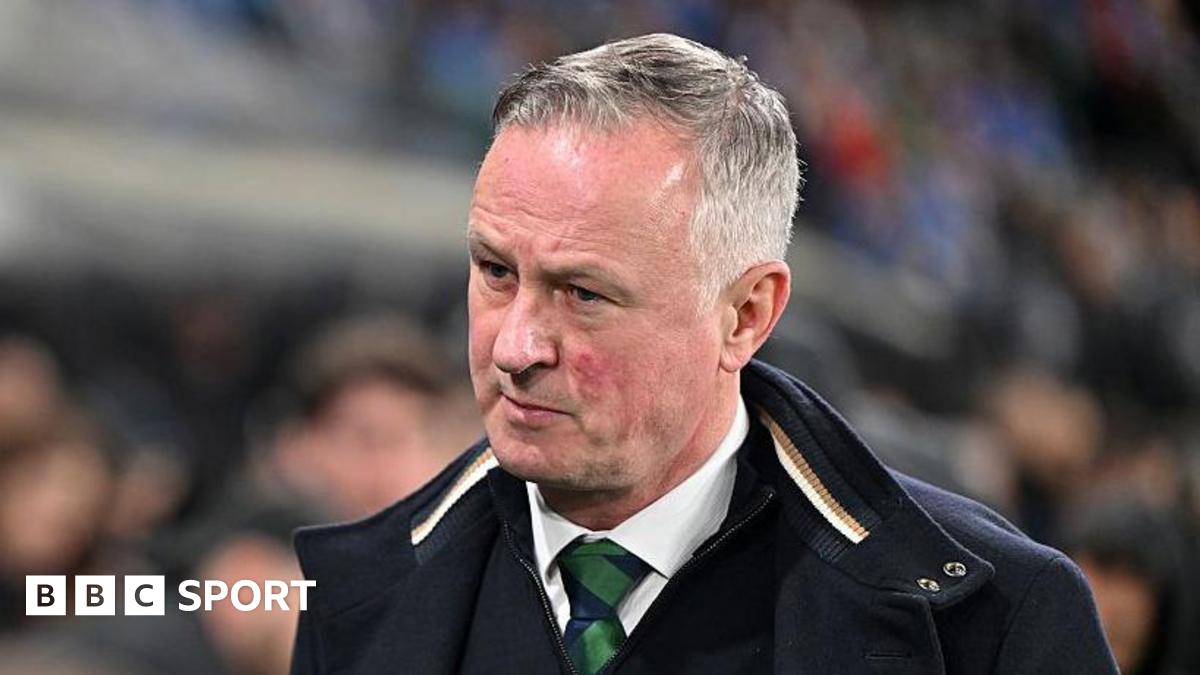
Northern Ireland manager Michael O’Neill praised the “character” of his side in Tuesday’s 1-1 draw in Wales.
Both Wales and Northern Ireland lost their respective World Cup play-offs to set up the friendly that nobody wanted.
Jamie Donley scored a deserved opener but Wales hit back less than 60 seconds after the restart as Sorba Thomas tucked home.
Eoin Toal and Callum Marshall had chances to snatch victory, but it was the response to the equaliser which impressed O’Neill as his young side bounced back from the World Cup defeat by Italy with a solid performance in Cardiff.
“The team has good resilience because at the end of the day, as much as we sat deep and it was difficult for us to get out in the last 20 minutes, we still had an opportunity to win the game,” O’Neill, who also hit back at concerns over a conflict of interest with his dual role with Blackburn Rovers.
“To come away, with the age profile of the team and where the team is at this minute at time, and not be beaten here was a real positive.”
O’Neill added it was “a good night’s work for us” as he “asked a huge amount” of young players in a second half that was littered with substitutions, but Northern Ireland deserved their draw in Cardiff.
He handed a debut to 19-year-old defender Tom Atcheson, who plays under him at Blackburn Rovers, but Liverpool’s Kieran Morrison did not make his senior bow as O’Neill made eight substitutions.
“He’s a very young player. I think he’s shown up well in the camp all week,” O’Neill said on Atcheson.
“We would have liked to have got Kieran Morrison on the pitch as well at some point, but you wouldn’t have been able to do it without having to take a sub that you put on, off again, without asking someone to play in a position which was totally alien to them.
“Given the number of substitutions we made, we’re pleased with the response we got from the players.”
Young faces lit up with joy as award winners bounced to the podium. But it wasn’t only the elementary school recipients. The Westlake High students who created the ceremony were equally thrilled.
The teens are part of Make Great Plays, a grassroots organization that gives elementary school students a chance to dream, excel and believe they belong in educational echelons that once felt out of reach.
Dhuruv Sankararaman, a Westlake High junior and baseball player, launched Make Great Plays nearly four years ago, starting by collecting and donating sports equipment to the five Title 1 schools in the Conejo Valley Unified School District. (Title I public schools receive federal funding because they have a high percentage of students from low-income families.)
The mission quickly broadened. In the last year, Make Great Plays has conducted backpack and supply drives that outfitted more than 100 students and spent classroom time with students to increase computer literacy.
Maple Elementary in Newbury Park was one of the first schools that Sankararaman and his team helped.
“We picked up 100 backpacks full of supplies,” he said. “They made a huge difference to hand them out to everyone in need.”
‘Make Great Plays’ founder Dhuruv Sankararaman, left, and other Westlake High student-athletes give out awards at Maple Elementary in Newbury Park.
(Sai Krishna)
Next, they identified students who are especially helpful to the large autistic population at Maple and recognized them at an awards assembly. The Make Great Plays staff created five awards, one of each going to students in every grade: Inclusion Hero, Unity Champion, Global Ambassador, Hope Maker and Pathfinder.
“The kids are so excited to have high school students here to run the ceremony,” Maple principal Meghann O’Weger said. “Something feels different when the person giving the award is still a kid, but a bigger one. If adults came in and gave out the awards, it wouldn’t be the same as from peers.”
The 20 Make Great Plays members play soccer, baseball, lacrosse, tennis and volleyball at Westlake High. What began as a way to embellish college entrance applications has become a gratifying life experience for the teens as well as the elementary school students.
Sankararaman plans to expand Make Great Plays to schools in Los Angeles County and rural India, where his parents grew up.
“Some of the kids don’t have a stable home life and are behind in school,” Sankararaman said. “Spending time with them shifts their view a little bit. Many are incredibly smart. All the kids are very respectful. They listen to us as high schoolers and see us as role models.
“It’s cool to see faces light up when they realize how successful they can become, that they have the possibility of a great future.”
This is a daily look at the positive happenings in high school sports. To submit any news, please email eric.sondheimer@latimes.com.
Nine years on, Flynn is anxiously watching on as a fan, having left the world of football for a new job in media and marketing in the Newport office of CDM Media, his city centre base just across the River Usk within spying distance of his old club.
Christian Fuchs’ team are two points above the relegation zone after Saturday’s crucial 1-0 win over Shrewsbury Town and, with six games to go, Flynn hopes there will be no need for a repeat of his final-day rescue act.
“I hope Christian can keep them up because there will be a big after-effect if things go wrong,” said the 45-year-old, who was born in the city and played for County before managing them from 2017 to 2021.
“My son is in the academy at Newport and if we go down… that could go. That would be catastrophic in terms of how we’re going to bring young players through.
“I think football in the city will drop. It would hit hospitality around match days. It’s going to leave a bad aftertaste.
“If they go down, I think it could be a long, long road back.If they get back.”
Flynn, though, is optimistic about their survival hopes. After all, they’re not 11 points adrift of safety as his 2017 side were after he accepted what looked an impossible survival mission by replacing the sacked Graham Westley as boss.
Iranian opposition leader calls on Trump administration to ‘stay the course’ as the US and Israel continue to wage war on Iran.
Published On 28 Mar 202628 Mar 2026
Amid questions about the future of Iran’s government, the son of the former shah has pitched himself to a right-wing summit in the United States and received a raucous welcome.
Reza Pahlavi spoke at the Conservative Political Action Conference (CPAC) in Texas on Saturday, urging US President Donald Trump not to cut a deal with Iran and instead seek regime change.
Recommended Stories
list of 3 itemsend of list
“Can you imagine Iran going from ‘Death to America’ to ‘God Bless America’?” the self-styled crown prince asked his audience in Grapevine, Texas.
“President Trump is making America great again. I intend to make Iran great again,” he added, receiving a standing ovation from the crowd.
His remarks came on the one-month anniversary of the US and Israel’s decision to launch a war against Iran. As the conflict enters its second month, at least 1,937 people in Iran have been killed, and tens of thousands more injured, with no end to the fighting in sight.
Pahlavi has become a central opposition figure in the Iranian diaspora, with a loyal base of supporters who often carry his image, along with Iran’s pre-revolutionary flag, at protests around the world.
During his speech, some in the audience chanted, “Long live the king!”
Audience members wrapped in Lion and Sun flags, symbolising Iran’s deposed monarchy, listen to a speech from Reza Pahlavi, the exiled son of Iran’s last shah [Callaghan O’Hare/Reuters]
While some in the Iranian diaspora have expressed reservations about the US-Israeli attacks and their effect on the future of Iran, Pahlavi has emerged as an outspoken supporter of Trump, aligned with the administration’s most hawkish figures.
“This regime in its entirety must go,” he said on Saturday.
Analysts have warned that the Iranian government is not likely to collapse and could emerge from the conflict more hardened than before. Some exiles, meanwhile, have been criticised for lending their voices to support the US-Israeli war despite the heavy toll on Iranian civilians.
Trump has himself previously downplayed the possibility that the son of the former shah, who was expelled from Iran during the country’s 1979 revolution, could play a central role in Iran if the current government were to collapse.
Earlier this month, Trump said that Pahlavi “looks like a very nice person“, but indicated that the shah’s son lacks popularity in Iran.
“It would seem to me that somebody from within, maybe, would be more appropriate,” Trump had said.
Divides within the US right over the war in Iran were also in evidence at CPAC. Polls suggest that, while the war is widely unpopular among US voters, Republicans support it by large margins.
In a Pew Research Center poll, for instance, 71 percent of Republican voters felt the US had made the right decision to attack Iran. Overall, among voters regardless of party, 59 percent opposed the initial strikes.
Still, a handful of influential voices on the US right, such as Tucker Carlson and Steve Bannon, have emerged as vocal critics of the war. Younger activists have also expressed frustration with what they see as a betrayal of Trump’s promise to avoid military adventures overseas.
“We did not want to see more wars. We wanted actual America First policies, and Trump was very explicit about that,” Benjamin Williams, a 25-year-old marketing specialist for Young Americans for Liberty, told The Associated Press. “It does feel like a betrayal, for sure.”
BUCKETS and spades, ice creams on the promenade, whizzing around on the dodgems… family trips to the seaside are where the best memories are made.
And seaside staycations are made even better when there’s a thrilling theme park nearby.
Sign up for the Travel newsletter
Thank you!
These UK seaside towns have beaches, fairgrounds, theme parks – plus holiday parks from £9.50Credit: Getty
With tens of thousands of new dates and breaks being added to Sun Hols from £9.50, you’ll have plenty of cool coastal spots to choose from.
Hols from £9.50 are set to be restocked this Tuesday, with thousands of new holidays AND new holiday parks – and you can get priority access with Sun Club.
If you fancy signing up to Sun Club to access the £9.50 Hols deals early, head tothesun.co.uk/club and join for £1.99 a monthor £12 for a year.
Once you’re a member, go to the Sun Club Offers huband find the Hols From £9.50 page.
Follow the link from the offers page, and you can book your break from midnight on Tuesday, March 31.
If you’re looking for some inspiration, these are some of our top seaside towns across the UK with theme parks and fairgrounds… plus the nearby holiday parks you can book with Hols from £9.50.
Great Yarmouth, Norfolk
Great Yarmouth on Norfolk‘s east coast has been welcoming holidaymakers as a seaside resort since 1760.
The town boasts a soft sand beach known as ‘the golden mile’, with plenty of shops, cafes and restaurants within a short walking distance.
Smack-bang on the beachfront is Joyland, a historic amusement park with plenty of classic rides that are sure to fill you with nostalgia.
This colourful family theme park is perfect for little ones, home to mini rollercoasters and the award-winning Super Snails. The attraction is free to enter, with ride tokens costing £3 each.
For the older kids, Great Yarmouth Pleasure Beach is sure to go down a treat with an exciting mix of white-knuckle thrills, child friendly rides and even a 4D cinema.
Undoubtedly the star of the show is a traditional wooden roller coaster, which first opened in 1932 and one of only two still standing in the UK.
You can enter Pleasure Beach with either a wristband or fun card. Wristbands give you unlimited rides, starting at £20 for younger children and £27 for ages 7+.
Fun Cards can be purchased for just £5 per person and come pre-loaded with 5 credits that can be used on rides, food or drinks, and they even come with unlimited park entry for the 2026 season.
Keep the good times rolling with a stroll down Britannia Pier to take in the coastal views from the Victorian promenade, or try your luck in the arcades.
The mix of sun, fresh sea air and entertainment will be sure to leave you feeling delightfully exhausted!
Great Yarmouth Britannia Pier is packed with amusement arcades and ridesCredit: AlamyStroll the pier on a visit to Skegness, or visit Pleasure Beach for thrill ridesCredit: Alamy
Skegness, Lincolnshire
The seaside resort of Skegness is a huge hit with families, with a seemingly-endless amount of exciting activities and things to do.
Find the fun of fairground rides and more at Pleasure Beach Skegness, with classic bumper cars all the way up to the swinging heights of Freakout.
Get competitive at the Pebble Beach 9-hole adventure golf course, or make a splash at the Wild River Log Flume.
The theme park is free-to-enter, with rides costing credits. You can purchase an all-day access wristband online (from £17.50) or make the most of the Token Savers scheme if you want to only visit particular rides.
There’s plenty of tickets to be won at the classic amusement arcades on Skegness Pier which can be exchanged for prizes, but the entertainment doesn’t stop there.
With ten pin bowling, Captain Kids Soft Play, escape rooms and Laser Quest, there really is something for everyone in the family.
And after a busy day, there’s no better place to unwind than Playa at the Pier, a seaside bar that’s perfect for watching the sun go down.
You can even enjoy your drink in one of the bar’s stylish pool pods, perfect for cooling down after a day of sun.
Clacton Pier in Essex is Europe’s largest pleasure pierCredit: Getty
Clacton-on-Sea, Essex
As the largest town on Essex‘s aptly-named Sunshine Coast, Clacton-on-Sea delivers on the classic British seaside holiday experience.
The main attraction at Clacton-on-Sea is Clacton Pier, Europe‘s biggest pleasure pier with its own fairground.
The pier is packed with activities like bowling, mini golf, arcades, a soft play, thrill rides and more – not to mention plenty of cafes and restaurants to retreat into for a sit down once you’ve burned off all of your energy.
When it comes to rides, there’s plenty of crowd-pleasing classics like a helter skelter, dodgems and loop-the-loop coasters.
However there’s plenty for the little ones too, like the gentle Wild Mouse Coaster and Dumbo ride.
Rides cost between 2-7 credits, which you can load onto a fun card from a ticket box or online. £1 = 1 credit.
Just next door you’ll find Clacton Pavillion and Fun Park where another 20 rides await, including a swinging pirate ship, high ropes course and even a waterpark.
An unlimited-ride wristband here costs £15 and includes a ticket to the soft play – not too shabby for a full day out!
Luna Park in Scarborough, North Yorkshire has lots of rides for mixed-ages familiesCredit: Alamy
Scarborough, North Yorkshire
With its sweeping golden beaches, spectacular castle ruins plus your pick of family attractions, Scarborough is a top seaside holiday destination.
The seafront is dotted with colourful beach huts, sweet shops selling rock and ice cream, and plenty of coastal walking paths.
There are two main bays, North and South, both of which have wide beaches with flat sands and calm waters that are perfect for paddling.
You could easily spend a day walking along the seafront, stopping to build sandcastles and dipping into the arcades, but there’s also amusement parks and rides for the thrill-seekers.
Luna Park is an amusement park with plenty for kids of all ages. There’s traditional activities like a carousel and hook-a-duck, plus more thrilling rides like the twisting Cyclone and jump ride King Frog.
Rides are paid for in credits, which are loaded onto fun cards with 1 credit costing £1. Fun cards are purchased on-site.
There’s also waterpark Alpamare Scarborough, with four adrenaline-fuelling waterslides and its own spa.
And if you don’t mind a 30-40 minute drive, Flamingo Land is renowned for its 33 rides and attractions.
There’s plenty for the whole family here, from a CBeebies Peter Rabbit experience to the terrifying cliff hanger ride Pterodactyl. Admission starts at £29 online, with under 3’s going free.
Fans of loop-the-loop coasters will love Pleasurewood Hills in LowestoftCredit: TripAdvisorThe beaches at Lowestoft are vast with flat, soft sands and shallow waters – perfect for familiesCredit: Alamy
Lowestoft, Suffolk
Lowestoft is a seaside town on the coast of East Suffolk, with its beaches such as South Beach winning awards for its cleanliness, safety and beauty.
South Beach is also an RNLI lifeguarded beach, and has its own Children’s Corner with activities such as crazy golf, making it the perfect pick for families.
The North Beach sits between Claremont and South Pier, with a bustling seafront with plenty of snack kiosks and souvenir shops.
Lowestoft’s family theme park, Pleasurewood Hills, is home to the biggest roller coaster in East Anglia: Wipeout.
Plus there’s plenty of other thrill rides, like the ultra-fast Cannonball Express and seaside-themed Jolly Roger.
There’s also a miniature train called the Pleasurewood Hills Express, and you may want to bring a change of clothes for water rides like the Wavebreaker.
Admission tickets to Pleasurewood Hills start from £18.75 online, which includes access to all of the rides.
Towyn in Wales has a beautiful secluded beach, but the joys of Knightly’s Fun Park are nearbyCredit: Alamy
Towyn, North Wales
Towyn in Conwy is a seaside resort with plenty of activities to keep families entertained, plus plenty of spectacular scenery for nature lovers.
The secluded shores of Towyn Beach are backed by sloping green cliffs, and you can even see the mountains of Snowdonia on the horizon.
Further along the seafront, Knightly’s Fun Park is a free-to-enter amusement park with day-to-night entertainment including kids discos, bingo and karaoke.
There’s also 20 rides and attractions at the funfair, including Waltzers, go karts and a fun house.
Rides cost credits, and if you stock up on ride credits online you can get up to 120 extra .
There’s plenty of jaw-dropping sights a short drive away, too. The Grade-II llisted Gwyrch Castle is a 12-minute drive away, and looks like something straight out of a fairytale.
History lovers will enjoy strolling through its Gothic ruins with sea views, which looks especially fantastic at sunset. Plus you can enter the castle for £11.50 per adult and £7 per child.
Eight minutes away in Rhyl you’ll find Britain’s oldest miniature railway line, which first opened in 1911. The railway fare is £4 per adult and £3 per child.
Book online: Simply collectcodewords printed in The Sun paper up until Wednesday, April 1. Then enter them at thesun.co.uk/holidays to unlock booking from April 1.
Book with Sun Club: Join Sun Club at thesun.co.uk/club for £1.99 per month or £12 for the year. Go to the Sun Club Offers hub and click through to the Hols from £9.50 page. You do not need to collect any codewords or Sun Savers codes. Booking opens for Sun Club members onTuesday, March 31.
Book with Sun Savers: Download the Sun Savers app or register at sunsavers.co.uk. Then go to the ‘Offers’ section of Sun Savers and click ‘Start Collecting’ on the ‘Hols From £9.50’ page. Collect TWO Sun Savers codes from those printed at the bottom of the Sun Savers page in the newspaper up until April 1. Then enter or scan the codes on Sun Savers to unlock booking.
Book by post: Collect TWO of the codewords printed in The Sun each day up until Wednesday, April 1. Cut the codeword out and send it back with the booking form – found in paper onApril 1 or online at thesun.co.uk/holidays.
Book with The Sun Digital Newspaper: Sign up to The Sun Digital Newspaper at thesun.co.uk/newspaper. Then download the Sun Savers app or sign up at sunsavers.co.uk, log in to Sun Savers with your Sun account details (the same email and password you use for your Digital Newspaper) and enjoy automatic access to Hols, without the need to collect Sun Savers codes daily. Booking opens onApril 1.
Argentina great Lionel Messi has had a stand named after him by his current club Inter Miami.
The 38-year-old, widely regarded as one of the greatest players ever, signed for the MLS club in 2023 after a trophy-laden career in Europe with Barcelona and Paris St-Germain.
He has gone on to become the record goalscorer with 82 and record assist provider with 53 for the Florida club, who have taken the unusual step of honouring an active player in this fashion at their 26,700 capacity stadium.
Inter Miami said: “Traditionally, tributes look to the past. They are built from nostalgia. From memory. This one is different. This one is born from the present.
“From what is happening right now. From what you feel every time Leo steps on to the pitch.
“Recognising someone is not always about closing a chapter. Sometimes it is about realising you are witnessing something unique.”
Last season Messi, who is an eight-time Ballon d’Or winner, became the first player in MLS history to win back-to-back Most Valuable Player awards.
Messi’s arrival at the club co-owned by former England captain David Beckham has raised the profile of the league and Inter Miami’s status, as well as delivering success in the form of the Leagues Cup, Supporters’ Shield and MLS Cup.
Dodgers fans generally hiss at the mention of Frank McCourt — the former owner took the team into bankruptcy, after all — but today is about tipping our cap to him.
Without him, fans would have no option to take public transit directly to Dodger Stadium. On his watch, the Dodgers helped secure government funding for the shuttle buses that provide free rides between Union Station and Dodger Stadium.
Sixteen years later, beyond the addition of a sister shuttle from the South Bay, that’s it.
The Dodgers boast the best team in the world. Shohei Ohtani is a tourist attraction. So is their historic ballpark. The Dodgers sold a record 4 million tickets last year.
In 1990, the last year Fernando Valenzuela pitched for the Dodgers, Los Angeles County unveiled a report that suggested ways to improve access to Dodger Stadium “for those who cannot or do not wish to drive.”
The options: a monorail, people mover, or light rail extension from the Chinatown Metro station; the shuttle buses that McCourt and Metro launched 20 years later; the gondola that McCourt first pitched in 2018 and continues to pursue; and a walking path.
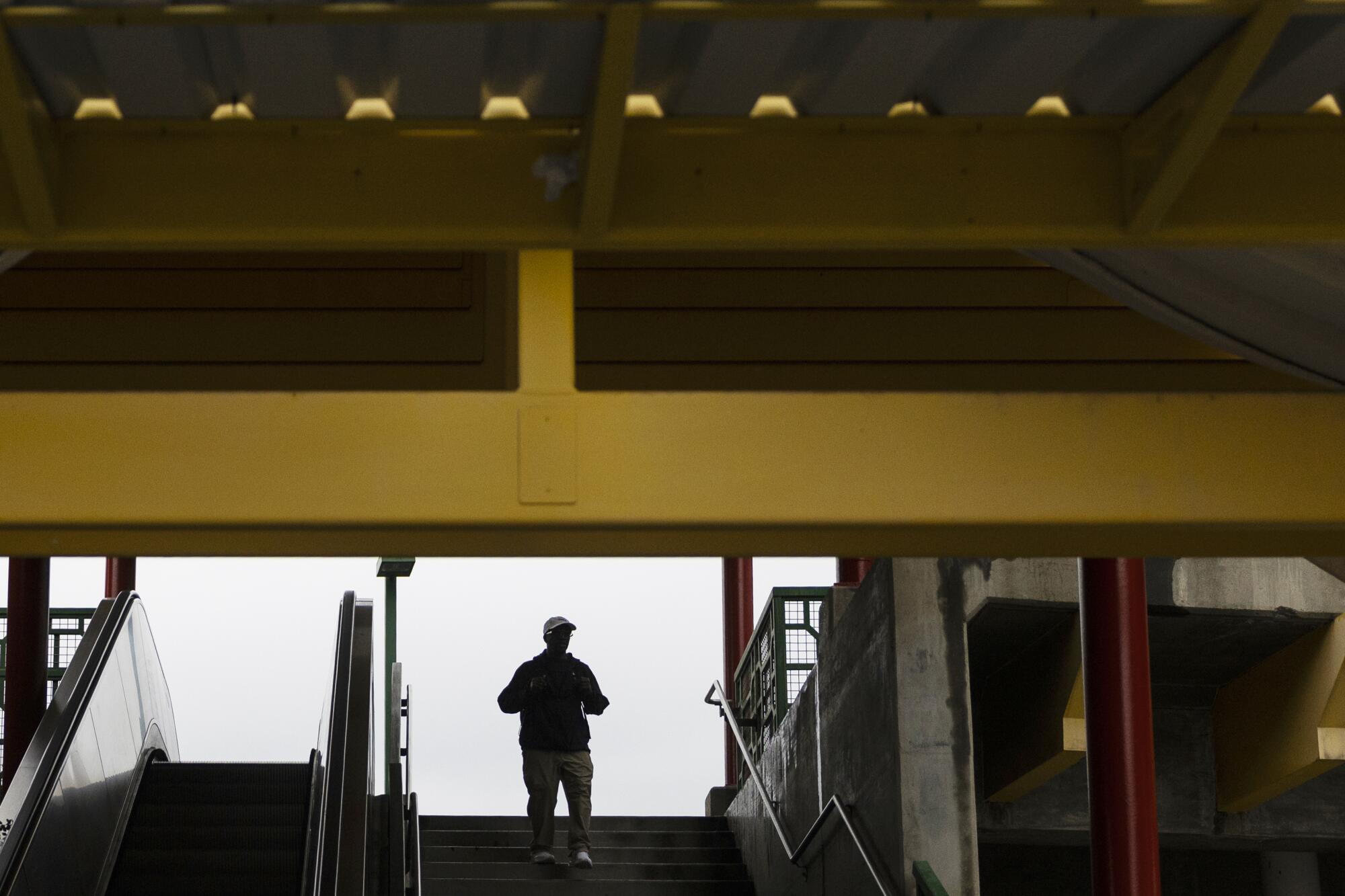
A passenger exits the Chinatown Metro station in January.
(Etienne Laurent/For The Times)
L.A. is all about the car. You will most likely drive to Dodger Stadium, and so will your children.
For decades, the Dodgers have promised to ease traffic by adding amenities that encourage fans to come early and stick around after the game. That has not materialized, and notorious congestion within and around the stadium is as much a tradition as Dodger Dogs.
What if you could walk, for real? What if you could head into the stadium along a beautifully landscaped and wide Dodgers-themed path, a blue ribbon of fans coalescing into a community, with decorations and food carts, shade and lighting, and chants of “Let’s Go Dodgers!” along the way?
You can walk now, sort of. It’s about a mile.
There’s a map at the Chinatown Metro station displaying the pedestrian path toward Dodger Stadium.
(Etienne Laurent/For The Times)
At one end of the Chinatown station, there is a map with a pedestrian route, in a glass case that faces away from Dodger Stadium. If you walk out of the station at the other end, or if you just start heading in the direction of Dodger Stadium, good luck finding the map.
There are Metro signs leading you back to the station from Dodger Stadium, but none leading you along the route there.
The Dodgers actually would prefer you did not take that route, or at least the last part of it. I walked it with Alissa Walker, whose Torched newsletter is the go-to place to learn how major sporting events impact the everyday lives of Angelenos.
We entered the Dodger Stadium property at an intersection with no crosswalks, where cars enter and exit the 110 freeway. We stood atop a dirt patch next to a crumbling curb.
“To go a very short distance safely with a feeling that you’re not going to die,” Walker said, “is very difficult.”
With Game 3 of the World Series underway at Dodger Stadium last October, a few folks scurried across a pedestrian bridge with LED lights and blue glow sticks.
The bridge connects Chinatown with Dodger Stadium, traversing the 110. Without this bridge, there is no walking path to Dodger Stadium.
“Our goal was, just by adding some lights, to make the really dark path at the top of the bridge at night a little bit brighter, so that it felt a little less scary,” transit advocate Jeremy Stutes said, “and to add a little bit of fun and whimsy.”
Glow sticks forming the “LA” logo of the Dodgers were placed on a pedestrian bridge over the 110 Freeway connecting Chinatown to the area where Dodger Stadium is located during the World Series and for several months after. As of last week, the glow sticks were no longer there.
(Etienne Laurent/For The Times)
From the Chinatown Metro station, the bridge is three blocks up College Street and one block down Yale Street. It’s an easy walk, and for now you pass an elementary school, a church, a row of Chinese restaurants, a dirt lot where a hospital once stood, parking lots, and an auto repair facility with a Dodgers flag hung on a wall.
When I did the walk last week, the trash at the foot of the bridge included a plastic cup, socks, a piece of rotting fruit, a half-full bottle of tequila, and half of a turkey sandwich, peeking out from torn plastic wrapping that indicated the sandwich had gone bad three days earlier. On the bridge: shopping bags, a pair of flip-flops, stray clothes scattered at one end, and graffiti everywhere.
A sign painted on the sidewalk indicates the direction toward the Chinatown Metro station.
(Etienne Laurent/For The Times)
That was the point those volunteers made last October: Clean up the bridge and light up the bridge — as they did for three days — and fans will walk there.
“It’s not that it’s not used,” Stutes said. “It’s not designed to be a safe space to use as an alternative to driving.”
When you cross the bridge, you can turn right or left along Stadium Way to get to a stadium entrance.
Turn right, as the map tells you to do, and you’ll encounter decaying sidewalks, with cracked and buckled concrete that turns a modest uphill walk into an obstacle course. Once you get onto the stadium grounds, the paint is fading along the pedestrian path, which offers you no protection from passing cars.
Turn left, and you’ll have to walk part of the way in the street, on an unprotected bike lane. You also could walk along the road behind the Fire Department training center, a path with no sidewalks and passing fire trucks. Either route takes longer than the one on the map, but you would enter Dodger Stadium through a pair of protected and brightly painted pedestrian paths. (That entrance, along Vin Scully Avenue, is a quarter-mile from Sunset Boulevard, where two Metro bus routes stop.)
If the primary choices for getting out of Dodger Stadium after a game are car congestion or Dodger Stadium Express shuttle bus congestion, a downhill walk to Chinatown Metro station — 12 minutes, Metro says — would be a nice option. That’s why those folks lit up the bridge over the freeway during the World Series.
“The lights were just a fun way,” transit advocate Kevin Dedicatoria said, “to show, ‘Hey, here’s a bridge so you don’t have to play, ‘Dude, where’s my car?’ or have to worry about waiting for the bus.’”
McCourt hails from Boston, where the local subway drops Red Sox fans a few short blocks from Fenway Park. When McCourt owned the Dodgers, I asked him if he could envision a subway or light rail extension to Dodger Stadium.
He’d love it, he said then, but the Dodgers were a private business, and government should pay for public transit.
Homes line a street in Eylsian Park, where Dodger Stadium is located.
(ETIENNE LAURENT/For The Times)
It was a fair point. The Dodgers pay taxes. In an era where teams regularly demand stadium and arena deals that exempt them from property tax, the Dodgers have paid $12.8 million in property taxes over the past three years, according to Los Angeles County tax collection records.
Would demand for public transit amid a car culture justify the investment? The Dodger Stadium Express indicates it could: Ridership has just about quadrupled since its inaugural season, from 122,273 in 2010 to 463,147 last year, according to Metro.
Even along the poorly maintained, poorly lit and poorly advertised pedestrian path, Metro said more than 700 riders returned to the Chinatown station on each of the three nights of World Series home games last year.
“As seen in social media videos during the 2025 postseason, the walking path continues to explode in popularity,” Metro spokesman Jose Ubaldo said.
Next steps?
“It’s astonishing to me that the Dodgers have not taken it upon themselves, as this great community partner, to fix this problem,” Walker said. “It is the city’s responsibility, but the Dodgers should be doing this, as part of what they want to represent to this community.”
The walking path includes segments along city streets, a Caltrans bridge, and Dodger Stadium property. Just who is the responsible party?
A Caltrans spokesman said the city is responsible for maintaining the bridge. A spokesman for the city’s department of street services did not provide an answer. A spokesman for the Dodgers declined to comment.
You could almost hear the sigh from city councilwoman Eunisses Hernandez, whose district includes Dodger Stadium.
“That’s what my job is: to bring people and agencies and organizations together to accomplish a goal,” Hernandez said. “We’re already in conversation with all these entities.
“We’re looking at some of the things we can enhance to make this a more walkable and accessible option for people.”
City Council member Eunisses Hernandez, center, talks with Circle outreach workers in Los Angeles.
(Allen J. Schaben/Los Angeles Times)
How much might those enhancements cost?
Without a look at a city-commissioned Dodger Stadium traffic mitigation study, expected to be completed this fall, Hernandez said she could not put a price tag on it.
“What I can tell you,” she said, “is that it will be less than half a billion dollars, for sure.”
By year’s end, the Los Angeles City Council is expected to vote on McCourt’s gondola project, estimated to cost $500 million and proposed as privately financed. Last November, the council voted 12-1 to urge Metro to kill the project.
Metro granted its approval, but with conditions that included a requirement to explore supplementing the gondola with other Dodger Stadium transit options, including more buses along Sunset Boulevard and a designated walkway from there to the stadium.
The walking path proposed in that 1990 study would have avoided Sunset Boulevard and the current Stadium Way routes — the ones with crumbling sidewalks, or no sidewalks at all — by using escalators and walkways to get fans up and down the hill between Lookout Drive, just off Stadium Way, and Dodger Stadium.
“Pedestrians could be directed through Chinatown,” the study read, “where numerous restaurants, shops and pedestrian amenities are provided.”
It’s hard to sell Chinatown businesses on the benefits of the gondola when fans would ride between Union Station and Dodger Stadium, soaring over Chinatown. It would be easier if a walking path led at least some of those fans through Chinatown, even if only on the way back from the game.
Even if the gondola system really can accomplish what its proponents say it can — loading 35 people into a cabin every 23 seconds — thousands of riders leaving when the game ends could mean a long line to board.
One of the entrances to Dodger Stadium on Stadium Way, the easiest access when walking from Chinatown Metro station.
(Etienne Laurent/For The Times)
“Also,” the 1990 study said, “passenger waiting following a game is psychologically perceived as being three to four times longer than actual waiting time.”
From this perspective, McCourt might win a few council votes by funding a first-class walking path. The cost, I’m told, would depend on what the enhancements include: signs, lights, trees, shade canopies, sidewalk repairs, escalators, and so on. For something close to $5 million — one one-hundredth of the projected cost of gondola construction — McCourt likely could do an exceptional job.
Is there any sign of progress here? Happily, yes.
In an internal report last December, Metro said Zero Emissions Transit (ZET) — the nonprofit organization now shepherding the gondola project — is pursuing ways to link pedestrians and bicyclists to the transit system and to Dodger Stadium. Those potential improvements include sidewalk repairs and a revitalized pedestrian pathway from the Chinatown Metro station to the bridge across the 110 and then across Stadium Way, to Lookout Drive and the hill above.
“Dodger Walk is envisioned as a series of switchbacks,” the report said, “inspired by the original walking path up Lookout Mountain that existed prior to the construction of Dodger Stadium.”
Whether such switchbacks would make the walk to the stadium longer or shorter than the current path remains to be determined.
In a statement, ZET said: “We embrace and include active transit solutions to increase pedestrian and bike access throughout the project area.” In particular, ZET said, it was “supportive” of a walking path to Dodger Stadium.
The Metro report cautioned the concepts “are in the early planning stage,” so L.A. might get an extravagant walking path, a utilitarian one, or none at all.
Here’s hoping McCourt gives us a path of some kind — whether the city approves the gondola or not — because a pretty walk generations can enjoy would be a prettier civic legacy than driving a team into bankruptcy.
FAMILIES are facing a whopping £1.6billion tax blow on the “great British holiday”, a new report has warned.
The findings from industry body UKHospitailty, with figures crunched by Oxford Economics, show that a proposal to slap a five per cent levy on accommodation could “decimate” the industry.
Sign up for the Travel newsletter
Thank you!
A holiday tax could slap holiday goers with a £1.6billion tax hell and lead to 33,000 jobs being axedCredit: Alamy
It comes as Labour Government has been proposing to allow local authoritiesthe right to tax overnight staysin holiday parks, campsites, B&Bs and hotels as part of a new holiday tax.
UK Hospitality claim the proposed levy would slash GDP – a benchmark for the country’s economic health – by £2.2billion.
It also warned it would result in a £1.8billion reduction in hospitality spending.
The group also claimed that it would lead to the loss of 33,000 job roles in areas of the UK where there are few alternative employment opportunities.
Allen Simpson, chief Executive of UKHospitality, said the tax would make staycations “more expensive and decimate tourism.”
“There are no winners from a holiday tax. From coastal communities and city centres to local guesthouses, pubs and taxi firms, the impacts are stark and indiscriminate.
He added: “Taxes up, jobs lost and our high streets hit once again. Holidays are for relaxing, not taxing. The government should keep it that way and stop the holiday tax.”
The charge, which could be applied to hotels, Airbnb-style accommodation and short lets, could amount to a whopping £1.6billion holiday tax on tourists by 2030, according to the figures
Meanwhile, Simon Palethorpe, chief of Haven, said it would mean fewer UK holidays resulting in “less investment and fewer jobs, often in areas where there are few alternative employment opportunities”.
He added: “In the UK, visitors are already paying double the VAT rate of the most popular overseas holiday hotspots. The UK is a great place to visit and we should be encouraging people to do so, not adding extra taxes.”
The government launched a consultation on the tax, with final views submitted last month.
Other measures that also could be introduced include a £2 tax per person per night on staycations.
However, it is worth noting that it will be up to individual mayors to decide whether or not to propose a charge for visitors to their towns or cities.
Government has previously said the charge will help improve local tourism infrastructure, public services.
Space isn’t a forgiving place to be stuck. There’s no air, no pulling over for directions and no margin for error. When something goes wrong, you’re left with whatever you have on hand for however long you can make it last.
That fear drives the new sci-fi epic “Project Hail Mary,” opening in theaters Friday, with Ryan Gosling as Ryland Grace, a middle school science teacher who wakes up alone on a spacecraft light-years from Earth with no memory of how he got there. Gradually he realizes he’s been sent on a mission to figure out why the sun is dimming and how to stop it. What begins in isolation turns into something closer to a buddy movie, as Grace ends up working with an alien he names Rocky, another traveler trying to solve the same problem.
The film, directed by Phil Lord and Christopher Miller, comes from sci-fi author Andy Weir, whose earlier, similarly survival-themed breakthrough novel “The Martian” was adapted by director Ridley Scott in 2015. That movie put Matt Damon alone on Mars and made the act of thinking through one life-or-death problem after another the engine of the story. The result was a critical and commercial hit that earned seven Oscar nominations, including best picture.
Put someone out in space long enough and the story can go in many directions. Sometimes it’s about survival. Sometimes it turns inward. Sometimes it gets more horrific or even darkly comic. Here are eight of our favorite movies about people lost or stranded in space. Watch them somewhere with plenty of oxygen.
Great Britain’s Josh Kerr wins gold in the men’s 3000m at the World Indoor Athletics Championships, with Cole Hocker taking silver for USA and and France’s yann Schrub taking bronze in Poland.
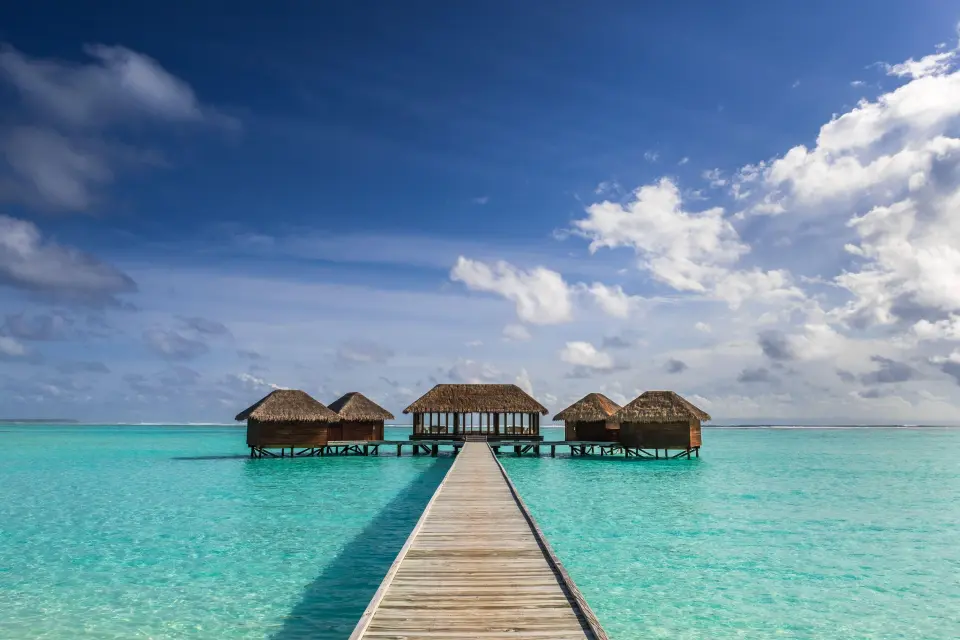
A stunning over-water spa at the Conrad by Hilton hotel, with room for text, in the MaldivesCredit: Alamy
THE average Brit has enjoyed three ‘holidays of a lifetime’ – with Maldives, Tokyo and the Great Barrier Reef among top destinations.
Previously considered something taken once in everyone’s life, Brits are finding new ways to make travel a priority with 46 per cent believing dream trips are more achievable than 10 years ago.
Sign up for the Travel newsletter
Thank you!
Akihabara in Tokyo, JapanCredit: AlamyAerial view of Lady Elliot Island, the southern most island in the Great Barrier Reef of the coast of AustraliaCredit: Alamy
The poll of 2,000 adults found stunning natural scenery (50 per cent) and luxury accommodation (45 per cent) are the top criteria for making somewhere a holiday of a lifetime.
And 71 per cent have used loyalty points to help them book a trip that would previously have been out of reach.
The research comes as Virgin Red releases its fourth annual report, The Points Index, ‘Living the Dream Holiday’, revealing the shift in how the nation values loyalty points in a bid to unlock ‘once-in-a-lifetime’ holidays.
Data from the firm showed that in 2025, adults were using reward points to attain these trips, with 31.2 billion points redeemed across its travel experiences, marking a 13 per cent year-on-year increase.
In the UK, point-spending peaks are in May and July and highest in September, potentially coinciding with back-to-school fatigue.
The survey also found 21 per cent who might book a big trip, would do so to celebrate a milestone birthday.
A third (34 per cent) are currently in the midst of planning a big holiday, with 39 per cent prioritising beach and relaxation holidays abroad – and only 19 per cent opting for shorter getaways.
Other key elements of a once in a lifetime trip include exceptional food and drink (40 per cent) and experiences unique to the region’s culture (38 per cent).
Of those who took part in the study by OnePoll.com, nearly three quarters (74 per cent) have paid for either part, or the full price of a flight with loyalty points, while 29 per cent have used points to upgrade flights.
Andrea Burchett, chief loyalty officer at Virgin Red, said: “Loyalty is fundamentally reshaping how consumers think about travel.
“Trips once seen as ‘once in a lifetime’ are becoming achievable, as consumers increasingly treat points as a strategic currency.
“Even amid economic uncertainty, points are helping consumers prioritise meaningful travel, loyalty is helping make it possible.”
TOP 10 ‘HOLIDAY OF A LIFETIME’ DESTINATIONS – ACCORDING TO BRITS:
The Great Barrier Reef, Australia
Maldives
Tokyo, Japan
Hawaii, USA
Sydney, Australia
The Amazon Rainforest, Brazil
The Galápagos Islands, Ecuador
Machu Picchu, Peru
New York City, USA
Seychelles
The average Brit has enjoyed three ‘holidays of a lifetime’Credit: Alamy