Arab News | ‘Large and vibrant community’: Grassroots cricket on the rise in Saudi Arabia

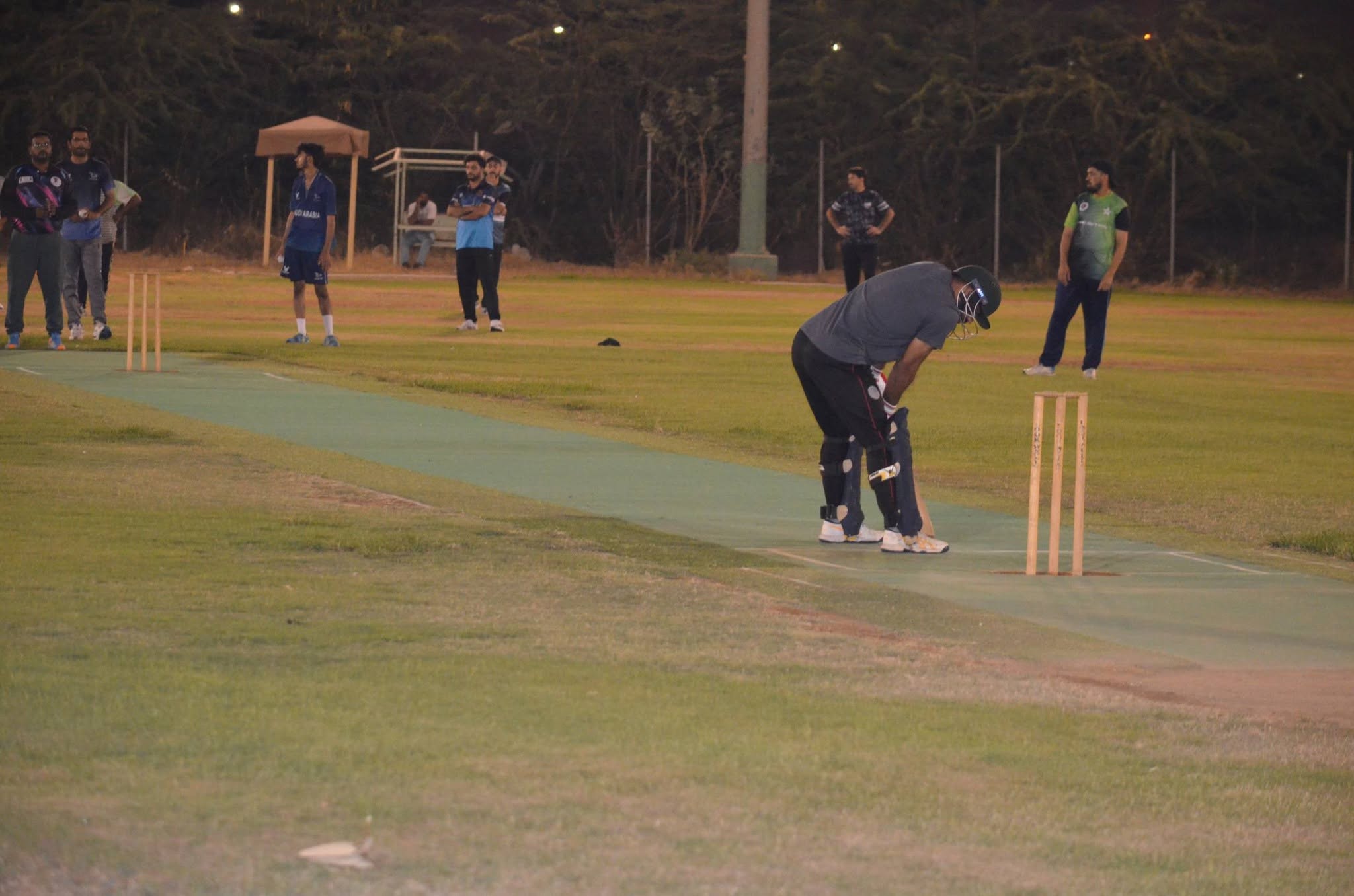
RIYADH: With cricket’s popularity rising across Saudi Arabia,, cricket academies and clubs are rapidly expanding across the Kingdom in race to nurture young talent and grow the sport at a competitive level.
The spread of one of the world’s most popular sports is part of the mission to promote a healthy and active lifestyle under the Saudi Vision 2030’s Quality of Life program.
Saudi Arabian Cricket Federation, the official governing body in the Kingdom, supported by the Ministry of Sports and Saudi Arabian Olympic Committee, has been mandated to increase physical activity levels by 40 percent over the decade.
But cricket’s popularity at grass roots remains mostly organic, particularly among many expats from across Asia who have made Saudi Arabia their home on recent years and decades.
The SACF, under the auspices of the Saudi Arabian Olympic Committee and the Ministry of Sports, was established in 2020, with Prince Saud bin Mishal Al-Saud as chairman of the federation.
Interestingly, Foreign Missions and International Schools especially from South Asia are also promoting the game offering training sessions at the schools and organizing inter-school tournaments.
Speaking to Arab News Ambassador of India to Saudi Arabia Vipul said: ” I am very pleased to see the growing popularity of Cricket in Saudi Arabia. Cricket has become an integral part of India’s sporting and cultural tradition. The inclusion of Cricket in the Los Angeles 2028 Olympic Games is a positive development towards its global visibility. We would like to see more and more countries embracing cricket.”
“The launch of the Indian Premier League (IPL) has further boosted its worldwide popularity of the game. A significant development in this respect was the IPL 2025 mega auction held on November 24 and 25, 2024, at the Abadi Al Johar Arena in Jeddah. There have also been several other engagements on cricket between our two countries, reflecting the growing interest in forging a long-term partnership in the development of cricket in Saudi Arabia,” added the ambassador.
He further said: “The large and vibrant Indian community in Saudi Arabia has also played an important role in promoting cricket. We are proud that some players representing the Saudi national cricket team come from the Indian community residing in the Kingdom. The Embassy of India will continue to engage with the Saudi Arabian Cricket Federation and other stakeholders to promote greater cooperation and exchanges in the field of cricket. Such engagements will add yet another dimension to the already strong and multifaceted people-to-people partnership between India and Saudi Arabia.”
Sri Lanka’s Ambassador Omar Lebbe Ameer Ajwad told Arab News: “Cricket is part of the Sri Lankan community’s life in Saudi Arabia. There are more than 80 community cricket clubs across the Kingdom. Cricket is also part of Sri Lanka international school’s extracurricular activities. School organizes inter-house cricket matches during the annual sports meet.”
“To mark the 50th anniversary of diplomatic relations between Sri Lanka and Saudi Arabia, I have initiated a tradition of hosting an annual Cricket Tournament – Sri Lanka Ambassador’s Cup, among Sri Lankan community cricket clubs in the Kingdom,” said the envoy.
“Sri Lanka stands ready and would be pleased to support Saudi Arabia’s initiative to promote and develop cricket in the Kingdom,” he added.
The Sri Lankan Embassy in Riyadh last year held a cricket tournament to mark 50 years of diplomatic relations between the south Asian nation and Saudi Arabia. Ajwad told Arab News that the plan is to make it an annual event.
“We are planning to bring some big names from Sri Lankan cricket in the final of the tournament in the future, in order to promote cricket among the Sri Lankan community in Saudi Arabia as well as promote cricket ties with the Kingdom.”
He added that since Saudi Arabia also has a cricket federation, the plan is to “explore opportunities” for cooperation in the game.
Cricket academies in different Saudi cities have taken major leaps in recent years.
Abdul Waheed, former captain and a star batsman of the Saudi national cricket team, who is associated with Arkan Sports Cricket Academy in Riyadh told Arab News: “Our academy aspires to be the grassroots engine of cricket development in Riyadh region. We aim for those being trained at our academy to practice and play good cricket and one day represent Saudi Arabia at the international level.”
MIND Cricket Academy, Jubail chairman Nasser Al Qashanain, told Arab News: “MIND Academy was established in 2019 in Jubail, with founder director Murali Krishnan, and co-founder R N Balasubramaniam. A home-grown academy is building a pipeline of young talent that its founders hope will one day represent the Kingdom on the world stage.”
“In December 2023, the academy decided the time had come to give cricket aspirants in the region a proper platform. Team Mind Academy launched the Mind Academy Cricket Club (MACC) — a dedicated home for young cricketers in Jubail, built on three pillars: dedication, discipline, and determination,” he said.
“From the outset, the academy prioritized coaching quality over quick wins. It brought in R. Aravind and C. Santosh, two India-based trainers certified by the International Cricket Council (ICC) to lay the technical groundwork for its young players,” he added.
The club’s growth was further accelerated by the support of its strategic partner and MIND Academy chairman Al Qashanain, whose backing helped Mind Academy Cricket Club secure a closer working relationship with the SACF.
“That partnership has since become a cornerstone of the club’s development, with SACF providing its coaches access to ICC Level 1 coaching certification and offering exceptional support throughout the journey — support that has been instrumental in establishing the club’s presence in Jubail,” said Al Qashanain.
“The SACF’s support for Mind Academy has been exceptional throughout their journey. Mind Academy and SACF signed a landmark MoU to jointly develop cricket at the grassroots level— a testament to the trust and confidence the federation places in the academy’s vision. Through SACF, the club’s coaching staff gained access to ICC Level 1 coaching courses held at the Sea Sports Center Fanateer in Jubail from 28–31 May 2025. The course was organized by the Jubail Cricket Association under the supervision of SACF and conducted by ICC/SACF-qualified tutors, with the proud support of the Royal Commission for Jubail and Yanbu,” he said.
The ICC certification has been a game-changer for the club, ensuring that every young cricketer at Mind Academy receives training that meets the highest international standards.
Mind Academy also forged a partnership with the Gary Kirsten Cricket Academy, opening the door for its coaching staff to progress through ICC coaching certification — from Level 1 all the way to Level 4 — under the mentorship of Gary Kirsten, a prominent former South African cricketer and elite coach who famously guided India to victory in the 2011 ICC Cricket World Cup.
“That blend of local passion and international know-how has become the hallmark of Mind Academy,” said Al Qashanain.
IPL’s Delhi Capitals Academy have also expanded with a new Saudi Arabia centre. The academy has strengthened its international footprint with the launch of its first academy through a new center in Jeddah.
Jazim Haris, head of operations, JSC Sports, told Arab News: “Delhi Capitals Cricket Academy has made its landmark Middle East debut with the launch of its first centre in Jeddah in partnership with JSC Sports Centre, the city’s first international cricket academy.”
“Designed for boys and girls aged 5 to 17, the academy combines ICC certified coaching with high-performance bowling machines, advanced performance monitoring and international player exchange programmes,” he said.
“The partnership is further strengthened by JSC Sports Centre’s exclusive state-of-the-art cricket stadium near Naseem, Jeddah featuring three playing surfaces, analytical cameras and cutting-edgee batting technology to track and creating a global pathway for emerging talent and give families a premier space to connect, socialise and enjoy their children’s progress,” he added.
Haris further said: “The launch expands Delhi Capitals academy footprint to five countries seven centres in India and six overseas across the UK, Canada, the US and Saudi Arabia marking a significant step in developing Jeddah’s cricket talent pipeline and supporting the Kingdom’s Vision 2030 sporting ambitions.”
He added: “Our strong association with SACF has fostered our vision to pioneer cricket academies in Jeddah.”
Aqil Azad, who runs cricket academies with grounds facilities – Tamimi Cricket Club, and Arabian Cricket Academy – told Arab News: “We have about 40 children being trained at our academies by certified coaches, amid structured program, and a clear focus on the fundamentals of the game, delivered to children and teenagers who might otherwise have had little access to formal cricket coaching in the Eastern Province.”
“We provide structured training programs for aspiring cricketers across all age groups in Dammam and Al Khobar. From intensive net practice and field drills to competitive match-day scenarios, the academy provides a complete cricketing guideline for young players in the region. The club also actively engages with local schools, introducing cricket to young students and scouting talent at the grassroots level,” he added.
Manzar Khan, president of the cricket academy in Yanbu – Yanbu Al Sinaiyah Cricket Association – told Arab News: ” The academy was established in 1979 and is one of the oldest and prestigious cricket associations in the Kingdom. Home to one of the most beautiful and first-ever grassy cricket grounds in Saudi Arabia, setting a benchmark for cricket infrastructure in the Kingdom.”
“At the academy we provide state-of-the-art night cricket facilities equipped with 8 towering floodlight poles, enabling high-quality day and night matches. We practice in 4 cricket grounds to accommodate simultaneous matches and practice sessions,” he added.
There are about 25 registered teams competing under the YACA banner, representing diverse communities and strong cricketing talent in Yanbu, he informed.
Officially affiliated with the SACF, YACA organizes three to four major tournaments per season, ensuring continuous competitive cricket throughout the year, and is recognized as a key contributor to the development of cricket in the Kingdom.