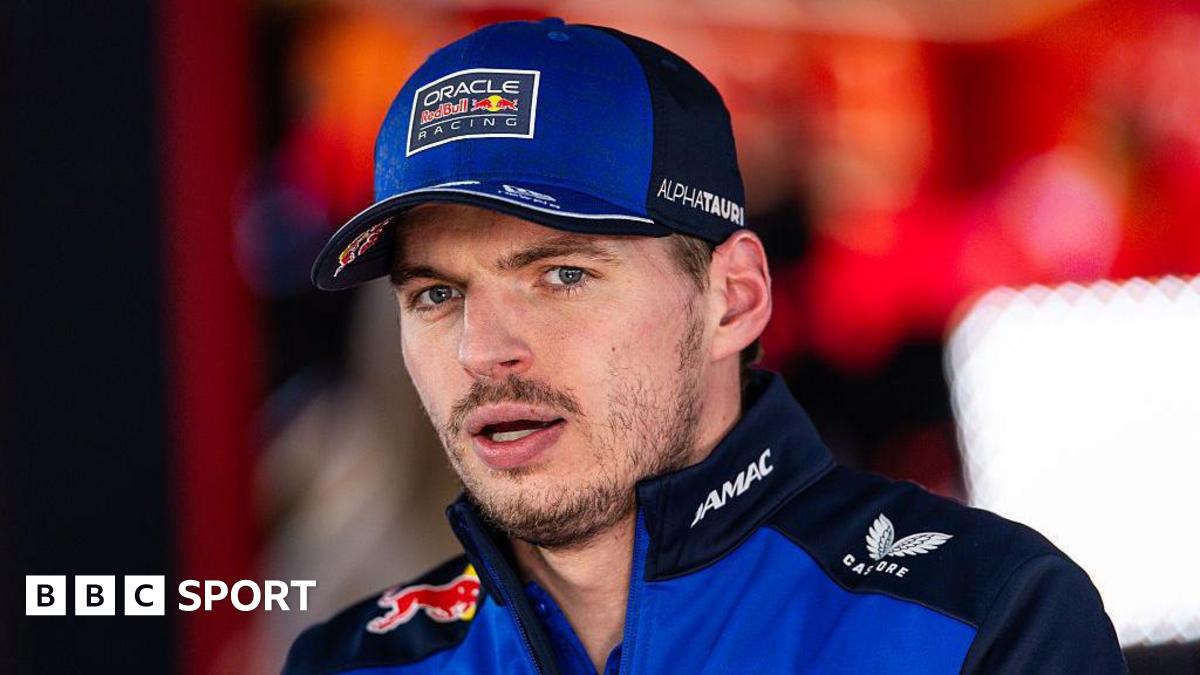
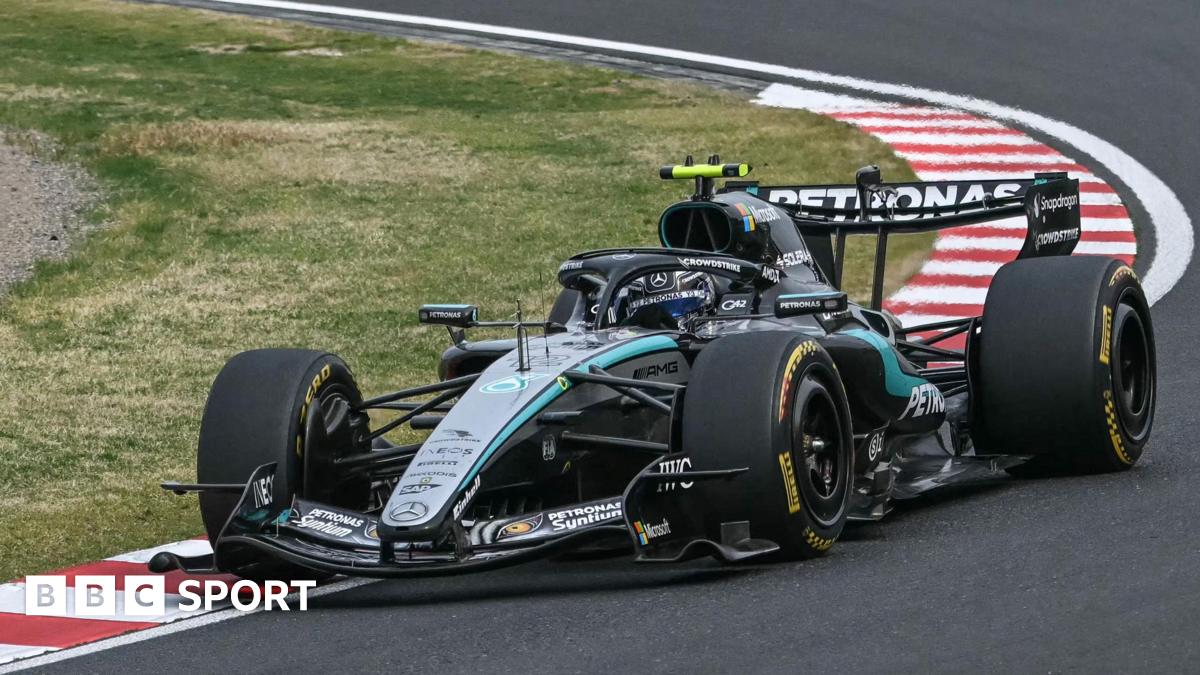
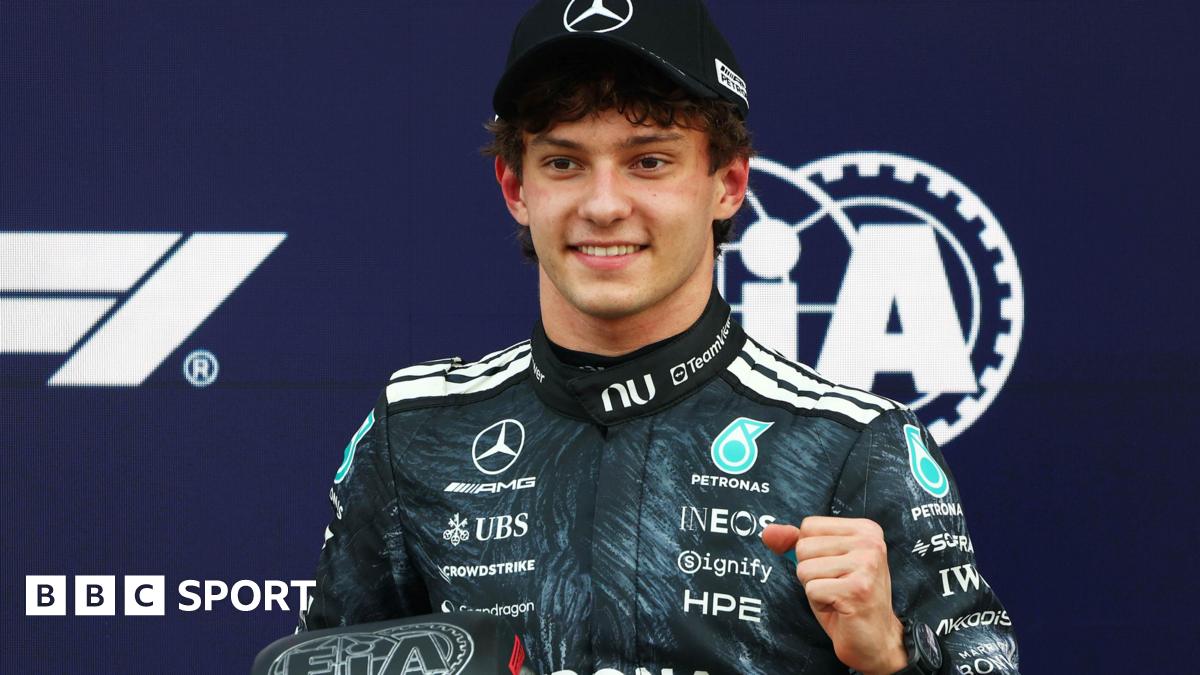
Verstappen’s dissatisfaction with F1 is focused on the degree of energy management required of the new engines.
They need to be recharged several times a lap, and that is leading to drivers losing speed on the approach to corners at the end of long straights as the engine runs out of battery power and starts to recharge.
It is also generating a form of racing that has proved attractive to fans and many in the sport, with places swapping and swapping back again.
But Verstappen does not like the way this happens as a result of different stages of battery charge between two drivers racing.
Discussing his attempts to pass Alpine’s Pierre Gasly for seventh place, Verstappen said: “You can pass around here, but then you have no battery for the next straight.
“So I tried once just to have a look, but then of course Pierre immediately got by me again on the main straight and I think that was basically the story of today. You can pass, but then you get re-passed. That was basically it.”
Commenting further on his thoughts about his future, Verstappen said: “I see it like this: You hear it from a lot of sports people when you speak to them about how are you successful. It all starts with actually enjoying what you’re doing before you can actually commit to it 100%.
“Now I think I’m committing 100% and I’m still trying, but the way that I am telling myself to give it 100% I think is not very healthy at the moment because I am not enjoying what I’m doing.
“And now people can easily say, ‘Yeah, well, you’ve won so many championships and races and now just because the car is not good you are complaining.’ Maybe you can see it like that, but I see it different.”
He added that one option would be to go and race in sports cars – he is already planning to take part in the Nurburgring 24 Hours this year.
“I have a lot of other projects anyway that I have a lot of passion about,” he said. “The GT3 racing. Not only racing it myself but also the team. It’s really nice and fun to build that. And I really want to build that out further in the coming years.
“It’s not like if I would stop here that I’m not going to do anything. I’m always going to have fun. And also I will have fun in a lot of other things in my life.
“But it’s a bit sad to be honest that we’re even talking about this. It is what it is. You don’t need to feel sorry for me. I’ll be fine.”
Referring to the bosses of F1 and his potential loss from the paddock, he implied that a change of the rules would make a difference to his decision.
“They know what to do,” Verstappen said.
F1 bosses are due to meet in the four-week gap between Japan and the next race in Miami to discuss changes to the rules to allow drivers to push flat-out in qualifying.
The need to manage energy over one ultimate lap and the effect this having on driving is unanimously regarded in F1 as an issue that needs fixing.
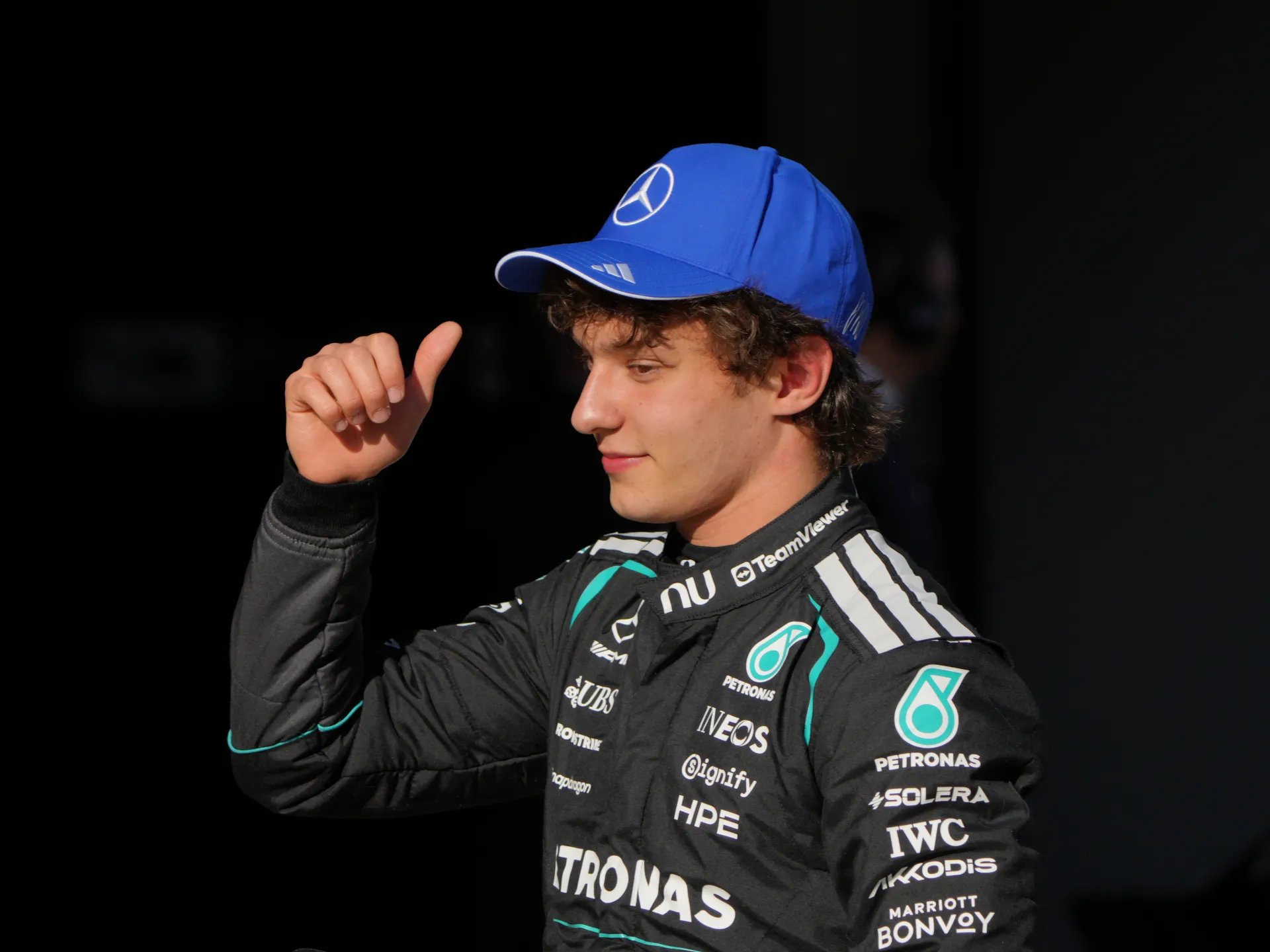
Kimi Antonelli took his second win in succession and the lead of the world championship after being gifted victory in the Japanese Grand Prix by a safety-car period.
The 19-year-old Italian had not yet made a pit stop, while his rivals for victory McLaren’s Oscar Piastri and Mercedes team-mate George Russell had, when Oliver Bearman’s Haas crashed heavily.
That gave Antonelli a pit stop that cost him less time than the others and ensured he could retain the lead.
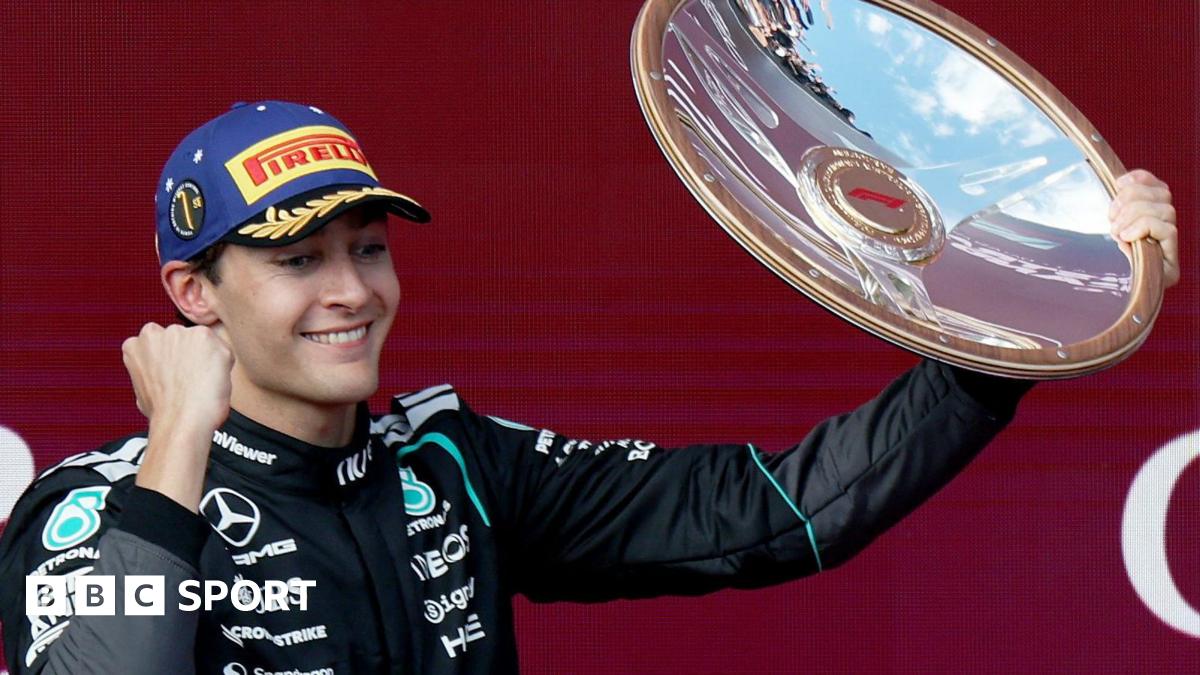
A frustrated Russell, who finished fourth behind Piastri and Ferrari’s Charles Leclerc, said over the radio “unbelievable” as he realised Antonelli would beat him for the second consecutive race.
Antonelli becomes the youngest driver in history to head the championship and leads his team-mate by nine points.
Antonelli’s first lap in the final session was 0.298secs quicker than Russell’s. He was on course to improve on his final run but locked up into the hairpin and lost time.
The 19-year-old Italian said: “Super happy with the session. It was a good one, a clean one. And I felt very good in the car and every run I was just improving and improving.
“Shame about the last lap after a lock-up in Turn 11 but it was a good one before that.”
Antonelli became the youngest driver to take pole position in history in China and is emerging as a serious threat to Russell in the championship – they start the race separated by four points, less than the margin between first and second places in a grand prix.
Russell, who was complaining of a lack of rear grip throughout qualifying, was quicker than Antonelli in the difficult first sector of the lap but lost out over the rest.
“Really strange session,” the Briton said. “We were both very fast all weekend. We made some adjustments after final practice and in this qualifying we were nowhere so we have to try and understand.”
Piastri, meanwhile, was pleased with the obvious progress McLaren have made this weekend, during which they have for the first time been in the mix with Ferrari as the closest challengers to Mercedes.
“We have looked good all weekend,” said the Australian, who is yet to start a grand prix this season after a crash on the reconnaissance lap in Australia and a battery failure in China before the start.
“We don’t have the pace to match Mercedes still but we are getting closer.”
NEWLY reopened in the UK last year, The Hide Hotel is one for the families who love the great outdoors.
Here is everything you need to know
Sign up for the Travel newsletter
Thank you!
The Hide has some beautiful viewsCredit: As Per Licence – 2024It is great for families tooCredit: As Per Licence – 2024
Where is The Hide Hotel?
Right up in the hills on the edge of Chatsworth Estate in Chesterfield lies this The Hide Hotel.
You’ll most likely need a car to get there although there is a bus stop outside that connects to Chatsworth and Bakewell.
What is the hotel like?
The thick stone-walled hotel is complete with dog and boot washing facilities, a roaring log fire in its restaurant and a tasty local pint for walkers to reward themselves with after a ramble in the Peaks.
The views across the moorland are breathtaking, and while the building is 200 years old, it was given a complete refurb last year, so all the furnishings look shiny and new.
All neutral tones with cosy throws strewn over the beds, rooms at The Hide Hotel are comfortable and inviting.
You can choose from double, triple, quad, or like us a bunk room, where a family of four could happily stay in the king size beds and very cute cabins.
Rooms cost from £79 per night including breakfast. See here.
What is there to eat and drink at the hotel?
There’s a great restaurant focusing on big plates of ribs, brisket, burgers and more.
They also offer a terrific range of stone baked pizzas and the cooked breakfasts are worth waking up for.
For something more refined, The Beeley Inn, also owned by the Chatsworth Estate, is well worth a visit.
Here we enjoyed whipped goats cheese with balsamic beetroot, and local lamb saddle with hispi cabbage.
What else is there to do there?
There’s a footpath out of the back door that leads directly to Chatsworth House (albeit via a 9km walk), where guests can book multi-entry tickets for their stay.
The Hide is also right at the entrance to The Peak District National Park which has amazing rambles for all abilities.
You’ll find a handy walking guide in every bedroom, and the staff are super knowledgeable and inspired us to climb the nearby snow topped Mam Tor, an unforgettable experience.
Is the hotel family friendly?
Yes, there are four-person rooms with bunk beds and king beds, so perfect for families, although kids re an extra £15 a night.
They also have everything else from high chairs to cots, and a play area in the restaurant with toys and games.
The hotel team are also on hand to recommend family-friendly activities.
is it accessible?
The hotel has accessible rooms, with wide entry bathrooms as well.
Some of the rooms sleep up to four peopleCredit: As Per Licence – 2024
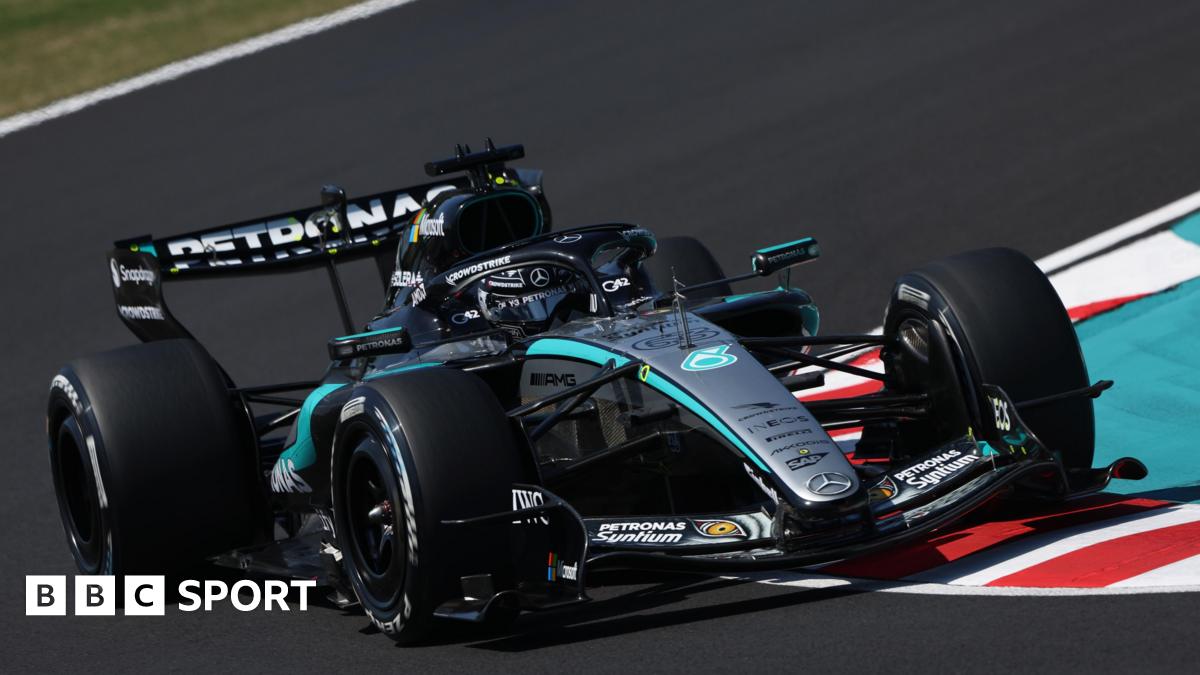
Red Bull’s Max Verstappen, his car sporting an aerodynamic upgrade that featured new side pods, floor and engine cover, was seventh fastest, 0.791secs off the pace.
Both Verstappen and Norris were among the drivers to run wide at Spoon, where a tailwind on entry was causing problems.
Racing Bulls’ Liam Lawson and Arvid Lindblad were eighth and 10th, sandwiching the Haas of Esteban Ocon.
Williams’ Alex Albon had a torrid session, running off track and hitting the wall at Degner Two, traditionally one of the track’s most demanding corners, midway through the session, before a spin after colliding with Cadillac’s Sergio Perez, who appeared not to see Albon on the inside as the British-born Thai dived down the inside at the chicane.
The two Aston Martins brought up the tail of the field on a weekend on which engine partner Honda want to show improvement on its home track after a dire start to the season.
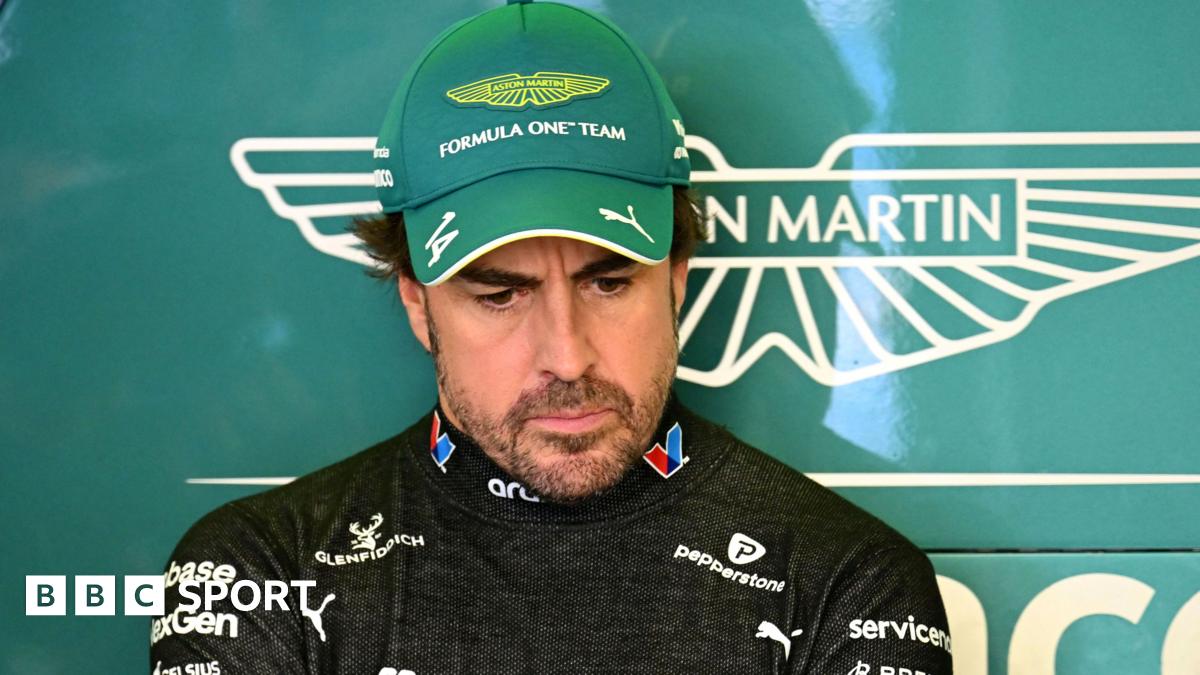
American reserve driver Jak Crawford, completing one of the team’s mandatory young driver days, was in Fernando Alonso’s car and was 22nd, just over a second slower than Lance Stroll.
Honda have introduced some changes that are hoped to address the engine-vibration issues that have been causing reliability problems and major discomfort for the drivers.
Aston Martin also have an aerodynamic upgrade for Japan, featuring a new engine cover and front-of-floor furniture.
THERE’s a pretty hotel hidden in amongst the Buckinghamshire countryside which is perfect for a staycation.
Read on to find out more about Burnham Beeches Hoteland the nearby known for its royal connections that’s just a 15-minute drive away.
Sign up for the Travel newsletter
Thank you!
I stayed in a calming Oak Character Room which had views across the groundsCredit: Kitten & SharkDownstairs is a spa with a swimming pool, jacuzzi, steam room and sauna
Where is the Burnham Beeches Hotel?
Tucked down narrow and windy roads in Buckinghamshire is this beautiful countryside escape.
The huge mansion was once a private Georgian home – and, quite frankly, I’d even go as far as to call it one of the county’s best-kept secrets.
You would never realise it’s there until you turn into the driveway and it opens up to the sprawling hotel with manicured gardens and a tennis court.
Burnham Beeches Hotel is a short drive away from Windsor, Slough and Maidenhead, but its location completely out of the way means you won’t hear any traffic.
In fact, I couldn’t hear much aside from gentle cooing of pigeons, and the hoot of an owl after nightfall.
What is the hotel like?
The main building at the Burnham Beeches Hotel is grand, kept in the style of a manor home.
Inside, there’s a huge contrast in room design, each varying from deep blues with thick orange velvet curtains in the Arden dining room, to light and airy spaces like the pretty Evergreen Tea Room.
On the more modern side of the building, the first thing you’ll notice is the calming scent, which makes sense as it’s where you’ll find the main spa area.
The reception has modern check-in tablets that are very easy to use – but there is always staff around if you need any help.
What is there to do there?
Thanks to its location, the hotel is a great base for those wanting to see more of Windsor which is a 15-minute drive away.
Here, you can see the castle and take a stroll down The Long Walk. The pretty village of Burnham is just down the road as is Ascot Racecourse and Legoland.
Guests can also make the most of the facilities in the hotel too. Use of the Temple Spa is included with an overnight stay, and guests get complimentary robes, towels and slippers.
The spa has a gym, small pool, steam room, sauna and jacuzzi.
Spa treatments are available too from 30-minute relaxing massages to hour-long facials, manicures and pedicures.
You can also hire out equipment to have a go in the tennis and pickleball court.
Or borrow one of the bikes free of charge, to explore the grounds and surrounding countryside.
Afternoon tea is popular here which you can enjoy in the Evergreen Tea RoomCredit: Kitten & Shark ImagesIn the evenings, dine in the plush Arden RoomCredit: Kitten & Shark Images
What is there to eat and drink there?
When it comes to dining, eat in the plush Arden Room. Here, I tried the sharing Gambas al Ajillo, which is Spanish-style prawns, followed by a crispy duck salad.
The king prawn and chorizo linguine (which has a slight chilli kick) and smooth coconut and lime panna cotta was also delicious.
Whether you’re a pre-dinner drinker, or fancy a post-dining tipple, the sleek Verdure Lounge Bar is where you want to be.
There’s a huge range of drinks from cocktails to wine and a refreshing pint of Mahou on draught.
In the morning, find your way to the Brasserie where there’s a generous breakfast buffet waiting for you.
It has everything you could want, from continental options like yogurt and fruit, along with classic English breakfast offerings.
At each table was a Tiptree jam stand, and I’d recommend enjoying a pot with a thick slice of sourdough. You can refill your juice, tea, and coffee as often as you’d like, too.
A traditional afternoon tea is popular here, where guests can sample a selection of sandwiches, cakes, and scones alongside a cup of tea, or upgrade for a glass of Prosecco or champagne.
What are the rooms like?
There are 79 rooms and suites at the hotel all varying in size and design. Each comes with free Wi-Fi, heating, a hair dryer, television, tea & coffee making facilities and an ensuite.
I was lucky enough to stay in one of the beautifully designed Oak Character Rooms, which had nature-inspired wallpapers with an enormous dark blue velvet headboard with green cushions and a burnt orange throw.
Its two large windows looked out onto the gardens and let in lots of natural light.
The modern ensuite had a large shower with White Company toiletries.
For those who are bringing fluffy members of the family, you can book for your dog to come along too, from £35 (max weight of 15kg per room).
Rooms have nature-inspired wallpaper and some rooms have free-standing bathsCredit: Kitten & Shark Images
Is Burnham Beeches Hotel family-friendly?
Yes. The Hive Family Rooms can sleep two adults and either two children under 10 years, or two adults and one child over 10. You get all the normal amenities, as well as 24-hour room service.
Children are allowed in the swimmingpool but must be accompanied by an adult if under 16.
Is there access for guests with disabilities?
The hotel offers accessible ground floor rooms, and while the spa facilities are not currently wheelchair accessible, a selection of treatments can be brought directly to the room.
To book an accessible room, call the hotel in advance.
Room rates start from £149 B&B based on two sharing.
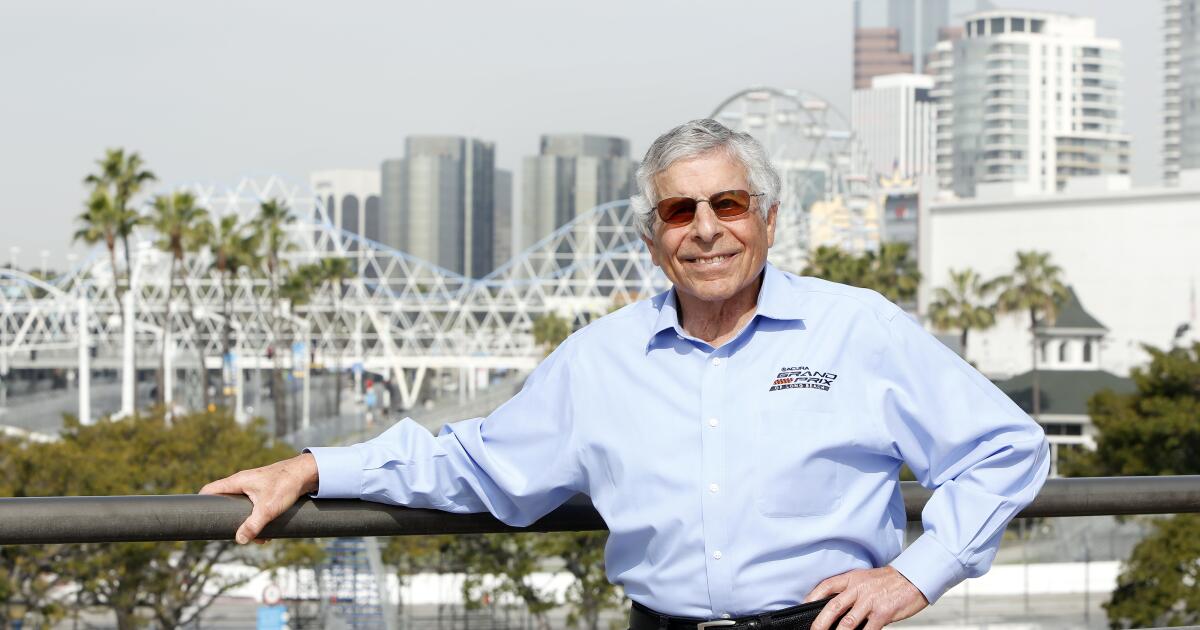
Jim Michaelian, the race car driver who helped launch the annual Acura Grand Prix of Long Beach, has died. He was 83.
The Grand Prix Assn. of Long Beach confirmed his death on Saturday, just weeks before this year’s race, which is scheduled for April 17-19.
Michaelian joined the Grand Prix Assn. of Long Beach in 1975, a then-fledgling competitive race, and grew it into one of the most popular street racing events in the world. The annual three-day event draws thousands of race car enthusiasts and brings tens of millions of dollars into the city of Long Beach.
“Jim was a leader of a small, passionate group who believed in the concept of bringing elite open-wheel competition to Long Beach in the 1970s,” said Roger Penske, Penske Corporation chairman, in a statement. “His vision and energy surrounding this great event remained boundless for 50 years.”
Penske Entertainment acquired the Grand Prix Assn. of Long Beach in 2024.
Michaelian was a competitive sports car racer for more than 25 years, competing in endurance events at tracks including Le Mans, Daytona Beach, Nürburgring, Dubai and Sebring in Florida. He told The Times in 2019 that he was still racing sports cars at 76.
“As long as I can achieve some level of success, I’m going to continue doing it until they tell me I can’t anymore,” he said then.
A native of Monterey Park, Michaelian (pronounced meh-KAY-lee-un) graduated from UCLA with a bachelor’s degree in physics. But he turned his attention to business and went on to earn an MBA there. Driven by a love of motor racing, Michaelian eventually talked his way onto the staff of the Long Beach Grand Prix.
He served as the association’s controller and chief operating officer before being appointed president and chief executive in 2001. During his 51-year tenure, Michaelian transformed Long Beach into an iconic stop in the world of motor racing.
A variety of races are run during the three days on the city’s seaside streets, culminating with a big-league IndyCar Series race Sunday. The races feature different types of cars, and one is for trucks, to appeal to a broad audience.
But the Long Beach Grand Prix is more of a festival that’s been built up around the racing. There are concerts, a lifestyle expo, a kids’ zone with go-karts and other activities, along with an array of food and drink spots, all centered on the Long Beach Convention Center and Shoreline Drive.
Michaelian said he kept the pulse of the crowd by constantly walking the track to monitor how the grand prix’s fans were enjoying the activities. He would survey for problems that might need fixing or whether changes needed to be made for the following year.
“Many young people don’t want to sit in the seats now,” he told The Times in 2019. “They’re out taking selfies, they’re chronicling their experience at Long Beach, and the only way to do that is for them to get around.
“So, if they’re moving around, I’m moving around” by creating more places where they can gather, listen to music and having food options nearby, he said then.
Last year, Michaelian was inducted into the Long Beach Motorsports Walk of Fame.
“Jim was a racer’s racer and a dear friend to IMSA and the motorsports community at large,” John Doonan, president of International Motor Sports Assn., said in a statement. “We will sorely miss his presence at Long Beach and racetracks everywhere.”
The Grand Prix Assn. of Long Beach did not release his cause of death.
Michaelian is survived by his wife, Mary, and his sons, Bob and Mike.
Former Times staff writer James F. Peltz contributed to this report.
Spring is the season of creation, a time of renewal and new beginnings. In Los Angeles, alas, we were, last spring, a city of cinders. It was a time to mourn.
A hard year followed with floods, ICE, AI, etc., menacing our native optimism. Making matters worse, in December we lost L.A.’s grand visionary vizier, the architect who time and again built us out of civic funk and transformed L.A., inspiring the city he so loved to look good, feel good and do good.
But that is still the case. So many plans Frank Gehry imagined for L.A. still remain. Gehry bequeathed blueprints and models, sketches and concepts, for his large and devoted team of younger architects and next-generation visionaries equipped to fabricate our way out of angst.
Isn’t there supposed to be an Olympics on the way for which the city appears ill-prepared? Spring 2026 is the time to build.
A couple of springs ago, L.A. County dubbed the blocks around Gehry’s masterpiece, Walt Disney Concert Hall, the Grand Avenue Cultural District. This includes the rest of the Music Center, Museum of Contemporary Art, the Broad and Colburn School. The Grand, Gehry’s resplendent complex across the street from Disney, had recently opened and ground was about to be broken for the Colburn Center, a 1,000-seat concert hall equipped to also serve dance, opera and whatever yet-to-be-invented genres Gehry designed it to enable.
The Colburn Center is well on its way to completion next year. Bits of the building’s pink skin have started to peek out like spring blossoms on the construction site at 2nd and Olive. The Broad has begun an expansion. But after two years, nothing else has been done to make this the cultural district it must become, one unlike anything else in any city.
Four springs ago I toured Grand Avenue with Gehry to gather what he had in mind for an arts district. When Disney Hall opened in 2003, it instantly became an enduring symbol of L.A., overtaking the Hollywood sign in many cases. The Dodgers want to parade joy in winning their second World Series in row last October, where else but in front of Disney? But not in front of all Gehry had in mind.
We will soon have a pair of futuristic new museum buildings to show off this year: the David Geffen Galleries, the controversial Los Angeles County Museum of Art’s Peter Zumthor building (I predict it will prove a sensation), and the new Lucas Museum of Narrative Art (no predictions on that one) next door to the Coliseum. But the fact that each is a 15-minute ride away from the cultural district’s new Metro station only makes the district even more of a center.
A center, indeed. Gehry’s vision included completing the original plans cost-cut out of Disney a quarter-century ago, along with new modifications and much more throughout the area. Some are more costly than others. Enough could be done on Grand Avenue in time for the Olympics to make a difference if we begin this minute.
Since its opening, Disney has been — shamefully — the most poorly lit building of its stature in the world. Gehry had chosen the specific steel for its capacity to reflect light. His idea was to project on the building whatever concert was taking place that night. No sound, just imagery. Belt-tighteners didn’t want to commit the $2 or $3 million or whatever and go through the trouble.
It was spectacularly tested at the hall’s 10th anniversary, but with tacky prerecorded video and crummy amplification. Facilities are now included in the Grand for projectors. It would have been amazing in 2003 and will be amazing now. The Grand has been disappointingly slow to attract the restaurants, bars, cafes and shops it needs to create a scene. The projections could change all that and even create enough of a ruckus to get a reluctant, car-crazed city to make that Grand Avenue block pedestrian.
There is much more for Disney. Gehry wanted to turn BP Hall, where preconcert talks occur, into a small chamber music hall with a suspended balcony. He had plans for reconfiguring the seldom-used small outdoor Keck Amphitheater into an enclosed jazz club for Herbie Hancock and turning the little-used 1st Street entrance into a glass-enclosed bar that would be named the Ernest, in tribute to Ernest Fleischmann, the L.A. Phil executive director who was responsible for building Disney.
Disney was supposed to have a pit for the orchestra, allowing for staging opera and dance. The plans exist. That could be done in a summer for a couple million. Bottom-liners had also nixed Gehry’s original design for a more gracious lobby with a cafe out front, not the gloomy one installed against his will.
The Colburn Center has the potential for being another game changer for the area, a vibrant new hall where we are promised upward of 200 events a year from all walks of musical life, local and international. But Gehry had in mind even more.
He intended to lower the steep and pedestrian unfriendly 2nd Street hill, so that it would be an easy walk from the new Metro station two blocks away, and add two more pedestrian blocks by diverting traffic to the 2nd Street tunnel. This would connect the cultural district with Grand Central Market on one end and the Broad on the other. Then 2nd could itself become a lively street with the stores and restaurants a “district” needs.
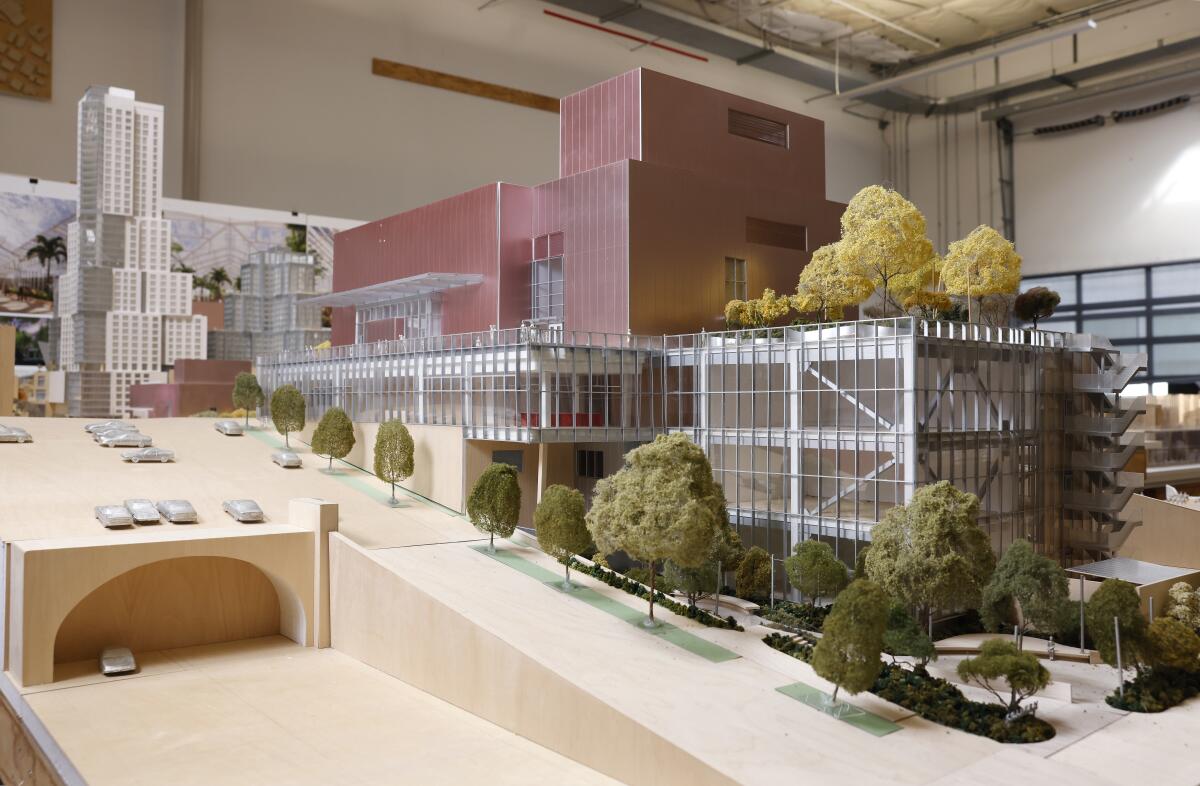
A model of architect Frank Gehry’s design of an addition for Colburn School.
(Christina House/Los Angeles Times)
The extraordinary original plans for the Colburn Center included turning the parking lot across 2nd from the hall into a public plaza with a giant video wall and high-end outdoor sound system, for projecting nightly concerts in the hall. Gehry was a devoted outdoor-indoor architect, and he designed for the hall a balcony on which musicians can perform.
That initiative has thus far been blocked by City Hall officials, fearful of the tunnel’s aging infrastructure. Although if that’s the case, I’m not all that eager to be in the tunnel as it currently is when the Big One comes along. This is where L.A. shows its moxie. Upgrade the tunnel. Now! If this were Beijing, New Delhi or Hanoi, it would be a no-brainer.
Gehry next proposed building low-cost artist housing in Grand Park directly across from the Music Center, which would further create a true arts community. There has been talk of renovating the Dorothy Chandler Pavilion for three decades and that’s all it’s been. The corporate-esque recent Music Center plaza could use a little excitement, maybe a Phase II.
Arts make a city. The Edinburgh Festival in Scotland was created after World War II to help bring the city back to life. After its fire-bombing, Tokyo founded a bevy of symphony orchestras as a phenomenal experiment in mass antidepression. Beethoven’s Ninth Symphony played no small role in lifting the collective mood, preparing Tokyo to create what now feels like the world’s most arresting capital.
Unlike Scotland, unlike England, unlike Germany, unlike France, unlike Italy, unlike Poland, unlike Russia, unlike Finland, unlike the Czech Republic, unlike China, unlike any number of countries, America has no major international arts festival these days. We had one in L.A. in 1984 with the Olympic Arts Festival. The Cultural Olympiad in 2028 has shown no bones. But if we make the cultural district what it could be, there would be no better place anywhere for a major festival.
We have the goods. L.A. artists helped make the modern Salzburg Festival the meaningful model for all others. In 1992, the summer before Esa-Pekka Salonen became music director of the Los Angeles Philharmonic, he and the orchestra were invited to shake up clinging Austrian tradition. With the help of director Peter Sellars, they staged Messiaen’s epic opera “Saint François d’Assise,” with pyramids of televisions, resulting in music and monitors upending, in Mozart’s hometown, the role of the modern opera and, so to speak, the sound of music.
Over succeeding decades, both Sellars and Salonen have been Salzburg Festival lodestars. Last summer they were back staging two monodramas, Schoenberg’s “Erwartung” and “Abschied” (the last movement of Mahler’s symphonic song cycle “Das Lied von der Erde”). Conductor and director looked with shocking depth into the “Expectation” of death and gave a “Farewell” to the “Song of the Earth” we all await. I saw it twice and can’t imagine how anyone came away from it quite the same person, not more alive, not more fragile. Art on the stage doesn’t get deeper than “One Morning Turns Into an Eternity,” as Sellars named the production. Salonen, who conducted the production with Vienna Philharmonic, is now about to become the L.A. Phil creative director in the fall and will bring the production to Disney with the L.A. Phil next season. It is thus far the most important opera news of next season in America. All the more reason to build that pit in the hall and get started on much bigger plans.
Salzburg, which manages to come up with around $80 million from here and there, also helped with the question I’ve evaded: Who’s going to pay for all this? I’ve evaded it because it’s the wrong question. Money only started pouring into the building of Disney Hall when people got wind of what it was going to become. Five years ago, Crypto.com paid more than $700 million to change the name of Staples Center. That amount, which created nothing but an advertisement for a product of dubious value to society, is the price of two Walt Disney Concert Halls and probably all of Gehry’s projects put together. It is the amount that could fund nearly nine Salzburg-scale festivals.
If we let ourselves believe that L.A. wealth only cares for mega-crypto advertising, mega-mansions and mega-yachts, then L.A. is over. It isn’t. Do we want to show only that to the world? Downtown, and prominently Crypto.com Arena in L.A. Live, have been designated a center for LA28, as we’re calling the Olympics. That makes a graciously glorifying cultural district, which functions as creation being existential not commercial, just up the road from L.A. Live, L.A. live.
When one morning turns into an eternity, you don’t ask for the bill.
The Qatar GP, scheduled for April 10-12, has been rescheduled for November 8 amid the ongoing US-Israeli war on Iran.
Published On 15 Mar 202615 Mar 2026
Share
The Qatar Grand Prix that was scheduled to be held next month has been postponed due to the ongoing conflict in the Middle East, the sport’s governing body announced.
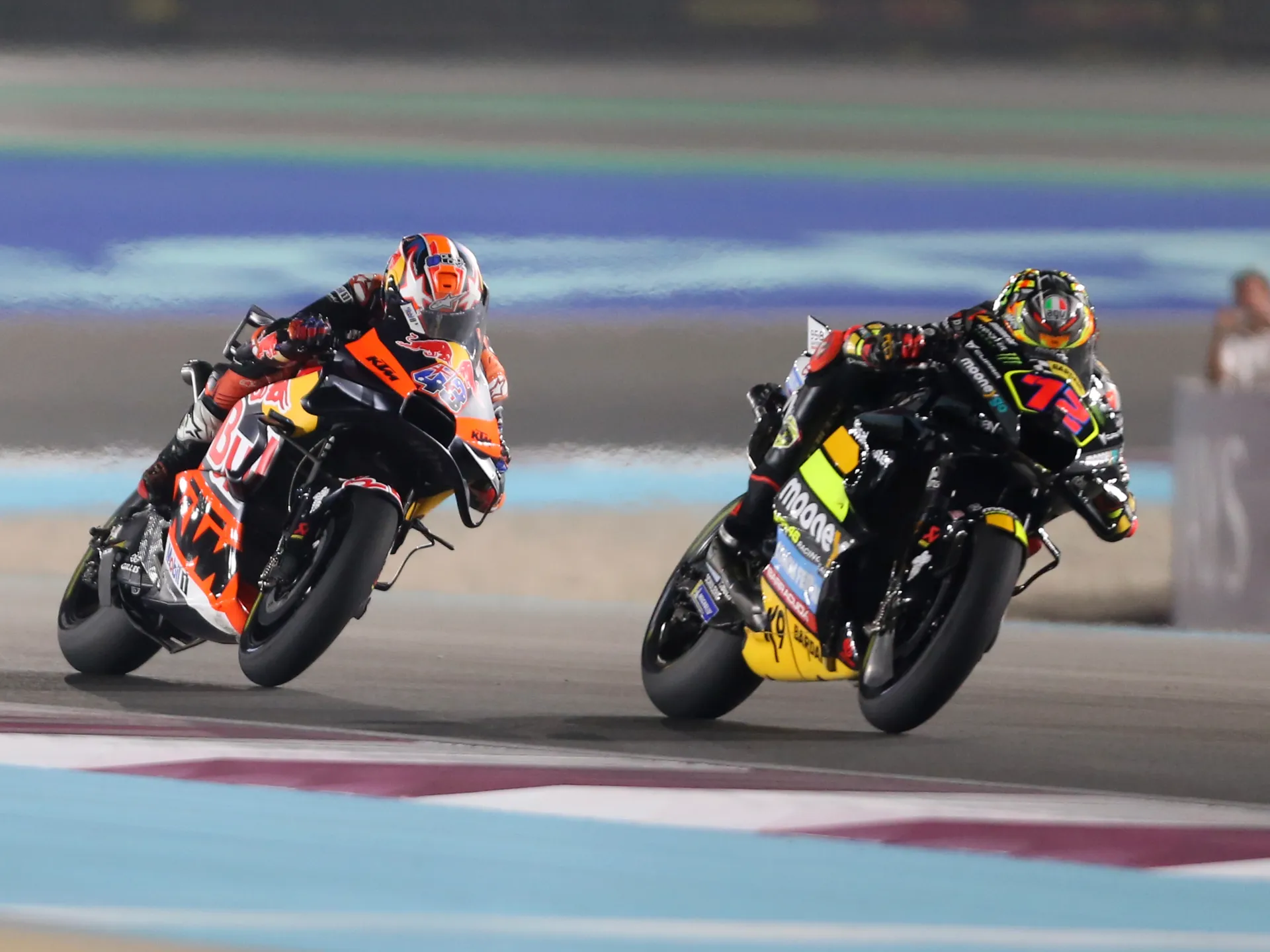
“MotoGP confirms that the Qatar Grand Prix, originally scheduled for April, has been postponed to November 8 due to the ongoing geopolitical situation in the Middle East,” MotoGP said on Sunday.
The Lusail International Circuit was set to host the fourth round of the 2026 championship from April 10-12 but it has now been rescheduled for November 8, organisers said in a statement.
“Following extensive scenario planning and calendar analysis, the revised date has been chosen to ensure minimal disruption to the wider MotoGP schedule.”
The Portuguese Grand Prix will now take place on November 22 and the season finale in Valencia will move to November 29, organisers added.
Aprilia’s Marco Bezzecchi leads the championship after the first round in Thailand. The next two races will be held in Brazil (March 20-22) and the United States (March 27-29).
Earlier on Sunday, Formula One and its governing body, FIA, said the Grands Prix races in Bahrain and Saudi Arabia will not happen in April due to safety concerns related to the Iran war.
Both countries have been hit during Iran’s retaliatory attacks after the United States and Israel launched a wave of strikes on Iran.
The announcement was made in Shanghai ahead of the Chinese Grand Prix.
“Due to the ongoing situation in the Middle East region, the Bahrain and Saudi Arabian Grands Prix will not take place in April,” F1 said. “While several alternatives were considered, it was ultimately decided that no substitutions will be made in April.”
F1 was due to race in Bahrain on April 12 and in the Saudi Arabian city of Jeddah on April 19.
“While this was a difficult decision to take, it is unfortunately the right one at this stage considering the current situation in the Middle East,” said Stefano Domenicali, president and CEO of F1.
“The FIA will always place the safety and well being of our community and colleagues first. After careful consideration, we have taken this decision with that responsibility firmly in mind,” FIA’s president, Mohammed Ben Sulayem, said.
The FIA did not explicitly rule out rescheduling the races and, along with F1, did not use the words “cancel” or “postpone” in announcing that the series would not be in Bahrain or Saudi Arabia next month.
Italian teenager breaks an 18-year-old record in China to become the youngest pole sitter in Formula One history.
Published On 14 Mar 202614 Mar 2026
Share
Italian teenager Kimi Antonelli said it was “just the beginning” after he set a pole record in China with Mercedes predecessor and seven-times world champion Lewis Hamilton lavishing praise on him.
At 19 years, six months and 17 days Antonelli became the youngest Formula One driver ever to take pole position for a full Grand Prix on Saturday.
Recommended Stories
list of 4 itemsend of list
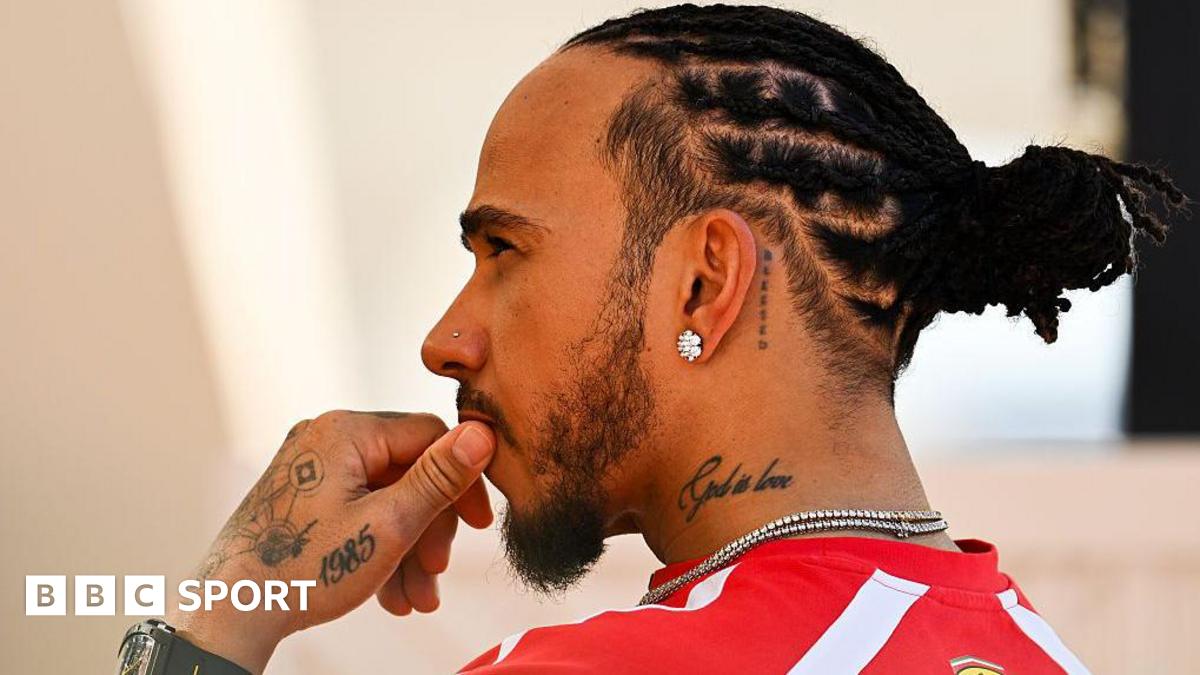
“A great record. It’s going to take a while for someone to ever get close to that one,” Ferrari driver Hamilton, whose seat Antonelli took in 2025, told a news conference after qualifying third.
The previous record was set by now-retired German driver Sebastian Vettel when he put Red Bull-owned Toro Rosso (now Racing Bulls) on pole at the age of 21 and 72 days at the 2008 Italian Grand Prix.
Pundits questioned whether the then-18-year-old could live up to Hamilton’s legacy, even as Mercedes team boss Toto Wolff consistently touted the Italian as a top-tier talent.
“He took my seat! And he hit it hard from the get-go, so it’s really great to see him progressing and he really deserves it,” a beaming Hamilton said while sat next to Antonelli.
The Italian was his country’s first pole sitter since Giancarlo Fisichella for Mercedes-powered Force India, the team that is now Aston Martin, in Belgium in 2009.
“I’m very happy because at the end, you know, it’s just the beginning,” said Antonelli, who had a sprint pole in Miami last year but has yet to win a race.
“Obviously there’s a lot more to come. And, yeah, really looking forward to tomorrow … the car is feeling really good, the car is strong so, yeah, a lot to play for tomorrow.”
Antonelli was helped by Russell having no battery and getting stuck in gear at the start of the final phase and then getting only one flying lap for pole, which he converted into second place on the grid.
“Many said the kid was too young to be in a Mercedes, we should have prepared him otherwise. He did good today,” said Mercedes team boss Toto Wolff.
“It’s a shame that George couldn’t do the lap.”
Former champion Max Verstappen was only eighth fastest, continuing an unhappy weekend in a clearly struggling Red Bull.
Sunday’s Grand Prix will be raced over 56 laps of the 5.451km (3.387-mile) Shanghai International Circuit.
Arvid Lindblad said he “showed people a bit of what I am here to do” after finishing eighth on his Formula 1 debut at the Australian Grand Prix.
The 18-year-old Racing Bulls driver, who become the youngest Briton to race in F1 on Sunday, qualified in ninth and briefly rose to third place on the first lap after a dramatic start to the season opener in Melbourne.
Lindblad’s top-10 finish means he enters the record books as the third youngest F1 points scorer at 18 years and seven months – behind Mercedes’ Kimi Antonelli and Red Bull’s four-time world champion Max Verstappen.
“When I was five years old, I had a dream and my dream was to be in Formula 1 and I am living my dream today,” he told Sky Sports.
Russell’s pole position – 0.8 seconds clear of the fastest non-Mercedes car – had sent shockwaves through the paddock on Saturday but the race was initially much closer than qualifying.
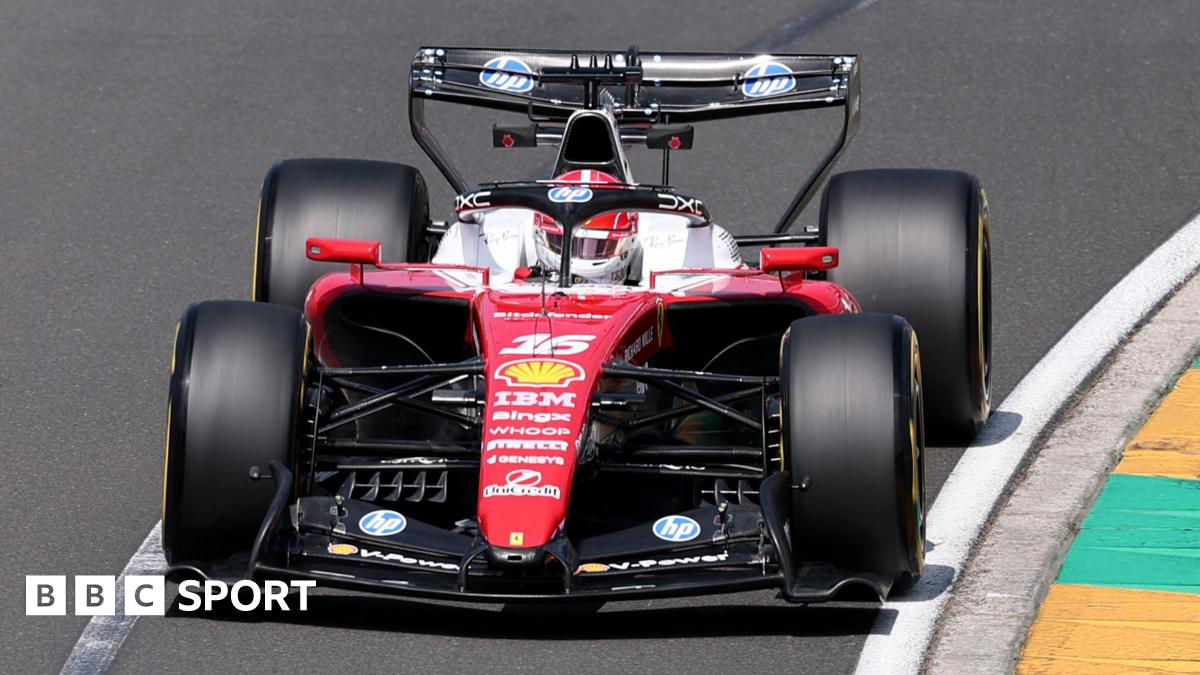
Both Ferrari drivers made their expected electric starts, and Leclerc vaulted from fourth on the grid to take the lead at the first corner.
Russell powered past the Ferrari on lap two between Turns 10 and 11 by using extra electrical energy.
But Leclerc was not to go down without a fight and drove past the Mercedes in a similar fashion on the run to Turn Nine on lap three.
Russell tracked Leclerc closely. He challenged for the lead into Turn One on lap nine only for the Ferrari driver to fend him off and leave Russell to fight to retain his position from Hamilton, who by now had joined the leading train of cars.
Antonelli, who had dropped to seventh at the start before fighting back past Norris, Lindblad and Isack Hadjar’s Red Bull, then joined them to make it four cars in the leading group after 10 laps, and they circulated together until Hadjar retired on lap 12.
The Frenchman, who had been running fifth, pulled off on the back straight, bringing out the virtual safety car, usually the trigger for teams to pit and benefit from the reduced time loss compared with pitting under racing conditions.
But while Russell and Antonelli pitted, Leclerc and Hamilton did not. Hamilton immediately questioned the call, saying over the radio: “At least one of us should have pitted.”
Instead, they ran long, sticking to their pre-race plan of a one-stop strategy.
By the time Leclerc pitted on lap 25, Russell was only five seconds behind him, and the Ferrari emerged 14 seconds adrift of the lead.
On fresher tyres, Leclerc might have been expected to narrow the gap to Russell, but he did not, and the fight at the front was over.
Team-mate Lance Stroll could not run at all on Saturday at Albert Park because of engine problems and will start last.
Alonso said: “The mechanics, they’ve been working flat out and changing power-units day and night, you know, the last six weeks. So, even on the other side of the garage, with Lance being so unlucky in FP3 and ‘quali’ with zero laps, when you go on track and you are in the mix with a few cars, it’s a little bit better than being dead last, as we were yesterday.
“Maybe that’s enough to ignite a little bit of motivation in everyone in the garage. That’s probably part of our job now as drivers, you know, to keep the morale of the team high in difficult moments.”
The team are still facing a difficult situation and may not finish Sunday’s race.
They have only two batteries left for their hybrid system, and none available at the Honda factory, so will have to run a cautious race to ensure they are even able to take part in the second grand prix of the season, in China next weekend.
“We are short on parts, there is no secrets on that,” Alonso said.
“China is next week, so hopefully we can do as many laps as possible, hopefully we can do nearly the whole race.
“But the first sign that there is something potentially wrong, we cannot risk running, running, running until we make some big damage and then we compromise next week, so we will have to be very flexible.
“We are one team, we cannot separate the two things. There is no secret that the main problem is the PU. We are down power and reliability. We didn’t manage many laps in the winter and now we are short on stock for the batteries, we cannot do many laps or we are short on parts. We need to fix the power-units and Aston Martin is trying to help as much as possible with Honda.”
Ferrari’s Charles Leclerc and Lewis Hamilton struck the first blow of the new Formula 1 era with first and second fastest times in opening practice at the Australian Grand Prix.
Leclerc replaced Hamilton in top spot with a late lap that moved him 0.469 seconds clear of the seven-time champion.
Until then, less than 0.1secs had separated Hamilton, Leclerc and Red Bull’s Max Verstappen.
Verstappen’s new team-mate Isack Hadjar was fourth fastest, 0.820secs off the pace, ahead of 18-year-old Briton Arvid Lindblad, making his debut for the Racing Bulls team.
Aston Martin, whose dire form has been in many ways the story of the new season so far, had a predictably difficult session.
Fernando Alonso was not able to run at all because of a problem with his Honda power-unit. Team-mate Lance Stroll managed just three laps before an engine problem was also discovered on his car.
Team principal Adrian Newey had stunned F1 on Thursday when he said that the vibrations from the Honda engine were so bad that Alonso felt unable to do more than 25 laps without risking permanent nerve damage in his hands.
But this appears to have been a different reliability issue for an engine that is well below the required standard in F1 following the introduction of new rules this season.
Before the first race of the season in Australia the weekend, Hamilton said he has “rediscovered” himself after a difficult first season at Ferrari last year.
Amid a series of poor performances in 2025, Hamilton made a series of negative comments about his own performances, including that he was “useless” and was “not looking forward” .
He said he spent the winter cultivating a “positive mental attitude”.
“The break was really positive,” he said. “It was my surroundings. It was the people that I was with. It’s not my first rodeo. So it’s understanding how to flip things. And it’s not that easy to do each time.
“But I always talk about cultivating a positive mental attitude. And that’s what I focus on the winter doing.
“A lot of it came from training. Training hard on Christmas Day. Also knowing that I find it hard.
“I believe in myself that I’ve put more work in than anyone around me. And I believe in myself. Rediscovering myself was really a big part of it as well.
“As I said in one of my [Instagram] posts, I kind of lost sight for a second of who I was. And that person’s gone. You won’t see that person again.”
Hamilton said he felt more settled with Ferrari after a season’s experience of the “very different culture” at the team from what he knew at Mercedes and McLaren.
“It’s massively different to the first year,” he said. “And it’s a much nicer feeling coming, having spent a year with the team, understanding the culture, understanding ways, finding ways of working together.
“We’re in a good place now together as a team. And I feel very gelled with the team today. I’m much happier.”
Ferrari failed to win a race in 2025 but are optimistic they start this season in a more competitive position as F1 introduces its biggest regulation change in history.
Hamilton said: “We’re leaving behind the bad and taking the head, moving forward with the good. We’re sharp, prepared and we know what we need to do.
“But we also know there are massive challenges for all of us with the new rules and regulations.”
Team-mate Charles Leclerc said: I prefer to be in a position where we have to calm the expectations down rather than having to manage a lot of negativity around the team. That’s always a bit of a better situation to be in.
“But in both ways I don’t think that this is something that needs to change our own mood inside the team.”