Governors

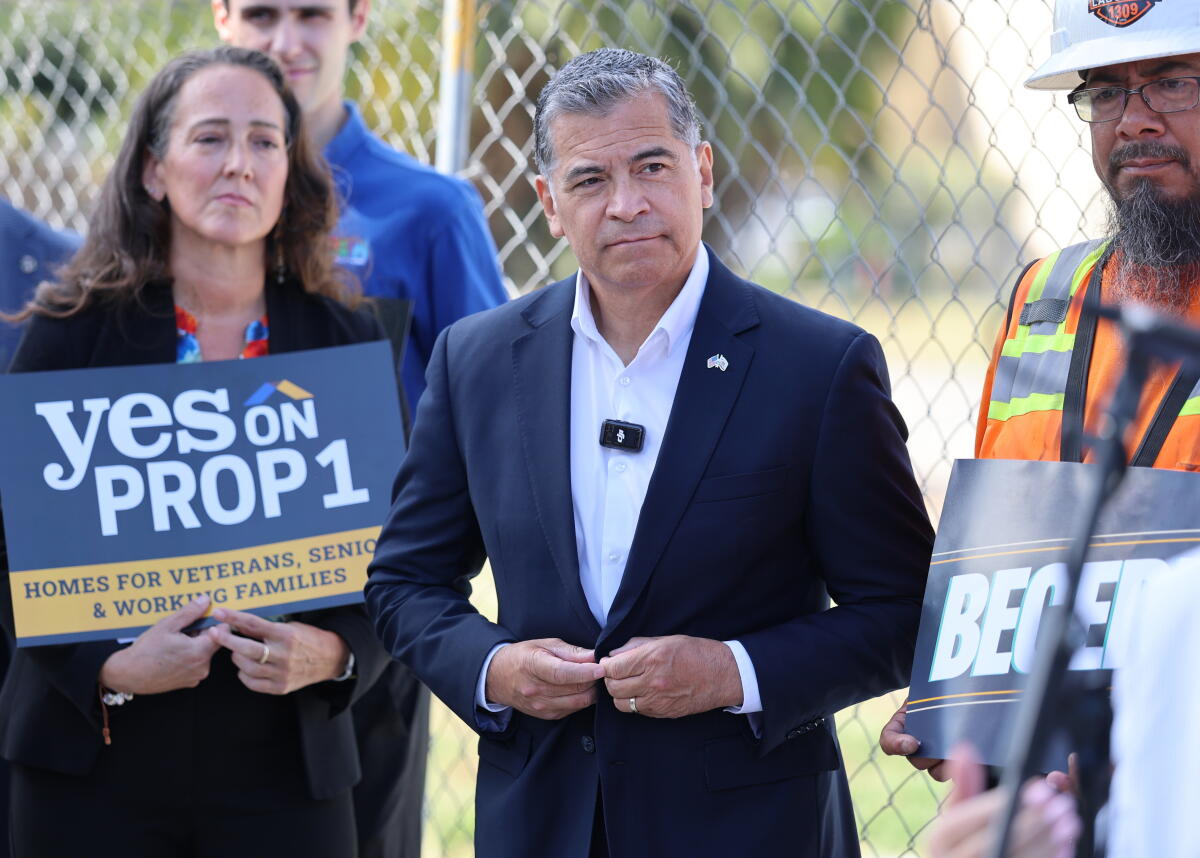
Becerra sees momentum, money and movement in the polls in governor’s race

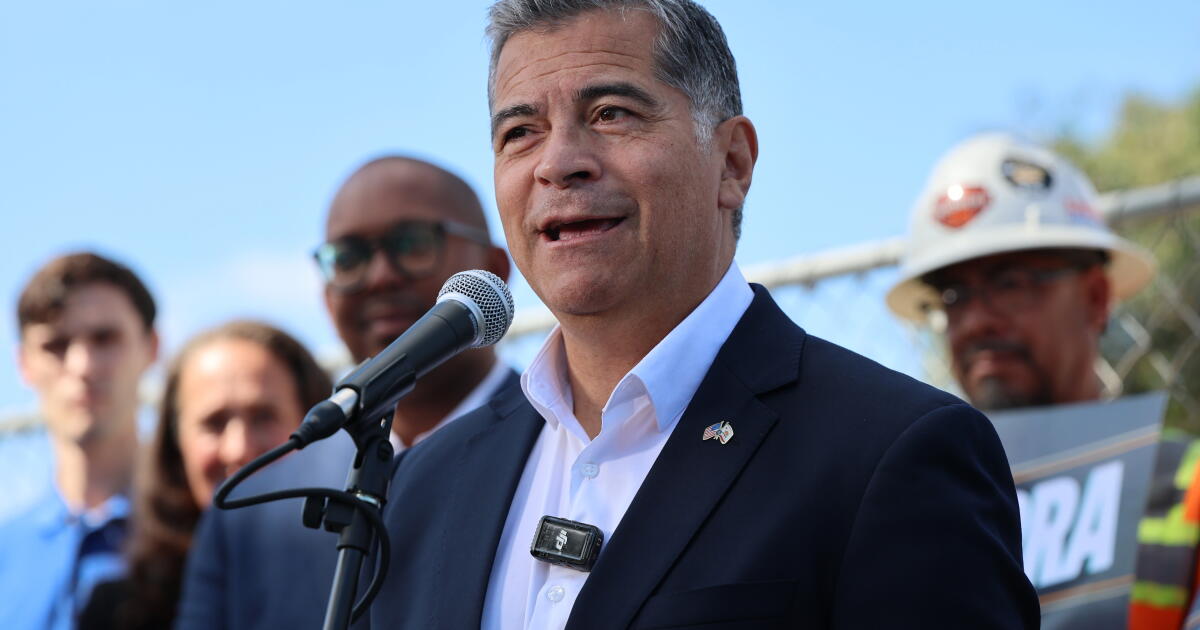
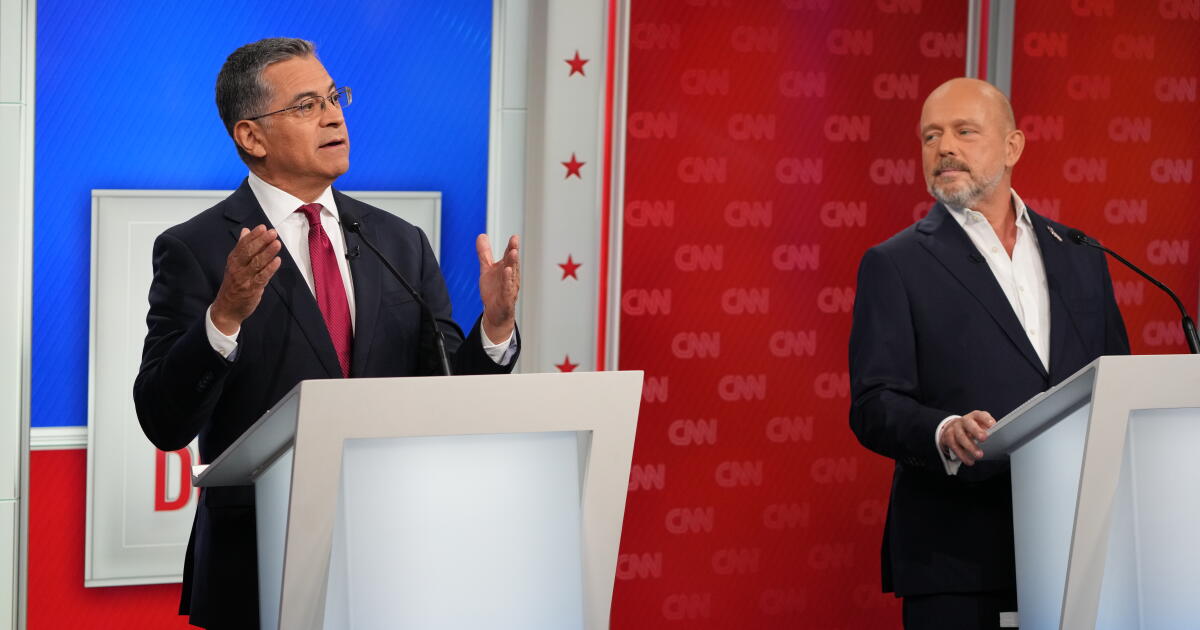
Xavier Becerra, a former cabinet secretary in President Biden’s administration, appears to be surging in the curiously unsettled California governor’s race.

Until recently, the former U.S. Health and Human Services secretary had been mired in the single digits in polling to replace termed-out Gov. Gavin Newsom and lead the nation’s most populous state.

But after former Rep. Eric Swalwell, (D-Dublin) dropped out of the race earlier this month amid accusations ofsexual assault and other misconduct Becerra has seen a boost in polls, fundraising and endorsements.

On Tuesday, Assembly Speaker Robert Rivas endorsed Becerra alongside 14 Democratic members of the legislative body.

Arguing that Californians are under constant threat from President Trump’s policies, Rivas cited Becerra’s decades-long record in public office, including defending Obamacare and young immigrants, or dreamers, to argue that Becerra is best positioned to lead the state.

“There’s no time to learn on the job — we need a governor who’s ready to fight back on day one,” Rivas said in a statement, noting that Becerra sued the Trump administration 122 times while he was California’s attorney general. “We have a strong Democratic field for governor. But right now, we need someone ready on day one. Xavier Becerra is that leader.”

Becerra said he was honored to receive the legislators’ backing.

“I look forward to working with the Speaker and legislators on Day One to tackle the problems Californians care about most — from the skyrocketing cost of groceries and housing to our unyielding fight against the Trump Administration’s disastrous policies,” he said in a prepared statement. “Californians need an experienced and trusted leader who doesn’t need on-the-job training.”

Despite Becerra’s long tenure in state and federal office, the unflashy politician is not well-known among California voters. He was among the underdogs in the 2026 gubernatorial race. Swalwell, by contrast, was among the leading Democratic candidates.

Amy Thoma, a former Republican strategist who is no longer affiliated with a political party, noted that Becerra’s surge comes at a critical moment in the election, shortly before ballots land in Californians’ mailboxes.

“Voters are starting to tune into the race. Yes, they want someone who will stand up to Trump, but it also seems they want someone with experience who can address the very real issues facing the state,” Thoma said.

She added that Becerra’s life story is “incredibly compelling.”

“The word authentic is overused, but every time he talks about his love for this state, for his family and wanting to make California work for everyone, it comes across incredibly sincere,” Thoma said. “Voters can see through candidates who fake it.”

Becerra was respected by colleagues across the aisle, including former GOP legislative leader and state Republican party chairman Jim Brulte. Both men were elected to the state Assembly in 1990 and though their politics often sharply differed. However, they had a warm relationship.

“He was progressive and I am a conservative,” Brulte said. “We never agreed much on policy, but he is a good man with a great heart.”

The 2026 governor’s race has been unlike any in recent memory, with no clear front-runner in a crowded field of candidates and voters just beginning to pay attention to the contest shortly before the June 2 primary.

There were two prominent Republicans and eight prominent Democrats in the race, leading to fears among Democratic leaders in the state that their party’s candidates could be shut out of the governor’s race in the general election because of California’s unique primary system. The two candidates who win the most votes in the June 2 primary will move onto the November general election, regardless of party affiliation.

Democratic leaders remain concerned that despite California’s sapphire-blue tilt, the number of their party’s candidates in the race could lead to a splintering of Democratic voters that results in two Republicans advancing to the November ballot.

Six prominent Democrats remain in the race, after Swalwell and former state Controller Betty Yee dropped out.

The race — lacking a global superstar such as Arnold Schwarzenegger or the scion of a storied political family and former governor like Jerry Brown — is ephemeral. Anything can happen before the June 2 primary.

But Becerra is having a moment. In addition to the new endorsements, he has seen notable movement in polls, most recently in a survey released Monday by the state Democratic party. Becerra jumped nine points from the party’s last poll, tying with billionaire Tom Steyer at 13%.

While Becerra will never be able to match Steyer’s deep pockets, he raised more than $1 million on ActBlue, the top Democratic fundraising platform, in the week ending on April 18, making him the biggest fundraiser on the site in the nation.

“Ninety-seven percent were first-time donors,” Becerra’s campaign said in a statement. “This is not a donor base being recycled. It is a movement being born.”

Source link

Governor’s race wildly unpredictable two weeks before Californians receive ballots

The most unpredictable California governor’s race in recent history took another set of dizzying turns on Monday, with former Health and Human Services Secretary Xavier Becerra surging after former Rep. Eric Swalwell dropped out in the face of sexual assault and misconduct allegations, and former state Controller Betty Yee ending her bid.

The race to replace termed-out Gov. Gavin Newsom is the first in a quarter of a century with no clear front-runner and a sprawling field of candidates who have been jockeying for the attention of Californians, who are just beginning to pay attention to the campaign two weeks before ballots arrive in their mailboxes.

“I certainly could not have imagined the twists and the disturbing turns that this race has taken,” Yee said as she announced she was dropping out. “But through it all, my values and my vision for California has never wavered.”

A poll released Monday by the state Democratic Party — its first since Swalwell (D-Dublin) dropped out — showed Becerra’s support jumped nine points to 13%, placing him in a tie with Tom Steyer, the billionaire hedge fund founder turned environmental warrior. Former Rep. Katie Porter of Orange County saw a slight bump to 10% from 7%, while the remaining Democrats in the contest were mired in the low single digits.

The party began the surveys out of concern that Democrats could be shut out of the governor’s race because of California’s unique primary system, where the top two vote-getters in the June 2 primary move on to the November general election regardless of political party.

“I continue to believe there are too many Democrats in the field,” California Democratic Party Chairman Rusty Hicks told reporters Monday. “My call for candidates to honestly assess the viability of their candidacy and campaigns still stands, especially if you are stalled in the single digits, seeing financial resources dry up and/or are failing to pick up additional support.”

Hicks and other party leaders and allies had unsuccessfully urged low-polling candidates to reconsider their candidacies before the filing deadline in an attempt to cull the field and avoid splintering the Democratic vote. Though most did not name candidates who they thought should think about their viability, Yee was widely believed to be among them.

Yee became emotional as she said on Monday that she decided to withdraw from the race because she wasn’t able to raise the resources necessary to compete in the state. She also said her message of competency and experience wasn’t resonating among voters who were seeking a fiery foil to President Trump, not “Boring Betty,” as she dubbed herself. Yee said she would assess the field before making an announcement on whether she would endorse one of her fellow Democrats.

Becerra was another candidate believed to be a target of party leaders’ efforts to shrink the field. But he held on and apparently benefited from Swalwell’s downfall.

“I’m not the richest candidate, I’m not the slickest candidate, but I am the guy that’s got you,” Becerra said, rallying supporters in Los Angeles on Saturday.

The audience was filled with members of labor groups backing the longtime politician, and Becerra told them he’d serve as a “union man” in the governor’s office.

Pro- and anti-Becerra forces tussled outside the town hall after two people, who declined to identify whom they were working for, passed out fliers highlighting critical media investigations of the U.S. Department of Health and Human Services during the migrant crisis when the agency was led by Becerra.

Pro-Becerra attendees grabbed the fliers and told the men to go away, prompting a security guard to intervene.

The question is whether Becerra, who also served as state attorney general, a member of Congress and a state Assembly member, can raise the funds necessary to compete in a state with some of the nation’s most expensive media markets. And he was tied in the state party poll with a billionaire who dumped an additional $12.1 million of his own money into his campaign last week.

Steyer’s total investment in his bid reached $133 million, according to the California secretary of state’s office. He also received the endorsement of Our Revolution, a progressive political organization founded by U.S. Sen. Bernie Sanders (I-Vt.).

“We’ve never endorsed a billionaire — but Tom Steyer is using his position to upset the system,” the group posted on X on Monday. “As Our Revolution executive director Joseph Geevarghese told @theintercept, ‘He’s been a partner in the movement. Most billionaires have used their wealth and privilege to lock in the status quo. Tom is doing the opposite.’”

San Jose Mayor Matt Mahan, who is also running for governor, accused Steyer of hypocrisy for the hedge fund he founded profiting from investments in private prisons being used to house ICE detainees, and Steyer calling for the abolishment of ICE.

Steyer got “rich investing off the ICE infrastructure he now wants to abolish,” Mahan posted on Instagram.

Steyer, who sold his stake in the hedge fund in 2012, has said he ordered the company to divest from the private prison company and has repeatedly expressed remorse about his former firm’s ties with the detention company.

Mahan also appeared Monday at a Hollywood production lot to announce his proposal for a special fund to lure sporting events, concerts and other productions to California as part of his plan to help the struggling film and television industry.

An independent effort supporting Mahan has also raised roughly $11 million since Swalwell left the race.

Mehta reported from Los Angeles and Nixon from Sacramento. Times staff writer Dakota Smith contributed to this report.

Source link

Former state Controller Betty Yee drops out of the governor’s race

Former state Controller Betty Yee dropped out of the 2026 governor’s race on Monday, citing low levels of support from voters and donors.

Yee, a Democrat, was part of a sprawling field of politicians vying to replace termed-out Gov. Gavin Newsom. But despite the bevy of prominent candidates running to lead the nation’s most populous state and the world’s fourth-largest economy, this year’s governor’s race has long lacked a clear front-runner well known by the electorate.

“The whole notion that voters are looking for experience and competence is not a top priority, and that’s been really my wheelhouse in terms of how we grounded this campaign was based on my experience,” she said in a virtual press conference Monday morning. “The donors have felt the chill of the polling … and it really just came down to where I’m not going to have sufficient resources to get us to the finish line.”

The former two-term state controller did not immediately endorse another candidate and said she would take a few days to assess the field before making an announcement.

The race was upended earlier this month when then-Rep. Eric Swalwell, among the leading Democrats in the race, was accused of sexual assault and other misconduct. The East Bay Democrat, who is facing multiple criminal investigations, promptly ended his gubernatorial bid and resigned from Congress.

Yee, 68, was well regarded by Democrats during her tenure in Sacramento. And she highlighted her no-drama persona on Thursday.

“California — had enough chaos, fear and horrendous political scandals? Ready for calm, cool, collected change? Some may consider that boring. But that’s the point. We need Boring Betty,” Yee posted on the social media site X. “No crisis. No circus. Just competent, drama-free leadership you can trust. #BoringisBetter”

But she never had the financial resources to aggressively compete in a state with many of the most expensive media markets in the nation.

Yee reported raising nearly $583,000 for her gubernatorial bid in 2025, according to campaign fundraising reports filed with the California secretary of state’s office. Yee’s announcement that she is dropping out of the race came days before the latest financial disclosures will be publicly reported.

Despite being elected to the state Board of Equalization twice and as state controller twice, Yee was not widely known by most Californians. She never cracked double digits in gubernatorial polls.

Her name will still appear on the ballot. She was among the candidates who rebuffed state Democratic Party leaders’ request earlier this year to reconsider their viability amid fears that the party could be shut out of the November general election because of the state’s unique primary system. The top two vote-getters in the June primary will move on to to the November general election, regardless of party affiliation.

Though California’s electorate is overwhelmingly Democratic, the makeup of the gubernatorial field makes it statistically possible for Republicans to win the top two spots if Democratic voters splinter among their party’s candidates. Yee said fear of that scenario playing out “kind of took over” the gubernatorial race.

“Was it possible? Yes. Was it plausible? No, we’re in California. That was not going to happen,” she said, adding that the top-two primary system should be done away with.

Still, Yee was beloved by Democratic Party activists, and previously served as the party’s vice chair.

No Democratic candidate reached the necessary threshold to win the party’s official endorsement at its February convention, but Yee came in second with support from 17% of delegates despite calls for her to drop out of the race.

“Every poll shows that this race is wide open, and I know this party,” she said in an interview at the convention. “Frankly, I’ve been in positions where it’s been a crowded field, and we work hard and candidates emerge.”

The gubernatorial primary will take place June 2, though voters will start receiving mail ballots in about two weeks.

Source link

Businessman Checchi Enters Governor’s Race

Mega-millionaire businessman Al Checchi launched the biggest takeover bid of his career Tuesday, declaring his candidacy for governor by promising a less political approach to political office.

Checchi, who built a vast personal fortune plying his financial wizardry in the corporate world, styled himself as a campaign insurgent removed from the ways of Washington and Sacramento.

“My experience outside politics is precisely why I’m running,” the 49-year-old former Northwest Airlines executive told members of a Sacramento civic group, who served as extras for his announcement. “You don’t have to be a politician to succeed in government. And the truth is that for too long, politicians leading our government have failed.”

Touting his “real-world experience,” the Democrat said, “I reject the conventional politics that evades hard choices, that obscures controversial issues and seeks to offend no one except the powerless and marginal.”

He pledged to “tell the people of this state exactly where I stand and, during the months ahead, to set forth real and specific proposals for change.”

To wit, Checchi said that as governor he would cut the state bureaucracy by 10% to raise $5 billion more for education, boost the state cigarette tax by 25 cents a pack to expand health care for the uninsured, and require statewide competency testing of both students and teachers.

Further, Checchi called for expansion of the death penalty to include serial rapists and repeat child molesters, offered a ringing endorsement of affirmative action, endorsed abortion rights and promised to outline a “major” gun control proposal in the months ahead.

“As you can see, my positions aren’t cut to fit any ideological pattern,” Checchi said in his 18-minute address to about 200 members and guests of the Comstock Club, who interrupted his speech with sporadic applause. “The test for me is simple: What will meet the needs of California and move it forward, not what will satisfy the political establishment or big campaign contributors.”

Checchi’s independence comes at no small personal expense. The former airline executive (whose name is pronounced CHECK-ee) has vowed to spend as much as $30 million of his own money to finance his campaign.

His long-expected decision to enter the contest follows a months-long period of study–a sort of California 101 crash course–in which he met with scores of experts, from civic leaders to special pleaders, to learn about everything from agriculture to the impact of welfare reform.

Venturing forth from his gated Spanish-style mansion in Beverly Hills, Checchi visited about 50 cities and met with about 350 individuals as part of his tutorial. A few of the everyday people he met–including a Central Valley farmer and a San Fernando Valley man, Blinky Rodriguez, who lost a son to gang violence–were among those who attended Tuesday’s speech and were cited in Checchi’s remarks.

Such Reagan-like theatrics aside, Checchi’s lack of political sophistication has shown through more than once.

Despite his ambitions, Checchi conceded earlier this year that he failed to vote in four of the last six statewide elections, including the last governor’s race. Tuesday, chastising himself, he said he was simply too busy.

Another time, at a spring gathering of major California water officials, Checchi acknowledged that he didn’t “know anything about water.”

“Before preparing for this meeting, I thought the delta was an airline,” the former Northwest co-chairman joked.

In his speech Tuesday, Checchi predicted that he would probably make more “rookie mistakes” like that between now and the June primary. But all such humility aside, Checchi is no political naif.

Over the years he has contributed hundreds of thousands of dollars to assorted candidates and political causes, occasionally tip-toeing into the gray area that shrouds the political-finance system.

He also demonstrated his ample skill moving legislative levers when he persuaded–bludgeoned, critics say–lawmakers in Minnesota to approve hundreds of millions of dollars in tax breaks and other concessions to help rescue Northwest from bankruptcy in the early 1990s.

Raised in suburban Washington, the son of a high-level bureaucrat for the Food and Drug Administration, Checchi went to work for the Marriott Corp. straight out of college, putting his Harvard MBA to work in a series of creative and highly lucrative ventures.

In 1982, he joined the Bass Brothers investment firm and played a major role in helping save the then-struggling Disney Corp. Checchi and his family moved to California in 1985.

Four years later, he made his biggest financial play–and a financial killing–with a $3.65-billion takeover of Minneapolis-based Northwest.

After narrowly averting bankruptcy, the company thrived as the airline industry came soaring back from recession. Checchi’s relatively small investment–the Dutch airline giant KLM put up most of the cash for the deal–helped him build a fortune today estimated in excess of $550 million.

Checchi continued to lead Northwest as the airline’s co-chairman until stepping down in April to focus full time on preparing for the governor’s race.

He enters the contest as a mere asterisk in the polls and a phantom to most California voters. A random sampling of audience members before Checchi spoke showed that most people knew he was involved in the airline industry, had a lot of money and was interested in high office.

Beyond that–what airline, what position he held, what office he sought, even which party he belonged to–were a mystery.

“He seems to be successful and seems to have his own stash,” said Maxine Milner-Krugman, who knew that much about Checchi but confessed that she couldn’t properly pronounce his name.

More than a few compared him to Republican Michael Huffington, the former Santa Barbara congressman who narrowly lost the 1994 Senate race to Democrat Dianne Feinstein after spending $29 million of his fortune.

Asked later if he was concerned that voters would perceive him as another wealthy dilettante trying to buy his way into office, Checchi professed not to worry. “Most people don’t object to someone spending their own money,” he told reporters.

With Tuesday’s announcement, Checchi became the second declared Democrat for governor, joining Lt. Gov. Gray Davis, who made clear his intention to run a few months after taking office in 1995. Last week, state Sen. John Vasconcellos (D-Santa Clara) launched an exploratory effort to determine whether to mount a full-blown campaign.

Feinstein, the front-runner in the polls, is still trying to make up her mind whether to run and has said a decision may be months away. Coincidentally, one of Checchi’s major co-investors in the 1989 Northwest deal was Feinstein’s husband, financier Richard Blum, who sank $100 million into the deal–five times Checchi’s personal investment.

On the Republican side, state Atty. Gen. Dan Lungren is running unopposed for his party’s nomination. Gov. Pete Wilson, who has served two terms, is ineligible for reelection.

(BEGIN TEXT OF INFOBOX / INFOGRAPHIC)

Profile: Alfred A. Checchi

Al Checchi seeks to parlay his success in business into a desk in the California governor’s office. Checchi, 49, is no newcomer to politics, having donated almost $325,000 to various political campaigns over the years. But the 1998 race for governor will mark the first bid for elective office for the Democrat.

* Born: 6/6/48, in Boston.

* Residence: Beverly Hills

* Education: Undergraduate degree in economics and American studies from Amherst. MBA from Harvard Graduate School of Business.

* Career highlights: He rose through the ranks at the Marriott Corp., directing one of the nation’s largest real estate development businesses, then became a principal with the Texas-based Bass Bros. Enterprises. There, he worked on the firm’s acquisition of a major stake in Disney. In 1989, he and his longtime associate Gary Wilson engineered the purchase of Northwest Airlines. Checchi resigned as co-chairman of the airline last April to pursue his bid for governor. He retains a 10% stake in Northwest.

* Interests: Reading, golf

* Family: Married to attorney Kathryn Checchi, three children.

* Quote: “I reject the conventional politics that evades hard choices, that obscures controversial issues and seeks to offend no one except the powerless and the marginal.”

Source link

With Swalwell exit, California governor’s race is starting anew

Eric Swalwell is out — of the California gubernatorial race and Congress, spending time with family, as they say, after allegations of rape and sexual misconduct. That could be considered good news for the slew of Democrats who remain in the running, and even the two Republicans currently polling near the top.

But this muddled campaign season has clearly failed to capture voters’ imagination. This despite a sex scandal, a billionaire spending his millions, a dark horse spending tech-bro millions, a debate where the invitations were so controversial the event was canceled and a sheriff seizing ballots in a failed MAGA-pandering stunt. (President Trump ended up backing his opponent.)

After all that, you’d think Californians would care, at least in a spectacle sort of way.

But they don’t. At least not yet.

So is “undecided” going to remain the leader in the race until voters are forced to fill in their ballots? Even Republicans, with the Trump-endorsed Steve Hilton and Riverside Sheriff Chad Bianco as their main choices, can’t make up their minds.

Times columnists Anita Chabria and Mark Z. Barabak ponder why the race is such a hot mess, who benefits from the Swalwell implosion, whether anyone will ever get excited about any of these candidates — and what all that means for the future of California.

Chabria: We are less than 50 days out from the primary on June 2 and somehow this race remains both boring and unpredictable.

There’s lots of talk about whether the two remaining top Democratic candidates, former Rep. Katie Porter and billionaire investor Tom Steyer, will scoop up Swalwell’s supporters — or if a second-tier contender such as San José Mayor Matt Mahan, former state Atty. Gen. Xavier Becerra or ex-L.A. Mayor Antonio Villaraigosa may rise from the near-dead with a surprise surge.

With such a short amount of time and candidates who have already proved their lack of charisma, I’m worried that what happens next really comes down to money — which Steyer and Mahan have. Mahan’s tech-industry backers are already said to be lining up millions of dollars in ad buys to blitz his name and image on our consciousness in these final days, like a breakfast cereal we didn’t know we wanted to buy.

Ditto Steyer, though he’s got a much higher profile and backing from several key unions.

Do you think that money is going to rule the finish line in this one, or do any of the other candidates have a shot through sheer determination?

Barabak: Let’s be real.

If Tom Steyer was some schmo named Tom Steinway without a vast fortune buoying his political ambitions, he wouldn’t be remotely in the running, much less talked about as one of the putative front-runners. As it is, Steyer has burned through the equivalent of a small country’s GDP and he’s still not cracking 15% in polls.

That’s not exactly a ringing endorsement, notwithstanding all those he’s managed to leverage through his wealth.

California has a long history of rejecting moneybag candidates. In fact, not one has ever been elected governor. That said, we’ve never seen a contest like this one — and that was before Swalwell’s candidacy went up in salacious smoke.

The closest parallel — absent that above-referenced self-immolation — was in 1998. Voters weren’t crazy about the two leading candidates, including a rich guy blasting them with a firehose of TV advertising, so they opted for the colorless guy running far back in the pack. (And yes, dear reader, Gray Davis was eventually recalled, but that came well after the fact.)

There’s a saying in Iowa, around its presidential caucuses. The secret is to organize, organize, organize and then get hot at the end. California, obviously, is not the kind of state you win by holding a million and one kaffeeklatsches. But the principle — lay the groundwork, then count on timing and good fortune — could apply here.

Who might that be? Mahan’s sudden cash gusher can’t hurt. But your guess is as good as mine.

Chabria: The thing about organizing is that for Democrats, much of that work is done by labor unions. They provide the people, the phone banks, the door knockers. The California Labor Federation this time around endorsed basically everybody (Swalwell, Steyer, Villaraigosa and Porter), giving none of the Democratic candidates an advantage.

In a rare move, the California Labor Federation and Service Employees International Union California pulled their endorsement of Swalwell, as have other unions after these allegations came out. But labor remains split among the other candidates (though Steyer seems to be gaining unions’ affections), a real problem when it comes to that kind of organizing.

It’s that division of real people power that makes me worry money will have even more influence this time around.

But also, there is the unknown. There’s chatter online that a famous or strong contender (Kamala? A celebrity?) could stage a last-minute write-in campaign. Although state law no longer allows a write-in for the general election, there’s a tiny window left for one in the primary. What do you think? Could someone new swoop in and excite the voters enough to go rogue?

Barabak: Well, there’s Steve Cloobeck.

Who, you’re probably asking?

He’s a rich real estate developer who quit the race in November after an unsung yearlong campaign. Upon exiting, he enthusiastically endorsed his close friend, Eric Swalwell.

Speaking with our colleague Seema Mehta, Cloobeck said he wished the Legislature would amend the state Constitution so he could file to reenter the governor’s race — a delusion right up there alongside President Trump comparing himself to Jesus.

Seriously, political gossips abhor a vacuum, so they fill it with all sorts of fantastical scenarios of candidates riding in on white horses and rescuing us from … what exactly?

I’ve been the rare voice arguing this governor’s race is not at all boring. Boring would have been Kamala Harris holding a commanding lead for the Democratic nomination and people speculating whether anyone could stop her. While this bunch of candidates won’t send laser light dancing across the darkened sky, there are plenty of quite capable people still in the running, unless you’re looking for someone to entertain and/or offer California four years of distraction and diversion.

And we’ve seen what putting a reality-TV star in the White House has gotten us.

Chabria: At the end of the day, or at least election day, this is a question of whom we trust with the future of California. Ultimately, that’s why this race is a hot mess — none of the candidates, Republican or Democrat, have offered a vision inspiring enough to make voters want to trust them with the next four or eight years.

To me, that’s the real failure here. I don’t think voters would mind boring at all, if it was dolled up with credibility and competence.

I agree with you that we don’t need another reality star in any elected office. And more than one of these candidates has the skills to run the state. But in an era of deceit, arrogance and flashy incompetence, voters do want someone they feel they can trust.

So far, none of the candidates have delivered that sense of security, that they are campaigning as a public servant — instead of the thirsty contender hoping for a rose.

So either someone steps up and earns the rose, or it goes to the top-two least-worst. The June primary is holding on to her secrets for now.

Barabak: You know me; always one to look on the bright side!

If you’re a Republican, the bright side is the long shot, but not impossible, prospect of Bianco and Hilton nabbing both spots on June 2. That would mean one of the two lands in the governor’s office in January, notwithstanding California’s overwhelmingly Democratic leaning.

For an unaffiliated voter and political noncombatant like me, a Californian who deeply cares about my home state, the bright side is this: At least people are finally paying attention to the governor’s race.

So dive in! You’ve got just under seven weeks to make up your mind.

Source link

Swalwell supporters scramble after he leaves governor’s race. Who benefits?

The big-money backers and Democratic heavyweights who tried to crown Rep. Eric Swalwell as California’s next governor before his scandal-plagued exit from the political arena are now scrambling to find a new favorite among the candidates they either spurned or actively tried to undercut.

Swalwell (D-Dublin) announced Monday he would resign his seat in Congress. He faced potential expulsion and an ongoing criminal investigation after reports were made public Friday alleging he sexually assaulted a young female staff member and engaged in inappropriate behavior with three other women, including sending them nude photographs. Swalwell denied the allegations and, in his announcement Sunday that he was dropping out of the governor’s race, vowed to fight to clear his name.

The immediate beneficiaries of Swalwell’s fall are likely former Orange County Rep. Katie Porter and billionaire financier Tom Steyer. Both were challenging Swalwell to be the top Democrat in the race even though each has faced attacks from within the party on various issues.

This new round of chaos only feeds the anxiety that has enveloped the California Democratic Party for months, stirred by fears that the lack of a singular party front-runner might lead to two Republicans winding up on the November ballot. Swalwell’s exit from the race also may revive candidates who have been languishing in the midsection of recent opinion polls — former U.S. Health and Human Services Secretary Xavier Becerra, former Los Angeles Mayor Antonio Villaraigosa and San José Mayor Matt Mahan — adding to the uncertainty.

“What happens now depends on what campaigns do to take advantage of this,” said Andrew Acosta, a Democratic political consultant who is not involved in any of the campaigns. The other candidates, he said, “can use this as an opportunity to make their case.”

They wasted no time.

Porter’s campaign on Sunday circulated internal polling showing that nearly half of Swalwell’s supporters listed her as their second choice. Steyer announced endorsements from lawmakers including Northern California Rep. Jared Huffman, who was among the first House Democrats to call on Swalwell to resign from Congress.

Others quickly used Swalwell’s departure as a fundraising tool.

“This changes the race,” Mahan’s fundraiser Stephanie Daily Smith wrote in an email blast to supporters on Sunday, adding that Swalwell “had been gaining real traction in the Bay Area media market and now that vote share is up for grabs.”

Former state Controller Betty Yee told her email list on Monday that “we can forget the polls” that showed Swalwell as a front-runner, suggesting he led because of an “obsession with who looks the part.”

“I’m not flashy, and I don’t ‘look the part’ of what the talking heads think wins,” she said.

Swalwell’s campaign had been gathering momentum over the last month. A poll released in mid-March by UC Berkeley’s Institute of Governmental Studies and co-sponsored by The Times showed that Swalwell and Porter were both supported by 13% of likely voters, with Steyer not too far behind. The top Republicans in the race, former Fox News commentator Steve Hilton and Riverside County Sheriff Chad Bianco, led with 17% and 16% support, respectively.

Elected officials, labor unions and other groups that had endorsed Swalwell abandoned him en masse after the allegations against him were publicized. But it’s unclear which candidate those influential voices will lend their support to next.

While many Democrats see Steyer and Porter as the next-most viable candidates, they each have their own baggage. Steyer has faced criticism on the campaign trail over his former hedge fund’s investments in a private prison company that is now housing people detained by federal immigration authorities, while Porter’s campaign is still haunted by embarrassing videos in which she berated a staffer and belittled a television reporter.

Primary election ballots will begin hitting California voters’ mailboxes in just a few weeks, and Swalwell’s campaign had been gaining steam and financial support that may now be up for grabs by other candidates.

Powerful organizations including the California Medical Assn. and SEIU California have poured millions into independent expenditure committees supporting Swalwell. But as the scandal unfolded, their leaders called emergency meetings to withdraw their support and pulled the plug on ads supporting him. Neither has indicated whether they would re-endorse in the race.

Over the weekend, Democratic members of the Legislative Women’s Caucus hastily organized calls with Porter and Yee — the only women left in the field of top candidates — according to two people familiar with the conversations. Though several of the lawmakers had not planned on backing either candidate, they’re reconsidering, driven by anger at Swalwell and frustration that other qualified women, Lt. Gov. Eleni Kounalakis and former state Senate President Pro Tem Toni Atkins, previously dropped out of the race.

“Epstein files keep coming, Cesar Chavez rocked California and now this,” one lawmaker on the calls said. “If we cannot elect a woman to the state’s highest office in 2026, what is wrong with us?”

Swalwell reported raising more than $7.4 million in direct donations through April 9, according to a Times analysis of campaign finance data. About 60% of the contributions were from California donors.

Stephen Cloobeck, another Swalwell benefactor and longtime Democratic donor, said he is changing his party registration and is considering endorsing Hilton for governor.

“Don’t be surprised,” Cloobeck said in an interview on Monday.

“We agree on probably 90% of the issues,” he said, adding that he had met Hilton about a half-dozen times and appreciated his campaign message. “We are friends. I’m for unity. I come from old-school unity. I don’t cast aspersions.”

A protege of the late Sen. Harry Reid (D-Nev.), Cloobeck entered the gubernatorial contest but dropped out once Swalwell, with whom he had a long-term friendship, jumped into the contest. Cloobeck endorsed the congressman and put about $1 million into an independent expenditure committee backing him. Swalwell stayed at Cloobeck’s Beverly Hills mansion after the news of the allegations against him broke — until Cloobeck kicked him out.

Cloobeck said he knows all of the seven prominent Democrats who remain in the governor’s race and has long said he isn’t impressed by any of them. He said he wished the California Legislature would amend the state Constitution so he could file to reenter the race.

Donna Bojarsky, a longtime Democratic political insider in Los Angeles, attended Swalwell fundraisers this year thrown by Hollywood business leaders.

“People are horrified,” Bojarsky said. She said there have been rumors about sexual indiscretions, but nobody suggested allegations of sexual assault.

Swalwell has close ties to the industry and was set to be an executive producer on a film about the nation’s gun crisis before pulling his name over a labor dispute. He also maintains a real estate investment firm and media company geared toward producing television, film and online content.

Actors Sean Penn, Robert De Niro and Jon Hamm are among several Hollywood figures who donated to Swalwell’s campaign for governor.

Bojarsky hopes the silver lining of the scandal is that there “might be more of a race” as people scrutinize the field of candidates.

“People are paying attention,” she said.

Source link

Swalwell “suspends” campaign for governor’s race following allegations of sexual assault, nude photos

Embattled Rep. Eric Swalwell suspended his campaign for California governor on Sunday but continued to deny he sexually assaulted anyone.

His campaign to succeed Gov. Gavin Newsom has all but collapsed as key Democratic supporters, including Rep. Nancy Pelosi and Sen. Adam Schiff, abandon him.

“To my family, staff, friends, and supporters, I am deeply sorry for mistakes in judgment I’ve made in my past,” Swalwell wrote on social media Sunday.”

“I will fight the serious, false allegations that have been made — but that’s my fight, not a campaign’s.”

House ethics rules bar members from having sex with a subordinate, and House Democratic Leader Rep. Hakeem Jeffries from New York is seeking an investigation into the allegations.

Rep. Anna Paulina Luna (R-Fla.) announced plans to force a House vote to expel Swalwell, a motion supported by some House Democrats. Rep. Jared Huffman, a Democrat representing Northern California, is among those calling on him to resign.

The Manhattan district attorney’s office opened an investigation into sexual assault allegations against Swalwell by the former staffer, and the Alameda County District Attorney’s Office on Saturday said the office was in the process of evaluating “whether any alleged criminal conduct occurred” in the agency’s Bay Area jurisdiction.

The 45-year-old Democratic candidate established himself as a frontrunner in the race to succeed Gov. Gavin Newsom, despite not having a broad base of supporters in California.

A one-time member of the House Intelligence Committee and a savvy social-media user, Swalwell relished his role as a foil to President Donald Trump, using his many platforms to attack and taunt the twice-impeached, criminally convicted president.

He previously worked as a criminal prosecutor, and was elected to Congress in 2012 after he defeated Rep. Pete Stark, a fellow Democrat.

He cast himself as a centrist middle-class guy and featured his wife and three young children prominently in his campaign for governor. In an interview with the Times last year, he talked about his decision to continue in politics, despite the toll on his family.

Reports published in the San Francisco Chronicle and CNN offered a stark contrast to Swalwell’s wholesome image, alleging that he forced himself on a young staffer and sent women pictures of his penis and sexy messages.

CNN also reported on another woman’s alleged account of a sexual encounter with Swalwell that involved fending off his advances over drinks, and then waking up in his hotel room with no memory of how she got there.

Swalwell and his team threatened legal action against several individuals, Swalwell’s attorney Elias Dabaie confirmed to the Times. Swalwell himself took to social media on Friday night and called the allegations “lies” intended to hurt him in the race.

But campaign staffers resigned, his fundraising website went offline and even his self-described “best friend” in Congress, Sen. Ruben Gallegos from Arizona, withdrew his endorsement. Powerful labor groups, including the California Labor Federation, SEIU California and the California Police Chiefs Assn., withdrew their support.

Other Democrats in the race include billionaire Tom Steyer; former Orange County Rep. Katie Porter; State Supt. Tony Thurmond; former U.S. Health and Human Services Secretary Xavier Becerra,; San José Mayor Matt Mahan; former Los Angeles Mayor Antonio Villaraigosa, and former state Controller Betty Yee.

The top GOP gubernatorial candidates are Steve Hilton, a former Fox News commentator, and Riverside County Sheriff Chad Bianco.

Source link

Newsom reluctant to endorse a successor, break gridlock in governor’s race

Gov. Gavin Newsom has dismissed questions about the race to succeed him in California for much of the last year.

“You know my position,” he said to reporters last month. “I don’t talk about this governor’s race.”

But as his party runs the risk of losing the most powerful office in the state, Newsom recognizes that he may need to step in and endorse one of the Democratic candidates whether he wants to or not.

California Democrats have put themselves in an unnecessary pickle in the 2026 gubernatorial election: Too many candidates, with few policy distinctions between them, are running to replace Newsom. Opinion polls show no clear favorite and Democrats largely splitting votes.

The tepid support raises the possibility that two Republicans in the race could place first and second in the June primary and advance to the general election. By their own strategic blunder, Democrats could be knocked out of the contest in a state where they outnumber Republicans nearly 2 to 1.

It’s a disaster everyone saw coming and no Democrat, except perhaps Newsom, has the power to stop, said Thad Kousser, a professor of political science at UC San Diego.

“Gavin Newsom’s megaphone is loud enough to echo across this race, leading other prominent members of the party to endorse whomever he chooses and vaulting someone, finally, out of the crowded pack,” Kousser said. “This could be the last remaining chance for the party to avoid splitting its vote in June and being locked out of November.”

Endorsing a successor before the primary carries inherent risk and perhaps more so for Newsom, who is positioning himself as a potential leading candidate in the 2028 presidential contest. Publicly backing a candidate for governor ties Newsom to the outcome of the race and the candidate.

“If it doesn’t work, his endorsement would broadcast his political vulnerabilities and attach him to his party’s weakness just at the time when he needs to project his personal strength,” Kousser said. “But if his intervention rescues the party and elevates his chosen successor into being an overwhelming favorite in the general, it would further elevate his national profile while winning him a close friend in Sacramento.”

Newsom is taking a wait-and-see approach for now, tracking polls to determine whether his intervention is necessary.

President Trump’s decision to endorse conservative commentator Steve Hilton over the weekend could relieve some pressure on Newsom to weigh in.

Hilton and Riverside County Sheriff Chad Bianco, the top two Republicans in the race, were leading the field of candidates before the president got involved, according to a recent poll by UC Berkeley’s Institute of Governmental Studies.

If Trump’s support causes support for Hilton to rise and Bianco to drop, it’s more likely that one Democrat and one Republican will place in the top two in the primary.

Trump’s endorsement left Kousser and other California political observers scratching their heads. If a candidate from each party advances to November, the Democrat is expected to easily win the race because of the voter registration advantage.

Until this week, Newsom had held back from responding to Bianco’s controversial investigation into voter fraud, in which the Sheriff’s Department seized thousands of ballots in Riverside County. State Atty. Gen. Rob Bonta led the court challenges. Bianco said he paused his inquiry in late March, citing “politically motivated lawsuits and court filings.”

But the governor publicly celebrated a California Supreme Court ruling this week that Bianco halt the investigation.

“This rogue sheriff chased conspiracy theories, tried to undermine our elections, and got the ruling he deserved,” Newsom posted on X, the social media platform owned by Elon Musk. “Trump and MAGA’s election denialism is a cancer, a danger to our democracy, and it must be stopped.”

Rob Stutzman, a Republican political consultant in California, compared Newsom’s posts about Bianco to “trying to return a gift.” The Democratic governor’s attack could boost Bianco’s profile and support among Newsom-hating voters.

“Trump has probably bailed the Democrats out of their dilemma by elevating Hilton and for Newsom’s response to be to elevate and draw attention to Bianco, just doesn’t make any sense, and it’s everything Bianco wanted out of this whole ballot seizure gambit to start with,” Stutzman said.

Newsom’s reluctance to endorse a Democrat in the race is, in part, a reflection of his feelings about leaving a position he’s held for eight years and a recognition of his own “sell-by date” in the post. His answers to questions about the contest vary from declining to comment to pointing out that voters don’t appear interested in the race, either.

The focus on national politics, attention Trump draws “24 hours a day” and earlier speculation over whether former Vice President Kamala Harris or U.S. Sen. Alex Padilla would run for governor distracted from the candidates in the field, he said.

“But when I’m out in the community, people aren’t talking to me about it, which is interesting this late, just weeks and weeks before early voting,” Newsom said in March. “And so, as a consequence, I’m not directly as engaged as perhaps I might need to be.”

His comments suggesting that he isn’t paying attention to the race haven’t sat well with some of the candidates. Some Democrats, including San Jose Mayor Matt Mahan, were already running against Newsom’s record.

For Newsom, inaction is more risky than picking a losing candidate, Kousser said. Though California’s top-two system and poor leadership from the state party would mostly be to blame if Democrats lose, giving control of California to the GOP would bolster criticism of Newsom’s leadership.

“A Republican victory in the state Newsom leads would be read, on the national stage, as a rejection of his legacy,” Kousser said.

Source link

GOP’s best shot at California governor’s office in decades mired in angry internal debate

As Republicans vie for their best shot to win the California governor’s office in two decades, the fight between the most prominent candidates to win over the party of President Trump has switched from subdued to vicious.

Conservative commentator Steve Hilton, at their first one-on-one debate in Rancho Mirage earlier this month, accused rival Riverside County Sheriff Chad Bianco of coddling illegal immigrants and called him “wishy-washy.” The law enforcement chief called Hilton, a British immigrant, a “fraud” and heartless for denying others the same pathway to U.S. citizenship he received.

“What an outrageous and offensive insult that Chad just made to every legal immigrant in this state and in this country,” Hilton fumed.

The heated exchange took place days before the California Republican Party weighs making an endorsement in the 2026 race for California governor. Hundreds of party delegates will gather in San Diego this weekend to decide, though it’s unclear if either candidate will be able to win the 60% vote threshold to receive the official party nod.

Most polls have shown the two Republicans as the top candidates in the race, despite registered Democratic voters outnumbering Republicans nearly 2-to-1 in California.

Bianco and Hilton are competing against eight heavyweight Democrats who are splintering their party’s votes in the election to replace termed-out Gov. Gavin Newsom. Under California’s unique primary system, the two candidates who receive the most votes in the primary will move on to the November general election, regardless of party affiliation.

The prospect has alarmed state Democratic leaders, who unsuccessfully urged struggling candidates to drop out to avoid their party being shut out of the November election.

Still, a lot can happen before the June 2 primary to stir up the race. President Trump endorsed Hilton late Sunday, which could significantly influence the state’s GOP voters. More than 6 million Californians voted for Trump in the 2024 presidential election, though he was trounced by Vice President Kamala Harris, one of the state’s top Democrats.

Riverside County Sheriff Chad Bianco

Riverside County Sheriff Chad Bianco, a Republican candidate for governor, and Kate Monroe, chief executive of VETCOMM, talk with a woman lying on the sidewalk on Skid Row in Los Angeles in January.

(Jason Armond / Los Angeles Times)

On the campaign trail, Bianco and Hilton have frequently raised the prospect of a Republican being elected governor as the result of failed Democratic rule of the nation’s most populous state and the world’s fourth-largest economy.

“For the first time in probably our lifetimes, really since Ronald Reagan … every legitimate poll has either shown me or Steve Hilton at the top two Republicans at the top of [every] statewide poll,” for the last six months, Bianco recently told about 100 attendees at a Valley Unity Republican Women luncheon at the Woodland Hills County Club overlooking verdant fairways.

Hilton, who has participated in more gubernatorial forums and debates than Bianco, said polling that shows him besting Democratic rivals proves that Californians are fed up with 15 years of one-party rule.

“I tell you right now, there is not a single one of them who represents to the slightest degree the change we need in California,” he told a few hundred people at Big Bear’s Calvary Chapel. “We are going to do it this year.”

From afar, Bianco appears to be out of central casting for a GOP candidate for governor: an armed lawman, with a salt-and-pepper mustache and close-cropped hair who has dedicated his life to protecting the vulnerable and locking up criminals.

Bianco, echoing independent pollsters as well as political strategists in both parties, said having “Riverside County Sheriff” next to his name on the official state ballot will be a major boon to his campaign.

“I will tell you this, if we took the names and the party off of the ballot and simply went up with resume — we made you all read a resume of who you’re going to put as your next governor — I would win this election 100% to nothing,” Bianco told the GOP women’s group.

 Republican gubernatorial candidate Steve Hilton

Republican gubernatorial candidate Steve Hilton greets a member of the Big Bear Valley Republican Assembly before speaking at a town hall at Calvary Chapel in Big Bear in March.

(Gina Ferazzi / Los Angeles Times)

But Bianco’s badge hasn’t shielded him from Hilton’s blistering attacks about the sheriff’s past statements about immigration, pandemic mask mandates and Black Lives Matter protests — which is disqualifying for some GOP voters.

Bianco opposes “sanctuary city” laws, calls for the deportation of criminal illegal immigrants and says the border must be secured. But he has also supported a pathway to citizenship for lawful, working undocumented people and told his constituents that his deputies were not taking part in ICE raids.

In the early days of the COVID-19 pandemic, Bianco ordered county residents to wear masks or face punishment, though he later pushed back at Newsom’s stay-at-home orders.

That same year, he and his deputies were photographed kneeling and speaking with protesters in the aftermath of the killing of George Floyd, an action he has since recast as praying.

Bianco’s wife, Denise, on Thursday accused Hilton of endangering her husband by sending mailers to voters that featured Bianco’s face surrounded by circles that she described as a “bullseye target.”

“We have all watched way too much political violence directed at law enforcement officers in recent years. I never imagined it would come from a political candidate directed at my husband,” she said in an Instagram post. “Steve, why on God’s earth would you think it’s acceptable to put my husband’s face, a dedicated sheriff, on a shooting target?”

Election security has also highlighted differences in the candidates’ views.

Hilton and Bianco echoed Trump’s call to make GOP voter turnout “too big to rig.” But their statements about alleged malfeasance differed.

Hilton decried “total corruption in the voting system in California.”

“I’ve said for the longest possible time that I don’t understand why we can’t do things the way that most places do it, which is vote on one day, count on one day, get the results on one day,” he said.

Asked by a voter about electoral fraud in California in March, Bianco replied that he was confident that law enforcement in California ensures that such fraud is “not happening here,” while agreeing that such “cheating” occurred in states such as Ohio and Pennsylvania in the 2020 election.

But the same month, he seized more than 650,000 ballots from the November election as part of an investigation to determine if they were fraudulently counted.

Bianco put the investigation on hold shortly before the California Supreme Court halted it pending further review.

Former California Gov. Arnold Schwarzenegger

California voters have not elected a Republican as governor since Arnold Schwarzenegger won reelection in 2006. Two Republicans on the ballot in the June 2 primary election hope to change that.

(Justin Sullivan / Getty Images)

Hilton has sought to capitalize on these positions, labeling Bianco the “shifty sheriff,” an attack that resonates with some voters.

“The man lies. The man is not honest about taking a knee to BLM, which is unacceptable,” said Agnes Gibboney, 71, of Rancho Cucamonga. “And coming up with three, four different excuses is unacceptable. And then to get mad at the voters for asking the question.”

Bianco has labeled Hilton as a shape-shifting opportunist, pointing to him championing a climate change agenda while advising British Prime Minister David Cameron and expressing support for views expressed by Sen. Bernie Sanders (I-Vt.) in the 2016 presidential election, and posting a picture of Hilton hugging Newsom on social media.

“Steve is a fraud. He’s a liar, and I’m not going to sit by and just let him do it anymore,” Bianco said after the Rancho Mirage debate. “When he starts attacking me, he starts attacking my deputies, my profession, I’m not gonna let it happen anymore.”

“He remade himself just for this governor election, and everyone is starting to see through it,” Bianco said.

The son of Hungarians who emigrated to Britain, Hilton served as an advisor to Cameron before becoming an American citizen. At campaign events, supporters have gifted Hilton with a Kézimunka, a traditional Hungarian embroidered cloth, which was stitched with a heart, as well as stars-and-stripes bathing trunks.

“My parents are Hungarian refugees from communism,” Hilton said. “I am fighting to make sure that this state that I love does not turn into the country that I left …. I have renounced my U.K. citizenship. I’m all in for California and America.”

Of the two candidates, Hilton has been more publicly visible, and benefits from GOP voters seeing him speak on Fox News for several years.

Both men argue one-party Democratic rule of California has destroyed a state once viewed as the epitome of the American dream.

Hilton describes state leaders as “far-left lunatics.” They’ve ruined the most amazing, the most beautiful place on earth,” and tweaked a popular Texas slight about someone being all hat and no cattle to describe Newsom.

“He’s all hair, nothing there. Don’t you think it’s time in California we have a governor with less hair?” said Hilton, who sports a smooth crown.

Bianco calls the state’s Democratic leaders “far-left psychopaths” who have enacted policies, taxes and fees that are forcing Californians to flee the state.

“We all know government has completely failed and we’re ready to take our state back,” he said, later adding, “They don’t want our lives better. I do …. No one leaves California because they want to. It’s government agenda and policy that is harming California and making it bad.”

Most of the candidates’ pledges, such as tackling unaffordability, reducing gas prices, increasing capacity in state prisons, protecting gun owners’ rights and keeping trans athletes out of girls’ locker rooms, are nearly identical.

They both promise to slash California’s vehicle registration fees, a proposal that echoes former Republican Gov. Arnold Schwarzenegger’s pledge to repeal the car tax during the 2003 recall election that was immortalized by his campaign dropping a wrecking ball on an Oldsmobile in Costa Mesa.

Schwarzenegger was elected governor soon after.

No candidate in either party can match Schwarzenegger’s global appeal, or voters’ familiarity with the state’s most recent Democratic governors — including Jerry Brown, the scion of a storied political family — or Newsom’s charisma, added GOP strategist Rob Stutzman, a former Schwarzenegger advisor who is not aligned with any candidate in the 2026 race.

“Voters are finding this to be an uninspiring list of candidates. And in fact, the impressive list would be those that chose not to run, right?” he said, referring to Harris, Sen. Alex Padilla and Atty. Gen. Rob Bonta. “So it’s not a surprise that there isn’t much interest.”

Though Hilton and Bianco were previously cordial in person, such as when they crossed paths at September’s state GOP convention, their public criticism of each other has ratcheted up in recent weeks, which could sway the many undecided GOP voters in the race.

“My main contention is looking to see whether or not they’re gonna follow the will of the Lord. So I’m paying attention to what they say and what they do,” said retired Air Force IT specialist David Solomon, 42, after seeing Hilton speak in Big Bear. “It really just comes down to who’s gonna be able to enact their plan.”

Jane Price, a 77-year-old Sherman Oaks resident, said she worried that Republicans failing to unite behind a candidate would give Democrats an edge in the governor’s race.

“We don’t want to split, right? That’s a problem,” the charter member of the woman’s GOP group said after seeing Bianco speak. “The state of California is at stake. We were thriving here in California. But now, it has been nothing but a downhill slide. We need people who appreciate what California is all about.”

Source link

President Trump endorses Steve Hilton in the California governor’s race

President Trump endorsed conservative commentator Steve Hilton for California governor late Sunday night.

The endorsement could have a major impact on a race that remains up for grabs, with recent opinion polls showing Hilton and his top Republican rival, Riverside County Sheriff Chad Bianco, as top contenders in the 2026 contest.

“He is a truly fine man, one who has watched as this once great State has gone to Hell,” Trump posted on Truth Social, adding that he has known Hilton for many years.

Trump in his endorsement praised Hilton while attacking the record of California Gov. Gavin Newsom, using a derogatory name for the governor. Newsom is serving the last year of his final term as governor as he weighs running for president in 2028.

“Gavin Newscum and the Democrats have done an absolutely horrendous job. People are fleeing, crime is increasing, and Taxes are the highest of any State in the Country, maybe the World. Steve can turn it around, before it is too late, and, as President, I will help him to do so! With Federal help,” Trump said.

Despite California’s solidly Democratic electorate, a recent poll by UC Berkeley’s Institute of Governmental Studies found Hilton and Bianco leading the crowded field of candidates just months before the June 2 primary — leading to the possibility of Democrats being shut out of a November election that will determine California’s next governor. The crowded field of Democrats in the race has splintered their party’s voters, providing an opening for the Republicans, the poll showed.

Under the state’s top-two primary system, the top two candidates advance to the general election, regardless of their party affiliation.

If Trump’s endorsement leads to California Republican voters coalescing behind Hilton, severely damaging Bianco’s campaign, that likely would reduce the odds of two GOP candidates finishing in first and second place in the primary.

Trump’s endorsement came the day after Hilton and Bianco squared off in a testy debate in Rancho Mirage that was moderated by Richard Grenell, Trump’s former ambassador to Germany, and days before the state GOP meets in San Diego to consider an endorsement in the race.

On Saturday, Bianco said he suspected that Trump would weigh in on the race and that his team had been in talks with the president’s advisors.

“Of course, I would want him to support me. He’s the president of the United States,” Bianco said in an interview.

Hilton on Saturday questioned whether the president would weigh in on the race.

“I’ve said that I’d be honored to have the President’s endorsement. I think that the California Governor’s race is pretty low on his [agenda] right now,” he said in an interview. “I haven’t asked for that, and I’m not expecting him to weigh in.”

Jon Fleischman, the former executive director of the California Republican Party, wrote on Substack late Sunday that he believes that Trump’s endorsement will significantly boost Hilton’s support among GOP voters.

“This Timing Is Not Accidental,” he wrote, noting that while it was previously unclear whether either candidate could receive the 60% of delegate votes to secure the party nod at its upcoming convention. “Well, obviously this endorsement from the President for Hilton will supercharge his momentum going into the weekend convention”

Source link

Anti-regulation Democrats? Top takeaways from governor’s race forum in Fresno

Four of the top Democrats running for California governor on Wednesday told a agriculture-friendly Central Valley audience that the left-leaning state’s restrictions on business and the environment have made life more difficult for farmers and should be rolled back.

The candidates onstage at the Fresno State political forum, including two Republicans, did their best to appeal to voters in the midsection of California who often feel neglected by a state government dominated by big-city politicians from Southern California and the Bay Area.

“I’m here today because for far too long, the interests of our ag economy and our rural towns and cities and communities have been second tier, if they’ve even been on the agenda in Sacramento,” said San José Mayor Matt Mahan, a moderate Democrat whose campaign has yet to live up to the high expectations it initially received.

Mahan and five others invited to the forum focused on the state’s affordability crisis, water, government regulations and other issues facing the agricultural hub — all doing their best to play up any ties to the farmers and farmworkers who are so essential to providing food to California and the nation.

Mahan recalled growing up in Watsonville, an agricultural community that is the home of Driscoll’s berries and Martinelli’s apple cider. Fellow Democrat and former U.S. Health and Human Services Secretary Xavier Becerra noted his family’s personal ties to the valley. His father picked crops along State Route 99 as a young man, he grew up in Sacramento, and his wife is from Hanford and Fresno.

Former conservative commentator Steve Hilton said his family had a small farm in Hungary, which they fled because of communism. Former Democratic Orange County Rep. Katie Porter, who grew up in Iowa during the farming crisis of the 1980s, spoke of being the descendant of generations of farmers and being a member of 4-H as well the Future Farmers of America.

“I’m not a farmer today, but I thought I would be. … I believe in the future of agriculture with a faith born not of words, but of deeds,” Porter said, repeating FFA’s creed.

The event marked the first gathering of gubernatorial hopefuls since USC pulled the plug on its debate last week. USC officials canceled the event less than 24 hours before it was scheduled to begin after facing criticism for excluding the top candidates of color. The university said it used opinion polls and financial viability to determine which candidates were invited.

Organizers of the Fresno State event invited candidates who have earned at least an average of 3% in recent polls compiled by RealClearPolitics. Along with Mahan, Becerra, Hilton and Porter, the candidates invited included former Los Angeles Mayor Antonio Villaraigosa and Riverside County Sheriff Chad Bianco. State Supt. of Public Instruction Tony Thurmond and former state Controller Betty Yee, both Democrats, were not invited.

Two leading Democratic candidates were not at the Fresno State forum: billionaire Tom Steyer was scheduled to tour the polluted Tijuana River Valley in San Diego County. Rep. Eric Swalwell’s campaign cited a scheduling conflict but did not elaborate. Swalwell (D-Dublin) appeared to be doing media interviews in San Francisco on Tuesday.

Cutting gas taxes and other ways to save

California’s high cost of living is one of the most visible and pressing issues in the race to replace termed-out Gov. Gavin Newsom, and candidates pitched their plans to address it, primarily by lowering housing and energy costs.

Bianco, Hilton, Villaraigosa and Mahan have floated plans to cut oil industry regulations and suspend the state’s 61-cent-per-gallon gas tax. Bianco went further, saying he would completely eliminate the gas tax. Hilton said he would cap vehicle registrations at $71 per year no matter the type of car. Porter said her top priority is to lower housing costs by “building housing faster, building more housing, changing how we permit housing and innovating in construction and design and materials.”

Republican candidates blamed Democratic policies for the state’s high cost of living and argued that it would not be solved under a new governor of the same party. Both Bianco and Hilton pledged to gut state agencies responsible for regulating air and water quality.

“We’re never going to reduce the cost of groceries or anything else until we abandon the climate dogma that has got us to this point,” Hilton said, invoking the state’s goal to reach carbon neutrality by 2045 as a major cost driver.

According to a recent UC Berkeley IGS/L.A. Times poll, lowering the state’s cost of living was the top issue that likely voters want the state’s next governor to address. It was followed by cutting government waste and corruption — the top priority for Republican voters — and addressing homelessness.

Republicans take their shots

Wednesday’s forum was among the rare instances when Hilton and Bianco appeared before the same crowd. The Republicans have led polls for months, raising the specter of two Republicans and no Democrats appearing on the November general election ballot under California’s top-two primary system.

On Wednesday, they each tried to appeal to a more conservative-leaning audience than many other gubernatorial forums by blasting their Democratic opponents and statewide leaders.

”I think every single Democrat on this stage today should start with an apology,” Hilton said. “An apology for what their party has done to this area and this industry, stealing your water, piling on the regulations — 1,000% increase in the last decade or so, cutting the pay of agricultural workers, on and on.”

The Democrats onstage were repeatedly challenged and at times interrupted by Republican candidates who argued that electing another Democratic governor would bring more of the same problems to the region.

“You can’t just believe what’s on this stage,” Bianco said. “You have to listen to what they say in front of groups that don’t think like you, because everything that they’re saying here contradicts what they say in those groups with more cap-and-trade, more regulation, more everything else.”

Democrats talk up their experience

Democrats largely concurred on issues such as reducing regulations and increasing water supply to farmers. So they sought to differentiate themselves based on their experience and records in office.

Mahan painted himself as a pragmatist who led to San José being named the safest large city in the nation, reducing homelessness by one-third and spurring the construction of housing by reducing regulatory restrictions and fees.

“I’m accountable every day for making people’s lives better. I don’t get to make excuses and blame another party,” Mahan said. “You deserve better from Sacramento, and I’ll work with you to make sure we deliver it.”

Villaraigosa pointed to his eight-year tenure as mayor of Los Angeles, saying the city went from being the most violent big city in the country when he took office to being the safest by the time he left. He also said he took on the teachers union, which he once worked for, resulting in a 60% increase in the graduation rate.

Becerra pointed to his experiences leading the sprawling federal health agency in the Biden administration, including dealing with the COVID-19 pandemic, the wildfires that devastated Maui, Hawaii, avian flu and monkey pox.

“We do not need someone who needs training wheels,” he said.

Porter highlighted that she was the only candidate on the stage who refuses to take money from corporations and corporate PACs. The former congresswoman, who gained fame for her aggressive questioning of chief executives and Trump administration officials while in Congress, also pointed to her longtime focus on oversight.

“There are too many regulations that we are passing,” she said. “That is why I’m running for governor, to make sure that when things come to my desk, the first question is going to be, why did we need this?”

Water is for fighting

Nearly half of the forum was dedicated to questions about water policy, a complicated and politically thorny issue for Central Valley farmers and California as a whole. Most agreed the state should fast-track new reservoirs, raise some existing dams and increase water recycling to boost supply.

“We need an ‘all of the above’ solution,” Villaraigosa said. “That means we need recycling, we need [groundwater] recharge. We need dams. We need underground aquifers.”

Some Democrats, along with Hilton, continued to distance themselves from the proposed Sacramento-San Joaquin River Delta tunnel, a huge project to transport water to the Central Valley and Southern California that has been tied up by legal challenges.

Bianco lambasted “environmental regulation[s] that makes weeds and bugs more important than your life,” and Hilton slammed “ridiculous bureaucracy” created by environmental laws such as the 2014 Sustainable Groundwater Management Act.

Fourth-generation tomato and pepper farmer Briana Giampaoli described herself as moderate and said she hasn’t decided whom to support for governor yet, but she was impressed by the candidates’ breadth of knowledge on water and the regulatory hurdles farmers face, particularly Hilton.

“That was really surprising, and I’m glad that both parties seem to understand that there needs to be a change in California, that something is not working,” she said. “The industry is changing as a whole across the country, and the regulations here continue to make it harder and harder to farm.”

Democrats on immigration

Democratic candidates faced a friendlier audience at the Fresno City College forum later in the day, where they unanimously expressed support for immigrant communities and said the state should fully fund Medi-Cal coverage for undocumented people. To close a budget deficit, Newsom and state lawmakers froze enrollment and raised premiums for undocumented adults on the program.

Porter and Thurmond called for Immigration and Customs Enforcement to be abolished but said, short of that, the state should monitor the federal agency’s operations in the state to protect civil liberties. The other candidates agreed; Villaraigosa pledged to ensure federal detention centers comply with all health and safety rules.

Source link

Swalwell accuses Trump of trying to influence California governor’s race with old FBI files

Rep. Eric Swalwell, a leading Democratic candidate for governor of California, has accused President Trump of trying to sway the election following reports that FBI Director Kash Patel may release documents from a decade-old investigation into the congressman’s ties to a suspected Chinese spy.

According to a report by the Washington Post, Patel has directed agents in the bureau’s San Francisco office to redact the case files for public release. According to the outlet, it’s highly unusual for the FBI to release case files tied to a probe that did not result in criminal charges.

The investigation centered on Swalwell’s ties to a suspected intelligence operative, Christine Fang, or Fang Fang, who worked as a volunteer raising money for his congressional campaign. Swalwell cut off ties to Fang in 2015, after intelligence officials briefed him and other members of Congress about Chinese efforts to infiltrate the legislative body.

Swalwell was not accused of impropriety.

The FBI did not immediately respond to a request for comment.

“Through great reporting, we now know the outrageous ends the White House will go to target political opponents,” Swalwell said in a prepared statement Saturday, calling the decade-old story “nonsense.”

“Donald Trump is targeting me. He’s trying to influence the election,” Swalwell said in a post on X. “There is only one reason why: he’s scared.”

Swalwell accused Trump of “desperately trying” to stop him, because he’s now the favored candidate for California governor.

“What Trump wants the most is to have a Western White House. An enabler on the opposite coast,” he said. “A lot of people have bent the knee to this administration. But I will not. And neither will the people of California.”

It’s not the first time Swalwell has accused the administration of targeting Trump’s political opponents.

Last year, Swalwell sued Federal Housing Finance Agency Director Bill Pulte, accusing him of criminally misusing government databases to target Trump’s political opponents. Pulte had accused Swalwell of mortgage fraud and referred him to the Justice Department for a potential federal criminal probe. Swalwell dropped that suit this month.

Swalwell, a former prosecutor who ran for president in 2020, announced his bid for California governor in November. Swalwell said his decision was driven by the serious problems facing California and the threats posed to the state and nation with Trump in the White House.

U.S. Sen. Adam Schiff (D-Calif.), who has endorsed Swalwell for governor, shared the Post story on X Saturday, saying, “This abuse of the FBI is as dangerous as it is unlawful.” Schiff served with Swalwell on the House Intelligence Committee, where they riled Republicans by investigating President Trump during his first term.

Schiff served as the lead manager of Trump’s first impeachment and Swalwell as a manager of Trump’s second impeachment.

“Time and again, the President and his appointees have weaponized the Department of Justice against those who dare stand up to Trump,” Schiff wrote. He added that there was no doubt that Trump and Patel “will stop at nothing to try to tell Californians who their next governor should be.”

The Post story unleashed a flood of critiques from California politicians, including Rep. Jimmy Gomez (D-Los Angeles), who sits on the House Intelligence Committee. On X, Gomez accused Patel of “wasting resources” on a “closed, decade-old case where Swalwell cooperated with the FBI and was found innocent of any wrongdoing.”

“Reopening it now, right as he leads in the polls and ballots are about to drop, is a political hit-job!” Gomez said. “Trump and Kash Patel are weaponizing the FBI against people they deem political enemies.”

Rep. Jamie Raskin of Maryland, the top Democrat on the House Judiciary Committee, released a statement accusing Patel of working at “the behest of the White House” and “wasting the resources of the FBI and perhaps violating the Hatch Act by ordering agents to spend hours preparing a political smear file for a personnel vendetta.”

According to the Associated Press, Fang came into contact with Swalwell’s campaign as he was first running for Congress in 2012. She also participated in fundraising for his 2014 campaign and helped place an intern in his office, the report said. Federal investigators alerted Swalwell to their concerns — and briefed Congress — about Fang in 2015, at which point the California Democrat says he cut off contact with her, the AP reported in 2021.

In 2023, the House Ethics Committee closed a two-year investigation into the allegations of his ties to Fang.

In closing the probe, the ethics committee wrote in a letter to Swalwell that it had “previously reviewed allegations of improper influence by foreign agents and in doing so, cautioned that Members should be conscious of the possibility that foreign governments may attempt to secure improper influence through gifts and other interactions.”

Times staff writer Kevin Rector contributed to this report.

Source link

Trump endorsement in California governor’s race could be crucial

Chad Bianco couldn’t fly to Mar-a-Lago, wreathe President Trump in honeyed words, bestow the Riverside County Peace Prize upon him and hand-feed him his favorite dish — a Big Mac? — from a platter of 24-karat gold.

Security, logistics and all of that.

So the Republican candidate for California governor did the next best thing: He confiscated hundreds of thousands of ballots from last November’s special election in a trumped-up investigation of supposed voting irregularities. Never mind the complete lack of evidence or the fact Proposition 50, the subject of Bianco’s investigation, was approved by a clear-cut majority of voters.

The intent of Riverside County’s grasping sheriff was as transparent as a pane of glass. It’s all about trying to win the endorsement of Trump — he of phantasmagorical election-fraud claims — in California’s neck-and-neck-and-neck gubernatorial contest.

Bianco, fellow Republican Steve Hilton and a passel of Democratic hopefuls are bunched together in a contest that remains utterly wide open just weeks before voters start receiving their ballots in the mail.

“Trump’s endorsement would be huge,” said Jon Fleischman, a conservative strategist and former executive director of the state GOP.

“Actually,” he went on, ‘I think it would be determinative” — virtually guaranteeing either Hilton or Bianco finished in the top two in the June 2 primary, ushering them past the rope line into November’s runoff.

If there’s an inside edge in the Trump Endorsement Sweepstakes, it would seemingly go to Hilton.

He’s familiar to the president as a former Fox News host. He’s interviewed Trump several times and the two occasionally text and talk on the phone. Bianco has no such personal connection, which might explain his ballot-seizing stunt.

Gubernatorial hopeful Steve Hilton waves to a crowd at the Pier Plaza in Huntington Beach.

Steve Hilton could have the inside track on a Trump endorsement, given their personal relationship.

(Allen J. Schaben / Los Angeles Times)

(The Democrats’ nightmare scenario is both Republicans making the runoff, icing the party out of the governor’s office for the first time since Arnold Schwarzenegger left in January 2011. More on that in a moment.)

A Trump endorsement comes in all sorts of flavors.

As The Downballot recently noted, “His bag of tricks includes dual endorsements, triple endorsements, pre-endorsements, Election Day endorsements, yanking endorsements … belated endorsement of a candidate after initially endorsing just one candidate [and] non-endorsements after promising to endorse.”

There was also the time Trump endorsed “ERIC” when Republicans Eric Schmitt and Eric Greitens faced each other in Missouri’s Senate primary. (Schmitt won and is now the state’s junior U.S. senator.)

Trump’s backing still counts a good deal, even as his approval ratings sink to sub-basement levels. The president remains popular with Republicans and, critically, the kind of GOP loyalists who vote in primary contests, which is why both Hilton and Bianco would welcome a presidential laying on of hands.

There’s good reason, however, to think Trump might pass on endorsing in the governor’s race, or opt to deliver one of his dual he-and-him endorsements.

The GOP’s best — and perhaps only — hope of winning the governorship is the Democratic-freeze-out scenario. So, tactically, Trump’s wisest move may be to bless neither Hilton nor Bianco. Or support both. That would avoid elevating one over the other, which could make it easier for a Democrat to finish among the top two and advance past the June primary.

“I think Trump’s people are smart enough to know that there’s a reason why he may not be served by endorsing a candidate,” Fleischman said. “I wouldn’t be surprised if the prevailing wisdom there is we better not endorse anybody, because we don’t want to tilt this one way or the other.”

If Trump were to back Hilton or Bianco, it’s not hard to imagine Democratic interests seizing upon the president’s benediction and putting significant money behind an ad blitz promoting the president’s favorite in hopes of boosting him — and him alone — into the top two.

The move comes from a well-thumbed political playbook, seeking to elevate a preferred opponent, that was used most recently in California by Democratic Sen. Adam Schiff. He helped lift Republican Steve Garvey into the November 2024 runoff to keep from having to face a tougher opponent, fellow Democrat Katie Porter. Schiff easily defeated Garvey.

In this case, Democrats would aim to tee up one of the two Republicans who would almost certainly go on to lose in the fall.

Which is what happened the first time Gavin Newsom ran for governor.

In 2018, his main rival was fellow Democrat Antonio Villaraigosa. Two major Republicans were also in the race, John Cox and Travis Allen. There was no real concern about those two nabbing both spots in the June primary. Rather, Newsom and Cox had a shared interest in boxing out Villaraigosa.

So the Newsom and Cox campaigns opened a private back-channel, trading gossip, swapping insights on the race and even sharing some empirical data. One poll, showing Cox getting a bigger boost from a Trump endorsement than Allen, passed from Democratic hands in hopes it would reach the White House and nudge the president into supporting Cox.

Though there’s no proof the survey ever reached Trump, the president eventually threw his support behind the San Diego County businessman, lifting him past Allen in the primary. Cox went on to lose handily to Newsom in November.

This time, with more than a half dozen plausible candidates and no obvious path to victory for any one, it’s every man and woman for themselves.

The same goes for Trump, who may do himself the most good in California, politically, by doing nothing at all.

If he can only resist.

Source link

Upset winner Gray Davis on California’s last wide-open governor’s race

The year was 1998. Bill Clinton was in the White House, Titanic was packing movie theaters and a startup with a funny name, Google, was just launching.

In California, voters were choosing their next governor.

There was great anticipation surrounding a political heavyweight and whether she’d jump into the race. There was a rich businessman whose free-spending ad blitz made him inescapable on the airwaves. And an underdog who stayed in the contest in defiance of steep odds and, seemingly, common sense.

Those elements could very well describe the current gubernatorial race, which, as it happens, is the most wide-open since that volatile campaign a generation ago.

The outcome was one few anticipated, with Gray Davis romping to victory in the Democratic primary, then winning the governorship in a landslide.

Less than three months before the June primary, Davis had been running dead last, behind two well-heeled Democrats and the eventual GOP nominee. The number of people who told him to quit would have filled the L.A. Coliseum, Davis recalled this week. But he never considered dropping out; the pressure only made him more determined.

“Sometimes it’s meant to be. Sometimes you get every break,” Davis said. “Sometimes it’s not meant to be and you get no breaks.”

His bottom line: “Anything can happen.”

Of course, no two campaigns are the same.

This gubernatorial contest is being conducted under a system in which the top two vote-getters, regardless of party, will advance to a November runoff. In 1998, California held an “open primary,” under rules later voided by the Supreme Court. All candidates appeared on the same ballot, with the top finishers in each party guaranteed a spot in November.

Beyond that, the world has vastly changed: politically, socially, culturally. (Google is now one of the most valuable companies on the planet, pulling in a record $403 billion in revenue in fiscal 2025.)

Voter attitudes are different. One of Davis’ greatest assets was his position as lieutenant governor; that currency — incumbency and government know-how — no longer trade at the same high value.

The media landscape has fractured — back then newspapers set the political agenda, fewer than half of voters were online and streaming was something mostly done by water. Californians aren’t nearly as tuned in to the governor’s race as they were then.

“There’s a sideshow going on internationally and nationally and people are like, ‘Oh, right, there’s a governor’s race happening,’” said Paul Maslin, who was Davis’ pollster and is now working for Democratic gubernatorial hopeful Betty Yee. “Whereas in ‘98, that was clearly the big act in town.”

Having said all that, luck and an opportune break or two are still key ingredients to political success, as Davis suggested.

In his case, the first stroke of good fortune was Dianne Feinstein’s decision to not run. (This go-round, it was former Vice President Kamala Harris who held the race in suspension until she finally opted out.)

Feinstein, the state’s senior U.S. senator, had nearly been elected governor in 1990 and her lengthy deliberations froze out other potentially strong contenders. Had Feinstein run, she very probably would have blown away the field and made history by becoming the state’s first female governor.

Davis also greatly benefited when a federal court tossed out strict contribution limits, allowing him to go from collecting bite-size donations to much greater sums. Though he was vastly outspent by his two rich Democratic opponents, multimillionaire Al Checchi and then-Rep. Jane Harman, the decision allowed Davis to remain competitive and eventually pay for the statewide ad blitz that is indispensable in California.

Checchi, in particular, barraged voters with an unrelenting flood of ads. (Shades of the omnipresent Tom Steyer.) In one of them, a spot attacking Harman, Checchi included a photo of the lieutenant governor — and not a bad-looking one at that. The glimpse reminded voters that Davis, who was husbanding his resources for a late advertising push, was still in the race. He enjoyed a significant boost in polls.

Still, Checchi and Harman saw each other as the main opponent and their strategists acted — and tailored their advertising and campaign messaging — accordingly. The result was “a murder-suicide, as the term went at the time,” said Garry South, who managed Davis’ campaign. “They decided to focus so much fire on each other and ignore us that we simply slipped through the hole.”

Davis can well relate to those gubernatorial hopefuls in the position he once was — dissed, dismissed and bumping along near the bottom of horse-race polls. Speaking from his law office in Century City, he had this simple advice:

“Follow your heart,” he said. “Do what you think is right.”

“It’s fine for someone else to tell you you should get out, but that’s not their business,” Davis said. “You’re the candidate, and if you think for whatever reason you want to stay in the race, you should stay in the race.”

The ex-governor, who was recalled in 2003 and replaced by Arnold Schwarzenegger, acknowledged his comments won’t please Democrats worried about the party’s large field splintering support, resulting in two Republicans advancing to the November runoff.

But Davis isn’t too worried about that happening. Moreover, he said, it’s easy for those watching from the sidelines to take potshots and offer unsolicited — and not particularly empathetic — advice.

“They’re not running for office,” he said. “Other people are putting themselves on the line. … [If] people have the wherewithal, the courage and the dedication it takes to put themselves in a position to run for office, if they really believe it’s the right thing to do, they should. They should follow their dream.”

Besides which, you never know what might happen come June.

Source link

Plans for forum to replace scrapped USC governor’s debate fall apart

A proposed gubernatorial forum hastily cobbled together in the hours after USC canceled its Tuesday debate fell apart because the candidates of color who were excluded from the previously planned event were unable to show up in person at KNBC-TV’s studio in Universal City, according to multiple sources.

Facing mounting pressure that its debate selection criteria excluded every candidate of color, the university canceled its debate late Monday. On Tuesday morning, billionaire Tom Steyer — a Democrat — proposed holding an alternative face-off, with KNBC moderating. But the candidates who had not been invited to the USC debate had already made other commitments.

“A lot of this came out of nowhere — there’s a debate and you’re not invited, followed by there’s no debate, and then maybe we should all hang out and have a conversation,” said Kyle Layman, a strategist advising former U.S. Health and Human Services Secretary Xavier Becerra.

USC officials declined to comment on Tuesday’s developments — as did KABC-TV, one of the broadcast partners of the canceled debate. KNBC did not respond to a request for comment, but someone involved with planning a potential debate there said pulling together such an event in just a few hours was impossible, and also unfair to the candidates who had made other plans after initially being excluded from the USC debate.

“We looked into the possibility of doing something. It just wasn’t possible because of the last-minute logistics. It was not feasible,” said the person, who asked for anonymity to speak candidly. “We couldn’t get everybody here.”

The fact that the candidates excluded from the USC debate couldn’t find a way to participate in Tuesday evening’s alternative forum irritated some people involved in the planning, however. Becerra, state Supt. of Public Instruction Tony Thurmond, former Los Angeles Mayor Antonio Villaraigosa and former state Controller Betty Yee had loudly protested not being invited to the USC event.

“This is like probably one of the last opportunities they have to be with other leading contenders of the race, so why not take this opportunity?” said someone who took part in conversations about the proposed last-minute debate, who asked for anonymity to speak openly. “If the whole thing is about bringing your message to the voters, making sure voters have as much information as possible, talking about the issues that matter, wouldn’t you want to take every opportunity to do that?

“If you’re going to talk a big game about taking your message to voters, the importance of debates, why not do it?” this person said.

Becerra, Thurmond, Villaraigosa and Yee have reportedly formed an informal pact not to participate in any debate that does not include all of them, which Yee referenced in a Tuesday afternoon news conference.

“The idea that none of the candidates of color are going to be joining a debate is just inappropriate for a state like California,” Yee said. “We also need to have a commitment from all of the debate sponsors that they will include all of us going forward.”

Yee and Thurmond were not invited to the next major televised debate, which will take place April 1 at Fresno State University. Becerra and Villaraigosa had previously confirmed their attendance, according to a news release from the Western Growers Assn., one of the event’s sponsors.

And all four candidates of color, along with San José Mayor Matt Mahan, were not invited to a debate on April 22 in San Francisco that will be hosted by KRON-TV and broadcast on Nexstar Media Group stations throughout California.

“We don’t need gatekeepers,” Mahan said in a statement Tuesday evening. “I’m calling on my fellow candidates to work together to organize our own debates — so we can take our ideas for a better California to every corner of California. Let’s let the voters truly decide.”

The scrapped USC debate was going to be hosted by the institution’s Dornsife Center for the Political Future and co-sponsored by KABC and Univision. Six candidates had been invited to participate: Democrats Rep. Eric Swalwell (D-Dublin), former Orange County Rep. Katie Porter, Mahan and Steyer; along with the leading Republicans, conservative commentator Steve Hilton and Riverside County Sheriff Chad Bianco.

Candidates and elected officials called the criteria used to determine participation in the debate biased because it included Mahan, a white candidate who is polling near the bottom of the pack but is supported by notable names in the USC community. Hours after the debate was canceled, Steyer’s campaign sought to create an alternate event that would include all of the candidates.

“We were trying to do the right thing upon learning that the debate was canceled at USC,” said a member of Steyer’s campaign who asked for anonymity to speak candidly. “Tom immediately was like, ‘We can do something alternative.’ People want to hear from the gubernatorial candidates. It was on the table. It was offered.

“NBC couldn’t get all the candidates here, but we tried,” this person said. “Given the short amount of time we were trying to put this together, it ultimately could not happen because not all the candidates could get to the studio.”

Thurmond, who was in Sacramento and Richmond on Tuesday, joined a political influencer on YouTube Tuesday evening, while Yee attended previously scheduled events with the East Area Progressive Democrats and a women’s group in the L.A. area. Villaraigosa had lined up other interviews at his Wilshire campaign office, Becerra was traveling, and Porter was scheduled to host a livestream on her Instagram account Tuesday evening.

Source link

More than half a million ballots seized by top GOP candidate in California governor’s race

Riverside County Sheriff Chad Bianco, who is a leading Republican candidate for governor, has seized more than 650,000 ballots from last November’s election and is investigating whether they were fraudulently counted.

“This investigation is simple: Physically count the ballots and compare that result with the total votes recorded,” Bianco said at a news conference Friday.

The unusual probe drew a sharp rebuke from California Atty. Gen. Rob Bonta, who said in a statement Friday that it is “unprecedented in both scope and scale” and appears “not to be based on facts or evidence.”

“There is no indication, anywhere in the United States, of widespread voter fraud,” Bonta said. “Counts, recounts, hand counts, audits, and court cases all support this.”

According to Bonta’s office, Bianco’s department on Feb. 26 seized about 1,000 boxes of ballot materials in Riverside County related to the November election for Proposition 50, which temporarily redrew the state’s congressional districts to favor Democrats in response to partisan redistricting in Republican states, including Texas.

The sheriff said his investigators are looking into allegations by a local citizens group that “did their own audit” and found that the county’s tally was falsely inflated by more than 45,000 votes — a claim that local election officials have rejected.

President Trump, who remains fixated on his 2020 election loss, continues to amplify election conspiracy theories and has repeatedly called for the federal government to “nationalize” state-run elections to counter what he says is widespread fraud.

Bonta and California Secretary of State Shirley Weber, both Democrats, have vowed to fight federal interference that could affect voting in California, including efforts to seize election records, as the FBI recently did in Georgia.

Bianco is an outspoken Trump supporter who said in an endorsement video in 2024 that, after 30 years of putting criminals in jail, he figured it was “time to put a felon in the White House — Trump 2024, baby” — referencing Trump’s conviction by a New York jury for falsifying business records while paying hush money to a porn actor.

Bianco’s investigation, which includes all the ballots cast in Riverside County in November, raises questions about how he would handle the election denialism movement if elected governor.

A poll released last week by UC Berkeley’s Institute of Governmental Studies and co-sponsored by The Times showed Bianco and conservative commentator Steve Hilton leading the crowded field of gubernatorial candidates by slim margins, in a left-leaning state.

Last fall, Proposition 50 passed in Riverside County with 56% of the vote — a margin of more than 82,000 ballots.

A citizens group called the Riverside Election Integrity Team has said it performed an audit finding that 45,896 more ballots were counted than were cast.

In a lengthy February presentation to the Riverside County Board of Supervisors, Registrar of Voters Art Tinoco disputed that figure, saying it was based on a misunderstanding of raw data that had not been fully processed.

The actual discrepancy, Tinoco said, was 103 votes, a variance of 0.016% that was far below what he said was the state’s preferred 2% margin of error for certifying results.

Bianco on Friday said that there “is no acceptable error, small or large, in our elections.”

The sheriff did not name the Riverside Election Integrity Team, but his description of the allegations brought to him by “a group of citizen volunteers” matched theirs.

Bianco said the investigation was “not a recount” for the Proposition 50 contest and was “just as much to prove the election is accurate as it is to show otherwise — we will not know until the count is complete.”

Bonta said his office has “attempted to work cooperatively” with the Sheriff’s Department to understand the basis for the probe. The sheriff, Bonta said, “has delayed, stonewalled, and otherwise refused to work with us in good faith” and failed to provide most of the requested documents.

“We’re concerned that there is not sufficient justification for seizing every ballot that was cast in this very largely populated county,” an official in Bonta’s office said in an interview Friday night.

In a March 4 letter to Bianco, the attorney general cited Bianco’s plan to use Sheriff’s Department staffers, “who are not trained and have no experience,” to count the ballots.

“Let me be clear: this is unacceptable,” Bonta wrote. “Your decision to seize ballots and begin counting them based on vague, unsubstantiated allegations about irregularities in the November special election results sets a dangerous precedent and will only sow distrust in our elections. You are also flagrantly violating my directives.”

At his news conference Friday, Bianco fired back by calling Bonta “an embarrassment to law enforcement.”

A Riverside County Superior Court judge, Bianco said, has ordered the appointment of a special master to oversee the ballot count.

In a statement Friday, Secretary of State Weber said “the Sheriff’s assertion that his deputies know how to count is admirable. The fact remains that he and his deputies are not elections officials and they do not have expertise in election administration.”


Source link

Democrats face the possibility of a historic upset in California governor’s race, poll finds

Despite a long, entrenched Democratic reign over California politics, a new poll shows two Republicans leading by slim margins in the state’s 2026 race for governor as the June primary election fast approaches.

The confounding results appear to be mostly due to the state’s left-leaning electorate feeling uninspired by any single candidate in the crowded field of eight top Democrats. Because of California’s top-two primary rule, that lethargy could lead to Democrats being shut out of a November election that will determine the next leader of the largest state in the union, though that is still considered unlikely.

Conservative commentator Steve Hilton had the support of 17% of likely voters and Riverside County Sheriff Chad Bianco had the backing of 16%, according to a poll released Wednesday by UC Berkeley’s Institute of Governmental Studies and co-sponsored by The Times.

Following closely behind were Democrats Rep. Eric Swalwell of Northern California and former Orange County Rep. Katie Porter, both of whom had support from 13% of the likely voters surveyed. Aside from billionaire hedge fund founder and environmental activist Tom Steyer, who registered at 10% support after plowing tens of millions of dollars into his campaign, no other Democrat had won support from more than 5% of likely voters, the poll showed.

Mark DiCamillo, director of the poll, said he was stunned by how fractured voters are and how little knowledge they have about the candidates less than 60 days before ballots start arriving in Californians’ mailboxes.

“This is historic for me, and especially given that none of the candidates have really a positive image rating with voters, also startling. I mean, perhaps one of the reasons why voters are disengaged, they’re just not enthusiastic about any of the candidates,” he said. “They’re kind of sleepwalking to this election.”

Swalwell and Porter both hew toward the progressive wing of the party and rose to national prominence as frequent guests on cable news shows and as combative, at times theatrical, committee members during congressional oversight hearings. That notoriety prompted attacks from Republicans and the far right and increased their popularity among the Democratic base — both pivotal for voters seeking a strong candidate to challenge President Trump.

Porter slightly rebounded after a dip in polling in the fall after videos emerged of her berating an aide and a reporter. She also has the highest favorable rating of any candidate in the field at 34%.

According to the survey, Steyer’s support from likely voters increased to 10% from just 1% in Berkeley’s October poll. The momentum comes after Steyer spent about $50 million airing television ads since December, according to an analysis by data expert Paul Mitchell for Capitol Weekly.

Among the other top Democrats in the race: former U.S. Health and Human Services Secretary Xavier Becerra was backed by 5% of likely voters; former Los Angeles Mayor Antonio Villaraigosa and San José Mayor Matt Mahan by 4%, and former state Controller Betty Yee and state Supt. of Public Instruction Tony Thurmond by 1%.

The poll found that 16% of likely voters were either undecided or backed other, lesser-known candidates.

The splintered support for the Democrats hoping to become the state’s next governor has surfaced in other ways as well. On Monday, the powerful California Federation of Labor voted to endorse four gubernatorial candidates — half the Democratic field.

DiCamillo said he believes the poll’s inclusion of the candidates’ titles that voters will see on their ballots is crucial in a low-information contest.

“That really matters in a race where voters don’t have much information, or they say they don’t know much about the candidates,” he said, adding that it could particularly help Bianco, the Riverside County sheriff. “His job title is kind of impressive, and that voters think, well, that’s credible, so let me consider him.”

The fear of two Republicans winning the top two spots in the June 2 primary prompted California Democratic Party Chair Rusty Hicks to urge low-polling candidates to consider their viability and drop out if they didn’t see a path forward earlier this month.

Some candidates bristled, arguing that party leaders were in effect telling every candidate of color to leave the race. Aside from one candidate, all of the top Democrats in the race responded by quickly filing their campaign documents with the secretary of state’s office, meaning that their names will appear on the ballot.

The two candidates who receive the most votes in the primary are the only ones who advance to the November general election — regardless of their political party.

The odds that a Republican will become California’s next governor appear slim. No Republican has won a statewide election in California since 2006, the year Hollywood movie star Arnold Schwarzenegger was elected to a second term as governor. Democratic registered voters in the state outnumber Republicans by nearly 2 to 1.

Compared with prior gubernatorial races that had well-known Democratic front-runners, none of the candidates of either party are particularly well known by voters. Large numbers of voters have no opinion about any of the candidates — including roughly two-thirds of those asked about Mahan, Yee and Thurmond.

Voters were far more tuned in to the issues that they believe are most important for the state’s next governor to tackle.

Affordability was dominant among all voters, regardless of political ideology, the poll found. Four out of 10 voters said reducing the cost of living in California is among the top issues the next governor should prioritize, and smaller numbers also highlighted building affordable housing and lowering gas prices and utility rates.

Affordability “is the top issue for voters, both here in California and across the country. There’s no question,” DiCamillo said. “Perhaps it’s even of greater urgency here in California, just given our cost of living is higher than in most other places.”

Building new housing, paring back regulations to allow such construction quickly and to reduce the cost of buy a home, disincentivizing private firms from buying homes and reducing gas prices are among topics candidates frequently speak about on the campaign trail and in debates.

A notable split was evident among voters when asked about cutting waste, fraud and political corruption in state government, the poll found. Nearly 50% of Republicans said this was a top priority, compared with 10% of Democrats and a little over a quarter of voters who do not state a party preference.

DiCamillo said this sentiment aligns with President Trump’s messaging and what his administration has been pursuing in the federal government. Trump has repeatedly painted California as teeming with waste, fraud and abuse. On Monday, when he launched a task force to fight fraud that will be led by Vice President JD Vance, California was among the states he singled out as having insufficient oversight of federal funds.

GOP voters in California share similar sentiments, DiCamillo said.

In Washington, D.C., “they’re cutting back, trying to make government smaller, and … just cut the waste as well,” he said. California “Republicans, given the fact that Democrats have been controlling things for so long, they think … more of that is needed now here in California as well.”

The Berkeley IGS/Times poll surveyed 5,019 California registered voters online in English and Spanish from March 9 to 14. The results are estimated to have a margin of error of 2.5 percentage points in either direction in the overall sample, and larger numbers for subgroups.

Source link