Steve Hilton and Spencer Pratt need Latinos, not Trump
With less than two weeks before the primary election, Steve Hilton is leading in the polls for governor, and Los Angeles mayoral hopeful Spencer Pratt is making the city’s progressive class sweat.
If the former Fox News commentator and the reality television bad boy move on to November’s general election, they’ll be running as conservatives in a super-blue state and city where most voters loathe President Trump.
The president endorsed Hilton last month, posting on social media that he “is a truly fine man, one who has watched as this once great State has gone to Hell.” On Wednesday, Trump said he wants Pratt to “do well … I heard he’s a big MAGA person,” before claiming that California elections are rigged and that he would have won the state two years ago “if we had Jesus Christ come down and count the votes” because “I do great with Hispanics.”
Trump was right about one thing — the importance of Latino voters. If Hilton and Pratt are to pull off historic upsets, they’ll need this bloc, which has emerged as a mercurial swing vote in local, state and national elections — but only if stirred into action by anger. And if ever there was a year for Latino anger, 2026 is it.
In recent years, Latinos in California have drifted rightward as they tire of Democratic policies, from L.A. City Hall to Sacramento. Rick Caruso captured a majority of the Latino vote in his unsuccessful bid for L.A. mayor four years ago, and there are more Latino Republicans in the state legislature than ever. Some of the most Latino areas in Southern California saw the biggest shifts toward Trump from 2020 to 2024.
Hilton has held town halls in small, Latino-majority cities across a state that’s about 41% Latino. He frequently appears alongside lieutenant governor candidate Gloria Romero, a pioneer in challenging disaffected Latinos to not always vote Democrat.
Pratt has shared AI-generated salsa and merengue songs that hail him as a savior and uses Spanglish when referring to Mayor Karen Bass as “Basura” — trash. He’s starting to roll out endorsements from Latino business groups and held a block party in South L.A. this week for which a Instagram post tried to draw supporters with the promise of a taco truck.
So if the candidates know that Latinos are essential to their long-shot campaigns, why the hell aren’t they running as far and fast from Trump as possible?
Two years ago, Trump — the most anti-Latino president since James Polk — grabbed a larger share of the Latino electorate than any Republican presidential candidate ever had. GOP leaders predicted that Latinos were finally theirs. But Trump annihilated that advantage by launching his deportation deluge. Now, he has turned off even some die-hard supporters by starting a war in Iran, which has further strained an already shaky economy.

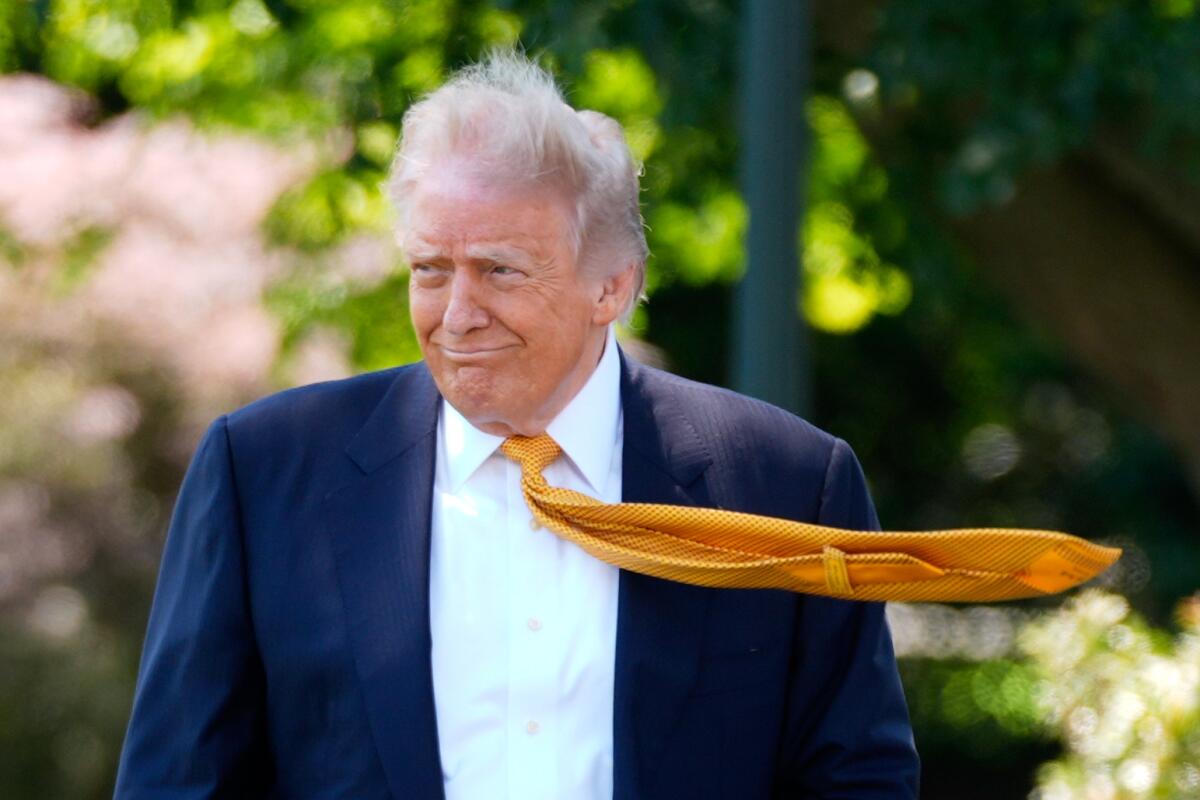
Trump annihilated the advantage the GOP had with Latinos by launching his deportation deluge.
(Manuel Balce Ceneta / Associated Press)
A New York Times/Siena poll released this month found that only 20% of Latinos support Trump — the lowest during his two terms. A Pew Research Center survey, meanwhile, found that only 66% of Latinos who voted for Trump now approve of him, compared to 81% of white Trump supporters.
Instead of running away, Hilton and Pratt seem fine with hitching their prospects to this political Titanic.
Hilton sought and received Trump’s endorsement, arguing that it’s better to have a friendly relationship with the White House than the antagonistic path California’s elected leaders have chosen.
But most voters want no part of Hilton’s kumbaya. Proposition 50, a direct rebuke of Trump’s gerrymandering efforts in other states, passed with more than two-thirds of the vote last fall. A CalMatters analysis found that Latino-majority precincts voted in bigger numbers for the ballot initiative than for Kamala Harris two years earlier.
Hilton can promise Latinos his “Califordable” agenda and eat all the tacos he wants. But our economic malaise was caused in large part by Trump, who recently said he thinks about Americans’ financial struggles “not even a little bit.”
For Hilton not to decry such cluelessness is almost as ridiculous as his recent boasts that he — the British son of Hungarian refugees who became a U.S. citizen just five years ago — is the candidate of “legal” immigrants. That’s a callback to the days of Proposition 187, when Republicans obsessed with the state’s changing demographics turned off my generation of Latinos by demonizing our undocumented friends and family. The GOP was finally starting to emerge from the political wilderness with Latinos, but Hilton cozying up to Trump will drag the party back into that weak salsa place.
Pratt has been coyer on his thoughts about Trump, but at least he seems to realize that the president might be a liability. The Republican said his party affiliation doesn’t since the mayor’s race is nonpartisan. He has portrayed himself as focused solely on improving Los Angeles, telling CBS News, “I don’t do national politics. I don’t do tribal politics.”
But for someone who says he wants to make L.A. a world-class city, Pratt seems unconcerned about Trump’s assault on us, including last summer’s unchecked immigration raids and temporary occupation by the Marines and the National Guard. Rather than denounce those moves, Pratt has instead denounced L.A.’s sanctuary city ordinance and vowed to work with ICE and other federal immigration agencies to target bad hombres if he becomes mayor, even though a majority of those rounded up in the raids had no criminal history.
It’s as if Pratt’s understanding of Latino L.A. ends with an Erewhon burrito. He continually platforms supporters who portray L.A. as a multicultural wasteland. And when another mayoral candidate, City Councilmember Nithya Raman, posted Trump’s praise of Pratt on social media, he responded with a snippet of himself making a dismissive face during a debate.
But this is nothing to dismiss. For Pratt and Hilton to win, they need Latinos to believe in them. And why would we believe anyone who hitches their wagon, even a little, to Trump?