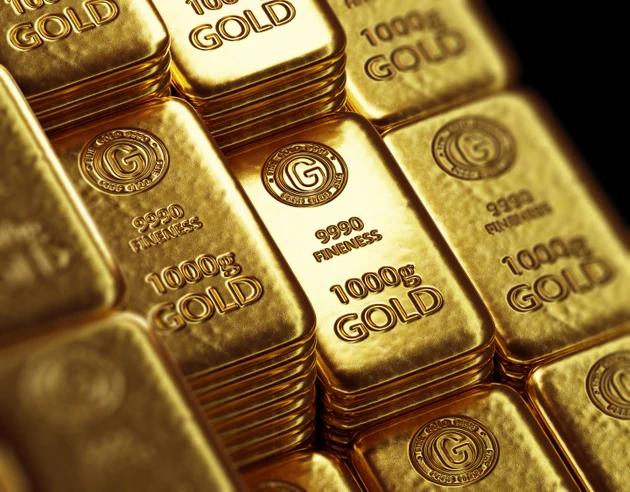
BofA analysts see gold unable to hold above $4,000 over next three months
BofA analysts see gold unable to hold above $4,000 over next three months
Source link
BofA analysts see gold unable to hold above $4,000 over next three months
Source link

HE stole the show on last night’s opening episode of Celebrity Traitors, honestly announcing to the group that he was, in fact, a traitor.
Alongside his comical moments on the BBC show, actor Richard E Grant also gave some touching references to his late wife Joan Washington.
After host Claudia Winkleman selected the Withnail & I star as a traitor alongside presenter Maya Jama, Richard spoke about “love of his life” Joan, who passed away in 2021.
Delighted at being a traitor, he told viewers: “My wife said to me four days before she died, she said Richard try and find a pocketful of happiness in each day, and I feel like I’ve got a wheelbarrowful and then some.”
Richard’s heartfelt confession came just minutes before his now legendary Celebrity Traitors gaffe revealing his traitor status.
The relationship between Academy Award-nominee Richard, 69, and his wife of 35 years was so romantic it could have played out on the silver screen.
Richard met dialect coach Joan at a London studio, called The Actors’ Centre, in 1982, where she had been teaching an accent class.
At the time, Joan was married to someone else, and had a son called Tom, but Richard could not take his eyes off her.
In 1994, he told The Independent he was captivated, saying: “She was wearing a boiler suit and had fairly short, cropped hair and Kicker shoes, and was chain-smoking, which I thought was insane.”
But he added: “I thought she had the most wonderful voice and huge, sort of monkey eyes. She seemed fairly frenetic. I thought that she was really cute and all that.”
Joan gave Richard a lesson in developing an Irish accent and he says they “instantly” clicked.
But initially, and amusingly, Joan found him “annoying”.
She said: “I used to take a class of about 20 people and I actually used to find him quite annoying because he’d get the giggles at quite the wrong moment and I was a strict teacher.”
Giggling aside and getting to know Richard during private lessons, Joan quickly realised she was falling for him.
She previously described her then-marriage as “extremely bad at the time” and slowly found herself smitten with the handsome actor in her class.
Recalling the way she was feeling, Joan told The Independent that she soon realised she was “madly in love with him”, adding: “I do believe that there’s one person on the globe that’s meant for you.”
The pair became a couple a year later and their relationship went from strength-to-strength, even though their jobs often meant they spent great chunks of time apart.
Richard said he never believed in marriage until he met Joan.
“My parents were divorced when I was 11 and it made such a profound impression on my life that I suppose I thought that by not getting married, you could avoid your life being carved in two. But that changed,” he told The Independent.
Although they were often apart, Richard and Joan would speak on the phone regularly and write to each other daily.
Eventually, Richard decided it was time to make an honest woman of his girlfriend with a proposal that could have been straight out of a movie.
Arriving home to London for Christmas following six weeks away in Africa, he couldn’t wait any longer and popped the question at the airport.
Richard previously recalled: “So I came back and went on bended knee with my trolley at 6.30am at Heathrow Airport – and, luckily for me, she said yes.”
Richard, who was nominated for an Oscar for his role in Can You Ever Forgive Me?, and Joan married in 1986.
Richard once described their marriage as “the story of my adult life”, saying they began a conversation when they met and never really stopped.
Following their marriage, the newlyweds were keen to start a family together. Sadly, their journey was a difficult one.
Joan suffered three miscarriages. They were then left heartbroken when their first child, a daughter called Tiffany, died very soon after she was born.
Richard later told YOU magazine: “Until that time I had no idea how common it is to lose babies and what it actually meant.”
Thankfully, the couple later welcomed their rainbow baby – a second daughter, who they named Olivia, in 1989.
Richard has since described Olivia as his and Joan’s “miracle baby”.
In 2019, the devoted father looked proud as punch as he walked the red carpet with Olivia on his arm at the Oscars.
Speaking to ABC, he said at the time: “My daughter, absolutely gorgeous, she’s 30 and she works in casting so I’m guaranteed a job for life, hopefully.”
Richard and Olivia run a unisex fragrance company together, called JACK.
Speaking about her life with her dad, Olivia added: “I’m just proud. It’s been the best ride to go on together.”
Unlike dozens of other Hollywood stars, Richard and Joan’s beautiful relationship lasted the distance and their love for one another was unbreakable.
Speaking to The Guardian in 2015, he described their marriage as “gold dust”.
Tragically, in 2021, Richard confirmed on Instagram that his wonderful wife had passed away at the age of 74, following a battle with lung cancer.
Sharing an emotional video of himself dancing with Joan, Richard wrote: “Joan – Love of my Life, giver of Life to our daughter Olivia.
“Our hearts are broken with the loss of your Life last night. 35 years married and 38 together. To be truly known and seen by you, is your immeasurable gift. Do not forget us, sweet Monkee-mine.”
The actor was left devastated at the loss and said experienced further heartbreak how some friends reacted to the news, claiming a couple stopped speaking to him and even crossed the road to avoid speaking to him about his grief.
He shared: “Subsequent to her death, I have had people cross the road rather than talk. Whether they think you’re going to fall apart and you’re an emotional wreck, I don’t know. But I will never speak to them again.”
Before she passed, Richard admitted she gave him a “hilarious” list of women he must never date after she passed – although he said he does not expect to fall in love again.
Two years ago, he admitted he still writes her letters every night to stay in touch.
He told The Guardian: “I write to her every night. [I write down] everything. Stuff I know would amuse her… I have no spiritual or religious delusion that I’m ever going to get a reply.
“But after 38 years of marriage, I can hear what her response would be. It feels as close a connection as I can have. And I’ve found it very hopeful, that at the end of the day I’m having a conversation.”
In early September, Richard marked the fifth anniversary of her death with a touching tribute.
On Instagram, he wrote: “Five years ago today, my beloved wife Joan died at 7:30 in the evening. We were holding each other’s hands when she drew her last breath.”
In June 2026, Olivia and husband Florian Herbst – who wed in 2024 – welcomed their first child, a son, making Richard a grandfather for the first time.
The proud actor referred to his late wife on Instagram when he announced the news, calling the baby “our grandson.”
In an Instagram video in June 2026, an emotional Richard said: “I’m so grateful for the safe arrival of our grandson. Life truly is miraculous.”
In addition to this, in September he shared a clip of him carrying his grandkid on a walk, saying: “No better way to start my day bobbing our sleeping grandchild along Petersham meadow with Annie Lennox playing in my head.”
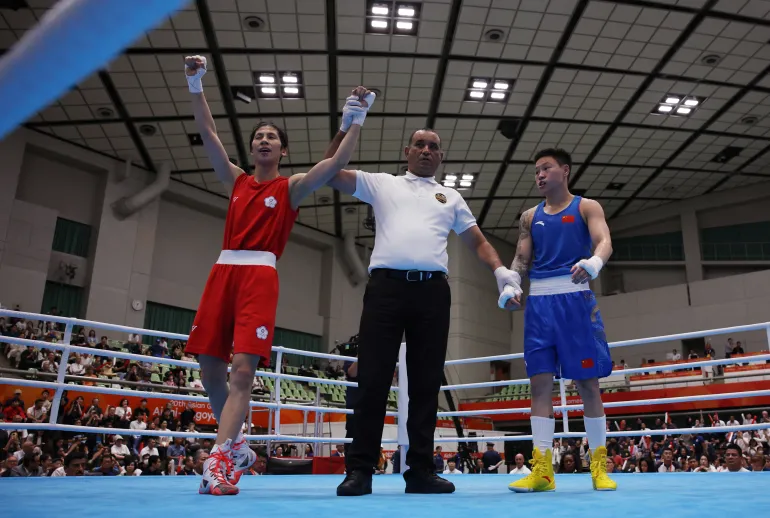
Lin bags her second Asian Games gold medal, three years on from her success in Hangzhou in the 57kg class.
Published On 2 Oct 20262 Oct 2026
Taiwan boxer Lin Yu-ting, the Olympic champion who found herself embroiled in a major gender row at Paris 2024, has won gold at the Asian Games.
Lin beat China’s Yang Chengyu 5-0 on Friday in the women’s 60kg (132lb) final in Nishio, Japan, giving her a second Asian Games gold after winning in the 57kg (126lb) class in Hangzhou, China, three years ago.
list of 4 itemsend of list
The 30-year-old was backed by a small pocket of vocal Taiwan supporters in the Nishio Gymnasium in Nishio, southeast of Nagoya.
Towering over her opponent, Lin used her superior reach to take control of the bout and had a clear advantage heading into the third and final round.
She held off a late assault from Yang to take gold, celebrating with the minimum of fuss.

Lin told the AFP news agency before the Games that she had considered retiring after the Paris Olympics but wanted to carry on fighting in part to defy those who questioned her eligibility.
Lin and Imane Khelif of Algeria were disqualified from the 2023 world championships by the International Boxing Association (IBA) after the organisation said they failed unspecified gender eligibility tests.
However, the International Olympic Committee allowed them to compete in Paris, saying they were victims of “a sudden and arbitrary decision” by the widely discredited IBA. Both went on to win gold.
Gold hits seven-week low; silver follows suit and records a nearly 5 percent loss.

Published On 28 Sep 202628 Sep 2026
Gold prices are falling as concerns of rising fuel prices stoke inflation worries on the back of the war between the United States and Iran.
Spot gold prices fell by 3.3 percent to reach a more than seven-week low at $4,146.51 per ounce on Monday.
list of 4 itemsend of list
Rising oil prices, a higher US dollar and Treasury yields stoked inflation concerns, creating further headwinds for the metal.
This is the lowest level for gold values since August 5. US gold futures also fell by 3.3 percent to $4,178.40.
Although gold is traditionally considered an inflation hedge, higher interest rates dent its appeal as investors prefer yield-bearing assets.
“There might be no notable direct impact on regular people due to that. However, investors who had turned to gold will see a hit, especially under the current high inflation rates,” Sherif Othman, CEO of the Maryland-based Poise Investment Advisors, told Al Jazeera.
“Gold does not yield interest, so when Treasury yields go up, investors turn away from gold, impacting its value”, he added.
The Fed lifted benchmark rates by a quarter percentage point earlier this month and flagged that at least one more hike is likely in the coming months.
The US dollar was steady near a two-month high, and oil prices spiked about 3 percent as US President Donald Trump rejected an Iranian offer to resolve the conflict and reopen the Strait of Hormuz.
Such factors triggered several policymakers to warn that inflation risks remain elevated and that interest rates may need to rise, with Cleveland Fed President Beth Hammack among the latest officials to reiterate that view.
Higher Treasury yields and the US dollar are “creating a perfect storm to push the metals prices sharply lower,” according to Jim Wyckoff, a market analyst at American Gold Exchange.
Spot silver also fell by 4.7 percent to $61.27 per ounce, platinum declined 2.9 percent to $1,726.30 and palladium lost 4.4 percent to $1,211.45.

RHJ
The top seeds defend their Asian Games squash titles, becoming the first players to qualify for the Los Angeles Games.

Published On 27 Sep 202627 Sep 2026
Malaysia’s Eain Yow Ng and Sivasangari Subramaniam have made history by becoming the first squash players to qualify for the Summer Olympics after winning gold medals at the Asian Games in Aichi-Nagoya, Japan.
The defending champions won the men’s and women’s finals on Sunday and earned a ticket to the 2028 Los Angeles Games, where squash will make its Olympic debut.
list of 4 itemsend of list
Squash is among a handful of sports at Aichi-Nagoya where a gold medal serves as automatic qualification for the next Olympics.
Both Eain and Sivasangari successfully defended their titles without dropping a single game in their campaigns. Their victories gave Malaysia its fifth and sixth gold medals.
World number 18 Eain thrashed India’s Abhay Singh 11-9, 11-5, 11-5 in 33 minutes at the Nagoya Kinjo Futo Arena and became the first Malaysian to qualify for the Olympics.

World number five Sivasangari joined her compatriot soon after when she made quick work of the women’s final against India’s Anahat Singh.
She demolished Singh, ranked 17th in the world, 11-4, 11-4, 11-7 in just 23 minutes to clinch gold.
Earlier, Singh, the world junior champion, produced a stellar comeback in the semifinals from two sets down to overpower Japan’s Satomi Watanabe (9-11, 11-13, 12-10, 11-6, 11-3) on Saturday.
“I think it is the best win of my career,” Singh, 18, said after the match. “She’s number six in the world, and that’s the highest win I’ve ever had in my squash career.”
She made history even before Sunday’s match began when her semifinal victory made her the first Indian woman to reach the singles final at the Asian Games.
Earlier in the day, Pakistan picked up two more bronze medals at the games as third seed Noor Zaman toppled compatriot Ashab Irfan 3-0 in the bronze medal match. Watanabe took a 3-1 win over Hong Kong’s Sin Yuk Chan.

The 13-year-old beat the previous 400m Asian Games record, set by China’s Ye Shiwen in 2014, by about 4.5 seconds.
Published On 23 Sep 202623 Sep 2026
China’s 13-year-old swimming sensation Yu Zidi has completed a hat-trick of Asian Games golds with a dominant victory in the 400m individual medley, two years before the Los Angeles Olympics.
The schoolgirl powered home in an Asian Games-record 4 minutes 28.56 seconds (04:28.56) on Wednesday to make it a clean sweep of her three individual events in Tokyo, following victories in the 200m butterfly and 200m individual medley, also in games-record times.
list of 4 itemsend of list
She beat the previous 400m games record set by China’s Ye Shiwen in 2014 by approximately 4.5 seconds.
It was the fourth-fastest time in the world this year, with world record-holder Summer McIntosh owning the top three.
With the next Olympics two years away, Yu is shaping up to be a major medal contender at the 2028 Los Angeles Games.
Last year, she became the youngest medallist at the World Aquatics Championships, where she won bronze for China’s relay team at the age of 12, and has since been earmarked for success in the swimming world.
At the same championship, Yu finished fourth by a small margin in three individual events.
In March, the teen sensation built on her growing reputation with a 200m butterfly victory over seven-time American Olympic medallist Regan Smith at the China Swimming Open.
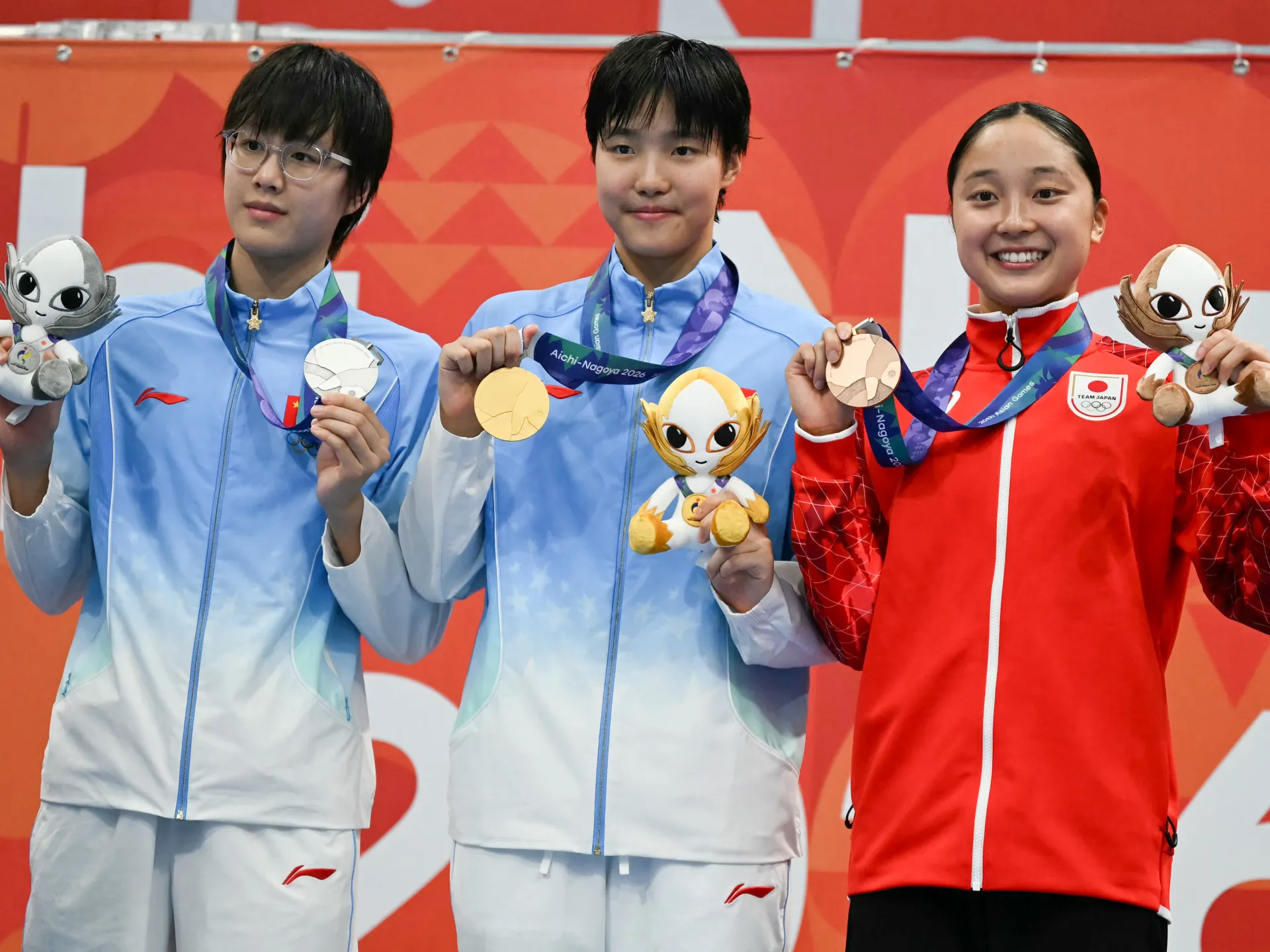
At the Asian Games, Yu has dominated the pool and showed another glimpse of her immense talent in the 400m individual medley, where she took the lead from the start and finished 3.95 seconds clear of silver medallist Ke Wenxi of China, with Japan’s Mio Narita finishing third.
In addition to grabbing international headlines, Yu has become a sensation at home following her Asian Games exploits.
The story of her introduction to competitive swimming after being spotted by a coach at a water park, and her struggle with interviews, has gone viral on local social media platforms.
At the games, Yu was asked by the media whether answering questions was the hardest part of competing. She replied, with a giggle: “Every time I just want to float off somewhere else.”

Published On 22 Sep 202622 Sep 2026
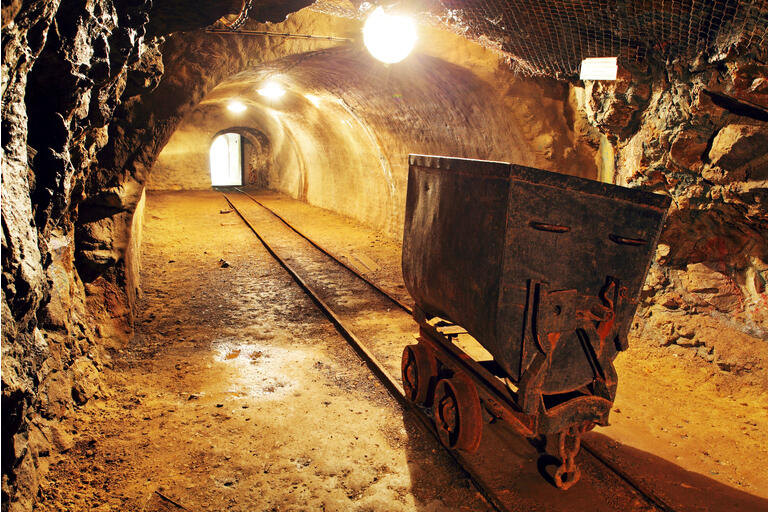
A gold mine collapse in northern Sudan has killed at least 10 people and injured 21, according to survivors, bringing renewed attention to the dangers facing workers in one of the country’s most important and least regulated industries.
The collapse took place on Sunday at the Awny mining area near Sudan’s border with Egypt. Miners told the AFP news agency they had recovered 10 bodies and pulled 21 injured workers from the site, while the search continued for people believed to be trapped beneath the rubble. It is unclear how many people are trapped in the collapsed mine.
The disaster comes just days after another deadly accident at a gold mine in West Kordofan State. A collapse at the al-Zaraa mine near en-Nahud, a town in central Sudan, left at least 82 people dead.
Sudan is one of Africa’s top gold producers, recording 70 tonnes of production last year, according to the Sudanese government.

Since fighting broke out in April 2023 between Sudan’s army and the paramilitary Rapid Support Forces (RSF), businesses have been devastated, agriculture has been disrupted, millions of people have been displaced, and Sudan’s formal economy has weakened. In that environment, gold has remained one of the country’s most valuable sources of income.
In July 2025, it was reported by local agencies that Sudan’s gold production rose sharply despite the ongoing conflict, reaching 64 tonnes in 2024, 53 percent higher than the 41.8 tonnes recorded in 2022, and generating $1.57bn in legal export revenues.
However, the gold trade has also become a point of international scrutiny. Most of the gold exports end up in the UAE. In March 2025, Sudan went to the International Court of Justice (ICJ), accusing the UAE of supporting and funding the RSF using gold. The UAE has denied accusations that it supplies weapons to the RSF.

Sudan’s gold deposits are spread across the country, with the majority in the northeast. Port Sudan, the country’s main port, is home to most of the deposits and has been largely controlled by the Sudanese Army since the war began. However, areas controlled by the RSF are also populated by gold deposits.
At the moment, “much of Sudan’s gold is taken out of the country through smuggling or illicit networks instead of passing through government channels that could directly contribute to public revenue,” said Joseph Tucker, senior analyst on the Horn of Africa at the International Crisis Group.
But amid that diplomatic battle and the accusations surrounding gold, the mining deaths in northern Sudan have also raised larger questions over how the country manages the sector, analysts say.
“This disaster is yet another example of the deadly hazards facing those working in Sudan’s gold mines,” Tucker told Al Jazeera. “Most of these (gold mines) are informal, artisanal mines in remote areas that are unregulated and lack modern mining technology, adequate infrastructure, and specialised safety equipment.”
This year, Sudanese Prime Minister Kamil Idris met with the minister of minerals and spoke on the policies for regulating traditional mining and the management and control of various mineral markets. According to French-based Sudanese media, Sudanese authorities called for swift action to address the environmental damage and public health hazards caused by mining activities across the country.
Yet, despite the dangers, Tucker said the state of the Sudanese economy made gold mining appear lucrative to many Sudanese.
During the war, the Sudanese currency’s value has crashed. Before the outbreak of fighting in 2023, about 570 Sudanese pounds could buy a US dollar. By April 2026, the currency had slid to a sixth of that value: It cost 3,500 pounds or more to afford a dollar. That has led to sharp food inflation and a surge in the costs of transport and fuel.
According to estimates by the United Nations Development Programme, Sudan lost $6.4bn of its gross domestic product (GDP) in 2023 alone: That’s a quarter of the country’s $26bn GDP that year. In August, the UN agency reported that 90 percent of the agrarian nation’s farmers had seen yields drop over the previous year.
That economic crisis, Tucker said, “fuels the demand for gold and willingness of miners to work in poor conditions” – even if it proves deadly.
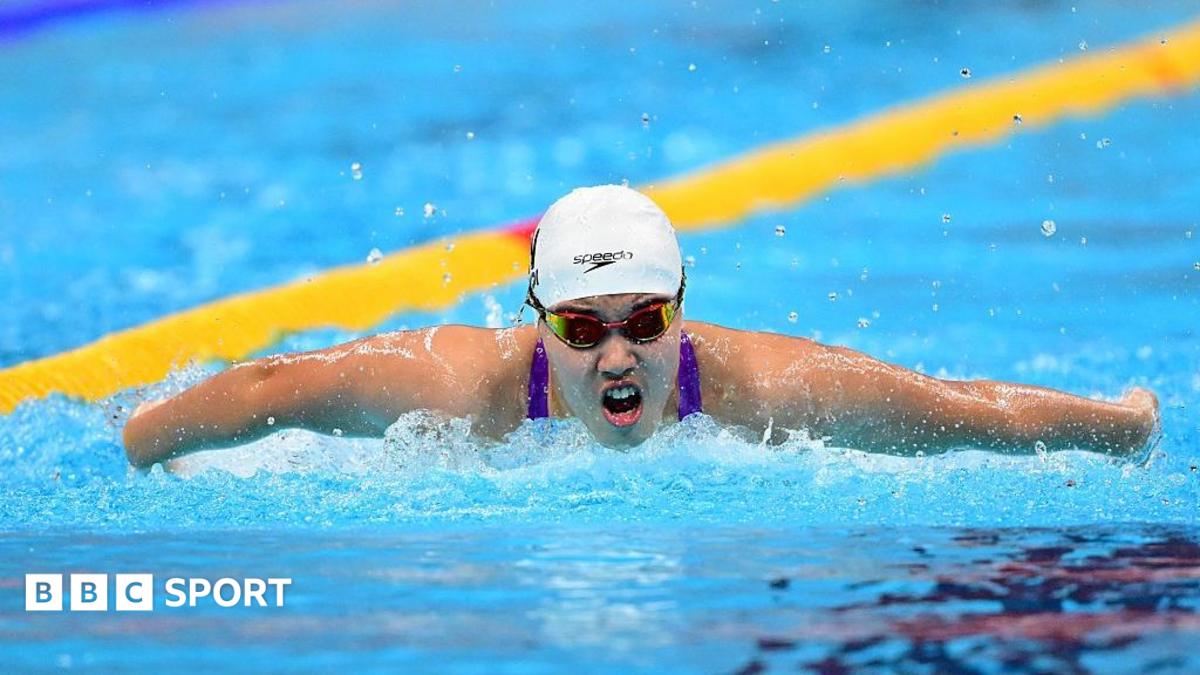
Chinese schoolgirl Yu Zidi lit up the opening day of the Asian Games with a record‑breaking 200m butterfly gold medal secured by a performance she described as “only so‑so”.
The 13‑year‑old claimed her first major gold in two minutes 05.08 seconds, an Asian Games record that took almost half a second off compatriot Zhang Yufei’s mark from three years ago.
Yu, who is strongly tipped to make an impact at the 2028 Los Angeles Olympics, won by over three seconds in Tokyo from her team-mate Chang Mohan.
“It was only so-so,” a smiling Yu said after receiving her medal, adding that her butterfly technique “is still slightly lacking”.
“I hope I can swim even faster. I improved my time by 0.9 seconds here, and I believe I will perform better next time,” she continued.
Yu, who will take part in two more individual events at the Asian Games, became the youngest ever swimmer to win a medal at the World Championships when she took bronze as a 12-year-old as part of China’s 4x200m freestyle relay team last year.
Somewhere in the overlap between William Friedkin’s 1977 action thriller “Sorcerer” and Kelly Reichardt’s 2020 Pacific Northwest pioneer indie “First Cow” lies Padraic McKinley’s directorial debut “The Weight.”
“Sorcerer” is about a group of fugitives driving a load of dynamite across the jungle; “The Weight” follows a group of Depression-era convicts transferring gold through the forest. “First Cow” is about the sweetness of friendship and French pastries in the wilds of Oregon during westward expansion; “The Weight” is about the corrupting forces of capitalism. McKinley’s movie marries the instincts of modern indie filmmaking with a New Hollywood ethos, while bringing an authenticity to the details of the period.
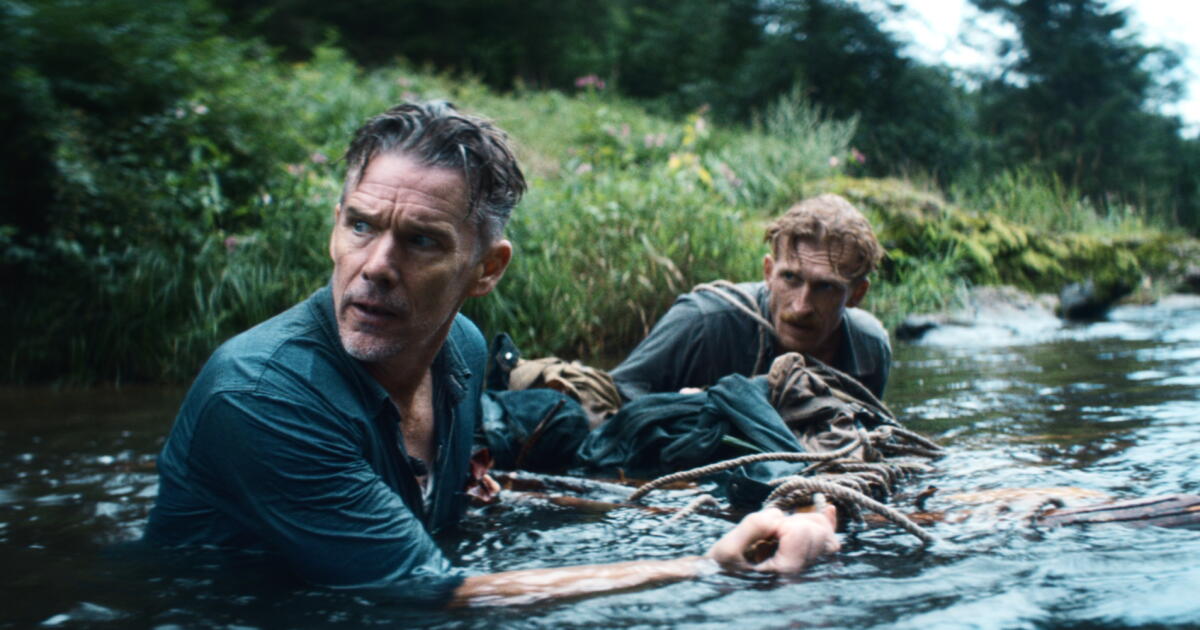
We follow the story of Murphy (Ethan Hawke), a World War I vet and single father in Eugene, Ore., struggling to provide for his daughter, Penny (Avy Berry), three years into the Great Depression. After an unfortunate run-in with the law, Murphy finds himself in a prison labor camp, building a road and trying to shorten his sentence so he can get out before his daughter is adopted by a new family.
Opportunity presents itself in Murphy’s foreman, Clancy (Russell Crowe), who takes a shine to him after he fixes his car and devises an ingenious way to remove boulders without dynamite. Cuddly but dangerous, Clancy makes a seemingly simple offer to Murphy: He and three friends can earn their freedom if they hike a load of gold out of a mining camp on the eve of President Franklin D. Roosevelt confiscation of all gold stockpiles.
The how and why details aren’t that important; the story is merely that the prisoners have to get from point A to point B through a rugged forested terrain, under the watch of two intimidating chaperones, Amis (Sam Hazeldine) and Letender (George Burgess). A mining camp servant, Anna (Julia Jones), joins their group as a runaway and while it seems a straightforward task, the arduous and brutal journey is one that is liable to turn these convicts into runaways.
Murphy’s gang weren’t really outlaws to begin with — he was imprisoned for defending his daughter from some undercover cops, while Singh (Avi Nash) was arrested for his associations with socialism. Olson (Lucas Lynggaard Tønnesen) was part of a group going after a judge for seizing Scandinavian farms, while the most hardened criminal among them is Rankin (Austin Amelio), who grew up in juvie. But in order to survive the woods, Murphy will have to dig deep into his wartime past and rely on his own skills and smarts to make out it out intact.
McKinley pours his craft into authentically representing the era, from the perfectly worn denim of the costumes to the refreshingly real and craggy faces of the cast (and thank goodness Hawke and Crowe are respectably aging into their character-actor looks). The Bavarian forest beautifully stands in for 1930s Oregon and cinematographer Matteo Cocco balances ’70s-inspired slow zooms with composed, high-contrast images that hark to early 20th century styles of photography. A score by Latham and Shelby Gaines balances discordant, atonal tones with suspense-driven sound design that captures the creaking noises of the forest and the concealed dangers it holds.
McKinley stages a few bullet-sweating sequences of peril, including a particularly brutal transport of gold bars across a crumbling rope bridge and an underwater accident exacerbated by floating logs. Both are nail-biters but you can’t help but think he could have pushed it even further. Tonally, the film is torn between wanting to be brutally bleak and offering some kind of hope for Murphy and his precocious, adorable daughter.
When “The Weight” leans into its nasty, mean and grim moments, it gets at something that seems closer to truth than the saccharine resolution we fear is coming. It seems like McKinley wants to deliver a crushing blow, but then feints at the last minute, opting for a more optimistic kind of fantasy.
Politically and culturally, what “The Weight” speaks to is as ugly as the violence that occurs in the mud and fog of the forest. But it ends on an oddly cheery note that doesn’t square with what we’ve seen. It’s a cutesy ’70s nod that feels more “Smokey and the Bandit” than “Sorcerer.” The bolder choice would have been to commit to expressing the despairing lessons of this world. We want to see these characters changed by what they’ve experienced, even if it’s dark. We want to see them actually carry the weight.
Katie Walsh is a Tribune News Service film critic.
‘The Weight’
Rated: R, for language and some violence/bloody images
Running time: 1 hour, 55 minutes
Playing: Opens Friday, Sept. 18 in wide release
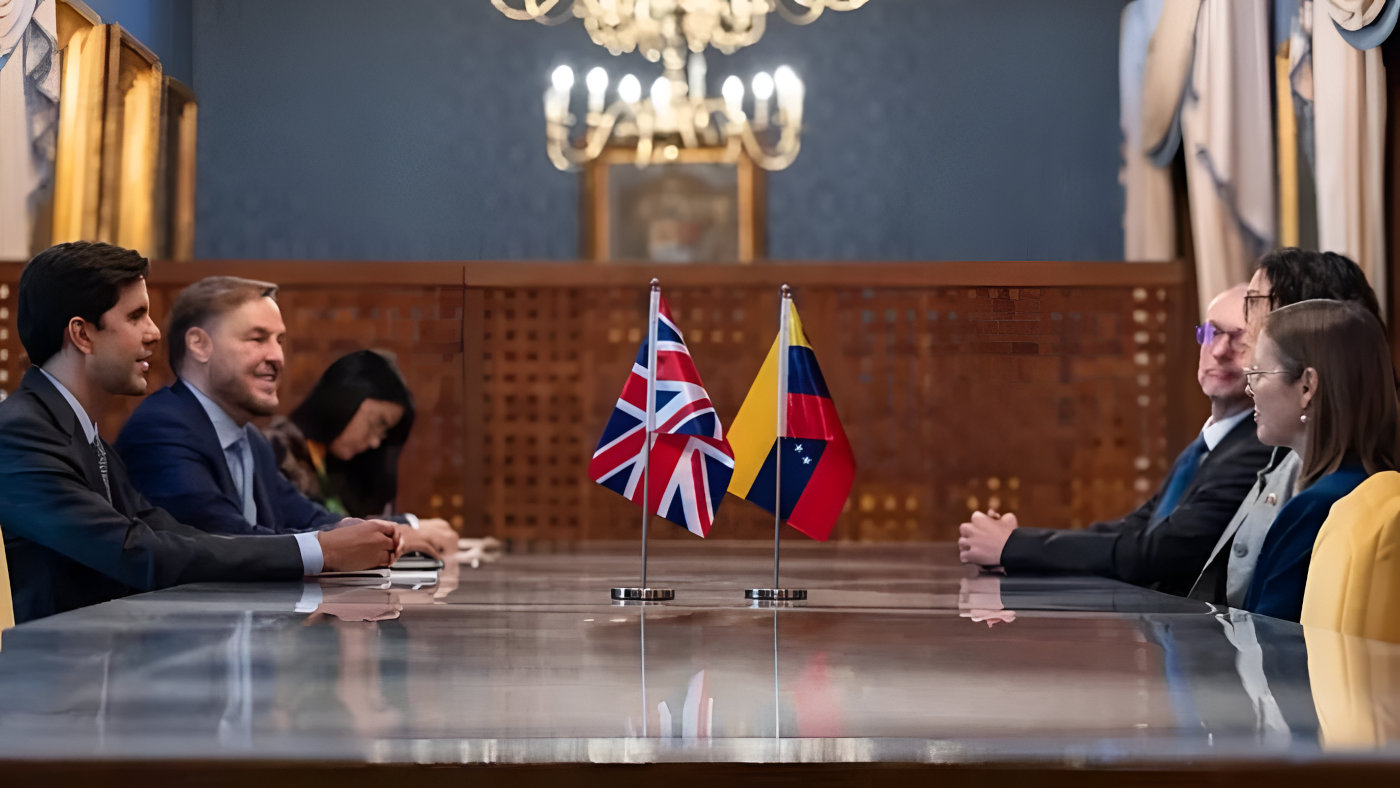
Venezuelan officials flew to London to meet with Foreign Office counterparts. (AVN)
Caracas, September 16, 2026 (venezuelanalysis.com) – Venezuela and the United Kingdom have announced a formal decision to upgrade their diplomatic relations and to re-establish full ambassadorial representation.
London formally presented its policy shift on September 15 in a missive to Parliament through coordinated statements by Minister for Latin America Chris Elmore in the House of Commons and Parliamentary Under-Secretary of State Lord Wood of Anfield in the House of Lords.
In the statements, the cabinet members framed the “diplomatic upgrade” around supporting a “democratic transition” while pursuing pragmatic bilateral engagement with the South American country.
“Developments in Venezuela since 3 January have created an important opportunity for the international community to support the restoration of democracy,” the statement read. “Working closely with the United States and with international partners, the UK considers that this moment calls for pragmatic engagement to help advance a credible transition and to encourage further reforms.”
The communiqué added that London and Caracas “have agreed our intention to upgrade our representation to Ambassador,” emphasizing that the step aims to deepen engagement with Venezuelan authorities and enhance support for British corporate and trade interests.
The Venezuelan government welcomed London’s decision. In an official communication published on Tuesday, the government led by Acting President Delcy Rodriguez celebrated the upgrade in diplomatic status as a positive step toward normalization.
Venezuelan officials stressed that the latest decision should pave the way for the full “sovereign management of the Venezuelan people’s resources,” referencing state assets frozen in British financial institutions.
National Assembly President Jorge Rodríguez and Foreign Minister Félix Plasencia flew to London and held a meeting on Tuesday with Harriet Thompson, the British Foreign Office’s Director for the Americas.
Following the discussions, Rodríguez highlighted progress in multi-sectoral talks and economic outlooks.
“We shared Venezuela’s position regarding political and social dialogue, as well as the progress made regarding oil and gas investments, and how this will translate into significant and rapid economic growth for Venezuela,” he said in a message published on social media.
Rodríguez added that the talks aimed at promoting national peace and political reconciliation, labeling them as “good news for our country and our people.”
Bilateral relations between London and Caracas had been severed for years following former UK Prime Minister Theresa May’s decision in 2019 to follow Washington in recognizing opposition figure Juan Guaidó’s self-proclaimed “interim government.”
That policy led to a protracted legal battle over 31 tons of Venezuelan gold reserves stored in the Bank of England, with successive British governments refusing to return them to Caracas. The reserves are currently valued at over US $4 billion.
During the COVID-19 pandemic, Venezuelan authorities attempted to retrieve the gold through international legal channels, offering to transfer the funds directly to the United Nations Development Programme (UNDP) to purchase emergency medical supplies and food.
However, British courts repeatedly rejected the legal challenges from the Central Bank of Venezuela (BCV), citing No. 10’s political recognition of the opposition parallel administration.
Following renewed political talks in August and September, a Venezuelan government delegation and representatives of the defunct, opposition-controlled 2015 National Assembly agreed to request the release of the UK-held gold reserves under US Treasury Department control and oversight.
According to opposition dialogue delegates, the 31 tons of gold will be transferred into a specialized US Treasury bank account and subjected to external audits by foreign accounting firms before being released.
The funds are reportedly earmarked for housing, healthcare, and infrastructure recovery in the wake of the June 24 double earthquake that left over 6,500 people dead across Venezuela.
Edited by Ricardo Vaz in Lisbon, Portugal.

11:10, 15 Sep 2026Updated 11:10, 15 Sep 2026

Sydney Sweeney featured in a promotional video for bookmaker Novig – and it’s not gone down well(Image: INSTAGRAM)
Athletes have come out in force to condemn a sports betting advert featuring a naked Sydney Sweeney as Team GB’s golden girl doubled down on her criticism.
The American has been slammed following the campaign, which sees the 29-year-old with no clothes on as she pretends to play a number of different sports. The ad, for US sports prediction market company Novig, has been bashed with many suggesting sportswomen are still being defined by their appearance – and not their achievements.
British sprinter Amy Hunt, the four-time European champion, made a cutting comment after her race at the inaugural World Athletics Championship in Budapest on Sunday, saying: “Sydney Sweeney, this is what women in sport look like,” in her interview with BBC Sport after.
She is far from the only athlete hitting out. Sydney’s decision to take part has been widely criticised, with retired swimmer Ariarne Titmus saying she understood this type of “bulls**t”marketing” to be a thing of the past.
Water polo silver medallist Tilly Kearns joined the anger, saying, “I absolutely f***g hate Sydney Sweeney’s new sports ad”, while world champion boxer Skye Nicolson said the ad was making a “mockery” of women in sport.
Amy has spoken more about her decision to join the outrage, and appeared on Good Morning Britain to discuss her post-race remarks.
Telling presenters Susanna Reid and Ed Balls about her reasons for speaking out, the star sprinter said there are already enough barriers in place.
“I think when we’re trying to provide role models for young people and young women in sport,” she said. “We really want to show that it’s about what your body can do, not so much what it looks like. I think when we see the stats of 64 per cent of young girls drop out of exercise and sport before they reach the age of 16.
“We don’t need to place any kind of barrier whatsoever in their way in terms of providing the opportunity and the empowerment for them to still exercise, whatever that looks like, professional or kind of just going to do a park run with your friends.
“So it’s about empowering young girls and young women and young people to show that you really can just get out there and you don’t have to worry what you look like. You don’t have to worry about what you’re wearing.”
When grilled on whether the ad could impact how men view female athletes, she agreed and went on: “That was a big thing this year for us with the introduction of new kind of broadcasting regulations, in showing the correct or the more appropriate angles of women competing.
“It’s important to show kind of young people that it’s okay to be whoever you want to be, to wear whatever you want to wear, to look however you want to look, and you can achieve your dreams.”
While some suggested anger should be directed at the betting firm rather than the Euphoria actress, Novig said in a statement that Sydney is not just the face of the campaign, but has joined as “strategic partner and equity holder”.
Sydney finally responded and in a statement, said the campaign was “about embracing a fun idea”. She went on: “The concept is simple: cut through the noise and put the focus entirely on sports. The campaign brings that idea to life with confidence, humour and a playful edge.”
Watch Good Morning Britain weekdays from 6am on ITV
Like this story? For more of the latest showbiz news and gossip, follow Mirror Celebs on TikTok, Snapchat, Instagram, Twitter, Facebook, YouTube and Threads.

MEGAN Stalter has shocked the Emmys red carpet, transforming into a literal golden statue for the 78th awards ceremony.
The Hacks star turned heads in a gold bikini and matching body paint for the night’s boldest look.
In true eccentric style, Stalter covered herself head-to-toe in gold, complete with angel wings and a golden orb.
Stalter arrived with her Hacks co-star and bestie Paul W. Downs, who wore a sharp black tux.
The 35-year-old is up for Outstanding Supporting Actress in a Comedy for playing Kayla Schaefer in the fifth and final season of HBO Max’s Hacks.
It is her first Emmy nomination.
Kayla, the over privileged and clueless assistant on the HBO’s hit series, was her first acting job.
Stalter is no stranger to outlandish red carpet attires.
In January she attended the Critics Choice awards with her co-star, mimicking Kylie Jenner’s all-orange look which she had worn with boyfriend Timothy Chalamet to the Marty Supreme premiere.
At last year’s Emmys, the actress opted for a simple pair of jeans and a T-shirt – in a deliberate non-statement.
In 2025 at the Las Culturistas Culture Awards, she wore a corset-style top made from actual Diet Coke packaging.
In April, the actress told Marie Claire: “Every red carpet appearance or anything that I get to do in front of people, I want to have fun and make the most of it because it’s my dream.
“We worked really hard to get here, and now I want to enjoy it.”
Stalter is up against her castmate Hannah Einbinder, who won the category last year, plus Janelle James for Abbott Elementary, Michelle Pfeiffer for Margo’s Got Money Trouble and Jessica Williams for Shrinking.
One amused commenter reacted to her look and said: “If they don’t give her the statue, she IS the statue.”
Hacks recently wrapped its fifth and final season which is up for 24 Emmy nominations at this year’s ceremony.
It is the second most nominated show this year, just trailing one award behind The Pitt.
This years Primetime Emmy Awards are being held at the Peacock Theater in Los Angeles.
It will air on NBC and Peacock and is hosted by Mariska Hargitay.
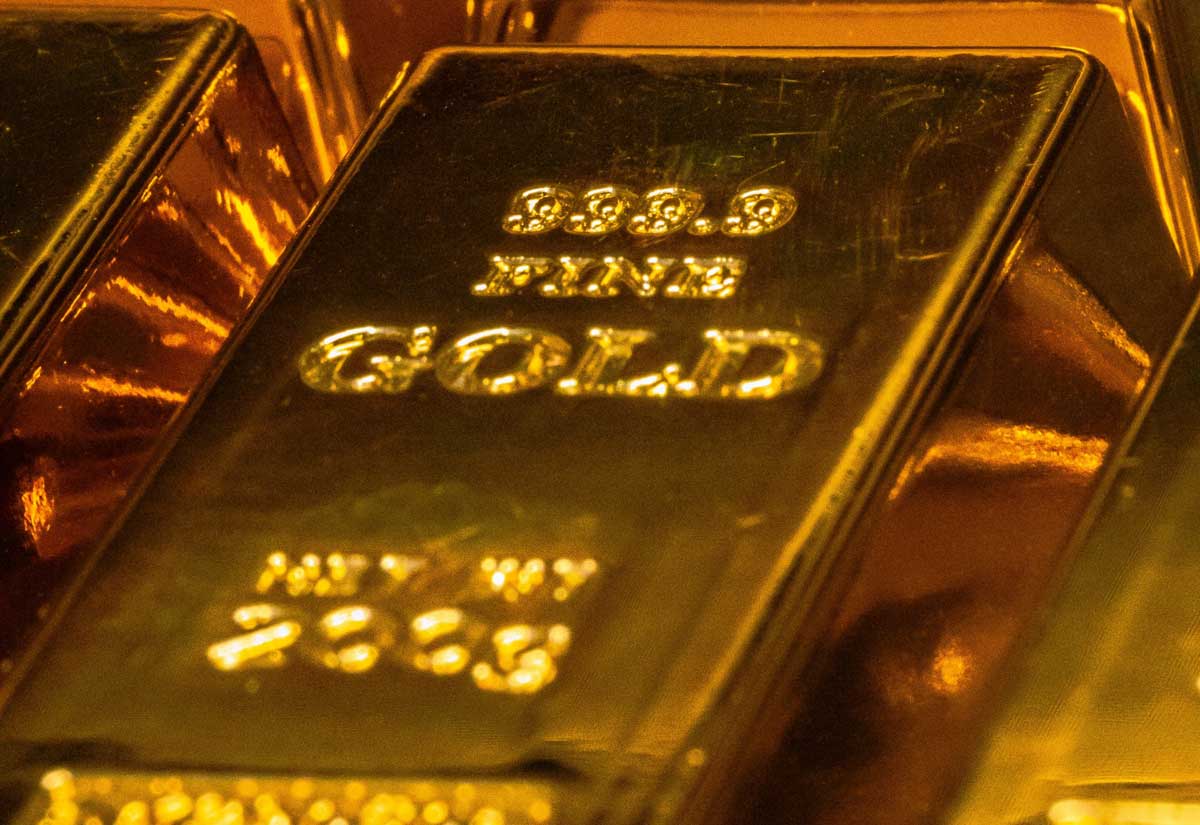
Central banks’ record, price-insensitive gold buying is a more credible signal of the dollar’s structural trajectory than this year’s currency markets, because FX markets are structurally bad at pricing the discontinuous, wartime-style tail risk central banks are actually hedging — so this autumn’s calmer dollar should not reassure anyone that de-dollarization has stalled.
In June, the European Central Bank made an announcement most people missed: gold has overtaken US Treasuries as the world’s single largest reserve asset. Central banks bought 289 tonnes of it in the second quarter alone — a record for that quarter and five times Q1’s pace — with Poland’s central bank openly telling investors it was “buying the dip.” Here is the part that should stop you: gold’s price fell 22% between January and September. Central banks were never more convinced buyers of an asset than while it was crashing. Either the reserve managers are wrong, or currency markets — which show none of this urgency — are the ones asleep at the wheel.
Gold peaked at $5,589 an ounce on 28 January, the same month the dollar index hit a four-year low of 95.5 and the dollar’s share of global reserves fell toward its lowest level since 1995. Both moves reflected the same story: Fed rate cuts through 2025, a US debt load past $37 trillion, and BRICS states settling more trade outside the dollar. Then the picture split. Kevin Warsh, confirmed as Fed chair in May, signalled a hawkish pivot in August; the Iran war pushed oil and inflation higher through September, and markets began pricing a rate hike rather than a cut. The dollar index clawed back to 99.46. Gold fell to $4,330. Central-bank buying did not follow the price down — Poland alone added 82 tonnes this year toward a 700-tonne target, and a World Gold Council survey found a record 45% of central banks plan to buy more within twelve months.
State the gap plainly. Two signals, same underlying question — is the dollar-centred monetary order changing — and they disagree by a wide margin. The buying signal says yes, decisively: record quarterly purchases, gold displacing Treasuries at the ECB’s own reckoning, 74% of surveyed reserve managers expecting the dollar’s reserve share to keep falling over five years, and buyers adding tonnage through a 22% drawdown rather than fleeing it. The price signal says not yet: the dollar just posted one of its sharper rallies of the year, gold is down sharply from its high, and nothing in currency markets shows the kind of stress a genuine regime shift would produce.
Stay ahead of the geopolitical week.
MD Briefing delivers expert analysis across five global fronts — the Indo-Pacific, energy, geoeconomics, European security, and the Middle East — every Monday morning. Free.
The strongest objection to trusting the buying signal is a good one, and it needs to be taken seriously rather than waved away: foreign exchange is the deepest, most liquid market in the world, turning over more than $7 trillion a day. A few hundred tonnes of central-bank gold buying — perhaps $30–40 billion a quarter — is a rounding error against that. If professional currency traders, sitting on far more capital and far better short-term information than a handful of reserve managers, saw a serious de-dollarization story unfolding, it would already be in the price. Instead the dollar just rallied. On this view, central banks are not seeing something markets are missing; they are pattern-matching off 2022, when Russia’s $300 billion in reserves was frozen overnight, and over-hedging a tail risk that has not recurred and mostly will not.
That objection assumes FX markets and central-bank reserve committees are pricing the same kind of risk, on the same time horizon, and they are not. Currency markets are exceptionally good at pricing continuous, high-frequency variables — rate differentials, growth surprises, this week’s inflation print — because that is what moves flows daily. They are structurally poor at pricing discontinuous, low-probability events until those events occur: equity volatility did not price 2008 in 2007; sovereign spreads did not price the Russia reserve freeze in the weeks before it happened. A reserve freeze, a secondary-sanctions campaign, or exclusion from SWIFT-style settlement infrastructure is exactly that kind of event — binary, rare, and catastrophic for whoever it hits — which is precisely why Poland’s central bank governor, Adam Glapiński, described his buying not as a trade but as insurance: reserves that keep the state secure “under all circumstances, including wartime, which of course we’re not expecting.” That is not the language of someone chasing momentum. It is the language of someone who manages the one asset class that keeps its value if their country is ever cut off from the dollar system, and who would rather hold it and be wrong for a decade than not hold it and be wrong once.
The buying pattern itself supports that reading. Momentum money sells into a 22% drawdown; insurance money adds to it. Central banks did the latter through the first half of this year, which is the behavioural signature of a structural reallocation program with a fixed multi-year target — Poland’s is explicit, 700 tonnes — not speculative flow riding gold’s rally. Meanwhile the dollar’s autumn recovery has an identifiable, largely cyclical cause: a new, more hawkish Fed chair and a war-driven oil shock forcing a rate-hike repricing. Neither event reverses the debt trajectory, the BRICS settlement trend, or the reserve-freeze precedent that pushed the dollar to a four-year low in January. A rally built on this year’s Fed chair and this year’s war is not proof that last year’s structural story is over; it is evidence that a cyclical force is currently strong enough to mask it.
The Scenarios
Base case (55%): The gap persists rather than resolves. The dollar holds most of its autumn gains through the current rate-hike cycle, gold range-trades below its January peak, and central banks keep buying at a steadier, slower pace toward stated targets like Poland’s 700 tonnes. Nobody is “proven right” on any particular Tuesday, because reserve diversification is a decade-scale hedge, not a trade with a catalyst date. This is the least satisfying outcome for anyone wanting a verdict, and the most likely one.
Downside case (for dollar holders): A discrete trigger — a fresh reserve-freeze or secondary-sanctions episode, plausibly connected to the still-live US-Iran war spilling into action against a third country’s assets, or a shock to Fed independence under a more political Warsh chairmanship — crystallizes the exact tail risk central banks have been hedging. Gold spikes back through its January high, the dollar index breaks below its 95.5 low, and the gap closes in weeks rather than years, vindicating the reserve managers all at once and catching FX markets flat-footed exactly as the theory predicts.
Upside case (for the dollar): The Iran war resolves, Warsh’s rate hikes cool inflation without a recession, US fiscal metrics stabilize, and BRICS local-currency settlement growth stalls on friction between its own members. Central-bank gold buying does not reverse but plateaus as reserve managers hit conventional diversification ceilings — most target 15–20% of reserves in gold, not open-ended accumulation. The gap closes gradually as price drifts up toward the buying signal over several years, with no crisis required to force the reconciliation.
The Takeaway
The dollar’s calmer autumn is not evidence the de-dollarization hedge was a mistake; it is evidence that currency markets and central-bank reserve committees are pricing two different things on two different clocks, and only one of those clocks rings in a crisis. Central banks bought through a 22% drawdown because the point of the position was never this quarter’s return.
Watch for: the World Gold Council’s Q3 2026 Gold Demand Trends report, expected in early November. A third consecutive quarter of buying that ignores price direction will confirm this is policy, not opportunism — and the moment currency markets have to agree with that policy will not be a quiet one.


