
'One of the best goals I've seen' – James pulls goal back for Chelsea
Lauren James finds the top corner with a spectacular curling effor to get Chelsea back into the game against Arsenal in their Women’s Champions League quarter-final.
Source link
Lauren James finds the top corner with a spectacular curling effor to get Chelsea back into the game against Arsenal in their Women’s Champions League quarter-final.
Source link
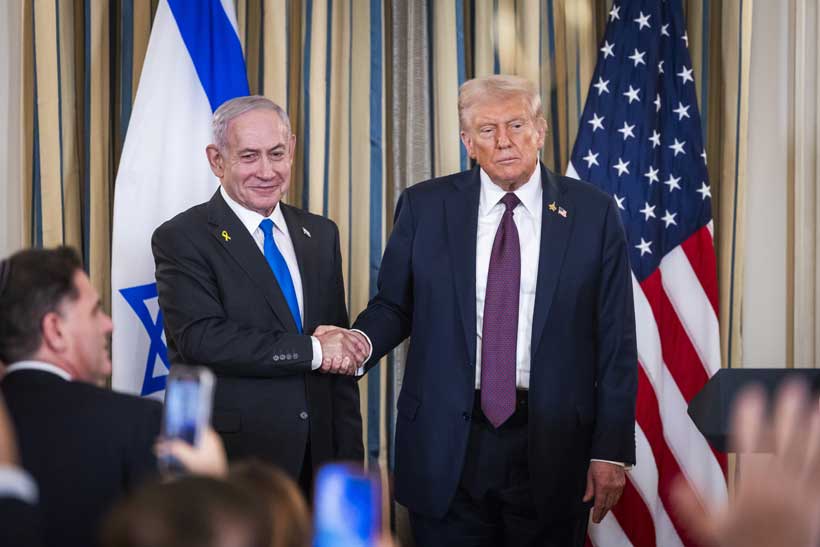
Israel believes it is progressing faster than expected in achieving its objectives in the war against Iran, according to Israel’s ambassador to France.
Ambassador Joshua Zarka said the military campaign, which Israel initially predicted would last several weeks, is moving ahead of schedule in meeting its strategic goals.
Speaking to BFM TV, Zarka said Israel’s objectives extend beyond dismantling Iran’s nuclear programme. He said the broader aim is to weaken Iran’s leadership so that it can no longer project power beyond its borders and so that the Iranian population can determine its own political future.
According to Zarka, Israel’s campaign is designed not only to limit Iran’s military capabilities but also to significantly weaken the country’s ruling authorities.
The ambassador said that reducing the government’s ability to operate abroad would help prevent attacks against Israel and its allies, while also creating conditions in which Iranians could “take their fate into their own hands.”
His comments reflect a broader strategic message from Israel that the war is intended to reshape Iran’s regional role, rather than simply eliminate specific military programmes.
Zarka, who previously served as Israel’s lead diplomat dealing with Iran, suggested that Israel’s military progress is exceeding initial expectations.
Zarka also commented on the recent appointment of Mojtaba Khamenei as Iran’s new supreme leader following the death of his father, Ali Khamenei.
He said that if Mojtaba Khamenei follows the same policies as his predecessor, he could become a potential target for Israel.
The remark underscores the increasingly confrontational rhetoric surrounding the conflict and signals that Israel sees Iran’s leadership itself as central to the confrontation.
At the same time, Israel has intensified military operations against Hezbollah, the Iran-backed militant group based in Lebanon, after cross-border attacks on Israeli territory.
The Lebanese government has said it would like to hold direct talks with Israel to stop the fighting. However, Zarka dismissed the possibility of negotiations at this stage.
Instead, he argued that the war would end only if Hezbollah is disarmed a step he said depends on decisions taken by the Lebanese government.
Zarka’s comments suggest Israel believes the current military campaign is producing results and therefore sees little incentive to pursue negotiations in the near term.
By framing the war’s goals around weakening Iran’s leadership and limiting its regional influence, Israeli officials are signalling that the conflict is about more than just nuclear or missile capabilities.
The remarks also highlight Israel’s strategy of confronting Iran’s regional network of allied groups, including Hezbollah, which it views as a key extension of Tehran’s power.
Taken together, the statements indicate that Israel intends to continue military pressure until it believes Iran’s ability to project influence across the region has been significantly reduced.
With information from Reuters.

Washington, DC – Several Democrats in the United States have emerged from a classified briefing about the war on Iran, saying they still have little clarity about President Donald Trump’s justifications and end goals, even 11 days into the conflict.
“I emerge from this briefing as dissatisfied and angry, frankly, as I have from any past briefing in my 15 years,” said Senator Richard Blumenthal, following Tuesday’s briefing to the Senate Armed Services Committee.
list of 3 itemsend of list
Their statements marked the latest wave of condemnation from congressional Democrats, who have a slim minority in the Senate and the US House of Representatives.
Party members in both chambers had recently voted in near unison on resolutions seeking to halt the war, which the US and Israel launched on February 28.
But their efforts to pass a “war powers resolution” to rein in Trump failed amid widespread Republican opposition.
More recently, Democrats have pledged to delay proceedings in the Senate unless top officials from the Department of State and the Pentagon testify under oath about the war.
Following Tuesday’s briefing, Democrats like Blumenthal argued that the Trump administration owes the US public more clarity about the war.
Blumenthal added that the meeting piqued concerns that US forces may be deployed to either Iraq or Iran.
“I am left with more questions than answers, especially about the cost of the war,” he said.
“I am most concerned about the threat to American lives of potentially deploying our sons and daughters on the ground in Iraq. We seem to be on a path towards deploying American troops on the ground in Iran to accomplish any of the potential objectives.”
Senator Elizabeth Warren, meanwhile, said that the Trump administration “cannot explain the reasons that we entered this war, the goals we’re trying to accomplish and the methods for doing that”.
She also pointed to the high cost of the military operations against Iran, which some have estimated to exceed $5.6bn in the first two days alone.
Warren pointed out that Republicans cut healthcare subsidies last year in an effort to reduce federal spending, but appear to have no problem approving military expenses.
“While there is no money for 15 million Americans who lost their healthcare”, she noted, “there’s a billion dollars a day to spend on bombing Iran”.
While approached by reporters, Senator Jacky Rosen indicated she was limited in her ability to comment on classified briefings. Still, she offered brief remarks to voice her frustration.
“I can tell you what I heard is not just concerning. It is disturbing,” she said. “And I’m not sure what the end game is or what their plans are. They certainly have not made their case.”
The latest round of criticism came shortly after US Secretary of Defense Pete Hegseth pledged to conduct the “most intense day” of strikes since the war began.
As of Tuesday, the war had killed at least 1,255 people in Iran, 394 people in Lebanon, 13 in Israel, six in Iraq and 14 across the Gulf.
Trump has repeatedly said the war would not be prolonged, but his officials have offered shifting timelines. Hegseth, for instance, said the fighting would not stop “until the enemy is totally and decisively defeated”.
“We do so on our timeline and at our choosing,” he said.
The Trump administration has also offered an array of justifications for launching the war, which came amid indirect talks with Iran on the future of its nuclear programme.
Trump has blamed Iran’s nuclear ambitions for the conflict, though Tehran has denied seeking a nuclear weapon, and his administration has also said the war was necessary to end Iran’s ballistic missile programme.
Experts have said that available evidence does not support the Trump administration’s claims that either posed an immediate threat to the US.
US Secretary of State Marco Rubio told reporters last week that the US attacked because its close ally Israel had planned to attack Iran, which would have led to retaliation against US assets.
Rubio and Trump subsequently backed away from the circular rationale, with Trump claiming last week that Iran was the one planning to strike first.
Another rationale the Trump administration offered is that the totality of Iran’s actions since the 1979 Islamic revolution represented a threat to the US, thereby necessitating an attack.
Trump and his top officials have not provided evidence for any of their claims.
Democrats have been largely sidelined since the war began. Only a handful of Republicans have joined the left-leaning party in its efforts to rein in Trump through legislative means.
Under the US Constitution, only Congress can declare war. But presidents can still use the military to respond to imminent threats in instances of self-defence.
Still, there are limits to how long such operations can proceed. Under the 1973 War Powers Resolution, presidents must withdraw forces within 60 to 90 days of an unauthorised military campaign, or else seek congressional approval.
Trump, however, has denied he needs congressional backing for the military campaigns he has conducted since returning to office.
The latest attacks in Iran have sparked widespread public opposition, with polls suggesting a majority of US citizens oppose the war effort.
Earlier this week, six Democratic senators called for an investigation into a strike on a girls’ school in Minab, in southern Iran. Several investigations have indicated that the US was responsible for the attack, which killed at least 170 people, mostly children.
Last week, nearly 30 members of Congress called for an investigation into reports that US military leaders had used biblical motivations to justify the war to subordinates.
Some reportedly invoked “religious prophecy and apocalyptic theology” in statements to other enlisted personnel.
On Monday, Senator Cory Booker said Democrats had “collectively agreed” to use an array of procedural mechanisms in the chamber to block legislative business until Trump officials agree to testify under oath.
“Each individual senator has a tremendous amount of power to disrupt the normal functioning of the Senate, as well as certain privileges that we can exercise,” Booker said.
“And what we have agreed right now is that we’re not going to let the Senate continue business as usual, which seems to be ignoring the urgent issues the American people are dealing with.”

DENVER — LeBron James is king of another NBA record once held by Lakers legend Kareem Abdul-Jabbar.
James entered Thursday’s game against the Denver Nuggets needing to make three field goals to pass Abdul-Jabbar for the most made field goals in league history. James tied Adbul-Jabbar’s mark for most regular-season field goals when he dunked off a lob pass from Luka Doncic with 8:33 left in the first quarter.
He set the new mark of 15,838 with a fadeaway jumper near the Lakers’ bench with 11.8 seconds left in the first quarter.
When James went to the bench with the Lakers trailing 32-22 at the end of the quarter, the Denver Nuggets’ public address announcer told the crowd about his accomplishment. James was given a standing ovation from the fans at Ball Arena.
“LeBron’s greatest hits, he just keeps adding to them,” said Lakers coach JJ Redick before the game. “He just plays and plays and plays. And the greatest hits are just… he’s got a hell of a catalog.”
James is the league’s all-time leading scorer, having broken Abdul-Jabbar’s mark of 38,387 points on Feb. 7, 2023.