Global Energy Crisis

India to Turkiye, can new proposals to broker Russia-Ukraine truce succeed? | Russia-Ukraine war News

Ukraine says it has received proposals from India, Turkiye, Egypt and the United States to broker talks with Russia. The offers come as the two adversaries escalate attacks on each other’s energy and port infrastructure with their war now in its fifth year.

Ukrainian Foreign Minister Andrii Sybiha revealed the four proposals at a briefing in Kyiv on Friday and singled out New Delhi’s. “The most comprehensive is India’s proposal,” he said, adding that India had signalled a willingness to play a role for the first time.

Recommended Stories

list of 3 itemsend of list

None of the proposals aims to end the war. Each seeks a narrower truce, covering energy facilities, ports or commercial shipping in the Black Sea.

Here’s what we know:

What is India proposing?

India has not made its plan public. Quoting unnamed sources, however, Indian media have reported it has three parts. According to the Hindustan Times, it would aim to protect infrastructure, keep grain and energy supplies moving through Black Sea ports, and ensure the safety of commercial shipping.

The first part – mutually halting strikes on energy facilities and ports – matches what Kyiv has been demanding. Sybiha said any deal must be a complete energy truce that covers port infrastructure as well.

The second part builds on the Black Sea Grain Initiative, which Turkiye and the United Nations mediated in 2022 but Russia abandoned in 2023.

The third part, protecting merchant ships and their crews, is particularly important to India because Indian sailors have been killed or harmed on Black Sea routes.

The sources were quoted as saying India’s plan goes further than the other three proposals because it covers infrastructure and shipping together. A Ukrainian official told the Kyiv Independent that it incorporates elements of the Turkish, Egyptian and US initiatives. The Kyiv Post reported that Sybiha also described the plan as addressing a possible ceasefire along the front lines, although other accounts said he gave no specifics.

The proposal likely took shape during Indian External Affairs Minister Subrahmanyam Jaishankar’s first visit to Ukraine last month and in a later meeting with Sybiha at the UN General Assembly in New York, also in September. Jaishankar said New Delhi was “trying to be helpful, starting with the Black Sea safety of shipping issue”.

What do we know about the Turkish and Egyptian proposals?

Very little. Neither Ankara nor Cairo has published details. Both reportedly focus on keeping Black Sea grain supplies moving by suspending attacks on commercial shipping. Some reports said the two countries proposed a grain truce jointly while others described two separate plans.

Turkiye has done this before. With the UN, it steered the 2022 grain deal, one of the few narrow truces of the war to hold for any length of time. Ankara and the UN are now organising new Black Sea talks with a round planned for October.

Beyond its Black Sea focus, almost nothing is known about Egypt’s proposal. Its interest, however, is clear: Egypt relies on Ukraine for nearly one-third of its grain supplies.

What is the US pitching?

According to Ukrainian President Volodymyr Zelenskyy, Washington has proposed three steps: a mutual halt to energy strikes, a reopening of the grain corridor and a trilateral meeting with Ukraine and Russia, possibly in Abu Dhabi.

The latest effort began in early September when US President Donald Trump’s envoys visited Kyiv and Moscow and secured an agreement in principle for a trilateral meeting. Steve Witkoff and Jared Kushner met Russian President Vladimir Putin in Moscow on September 5 while Kremlin envoy Kirill Dmitriev visited the US twice in September.

The trilateral meeting has since been pushed back. It had been expected to take place in the United Arab Emirates in early October. Washington now wants it in late October, and people close to the talks blamed the delay on Russia.

Washington has also invited Putin to the Group of 20 summit in Miami, Florida, in December. “We hope that’s an invitation he’ll accept,” US Secretary of State Marco Rubio said. The Kremlin said no decision has been made.

At the same time, the US is applying pressure to try to end the war. Trump recently signed a law giving him sweeping powers to sanction buyers of Russian energy.

He has also called on Ukraine to stop targeting Russian diesel facilities amid a diesel prices crisis in the US, where Trump faces tricky midterm elections next month. “Mr Zelenskyy has to do one thing,” he said on September 13. “He has to stop knocking out diesel fuel in Russia.” This drew much criticism that Trump instead should focus his comments on Russia, which began the war with its invasion of Ukraine in February 2022.

He is reportedly sceptical about his own government’s latest diplomatic initiative. People familiar with his thinking have told US media that he doubted Putin would agree to an energy truce before winter.

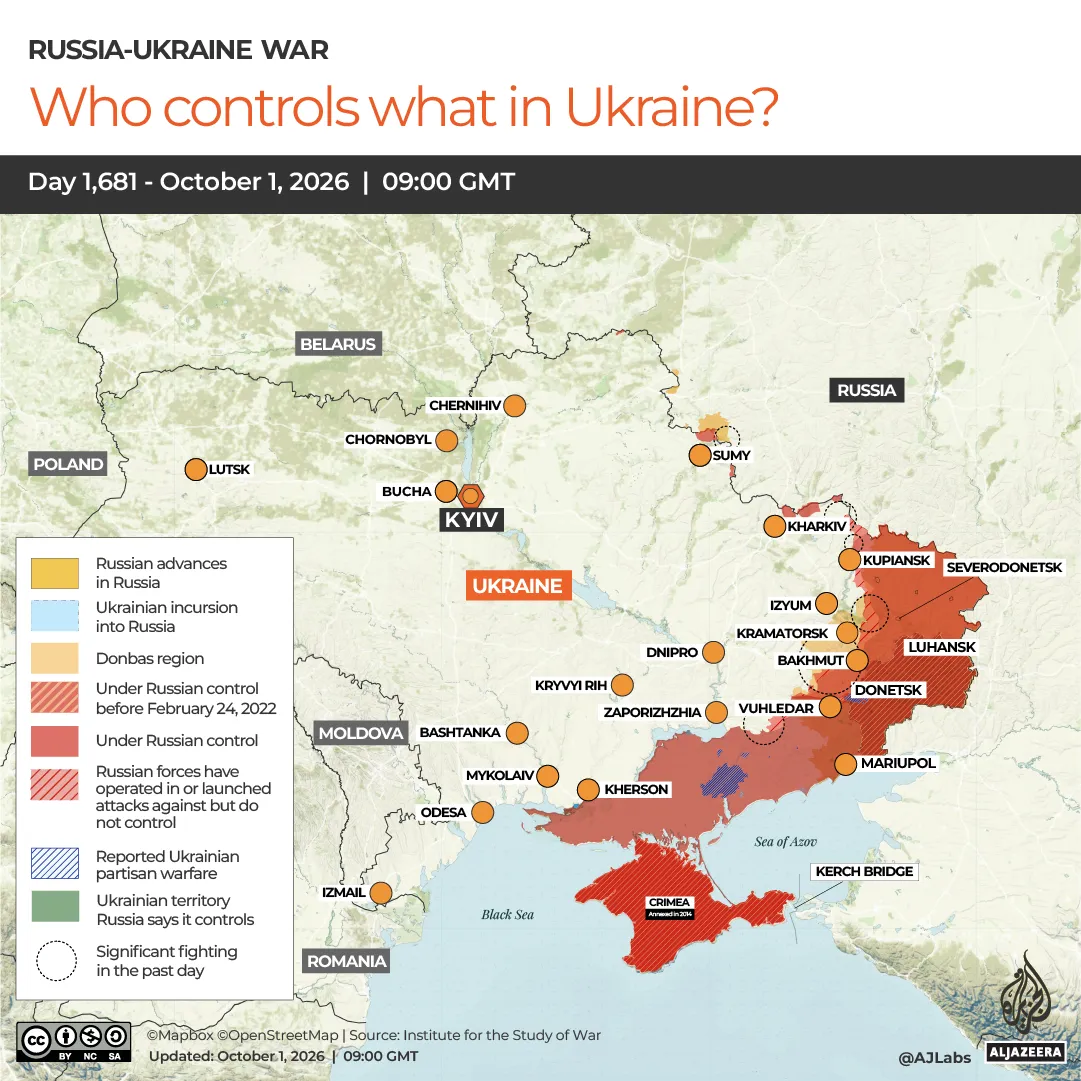
INTERACTIVE-WHO CONTROLS WHAT IN UKRAINE-1790858348
(Al Jazeera)

How have Russia and Ukraine responded?

Sybiha said Ukraine would agree to a truce but with conditions. It would accept an energy and Black Sea shipping ceasefire, but only as a combined package, he said.

He added that Kyiv is also open to an unconditional ceasefire along the current front lines. Zelenskyy backs the US-proposed meeting but stressed it needs “not only Ukraine but also the Russian side” to support it.

Moscow has been warm in tone but has committed to nothing. Kremlin spokesperson Dmitry Peskov said Russia would welcome India’s peace efforts while Putin said Modi has “very good ideas aimed at finding mutually acceptable solutions”, but he did not elaborate.

In private, Moscow appears to have said no. A Ukrainian official told the Kyiv Independent that Russia has rejected India’s proposal although this has not been confirmed publicly. Ukraine’s agriculture minister said Russia had rejected every Black Sea ceasefire option the mediators have presented.

INTERACTIVE Russia Ukraine drone attacks-1788854825

Why are Global South countries becoming more involved?

Food supplies, the lives of their citizens and fuel prices are all at stake.

“I think it’s clear to many countries that this war is not a localised war, but it’s a war that has these global consequences,” Fredrik Wesslau, a senior policy fellow at the European Council on Foreign Relations, told Al Jazeera.

Russia and Ukraine account for more than a quarter of global wheat shipments, and their attacks on each other’s ports helped push wheat futures to a three-year high in August.

Sailors from countries with no links to the war are being killed. At least five Indian seafarers have died in strikes on Black Sea shipping in recent months along with seven Azerbaijani crew members since June. On Saturday, a Russian strike on a Liberian-flagged ship in a port in the Odesa region killed a crew member. Ukraine, for its part, has targeted tankers it links to Russia’s shadow fleet since July.

The energy war is also being felt in global markets. Ukraine reported more than 194 drone attacks on Russian refineries this year, hitting all 11 of the largest. Bloomberg News estimated that Russia’s fuel output has fallen by more than 30 percent. With Middle East supply already down as a result of the US-Israel war on Iran, global diesel markets are more exposed to the loss of Russian supplies.

Maximilian Hess, a nonresident senior fellow in the Eurasia Program at the Foreign Policy Research Institute, said energy is at least as important as grain in driving the diplomatic efforts. He pointed to a “clear frustration” among many countries over high oil prices, which reflect both the Russia-Ukraine war and the crisis in the Middle East.

“Of course, Ukrainian grain is important for them, but the oil-price factor is important there as well,” he told Al Jazeera. “I think it is those commodity-shock concerns that are pushing them to re-embrace this rhetoric, rather than anything else.”

What are the challenges ahead?

Every previous attempt at diplomacy has failed to end the Russia-Ukraine war. A US-brokered, 30-day energy truce in early 2025 collapsed amid accusations of violations on both sides. At talks in Istanbul in May 2025, Zelenskyy complained that Russia had sent a junior delegation with no authority to sign a ceasefire.

In August 2025, a meeting between Trump and Putin in Alaska yielded no results despite Trump claiming to be close to a deal ahead of it.

Wesslau said Washington’s efforts have faltered partly because Trump – who had boasted he would end the war within 24 hours of taking office in January 2025 – has appeared unwilling to put real pressure on Moscow. “The Russians see this, and they conclude that they can continue this war,” he said.

Deep distrust remains. Oleksandr Merezhko, head of the Ukrainian parliament’s foreign affairs committee, said: “Putin never keeps agreements.”

Moscow’s actions on the ground suggest it is in no hurry, Wesslau said  “They’re trying to strangle Ukraine, strangle the economy, and make it unliveable ahead of the winter,” he said. He added that Moscow’s occasionally softer rhetoric was aimed mainly at the Trump administration and “has always proved to be a bluff”.

Russia’s terms are another obstacle. Hess said Moscow’s demands have not softened at any point since it launched the war and at times have grown. Putin has demanded all of Ukraine’s Donetsk, Luhansk, Kherson and Zaporizhia regions, including territory Russian forces have never controlled, as well as a buffer zone in northern Ukraine. Moscow is also seeking sanctions relief and military concessions for any Black Sea deal.

“I don’t think it’s a question of who actually mediates. I think it’s really a question of the calculation in Moscow,” Wesslau said. “Fundamentally, the problem is that Putin doesn’t want a ceasefire or a peace agreement. He wants to continue the war. He believes that he can win.”

Analysts said only greater economic pressure is likely to change that calculation.

Wesslau said if Europe can close down Russia’s shadow fleet of oil tankers, “this would be a massive blow to Russia’s war economy.” Hess said the country best placed to shift things quickly is China, rather than the US, by cutting its purchases of Russian oil. However, he added: “I don’t think Beijing is interested in doing so.”

Hess said that unless there is an outside shock, the war “is much more likely to last another four years than another four months”.
Source link

Millions of Pakistanis get government fuel relief but some miss out | Business and Economy News

Islamabad, Pakistan – More than 9.5 million people have received subsidised petrol under a special fuel relief scheme launched by Pakistan’s prime minister, Federal Minister Shaza Fatima Khawaja told Al Jazeera on Wednesday.

The initiative, aimed at lower-income citizens, comes as the government attempts to help households deal with fuel price increases tied to the war on Iran.

Recommended Stories

list of 4 itemsend of list

The scheme, launched in September, offers 100 rupees ($0.36) off every litre of petrol to owners of motorcycles, rickshaws and small cars, through a text-message system.

Petrol prices have risen by nearly 50 percent since the war began on February 28, adding to Pakistan’s economic hardship and putting further pressure on consumers already grappling with rising inflation.

How the scheme works

Explaining the process, Khawaja, the minister for information technology and telecommunications, said applicants text their national ID number, vehicle registration, and province to 9771. A second message, sent before each visit to a pump, generates a token redeemable anywhere in the country.

Two- and three-wheelers get 500 rupees ($1.80) a week, capped at four tokens a month. Cars with engines of up to 800cc get 1,000 rupees ($3.60) every 10 days, for three tokens monthly.

After complaints, registration, once a paid service, was made free, and a five-litre minimum purchase was scrapped for the same reason.

Khawaja told Al Jazeera the system had been redesigned based on experiences of users on the ground.

Riders no longer need the vehicle to be registered in their own name, as long as they can supply the exact registration date shown on the documents.

“Even in my own house, there’s a bike registered in our name that our cook uses for daily errands,” Khawaja said, explaining why the ownership requirement for two- and three-wheelers was dropped on September 20.

An earlier cash-transfer scheme in April had reached just over a million bike owners, she said, largely because disbursement required a bank account most riders did not have.

‘The relief is decent’

Government officials say that the scheme has been expanded to include wider sections of society, especially those who depend on their vehicles to generate income.

“There’s a benefit; it’s not like there’s nothing,” Shakeel Ahmed, 45, an electrician in Islamabad, told Al Jazeera. “The relief is decent for people who use it normally, for local trips. But for people like us, who put in 1,000 to 1,500 rupees [$3.60-$5.40] of petrol a day, it’s not enough.”

Safiya Aftab, an economist, told Al Jazeera the scheme has reached the people it was meant to.

“The scheme has indeed reached low-income segments of society, people who typically use two-wheelers and 800cc cars. So yes, it’s a good thing that they are subsidising the poor,” she said.

Aftab, however, also pointed to a levy – 114 rupees ($0.41) for every litre – that the government charges. This, she said, was helping the government raise revenue. She said the government is now earning more than 100 billion rupees ($361m) a month from the levy, which is fuelling inflation.

“The levy was originally meant as a sort of environmental tax, to discourage the use of petrol. Now it has become a full revenue earner for the government, one that helps keep the fiscal deficit down,” the economist said.

What it costs and for how long

The Pakistani government has approved 75 billion rupees ($271m) for the scheme’s first three months, through November.

Petroleum Minister Ali Pervaiz Malik put the running cost at 25-30 billion rupees ($90m-$108m) a month at launch. By late September, he said, it had risen to 35-40 billion rupees ($126m-$144m).

Malik has said the government is prepared to run the scheme for up to 10 months, or “until the end of the war”, if needed.

Pakistan is currently under a $7bn International Monetary Fund programme, and an IMF team is in Islamabad this week for talks with the government as it seeks to keep its fiscal commitments on track while responding to the fuel shock.

Officials familiar with the government’s talks with the IMF say the Fund wants relief capped at three months and routed instead through the Benazir Income Support Programme, the country’s main cash-transfer scheme.

Khawaja said the IMF’s position from the outset was that relief had to be targeted, not universal, which was why the scheme was built around actual token use rather than a blanket price cut.

Who it leaves out

But there are claims that the relief is not reaching all. Cars with engines larger than 800cc, diesel vehicles and public transport are excluded entirely, leading some experts to suggest that the subsidy scheme risks missing the most vulnerable sections of Pakistani society.

“A poor household that uses public transport, walks to work, or relies on diesel-powered transport may receive nothing while still facing higher food and transport costs,” Khaqan Najeeb, a former adviser in Pakistan’s Ministry of Finance, told Al Jazeera.

More than 8.1 million tokens had gone to two- and three-wheelers by late September, compared with fewer than 380,000 for cars, Malik said. A November 2024 Gallup Pakistan survey found that 79 percent of respondents, in rural and urban areas alike, said they use public transport such as buses or wagons.

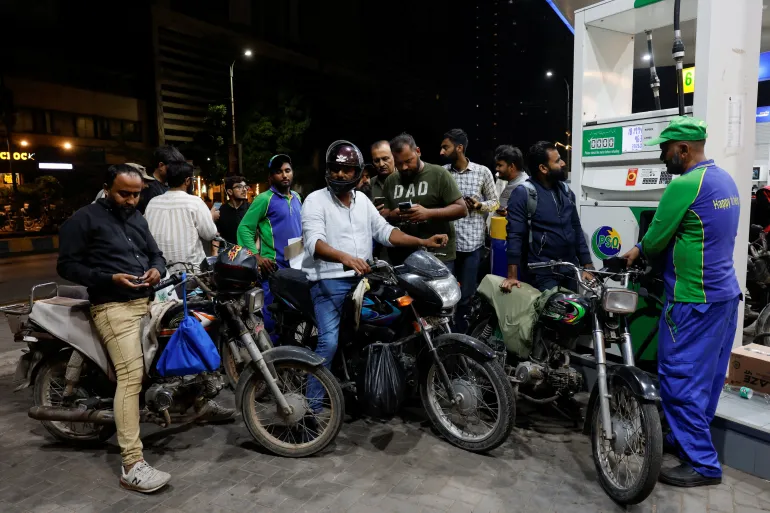
People wait to refuel their motorcycles at a petrol station following the rollout of a fuel relief scheme, which provides a fuel subsidy for eligible motorcycles, rickshaws and vehicles with engines of up to 800cc, in Karachi, Pakistan, September 17, 2026. REUTERS/Akhtar Soomro
People wait to refuel their motorcycles at a petrol station following the rollout of a fuel relief scheme, which provides a fuel subsidy for eligible motorcycles, rickshaws and vehicles with engines of up to 800cc, in Karachi, Pakistan, September 17, 2026 [Akhtar Soomro/Reuters]


Does the relief go far enough?

At 100 rupees a litre, the maximum monthly saving is 2,000 rupees ($7.20) for a motorcycle user and 3,000 rupees ($10.80) for an eligible car owner, Najeeb said, calling it “useful household relief, but not enough to offset the broader cost-of-living shock”.

Petrol has climbed from 266 rupees ($0.96) a litre before the war to nearly 395 rupees ($1.42), despite a partial rollback in April. Inflation rose to 10.3 percent in September from 7 percent in February, Najeeb said.

Sajid Amin Javed, a senior economist at the Sustainable Development Policy Institute in Islamabad, said the relief was “minimal”, but added that this was understandable given the IMF constraints on Pakistan.

“The relief is minimal, and that is understandable as we are in an IMF programme,” Javed told Al Jazeera, arguing that cutting the petroleum development levy, which still adds 114 rupees to every litre, would deliver broader relief than a capped subsidy.

“The government is using the petroleum development levy to fill its revenue gap, but that comes at a significant cost in terms of inflation, growth and household welfare,” Javed said.

Najeeb, however, argued the scheme should not become a permanent fixture of Pakistan’s energy policy – and should be used only to make oil price shocks “less damaging”.

Source link

Has Russia’s fuel crisis given Iranian oil an opening in Central Asia? | US-Israel war on Iran News

Countries in Central Asia have begun buying oil from Iran as the Russian fuel supplies they have long depended on run dry amid Ukraine’s mounting attacks on Russian energy infrastructure to degrade Moscow’s war effort.

In August, Tajikistan announced it was receiving oil and petroleum products from Iran as Dushanbe faces uncertainty over its fuel supply from Russia. Tehran also agreed to establish a joint refinery in Kyrgyzstan in August, and supply the country with crude oil.

Recommended Stories

list of 3 itemsend of list

Moscow has been facing fuel shortages due to Ukrainian drone strikes on its refineries as Russia’s war on its neighbour continues to rage.

Can the Russian fuel crisis give Iran a new oil opening in Central Asia?

Here’s what we know:

Which Central Asian countries have been affected by Russia’s fuel crisis?

Ukraine’s offensive against Russian energy infrastructure has caused panic across Central Asian countries like Tajikistan and Kyrgyzstan, which are dependent on Moscow for oil and petroleum products.

Tajikistan has traditionally sourced up to 80 percent of its petroleum products from Russia. Kyrgyzstan also relies on petroleum product imports, sourcing more than 90 percent of its petrol from Russia.

“They’ve been hurt the most,” Galiya Ibragimova, a Moldova-based expert on Central Asia with Carnegie Politika, which has its headquarters in Berlin, told Al Jazeera in an interview in August.

Kyrgyzstan is a member of the Eurasian Economic Union, the free trade bloc of five former Soviet nations dominated by Russia and the Kremlin’s political decisions.

Tajikistan is not a member of the group, but it bought discounted Russian fuel as “payment for political loyalty, not because [Russian President Vladimir] Putin is so kind”, Ibragimova added.

Kazakhstan, meanwhile, boasts three giant, Soviet-era oil refineries. Still, fuel prices in the country have increased by 15.6 percent this year, the UlusMedia website reported on July 10.

Uzbekistan, on the other hand, is less dependent on Russian energy, with domestic production capable of reaching 100,000 tonnes of petroleum products per month, satisfying most of the country’s needs. But due to the increase in oil demand from its regional neighbours, Uzbekistan has also been forced to diversify its imports and has begun striking deals with countries like Georgia and Iraq.

Why is there a fuel crisis in Russia?

Russia has been facing a severe fuel deficit as Kyiv’s drone strikes – launched in an effort to degrade Moscow’s ability to maintain its ongoing invasion of Ukraine – have knocked out an estimated quarter to half of its total oil refining capacity.

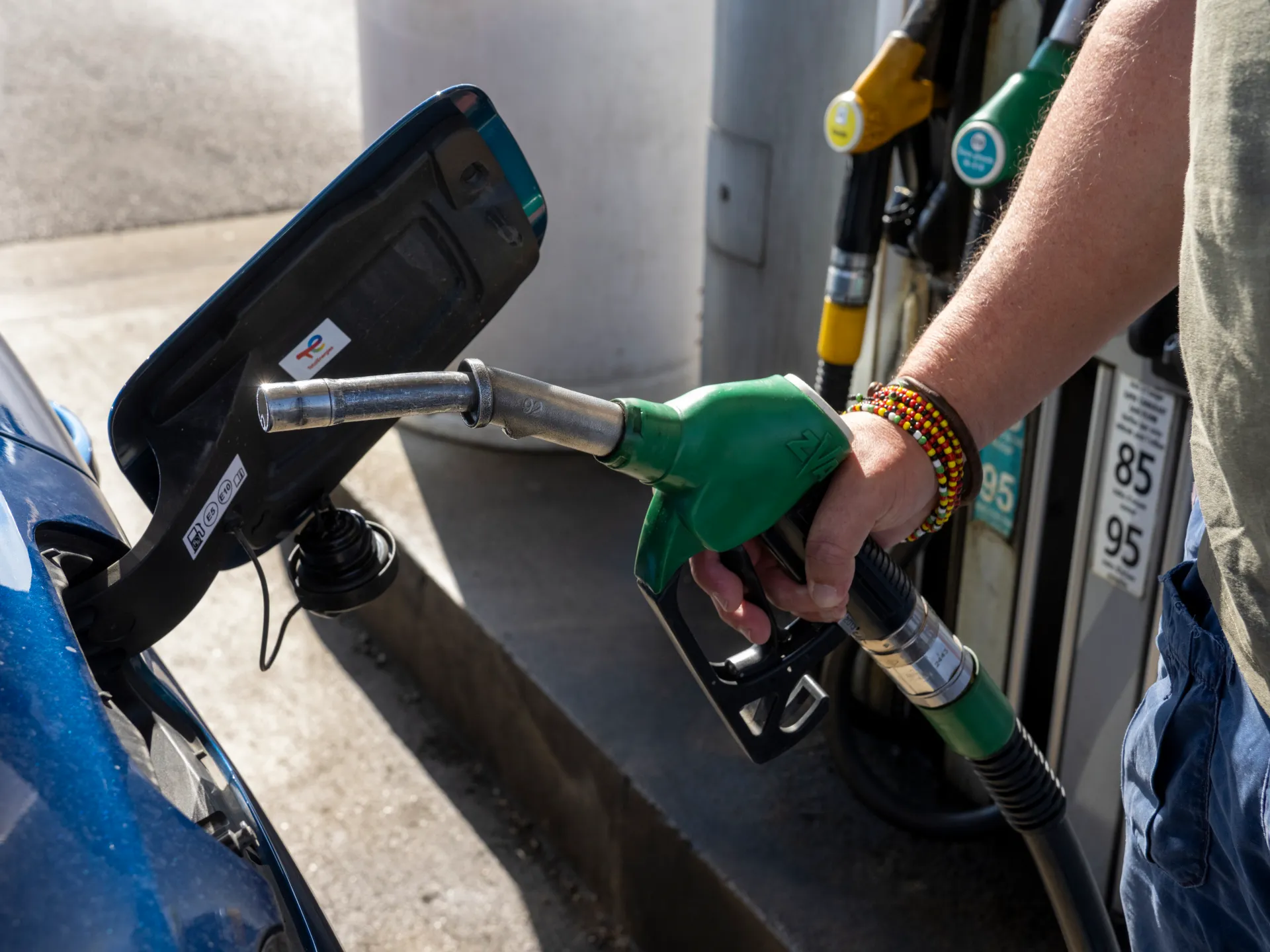
To tackle the problem, Russia has imposed fuel rationing. Sales are often limited to about 20-30 litres (about 5-8 US gallons) per vehicle, and drivers must pump fuel strictly into vehicle tanks. Filling jerry cans is largely prohibited.

Earlier, the government banned petrol and jet fuel exports. Officials are now weighing a ban on diesel exports, too. Authorities have loosened fuel-quality regulations, temporarily allowing lower-grade fuel for the domestic market.

A state of emergency has also been declared in Russian-occupied Crimea, which Moscow annexed from Ukraine in 2014. A Russian-owned oil firm in India, Nayara Energy, has reportedly sold petroleum to Russia.

While Russian President Putin acknowledges the crisis, he appears reluctant to end the war on Ukraine and insists the situation is under control.

“These attacks on our facilities certainly create problems – that is obvious. We are currently seeing a certain shortage, though I would say it is not critical,” he said earlier this year.

“First and foremost, we have to rapidly and significantly increase production of air defence systems that are most in demand. We must also continue to improve them… Repairs at refineries must be completed more quickly.”

So, how is Iran helping Central Asia?

Amid Russian fuel shortages, Central Asian countries like Tajikistan have begun striking deals with Iran.

In August, Tajikistan’s Energy and Water Resources Ministry told the Asia-Plus news agency that the country is receiving oil and petroleum products from Iran. The ministry has not disclosed the route used to transport the products, but Tajikistan expects to receive 2.55 million tonnes of oil and petroleum products from Iran.

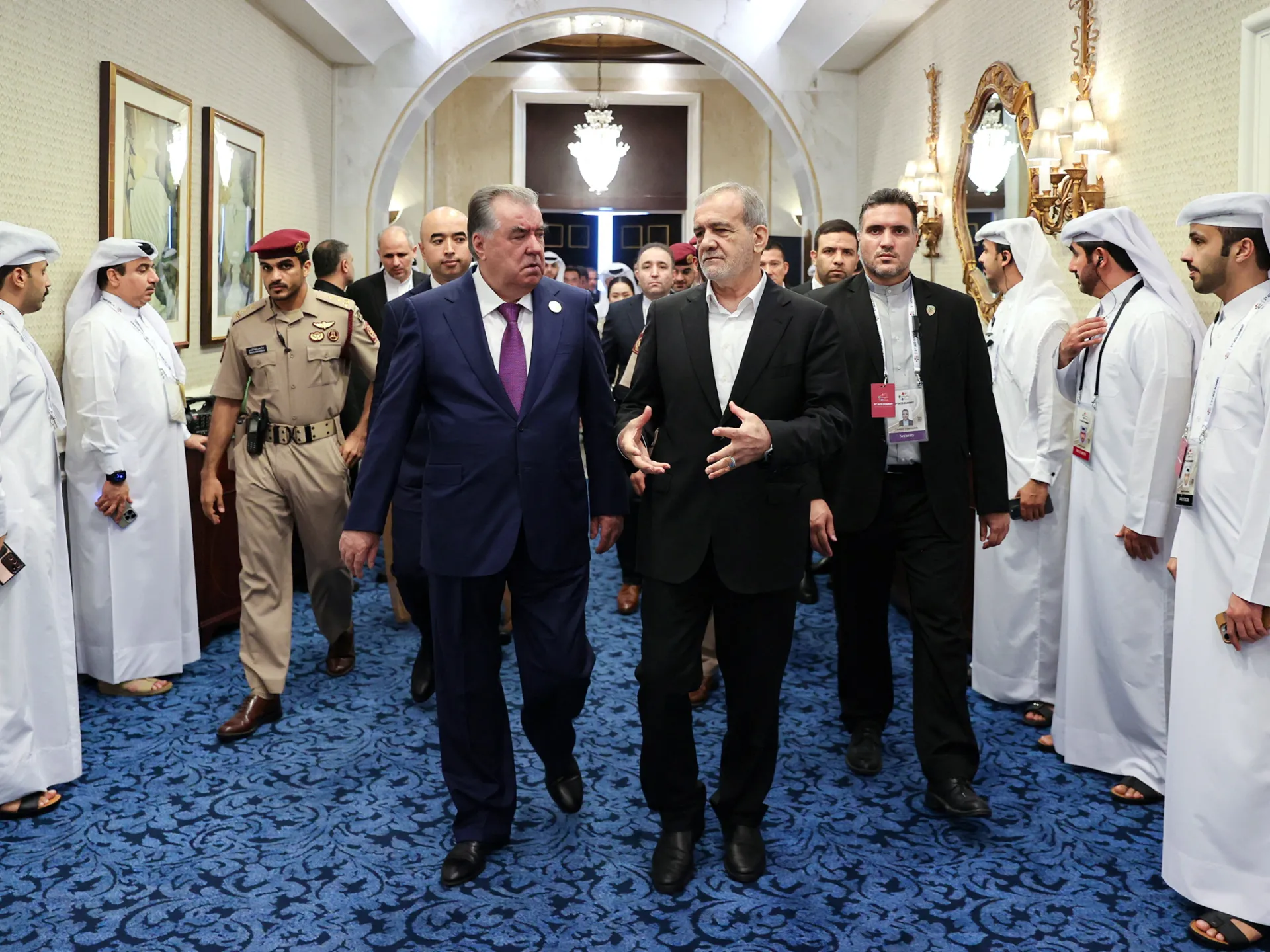
Besides Tajikistan, Iranian President Masoud Pezeshkian welcomed a proposal from Kyrgyzstan in August to establish a joint refinery in the Central Asian country, according to a report by Iran’s Tasnim news agency,

Under the agreement, Pezeshkian said, “The crude oil needed by the refinery can be supplied by Iran, and the products can be divided between the two sides.”

Will exporting oil to Central Asian countries help Iran?

The United States and Israel’s war on Iran has affected Tehran’s oil revenues. Data released by the government-administered Statistical Center of Iran in September showed that gross domestic product (GDP) shrank by 10.1 percent year-on-year between March 21 and June 20, the first quarter of the Persian calendar.

Tehran’s ability to sell crude has also been dramatically curtailed by the US naval blockade of Iran’s ports, imposed for most of the war, which began in late February.

Iranian crude and condensate loadings collapsed from about two million barrels per day (bpd) in March to roughly 740,000bpd in July and just 220,000-255,000bpd in August, according to estimates from Kpler and Vortexa.

TankerTrackers.com told the Reuters news agency in September that 29 tankers, carrying 36.11 million barrels of crude, were trapped in the Strait of Hormuz. Meanwhile, Vortexa estimated that total Iranian crude afloat had fallen from 135 million barrels at the end of July to 107 million barrels by late August.

Amid these challenges, Iran has been scrambling to find new countries to trade oil with. Russian fuel shortages have opened up new opportunities for Iran in Central Asia, at least in the short term, according to analysts.

How does Iranian oil reach Tajikistan and Kyrgyzstan?

Iran does not share a border with either country.

To get to Tajikistan, Iranian “oil and refined products have to cross Turkmenistan and Uzbekistan by rail”, said Frederic Schneider, a nonresident senior fellow at the Middle East Council on Global Affairs.

To get to Kyrgyzstan, Iranian oil would also need to pass through Turkmenistan and Uzbekistan.

Is trading oil with Iran logistically sustainable for Central Asia?

It is unlikely, Schneider said.

“This opportunity [for Iran] depends on Ukraine continuing to hit Russian refineries, which seems unlikely, both given the waning of Ukraine’s strike capability and the US government’s demand to stop the attacks as they put too much strain on global oil markets,” he told Al Jazeera.

He noted that US President Donald Trump has pressed his Ukrainian counterpart, Volodymyr Zelenskyy, repeatedly in September for an “energy truce” with Russia, since diesel prices have become a political problem for Trump ahead of the November midterm elections in the US.

“Those truces have so far collapsed within hours, but the direction is clear. Once the strikes stop, or once Russia repairs its plants, Russian fuel will come back to Central Asia duty-free under Eurasian Economic Union arrangements, and Iran will struggle to compete on price,” he said.

Logistics also favour Russia with respect to importing oil to countries like Tajikistan and Kyrgyzstan, he said.

Unlike Iran, Russia shares a border with both.

“Tajikistan’s own request [for oil] would need around 51,000 rail tank cars, and its main refinery at Dangara has never operated commercially at scale. Russia, by contrast, has decades’ worth of logistics infrastructure, pipelines, rail links, and supply contracts into the region,” Schneider said.

Is Central Asia a big enough market to compensate for Iran’s Hormuz losses?

No, according to Schneider.

Tajikistan’s total demand, Schneider said, was about 50,000bpd.

That is a drop in the ocean compared with the 1.7 million bpd Iran exported by sea a year ago. China reported $9.96bn in two-way trade with Iran in 2025, a figure that does not include some $31.2bn in Iranian oil shipments, according to the US-China Economic and Security Review Commission.

“This suggests that Central Asia can be a useful outlet for Iranian diesel and gasoline, but it cannot replace the Chinese market,” Schneider said.

For Tehran, Central Asia’s importance depends on how the US-Israel war on Iran develops, he said, adding that Tehran also needs to stay on good terms with Russia, with which it has a deep strategic partnership.

“Iran cannot afford to be seen as poaching Russian customers too aggressively, so it will present itself as a stopgap supplier, which, again, limits how much it can earn there,” he said.

What other risks does Central Asia face in buying Iranian oil?

Schneider warned that Central Asian nations could be hit with Washington’s secondary sanctions on Iran.

“Legally, US secondary sanctions apply to any foreign company or bank that conducts a significant transaction in Iranian petroleum, wherever it is based, and the Treasury expanded the list of sanctionable conduct in August. A Treasury official has already warned publicly that anyone in this trade ‘incurs that risk themselves’,” he noted.

But Schneider said that, politically, the US sanctioning Central Asian governments is unlikely.

“Central Asia is the arena of a new ‘Great Game’ between Russia, China and the United States, and Washington is courting the region harder than at any point since the 1990s, chiefly for its critical minerals. Kazakhstan alone holds about half of the minerals the US classifies as critical, including uranium and tungsten,” he said.

“Sanctioning a Central Asian government for buying fuel from Iran would push them straight back into closer ties to Russia and China,” he noted.

“What I would expect instead are targeted designations of individual traders, rail and logistics operators and smaller banks, combined with quiet pressure on the region’s correspondent banks. That alone is enough to raise the cost and slow the trade, but will come at the price of these countries redoubling their efforts to decouple economically and financially from the US.”

Source link

‘We are desperate’: Venezuela’s power cuts fuel growing public anger | Energy News

The hum of the kidney dialysis machine that Onasis Munoz is connected to suddenly stops. The fluorescent lights overhead flicker out, and his room at a clinic in Valencia, Venezuela, is plunged into darkness.

It is not the first time a power cut has interrupted one of the three weekly sessions Munoz needs to do the work his failing kidneys can no longer do, filtering waste and excess fluid from his blood.

For years, electricity would go out every couple of days across parts of Venezuela’s Carabobo state.

But in recent months, Munoz said, the outages have grown to be daily, lasting around seven hours. The clinic’s emergency batteries have since been depleted, and its backup generator no longer works.

He explained that the frequent power failures have disrupted his treatment. His health has slumped as a result.

“I arrive home, exhausted, as if I had run a marathon,” the 34-year-old said.

But often there is no electricity there either, and recent weeks have been sweltering. “I can’t switch on the air conditioning. I cannot rest because of the heat and the mosquitoes. There’s no relief,” Munoz said.

Onasis Munoz of Valencia, Venezuela, has seen his dialysis treatment interrupted by power outages [Courtesy of Onasis Munoz]

Across Venezuela, the prolonged outages are riling locals, as the electricity supply to homes, businesses and essential services becomes unstable.

Some of the cuts are deliberate, as the government of interim President Delcy Rodriguez rations electricity.

The resulting frustration has spilled onto the streets, where demonstrators hold “cacerolazos” – a traditional form of protest that involves banging pots and pans.

Some have gone as far as blocking roadways and setting tyres on fire. The electricity crisis has also raised concerns about how the government is managing the country’s vast oil supply, a key source of income for the country.

“We are desperate. We cannot understand how a country so rich in resources can be practically left in the dark,” said Patricia Cueva, a lawyer from Maracaibo, the capital of oil-rich Zulia state.

“We cannot rest. We cannot work. Our children cry.”

Source link

G7 to release 100 million barrels of oil and diesel, will it curb prices? | US-Israel war on Iran News

The Group of Seven countries has agreed to release 100 billion barrels of crude oil and diesel from emergency reserves over several months in an effort to reduce soaring energy prices after pressure from US President Donald Trump.

The US and Israel’s war on Iran, as well as Russia’s war on Ukraine, have triggered a spike in global oil and diesel prices.

Recommended Stories

list of 3 itemsend of list

Oil prices ‌jumped on Thursday and settled up more than $4 a barrel. Global diesel prices also hit a record high last Friday with the average price for a gallon (3.79 litres) of diesel at $6.50, up from $5.61 a month earlier, according to the American Automobile Association (AAA).

In a statement on Thursday, G7, which includes the US, UK, Canada, Japan, Germany, Italy and France, with the EU also represented, said there will also be a “substantial diesel release within the first 20 days” and discussions over “additional diesel releases as necessary” will be held in the coming days.

Will the G7’s energy release stabilise the global energy market?

Here’s what we know:

What has the G7 announced?

After a video conference of G7 leaders chaired by French President Emmanuel Macron on Friday, the group said in a joint statement: “Taking into account commitments that have already been fulfilled, we will implement our commitments with a coordinated release through the IEA of 100 million barrels.”

Earlier this week, the International Energy Agency’s (IEA) Executive Director Fatih Birol said that members had released about two-thirds of the 400-million-barrel agreement.

The G7 energy release will begin immediately and last for four months and will include a substantial diesel release for 20 days. It is not clear how many oil and diesel stocks each member of the group will release.

“We will convene in the context of the IEA in the coming days to discuss the possibility of additional diesel releases as necessary,” the statement said.

“We will coordinate maintenance schedules across G7 refineries to prevent simultaneous capacity shutdowns and temporarily increase utilization rates where feasible,” it added.

The G7 also urged member countries to refrain from imposing export restrictions on energy products among themselves.

Earlier this week, the Trump administration had threatened to impose a ban on US diesel exports and also pressured Europe to release its emergency diesel stocks to help ease soaring diesel prices.

Why are oil and diesel prices so high?

Global energy prices have been soaring due to the US and Israel’s war on Iran, which has disrupted energy exports from the Gulf. Meanwhile, the Ukraine attacks on Russian energy installations have also disrupted global energy supplies.

Former head of the International Energy Agency’s Oil Industry and Markets Division Neil Atkinson told Al Jazeera that there are three key factors contributing to the decline in global diesel supply.

First, “there isn’t diesel coming out of the Middle East to Europe, and Europe took quite a lot of diesel from Saudi Arabia and from Kuwait.”

Second, “Russia has now ceased to export diesel at all” due to “the attacks by Ukraine on Russian refineries”.

“And China is no longer exporting diesel,” he added.

“We’re in a situation where demand remains relatively high and is likely to stay high because of the agricultural harvesting season.”

According to data from the Joint Organizations Data Initiative (JODI) and the Organization of Petroleum Exporting Countries (OPEC), the United States is the world’s largest producer and exporter of diesel. It produces around 240.5 million tons and exports around 1.26 million barrels of diesel per day.

Russia is the world’s second-largest exporter of diesel, supplying 783.4 thousand barrels per day to the global market. Saudi Arabia is the world’s second-largest producer of diesel at 58.4 million tons, but it consumes large portion of its diesel domestically.

Will the G7 energy release bring prices down?

After the G7 announcement, French President Macron, who had co-chaired the meeting, said the group’s move to release the oil will “bring down the prices of petroleum products, particularly diesel.”

The price of Brent crude oil, the international benchmark, briefly dropped below $100 a barrel after the G7 announcement, but rose to around $102 in the evening.

Naeem Aslam, Chief investment Officer at Zaye Capital Markets, told Al Jazeera that the G7 energy release was “very much needed”, but the group’s announcement was just to ease off the pressure on the energy market.

“The actual structure changes about who is going to release [the energy stocks] and what and where the bans will be lifted, remains an important component in terms of the market,” he said.

Aslam added that by Sunday night especially before the markets open, the added pressure on energy prices will come off. “But going into Monday morning…we could potentially see the reversal in the market,” he added.

Atkinson, the energy expert, said the G7’s fuel release is welcome but “doesn’t deal with the fundamental problem that the global supply remains lower than normal”.

Atkinson told Al Jazeera that “seven months after this war started in the Middle East, we are still in a situation where the global supply of crude oil or products remains significantly below pre-war levels.”

“We are now in a situation where the focus is on end use of products, mainly diesel, which is what we’re talking about here,” he added.

What has Trump said?

Soaring diesel prices have been a source of tension for the Trump administration and Republicans who fear this will cost them votes in the upcoming November midterm elections.

Last week, Trump pressured Ukraine to stop attacking Russian diesel facilities amid the war.

Then, on Thursday this week, the US president told reporters that his administration “may” ask European countries to release diesel stocks, shortly after Treasury Secretary Scott Bessent urged Europe to “immediately” tap its reserves.

Trump also threatened to impose a ban on US diesel exports if Europe did not release emergency diesel stocks.

But on Friday, Trump told reporters at the White House that Washington would not impose a diesel export ban. He said the plan was never really on the table.

“Europe has a lot of diesel, and they’re going to be making a major world contribution, and so are we. And we’re not going to be doing the export ban. We’re going to be doing what we’re supposed to do,” Trump said.

“Trump is scared by diesel prices above $6, which is a price jump of 70 percent compared to before he started the war. This is likely to get worse with US diesel inventories at their lowest seasonal level since records began in 1982. So if there is not enough diesel being produced because of the US-Israeli war on Iran, and diesel reserves have been used up, the only way to bring more diesel to the US market is by exporting less,” Frederic Schneider, a nonresident senior fellow at the Middle East Council on Global Affairs, told Al Jazeera on Friday.

After the G7 announcement, Trump wrote on his Truth Social platform: “Europe has just agreed to release a massive amount of their heavily stocked Diesel Oil. The process will begin immediately.”

The White House is also reportedly preparing an executive order to tackle record-high US diesel prices that could be unveiled as early as next week, two people familiar with the process told the Reuters news agency.

Schneider noted that countries are also concerned about high energy prices since diesel and gasoline are important for economies and fulfil different roles.

“While gasoline fuels cars, diesel fuels anything from trucks, freight trains, ships, tractors, harvesters, construction machinery, mining equipment and backup generators. This means gasoline is used more by consumers while diesel is mostly used by producers, meaning a diesel price shock spreads into the price of almost everything else, most prominently food, building materials and anything delivered by truck,” he added.

Farmers are hit twice because diesel prices are rising at the same time as fertiliser prices, both of which have been pushed up by the closure of the Strait of Hormuz.

“A higher diesel price therefore acts like a tax on production and logistics, while higher gasoline prices act like a tax on consumers directly. Like higher gasoline prices, higher diesel prices risk stagflation by pushing up inflation while simultaneously squeezing margins in transport and agriculture, meaning central banks find [themselves] in a dilemma between cutting rates [helping producers] and raising rates [cutting inflation],” he said.

Source link

‘Hostile, but hooked’: What’s behind the US-China trade truce extension? | Trade War

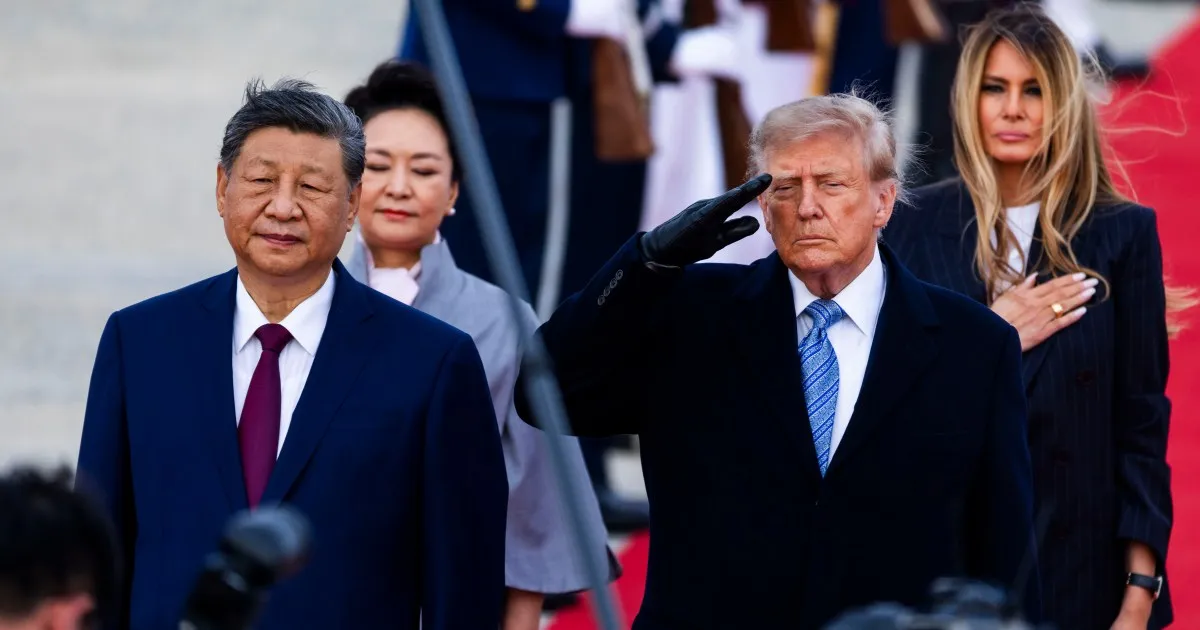
The red carpet was rolled out, and a trade truce was extended. Yet, beneath the pomp and pageantry of Chinese President Xi Jinping’s state visit with US leader Donald Trump on Thursday, Washington and Beijing remain locked in a much deeper strategic rivalry.

Xi arrived in Washington, DC on Wednesday evening for talks on Thursday, and Trump was there to meet him personally on the tarmac.

Recommended Stories

list of 4 itemsend of list

The meeting was the first state visit by a Chinese leader to the US in 11 years. But it is also the third time in less than a year that the two men have met face to face, as the two powers remain uneasily gridlocked in competition over AI, rare-earth metals, the question of Taiwan, and the Iran war.

Overhanging it all is the paused, but simmering, trade war between their two nations.

Almost as soon as Trump began his second term in the White House in January 2025, up went tariffs on Chinese goods as he accused China of facilitating the flow of fentanyl, a deadly drug, to the US. Beijing responded with its own levies, then restricted exports of valuable rare-earth metals which are crucial for the development and manufacture of everything high-tech, from smartphones to fighter jets. At one point, tariffs were heading towards 150 percent before being paused to allow time for talks.

Finally, the two leaders called a truce on the sidelines of the Asia-Pacific Economic Cooperation (APEC) summit in South Korea on October 30, and they met once more, in May, when Trump travelled to Beijing.

As Xi landed in Washington on Wednesday this week, the Trump administration announced that the two countries had agreed to extend an October 2025 truce which had offered some respite from the punishing tariffs, produced an agreement from China to buy more soyabeans from the US and delayed the ban on rare-earth exports from China until January 10. The prospect of a much-longed-for trade deal appeared to be in the air when US Treasury Secretary Scott Bessent told Fox News he had met Chinese ‌Vice Premier He Lifeng before Xi’s visit to “see if we could ⁠do a bigger deal as opposed to just a series ⁠of smaller things”.

But analysts have, for the most part, shot down such hopes. Beyond tariffs, they say, the simmering conflict between the two powers now encompasses new US sanctions on buyers of Russian oil – namely China – and sweeping investment and research restrictions, never mind the intensifying race for dominance in artificial intelligence.

“The two-month extension isn’t a bridge to a grand bargain – it’s a temporary sandbag holding back a structural flood,” Beijing-based Einar Tangen, a senior fellow at the Center for International Governance Innovation, told Al Jazeera.

Theatrics or continued thaw in tensions?

In fact, the truce is little more than “transactional theatre” – an attempt at good optics before the upcoming US midterm elections – Tangen said.

Trump’s deeply unpopular war on Iran has already inflicted severe damage to his chances in that vote. Democrats are leading in the polls amid concerns about the rising cost of energy, triggered by the war which the US started. Trump ultimately needs wins on other issues.

The current truce with China serves a purpose, therefore, but is fragile enough to be undone the moment political utility shifts for Trump, Tangen said.

“Success in January won’t be measured by what is solved, but by whether the knot is left tight enough to hold, but not kill,” said Tangen.

Phillippe Le Corre, professor of international relations and Asian studies at France’s ESSEC Business School, said the length of the truce extension indicates clearly that a more permanent deal remains out of grasp.

“The extensions are getting shorter and shorter, which means they haven’t found a common ground on many issues,” Le Corre told Al Jazeera.

“The two-month extension is a terrible outcome for the US. Nothing is resolved, and many Damocles’ swords are still hanging over Washington’s head,” he added.

Trump’s entire China policy, Le Corre argued, is in fact short-sighted. “That is bringing the world a lot of uncertainty,” he said.

Some analysts are more hopeful, but not much. Sun Chenghao, a fellow at the Center for International Security and Strategy at Tsinghua University in Beijing, described the extension of the trade truce as a “useful interim step”. It shows that both sides want to preserve the recent easing of tensions, which is meaningful progress, he said.

“From China’s perspective, a sustainable agreement needs reciprocal benefits and greater policy predictability,” Sun told Al Jazeera. “Additional purchases cannot indefinitely compensate for uncertainty over tariffs, technology restrictions and market access.”

The extension’s value, however, will depend on whether it produces “concrete commitments” from Beijing and Washington, Sun added.

A game of ‘economic chicken’

There is motivation to get a deal done, analysts say. Any escalation in the US-China trade war will be costly for both sides.

But there is some way to go. A Congressional Research Service report in July 2026 noted that Chinese goods exported to the US still face tariffs of 36.5 percent, while US goods entering China are taxed at 31 percent.

Any higher, and they will raise import and manufacturing costs in the US, squeeze margins and increase pressure on consumer prices, said Sun. They would also hurt US farmers and industrial exporters, he added, just as the US faces pressure from the rising costs of its war on Iran, which have pushed it into a record national debt of $40 trillion two years earlier than expected.

“Washington is playing a high-stakes game of economic chicken with a $40 trillion debt load, an inflationary sword of Damocles, zero fiscal cushion to absorb a truce collapse and a dependence [on] Chinese industrial and manufacturing inputs,” Tangen said.

US consumers and the economy in general will find it tough to survive yet another inflationary shock from renewed tariffs “at a time when the federal budget already operates like a high-wire Ponzi scheme”.

Then there is the AI race, which no one can afford to lose. According to Jon Bateman, a senior fellow at the Carnegie Endowment for International Peace, a partial “decoupling” of US and Chinese technology ecosystems is under way. US policymakers have pushed to become less dependent on Chinese tech and “to secure America’s technological future in the context of a rising China”, Bateman writes.

But that will not help if there is a collapse in valuations of companies in the AI sector, which currently drive global stock markets. An AI valuation collapse, Tangen warned, “could trigger a financial tsunami that makes 2008 look tame – making technological decoupling meaningless as the world is plunged into a depression”.

Despite the trade war and Trump’s tariffs, China’s trade with other countries has risen sharply, with the country registering a $1.2 trillion global trade surplus last year. But an escalation of the trade war with the US would nevertheless spell increased pressure on export orders, employment in exposed industries and business confidence, said Sun.

Beijing does hold one crucial ace card – it is sitting on 60 percent of the world’s known deposits of rare-earth minerals, said Le Corre. It processes 90 percent of them, too. These are the metals that all countries need supplies of for semiconductors, technological components and the manufacture of weapons, to name but a few. Last year, China began to make use of that leverage by restricting exports of five of the 12 rare-earth metals it mines in April. Then, in October, it prepared to restrict seven more – until the trade truce happened. Plans for the export restrictions are not shelved, however, merely on hold.

“[China] understood this over the past year and they are certainly not going to give up on this,” said Le Corre.

“Washington is hostile, but it is hooked,” Tangen said. “You cannot threaten China with secondary sanctions on energy while desperately needing its rare-earths to fuel your military-industrial base.”

A drawn-out path to durability

The path to a lasting US-China trade deal will be long and rocky. First, any new tariff reductions will need more coverage and duration, said Sun.

For a deal to last, it would also require “more predictable licensing and actual deliveries of rare earths and critical minerals; restraint in expanding technology restrictions; and market access reflected in regulatory approvals and completed transactions”, he said.

A durable agreement also needs regular consultations and a process for resolving complaints. If all this can be hammered out then, just maybe, there might be a chance, Sun said.

Tangen and Le Corre were less optimistic, however. “The US view of China as an existential threat has to change before there can be solutions,” said Tangen.

Le Corre, meanwhile, said that while China is a long-term planner, “durable is a word that can hardly be associated with Trump.”

The existing trade truce also risks breaking down if there are new unilateral tariffs, broader technology or mineral restrictions, or disputes over whether commitments have been fulfilled, said Sun.

Tensions over Taiwan, which China claims as its own territory, but for which the US approved an $11.1bn arms sale in December last year, could also trigger a breakdown in trade relations, the analysts said.

“Taiwan remains the ultimate low-probability, catastrophic-impact tail risk – where a single round of arms sales can snap a multibillion-dollar trade truce in an instant,” Tangen noted.

Source link

Why are the Houthis fighting for Yemen’s Kahboub Mountains? | Houthis News

The Houthis are attempting to push into the Kahboub Mountains after seizing much of Yemen’s Red Sea coast in a lightning offensive this month – an advance that experts say could dramatically shift the balance of power in the country’s war if successful.

The renewed fighting in recent months with forces aligned with Yemen’s Saudi-backed, internationally recognised government has brought an end to the relative calm that had largely held since 2022. In recent days, the conflict has moved into the rugged highlands overlooking the approaches to Bab al-Mandeb, one of the world’s most important shipping routes.

Recommended Stories

list of 3 itemsend of list

The strait connects the Indian Ocean to the Red Sea and the Suez Canal, and its importance is only growing as shipping through the Strait of Hormuz remains disrupted by the Houthis’ main ally: Iran.

Experts said taking the high ground would help the Houthis defend the newly captured coastline and make it far harder for government forces to push them back. While the mountains may not necessarily be used as a launchpad for attacks on ships, controlling them would provide defensive depth and cover for Houthi positions closer to the coast, making missile and drone operations in the Red Sea easier to sustain and harder to disrupt.

The Houthis have said they do not intend to target United States shipping and attacks would be limited to vessels linked to Saudi Arabia. But the group has repeatedly attacked ships in the Red Sea in previous years, including vessels with no clear connection to its stated targets.

The Houthi advance has taken on added urgency after The New York Times reported that US President Donald Trump came close to ordering air attacks against the Houthis on Sunday, only to call them off at the last minute. Britain, meanwhile, said it will support Saudi Arabia with defensive refuelling.

Why is Kahboub strategically important?

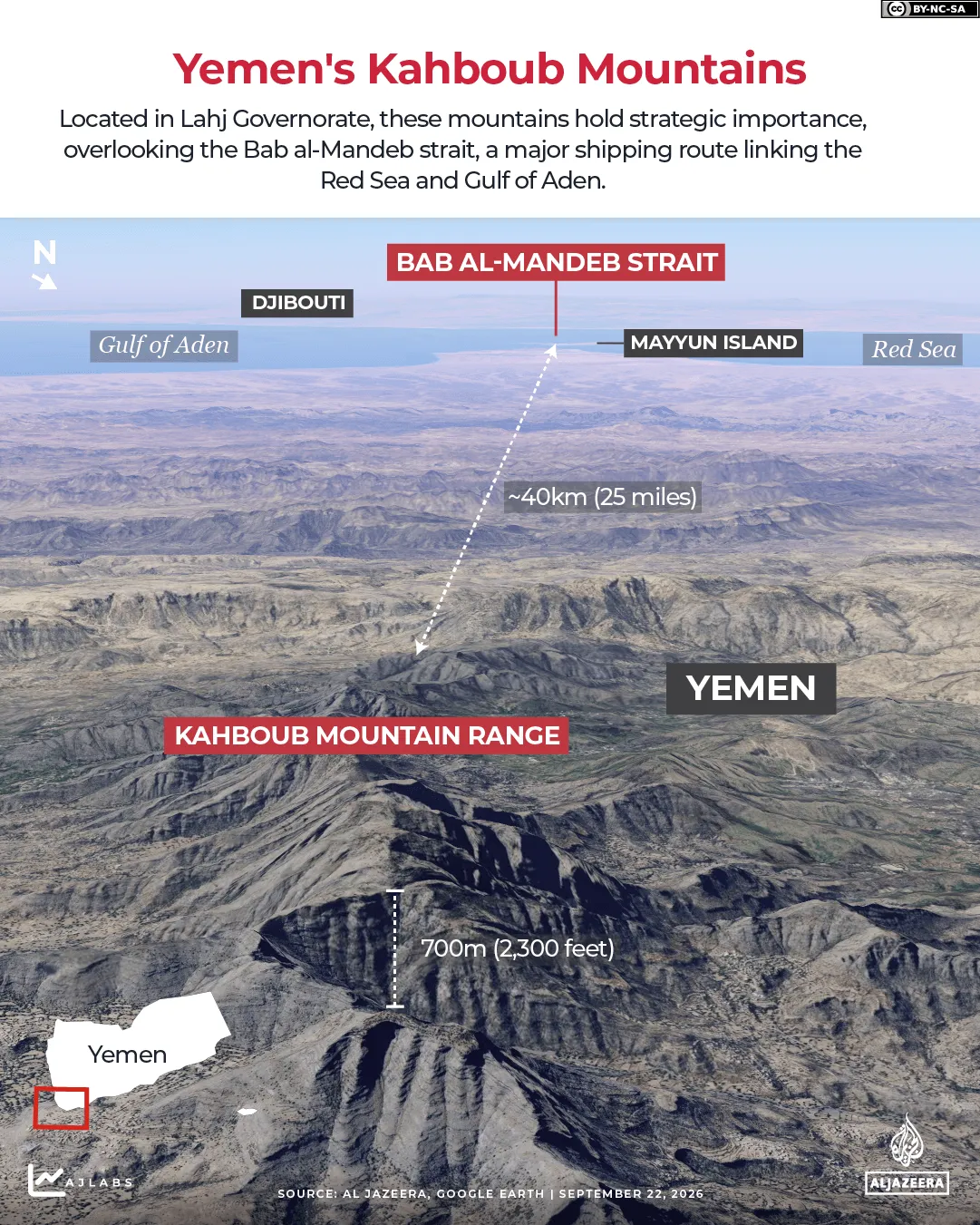
Kahboub, a mountainous region spanning parts of the Lahj and Taiz governorates in southern Yemen, derives much of its strategic importance from its proximity to Bab al-Mandeb. Some of its heights lie about 40km (25 miles) from the waterway, providing commanding views across a stretch of the Red Sea, through which a significant share of global maritime trade and millions of barrels of oil pass each day.

While that vantage point has considerable military value, experts said the mountains are unlikely to serve directly as a launchpad for attacks in the Red Sea. Their more immediate importance for the Houthis lies in securing the territory the group has already captured.

“The mountains are the natural wall that protects the Houthis’ rear on the coast. Controlling them would cut the coast off from the government-held south and place direct pressure on Lahj and, in the longer term, Aden,” Faozi Al-Goidi, a visiting fellow at the Middle East Council on Global Affairs, told Al Jazeera.

Securing their rear would help the Houthis prevent government forces from attacking their coastal positions from behind or severing the routes connecting their newly captured territory. Until the high ground is secured, Houthi forces stationed along the Red Sea remain vulnerable to attacks from government-held areas to the south and east.

Capturing the elevated positions, therefore, would make Kahboub less important as a potential launchpad for maritime attacks than as a defensive shield for the Houthis’ military gains along the coast.

Ewa K Strzelecka, a visiting senior fellow at the London School of Economics, told Al Jazeera that controlling the coastline, Mayyun Island and the neighbouring highlands would give the Houthis “strategic resilience”.

INTERACTIVE- Yemen Kahboub Mountain bab al-mandeb map Red Sea Houthi-1790058661
(Al Jazeera)

“Holding the coastline, Mayyun and the adjacent highlands together would give the Houthis a much deeper and more defensible position around one of the world’s principal maritime chokepoints,” she said.

Those positions would allow the Houthis to move fighters, weapons and supplies along the coast with less risk of their routes being severed from behind.

“From the high ground, the Houthis could monitor movements along the coast, around Mayyun Island and towards the chokepoint while protecting missile, drone and potentially unmanned-boat infrastructure positioned farther inland,” Andreas Krieg, a senior lecturer at the School of Security Studies at King’s College London, told Al Jazeera.

The battle is already proving slower than the Houthis’ rapid advance across the coastal plains. Footage circulated on X by the Taiz Military Axis Command’s media centre appears to show intense fighting between forces aligned with the Yemeni government, local fighters and the Houthis on mountain fronts. The footage could not be independently verified by Al Jazeera.

“This is not an easy battle,” said Mohammed al-Basha, an analyst and a former spokesperson for Yemen’s embassy in Washington. “The fighting is taking place across some of Yemen’s most unforgiving terrain where control of a single hilltop or mountain peak can come at a heavy cost.”

Could the Houthis isolate Taiz by controlling Kahboub?

Control of Kahboub could also place greater pressure on Taiz, a symbolically and strategically important city, as the Taiz governorate forms a bridge between the Houthi-held north and the government-held south and the Red Sea coast. Whoever controls it gains the upper hand in the movement of weapons and supplies between the interior and the southern port city of Aden. Losing it, therefore, could deal a serious blow to the government.

Murad Al-Arefi, an editor at the Sana’a Center, told Al Jazeera that taking Kahboub would “increase pressure on the southern and western approaches to Taiz” although he cautioned that it should not yet be seen as evidence of a broader attempt to encircle the city.

The immediate threat to the Taiz-Aden connection is less direct because Kahboub does not itself sit across the route.  “What matters is whether the Houthis can subsequently push farther east through Al-Wazi’iyah and towards the Al-Turbah-Lahj axis, which would place much greater pressure on the southern approaches to Taiz and potentially weaken its connection with Aden,” Strzelecka said.

A further advance, therefore, could leave government forces defending several mountain fronts simultaneously while relying on fewer secure routes to move troops, weapons and supplies, leaving Taiz increasingly exposed. One of Yemen’s largest population centres, Taiz became an important centre of resistance to the Houthis after they seized Sanaa in 2014, and was besieged by the rebel group for years. A major Houthi breakthrough there, therefore, would carry symbolic significance far beyond the territory captured.

What could it mean for Red Sea shipping?

Officially, the Houthis have said their current restrictions in Bab al-Mandeb would apply only to Saudi-linked shipping.

But during its previous Red Sea campaign, the group struck or endangered ships with no clear connection to Israel – their purported target during Israel’s genocidal war on Gaza – raising questions about how narrowly any new restrictions would be applied. Seizing the Kahboub Mountains would further strengthen the Houthis’ position by helping them secure the coastline overlooking Bab al-Mandeb and making it harder for their opponents to push them back.

Simon Mabon, a professor of international relations at Lancaster University, told Al Jazeera that the offensive showed the Houthis using their momentum to capture more territory, weaken their opponents and “dominate Yemen further”.

“This is the Houthis trying to seize more ground and diminish the capacity of their enemies while increasing their strategic ability to close Bab al-Mandeb,” Mabon said.

Source link

Italy to deploy warships to protect shipping through Bab al-Mandeb | Global Energy Crisis News

Italy’s defence minister warns of severe economic fallout if Bab al-Mandeb becomes impassable, bypassing EU delays.

Italy will deploy warships to ensure safe passage for its commercial vessels through the Bab al-Mandeb strait, Defence Minister Guido Crosetto said, adding that Rome would not wait for a joint decision from the European Union.

“We have the capabilities to protect the passage,” Crosetto said, warning that if the waterway became impassable, the economic consequences would be severe.

Recommended Stories

list of 3 itemsend of list

The Italian defence minister said that Rome “must not allow bureaucratic delays in decision-making to exacerbate an already complex situation”.

Bab al-Mandeb links the Red Sea to the Gulf of Aden, forming one of the world’s busiest shipping corridors between Europe and Asia and a critical route for oil, gas and container traffic heading to and from the Suez Canal.

Roughly 12 to 15 percent of global trade has historically passed through the narrow waterway, which separates Yemen from Djibouti and Eritrea on the African side and is only about 30km (19 miles) wide at its narrowest point.

The strait’s importance has grown sharply since Iran effectively seized control of the Strait of Hormuz earlier this year amid its war with the United States and Israel, choking off the world’s most important oil chokepoint and pushing much of the Gulf’s crude exports towards alternative routes.

Saudi Arabia, in particular, has increasingly relied on pipelines and Red Sea shipping to bypass Hormuz altogether, making the Bab al-Mandeb strait one of the last major arteries still open to Gulf oil reaching global markets.

Control of the strait has been contested for years, as Yemen’s government, Houthi rebels and, at times, forces in the region have held stretches of its coastline at different points since the war in Yemen began in 2015.

The significance of the strait has been hit dramatically in the past few weeks, when the Iran-backed Houthi movement launched a rapid offensive that brought the entirety of Yemen’s western Red Sea coast under its control, including several strategically located islands.

The advance has given the Houthis effectively unrestricted access to the waterway, a development seen as a major setback for international shipping, given the group’s history of attacking vessels it associates with the US or its allies in the region.

The US and the European Union have already carried out military operations aimed at better protecting merchant ships from Houthi attacks in the area, though those efforts have struggled to fully secure the route as fighting in Yemen has escalated.

Source link