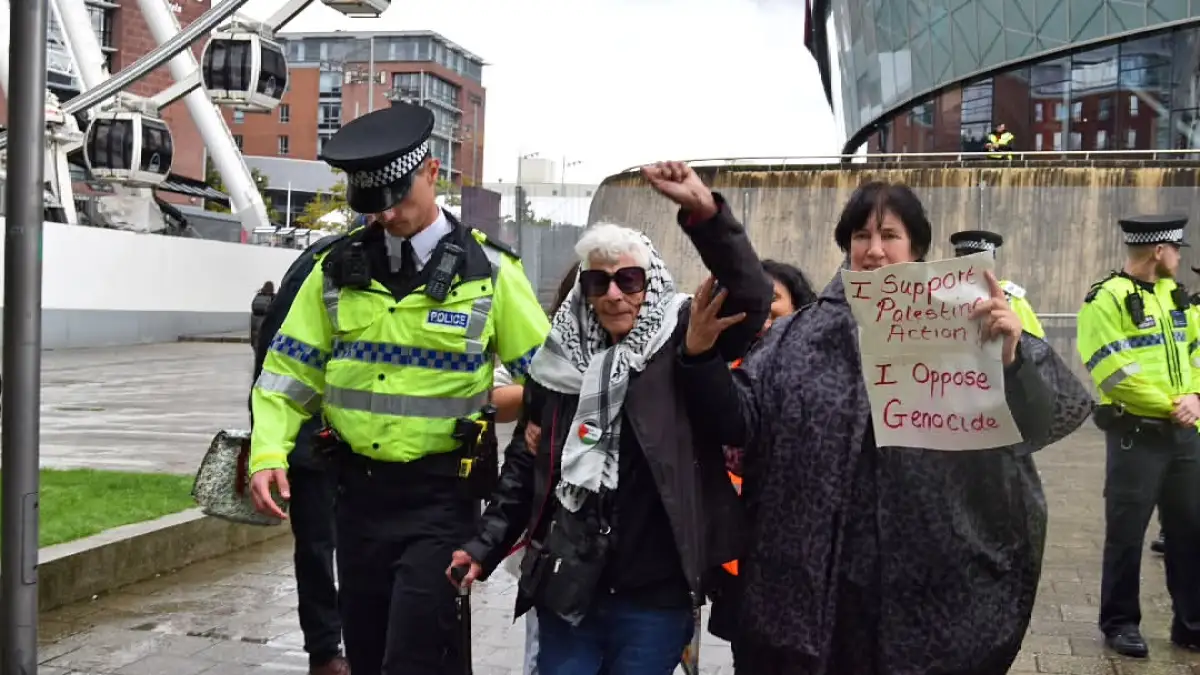
‘I’ve been trying to get arrested for quite some time.’ 94-year-old Jewish human rights barrister Margaret Owen was detained at a pro-Palestine rally in Liverpool after displaying support for Palestine Action, a group proscribed as a terrorist organisation in the UK.
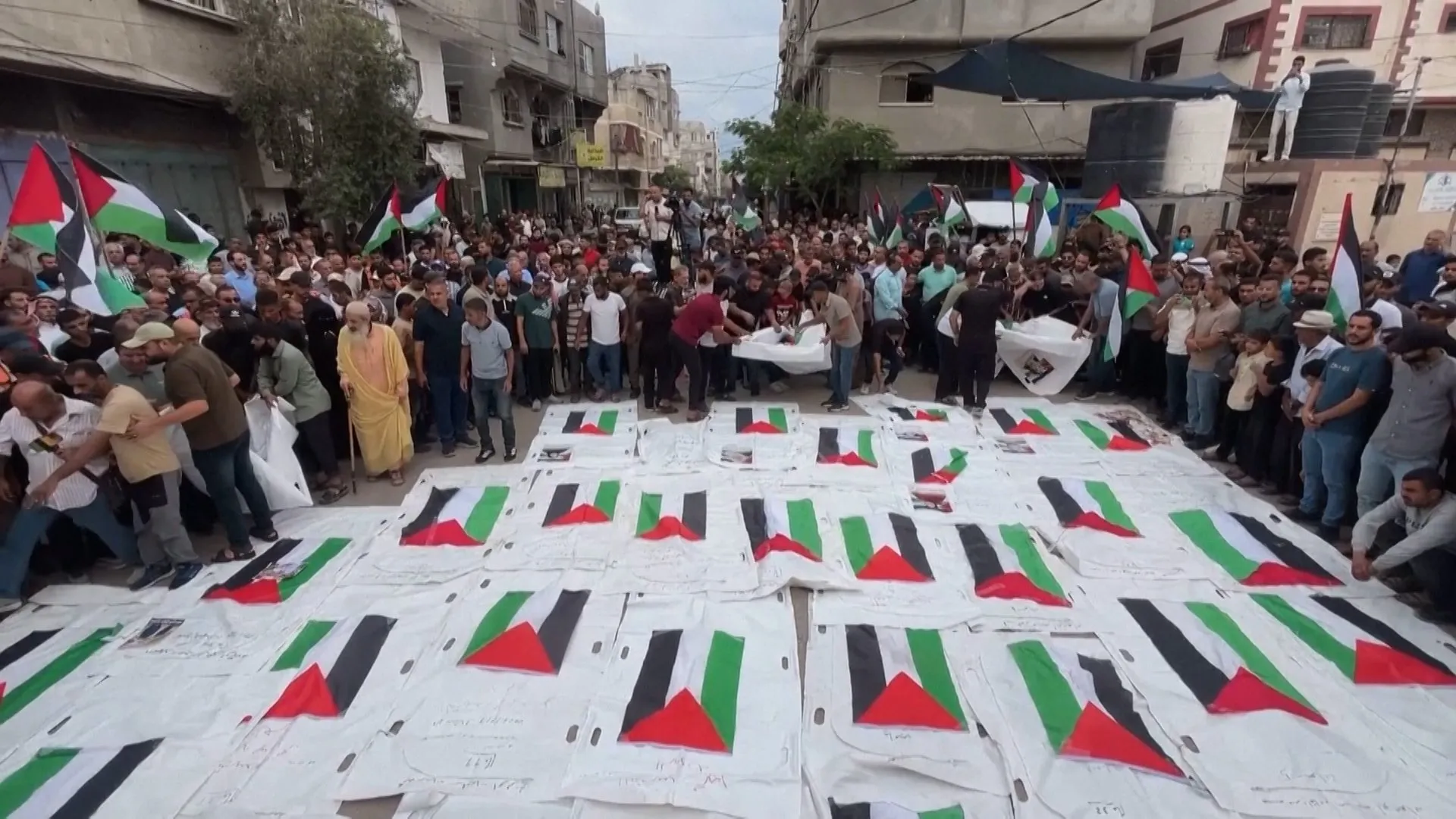
Dozens of mourners in Gaza grieve the loss of their loved ones as they bury the fragmented remains of relatives killed in an Israeli strike in October 2023.
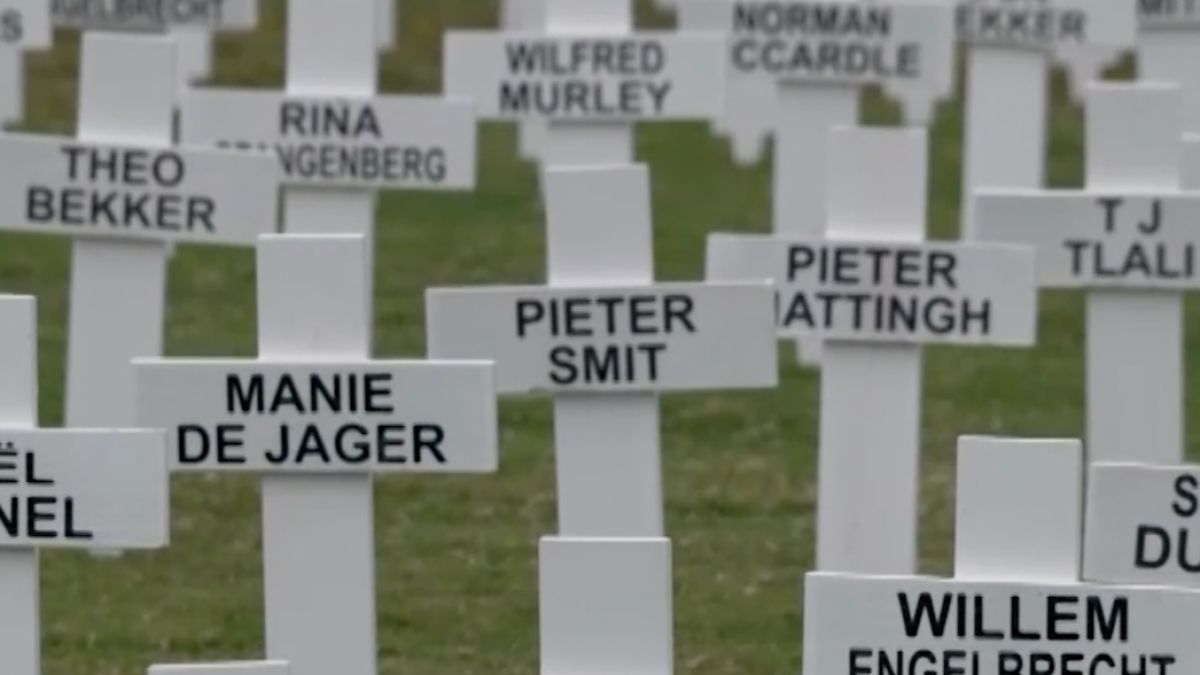
Memorial crosses installed in Washington DC have revived erroneous claims of a ‘white genocide’ against farmers in South Africa, a narrative echoed by US President Donald Trump. South Africa’s government rejects the allegation as baseless, saying crime and violence affect people across all racial groups.
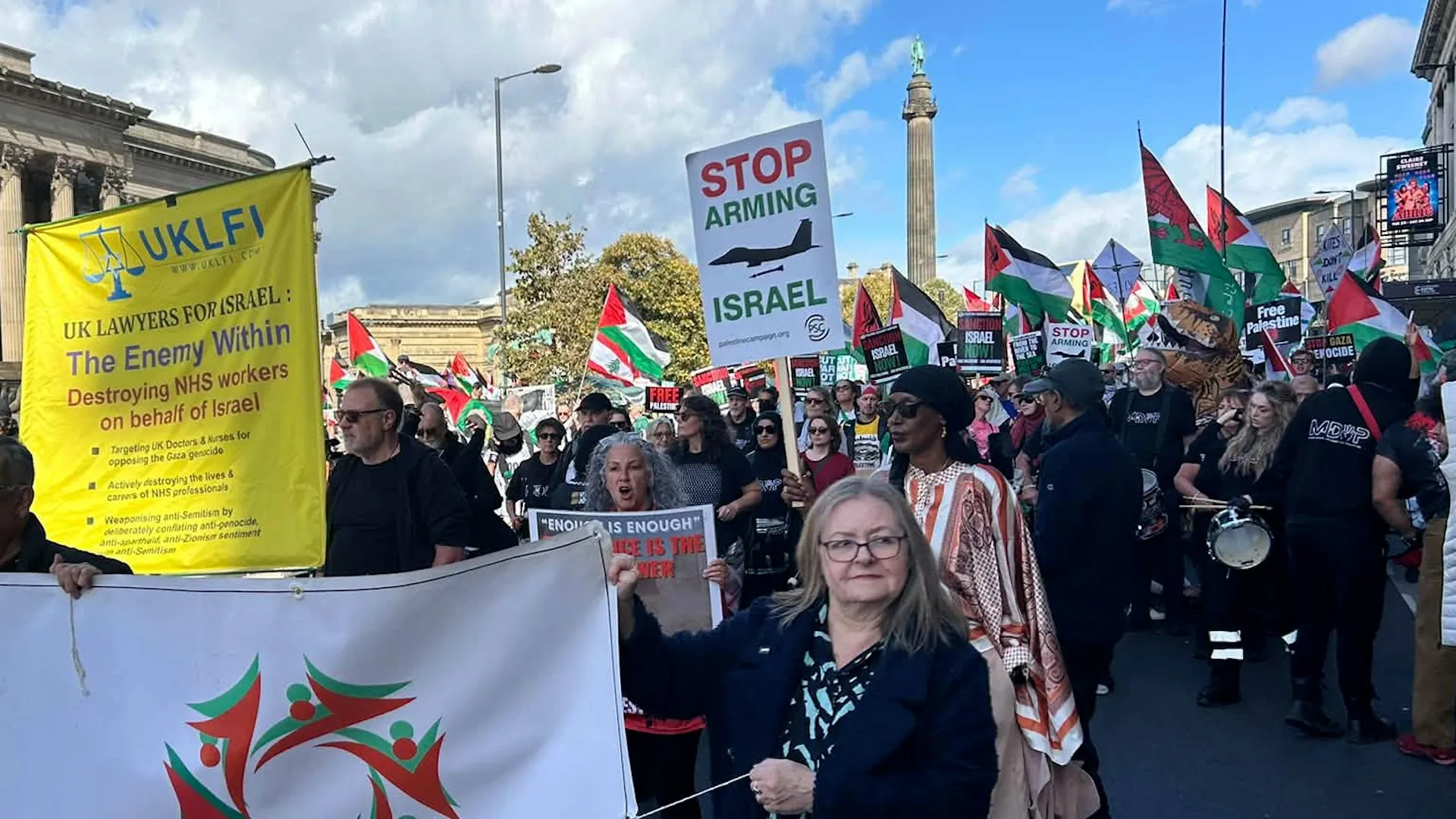
Pro-Palestine protesters have marched on Labour’s annual conference in Liverpool, calling for an end to UK arms sales to Israel and the imposition of sanctions. The protest follows Labour’s sanctions on Israeli settlements, but demonstrators say the measures do not go far enough.
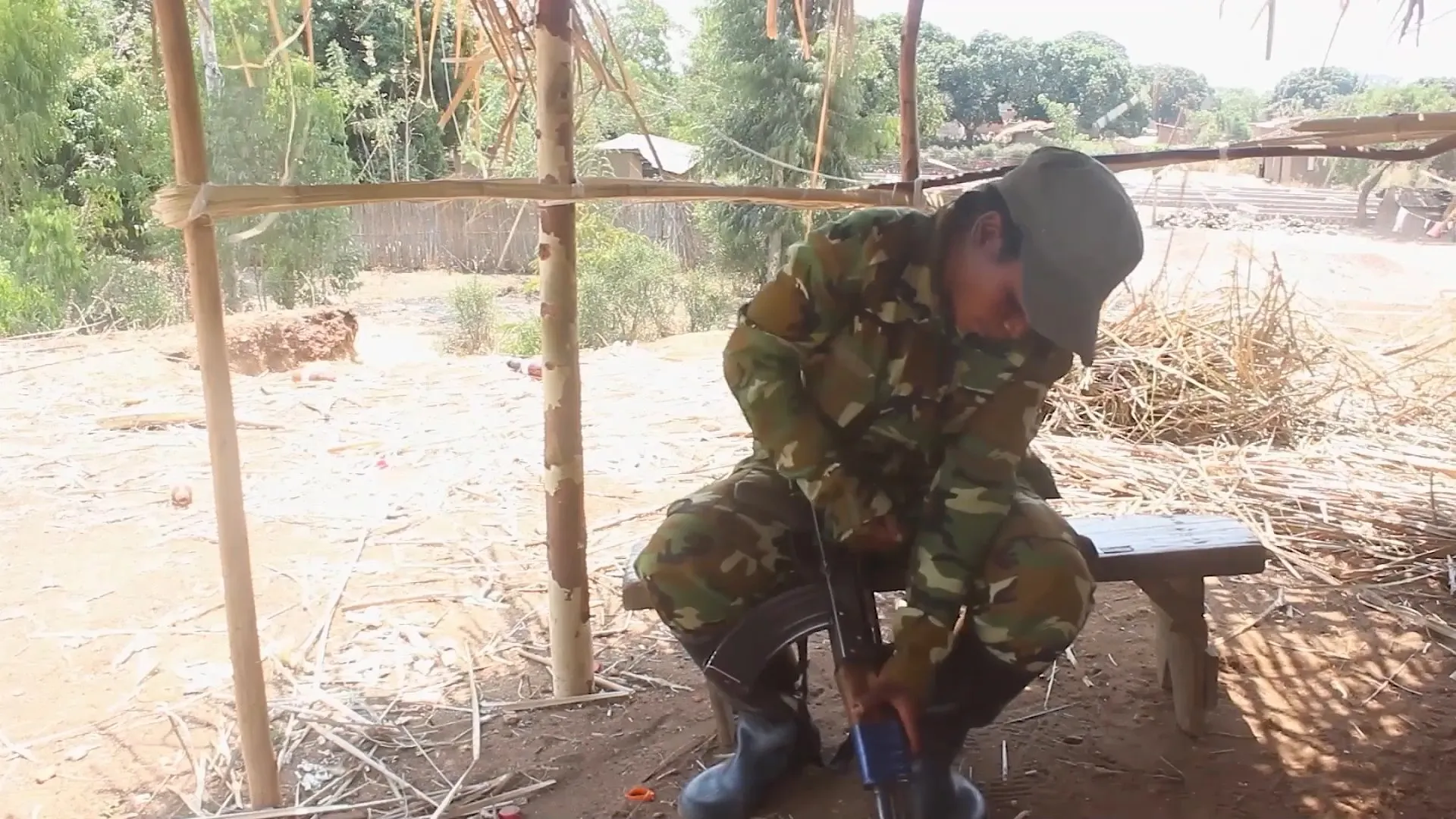
As war and sexual violence rage in eastern Democratic Republic of the Congo (DRC), women are joining pro-government Wazalendo fighters to defend their communities. However, the armed group itself faces serious accusations of human rights abuses, including gang rape.
A Pew Research poll in April indicated 60 percent of the US adult population held an unfavourable view of Israel.
Published On 26 Sep 202626 Sep 2026
US ambassador to Israel Mike Huckabee says that the recent souring of public opinion in the United States towards Israel is the result of a lack of “biblical literacy”.
In an interview with NewsNation on Thursday, the ambassador suggested there were three sources of declining support for Israel.
Recommended Stories
list of 3 itemsend of list
He cited disinformation and foreign propaganda, a hatred of those who believe “there is a God and that he’s made up the rules for life”, and not knowing the Bible.
“You add all that together, I guess you just want to be mad at Israel and blame them for everything,” he said.
Huckabee claimed that accusations of genocide in Gaza and that Israel is an apartheid state are false, and Americans would have a more favourable view of Israel if they would “look at the truth”.
A Pew Research poll in April indicated that, although favourable opinion of Israel remained relatively strong at 65 percent among white evangelicals, such as Huckabee, 60 percent of the US adult population held an unfavourable view of Israel.
An AP-NORC poll from July suggested that Americans who believed Israel committed genocide in Gaza outnumbered those who did not, although roughly half said they did not know enough to answer.
For Israel, the decline in support has become alarming as prominent critics of Israel won several elections, including Zohran Mamdani, who became New York City mayor.
Israeli Prime Minister Benjamin Netanyahu used part of his speech at the United Nations General Assembly to lambast Mamdani, claiming that Jews in New York told him that they no longer feel safe in the city.
Netanyahu, too, has seen declining popularity in the US, with the same Pew survey indicating more than half of Americans did not trust him to do the right thing regarding world affairs.
Mamdani has previously said that he opposes hatred and bigotry, including anti-Semitism, but promised to execute an International Criminal Court warrant for Netanyahu for war crimes when the Israeli leader next visited New York City – before eventually concluding that the city did not have the legal authority to do so.
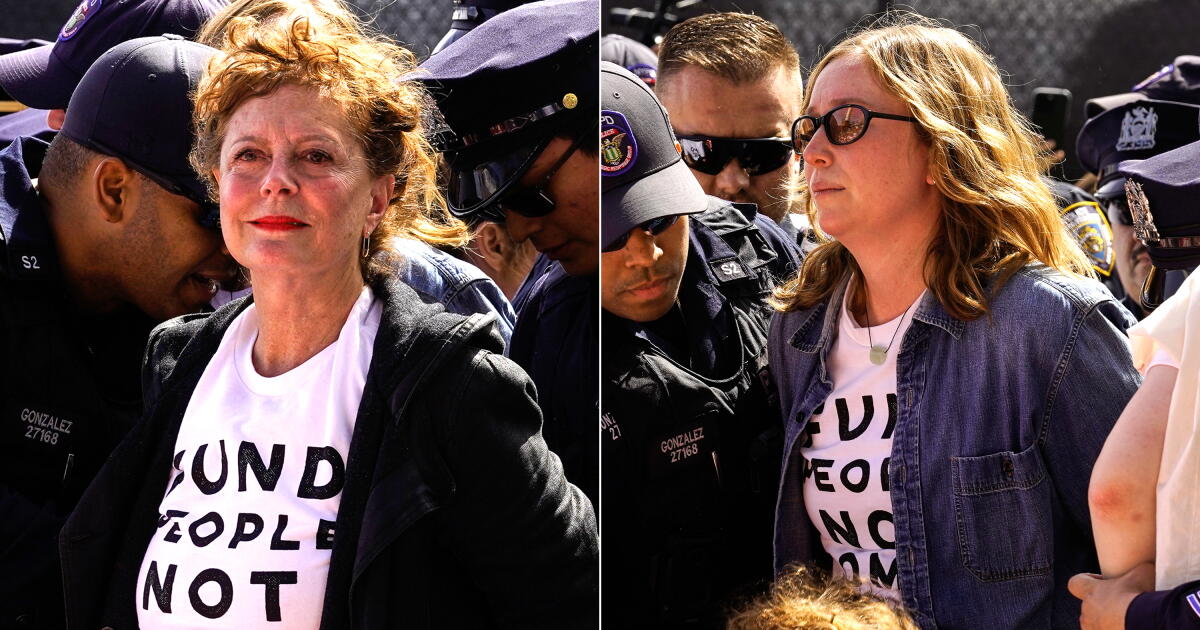
Actors Hannah Einbinder and Susan Sarandon were among scores who were arrested Thursday in New York City as they protested an appearance by Israeli Prime Minister Benjamin Netanyahu before the United Nations General Assembly.
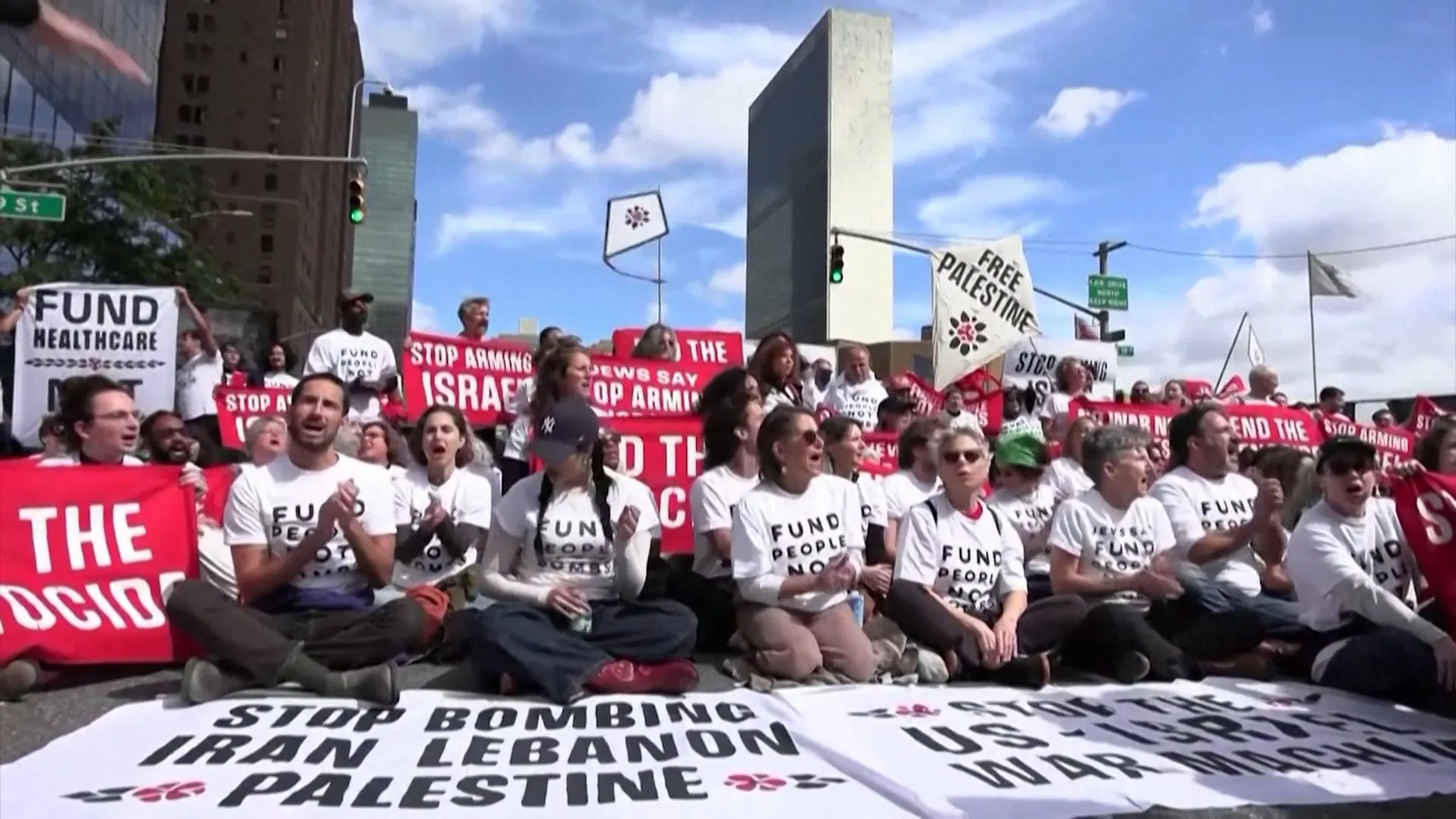
According to an Instagram video by Jewish Voice for Peace, one of the organizers of the demonstration, more than 100 individuals were arrested for blockading the U.N.
“Netanyahu out of New York!” Einbinder shouted as officers took the “Hacks” star into custody.
The 31-year-old Jewish actor has been a critic of Israel’s war in Gaza; last year, when receiving the Emmy Award for supporting actress in a comedy series, she concluded her speech by saying, “Go Birds, f— ICE and free Palestine.” “Birds” was in reference to the Philadelphia Eagles. Einbinder is a big fan.
Other well-known faces were spotted among demonstrators. Actors Cynthia Nixon, Elliot Page and Indya Moore were there, as well as comedians Mary Beth Barone, Caleb Hearon and Sarah Sherman and musicians Lucy Dacus and Julien Baker, according to multiple online reports.
As numerous delegates exited the room, Netanyahu called out: “If there are any other moral cowards who have not yet left the hall, please do so now.”
In his defiant speech, the Israeli leader denied allegations that the country was committing a genocide in Gaza, calling it “the biggest lie of the century,” and he asserted Israel’s right to wage war against Iran.
The Israel-Hamas war began on Oct. 7, 2023, when Hamas-led militants attacked Israel, killing around 1,200 people and kidnapping 251. Israel’s military operations have since killed at least 73,922 Palestinians, according to the Gaza Health Ministry.
In October, Israel and Hamas agreed to a ceasefire. However, Israel continues to carry out airstrikes in Gaza near military-held zones.
Ahead of Netanyahu’s visit, New York City Mayor Zohran Mamdani labeled the world leader a “war criminal” in a public video, stating that his office looked into enforcing a 2024 arrest warrant issued by the International Criminal Court if Netanyahu visited the city.
However, in that same video, Mamdani acknowledged that the city did not have the authority to enforce the warrant, instead calling on the federal government to act.
In his U.N. speech, Netanyahu addressed Mamdani, saying: “You tried to stop me from coming here. You tried to silence me. Well, you can’t silence me, you can’t silence the truth. Here’s the simple truth, Israel didn’t commit genocide. Israel prevented genocide.”
Stars, local lawmakers and activists protesting outside the U.N. chanted “Free Palestine” and “Netanyahu, you can’t hide, we charge you with genocide.” While police arrested some members in the crowd, individuals called out: “The whole world is watching.”
Actors Susan Sarandon and Hannah Einbinder were among roughly 100 protesters arrested by New York City police outside the UN ahead of Israeli PM Benjamin Netanyahu’s speech. Protest organiser Jewish Voice for Peace had accused the UN of “playing host to a war criminal”.
In Super Macklemore 64, players are chased by a giant Ed Sheeran, dodge tiny billionaire Robert Krafts and summon musicians to chant “Free Palestine”. Creator Jonathan Mann says it highlights the “absurdity” of Macklemore being dropped from Sheeran’s concerts and Israel’s genocide in Gaza.
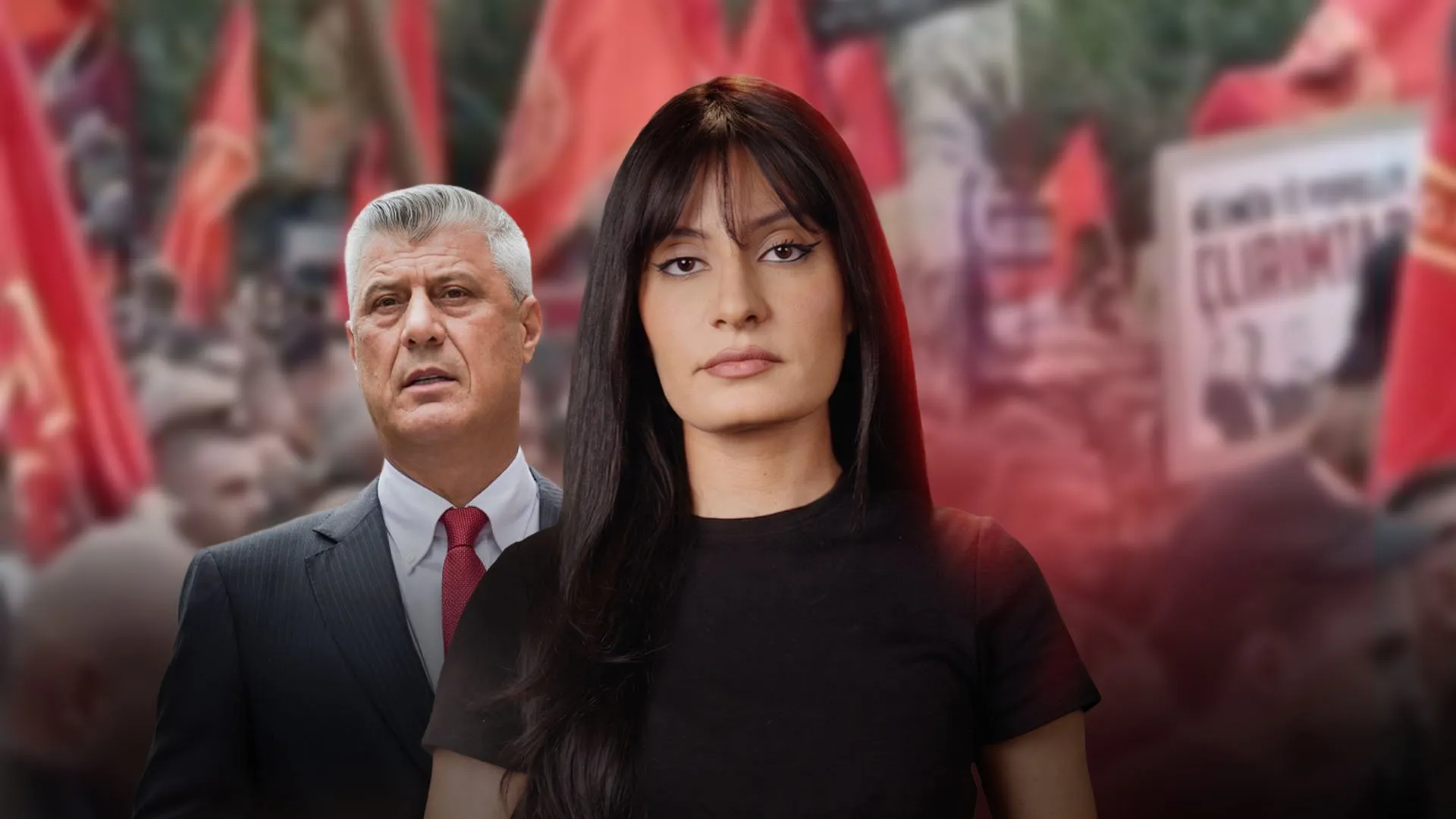
Hashim Thaci, former President of Kosovo and KLA leader, has been found guilty of war crimes by the Specialist Court in The Hague. Al Jazeera’s Marah Rayan explains how the ruling came about.
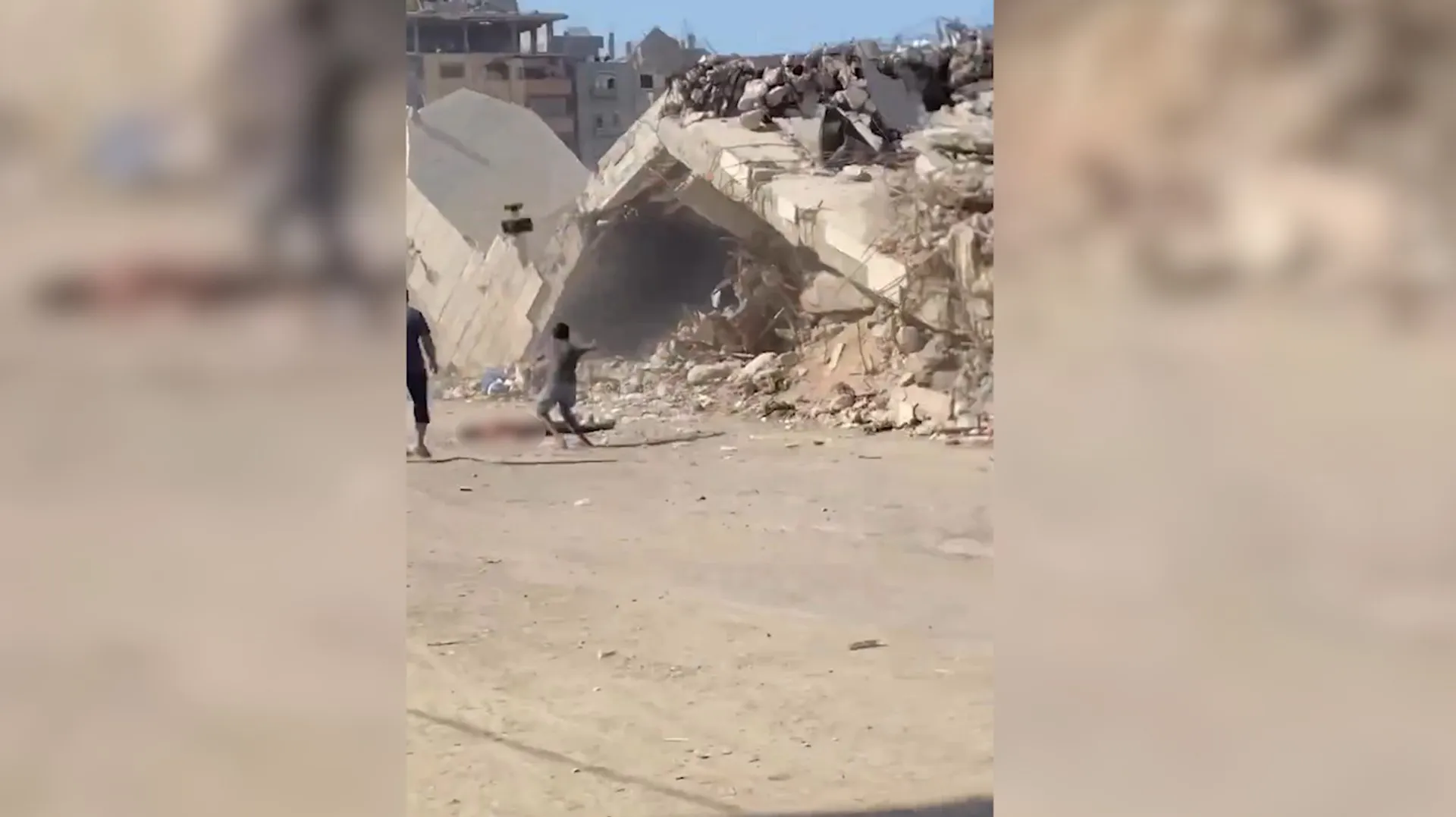
A 15-year-old boy has been killed in an apparent Israeli double-tap strike as he rushed to help a paramedic wounded in an attack moments before. Israel has killed around one child per day in Gaza since the 2025 ‘ceasefire’.
“Pravac Potocari” or “Direction Potocari” were the words used by former Bosnian Serb general Ratko Mladic as he entered Srebrenica on July 11, 1995.
Mladic was referring to the nearby village of Potocari, which hosted a United Nations peacekeeping base and was the initial gathering point for Bosniak refugees during the war in Bosnia. Under Mladic’s command, Bosnian Serb forces committed a genocide against thousands of Bosniak men and boys in the days that followed.
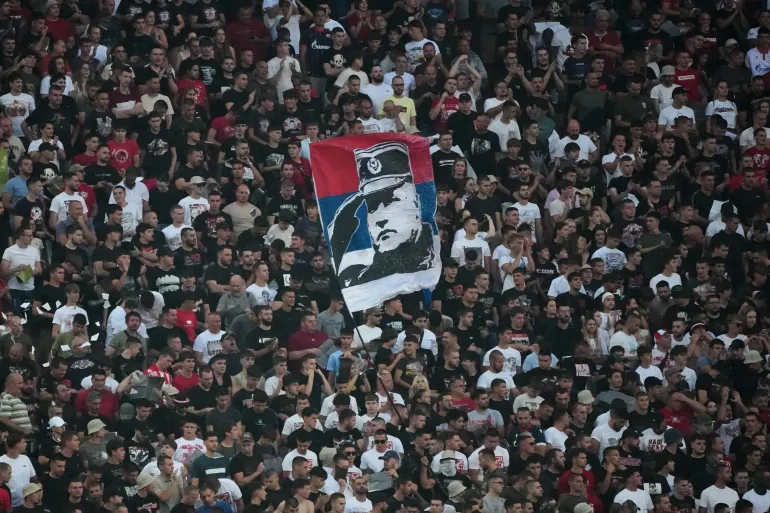
“Pravac Potocari” was also the slogan the fans of the Serbian football team Red Star chose on Sunday to honour the so-called “butcher of Bosnia”, who died in The Hague, the Netherlands, on August 27, while serving a life sentence for genocide, war crimes and crimes against humanity. During a match against city rivals Partizan in the Serbian capital, the supporters also unveiled a giant image of Mladic and observed a minute of silence in his memory.
The tribute came days after European football governing body UEFA fined Red Star a total of 98,250 euros, or $114,100, over a banner -“General, eternal glory and thanks” – dedicated to Mladic that was unveiled by the club’s ultras during a Europa League playoff away leg in Plzen, in the Czech Republic.
The penalty included a ban on Red Star supporters travelling to the club’s next two European away fixtures, in Lugano, Switzerland on October 15 and Ghent, Belgium on November 26.
It was not the first time Red Star supporters had expressed support for Mladic during a European match. Nine years earlier, fans displayed similar messages during a Europa League tie against Belarusian club BATE Borisov.
‘Most shameful event this stadium has seen’
For Slobodan Georgiev, a news director at TV Nova S in Serbia, the minute of silence at Belgrade’s Marakana stadium marked a qualitative shift rather than a repeat performance.
“Glorifying a convicted war criminal is nothing new, but officially paying tribute to him with a minute of silence is new – and it’s the most shameful event this stadium has witnessed,” Georgiev said. “Displaying the shameful slogan ‘Pravac Potocari’ cannot be justified, though in the coming days we’ll surely see attempts to do so.”
He placed the display in a much longer lineage. “Since the breakup of Yugoslavia, the terraces have served as a recruitment centre for paramilitary formations, and in various forms that haven’t changed to this day,” he said. “The worst messages have always travelled through the terraces – everything the authorities didn’t dare say themselves, they most often said through the stands, as they did … at the Red Star–Partizan match.”
But what made Sunday’s so-called “eternal derby” notable was not only the Red Star display.
Partizan’s own hardcore supporters, the Grobari, had raised their own banner in tribute to Mladic – reading “General, thank you” – just a week earlier, on August 31, during a Serbian Super Liga match against OFK Beograd, with Mladic’s flag flying over the north stand for the full 90 minutes.
For Georgiev, the fan groups are not an autonomous phenomenon, but an instrument. “The state, through its secret services and through criminal groups, has always managed these groups and used them for the worst tasks: Mobilisation in war, crime in peacetime, and delivering the ugliest political messages,” he said. “A stand that boasts it was founded by Zeljko Raznatovic Arkan, and that sings in praise of Ratko Mladic without facing any legal consequence for it, speaks for itself.”
Georgiev was referring to Arkan, the Serbian paramilitary leader whose unit committed atrocities during the Yugoslav wars and who, before his assassination in Belgrade in 2000, was closely associated with Red Star’s hardcore fan base, the Delije – a group he is widely reported to have helped organise.
‘Clearest indication issue deeply ingrained’
Sasa Djordevic, a senior analyst at the Global Initiative Against Transnational Organized Crime (GI-TOC), sees the same continuity Georgiev described, tracing it back further still. “The connection between football hooliganism, nationalism and politics in Serbia dates to the late 1980s and became particularly evident during and after the breakup of former Yugoslavia,” he said. “Certain elements of the hooligan scene have since been exploited as a political ‘rent-a-mob,’ and some group leaders have reaped benefits from political protection or business opportunities.”
What worries him most now is not the display itself, but how unremarkable it risks becoming. “Incidents like those that occurred at Marakana last night risk being perceived as routine rather than serious manifestations of hate speech,” he said. “Public debate has nearly vanished, and society seems increasingly desensitised to violence and hate speech in stadiums. When such behaviour starts to feel normal, it may be the clearest indication that the issue has become deeply ingrained.”
Ivana Jeremic, an editor at the Balkan Insight publication, pointed to why sports venues serve that function so well. “Stadiums have long ceased to be merely sporting arenas – they are fertile ground for sending messages that can’t be spoken publicly, or that come wrapped in a softer form,” she said. “Matches involving Partizan, Red Star, and the national team stand out in particular for this.”
The political ties, she argued, are an open secret. “The political connections between the fans leading the stands and those in power are something of a public secret, with a number of documented examples of direct influence. What we hear or see on the terraces could hardly happen without some form of ‘permission’ from the authorities,” Jeremic said. “When it comes to Mladic, we’ve seen a rise in such messages in recent days. Red Star’s fans, as well as the club itself, are currently perceived as a mouthpiece of the government.”
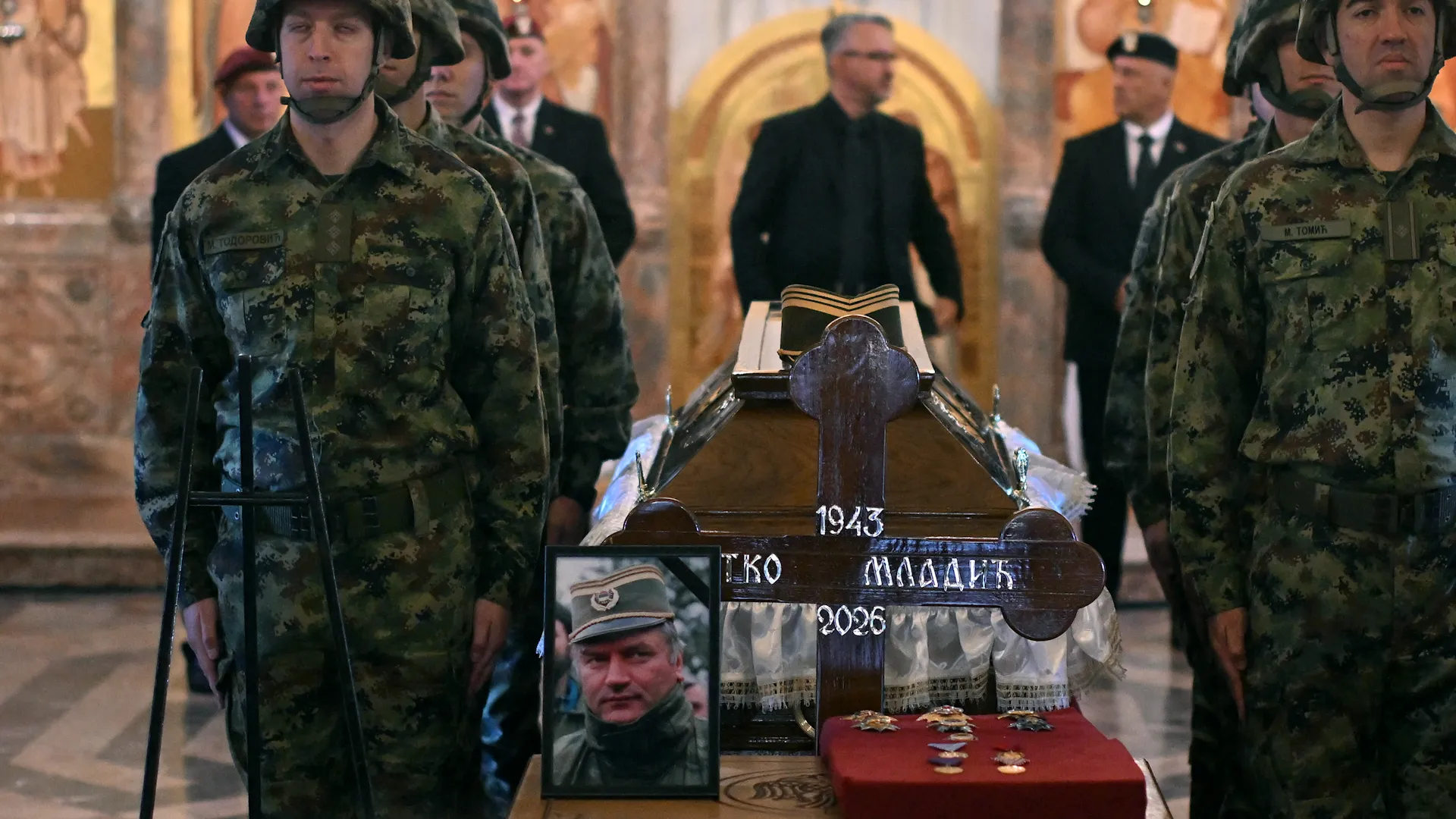
On Thursday, a Serbian government plane carried Mladic’s body from The Hague to Belgrade for burial, where it was received with military honours.
Red Star fans wave a flag showing Ratko Mladic during the match against Partizan [Darko Vojinovic/AP Photo]
From the terraces to paramilitary structures
Djordevic traced the mechanism behind this convergence to the same period cited by Georgiev. “During the breakup of Yugoslavia, football stadiums became spaces for nationalist mobilisation, and for some young men the step from organised football violence to paramilitary structures was short,” he said. “Hooligan groups since then cultivate loyalty, hierarchy, readiness to use violence and rapid mobilisation to achieve their extremist views that go beyond strictly football supporter beliefs.”
That structure is not unique to Serbia, but it is particularly acute there. GI-TOC’s regional research examined 122 fan groups, identifying 78 as ultras – and found 21 groups combining violent hooliganism with links to extreme politics. “The most problematic situation was in Serbia, followed by Bosnia and Herzegovina,” Djordevic said, while cautioning against overreach. “The term ‘terrorism’ should be used cautiously: The evidence points to particular groups or individuals linked to violent extremism and paramilitary structures, not supporter groups as a whole.”
UEFA’s disciplinary decision detailed the layers of the punishment: A 50,000-euro ($58,000) fine for transmitting a message unfit for a sporting event, an 8,250-euro ($9,580) fine for team misconduct, and the activation of a suspended sanction originally imposed in April 2025 over racist conduct by Red Star fans – a suspended stadium ban now converted into a one-match travelling ban, conditionally extended for a further two years.
But fines on paper, Djordevic said, rarely reach the people who are actually liable. “The problem is that fines imposed on clubs do not necessarily affect those responsible for the incidents,” he said. “If hooligans remain untouched, financial penalties can become simply another cost of doing business rather than a tool for changing behaviour. That does not mean clubs do not care. They respond when sanctions are certain, substantial, and consistently enforced, as seen more clearly in basketball games than in football.”
The gap, he argued, is not a lack of rules. “Serbia already has a solid legal framework,” he said. “The real issue is enforcement. Sanctions need to be applied quickly, consistently and without exceptions, both to clubs and to individuals responsible for violence and hate speech.”
The funeral of convicted war criminal Ratko Mladic has been held in Serbia’s capital with state honours, and attended by thousands. The former Bosnian Serb commander was found guilty of genocide against Bosniak Muslims in the 1990s. He died serving a life sentence at the ICC in The Hague.
George Orwell’s dystopian foresight could easily find new expressions in the ongoing Israeli wars of genocide in Gaza and Lebanon. Much like “war is peace”, the Biden administration and the European Union have contributed to creating phrases such as “aggression is self-defence,” “murder is collateral damage”, “safe areas are death traps” and “humanitarian aid is a starvation diet.”
After enduring a full year of Israeli terror, extreme torment and military occupation, fear never conquered Gazans. Despite the complete Israeli blockade – abetted with the help of the Egyptian regime – and the stark imbalance in military power, Gaza’s collective resistance, by all means necessary, remained steadfast and resilient.
Notwithstanding the above, Benjamin Netanyahu has not succeeded in achieving any of his declared objectives. For instance, less than seven per cent of the freed Israeli captives were recovered by force. Perhaps because the Israeli prime minister’s undeclared Zionist objectives, such as land grabs in the West Bank under the shadow of the Gaza genocide, took precedence over pursuing a proven venue for the release of Israeli prisoners.
Netanyahu’s war success can be only measured by Israel’s scale of vengeance, as the toll of the murdered and injured has reached 150,000. Gaza has been turned into a living hell. A war that pervasively and systematically diminished Gaza’s economic capacity, following an 18-year blockade that crippled the economy and forced upon it an ever-increasing sense of dependency.
Yet, Israel failed to bring any part of Gaza into submission. As a result, several Israeli generals, led by former national security adviser Israeli Maj-General Giora Eiland, contrived a new approach, the “General’s Plan”, to ethnically cleanse northern Gaza.
The General’s Plan is not exclusively a military strategy but rather an orchestrated noncombatant action, euphemistically termed to mask its true intention: genocide and ethnic cleansing through starvation. It calls first for the complete isolation of northern Gaza from the rest of the Gaza Strip. Second: compartmentalise northern Gaza into separate quarters and declare each section a war zone, forcing civilians to leave or become legitimate military targets.
The initial phase, which began in early October, blocked aid trucks from reaching the north and then segregated the Jabalia camp from its surroundings. In other words, genocide by attrition, one quarter at a time, in a slow motion.
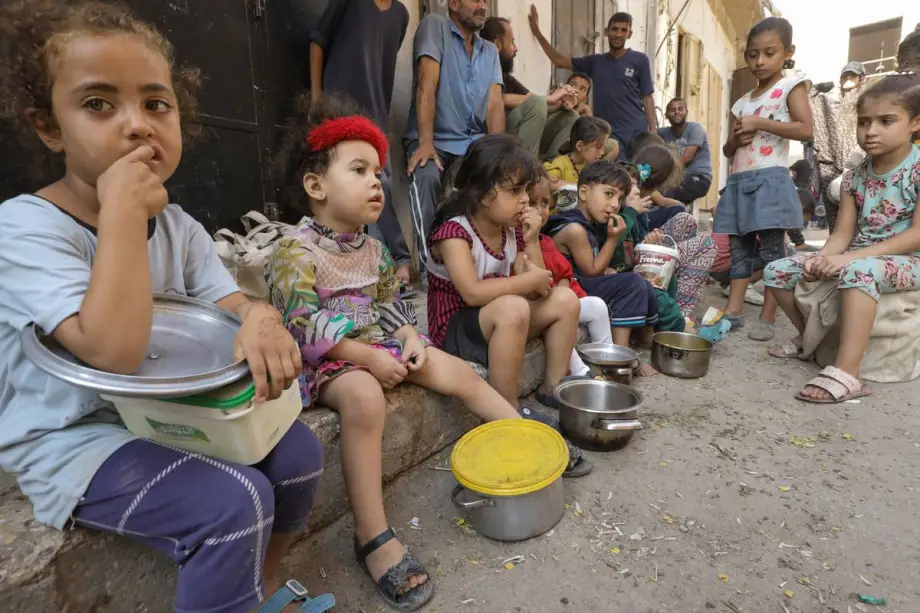
As part of the General’s Starvation Plan, Israel bombed the only UN distribution center in Jabalia camp on Monday, murdering ten civilians queuing to receive food aid. Since last October, around 400,000 civilians remain in northern Gaza out of the original 1.2 million. Many refuse to evacuate despite the unbearable conditions. They know from historical experience that evacuation is an Israeli alias for ethnic cleansing. Once they leave, they may never return, as happened in 1948. They also saw what happened to those who evacuated, many were killed as they “moved south”, while others were murdered in the Israeli death traps, otherwise known as designated “safe areas.”
The Biden administration has been whitewashing Israeli use of starvation as a method of warfare since 9 October, 2023 when the Israeli minister of war declared “no electricity, no food, no fuel, everything is closed.” However, on Tuesday, a little over a year after the minister’s declaration, the American secretaries of state and defence sent Israeli officials a letter giving them another grace period of 30 days to allow food aid into north Gaza or risk a restriction of US military assistance to Israel.
The new warning feels like a classic case of a déjà vu. In April 2024, the Biden administration issued a similar warning to Israel ahead of a report that was being prepared by American officials examining Israel’s violation of the Leahy Law, particularly subsection 6201(a). The law stipulates that the US should not provide assistance to any country that “prohibits or otherwise restricts, directly or indirectly, the transport or delivery of United States humanitarian assistance.”
Following that warning, US government agencies and officials concluded that Israel was blocking American humanitarian aid to Gaza. The US Agency for International Development (USAID) notified the State Department of Israel’s “arbitrary denial, restriction and impediments” of American aid to Gaza residents. In addition, the State Department’s refugee bureau issued a similar opinion stating that “facts on the ground indicate US humanitarian assistance is being restricted.”
Even after those palpable reports from the two US agencies, the Israeli Sayanim and American Secretary of State, told Congress on 10 May that Israel does not restrict “the transport or delivery of US humanitarian assistance” in Gaza.
Empowered by Washington, the General’s Starvation Plan aims to block the delivery of medical aid, food, fuel and water to the besieged quarter, currently Jabalia camp where more than 20,000 people live. This is part of what appears to be a gradual genocide, while creating the illusion of allowing aid trucks into the northern area, as the US ambassador informed the UN Security Council on Wednesday.
The entry of aid trucks does not guarantee the delivery of food to the starving population. It means that Israel retains complete control over what section is fed and who is left to starve. It also confirms that American officials continue to be Israel’s willing enablers to carry on with its General’s Starvation Plan in a systematic and phased mini-genocide.