Gaza

Gaza will not forget, Palestine will remember – Middle East Monitor

Gaza will not forget

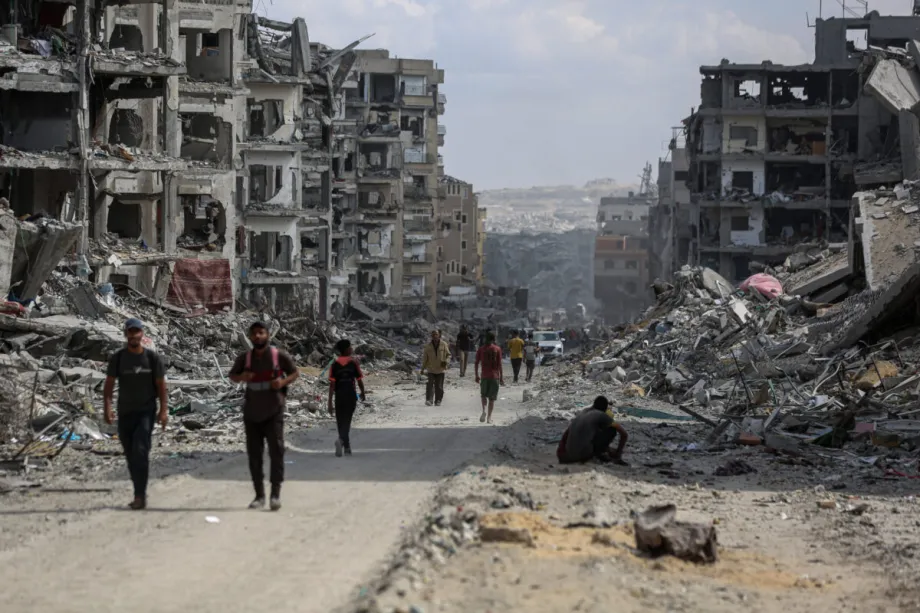
The suffocating smoke still hangs over her ruins, thick with the acrid stench of explosives powder and dust carrying the scent of betrayal and the mark of courage. Her streets, once filled with children’s laughter, became Israeli fields of slaughter. Now they echo with the names and memories of martyrs.

The mass graves, the broken concrete, and the twisted steel are not just evidence of Zionist hatred. They are witnesses to those who stood with her, and to those who failed her. Today, Gaza’s rubble holds more memories than all the nation’s libraries.

Palestine will remember

She will remember the selfless sacrifices of doctors and healthcare workers who refused to abandon their sick patients as bombs rained on their hospitals; the journalists who became the news, targeted for daring to expose the truth; the mothers who wrapped their children in the red, black, green, and white flag of a nation Israel is desperate to erase.

These are not tales of despair, but of defiance, insisting on its right to breathe life amid death.

Gaza will not forget

She will not forget the silence of Western democracies. In a tragic inversion, most European nations, shackled by the ghosts of their past, traded morality for absolution. The self-proclaimed champions of human rights offered Palestinians on the altar of yesterday’s victims to atone for Europe’s sins.

Gaza will not forget the Biden administration, which vetoed every U.N. Security Council resolution calling to end the genocide. Nor Donald Trump, who poured fuel on the fire, then demanded recognition for dousing his own flames.

This week, Arab, Muslim, and world leaders gather like moths around the American arsonist-turned-firefighter, “celebrating” the ashes of Gaza.

Palestine will remember

She will remember the people who rose for Gaza, from Yemen to Dublin, from Cape Town to London and Madrid, while Arab capitals from Cairo to Riyadh slept. Ireland and Spain led the boycott, while Arab countries from the Gulf to Jordan opened their ports and highways to provide alternative routes for Israeli goods, even as Yemen imposed a sea blockade in the Red Sea.

Gaza will not forget — nor forgive — the Arab governments that opened their ports when shipyard workers in Italy refused, delivering American weapons used to annihilate her children and destroy her hospitals.

Palestine will remember

She will remember South Africa — not an Arab or Muslim nation — that led her case before the International Court of Justice, charging Israel with genocide. A country once scarred by apartheid became the moral conscience of a world too timid to speak. In that act of solidarity, South Africa rekindled the universal truth that justice knows no borders.

Palestine will remember the Lebanese resistance that gave its leaders for Gaza’s defense; Yemen, poor in wealth but rich in dignity, whose solidarity never wavered; and Iran, steadfast against Israeli hubris. She will remember Ireland and Spain, who did not turn away when Arabs did, proving that true solidarity transcends borders, faith, and kinship, resting only on shared humanity.

She will remember the heroes of the flotillas who braved waves of hatred and siege to carry messages of compassion; the nameless volunteers who left the safety of their countries to heal the wounded and feed the hungry; the American students who turned campuses into encampments of resistance; the artists, actors, and musicians who risked careers for justice; the employees who lost their jobs protesting the complicity of Google, Microsoft, and other tech giants in Israel’s crimes.

Gaza will not forget those who betrayed her

Palestine will forever be grateful to those who dared to speak the truth when it was dangerous, who marched when it was forbidden, who grieved when it was unfashionable.

Palestine will remember. History will remember. Justice will remember.

For nearly two years, Gaza has endured a genocide so relentless it defies descriptive language. Israel’s war machine has turned hospitals into morgues, UN schools into mass graves, and refugee camps into craters. Yet Gaza refuses to die.

Each time she is bombed “back to the Stone Age,” she rises — like the phoenix — to rebuild, not only her structures but her indomitable will. In that defiance lies the occupier’s greatest fear: memory.

Israel can destroy buildings but not erase remembrance. The siege may starve Gaza’s body, but it nourishes Palestine’s collective soul.

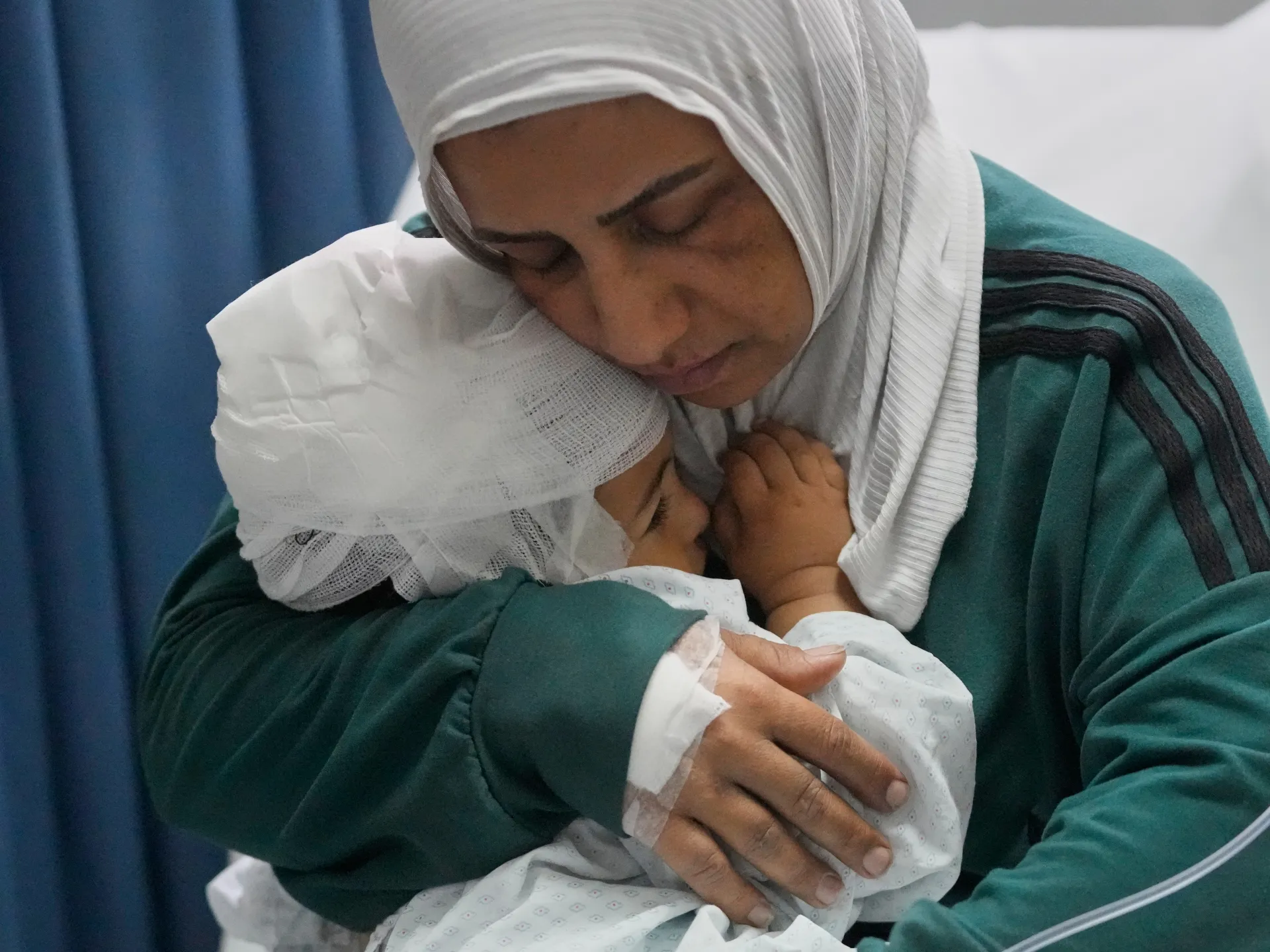
Gaza’s children will grow up with memories no child should bear. But they will also inherit something indestructible: dignity. In every demolished home and every shattered family lives a story that refuses burial.

Gaza’s memory will not fade. For the mind, unlike stone, cannot be occupied. It is the eternal archive of a people’s resilience, passed from one generation to the next, weaving the indelible tapestry of Palestine today.

The ruins of Gaza stand not only as testimony to Israel’s genocide but to the moral collapse of those who enabled it.

Gaza will rise again, brick by brick.

But what will never be resurrected is the Israeli lie, which, for eight decades, cloaked the Zionist project in the guise of victimhood, occupying Western narratives and manufacturing consent.

Gaza will rise — and the Israeli myth will remain buried beneath her rubble, forever.

The views expressed in this article belong to the author and do not necessarily reflect the editorial policy of Middle East Monitor.
Source link

IDF claims it killed Hamas military leader Mohammad Odeh

May 27 (UPI) — The Israeli Defense Force said Wednesday that it has killed Mohammed Odeh, a senior commander in Hamas‘ military, during a strike in northern Gaza.

An airstrike in Gaza City hit a residential building Tuesday and also killed at least three Palestinians while injuring dozens more. It struck the upper three floors of the al-Kayali building above a busy shopping area in the center of the city.

The IDF claims the residential building was used by Odeh as a hideout.

The area of the strike was busy as shoppers prepared for Eid al-Adha, a Muslim holiday that began on Wednesday.

The IDF said Odeh was responsible for planning Hamas’ Oct. 7, 2023, terrorist attack in Israel.

“The commander of Hamas terror [organization’s] military arm number 4 in Gaza was eliminated yesterday and sent to meet his partners in the depths of hell,” Israel Katz, Israeli Defense Minister, posted on social media.

The IDF said it had been tracking Odeh for months leading to the airstrike.

More than 900 Palestinians have been killed in Gaza since Israel and Palestine reached a ceasefire agreement enacted on Oct. 11. The Gaza Ministry of Health reports that 72,803 Palestinians have been killed in the war since Oct. 7, 2023.

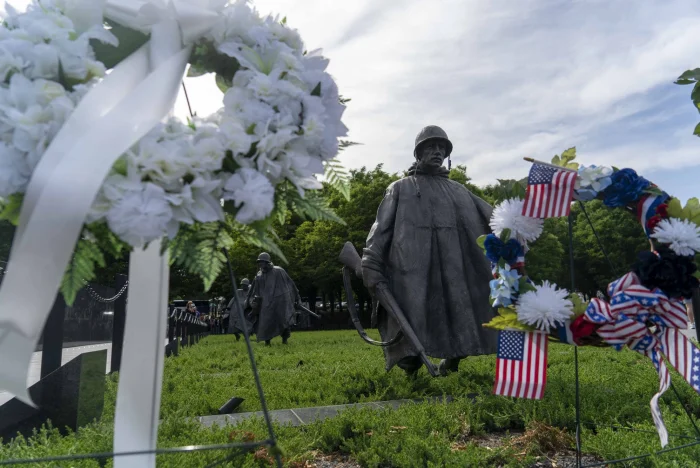
Wreathes are seen amongst the statues at the Korean War Veterans Memorial during Memorial Day weekend in Washington on May 27, 2023. Memorial Day, which honors U.S. military personnel who died while in service, is held on the last Monday of May. Photo by Bonnie Cash/UPI | License Photo

Source link

DOJ sues UC over alleged antisemitism in UCLA protests

May 27 (UPI) — Federal prosecutors are suing the University of California, alleging civil rights violations were committed in connection with pro-Palestinian campus protests, the latest lawsuit by the Trump administration, which has targeted universities over issues from antisemitism to their hiring practices.

The Trump administration has taken dozens of actions against higher education institutions, including investigations, lawsuits and funding freezes, in what critics describe as an effort to crack down on left-leaning ideology in public and private spaces.

The lawsuit, filed Tuesday in the Western District of California, focuses on the encampment erected on the University of California, Los Angeles, campus in April 2024 as pro-Palestinian protests erupted across U.S. universities against Israel’s war in Gaza as students sought to pressure their schools to divest from Israel.

Federal prosecutors allege the school failed to protect its Jewish and Israeli students through its inaction concerning the encampment, which was erected April 25, 2024, and torn down May 2, 2024, when the school permitted police to clear the campus of protesters.

“Universities have an obligation to maintain safe and inclusive campuses for all students,” First Assistant U.S. Attorney Bill Essayli of the Central District of California said in a statement.

“Universities that violate our nation’s civil rights laws by repeatedly failing to shield Jewish students from antisemitism will be held accountable.”

The lawsuit is similar to the one federal prosecutors filed against UCLA in February, accusing the institution of creating a hostile work environment for Israeli and Jewish faculty and staff over its inaction with regard to the encampment.

UCLA Chancellor Julio Frenk on Tuesday rejected the accusations.

“Let me be direct: The suggestion that UCLA has been passive in the face of antisemitism is simply wrong. Combating antisemitism is a moral imperative — one rooted, for me, in personal history that makes indifference unthinkable,” he said in a statement.

Frenk highlighted a series of actions the school has taken over the past year, from recruiting an associate vice chancellor for campus and community safety to reorganizing its civil rights office, as proof of the school’s commitment to stand against antisemitism.

The Justice Department is seeking a court declaration that UCLA unlawfully discriminated against Jewish and Israeli students, an order forcing it to institute a series of changes and a declaration that the federal government does not need to make additional grant payments to the university.

Earlier this month, the Justice Department announced the results of an investigation into UCLA’s medical school admissions process, saying it discriminated by race to favor Black and Hispanic applicants.

Critics have accused the Trump administration of using the Justice Department to crack down on disfavored speech and ideology.

In April 2025, more than 200 college and university leaders issued a joint statement condemning the actions of the Trump administration targeting higher education institutions as “unprecedented government overreach and political interference.”

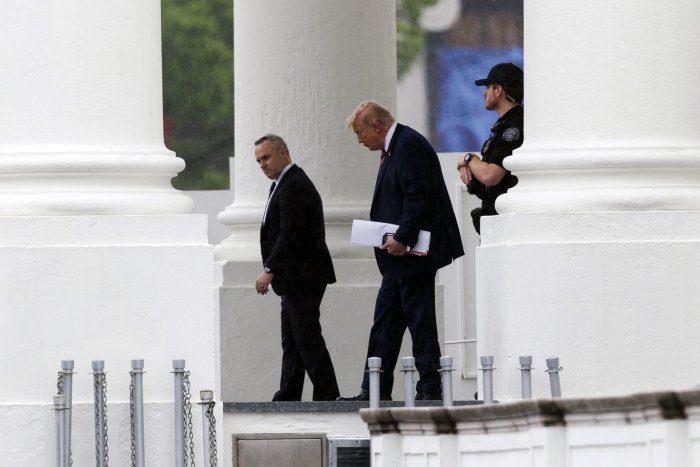
President Donald Trump leaves the White House on Tuesday. Trump is traveling to Walter Reed National Military Medical Center for his annual physical. Photo by Will Oliver/UPI | License Photo

Source link

Gaza will not forget, Palestine will remember – Middle East Monitor

Gaza will not forget

The suffocating smoke still hangs over her ruins, thick with the acrid stench of explosives powder and dust carrying the scent of betrayal and the mark of courage. Her streets, once filled with children’s laughter, became Israeli fields of slaughter. Now they echo with the names and memories of martyrs.

The mass graves, the broken concrete, and the twisted steel are not just evidence of Zionist hatred. They are witnesses to those who stood with her, and to those who failed her. Today, Gaza’s rubble holds more memories than all the nation’s libraries.

Palestine will remember

She will remember the selfless sacrifices of doctors and healthcare workers who refused to abandon their sick patients as bombs rained on their hospitals; the journalists who became the news, targeted for daring to expose the truth; the mothers who wrapped their children in the red, black, green, and white flag of a nation Israel is desperate to erase.

These are not tales of despair, but of defiance, insisting on its right to breathe life amid death.

Gaza will not forget

She will not forget the silence of Western democracies. In a tragic inversion, most European nations, shackled by the ghosts of their past, traded morality for absolution. The self-proclaimed champions of human rights offered Palestinians on the altar of yesterday’s victims to atone for Europe’s sins.

Gaza will not forget the Biden administration, which vetoed every U.N. Security Council resolution calling to end the genocide. Nor Donald Trump, who poured fuel on the fire, then demanded recognition for dousing his own flames.

This week, Arab, Muslim, and world leaders gather like moths around the American arsonist-turned-firefighter, “celebrating” the ashes of Gaza.

Palestine will remember

She will remember the people who rose for Gaza, from Yemen to Dublin, from Cape Town to London and Madrid, while Arab capitals from Cairo to Riyadh slept. Ireland and Spain led the boycott, while Arab countries from the Gulf to Jordan opened their ports and highways to provide alternative routes for Israeli goods, even as Yemen imposed a sea blockade in the Red Sea.

Gaza will not forget — nor forgive — the Arab governments that opened their ports when shipyard workers in Italy refused, delivering American weapons used to annihilate her children and destroy her hospitals.

Palestine will remember

She will remember South Africa — not an Arab or Muslim nation — that led her case before the International Court of Justice, charging Israel with genocide. A country once scarred by apartheid became the moral conscience of a world too timid to speak. In that act of solidarity, South Africa rekindled the universal truth that justice knows no borders.

Palestine will remember the Lebanese resistance that gave its leaders for Gaza’s defense; Yemen, poor in wealth but rich in dignity, whose solidarity never wavered; and Iran, steadfast against Israeli hubris. She will remember Ireland and Spain, who did not turn away when Arabs did, proving that true solidarity transcends borders, faith, and kinship, resting only on shared humanity.

She will remember the heroes of the flotillas who braved waves of hatred and siege to carry messages of compassion; the nameless volunteers who left the safety of their countries to heal the wounded and feed the hungry; the American students who turned campuses into encampments of resistance; the artists, actors, and musicians who risked careers for justice; the employees who lost their jobs protesting the complicity of Google, Microsoft, and other tech giants in Israel’s crimes.

Gaza will not forget those who betrayed her

Palestine will forever be grateful to those who dared to speak the truth when it was dangerous, who marched when it was forbidden, who grieved when it was unfashionable.

Palestine will remember. History will remember. Justice will remember.

For nearly two years, Gaza has endured a genocide so relentless it defies descriptive language. Israel’s war machine has turned hospitals into morgues, UN schools into mass graves, and refugee camps into craters. Yet Gaza refuses to die.

Each time she is bombed “back to the Stone Age,” she rises — like the phoenix — to rebuild, not only her structures but her indomitable will. In that defiance lies the occupier’s greatest fear: memory.

Israel can destroy buildings but not erase remembrance. The siege may starve Gaza’s body, but it nourishes Palestine’s collective soul.

Gaza’s children will grow up with memories no child should bear. But they will also inherit something indestructible: dignity. In every demolished home and every shattered family lives a story that refuses burial.

Gaza’s memory will not fade. For the mind, unlike stone, cannot be occupied. It is the eternal archive of a people’s resilience, passed from one generation to the next, weaving the indelible tapestry of Palestine today.

The ruins of Gaza stand not only as testimony to Israel’s genocide but to the moral collapse of those who enabled it.

Gaza will rise again, brick by brick.

But what will never be resurrected is the Israeli lie, which, for eight decades, cloaked the Zionist project in the guise of victimhood, occupying Western narratives and manufacturing consent.

Gaza will rise — and the Israeli myth will remain buried beneath her rubble, forever.

The views expressed in this article belong to the author and do not necessarily reflect the editorial policy of Middle East Monitor.

Source link

Could Israel sabotage US-Iran deal? | Gaza

NewsFeed

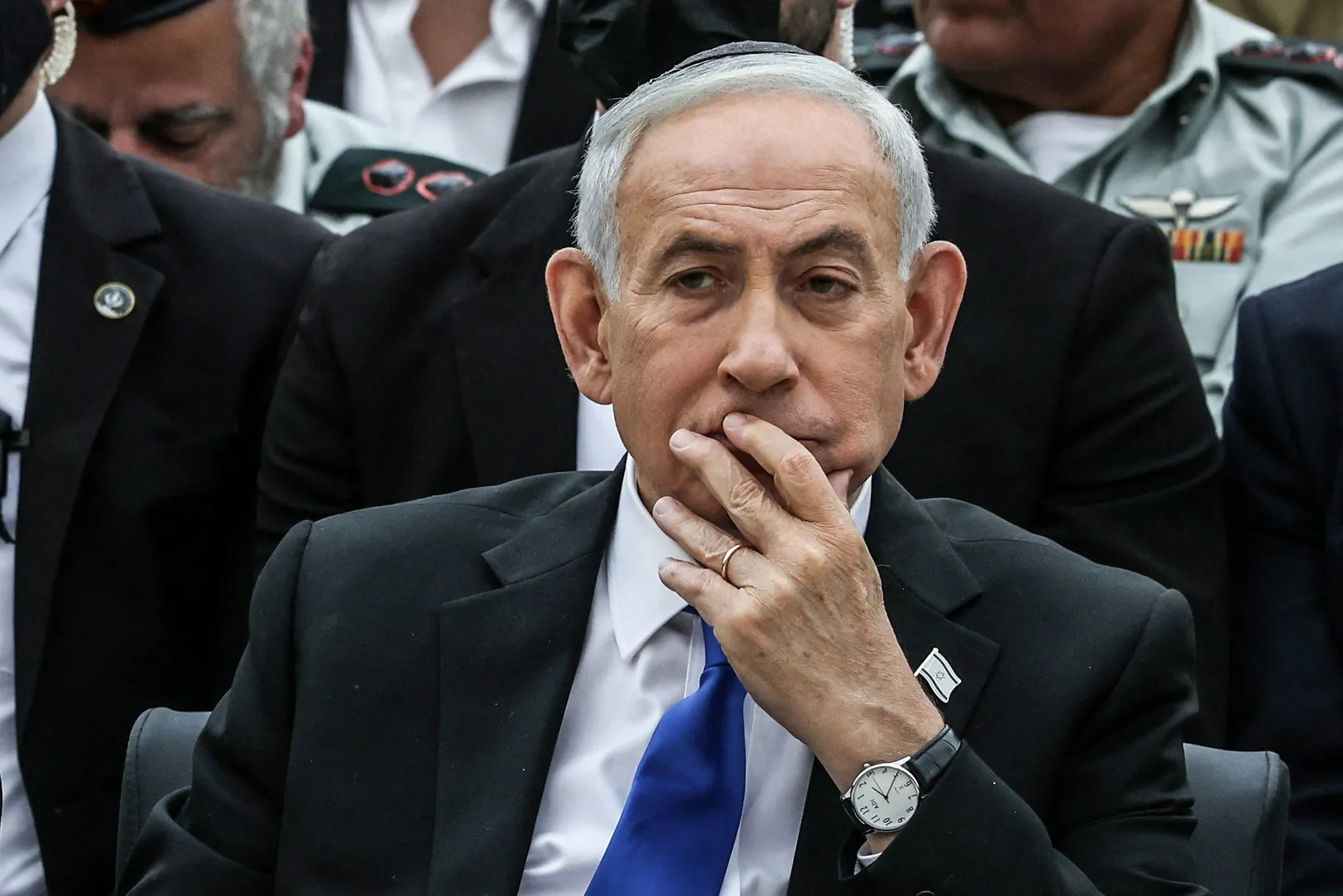
As the US and Iran move closer to a peace deal, Israel says it reserves the right to keep attacking regional ‘threats’, including in Lebanon, despite any US‑brokered ceasefire. Meanwhile, criticism within Israel is growing over Netanyahu’s handling of the war.

Source link

Gaza will not forget, Palestine will remember – Middle East Monitor

Gaza will not forget

The suffocating smoke still hangs over her ruins, thick with the acrid stench of explosives powder and dust carrying the scent of betrayal and the mark of courage. Her streets, once filled with children’s laughter, became Israeli fields of slaughter. Now they echo with the names and memories of martyrs.

The mass graves, the broken concrete, and the twisted steel are not just evidence of Zionist hatred. They are witnesses to those who stood with her, and to those who failed her. Today, Gaza’s rubble holds more memories than all the nation’s libraries.

Palestine will remember

She will remember the selfless sacrifices of doctors and healthcare workers who refused to abandon their sick patients as bombs rained on their hospitals; the journalists who became the news, targeted for daring to expose the truth; the mothers who wrapped their children in the red, black, green, and white flag of a nation Israel is desperate to erase.

These are not tales of despair, but of defiance, insisting on its right to breathe life amid death.

Gaza will not forget

She will not forget the silence of Western democracies. In a tragic inversion, most European nations, shackled by the ghosts of their past, traded morality for absolution. The self-proclaimed champions of human rights offered Palestinians on the altar of yesterday’s victims to atone for Europe’s sins.

Gaza will not forget the Biden administration, which vetoed every U.N. Security Council resolution calling to end the genocide. Nor Donald Trump, who poured fuel on the fire, then demanded recognition for dousing his own flames.

This week, Arab, Muslim, and world leaders gather like moths around the American arsonist-turned-firefighter, “celebrating” the ashes of Gaza.

Palestine will remember

She will remember the people who rose for Gaza, from Yemen to Dublin, from Cape Town to London and Madrid, while Arab capitals from Cairo to Riyadh slept. Ireland and Spain led the boycott, while Arab countries from the Gulf to Jordan opened their ports and highways to provide alternative routes for Israeli goods, even as Yemen imposed a sea blockade in the Red Sea.

Gaza will not forget — nor forgive — the Arab governments that opened their ports when shipyard workers in Italy refused, delivering American weapons used to annihilate her children and destroy her hospitals.

Palestine will remember

She will remember South Africa — not an Arab or Muslim nation — that led her case before the International Court of Justice, charging Israel with genocide. A country once scarred by apartheid became the moral conscience of a world too timid to speak. In that act of solidarity, South Africa rekindled the universal truth that justice knows no borders.

Palestine will remember the Lebanese resistance that gave its leaders for Gaza’s defense; Yemen, poor in wealth but rich in dignity, whose solidarity never wavered; and Iran, steadfast against Israeli hubris. She will remember Ireland and Spain, who did not turn away when Arabs did, proving that true solidarity transcends borders, faith, and kinship, resting only on shared humanity.

She will remember the heroes of the flotillas who braved waves of hatred and siege to carry messages of compassion; the nameless volunteers who left the safety of their countries to heal the wounded and feed the hungry; the American students who turned campuses into encampments of resistance; the artists, actors, and musicians who risked careers for justice; the employees who lost their jobs protesting the complicity of Google, Microsoft, and other tech giants in Israel’s crimes.

Gaza will not forget those who betrayed her

Palestine will forever be grateful to those who dared to speak the truth when it was dangerous, who marched when it was forbidden, who grieved when it was unfashionable.

Palestine will remember. History will remember. Justice will remember.

For nearly two years, Gaza has endured a genocide so relentless it defies descriptive language. Israel’s war machine has turned hospitals into morgues, UN schools into mass graves, and refugee camps into craters. Yet Gaza refuses to die.

Each time she is bombed “back to the Stone Age,” she rises — like the phoenix — to rebuild, not only her structures but her indomitable will. In that defiance lies the occupier’s greatest fear: memory.

Israel can destroy buildings but not erase remembrance. The siege may starve Gaza’s body, but it nourishes Palestine’s collective soul.

Gaza’s children will grow up with memories no child should bear. But they will also inherit something indestructible: dignity. In every demolished home and every shattered family lives a story that refuses burial.

Gaza’s memory will not fade. For the mind, unlike stone, cannot be occupied. It is the eternal archive of a people’s resilience, passed from one generation to the next, weaving the indelible tapestry of Palestine today.

The ruins of Gaza stand not only as testimony to Israel’s genocide but to the moral collapse of those who enabled it.

Gaza will rise again, brick by brick.

But what will never be resurrected is the Israeli lie, which, for eight decades, cloaked the Zionist project in the guise of victimhood, occupying Western narratives and manufacturing consent.

Gaza will rise — and the Israeli myth will remain buried beneath her rubble, forever.

The views expressed in this article belong to the author and do not necessarily reflect the editorial policy of Middle East Monitor.
Source link

Gaza flotilla activists return to Australia, describing abuse | Crimes Against Humanity

NewsFeed

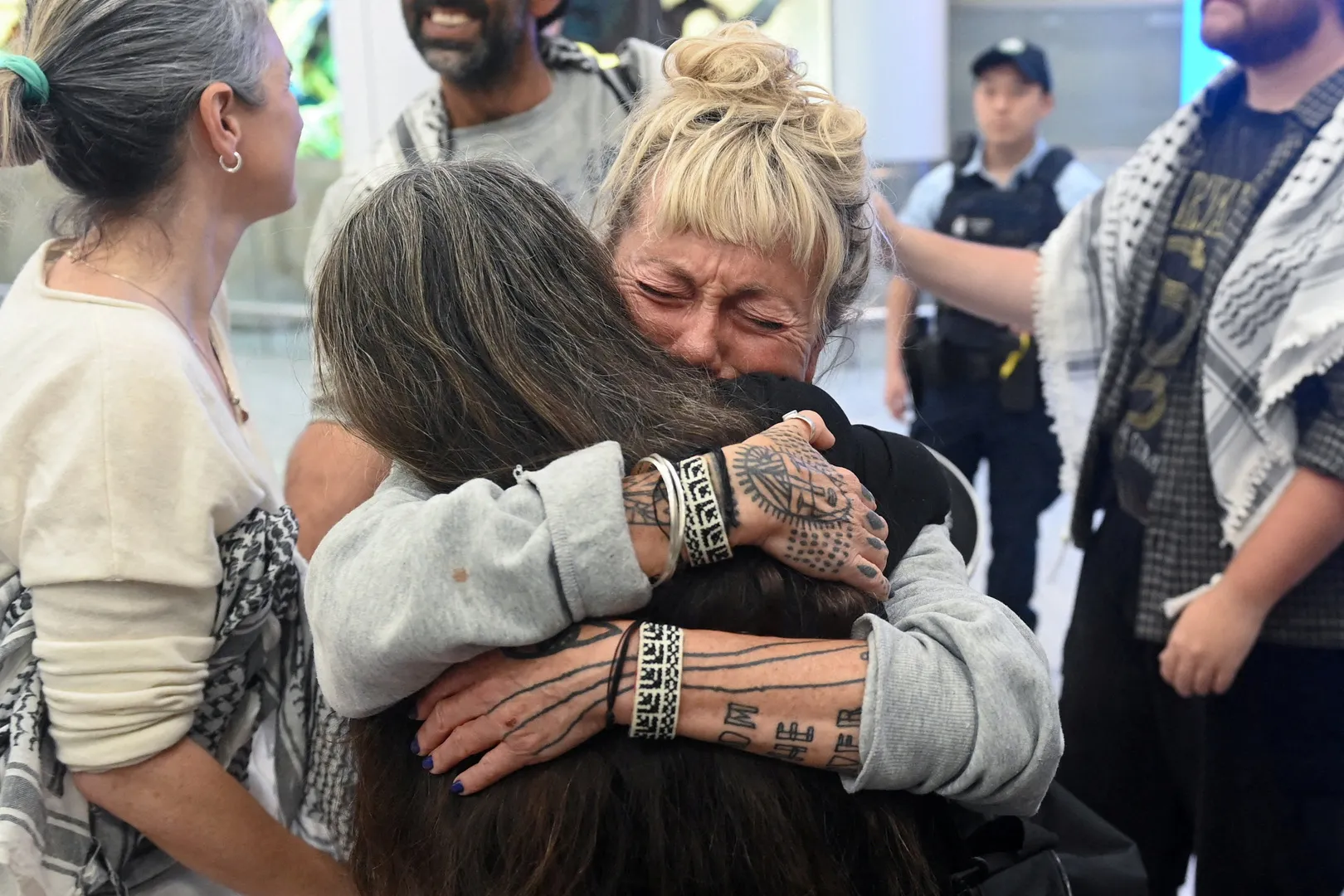
Australian activists from the Gaza-bound aid flotilla have arrived back in Sydney, reuniting with loved ones as they describe beatings, sexual assault and torture at the hands of Israeli forces who intercepted their boats in international waters.

Source link

After San Diego shooting, Muslim Americans aim to turn grief into action | Islamophobia News

Baltimore, United States – Muslim Americans are grieving after two gunmen last week opened fire at the Islamic Center of San Diego, killing three people.

But at the annual conference for the Islamic Circle of North America (ICNA) in Baltimore, community leaders stressed the urgency of turning the sorrow into action.

Recommended Stories

list of 3 itemsend of list

Nearly 25,000 people turned out for the annual event, held on Saturday and Sunday. Speakers addressed the recent shooting, pointing to the courage of the three victims as examples for the broader community in a time of heightened Islamophobia.

“We owe them more than condolences. We owe them resolve,” said Lena Masri, a lawyer at the Council of American-Islamic Relations (CAIR).

She explained how the victims — a security officer, a caretaker and a neighbour — sacrificed their lives to save others. The security officer, Amin Abdullah, exchanged fire with the shooters, while the other two victims, Mansour Kaziha and Nadir Awad, rushed to help and called for emergency services.

“They protected the physical space of our community: the masjid [mosque], the school, the children, the teachers, the worshippers,” Masri explained.

“Our responsibility is to protect the civic space of our community: the right to worship, the right to speak, the right to organise, the right to defend Palestine, the right to build institutions.”

That was the recurring theme of the conference: that the Muslim American community cannot afford to be passive and must draw on its strength to push back against bigotry and hate.

Speakers emphasised voting, organising and donating to community institutions and candidates who align with Muslim Americans. They also underscored the need to hold officials accountable and push for an end to Israel’s atrocities in Palestine.

“We owe Gaza more than grief. We owe Gaza advocacy that cannot be intimidated into silence,” Masri said.

Islamophobia and Palestinians’ dehumanisation

Symbols of Palestine could be seen everywhere at the conference, from bags emblazoned with watermelons and flags to keffiyeh-patterned scarves, shirts and water bottles.

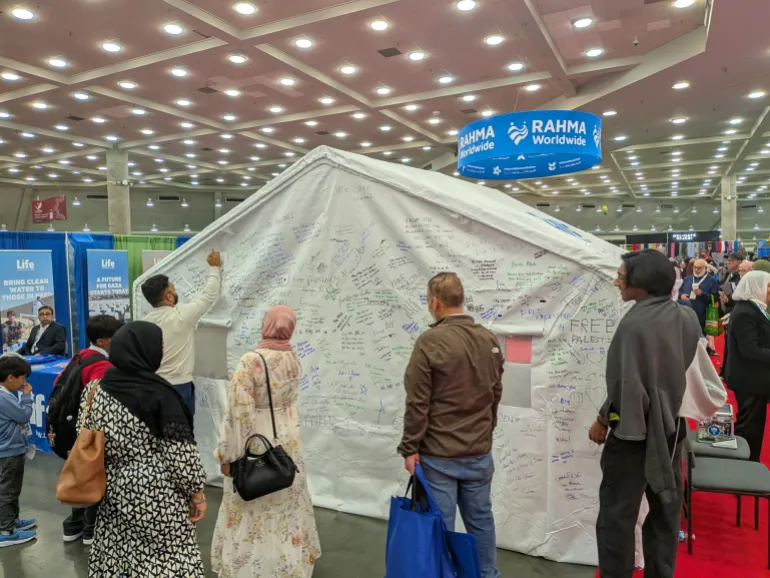
At a bazaar featuring dozens of vendors, conference-goers left messages of solidarity on a tent that will be sent to Gaza by the charity Life for Relief and Development (LIFE).

In speeches and on panels, advocates drew a link between anti-Muslim bigotry in the United States and Israel’s abuses in Gaza, the occupied West Bank and Lebanon.

Some of the loudest promoters of Islamophobia in the US are also staunch Israel supporters, among them right-wing commentator Laura Loomer and Congressman Randy Fine.

Both Loomer and Fine are allies of US President Donald Trump, whose administration has unleashed a crackdown to deport critics of Israel who live in the US but are not citizens.

Altaf Husain, a professor at the Howard University School of Social Work, said anti-Palestinian voices are trying to “scare” Muslims as a means of silencing criticism of Israel.

“They want to shut this down, so it’s a direct connection,” Husain told Al Jazeera.

He said the large turnout at the ICNA conference shows that the community is not intimidated and will not back down.

In the response to the shooting in San Diego, Husain pointed out that the community raised more than $3.5m for the victims’ families and moved to bolster security around Muslim institutions.

People sign tent
ICNA conference attendees on May 24 write messages of solidarity on a tent to be sent to Gaza [Ali Harb/Al Jazeera]

Layers of security

Saad Kazmi, the president of ICNA, said the organisation relied on three layers of protection to secure this weekend’s event: its own security guards, an outside firm and local law enforcement agencies in Baltimore.

While there is anxiety in the community over the rise of Islamophobia and Trump’s immigration crackdown, he said Muslim Americans must take matters into their own hands and work with “sensible” people across the political spectrum to defeat hate.

“We are very thankful that we live in a country that is ruled by the Constitution and law,” Kazmi told Al Jazeera.

Kazmi added that the shooting in San Diego only added to the community’s determination to assert and protect its rights. The Islamic centre in the city, he noted, did not shut down after the attack.

“If anything came out of this, it is that there are more attendees to the masjid, more people who believe that the way forward is to strengthen ourselves, strengthen our community and march on,” Kazmi said.

After the shooting, Loomer doubled down on her anti-Muslim rhetoric, calling on immigration authorities to target the Islamic Center of San Diego.

She also called for the deportation of all Muslims from the US, describing them as an “invasive species”. But few Republicans disavowed Loomer, who maintains close ties to the White House.

Rather, more than 60 Congress members have joined the Sharia-Free America Caucus since it was established in December. CAIR has designated the caucus a hate group.

At the state level, governors and local legislators have disparaged Islam while also pushing to penalise Palestinian rights activism.

Texas and Florida, for example, have labelled CAIR a “terrorist” group, while implementing measures against “Sharia law” that critics consider anti-Muslim dog whistles.

Rights under attack

In March, after CAIR sued Florida Governor Ron DeSantis over its “terrorist” designation, a federal court blocked the label from being imposed.

In his ruling, Judge Mark Walker wrote that DeSantis’s executive order (EO) targets the Muslim community as a whole.

“It should be lost on no one that Defendant’s EO targets one of America’s largest Muslim civil rights organizations for indirect suppression of speech. But, as we all know, it is easy for those in power to target minority groups with little pushback,” Walker wrote.

“Sadly, history teaches that it is often minority religious groups who find themselves in the crosshairs.”

On Saturday, several panels praised the US legal system and the laws that protect freedom of religion and speech. But the panellists argued that human rights do not defend themselves; people must step up to protect them.

“You’ve got to imagine rights are a territory, and you have to occupy that territory. If you do not actively occupy that territory, that territory will be taken from you. And that is exactly what has been happening,” Tom Facchine, an imam from New Jersey, said.

Last year, Palestinian immigrant Leqaa Kordia found her rights in jeopardy when immigration agents knocked on her door and detained her over her activism against Israel’s genocidal war in Gaza.

Kordia spent more than a year in Immigration and Customs Enforcement (ICE) detention before an immigration judge ordered her to be released in March.

But Kordia — who is still fighting deportation — told ICNA conference attendees on Saturday that she has no regrets, encouraging them to remain politically active and engaged.

“Speaking up, it comes with a cost … It cost me my health, my life, literally my freedom, and I’m living in uncertainty that tomorrow I’m going to be here, or I’m going to be deported,” she said.

“It comes with a cost, but it’s worth it. It’s worth it because silence, it costs even way more than speaking.”

Source link

Israeli attack on Gaza kills three family members, including infant | Israel-Palestine conflict News

Mohammad Abu Mallouh, ​Alaa Zaqlan and their child, Osama, killed in the attack on the Nuseirat refugee camp, medics say.

An Israeli air raid on a home in Gaza has killed three members of a family, including a six-month-old child, medical workers said, as Israel continues to violate the “ceasefire” brokered by the United States last year.

Al-Aqsa Martyrs Hospital in Deir el-Balah in central Gaza said it received the bodies of a couple and their young child in the early hours of Sunday morning.

Recommended Stories

list of 3 itemsend of list

Medics identified those killed in the attack on an apartment in the Nuseirat refugee camp as Mohammad Abu Mallouh, his wife Alaa Zaqlan, and their child Osama, the Reuters news agency reported.

Medical workers said about 10 people were wounded in the attack.

There was no immediate comment from the Israeli military.

Since the “ceasefire” came into effect in October, Israel has continued with its near-daily attacks across the besieged Palestinian territory, which Gaza health authorities say have killed nearly 900 people.

Reporting from Gaza City, Al Jazeera’s Hani Mahmoud said Israeli bombing began on Sunday as Palestinians were fleeing following forced displacement orders. He said many people ran while carrying personal belongings, including mattresses.

Separately, Israeli forces continued demolishing homes and civilian infrastructure in eastern Gaza on Sunday behind Israel’s so-called “Yellow Line”, referring to Israeli-designated military zones and buffer areas inside the enclave, he said.

Israeli jets also carried out air raids on Deir el-Balah in central Gaza on Sunday, causing extensive damage near a hospital, Mahmoud said.

Earlier this month, the Gaza Government Media Office said it had documented at least 2,400 Israeli violations in the first six months of the ceasefire, including more than 1,100 air raids and at least 921 shootings targeting civilians.

More than 72,000 Palestinians have been killed since Israel launched its genocidal war on Gaza in October 2023. Israeli officials acknowledged the data was broadly accurate in January, after casting doubt on their credibility for two years.

On Saturday, five police officers and a 13-year-old boy were killed in an Israeli attack.

Talks between Israel and Hamas aimed at reaching a permanent end to the war have stalled, with both sides accusing each other of violating the ceasefire. Israel says Hamas’s refusal to disarm is a key obstacle, while the Palestinian group says negotiations have been paused due to continued violations and restrictions on aid entering Gaza.

Earlier this week, Human Rights Watch said the territory’s humanitarian infrastructure remained in peril, more than six months after the start of the ceasefire.

Source link