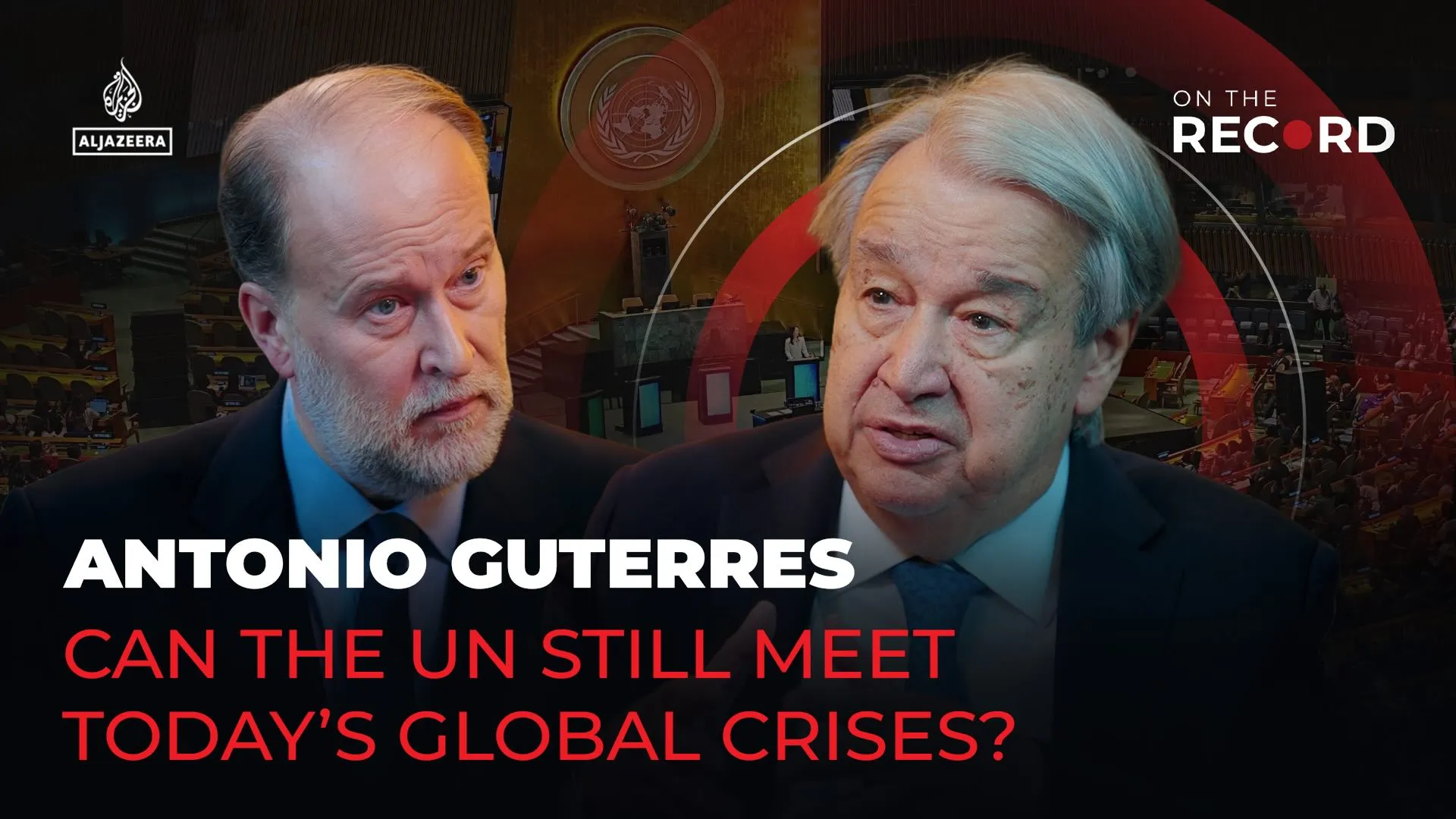
In this episode of On the Record, Al Jazeera’s James Bays sits down with United Nations Secretary-General Antonio Guterres, ahead of his final UN General Assembly before stepping down in December 2026. They discuss the situation in the Middle East and its global consequences, whether the UN is still relevant in addressing today’s challenges and why Guterres believes the UN Security Council must be reformed.
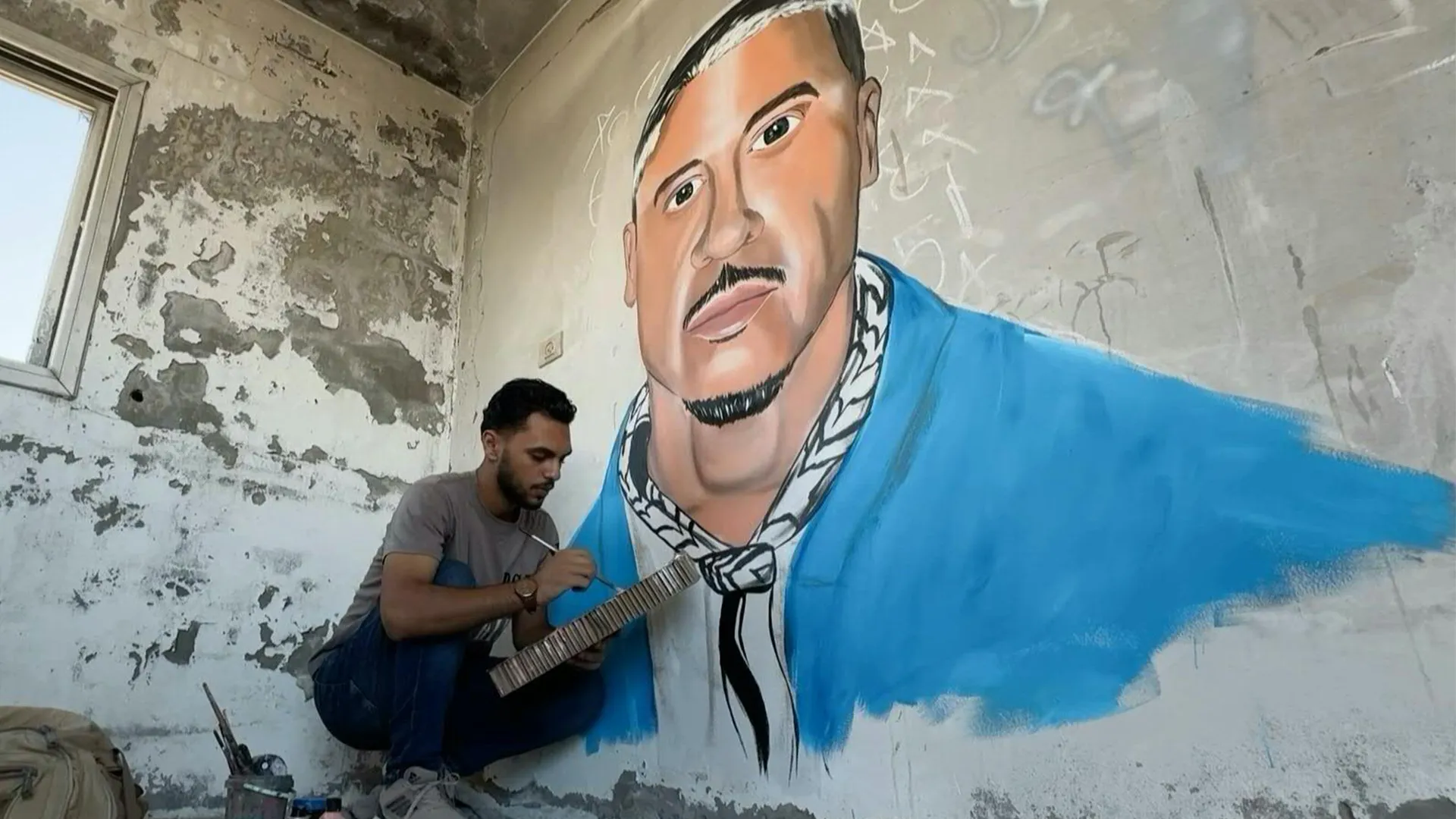
Artists in Gaza are painting murals on destroyed walls, honouring US rapper Macklemore for his support for Palestine. Despite a ceasefire agreement, Israel continues to kill Palestinians in frequent strikes across Gaza.
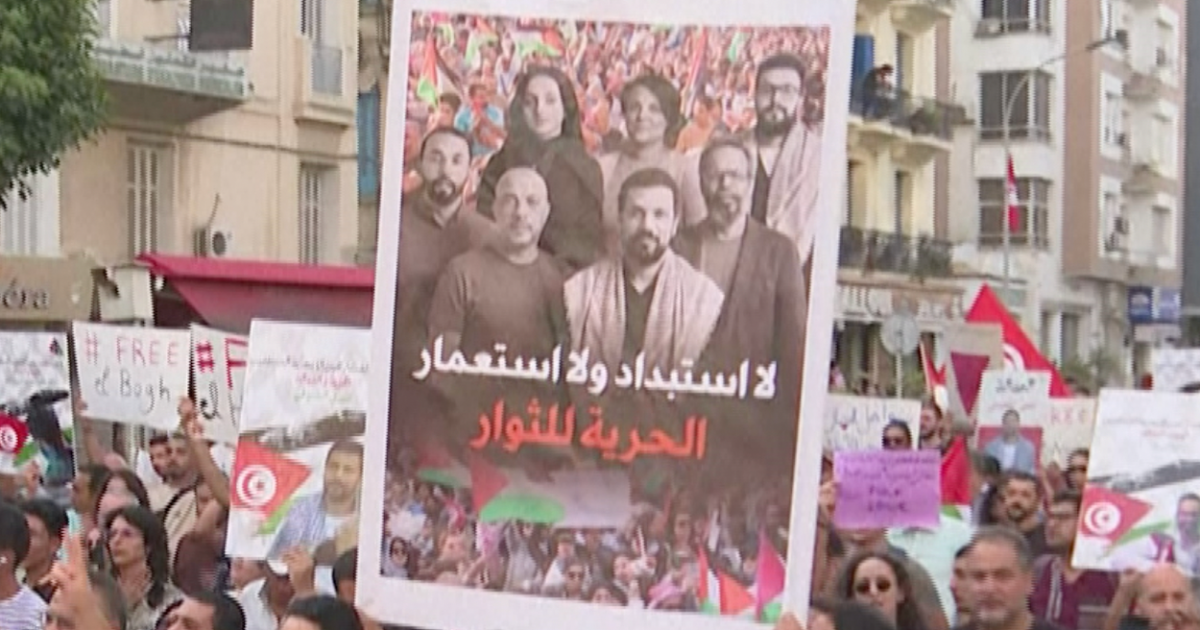
Hundreds of Tunisians have protested in Tunis, demanding the release of four Global Sumud Flotilla activists held in pre-trial detention since March over alleged financial misconduct linked to the Gaza aid mission. The flotilla sailed towards Gaza in 2025 to deliver humanitarian aid.
PHILADELPHIA — Ed Sheeran opened a solo concert in Philadelphia on Saturday with comments about Gaza, saying what’s happening is “catastrophic and unjustifiable.”
“My heart has been broken by the scale of devastation and loss of civilians’ lives, of children’s lives,” Sheeran said at his nighttime performance at Lincoln Financial Field.
Sheeran also said he wants his music and shows to be about unity and humanity, not politics.
He then addressed the controversy that unfolded since his supporting acts withdrew in solidarity with opener Macklemore, who was dropped from the tour after making pro-Palestinian comments onstage.
Sheeran has performed much of his Loop Tour concerts solo, but he had been joined for several songs at each stop by the Irish folk band Beoga. Macklemore, Sheeran’s original U.S. opener, had been replaced by Danish band Lukas Graham and Irish singer Aaron Rowe before they backed out.
Finneas, Billie Eilish’s brother and musical collaborator, was due to tour with Sheeran in South America later this year before he too dropped out earlier this week.
As of Saturday afternoon, tickets were still available for the show, and Sheeran’s website did not list any replacement acts.
Earlier a group of about 50 pro-Palestinian demonstrators congregated outside the stadium before the show. Hillary Steinberg, 34, of Philadelphia, said she got tickets a year ago but wound up getting a refund and attending the demonstration instead, disappointed that Sheeran had not taken a stand.
“I was, until this week, a big Ed Sheeran fan,” Steinberg said. “I think all art is political, and all music is political, and so this choice — even though he was saying that he wasn’t complicit — is a political choice.”
The show comes after a tumultuous week that opened with Macklemore being dropped in response to exclaiming “Free Palestine!” during a Sept. 5 show in New Jersey. Sheeran has said he was not responsible for the decision, which came at the urging of New England Patriots owner Robert Kraft. His company owns a stadium where Sheeran’s tour was scheduled to play Friday.
Within hours of Sheeran’s statement Tuesday, his supporting acts withdrew.
Diane Savitz, a 53-year-old concertgoer from Stroudsburg, Pa., got her tickets to the show months ago and is a big Sheeran fan. She said she does not think that he did anything wrong or that a concert is the place for politics.
“A concert should be for people enjoying the music. Music should bring people together,” Savitz said. “Everyone has their right to freedom of speech, but not every platform is the place for it.”
Macklemore said Wednesday he is donating $1 million to support Palestinian relief efforts and called on Kraft to match the gift; a spokesperson for Kraft has said the billionaire and Sheeran have each agreed to donate $2 million but have not specified where the money will be directed. Sheeran’s representatives have not responded to multiple requests for comment.
Sheeran’s Loop Tour was the highest-grossing in the world, with an average box office gross of over $7 million per city, Pollstar said in May. Through the end of 2025, Sheeran was the No. 3 top-earning concert act since 2021.
Sheeran has said the tour promoter was ultimately responsible for the decision to drop Macklemore.
The Grammy winner was adamant in his Tuesday statement that he wouldn’t be drawn into discussion of the war in Gaza, arguing that his fans don’t come to his shows to hear about these issues.
He also said he “spoke with the venues at length all week to try to build a bridge” before Macklemore was dropped. He insisted he would never willingly let down his fans or abandon the touring crew and others who rely on him to make a living.
While promoters and venues wield great power over concert tours, experts say an artist of Sheeran’s magnitude generally has the final say about what happens concerning the shows.
Sheeran told the crowd in Philadelphia that everyone is welcome at his concerts, and they can have opposing points of view while still singing his songs, which are about “love, hope, and unity.”
Vejpongsa writes for the Associated Press. AP journalist Jessica Hill in Las Vegas contributed to this report.
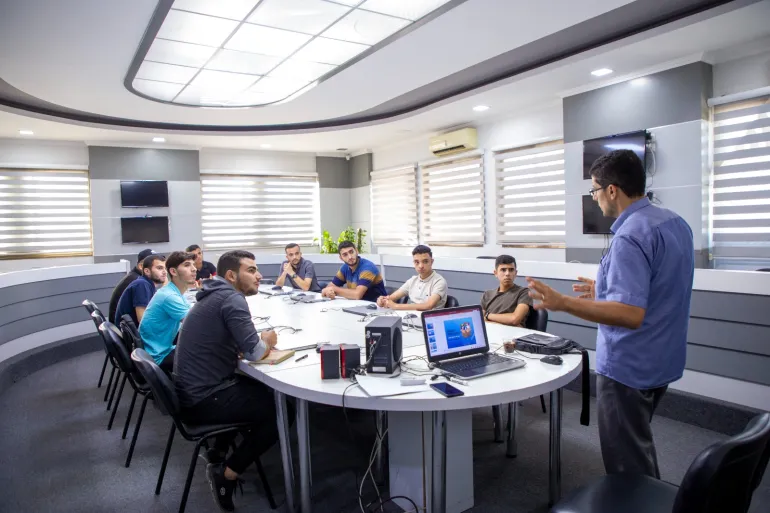
Deir el-Balah, Gaza – A handful of electronic components, a few wires and a basic programmable circuit board are enough to bring a group of curious children around a table in central Gaza to learn about robotics.
Students at The Next Gen Team: Rising Robotics Engineer Project in Deir el-Balah learn how to integrate sensors into alarm systems, study robotics, understand how motors and drive units work, as well as get firsthand experience with programming.
Recommended Stories
list of 4 itemsend of list
The children’s research could save lives in the future. The robotics and early warning systems they are working on could make way for bigger developments such as early detection of gas leaks and fires or help rescue workers access hard-to-reach areas, such as victims trapped under rubble.
Today’s lesson will also teach students the sciences of the future and help them keep pace with technological advancements happening outside Gaza’s borders.
Before the war, students had access to schools, universities, incubators and training programmes to pursue an interest in technology.
With much of that infrastructure now destroyed or damaged during Israel’s genocidal war on Gaza, there are few places and tools for students to work with.
But their interest in robotics and will to learn are helping them maintain their skills and ambitions for the future, something they hope will be of benefit when the bombs stop falling on Gaza.
Hamza al-Atrash, 16, is a student taking part in the “Next Gen” project and learning how electronic components can be used to develop robots and early-warning systems. To do this, he is using an Arduino controller – a programmable circuit board which connects sensors – and some other electronics.
Students work with what they have, but a shortage of equipment and electricity outages make studying a challenge.
A view of a technology incubator in Gaza before the war, where students received training in technology and innovation [Iyad Al-Qatrawi/Al Jazeera]
“We have capabilities and aspirations that we want to develop, and we try to take advantage of every available opportunity for learning and training,” Hamza tells Al Jazeera.
Hamza hopes the skills that he and his cohort learn in class will benefit his community and provide new opportunities for young people in Gaza.
“The lack of devices and equipment doesn’t mean we’ll stop. It pushes us to look for solutions and make the most of the simple tools we have,” he said.
The challenges facing these students are part of a wider disruption to Gaza’s technology and innovation sector.
Before the war, Gaza had several incubators that supported technology projects and startups. Bahaa al-Masri, head of the training team for the Early Warning Systems and Robotics Project, said it provided a rare bit of hope for children and young adults in the besieged enclave.
“These incubators provided an environment for training and development. They helped innovators and entrepreneurs turn their ideas and projects into prototypes and ventures,” he told Al Jazeera.
The war severely damaged this ecosystem: training spaces were lost, equipment difficult to find, and students and innovators left with limited opportunities to experiment and develop their ideas.
A view of a technology incubator in Gaza prior to the war, which provided an environment for training, incubating tech projects, and supporting students in the fields of technology and innovation [Iyad Al-Qatrawi/Al Jazeera]
Although challenges remain, the trainers are continuing their mission of educating budding tech experts in Gaza.
“We have a generation of students who possess genuine passion and talent in technology and digital systems,” he told Al Jazeera. “They need the environment and tools to develop these abilities and turn their ideas into projects that can serve their community and their future.”
Education pays the price
The near-collapse of Gaza’s technology sector has coincided with the widespread destruction of the education system, with schools, universities and research facilities repeatedly targeted by Israel during the war.
Preliminary estimates from the Government Media Office in Gaza put direct losses to the education sector at approximately $4bn. Seventeen higher education institutions have been completely or partially destroyed since October 2023, preventing about 620,000 high school students and 90,000 university students from continuing their education.
Approximately 20,228 students and 830 teachers and educational staff have also been killed, along with 194 scientists, academics and researchers.
For students seeking to enter technical fields, the loss of such educational facilities and teachers means fewer opportunities to gain practical experience and hone their skills.
Before the war, the IT industry was one of the promising sectors of Gaza’s economy and a rare source of foreign income, said Ahmad Abu Qamar, an economic affairs specialist and board member of the Palestinian Economists Syndicate.
It was also an opportunity for employment for thousands of university graduates entering a job market with high unemployment, with roughly 80 percent of its economic activities directed towards foreign markets.
Abu Qamar estimates that the IT sector now runs at less than 25 percent of pre-war levels, while more than 70 percent of IT companies in Gaza have completely or partially halted operations.
But even if a company’s offices or equipment survived the war on Gaza, damage to digital infrastructure has also made it difficult for companies to continue functioning.
Prices of some technical equipment – including computers, mobile devices, servers, routers, fibre-optic lines, and cabling – used in the industry have increased by more than 600 percent due to the difficulties of importing devices during Israel’s ongoing siege on the enclave.
According to his estimates, about 30,000 IT professionals have lost their jobs since the war began. General unemployment is at nearly 80 percent and poverty at more than 90 percent in the enclave.
UCAS Technology Incubator, one of the most prominent incubators of the University College of Applied Sciences in Gaza, was destroyed during the war, as part of extensive damage to the institutions and structure of the technology and digitisation sector in the Strip [Iyad Al-Qatrawi/Al Jazeera]
Brain drain
A severe shortage of vital IT equipment – such as storage devices, routers, and laptops – has been compounded by the destruction of supporting internet and electricity infrastructure, including primary and secondary networks, according to technology and digital economy expert Abdullah Altahrawi with the UCAS Technology Incubator. This makes the task of rebuilding Gaza’s IT sector an even bigger challenge than before the war, particularly with Israel’s more crippling siege on Gaza.
“The repercussions have extended to dealings with foreign markets, including the purchase of servers and electronic services, the management of digital accounts, the use of cards and e-commerce,” Altahrawi said.
Before the war, Gaza’s five main incubators provided training, mentoring, workspaces and support for tech startups. Perhaps most crucially, it also gave students a place to develop their skills, connect with foreign markets, and find job opportunities.
Just two incubators – the UCAS Technology Incubator, affiliated with the University College of Applied Sciences, and the Ma’an Center for Innovation and Entrepreneurship Incubator, have resumed operations since the October 2025 ceasefire. But their capacity has not managed to exceed 20 percent of pre-2023 levels.
Due to the damage caused by three years of Israeli bombing and a shortage of real estate, just 1 percent of technology companies now have offices, while only 10 percent of business incubators have an operational office space.
Companies looking to rebuild and universities ready to teach a new cohort of tech students have also been hit by a brain drain in the sector, severely hindering development and innovation.
“More than 80 percent of highly skilled and experienced professionals in the technology and digital fields have left the Gaza Strip,” Altahrawi said. “Gaza’s future is inseparable from its ability to restore and develop its technology sector.”
Houston Texans’ linebacker Azeez Al-Shaair has spoken to sports journalists about his $11,941 fine by the NFL for wearing the name of Palestinian child Hind Rajab, who was killed by Israeli forces in Gaza, on his eye black during a game.
Israel’s bitter political divisions are particularly sharp before the country’s October elections. But the furious response to a new documentary about the military’s actions in the genocidal war on Gaza has revealed an issue that much of Israel’s political and media establishment appears united on.
Few of the central allegations in NAZA, made by Israeli filmmakers Yuval Abraham and Rachel Szor, are new. Reports that the Israeli military was relying on artificial intelligence systems to generate targets in Gaza, often killing the inhabitants of entire buildings to kill just one individual identified by the system, were reported in April 2024.
Recommended Stories
list of 4 itemsend of list
Other accusations against Israel, such as committing genocide, deliberately causing a famine, and unlawfully killing children, have also not received much attention in Israel.
In contrast, NAZA has unleashed a litany of abuse from across Israel, and brought the allegations to the centre of Israel’s political debate.
Culture Minister Miki Zohar reacted to the film’s premiere at the Venice Film Festival – where it received a 25-minute standing ovation – by calling for the directors to be stripped of their citizenship and to be investigated by the internal intelligence service for treason.
Army chief Eyal Zamir has dismissed the film as being built on blood libel and ordered a legal probe to hunt down its military and intelligence sources.
Prime Minister Benjamin Netanyahu also cited the film when advancing legislation to revoke citizenship from anyone deemed to be smearing the country’s soldiers, while in the coastal city of Ashdod, graffiti branding the directors “traitors” has appeared on the walls.
“You can’t really understand the extent of the madness from outside of the country,” Orly Noy, an editor at Local Call, which first carried many of the accusations contained in the film, said. “They’re attacking the friends and families of [the filmmakers] Yuval Abraham and Rachel Szor. They’re talking about revoking their citizenship. They’re asking the Shin Bet to investigate them – for making a film, and it isn’t just the politicians. Journalists, who you might expect to show some kind of solidarity with them, are competing to attack them. It’s scary.”
Denial
In late 2025, the Committee to Protect Journalists reported escalating censorship and harassment in Israel, with Israeli journalists telling the organisation that the media’s approach had become “part of the war effort” and, by extension, significantly shaped Israeli view of their war on Gaza.
In October 2025, a study by the Israeli think tank Molad found that only 3 percent of Channel 12’s coverage of the first six months of the war mentioned Gaza’s humanitarian crisis. Of 206 war-related images and video clips broadcast by the network, Israel’s most-watched channel, only two showed Palestinian civilian casualties.
Nevertheless, before the film’s release, polls found that most Israelis believed the coverage they were receiving of the military’s conduct in Gaza was balanced.
Director Yuval Abraham and Director Rachel Szor winners of the Special Jury Prize for “Naza” attend a photocall on the red carpet following the closing ceremony of the 83rd Venice Film Festival at Venice Lido on September 12, 2026 [Tiziana Fabi/AFP]
“I guess it was because the mainstream media outlets in Israel did not investigate the conduct of the army during the war in Gaza, and hardly covered the war from the Palestinian point of view,” Anat Saragusti, the Israeli jurist and journalist responsible for press freedom at the Union of Journalists in Israel, said of the shock that had accompanied the release of the film. “[The Israeli media] hardly reported on the human toll and the scale of the humanitarian crisis in Gaza.”
Compounding the gap, Saragusti said, was a deep-seated national narrative: that the war had been imposed on Israel, that Hamas had carried out a massacre on October 7, 2023, and that Hamas’s use of civilians as human shields made mass casualties in Gaza all but unavoidable.
Palestinian deaths, in this telling, were framed less as the product of Israeli conduct than as collateral damage forced on Israel by its enemy’s tactics, she said.
Lynch mobs
“Even journalists that usually support the anti-Netanyahu bloc have criticised the filmmakers,” Israeli political sociologist Daniel Bar-Tal said.
“Israeli Jews deny the genocide,” he continued, “Even all the opposition parties joined the vicious criticism of the filmmakers.”
The language used against the filmmakers has been echoed by some of Netanyahu’s most prominent political rivals.
On Monday, former military chief and one of Netanyahu’s principal rivals Gadi Eisenkot denounced the film for “moral blindness, a detachment from reality, and harm to the State of Israel in a difficult hour”.
Former Prime Minister Naftali Bennett, who is also running in October’s election, called the film a “horrific blood libel against our sons and daughters”.
“Everything gets heightened the closer to the election we get,” Noy said. “But I think only now, for those of us who live here, is the extent of the fascism becoming clear. Journalists, politicians and the media are forming some kind of incitement machine.”
“I’ve had anxieties over where Israel had been going for a long time,” she said, “but right now I’m genuinely worried for my friends and colleagues.”
Separate attacks struck central refugee camps as officials warned Gaza’s health sector faces total collapse.
Published On 19 Sep 202619 Sep 2026
An Israeli strike on a motorcycle has killed one Palestinian and injured others, with one child in critical condition, reports the Palestinian Wafa news agency.
The air strike targeted the vehicle in the Sheikh Radwan neighbourhood, west of Gaza City, on Friday. Ongoing Israeli strikes on the besieged enclave have killed at least 1,381 people since the ceasefire was announced in October 2025.
Recommended Stories
list of 3 itemsend of list
Israel has killed at least 73,795 people and wounded 174,869 others since the start of its genocidal war in October 2023.
On Friday, the Israeli army also opened fire in the Nuseirat and al-Bureij refugee camps in the central Gaza Strip, reports Wafa. The attacks on tents sheltering displaced people have resulted in multiple injuries.
Earlier this week, an Israeli “double-tap” air strike killed a paramedic and a 15-year-old schoolboy in Gaza City. Israeli forces claimed they were targeting Hamas operatives.
Last month, UNICEF found that, on average, one child is killed a day by Israel.
Families are now confined to about a third of the enclave, sheltering among destroyed buildings, rubble and uncleared waste, the agency said.
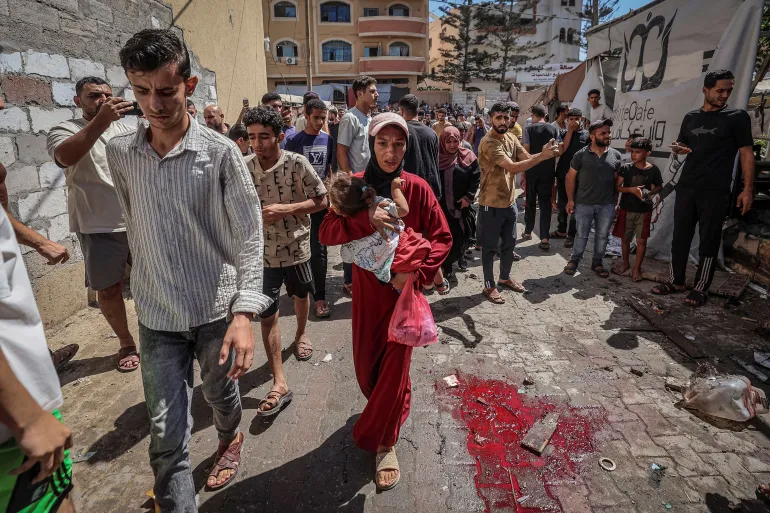
A Palestinian woman carries a girl past a blood stain on the ground after an Israeli drone strike on a cafe in al-Bureij camp, central Gaza Strip, on September 16, 2026 [File: AFP]
On Wednesday, a previously damaged building collapsed in Gaza City, killing at least 21 people, including 12 children. The Palestinian Civil Defence agency in Gaza struggled to recover bodies from under the rubble due to Israel’s severe restrictions on heavy equipment.
The Health Ministry warned on Wednesday that Gaza’s health system was on the verge of “total collapse” as Israel continues to limit the amount of medical aid and fuel permitted to enter the enclave.
In Super Macklemore 64, players are chased by a giant Ed Sheeran, dodge tiny billionaire Robert Krafts and summon musicians to chant “Free Palestine”. Creator Jonathan Mann says it highlights the “absurdity” of Macklemore being dropped from Sheeran’s concerts and Israel’s genocide in Gaza.
Critics say Serbia’s military ties with Israel are rising significantly.
Published On 17 Sep 202617 Sep 2026
Serbia has opened a factory to assemble advanced Israeli-made drones, which will supply the Serbian military and armed forces in other countries.
Serbian President Aleksandar Vucic inaugurated the facility jointly operated with an unnamed Israeli company on Thursday.
“Our plans are huge,” Vucic said in a social media post showing a video of him touring the facility with Israeli Ambassador Avivit Bar-Ilan, adding that at least three more factories will be opened across Serbia with Israeli partners.
Vucic said the facility “will employ around 100 workers and produce state-of-the-art equipment both for the Serbian Armed Forces and the armies of some other countries”.
Vucic did not disclose the factory’s location or the Israeli firm involved, saying journalists were excluded from the opening because of “the confidentiality of the production process”.
Previous reporting by investigative outlet BIRN and Israeli newspaper Haaretz has identified Israeli defence firm Elbit Systems as Serbia’s partner in the drone-manufacturing process.
Elbit has previously been criticised over its role in operations in Gaza and the West Bank.
Last month, Vucic told Serbian news outlet Nezavisne Dnevne Novine that the goal of the factory was to “preserve peace and stability, and to be strong enough to deter all potential aggressors”.
Serbia is one of the few countries in the Western Balkans that is not a NATO member, and it has invested heavily in its military to “preserve neutrality”.
It has faced scrutiny over arms exports to Israel, which BIRN and Haaretz said rose from 1.4 million euros ($1.6 million) in 2023 to 42.3 million euros ($48.5 million) in 2024.
During a visit to Serbia earlier this year, United Nations Special Rapporteur on the occupied Palestinian territories Francesca Albanese said Belgrade remained one of Israel’s “most steadfast and determined allies” despite calls for more countries to restrict weapons exports due to the war in Gaza.
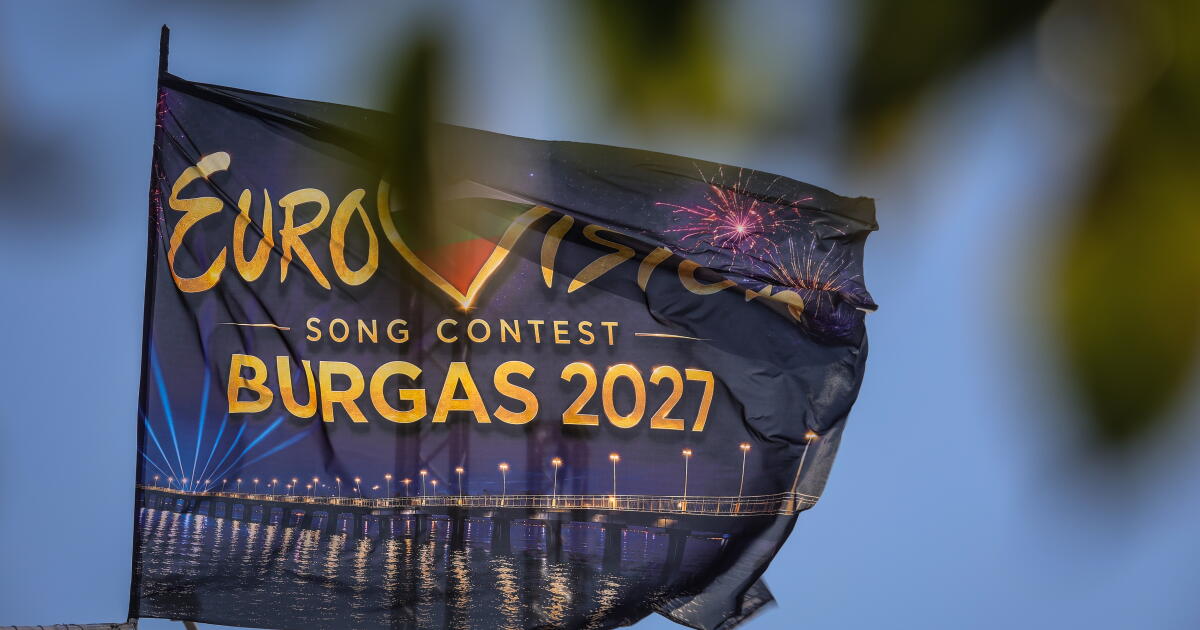
LONDON — Ireland will boycott the Eurovision Song Contest for a second year over Israel’s participation, the country’s national broadcaster said Thursday.
RTÉ said it will not send an act to the 2027 competition in Bulgaria and will not broadcast the show because of the “appalling and ongoing loss of lives in Gaza and the humanitarian crisis there which continues to put the lives of so many civilians at risk.”
Ireland was one of five countries — along with the Netherlands, Iceland, Slovenia and Spain — to skip Eurovision this year to protest Israel’s inclusion in the pan-continental music contest.
Eurovision Director Martin Green said organizers regretted RTÉ’s decision but “fully respect” it.
“All broadcasters decide on an annual basis to participate in the following year’s contest. We will remain in dialogue with RTÉ and hope to welcome them back to the contest in the future,” Green said.
Dutch broadcaster AVROTROS announced last month it will also boycott next year, calling Eurovision a “platform for division.”
“AVROTROS will not participate in the Eurovision Song Contest in 2027 because the event can no longer be considered neutral, with a participating country still involved in a large-scale military conflict,” it said.
Next year’s competition is due to take place in Bulgaria’s Black Sea resort of Burgas in May, after Bulgarian singer Dara won the 2026 event with her infectious party anthem “Bangaranga.”
The contest was founded in 1956, in part to help unite a shattered continent after World War II. It pits acts from dozens of countries against one another for the continent’s musical crown.
Israel has taken part in Eurovision since 1973, one of a few non-European countries to compete. But calls for Israel to be kicked out have swelled over the conduct of Prime Minister Benjamin Netanyahu’s government in the Hamas-Israel war in Gaza.
The 2024 Eurovision contest in Malmo, Sweden, the 2025 in Basel, Switzerland and this year’s contest in Vienna saw pro-Palestinian protests and heightened security.
Public broadcaster RTE says the country’s participation cannot be justified amid ‘appalling and ongoing loss of lives in Gaza’.
Published On 17 Sep 202617 Sep 2026
Ireland has become the second country, after the Netherlands, to announce a boycott of next year’s Eurovision Song Contest over Israel’s participation.
Irish public broadcaster RTE said in a statement on Thursday that the country’s participation could not be justified “given the appalling and ongoing loss of lives in Gaza” and that the humanitarian crisis in the enclave “continues to put the lives of so many civilians at risk”.
Recommended Stories
list of 3 itemsend of list
RTE, which manages Ireland’s selection and participation in Eurovision, added that it remained “deeply concerned by the continued denial of independent access [for] international journalists to the territory”.
The decision marks the second consecutive year that Ireland will neither participate in nor broadcast the competition, which is the world’s most popular television music show.
Earlier this month, Eurovision organisers said they were excluding any country involved in an armed conflict from hosting the competition.
However, the Dutch public broadcaster Avrotros said the exclusion of countries in conflict was not “sufficient”.
Avrotros announced last month that it was withdrawing from the 2027 competition.
It said Eurovision could “no longer be considered neutral” given Israel’s participation in “a large-scale military conflict” in Gaza.
Both Ireland and the Netherlands were among five countries that withdrew from Eurovision 2026 in Vienna earlier this year. Spain, Slovenia and Iceland also decided not to participate.
Eurovision Director Martin Green said on Thurday that organisers “fully respect” Ireland’s decision and that they “will be missed”.
“The Eurovision Song Contest is at its best when broadcasters and their artists from different countries come together to share music, celebrate creativity and create connections between audiences,” Green said.
“That power to bring people together is at the heart of what makes the Contest so special, and is even more important now in an increasingly difficult and divided world.”
The 2026 show, which Bulgaria won, attracted 132 million viewers, 34 million fewer than its 2025 edition.
Thousands of protesters gathered outside the venue in the Austrian capital during the final in mid-May to oppose Israel’s participation.
The European Broadcasting Union organises the annual music competition. It has faced accusations of applying a double standard for refusing to exclude Israel, despite banning Russia following its invasion of Ukraine in 2022.
Ed Sheeran’s Loop tour, in the span of less than two weeks, became an unexpected lightning rod for controversy and conversation about artist activism amid Israel’s deadly war in Gaza. Still, the show will go on.
Sheeran’s tour will proceed as planned, The Times has learned. He is scheduled to play on Saturday at Lincoln Financial Field in Philadelphia. The venue also confirmed on Wednesday that the Saturday concert is still a go, but that supporting acts have yet to be finalized.
A representative for Sheeran’s tour did not immediately respond to requests for additional information, including who will be the new supporting acts.
In a rapid turn of events since rapper and former opening act Macklemore called for Palestinian liberation onstage earlier this month, Sheeran — the singer of inoffensive hits including “Thinking Out Loud” and “Shape of You” — fell out with the fellow Grammy winner, witnessed all supporting acts drop from his lineup and defended himself against accusations of complicity in silencing criticism of Israel. Additionally, Sheeran confronted scrutiny over his largely apolitical public presence. He attributed this to his longtime desire to “bring people from all backgrounds and cultures together” via his music and performances.
“I am not complicit. I have my personal views on this devastating conflict,” he wrote Tuesday on Instagram. “Just because I choose not to speak publicly, it doesn’t mean I don’t have them, and it doesn’t mean I don’t care. Nor does it mean I don’t support causes in my own, personal way.”
Ahead of Sheeran’s first concert since the scrutiny surrounding Macklemore’s performance, read on for what preceded the fallout of Sheeran’s Loop tour.
Macklemore goes from “Thrift Shop” to “Hind’s Hall”
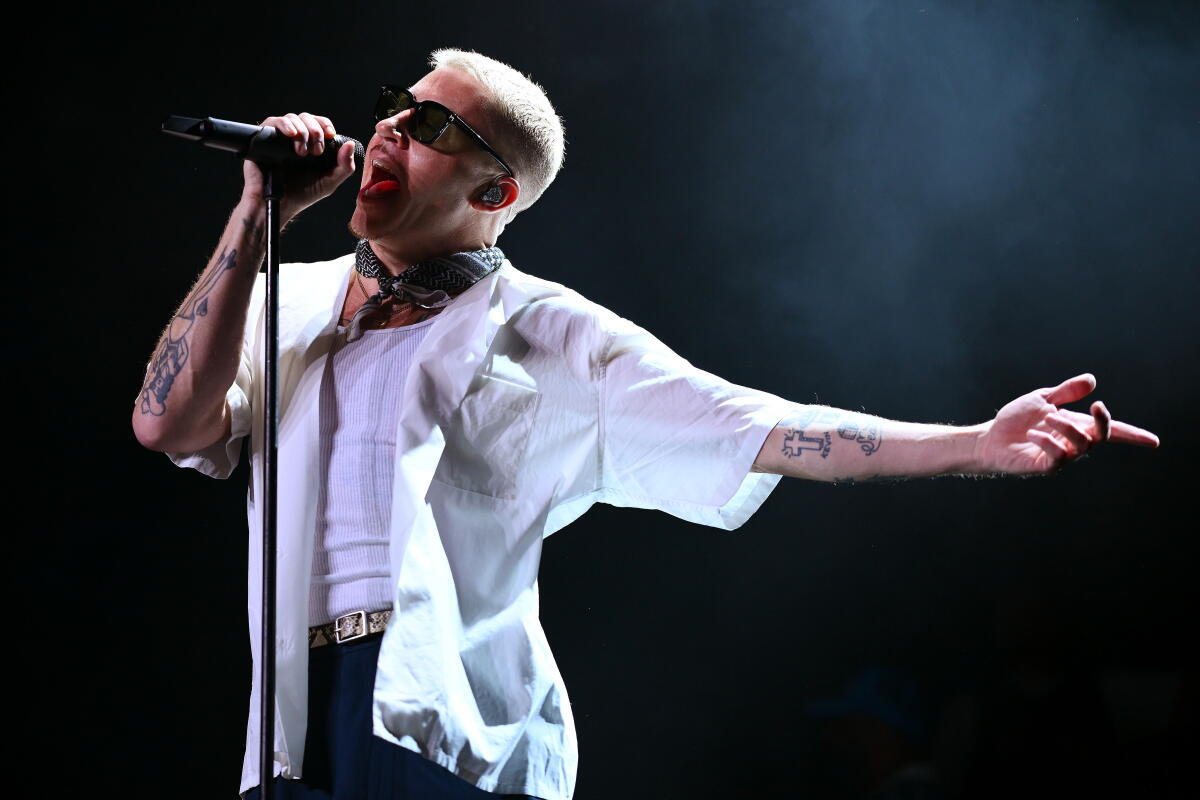
Macklemore performs at Rod Laver Arena on May 15, 2024, in Melbourne, Australia.
(Morgan Hancock / Getty Images)
Before hitting the stage for Sheeran’s Loop tour, Macklemore famously burst onto the music scene in 2012 as part of the duo Macklemore & Ryan Lewis. The pair gained popularity for the then-inescapable hit “Thrift Shop,” the fourth single off their acclaimed debut album, “The Heist.”
The duo gained further notoriety with hits “Can’t Hold Us” and same-sex marriage anthem “Same Love.” They notoriously bested Kendrick Lamar at the 2014 Grammy Awards in the rap album category. Lamar was nominated for his striking debut “Good Kid, M.A.A.D City.”
A year after releasing their 2016 album, “This Unruly Mess I’ve Made,” the duo announced an indefinite hiatus. Macklemore focused on his solo work, including collaborations with Kesha, Lil Yachty and Skylar Grey. In recent years, Macklemore has taken on a new purpose with his platform.
Macklemore, like many musical acts including Kehlani, Finneas and Irish rap group Kneecap, became a vocal supporter of the Palestinian cause after Israel began its offensive in Gaza in the wake of the Hamas attacks on Oct. 7, 2023. The rapper has channeled his views on the conflict into his music, releasing his protest song “Hind’s Hall” in May 2024. The song calls for a ceasefire, an end to Israeli occupation in Gaza and highlights pro-Palestinian protests on college campuses.
Ed Sheeran announces his Loop tour
Ed Sheeran performs during iHeartRadio Kiss 108’s Jingle Ball 2025 at TD Garden on Dec. 14, 2025, in Boston, Mass..
(Scott Eisen / Getty Images for iHeartRadio)
Last September, Sheeran unveiled his plans to hit the road to promote his eighth studio album, “Play.”
The British “A Team” singer announced at the time that his tour would begin June 2026 with a stop at Arizona’s State Farm Stadium and would run through early November. The announcement did not disclose the supporting acts set to share the stage with him, but informed fans the singer would perform shows across large venues including Inglewood’s SoFi Stadium in August and a pair of performances at MetLife Stadium in New Jersey.
The concerts at MetLife Stadium would later embroil Sheeran, his tour, Macklemore — and somehow pop star Pink — in controversy.
Macklemore calls to ‘Free Palestine’: Performance or ‘propaganda?’
When Macklemore took the MetLife Stadium stage as the supporting act for Sheeran’s Sept. 4 and 5 concerts, he did not mince words in his message. During his set, Macklemore criticized Israel for its war in Gaza and accused it of genocide of Palestinians. He also projected an edited version of his “Hind’s Hall” music video, which features footage of pro-Palestinian college encampments and protests and military strikes in Gaza.
Video of Macklemore’s performance spread online, drawing ire from some Jewish advocacy groups including StopAntisemitism, which accused Macklemore on Instagram of turning “a mainstream event into a political nightmare against the Jewish state.” Pop star Pink, who is Jewish, shared StopAntisemitism’s post to her Instagram story. She faced backlash for the repost and later clarified in a three-part statement that she took issue with the imagery Macklemore displayed during his performance. She also accused the rapper of taking “the mic to tell all the Jews in the stadium that it wasn’t about them.”
In the wake of Macklemore’s performance, the Israeli American Council and the Anti-Defamation League also decried Macklemore’s performance on social media, with the former publishing a petition calling on Sheeran to remove the rapper from the remaining shows of his tour.
“Freedom of expression does not give anyone the right to turn someone else’s stage into a platform for political propaganda,” the Israeli American Council said on Instagram.
Amid the mounting backlash, Macklemore defended his stance and shared video on social media of his full address to the MetLife crowd. “I said ‘Free Palestine.’ I want those words to be loud and clear so that the people in Gaza all the way to the occupied West Bank know that we have not forgotten them,” he tells concertgoers in his introduction to “Hind’s Hall.”
“To all my Jewish brothers and sisters, criticism of Israel, criticism of apartheid, being against genocide in no way is a criticism of you,” he adds, according to video of his address. “My message is for peace, love for all human beings to be treated with dignity, respect and equality.”
The fallout begins: Macklemore fired from Loop tour
Whether Macklemore would remain on Sheeran’s tour amid the public outcry remained uncertain, until he confirmed his status earlier this week. He said in a lengthy statement shared to Facebook that his continued, vocal support for Palestinians amid Israel’s war in Gaza has cost him professionally.
The rapper said he was removed after “some difficult conversations” with Sheeran. He also went into depth about the inner workings that led to his removal from the tour, including conversations between Sheeran and wealthy venue owners, including billionaire Robert Kraft, whose Kraft Group owns Gillette Stadium in Massachusetts, where Sheeran is set to play later this month.
“Ed told me that Kraft said I would not be allowed to perform in his stadium,” Macklemore wrote. “Ed also told me that Kraft had rallied some of the other stadium owners and collectively they gave him an ultimatum: if Macklemore stays on the tour, you will not be allowed to play in our venues.”
Sheeran in a separate statement shared on Tuesday confirmed he had conversations with Kraft but did not speak to the alleged ultimatum. The singer also said removing Macklemore from the tour “was the promoter’s decision, it was not mine” and that Macklemore’s contract was with its promoter. Messina Touring announced on Monday it had dropped Macklemore from the remaining tour dates “after discussions with stakeholders.”
Additionally, Macklemore wrote that Sheeran’s “typical apolitical stance was being challenged” amid the public scrutiny and “he couldn’t get past his public facing, ‘I don’t take sides.’”
Sheeran appeared to address that criticism, writing in his missive that attendees at his concerts “do not expect a political forum.” The singer also wrote he thinks there can be different ways to work toward peace.
“If we only focus on shouting the loudest, nothing will ever change,” he wrote.
Macklemore said in his Monday statement he was hopeful this turn of events would not mean an end to his friendship with Sheeran and he was grateful for the opportunity to play on tour, regardless.
“I didn’t need 10 Shows from Ed. I needed 2,” he wrote. “Two chances to stand in front of 90,000 people and say … ‘Free Palestine.’”
Supporting acts depart tour in solidarity
Grammy winner Finneas was among the supporting acts who announced their departure from Ed Sheeran’s tour on Tuesday.
(Monica Schipper / Getty Images)
Hours after Sheeran shared his side to the controversy, numerous musical acts including Grammy winner Finneas and folk band Beoga, Sheeran’s backing band, pulled from the Loop tour in solidarity with Macklemore and in support of Palestinians.
“Artists must not be silenced when they speak up for the oppressed. I have decided to withdraw from my upcoming tour dates with Ed Sheeran,” wrote Finneas, who has been a vocal supporter of Palestinians. “I stand with Palestine and its people.”
Pop band Lukas Graham and Irish singer-songwriter Aaron Rowe, both billed as supporting acts for several upcoming dates on Sheeran’s tour, voiced support for the Palestinian people and spoke against the inner workings that led to Macklemore’s removal.
In its statement, Lukas Graham wrote: “Money doesn’t give you the right to own the conversation. Nobody’s bank balance should decide who gets to speak or which suffering we’re allowed to acknowledge.”
Rowe in his Instagram statement said that Sheeran “has been a friend to me and has changed my life” but that he is sympathetic to the Palestinian cause. “As Irish people we know all too well about genocide, forced famine and violent occupation,” he wrote. The “Hey Ma” singer accused elites of leveraging their power to “silence the rightful voices” and criticism of Israel.
“I need to be true to myself and my ancestors who resisted colonisation, and fought for a freedom that I enjoy today in Ireland,” Rowe continued.
Macklemore announced Wednesday that he will donate his earnings from his shows with Sheeran to charities supporting Palestinians. He also invited Kraft to match his donation and reaffirmed his dedication to the Palestinian cause.
“This is what this has always been about,” he wrote. “Not me. Not a tour. Not the headlines or the controversy.”
The North American leg of Sheeran’s Loop tour is scheduled to end Nov. 7 at Raymond James Stadium in Tampa, Fla. — the same venue that platformed controversial rapper Ye (formerly Kanye West) earlier this summer.
WASHINGTON — The top Democrat on the House Foreign Affairs Committee said Wednesday that he’s going to block a proposed sale of $2.8 billion in heavy weaponry to Israel over concerns that the powerful bombs may not be used in line with U.S. and international law.
Rep. Gregory Meeks of New York said he would withhold approval for the sale because of “grave, unresolved concerns” about how these munitions could be used in densely populated areas of Gaza and Lebanon by Israeli Prime Minister Benjamin Netanyahu’s government.
“The Trump administration has not provided sufficient assurances that these weapons will be used by the Netanyahu government in accordance with U.S. law and with appropriate protections for civilians,” Meeks said in a statement. “I therefore will not clear this sale at this time.”
Meeks’ objections, however, likely will not affect the sale, which was informally notified to lawmakers on Tuesday. Once it is formally notified to Congress, Secretary of State Marco Rubio can bypass the normal congressional review process by making an emergency determination that the transaction is an urgent national security interest.
Rubio has done so in the past, including bypassing a normal congressional review process to approve a nearly $3-billion sale to Israel last year. The administration then approved a new series of arms sales to Israel totaling $6.67 billion in January.
The State Department did not respond to requests for comment about either the new proposed sale or Meeks’ objection to it.
The $2.8-billion package includes 40,000 powerful 2,000-pound bombs, the Associated Press has reported. The transfer of 2,000-pound bombs had been paused by the Biden administration over concerns about the possibility of mass casualties.
The proposed sale is just the latest in a series of Trump administration steps to improve Israel’s military capacity and it comes as Israel is facing increased international isolation over its war in Gaza in response to the deadly Oct. 7, 2023 attacks by Hamas.
The conflict in Gaza has left tens of thousands of Palestinians dead and decimated the enclave. The U.S. brokered a fragile ceasefire, but violence has continued.
JERUSALEM: Prime Minister Benjamin Netanyahu vowed on Wednesday to pass a law to revoke the citizenship of anyone who defames Israel’s soldiers, his latest threat against the Israeli directors of “NAZA,” a documentary about soldiers’ killing of Gaza civilians.
Directed by Israeli journalists Yuval Abraham and Rachel Szor, NAZA alleges that mass civilian deaths were routinely built into Israeli targeting decisions in Gaza, something Netanyahu and the military reject.
The film, which won a major prize at the Venice Film Festival on Saturday, takes its title from an Israeli military term for expected “collateral casualties” and is built around anonymous interviews with intelligence officers and soldiers.
It has drawn a backlash in Israel, with the military examining potential legal action against those involved in it. But it has also played into the charged political atmosphere ahead of Israel’s October 27 election, which public opinion polls show Netanyahu’s right-wing coalition could lose.
On Tuesday, Netanyahu accused some of his election rivals of failing to take a tough stand against the documentary, saying this made them unfit for office. And on Wednesday, he pledged to advance two bills that he said aimed at addressing the “immense damage” done to Israeli soldiers.
“The first, to revoke the citizenship of anyone who defames (Israeli) soldiers, and the second to hit them in their pockets and increase the statutory damages for defamation they can be sued for by 20 times,” Netanyahu said in a social media video.
“We will hit them both in their pockets and in their citizenship, as their place is not with us.”
Netanyahu cited three incidents in proposing the bills: “the recent film NAZA which portrayed (Israeli) officers and soldiers as war criminals“; 2025 remarks by left-wing ex-general turned politician Yair Golan that “a sane country does not kill children as a hobby“; and a military legal officer’s 2024 leak of a video showing soldiers abusing a Gaza detainee.
Reuters could not immediately reach the NAZA filmmakers for comment.
In 2022, Israel’s Supreme Court upheld a law that permits stripping citizenship from Israelis who carry out actions that constitute a breach of trust against the state. Any new legislation would likely face similar court challenges.
The NAZA filmmakers say they believe it is important that Israelis watch the documentary and grapple with the narrative it presents.
Gaza health authorities say more than 73,000 Palestinians, most of them civilians, have been killed in Israel’s military campaign that has left much of Gaza in ruins.
The war was triggered by Hamas’ October 7, 2023, attack on Israel which killed 1,200 people, most of them civilians, according to Israeli tallies.
Israel’s defence minister has pledged to remove Palestinians from the besieged Strip.
Published On 16 Sep 202616 Sep 2026
Egyptian President Abdel Fattah el-Sisi has rejected any plans for Palestinian displacement, following comments by Israel’s defence minister saying the army would “finish the job” in Gaza.
Speaking during a visit by Palestinian President Mahmoud Abbas on Wednesday, el-Sisi stressed “Egypt’s firm stance against the displacement of the Palestinian people or any attempt to annihilate the Palestinian cause”, the Wafa news agency reported.
Recommended Stories
list of 3 itemsend of list
Abbas praised Egypt’s steadfastness in defending Palestinian rights and reiterated that “Gaza is an integral part of our state.”
The Egyptian leader’s comments came hours after Israeli Defence Minister Israel Katz said the army would “finish the job” in Gaza, “so that we can also implement the migration plan.”
Katz said earlier this month that Israel was ready to remove Palestinians from Gaza by sea and land, but was waiting for the United States, which he said was discussing where the two million people would go.
US Ambassador Mike Huckabee has denied any plan to “displace people out of Gaza against their will”. In February, Huckabee explicitly said he “would be fine” if Israel took most of the Middle East in accordance with his interpretation of the Bible, but then suggested the remark was selectively edited.
Nearly all of Gaza’s population has been internally displaced, and most of the territory lies in rubble after three years of a war that has killed more than 73,700 Palestinians.
Israeli Prime Minister Benjamin Netanyahu said earlier this month that the army would not withdraw from the Gaza Strip, despite a US-backed ceasefire plan that came into effect in October stipulating it as a condition.
Netanyahu claimed Israel controls 60 percent of the Palestinian enclave and promised not to pull back until Hezbollah is disarmed.
His government has been pushing for more Israeli settlements on Palestinian territory in the West Bank, including through a controversial settlement project dubbed E1 designed to construct thousands of housing units between Jerusalem and the Maale Adumim settlement.
Israeli human rights group B’Tselem warned this week that Israel is executing a systematic and accelerated campaign to dismantle “Palestinian collective life” and establish permanent Jewish-Israeli sovereignty across the occupied West Bank.
A 15-year-old boy has been killed in an apparent Israeli double-tap strike as he rushed to help a paramedic wounded in an attack moments before. Israel has killed around one child per day in Gaza since the 2025 ‘ceasefire’.
DUBAI: Britain will “no longer stand by” while Israel kills Palestinian children in Gaza, First Secretary of State Louise Haigh said on Tuesday, pledging to increase pressure on Tel Aviv over the war and illegal settlement expansion in the occupied West Bank.
Speaking at the Trades Union Congress in Brighton, Haigh said Prime Minister Andy Burnham was right to acknowledge that Britain had been “too slow” in its response to the situation in Gaza and the West Bank.
“At a time when it has never been more important to remind the world who we are, we hesitated,” Haigh said.
“We will no longer stand by while innocent Palestinian families are torn apart, while innocent children are killed in Gaza, and while the hope of a two-state solution evaporates before our eyes,” she added.
Haigh said sanctions announced last week by Foreign Secretary Ed Miliband were intended to “change course,” adding that Britain was “purposefully targeting the illegal settlements” and increasing pressure on the Israeli government.
The measures include sanctions targeting individuals and companies linked to Israeli settlement expansion, as well as a ban on imports from settlements in the occupied West Bank.
“The Israeli people are not responsible for the actions of their government,” Haigh said. “We will stand against injustice. We will stand up for peace.”
She added that Britain would work with international partners to “speak with one voice” and help preserve the prospect of a two-state solution.
LONDON: Film festivals and filmmakers around the world have rallied around the directors of the Gaza documentary “NAZA,” after an Israeli minister accused them of treason and threatened to revoke their citizenship.
Israeli filmmakers Yuval Abraham and Rachel Szor have faced mounting criticism from officials in Israel since their documentary, which documents Israeli military operations in Gaza, and in particular the killing of civilians, won the Special Jury Prize at the Venice Film Festival at the weekend.
Israel’s minister of culture and sports, Miki Zohar, said he would “act immediately” to revoke the citizenship of the filmmakers, accusing them of “treason against the state.”
The film, produced by The Guardian newspaper, features testimonies from 24 Israeli military and intelligence personnel about the use of AI-powered targeting systems in Gaza. It builds on investigations published by Israeli media outlets +972 Magazine and Local Call, as well as Guardian news reports.
The threats against the directors prompted a broad response from the international film community, with the directors of the Telluride, Locarno, Berlin and San Sebastian film festivals among those expressing support.
Julie Huntsinger, artistic director of the Telluride Film Festival, said that threatening the filmmakers’ citizenship was “unacceptable” and that the issue “should be condemned by any thinking human.”
The Berlin International Film Festival’s director, Tricia Tuttle, said artists must be free to examine events critically, and argued that in a democratic society the response to films should be “dialogue and scrutiny, not intimidation or punishment by the state.”
More than 1,500 Israeli filmmakers signed a petition backing Abraham and Szor, and rejecting the accusation that they sought to damage Israel’s international reputation. The petition warned that the campaign against them was moving toward rhetoric that could effectively sanction violence and pose a threat to their lives.
Abraham and Szor won an Oscar last year for their documentary “No Other Land”, made in partnership with Palestinian filmmakers Basel Adra and Hamdan Ballal, which examined Israeli settler violence against Palestinian communities in the occupied West Bank.
The Israeli military has rejected claims “NAZA” makes about its operations, saying they were based on anonymous sources that could not be independently verified.
Geneva: The United Nations called Tuesday for international investigators to be granted to access to all of Gaza “to assist with evidence-gathering” as hundreds of bodies are pulled from the rubble.
“The discovery of extensive remains under the rubble in Gaza City resurfaces these concerns of war crimes and other atrocity crimes,” UN rights chief Volker Turk said in a statement.
Israeli strikes across Gaza have killed at least one person and injured several. Residents say they were targeted outside tents in a Gaza City displacement camp.
BRUSSELS, Belgium: Belgium’s top universities condemned on Monday the government’s refusal to help 13 students from war-torn Gaza who received scholarships at Belgian universities reach the country.
Brussels set aside plans to evacuate the Palestinian students last week in a case that has split the coalition government.
The rectors of the European country’s top 10 universities expressed their “dismay” at the move in a letter, accusing the administration of using the students as “bargaining chips” in a “disgraceful political horse-trading.”
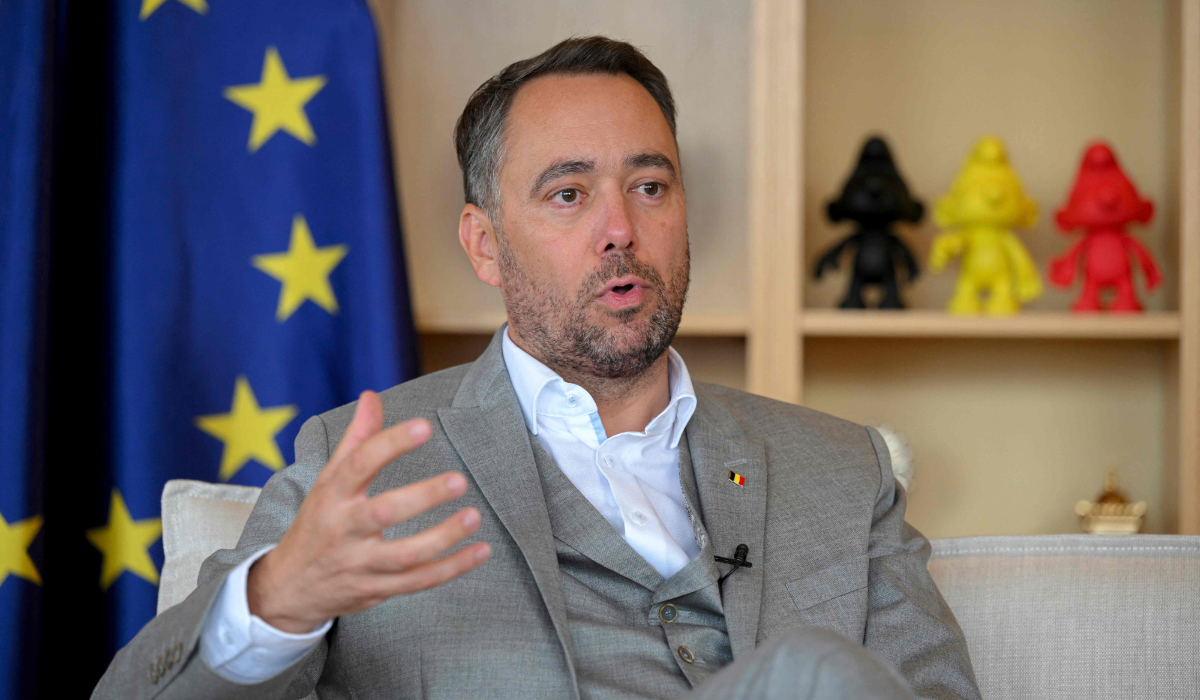
Centrist Foreign Minister Maxime Prevot has advocated in favor of evacuating the students but has faced opposition from the Flemish conservatives party of Prime Minister Bart De Wever, according to a government source.
Prevot said one member of the five-party coalition demanded concessions on migration, including the creation of deportation centers, in return for greenlighting the evacuations.
“They must not be treated as bargaining chips or as variables to be adjusted in political debates on migration,” the rectors wrote of the Gaza students.
“Their cases must be assessed for what they are: those of students and researchers who have been awarded scholarships on the basis of their academic merit and who have all expressed their intention to return to their home countries to contribute to their reconstruction.”
The students are among about 1,500 Palestinians in Gaza currently waiting to reach Belgium, having been granted the right to do so, mainly under family reunification rules, according to several NGOs.
Yet, evacuations from the Palestinian territory at war with Israel are proceeding at a trickle, with activists and now the universities accusing the government of deliberately slowing down the process.
“Discussions in recent weeks also show that the obstacles cited do not stem from insurmountable constraints but rather from a lack of political will,” the university chiefs wrote.
The case is not isolated, with Palestinian students hoping to study in Italy, Turkiye, the Netherlands, Germany also reporting delays in recent months.
Palestinian militant group Hamas launched an attack on Israel on October 7, 2023, which killed 1,221 people, according to official Israeli figures.
Israel’s offensive has since claimed at least 73,470 lives in Gaza, according to the Gaza health ministry, which operates under Hamas.

![A view of a technology incubator in Gaza before the war, where students received training in technology and innovation [Iyad Al-Qatrawi/Al Jazeera]](https://i0.wp.com/occasionaldigest.com/wp-content/uploads/2026/09/1-1789814125.jpeg?w=640&ssl=1)
![A view of a technology incubator in Gaza prior to the war, which provided an environment for training, incubating tech projects, and supporting students in the fields of technology and innovation [Iyad Al-Qatrawi/ Al Jazeera]](https://i0.wp.com/occasionaldigest.com/wp-content/uploads/2026/09/3-1789814366.jpeg?w=640&ssl=1)
![UCAS Technology Incubator, one of the most prominent incubators of the University College of Applied Sciences in Gaza, after its destruction during the war, as part of extensive damage to the institutions and structure of the technology and digitization sector in the Strip [Iyad Al-Qatrawi/Al Jazeera]](https://i0.wp.com/occasionaldigest.com/wp-content/uploads/2026/09/2-1-1789814285.jpg?w=640&ssl=1)