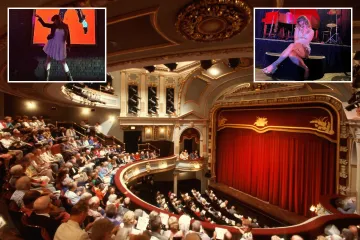
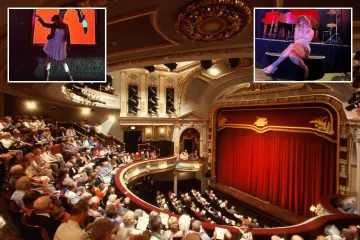
ONE attraction in the capital is about to get a number of new features – and they are all free to visit.
The Horniman Museum and Gardens in Forest Hill, London – which was named London‘s best family attraction in 2024 by – will be launching several new outdoor experiences on May 21.
Sign up for the Travel newsletter
Thank you!
The Horniman Museum and Gardens in London is launching several new features next monthCredit: Feilden Fowles ArchitectsThere will be a new play area as well as a new cafeCredit: Feilden Fowles and J L Gibbons
Follow The Sun’s award-winning travel team on Instagram and Tiktok for top holiday tips and inspiration.
The new experiences will be in the Horniman’s 16-acre Gardens and are part of the attraction’s Nature + Love project which includes a number of new opportunities to learn about and play in nature.
New features include a nature-themed play area, family-friendly cafe, an improved Nature Trail, an AR trail, a new nursery glasshouse and a Community Garden.
In the new Kusuma Nature Play area, there will be a wooden jetty with a slide, climbing webs and lookout points.
Visitors will also be able to learn about different species that are local to the Horniman, such as a robin-themed area with timber rocker, nest hedge, and robin eggs.
For slightly braver kids, there will be log steps, timber balance beams and a den building frame to climb through and build.
There will also be a collecting table where younger children can sit on leaf stools and have a go at a finger maze.
The play area will have a basket swing and multi-sensory planting as well.
Peronel Craddock, Director of Content at the Horniman Museum and Gardens, said: “This new play area starts with the idea of connecting children with nature through play, in particular, the wildlife in our local area.
“We hope it will encourage families to make the most of our 16 acres of beautiful Gardens, and also act as a gateway into the Museum for anyone who might not otherwise think a museum is fun, free, or for them.”
Another new addition to the attraction will be a family-friendly cafe and picnic area, ideal for post-play bites to eat.
The cafe will open just across from the new play area and will be run by a family-run cafe group, which operates the Horniman’s other cafes and kiosks.
Visitors will be able to choose from a range of food options including fresh sourdough pizzas.
Of course, you’ll also be able to pick up ice cream and coffee as well.
The cafe will feature both indoor and outdoor seating.
There will also be two new gardens – a Community Garden and a Garden NurseryCredit: Feilden Fowles
Another exciting new addition is an AR trail called Animals Everywhere.
The trail uses technology that enables guests to interact with the trail and see 3D animated creatures right in front of them.
As visitors head off on the trail they will encounter a number of challenges to complete and mini games to play.
On one part of the trail, for example, visitors will even get the chance to feed the famous Horniman walrus.
Visitors will need to use their phone to follow the trail – but they do not have to pay or download anything.
In addition to the new AR trail, the Nature Trail is being revamped with direct, ramped access from the play area.
Along the trail new panels with information about the local wildlife will be installed as well.
In addition to a revamped Nature Trail, there will be a new AR trailCredit: Sophia Spring
Stuart McLeod, Director of London and South at The National Lottery Heritage Fund, said: “Animals Everywhere! is a fantastic example of how technology can reduce barriers and inspire curiosity and engagement with our natural heritage.
“The Horniman offers a fantastic urban green space, and this, alongside the wider Nature + Love project, will transform how visitors connect with nature and the heritage on their doorstep.”
And there will be a Community Garden developed with input from people in the local area.
In the garden – which will focus on respite and reflection – adults and families will be able to participate in a programme of activities.
These will include planting, art, seed bomb creating and practical how-to-grow sessions.
And next year, the museum will reopen its popular natural history galleryCredit: Horniman Museum and Gardens
The Garden Nursery area will also be transformed and include a new greenhouse, terrace and workshop space.
Across the garden, visitors can learn some top gardening tips as well as how to better connect with nature.
In addition to the new openings, next year the museum will also reopen its natural history gallery.
The gallery will have been entirely refurbished and redisplayed with returning and new objects, having been closed since spring 2024.
Inside, the focus of the gallery will be on the natural world and also how we impact it.
All of the new features included in the Nature + Love project will be launched at the start of the Horniman’s 125th anniversary celebrations.
If you are heading to the Horniman Museum and Gardens for the day, there are a number of other things to see and do.
In addition to exploring over 350,000 objects and specimens from around the globe, you can also head to the aquarium and butterfly house on site.
If you are heading to the attraction for the day, you can also explore a butterfly house and aquarium – though, these are paid-forCredit: Sophia Spring
Our favourite UK hotels
*If you click on a link in this box, we will earn affiliate revenue.
Margate House, Kent
This stylish boutique hotel is in a seaside townhouse, a short walk from Margate’s coolest bars and restaurants. Decked out with plush velvet sofas, candles flickering and striking independent art, inside feels like a warm welcome home. Rooms are stunning, especially the ones that give you a glimpse of the sea.
The Alan looks extremely grand, being built into a beautiful Grade II listed building. Spread across six floors, with 137 rooms, each one looks like a fancy design magazine. From the concrete coffee tables to the pink plastered walls, the industrial-inspired designs perfectly replicate the history of the city.
This historic hotel has welcomed the likes of Charles Dickens and Lillie Langtry through its doors. Rooms have richly-patterned carpets with super soft bed linen and premium toiletries in the bathroom. Go for a superior room for extra goodies including bathrobes and snack boxes.
This Cambridge hotel is in the ideal spot, within walking distance to bars, shops and hotspots like the university colleges and Parker’s Piece. The inside couldn’t be prettier, with huge stained glass windows, grand chandeliers, and rooms with enormous clawfoot bath tubs.
Though, both of these are paid-for parts of the attraction with a ticket to the butterfly house costing £9.90 per adult and £6.50 per child and a ticket to the aquarium costing £6.50 per adult and £3.50 per child.
Until November, you can also check out the ‘Voyage to the Deep – Underwater Adventures’ exhibition.
The exhibition is inspired by Jules Verne’s ‘20,000 Leagues Under the Sea’ and visitors will be able to ‘climb’ aboard the Nautilus submarine and head on an underwater adventure.
Tickets for the experience are also paid-for, with adult admission costing £9.80 and child admission costing £7.
If you want to just explore the free areas you can venture around the museum itself and the gardens too, where you will find an Animal Walk with goats, sheep, guinea pigs, rabbits, chickens and alpacas.
IT MIGHT feel like we have been waiting forever for spring and now you can enjoy it by seeing lots of different sights in bloom.
National Trust sites and properties across the UK are home to an abundance of plants and trees.
Sign up for the Travel newsletter
Thank you!
There are tons of places to see blossom across the UK this spring, including National Trust propertiesCredit: Shutterstock EditorialAnglesey Abbey is less than six miles from Cambridge and features a country house that was built on the remains of a prioryCredit: AlamyThe house is surrounded by gardens, which is where you will find the blossomCredit: Alamy
And with that, there’s a lot of blossom to see.
Whether it be an apple or cherry tree, here are some of the top National Trust sites to see blossom this spring.
Acorn Bank, Cumbria
Acorn Bank is known for having an extensive herb collection as well as sprawling orchards and a working watermill.
And tucked behind its 17th-century walls, visitors will find the orchard with over 175 apple varieties.
From early May, many of the trees bloom with a soft pink-white blossom.
It costs £11 per adult and £5.50 per child to visit.
Anglesey Abbey, Cambridgeshire
Less than six miles outside of Cambridge, Anglesey Abbey features a country house that was built on the remains of a priory.
The house is surrounded by gardens, which is where you will find the blossom.
Back in 2021, Olympian Way was planted with cherry blossoms that bloom pink in March and April.
Visitors will also be able to find cherry blossom in the woodland and Rose Garden.
It costs from £19 per adult and £9.50 per child to visit.
Ardress House, County Armagh
Found in the ‘Orchard County’ of County Armagh, Ardress House features a 17th-century house with 18th-century interiors, as well as a traditional farmyard.
Each May, the property’s apple blossom appears and visitors can also head on a walk which encircles the farmhouse to see more blossom.
Attingham Park, Shropshire
Attingham Park is an 18th-century estate with a mansion and around 200 acres of parkland.
Blossom appears on the apricot trees each year in the Walled Garden from around mid-March, and then other trees follow, such as peach, pear and apple.
Admission to the house and gardens costs from £18 per adult and £9 per child.
Attingham Park in Shropshire has over 130 apple trees in totalCredit: PA:Empics SportBatemans used to be the home of Rudyard Kipling who wrote The Jungle BookCredit: Alamy
Bateman’s, Sussex
Bateman’s in Sussex is the family home of the writer of The Jungle Book, Rudyard Kipling, and was built in 1634.
Each year the orchard becomes alive with blossom from April to mid-May including apple trees and pear trees.
It costs £18 per adult and £9 per child to visit the estate.
Beningbrough, Yorkshire
At Beningbrough, visitors can explore a hall and gallery, eight-acre garden and even a wilderness play area.
And during the spring, the blossom emerges in the walled garden.
The blossom comes from many traditional and newly planted fruit trees.
It costs £16 per adult and £8 per child to visit Beningbrough.
At Beningbrough, visitors can explore a hall and gallery, eight-acre garden and even a wilderness play areaCredit: AlamyThe blossom at Beningbrough comes from many traditional and newly planted fruit treesCredit: Alamy
Blickling Estate, Norfolk
At Blickling Estate, visitors can see a Jacobean mansion which boasts a large collection of books as well as a 55-acre garden.
In the West Garden is where visitors will find magnolias blooming from March in shades of white and pink.
The orchard also features fruit trees which blossom.
It costs £18 per adult and £9 per child to visit.
Brockhampton, Herefordshire
Brockhampton estate features a medieval manor house and is home to the largest orchard in the National Trust, spanning more than 145 acres.
In the orchard, visitors will find prune damsons as well as apple varieties, all of which bloom between March and May.
There are also five interlocking ‘orchard rooms’ which have been designed to reflect the structure of an apple.
Admission to the entire estate costs £12 per adult and £6 per child.
Brockhampton estate features a medieval manor house and is home to the largest orchard in the National Trust, spanning more than 145 acresCredit: AlamyCalke Abbey has 50 varieties of rare and local apple treesCredit: Alamy
Calke Abbey, Derbyshire
At Calke Abbey, visitors can see a Baroque-style mansion that has peeling paintwork and abandoned rooms, as well as the physic garden and a sprawling estate.
In the garden, there are around 50 varieties of rare and local apple trees which means by May the garden is full of pink and white flowers.
At the beginning and end of the season, visitors can also enjoy Calke’s Festival of Blossom with a number of activities.
To visit the house, it costs £15 per adult and £7.50 per child and to visit the park and gardens it costs £8.50 and £4.25 per child.
Coleton Fishacre, Devon
Coleton Fishacre is a 1920s country retreat which also has a tropical garden.
In the garden, visitors can see apple and cherry blossom on a number of self-led trails.
As part of the Festival of Blossom, visitors can also write haiku or tanka poems using blossom poetry cards.
And there are guided mindful walks on March 31, April 13 and 29.
Coleton Fishacre costs £18 per adult and £9 per child to visit.
What’s it like to visit Coleton Fishacre?
TRAVEL Reporter Cyann Fielding has visited Coleton Fishacre and here’s what she thought:
Growing up I visited Coleton Fishacre several times and with each visit, I fell in love with it more.
The 1920s country house with a thatched roof sits on a hill overlooking the Devon coastline.
And inside the house, it is just as special with kitsch interiors that feel cosy.
Make sure to spend some time in the Library and the Saloon.
In the Library, you see tonnes of books with a huge painted map above the fireplace.
And then in the Saloon, there is a theatre-like atmosphere with lots of Art Deco features.
Coleton Fishacre features a subtropical garden with lots of blossomCredit: Alamy
Cotehele, Cornwall
Cotehele in Cornwall is a Tudor house with a mill, garden and estate.
On the estate, the orchard is the earliest to bloom with apple, cherry, plum and pear trees.
Across spring the estate also hosts a number of events including walks, music, creative workshops and community activities.
It costs £18 per adult and £9 per child to visit.
Just outside of Durham, you will find Crook Hall Gardens with a medieval hall and pretty gardensCredit: Alamy
Crook Hall Gardens, Durham
In the north of England, you can head to Crook Hall Gardens.
Here you will find a medieval hall with pretty gardens, just outside of Durham city.
In the orchard all the apple varieties bloom and as the season goes on, more species in the orchard flower.
It costs £10 per adult and £5 per child to visit the gardens.
Dunham Massey in Manchester is often noted as one of the best places to see blossom in Northern EnglandCredit: AlamyThere is also the Orangery, with small waterways and seasonal flowers to exploreCredit: Alamy
In the spring, cherry blossom blooms and is often noted as one of the best places in Northern England to see blossom.
There is also the Orangery, with small waterways and seasonal flowers to explore.
It costs £20 per adult to visit and £10 per child.
Dunster Castle and Watermill, Somerset
Dunster Castle doesn’t just feature a castle, but also a country home and subtropical gardens.
Throughout spring, blossom inspired decorations welcome visitors as well as there being a blossom themed display at the Stables Shop.
Families can also head on the ‘Bees and Blossoms Spotter Trail’ and toward the end of April, there will be a new willow sculpture by artist Woody Fox.
Outdoors, blossom will also appear in the subtropical and riverside gardens.
It costs £19 per adult and £9.50 per child to visit.
Dunster Castle doesn’t just feature a castle, but also a country home and subtropical gardensCredit: Alamy
Dyffryn Gardens, Vale of Glamorgan
At Dyffryn Gardens, visitors can see a number of small themed gardens that reflect different countries and styles, as well as a kitchen garden, arboretum, glasshouse and natural play areas.
During the spring, visitors can expect Dyffryn Gardens has a self-led Blossom Watch Walk through the estate and Edwardian garden rooms.
Visitors can grab a dedicated map which helps to show the highlights of the gardens.
It costs £14 per adult and £7 per child to visit.
Erddig Hall and Garden, Wrexham
Erddig Hall is a late 17th-century country house with an 18th-century Grade I listed walled garden.
Across the 1,200 acre estate there are meadows, lakes, ponds and rivers, to explore.
During the spring, Erddig has blossom across its walled garden, orchards and lime tree avenues.
Visitors can also see cherry, plum, pear and apple blossom appearing in stages across the garden’s fruit trees.
It costs £19 per adult and £9.50 per child to visit.
Felbrigg Estate is home to a 17th-century Hall with one of the largest collections in the National trustCredit: Alamy
Felbrigg Estate, Norfolk
Felbrigg Estate is home to a 17th-century Hall with one of the largest collections in the National Trust.
In the Walled Garden visitors can see blossom across fruit trees as well as historic varieties.
It costs £16 per adult and £8 per child to visit.
Gibside, Tyne and Wear
At Gibside – a Georgian landscape garden – visitors can explore pear, apple and apricot trees all blooming from March to May.
The Walled Garden is also colourful, with lots of pink blossom.
There are a number of events too including blossom bathing sessions, beekeeping demonstrations, pollinator counts, and creative workshops.
It costs £18 per adult and £9 per child to visit.
Greenway Mansion used to be the home of crime author Agatha ChristieCredit: Alamy
Greenway, Devon
Agatha Christie’s home in Devon is a great spot to explore the life of the crime writer as well as see blossom in spring.
Between March 21 and April 30, Greenway has its Festival of Blossom, with large magnolias blooming overhead, lots of fruit trees in bloom and wild hedgerow flowers appearing.
Admission to the whole property costs £18 per adult and £9 per child.
Gunby Estate, Hall and Gardens, Lincolnshire
Gunby Estate features an 18th-century country house with Victorian walled gardens near the Lincolnshire Wolds.
During the spring, visitors can expect to see the fruit trees in the walled gardens spring into bloom with different pastel pinks.
There is also a cherry walk which is great to visit in late April and pear blossom appears in the kitchen garden, alongside apple blossom in May.
Between March 29 and April 23, visitors can also catch some blossom indoors as the ‘Springtime Wonderland’ exhibition by Laura Andrew will be on.
And from April 13 to May 31, there is the Blossom Wellbeing Trail – a self-guided route to appreciate the sights, scents, and sounds of the season.
It costs £12 per adult and £6 per child to visit Gunby Estate.
At Hanbury Hall, there is an 18th-century house featuring original wall paintings by Sir James Thornhill as well as formal gardens.
The site is home to several species of blossom trees, including pear, apple, and cherry blossom, which all flower anytime from March to May.
Later in April and May, visitors can try out blossom bathing in the walled orchard, which has 56 varieties of heritage apple trees.
It costs £19 per adult and £9 per child to visit.
Ham House, London
Ham House is a Stuart house situated on the banks of the River Thames and boasts a unique collection of antiques and furniture.
The house even has its own cherry garden, with lavender and a 17th-century statue of Bacchus.
In the Outer Courtyard, lots of new blossom trees have been planted and even though they are young, more and more sprigs of colour are appearing each spring.
It costs £18 per adult and £9 per child to visit.
Hinton Ampner was rebuilt and today features a large house with a pretty gardenCredit: Alamy
Hinton Ampner, Hampshire
Following a fire in 1960, Hinton Ampner was rebuilt and today features a large house with a pretty garden.
During the spring blossom can be found across the orchard and wild garden.
And don’t miss the sweeping views of the Hampshire Downs.
It costs £18 per adult and £9 per child to visit.
At Killerton in Devon, visitors can head on a waymarked blossom trailCredit: Alamy
Killerton, Devon
Killerton is home to a Georgian house as well a chapel and historic garden and the gardens are one of the first to awaken in Devon according to the National Trust.
Visitors can head on a waymarked blossom route, which is around one-mile.
Along the way, they can read gardener’s notes that highlight the different blossoms.
It costs £18 per adult and £9 per child to visit.
Lyme, Manchester
Lyme in Manchester features a 600-year-old house with 1,400-acre grounds.
Visitors can explore ornamental cherry trees with soft pinks as well as creamy white blossoms.
In the Vicary Gibbs area of the garden, there’s a mindful walk where visitors can bathe beneath the Japanese Mt. Fuji cherry tree.
It costs £19 per adult to visit and £9.50 per child.
Visitors at Nostell in Yorkshire can explore a large Georgian house, landscaped gardens, parkland and stables courtyardCredit: Alamy
Nostell, Yorkshire
Nostell in Yorkshire boasts a large Georgian house, landscaped gardens, parkland and stables courtyard.
Visitors can see blossom across the Kitchen Garden, orchard and pleasure grounds with the season beginning in March.
There’s also a nice walk from the rose garden and orangery to the orchard’s heritage pear espalier.
In the pleasure grounds, make sure to look out for the magnolia with large flowers budding overhead.
It costs £14 per adult and £7 per child to visit.
Paycockes House and Garden, Essex
Paycockes House and Garden is a Tudor merchant’s house and in the gardens this spring, visitors can see blossom across the entire garden,
It costs £12 per adult and £6 per child to visit.
Sissinghurst in Kent has 1,100 fruit trees blooming each springCredit: Alamy
Sissinghurst, Kent
Sissinghurst is a castle with a world-renowned garden, where you will find 1,100 fruit trees blooming each spring.
The garden also has a particularly large blossom tree, known for its fluffy white flowers.
It costs from £20 per adult and £10 per child.
Waddesdon Manor, Buckinghamshire
Waddesdon Manor is a French Renaissance-style château, built by Baron Ferdinand de Rothschild, and it boasts Victorian-style gardens with statues and a wooded playground.
Between March 25 and April 12, visitors can head to Waddesdon’s Festival of Blossom which has fresh floral displays and a blossom trail inside the house.
In the gardens, visitors can see horse chestnut trees which have creamy-white or pink blossom in May.
It costs £27.50 per adult and £13 per child to visit.
Between March 25 and April 12, visitors can head to Waddesdon’s Festival of Blossom which has fresh floral displays and a blossom trail inside the houseCredit: Alamy
Wimpole Estate, Cambridgeshire
Wimpole Estate is home to a 17th-century mansion with Georgian interiors, a walled kitchen garden, and parkland.
Visitors heading to Wimpole’s orchard will see over 300 fruit trees which blossom between April and May.
Also in the Walled Garden are a number of cherry trees which have soft pink blossom.
It costs £21 per adult and £10.50 per child to visit.
What’s it like to visit Wimpole Estate?
TRAVEL ReporterAlice Penwill has visited Wimpole Estate and here’s what she thought:
One of my favourite National Trust spots that I visit throughout the year, in rain or shine is Wimpole Estate in Cambridgeshire.
It’s enormous, all spaced around its 17th-century hall and has a pretty garden which you can visit in the springtime.
But I love to explore the grounds (and it’s free of charge), you can walk for miles through cow fields, around the large ponds and up to the ruins in the folly – which if you’re a Slow Horses fan was used for filming in season one.
Afterwards you can duck into The Old Rectory to get a drink or something to eat, but what lots of visitors do, and myself included, is pack up a picnic and have it on the grass outside.
Monty Don has gone under the knife and admits he will need to do it again in 2027 as he opens up about his future with Gardeners’ World and retirement plans
Monty Don has been speaking to Saga magazine(Image: PA)
Monty Don has spoken of his “painful” recovery from a knee replacement in October that briefly slowed the Gardeners’ World host. The broadcaster and horticulturist went under the knife shortly after he turned 70 last Summer.
Looking back he says: “I was finding by the end of a day’s filming I could barely walk upstairs and I certainly couldn’t take the dogs for a walk. It was severely limiting what I was doing. I did it so I could keep on working because it was getting to the point where filming was cutting round me limping.
“However you do it, a knee replacement is horribly painful. But three months on I’m gardening again and haven’t walked with a stick for a month. Sarah says I’ve been doing far too much stuff, but it’s fine and going to plan – though it can be inexplicably painful one day and then not at all another. At some point, I’m going to have to do the other one – but only when I can fit it in, probably late 2027.”
**Ensure our latest headlines always appear at the top of your Google Search by making us a Preferred Source. **Click here to activate** or add us as your Preferred Source in your Google search settings.**
As well as planning his next new knee, the good news for his fans is Monty is also in discussions to continue hosting on screen Gardeners’ World until at least 2028.
Although speaking to Saga Magazine, he admits he may be closer to the end of his run than the beginning now, having been on the show since 2003, with a break between 2008 and 2011.
“I hope I’m continuing, but as I come up to the end of every contract, I seriously consider how it fits the rest of my life.” He ponders. “And each time, it’s come down fairly and squarely that I’d like to continue. But there will come a time when either they’ll say, ‘No, thanks’ or I’ll say, ‘It’s time for a change’. But neither of us, as far as I know, has reached that point yet.”
Almost all of his TV filming is done at his Herefordshire home Longmeadow, which the father-of-three shares with his wife Sarah and their two dogs; golden retriever Ned and Yorkshire terrier Patti.
“Longmeadow has a dual personality,’ admits Monty. “The compatibility between a private domestic garden for all the family and one that works for television is at best a fine line and at worst an impossible line to tread. Everything we do is heavily influenced by filming. I’m often working on the programme seven days a week and when we’re filming, it’s a place of work at every level.”
So whilst that level of work maybe ok for now, it seems there will come a time when he wants to do a bit less. Retirement completely is not on the cards though.
“I genuinely don’t know what retirement would look like. I don’t play golf or tennis, and I can’t see myself doing the crossword all day. Whenever I say to Sarah, ‘Well, thank God, I have no addictions’, she rolls her eyes and says, ‘You are completely addicted to work!’.”
Monty is also well known for being a dog lover with his faithful hounds on screen. He has lost three of his dogs in recent years – Nigel then Nellie who died in 2020 and 2023 – then Peggy who died on 24 January but thinks he is ‘good for one more at least’.
He said: “She[Peggy] was 16, very old, so while it was sad, somehow it was the right thing. She was completely deaf, 90% blind, and walking round and round in circles. So we’re down to just two dogs, Ned and Patti, the lowest number for a long time. Although I’m sure it will go up again, as there’s talk of more. I think I’m good for one more dog, at least.
“I’ve always said the deal with dogs is one of you is going to die, and with ageing it’s more likely to be you. But of course, the dog won’t care particularly, I think we completely romanticise that. They’re absolutely callous.”
* The full interview with Monty Don is in April’s Saga Magazine.