Concussions in the WNBA are on the rise. But why?
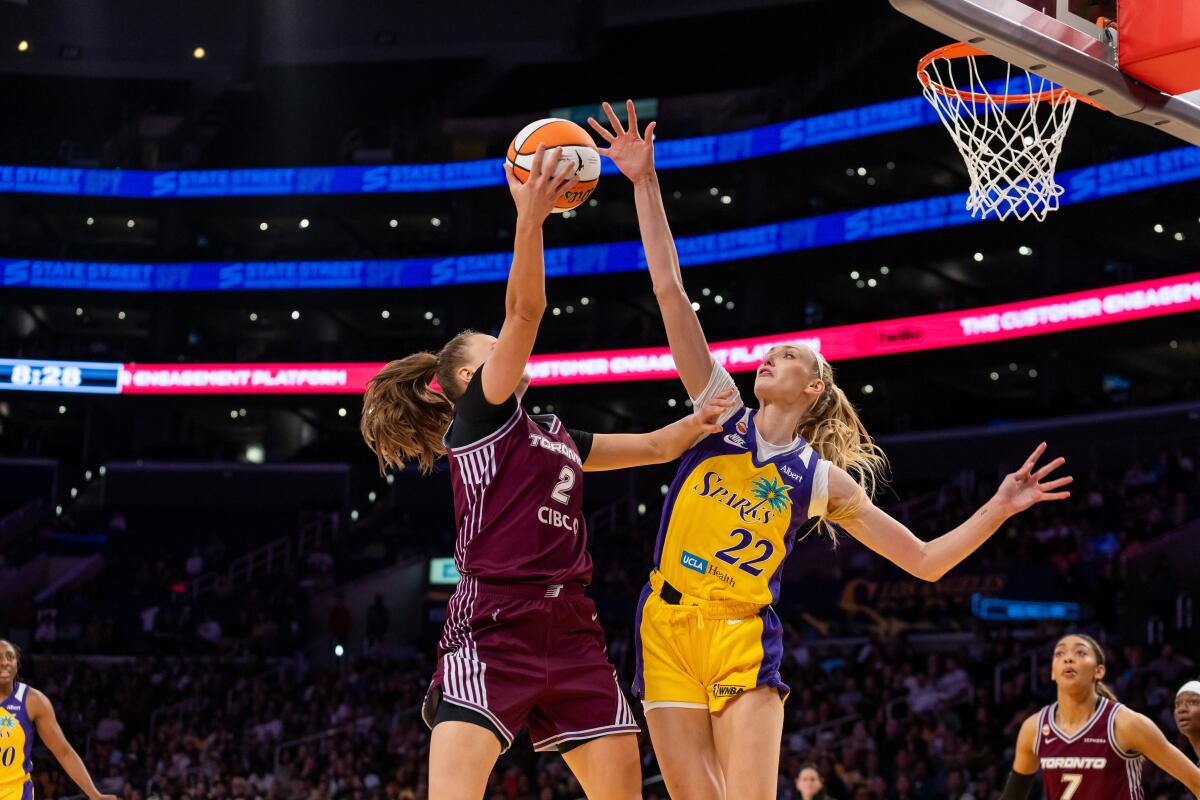
Ariel Atkins’ head whipped back. After taking an elbow from Indiana’s Monique Billings on May 13, the Sparks’ team doctors spotted the potential for a head injury and sent her to the locker room.
It was the second concussion of her career, but she didn’t know that at the time. All she knew was that her head hurt.
“You just don’t feel like yourself,” Atkins said. “It’s hard to even be a part of society. Luckily, this wasn’t a serious one.”
There have been eight diagnosed concussions in the WNBA already this year after just a quarter of the season. There were eight total in 2025, four in 2024 and six in 2023.
The “why” could be bad luck, better awareness in diagnosing concussions or something else. Atkins thought the lack of game flow because of new officiating standards might be making things harder.
“You would think it should be down,” Atkins said. “Maybe there is no rhythm when there are stoppages.”
Atkins got hit in the nose against the Wings three weeks after returning from her concussion. She stayed in the game after a quick check on the bench.
She didn’t have a concussion that time, but players do seem to be getting hit in the head at a higher rate. Minnesota-based sports scientist Lucas Seehafer thinks it’s too early to make a definitive declaration of why that is happening.
“Some players and coaches in the past have talked about the physicality of the play,” he said. “I know some people have talked about how the rules are kind of lax, or you’re maybe not as rigorous as what they could be in terms of like punishing blows above the shoulders and that kind of stuff. But it’s tough to say with any certainty until we get more data.”
On opening night in Seattle, Golden State forward Cecilia Zandalasini suffered her first concussion when elbowed by the Storm’s Zia Cooke.
She called the process to return a “nightmare.”
“It was so weird with the feeling of always having a headache,” she said. “I had to wait until it was gone, I couldn’t move.”

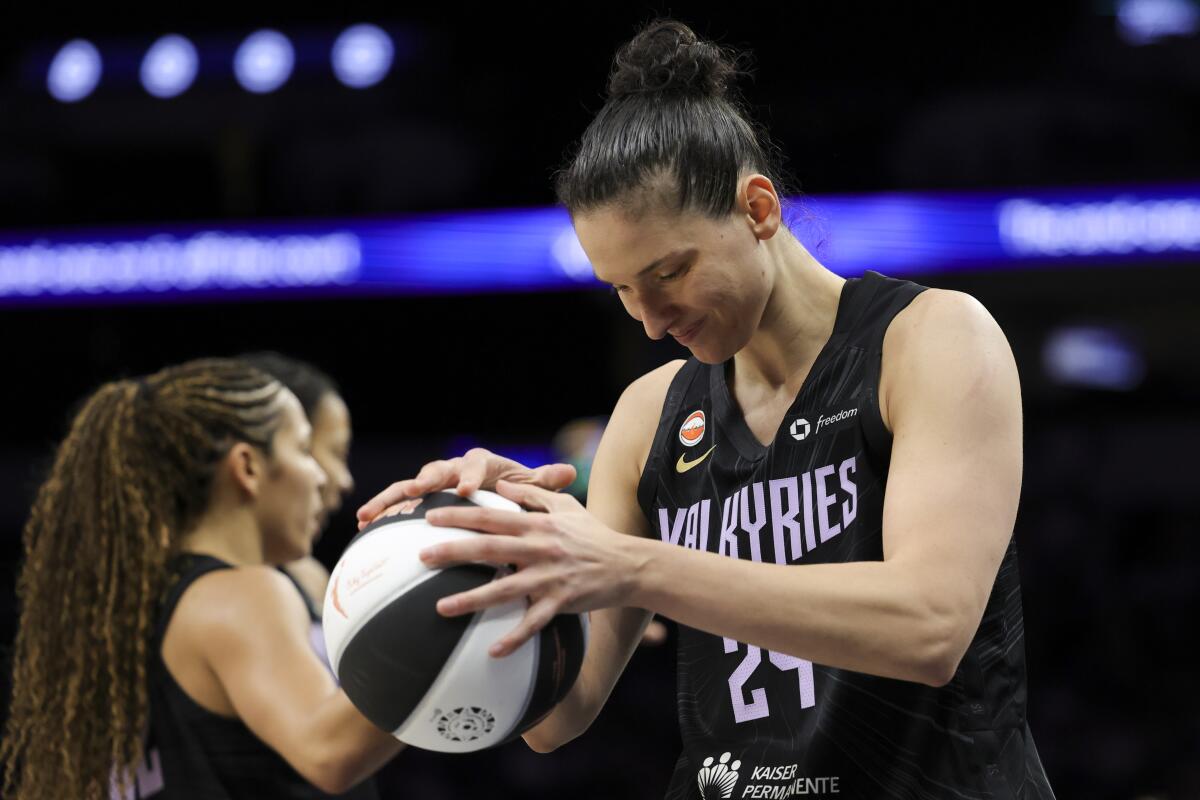
Valkyries forward Cecilia Zandalasini called working through concussion protocal a “nightmare” earlier this season.
(Ellen Schmidt / Getty Images)
Seehafer said that when it comes to women’s sports, hockey and soccer have a reputation for having higher concussion rates, but basketball can be just as physical.
“Compared to the rest of the [pro sports] leagues, the WNBA is pretty much doing exactly what the other leagues are doing, but again, is that enough?” he said. “It’s tough to say. I would say they’re not, but I don’t think they’re egregiously leaving athletes open to even more severe injuries, necessarily. My bias is just that everything can be safer.”
The WNBA follows the same concussion protocol as the NBA, by which a player must undergo a locker room evaluation after getting hit in the head. If the player is cleared by medical staff, they can return to the game.
Any player showing concussion-related symptoms, such as a headache or dizziness, must be monitored for 24 hours by the team’s medical staff. Once they are symptom-free, they go through a range of activities from light physical activity to full-contact practice. They must stay symptom-free throughout that entire process to be allowed back into games.
“Back when I played, I didn’t know what concussion meant,” said Sparks coach Lynne Roberts. “I think now we understand the science of how serious it is, and we don’t rush them back. Once they’re back, there’s really nothing you can do. It’s a contact sport, and the players just kind of play through that, but obviously we’re very cautious with not letting a player play until the doctor’s fully certain that she’s symptom-free and at no risk.”
The hardest part with concussions can be the initial diagnosis. Oftentimes, symptoms show up hours or even days later. For Zandalasini, she was originally diagnosed with a jaw injury before dealing with a headache the next day.
Atkins knew a little bit about what concussions felt like, and even this time was different. Why concussions are up this year is still a mystery, and perhaps it will even out as the season goes on.
But for now, players and medical staff are on alert.
“It’s the thing with athletes, right?” Atkins said. “We’re trying to figure out pain versus injury, like, is it something serious? Is it not? I don’t want to hurt myself further. So, yeah, it can be hard to decipher that with a head injury.”