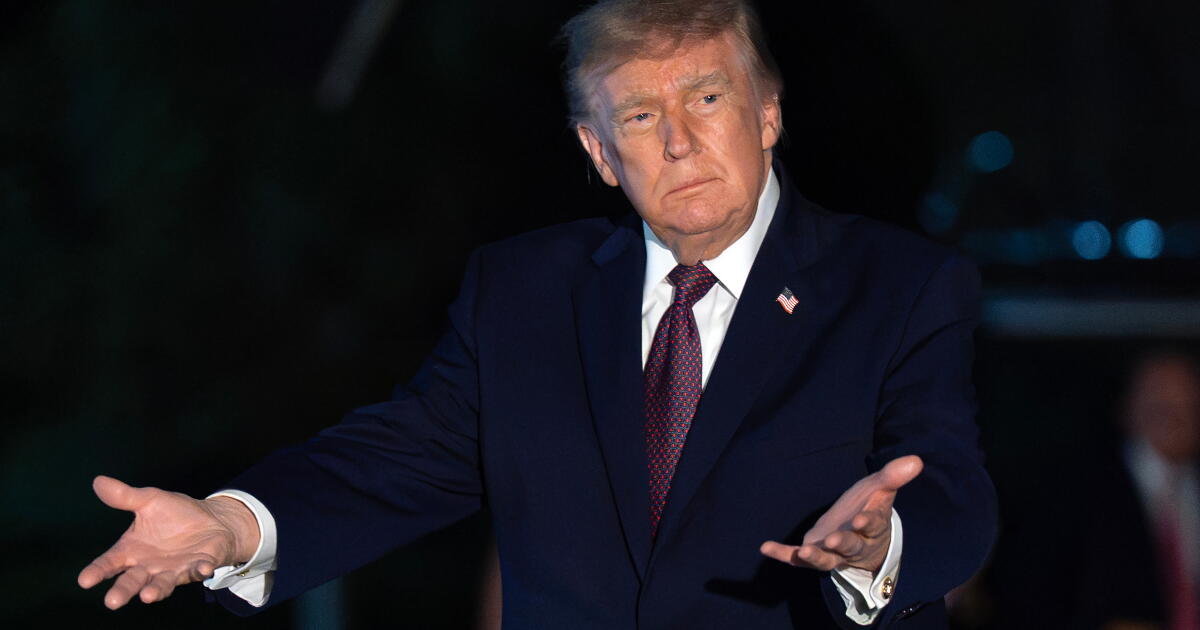
President Trump is promising more payments to voters just ahead of the Nov. 3 midterm elections — this time, to more than 20 million seniors, who each would get $90 to help pay for Medicare premiums.
The announcement, made late Friday night by Trump on social media, comes after he said last month about 1 million people would get rebate checks of $500 for Affordable Care Act premiums. It also comes after his One Big Beautiful Bill Act last year slashed funding for Medicare, disqualifying thousands from eligibility and raising fees for the rest, and for the ACA, raising premiums for millions by eliminating tax credits.
Trump has also promised on the campaign trail to send every American adult $5,000 if Republicans retain control of the House and Senate in the midterm elections.
His latest promise — which, like the others, would require approval from Congress — would probably cost more than $1 trillion, adding to the ballooning deficit and worsening inflation.
Polls show Americans increasingly blame Trump for the high cost of gasoline and groceries, with just 17% approving of his handling of inflation. Rising healthcare costs are also a key component of the affordability struggles many face across the country.
The president has sought to shrug off concerns about affordability, claiming the economy is booming.
The White House said the $90 payments for seniors would come from the Medicare Improvement Fund, established by Congress in 2008 as flexible funding to improve program operations and payments to healthcare providers.
As proposed, Medicare Part B enrollees would receive a one-time payment in October, either through direct deposit or by check, the White House said. Total monthly costs for the program — which covers costs like doctor’s visits, ambulance services and lab tests — start around $200 and vary with income.
To be eligible, seniors must be living in the U.S. and not be already receiving premium assistance from Medicaid or paying adjusted monthly premiums based on income, according to the Centers for Medicare and Medicaid Services. Seniors enrolled in Medicare Advantage, a private plan alternative to traditional Medicare coverage, would not be eligible for the payment. More than half of eligible Medicare beneficiaries have Medicare Advantage, according to healthcare research nonprofit KFF.
Previous administrations have not used the Medicare Improvement Fund in this way, although Congress has periodically taken out money from the fund to pay for other priorities, said Larry Levitt, KFF’s executive vice president for health policy. For example, $20.74 billion was used for the creation of the Affordable Care Act in 2010.
“The Medicare Improvement Fund language is quite broad and gives substantial discretion to the administration,” Levitt said.
Hong Kong listing reforms and surging deposits show regional markets funding Asia’s future.
This article appears in the October issue of Global Finance Magazine.
When the International Monetary Fund and World Bank convene their annual meetings in Bangkok this October, it will be the first time the joint gathering has returned to the city in 35 years. IMF officials have taken to calling Asia the “driving force” of the global economy — shorthand for a region that accounts for one-third of global gross domestic product, 29% of global public equity market capitalization, 56% of listed companies and 52% of global venture capital activity, according to the Organization for Economic Cooperation and Development’s Asia Capital Markets Report
The question for chief financial officers isn’t whether Asia is growing — it’s whether the region can finance that growth on its own terms, or whether it still depends on capital, listings, and liquidity from the West. The answer, based on bank data, exchange records, and conversations with practitioners and economists on the ground, turns out to be both.
Alex Ibrahim, until recently corporate CFO of Yanolja, the Seoul-headquartered travel technology company, said Asia is a picture of change. Its financial sector has matured in the decades since the 1960s to 1990s, when headlines proclaimed the rise of the Asian Tigers and countries became synonymous with rapid, export-driven industrialization funded largely from abroad.
“Back then, the economies were growing very fast, and a lot of the money was coming from the U.S. to invest,” said Ibrahim, who before joining Yanolja spent nearly a decade running international capital markets at the New York Stock Exchange. “If you look now, capital has developed locally and the financial infrastructure in Asia is much more robust.”
Marc Iyeki, a board advisor who formerly led the NYSE’s Asia-Pacific listing sector and shepherded about 100 companies to market, said the shift reflects a change in decision-making. “Decades ago, the money was in New York. Decisions were made in New York,” he said. Since then, regional private equity and venture firms have placed people on the ground in Asia who understand the home market and make the calls themselves, often after training at global firms and bringing that experience back. The region has also produced homegrown standouts such as PAG, Hillhouse Investment, MBK Partners, and Peak XV Partners.
That evolution is seen in how Asia’s own exchanges are performing. Over the past ten years, Hong Kong’s equity market has moved through cycles in liquidity and new issuance, but 2025 marked a rebound from the post-pandemic slowdown. Average daily turnover on the Hong Kong stock exchange rose from HK$66 billion in 2016 to HK$248 billion in 2025, nearly 3.7 times the level a decade earlier. Initial public offering proceeds were more volatile: HK$194 billion was raised in 2016, followed by several weak years before rebounding to HK$285 billion in 2025.
Japan’s exchange has risen more steadily. On the Tokyo Stock Exchange’s Prime Market, average daily trading value for domestic common stocks rose from 3.2 trillion yen in fiscal year 2022 to 4.3 trillion yen in fiscal year 2023, and 6.7 trillion yen in fiscal year 2025.
Iyeki recalled that when Alibaba first wanted to list in Hong Kong in 2013, the exchange turned it away over governance requirements — and New York landed the IPO. Losing a flagship company forced a reckoning. Some in Hong Kong worried that loosening listing rules would weaken protections for retail investors; others warned the market would be “hollowed out,” as local companies sought listings in New York and London. Hong Kong changed its rules, and years later Alibaba came back for a dual listing. The infrastructure now absorbing record IPO volumes and Alibaba-scale capital was built, in part, out of that earlier loss.
One of the people behind that financial infrastructure is Larry Li, a Hong Kong-based fintech founder who worked on Stock Connect, a market access program that links the stock markets of mainland China and Hong Kong. It has become a major cross-border equity trading tie between China and international investors. Its northbound turnover more than doubled to 345 billion yuan in the first half of 2026; southbound turnover hit a new high of $123 billion yuan. “It’s a closed loop, so capital cannot fly out of the system,” Li said.
Li, a director of Digital Asset Clearing Center, which aims to develop a financial settlement and clearing infrastructure that can integrate digital and tokenized assets into mainstream capital markets, argued that areas like Hong Kong, Singapore, and Shanghai have pockets of innovation in financial AI. Li said the region’s token economy “drives market infrastructure upgrades, attracts capital globally, and enjoys support from governments as a strategic force of growth.”
Fintech, Banking, and Innovation
Li pointed out that the region’s tokenized economy fosters “co-opetition” between the banking industry and fintech enterprises. Consumers across the region have largely turned to fintech-developed super apps like Alipay and WeChat Pay, while banks have doubled down on the regulated back end: cross-border settlement, know your customer, and other compliance rules.
Some of the same banks figuring out Asia’s patchwork of KYC and settlement rules are also among the world’s fastest-growing lenders. Banking data makes the same point in numbers. S&P Global Market Intelligence’s 2026 ranking of Asia-Pacific’s 50 largest lenders by assets found China’s big four — Industrial and Commercial Bank of China, Agricultural Bank of China, China Construction Bank, and Bank of China — grew assets about 16% year over year in US-dollar terms as of December 31, 2025. S&P also singled out Singapore’s three largest banks — DBS, Oversea-Chinese Banking Corp., and United Overseas Bank — for strong double-digit asset growth, driven by regional deposit inflows rather than capital raised abroad.
China’s financial system is bank-led and primarily state-directed, according to Standard & Poor’s. The country’s household savings, pensions, and corporate liquidity flow into banks rather than capital markets, giving lenders a large, stable funding base that the government then channels toward priority sectors. Beijing has supported that base with a 520 billion yuan capital injection into four state-owned banks in 2025, followed by plans announced in March 2026 to issue another 300 billion yuan in special bonds to recapitalize ICBC and Agricultural Bank of China.
“As the primary liquidity conduit for fiscal stimulus, state-owned banks increased their financial investments by 19% in 2025,” Iris Tan, a senior equity analyst at Morningstar, said in the S&P report. These financial investments were “fueled by a record 28% surge in government bond issuance,” according to Tan.
Vietnam as a Case Study
None of this means that Asia’s approximately 48 countries are growing equally. Sam Van, managing partner of SRO Partners and an advisor on Vietnamese capital markets, said the region is still layered by tier. Blue-chip regional companies can borrow cheaply from local banks at rates set by well-capitalized central banks — sometimes so cheaply, he said, that “it’s better to borrow money from the bank than actually issue a bond.” Midsize companies, those earning under $50 million in revenue, are a harder sell to credit officers weighing thin margins against career risk, which pushes some smaller businesses toward informal lenders. Van sees this gap as a reality in a still-maturing system rather than evidence that the system isn’t working.
Van, who recently co-authored a book that chronicles Vietnam’s economic rise, said the country illustrates how quickly a market can mature once the incentives align. Vietnam’s IMF-linked compliance upgrades — the product of what Van calls the government “consistently wanting to meet that standard” since joining the IMF in the 1990s — helped it earn an upgrade to FTSE Russell’s emerging-market status in September.
Critical Economic Views
Two economists watching from outside the deal room caution against overstating the region’s financial self-sufficiency. Bala Ramasamy, professor of economics at the China Europe International Business School in Shanghai, argued that “the driver in Asia, for Asia and by Asia is definitely China” — its outbound foreign direct investment to the Association of Southeast Asian Nations alone can match what comes from the EU or the US, and the reconfiguration of trade around geopolitical frictions is relocating supply chains in ways that are boosting growth across Southeast and South Asia. Japanese and Taiwanese capital, he noted, is increasingly heading toward the US to secure market access and stay aligned with Trump-era industrial policy, even as flows from Europe and the US slow elsewhere. “I don’t think Asia can do without it,” he said.
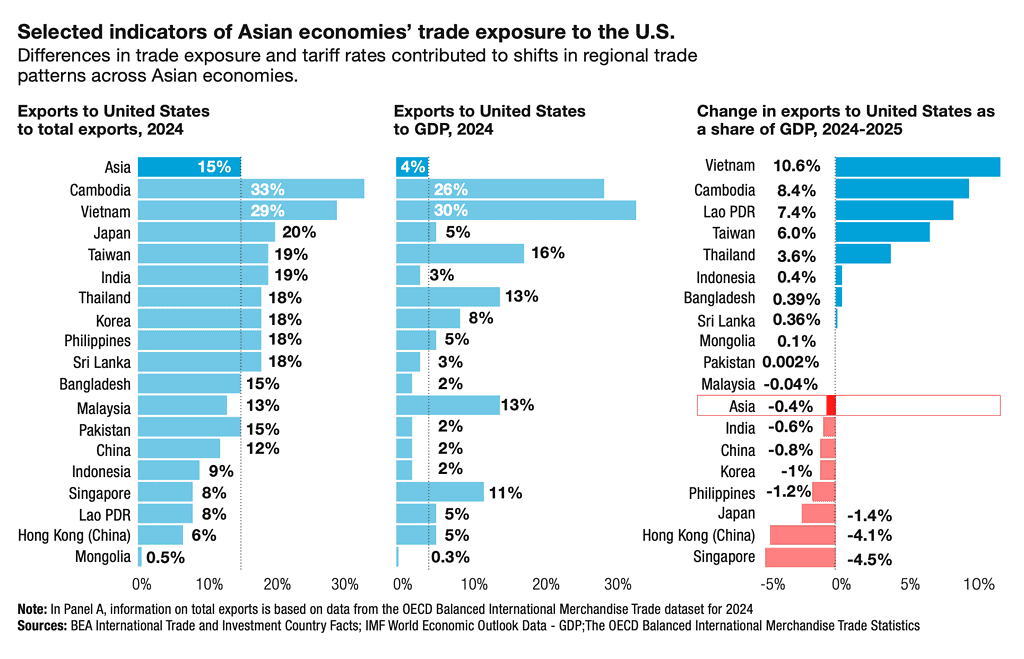
Prema-chandra Athukorala, emeritus professor of economics at the Australian National University, said Asia’s growth is substantial, but its export-driven economy still relies heavily on the rest of the world. Domestic savings rates across the region dwarf the emerging-market average of roughly 25% — Singapore’s is near 58%, China’s near 49.5%, India’s around 30% — and in most Asian economies, investment rates run below those savings rates, meaning the region is, on balance, a net exporter of capital rather than an importer of it. Intraregional FDI from China, Korea, Taiwan, and Singapore has grown substantially over the past two decades. However, Athukorala said that extra-regional FDI still accounts for the larger share of investment in Vietnam, Malaysia, Thailand, and Cambodia, where Western multinationals remain central to “China+1” supply-chain strategies, and even domestically financed activity depends heavily on global demand. “Over two-thirds of the regional exports are still destined to extra-regional markets,” he said.
Taken together, the practitioners and the professors describe a region that finances far more of its own growth than it used to, yet remains clearly reliant on the rest of the world.
Weld Royal is a contributing writer based in the U.S.
A report stating that the Trump administration directed funds towards right-wing groups comes ahead of Brazil’s presidential election.
Published On 1 Oct 20261 Oct 2026
Brazil’s attorney general has called on law enforcement to investigate alleged efforts by the United States to interfere in the country’s domestic politics through the diversion of funds to far-right causes.
Attorney General Jorge Messias called for the probe on Thursday, one day after the British newspaper The Guardian published a story suggesting that the administration of United States President Donald Trump planned to award $1m to right-wing civil groups opposing the Brazilian Supreme Court.
Recommended Stories
list of 3 itemsend of list
Messias stated in a social media post that foreign meddling “cannot be tolerated” and that the report represented “an important alert for Brazilian sovereignty”.
“The information is especially serious in light of Brazil’s electoral process and the recent episodes of external pressure on our institutions,” the attorney general added.
The report comes amid a tense presidential election in which leftist President Luiz Inacio Lula da Silva is seeking re-election.
Lula has sought to focus attention on efforts Trump has undertaken to boost the prospects of far-right allies across Latin America, warning of threats to regional sovereignty.
Trump has endorsed multiple right-wing candidates ahead of elections across the region, sometimes hinging the possibility of economic support on the voting results.
He has also cultivated close relations with the family of former Brazilian President Jair Bolsonaro, who lost to Lula in the last presidential election.
Bolsonaro’s eldest son, Senator Flavio Bolsonaro, is a frontrunner in the race to challenge Lula this year. Recent polls have shown Lula and Bolsonaro virtually tied ahead of the first round of voting on October 4.
Flavio Bolsonaro met with Trump at the White House in May. He has promised closer ties with the US, while Lula has positioned himself as a critic of Trump’s interventionist approach to Latin American politics and security.
The Guardian report published on Wednesday states that the Trump administration sought to redirect $175m from the State Department’s human rights fund to various far-right causes around the world.
The recipients allegedly included groups advocating for white Afrikaners in South Africa that the Trump administration has falsely portrayed as victims of a “genocide” and efforts in Brazil to counter what the US called “lawfare and censorship”.
Brazil’s Supreme Court has been a subject of frequent criticism from the political right, both in Brazil and the US.
Much of that criticism stems from the 2025 conviction of Jair Bolsonaro for involvement in an alleged coup plot, designed to subvert his loss to Lula in the 2022 election.
Bolsonaro and his allies, including Trump, have depicted the case as an instance of political persecution.
Citing the trial, Trump last year placed 50-percent tariffs on certain Brazilian goods that he has since removed.
At the time, he announced the tariffs in a letter that denounced Bolsonaro’s prosecution. “The way that Brazil has treated former President Bolsonaro, a Highly Respected Leader throughout the World during his term, including by the United States, is an international disgrace,” Trump wrote.
The Trump administration also revoked the visas of Brazilian judicial officials involved in Bolsonaro’s case in an effort to have it tossed out. It also levied short-lived sanctions against Brazilian Supreme Court Justice Alexandre de Moraes, accusing him of “an unlawful witch hunt” against right-wing voices.
Bolsonaro was ultimately convicted and sentenced to a 27-year prison sentence in September 2025.
In June, one of his sons, Eduardo Bolsonaro, was sentenced to more than four years in prison after a court ruled he had lobbied for US interference in his father’s case.
California is set to bring back a program aimed at reducing conflict between wild animals and people, as the state’s rebounding wolf population continues to cause concern among ranchers.
Newsom signed a bill restoring the program Tuesday ahead of a “fireside chat” focused on biodiversity and natural resources, during which he described growing up with a father who was dedicated to protecting mountain lions, condors and other wildlife.
Protecting nature is “a moral issue,” Newsom said, describing a “relationship we have to what’s above us, and … how that connects us to our Creator.”
The California Department of Fish and Wildlife once employed 13 specialists dedicated to resolving human-wildlife conflicts, but it let all but one of them go after funding ran dry in 2024. The loss came as such clashes are increasing, with climate change and urban sprawl bringing people closer to bears, mountain lions and other animals.
State Sen. Catherine Blakespear, author of Senate Bill 1135, said she’s seen it play out with sea lions around La Jolla Cove. This year, someone kicked one of the marine mammals, she said, and in general there have been no government staffers “to provide the guardrails.”
When the program ended, “we weren’t doing the education, and we didn’t have staff at the state that could help intervene or provide guidance,” Blakespear (D-Encinitas) told The Times. “It was a clear lack.”
The legislation also codifies a program to compensate ranchers when they lose livestock to wolves or suffer indirect harm. The program also provides money for nonlethal equipment to deter wolves, such as electric fences with bright flags.
Part of the law is rebranding, adding “coexistence” to both programs’ names.
The California Cattlemen’s Assn. and the California Farm Bureau shifted from opposing the bill to an “enthusiastic neutral,” said Kirk Wilbur, vice president of government affairs for the former trade group, noting his colleague coined the term.
Wilbur’s group was initially concerned about parts of the bill focused on livestock compensation, but he said they were amended in a way to avoid impeding how the program operates. However, the changes “didn’t quite get us to a support position because we didn’t necessarily view it as a significant improvement over the status quo.”
His group is in favor of the bill’s requirement to relaunch the Wildlife Coexistence Program, as it’s now called, saying it “does provide resources, for instance, for my members that are contending with mountain lion depredations of their livestock.”
The bill signing comes as California’s gray wolves had at least 42 pups this year — a record. The apex predators were extirpated in the state in the 1920s, beginning to naturally recolonize their native digs only 15 years ago.
“It’s a great sign for the conservation of the species that the population continues to reproduce, and that the number of individuals continues to reproduce,” said Axel Hunnicutt, gray wolf coordinator for the Department of Fish and Wildlife.
The animals’ success has delighted conservationists but frustrated some cattle ranchers, whose livelihood can become dinner for the endangered canids.
Hunnicutt spoke to The Times from Siskiyou County, where he was trying to get more GPS collars on wolves in the Whaleback pack, linked to 41 confirmed or probable livestock attacks this year, according to a recent report. That’s by far the most of any pack in the state.
Hunnicutt’s team consists of him and two other employees, along with temporary staffers. Collaring wolves in a pack that doesn’t already have the devices is challenging, he said. It involves setting up cameras, howling throughout the night to try to get the animals to respond and sometimes driving hundreds of miles looking for tracks.
Some members of the Whaleback pack are collared, providing a good starting point. While on the phone, he said he could see the tracks of two wolves on the road where he was walking.
Proponents of SB 1135 say it could lead to the expansion of Hunnicutt’s team or more resources for efforts such as collaring, which wildlife officials say helps reduce conflicts by enabling ranchers to know where wolves are.
However, the legislation does not guarantee funding for the programs it establishes.
Pamela Flick, California program director for Defenders of Wildlife, a co-sponsor of the bill, said advocates asked state leaders for $18 million in one-time funding for the human-wildlife coexistence program, followed by $15 million annually. They also asked for around $30 million for wolf compensation and management.
What they got this year is $6 million, with $2.5 million earmarked for compensation, according to Flick.
“It’s really a drop in the bucket when we’re talking about statewide human-wildlife conflicts,” she said. “So we will be advocating for additional funds in out years for sure.”
More state money to pay for arts teachers will reach local schools if legislation signed Sunday by Gov. Gavin Newsom works out as intended, but the new law will not resolve a lawsuit accusing the Los Angeles school district of misspending as much as $77 million in its share of the funding.
The aim of Assembly Bill 2440 is to encourage more school systems to use arts funding made available through Proposition 28, which voters passed in November 2022.
“The clear message we heard was that many school districts have been struggling to navigate legal ambiguity regarding compliance with Proposition 28,” said bill author Al Muratsuchi (D-Rolling Hills Estates) in a recent statement to The Times. He said his goal was to provide “statewide guidance” so that all or most school systems could use the money without concern over violations of spending rules that could result in financial penalties.
Proposition 28 sets aside an amount equal to 1% of the state’s base education funding — close to $1 billion per year — to increase arts education. This extra funding is drawn down from the state’s general fund — so it adds to the total allotted for education.
The initial funding, nearly a billion dollars statewide, went out for the 2023-24 school year and has continued annually. But millions of dollars have not yet been spent, according to early reviews of the data.
Some local officials said they were holding back over concerns that they would inadvertently violate the rules for spending the money — and would then have to pay it back, creating significant financial risk.
This bill had backing from arts organizations, education and school district officials and the California Teachers Assn. No opposition was recorded in the legislative record; nor were there any opposing votes as the bill worked its way through the legislative process.
But then Austin Beutner — the author of Proposition 28 — learned of the measure and stepped forward with concerns. He contendedthe bill would make using the arts money easier, but in wrong ways. He said the bill would undermine the guarantee that new arts funding would reach every school. Also it would in effect eliminate the provision that campuses serving low-income communities receive higher levels of new funding. Moreover — and of key importance — the legislation would allow districts to use the new arts money to replace existing arts funding, leaving students no better off than before, he said.
Beutner had structured Proposition 28 precisely to prevent this supplanting of funds. Districts not willing to provide the required increased instruction at every school would, by design, lose access to the new arts money.
Beutner began to rally opposition, including United Teachers Los Angeles, L.A. mayoral candidate Nithya Raman and San Diego school board President Richard Barrera, who is running for state superintendent of public instruction — and who has the endorsement of the California Teachers Assn.
Beutner also announced his attention to file litigation against the bill.
Muratsuchi said he had no intent to undermine the goals of Proposition 28 — and a compromise soon emerged.
The final version — which has Beutner’s approval — clarifies that small schools or small school districts can pool their money to share an arts teacher, provided that every school gets the additional arts instruction. The bill also gives some legal protection for school districts against financial penalties if their arts funding decreases as a result of factors beyond their control, such as the expiration of a grant.
An LAUSD lawsuit continues
Beutner alleges that L.A. Unified has intentionally misused the new arts money.
Beutner pursued passage of Proposition 28 after serving as superintendent of L.A. Unified. His stint ended in mid-2021 with the expiration of a three-year contract.
“LAUSD has done exactly what the law prohibits,” Beutner alleged in an ongoing lawsuit filed in February 2025. “It has eliminated existing funding sources for existing art teachers, and replaced those funds with Proposition 28 funds, thereby violating the requirement that the funds supplement rather than supplant existing sources.”
The lawsuit lists 37 elementary schools with the same or reduced money for arts instruction from 2022-23 to 2023-24 — when the new funding first arrived — and alleges that most L.A. Unified schools faced a similar funding situation.
Before the lawsuit, but in response to growing criticism, L.A. Unified officials quietly added $30 million to the elementary school arts budget for the 2024-25 school year amid ongoing accusations from Beutner, union leaders and parents.
The district has defended its actions.
“We continue to follow implementation guidance as provided by the state of California to ensure that we are fully complying with the requirements of Prop. 28,” the district said in a statement at the time of the lawsuit, a contention that it has made repeatedly.
WASHINGTON — President Trump is canceling nearly $1 billion in spending approved by Congress, the White House announced Friday, using a rare and contested power to axe funding for immigrant services and diversity-focused initiatives.
Trump’s Office of Management and Budget described the funding cut as focused on “the most harmful government spending.”
Most of the cuts are focused on Health and Human Services programs that serve refugees and unaccompanied minors accused of being in the country illegally. The administration says the funds are no longer necessary because illegal border crossings have diminished considerably.
Also targeted for cuts were a Department of Education program for migrant students, a Department of Justice office focused on reducing racial tensions, a business development initiative for minority entrepreneurs, housing counseling services from the Housing and Urban Development Department and a series of grants from the Health and Human Services Department that the administration called “outright harmful and blatantly ideological.”
A White House news release announcing the funding rescission notes that some of the organizations are led by people who worked in the Obama administration.
Trump’s move was condemned by Sen. Susan Collins of Maine, a Republican in a tough reelection campaign and chair of the Senate Appropriations Committee.
Collins said in a statement that the action came without warning or consultation. She also said she would work to address with colleagues “these illegal actions.”
“Not only is the delay itself an impoundment that was not reported to Congress, but also it is a usurpation of Congress’s appropriations powers,” Collins said. “OMB is an agency of the executive branch. It does not get to decide which programs are worth funding.”
Under federal law, Congress has 45 days to review the president’s proposed spending cuts before they take effect. But Trump made that all but impossible by announcing them with just five days left in the federal fiscal year and the House out of session through the November election. The Government Accountability Office, which is an arm of Congress, says the maneuver known as a “pocket rescission” is illegal.
Collins called it the latest attempt by OMB to “undermine Congress’s Constitutional power of the purse.”
A year ago, Trump issued a pocket rescission for the first time in nearly 50 years by blocking $4.9 billion in congressionally approved foreign aid. The U.S. Supreme Court declined to block that rescission, saying that Trump’s authority over foreign affairs weighed heavily in its decision. This year, Trump is targeting domestic spending.
The use of a pocket rescission fits into a broader pattern by the Trump administration to exert greater control over the U.S. government, eroding Congress’ power.
What was essentially the last pocket rescission occurred in 1977 when President Carter rescinded it, and the Trump administration argues it’s a legally permissible tool, despite some murkiness, since Carter had initially proposed the claw-back well ahead of the 45-day deadline.
The administration has also fired federal workers, imposed a historic increase in tariffs, and started the war in Iran without going through Congress, putting the burden on the judicial branch to determine the limits of presidential power.
Sen. Patty Murray of Washington, the lead Democrat on the Senate Appropriations Committee, described the White House action as “theft from the American people, plain and simple.”
“These are funds Congress has delivered on a bipartisan basis and should be helping people — not cut off by a president more focused on building a ballroom than investing in families,” Murray said.
Murray said that in recent spending negotiations, Democrats fought to include language to prevent the administration from usurping Congress’ power on spending decisions, but Republicans have declined to go along.
“While Trump spends tax dollars on ads promoting himself” — a reference to a taxpayer-paid TV spot that has drawn bipartisan rebuke — “Congress needs to reassert its powers to help people, and it’s past time Republicans join us in that fight,” she said.
In addition to immigrant services, the White House said it was rescinding $70 million for what it called “woke” international education programs, $28 million in grant funding for Health and Human Services research programs, and $9 million in debt relief for foreign countries that fund climate change policies. An additional $10 million was being withheld from a minority business development program.
Freking and Cooper write for the Associated Press.
WASHINGTON — Several of the nation’s largest voter engagement and racial justice organizations are facing steep funding shortfalls and staffing cutbacks just as voting is getting underway in an election that will determine control of Congress for the final two years of President Trump’s term.
The shortfalls are setting off alarms among Democratic strategists, who are betting on high turnout and robust voter protection efforts to boost the party’s chances this fall. They are worried that many grassroots groups will not be able to mount effective registration and get-out-the-vote efforts, much less protect against the possibility of election interference from the administration given Trump’s efforts to restrict voting access and assert federal control over the election.
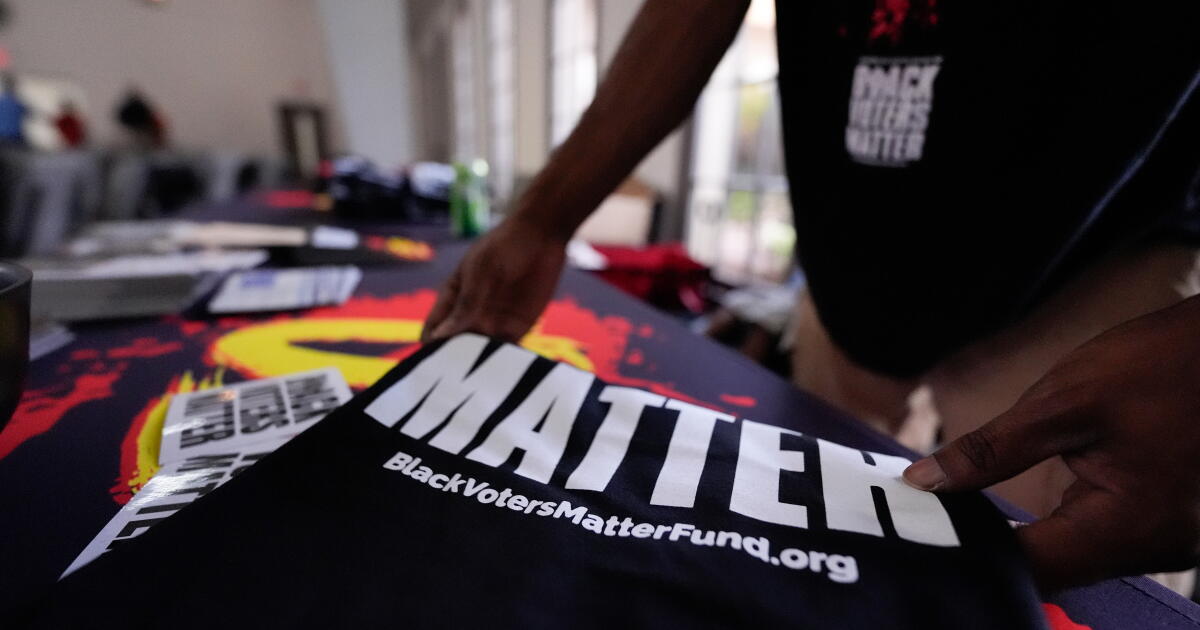
America Votes, a coordinating hub for more than 400 progressive groups, has fallen “well below” the level of funding it had during the 2022 midterms, the group’s executive director, Daria Dawson, said in a statement to the Associated Press. America Votes has acted as a nerve center for the voter mobilization efforts of groups such as the NAACP, Planned Parenthood, the League of Conservation Voters, the AFL-CIO and SEIU labor unions, as well as local groups focused on racial justice, climate and civil liberties.
“There is still time to reach voters and bring them into this election, but we are no longer talking about a future opportunity,” Dawson said. “The window to engage them is open now, and it is narrowing every day.”
Racial justice activists feel betrayed
Wealthy donors and philanthropic groups have reduced their support of many liberal causes since the 2024 presidential election. That pullback has been especially stark for voting groups geared toward engaging communities of color.
While multiple organizers said some funders had expressed an interest in adopting different strategies, racial justice organizers have felt that as a betrayal.
A retreat in donor support is “handcuffing our ability to persuade our communities to vote in a year where there is no Voting Rights Act,” said Esosa Osa, a veteran Democratic strategist and founder of Onyx Impact, a research group focused on combating misinformation in Black communities.
A Supreme Court ruling this year knocked out one of the last remaining pillars of that landmark 1965 law, essentially gutting it.
“We are watching surrender, not strategy,” Osa said.
A July memo that circulated among major Democratic fundraisers warned that “the organizations that registered and persuaded millions of voters to participate in the 2018 and 2022 midterms are drastically underfunded. They have raised nearly 40% less than they had at this point in those cycles.”
It further warned that funding voter mobilization groups was especially critical “given that the Democratic brand is underperforming on generic ballot tests relative to historical comparisons and the president’s approval ratings.”
The shortfalls have led organizations focused on engaging and mobilizing key voting groups to scale back operations and staffing over the last year. That has included programs aimed at registering and mobilizing lower-propensity voters, voters of color, and rural and younger voters.
The Democratic National Committee, which has faced its own funding challenges, has consolidated voter engagement efforts this year partly in response to the ecosystem’s past shortcomings. The DNC in a statement said it was making “historic investments” in its organizing but did not address the weaknesses among allied groups.
“We are expanding our voter protection infrastructure to defend Americans’ sacred right to vote, hold Trump and Republicans accountable in court, and register and mobilize voters across the country,” said Angelo Fernández Hernández, a DNC spokesperson.
‘Being Black … again has become a bad word’
The reasons for the troubled funding landscape are varied and at times unclear, according to nearly two dozen fundraisers and organizers who spoke with the AP. Some donors, still disappointed with the Democratic Party and some of its allies following the 2024 presidential election, have closed their pocketbooks to liberal causes entirely.
While a small group of liberal megadonors has continued to bankroll progressive causes, most focus their support on liberal legal organizations that have taken the Trump administration to court, rather than political or voter engagement groups.
Others, including major philanthropic institutions, have pulled back out of fear of retribution that giving to political or racial justice causes could draw the administration’s ire. Organizers who have engaged with potential donors said the administration’s targeting of political opponents and diversity initiatives seems to have put a chill on fundraising for their causes.
Tameka Ramsey-Brown, founding director of the Michigan Coalition on Black Civic Participation, said multiple donors since the 2024 election had asked whether her group could remove the word “Black” from its name or find financial conduits to mask the source of donations for fear of retribution from the administration.
“Just being Black in this country again has become a bad word, and it has made it that much more difficult just to raise money because funders don’t want the added pressure and stress or attacks on them by funding us,” she said.
Smaller budgets, shifting strategies
Many of the nonprofit groups that traditionally have conducted the registration, voter education and organizing say they are trying to adapt to their new, leaner reality.
Vamos a Votar, an initiative of the largest civil rights and advocacy groups focused on Latino communities, has had to readjust its ambitions this year due to a lack of investment from funders.
“This is shaping up to be a cycle where investments haven’t gone to the Black and brown communities that will ultimately decide this election,” said Juan Proaño, chief executive of the League of United Latin American Citizens, a member of the initiative.
In a September pitch circulated among donors, the coalition said it aimed to invest $27.5 million in voter engagement and persuasion efforts this year, but still required $5.4 million from donors to fund voter turnout efforts across 10 states and 17 House districts. Even that investment reflected reduced ambitions from previous pitches to donors early this year.
“It has been extremely disappointing to see that progressive donors are not meeting the moment,” said Héctor Sánchez Barba, head of Mi Familia Vota, one of the affiliated organizations. “We are not waiting. We are always on the front lines for our democracy and our communities.”
To counter the funding cutbacks, some groups have begun relying more heavily on artificial intelligence to provide voter registration guides, share information in multiple languages and track potential election issues. Some groups have increased their partnerships with ride-sharing companies to provide free rides to polling places instead of bus shuttles.
With fewer in-person organizers, some groups are also focusing on social media and partnering with liberal content creators to boost their messages.
“In my more than 30 years of organizing, it has never been this bad to raise money to support Black causes of any kind,” said Melanie Campbell, president and chief executive of the National Coalition on Black Civic Participation, a nonpartisan civil rights group.
“We’re going to do the work, our state affiliates are doing all that is possible. … But the bottom line is that those who believe that democracy matters should make sure they fund the work.”
Saudi digital payments company barq announced the close of a series A funding round worth $329.5 million, at a valuation of $1.85 billion, marking a new milestone that reflects the growth the company has achieved since its launch. The funding round cements its position among the fastest-growing fintech companies in Saudi Arabia and the region.
The round saw participation from Noon Investments, Sohar International Bank, and M20 Fund, a step that reflects investor confidence in barq’s trajectory and future potential, and underscores the appeal of the investment opportunities emerging in the fintech sector across the Kingdom and the region.
The round follows a standout growth journey for barq, which has now surpassed 15 million users within two years, from more than 210 nationalities, alongside the expansion of its ecosystem of digital financial services and solutions — reflecting the growing demand for the company’s products and its ability to build a broad user base within a record period of time.
The value of funds processed has also surpassed SR440 billion ($117.2 billion), an indicator that reflects the scale of activity barq has achieved and the widening use of its digital financial services since launch.
Based on its valuation, barq has become one of the fastest companies in the region to reach unicorn status, and among the fastest globally within the fintech sector, reflecting the pace of growth the company has achieved within a short period since its launch.
The funding round will support barq’s next phase of growth, by strengthening operational efficiency, accelerating the development of products and services, investing in new financial and technology solutions, and expanding into new regional and international markets — contributing to delivering a more advanced and accessible digital financial experience for users.
This achievement comes at a time when Saudi Arabia’s fintech sector is undergoing exceptional development, driven by continued progress in financial and digital infrastructure, a supportive regulatory environment, the targets of Saudi Vision 2030, and the Saudi Central Bank’s efforts to advance digital payments and support innovation in financial services.
The close of the round marks a major milestone in barq’s journey, reflecting its ability to move within a short period from a phase of rapid growth to building a broad-scale digital financial platform, underpinned by a growing user base, an increasing volume of operations, and expansion ambitions aimed at strengthening its presence in the fintech sector at both the regional and international levels.
KHARTOUM: The World Food Programme’s funding for Sudan — the world’s largest hunger crisis — has fallen by about half this year, its acting head told Reuters, as war drives more people into hunger while the regional crisis raises prices and aid budgets plummet.
Speaking from the Darfur region after a trip across the country, acting Executive Director Carl Skau said that while access had represented humanitarians’ largest obstacle in the past, now “we have (a) presence that we are not fully utilising because of the lack of funding.”
The gap to sustain current operations was just short of $300 million, he said.
This year, we’re about half what we were in terms of funding last year, says Carl Skau, Acting executive director of The World Food Programme
“This year, we’re about half what we were in terms of funding last year,” Skau said. Last year, the agency received $645 million, but almost three-quarters into this year funding is only at $206 million.
The war between Sudan’s army and the paramilitary Rapid Support Forces has devastated wide swathes of the country, displacing up to 14 million people, ruining harvests and decimating the economy.
Almost 20 million people face hunger in Sudan, but budget cuts have forced the agency to focus efforts on the 5 million most in need, of whom it has recently scaled up to reach 4 million people.
Even then, the organization, the UN’s largest by budget, is forced to make difficult decisions.
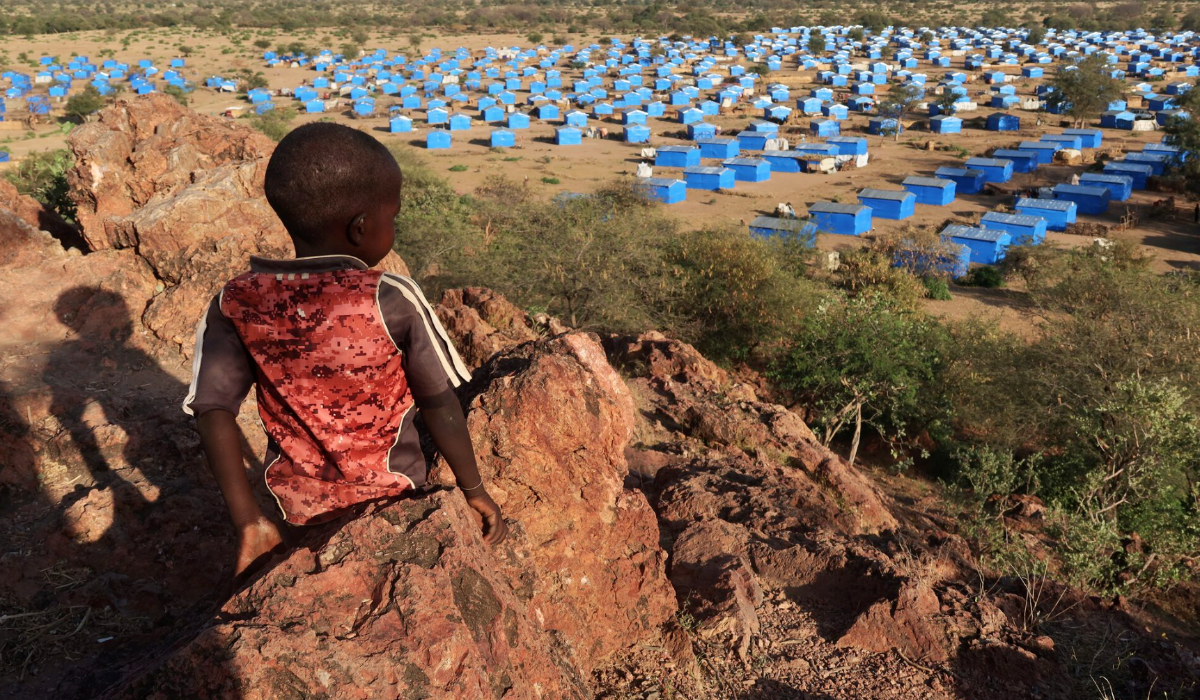
In Tawila, North Darfur, the makeshift home to about 1 million people, the agency is able to reach everyone monthly but with only a half ration that covers two weeks’ food, Skau said.
“It’s not clear how they really are surviving the other two weeks,” he said.
In El-Obeid, the central Sudanese city where about 1 million and counting have sought refuge since the start of the war in April 2023, the agency is only able to provide help to those who arrived in the past several months.
“We are providing, but less and less. A year ago it was better because of resources,” Skau said.
agency recently began providing aid in the city of Al-Fashir, once home to 1 million people, where an RSF attack last year, “bore the hallmarks of genocide,” according to investigators. Skau said, “there is little sign of life having returned.”
His organization is not the only one struggling as major donors reduce aid. The International Organization for Migration said on Monday that emergency relief supplies for hundreds of thousands of people displaced by the war could run out within weeks unless donors step in with urgent funding.
The UN agency said supplies of shelter materials, sanitation items and emergency household goods are expected to run out by the end of September. The aid system itself can only keep functioning until December without more money.
Aid groups like IOM are struggling with funding shortfalls after the Trump administration — the US was previously the world’s biggest aid donor — cut billions of dollars in foreign assistanceto UN agencies and charities over the past year. Other major donor countries have also cut aid budgets, citing tight finances and higher defense spending.
“We simply can’t turn our back on the people of Sudan,” IOM Director General Amy Pope said in a statement, adding: “The entire humanitarian system could collapse within weeks if we don’t act now.”
IOM says 8.6 million people remain displaced within Sudan, while another 4.9 million have returned to their homes. The agency says it needs $15 million to keep the aid pipeline running for the rest of the year, supporting about 305,000 people. Without it, more than 100 humanitarian organizations would struggle to quickly deliver lifesaving aid.
Europe’s answer to OpenAI has just become considerably better funded.
ADVERTISEMENT
ADVERTISEMENT
The Paris-based company Mistral AI announced its Series D on Tuesday, three years after being seeded, with the memory chip giant Samsung leading alongside the EU-backed Scaleup Europe Fund, managed by EQT, and existing investor PSG Equity.
The step up is steep.
Mistral was valued at €11.7 billion in 2025 after a €1.7 billion Series C led by Dutch chipmaker ASML, meaning the company has almost doubled its valuation in a year.
Much of the money is going into concrete rather than code. CEO Arthur Mensch announced the funding would build out data centres and computing capacity that Mistral can rent to others but that will also ensure autonomy.
“Long term, the plan is to fully rely on capacity that we are building ourselves, and so that means that the amount of compute that we own is going to grow around 100% in the next five years,” Mensch said, adding that the company would train “bigger and faster models.”
Mistral is already spending €4 billion on data centres across France and Europe, with one facility running outside Paris and another under construction in Sweden.
It raised further debt financing in March for the same purpose, and Microsoft has agreed to fund capacity from its European network, built around thousands of Nvidia chips.
Both Microsoft and Nvidia are also investors in Mistral, with the latter also adding exposure in this funding round.
The company says more than 125 enterprises across 20 countries use its technology, and Mistral projects it will pass a billion in annual recurring revenue by the end of 2026.
Europe lags behind in the AI race
Despite the news, Europe continues to critically lag behind in the global AI race.
Mistral’s valuation sits far below OpenAI and Anthropic, and Europe’s wider AI sector remains a fraction of the American one, with enterprise adoption across the bloc running at around 13.5%.
Other European contenders exist but are smaller.
Germany’s Aleph Alpha focuses on government and regulated industries rather than competing at the frontier, while Helsing has grown quickly in defence applications, and Switzerland’s Apertus offers fully open models and training data.
Brussels is trying to close the gap.
The InvestAI initiative carries a €200 billion headline commitment, and in July the Commission opened tenders for up to seven AI gigafactories, aiming to unlock more than €30 billion in investment, though those sites are not expected to operate until next year or 2028.
Thirteen smaller AI factories are already being built across seven EU countries.
The AI Act became applicable in August, but its toughest obligations were pushed back by the digital omnibus agreed in May, with high-risk rules now landing in December 2027 and August 2028, a delay Brussels framed as making the policy more innovation-friendly.