Zverev had long been dubbed the best player of his generation to have never won a Grand Slam after a string of near misses – including three defeats in major finals.
At the US Open in 2020, he lost the final despite being two sets up against Dominic Thiem and having served for the championship at 5-3 in the final set.
Zverev then led Carlos Alcaraz by two sets to one in the 2024 French Open final but it was the Spaniard who ended up lifting his first Coupe des Mousquetaires.
At the Australian Open in 2025, he was outclassed in a merciless performance by Jannik Sinner that left Zverev saying he felt mentally “empty” a few months later.
“Last year was one of the most difficult moments in my tennis career,” Zverev said.
“This year is one of the happiest moments. It’s a very different feeling right now.”
It seemed like the pressure of a Grand Slam final might prove too much for a fourth time when 24-year-old Cobolli, who had twice fought back from a set down, forced a deciding fifth set.
But Zverev, who has struggled with his emotions on court in the past, held his nerve to end his major final curse.
After falling flat on his back in celebration, Zverev dedicated his victory to his team, which includes his father and brother.
“We have been through injury, heartbreaks, losses. We have been losers at times in the most important moments,” Zverev said.
“At the end of the day, we are Grand Slam champions now and that is what counts.
“I was laying on this court with an injury that I didn’t know if I will ever come back from. All of those memories, they’re not wiped out,” he said.
“They’re still with me but this one will beat all of them.”
PARIS — Alexander Zverev is no longer one of the best players never to win a major title.
He’s finally a Grand Slam champion.
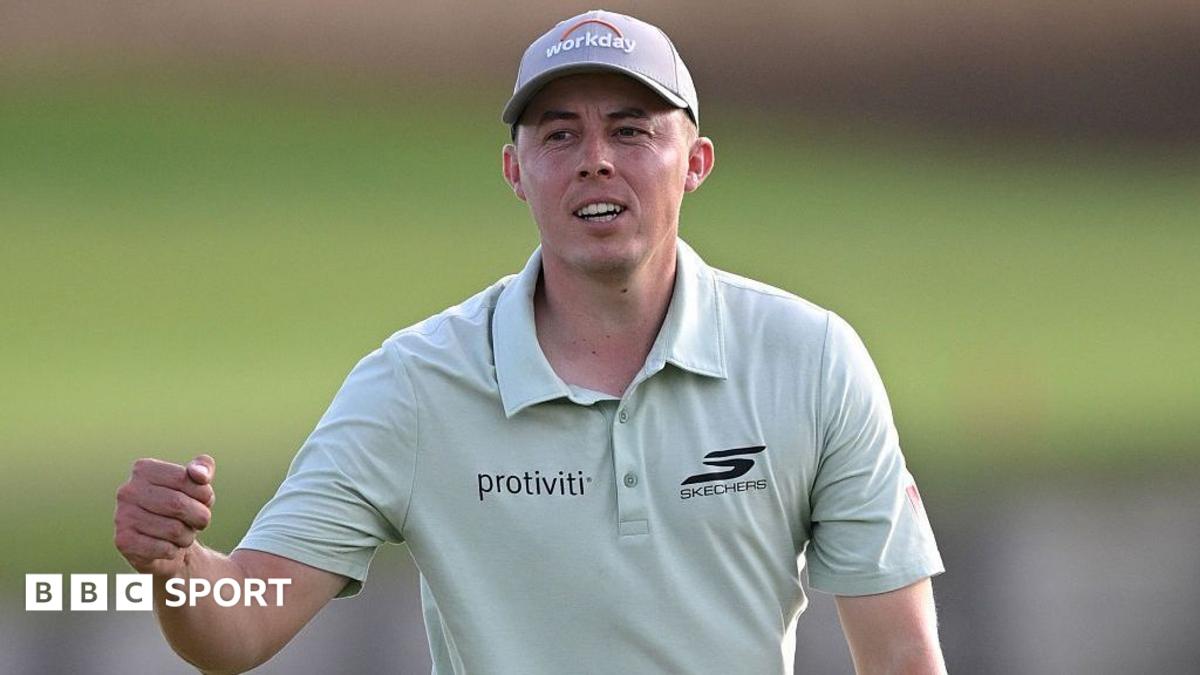
In his fourth major final, Zverev beat Flavio Cobolli 6-1, 4-6, 6-4, 6-7 (5), 6-1 for the French Open title on Sunday.
It was a unique opportunity for Zverev without Jannik Sinner or Carlos Alcaraz across the net and the third-ranked German took full advantage on the red clay of Roland Garros.
When Cobolli missed an overhead on the second championship point after more than four hours of the five-set encounter, Zverev dropped on his back to the clay and covered his face with his hands as he began sobbing. When he got up, with his shirt and arms covered in clay, Zverev put his hands back on his face before he lifted both arms in celebration.
When Zverev was handed the Coupe des Mousquetaires trophy, he lifted it with both hands and let out a liberating roar.
“This court is so special to me in so many ways. I’ve had the best moments of my life on this court; I had the worst moment of my life on these courts,” Zverev said, referring to when he was injured and pushed off on a wheelchair during a semifinal against Rafael Nadal in 2022.
“I was laying in that corner over there four years ago with seven broken ligaments and two fractured bones,” Zverev said. “I lost a Grand Slam final here two years ago but now finally it’s a happy end.”
Zverev has now joined an elite group of players that captured their first major in their fourth final: Eight-time major champion Andre Agassi, 2001 Wimbledon winner Goran Ivanisevic and 2020 U.S. Open champion Dominic Thiem.
No Sinner or Alcaraz
Zverev had been an overwhelming favorite for the title ever since the top-ranked Sinner struggled in the first week’s heat wave and wasted a two set and 5-1 lead against Juan Manuel Cerundolo in the second round. A day later, 24-time Grand Slam champion Novak Djokovic was also eliminated.
Alcaraz, the two-time reigning champion, withdrew before the tournament with an injured right wrist.
It was Zverev’s second French Open final, having wasted a lead of two sets to one against Alcaraz in the 2024 championship match.
Zverev had an even bigger advantage — two sets to none — in the 2020 U.S. Open final and lost that one, too, to Thiem. He was also beaten in straight sets by Sinner in the 2025 Australian Open final.
It was the 25th title of Zverev’s career.
Cobolli’s first Slam final
The 14th-ranked Cobolli had never been past a Grand Slam quarterfinal until this week. He was attempting to become the first Italian man to raise the singles trophy at Roland Garros since Adriano Panatta 50 years ago.
Cobolli comes from the same tennis club in Rome as Panatta did and Panatta was asked by tournament organizers to present the trophy to the champion to celebrate the anniversary of his 1976 triumph.
The honors, however, went to Zverev.
Russian teenager Mirra Andreeva won the women’s singles trophy on Saturday.
Zverev took control early on
The match was played in perfect conditions and Zverev’s game was almost flawless at the start.
Zverev broke Cobolli’s serve in a long opening game when Cobolli shanked a forehand into the first row of the stands. The break came after Zverev had a bit of luck when a backhand return hit the net but dribbled over on game point for Cobolli.
A group of women in the stands held up letters to form Zverev’s nickname: “Sascha.”
Cobolli likes to stand way over near the corner of the court and hit big kick serves out wide into the ad court. Zverev knew what was coming and returned one such kick serve early in the first set with a backhand that he wrapped around the outside of the net post. Cobolli ended up winning the point, but it was a message from Zverev that he knew how to handle his opponent’s tactics.
The next time Zverev hit a wrap-around-the-net-post return, Cobolli couldn’t handle it and Zverev won the point.
Cobolli’s supporters in his box were all dressed in blue, the color of Italy’s national teams, and as Cobolli worked his way back into the match, there were chants of “Ole, Ole, Ole; Flavio, Flavio.”
After Zverev held for a 6-5 lead in the fourth, he had his upper right leg treated by a trainer. Then Zverev wasted a 3-1 lead in the tiebreaker, which Cobolli concluded with a forehand winner up the line that produced a roar from the crowd.
But Cobolli appeared to run out of energy in the fifth, running down a drop shot only for Zverev to then pass him up the line for a 3-0 lead and a double break.
Abuse allegations
Moments after Zverev’s previous Grand Slam final in Australia in 2025, a person in the stadium yelled out the names of two of his ex-girlfriends who accused him of physical abuse.
One case was resolved following an agreement between German prosecutors, lawyers for Zverev and his former partner. The ATP Tour investigated another case and concluded there was insufficient evidence.
Dampf writes for the Associated Press. Samuel Petrequin and Jerome Pugmire contributed to this report.
Alexander Zverev has finally secured his maiden Grand Slam title with a dramatic five-set victory over Italy’s Flavio Cobolli in the French Open final on Sunday.
The second seed became the first German man to win a major tournament since Boris Becker at the 1996 Australian Open with a 6-1, 4-6, 6-4, 6-7 (5/7), 6-1 victory after four hours and 16 minutes.
Recommended Stories
list of 4 itemsend of list
“This court is so special to me in so many ways… but now finally, it’s a happy end,” said Zverev, who suffered a season-ending ankle injury in the 2022 semifinal against Rafael Nadal on Court Philippe-Chatrier, where he was also edged out in five sets by Carlos Alcaraz in the 2024 final.
It was Zverev’s fourth Grand Slam final and second at Roland-Garros after some heartbreaking near misses in his career.
“We’ve been through losses, we’ve been losers at times as well in the most important moments,” he said during the trophy presentation, turning to his team.
“But at the end of the day, we’re Grand Slam champions now, and that’s what counts.”
Cobolli, the 10th seed, was bidding to become the first Italian man since Adriano Panatta to win the French Open in 50 years.
The 24-year-old had never even played a Slam semifinal before, let alone a final, after his last-four opponent Matteo Arnaldi withdrew from the tournament due to illness.
“It’s not easy for me to talk right now,” said Cobolli after receiving his runner-up trophy from Panatta, before addressing Zverev.
“I’m happy for you, but I’m also sad because I was close and I feel it. So now you’ve achieved your dream, let me win the next time.”
Both players appeared to struggle with nerves at various points in the match, especially Cobolli during an error-strewn first set.
But Zverev’s greater experience showed in a deciding set that was far tenser than the scoreline suggested, as he managed to get over the line.
The 29-year-old was handed a golden opportunity to break his Grand Slam duck by the injury-enforced absence of reigning champion Alcaraz and surprise early exits for Jannik Sinner and Novak Djokovic.
The world number three was not always in control, making 54 unforced errors, but did enough to finally shed the tag of being one of the best players to have never won a major.
Zverev had previously also lost in six Slam quarterfinals and seven semifinals, alongside his three final defeats.
The most agonising miss of all was his first major final, when he blew a two-set lead and failed to serve for the championship against Dominic Thiem at the 2020 US Open.
The now-retired Thiem was watching on from the stands at Roland-Garros as Zverev belatedly put the memories of that match to bed six years later.
Alexander Zverev plays a forehand return to Italy’s Flavio Cobolli during the final [Julien de Rosa/AFP]
Cobolli’s nervy start
Cobolli made a nervy start and appeared to be struggling to deal with the occasion as the first set quickly got away from him in 39 minutes and he made 16 unforced errors.
He managed to settle into the match with three successive holds of serve in the second set, and then made his move out of nowhere to break in the seventh game.
Zverev had been completely untroubled on serve previously, but produced a scrappy game featuring two double-faults and a wild forehand on break point before turning to gesticulate angrily towards his coaching staff.
Cobolli started to grow in confidence and served out the set to breathe life into the final.
A higher-quality third set disappeared from Cobolli’s grasp in the 10th game, though, as from 30-0 up, he lost four points in a row, including a poor forehand that flew well wide on set point.
The world number 14, who will climb into the top 10 for the first time next week, hit straight back with a break in the opening game of the fourth set.
He could not pull away in the set, though, as both players ended up being broken twice, including Cobolli when he served for it at 5-4.
But the Italian rallied himself to push it into a tie-break, which he took to force a decider with a blistering forehand winner on his second set point.
Following a delay before the start of the final act after Cobolli left the court, Zverev struck first blood with a break in the first game.
Cobolli’s hopes were finally all but extinguished when he missed a break-back point and then dropped serve again to slip 3-0 down.
Zverev staved off three more break points in the fourth game and eased to victory from there, falling to the clay in celebration after Cobolli shanked an overhead on his second championship point.
Flavio Cobolli and Alexander Zverev embrace at the end of their five-set thriller [Dimitar Dilkoff/AFP]
Maja Chwalinska’s French Open ended almost three weeks after it started – but her journey to the brink of a first Grand Slam title began long before that.
A former Australian Open junior doubles finalist alongside fellow Pole Iga Swiatek, Chwalinska has spoken openly about the depression that led her to take a break from tennis early in her professional career.
In the build-up to Roland Garros, she was playing events on the second tier of the women’s tour across Europe.
Her French Open campaign began in the first round of qualifying on Monday, 18 May. Nine wins later, only teenager Mirra Andreeva stood in the way of Chwalinska becoming just the second qualifier to win a Grand Slam singles title in the Open era.
It was not to be for Chwalinska, who fell 6-3 6-2 to Andreeva on Saturday, but finishing runner-up will have a profound effect on her life and career.
She will climb from 114th in the world to a new high of 21st on Monday, while her Roland Garros prize money of 1.4m euros (£1.21m) is almost double what she had previously earned in her entire career.
“It’s been 18 years of hard work, patience and perseverance,” said 24-year-old Chwalinska, who took up tennis as a young girl.
“I had to go through so much to be in this position. Life is weird sometimes and you’ve just got to do your thing and believe it will click someday, and I’m happy that it did.
“It is definitely an unforgettable three weeks for me. I’ll never forget it.”
PARIS — Russian teenager Mirra Andreeva was already a tennis phenom at age 15.
At 19, she’s a Grand Slam champion.
The eighth-ranked Andreeva ended the run of 114th-ranked Polish qualifier Maja Chwalinska by 6-3, 6-2 in the French Open final on Saturday.
Andreeva became the youngest player to win the women’s singles title since Monica Seles, who was 18 when she landed her third straight French Open in 1992.
“You’re so young and talented. It’s so annoying,” Chwalinska told Andreeva during the awards ceremony.
When Andreeva executed a backhand cross-court winner on her first match point, she threw her racket into the air and dropped on her knees to the clay to celebrate.
Mirra Andreeva returns a shot against Maja Chwalinska during the French Open women’s final on Saturday.
(Thibault Camus / Associated Press)
During the trophy presentation, Andreeva took the unusual step of thanking herself “for believing in myself, always giving my 100%, even when it’s tough, trying every day to be better as a person and as a player, believing that I can do this, fighting so many demons inside of me.
“Only I know how tough it was for me,” Andreeva added. “How nervous I was throughout these two weeks.”
Chwalinska was attempting to become the first qualifier to capture the Roland Garros title.
Andreeva was born in Siberia and moved to Sochi and eventually France to develop her tennis career.
She drew loud applause from the crowd on Court Philippe-Chatrier when she spoke a few words of French during the trophy presentation.
“Thanks for your support today and over these past two marvelous weeks here in Paris,” Andreeva said. “It was very important for me.”
Alexander Zverev plays Flavio Cobolli in the men’s final on Sunday to conclude the wildest Grand Slam in recent memory.
Andreeva has been considered a Grand Slam contender since she burst onto the scene as a 15-year-old at the 2023 Madrid Open, where she became the third-youngest player to win a main draw match at a WTA 1000 tournament and made the quarterfinals.
Lately, Andreeva has had to contend with playing under neutral status and without her country’s flag due to the war with Ukraine.
When she beat Marta Kostyuk in the semifinals, Kostyuk refused to shake her hand, as has been the custom for Ukrainian players facing Russians ever since the war started in 2022.
Andreeva has gone a step further than her coach, Conchita Martinez, who lost the 2000 French Open final to Mary Pierce.
Pierce presented the winner’s trophy to Andreeva.
The final was played under mostly sunny skies but wind was a factor in the first Grand Slam final for both players.
Chwalinska double-faulted on the opening point of the match but she was the first player to hold serve in the fifth game for a 3-2 lead.
But then Andreeva won nine straight games to take control as she found a way to hit through the wind and answer Chwalinska’s array of spins and drop shots.
Andreeva produced 25 winners to Chwalinska’s 10 and also had fewer unforced errors: 26 to 29.
There was a strong Polish presence in the crowd.
When Chwalinska was introduced, fans held aloft red-and-white Polish flags and chanted her name: “Ma-ja, Ma-ja.”
Andreeva had little support from the crowd, although there was a shout of “Davai Mirra!” (“Go Mirra”) in Russian late in the match.
In men’s doubles, top-seeded Marcel Granollers and Horacio Zeballos retained their title with a 6-4, 6-2 win against Harri Heliovaara and Henry Patten.
Dampf writes for the Associated Press. Samuel Petrequin contributed to this report.
Italy’s Flavio Cobolli said he was “sad and happy at the same time” after reaching his first Grand Slam final at the French Open on Friday, following the last-minute withdrawal due to illness of his last-four opponent and compatriot Matteo Arnaldi.
The 24-year-old 10th seed will meet Alexander Zverev in Sunday’s final, which will produce a new major champion, after the German second seed earlier moved past Jakub Mensik in the other semi-final.
Recommended Stories
list of 4 itemsend of list
Just more than 20 minutes before Cobolli and Arnaldi were due to take to Court Philippe Chatrier, tournament organisers announced that the 104th-ranked Italian had been forced to pull out with a “virus”.
“When he came to me almost one hour ago, I almost cried. You know, it’s something that you don’t expect at all. I was ready to play this match,” Cobolli told reporters during a news conference he held with his close friend Arnaldi, as the pair sat three metres (10 feet) apart.
“When he came, I was completely sad for him. But, at the same time, of course, I’m really happy for the result that I reached this week.
“Yeah, now I’m sad and happy at the same time.”
For first-time major semifinalist Arnaldi, withdrawing was “not something that you wish to anybody”, but “the right decision for me to take”.
“It’s tough, because for how the tournament was, for how many hours I’ve been on the court, I was feeling actually very good,” Arnaldi, who had spent the most amount of time on court for a player en route to a Grand Slam semifinal, said.
The 25-year-old added that, on Thursday, he was “feeling OK” during practice, but after his dinner, he began to feel unwell during the night.
“I started to feel so-so with my stomach. I was, like, ‘All right, just didn’t digest very well,’” he recounted.
“But then I woke up at 1:00am, and I started vomiting, and I wasn’t feeling the best. Then I tried to sleep. I couldn’t sleep at all. At 6:00, 7:00am, I vomited again.
“We called the doctor into the room. He came, gave me some stuff. I was hoping that it would just be something from dinner or something like that, but then throughout the day, I couldn’t eat. Every time we did something or would drink, I would go back to the bathroom.”
Despite his best efforts, his state worsened throughout the day.
“I tried to get ready and tried to stay as much as I could here and tried to see if I could go on court, but every time I get up, I feel dizzy,” Arnaldi said.
“It’s a virus, I think, because I was feeling pretty cold. I think I had a fever, like, during the day. I don’t know, to be honest.
“I just know that I can’t move, and I can’t eat, and I can’t drink. So, there was really no way that I will be able to play.”
Cobolli paid tribute to a tearful Arnaldi.
“Matteo is a big inspiration for all of us. He’s an amazing player and amazing professional,” Cobolli said.
“He’s, I think, the best person outside the court for how his match preparation, focus, cool-down. He’s one of the best on the tour, for sure.”
After the conference, Cobolli took to centre court to have a hit watched on by a decent smattering of spectators that had come for the match but stayed to see the world number 14 keep his eye in.
After his quarterfinal victory over Canadian fourth seed Felix Auger-Aliassime on Wednesday, Cobolli will go into the weekend’s final with plenty of rest.
“Maybe having almost four days off is a lot, so you lose the rhythm,” he said.
“Now, I got practice again. I think I will be ready, for sure, for the final, but I also know that I will be fresh, for sure.
“Maybe [the extra time off] will help; maybe not. I’ll tell you after the final.”
Flavio Cobolli is through to the French Open final after fellow Italian Matteo Arnaldi withdrew minutes before their semi-final with a virus.
The good friends were supposed to meet in the last four at 18:00 BST on Friday for a place in a first Grand Slam final.
However, Arnaldi’s withdrawal was announced just 20 minutes before the players were due to step on Court Philippe Chatrier.
It puts world number 14 Cobolli straight through to Sunday’s Roland Garros showpiece, where he will face second seed and title favourite Alexander Zverev.
Arnaldi had spent 19 hours and 42 minutes on court en route to the semi-finals in Paris – the longest anyone has played on their way to the last four of a major since 1991.
The past five years has seen Chwalinska work hard on the lower levels of the WTA Tour, diligently trying to improve her game.
Working on being able to mentally compartmentalise her career – which she associated with “pressure, stress and crying” – from the rest of her life has proved crucial.
A year ago, Chwalinska was playing tiny tournaments in Italian cities Brescia and Bari after going out of the French Open in the second round of qualifying.
Now she has won nine matches in a row at Roland Garros. One more will see her become the first qualifier in the Open era to lift the trophy here.
Maybe the tattoo represents how she has played over the past three weeks – with a freedom and joy that has captivated the Parisian crowds.
Chwalinska has earned notable wins over former French Open semi-finalist Maria Sakkari and Olympic champion Zheng Qinwen, as well as beating three seeded players in Shnaider, Anna Kalinskaya and Elise Mertens.
Playing with variety and spin, Chwalinska can lob, drop shot and moonball her opponents to distraction, but she can also hit with pace to finish off points quickly.
“I feel like I’m in the bubble. I don’t know what’s going on. I’m just very happy to be here,” said Chwalinska, who has almost tripled her career prize money with the guarantee of winning at least £1.2m by reaching the final.
“After the tournament there will be time to process it and breathe in, breathe out.”
June 4 (UPI) — Melinda French Gates has added another $215 million to her organization Pivotal, which funds social initiatives for women and families around the world.
The latest boost in funding is specifically to address problems with women’s reproductive and menopause health, she said. French Gates has contributed $600 million to women’s health over the past two years.
As part of this round, she is donating $10 million to The Menopause Society for the education of healthcare professionals and to expand outreach in areas where access to menopause care is limited.
“For too long, perimenopause and menopause have been treated as invisible — something women are expected to manage quietly, without clear answers or support. That must change. By getting healthcare practitioners better training and investing in research, we can help ensure women have the care they need to live full and healthy lives,” French Gates said in a statement.
While midlife issues have seen more attention, thanks to social media, that attention doesn’t always translate to correct information from practitioners.
“The piece that I’m focused on with Pivotal is: How do we make sure that women get accurate information about what we do know about this phase of life? And how do we make sure that all providers are trained?” she told Time in an interview.
“In midlife, I would say we both don’t have enough knowledge or tools,” she said. “The research should have been started more than 50 years ago. We should have had many, many, many studies about this period of life, so that we have different tools, not just hormone replacement therapy. Then, we have a lack of provider training, which is the piece I’m going to work on with this particular amount of funding.”
The Menopause Society said the funding will help reach women who need the care.
“Menopause is a universal life stage, but quality care is not universally available,” said Dr. Stephanie Faubion, medical director of The Menopause Society, in a statement. “With this funding, we can scale evidence-based training for front line clinicians and extend our reach to areas where menopause care has long been overlooked. This is a meaningful step toward ensuring that women receive the informed, compassionate care they need and deserve so they can make smarter healthcare decisions. It also allows for exploration and a better understanding of the need for system changes.”
While the donation is critical, Faubion said the attention generated by French Gates is even more important.
“It shows that somebody like Melinda Gates and Pivotal feel that this is an important issue,” Faubion told the Independent. “It will illuminate the gaps that are still there … and it makes people not only aware, but maybe motivated to take some action.”
Though women make up half the population, health issues that affect them get only 2% of private healthcare funding, according to the World Economic Forum.
“The role of philanthropy, in my opinion, is to look at some of these societal problems that have been left behind, and shine light on them, show ways of making progress so you can then crowd in other donors and ultimately crowd in government funding,” French Gates told The Independent. “Part of what I’m doing here, I hope, is sending a signal to say, ‘This is really important. Let’s do something about it.’ And my hope is that I’ll be able to get others who will join me.”
No handshake and no photo as Mirra Andreeva of Russia beats Marta Kostyuk of Ukraine to reach French Open tennis final.
By Kevin Hand, News Agencies and The Associated Press
Published On 4 Jun 20264 Jun 2026
Russian teenager Mirra Andreeva reached her first Grand Slam final by beating Marta Kostyuk of Ukraine 6-1, 6-3 in a tense encounter at the French Open.
Andreeva converted her first match point when she served for the tennis match on Thursday.
Recommended Stories
list of 4 itemsend of list
There was no post-match handshake between the pair, however, and Kostyuk walked off quickly, turning only to wave and blow kisses to the crowd at Court Philippe-Chatrier, where some fans were draped in Ukrainian flags.
The atmosphere beforehand was somewhat tense as the players had separate photos taken as they each stood next to two children on their respective sides of the net. Usually, the players pose for the same photo, standing right next to each other by the net.
Kostyuk and countrywoman Oleksandra Oliynykova have spoken out during the tournament about the impact Russia’s four-year invasion of Ukraine is having on their country.
The eighth seed seized control from the outset and never loosened her grip on the contest, overwhelming Kostyuk with her depth and aggression on Court Philippe-Chatrier to set up a title clash against compatriot Diana Shnaider or Polish qualifier Maja Chwalinska.
Andreeva, 19, raced into a 4-0 lead in the opening set and barely looked back in the third meeting between the two players, the Ukrainian having won the first two.
Kostyuk briefly threatened to make a contest of it in the second set, but the Russian swiftly snuffed out any hopes of a comeback before serving out the match to complete a dominant display.
“I’m still very nervous, very nervous coming to this match as she’s had an amazing season, she hadn’t lost on clay, so that put pressure,” said Andreeva.
“She’s an amazing player, a tough opponent, so I’m super happy with the way I played. I’m happy I got revenge for the Madrid final, and to reach my first Grand Slam final.
“All of these feelings combined, I’ve never felt anything like this. I’m very excited about the last match here in Paris.”
Top-seeded Sara Errani and Andrea Vavassori of Italy won the mixed doubles final earlier Thursday, beating Gabriela Dabrowski of Canada and Evan King of the US 4-6, 6-3, 10-4.
An Italian is guaranteed to be in Sunday’s men’s French Open singles final, with Flavio Cobolli facing fellow Italian Matteo Arnaldi on Friday in the first Grand Slam semifinal for both players.
After letting another big lead slip with an error-strewn performance at the French Open, top-ranked Aryna Sabalenka felt like getting as far away from the courts as possible.
“Just want to quit tennis right now,” Sabalenka said after wasting a lead of a set and two breaks in a 3-6, 7-5, 6-0 loss to Diana Shnaider in the quarterfinals on Wednesday.
Recommended Stories
list of 4 itemsend of list
“We’ll see in a few days. Hopefully, I’ll get back on track mentally.”
Sabalenka’s wait for a first French Open title continues despite the four-time major winner leading 4-1 in the second set and being two points from victory while serving for the match at 5-4.
What followed was a complete collapse as she lost 12 of the last 13 games against a player appearing in her first Grand Slam quarterfinal, looking increasingly frustrated and forlorn in the windy conditions.
Just like her loss to Coco Gauff in last year’s final, when she won the first set before becoming undone with a slew of unforced errors, this one will take some time to get over.
“You know those rooms where you just go in and you smash everything,” Sabalenka said. “Probably I will spend a whole day over there destroying stuff. Maybe it will help, maybe not.”
Shnaider next faces Maja Chwalinska, who extended her remarkable Roland Garros run by beating 22nd seed Anna Kalinskaya 7-6 (3), 6-3.
Sabalenka’s missed opportunities
The world number one stood still and screamed after losing a point to fall 0-30 down in the sixth game of the decider. Although she saved two match points at 0-40 down, she lost when she sent a shot into the net.
“I just think it’s [a] combination of everything,” Sabalenka lamented. “You overthink, then you make easy mistakes, then you miss opportunities.”
Her struggles were reminiscent of the match against Gauff, when she remonstrated loudly, shouting to herself and glaring at her team box.
“I just have to sit back and openly think about what’s going on in my head in those tough moments,” Sabalenka said, recalling that match. “Because I’m quite an experienced player. I have been through so many things, and I [have] overcome so many things.”
Sabalenka had already looked agitated when serving for the first set, but still looked in control as she served for the match in the second, holding a 30-15 lead.
“Of course I saw some moments of her frustration,” Shnaider said. “I know Aryna that she’s a very emotional person.”
Shnaider, who was already on her best run at a major, broke Sabalenka before taking complete control.
“Well, honestly, I am speechless. Super happy,” she said. “I feel like I was trying to focus point by point. Not thinking about the score. She is the world number one, so I [am] just trying to do my best. I just had to fight for every point.”
Sabalenka looked increasingly frustrated as the third set wore on, and when she missed a volley at the net in the fourth game of the decider, she crouched and rested her head on her racket.
Diana Shnaider shows appreciation to the fans after victory at Roland Garros [Dan Istitene/Getty Images]
Another French Open upset
It was another big upset in a tournament, with defending champion Gauff (third round) and four-time winner Iga Swiatek (fourth round) already out.
Jannik Sinner, last year’s men’s singles runner-up, served for the match in a second-round defeat, and 24-time major winner Novak Djokovic wasted a two-set lead in a third-round loss.
That opened things up for lesser-known players. According to sports analytics company Opta, this year’s French Open is the first major tournament without a former men’s or women’s singles major champion in the semifinals since the 1977 French Open.
The unseeded Chwalinska came through three qualifying rounds to become only the second Polish woman to reach the semifinals at Roland Garros, along with Swiatek.
Chwalinska said British player Emma Raducanu’s run to the 2021 US Open title as an 18-year-old qualifier had inspired her.
“It was such an impressive run, you know,” Chwalinska recalled. “Also, she was so young.”
When Kalinskaya’s big forehand from the back of the court went out, the 24-year-old had her biggest win, having never been beyond the second round at any major before this tournament.
Chwalinska’s total prize money heading into Roland Garros was $864,030, and reaching the last four here earns her 750,000 euros (about $872,000).
The roof was open on Court Philippe-Chatrier, and there was a lot of wind.
“I don’t know why would they keep the roof open when it was crazy windy,” Sabalenka said. “It was very dirty tennis. I don’t know how people could actually just sit there and watch me play.”
Kalinskaya also struggled.
“I feel like I was fighting against the wind,” she said. “It was cold today, so the ball was going slower. I couldn’t use my speed, my power.”
Men’s singles exits
In the men’s quarterfinals, 10th-seeded Flavio Cobolli beat number four Felix Auger-Aliassime 4-6, 6-4, 6-4, 6-4 and will face fellow Italian Matteo Arnaldi for a spot in the final.
Arnaldi advanced when Matteo Berrettini, yet another Italian, retired due to a left hip injury, with Arnaldi leading 7-5, 5-2.
Berrettini had his hip treated during a medical timeout earlier in the second set.
The strong Italian showing comes despite top-ranked Sinner getting stunned in the second round.
Second-seeded Alexander Zverev and number 26 Jakub Mensik will meet in the other semifinal.
Having revealed several superstitions in his on-court interview – thanking the crowd in French, maintaining the same racquet tension no matter the conditions and keeping the same post-match routine – Cobolli was asked about them in his press conference.
“I’m a little bit [superstitious] but not crazy – this week I’m a little bit more crazy than the others,” he said. “I just go to the same restaurant, the same menu, the same shower.”
Cobolli then recalled a moment at a previous French Open when he was using the shower and Nadal knocked on the door asking him to hurry up because he was waiting to use that particular cubicle.
“He told me that it was his shower since 14 years,” continued Cobolli. “So I think the best thing that I’m doing is the shower.”
Cobolli recovered from losing the first set to beat Auger-Aliassime 4-6 6-4 6-4 6-4 and he will make his top-10 debut on Monday if Jakub Mensik, who faces Alexander Zverev in the other semi-final, fails to win the title in Paris.
Arnaldi’s win in Wednesday’s night session means an Italian finalist is guaranteed, even after the shock second-round exit of overwhelming favourite Jannik Sinner and Lorenzo Musetti being ruled out of the tournament because of injury.
Berrettini’s only previous retirement from a Grand Slam match was at the 2023 US Open.
He also made an early exit from the 2021 ATP Tour Finals because of an abdominal injury, while last season he had to pull out midway through matches in Madrid and Rome in the run-up to the French Open.
But the former world number six, who had missed the previous four French Opens because of injury problems, is determined to take the positives from reaching a seventh Grand Slam quarter-final in his first outing at Roland Garros since 2021.
Now ranked 105th, he added: “I have to take the good stuff that I did in this tournament, because a few weeks ago or a few days ago, it would have been crazy to think about me in the quarter-finals, and so I’ll try to go back home with a smile on my face.
“It’s going to be tough but that’s how I like to approach these two weeks, and of course I’m disappointed, I’m sad, but I’m also proud of the way I fought through this tournament.”
Speaking on court after his win, Arnaldi said: “You never wish for someone to end the tournament like this.
“He did an amazing tournament. I am sorry for him and I hope he recovers because soon it is the grass and he is going to be very tough to play.”
Arnaldi, ranked 104th in the world, is the lowest-ranked male player to reach a French Open singles semi-final since Filip Dewulf did so in 1997 when ranked 122nd.
He will play another Italian, 10th seed Flavio Cobolli, on Friday for a place in Sunday’s final.
Clay is not Sabalenka’s strongest surface even though she has won three times in Madrid, where the high altitude makes the conditions similar to a hard court.
Nor did she have a good build-up to Roland Garros. Six match points were squandered in a quarter-final defeat by Hailey Baptiste in Madrid in April, before she let a set and a break lead slip against Romanian veteran Sorana Cirstea in Rome.
But, given her quality and pedigree compared to the other Paris quarter-finalists, it is hard not to think another golden opportunity has slipped through Sabalenka’s fingers.
Sabalenka’s four Grand Slam singles titles – two Australian Open and two US Open triumphs, all on hard courts – are more than most people can dream of.
But she has also lost four finals and six major semi-finals, despite a consistency on the biggest stages that is unrivalled among her peers.
Sabalenka has the proud record of not losing before the quarter-finals of a Grand Slam since the start of the 2023 season.
However, she has not always dealt well with the pressure of the latter stages – particularly during the period where she has clearly been the best player in the world.
Sabalenka was the heavy favourite to beat underdog Madison Keys in the 2024 Australian Open final, but came unstuck. Twelve months later, she reached another Melbourne final – and a flurry of mistakes saw her squander a break lead in the deciding set against Elena Rybakina.
At last year’s French Open Sabalenka played what she described as the “worst final” of her life, hitting 70 unforced errors in windy conditions as she lost from a set up.
Against Shnaider, Sabalenka looked in control at 6-3 4-1 up before losing 12 of the final 13 games.
“I just think that there is something in specific moments during the match [where] I lose control,” said Sabalenka, whose 57 unforced errors outweighed her 46 winners.
Alexander Zverev ensured his pursuit of an elusive Grand Slam title remained on track with a comprehensive victory over highly-rated teenager Rafael Jodar to reach the French Open semi-finals.
Second seed Zverev is the highest-ranked man left in the singles draw after a series of shock exits in Paris.
The German has long been tipped for Grand Slam glory but has struggled in the pressure moments, suffering defeat in three finals and seven semi-finals.
He came up short against Carlos Alcaraz in the 2024 French Open final, despite leading by two sets to one, and has fallen four times in the Paris last four alone.
Tuesday’s meeting with 19-year-old Jodar was billed as a potentially tricky tie, with the Spaniard tipped to be a future star.
But Zverev, 10 years Jodar’s senior, used all his experience to come through 7-6 (7-3) 6-1 6-3.
“I want to keep going and win the matches ahead of me – that is my goal and my aim,” Zverev said.
“Today was a very good test against a very good player.
“I am happy to be in the semi-final but for now, that is it.”
Kostyuk was overcome with emotion following her historic meeting with Svitolina, which came a day after one of Moscow’s largest assaults on Ukraine in recent months.
She has been vocal in her criticism of Russian players who have failed to denounce the war and, like her compatriots, has maintained a policy of not shaking hands with opponents from Russia and its ally Belarus.
On the apparent reluctance of her Russian counterparts to speak about the war, Kostyuk said: “For me, it’s not frustrating anymore. They are all grown-ups.
“They are clearly aware of what’s going on. If this is something that they want to avoid talking about, they have to live with this, not me.
“I don’t know how you can sleep at night peacefully when you know that this is going on and you have nothing to say about it.”
Asked about facing a Ukrainian player next, Andreeva told the media: “It doesn’t matter who I play. I really try to play against the ball that is coming at me and focus on the game.”
Driven to deliver the title for Ukraine, Kostyuk will head into her semi-final on a 17-match winning streak on the clay this season.
“I still think it [the title] is very far. I have two matches to play and hopefully you will come and support me on Thursday,” Kostyuk told the crowd, who gave her a standing ovation and waved Ukrainian flags.
Asked if she would perform another backflip at Roland Garros, just as she did after beating Andreeva to win the Madrid Open last month, Kostyuk added: “In Madrid I practised the day before the final.
“I don’t need to practise here – I did it a month ago – but I promised I will only do it again when I win a final.”
Tournament director Amelie Mauresmo, herself a former women’s world number one, had regularly pointed to the possibility of short two-set matches as the reason for often overlooking the women.
“The match-ups are always interesting for both men and women, but there are multiple factors for us to make the choice,” Mauresmo said earlier on Monday.
“As you know, the potential length of the matches is something that we are also looking at.”
On picking Sabalenka against Osaka, she added: “It was obvious that it should be a night match tonight.”
There was a school of thought that Mauresmo might have looked elsewhere, though, had men’s world number one Jannik Sinner still been in the tournament.
Sinner would have been scheduled to play on the same day, but without him the men’s matches taking place on Monday lacked star power.
If Sabalenka against Osaka did not take place under the lights, then which women’s match would conceivably ever be picked?
With that came a sense of expectation.
If the match ended up being a dud, then it could have been used by critics as a stick to beat the women’s game with.
That, others argue, was a situation created by the French Open’s reluctance to showcase its female stars in the first place.
Was the burden which it placed on Sabalenka and Osaka to represent the women’s game fair?
“I don’t really care. There are so many different things to put pressure on myself – that was the last thing on my mind,” said Osaka.
“Shout out to the tournament for trusting us – I hope it was entertaining for people.”
When the two players met in Madrid in April, it was Osaka who won the opening set, and she started quickly once again, breaking Sabalenka in her opening service game.
However, it proved to be the only moment of uncertainty on serve for the top seed, who only conceded four points on her own delivery across the remainder of the first set and finished the match with 12 aces to Osaka’s two – and an 83% win rate behind her first serve.
Osaka, by contrast, invited pressure on herself, being taken to deuce after leading 40-15 in three first-set service games and landing just 53% of her first serves. Sabalenka routinely stepped inside the baseline to receive second serves and won 21 points from a possible 35.
Sabelenka’s canny shot selection also proved effective, winning 10 of her 11 points at the net and hitting five drop shots among her 39 winners as she avoided being drawn into endless baseline slog-fests.
She made the decisive break in the 11th game of the opening set before closing it out with a hold to love, and her relentless pressure told again in the second.
Osaka saved a break point in the fifth game but was broken to 15 in her next two service games, with Sabalenka converting match point with a trademark booming forehand.
With Iga Swiatek’s early French Open exit meaning new men’s and women’s champions will be crowned, BBC Sport analyses how the draws have been blown open.
Amid the excitement of youth, world number three Zverev underlined his status as favourite for the men’s singles title with a clinical straight-set win over Jesper de Jong, which sent him through to the quarter-finals at Roland Garros for the sixth consecutive year.
The second seed, 29, has long been earmarked as a future Grand Slam champion but despite reaching finals at three of the four majors – and leading Carlos Alcaraz by two sets to one at the French Open in 2024 – he is still searching for his maiden title.
However, with world number one Jannik Sinner and Djokovic both eliminated in the first week, plus defending champion Alcaraz absent because of injury, the German’s route to the title has opened up.
De Jong, ranked more than 100 places below Zverev, went toe-to-toe with the heavy-hitting German in the opener, racing into a 3-0 lead and later leading 3-0 in the tie-break before Zverev reeled off seven consecutive points to take the set.
Zverev had to be patient in the second, waiting until the 10th game to convert one of only two break-point opportunities offered to him, but was too strong for his opponent in a 24-minute third set, completing a 7-6 (7-3) 6-4 6-1 win.
Relentless on serve in the final two sets, he conceded just six points across nine service games while also showing his formidable touch at the net, winning 29 of 38 points.
“It was a bit difficult in the beginning,” Zverev said on court. “I didn’t start strong and he started really fast. But once I found my rhythm, I was comfortable.
“My game is there. It’s about showing it on the match courts.”
Zverev is one of only three top-10 seeds left in the draw, one of just two players with experience of playing in a major final and is competing on a surface on which he has won nine of his 24 ATP titles.
Perhaps most crucially, while many of his rivals have battled through multiple five-set matches, he has won three of his four matches in straight sets.
In each of the past three years, questions have been raised about whether the French Open should do more to showcase the women’s game.
“I don’t think they have daughters, because I don’t think they want to treat their daughters like this,” said Jabeur.
The lack of action prompted recently appointed WTA chief executive Valerie Camillo to seek answers from French Open tournament director Amelie Mauresmo – a former women’s world number one – when they met at Roland Garros this week.
In what the WTA describes as an open and productive conversation, Camillo underlined her belief that women’s players have delivered some of the “most exciting and dynamic competition in global sport” over recent months and years.
It remains to be seen whether Camillo’s call for action is listened to.
Mauresmo has consistently argued that the danger of women’s matches going “really fast” is the justification behind the choices.
With tickets ranging from €60 to €280 (£50 to £240), tournament organisers think the possibility of a short two-set women’s match does not represent value for money.
Mauresmo has insisted the night sessions will not be extended to two matches – like the Australian Open and US Open – in fear of creating late finishes.
Will the French Open be swayed? It refused to waver last year, despite pressure from players, the women’s governing body and – according to reports, external – broadcasters.
Former world number one Osaka will meet Aryna Sabalenka – the current top women’s player – in the last 16 on Monday.
The Japanese player said she did not know if that blockbuster match would be under consideration for the night session, but added she felt the slot was reserved for “popcorn matches”.
If Osaka against Sabalenka does not fulfil the French Open’s criteria, it feels like nothing will.
“I hope it will change,” added Ostapenko.
“Even if it’s not me playing, I would like to see some women’s matches there. But I don’t know that we will.”
Defending champion Coco Gauff is the latest big name to exit the French Open after a third-round defeat by Anastasia Potapova.
In a match with multiple big swings of momentum, American fourth seed Gauff lost 4-6 7-6 (7-1) 6-4 to Austria’s Potapova.
The win over two-time Grand Slam champion Gauff means Potapova is into the fourth round at Roland Garros for the first time.
Gauff follows men’s top seed Jannik Sinner and 24-time Grand Slam champion Novak Djokovic in being knocked out in the first week in Paris.
The 22-year-old beat Aryna Sabalenka in last year’s final but came into Roland Garros having not won a title in 2026.
Potapova’s magnificent defence caused problems for Gauff throughout and the 25-year-old was seen clutching her shoulder after the match, following a number of bruising rallies.
“I’m cramping a little bit but it’s OK, it’s all good. I don’t have any words now, I’m extremely happy,” said Potapova.
“The fight we could show, both of us – Coco is such a champion and I respect her so much.
“I’m unbelievably proud of myself that I stayed there, that I was fighting until the last point.”
Potapova will play Russian 22nd seed Anna Kalinskaya in the last 16 after her 6-3 0-6 6-2 victory over Camila Osorio.
Earlier on Saturday, American sixth seed Amanda Anisimova exited the tournament – losing to France’s Diane Parry.