Frank

ZZ Top scrubbed Hollywood Bowl concert because of Frank Beard’s health

The show will go on for ZZ Top.

Last week, the blues rock band canceled its Hollywood Bowl concert because longtime drummer Frank Beard had health issues, Rolling Stone first reported.

That Aug. 5 Los Angeles concert was supposed to be the kickoff for the band’s the Big One tour. But a spokesperson for the band says that frontman Billy Gibbons and bassist Elwood Francis will continue the tour.

Michael Monahan will substitute for Beard for the remainder of the Big One, which will conclude its U.S. run on Oct. 9 in Port Wentworth, Ga.

The band has not said that it will reschedule the L.A. show, and all tickets, including transportation and parking passes, were being automatically refunded, according to the Hollywood Bowl.

Gibbons previously posted on Instagram that there were unexplained “insurmountable obstacles” leading to the band’s sudden cancellation at the Hollywood Bowl.

The band has released no details on Beard’s condition, although this is not the first time the drummer, 77, has faced health-related issues in his long tenure with the band. Beard joined ZZ Top in 1969, soon after the band formed, replacing founding drummer Dan Mitchell.

In March 2025, the Texan trio announced via its Instagram that Beard would temporarily step away from the band’s Elevation tour to tend to a health issue, which was later revealed to be foot and ankle problems. John Douglas — a longtime tech member, percussionist and drummer — replaced Beard in the interim, having done so previously when the veteran drummer underwent an emergency appendectomy in 2002.

In ZZ Top’s early days — following the release of the 1976 album “Tejas” — Beard dealt with issues related to substance abuse that led to the band’s three-year hiatus, which he and his bandmates opened up about in the 2019 documentary “ZZ Top: That Little Ol’ Band From Texas.”

“Frank goes all out on what he does and that includes the bad things,” bandmate Dusty Hill, who died in 2021, said in the documentary. “He was sick. If you’re a very good friend, you love a guy, you don’t want to see him die. You just want to see your brother get well.”

The Grammy-nominated band, which formed in Houston, is known for its edgy blues twang in popular singles including “La Grange” and “Tush” and across 15 studio albums. In November, ZZ Top will close out the Big One tour with eight performances across Mexico and South America.


Source link

Frank Lampard named LMA manager of year after leading Coventry to Premier League

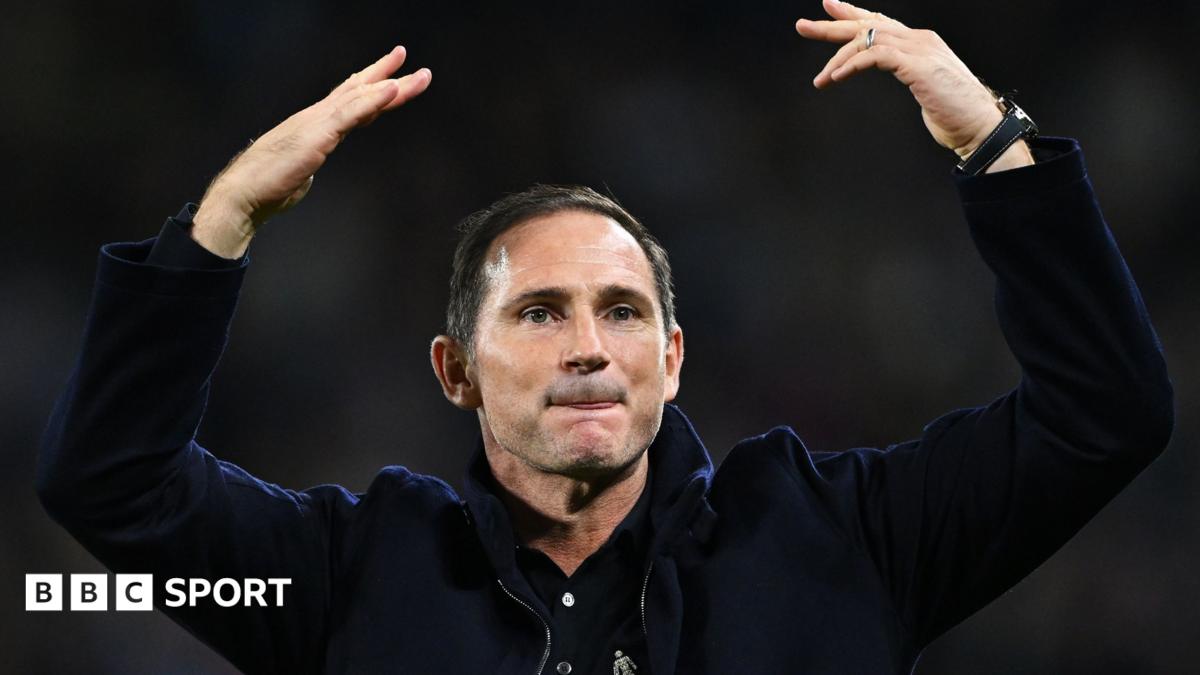
Frank Lampard has been named the League Managers Association manager of the year after guiding Coventry back to the Premier League.

Lampard’s Sky Blues finished 11 points clear at the top of the Championship to clinch the title and return to the top flight for the first time since the 2000-01 season.

The former England midfielder, who has previously managed Derby, Everton and had two spells in charge at Chelsea, was presented with the Sir Alex Ferguson award by England manager Thomas Tuchel.

The award, named after the former Manchester United manager, is voted for by managers throughout the leagues and takes into account success and the resources available.

Tuchel read out a letter from Ferguson, who said Lampard’s Coventry play “great football with confidence and belief”.

“I have enjoyed watching you. Best of luck in the Premier League next season,” he added.

Brentford‘s Keith Andrews, Arsenal‘s Mikel Arteta, Aston Villa‘s Unai Emery, Bournemouth‘s Andoni Iraola, Manchester City‘s Pep Guardiola, Lincoln City’s Michael Skubala and Bromley’s Andy Woodman were also shortlisted.

Manchester City‘s Andree Jeglertz won the Women’s Super League award after leading them to the title.

Arteta, who led Arsenal to their first Premier League title in 22 years, won the Premier League award while Lampard also took the Championship equivalent.

Skubala, who won League One with Lincoln, took the award for the third tier and Woodham won the League Two award after he led Bromley to the title.

The WSL2 award was taken by Karen Hills, who led Charlton to the WSL for the first time.

Steve Bruce and Martin O’Neill were inducted into the Hall of Fame after each reaching 1,000 games as a manager.

The award for Lampard is the most significant individual honour in his coaching career.

His Derby side lost in the Championship play-off final in 2019 and he was then appointed at former club Chelsea, where he spent 13 years as a player.

He was sacked after 18 months in charge in 2021 but later returned as a caretaker.

In between, he spent less than a year in charge of Everton during which he oversaw an escape from relegation but was later sacked.

This season his Coventry side were the Championship’s highest scorers with 97 goals in 46 games. They also had the best defence.

Chris Wilder, who won the award while in charge of Sheffield United in 2019, and Ipswich manager Kieran McKenna, the 2024 winner, are other recent managers to receive the LMA’s top award while managing outside of the Premier League.

Source link

Rep. Frank Admits Employing Male Prostitute as Aide : Says He Fired Him After Learning Sex Was Being Sold Out of His Capitol Apartment

Rep. Barney Frank (D-Mass.), one of two acknowledged homosexuals in the House of Representatives, admitted Friday that he had employed a male prostitute as a personal aide, but he said that he fired him after learning that the congressman’s Capitol Hill apartment was being used as a house of prostitution.

Frank said he met the man, whom he identified as Steve Gobie, through an ad in a Washington gay newspaper in 1985 and paid to have sex with him. The Massachusetts congressman, who at the time had not made his public acknowledgement that he was gay, said he later hired Gobie as a chauffeur and housekeeper with the hope of reforming a troubled young man with a history of petty crime and prostitution.

‘I Was Victimized’

“I hired him out of a charitable impulse. I thought I was going to be a liberal who got involved directly with an individual who needed help,” Frank told reporters in Boston on Friday. “ . . . I was victimized. I misjudged his character.”

Frank was responding to a front page story Friday in the Washington Times headlined, “Sex Sold Out of Congressman’s House,” that included the young man’s description of his former relationship with Frank.

Frank said he paid Gobie about $20,000 a year in his own funds. According to the newspaper, the congressman wrote letters on Gobie’s behalf to Virginia probation authorities. Gobie was on probation after being convicted in 1982 of four felonies, including cocaine possession and production of obscene items involving juveniles.

In August, 1987, Frank said he fired Gobie and ended their relationship after his landlady alerted him to the prostitution business being run out of his basement apartment several blocks from the Capitol.

House Democratic leaders were quick to come to Frank’s defense.

Foley Offers Backing

“There is no more able, articulate and effective member of the House of Representatives than Barney Frank,” House Speaker Thomas S. Foley (D-Wash.) said in a statement. “He has provided outstanding service to his constituency and the nation, and I’m absolutely confident he will continue to do so long after this matter has been forgotten.”

Despite Foley’s statement of support, several politicians raised the possibility that the House Ethics Committee may choose to investigate Frank’s conduct as unbecoming of a House member.

Just last month, Frank was one of three House members to ask the Ethics Committee to investigate sexual misconduct allegations against Rep. Gus Savage (D-Ill.). A Peace Corps worker has accused Savage of making sexual advances during an official trip to Zaire.

Frank said he intends to run for reelection next year and does not believe the Gobie incident would undermine his campaign. “I don’t believe it shows me as unethical,” he said. “I believe it shows me as gullible.”

Frank, who publicly acknowledged his homosexuality in 1987, has faced only token opposition in recent elections. Since 1980, he has represented a Massachusetts district that extends west from Boston’s Back Bay through the generally liberal, affluent suburbs of Brookline and Newton and then veers south to the blue collar, old textile towns such as Fall River.

In 1983, another Massachusetts Democratic congressman, Gerry E. Studds, admitted having sex with a male page employed by the House. His Cape Cod constituents also have continued to elect him overwhelmingly.

Dorothy Reichard, an aide to Frank in Boston, said the several dozen calls to his office have been overwhelmingly supportive. “I think people feel he’s an excellent congressman who’s done his job, even though he may have used poor judgment in this instance,” Reichard said.

Source link

Barney Frank, a liberal congressman and trailblazer for gay rights, dies. He was 86.

Barney Frank, the longtime Democratic congressman and leading liberal who brought new visibility to gay rights and crafted the most significant reforms to the financial system in a generation, has died. He was 86.

Frank died late Tuesday, according to Jim Segel, Frank’s former campaign manager and close friend.

After representing broad swaths of Boston’s suburbs in Congress for 32 years, Frank and his husband moved to Ogunquit, Maine. He entered hospice there in April with congestive heart failure and is survived by his husband, Jim Ready, and sisters, the longtime Democratic strategist Ann Lewis and Doris Breay, along with brother David Frank.

A self-described “left-handed gay Jew,” Frank was known for his acerbic wit, combative style and focus on marginalized communities. He represented the party’s left wing while keeping close with Democratic leaders who sometimes frustrated progressives.

He is best known as a pioneer for LGBT rights. After decades of grappling with his sexuality, he publicly came out as gay in 1987, the first member of Congress to do so voluntarily. With his 2012 marriage to Ready, he became the first incumbent lawmaker on Capitol Hill to marry someone of the same sex.

But in an April interview as he entered hospice, Frank said he hoped he would be remembered for advocating a brand of politics that embraced progressive ideals without forcing them on voters prematurely. It is an approach he feared was being rejected as Democrats prepare for what could be a rollicking primary as they hope to retake the White House in 2028 and move past the Trump era.

“I hope I made the point that the best way to accomplish the improvements in our society that we need, particularly in making it less unfair economically and socially, is by conventional political methods,” Frank said. “The main obstacle to our defeating populism and going further in the right direction is that mainstream Democrats have to make it clear that we oppose that part of the agenda of our friends on the left that is politically unacceptable. They’re right about a lot of things but you have to have some discretion.”

“You should not take the most unpopular parts of your agenda and make them litmus tests,” he added. “And that’s what my friends on the left have been doing.”

Frank’s path to public life

Born in 1940 in Bayonne, N.J., Frank wrote in his 2015 memoir that he was drawn to public life after Emmett Till, a Black 14-year-old from Chicago, was lynched by white men in Mississippi. Frank would volunteer in Mississippi during the Freedom Summer of 1964, though he acknowledged the fast-talking style was a challenge in the Deep South.

“My direct organizing of Mississippi voters was limited by the fact that my accent [to this day more New Jersey than New England], my poor diction, and my rapid speech, especially when I got excited, rendered me largely incomprehensible to rural Mississippians of both races,” he wrote.

He entered politics in 1968 as an aide to Boston Mayor Kevin White before winning a seat in the Massachusetts House in 1972. Frank was elected to Congress in 1980, an otherwise dismal year for Democrats as the party lost dozens of seats in the U.S. House and Republican Ronald Reagan won the White House.

Frank’s pragmatic style surfaced early in his congressional career. He joined the liberal Democratic Study Group to help push then-Speaker Tip O’Neill (D-Mass.) to respond more aggressively to the Reagan administration. But Frank said he found himself more often agreeing with O’Neill’s less confrontational approach.

Years later, as Congress prepared to pass a massive tax overhaul package, Frank intended to vote “no,” opposed to the bill’s lowering of top tax rates. He changed his mind, however, when he worked out a deal boosting affordable housing tax credits.

“I was happy to sacrifice my ideological purity to improve legislation that was going to become law with or without me,” he wrote.

Rep. Nancy Pelosi, the California Democrat and former House speaker, called Frank an “idealist to the nth degree.”

“The goals, the vision, the promise of it all,” she recalled in an interview. “Nobody could ever surpass what he brought to the table in that regard.”

Making history in Congress

Through his early years in Washington, Frank led something of a double life.

Privately, he socialized in the city’s gay circles and had relationships but did not publicly acknowledge his sexuality. The media at the time rarely reported that someone was gay unless that person was involved in a scandal. When Frank in 1987 invited a reporter to his office to formally ask whether the congressman was gay, Frank responded, “yeah, so what?”

Other elected leaders, perhaps most notably San Francisco’s Harvey Milk, had come out years before. Members of Congress, including Rep. Gerry Studds (D-Mass.), were previously outed through scandal.

Frank’s approach made him the most prominent gay leader in national politics for much of the 1980s and 1990s. He helped secure AIDS funding and pressed the Democratic Clinton administration, unsuccessfully, to lift a ban on gays serving in the military.

But there were low points, too, most notably an overwhelming 1987 House vote to reprimand him for poor judgment involving a male prostitute he hired in 1985. Rep. Newt Gingrich of Georgia, the Republican whip at the time, pressed for the more severe punishment of censure, which was rejected by a large margin.

Frank became something of a punch line among conservative Republicans, with House Majority Leader Dick Armey (R-Texas) calling him “Barney Fag” in 1995. Armey said he misspoke and later apologized from the House floor.

Along the way, Frank became known as one of the most quotable lawmakers in Congress.

Regarding abortion, he said Republicans believed “life begins at conception and ends at birth,” criticizing the party’s push to curb social programs. After Ken Starr released a report describing President Clinton’s relationship with Monica Lewinsky in sometimes intimate detail, Frank said it required “too much reading about heterosexual sex.”

Rep. Steny Hoyer (D-Md.) entered Congress the same year as Frank and he recalled his former colleague: “You may get a blow, but it was softened by the humor that came with it.”

Presiding over a financial overhaul

By 2007, Frank was the chairman of the House Financial Services Committee, where he would leave his lasting policy mark as the U.S. economy careened toward collapse. He worked with the Republican Bush administration to pass a rescue package, providing vital support to financial institutions but spurring a populist revolt that still courses through American politics.

Once the initial crisis eased, Frank helped develop the most significant reform legislation since the New Deal. Working with then-Senate Banking Committee Chairman Chris Dodd (D-Conn.), the Dodd-Frank Act would enhance consumer protections, impose new capital requirements for banks and boost the ability of regulators to monitor risk.

“Barney and I shared a fantastic relationship,” Dodd said. “I had many good moments in those 36 years in Congress, but none more significant, joyful, or productive than those almost two years working with Barney on our banking bill.”

During President Trump’s second term, his Republican administration has worked to roll back many of the legislation’s provisions, arguing they were too onerous.

Frank faced his toughest reelection campaign in years in 2010 as the tea party wave swept over American politics. He opted against running again in 2012, though remained engaged in politics long after leaving Congress and was a fierce critic of Trump.

Asked for his prediction on who might succeed Trump, Frank said “unfortunately I won’t get to vote for it.”

Sloan writes for the Associated Press.

Source link

Former Rep. Barney Frank dies at 86

1 of 2 | Former Rep. Barney Frank speaks in 2022 during a signing ceremony for the Respect for Marriage Act, which requires the U.S. federal government to recognizing the validity of same-sex and interracial marriages in the United States, in the Rayburn Room of the U.S. Capitol in Washington, D.C. Frank died Tuesday at age 86. File Photo by Bonnie Cash/UPI | License Photo

May 20 (UPI) — Barney Frank, a former Massachusetts congressman who was instrumental in overhauling the country’s financial regulations and was one of the first openly gay members of Congress, died at his home in Maine. He was 86.

Frank had entered hospice care last month with congestive heart failure, The New York Times reported.

Rep. Nancy Pelosi, D-Calif., worked with Frank in Congress for decades. Pelosi called him “a real mentor” and said she learned a lot from him.

“He has been about idealism and pragmatism to get the job done,” she told NBC News.

Frank served in the House of Representatives for more than 30 years and led the House Financial Services Committee from 2007 to 2011. One of the successes for which he was best known was the Dodd-Frank Act of 2010, which he co-sponsored with Sen. Chris Dodd. The act, a response to the 2008 financial crisis, tightened regulations on Wall Street, preventing banks from taking part in the riskiest behaviors and protecting consumers.

Frank was one of the first U.S. politicians to come out as gay voluntarily — in a 1987 interview with the Boston Globe, a statement he followed with “So what?” He became the first member of Congress to marry a same-sex partner when he wed Jim Ready in 2012. Ready survives him.

“I think the key to our having made the enormous progress we made in defeating anti-gay prejudice had to do with all of us coming out and people discovering the gap between between our reality and the way we were painted,” Frank said in an interview last month with NBC News.

Frank was also known for championing civil rights and women’s rights and advocating for issues including environmental protection and abortion rights.

“I’m a left-handed gay Jew,” he often said, The New York Times reported. “I’ve never felt, automatically, a member of any majority.”

Frank’s first book, Frank: A Life in Politics from the Great Society to Same-Sex Marriage, was published in 2015. His second, The Hard Path to Unity: Why We Must Reform the Left to Rescue Democracy, is expected to be published in September.

In Frank, he wrote that he’d been good at his job but in retirement, he was ready to be “good at life.”

Brandon Clarke

Memphis Grizzlies forward Brandon Clarke (R) and Golden State Warriors guard Jordan Poole reach out for a rebound in San Francisco on May 7, 2022. Clarke died at the age of 29 on May 11. Photo by John G. Mabanglo/EPA

Source link