
FPV

Israeli Troops Turn To Fishing Nets For Protection Against Hezbollah FPV Drones

For more than 2,000 years, fishermen in Israel’s Sea of Galilee were famous for using nets to catch St. Peter’s Fish, a form of tilapia with a biblical backstory. Now these anglers have gained new notoriety, helping keep some Israeli troops safe from Hezbollah first-person view (FPV) kamikaze drones. TWZ was among the first to highlight the danger these weapons have posed to Israeli forces in southern Lebanon and how the IDF was racing to install passive defenses, including nets, on its combat vehicles for protection.

The threat is so great and countermeasures so far limited, that some IDF troops are resorting to obtaining nets on their own from fishermen for protection, a senior IDF official confirmed to TWZ on Monday. The issue was first reported by Israel’s KAN public broadcasting network. This is in addition to netting the IDF itself is working to procure, which we will talk more about later in this story.

The IDF’s improvised countermeasure: going to Israeli fishermen and asking to use their nets.

They’re being hung in front of bases and tanks so the drones get tangled. pic.twitter.com/oSUpfoMvyy

— The Jerusalem Post (@Jerusalem_Post) May 26, 2026

“Indeed, IDF soldiers are equipping themselves with fishing nets, most of which are being purchased in the city of Tiberias on the shores of the Sea of Galilee,” a senior IDF official told us. The troops are also buying nets from fishermen at Akko and Haifa on the Mediterranean, the official added.

“The drone threat has become a nightmare for the fighters on the ground,” the high-ranking official explained.

Fishing on the Sea of Galilee! Joshua Aaron / Rather Be in the Galilee thumbnail

Fishing on the Sea of Galilee! Joshua Aaron / Rather Be in the Galilee


In our past reporting, we explained that the idea behind netting is that drones will get caught up in these barriers and become disabled, or, in some cases, the nets will help keep the drones far enough from the troops or equipment before exploding to keep personnel within the vehicles from being killed.

Israel, as we have previously noted, started using netting on vehicles and other equipment as the FPV threat grew.

You can see one example of this in the following video.

Israeli Defense Forces testing a folded anti-drone net installed on a Humvee.

The video emerged amid a surge of Hezbollah strikes with FPV drones against the IDF in Lebanon. pic.twitter.com/PwIyuJQVs4

— Status-6 (War & Military News) (@Archer83Able) April 29, 2026

The use of nets as a defensive measure was first employed in Ukraine as FPV drones became the ubiquitous weapon of choice for both sides.

You can see an early example of Russians using netting in the video below.

To protect themselves from Ukrainian drone attacks, the Russians have fenced off the road from Bakhmut to Chasiv Yar, creating a 2-km mesh tunnel. In this way, the Russians are trying to rescue their equipment and personnel from threats from drones. pic.twitter.com/qbtFvwrAcx

— WarTranslated (@wartranslated) February 9, 2025

In our initial stories about Hezbollah’s FPV arsenal, we noted that the Iranian-backed proxy group was adding a challenge to the IDF by increasing the percentage of FPV drones guided by fiber optic cables. These wires mitigate the effect of electronic warfare efforts to jam radio signals as well as some of the limitations imposed by geographical features that can impede the line-of-sight radio connection between drone and operator.

Videos of these attacks began to emerge online last month, which you can see below.

Hezbollah conducted more fiber-optic FPV strikes on Israeli vehicles in Lebanon, including two ‘Merkava’ Mk.4 tanks, a D9 Caterpillar armored bulldozer, and what appears to be a rare ‘Namer’ heavy IFV equipped with a turret mounting a 30 mm Bushmaster Mk 2 cannon.
1/ https://t.co/ms2nagNHrD pic.twitter.com/WDs6M3SpwW

— Roy🇨🇦 (@GrandpaRoy2) April 5, 2026

Now there’s a new problem for Israel to solve when it comes to FPV drones. Hezbollah has begun using thermal cameras on these munitions so they can be deployed in night attacks, the IDF official told us. Thermal cameras register heat signatures, turning them into thermal images using differences in temperature.

By adding thermal cameras to the FPV drone, Hezbollah “severely restricts [our] movement both during the day and at night,” he postulated.

#Lebanon / #Israel / #Iran / #USA 🇱🇧🇮🇱🇮🇷🇺🇸: Hezbollah’s “THERMAL Ababil” FPV Drone struck an Israeli Army (#IDF) soldiers in Al-Bayada.

Group used FPV Kamikaze Drone with equipped with Thermal Sight and carrying PG-7 / IED —which is a quite significant development. pic.twitter.com/pSHy4JriVA

— War Noir (@war_noir) May 25, 2026

Combined with fiber-optic guidance, the use of thermal cameras on FPV drones “creates an extraordinary level of deterrence against the forces operating inside Lebanon and along the border,” the senior IDF official bemoaned. “It is terrifying, dangerous, and frightening in equal measure.”

“The forces are essentially static,” the official added. “They cannot advance toward the drone-launch areas, nor can they effectively target the drone logistics and operational chain extending through the Beqaa Valley, Tyre, Sidon, and even Beirut.”

“Our operational doctrine must change,” he added. “We need to shift from completely exposed operations, where our soldiers become easy targets for Hezbollah, to covert and concealed activity.”

TOPSHOT - This photograph taken from the northern Israel shows Israeli tanks and military vehicles standing along the road between destroyed houses in southern Lebanon near the border with Israel, on April 29, 2026. Lebanon's army said on April 29 that one of its soldiers was among two people killed in an Israeli strike in the country's south, the latest deadly raid despite a ceasefire in the Israel-Hezbollah war. (Photo by Jalaa MAREY / AFP via Getty Images)
Israeli tanks and military vehicles standing along the road between destroyed houses in southern Lebanon. (Photo by Jalaa MAREY / AFP) JALAA MAREY

Making matters worse, “the political-security cabinet, and more specifically [Israeli Prime Minister Benjamin] Netanyahu, is pushing for overt operations in order to demonstrate an Israeli presence in southern Lebanon,” the senior IDF official posited. “At the same time, due to commitments and demands made by [U.S. President Donald] Trump, the operational freedom of the forces is being heavily restricted. It is a classic Catch-22 situation.”

“The result is severe harm to our soldiers and a weakening of the IDF against an enemy that is bound by no rules or constraints,” our source continued. “This is a dangerous and absurd asymmetry – sheer recklessness.”

His comments came a day before Netanyahu officially ordered a much larger Israeli push into southern Lebanon, despite the ongoing ceasefire, which you can read more about in our story from earlier today here.

Prime Minister Benjamin Netanyahu, today, at the start of the Security Cabinet meeting:
“As per the directive of myself, the Defense Minister and the IDF Chief of Staff, we are deepening our operation in Lebanon. The IDF is operating with large forces on the ground and seizing… pic.twitter.com/GBLuWgEbyl

— Prime Minister of Israel (@IsraeliPM) May 26, 2026

The IDF says about 158,000 square meters of protective nets have already been distributed to units in the field, Israel’s I24 News reported.

“The army says it is in the process of acquiring an additional roughly two million square feet of netting,” the outlet added. “Altogether, the total area ordered is equivalent to roughly 20 football fields, highlighting the scale of Israel’s efforts to adapt its defenses to a rapidly evolving battlefield threat along the northern front.”

Even that much netting does not appear to be enough, given the scope of Israel’s push into southern Lebanon. That may be way some soldiers are looking to fishing nets to fill in the gaps.

Since the war in Ukraine began, troops have done whatever they could, often out of desperation, to develop improvised workarounds to protect against drones, from stacking logs on their vehicles to welding on layers of steel to create so-called “turtle tanks.” These and many other ad-hoc improvements have led to major innovations and a long list of dead-ends. Often times, even simple solutions can be hard to realize due to bureaucracy. Israel’s troops are no different, and their work to find their own solutions is yet another example of even the world’s most capable militaries underestimating and being unprepared for the realities of drones on the modern battlefield.

Contact the author: howard@twz.com
Howard is a Senior Staff Writer for The War Zone, and a former Senior Managing Editor for Military Times. Prior to this, he covered military affairs for the Tampa Bay Times as a Senior Writer. Howard’s work has appeared in various publications including Yahoo News, RealClearDefense, and Air Force Times.


Source link

Israel Building Factory To Pump Out Its Own FPV Drones

In another sign of how much first person view (FPV) drones have changed warfare, Israel says it is building a new factory to produce thousands of these weapons. The move comes as its forces are coming under increasing attack from Hezbollah’s FPV drones in southern Lebanon, something we were among the first to report.

“The IDF is currently establishing a factory that will produce suicide drones (FPV drones) for use in all theaters of war,” Israel Army Radio reported. “The goal of establishing the factory is to industrialize and significantly expand the arsenal of suicide drones that the IDF has, in order to increase capabilities on the battlefield.”

פרסמנו אצל @efitriger

התשובה לרחפני הנפץ של חזבאללה? בצה”ל הוחלט: יוקם מפעל צה”לי לייצור אלפי רחפנים מתאבדים מדי חודש – שישרתו בו חיילים חרדים

צה”ל מקים בימים אלה מפעל שעתיד לייצר רחפני נפץ מתאבדים (רחפני FPV) – לשימוש בכל זירות המלחמה. מטרת הקמת המפעל היא לתעש ולהרחיב… pic.twitter.com/784Jikz1Mk

— דורון קדוש | Doron Kadosh (@Doron_Kadosh) May 12, 2026

Israel is racing to catch up to Hezbollah in the use of this class of fast, highly maneuverable munitions that became a main strike weapon for both Ukrainian and Russian forces, as well as elsewhere in the world. In our earlier reporting about the issue, we noted that the Iranian proxy has ramped up FPV attacks the deeper Israel has pushed into southern Lebanon. 

You can see some videos of those attacks below.

Hezbollah conducted more fiber-optic FPV strikes on Israeli vehicles in Lebanon, including two ‘Merkava’ Mk.4 tanks, a D9 Caterpillar armored bulldozer, and what appears to be a rare ‘Namer’ heavy IFV equipped with a turret mounting a 30 mm Bushmaster Mk 2 cannon.
1/ https://t.co/ms2nagNHrD pic.twitter.com/WDs6M3SpwW

— Roy🇨🇦 (@GrandpaRoy2) April 5, 2026

Hezbollah has released footage showing the targeting of IDF Merkava Mk. 4M tanks and a Humvee in the town of Al-Bayada, southern Lebanon, using FPV drones possibly equipped with PG-7VL or PG-7AT high-explosive anti-tank (HEAT) warheads. pic.twitter.com/vmupkVchgV

— OSINTWarfare (@OSINTWarfare) May 12, 2026

The overwhelming majority of fpv drones are intercepted and do no damage to IDF forces. Propaganda videos like this are meant to give hope to terrorists and their supporters that they have a chance at winning, which they don’t. Jew haters stay mad. https://t.co/Z3enrDyyPt

— FellaOfRohan (@FellaOfRohan) May 10, 2026

A big issue for Israel has been that while a domestic manufacturer is producing FPV drones, they include Chinese components, which represent both a security and a supply chain concern, the IDF-funded Israel Army Radio explained. By bringing production in-house to its Technology and Logistics Division, the IDF is looking to boost output, reduce cost and use only indigenous components.

The IDF estimates that the factory will begin supplying the army with drones in large quantities starting in July. Initially, the goal is to produce 1,000 per month, according to Israel Army Radio, with production then being boosted to tens of thousands.

Reaching that goal is not a huge leap for the IDF, one of the world’s most technologically advanced militaries in a country not devastated by the kind of war faced by Ukraine. In comparison, as we have reported in the past, Ukraine and Russia both make and use multiple millions of these drones every year. 

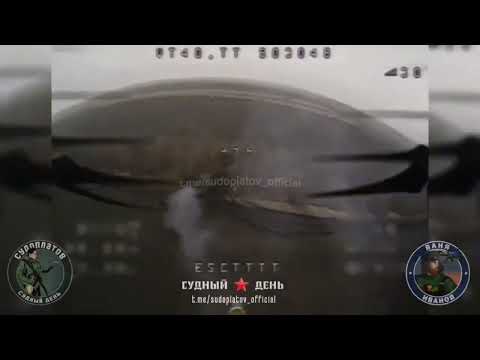
Удари російських дронів по українському Leopard 1A5 [Січень 2025] thumbnail

Удари російських дронів по українському Leopard 1A5 [Січень 2025]


Seeing the lessons learned from Ukraine, the U.S. too is scaling up, with plans to significantly increase the number of FPV drones it makes.

The Marine Corps Attack Drone Team, Weapons Training Battalion – Quantico, in coordination with Training and Education Command and the Marine Corps Warfighting Laboratory, hosted senior U.S. Marine Corps leaders and members of the Marine Gunner Symposium for a weapons demonstration at Marine Corps Base Quantico, Va., Aug. 20, 2025. U.S. Marine Corps Lt. Gen. Jerry Carter, deputy commandant for information, Headquarters Marine Corps, attended the event, which showcased First-Person View attack drone mission profiles, AI-enabled autonomous strikes, and counter-drone training to highlight their role as a critical force multiplier for the Fleet Marine Force and advance the Secretary of Defense’s drone dominance initiative. (U.S. Marine Corps photo by Connor Taggart)
The U.S. is increasing the manufacture of FPV drones and the training of troops to use them. (U.S. Marine Corps photo by Connor Taggart) Connor Taggart

For Israel, however, boosting the number of FPV drones for its troops is only part of the equation in this realm of warfare. The IDF has been highly criticized in Israel for not reacting more quickly to defend against these weapons, especially after encountering them on a much smaller scale in 2024 and watching what has taken place in Ukraine and elsewhere.

Exacerbating the problem for Israel is that Hezbollah has been relying heavily on fiber-optic guided FPV drones. Fiber optic cables mitigate the effect of electronic warfare efforts to jam radio signals as well as some of the limitations imposed by geographical features that can impede the line-of-sight radio connection between drone and operator.

KYIV, UKRAINE - 2025/04/01: First Person View (FPV) drone controlled via fibre optics is seen during a test flight. FPV drones equipped with fiber optics, offer key advantages over traditional UAVs. They drones are immune to electronic warfare (EW) systems, remain undetectable to enemy radio reconnaissance, ensure high-quality communication over long distances, and are not affected by the radio horizon. The first batch50 drones and 10 km of fiber opticshas already been delivered to the front lines. The drones were handed over to Ukrainian forces by Petro Poroshenko, leader of the European Solidarity party. According to him, the project began in the fall of 2023, and now these advanced drones will be operated by Ukraine's best specialists. Over the past three years, Poroshenko's team has been actively supporting the Ukrainian Armed Forces, investing in scientific research, manufacturing, and equipment procurement. More than 70,000 FPV drones have already been sent to the front, along with Ai-Petri strike complexes, Poseidon UAVs, vehicles, trucks, mobile laundry and shower units, grenade launchers, and much more. Now, this arsenal is being expanded with revolutionary fiber-optic drones that could change the course of the war. (Photo by Mykhaylo Palinchak/SOPA Images/LightRocket via Getty Images)
First Person View (FPV) drone controlled via fiber optic wire is seen during a test flight in Ukraine. (Photo by Mykhaylo Palinchak/SOPA Images/LightRocket via Getty Images) SOPA Images

Faced with a threat that is causing casualties and damaging equipment, Israel is beginning to roll out new countermeasures. As we have previously noted, these solutions range from putting netting on vehicles to improving armor defensive systems.

In our past reporting, we explained that the idea behind netting is that drones will get caught up in these nylon or mesh metal barriers and become disabled, or, in some cases, the nets will help keep the drones far enough from the occupants before exploding to keep them from being killed. 

As for protecting armor, active protection systems (APS) on its tanks and armored personnel carriers are being adapted to provide hard-kill counter-drone protection. These systems use sensors to detect incoming rocket-propelled grenades, missiles, and other similar threats, and fire projectiles to hit them before they strike the vehicle. Israel is a major pioneer in the APS space, with systems being deployed for decades, but just how soon it can upgrade existing systems, such as Iron Fist, for this application isn’t clear. Also, this doesn’t help many lighter vehicles that do not have APS capabilities.

Iron Fist APS | Active Protection System for Armored Vehicles thumbnail

Iron Fist APS | Active Protection System for Armored Vehicles


The IDF is also working on other systems. The include equipment to better detect the drones as well as the creation of interceptor drones specifically designed to counter FPV drones, according to Israel’s YNet media outlet.

Israel is far from alone in trying to both make more FPV drones and defend against them. The U.S., for instance, recently came under attack by FPV drones in Iraq and its services are training on ways to defend against them. Given Israel’s advanced military tech base that produces weapons used around the world, we will keep an eye on the solutions to the FPV scourge it develops.

Contact the author: howard@twz.com

Howard is a Senior Staff Writer for The War Zone, and a former Senior Managing Editor for Military Times. Prior to this, he covered military affairs for the Tampa Bay Times as a Senior Writer. Howard’s work has appeared in various publications including Yahoo News, RealClearDefense, and Air Force Times.


Source link