fourletter

Airports’ four-letter code you won’t want to see on your boarding pass

One code can mean it takes longer to get through security. Here’s the code many travellers dread seeing on their boarding pass and what it means for their flight if they get it

Navigating the airport can be an exhausting ordeal. In an ideal world, we’d sail through the security queue to give ourselves time to browse the perfumed duty free outlets or enjoy a relaxed coffee, but there are many bottlenecks where you can find yourself delayed.

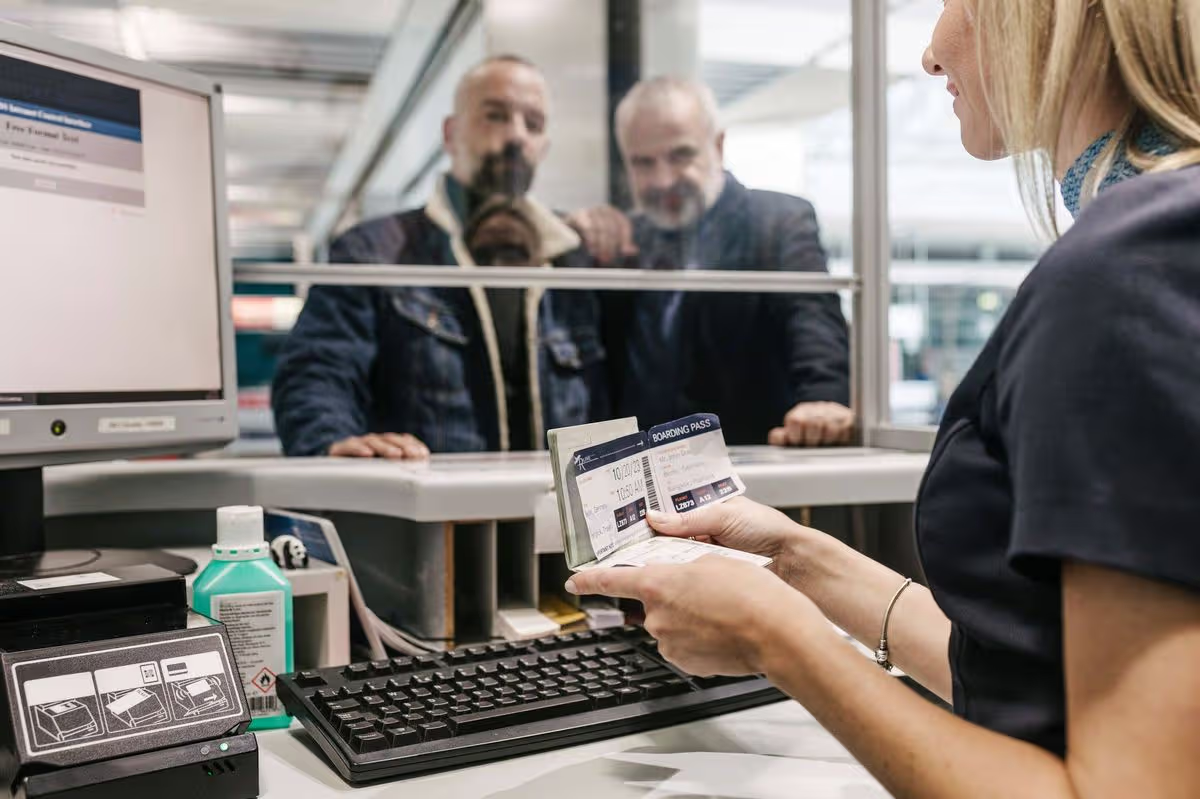
One indication that your journey through the airport might not run as smoothly as you’d hope can be identified once your boarding pass has been printed. Check-in personnel will often add codes to your ticket alerting airport staff to watch for particular things, and there’s one code travellers really won’t want to encounter if they’re jetting off to the World Cup.

Those flying to or from the United States may notice SSSS on their boarding pass, which stands for Secondary Security Screening Selection or Secondary Security Screening Selectee. Essentially, this code indicates you’ve been chosen for extra inspection, and this can be for a wide range of reasons.

Certain airlines won’t print SSSS, but may have their own method of flagging that a passenger requires additional screening. For instance, Southwest Airlines reportedly uses a chequerboard pattern which appears on boarding passes.

Citizens of particular countries, such as those with sanctions or political tensions with the USA, may be more likely to encounter SSSS on their boarding pass. But the Transportation Security Administration (TSA) remains tight-lipped about the precise criteria that could see your name flagged in this manner, reports the Express.

The ACLU (American Civil Liberties Union) has previously claimed that “TSA maintains a “Selectee List” (sometimes called the “Automatic Selectee List”) of people who are automatically and intentionally selected for enhanced screening every time they fly.”

However, there are other factors that could see passengers flagged for additional screening, including making one-way bookings and purchasing tickets with cash. Travellers who have previously passed through high-risk countries, regularly visit ‘unusual’ destinations, or display other flight patterns deemed suspicious may also find themselves subjected to extra screening.

Having a name similar to someone on a Department of Homeland Security watch list could be yet another reason you end up with additional security checks, and could even result in you being denied boarding. Passengers who are repeatedly flagged for extra screening can apply for the DHS Traveler Redress Inquiry Program (DHS TRIP), and if approved they’ll receive a Redress Control Number to use when booking flights, which should make their travels considerably smoother.

If you do spot SSSS or a similar code on your boarding pass, there’s no need to panic. More often than not, it simply means you’ll require some additional time to clear security.

Typically this involves an enhanced pat-down, a manual inspection of carry-on bags, and possibly the use of a handheld metal detector as you pass through the security lane. Travellers should make sure they adhere to their airline’s advice on when to arrive at the airport, as this will guarantee they have sufficient time to clear any additional security checks.

In the USA, the TSA advises arriving a minimum of two hours before domestic flights and three hours ahead of international departures.

Have a story you want to share? Email us at webtravel@reachplc.com

Source link

Martin Lewis swears by his four-letter ‘golden rule’ when booking any holiday

The Money Saving Expert founder reminded people of this ‘most important’ thing to do when booking a holiday

As the peak travel season draws near, Martin Lewis has reminded holidaymakers of his ‘golden’ travel rule, which he urges everybody to follow. He set out exactly why it matters during a recent special edition of the Money Show Live on Tuesday, April 28.

Martin said that his “most important” tip is to take out travel insurance “as soon as you book” – a principle he shortens to four letters: ‘ASAB’. Outlining his rule, Martin said: “If you’re booking a single-trip policy, then you get the insurance as soon as you book to cover a specific future date.

“You pay for that and, once you’ve paid for it, you have the travel insurance. If anything happens from that point onwards, you’re covered, no problem.”

Rather than waiting for something to go wrong, travellers should look at securing insurance the moment they book their holiday, safeguarding themselves should any problems arise in the lead-up to their travels. The level of cover on offer will vary depending on the type of policy chosen.

Martin’s reason for getting protected straight away – even if your trip is several weeks or more than a year down the line – is that cover kicks in immediately, reports the Express. He said: “The reason you do that is that half of the coverage you’re paying for is in case something happens that stops you from going before the trip.

Content cannot be displayed without consent

“If you don’t have travel insurance, you’ve got no cover. So you might as well have it in place. At this time of year, when many people have already booked, I have a slight adaptation. If you’ve booked and you don’t have it yet, just get it now.”

Fellow ITV presenter Jeanette Kwakye shared that a viewer got in touch to say how they managed to avoid a £5,000 rescheduling fee thanks to having travel insurance in place. The viewer told Martin: “I booked flights to Australia for a family group of seven to travel in March next year.

“I took out insurance immediately. One of our group members is now pregnant and can’t travel on the dates planned. It cost £5,000 to reschedule, which I’m happy to report the insurance has covered.”

During the programme, Martin warned anyone booking a summer holiday that they would not receive a refund if their flight was cancelled and they were unable to reach their hotel. However, this only applied if they had booked in a particular way – and there is a means of safeguarding yourself should the worst come to pass.

The money expert was asked by an audience member: “If my flight’s cancelled due to no jet fuel will you definitely receive all your money back, even for your hotel booking as well.”

Martin confirmed that travellers would lose their hotel booking money if it had been booked separately from their flights, as they would not be protected under consumer rules. He said: “No. And I think this is what people need to be very aware of.

“If you booked a package holiday where you booked everything in one, then under the package holiday regulations and rules and protections generally, if your flight went, you would get everything back. At the moment, package holidays give you a certain level of extra security that you wouldn’t get if you did a DIY booking where you bought your hotel and flight separately.”

In other travel news, airline passengers have been told there are two days that are often “cheapest to book a flight”. This will naturally depend on factors such as your destination, your chosen airline, and where you book – full details here.

Source link