Fossil Fuels

South Africa to Australia: Why coal profits are surging during Iran war | Energy News

Crude oil and natural gas supplies have been disrupted worldwide by the United States-Israel war on Iran, but one energy sector appears to be cashing in – coal.

This week, South Africa’s thermal coal producer Thungela Resources said it had doubled its half-year profits as the war has forced more countries to buy the fuel.

Recommended Stories

list of 4 itemsend of list

Although abundant and relatively cheap to produce, coal is considered one of the dirtiest fossil fuels.

Mining it causes water pollution, and burning it releases enormous amounts of carbon into the atmosphere, which contributes to global warming.

In recent months, several countries, especially in Asia, have reversed or delayed promises to scale back on coal production.

Global coal consumption was already rising in 2025 with the Eurasia region and the US using the fuel to power artificial intelligence data centres, according to the World Bank.

Here’s what we know:

Members of Extinction Rebellion stage a protest with a figure depicting South African Minister of Mineral and Petroleum Resources Gwede Mantashe outside the Investing in African Mining Indaba conference in Cape Town, South Africa, on February 9, 2026
Members of Extinction Rebellion stage a protest with a figure depicting South African Minister of Mineral and Petroleum Resources Gwede Mantashe outside the Investing in African Mining Indaba conference in Cape Town, South Africa, on February 9, 2026 [Esa Alexander/Reuters]

Why is more coal being used?

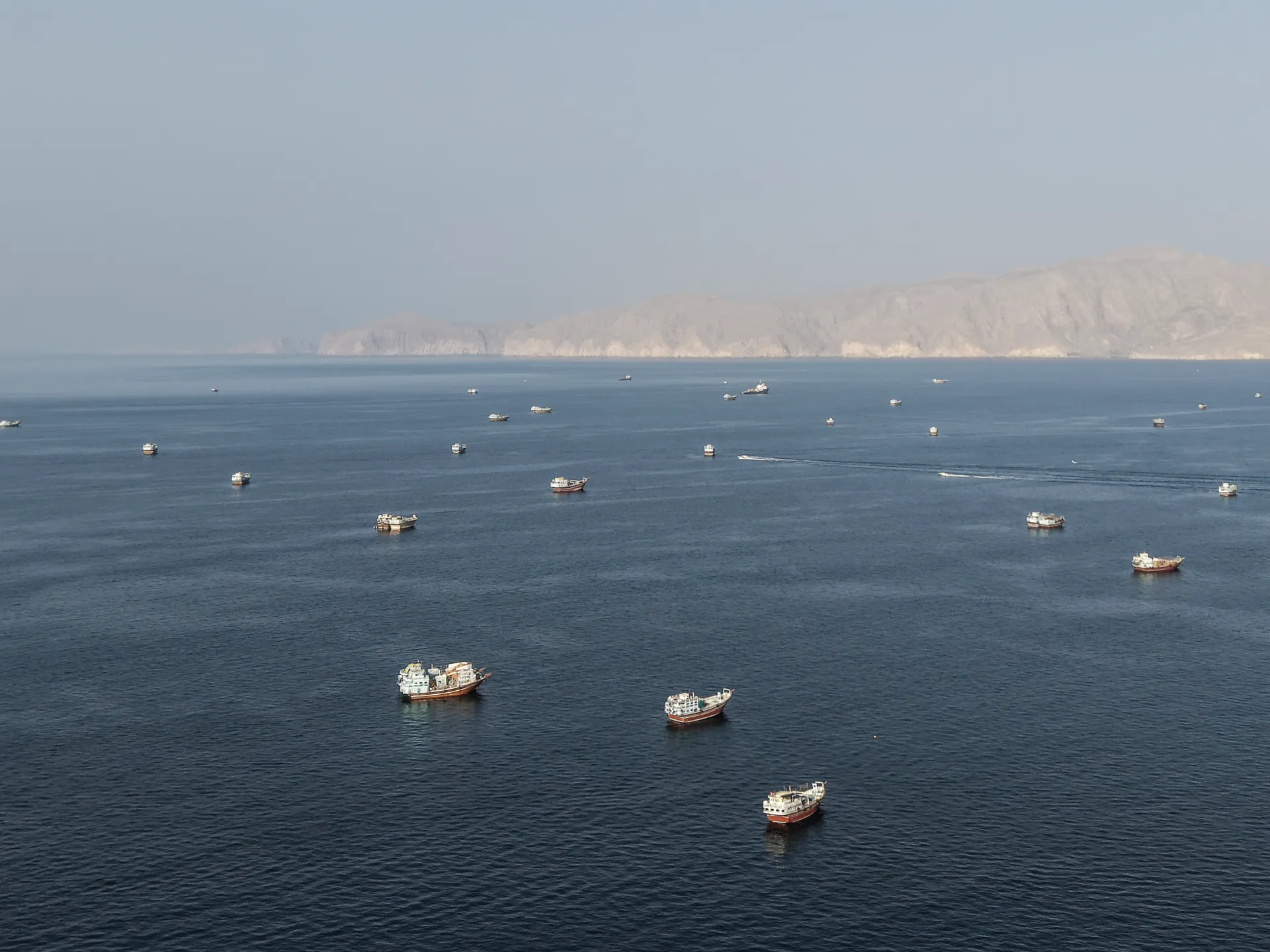
The US-Israel war on Iran has triggered a global energy crisis. Soon after strikes on Tehran began on February 28, Iran closed the Strait of Hormuz, through which about one-fifth of the world’s oil and liquefied natural gas (LNG) supplies were shipped during peacetime.

Negotiations to reopen the strait are ongoing.

Its closure has reduced oil and gas supplies and caused oil prices to soar, prompting many countries to fall back on the most readily available alternative to keep the power on – coal.

While coal prices have also risen, the fuel is still much cheaper than oil – and is more readily available.

No region has been more impacted than Asia, which largely depends on the Gulf for its energy needs. About 82 percent of oil and gas shipments through the Strait of Hormuz went to Asia in 2022, according to the US Energy Information Administration. China, India, Japan and South Korea were the top destinations.

Besides being unable to ship exports through the strait, Gulf countries caught up in the conflict have also been badly impacted by Iranian strikes. Qatar, for example, was forced to declare force majeure on its delivery contracts in March when Iranian drones hit its Ras Laffan oil facility – the world’s largest LNG complex – forcing it offline. Iran’s attacks had knocked out 17 percent of Qatar’s LNG exports by March, state officials said.

Similarly, the United Arab Emirates’s Das Island LNG terminal, Fujairah oil terminal, Ruwais Refinery Complex and other energy sites have been attacked during the conflict. Facilities in Saudi Arabia and Oman have also been hit.

Where has coal use increased?

According to an analysis by the energy data company Ember, coal output will rise globally by 1.8 percent by the end of 2026 compared with 2025 in a “worst-case” scenario.

This represents a notable uptick considering that countries are meant to be transitioning away from coal, experts said.

Since the war began, several Asian countries have announced plans to increase coal-fired electricity generation.

Japan has lifted restrictions on older, high-emission coal plants to cope with the energy shocks while South Korea has delayed the shutdown of coal-powered plants it promised to wind down by 2040.

In Bangladesh, the government at first imposed power cuts, closed universities and rationed fuel sales for vehicles before announcing it had ramped up coal-powered electricity generation.

Thailand, the Philippines and Vietnam have also increased coal-powered electricity generation to preserve dwindling gas reserves.

In Pakistan, data from the National Electric Power Regulatory Authority showed that by July, electricity generated from imported coal had risen by 90 percent compared with the same period the previous year.

China and India already consume 70 percent of the world’s coal and are also major producers. In India, where electricity demand is increasing partly due to more intense heatwaves, the government plans to launch several new coal-mining projects that will see global supplies increase by 2.5 billion tonnes a year, according to the Global Energy Monitor.

Germany also said it won’t jeopardise electricity generation because of earlier climate promises it made while Italy has pushed back its coal phase-out plans from late 2025 to 2038.

Who is making a profit from coal?

Indonesia is the top coal exporter by a wide margin, followed by Australia and Russia.

In March, Jakarta reversed previous plans to curb coal production and reduce oversupply in a bid to benefit from the rising prices. Prices were set at $131.85 per tonne in July, compared with $102.20 in the previous year.

South Africa’s Thungela, meanwhile, reported doubled profits from January to June, compared with the same period of 2025, driven largely by higher production from its Ensham mines in Queensland as well as higher demand and higher prices at both Ensham and its South Africa operations.

Production at Ensham rose by 38 percent in the first half of the year – during the peak of the conflict – to 2.2 tonnes, compared with 1.6 tonnes in the previous period.

The company reported 4.80 South African rand ($0.30) in headline earnings per share – or HEPS, a primary metric of profitability used in South Africa. That’s up from 1.92 rand ($0.12) in June last year.

In a statement, Thungela said prices will likely remain high as European and Asian markets prepare for winter.

What does this mean for the drive for clean energy?

In 2021, more than 40 countries, including Indonesia and Vietnam, promised to scale back coal use at the COP26 global climate summit. India and China did not sign up, however. Last year, South Korea joined the Powering Past Coal Alliance, which helps coal-dependent economies transition away from the fuel.

However, the Middle East crisis has upset those plans largely because many countries do not have sufficient renewable energy-generating capacity to fall back on, said Nick Hedley, an energy transition analyst at South Africa-based Zero Carbon Analytics.

“For the likes of Bangladesh, it’s easy to lift coal use when global gas supplies are disrupted because the country invested heavily in coal infrastructure in recent decades, and much of that capacity has been sitting idle,” he said.

“Coal becomes cheaper than imported gas when gas prices surge. Importantly, coal still cannot compete with renewables on cost,” Hedley added.

It’s not all doom, however. Analysts noted that upticks in some places are being offset by long-term declines in coal use in places like Europe.

China’s domestic coal production also fell this year as the government tightened oversight following a deadly explosion in May at the Liushenyu coal mine, where 82 people died. Beijing has also made large investments in renewables.

In addition, the breakdown of global fossil energy supply chains could make clean alternatives more competitive and force more countries to invest in them, Hedley pointed out.

“The lesson here is that Asian countries need to speed up their shift to clean energy and electrification to safeguard themselves against future global crises,” he concluded.

Source link

Oman says massive oil spill reaches coastline: What damage could it do? | Environment News

A vast oil spill from a leaking tanker reached Oman’s coastline on Wednesday, its environment agency said.

This oil spill threatens to become one of the world’s worst in years after spreading largely unchecked for several weeks, experts say.

On Monday, Oman said it was working to contain the spill, which had by then affected roughly 390 square kilometres (150sq miles), according to analysis by the country’s environment agency.

The slick now covers an area of more than 2,000sq km (770sq miles), said John Amos, an oil spill specialist who reviewed satellite imagery obtained by Reuters. It could affect about 40km (25 miles) of coast near Ras Madraka, as well as Masirah Island, Oman’s Environment Authority said.

Here’s what we know.

What happened?

Oil has been leaking from the tanker Caroline Bezengi since it ran aground about 22 nautical miles (41km) from the Omani coastal town of Sharbithat some time after the crew reported a suspected explosion on June 8. It had been en route from Russia to India.

Reuters reported that the tanker was carrying an estimated 800,000 barrels of sanctioned oil and that it ran aground on June 30.

An investigation by the news agency AFP found that the ship had been stranded for several weeks near Oman’s al-Qibliyyah Island.

In the meantime, the oil has been spreading towards Oman’s coastline.

The Oman News Agency (ONA) quoted the country’s environment authority saying that “today’s monitoring results showed that some beaches in the Ras Madrakah area were affected by oil pollution”.

The Indian Ocean town sits about 200km (125 miles) from al-Qibliyyah.

The slick is now concentrated around the Hallaniyat Archipelago off the southern coast, where a marine reserve was established last year to protect sensitive ecosystems home to diverse marine life, including rare sea turtles.

On Wednesday, the ONA reported that “a coastal stretch of up to 40 km in the [Ras Madrakah] area is expected to be affected”.

The southern beaches of Masirah Island, which lies 15km (nine miles) off the coast of Oman, could be contaminated “in the coming hours”, affecting a 10-20km (six-to-12-mile) stretch of coastline, it said.

An unnamed spokesperson for the United Nations International Maritime Organization said it was “closely monitoring” the leakage.

The damaged and half-sunk oil tanker Caroline Bezengi, at sea off the coast of Oman, on a date given as August 6, 2026
The damaged and half-sunk oil tanker Caroline Bezengi, at sea off the coast of Oman, on a date given as August 6, 2026 [Ambrey/Handout via Reuters]

How did this happen?

British maritime security company Vanguard told AFP that the tanker had suffered “explosions” in early June as it sailed off the coast of Yemen, causing water to enter several sections of the vessel. It ran aground off the coast of Oman some time after this.

There has been no official explanation for the explosions and no party has claimed an attack. However, the vessel was navigating two separate wars on its journey from Russia to India. Tankers have been frequently targeted in the Gulf region in recent months as the US war on Iran has continued.

In April, the Caroline Bezengi sailed from the Russian port of Novorossiysk on the Black Sea, a flashpoint in the Russia-Ukraine war.

It is believed to be part of Russia’s “shadow fleet” used to circumvent Western sanctions on its oil exports. It last sailed under a Cameroonian flag.

Rentoor Shipmanagement and Villar Shipmanagement, both based in China, are registered as the ship’s owner and operator, respectively, according to the open-source database OpenSanctions.

Russia’s shadow fleet includes ageing vessels that have often been criticised for poor maintenance, lack of insurance and lacklustre safety standards.

Ukraine has previously carried out assaults on shadow fleet vessels believed to be carrying Russian oil.

The Caroline Bezengi then passed through the Suez Canal at the end of May, ship-tracking data shows, before sailing through the Red Sea and past Yemen, where the Iran-aligned Houthi fighters have entered a wider regional war between the United States, Israel and Iran and are targeting Saudi Arabia-flagged ships.

What damage could the oil spill cause?

Last week, advocacy group Greenpeace warned that the spill was on the verge of causing an “environmental disaster”.

Christopher D’Elia, a specialist in oil spills and a professor emeritus at Louisiana State University in the United States, told Al Jazeera the estimated 800,000 barrels of crude on board the Caroline Bezengi would amount to a “fairly large spill”.

“This spill raises a lot of issues,” D’Elia told Al Jazeera.

“These illegal tankers don’t comply with the ‘polluter pays’ principle that is the basis for how the US and other developed nations regulate spills,” D’Elia said.

“The ‘responsible party’ must finance the cleanup in the US. In this case, there is no responsible party.”

Meanwhile, Iranian media reported on Wednesday that a separate oil spill in the Strait of Hormuz had reached the island of Qeshm, affecting beaches and an environmentally sensitive mangrove forest.

State-run news agency IRNA said the slick had affected areas on Qeshm’s southern coast, as well as parts of the smaller neighbouring island of Hengam.

Iran’s Ministry of Foreign Affairs spokesman Esmaeil Baghaei said pollution had been observed at three locations and on the sea surface, adding that its source seemed to be a “foreign bulk carrier”, without specifying the name of the ship.

The risk of oil spills in the Gulf has risen sharply because of strikes on tankers during the five-month US-Iran war. The International Maritime Organization (IMO) has reported 65 incidents in the Strait of Hormuz and across the Middle East since the beginning of March.

“Any party that benefits from commercial shipping through the Strait of Hormuz is legally and morally obligated to take action to compensate for and remedy the environmental damage caused to the Persian Gulf and the Gulf of Oman,” he said.

Source link

‘To play God’: Cuba’s healthcare system collapses under US pressure | Donald Trump News

A spike in mortality

The tightening restrictions have forced the Cuban government to effectively ration care.

In February, Havana announced a package of emergency energy-saving measures. Among them was the suspension of all non-essential medical services across the island.

But non-essential does not mean unimportant. Fernandez, the paediatric anaesthesiologist, explained that preventive healthcare plays a major role in saving lives.

Under normal conditions, he said, preventive healthcare helps doctors catch potentially fatal conditions like appendicitis sooner.

But in recent months, Fernandez has observed patients arriving at his hospital in a “worsened” condition than they might otherwise have had.

“All the appendicitis cases we treat now present complications,” he said. “They demand more resources and antibiotics – supplies we don’t have.”

Deaths in Cuba have also escalated as years of increasing restrictions take effect.

Just last month, the Cuban Ministry of Public Health (MINSAP) reported that survival rates for childhood cancer dropped from 85 percent to 65 percent amid the oil blockade.

Infant mortality has also steadily climbed. In 2017, at the start of Trump’s first term, Cuba had an infant mortality rate of four for every 1,000 live births. That figure climbed to 7.7 in 2024, just before Trump’s second term, and reached 9.9 in 2025.

The maternal mortality rate similarly rose to 44.1 deaths for every 100,000 live births by the end of 2025, up from 40.6 the previous year.

Lilian Delgado, an obstetrician and gynaecologist at Cuba’s main maternity hospital, explained that the escalating humanitarian crisis has triggered a sharp rise in premature births and severe morbidity among pregnant women.

“Conditions are far from ideal at all the levels of the system,” Delgado noted. “There are shortages everywhere.”

The decision to prioritise emergency care can be deceptive. A wide range of medical procedures are considered “elective”. But just because they do not rise to the level of an emergency does not mean they are optional.

Typically, in Cuba, emergency surgeries are those that need to be urgently completed within 48 hours. Other necessary surgeries often fall into the “elective” category.

Mastectomies – a common breast cancer treatment – are among the surgeries often categorised as elective. So too are some organ transplants.

Healthcare advocates point out that, if certain elective surgeries are postponed too long, they too can result in deadly conditions.

More than 100,000 Cubans are currently on waiting lists for elective or reconstructive surgeries, a backlog MINSAP credited to the US sanctions.

Among those waiting are 5,152 cancer patients and approximately 12,000 children. Delgado said some of her patients have been languishing on such lists for months.

“Our surgical services are severely hampered by a lack of supplies,” she explained. “We have more women suffering from serious complications, and our operating rooms have become tied up with emergency cases, making it impossible to perform elective surgeries.”

Hospitals in Cuba largely have backup generators to weather the increasingly frequent power outages. But accessing even emergency medical care is tough when the fuel blockade is affecting basic services like transportation.

“Ultimately, if you have a cancer patient and cannot operate due to a number of factors – such as a nationwide blackout forcing the suspension of surgeries – then, whether you intend to or not, you are directly condemning that patient to death,” Delgado said.

The oil embargo has cost “human lives, both directly and indirectly”, she added.

Source link

Gas explosion at Chinese coal mine kills at least 90 | Mining News

President Xi Jinping has called on authorities nationwide to learn from the incident.

A gas explosion at a coal mine in China has killed at least 90 people.

State media Xinhua said 247 workers had been on duty underground when the blast ripped through the Liushenyu mine in Qinyuan county, Shanxi province, on Friday.

Recommended Stories

list of 3 itemsend of list

China’s coal mines are considered among the deadliest in the world due to poor safety standards, weak regulation, and corruption as companies seek to profit from the country’s rapidly expanding economy.

Rescue operations were ongoing as emergency crews continued searching for survivors of the explosion, the deadliest mining disaster reported in China in more than a decade.

The blast occurred shortly after a carbon monoxide alert was issued, with some reports claiming gas levels had exceeded safe limits.

According to state-run broadcaster CGTN, the person responsible for overseeing the mine has been arrested while authorities investigate the cause of the explosion.

President Xi Jinping has urged authorities across China to intensify efforts to prevent major accidents in the wake of Friday’s blast.

“All regions and departments must learn from the lessons of the accident, remain vigilant regarding workplace safety, thoroughly investigate, rectify all types of risks and hidden dangers, and resolutely prevent and curb the occurrence of major and serious accidents,” Xi said.

Video footage posted online from the scene showed several ambulances gathered near the mine.

Shanxi province, where the incident occurred, is China’s main coal-mining region. More than one billion tonnes of coal were extracted there last year, almost a third of the country’s total output.

China is the world’s largest producer and consumer of coal, accounting for more than half of global consumption.

The country is also the world’s largest annual greenhouse gas emitter, while being the biggest producer of renewable energy.

Source link