Formula One returns to Africa for the first time in more than three decades, but DR Congo slams decision to race in Rwanda.
Published On 15 Oct 202615 Oct 2026
Formula 1 will “polish the image of an authoritarian leader” if it goes ahead with plans to hold an African Grand Prix in Rwanda, the foreign minister of neighbouring Democratic Republic of Congo, Therese Kayikwamba Wagner, said Thursday.
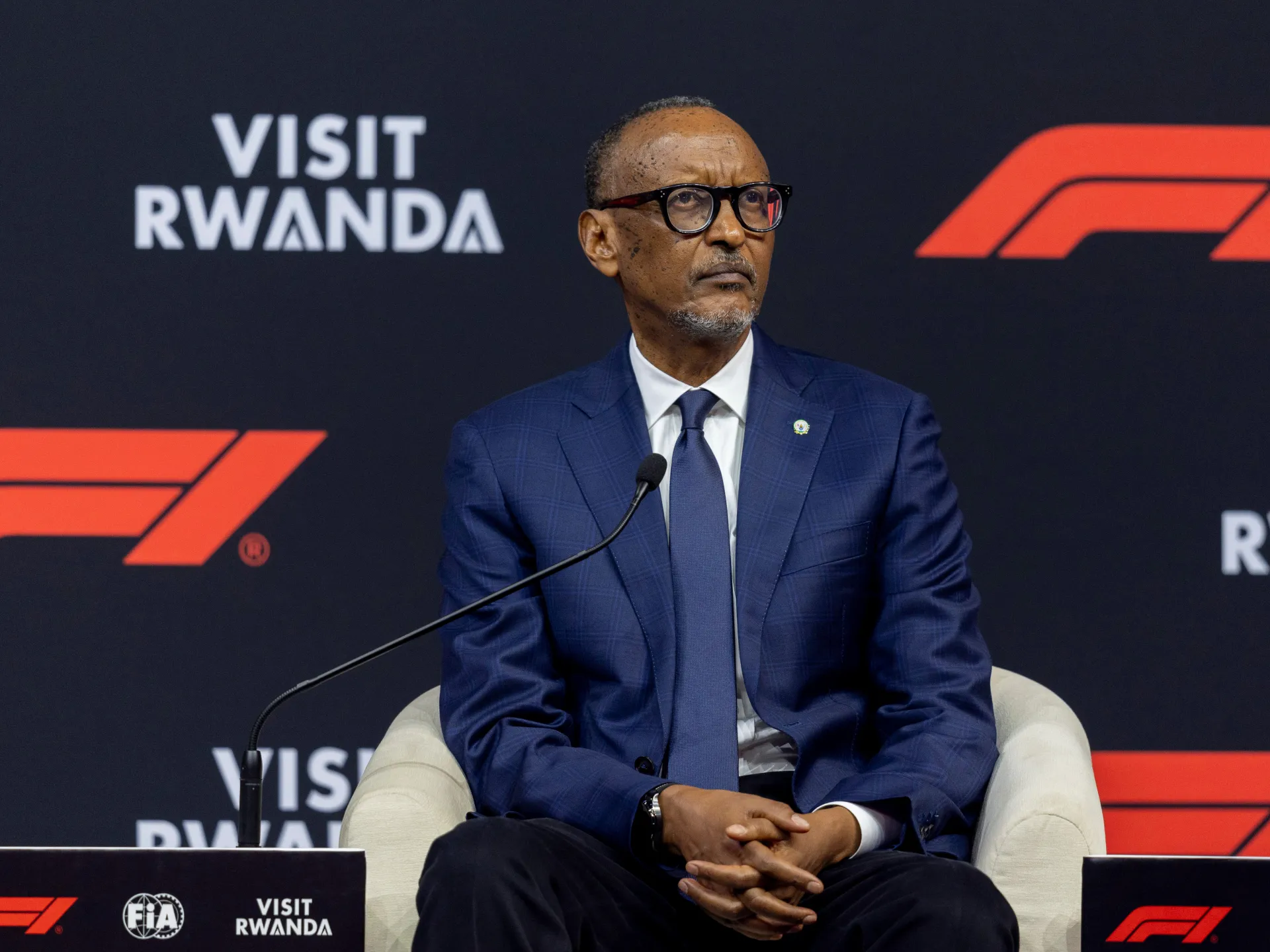
Rwandan President Paul Kagame joined F1 Chief Executive Stefano Domenicali and FIA President Mohammed Ben Sulayem on Tuesday to announce the race. It will be held at a circuit yet to be built at Bugesera, near Rwanda’s capital Kigali, in “the early 2030s,” F1 says. The series last raced in Africa in 1993.
Recommended Stories
list of 4 itemsend of list
The DRC, the United States and UN experts accuse Rwanda of backing M23 rebels in eastern DRC. Rwanda says its security measures are intended to protect it against threats from armed groups operating across the border.
“In February 2025, I warned Stefano Domenicali and the F1 authorities that allowing Rwanda to host a Grand Prix would be morally indefensible,” Kayikwamba Wagner said in a statement. “[The DRC] welcomes Formula 1’s return to Africa, but giving Paul Kagame this platform would help polish the image of an authoritarian leader whose government has helped fuel a devastating war in our country.”
Kayikwamba Wagner said the DRC backs rival efforts from South Africa to host a race instead.
“This is also an opportunity for F1 to show its audiences and supporters what the sport truly stands for,” she added. “It should require credible, independent guarantees that no money used to host the race comes from conflict-linked minerals or the exploitation of Congolese resources.”
The DRC has previously objected to other Rwandan efforts to promote its brand through sports, especially a string of high-profile sponsorship agreements with leading European football clubs.
The US imposed sanctions on Rwanda’s military and four senior officers in March over their support for M23 rebels in eastern DRC. Rwanda rejected the sanctions as one-sided and said they misrepresented the conflict.
Drivers faced glitches at the race in Malaysia, where Lewis Hamilton had to stop and restart his car on the track.
Published On 5 Oct 20265 Oct 2026
Formula One’s governing body has promised a full investigation into a software bug that caused chaos and forced the start of the Bahrain Grand Prix in Malaysia to be aborted, with drivers feeling like they were in battery-powered cars made of Lego.
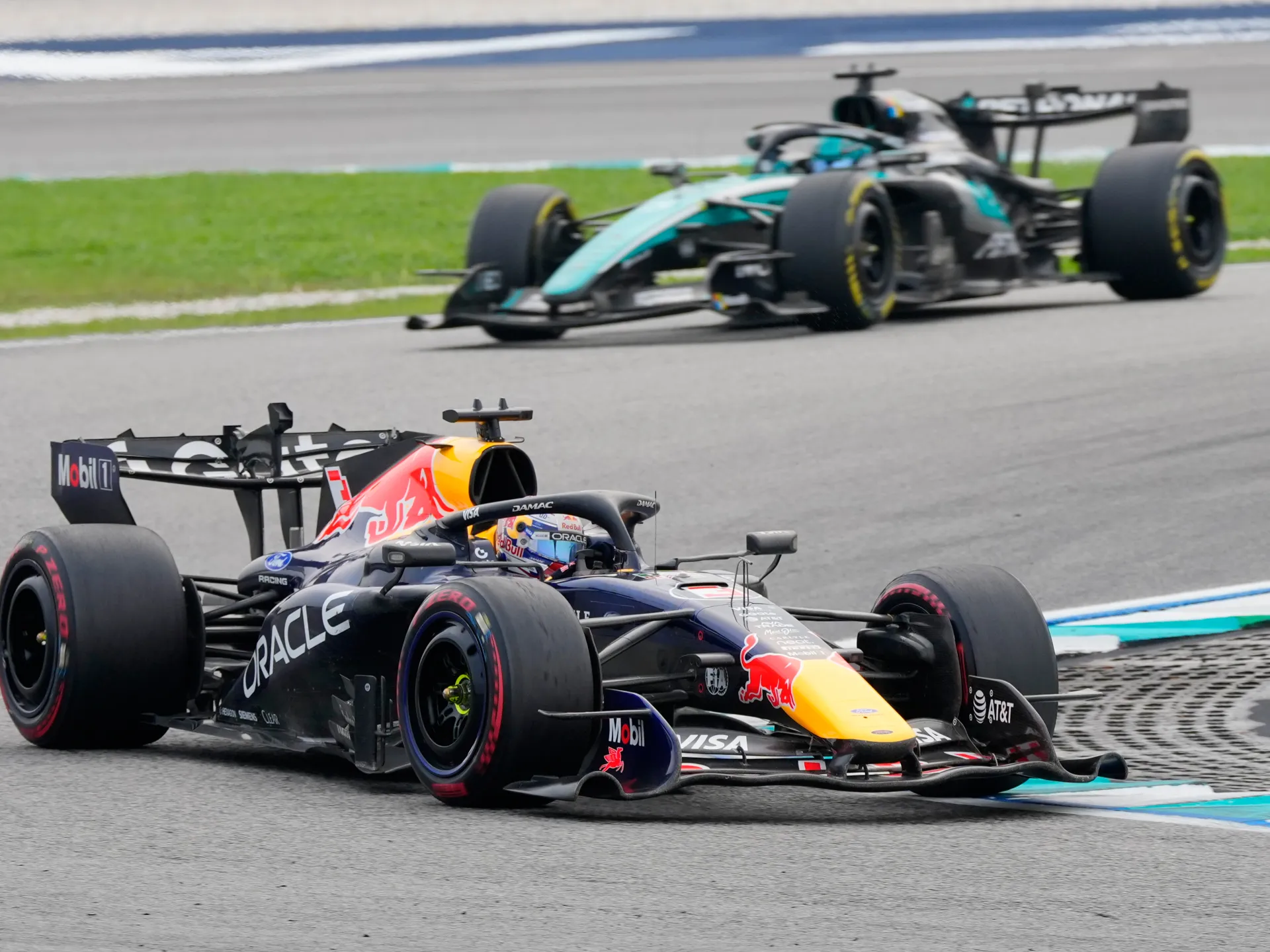
Ferrari’s seven-time world champion Lewis Hamilton and Red Bull’s four-time champion and eventual race winner Max Verstappen were among several affected by the glitch on a formation lap after torrential rain and a long delay at Malaysia’s steamy Sepang circuit on Sunday.
Recommended Stories
list of 4 itemsend of list
Verstappen compared the experience to a “Lego race” held at Silverstone before the British Grand Prix while Hamilton, the sport’s most successful driver of all time, had to stop his car on track and restart it in what he said was a career first.
The episode was the latest in a difficult first season for the new era of cars and engines, with drivers at the pinnacle of motorsport unhappy since the opening race with the power units’ increased electrical component and the need for energy management.
FIA said afterwards that “an unprecedented combination of low engine speed, low-grip conditions, wet-weather energy management settings and the Sepang circuit’s sector configuration led to an unintended loss of power for a number of cars”.
“As a result, the FIA technical department removed the energy limit constraint in the affected sectors through an updated software release distributed to all competitors during the race delay caused by heavy rain, enabling teams to make the necessary changes to the power unit before the start of the race.
“This issue had not been detected by the FIA or the teams during testing or during the laps to the grid. The FIA, together with the teams and power unit manufacturers, will undertake a full review of the issue.”
The FIA’s single-seater director Nikolas Tombazis told reporters the lack of preseason testing in wet conditions had played a part in the chaos.
“Some cars went very slowly, almost came to a standstill. There was a bit of a concertina effect between cars, and some cars almost stopped completely,” he said. “That bug prevented the power from being redeployed, and for the cars to start again.
“I think if we had had a bit more testing, we probably would have managed to catch it in time, and not have such a situation.”
Sepang was the first race weekend of the season with wet conditions, although the track dried during the race.
“Sometimes things fall through the net and people learn, and you do a better job next time,” Tombazis said.
Christian Horner is proving a distraction for Ferrari by “looking for a job”, team principal Frederic Vasseur says.
Horner, dismissed as Red Bull team principal in July 2025, used an interview with the Times this week to say that Ferrari are the only Formula 1 team he would work for without being given a shareholding, describing it as “the dream”, external.
Vasseur outlined his frustration with Horner following Saturday’s Azerbaijan Grand Prix – at which Charles Leclerc finished fourth and his Ferrari team-mate Lewis Hamilton was sixth.
He said: “We are not working in the perfect serenity.
“For me, first, but for everybody in the team, for the media, for 50% of the questions [to be] about this, it’s a bit of a frustrating situation.
“We are fighting for P3 [third place] in the championship, and at the end of the day, we are all speaking a lot about this, and even for the guys in the garage, to discuss about this, it’s the best discussion that we can have.
“But it is what it is, it’s not in my hands. Mr Horner is looking for a job – that everybody knows – everywhere. But what can I do? Just try to do my best to push the team, to rise them to be motivated, focus on what is better today.”
Vasseur was asked whether he was joking about Horner, and replied: “I was very serious.”
And asked whether he would consider working with Horner, he replied: “This you have to ask my assistant.”
That remark appears to be a reference to the circumstances surrounding Horner’s departure from Red Bull in July 2025.
Horner was accused of sexual harassment and coercive, controlling behaviour by a female employee. The allegation became public in February 2024 but the accusations were dismissed by Red Bull following two internal investigations.
That decision followed a tumultuous 18 months in the wake of the employee’s allegations, during which a number of senior team figures left – including chief technical officer Adrian Newey – and there was a slump in form.
Red Bull have never given a public explanation for Horner’s dismissal. The two parties agreed on a settlement said by sources to be worth 60m euros (£51.5m).
Ferrari entered this season hoping to be title contenders following the introduction of new chassis and engine rules in F1.
But while their car was acknowledged as the best in the corners as the season began, their engine has lacked performance compared to those of Mercedes and Red Bull.
This lack of power was exposed on the long straights of the Baku circuit, as Leclerc slipped back in the race after qualifying second.
Vasseur said on Saturday: “With the situation that we are in the engine, we are losing one position per lap, and then we lose the path of the race.
“Honestly we were surprised to be in the first row, because Baku is the most demanding in terms of engine, and was not expecting to do so. But we knew even starting from the first row that the opening laps, or in case of restarting safety car and so, it would be difficult. And it was.”
Asked whether he was still committed to his position at Ferrari, Vasseur said: “Motorsport is my life, it’s my business. I’m trying to do my best. I’m there to do my job. I have the best job in the world, heh. But, it is like it is. We have still seven races to go, and I will push until the last corner.”
Ferrari have not won a world championship since 2008, and have rarely had a fully competitive car since then.
Horner said in his interview: “Would I consider Ferrari? I mean, Ferrari is the biggest brand in Formula 1. It’s the dream. And arguably it’s the sleeping giant of Formula 1.”
Hallmark films have mastered the art of escalating low-stakes situations into high-stakes emotional emergency plotlines. They have made a lucrative business out of absurdities.
It’s a proven formula that leans into the ridiculousness of mundane situations but earns its audience every holiday season. Whether it’s watching the movies for comfort or to turn a viewing party into a drinking game, millions of people tune in to laugh or cry watching them.
The Hallmark situations can be predictable, comfortable and wholesome, which can come off as absurd for a film plotline. Their sincerity and humor come from the cast’s commitment to the mundane, said Ron Oliver, writer and director of many Hallmark films.
A scene from “The History of Concrete.”
(Magnolia Pictures)
“Funny is only funny if you don’t think it’s funny,” he said. “We know that’s ridiculous. But at the same time, if the actor commits to it, it makes it seem real, then the audience gets it.”
He likes to think they’re laughing along with the idiosyncratic elements of the movies, and as long as it is creating a communal atmosphere, Oliver is all for it.
“If there’s anything we need these days, it’s a sense that people belong somewhere,” he added.
The formula isn’t what makes a movie a Hallmark movie. The structure has existed since God wore shorts, said Oliver. The channel’s achievement has been its ability to turn the structure into a recognizable brand through its stories.
When filmmaker John Wilson was in between jobs after finishing his HBO show “How To With John Wilson” during the writers’ strike, he attended a seminar on how to write and sell a Hallmark film.
After seeing what makes the Hallmark brand recognizable, Wilson decided to adapt the style into his own genre of making a documentary about concrete titled “The History of Concrete,” hoping the structure would help him finance the film.
John Wilson in “The History of Concrete.”
(Magnolia Pictures)
“But it’s very loose and almost impossible to even identify at points,” he said.
Instead of mocking the genre, Wilson subverts the Hallmark elements into his style of documenting, which finds the filmmaker recording trivial life moments — a person sitting on a pole, for example, or someone ruining a perfectly good jar of peanut butter by dipping their fingers into it — alongside his contextualizing narration.
“I both embrace but betray certain rules,” he said.
The seminar told him to avoid mentioning Christianity in the context of Christmas, so he pivoted to a Buddhist community with an annual tradition of running around a school in New York. The formula prefers to stay away from trauma. Instead, he made the death of one of his subject’s fiancées one of the main plotlines of the film.
“The actual Hallmark of it all fits in a way because that’s the kind of living proof that this rhythmic cyclical way of storytelling is actually soothing and attractive to people over long periods of time, to be able to return to this thing that they can trust and understand,” he added.
A scene from “The History of Concrete.”
(Magnolia Pictures)
In Wilson’s film, the entrance point is concrete, but what begins to unravel is a romance story involving a boy who has a movie idea, needs money to make a movie and tries everything he can to sell it — a signature love trope for most Hallmark movies.
Throughout the film, Wilson goes from pitch meeting to pitch meeting trying to finance his art. In the process, Wilson meets other eccentric characters that share his passion of filmmaking but have their own interests, like clearing gum from a sidewalk, immortalizing a person’s tattoo after they’re dead, and music.
“I’m just finding different ways to court this industry that doesn’t seem ready for this relationship,” Wilson said. “I’m trying to find some consensual way into it, but I eventually just need to perform the romantic gesture of doing what feels right and what comes naturally to me.”
The love story is the kind of theme that sometimes it’s OK to lean into, even though he’s constantly battling whether he should explore it in his films, Wilson added.
A scene from “The History of Concrete.”
(Magnolia Pictures)
Oliver believes that battle is a product of the cynicism that exists in society. Pledging love and respecting someone or a relationship can make people feel so uncomfortable that leaning into these tropes of life can feel humorous, and that’s where the laughs from a Hallmark film come from.
“They’re realizing that they’re being emotional about somebody who can’t find the right Christmas sweater,” he said.
The people in “The History of Concrete” aren’t funny because Wilson makes them out to be ridiculous. He doesn’t emphasize their eccentricities or tell the audience what makes them funny. He simply lets them be themselves. He captures their personality through a curiosity lens.
The humor comes from their passions not seeming worthy of the level of seriousness with which they pursue them. These people love something so much that their devotion mirrors the kind of energy normally reserved for higher stakes.
“There’s no definition of normal that sticks,” Wilson said.
A Christmas celebration isn’t objectively a life-or-death situation, and neither is concrete. But when people care deeply about them, those seemingly mundane things can take on an emotional significance the audience understands.
“Even if it’s something absurd … [the casts] are also committed to the idea of making it real,” Oliver said.