foreign policy

Contributor: What a U.S. victory would look like in the Iran war

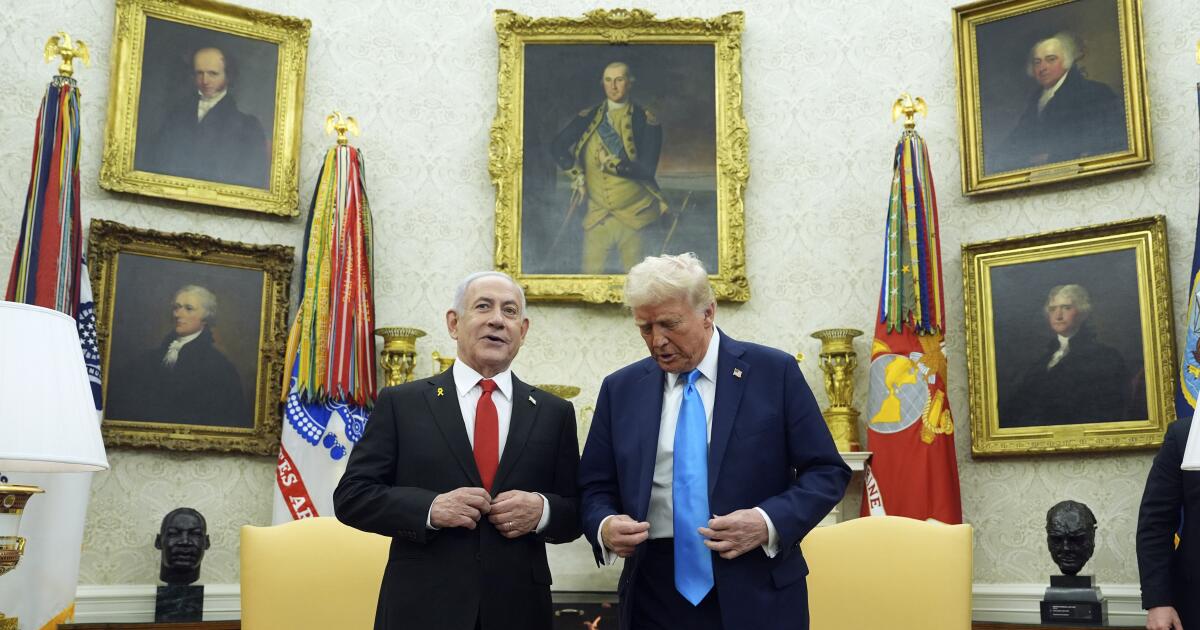
Six days after the commencement of Operation Epic Fury, President Trump took to Truth Social to announce, in the context of the ongoing joint American-Israeli military campaign against the Islamic Republic of Iran: “There will be no deal with Iran except UNCONDITIONAL SURRENDER!” In the same post, the president seemed to equate such “unconditional surrender” with “the selection of a GREAT & ACCEPTABLE Leader” to lead Iran, which would enable the country to come back from the “brink of destruction” and emerge “stronger than ever.”

Just three days after announcing “unconditional surrender” as his goal, Trump, speaking on March 9 in Doral, Fla., proclaimed that the end of the war will happen “very soon.” One might be forgiven for experiencing some whiplash — especially because earlier that same day, Trump told Fox News he was “not happy” with Iran’s naming of a new supreme leader, Mojtaba Khamenei. In fact, around the same time he was demanding “unconditional surrender” the prior week, Trump had already called Khamenei the younger “unacceptable.”

What exactly is going on here?

Trump is a conservative nationalist, which means his general approach to foreign policy and his specific foreign policy “excursions” are guided by his view of how best to secure the American national interest. Accordingly, since Operation Epic Fury started, Pentagon press briefings featuring Secretary of War Pete Hegseth and Chairman of the Joint Chiefs of Staff Dan Caine have repeatedly emphasized empirical metrics for measuring success, such as Iranian naval vessels sunk, Iranian air force planes shot down, Iranian ballistic missile silos and launch sites destroyed and so forth.

Trump hasn’t said it explicitly, but the Trump administration’s goal — and thereby, definition of victory — in Operation Epic Fury seems clear enough: the neutralization of Iran as an active, ongoing threat to the United States and our interests. If nothing else, at least, that is how victory in the current campaign should be defined.

That does still raise at least one pressing question, though, especially in the context of exiled Crown Prince Reza Pahlavi’s call to the Iranian people to prepare for “the decisive stage of our final struggle”: Where does that most controversial of foreign policy goals, “regime change,” fit into the puzzle?

At this point, it is undeniable that wholesale regime change is the most desirable outcome for the conflict in Iran. The pursuit of regime change as a goal unto itself is often now disparaged, coming in the aftermath of the failed neoconservative boondoggles earlier this century. But it ought to be axiomatic that there are some foreign regimes that behave in a manner that redounds to the American national interest, and there are some foreign regimes that behave in a manner that is contrary to the American national interest. It is natural and logical that we would wish for the latter types of regime to be heavily reformed or outright replaced — especially with the local populace leading the way.

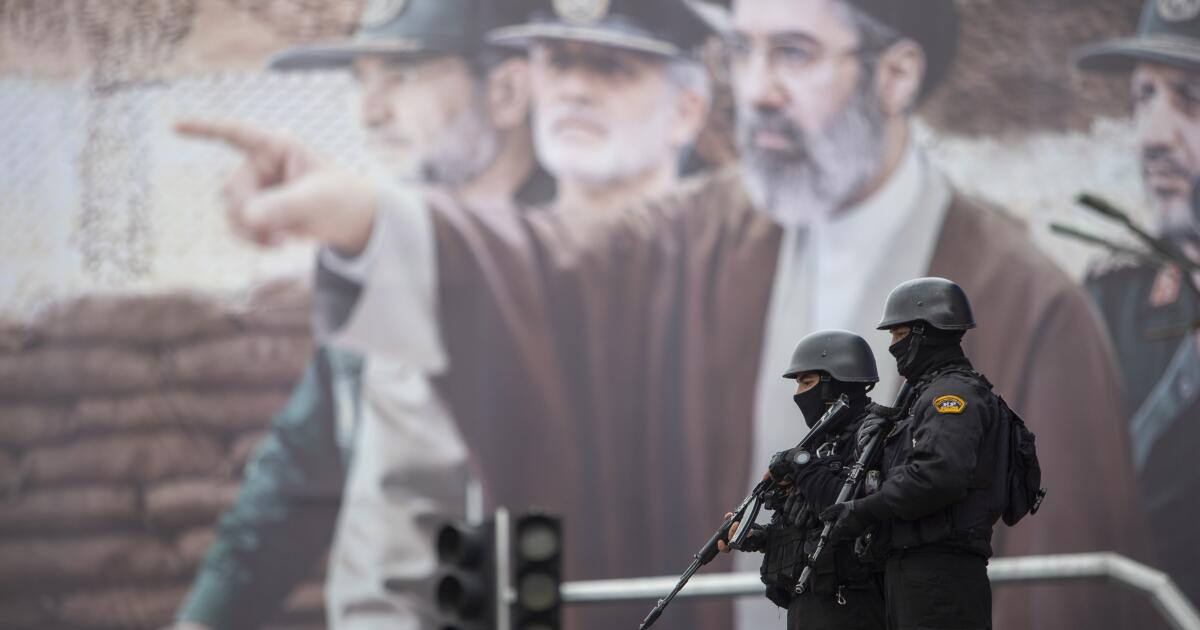
Perhaps even more to the point: One does not take out a 37-year-ruling despot like Ali Khamenei, as the American and Israeli militaries did in the opening hours of the present operation, and not hope for full-scale regime change. All people of goodwill should be hoping for that outcome — for the Iranian people to rise up like lions and throw the yoke of tyranny off their necks once and for all, delivering a long-sought victory for the American national interest in the process.

But it’s entirely possible full-scale regime change won’t happen. The people of Iran just witnessed tens of thousands of their countrymen brutally gunned down during the anti-regime uprisings of late December and early January. They are an unarmed populace facing Nazi-esque regime jackboots, in the form of the Islamic Revolutionary Guard Corps and the Basij paramilitary.

All of that, then, raises one final question: Is it possible for there to be victory in Operation Epic Fury, and for the Iranian regime to be neutralized as a threat to the United States and our interests, if there isn’t full-scale regime change in Tehran?

In theory, the answer is yes. Venezuela provides a model.

Delcy Rodríguez, the current leader, is a hardened Marxist-Leninist in the mold of her predecessors Hugo Chávez and Nicolás Maduro. But Rodriguez has been fully cooperative with the United States since the astonishing January operation to extract Maduro for the simple reason that she has no real choice in the matter: She remains in power, yes, but only on the condition of an “offer” presented by Trump and Secretary of State Marco Rubio that, to borrow from Vito Corleone in “The Godfather,” Rodríguez “can’t refuse.” Rodríguez has thus been fully cooperative in areas such as American oil extraction and the reestablishment of diplomatic relations with the United States.

In theory, a similar arrangement is possible with a decimated, chastened regime in Tehran. And some experts predict that such an arrangement will characterize the regime in Iran a year or two from now. In practice, however, there is the ever-thorny problem that has frustrated and perplexed Westerners for decades when they attempt to reason with zealous Islamists: They do not fear death. A socialist like Delcy Rodríguez can, ultimately, be reasoned with; an Islamist like Mojtaba Khamenei (or his successor), perhaps not.

The cleanest solution to the Iran quagmire at this particular juncture — and the one that most clearly fulfills Trump’s “unconditional surrender” victory criterion — is indeed full-scale regime change. That is certainly the outcome that would be best for the neutralization of the Iranian threat and the corresponding advancement of the American national interest. I’m far from certain it will happen. But like many, I pray that it will posthaste.

Josh Hammer’s latest book is “Israel and Civilization: The Fate of the Jewish Nation and the Destiny of the West.” This article was produced in collaboration with Creators Syndicate. X: @josh_hammer

Source link

Six Signs of Chavismo’s Mutation under US Oversight

A longer version of this piece in Spanish was published on Marisela’s Substack.

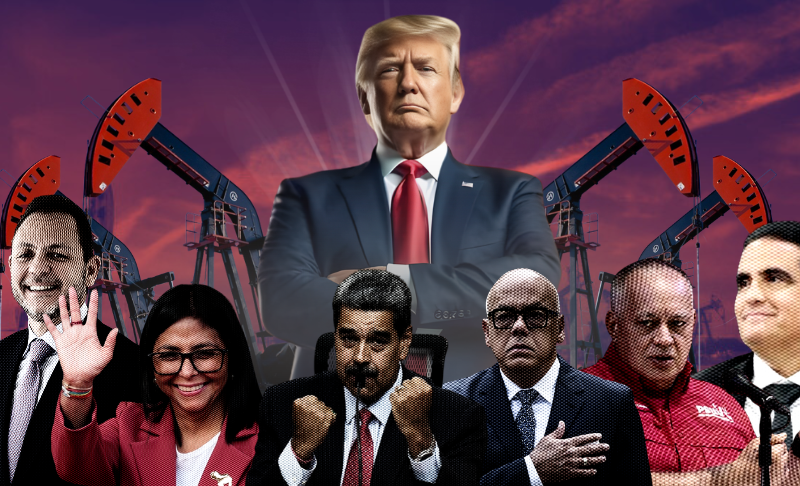
After the systemic rupture that the US incursion of January 3 represents, chavismo has embarked on its third great metamorphosis, carrying out a profound reengineering in a context of tutelage and transactional pragmatism. In my view, the Venezuelan State is undergoing a deep transformation rather than facing an imminent transition to democracy. Nevertheless, the government of Delcy Rodríguez is pursuing this transformation with remarkable speed and bluntness.

The survival of the chavista system has required the sacrifice of its original forms, forcing a mutation that uses economic opening as social anesthesia and the sophistication of repression as a guarantee of stability.

From the oil embargo on Cuba to microeconomic measures that we will discuss in the following lines, these milestones are the material proof of a power that has chosen to fill itself with realism, and to sacrifice its traditional epic narrative.

The case of Alex Saab and friends

A most scandalous event over which public officials have remained silent is the alleged arrest of Alex Saab. Saab was removed as Minister of Industries and National Production on January 17. Although Delcy initially presented the move as a departure to assume new responsibilities, it ultimately marked the beginning of his demise in Venezuela. According to reports from The New York Times, La Nación, and Infobae, SEBIN agents detained Saab and businessman Raúl Gorrín, the owner of TV network Globovisión, who has long navigated sanctions and power and lost his media and political shield almost simultaneously with the capture of Maduro. The novel element in this second arrest of Saab is that reports describe an operation carried out with the knowledge and cooperation of the FBI. It would appear that the new leadership in Caracas is willing to hand over key figures to US authorities in exchange for validation and stability.

Both men immediately disappeared from the public radar. Two weeks later, the Spanish broadsheet ABC claimed that the Trump administration has demanded judicial cooperation from Delcy regarding nine figures close or formerly close to the government, including Maduro’s son (known as Nicolasito), Tareck El Aissami (arrested by Maduro in 2024) and, of course, Alex Saab and Raúl Gorrín. The report describes Saab as “the man who knows where the money is.” The dismissal on February 23 of Saab’s wife, Camilla Fabri (appointed vice minister for international communication a year earlier) reinforces the hypothesis of Saab’s detention.

In the mining sector, foreign capital has abandoned concessions due to the absence of minimal infrastructure and the suffocating control of armed groups.

In theory, the US would be seeking access to Saab’s testimony and archives in order to finish dismantling the money laundering and drug trafficking networks surrounding Maduro’s inner circle. Following his arrest in Cape Verde in 2020 and a prolonged legal battle in Florida over his alleged diplomatic immunity, Saab was released and sent back to Venezuela in December 2023 through a complex prisoner exchange. Upon arrival, he was granted a high political profile and appointed president of the International Center for Productive Investment, positioning him as the key operator for attracting foreign capital under sanctions.

The Saab-Gorrín case demonstrates that chavismo’s ongoing metamorphosis involves sacrificing the financiers who helped evade sanctions in previous years. Even after leading an intense campaign for Saab’s release in 2023, National Assembly president Jorge Rodríguez has shown no hesitation in serving in a government that makes him disappear on the orders of a foreign power. Ruling chavismo now seeks to present itself before Trump as a renewed, pragmatic actor and, above all, one unified under a centralized command without visible fractures. The official silence surrounding this issue stems from the fact that the capture of strategic allies buys the Rodríguez siblings time to manage the internal divisions this would inevitably generate.

Supervised economic liberalization

Since early January, the government has accelerated decrees and measures of economic opening that were previously unthinkable, such as the Hydrocarbons Law’s reform. The objective is to accelerate economic timelines in order to demobilize political demands. However, while the government is betting on a rapid economic rebound to pre-empt any possibility of opposition reorganization, a deep gap is beginning to emerge between the rhetoric of hope and the reality of purchasing power, which continues to deteriorate.

To assess the supposed implementation of these measures, I spoke with economist Manuel Sutherland to unpack the speculation that currently dominates public debate. According to his analysis, the exchange rate system has not undergone structural change: the allocation of foreign currency remains discretionary. Financial flows reveal a complex triangulation in which oil revenues are deposited in a fund in Qatar and then routed to an account at the US Treasury Department. From there, major banks acquire foreign currency through auctions restricted to the purchase of American goods. This process, executed in an opaque environment by private banks, occurs alongside discussions of tax exemptions for certain goods, such as vehicles.

Contrary to public perception, there has been no acceleration of privatization, while in the mining sector, foreign capital has abandoned concessions due to the absence of minimal infrastructure and the suffocating control of armed groups. What initially appeared to be a fast-tracked path toward economic recovery under American supervision now seems to be advancing at the same pace as, or even behind, political changes. The dissonance that once represented a danger for democratization (rapid economic liberalization coexisting with political stagnation) is not occurring. On the contrary, the slow economic rebound is unable to keep pace with the acceleration of political dynamics, which has gained renewed vigor through the mobilization of relatives of political prisoners. While the economy remains trapped in inertia and opacity, the political chessboard is being shaken by social pressure that the government appears not to have anticipated in its calculations for stability.

Amnesty and softer repression

By managing to adapt to this new scenario, chavismo shows it retains room of maneuver to ensure its permanence. This continuity is guaranteed by opening strategic pressure valves in response to the two main sources of coercion: internal social pressure and external pressure. The tactical softening of repression manifests itself as an unfolding of chavismo toward more sophisticated forms of exercising power. During the opening of the judicial year, the acting president delivered a striking speech announcing an amnesty law. The timeframe established for the law (1999-2025) functions as a symbolic rupture with the era that precedes her. All of this seeks to project renewed leadership based on the pillars of efficient technocracy and a pacifist façade.

The Amnesty Law thus operates as both a pacification mechanism and a transactional trophy for the Trump administration. A trophy meant to reduce the political cost of external pressure without implying any real dismantling of the repressive apparatus. It is a functional mutation that attempts to stabilize the system through a new version of authoritarian peace that can only be challenged if social pressure and mobilization manage to move beyond the mirage of this merely symbolic rupture.

Venezuela has ended up suffocating Cuba more effectively than the Helms-Burton Act.

However, attempts to “unify” the country through this law have had the opposite effect. Instead of extinguishing the spirit of struggle, it has revived it. On February 6, while the amnesty bill was still being debated, National Assembly president Jorge Rodríguez appeared at an infamous detention center before the mothers of political prisoners who were on vigil. Rodríguez established a novel form of blackmail: if the law were approved within a record seven days, their children could be released. None of this happened. The discussion was delayed, and once the law was enacted, the release process proved extremely slow. In addition, new cases of abductions and disappearances have emerged, while those who have been released leave prison without fear and determined to remain in the streets. None of this had been anticipated by Jorge Rodríguez.

This whole process, which is still ongoing, has brought the tacit recognition of political prisoners, the implementation of mass release measures, and the positioning of political prisoners within the public discourse—an issue the Maduro government always preferred to deny.

Oil embargo on Cuba and sales to Israel

The abrupt halt in crude shipments to Cuba—confirmed through maritime tracking by specialized firms—has also not been officially acknowledged by Venezuela. Reuters has been the leading outlet reporting the drop in shipments. According to its investigations, based on internal documents from the state oil company PDVSA and export data, Venezuela has prioritized cargoes destined for companies such as Chevron in order to secure foreign currency flows, leaving supply to Cuba in operational limbo. What is new? The beginning of a phase of energy suffocation for Havana led by Venezuela.

Despite the evidence of reduced shipments, neither Caracas nor Havana has issued statements acknowledging a suspension. What has been officially reported, however, is the dismantling of Cuban missions in Venezuela. Official Gazette No. 6,885 published decrees ordering the intervention, restructuring, and liquidation of emblematic social programs such as Mission Barrio Adentro and the Housing Mission.

In addition, international correspondents in Caracas, such as Sarah Kinosian, have reported the departure of Cuban medical personnel and military advisers. These reports cite internal sources in ministries and testimony from health workers who have been notified that their contracts are ending and that they must return immediately to the island.

Within a span of only a few minutes, the Venezuelan Foreign Ministry published and then deleted from all its platforms a statement expressing solidarity with the Islamic Republic of Iran following recent bombings.

How long can the rupture between Caracas and Havana remain hidden in discourse? And what implications does it hold for the Latin American left, which has remained silent about Venezuela’s authoritarian drift in order to preserve a utopian narrative? The only official source regarding the oil embargo on Cuba came from Miguel Díaz-Canel, who admitted that “we are going to live through difficult times” and announced a plan to deal with “acute fuel shortages,” acknowledging that no crude has arrived since December. As one of history’s paradoxes, Venezuela has ended up suffocating Cuba more effectively than the Helms-Burton Act.

Another shift that also lacks official confirmation is the presumed resumption of oil sales to Israel, reported only by Bloomberg and maritime tracker Kpler. Although the government has dismissed these reports as fabricated news through its communications minister, the flow of roughly 200,000 barrels toward the Haifa refinery suggests a reality consistent with the scenario of tutelage and its geopolitical ramifications (Venezuela severed relations with Israel in 2009).

The erosion of the anti-imperialist narrative

An episode that occurred on March 1 offers a window into the speed with which the government has decided to push through a compliant policy shift and how it appears to be redefining its strategic ties. Within a span of only a few minutes, the Venezuelan Foreign Ministry published and then deleted from all its platforms a statement expressing solidarity with the Islamic Republic of Iran following recent bombings.

The episode suggests a latent tension between the discursive inertia of certain officials and the logic of tutelage guiding the government’s current decisions. More than a mere coordination error, the incident could be interpreted as a symptom of constant monitoring of Venezuelan foreign policy by the US embassy in Caracas, or of unclear internal guidelines regarding this shift, where preserving negotiation channels with Washington must prevail over historical ideological loyalties.

The novelty of this shift lies not only in the rhetorical distancing, but in the fact that the internal fissure has become visible. For the first time in decades, the opportunity cost of maintaining a symbolic alliance with Tehran appears to be perceived by the political leadership as greater than the benefit of ideological consistency. This exercise in digital cleansing reinforces the hypothesis of a system that will prioritize the stability of financial flows guaranteed by American tutelage over the rhetoric of confrontation, marking a drastic departure from the alliances that once sustained chavismo.

The reality is that there has been a change in governmental behavior. Not only has the government implemented measures that clash with the historic conduct of a regime attached to the ideological agenda of the revolution, but it has also shown clear difficulty in the communication management of these measures. This suggests they may respond to a strategy of obedience to the occupying power while exploiting certain windows of opportunity for remaining in power.

Delcy Rodríguez’s government knows that exposing the measures recently adopted could generate even deeper cracks within the internal structures of chavismo. So now, in many instances, we just have silence.
Source link

Column: On Iran, Russia and China, Trump’s weakness for strongmen explains his foreign policy

“I’m not going to start a war. I’m going to stop wars.”
— Donald Trump, in his victory speech Nov. 6, 2024

It’s bad enough that President Trump has broken that oft-repeated pledge and unilaterally started a war, without engaging either Congress or the American public. And that, by his war of choice against Iran, he has in the most perilous way to date betrayed his signature “America First” standard, at least as longtime proponents Marjorie Taylor Greene, Megyn Kelly, Steve Bannon, Tucker Carlson and others mean it, and as many people thought he did too.

What’s even worse than Trump’s mendacity about stopping foreign wars is the broader truth that his war on Iran underscores: In the major theaters of U.S. foreign policy — the Mideast, Europe and Asia — he is essentially letting foreigners set his course, America’s course. And to state the obvious: Israeli Prime Minister Benjamin Netanyahu, Russia’s Vladimir Putin and China’s Xi Jinping do not have America’s interests at heart.

It has long been a defining contradiction of Trump that the wannabe strongman repeatedly shows himself to be in thrall to the world’s actual strongmen. His affinity for them has for years puzzled observers in this country and abroad. Trump strikes a pose — say, on negotiating with Iran about its nukes program, promising peace in Ukraine, hitting China with tariffs — only to crumple after a phone call, a meeting or a slap back from his opposite number.

It’s always hard for a person without a strong core to maintain a stand.

Obviously different factors are at play in Trump’s relationships with Israel, a U.S. ally, with longtime adversaries Russia and China and, more specifically, with each nation’s leaders. But all three cases reflect a personalization of foreign policy that is dangerously unique to Trump. For him, it’s less “what’s good for my country” than “what’s good for me” and “who likes me.” Time and again, he’s been explicit about that.

For all Trump’s cosplaying as a strongman, he shows his weakness as a national leader when he lets foreign counterparts share the wheel with him. As a consequence, he’s driving America erratically at best. At worst, he’s steering into another costly, bloody “forever war” of the sort he railed against for decades.

He’s gone in a direction in the Middle East that, polls show, pluralities or even majorities of Americans didn’t want to go. Trump has received none of the initial rally ’round support that past presidents enjoyed after initiating military operations. That’s a hazardous place to be domestically. Most Republicans are behind Trump on the war, but not by the usual high numbers. After all, it was disgust with forever wars in Iraq and Afghanistan that sent many people flocking to Trump’s “America First” banner to begin with.

For years he warned that other presidents and presidential candidates would start a war in Iran, World War III even. Yet here we are. And after days of what Kelly derided on air as the “10,000 different explanations” that Trump has given for attacking Iran and killing its top political and military leaders, on Monday, Secretary of State Marco Rubio emphatically provided just one: Because Israel was going to strike Iran first, the United States had to join the attack to protect U.S. personnel and assets in the region from Iran’s retaliation.

Cue the blowback in MAGA world: “He’s flat out telling us that we’re in a war with Iran because Israel forced our hand,” MAGA pundit Matt Walsh lashed out online. And then Trump contradicted his secretary of State on the rationale for the attacks. Yet Rubio wasn’t the only one citing Israel’s plans as the war’s predicate. So did House Speaker “MAGA Mike” Johnson. On Tuesday, Trump himself said he had to act fast because the Iranians “were getting ready to attack Israel.”

As Democratic Sen. Mark Warner of Virginia, vice chairman of the Senate Intelligence Committee, responded, “If we equate a threat to Israel as the equivalent of an imminent threat to the United States, then we are in uncharted territory.”

Similarly, in June, Trump ordered a devastating one-off strike on Iran’s nuclear facilities to support Israel’s 12-day war against Iran. For months after, Netanyahu hounded Trump to stop the subsequent peace talks with Iran and go back on offense with Israel. So now Trump has complied, striking even as negotiations with Iran were ongoing. Sen. Lindsey Graham, the once respected Republican from South Carolina, offered his sycophantic spin: “Bibi and Trump are the modern Roosevelt-Churchill combination.”

The latters’ grave sites surely trembled.

As for Asia, Trump talks a good game against China, and, yes, he’s imposed big tariffs. But just as often he’s backtracked, often after talking with Xi. Trump’s admiration of the Chinese autocrat and his eagerness to please him is palpable. In fact, in dealing with Xi, Trump in both of his terms has violated his own words in “The Art of the Deal”: “The worst thing you can possibly do in a deal is seem desperate to make it. That makes the other guy smell blood, and then you’re dead.”

No one is more worried about Trump’s regard for Xi than the Taiwanese, living under threat from China. Just recently Trump delayed arms sales to Taiwan approved by Congress lest he upset Xi ahead of their Beijing meeting in April.

In Europe, meanwhile, Trump continues to be played by Putin at the “peace” table to end Russia’s war in Ukraine — the war that candidate Trump said he’d settle in a day. More than a year later, he continues to harangue Ukraine’s Volodymyr Zelensky to make concessions to the invader, never demanding anything from Putin.

Most heinously, Trump’s 28-point “peace” plan last November incorporated everything that Putin/Russia dreamed of extracting from Ukraine, and for good reason: The proposal came from Moscow, passed from Putin’s flunky to Trump’s. That followed Trump’s humiliating summit with Putin last August in Alaska, giving the globally reviled Russian an American stage and pageantry and serving no purpose for the United States, only for Trump the showman. All the while, Russia continued ravaging Ukraine.

So much for Trump’s election promise. He doesn’t stop wars (his repeated claims to the contrary). But he does start them.

Bluesky: @jackiecalmes
Threads: @jkcalmes
X: @jackiekcalmes

Source link

‘He lied, he scapegoated, he distracted.’ Democrats responds to Trump

The United States, President Trump said Tuesday night, is “bigger, better, richer and stronger than ever.”

“We are the hottest country anywhere in the world,” Trump said in his State of the Union address. “The economy is roaring like never before. America is respected again like never before. We’re winning so much we can’t take it.”

Not so, countered U.S. Sen. Alex Padilla (D-Calif.).

“We just heard Donald Trump do what he does best: lie,” Padilla said.

In a Spanish-language rebuttal delivered on behalf of the Democratic Party, Padilla rebuked the president’s claim that he has brought about the “golden age of America,” accusing Trump of spurring economic uncertainty and plunging U.S. cities into violence.

President Trump gives his State of the Union address.

President Trump gives his State of the Union address to a joint session of Congress at the Capitol in Washington.

(J. Scott Applewhite / Associated Press)

“The truth is that the State of our Union does not feel strong for everyone,” Padilla said. “Not when the costs of rent, food and electricity keep rising. Not when Republicans raise our medical costs to fund tax cuts for billionaires. And definitely not when federal agents — armed and masked — terrorize our communities by targeting people because of the color of their skin or for speaking Spanish — including immigrants with legal status and citizens.”

Padilla and Virginia Gov. Abigail Spanberger, who delivered the Democratic rebuttal in English, countered Trump’s upbeat pronouncements by painting a starkly different picture of a country that is deeply divided months before critical midterm congressional elections.

Trump, whose approval ratings have slumped amid concerns about the economy and the harsh tactics deployed in his mass-deportation campaign, touted what he described as victories on foreign policy, including the U.S. ouster of Venezuelan president Nicolás Maduro, and a slowing of inflation.

Padilla sought to counter those claims and rally support for Democrats, who have struggled to formulate an effective response to Trump as he has dominated national discourse in recent years.

Spanberger, speaking from Colonial Williamsburg in Virginia, questioned whether Trump is working on behalf of Americans — or in his own self-interest.

Trump, she said, repeatedly has sought to deflect attention away from accusations that he is using the Oval Office to enrich himself and his family and the scandal involving Jeffrey Epstein, the disgraced financier and sex offender.

“We did not hear the truth from our president,” Spanberger said. “He lied, he scapegoated and he distracted.”

Spanberger, who beat her Republican opponent in the purple state of Virginia last fall by 15 points, said voters are struggling under Trump’s policies and beginning to turn on him. Political winds, she said, are shifting in favor of the Democrats.

Padilla focused heavily on the Trump administration’s immigration crackdown in cities such as Los Angeles and Minneapolis, where agents this year killed two U.S. citizens who were protesting deportations.

“We see ICE agents using excessive force: entering homes without judicial warrants and shooting at cars with families still inside,” Padilla said. “We are living a nightmare that divides and destroys our communities.”

He was, he said, partly speaking from experience.

Last year, federal agents tackled Padilla to the floor and handcuffed him after he sought to question Homeland Security Secretary Kristi Noem at a news conference in Los Angeles.

Padilla referenced the incident in his speech and encouraged others to defy Trump.

“I am still here standing. Still fighting,” he said. “And I know you are still standing and still fighting too.”

“Trump does not want us to recognize our power,” he said.

Padilla also slipped in a reference to Puerto Rican pop star Bad Bunny, who was criticized by Trump for performing in Spanish during the halftime of the Super Bowl.

“As Bad Bunny reminded us a few weeks ago: ‘Together, we are America.’” Padilla said. “Together, we rise, because our faith is stronger than any disappointment or any obstacle — including Trump. And together, we will build the future our children deserve.”

Source link