Venezuelan Gov’t Delegation Meets IMF amid Debt Restructuring Plans
Venezuelan leaders have held talks with both the IMF and the World Bank in recent weeks. (Archive)
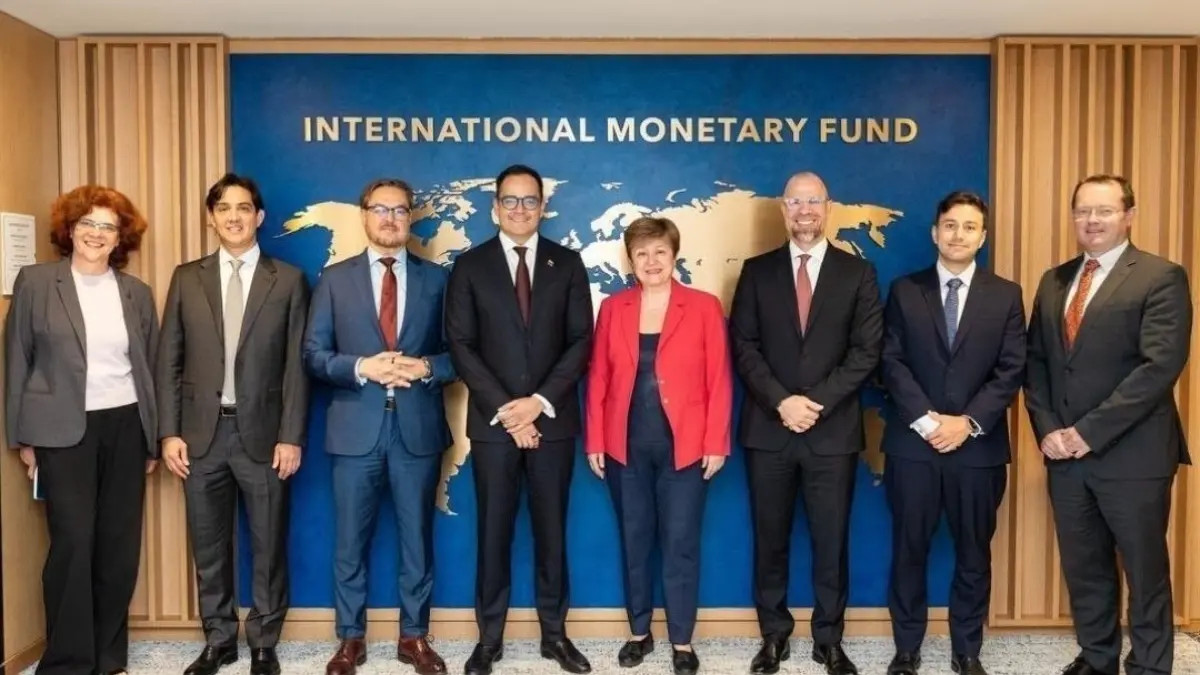
Caracas, June 1, 2026 (venezuelanalysis.com) – A Venezuelan delegation representing the acting Delcy Rodríguez administration held talks with the International Monetary Fund leadership on Saturday in Washington, DC.
The Venezuelan team was led by Economy Vice President Calixto Ortega alongside Central Bank (BCV) President Luis Pérez and other finance officials. In a statement, Caracas called the meeting “productive,” focused on “technical assistance mechanisms” and the Caribbean nation’s efforts to “recover funds” to boost economic recovery.
“With these kinds of meetings, Venezuela ratifies its disposition for dialogue and international cooperation, with independence and self-determination,” the communiqué read. Venezuelan authorities emphasized the country’s “new stage of stability and growth” alongside a commitment to “reestablish ties with multilateral organizations.”
For her part, IMF Managing Director Kristalina Georgieva also classified the meeting as “productive” and reiterated the US-based institution’s disposition to “support efforts to strengthen macroeconomic stability.”
Venezuela reestablished ties with the IMF and the World Bank in April after a seven-year hiatus. The move followed the Trump administration’s recognition of Rodríguez as the South American country’s “sole leader” as part of a fast-tracked diplomatic rapprochement between Washington and Caracas.
The acting president hosted a World Bank delegation on May 15 and emphasized “technical cooperation” prospects.
Though Venezuela has been a member of the IMF and the World Bank since 1946, former President Hugo Chávez effectively disengaged from both bodies in the 2000s, labeling them “instruments of US imperialism” and seeking to create Global South integration and lending alternatives.
The Rodríguez government’s IMF meeting came amid announced plans to execute a “comprehensive and orderly” restructuring of the country’s foreign debt, estimated to be as high as US $170 billion.
Caracas’ liabilities stem from a combination of defaulted bonds and loans, international arbitration awards, and accrued interest. Venezuela began to default on its debts in 2017 as US sanctions heavily aggravated the Caribbean nation’s economic crisis and blocked payments. The restructuring process may be one of the largest in history, surpassing Russia (1998) and Argentina (2001).
The acting Rodríguez government is scheduled to present its macroeconomic framework and public debt sustainability analysis to the international finance community this month. The Trump administration issued a license allowing Venezuela to contract financial and advisory services, but direct negotiations with creditors remain prohibited.
The Venezuelan executive hired Centerview Partners as financial advisor for the debt restructuring process. According to Reuters, the decision was taken without a thorough selection process and on the recommendation of Mauricio Claver-Carone, a former Trump administration official and close associate of Secretary of State Marco Rubio.
Multiple reports in recent days have documented Claver-Carone’s role as a “gatekeeper” for businesses interested in investing in Venezuela as well as a conduit between Rodríguez and the Trump White House.
Venezuelan bonds have risen significantly in recent months as investors expect a windfall after purchasing the defaulted bonds at highly depreciated levels.
Venezuelan authorities have stated that there are “no plans” to take on IMF loans, instead prioritizing access to around $5 billion in Special Drawing Rights (SDR) to address infrastructure and public services needs. The IMF issued the SDRs to help countries deal with a liquidity crunch during the Covid-19 pandemic, but its non-recognition of the Nicolás Maduro government barred Venezuela from accessing its share.
For her part, Georgieva has previously stated that Venezuela “desperately needs help” and that the fund would support a loan program, but that prior steps, including clarity on macroeconomic data, are necessary.
Since the January 3 US military strikes and kidnapping of President Maduro, the Trump administration has extracted significant concessions from the Venezuelan government, including pro-business oil and mining reforms, lucrative deals for Western corporations, and external auditing of the Central Bank. The White House has also seized control of Venezuela’s oil export revenues.
Acting President Rodríguez has additionally installed a commission to evaluate the “strategic” value of Venezuelan state assets and possible privatizations. Plans to reform the country’s tax, labor, and pension laws are likewise underway.
Edited by Lucas Koerner in Caracas.