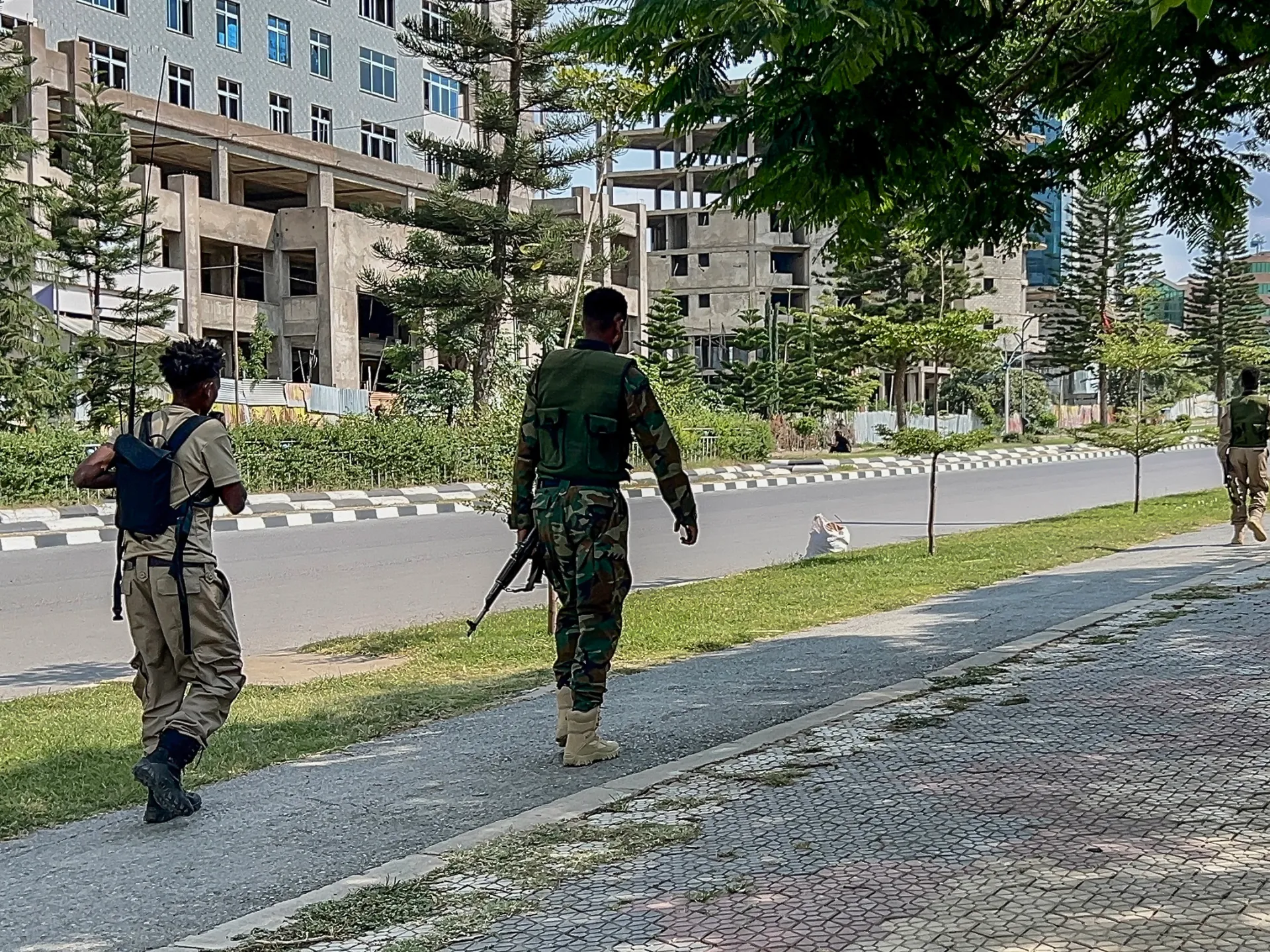
The rebels are seen leaving the capital of the northern Tigray region, according to local sources.
Ethiopia’s federal army and pro-government fighters have recaptured the main airport in the capital of the northern Tigray region, with the rebels seen leaving the city, according to multiple unnamed sources.
The Ethiopian National Defence Forces regained control of Alula Aba Nega Airport in Mekelle, one source with knowledge of events in the city and a humanitarian source told Reuters news agency on Saturday.
Recommended Stories
list of 3 itemsend of list
The airport, which is about 10km (6 miles) from the centre of Mekelle, was one of three airfields in the region that were seized by the rebel forces at the start of the fighting on September 23.
The fighters, as well as the leaders of the Tigray People’s Liberation Front (TPLF), were seen retreating from the city, a local journalist and residents told the AFP news agency.
The journalist added that federal forces had not yet been seen inside Mekelle.
“I am concerned that government and public property could be exposed to looting because there are no security forces in the city,” a resident told AFP.
“I am worried that lawlessness could spread in the city, and I am also afraid for my life. I want us to quickly return to law and order,” added another resident.
Al Jazeera could not independently confirm these claims. Media access is currently heavily restricted in Ethiopia, and there have been significant communications blackouts.
Last month, rebels announced the formation of a seven-party rebel coalition led by the TPLF, the same armed group that fought in the 2020-2022 civil war against federal forces from Addis Ababa. The new coalition includes rebel groups of varying sizes from across the country.
Later that month, the coalition started an offensive, seizing three airports around the contested Tigray state and engaging in fighting on the borders with Amhara and Afar states.
The government is now engaged in a counteroffensive, pushing into Tigrayan territory along three axes towards Mekelle, according to the Critical Threats Project, part of the American Enterprise Institute think tank.
Fighting has so far been concentrated in Tigray. However, rebels have reportedly carried out drone attacks on Addis Ababa.
The TPLF and government have not commented on developments on the ground.
The fighting has seen drone attacks, intensified forced conscription, and attacks on civilian infrastructure, according to Amnesty International, a global rights group.
The renewed conflict has not yet reached the heights of the Tigray war, which lasted from 2020 to 2022 and saw hundreds of thousands of deaths, but it is quickly taking on an international dimension.
Risk of conflict spreading
The government of Prime Minister Abiy Ahmed has accused Eritrea, Sudan and Egypt of backing the opposition coalition. Khartoum and Cairo have denied involvement.
Eritrea has severed diplomatic ties with Ethiopia over the accusations.
On Thursday, Eritrea also denied involvement in the Tigray conflict, and accused Addis Ababa of “pursuing an agenda of incessant hostility”. It also said Ethiopia, which is landlocked, was planning to invade Eritrea to secure sovereign access to the Red Sea coast.
The TPLF’s leader, Debretsion Gebremichael, said in a video published on Thursday that “the war is regional and it is a war to control the Red Sea”.
Yemen’s government forces have conducted multiple air and ground operations in the southwestern governorate of Taiz in 24 hours as they intensify attacks against the Iran-backed Houthi group.
The government’s military media centre on Sunday claimed a number of operations against the rebels, including air strikes on Houthi positions in five locations across the governorate.
Recommended Stories
list of 4 itemsend of list
More than 146,000 people have been displaced since the fighting erupted in July after a period of relative calm since a United Nations-brokered ceasefire in 2022.
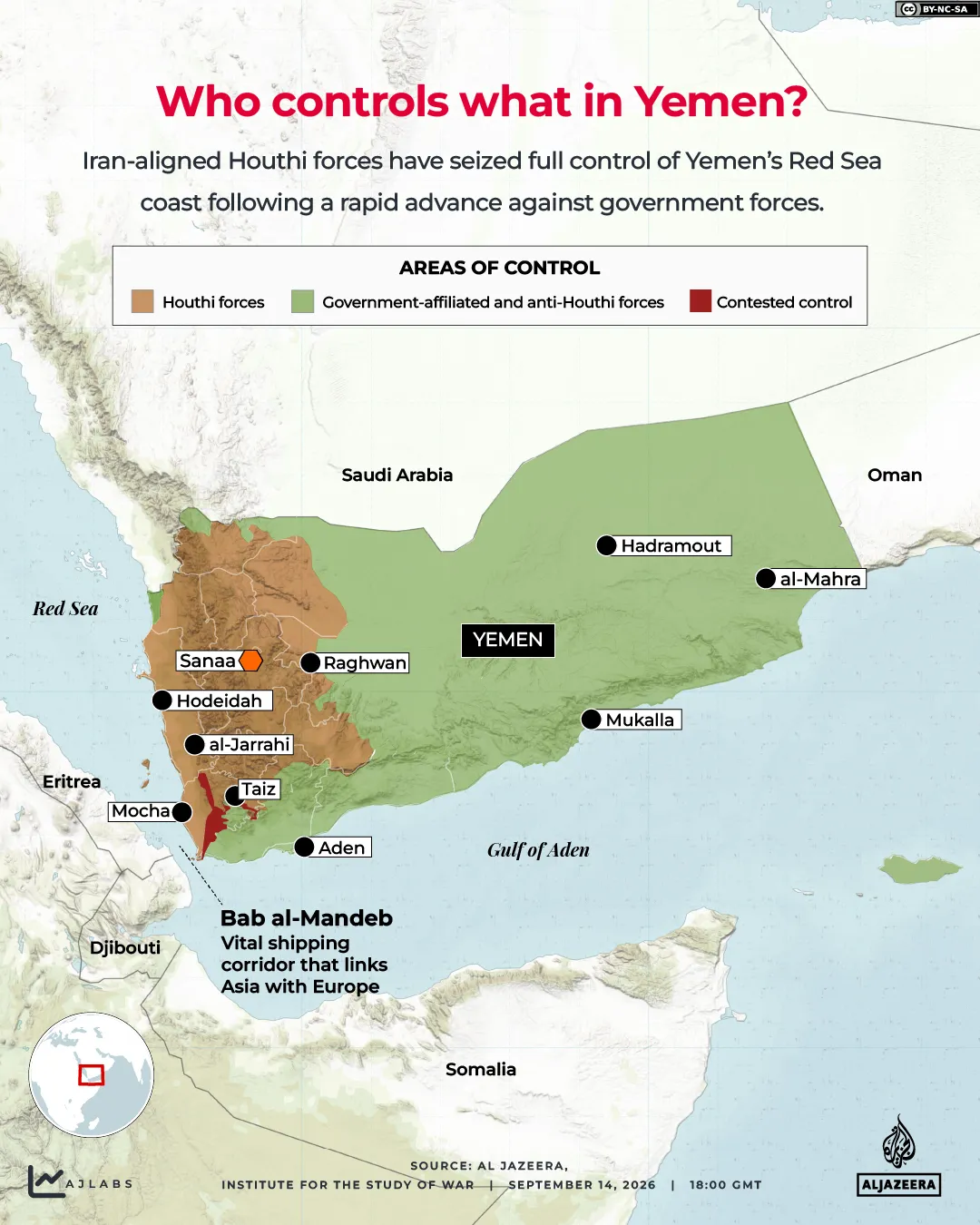
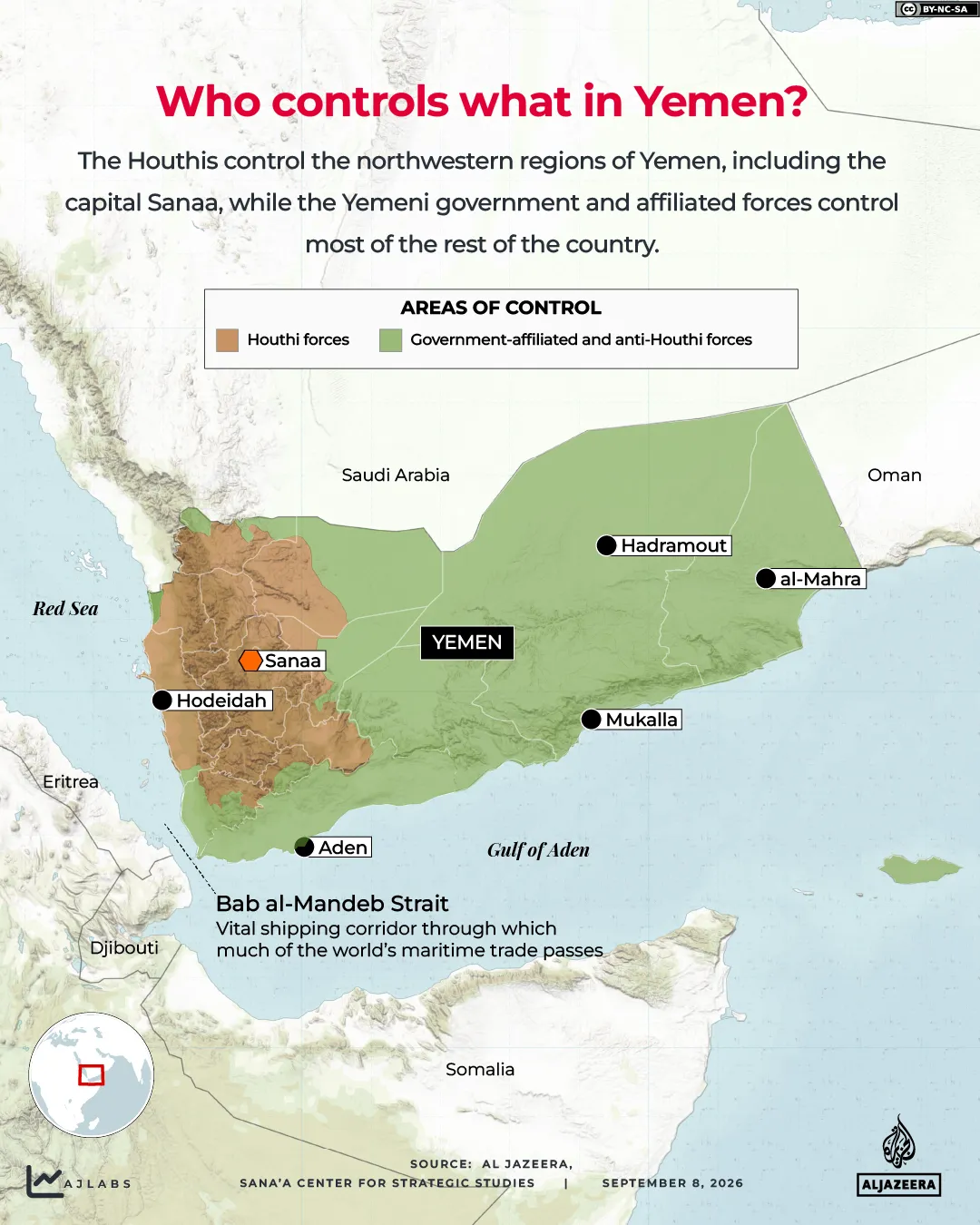
In recent weeks, the Houthis have made dramatic territorial gains against the government forces, seizing the strategic Red Sea coastal city of Mocha and expanding their control over the Bab al-Mandeb strait, a global maritime chokepoint connecting Europe to Asia.
Rashad al-Alimi, the head of the Presidential Leadership Council, has called on citizens to mobilise and join the fight against the Houthis as the government has stepped up its attacks against the Iran-backed group in an effort to stop their advance and regain lost territory.
Meanwhile, Saudi Arabia, which has faced Houthi attacks on its soil since fighting escalated further this month, has been turning to its allies, including Pakistan and Turkiye, for support.
Saudi Arabia backs Yemen’s internationally recognised government.
Here’s what we know about the latest fighting and the humanitarian conditions the impoverished country faces:
What to know about the latest fighting
According to the military media centre on Sunday, dozens of Houthi fighters, including field commanders, were killed or wounded in the previous 24 hours of fighting near Taiz’s capital, which is also named Taiz.
Government forces have carried out operations in several areas of the governorate, including the al-Waziiya district in the west, weapons sites and ammunition depots at Mafraq Mawiya and al-Dhukrah in the east, a Houthi gathering in the Hayfan district in the south and against military vehicles in the Gurab area in the northwest.
Government forces also thwarted infiltration attempts on the al-Ahtoub front and in Hadran as they carried out shelling of Houthi gatherings on the al-Kadha and al-Aqroud fronts, the media centre said.
It added that several Houthi military vehicles were damaged in the attacks.
Al Jazeera could not verify the battlefield claims.
“Government forces say they have made advances in the southern Taiz governorate, taking control of several areas and higher ground. Among them is Jabal Bazel, a mountaintop that places Houthi supply lines within target range,” Al Jazeera’s Maha Ali said on Saturday, reporting from Taiz.
“These developments point to significant and potentially decisive ground operations in recent hours.”
Ali said al-Alimi expressed confidence that government forces were capable of restoring control over the whole country. Houthis currently control vast swaths of northern and western Yemen while the government controls the south and east.
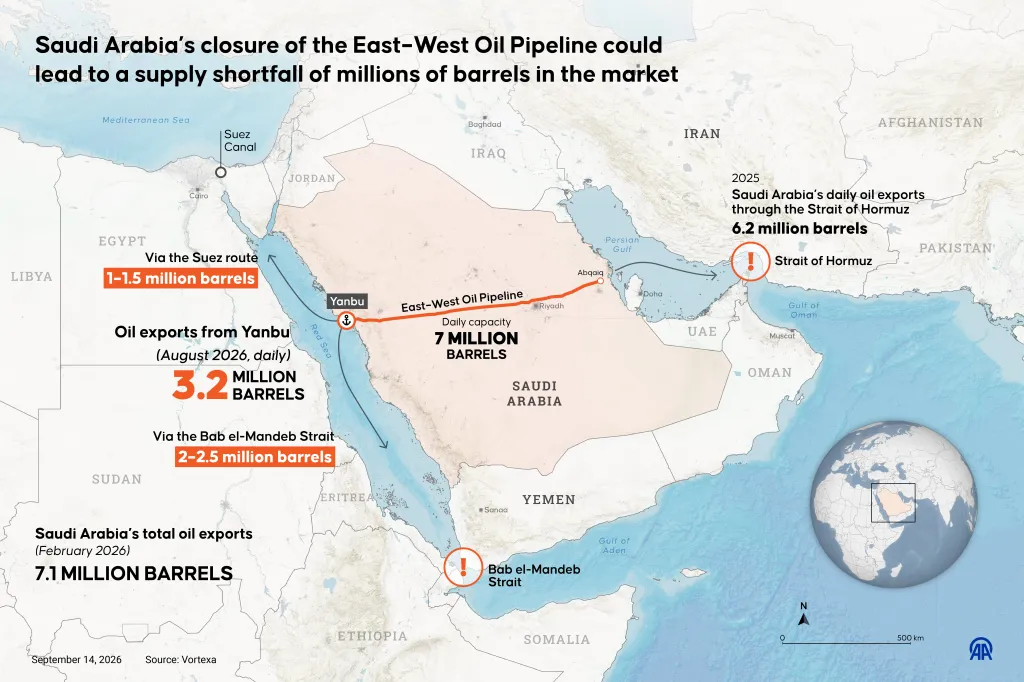
Since the current fighting erupted, the Houthis have accused the Saudis of carrying out attacks in Yemen and promised to prevent Saudi tankers from passing through Bab al-Mandeb, which Riyadh has been using as an alternative shipping route to the Strait of Hormuz. Tehran in effect has closed the Strait of Hormuz since the United States and Israel began a war on it in February. Before the conflict, a fifth of the world’s oil supplies had passed through that waterway.
Government forces, meanwhile, accused the Houthis of using Iranian air defence weapons and said they pose a danger to aircraft.
“These Houthi weapons pose a serious threat to international flight paths over the Red Sea and operate using a heat-tracking system,” Brigadier General Majed al-Nazili, the official spokesperson for the Yemeni government forces, said on social media.
“The weapons employed are capable of attacking military or civilian targets without the ability to distinguish between them, thereby endangering the safety of civil aviation and the lives of passengers.”
Early on Saturday, a Saudi-led coalition in Yemen said its air defence systems intercepted and destroyed two ballistic missiles and two drones launched by the Houthis towards Riyadh and Khamis Mushait in Saudi Arabia.
What has been the regional response to the conflict?
On Saturday, Saudi Foreign Minister Faisal bin Farhan Al Saud, addressed the UN General Assembly and called on the international community to condemn Houthi actions against the kingdom and in Yemen.
At the same forum, Yemeni Vice President Abdullah Abdulkader al-Alimi-Bawzer warned that the Houthis were using shipping security “as a tool for blackmail”.
“It is taking hostage the entire global economy,” he said.
The secretary-general of the Gulf Cooperation Council (GCC), Jassim Mohammed al-Budaiwi, on Saturday strongly condemned the recent Houthi attacks against Saudi Arabia.
“This dangerous escalation constitutes a flagrant violation of the Kingdom’s sovereignty and poses a direct threat to the security and safety of civilians and the stability of the region,” al-Budaiwi said in a statement.
Iran has denied it has any role in the Yemen conflict. Iranian President Masoud Pezeshkian told Al Jazeera that the actions of the Houthis were not connected to Iran and Tehran stands in solidarity with “everyone subjected to injustice”.
He urged the Houthis and Saudi Arabia to resolve their differences through dialogue, saying “a brother should not fight his brother,” and offered Iran’s help in ending the dispute. “We will not be warmongers,” he said.
On Friday, Iran delivered a ceasefire offer, which US President Donald Trump has rejected. It included Yemen and Lebanon. Tehran offered to open the Strait of Hormuz if the US fulfils its conditions, which include the lifting of Washington’s naval blockade on Iranian ports, a sanctions waiver and the release of Iran’s frozen assets.
(Al Jazeera)
Could Saudi allies join the conflict?
Saudi Arabia’s allies have rallied behind it amid intense fighting between the Yemeni government forces and Houthis.
Saudi Defence Minister Khalid bin Salman said on Saturday that there would be continued joint efforts with Pakistan to confront attacks against the kingdom in accordance with the Mecca Joint Defence Agreement signed last month.
He held talks with Pakistani Field Marshal Asim Munir on Thursday. A day earlier, the military chiefs of Saudi Arabia, Pakistan and Turkiye jointly reviewed threats facing Saudi Arabia at a meeting in the Saudi capital.
Multiple Saudi cities, including Riyadh, have been hit by drones and missiles attributed to the Houthis.
Meanwhile, France confirmed on Friday that it was sending troops to guard the major oil terminal at Yanbu, a Saudi port city on the Red Sea, but added that it was not joining the conflict. Yanbu has major oil storage and refining facilities and is connected by the East-West Pipeline, which can carry up to seven million barrels a day. The pipeline was damaged in a drone attack carried out from a group based in Iraq.
The US has so far not pledged military involvement, but the Saudi foreign minister said the kingdom was “continuing to work with our partners in the US”. On September 14, the commander of the US military’s Central Command, Brad Cooper, met the de facto Saudi ruler, Crown Prince Mohammed bin Salman, in Jeddah in the wake of the Houthis’ seizure of Mocha.
What’s the state of humanitarian conditions?
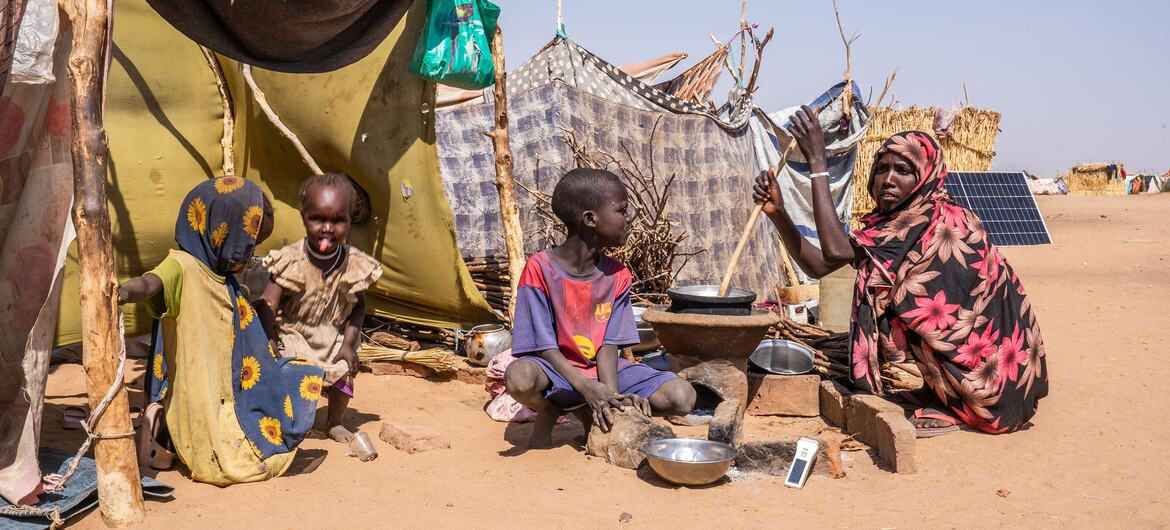
At least 146,000 people have been displaced in the Arab region’s most impoverished country over the past three weeks, most of whom were uprooted from or within Taiz governorate, according to Yemen’s UNICEF country representative, Akhil Iyer.
The number of casualties is still not confirmed as the rival sides have made conflicting claims. As per media reports, the death toll runs into the hundreds.
UNICEF has verified that at least 15 children have been killed and 14 injured in the conflict since early September while three have been reported missing.
According to the UN Office for the Coordination of Humanitarian Affairs, more than 22 million people in Yemen require humanitarian assistance and protection services; 18.3 million people face acute food insecurity; and more than 2.2 million children under five are acutely malnourished.
Pakistani security forces report ongoing cross-border fire in latest escalation in fighting between the neighbours.
Published On 25 Sep 202625 Sep 2026
Pakistan has foiled an “attempted Afghan aggression” on the Pakistan-Afghan border.
Pakistani security sources said several Afghan members of the Taliban were killed in an intermittent exchange of fire in the Gulistan area of the border on Friday and that fighting was ongoing.
Recommended Stories
list of 3 itemsend of list
There has been no official confirmation from either country involved.
The Afghan government said on Thursday that it would deliver an “appropriate response” to Pakistani air attacks on 10 locations in Afghanistan earlier in the day.
The strikes were in response to a “deliberate and unlawful incursion into Pakistan by drones” on Wednesday, Pakistani Information Minister Attaullah Tarar said on Thursday.
Tarar said in a post on his X account that Pakistan’s aerial and drone attacks hit “terrorist hideouts and support infrastructure including drone launching and storage sites”.
He also posted a video said to show the military strikes on the Afghan sites.
Afghanistan’s government spokesperson Zabihullah Mujahid said the air strikes targeted Kandahar, Paktia and Khost provinces.
Taliban officials denied that their government launched drones against Pakistan on Wednesday.
The air raids on Thursday were carried out amid growing tensions between the former allies over attacks by armed groups in Pakistan, which triggered their worst fighting in years in February.
Islamabad accuses Kabul of harbouring fighters who stage cross-border attacks, but Afghanistan’s government denies harbouring anti-Pakistani armed groups and says the attacks are Pakistan’s internal problem.
The escalation threatens mediation efforts by China, Turkiye, Qatar and Saudi Arabia to broker a lasting peace between the two neighbours.
In a live television interview Thursday night Paris time, French President Emmanuel Macron said he was sending an unspecified number of troops and equipment to the Saudi Arabia to protect the Yanbu energy hub, located on the Red Sea.
“This is the agreement we have finalized with the Saudis,” Macron explained. “We are going to send military resources, that is to say, soldiers, radar systems and defense systems, to protect this site — not to get us involved in any conflicts, but to protect this site.”
The French leader did not elaborate on the exact equipment he would send, how many troops, or when they would arrive. Nor did he address what would happen if French personnel were killed or injured or equipment damaged or destroyed. We have reached out to the French Embassy for further details. Based on his mention of radars and seeing that the threat to Saudi oil infrastructure is almost entirely from aerial attacks from drones and missiles, these will likely be air defense forces.
Nous agissons pour protéger nos compatriotes des conséquences de la crise au Moyen-Orient. Objectifs : sécuriser les approvisionnements et faire baisser les prix à la pompe. pic.twitter.com/kvrgHcV4E4
An infographic illustrating how Saudi Arabia has diverted oil from the Persian Gulf to the Red Sea. (Photo by Murat Usubali/Anadolu via Getty Images) Anadolu
Before Macron’s announcement on Thursday, the Houthis claimed they had carried out two more waves of attacks on Saudi targets, including one on the Saudi Aramco facility in Yanbu, “using a number of ballistic and cruise missiles, as well as drones.”
In addition, the Houthis claimed they struck Riyadh.
Earlier in the day, the Houthis said they struck “enemy command and control centers, operations rooms, weapon depots, missile launch platforms, and military sites belonging to Saudi-led enemy formations in Jizan,” a Red Sea port city.
“The Saudi-led military coalition in Yemen said on Thursday that it had shot down six ballistic missiles fired by the Iran-backed Houthi militia, in what appeared to be one of the largest cross-border attacks by the group since its conflict with Saudi Arabia [flared back up],” The New York Times reported.
The missiles were aimed at the Saudi cities of Taif and Yanbu, Maj. Gen. Turki al-Maliki, a spokesman for the Saudi-led coalition, claimed on X. “Escalations and violations by the terrorist Houthi militia will be dealt with firmly,” he stated, without specifying where the missiles were intercepted.
TWZ cannot independently verify any of these claims.
Today’s attacks are the latest in the escalating conflict between the Houthis and Saudi Arabia. Earlier this year, the Houthis imposed a blockade on the Bab al-Mandab Strait (BAM) and began striking Saudi ships in the southern part of the Red Sea as well as critical energy terminals on that body of water and Saudi refineries. Iranian proxies have also struck the vital East-West pipeline that carries oil to the Red Sea to bypass the Strait of Hormuz, where Iran vastly curtailed shipping after the launch of Operation Epic Fury. The East-West pipeline reportedly reopened after being shut down following a long-range drone attack.
The stark reality facing Macron is that if Saudi oil infrastructure and transport nodes near the Red Sea are destroyed or the pipeline that feeds it is shut down for months the last major oil lifeline from the region — and especially to Europe — will be closed off, sparking a deeper energy crisis.
Iran has already severely curtailed the flow of oil through the Strait of Hormuz since the U.S. and Israel attacked it on Feb. 28. The movement of oil has been further impeded by a U.S. blockade on Iranian ports. However, transits have been increasing as of late, thanks in large measure to U.S. military escorts that U.S. Central Command claims have allowed more than a billion barrels of crude to pass through the Strait of Hormuz. Still, the traffic is far below what it was before the war broke out.
Having both the Strait of Hormuz largely closed and energy exports out of the Red Sea shut down simultaneously is a nightmare scenario. By Thursday evening Eastern time, the per-barrel price of Brent crude oil shot up to nearly $107, according to OilPrice.com. It had fallen below $100 per barrel just two days earlier.
Given all this, the French president sought to offer reassurance about oil supplies, according to France 24.
“He said he had carried out ‘intense diplomatic activity,’ meeting in recent weeks with the leaders of Saudi Arabia, Iraq and Nigeria, all hydrocarbon suppliers, to ensure France keeps receiving the same volumes,” the publication noted.
“We have replenished gas stocks and also oil stocks” for the months ahead, the French president also said.
“Escalating tensions in the Gulf could have negative consequences here in the UK—such as rising prices, disruptions to energy supplies, and increased costs for British businesses,” the U.K. Defense Ministry (MoD) explained in announcing the deployment. “The Houthis pose a threat to stability in the Middle East; therefore, it is in the UK’s national interest—economically and in terms of security—that they do not succeed in their aims.”
“We unequivocally condemn Houthi attacks on Saudi Arabia, and our position is clear: both Saudi Arabia and the Yemeni government have the right to self-defense,” the ministry added.
The jet will operate from a U.K. air base in Cyprus and will begin air-to-air refueling operations in the coming days, the BBC reported.
A Royal Saudi Air Force Voyager aerial refueling jet. (Air Tanker)
The French and British deployments contrast decisions by the U.S. and other nations not to get involved with the Saudi-Houthi fight.
Last week, Trump turned down a direct plea from Saudi Crown Prince Mohammed bin Salman, the Kingdom’s de facto leader, to attack the Houthis. Meanwhile, Pakistan and Turkey, which signed the Mecca Joint Defense Agreement with Saudi Arabia, have yet to provide any direct military aid. The pact holds that an attack on one is considered an attack on all; however, it doesn’t stipulate exactly what actions should be taken.
The security situation in Yemen has drastically deteriorated since the launch of Epic Fury after the Houthis joined the U.S.-Iran conflict on the side of their major supporter.
The Houthis have been directly attacking Saudi Arabia over claims that the kingdom has imposed a blockade on them. Beyond that, the mostly dormant civil war between the Houthis and internationally recognized Yemeni government forces, backed by Saudi Arabia, reignited in the wake of operation Epic Fury. The Houthis have made large territorial gains in the renewed conflict, including capturing the port city of Mokha and two key islands in the Red Sea. This has strengthened the Houthi hold on the BAM. You can read more about that in our story here.
3. The Houthis have reportedly attempted to seize ROYG-controlled islands in the Red Sea from which Houthi fighters could launch attacks on international shipping. Houthi forces reportedly landed on the Hanish Islands in the southern Red Sea on the morning of September 10 after… pic.twitter.com/tiFPgNDOHZ
The civil war in Yemen erupted in 2014 and expanded a year later when a Saudi-led coalition joined forces with the government ousted by the Houthis. The fighting between Saudi-led forces and the Houthis largely abated after a tenuous ceasefire took hold in 2022. The Saudis held off on getting involved in the recent Red Sea conflict, which saw the U.S. and coalition warships duking it out with the Houthis and eventually led to a U.S.-led air campaign over Yemen. The United Kingdom was another significant player in that air campaign.
Meanwhile, exacerbating concerns about the flow of oil from the Red Sea, “a senior adviser to Iran’s supreme leader warned Thursday that Iranian forces and their Houthi allies in Yemen could respond to any new U.S. attacks by opening ‘a new front’ in its war with the U.S. by targeting energy supplies in the Red Sea,” CBS News reported.
The statements came after U.S. President Donald Trump on Wednesday once again threatened Iran.
“Will a deal be made with Iran that lets them rebuild and create a far greater country than it ever was before?” Trump asked rhetorically. “Or do I annihilate the Islamic Republic and do it quickly, never giving them a chance to kill and destroy people and countries again?”
Trump added that he believed he would make a peace deal with Iran after the upcoming U.S. midterm elections, which will decide the control of Congress.
The fact that France is sending forces to Saudi Arabia is an ominous development and another indication that the current spate of unrest that began with Epic Fury does not appear to show any signs of ending anytime soon.
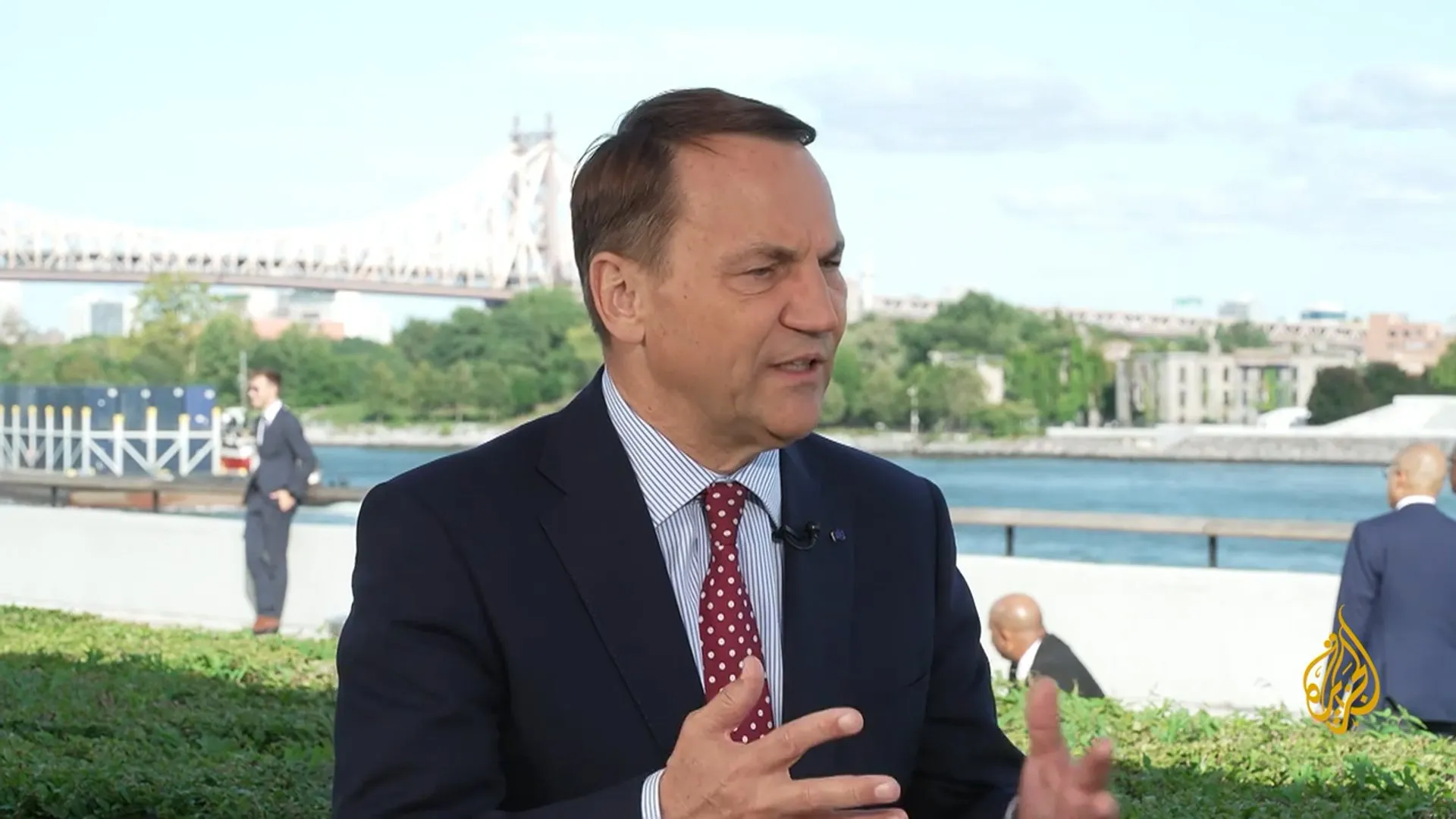
In an exclusive interview with Al Jazeera, Polish Foreign Minister Radoslaw Sikorski says Russia ‘doesn’t have the forces to really invade NATO.’ Sikorski was speaking on the sidelines of the UN General Assembly in New York.
Swedish and German forces are conducting what appears to be the first joint rehearsal of their rapid-reinforcement plans for the Baltic island of Gotland. The exercise is another step in Sweden’s defense planning for an island whose position in the middle of the Baltic gives it an outsized strategic importance for controlling access, protecting the Baltic states, and maintaining NATO’s freedom of movement in a region where Russian military activity remains a persistent concern.
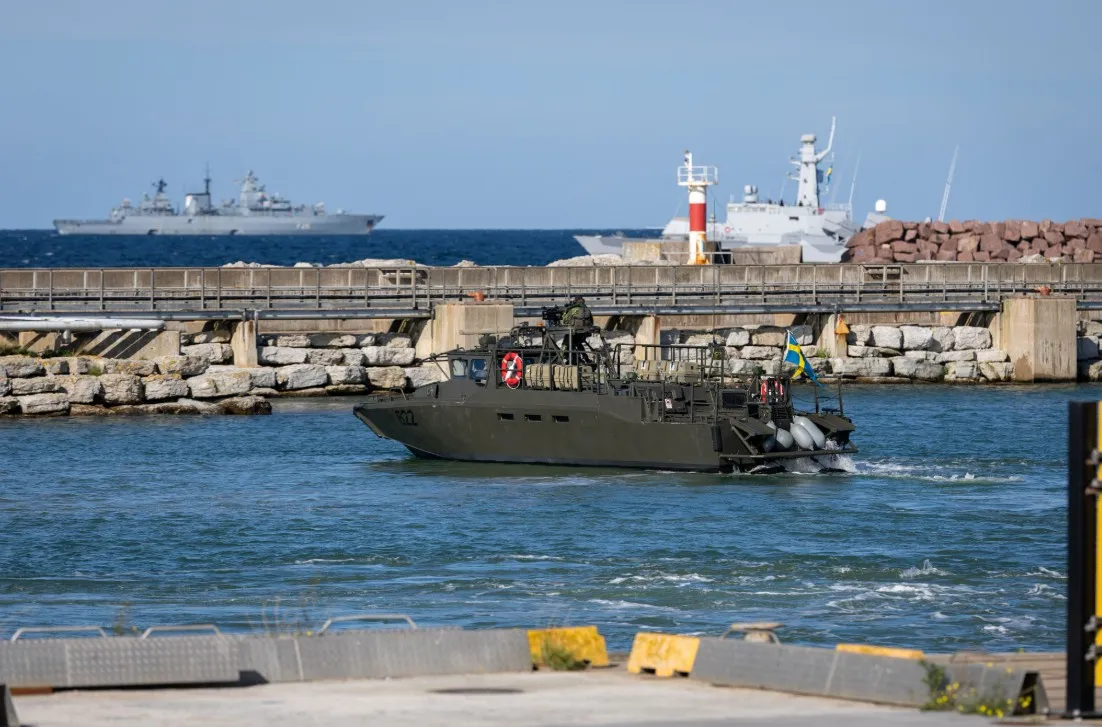
German and Swedish warships stand offshore while a Swedish CB90 fast assault craft operates in the harbor at Visby. Bundeswehr/Marc Tessensohn
The exercise, Silver Wotan 2026, running between September 14-23, brings together Swedish and German forces across the land, maritime, and air domains. The scenario is built around a Swedish request for allied assistance, with German forces moving personnel and equipment across the Baltic before integrating with Swedish units already defending the island. The operation is testing the entire process of getting allied combat power to Gotland, protecting it during the movement to Visby, and rapidly incorporating it into the island’s existing defensive network.
A video shows troops coming ashore on Swedish CB90 fast assault craft, a type that German soldiers are also trained to operate:
A rapid deployment of German and Swedish forces to Gotland island is being carried out today. Units from 🇸🇪 and 🇩🇪 are rehearsing the swift reinforcement of the strategic island in order to ensure the security of the Baltic Sea.#SilverWotan#NATOpic.twitter.com/A0r3LF8XUP
The strategic importance of Gotland has grown considerably following Sweden’s accession to NATO in March 2024, which was a direct response to the full-scale Russian invasion of Ukraine.
Located approximately halfway between mainland Sweden and the Baltic states, the island occupies a central position in the Baltic Sea, close to the maritime approaches to the Gulf of Finland and within reach of the Russian exclave of Kaliningrad. Its location gives forces operating from Gotland a potentially significant position from which to conduct surveillance, air defense, and maritime operations, while also making the island an important part of the wider network connecting NATO’s northern and eastern members.
The location of Gotland within the Baltic region. Google Earth
At the same time, Gotland sits within an extremely complex littoral environment, where shallow waters, islands, narrow maritime approaches, and the proximity of multiple states can make both offensive operations and defensive planning more difficult. The region has also been shaped by longstanding Swedish concerns about Russian clandestine activity, including intelligence gathering and other forms of covert or deniable activity. The complexity of the Baltic operating environment can make such activities harder to detect and attribute, adding another layer of uncertainty alongside the more conventional military challenges facing the region.
The unloading operation in Visby. The vehicles seen here were transported by sea from Karlskrona to the Swedish mainland. Bundeswehr/Marc Tessensohn
Geography has long made Gotland important to Swedish defense planning, but its significance has taken on a broader dimension since Sweden joined the alliance. NATO has described the island as strategically important to its freedom of maneuver in the Baltic, while Swedish officials have highlighted its potential role as a hub for military operations and logistics in the region.
The current exercise is designed around the practical difficulties of reinforcing such a position.
Military equipment is being transported by sea to Visby, Gotland’s principal port, including by commercial ferry. In Visby, Swedish and German personnel are securing the harbor and conducting the reception of the arriving force. Among the equipment being moved are air defense systems, while Swedish forces are also operating coastal defense systems armed with anti-ship missiles.
German Army vehicles roll into Visby during Silver Wotan. Bundeswehr/Marc Tessensohn
Meanwhile, publicly available flight-tracking data showed German Luftwaffe transport aircraft, including at least one Airbus A400M airlifter, apparently involved in the effort. The commercial airport at Visby has long also been used for military activities related to Gotland and the wider Baltic region.
The movement is supported by Swedish and German naval forces and other aircraft, creating a scenario in which the maritime transit, protection of the port, air operations, and subsequent movement of troops and equipment ashore all form part of the same military problem. Once ashore, the arriving forces have to be moved into position and integrated with Swedish units already responsible for defending the island.
The Swedish Gotland Regiment, P 18, provides the core of the island’s permanent military presence. The regiment, Sweden’s youngest and smallest, has been rebuilding its capabilities since Sweden began expanding its military presence on Gotland. Its forces form the basis of the ground-defense structure into which allied reinforcements would be incorporated.
Soldiers of the Gotland Regiment of the Swedish Army camouflage an armoured vehicle during an earlier field exercise near Visby. Photo by Jonathan NACKSTRAND / AFP
Swedish coastal defense capabilities are another important element of the drill. Land-based anti-ship missiles provide the island with a means of threatening hostile surface vessels operating in the surrounding waters, giving the defense of Gotland a direct connection to the wider maritime battle for the Baltic. During Silver Wotan, Swedish and German forces are also conducting anti-surface warfare activities alongside the broader reinforcement operation.
Germany is contributing more than 500 troops to the exercise, part of approximately 2,000 Bundeswehr personnel involved, including elements from the army, navy, and air force. The German Luftwaffe has deployed Panavia Tornado aircraft for surveillance, while German naval forces are participating in the maritime component, and German ground personnel are involved in the reinforcement and security activities on Gotland.
Stock photo of a Luftwaffe Tornado ECR equipped for a reconaissance mission. Bundeswehr
The exercise scenario is particularly relevant against the backdrop of Russia’s continuing military presence in the Baltic region.
Russia maintains major military infrastructure in Kaliningrad, including naval, air, missile, and air defense capabilities, while the Russian Baltic Fleet operates from bases in the region. Kaliningrad’s position between Poland and Lithuania gives Moscow a significant military foothold inside the NATO area, while Russian forces and military infrastructure elsewhere along the Baltic add to the complexity of operating and reinforcing allied territory in the region.
The security environment around the Baltic has also deteriorated considerably since Russia’s full-scale invasion of Ukraine. NATO has increased its surveillance and military activity in the region, including the launch of Baltic Sentry in January 2025 following a series of incidents involving critical undersea infrastructure. The alliance has subsequently expanded efforts to monitor maritime activity and protect infrastructure and sea lines of communication.
A Swedish Navy Helicopter 15 on the flight deck of patrol ship HMS Carlskrona as part of the NATO Baltic Sea patrol mission, Baltic Sentry, aimed to secure critical underwater infrastructure. Photo by Johan NILSSON / TT NEWS AGENCY / AFP
Swedish authorities have stressed that Silver Wotan was planned in advance and is not being conducted in response to a specific imminent Russian threat. The exercise nonetheless reflects the operational environment in which Swedish and NATO planners now have to consider the possibility that maritime and air movements across the Baltic could be monitored, disrupted, or contested.
The exercise also builds on a series of increasingly large Swedish-led activities designed to test the reception of allied forces on Swedish territory. During Aurora 26 earlier this year, more than 18,000 troops from 13 countries participated in operations across Sweden, including the deployment of allied forces to Gotland alongside the Gotland Regiment and Swedish Home Guard. NATO described that activity as an emergency deployment intended to test the reinforcement of the island.
A Dutch AH-64 Apache attack helicopter takes part in Exercise Aurora 26 in southern Sweden on April 29, 2026. Photo by Johan NILSSON / various sources / AFP
Silver Wotan places a more concentrated emphasis on the Swedish-German relationship and on the movement of an allied force into the island’s existing defensive structure.
Germany’s participation is also consistent with its growing military role in the Baltic and along NATO’s northeastern flank. Berlin is already providing forces for NATO’s forward defense in Lithuania and has increasingly emphasized the ability to move German forces rapidly across northern Europe in support of allied operations.
For Sweden, meanwhile, Gotland has become one of the clearest examples of how NATO membership has changed the country’s defense planning. The island remains a Swedish responsibility, but its location means that what happens there has consequences well beyond Sweden’s territorial defense.
German and Swedish troops on a Swedish CB90 fast assault craft. Bundeswehr/Marc Tessensohn
A defended and adequately supplied Gotland provides NATO with a strategically positioned base for surveillance and defensive operations in the Baltic, while the ability to reinforce it demonstrates that the alliance can maintain access to the island even as the surrounding maritime and air environment becomes more contested.
The exercise comes as European allies are being forced to plan for a NATO in which the United States may provide less of the conventional military weight it has supplied for decades. The Pentagon is reviewing the size and posture of U.S. forces in Europe, including the forces and capabilities Washington would make available in a European crisis, while NATO’s top commander has said further U.S. troop withdrawals should be expected as European allies build up their own conventional capabilities.
A German and a Swedish soldier involved in securing Visby during Silver Wotan 2026. Bundeswehr/Marc Tessensohn
At the same time, the alliance now describes Russia as its most significant and direct security threat, citing military activity alongside airspace violations, sabotage, cyber operations, and other forms of hybrid pressure. There are also growing concerns that Russia could try something in the Baltics, while it continues to step up its gray-zone activities regardless. NATO officials have warned that Russia could rebuild enough military capacity to pose a more serious conventional challenge to the alliance before the end of the decade.
There are escalating warnings from Poland that Russia is preparing to widen its war against Ukraine, with “accidental” missile and drone strikes on NATO territory.
Such a move – Russia falsely claiming air strikes that hit NATO allies happened by accident – would be designed to…
For Sweden and Germany, the Silver Wotan exercise is a practical test of how quickly European forces can reinforce and defend one of the Baltic’s most strategically important positions. As the security environment grows more contested and Europe prepares for a future in which U.S. forces may not be as readily available, the ability to move allied combat power across the region and integrate it into existing defenses is becoming an increasingly important part of NATO’s deterrence.
JEDDAH: Around 150 senior business leaders, investors and policymakers will gather in Riyadh on Sept. 29 to examine the forces expected to shape Saudi Arabia and wider MENAT economies over the next five years.
Forum to examine five-year economic outlook
The inaugural Economic Forum by Servcorp, powered by Emerging Markets Intelligence & Research, or EMIR, will examine the broader forces shaping the Kingdom and the wider Middle East, North Africa, and Turkiye, or MENAT, according to a press release.
As Saudi Arabia continues to advance its Vision 2030 agenda, the forum will use the Kingdom as its base while adopting a broader MENAT perspective.
Its five-year outlook will focus on the longer-term forces shaping business and policy decisions, drawing on Servcorp’s regional experience and EMIR’s economic intelligence to connect global developments with the practical realities of operating across MENAT.
Leaders to discuss regional growth and business priorities
“After more than 25 years supporting businesses in the region, we know that ambition creates value only when it is translated into execution,” CEO, Middle East, Europe, and America at Servcorp, David Godchaux, said.
Godchaux added that leaders must decide where to commit, which capabilities to build and which priorities to defer, yet the context for making those decisions is becoming more complex.
He added that the Economic Forum by Servcorp would provide a setting for candid, peer-level discussions on the decisions that will shape the region’s next phase of growth.
“The Economic Forum by Servcorp will provide a setting for candid, peer-level discussions on the decisions that will shape the region’s next phase of growth,” he said.
Yemeni government forces have advanced in western Taiz after successfully repelling a Houthi offensive.
Published On 14 Sep 202614 Sep 2026
Armed forces affiliated with Yemen’s internationally recognised government have retaken positions from the Houthis and are advancing in the southwestern Taiz province as clashes intensify.
Reporting from Taiz on Monday, Al Jazeera Arabic’s Yasser Hassan said forces loyal to the Saudi Arabia-backed Yemeni government advanced in western Taiz on Sunday after successfully repelling a Houthi offensive.
Recommended Stories
list of 3 itemsend of list
“This comes with the support of air strikes targeting Houthi gatherings. The air force continues to bomb the Houthis. On the west coast in Mocha, Dhubab, and their surroundings,” Hassan said, citing a source in government forces.
In a statement on Monday, the Houthis, also known as Ansar Allah (supporters of God), said they launched attacks on targets in Saudi Arabia using dozens of ballistic missiles and drones.
The group said the attacks targeted “military facilities and infrastructure, including aircraft hangars, radar installations, runways, ammunition depots and other targets at King Khalid airbase in Khamis Mushait”, Saudi Arabia.
It said the attacks were a response to a Saudi offensive, which involved more than 300 air strikes across Yemen over five days.
There was no immediate comment from Saudi Arabia on the Houthi claims.
On Sunday, the Saudi civil defence agency sent alerts for the city of Abha and the region around Khamis Mushait, but they were quickly lifted shortly afterwards.
Fighting in Yemen’s more than 10-year civil war reignited in July, threatening a United Nations-brokered truce that halted large-scale violence in 2022, after the Houthis declared a maritime blockade on Saudi Arabia and began targeting its ships in the Red Sea.
The fighting soon spilled over beyond the country’s borders, with the Houthis carrying out air attacks on southern Saudi Arabia, including oil facilities. Dozens of people were wounded in those attacks.
Clashes in Yemen intensified last week after the Houthis captured parts of the country’s Red Sea coast, fortifying their hold on the Bab al-Mandeb strait, a key waterway which handles about 12 percent of global trade, including 11 percent of maritime oil and 8 percent of liquefied natural gas (LNG).
The waterway has been an economic lifeline for Saudi Arabia and its oil exports, as the Strait of Hormuz has been effectively blocked by Iranian forces since the United States and Israel launched their war on Iran in February.
The Houthis captured more strategic islands in the southern Red Sea, The Associated Press news agency reported on Monday, citing Yemeni government and Houthi officials.
Houthi fighters were deployed on the islands of Greater Hanish and Lesser Hanish about 86 nautical miles (160km) north of the Bab al-Mandeb, according to two government officials and a Houthi official, the AP reported.
Meanwhile, the International Organization for Migration said on Sunday the fighting in Yemen in recent weeks had displaced nearly 86,000 people.
It added that some of those displaced by the conflict were fleeing Yemen altogether, with more than 2,000 people reaching neighbouring country Djibouti.
DUBAI: Fighting in Yemen intensified on Sunday as government forces claimed fresh gains against the Houthis in Taiz, state news agency Saba reported.
Yemeni government forces recaptured positions overlooking the Jardad area in western Taiz and advanced toward Gail Bani Omar, the agency reported citing a military source.
The source said government forces seized military equipment and inflicted heavy losses on the Houthis.
Government aircraft also carried out strikes on Houthi positions, gatherings and vehicles in several parts of Taiz, including Dhubab, Al-Wazaiya and Haifan, according to the source.
An airstrike on a Houthi gathering in the Afira area of Jabal Habshi district destroyed several military vehicles and detonated a stockpile of medium-weapons ammunition, killing at least 10 Houthi fighters, the source said.
The latest fighting comes amid a wider escalation across Yemen, with government forces also conducting operations in Marib, Jouf, Al-Bayda and Al-Dhalea, according to the Yemeni presidency.
President Rashad Al-Alimi has held talks with members of the Presidential Leadership Council, the prime minister, military commanders and provincial officials to assess developments on the various fronts.
He said individual changes along the front lines would not alter the government’s objective of restoring state control across Yemen.
Houthi attacks on Saudi Arabia
The escalation has also extended beyond Yemen’s borders, with the Houthis continuing attacks on Saudi Arabia.
Saudi Arabia’s Civil Defense issued emergency alerts early on Monday covering Khamis Mushait, Abha, Jazan and Najran in the southwest of the Kingdom before announcing that the danger had passed.
Civilian toll rises
The fighting has also triggered a major new displacement crisis inside Yemen.
Yemen’s Ministry of Human Rights said on Sunday that 150 civilians had been killed and more than 200 wounded since Sept. 3 in fighting and attacks in Taiz, Hodeidah and Marib.
The ministry said about 85,000 people had been displaced during the same period, while citing International Organization for Migration data showing that around 2,000 people had arrived in Djibouti as a result of the escalation.
The ministry accused the Houthis of launching ballistic missiles, drones and other weapons on populated areas, displacement camps and civilian convoys.
It also reported attacks on civilian and medical facilities, kidnappings, arbitrary detention, looting and alleged field executions.
The ministry called on the international community, the UN and human rights bodies to protect civilians and displaced people, investigate alleged violations and ensure humanitarian access.
AL-MUKALLA: Yemen’s government forces are better prepared, more experienced and better armed to defend the central city of Marib against any renewed Houthi offensive, a senior military official said, amid reports that the Iran-backed group is massing forces around the province.
Brig. Yahya Al-Hatemi, director of the Yemeni army’s military media, told Arab News that government forces had gained significant battlefield experience during more than a decade of fighting and were ready to repel any attempt by the Houthis to advance on Marib.
“The armed forces have generally become more organized, powerful and effective,” Al-Hatemi said.
“Over the past decade, they have gained combat experience that enabled them to overcome adversity, master military tactics and identify the enemy’s strengths and weaknesses.”
Marib has become one of the most strategically important government-held areas in Yemen since the war escalated in 2015.
It is home to more than 2 million displaced people, major army bases, oil and gas fields and a key power station. The Houthis have repeatedly attempted to seize the city, but previous offensives have failed.
Over the weekend, Yemeni media reported that the Houthis had sent large numbers of fighters and military equipment to areas of Marib province under their control, raising fears of preparations for another offensive.
The reported buildup followed major Houthi gains along Yemen’s western coast, including the seizure of the Red Sea port city of Mokha and advances toward the Bab Al-Mandab area.
Al-Hatemi said the army was aware that Marib could become the Houthis’ next major target.
“We know that the new pressure will be directed at Marib,” he said.
“However, Marib has significant military strength and divine protection. Moreover, the Houthis lack a popular support base there. Quite the opposite: The local environment is hostile to them.”
The Houthis launched a major offensive to capture Marib in early 2021, with fighting continuing into early 2022 and leaving hundreds of civilians and combatants dead or wounded.
The campaign largely subsided following the UN-brokered truce in April 2022, although the Houthis continued launching missile and drone attacks and mobilizing forces around government-held parts of the province.
Military commanders say the situation is different today.
Government forces are operating under a more unified command and have accumulated years of experience fighting the Houthis across multiple fronts.
For the first time in more than a decade, Yemen’s military has also reactivated its air force, which has recently carried out strikes against Houthi positions.
“The armed forces were supplied with military equipment they had previously lacked, while the army and navy were restructured,” Al-Hatemi said.
“In addition, the air force, which had been absent for 11 years, was reactivated.”
Presidential Leadership Council member and Marib Gov. Sultan Al-Aradah expressed similar confidence, saying government forces were capable not only of defending the province but eventually of taking the initiative and launching a broader campaign against Houthi-held territory.
“There is no doubt that Marib is part of the broader battlefields across the country,” Al-Aradah told Saba TV.
“From the beginning, the Marib front has focused solely on victory, supporting the people and supporting all fronts across Yemen. The objective of the forces in Marib and elsewhere is to restore the capital, Sanaa.”
Al-Aradah urged families in Houthi-controlled areas not to send their children to fight alongside the group.
“I hope they do not send their misled children into death traps … horrific slaughterhouses that make one shudder with shame,” he said.
“It is deeply regrettable to witness, right before our eyes, these scenes where hundreds, even thousands, of misled individuals are sent off — unaware of where they are going or whom they are fighting.”
Al-Aradah accused the Houthis of reigniting the war through their latest military escalation and blamed Iran for encouraging the group to reject peace efforts.
He also praised Saudi Arabia for its support for Yemen’s internationally recognized government.
“Our Arab brothers, foremost among them Saudi Arabia, provide great support to the Yemeni people in all fields,” he said.
“They stand by Yemen’s constitutional legitimacy and support the Yemeni people in addressing their economic and humanitarian hardships. They also stand by us in our efforts to achieve stability and prosperity under a legitimate state.”
The renewed attention on Marib comes as the battlefield has widened following Houthi advances in western Yemen.
The militia’s gains around Mokha and Bab Al-Mandab have increased pressure on government forces and raised questions over where the Houthis will seek to concentrate their next major offensive.
For government commanders, however, the stated objective now extends beyond simply defending Marib.
“The priority now is to restore the Yemeni state and rid Yemen of terrorist organizations, foremost among them the Houthis, regardless of their form or nature,” Al-Aradah said.
“This is an irreversible commitment tied to the will of the people. There will be no turning back until the state is restored, whatever it takes.”
The US military has forced 99 commercial vessels to change course in the Gulf region as it enforces its blockade of Iranian ports, the US Central Command (CENTCOM) said Friday in a social media post.
Earlier the day, Iranian Foreign Ministry spokesman Esmaeil Baghaei said that foreign ministers from Gulf littoral states are scheduled to meet in Oman on Monday to exchange views on regional issues, including talks between Iran and Oman on designating safe routes in the Strait of Hormuz.
He said the meeting will be attended by Iran, Iraq and other Gulf littoral states, adding that he hoped it would prepare the ground for improving understanding among regional countries and contributing to joint regional security.
A day earlier, the US-led Joint Maritime Information Center (JMIC) said in a notice that maritime security conditions in the Middle East remained tense, with the maritime security threat level in the Strait of Hormuz still rated as “severe.”
The notice also warned of a high likelihood of attacks on vessels amid the current security situation.
NEW YORK CITY: A five-member international bloc known as the “Quintet” on Thursday rejected the prospect of any “parallel governing structures” in Sudan.
As its representatives wrapped up a “Good Offices” mission to Khartoum, they reaffirmed the need for full respect for the country’s sovereignty, unity and territorial integrity.
The rebuke, a reference to a rival administration the paramilitary Rapid Support Forces seeks to establish amid its conflict with the Sudanese Armed Forces, came after the Quintet — the African Union, the Intergovernmental Authority on Development, the Arab League, the EU and the UN — held talks with Sudanese leaders in an effort to revive a Sudanese-led political process to end the civil war, which began in April 2023.
The delegates met the chair and deputy chair of Sudan’s Transitional Sovereignty Council, the prime minister, and the undersecretary of the Ministry of Foreign Affairs and International Cooperation. They also attended a working dinner hosted by the finance minister that drew a number of political and civilian figures.
Beyond government officials, the Quintet said its representatives met a range of political and civilian groups, including the Democratic Bloc, and heard from a committee tasked with fostering the conditions for a nationwide “Sudanese Dialogue,” which briefed the delegates on its work. A meeting with independent women’s and youth groups concluded the Quintet’s mission.
The bloc described the visit as being “in the spirit of listening to the stakeholders on the ground,” with the aim of linking its diplomatic engagement outside of Sudan with initiatives emerging within the country.
“There is no military solution to the conflict in Sudan,” the Quintet said, adding that any durable political process must be paired with concrete steps to protect civilians and end hostilities.
The bloc said it remained convinced that a “credible and inclusive Sudanese led and Sudanese owned” political track can still deliver a transition to a democratic, civilian-led government that reflects the aspirations of the Sudanese people.
Sanaa, Yemen – The United Nations-recognised Yemeni government and the Houthi group have been using warplanes, missiles, drones and other weapons as they engage in intense fighting on multiple fronts in the country’s north, west and central regions.
At least 194 people have been killed and 880 others wounded in the past two weeks of fighting in parts of Taiz, the western coast, al-Jawf, Marib and Dhalea, according to aid agencies.
Iran-backed Houthis, also known as Ansar Allah (supporters of God), have intensified attacks on the coastal district of al-Makha (Mocha) located on the western coast, among others, to gain a foothold in the Red Sea – a vital shipping lane.
On the other hand, government forces have been battling to expand in Taiz and boost their control of Marib, an oil-producing region in the north.
Fighting has also been raging in the al-Jawf governorate bordering Saudi Arabia and Dhalea, which connects the Houthi-controlled north to the country’s south under the internationally recognised government.
Experts say gains or losses on any of these strategically important fronts could have significant consequences for either side.
Taiz and western coast fronts
“The hills and mountainous areas of Taiz and the western coast are key targets for the Houthis, who have repeatedly attempted to advance there,” Yazeed al-Jeddawy, the research manager at the Sanaa Center for Strategic Studies, said.
“The Houthis are trying to seize commanding terrains, cut supply routes between the coastal Mocha district and Taiz, and prevent government troops on the western coast from linking up with the Taiz Military Axis,” said al-Jeddawy.
In Taiz and along the western coast, al-Jeddawy says, the immediate contest is over the heights and roads connecting Taiz to al-Makha.
Situated roughly 60km (37 miles) from the Bab al-Mandeb strait, al-Makha enjoys a highly strategic position on the Red Sea. For a month now, the Houthis have launched missile and drone attacks on the city, causing massive damage to its port facilities and killing and injuring several civilians.
Recently, the group has also attempted to extend its ground operations towards al-Makha city.
“The Houthis seem intent on tightening their hold around [al-Makha] and moving closer to the Dhubab–Bab al-Mandeb area. A substantial advance would strengthen their position near the southern entrance to the Red Sea and give them greater leverage over international shipping,” he added.
Fuad Mussed, a Yemeni political analyst and author, told Al Jazeera that the strategic importance of the western coast and Taiz fronts stems from their proximity to Bab al-Mandeb, a chokepoint connecting the Red Sea to the Gulf of Aden and one of the world’s most important shipping routes.
“The Houthis seek to move closer to this vital waterway to threaten maritime traffic. Such a move aims to keep the Strait of Hormuz and Bab al-Mandeb under the influence of Iran and use them as leverage against regional and international powers. This is a strategy Tehran has been pursuing for years,” Mussed said.
Iran has blocked the Strait of Hormuz, a global oil chokepoint, to use it as leverage in the war against the United States. It has also warned that its allies could shut shipping via Bab al-Mandeb. Iran also attacked Saudi Arabia’s pipeline used to export oil from the Red Sea.
In July, the Houthis declared a blockade against Saudi vessels transiting through the Red Sea – an alternative to the Strait of Hormuz.
Marib and al-Jawf fronts
Over the past few weeks, pro-government forces have attacked Houthi-held territories in Marib and al-Jawf, facing further retaliation from the Houthis.
Saddam al-Huraibi, a Yemeni political commentator, said the Marib front is fateful for both sides.
“Marib is a government stronghold in north Yemen. So, a Houthi expansion in Marib would threaten government presence and weaken its leverage in the north. That is why pro-government troops are ready to fight tooth and nail on this front line,” al-Huraibi told Al Jazeera.
For the Houthis, the takeover of Marib will deepen the group’s authority and step towards controlling the oil and gas infrastructure. The Iran-backed group captured vast swaths of northern Yemen, including the capital, Sanaa, in 2014, but Marib has remained in government hands since.
“Dominating Marib’s oil and gas resources has been a Houthi goal for over a decade. Without facing a crushing defeat in Marib, they would keep fighting to achieve that goal,” al-Huraibi said.
Adjacent to Marib, al-Jawf is also a hub of tense fighting between the Houthis and government forces. A government gain there would lay the groundwork for further advances, while a strong Houthi defence could undermine government forces’ morale and prompt them to retreat.
“Government-aligned forces have lately focused much of their offensive effort on al-Jawf. Government gains in al-Jawf would ease the threat to Marib while requiring the Houthis to defend a much broader area,” al-Huraibi said.
Al-Jeddawy said government gains could open routes towards the north – Saada, Amran or Houthi positions north of Marib.
The Houthis have carried out attacks in Saudi Arabia, including energy facilities in the country’s south. They have also accused Saudi Arabia of launching multiple attacks in al-Jawf, al-Bayda, Marib and Taiz provinces in support of government forces.
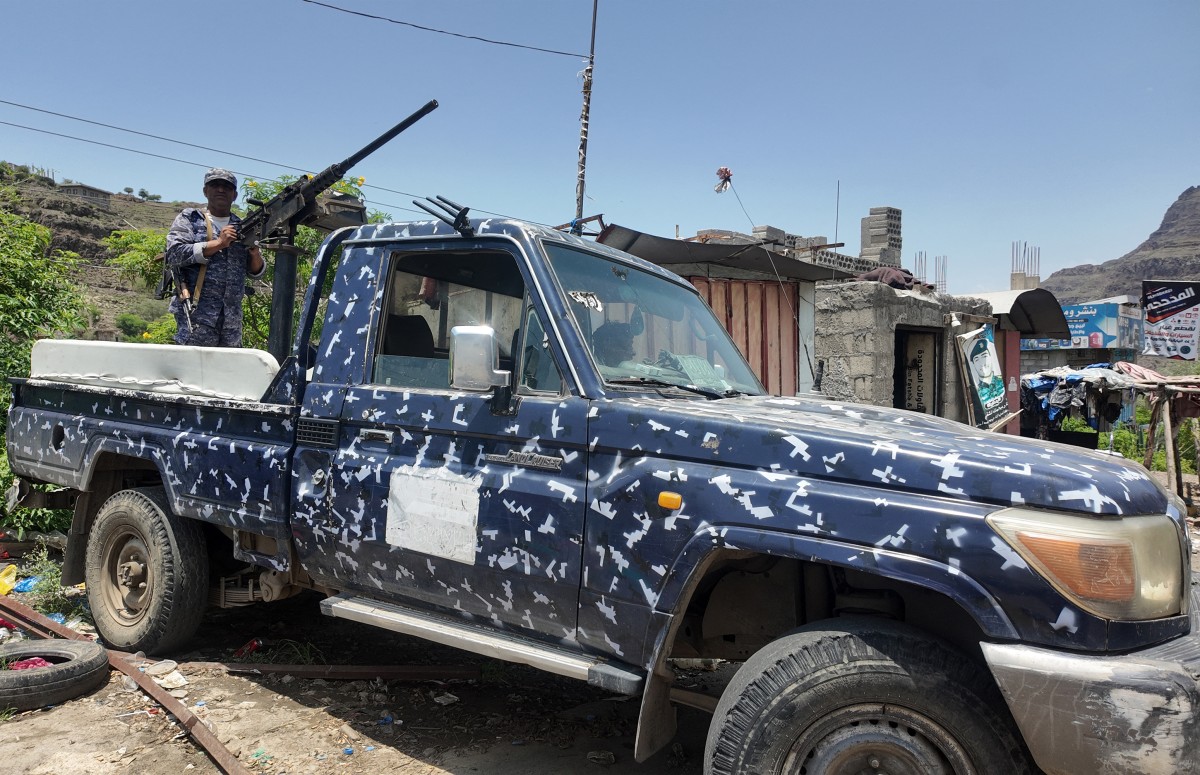
This screen grab taken from undated video footage released on September 9, 2026 by Ansarullah Media Centre shows what the Houthi authorities said are attacks on Saudi-backed forces in Jawf province’s frontlines [AFP]
The Dhalea front
Fighting on the Dhalea front, a strategic gateway between Houthi-held territory and the southern governorates, has intensified in recent weeks.
Fighting there did not fully stop during the relative calm, which began in April 2022 following the UN-brokered ceasefire.
A Houthi advance there could open a route for their fighters to reach other southern territories. On the other hand, a Houthi setback would encourage government forces to push towards Ibb, controlled by the group.
“[Houthi] advances in Dhalea could expose the southern hinterland, while [government advances] could threaten Houthi positions and supply routes towards Ibb, al-Bayda and, farther north, Sanaa,” al-Jeddawy noted.
With the escalating fighting, the Houthis face pressure on several fronts, but the group has been readying for a range of scenarios, Khaled Ghorab, a pro-Houthi general, said.
“The [Houthi] Yemeni armed forces were never caught off guard by the prospect of escalation; rather, they worked to build and develop their own military capabilities based on tactical combat plans designed to counter a comprehensive, sustained attack launched simultaneously from land, sea and air,” he said.
Ghorab noted that this state of readiness enables the Houthi forces to carry out a direct response to sources of the threat – whether deep within enemy territory or at sea – targeting military bases or aircraft carriers as far as the Horn of Africa.
While the warring parties compete to seize strategic positions on several front lines, the latest escalation is also closely related to the wider regional confrontation.
“Iran has an interest in keeping Yemen and the Red Sea active as sources of leverage, while parts of the government camp believe the Houthis are under growing strain and that this is an opportunity to weaken them,” al-Jeddawy, the Sanaa-based researcher, said.
“The escalation still reflects domestic military and political aims, but its timing and direction cannot be separated from the regional war,” he told Al Jazeera.
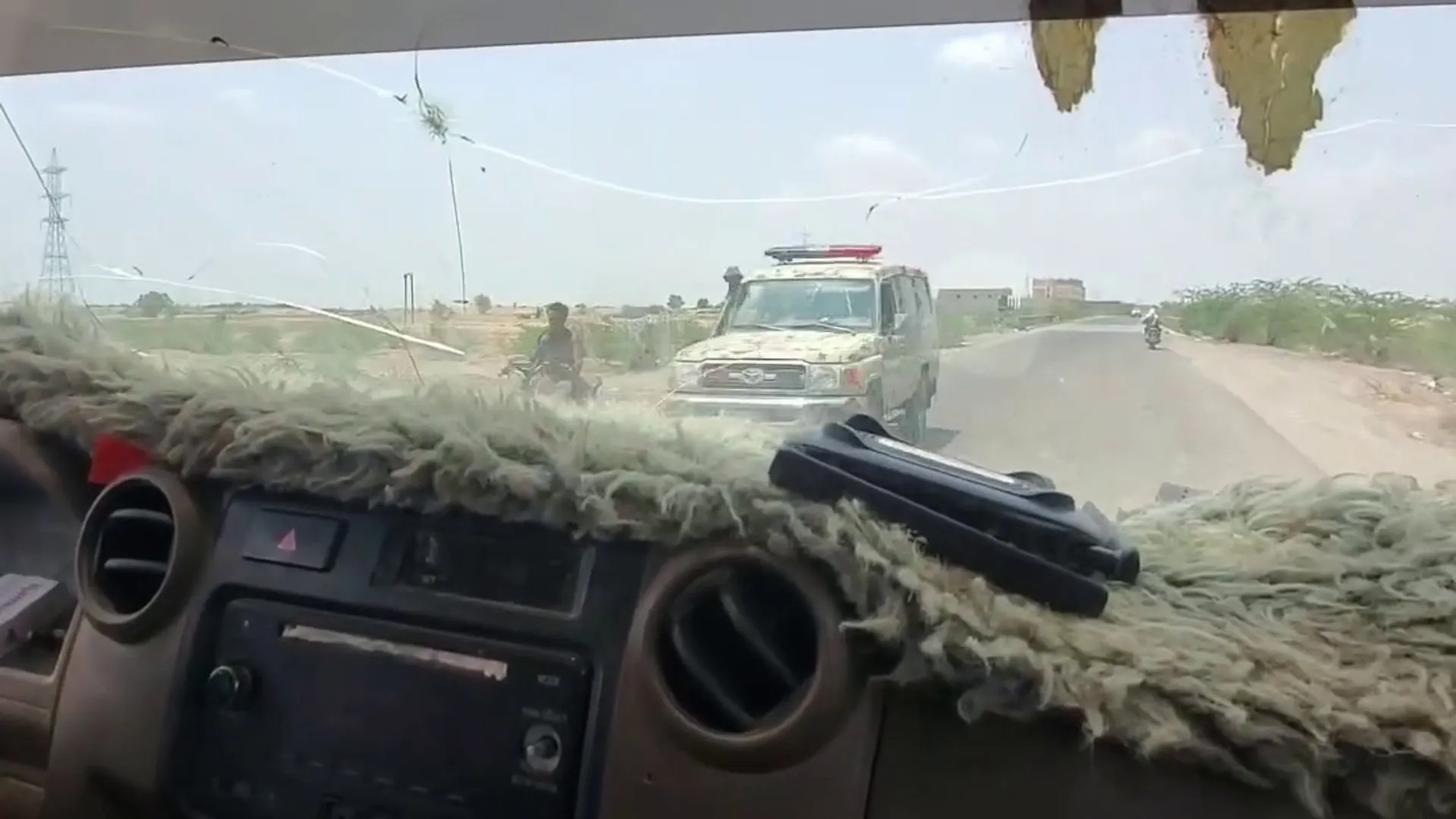
A suspected-Houthi roadside ambush of Yemeni government forces has been captured on camera. The convoy was driving through the Hodeidah governorate when gunmen opened fire, killing one person and wounding several others.
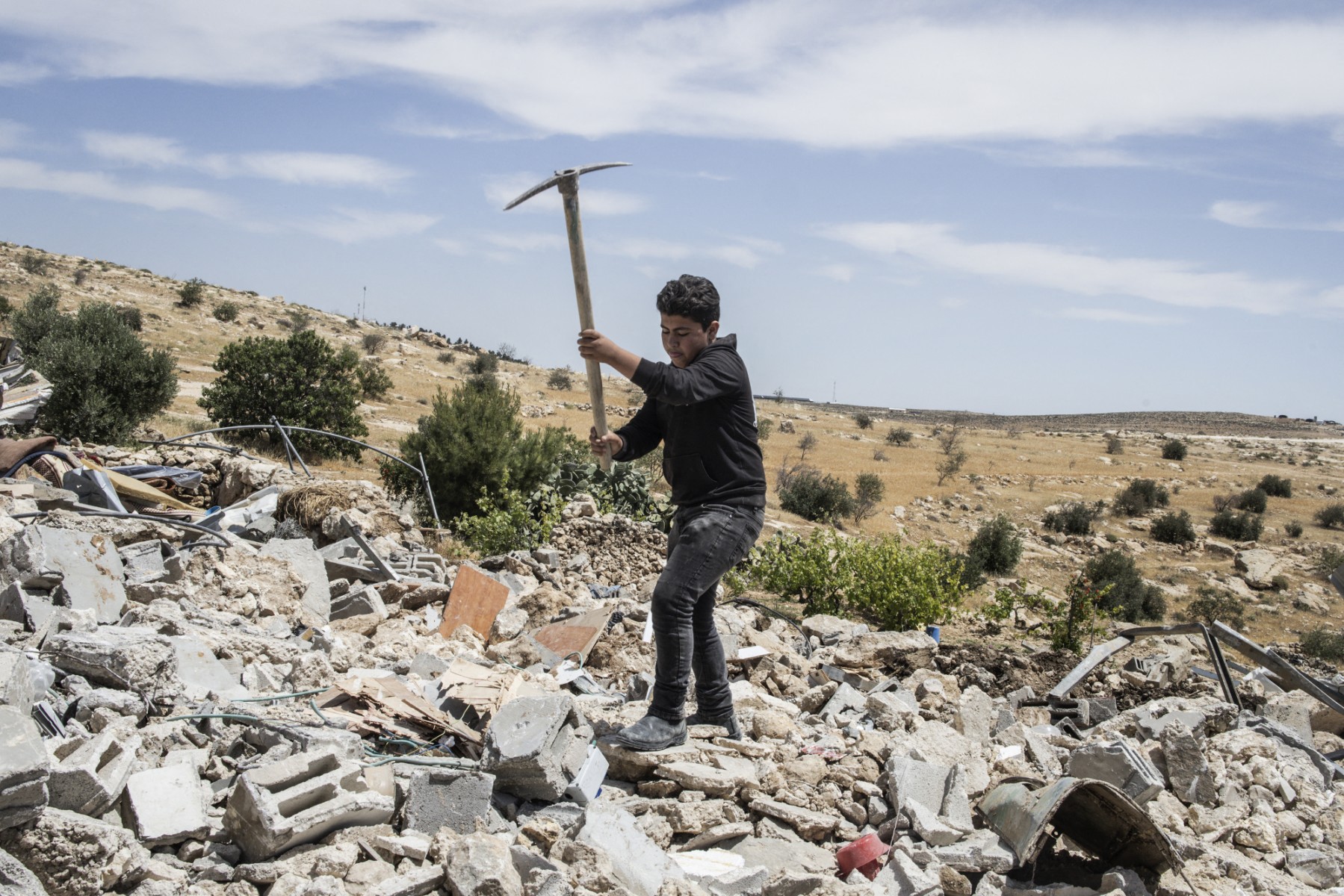
LONDON: Israeli forces demolished a home on Tuesday that belonged to a Palestinian family in the nomadic hamlet of Khirbet Khalla Al-Dabaa, located in Masafer Yatta, south of the occupied West Bank.
Fourteen members of the Mohammad Ali Dabbaba family lost their home when Israeli authorities demolished their 200-sq.-meter residence, constructed from tin and stone, according to the Palestine News Agency.
Forces also filled a crucial water well for the Bedouin community, destroyed electricity networks, damaged several water tanks, and uprooted 15 trees. Additionally, Israeli forces demolished a residential cave belonging to Abdullah Dabbaba, which housed six people.
Israeli authorities have issued demolition notices for 14 inhabited caves and several homes in Khirbet Khalla Al-Dabaa, the report added.
Masafer Yatta consists of nearly 15 Palestinian hamlets located in the southern West Bank; Khirbet Khalla Al-Dabaa is one of them. Israeli forces and settlers regularly invade the area in an effort to evict its total population of 1,150 residents, half of whom are children. Since the 1980s, the area has been designated a military zone by Israel.
In late August, armed Israeli settlers detained a 22-year-old British activist in the village of Umm Al-Kheir in Masafer Yatta, who was part of a “protective presence” initiative intended to support Palestinian residents. He was deported from Israel last week.
Costa Rican President Laura Fernandez said US ground operations could boost national security, but stressed no plans are currently in place and any deployment would require legislative approval.















![This screen grab taken from undated video footage released on September 9, 2026 by Ansarullah Media Centre shows what the Houthi authorities said are attacks on Saudi-backed forces in Jawf province’s frontlines [AFP]](https://i0.wp.com/www.aljazeera.com/wp-content/uploads/2026/09/afp_6aa18c010e16-1788972033.jpg?w=640&ssl=1)