Southampton back Tonda Eckert despite missing out on a playoff final for a Premier League place due to spying scandal.
Published On 2 Jun 20262 Jun 2026
Southampton manager Tonda Eckert has apologised for orchestrating the “spygate” scandal that led to the club’s expulsion from the Championship playoffs, as owner Dragan Solak insisted that he would not sack the German.
“For everything that’s happened, I do want to apologise, and I hold my hand up because as a head coach I am responsible for everything that has happened in this football club,” Eckert said in a video statement on Tuesday.
Recommended Stories
list of 4 itemsend of list
The Saints were kicked out of last month’s playoff final after admitting they had observed a training session held by semifinal opponents Middlesbrough, as well as two other similar incidents during the season.
They also received a four-point deduction that will be applied to the 2026-27 Championship table, while the Football Association has opened its own investigation and could yet charge Eckert.
An independent disciplinary commission of the English Football League (EFL) ruled that there had been a “contrived and determined plan from the top down to gain a competitive advantage” through spying missions.
It said Eckert had authorised the tactics, highlighting the “particularly deplorable” use of junior members of staff to conduct clandestine operations.
Southampton beat Middlesbrough 2-1 over two legs in the playoff semifinals, but Boro were reinstated, going on to lose in the final to Hull City, who were promoted to the Premier League.
The prize for the winners of the final is regarded as the most lucrative in world football, with the winners joining the richest domestic league in the world. Hull will receive an estimated 200 million pounds ($268m) in extra income.
Eckert, who was appointed head coach in December, put out an eight-minute video statement about the scandal on Southampton’s social media channels.
The 33-year-old said: “I am devastated that after six months of building that relationship [with fans] back up, the season has come to an end, come to an end that couldn’t have left us in a worse place than we are in right now.”
He claimed that observing other teams was routine in other countries, though he admitted that this was not an excuse for his actions in the English second tier.
“When I worked in Italy for over four years, every starting lineup that we’ve chosen for the games was always out in the media before games,” he said.
“And the reason is that our training sessions, especially the ones before games, have always been observed from the media and have always been observed from opponent teams that we came up against.
“[Pep] Guardiola has spoken about this in his time at Bayern Munich, that it has been common practice in Germany to observe training sessions, knowing that other teams would do the same.”
Many had anticipated Eckert would lose his job after Southampton’s expulsion from the playoffs, but chairman Solak gave robust backing to Eckert in his own post on the club’s channels on Tuesday.
“Tonda’s period as our head coach has been a success so far. Our form during 2026 has been remarkable, and we believe he is the man to take us forward,” Solak said.
“As a board, we are fully behind him, and together we only have one objective – we want promotion back to Premier League.”
Solak told the BBC separately that Tonda had been subject to a witch-hunt in the media, saying he believed the club had been “over-sentenced”.
The Serbian, whose media company acquired a majority stake in the south-coast club in 2022, said: “I believe Tonda that he didn’t know that it was the rule that he was breaking.
“My personal opinion, and the opinion of the board, is that he is a manager who deserves to be backed by us and to be supported by us.”
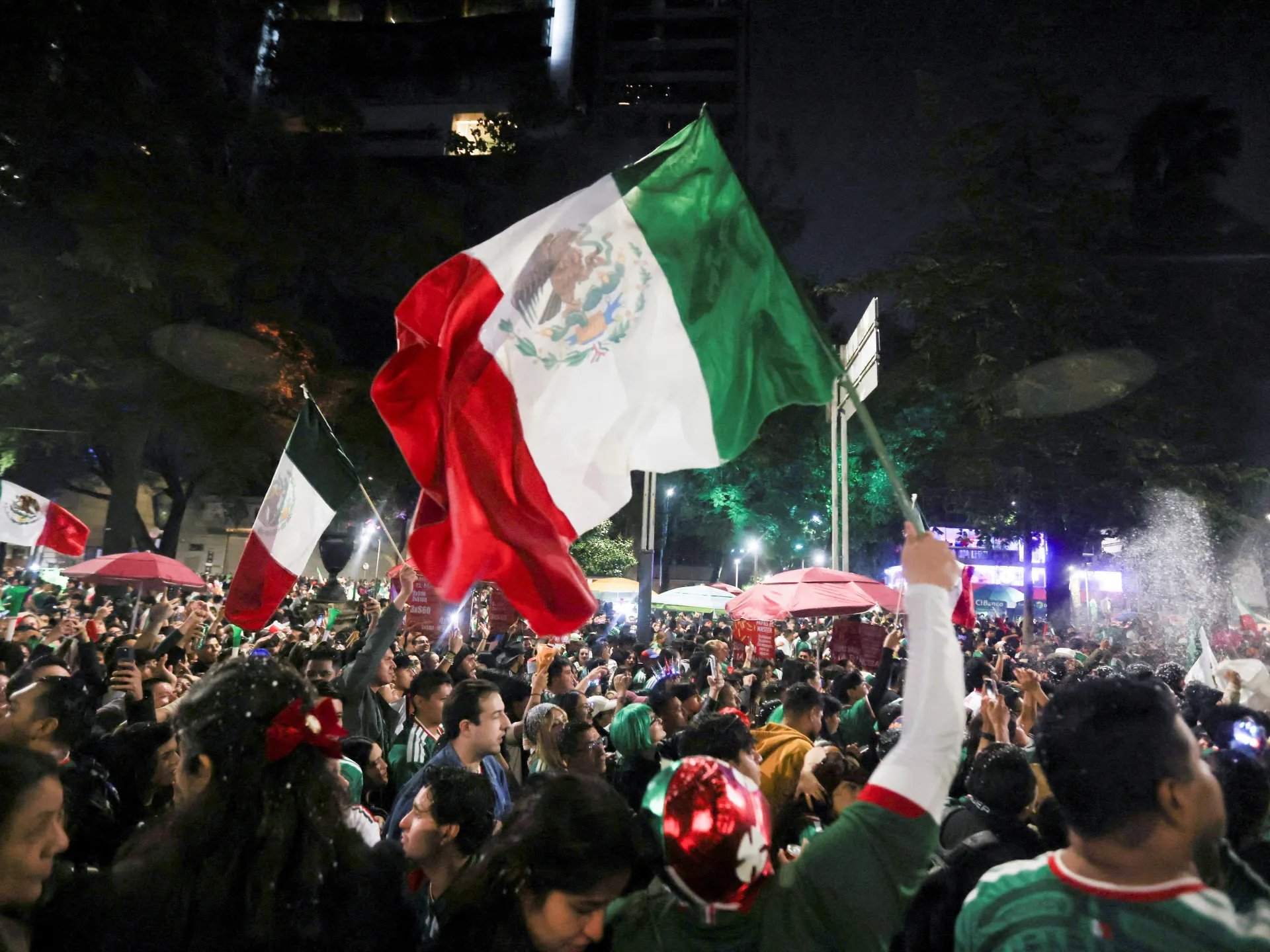
The countdown to the FIFA World Cup 2026 has entered the single-figure mark, with the tournament getting under way in nine days in Mexico City.
The biggest edition of the World Cup, with 48 nations and 104 games, will be hosted by three countries for the first time, as the United States and Canada share the honours with Mexico.
Recommended Stories
list of 3 itemsend of list
All 48 teams heading to the tournament have released their final 26-man squads, marking possible final appearances for greats like Lionel Messi and Cristiano Ronaldo.
Young stars looking to dethrone the icons, including Spain’s Lamine Yamal and Brazil’s Endrick, will look to make their mark in their first appearance at the global event.
Here are all 48 World Cup squads for the FIFA World Cup 2026:
Midfielders: Houssem Aouar, Nabil Bentaleb, Hicham Boudaoui, Fares Chaibi, Ibrahim Maza, Yassine Titraoui, Ramiz Zerrouki
Forwards: Mohamed Amine Amoura, Nadir Benbouali, Adil Boulbina, Fares Ghedjemis, Amine Gouiri, Riyad Mahrez, Anis Hadj Moussa
Argentina World Cup squad
Goalkeepers: Emiliano Martinez, Geronimo Rulli, Juan Musso
Defenders: Leonardo Balerdi, Gonzalo Montiel, Nicolas Tagliafico, Lisandro Martinez, Cristian Romero, Nicolas Otamendi, Facundo Medina, Nahuel Molina
Midfielders: Leandro Paredes, Rodrigo De Paul, Valentin Barco, Giovani Lo Celso, Exequiel Palacios, Alexis Mac Allister, Enzo Fernandez
Forwards: Julian Alvarez, Lionel Messi, Nicolas Gonzalez, Thiago Almada, Giuliano Simeone, Nicolas Paz, Jose Manuel Lopez, Lautaro Martinez
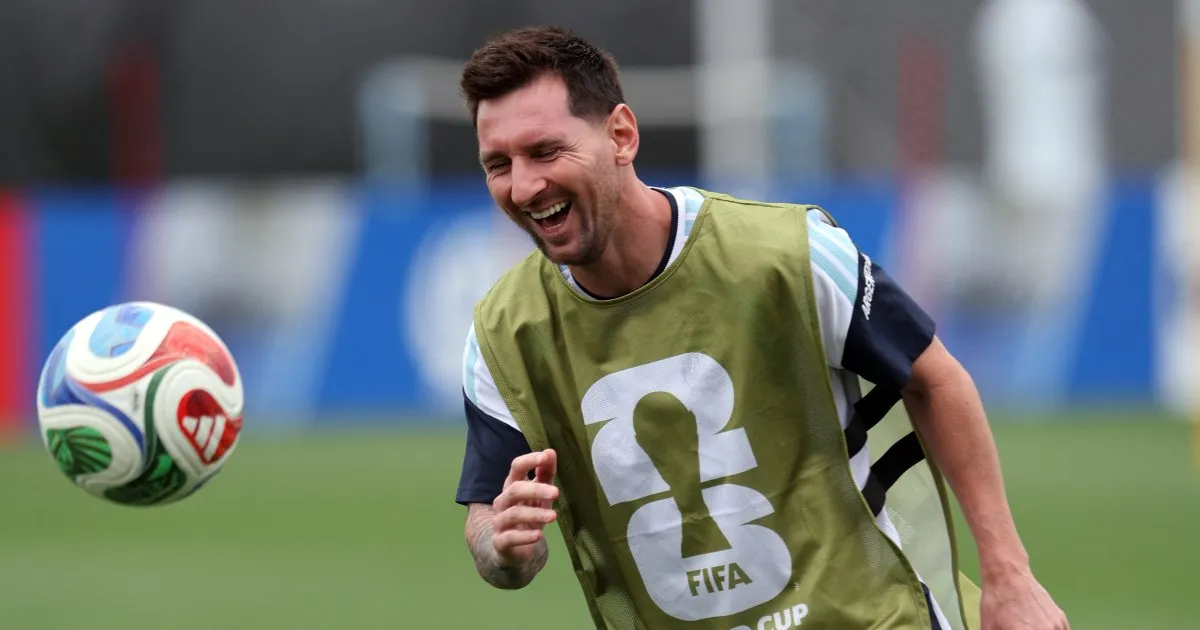
The World Cup 2026 will be Lionel Messi’s swansong [File: Gustavo Garello/AP]
Australia World Cup squad
Goalkeepers: Patrick Beach, Paul Izzo, Mathew Ryan
Defenders: Aziz Behich, Jordan Bos, Cameron Burgess, Alessandro Circati, Milos Degenek, Jason Geria, Lucas Herrington, Jacob Italiano, Harry Souttar, Kai Trewin
Midfielders: Cameron Devlin, Ajdin Hrustic, Jackson Irvine, Connor Metcalfe, Aiden O’Neill, Paul Okon-Engstler
Goalkeepers: Patrick Pentz, Alexander Schlager, Florian Wiegele
Defenders: David Affengruber, David Alaba, Kevin Danso, Marco Friedl, Philipp Lienhart, Phillipp Mwene, Stefan Posch, Alexander Prass, Michael Svoboda
Midfielders: Christoph Baumgartner, Carney Chukwuemeka, Florian Grillitsch, Konrad Laimer, Marcel Sabitzer, Xaver Schlager, Romano Schmid, Alessandro Schopf, Nicolas Seiwald, Paul Wanner, Patrick Wimmer
Forwards: Marko Arnautovic, Michael Gregoritsch, Sasa Kalajdzic
Belgium World Cup squad
Goalkeepers: Thibaut Courtois, Senne Lammens, Mike Penders
Defenders: Timothy Castagne, Zeno Debast, Maxim De Cuyper, Koni De Winter, Brandon Mechele, Thomas Meunier, Nathan Ngoy, Joaquin Seys, Arthur Theate
Midfielders: Kevin De Bruyne, Amadou Onana, Nicolas Raskin, Youri Tielemans, Hans Vanaken, Axel Witsel
Forwards: Charles De Ketelaere, Jeremy Doku, Matias Fernandez-Pardo, Romelu Lukaku, Dodi Lukebakio, Diego Moreira, Alexis Saelemaekers, Leandro Trossard
Bosnia and Herzegovina World Cup squad
Goalkeepers: Nikola Vasilj, Martin Zlomislic, Osman Hadzikic
Defenders: Sead Kolasinac, Amar Dedic, Nihad Mujakic, Nikola Katic, Tarik Muharemovic, Stjepan Radeljic, Dennis Hadzikadunic, Nidal Celik
Midfielders: Amir Hadziahmetovic, Ivan Sunjic, Ivan Basic, Dzenis Burnic, Ermin Mahmic, Benjamin Tahirovic, Amar Memic, Armin Gigovic, Kerim Alajbegovic, Esmir Bajraktarevic
Defenders: Alex Sandro, Bremer, Danilo, Douglas Santos, Gabriel Magalhaes, Ibanez, Leo Pereira, Marquinhos, Wesley
Midfielders: Bruno Guimaraes, Casemiro, Danilo Santos, Fabinho, Lucas Paqueta
Forwards: Endrick, Gabriel Martinelli, Igor Thiago, Luiz Henrique, Matheus Cunha, Neymar Jr, Raphinha, Rayan, Vinicius Jr
Brazil’s forward Neymar has found himself in the five-time champions’ World Cup squad despite recent injuries [File: Mauro Pimentel/AFP]
Canada World Cup squad
Goalkeepers: Dayne St Clair, Maxime Crepeau, Owen Goodman
Defenders: Alistair Johnston, Derek Cornelius, Richie Laryea, Niko Sigur, Joel Waterman, Luc de Fougerolles, Moise Bombito, Alphonso Davies, Alfie Jones
Midfielders: Stephen Eustaquio, Ismael Kone, Tajon Buchanan, Mathieu Choiniere, Ali Ahmed, Nathan Saliba, Liam Millar, Jacob Shaffelburg, Jonathan Osorio
Attackers: Jonathan David, Cyle Larin, Tani Oluwaseyi, Promise David
Forwards: Gilson Benchimol, Jovane Cabral, Dailon Livramento, Ryan Mendes, Nuno da Costa, Garry Rodrigues, Willy Semedo, Helio Varela
Colombia World Cup squad
Goalkeepers: Camilo Vargas, Alvaro Montero, David Ospina
Defenders: Davinson Sanchez, Jhon Lucumi, Yerry Mina, Willer Ditta, Daniel Munoz, Santiago Arias, Johan Mojica, Deiver Machado
Midfielders: Richard Rios, Jefferson Lerma, Kevin Castano, Juan Camilo Portilla, Gustavo Puerta, Jhon Arias, Jorge Carrascal, Juan Fernando Quintero, James Rodriguez, Jaminton Campaz
Forwards: Juan Camilo Hernandez, Luis Diaz, Luis Suarez, Carlos Gomez, Jhon Cordoba
Defenders: Josko Gvardiol, Duje Caleta-Car, Josip Sutalo, Josip Stanisic, Marin Pongracic, Martin Erlic, Luka Vuskovic
Midfielders: Luka Modric, Mateo Kovacic, Mario Pasalic, Nikola Vlasic, Luka Sucic, Martin Baturina, Kristijan Jakic, Petar Sucic, Nikola Moro, Toni Fruk
Forwards: Ivan Perisic, Andrej Kramaric, Ante Budimir, Marco Pasalic, Petar Musa, Igor Matanovic
(Standby: Lovro Majer, Franjo Ivanovic, Dion Drena Beljo, Ivan Smolcic, Karlo Letica, Adrian Segecic, Luka Stojkovic)
Defenders: Dylan Batubinsika, Gedeon Kalulu, Steve Kapuadi, Joris Kayembe, Arthur Masuaku, Chancel Mbemba, Axel Tuanzebe, Aaron Wan-Bissaka
Midfielders: Brian Cipenga, Meshack Elia, Gael Kakuta, Edo Kayembe, Nathanael Mbuku, Samuel Moutoussamy, Ngal’ayel Mukau, Charles Pickel, Noah Sadiki, Aaron Tshibola
Forwards: Cedric Bakambu, Simon Banza, Fiston Mayele, Yoane Wissa, Theo Bongonda
Ecuador World Cup squad
Goalkeepers: Hernan Galindez, Moises Ramirez, Gonzalo Valle
Defenders: Piero Hincapie, Willian Pacho, Pervis Estupinan, Felix Torres, Joel Ordonez, Jackson Porozo, Angelo Preciado, Yaimar Medina
Midfielders: Moises Caicedo, Alan Franco, Kendry Paez, Gonzalo Plata, Pedro Vite, Jordy Alcivar, Denil Castillo, John Yeboah, Nilson Angulo, Alan Minda
Forwards: Enner Valencia, Kevin Rodriguez, Jordy Caicedo, Anthony Valencia, Jeremy Arevalo
Egypt World Cup squad
Goalkeepers: Mohamed El Shenawy, Mostafa Shobeir, El Mahdy Soliman, Mohamed Alaa
Midfielders: Rouzbeh Cheshmi, Saeid Ezatolahi, Mehdi Ghaedi, Saman Ghoddos, Mohammad Ghorbani, Alireza Jahanbakhsh, Mohammad Mohebi, Amir Mohammad Razzaghinia, Mehdi Torabi, Aria Yousefi
Forwards: Ali Alipour, Dennis Dargahi, Amirhossein Hosseinzadeh, Mehdi Taremi, Shahriar Moghanlou
Iraq World Cup squad
Goalkeepers: Fahad Talib, Jalal Hassan, Ahmed Basil
Defenders: Hussein Ali, Manaf Younis, Zaid Tahseen, Rebin Sulaka, Akam Hashem, Merchas Doski, Ahmed Yahya, Zaid Ismail, Frans Putros, Mustafa Saadoon
Midfielders: Amir Al Ammari, Kevin Yakob, Zidane Iqbal, Aimar Sher, Ibrahim Bayesh, Ahmed Qasim, Youssef Amyn, Marko Farji
Forwards: Ali Jassim, Ali Al Hamadi, Ali Yousef, Aymen Hussein, Mohanad Ali
Ivory Coast World Cup squad
Goalkeepers: Yahia Fofana, Mohamed Kone, Alban Lafont
Goalkeepers: Yazid Abulaila, Noor Bani Attiah, Abdallah Al Fakhouri
Defenders: Mohammad Abu Hashish, Abdullah Nasib, Hussam Abu Dhahab, Yazan Al Arab, Mohammad Abu Alnadi, Salem Obaid, Saed Al Rosan, Ehsan Haddad, Anas Badawi
Midfielders: Amer Jamous, Noor Al Rawabdeh, Rajaei Ayed, Ibrahim Sadeh, Mohannad Abu Taha, Nizar Al Rashdan, Mohammad Al Dawoud, Mahmoud Mardahi
Forwards: Mohammad Abu Zraiq, Ali Olwan, Mousa Al Tamari, Odeh Fakhoury, Ibrahim Sabra, Ali Azaizeh
Mexico World Cup squad
Goalkeepers: Raul Rangel, Guillermo Ochoa, Carlos Acevedo
Defenders: Jorge Sanchez, Israel Reyes, Cesar Montes, Johan Vasquez, Jesus Gallardo, Mateo Chavez, Edson Alvarez
Midfielders: Erik Lira, Orbelin Pineda, Alvaro Fidalgo, Brian Gutierrez, Luis Romo, Obed Vargas, Gilberto Mora, Luis Chavez
Forwards: Roberto Alvarado, Cesar Huerta, Alexis Vega, Julian Quinones, Guillermo Martinez, Armando Gonzalez, Santiago Gimenez, Raul Jimenez
Morocco World Cup squad
Goalkeepers: Yassine Bounou, Munir El Kajoui, Ahmed Reda Tagnaouti
Defenders: Noussair Mazraoui, Anas Salah-Eddine, Youssef Bellammari, Achraf Hakimi, Zakaria El Ouahdi, Nayef Aguerd, Chadi Riad, Redouane Halhal, Issa Diop
Midfielders: Samir El Mourabet, Ayoub Bouaddi, Neil El Aynaoui, Sofyan Amrabat, Azzedine Ounahi, Bilal El Khannouss, Ismael Saibari
Defenders: Kristoffer Vassbakk Ajer, Fredrik Bjorkan, Henrik Falchener, Sondre Langas, Torbjorn Heggem, Marcus Holmgren Pedersen, Julian Ryerson, David Moller Wolfe, Leo Ostigard
Midfielders: Thelonious Aasgaard, Fredrik Aursnes, Patrick Berg, Sander Berge, Oscar Bobb, Jens Petter Hauge, Antonio Nusa, Andreas Schjelderup, Morten Thorsby, Kristian Thorstvedt, Martin Odegaard
Forwards: Erling Haaland, Alexander Sorloth, Jorgen Strand Larsen
Panama World Cup squad
Goalkeepers: Orlando Mosquera, Luis Mejia, Cesar Samudio
Defenders: Cesar Blackman, Jorge Gutierrez, Amir Murillo, Fidel Escobar, Andres Andrade, Edgardo Farina, Jose Cordoba, Eric Davis, Jiovany Ramos, Roderick Miller
Midfielders: Anibal Godoy, Adalberto Carrasquilla, Carlos Harvey, Cristian Martinez, Jose Luis Rodriguez, Cesar Yanis, Yoel Barcenas, Alberto Quintero, Azarias Londono
Forwards: Ismael Diaz, Cecilio Waterman, Jose Fajardo, Tomas Rodriguez
Defenders: Juan Caceres, Gustavo Velazquez, Gustavo Gomez, Junior Alonso, Jose Canale, Omar Alderete, Alexandro Maidana, Fabian Balbuena
Midfielders: Diego Gomez, Mauricio Magalhaes, Damian Bobadilla, Braian Ojeda, Andres Cubas, Matias Galarza, Alejandro Gamarra
Forwards: Gustavo Caballero, Ramon Sosa, Alex Arce, Isidro Pitta, Gabriel Avalos, Miguel Almiron, Julio Enciso, Antonio Sanabria
Portugal World Cup squad
Goalkeepers: Diogo Costa, Jose Sa, Rui Silva
Defenders: Tomas Araujo, Joao Cancelo, Diogo Dalot, Ruben Dias, Goncalo Inacio, Nuno Mendes, Matheus Nunes, Nelson Semedo, Renato Veiga
Midfielders: Samuel Costa, Bruno Fernandes, Joao Neves, Ruben Neves, Bernardo Silva, Vitinha
Forwards: Francisco Conceicao, Joao Felix, Goncalo Guedes, Rafael Leao, Pedro Neto, Goncalo Ramos, Cristiano Ronaldo, Francisco Trincao
Qatar World Cup squad
Goalkeepers: Salah Zakaria, Meshaal Barsham, Mahmoud Abunada
Defenders: Boualem Khoukhi, Pedro Miguel, Sultan Al Brake, Al Hashmi Al Hussain, Ayoub Al Alawi, Issa Laye, Lucas Mendes, Homam Al Amin
Midfielders: Ahmed Fathi, Jassim Gaber, Assim Madibo, Abdulaziz Hatem, Karim Boudiaf, Mohammed Mannai
Forwards: Almoez Ali, Akram Afif, Tahsin Mohammed, Edmilson Junior, Ahmed Al-Janehi, Ahmed Alaa, Hassan Al Haydos, Mohammed Muntari, Yusuf Abdurisag
Saudi Arabia World Cup squad
Goalkeepers: Nawaf Al Aqidi, Mohamed Al Owais, Ahmed Alkassar
Defenders: Saud Abdulhamid, Jehad Thakri, Abdulelah Al Amri, Hassan Tambakti, Ali Lajami, Hassan Kadesh, Moteb Al Harbi, Nawaf Boushal, Ali Majrashi, Mohammed Abu Alshamat
Midfielders: Ziyad Al Johani, Nasser Al Dawsari, Mohamed Kanno, Abdullah Al Khaibari, Alaa Al Hejji, Musab Al Juwayr, Sultan Mandash, Ayman Yahya, Khalid Al Ghannam
Forwards: Salem Al Dawsari, Abdullah Al Hamdan, Feras Al Brikan, Saleh Al Shehri
Scotland World Cup squad
Goalkeepers: Craig Gordon, Angus Gunn, Liam Kelly
Defenders: Grant Hanley, Jack Hendry, Aaron Hickey, Dom Hyam, Scott McKenna, Nathan Patterson, Anthony Ralston, Andy Robertson, John Souttar, Kieran Tierney
Midfielders: Ryan Christie, Findlay Curtis, Lewis Ferguson, Tyler Fletcher, Ben Gannon-Doak, John McGinn, Kenny McLean, Scott McTominay
Forwards: Che Adams, Lyndon Dykes, George Hirst, Lawrence Shankland, Ross Stewart
Forwards: Arda Guler, Baris Alper Yilmaz, Can Uzun, Deniz Gul, Irfan Can Kahveci, Kenan Yildiz, Kerem Akturkoglu, Oguz Aydin, Yunus Akgun
Uruguay World Cup squad
Goalkeepers: Sergio Rochet, Fernando Muslera, Santiago Mele
Defenders: Guillermo Varela, Ronald Araujo, Jose Maria Gimenez, Santiago Bueno, Sebastian Caceres, Mathias Olivera, Joaquin Piquerez, Matias Vina
Midfielders: Maximiliano Araujo, Giorgian de Arrascaeta, Rodrigo Bentancur, Agustin Canobbio, Nicolas de la Cruz, Emiliano Martinez, Facundo Pellistri, Brian Rodriguez, Juan Manuel Sanabria, Manuel Ugarte, Federico Valverde, Rodrigo Zalazar
Forwards: Rodrigo Aguirre, Federico Vinas, Darwin Nunez
USA World Cup squad
Goalkeepers: Chris Brady, Matt Freese, Matt Turner
Defenders: Max Arfsten, Sergino Dest, Alex Freeman, Mark McKenzie, Tim Ream, Chris Richards, Antonee Robinson, Miles Robinson, Joe Scally, Auston Trusty
Midfielders: Tyler Adams, Sebastian Berhalter, Weston McKennie, Cristian Roldan, Brenden Aaronson, Christian Pulisic, Gio Reyna, Malik Tillman, Tim Weah, Alejandro Zendejas
Forwards: Folarin Balogun, Ricardo Pepi, Haji Wright
The FIFA World Cup begins on June 11. You can follow the action on Al Jazeera’s dedicated World Cup 2026 page with all the latest news, match build-up and live text commentary, and keep up to date with group standings, real-time match results and schedules.
Bafana Bafana’s departure was delayed due to non-issuance of visas for several players and support staff.
Published On 2 Jun 20262 Jun 2026
The South African national team members have left for their World Cup training base in Pachuca, Mexico, in advance of their opening game against the tournament cohosts on June 11.
The delegation that left on Monday did not include assistant coach Helman Mkhalele, who has yet to obtain a United States visa.
Recommended Stories
list of 4 itemsend of list
The charter flight departed Johannesburg following a frantic 24 hours after the squad was originally scheduled to leave on Sunday, but was held back by a delay in obtaining visas in what was described as an administrative bungle by the South African Football Association (SAFA).
Mkhalele, a former international winger who played 66 times for Bafana Bafana, including at their World Cup debut in France in 1998, will have to travel later after his visa application was initially denied.
Blaming the US Consulate General in Johannesburg for the delay, SAFA president Danny Jordaan told the South African Broadcasting Corporation, “They refused the visa, but gave no reasons. It is very difficult to deal with the process where you get no information.”
“We don’t know [why it was denied], we are clutching in the dark, but we hope the matter will be resolved [soon]. All of the players are [on the flight] and 99 percent of the technical staff.”
South Africa are due to play Jamaica in a friendly on Friday before taking on Mexico in the showpiece opening match in Mexico City.
“Now we are very happy that we can go to Mexico,” South Africa coach Hugo Broos said. “The past days have been a little bit stressful with all the problems we had, but those problems are behind us now, and we can focus on what’s coming.”
“These 10 days go very fast. Once we get there, we will start working, focusing on the first game against Mexico, so time will pass very quickly. I think everybody is looking forward to starting the World Cup.”
South Africa are in Group A and will face Czechia in Atlanta on June 18 and South Korea in Monterrey, Mexico, six days later.
They are appearing in their fourth World Cup and looking to advance from the group stage for the first time.
Zee will broadcast the 2026 and 2030 World Cups and the 2027 Women’s World Cup among 39 FIFA tournaments until 2034.
Published On 2 Jun 20262 Jun 2026
FIFA has struck a deal with India’s Zee Entertainment to broadcast the World Cup in the country, ending a months-long standoff over the tournament’s availability in one of the last major markets where rights remained unsold.
While the financial terms of the package – signed on Monday – were not disclosed, FIFA reportedly sought about $100m for the 2026 and 2030 tournaments before slashing its asking price to $60m.
The deal gives Zee a toehold in India’s sports broadcast market, where the Reliance-Disney joint venture JioStar holds rights ranging from the Indian Premier League (IPL) cricket tournament to the English Premier League football.
It covers 39 FIFA events over eight years through 2034, including the Women’s World Cup in 2027, according to a joint statement from FIFA and Zee.
Shares of Zee were about 7 percent higher on the day after the announcement.
The agreement came just 10 days before the tournament kicks off on June 11 across the United States, Canada and Mexico.
Last month, experts told Al Jazeera that the kickoff times for the majority of the matches are the biggest concern for Indian broadcasters since many games will be played at odd hours for the Indian audience, with a 10-12 hour time difference between the host cities and the South Asian nation.
Only 14 out of the total 104 World Cup games will begin before midnight for fans in India.
The final will be held in New Jersey on July 19, beginning at 19:00 GMT, which will be 12:30am on July 20 in India. By comparison, 98.4 percent of matches at the 2018 World Cup started before midnight, and 82.5 percent at the following edition in Qatar.
Karan Taurani, executive vice president at investment firm Elara Capital, sees TV as a “struggling” medium in India.
“When you have these kinds of sporting events, effectively it is mostly digital that is monetising and raising big money,” Taurani told Al Jazeera. “That is a big reason why no one’s showing interest in the FIFA World Cup.”
Taurani explained that cricket leads the sports economy market in India.
“Only a small fraction of people who watch the Indian Premier League will watch the FIFA World Cup,” he said, adding that an even smaller fraction tune in past midnight to watch a match.
Viacom18 paid about $60m for rights to the 2022 World Cup, which was hosted in Qatar in time zones far more favourable for Indian audiences. Most of this year’s matches will be screened late at night in India due to the time difference, something that dampened broadcaster appetite and complicated FIFA’s sales efforts.
Teachers marched in Mexico City demanding better pay and pensions, warning of further protests ahead of the 2026 FIFA World Cup. Al Jazeera’s Julia Galiano reports police fired tear gas after some demonstrators pushed through barricades near a FIFA fan zone.
The Rams’ celebrated young defense needed only to smother immobile Seattle Seahawks quarterback Sam Darnold deep in his territory in the final five minutes to regain possession and have a real shot at winning last season’s NFC championship.
They couldn’t touch him.
For more than four minutes Darnold drove downfield, connecting on three of four passes, baffling the pass rushers, bleeding the clock, and by the time the Seahawks finally gave the ball back, the Rams had only 25 seconds to live.
The Rams needed somebody to chase Darnold into submission the way Aaron Donald once famously chased down Joe Burrow in the final seconds of Super Bowl LVI.
Are you kidding me? They got him? He now plays for them?
The Rams needed an edge rusher and they acquired an edge destroyer? The Rams needed a veteran defensive lineman and they acquired a one-man defensive line?
The Rams needed a closer and here comes Mariano Rivera?
It’s all true. It’s hella crazy. It’s so Rams.
Myles Garrett points before a game between the Cleveland Browns and Pittsburgh Steelers on Dec. 28.
(Jason Miller / Getty Images)
In their first blockbuster deal since the last one won them a Super Bowl — remember Jared Goff for Matthew Stafford? — the Rams pulled off another heist Monday in acquiring two-time defensive player of the year Myles Garrett from the Cleveland Browns for younger defensive star Jared Verse and multiple draft picks.
The Rams will miss the inspirational Verse, and one of those draft picks is a 2027 first rounder, and they’re once again dangerously mortgaging the future but … c’mon.
It’s Myles Garrett, people.
He treats quarterbacks the way Rams general manager Les Snead treats draft picks.
Crumple, discard, next.
He took what Deacon Jones invented and has done it better than anyone in history.
He’s a Fearsome Onesome.
Considering where he ranks in NFL history, the Browns just gave him away. Thank you, Cleveland. While you’re at it, can you take back LeBron?
Last season Garrett, who is still only 30, set the NFL’s single-season record for sacks with 23. He also owns the NFL record with six straight seasons of at least 12 sacks.
His career is filled with monster moments. In one game he had five sacks. In another game he had nine tackles, two sacks, two forced fumbles and a blocked field goal. In one season he had an NFL record 33 tackles for loss.
He’s also been the subject of a monster suspension, when the NFL kicked him out for the six remaining games of the season in 2019 after he pulled the helmet off Pittsburgh Steelers quarterback Mason Rudolph and swung it at him, hitting him in the head.
Garrett later apologized while accusing Rudolph of precipitating the fight with a racial slur. Garrett’s claims were never proven, and he quietly rejoined the Browns for the 2020 season.
He’s not known for violence except if you’re holding a football. He’s not known for taking any plays off, even though he was so unhappy he requested a trade out of Cleveland. He’s largely stayed off the gossip pages, an absence which is about to end as he is dating Los Angeles local and Olympic gold medalist Chloe Kim.
In all, Garrett is the one sweetheart of a player the Rams needed to complete their preparation for next Valentine’s Day 2027 Super Bowl at SoFi Stadium.
Matthew Stafford coming back? Check. He signed a contract extension.
Nearly every other important player returning from a team that was arguably football’s best until that nail-biting loss to the eventual champion Seahawks? Check.
To all this, adding arguably the greatest edge rusher in history? Checkmate.
The Rams will miss Verse. The fans loved him, his teammates loved him more, and he was such a force after only two seasons he was considered the heir apparent to the retired Donald.
Two seasons ago he was the NFL’s defensive rookie of the year and last season he was widely lauded for his 7½ sacks.
But, um, Garrett had more than three times that many.
This sort of deal is what the Rams do when they think they are close to a championship. This is why they have become one of Los Angeles’ two most admired sports franchises.
They go for it. They push all their chips to the middle and they go for it. They realize this town won’t settle for anything less than championship effort so they go for it.
Rams general manager Les Snead walks on the field before a game between the Rams and New Orleans Saints at SoFi Stadium in November.
(Kyusung Gong / Associated Press)
Some football executives are wary of criticism for trading draft picks. Snead wears T-shirts cursing those picks. Some football executives plan for the distant future. With the support of owner Stan Kroenke, Snead never looks past the next Sunday.
Way back when, some folks wondered about the wisdom of trading young and popular Goff and three prime draft picks for aging Stafford in March 2021. But the Rams knew Stafford was the closer they needed to win a Super Bowl.
And, yeah silly, they won the next Super Bowl.
In that way, this is much of the same deal. The Browns realize they’re not winning anything immediately and want to build for the future. The Rams were all too happy to give them that future for the Browns’ present.
And what a present Garrett will be, the gift that keeps on crushing, the crown jewel of a revamped defense that should make the Rams the preseason favorites to unseat the defending Super Bowl champions.
Three Clausen brothers who were quarterbacks — Casey, Rick and Jimmy — have created a fall flag football league for boys and girls in an effort to help youth players learn the game. There also will be six Clausen children playing in the league.
Flag football continues to grow, with the Clausen brothers behind a fall league.
(Los Angeles Times)
Casey is a former head coach at Bishop Alemany. Rick is head coach at Westlake. And Jimmy is a former NFL quarterback.
Casey said the Rising Stars is a 7×7 league that will take place in the fall with focus on rising participation of girls playing. The breakdown of divisions for boys and girls ranges from third grade to eighth grade and will be played on Sundays beginning Aug. 16 at Agoura, Oak Park and Westlake.
Get ready for lots of Clausen cousins, brothers and sisters playing football in the coming years. The oldest is a sixth grader.
This is a daily look at the positive happenings in high school sports. To submit any news, please email eric.sondheimer@latimes.com.
Previous World Cup appearances: 16 Best performance: Winners (1966) First appearance: 1950 (Brazil) Top goal scorer: Gary Lineker (10) Most appearances: Peter Shilton (18) Player to watch: Harry Kane FIFA world ranking: 4 Fixtures: Croatia (June 17, Dallas), Ghana (June 23, Boston), Panama (June 27, New York)
It has now been 60 years of hurt for England, who lifted their only World Cup title in 1966. But while the Three Lions are certainly genuine contenders this time around, they come into the 2026 edition in a rather unsettled mood.
Recommended Stories
list of 4 itemsend of list
The Three Lions strolled through their group, becoming the first European team to qualify for the 2026 World Cup as they booked their place with two games to spare.
However, it’s fair to say that it was not the toughest group, and their performances in recent friendlies have drawn boos from fairly unenthused Wembley crowds, not least the defeats to Senegal and Japan.
Can England get a tune out of the likes of Jude Bellingham and Harry Kane? Can the Three Lions find a way back to playing entertaining football? And does coach Thomas Tuchel actually know his best team?
Tuchel gambles on ‘chemistry’
The German manager’s squad selection raised a few eyebrows as several key names were left out amid a few surprise inclusions.
Chelsea’s Cole Palmer and Man City’s Phil Foden, two of England’s most creative players, did not make the cut after disappointing seasons, while Real Madrid’s Trent Alexander-Arnold and Man United’s Harry Maguire also missed out.
Meanwhile, striker Ivan Toney – who plays for Saudi Arabia for Al-Ahli and has barely featured for England under Tuchel – has made the squad, along with some other debatable choices in Tottenham’s Djed Spence, Brentford’s 35-year-old midfielder Jordan Henderson, and Bayer Leverkusen defender Jarell Quansah.
Nine members of the 26-man squad have no previous tournament experience.
Tuchel defended his selections by stressing the importance of unity.
“From day one, we were clear that we are trying to select and build the best possible team, which is not necessarily to select and collect the 26 most talented players,” Tuchel told reporters.
“Teams win championships. It’s as simple as that. Everything I know and hear about international football is that it is about the team and the chemistry.”
Unimpressed fans
England’s previous boss Gareth Southgate had his detractors, namely over in-game decisions and for presiding over some pretty stodgy, risk-averse football at times. But he did take England to the finals of two European Championships, as well as a World Cup semifinal in 2018.
In addition to contending with this record, the former Chelsea and PSG boss Tuchel has also faced criticism over the failure to improve England’s style of play, which is still often marred by slow, sideways passes.
And while it’s logical to experiment, it’s also not clear he really knows his best team, and attempts to play a false nine or two number 10s have not come off.
Nevertheless, there’s no doubt that Tuchel is an elite manager and his solid, well-organised England side won their group with a 100 percent record (eight wins from eight), including tough wins away at Serbia and Albania, and conceded zero goals in the process.
Amid some consternation among the tabloid press over appointing a German to the role, Tuchel would delight in confounding the naysayers by leading the England men’s side to a first major trophy since 1966.
Head coach Thomas Tuchel wants to deliver England their first World Cup trophy in 60 years [File: Justin Setterfield/Getty Images]
The Kane conundrum
Despite winning the golden boot at the 2018 World Cup, England have often failed to get the best out of their captain and record goalscorer at major tournaments.
By the end of a long season, Kane is frequently struggling for fitness and contending with knocks, and often comes into major tournaments looking off the pace.
However, if England can field a relatively fresh Kane in North America, the 33-year-old should be high on confidence following his best-ever season in front of goal.
Kane has averaged more than a goal a game on his way to scoring 61 times in 51 appearances across all competitions for Bayern Munich, who were crowned Bundesliga champions in April but were defeated by PSG in the Champions League semifinal.
England’s captain also has his country’s World Cup scoring record in sight as he needs just two more strikes to equal Gary Lineker’s record of 10 goals in the tournament.
The battle for number 10
Bellingham is perhaps the most effective out of several talented England number 10s, but the 22-year-old has had a frustrating club season as he has contended with injuries and his side’s frequently poor form, and accordingly, his England appearances have also been sporadic recently.
Aston Villa’s Morgan Rogers may have staked a strong claim to start ahead of him based on appearances under Tuchel and his sparkling club form.
Bellingham can also play further back in midfield, but assuming that Declan Rice and Eliot Anderson are fairly nailed on as holding midfielders, there may not be a space for him there either. So the Real Madrid player may have to initially look to make an impact from the bench.
England’s chances at the World Cup may rest on the performance of star Real Madrid midfielder Jude Bellingham [Stu Forster/Getty Images]
Have England finally solved their perennial left-back weakness?
England have probably not had a truly world-class left-back since Ashley Cole. However, that may be about to change with the rapid rise of Nico O’Reilly.
The 21-year-old Manchester City player also offers an attacking threat as he has grabbed seven goals and three assists in the Premier League this season, and scored a brace as City won the League Cup final.
While some of these goals have come from midfield, O’Reilly looks to have the defensive skills and positional nous to become a world-class full back – although he’s still a work in progress.
How does their group look?
Group L contains some tricky opponents, and England face a particularly tough opener against 11th-ranked Croatia, who beat England in the 2018 semifinal.
Panama are ranked a perhaps surprisingly high 33rd and beat the United States en route to becoming CONCACAF Nations League runners-up last year.
And while 74th-ranked Ghana are the four-seeded underdogs, they could also pose a stiff test as they boast the likes of Antoine Semenyo and Mohammed Kudus.
England’s group stage match dates and kickoff times:
⚽ June 17: England vs. Croatia (Arlington, Texas, US), 4pm (20:00 GMT) ⚽ June 23: England vs. Ghana (Foxborough, Massachusetts, US), 4pm (20:00 GMT) ⚽ June 27: Panama vs. England (East Rutherford, New Jersey, US), 5pm (21:00 GMT)
Al Jazeera’s prediction
Quarterfinals.
Is it coming home? Probably not, but England still expects.
Full squad
Goalkeepers: Jordan Pickford (Everton), Dean Henderson (Crystal Palace), James Trafford (Man City)
Midfielders: Declan Rice (Arsenal), Elliot Anderson (Nottingham Forest), Kobbie Mainoo (Man Utd), Jordan Henderson (Brentford), Morgan Rogers (Aston Villa), Jude Bellingham (Real Madrid), Eberechi Eze (Arsenal)
Forwards: Harry Kane (Bayern Munich), Ivan Toney (Al-Ahli), Ollie Watkins (Aston Villa), Bukayo Saka (Arsenal), Marcus Rashford (Barcelona), Anthony Gordon (Newcastle), Noni Madueke (Arsenal)
Aston Villa winger Morgan Rogers is a target for Arsenal and PSG, Real Madrid’s interest in Arsenal midfielder Declan Rice increases, Liverpool goalkeeper Alisson wants Juventus move.
Arsenal boss Mikel Arteta has set his sights on Aston Villa‘s England winger Morgan Rogers, 23, as he bids to build on their Premier League title success although Champions League winners Paris St-Germain are also interested. (Mirror), external
Key figures at Real Madrid’s recruitment team are urging the club to pursue a move for Arsenal midfielder Declan Rice having been impressed by the 27-year-old England international’s leadership, physicality and technical qualities. (Teamtalk), external
Manchester United are closing in on an agreement to sign Brazilian midfielder Ederson, 26, from Atalanta for a fee of around £35m. (Talksport), external
Portugal midfielder Joao Palhinha, 30, does not want to make his loan from Bayern Munich to Tottenham a permanent one and will try to engineer a move to Sporting instead. (A Bola – in Portuguese), external
Paris St-Germain have cooled their interest in Atletico Madrid forward Julian Alvarez but the 26-year-old Argentina international is still on the radar ofArsenaland Barcelona. (Mundo Deportivo – in Spanish), external
Brighton will face competition from Hoffenheim and Eintracht Frankfurt for the signature of Wolfsburg’s 25-year-old Austrian winger Patrick Wimmer. (Florian Plettenberg), external
Como boss Cesc Fabregas is happy with the Italian club despite links with coaching jobs elsewhere, including Real Madrid. (Sport – in Spanish), external
French Ministry of Interior says 416 people detained nationwide, including 283 in Paris, after PSG’s win over Arsenal.
Published On 31 May 202631 May 2026
Police in France have detained more than 280 people in Paris after violent clashes erupted when thousands poured onto the streets after Paris Saint-Germain’s victory in the Champions League final.
About 22,000 police were deployed across France for the game on Saturday, including 8,000 in Paris, after unrest marred PSG’s win in the competition last year. Paris tram lines were halted, several metro stations shut and bus traffic halted in places in a bid to minimise disturbances.
Recommended Stories
list of 4 itemsend of list
According to the French Ministry of the Interior, 416 people were detained nationwide, including 283 who were apprehended in Paris. It was not immediately clear how many of these individuals were remanded in custody to face further investigation.
Interior Minister Laurent Nunez said seven officers were wounded and called the unrest “absolutely unacceptable”.
Six vehicles and two businesses were damaged.
A group of supporters also stormed the Paris ring road, the Boulevard Peripherique, bringing traffic to a halt for a time and setting off flares.
PSG supporters drive their scooters past antiriot police at the Place du Trocadero in Paris [AFP]
As fans celebrated the dramatic penalty shootout victory in the Hungarian capital, Budapest, about 20,000 people converged on Paris’s Champs-Elysees avenue, police said.
Shops boarded up their windows before the match to avoid a repeat of disturbances last year when youths ransacked shops on the Champs-Elysees and other streets. Hundreds of people were arrested.
Two dozen flares and about 100 fireworks were seized on Saturday while a bus shelter was destroyed near the Champs-Elysees.
The match was played on a hectic evening in Paris with singer Aya Nakamura performing at the Stade de France national stadium, rapper Damso at the La Defense Arena and the French Open tennis tournament in full swing.
Police said a bakery and a restaurant were damaged near PSG’s Parc des Princes stadium, where tens of thousands of people had gathered inside to watch the match. Another 4,000 to 5,000 people loitered outside with projectiles that were thrown at officers.
About 150 people “attempted to enter through one of the gates” at the stadium, but police pushed them back, a police spokesperson said.
Some also tried to erect a barricade with rental bikes, which was cleared by police.
Clashes broke out between police and supporters near the stadium, and officers responded with tear gas when fireworks were thrown at them.
PSG supporters gather on the Champs-Elysees after the club’s win [Romeo Boetzle/AFP]
‘Only in France’
The scenes angered the French far right. Three-time presidential candidate Marine Le Pen wrote on X that “only in France does a football club’s victory spark riots.”
“Only in France does everyone feel compelled to lock themselves in their homes on the evening of a victory to avoid being confronted with violence,” she added.
Nunez said there was a “very robust, very solid system in place” to curb violence.
“Our responsibility is to guarantee everyone a festive celebration that is calm and fully secure,” a police spokesperson said.
PSG’s players will take part in a parade on Sunday afternoon on the Champ de Mars in front of the Eiffel Tower in front of an expected crowd of 100,000 people before they are received by President Emmanuel Macron at the Elysee Palace.
Paris Saint-Germain held their nerve in a cagey Champions League final to retain the title by beating Arsenal 4-3 on penalties as Saturday’s nail-biting showdown ended 1-1 after extra time, cementing the French side’s status among Europe’s modern greats.
Arsenal defender Gabriel blasted his spot kick over Matvey Safonov’s crossbar at the Puskas Arena in Budapest, his miss confirming PSG as the first club to retain the trophy since Real Madrid completed their three-year reign from 2016 to 2018.
Recommended Stories
list of 4 itemsend of list
Long dismissed as glamorous underachievers despite vast resources, the Ligue 1 champions have now forged a dynasty under Luis Enrique, marrying attacking brilliance with resilience to establish themselves as the dominant force in European football.
“It’s stronger than last year because we knew before the match just how difficult it would be to play against Arsenal,” said Enrique, whose side had thrashed Inter Milan 5-0 a year ago to claim Europe’s elite trophy for the first time.
“As a club and a city, it’s incredible to win, and I think we deserved it over the course of the season. The final was a real battle,” added the Spanish coach.
The outcome left Arsenal midfielder Declan Rice devastated but proud as his side finished their European campaign without losing a match, aside from the shootout defeat in the final.
“It’s gutting. It’s devastating to lose a Champions League final on penalties,” he said. “But we try to take a lot of perspective from how far we’ve come as a group.
“An incredible season. Given it absolutely everything up until this point. We took the game to penalties. It’s a lottery.”
Eleven days after celebrating their first Premier League title in 22 years, Arsenal looked set for a maiden triumph on Europe’s biggest stage after Kai Havertz’s sixth-minute opener and a first hour spent smothering PSG’s vaunted attack.
However, the final in the Hungarian capital became chaotic, once PSG’s Ousmane Dembele equalised with a penalty in the 65th minute, the pace turning frantic before exhaustion took the match to a shootout.
Under Enrique, PSG have won the six shootouts they have contested, with the 56-year-old winning 12 of the 13 one-off club finals as coach.
After brushing aside Premier League opposition on their way to the final by eliminating Chelsea and Liverpool, PSG were facing a much sterner test against an Arsenal team playing their second Champions League final after losing to Barcelona in 2006.
Mikel Arteta’s side took the lead when Marquinhos’ clearance bounced off Arsenal’s Leandro Trossard into the path of Havertz, who raced into the box and fired into the roof of the net.
He is the fourth player to score in two different European Cup or Champions League finals with two different clubs.
It was the nightmare scenario for PSG – trailing so early against the best defence in the competition.
Arsenal lived up to their reputation as the best team without the ball and looked perfectly content with the script, doubling up on Khvicha Kvaratskhelia and suffocating the usual danger posed by the Georgian magician on the left flank.
PSG’s Fabian Ruiz was unable to impose his usual rhythm in midfield and, despite monopolising possession for long spells, the French side struggled to carve out clear-cut chances.
By half-time, PSG had attacked 32 times, Arsenal three.
Arsenal, however, were flirting with the boundaries with their challenges and Cristhian Mosquera brought down Kvaratskhelia in the area, with Dembele converting the penalty to equalise with his eighth goal in the competition.
The momentum had shifted.
Jurrien Timber and Viktor Gyokeres replaced Mosquera and Martin Odegaard. Arsenal had a more attacking mindset but were exposed to PSG’s counter attacks and at the end of one of them, Kvaratskhelia sped into the box, only for his left-footed effort to crash onto the outside of David Raya’s post.
After controlling the tempo in the first half, Arsenal played into PSG’s hands as the pace increased significantly, giving too much space to Kvaratskhelia or Bradley Barcola, who replaced the Georgian winger with seven minutes remaining.
In the 89th minute, PSG came close to giving the final an abrupt end as Vitinha’s shot grazed the top of the net. Barcola also shot over the bar after a counter attack, with what would have been the last kick of the game.
With both teams having run out of steam, extra time was a cautious affair and when referee Daniel Siebert blew his whistle, Arsenal had only managed one shot on target.
Arsenal’s Eberechi Eze missed his penalty before Raya saved Nuno Mendes’ attempt. Gabriel had to score to keep the Gunners’ hopes alive but, facing PSG’s end, he fired over.
The French side were left to celebrate being European champions once again, with extra-time substitute Lucas Beraldo’s goal in the shootout proving to be the winner.
Toone says she would not have got through the past couple of years without her fiance Joe Bunney, who was a “rock” to her family while also dealing with his own grief for a man Toone describes as his “bestie”.
The pair were so close that Bunney took on Nick’s dream of creating a girls’ football academy when the former Rochdale player’s own career came to an end in 2025.
Bunney, who played at various lower league clubs after his career at Bolton Wanderers was derailed in 2019 when he suffered injuries in a car crash just a week after signing for them, says: “Ella and her dad said, ‘let’s do an academy’.
“I was coming towards the end of my career, I had a little bit more time so I said, ’I’ll put all my eggs in this basket and try and build something’.”
They set up the ET7 Academy, where he says “standards tend to go through the roof” when Toone comes to watch.
“Nick absolutely loved it, seeing these young girls come through and playing football. It was almost like he was reliving Ella’s life again,” adds Bunney. “That’s where my passion came from.”
Toone is “really proud” of her fiance and says he “sacrifices a lot”.
“The academy bought us together even though it is very stressful,” she adds. ”I think his hard work goes unnoticed but definitely not by me.
“Setting up the academy is part of dad’s legacy. He loved being part of something that he knew would help young girls have opportunities.”
Belgian defender Thomas Meunier caused debate recently after saying that France has the footballing talent to put out three teams capable of winning the World Cup.
Could Les Bleus, who are co-favourites with Spain in this summer’s World Cup, really lift the title with their second- or third-string team? Maybe not, but their talent is certainly Mariana Trench-deep.
Recommended Stories
list of 4 itemsend of list
Consider this: According to transfermarkt.com, a lineup of French players that didn’t make the 26-man cut would rank in value among the top five teams – ahead of Portugal, Brazil, the Netherlands and reigning champions Argentina.
Lucas Chevalier 30 million euros ($35m); Pierre Kalulu 32 million, Jeremy Jacquet 55 million, Leny Yoro 50 million, Adrien Truffert 25 million; Boubacar Kamara 40 million, Eduardo Camavinga 50 million; Dilani Bakwa 28 million, Senny Mayulu 40 million or Khephren Thuram 40 million, Mousa Diaby 28 million; Junior Kroupi 40 million. = 418 million [38 million average]
So, how did Les Bleus get to this point?
It started with frustration after French teams consistently fell short on the biggest stage from the 1930s to the 1970s. The solution, national team manager Georges Boulogne said in the early 1970s, would be for the French Football Federation to create training academies known as Centres de Formation.
“France had not won any trophies, and it was decided they needed to create a new structure,” INF (Institut National du Football) Clairefontaine administrator Franck Bentolila told Al Jazeera.
The government backed the programme, viewing it as promoting French ideals through sports, as well as a recipe for winning trophies.
A total of 16 centres were set up, the first opening in 1974 with the main site in Vichy. It recruited widely, drawing young players from the entire country, plus overseas departments. The centres laid a foundation, preparing players for professional careers and the national team.
The record was initially mixed. In the 1980s, France won the European Championship and Olympic Games titles (both in 1984) and reached two World Cup semifinals, but then failed to qualify for the 1990 and 1994 World Cups.
But by 1998, everything fell into place, with the so-called “Black-Blanc-Beur” squad winning the World Cup at home. The multiethnic group represented the changing nature of French society, as well as validating the federation’s development programme. Bentolila said coach Aime Jacquet dedicated the victory to “all the amateur clubs and academies – it’s also your trophy”.
“The [1980s] period with [Michel] Platini, [Alain] Giresse, [Jean] Tigana, had a lot of talent, but we don’t win a World Cup,” Bernard Lama, a goalkeeper who captained the national team in the 1990s, told Al Jazeera.
“The difference with our generation, all the guys were from academies. And we were hungry to win a title. And, also, we had one exceptional talent with Zinedine Zidane.”
France went on to lift the 2018 World Cup and were runners-up in 2006 and 2022.
Zinedine Zidane lifts the trophy after France’s victory over Brazil in the 1998 World Cup Final [Ben Radford/Allsport via Getty]
“You have people coming from overseas – Africa, French Guyana, Martinique – they give us two things, music and sports,” Lama said.
“And, now, there is a sub-generation coming from overseas, and they are French. [Ousmane] Dembele, [Desire] Doue, they are French, they are not naturalised, they grew up in France, the majority around Paris.
“And they are hungry, you understand, for a lot of reasons. But, also, it’s not only a question of work; the first thing is they have talent.”
Lama sees a danger in football, more broadly, of players becoming overly drilled and “robotic”, but France has many exceptions who can give them an edge.
“We are lucky to still have these players who are capable of making the difference,” Lama said. “Maybe that is why we are so good, we have players like [Kylian] Mbappe, Dembele, Doue. They hate to lose and, physically and technically, they can make the difference, individually.
“And that is the force of the national team, and also PSG, our capacity to score. Today, we have maybe four or five guys – [Maghnes] Akliouche, [Rayan] Cherki, a different kind of talent. When you have that explosion of talent, it gives the coach more solutions, offensive solutions.”
Most national team members, no matter their background, have gone through the academies, but their development starts long before that.
“It’s cultural,” Bentolila said. “In America, when you are young, you have a basketball in your hands, or a football in your hands. In France, you have a football at your feet when you are a baby – and free access to facilities.”
That part of the formula sounds similar to many countries. Is there a secret to French development, or are they just doing it better than most?
“The secrets,” said longtime coach and scout Stephane Nado, “are a combination of hard work, structure and organisation.”
Nado said: “The player is the centre, the heart, of the project. The player will receive education. And we will not take them away from their family. It is important for them to keep their roots, important psychologically. This is why France is one of the best in the world at developing players for export.”
Training at Clairefontaine blends street game skills with organisation, including “lots of 1 vs 1, 2 vs 2”, Bentolila said. “You have to fight. You’re good at dribbling and first touch, now you organise possession, 5 vs 2. As soon as you get the ball, you have to have good control. We do that a lot.”
Clairefontaine is now focusing on younger age groups, ceding responsibility for older players to clubs. And development is expanding beyond the centres and established club academies, Bentolila said.
“Paris and Sao Paulo are the best areas in the world for talent,” Bentolila said. “Why? Private academies. It is an amazing situation. Kids, eight- and nine-year-olds, playing every day. Amateur coaches offer not a meal, but a snack at 4 o’clock. Then, they do homework and training sessions. When they are 12 years old, they play like Mbappe.
“In Paris, you have amateur clubs nobody knows, and they can beat [the youth teams of] Barcelona and professional clubs. They are better than PSG, Paris FC. So many players – they play anywhere, any time, eight years old against 10 years old. They are like soldiers, they fight every day, and they are good because they play under pressure.”
In the 1980s, Les Bleus were dubbed “The Brazilians of Europe”. It’s taken a while, but France appears to have lived up to the moniker. And they’ve gone about it their own way.
“Brazilian coaches [used to] tell me, ‘In our country, we are poor, but we can succeed in football or music. So, we start the day with football,’” Bentolila said.
“In France, we go to school, first, and, after, practise football. We do it every day and, like Brazil, we play a lot, and play well.”
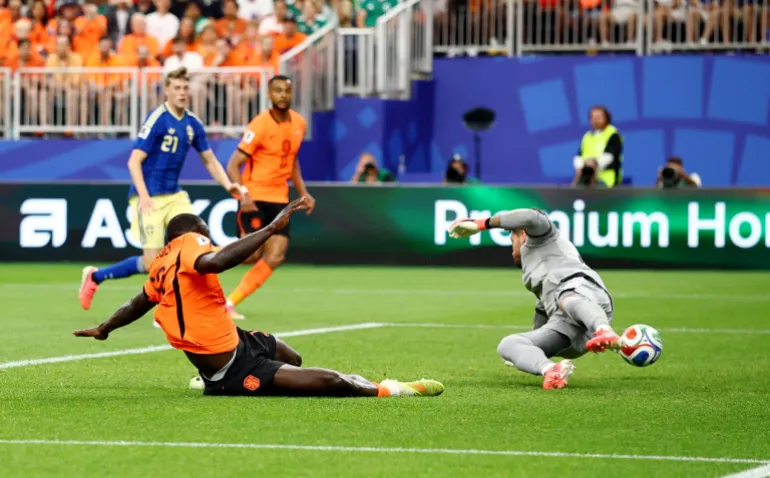
Previous World Cup appearances: 11 Best performance: Runners-up (1974, 1978, 2010) First appearance: 1934 (Italy) Top goal scorer: Johnny Rep (7) Most appearances: Wesley Sneijder, Robin van Persie (17) Player to watch: Tijjani Reijnders FIFA world ranking: 7
The Netherlands have never fulfilled their potential at the World Cup – they lost all three finals they reached (1974, 1978, 2010). The 1988 Euro winning cohort did not even come close to replicating their European success on the global stage.
Recommended Stories
list of 4 itemsend of list
But while previous golden generations repeatedly fell short, this more unheralded side should not be discounted too hastily.
The Dutch were unbeaten across their eight qualifiers, although Poland held them to draws.
With commanding defenders, a midfield of genuine class, and enough attacking options to cause problems for any defence, this Netherlands side have a outside chance of lifting the trophy for the first time.
Reijnders: the midfield heartbeat
Man City’s Tijjani Reijnders has steadily established himself as one of the finest midfielders in Europe over the last few seasons season and arrives at this tournament in fine fettle.
After two outstanding years at AC Milan, where he was named Serie A Best Midfielder of the season, he joined City in 2025 and has adapted well to life under Pep Guardiola, even if he is not always in the starting XI.
While he has grabbed five goals and two assists across 28 Premier League appearances this season, these relatively modest headline numbers do not tell the full story of his influence – especially at the international level.
Reijnders is the Netherlands’s all-action man – he gets forward and links defence and attack, breaks up opponents’ attacks, and is a classy, assured presence on the ball.
Generally, when he plays well, so do the Netherlands.
A solid core
Liverpool legend Virgil van Dijk may not quite be the force he was a few years ago, but he remains a world-class, richly experienced centre back.
He leads a talented defence that also features the likes of Micky van de Ven, Jurrien Timber and Jan Paul van Hecke.
Ahead of them, Ryan Gravenberch, outstanding for Liverpool over the last couple of seasons, shields the defence and is also capable of mounting dangerous forays forward.
His teammate Cody Gakpo offers a significant threat out wide and in front of goal, and has been one of Liverpool’s better performers in a poor season for the 2024/25 Premier League champions.
Injury worries
The Netherlands received a huge blow in April when playmaker Xavi Simons ruptured his anterior cruciate ligament playing for Tottenham. Arguably the most important creative Dutch player, he will be on the sidelines for months and has no chance of making the tournament.
Memphis Depay, now his nation’s all-time leading scorer with 55 goals in 108 caps, usually provides the focal point up front, although his inconsistency has been a source of frustration for clubs and country alike.
He was named in the squad, despite only two substitute appearances for his Brazilian club Corinthians over the past two months, as he has struggled to recover from a hamstring injury.
“I selected Memphis because of who he still is. I don’t see anyone else in that position who can do it. I believe he can be an asset, but he does have to get through the coming period well,” coach Ronald Koeman said.
Arsenal defender Timber is also a concern as a groin injury has kept him on the sidelines since March, and he will certainly need time to get match-sharp.
“We have Ian Maatsen and Lutsharel Geertruida on the standby list for Timber. The situation with him is that he was supposed to train with Arsenal today, to assess for the weekend. They have the Champions League final on Saturday. It remains to be seen whether he will be fit for that match,” Koeman said.
Depay, left, in action for Corinthians with Santos’s Christian Oliva [File: Thiago Bernardes/Reuters]
Koeman’s second chance
This is Koeman’s second stint in charge of the national team, having previously managed them from 2018 to 2020.
After the Dutch failed to reach Euro 2016 and the 2018 World Cup, Koeman secured qualification for Euro 2020, but left before the tournament to manage Barcelona.
After struggling in his recent club roles, Koeman returns to take the reins again. He was a popular figure with the players during his last stint and commands respect as a legend of Dutch football, and he will face a tough task to balance his world-class talent with a squad that is patchy in places.
He will be hoping at least to not have to deal with the fractious egos and strong personalities that undermined very strong Dutch sides in the past. This current squad does not outwardly appear to be as combustible as previous iterations.
Koeman gives instructions to Frenkie de Jong during a qualifier against Poland [File: Rafal Oleksiewicz/Getty Images]
How does their group look?
Group F should offer the Netherlands a relatively comfortable route to the last 32.
The toughest game is likely to be the opener against Japan, themselves a talented side considered to be dark horses, who recently defeated England at Wembley in a friendly.
Sweden had a terrible qualifying campaign but qualified through the playoffs via the Nations League, and nevertheless have plenty of dangerous players, such as Victor Gyokeres and Anthony Elanga.
The final group game against Tunisia should be more straightforward, as the North Africans lack real star quality – although they tend to be obdurate opponents that are hard to break down in major tournaments.
Netherlands’ group stage matches
⚽ June 14: Netherlands vs Japan (Dallas, United States), 4pm ET (20:00 GMT) ⚽ June 20: Netherlands vs Sweden (Houston, United States) 1pm ET (17:00 GMT) ⚽ June 24: Tunisia vs Netherlands (Kansas City, United States), 7pm ET (23:00 GMT)
Al Jazeera’s prediction
Last 16.
While the Dutch boast undoubted talent, it does not elite enough or cohere enough into a team that is bigger than the sum of its parts.
Netherlands World Cup squad
Goalkeepers: Bart Verbruggen (Brighton), Robin Roefs (Sunderland), Mark Flekken (Bayer Leverkusen).
Defenders: Jurrien Timber (Arsenal), Micky van de Ven (Tottenham), Virgil van Dijk (Liverpool), Nathan Ake (Manchester City), Jorrel Hato (Chelsea), Denzel Dumfries (Inter), Jan Paul van Hecke (Brighton).
Midfielders: Ryan Gravenberch (Liverpool), Tijjani Reijnders (Manchester City), Frenkie de Jong (Barcelona), Teun Koopmeiners (Juventus), Marten de Roon (Atalanta), Quinten Timber (Marseille), Guus Til (PSV Eindhoven), Mats Wieffer (Brighton).
Forwards: Brian Brobbey (Sunderland), Memphis Depay (Corinthians), Cody Gakpo (Liverpool), Justin Kluivert (Bournemouth), Noa Lang (Galatasaray), Donyell Malen (Roma), Crysencio Summerville (West Ham), Wout Weghorst (Ajax).
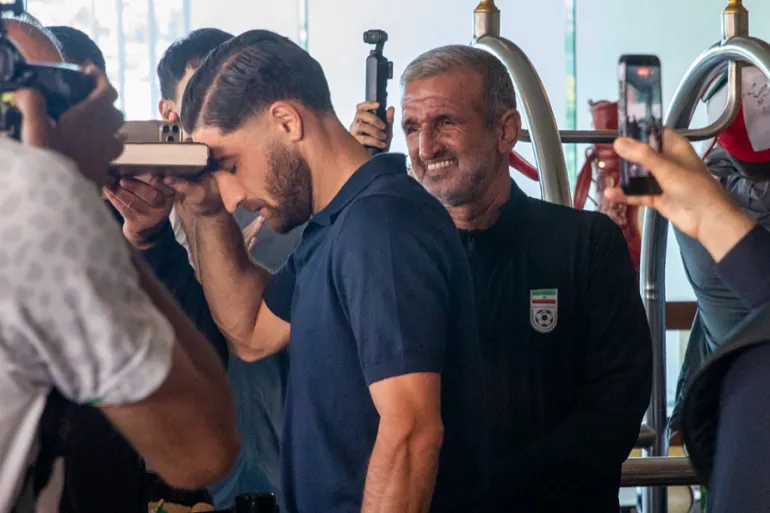
Iran’s football team still lacks US visas and is not competing on ‘equal terms’, Tehran’s envoy to Mexico says.
Published On 28 May 202628 May 2026
Iran’s football team still lacks US visas and is not competing in the World Cup on “equal terms” because of its difficulty in training ahead of the tournament, Tehran’s ambassador to Mexico said on Thursday.
Abolfazl Pasandideh visited the northwestern Mexican border city of Tijuana, where Iranians have relocated their training camp. They were originally planned to be based in Tucson in the US state of Arizona.
Recommended Stories
list of 4 itemsend of list
The ambassador told a news conference that “the country to the north” – meaning the United States – had not followed through on its responsibility of hosting the Iranian team.
“We don’t know whether or not they’re going to give the players their visas,” he added.
Iran will play their three World Cup group games in two West Coast US cities: Los Angeles and Seattle. The head of the Iranian Football Federation has said there was hope that the players would be granted multiple entry visas.
“We aren’t participating in the World Cup on equal terms,” Pasandideh said.
“We haven’t been able to train our team like they should,” he said, because of the US-Israel war on his country that began on February 28.
On Wednesday, Iranian diplomats visited the stadium where the team is training, a source from Club Tijuana that plays there told the news agency AFP. The diplomats also met with local security officials, the source said.
Iran are due to play in Los Angeles on June 15 against New Zealand, and on June 21, against Belgium. They then play in Seattle against Egypt on June 26.
Al Jazeera runs you through this season’s UEFA Champions League final between Paris Saint-Germain and Arsenal.
Published On 28 May 202628 May 2026
Europe’s premier club competition concludes on Saturday when the final of the UEFA Champions League is played.
From qualifying to a comprehensive league phase and then the drama of the knockouts, the tournament now comes down to two teams.
Recommended Stories
list of 4 itemsend of list
Al Jazeera runs you through the top 10 things you need to know about the showpiece event for European football’s governing body, UEFA.
Who is playing in the Champions League final?
This year’s final will be contested by English Premier League club Arsenal, who overcame Atletico Madrid in the semifinals, and French giants Paris Saint-Germain, who defeated Bayern Munich in their last-four clash.
Who is the defending Champions League winner?
PSG are the defending champions, having lifted the tournament for the first time last season.
The French club beat Inter Milan in the final with an incredible 5-0 scoreline that humiliated the Italian Serie A club in Allianz Arena in Munich, Germany.
Desire Doue scored twice to cement his place as one of the biggest names in the game, even at the tender age of 19.
Achraf Hakimi was also on the scoresheet alongside Khvicha Kvaratskhelia and Senny Mayulu. Incredibly Ballon d’Or winner Ousmane Dembele missed out on netting a goal despite being one of the star names en route to the final.
Who is the favourite to win this year’s final?
PSG are the heavy favourites to defend their crown, but Arsenal are being tipped as one of the rising forces in European football.
The Gunners have never won Europe’s most prized footballing trophy but have just ended a 22-year wait to lift the Premier League.
Who are PSG’s key players for the Champions League final?
Doue and Dembele remain the key figures for PSG although the latter is an injury doubt for the final.
Hakimi is also one of the most recognisable players in the Parisians’ ranks, but he is the major concern for the match, having missed both legs of the semifinal and the last four Ligue 1 games of the season because of an injury.
Khvicha Kvaratskhelia tops PSG’s scoring charts across all competitions this season by one goal ahead of Dembele, who has 18. Bradley Barcelo has 13 strikes to his name while Doue has 12.
At the back, PSG are lead by Brazilian international Marquinhos.
Who are Arsenal’s key players for the Champions League final?
Declan Rice is seen as the heart of Arsenal’s team, not least as the England midfielder operates in the centre of the park.
Viktor Gyokeres has grown into the role of leading the line in attack, and the Swedish international has returned 19 goals in his debut season for the North Londoners.
The two players that are often regarded as having the magical touches for the Gunners, though, are England internationals Bukayo Saka and Eberechi Eze, who have netted 10 and 7 times, respectively.
Much like PSG, Arsenal have a Brazilian powerhouse at the back in the form of Gabriel Magalhaes.
Where is the Champions League final being played?
The final is being staged at Puskas Stadium in the Hungarian capital, Budapest.
The stadium – named in honour of the country’s most famous footballer, Ferenc Puskas – was rebuilt in 2017, and construction was completed for its reopening in 2019. It has the capacity for 67,215 spectators.
What trophies have Arsenal and PSG already won this season?
Arsenal sealed their first league title since 2004 when Arsene Wenger’s “Invincibles” went unbeaten all season. The campaign went to the penultimate match when Manchester City’s failure to win at Bournemouth meant the North Londoners could no longer be caught. The Gunners also reached the final of the League Cup, but they were defeated by City.
PSG finished six points clear of Lens in the French league, beating their nearest challengers in the penultimate round to secure the trophy.
It is their fifth consecutive league title and their 12th in 14 seasons, taking their overall tally to 14 Ligue 1 crowns.
When is the Champions League final, and what time is kickoff?
The match is being played on Saturday and will kick off at 6pm (17:00 GMT).
Will the Champions League final be free to watch?
No. The UEFA Champions League is part of a subscription package across the world, as sold by the continent’s governing body.
How can I follow the Champions League final?
Al Jazeera Sport will bring you our comprehensive build-up before kickoff from 2pm (13:00 GMT) on Saturday before our text commentary stream of the match.
Barcelona weigh up move for Piero Hincapie, Ruben Dias instructs agents to explore move away from Manchester City and Liverpool pushing for quick agreement with Yan Diomande.
Barcelona are weighing up an approach for 24-year-old Arsenal and Ecuador defender Piero Hincapie. (Mail) , external
Manchester City and Portugal defender Ruben Dias, 29, has instructed his agent to explore options for a move away, with Paris St-Germain,Bayern Munich and RealMadrid all monitoring his situation. (Caught Offside), external
Liverpool are pushing for a quick agreement with RB Leipzig winger Yan Diomande, while Paris St-Germain and Manchester City are closely monitoring the situation and have already held talks with the 19-year-old Ivory Coast international. (Florian Plettenberg), external
Crystal Palace want to convince England midfielder Adam Wharton, 22, and Japan midfielder Daichi Kamada, 29, to stay following their Conference League final win. (Sky Sports) , external
Bournemouth are determined to resist any summer offers for French forward Eli Junior Kroupi, 19, Brazil winger Rayan, 19, and England midfielder Alex Scott, 22, with mounting interest in the trio. (Guardian), external
West Ham and Germany striker Niclas Fullkrug wants to leave after their relegation with Bundesliga side Werder Bremen among those interested in the 33-year-old. (Sky, in German), external
Portuguese side Sporting want to re-sign 30-year-old Portugal midfielder Joao Palhinha when his season-long loan at Tottenham from Bayern Munich ends. (A Bola, in Portuguese), external
Leeds United are lining up a move for 24-year-old Lyon and United States midfielder Tanner Tessmann as part of a busy summer of transfer business. (Football Insider) , external
Marcelo Bielsa is widely revered as a pioneer of coaching, but his unconventional methods risk ruining Uruguay’s World Cup chances before the tournament has even begun, with rumours of dressing room unrest.
Nicknamed “El Loco”, which means madman, the 70-year-old’s bold, attacking approach has proved an inspiration to a younger generation of coaches, including Pep Guardiola and USA boss Mauricio Pochettino.
Recommended Stories
list of 4 itemsend of list
Yet, his famously demanding standards have often caused friction during a nomadic coaching career, and his stint in Uruguay has been no exception.
The Argentinian’s arrival initially generated huge excitement, which was fuelled by landmark victories over Brazil and Argentina in qualifying.
But they needed that flying start just to make it through after winning just three of their final 12 qualifiers.
The tipping point for many in the squad came at the Copa America in 2024.
Uruguay finished a creditable third, eliminating Brazil along the way, but Bielsa’s intensity during the monthlong tournament did not endear him to his players.
Luis Suarez hit out at Bielsa’s methods after retiring from international football months later, claiming he had reduced former Liverpool striker Darwin Nunez to tears at half-time of a 2-0 win over Argentina, such was the force of his criticism.
Bielsa accepted that after the former Barcelona striker’s backlash, his “authority was affected” with the rest of the dressing room.
Results have also regressed, with Bielsa stating he was “ashamed” by a 5-1 friendly defeat by the USA in November.
Now, as his third World Cup with a third different nation approaches, the question is whether Bielsa can win back the faith of his players for a country so used to punching above its weight on the world stage.
And there are doubts as to how his high-energy style will fare in the gruelling conditions of Miami and Guadalajara, where Uruguay will face Saudi Arabia, Cape Verde and Spain in Group F.
Pochettino hails Bielsa as a ‘genius’
Bielsa made his name winning three league titles in Argentina with Newell’s Old Boys, where the stadium now bears his name, and Velez Sarsfield.
“For me, he’s a person I will always admire,” said Pochettino, whom Bielsa recruited for Newell’s as a 13-year-old.
“He’s a genius. A person with charisma and a personality very different from us, normal coaches, and that’s what makes him special.”
Bielsa’s sides in Bilbao with Athletic Club, where he reached the Europa League and Copa del Rey finals in 2011-12, and Marseille, where he led Ligue 1 at the halfway stage in 2014-15, were also admired but ended up empty-handed as their energy ran out.
In Leeds, murals still bear Bielsa’s face, four years on from his departure, after he led a sleeping giant of English football back to the Premier League for the first time in 16 years in 2020.
His time there ended in familiar fashion with an exhausted squad that was relegated to the second tier the season after he departed.
Yet, the esteem with which he is held for his daring tactical approach endures.
“To be loved is this biggest title, bigger than the Champions League or Premier League or whatever,” said Guardiola, who went to visit Bielsa in Argentina before setting out as a coach at Barcelona.
“To be loved is the most important thing, and I think Marcelo has that more than any other manager in the world.”
Bielsa, who oversaw Argentina’s group-stage elimination in 2002 and Chile’s round-of-16 loss to hosts Brazil in 2014, has already hinted that he may not remain as manager of Uruguay beyond July, saying his job with the team ends with the World Cup.
“Our job ends with the World Cup,” Bielsa said at an event organised by the Uruguayan Football Association last Friday.
Although he did not elaborate on his remarks, local media reported that the Argentinian will not continue once his current contract expires at the end of the June 11-July 19 tournament.
“It is a miracle in any professional’s sporting career to take part in the World Cup,” he said. “I will be forever grateful to Uruguay for allowing me to enjoy a competition like the World Cup.”
US States react following increasing criticism of football’s global governing body for the pricing of FIFA World Cup 2026.
Published On 27 May 202627 May 2026
FIFA faces a subpoena from the states of New York and New Jersey as part of an investigation surrounding ticket pricing and accuracy of seat locations for the 2026 World Cup.
In a joint news release on Wednesday, New York Attorney General Letitia James and New Jersey Attorney General Jennifer Davenport said prices for the 2026 World Cup matches “far exceeded the prices for any previous World Cup tournament”.
Recommended Stories
list of 4 itemsend of list
FIFA has detailed the first-time use of “dynamic pricing” to adjust ticket costs based on demand. Fan complaints and allegations of paying for tickets in one location of the stadium but receiving a less-desirable seat caught the attention of state officials.
When pressed to explain why prices of tickets, which went on sale in October, were so high, FIFA President Gianni Infantino defended the governing body on multiple fronts by pointing to the limited ticket supply for an event with worldwide demand.
The state attorneys general confirmed they are seeking information regarding the general event pricing structure, location pricing structure, seat locations and other details related to the eight World Cup matches scheduled to be played at MetLife Stadium in East Rutherford, New Jersey, in the United States. The July 19 final as well as group stage matches and early knock-out round games are to be held at MetLife Stadium.
“New Yorkers have been waiting years for the World Cup to come to their backyard, and they deserve a fair shot at affordable tickets,” James said in a release. “No one should be manipulated into paying sky-high prices for seats, and fans should be able to trust that the tickets they purchased will be the ones they receive.”
The investigation seeks to soothe concerns for fans who’ve purchased – or hope to have an opportunity to purchase – tickets but feel misled about the final product.
“FIFA has turned buying a ticket to the World Cup into a gauntlet of confusion, fake scarcity and impossibly high prices – all at the expense of consumers and hard-working New Jerseyans,” Davenport said in the statement.
James said watchdogs called on government officials for guidance to resolve disputes from fans who said they had selected a seat in one category of the four available at MetLife Stadium only to be assigned seats farther back from the playing surface.
FIFA contributed to elements of the seating location confusion with the late introduction of a premium ticket option, or “Front Category”, after initial tickets had already been sold.
Coach Ouahbi drew heavily on the country’s diaspora in Europe where majority of the 26 players he selected were born.
Published On 27 May 202627 May 2026
Paris Saint-Germain defender Achraf Hakimi was among nine players from Morocco’s history-making 2022 World Cup squad named for the 2026 tournament in North America.
Morocco coach Mohamed Ouahbi, who was only hired in March, drew heavily on the country’s diaspora in Europe, where the majority of the 26 players he selected were born.
Recommended Stories
list of 4 itemsend of list
Ouahbi was himself born in Belgium, while Hakimi and Real Madrid forward Brahim Diaz are among five players in the squad born in Spain and whose family ties make them eligible for Morocco.
Three of Morocco’s squad – Fulham defender Issa Diop, PSV Eindhoven defender Anass Salah-Eddine and 18-year-old Lille midfielder Ayyoub Bouaddi – had their change of national eligibility approved by FIFA in the past nine months. Diaz has played for Morocco since 2024 after previously representing Spain.
Morocco will be based in New Jersey where it opens against Brazil on June 13 in East Rutherford. The Atlas Lions then play Scotland in Massachusetts and finish Group C against Haiti on June 24, in Atlanta. The top two in the standings go directly to the round of 16, and the third-place team also could advance.
At the 2022 World Cup, when it was coached by Walid Regragui, Morocco made history as the first semifinalist at the tournament from Africa.
Morocco topped its group ahead of Croatia and Belgium, then shocked Spain and Portugal in the knockout rounds before an injury-hit team lost to France.
Goalkeeper Yassine Bounou, who impressed in Qatar, returns for his third World Cup at age 35.
Morocco will go to the United States as the African champion – for now. That title, awarded in a legal case, could be lost within months at the Court of Arbitration for Sport, where Senegal has appealed to regain its victory won on the field in January in Morocco.
After losing the final to Senegal four months ago, Regragui stepped down and was replaced by Ouahbi, who guided Morocco to the Under-20 World Cup title last year. That team that beat Argentina in the final included Strasbourg forward Gessime Yassine, whom Ouhabi picked again on Tuesday.
Morocco will play at the 2030 World Cup as a cohost with Spain and Portugal. South American neighbours Argentina, Paraguay and Uruguay – the original tournament host in 1930 – get one game each to host at that edition as part of a commemorative recognition for their contributions to World Cup history.
Morocco World Cup roster
Goalkeepers: Yassine Bounou (Al-Hilal), Munir El Kajoui (RS Berkane), Ahmed Reda Tagnaouti (AS FAR)
Lionel Messi was injured in Inter Miami’s MLS game on Sunday, but Argentina are confident he will be fit for World Cup.
Published On 27 May 202627 May 2026
Argentina coach Lionel Scaloni said the initial news regarding superstar Lionel Messi’s fitness “is not that bad” and hopes further examinations will confirm that diagnosis, with the World Cup just two weeks away.
Messi has been diagnosed with muscle fatigue in his left hamstring by his Major League Soccer (MLS) club Inter Miami after he made an abrupt exit from Miami’s 6-4 victory over Philadelphia in the 73rd minute on Sunday.
Recommended Stories
list of 4 itemsend of list
Even at 38 and eyeing a sixth World Cup finals appearance, Messi remains the side’s talisman for the defence of the title they won in Qatar four years ago.
The former Barcelona and Paris Saint-Germain forward has scored 116 goals in 198 appearances for Argentina.
“Obviously, we would have preferred that nothing had happened,” Scaloni told Argentinian TV station DSports on Tuesday.
“Now one has to wait and see how it evolves and above all, the new tests they are going to conduct in order to see if it confirms their original diagnosis.”
Scaloni, who is due to name his squad next week, added he had watched the match on TV at the federation’s headquarters and been relieved that Messi had asked to come off.
Inter manager Guillermo Hoyos explained after the match that Messi was tired, the pitch was heavy and no one wanted to take a risk with his fitness.
Inter Miami issued a statement on Monday saying: “The timeline for his return to physical activity will depend on his clinical and functional progress.”
That gave little indication about the status of the eight-time Ballon d’Or winner.
Argentina are set to begin their World Cup campaign on June 16, against Algeria in Kansas City.
They then play Austria on June 22 and round off their Group J campaign against Jordan on June 28.
Messi has managed his workload since joining Inter Miami in 2023, with team staff regularly excusing him from matches in congested fixture periods.
MLS has started a break in its season for the World Cup, which is cohosted by the United States, Mexico and Canada.
Messi has not formally confirmed he plans to play in the World Cup, but is widely expected to return for what would be a record-matching sixth appearance at the finals. His highlight was the victory in the final against France at the 2022 edition.
His great Portuguese rival Cristiano Ronaldo and potentially Mexican goalkeeper Guillermo Ochoa would also be making a sixth appearance.
Argentina are set to play two pre-World Cup friendlies against Honduras on June 6, and Iceland on June 9, both in the US.
Ghana’s Thomas Partey, who joined Villareal from Arsenal in 2025, has pleaded not guilty to seven rape charges in the UK.
Published On 26 May 202626 May 2026
Former Arsenal midfielder Thomas Partey has been named in Ghana’s preliminary 28-man squad for next month’s World Cup.
The 32-year-old is due to stand trial next year in the United Kingdom, where he has pleaded not guilty to seven charges of rape and one count of sexual assault.
Recommended Stories
list of 4 itemsend of list
The charges related to allegations by four different women between 2020 and 2022.
Partey currently plays for Villarreal in Spain’s La Liga, where he moved in 2025, following five seasons with Arsenal.
He was initially charged last July, just days after his Arsenal contract expired. Villarreal signed him in August, two days after he was granted bail.
Partey played a full part in World Cup qualifying games for Ghana, for whom he has made 58 appearances.
Kudus misses out for Ghana at World Cup 2026
Tottenham Hotspur forward Mohammed Kudus will miss next month’s World Cup due to injury.
Kudus, who has scored 13 times in 46 international appearances, suffered a quad injury in January and was expected to return in March. However, the 25-year-old forward suffered a setback in his recovery and has not played a game since Thomas Frank was coaching Tottenham.
Kudus, who joined from West Ham United last summer, made 19 Premier League appearances for Spurs this season, scoring twice.
Veteran coach Carlos Queiroz, who announced the latest squad list on Tuesday, will rely on Manchester City’s Antoine Semenyo and Athletic Club forward Inaki Williams, while PAOK’s former Chelsea defender Abdul Rahman Baba has been recalled for the first time since 2023.
Ghana have been drawn in Group L alongside Croatia, England and Panama.
Ghana preliminary World Cup squad
Goalkeepers: Benjamin Asare (Accra Hearts of Oak SC), Lawrence Ati-Zigi (St Gallen), Joseph Anang (St Patrick’s Athletic), Solomon Agbasi (Accra Hearts of Oak SC), Paul Reverson (Ajax).
Defenders: Baba Abdul Rahman (PAOK), Gideon Mensah (Auxerre), Marvin Senaya (Auxerre), Alidu Seidu (Rennes), Abdul Mumin (Rayo Vallecano), Jerome Opoku (Istanbul Basaksehir), Jonas Adjetey (Wolfsburg), Kojo Peprah Oppong (Nice), Alexander Djiku (Spartak Moscow), Elisha Owusu (Auxerre).
Midfielders: Thomas Partey (Villarreal), Kwasi Sibo (Real Oviedo), Augustine Boakye (Saint-Etienne), Caleb Yirenkyi (Nordsjaelland), Abdul Fatawu Issahaku (Leicester City).
Forwards: Kamaldeen Sulemana (Atalanta), Christopher Bonsu Baah (Al Qadsiah), Ernest Nuamah (Lyon), Antoine Semenyo (Manchester City), Brandon Thomas-Asante (Coventry City), Prince Kwabena Adu (Viktoria Plzen), Inaki Williams (Athletic Bilbao), Jordan Ayew (Leicester City).