Tips for flying with a toddler that I actually found useful as a first-time mum – The Mirror
Need to know
There are so many tips for flying with a toddler out there so when I took my toddler on our first solo flight together I listened – here are the ones that I actually found useful
Some tips from fellow parents came in handy(Image: Getty Images/Cavan Images RF)
Useful tips for flying with a toddler
As a first-time mum, the idea of flying with my toddler for the first time was quite daunting – but a few travel tips from fellow parents were absolute game changers.
Invest in a travel pram: If you’re going to be travelling regularly, a pram that can easily be unfolded one-handed or zip through narrow airport queues etc makes all the difference. I had the Stokke YOYO which was brilliant as it was easy to manoeuvre, not to mention it didn’t take long when airport security needed to scan it. Most airlines let you take the pram up to the gate, but as I was solo parenting, I decided to pay extra to have it in the cabin on my easyJet flight, a choice which proved handy when we landed and my son just wanted to run off in every direction.
Lean on cabin crew if you need to: I was so worried that I’d be an annoying passenger, but crew were actually really helpful in helping me put my pram in the overhead lockers, and assisting with explaining how the baby’s extender belt worked. The most stressful part for me was boarding/getting off the plane, and asking for help was daunting but staff were more than happy to accommodate (I suspect because it then made the process smoother as I wasn’t blocking other passengers).
Distraction is key: Pack fidget toys and snacks, as well as toys that can be ‘stuck’ to the tray table and not hurled across the aisle. One fellow mum told me to remember that the airport/plane is an exciting and stimulating place for toddlers – so I leant on that too, and it turned out that the highlight of my toddler’s flight was intently staring at the safety card in the plane seat!
Ears popping: A tricky one here as it depends on your child, but I had come prepared with a bottle of milk and a sippy cup, which I encouraged him to drink during take-off and landing to help ease the sensation.
Don’t stress about other passengers: This was easily the best advice I was given. I was so conscious of getting in the way/my child being loud/trying to stop him disturbing others. The reality is that, unless you’ve got a kid who’s actively kicking someone’s chair, most passengers don’t care. In fact, a lot of people around me turned into free babysitters because they pulled faces at my child and chatted to him. I was conscious to make sure he wasn’t in their way, but most people on a flight are in their own little world anyway!
Beware the baby change: Annoyingly, in a lot of airports, baby change facilities don’t necessarily have toilets in them for adults. That meant that once I’d changed my toddler’s nappy, I then had to navigate the queue into the ladies’ toilets, and then figure out where to leave my pram and bags outside the cubicle. One mum previously suggested putting key valuables in a smaller handbag that was on my person, so at least I could leave the bulkier bags outside in the pram.
Have you got any great travel tips to share for parents? Email us at webtravel@reachplc.com .
Weekly insights and analysis on the latest developments in military technology, strategy, and foreign policy.
A 737 Boeing Business Jet (BBJ) with a luxurious VVIP interior has re-emerged unexpectedly tied to the Department of Homeland Security (DHS), as evidenced by a large departmental seal in the main cabin. The aircraft’s appearance follows news that DHS recently signed a contract to buy six 737s, ostensibly to support U.S. Immigration and Customs Enforcement’s (ICE) deportation efforts. However, the BBJ, which also wears a paint scheme that is very similar to one President Donald Trump had previously selected for the U.S. Air Force’s two future VC-25B presidential aircraft, looks to have a very different role.
The 737 BBJ in question, a 737-8 model, currently has the U.S. civil registration number N471US. The Federal Aviation Administration’s (FAA) public database shows the jet has been registered with that number to a company called Valkyrie Aviation Holding Group, LLC, since October. The address given for Valkyrie in the database is an office in Arlington, Virginia, just across the Potomac River from Washington, D.C.
As seen in pictures at the top of this story and below, which were taken this past weekend at Washington’s Ronald Reagan Washington National Airport, N471US currently has a red, white, and blue livery. “United States of America” is written prominently in large lettering on either side of the forward fuselage. “Independence” is also written in much smaller font on both sides of the fuselage, right under the cockpit, a spot where aircraft nicknames are often printed. A large American flag, depicted blowing in the wind, is featured on both sides of the tail.
As noted already, a relatively large DHS seal fitted to a bulkhead inside the cabin is visible through an open door in one picture. The jet’s exact internal configuration at present is unknown, something we will come back to later on.
As mentioned, N471US’s general external look is very much in line with what President Donald Trump had picked for the pair of forthcoming Boeing 747-8i-based VC-25B Air Force One aircraft during his first term. President Joe Biden subsequently reversed that decision, bringing back plans to paint those jets in the same iconic, Kennedy-era livery as the current VC-25A Air Force Ones. In August, the Air Force told Inside Defense it was “implementing a new livery requirement for VC-25B,” but did not elaborate.
A rendering of a VC-25B with the livery President Trump had selected. BoeingA rendering of a VC-25B wearing the same paint scheme as the current VC-25A Air Force One aircraft. USAF
Almost as quickly as it emerged at National Airport in D.C., N471US departed for points overseas, according to online flight tracking data. The jet arrived in Jordan’s capital Amman yesterday, having made at least one stop at Chania International Airport on the Greek island of Crete along the way. Chania International Airport also serves as an important hub for U.S. military forces operating in Europe and the Middle East, with facilities there under the oversight of the U.S. Navy’s Naval Support Activity Souda Bay.
The U.S. Coast Guard’s lone C-37B, a version of the Gulfstream G550 business jet, also departed from National Airport in D.C. on December 14 and arrived in Amman yesterday after stopping in Chania. That aircraft had arrived in both locations just ahead of N471US, lending credence to a direct connection between the two flights, and underscoring the 737 BBJ’s links to DHS.
Interesting flights to Jordan: a Dept of Homeland Security 737 landing Amman from DC (n471us), shortly after a CoastGuard glf5 (c102) from DC as well pic.twitter.com/yCpgICUjlM
The Coast Guard currently falls under the purview of DHS. The service’s C-37B, also known as a Long Range Command and Control Aircraft (LRCCA), is regularly used as a VIP transport for the Secretary of Homeland Security and other senior departmental leaders, as well as top Coast Guard leadership. The LRCCA is based at Coast Guard Air Station Washington, which is collocated with National Airport.
A stock picture of the US Coast Guard’s C-37B LRCCA jet. Missy Mimlitsch/USCG
Flight tracking data shows N471US left Amman today and flew to Zayed International Airport in Abu Dhabi in the United Arab Emirates (UAE). The Coast Guard’s C-37B also made the same trip. Who has been flying on either aircraft since they left D.C. on Sunday, and why, is unknown. TWZ reached out to DHS yesterday morning for more information about N471US, but we have not yet received a response. We have also reached out to the White House.
A screen capture from ADS-B exchange showing N471US’s flight from Amman to Abu Dhabi today. ADS-B Exchange capture
N471US itself, which has the Boeing manufacturer serial number 61329, is a known quantity. The jet, which has been flying since July 2021, is curiously still listed for sale on Avjet Global’s website at the time of writing. Avjet’s site and an accompanying brochure show the plane in a previous taupe-over-brown paint scheme. It is also described as having “low hours with 672 TT [hours total time]” and “154 landings.”
Avjet’s brochure says the jet has a “5 zone VVIP cabin configuration” designed to accommodate 17 passengers. Accompanying pictures show an extremely luxurious interior layout that includes two suites with full-size beds and a master bathroom with a shower stall, among many other amenities. Whether any changes have since been made to the aircraft’s internal configuration is unknown, but there are no indications that it has. It would be expensive and time-consuming to make major changes to the core internal layout. Doing so would also call into question the basic rationale for any buyer to select this particular low-time VIP aircraft rather than a 737 in a more basic configuration, to begin with.
A picture of the 737 BBJ in its previous paint scheme. Avjet GlobalA quartet of pictures offering a sense of the luxurious interior of the 737 BBJ, at least as it was being offered for sale. Avjet GlobalA full breakdown of the jet’s VVIP interior layout. Avjet Global
The jet was not tracked again until October 31, when it flew with the N471US registration number from Ardmore to Chennault International Airport in Lake Charles, Louisiana. This airport has also been tied to the maintenance and repainting of U.S. government aircraft.
N471US returned to Ardmore on November 21. The aircraft conducted multiple local flights to and from the airport on December 10, according to Flightradar24. Observers have already noted this could have been for flight testing and/or crew training purposes.
On December 12, N471US then made a circuitous trip to the Grissom Aeroplex in Peru, Indiana, by way of the St. Louis, Missouri, area, much further to the west, where it did not land. The Grissom Aeroplex is collocated with Grissom Air Reserve Base, a major hub for Air Force Reserve aerial refueling tankers. It then returned to the Washington, D.C. area on December 13, where it was spotted at National Airport.
A screen capture from ADS-B exchange showing a portion of N471US’s flight on December 12. ADS-B Exchange capture
Altgoether, there are clear signs that N471US is now flying as a VIP transport for one or more entities under the DHS umbrella, possibly as part of a contractor-owned and/or operated arrangement. The U.S. federal government as a whole has historically operated a mix of government and contractor-owned and operated aircraft to support the travel demands of senior officials.
It had emerged earlier in the year that the U.S. Coast Guard was looking to replace its older Gulfstream V-based C-37A jet, which the service has been flying since 2002. Like its C-37B, the Coast Guard also refers to its C-37A as a Long Range Command and Control Aircraft (LRCCA), and performs the same general slate of missions. The service received the C-37B second-hand from the Air Force in 2022 after a deep refurbishment.
A stock picture of the Coast Guard’s C-37A LRCCA jet. USCG
DHS subsequently confirmed plans to supplant both of the Coast Guard’s C-37s with newer Gulfstream 700-series jets modified with the requisite secure communications suite and other systems needed for their VIP mission. The total price tag for both of those aircraft has been pegged at between $170 and $200 million. DHS, and particularly Secretary Kristi Noem, has faced criticism for these plans for various reasons, including disputes over funding and for entering into the contract to buy the jets during the recent government shutdown. DHS has pushed back on that criticism, saying that acquiring newer jets is critical to meeting current and future mission requirements, and doing so safely and reliably. DHS’s top leadership does have particular demands to travel with access to specialized and secure communications, given the role the department has in larger continuity of government plans. The U.S. government has various measures in place to ensure it can continue to function in the event of any number of severe contingency scenarios, including major hostile attacks or severe natural disasters.
A stock picture of a Gulfstream 700 (G700) business jet. Gulfstream
There have been no reports previously of DHS plans to acquire a 737 to further expand its VIP transport capacity. However, DHS confirmed toThe Washington Post just last week that it had recently entered into a $140 million contract with a company called Daedalus Aviation for the purchase of six 737s to support ICE deportation activities. This followed a report from The Wall Street Journal in November that ICE attempted to buy 10 737s via Spirit Airlines for this purpose earlier in the year. That plan is said to have fallen through when it became apparent that Spirit did not actually own the aircraft in question, which also had no engines.
What connection Daedalus Aviation may or may not have to Valkyrie Aviation is unknown, but the latter company did reserve seven other N numbers (N473US, N474US, N475US, N476US, N477US, N478US, and N479US) on October 27, according to the FAA’s database. A search of entries tied to Valkyrie in the database also turns up N472US, a Gulfstream G650 business jet, which is now said to be registered to a company called Vigilant Aviation Holdings LLC with an address in Lewes, Delaware. Valkyrie also interestingly reserved N702F, the registration number previously applied to N471US, on November 13.
A screen capture of the entries in the FAA’s online database for Valkyrie Aviation Holdings Group at the time this piece was written. FAA capture
Overall, observers have already pointed out that N471US looks to have a configuration ill-suited to conducting deportation flights, just from a practical perspective, and a VIP role for that jet still seems far more likely. At the same time, rolling it in with the acquisition of a fleet of less luxurious 737s intended primarily to serve in the deportation role would not necessarily be surprising. Whatever deal DHS may have with Valkyrie could also be an entirely separate arrangement from the one it has with Daedalus. Regardless, all of this could easily fuel new criticism around DHS’s recent aviation acquisition efforts.
In the meantime, N471US is continuing its trip overseas on what looks to be its first major flight in its present role, and more details about the plane and how it is being utilized may now start to emerge. From what we’re seeing now, it certainly looks like DHS’s new 737 fleet includes at least one aircraft fully equipped as a luxurious VIP transport.
Special thanks to David Lee for sharing pictures he took of N471US at Ronald Reagan Washington National Airport this past weekend with us.
Editor’s Note: The feature image originally at the top of this story was swapped with another at the request of the source.
Weekly insights and analysis on the latest developments in military technology, strategy, and foreign policy.
We have got what could be our first look at China’s CH-7 stealthy flying-wing drone in flight. While it’s no longer the biggest Chinese drone of this configuration, it’s still of impressive size and, as we have noted in the past, appears to be tailored for intelligence, reconnaissance, and surveillance (ISR), as well as possibly a secondary strike role.
One of the first officially sanctioned images showing the CH-7 in the air. via Chinese internet
Video and stills released by Chinese state media today show the drone, for the first time, being prepared for flight, taking off, and landing. The video includes air-to-air footage of the CH-7 and, overall, the suggestion is that Beijing is making a notable effort to promote the progress of this program, especially in contrast to other, far more secretive flying wing drone programs.
It’s also notable that the CH-7 appears to have made its first flight from Pucheng Airport in Shaanxi province, which also saw the recent maiden flight of the Jiutian heavyweight jet-powered ‘mothership drone,’ which you can read more about here. The Pucheng facility is operated by the China Flight Test Establishment (CFTE), underscoring its growing importance as a drone ‘center of excellence.’
The CH-7 over Pucheng Airport in Shaanxi province. via Chinese internet
The CH-7 seen in the new imagery retains the yellow-colored coat of primer that was seen in video and stills of the drone on the ground, released by Chinese state media earlier this year. Yellow primer is frequently seen on Chinese aircraft during their test phase. The drone also has air data probes on the leading edges of the wing and nose, again consistent with it being a prototype or perhaps a pre-production machine. Overall, the CH-7 has a ‘cranked-kite’ planform, of the kind that we have seen on various other Chinese drones. There are also various measures to reduce the radar and infrared signature, including a slot-like low-observable platypus engine exhaust, with the nozzle fully concealed from most angles of view, and serrated edges on doors and panels.
Interestingly, the attachment points previously seen on the upper surfaces of the rear of the drone have been removed in the new official imagery. It seems these were used to mount vertical tail surfaces.
Unofficial imagery, captured from an observer on the ground, suggests that the CH-7 was initially flight-tested with outward-canted tailfins, presumably to ensure stability during initial sorties, or otherwise to test an alternative aerodynamic configuration.
While the identity of this drone has not been confirmed, it appears to be the CH-7, with the outward-canted tailfins fitted. via Chinese internet
Compared to the previous imagery, we now also get to see some other details of the CH-7, including a distinctive small teardrop-shaped fairing mounted below the fuselage. This enclosure is very likely an air-to-ground datalink used for line-of-sight control of the drone and is a common feature on larger drones, including the U.S. MQ-9 Reaper. This very unstealthy feature would be removed for most operational uses once the aircraft has entered service.
via Chinese internet
We now have a much better look at the series of antennas that runs in a line along the spine, flanked by two air scoops. There are also two prominent blade aerials, above and below the fuselage. Below the fuselage, immediately behind the nose landing gear, there appears to be a large radio frequency sensor aperture, and there could also be space for conformal arrays under the inner wings.
via Chinese internetvia Chinese internet
As we presumed, the previous prominent gaps inboard of the trailing-edge flaps, where the wing meets the blended body section, were a temporary configuration and have now been filled.
The latest configuration of the CH-7, with the attachment points for tailfins deleted and with the gaps removed inboard of the trailing-edge flaps. via Chinese internetvia Chinese internetThis view of the CH-7 prototype on the runway reveals the previous gaps inboard of the trailing-edge flaps. via Chinese Internet
The CH-7 was previously assumed to have an internal payload bay. That is not immediately obvious in the new imagery, but there is a suggestion of a notably long and slender bay immediately inboard of the main landing gear on the right-hand side, presumably with a similar bay on the left-hand side, too. If these are indeed for weapons, then they would be able to accommodate smaller stores only. This could point to a secondary strike role, but that seems somewhat less than likely at this point.
An underside view of the drone reveals only limited evidence of internal stores bays. via Chinese internet
The CH-7 has already gone through several different iterations since it was first revealed, as a full-scale mockup in 2018, with the design being progressively adapted. Earlier changes included a less sharply swept wing compared to at least one early model, as well as an apparent growth in overall size.
The CH-7 (or Caihong-7, meaning Rainbow-7) has been developed by the state-owned China Aerospace Science and Technology Corporation (CASC), specifically by its 11th Research Institute. A high-altitude, long-endurance drone, it is generally understood to be optimized for penetrating into or very near hostile airspace. It achieves this through a combination of a low-observable (stealth) design and flying at high altitudes, leading it to operate for extended periods of time without being successfully engaged.
via Chinese internet
Published specifications for the CH-7 include a length of 10 meters (33 feet), a maximum takeoff weight of 10,000 kilograms (22,000 pounds), a maximum speed of 926 km/h (575 mph), and an endurance of up to 15 hours. Bearing in mind the various design changes, these figures should be considered very much as provisional.
Earlier this year, Chinese state-owned media reported that the CH-7 had completed testing and was scheduled to complete development in 2024. This would imply it had also completed the flight-test program by this date, which remains possible, and the new imagery may actually date back a year or so.
via Chinese internet
Regardless of the timeline, the CH-7 is a fascinating program.
It represents one part of China’s accelerated efforts to develop low-observable, long-endurance drones, and there is a general expectation that, once in service, it will be used for both ISR and as a UCAV. Official statements from Beijing claim that, as well as bringing back critical intelligence, the CH-7 should also be able to strike strategic targets.
When it was unveiled, the CH-7 was described as a high-altitude, long-endurance stealth combat drone. Its chief designer, Shi Wen, said the aircraft would be able to “fly long hours, scout, and strike the target when necessary.”
via Chinese internetvia Chinese internet
It should be noted, however, that the latest imagery doesn’t provide definitive evidence of an extensive internal payload capacity, which might throw some doubt on the strike role, at least as a primary mission.
Even if the CH-7 ends up being exclusively an ISR platform, it remains highly relevant within China’s growing portfolio of stealthy drones, especially since it is apparently tailored to penetrate into or very near hostile airspace at high altitudes. Flying ISR missions with this profile would be especially relevant for China in a naval context, with the drone potentially roaming far out into the Pacific, monitoring the movements of enemy ships and providing targeting data for ground-based long-range missiles, for example, as well as anti-ship missiles launched from warships and bombers. Other theaters of operation in which a drone of this kind would be valuable include around the islands of the South China Sea and along the border with India.
A rear three-quarter view of the CH-7. via Chinese internet
Furthermore, it seems that the CH-7 will be offered for export. This hypothesis might also be supported by the unusually open nature of the imagery that’s been released of the drone so far.
If the CH-7 were to be offered for foreign customers, it would come with advanced capabilities that no other country is currently pitching on the arms market. It would also come without the various restrictions that limit the sale of high-end U.S. and other Western defense products.
A still from an official video showing what is purported to be a control center used for the CH-7 testing. via Chinese internet
Not only is the United States not currently able to offer for export a stealthy long-endurance surveillance drone or UCAV, but it’s also possible that no uncrewed platform of this class is even under development in that country — the still-mysterious RQ-180 may have fit in this category, but its current status is unknown. The stark contrast between the U.S. and Chinese approaches to very stealthy uncrewed aircraft for independent strike missions is something that we have addressed before in this feature of ours.
At this point, we should remember that we don’t know exactly how far the development of the CH-7 has progressed and when it might end up being ready for service with China, let alone with export customers. It remains possible that they might have to wait for a downgraded or otherwise sanitized version of the drone.
Nevertheless, the CH-7 program remains very much one to watch. Provided it fulfills its promise, it could provide China with a multirole low-observable drone family that could also be offered for export. For now, the CH-7 stands as more evidence of the huge strides that China is making in terms of drone technology, and the particular focus being placed on stealthy uncrewed aircraft.
Brits flying over Christmas should take note of airline rules on presents and crackers – The Mirror
Plane passengers travelling over the Christmas period should take note that there are some airline rules that could mean you have to ditch presents
10:00, 12 Dec 2025Updated 10:02, 12 Dec 2025
Take note if you’re travelling with presents this year(Image: Getty Images)
Airline rules on Christmas presents and festive fun
Brits heading abroad this Christmas to see family and friends should keep in mind some airline rules that often catch people out during the festive period, from banned items to liquid restrictions.
Christmas crackers are banned by some airlines because they fall under the ‘dangerous and explosives’ items. EasyJet is an exception as it lets you bring sealed boxes in your cabin bag, but most airlines including British Airways and Virgin Atlantic restrict this to checked luggage provided the crackers are in their original sealed box. Some airlines such as Ryanair ban them altogether. Always check with your airline direct as these rules can change.
Wrapped presents may feel like an efficient way to prepare for your trip, but if you take them in hand luggage you may be asked to unwrap them at airport security. You can place wrapped gifts in the hold but again security may carry out additional checks on your bag and open them, so it might be worth wrapping your gifts when you get to your destination instead.
Toys may seem innocuous, but if they could look like a weapon (toy guns for example), you won’t be allowed to take them in the cabin. It’s worth noting that if you put them in your hold luggage, again your bag may be scanned for additional checks.
Don’t forget about the 100ml liquid restrictions; these not only apply to toiletries and drinks, but also to the likes of jams and marmalades if you’re planning to take these with you. Oh, and don’t get caught out if you’re packing a snowglobe; these also need to be in the 100ml restriction unless you pack it in your hold luggage.
As for Christmas foods, check the rules for your chosen destination as some countries won’t let you bring in the likes of dairy or meat products, so you could risk some hefty fines if you’re caught bringing them in.
A British company has unveiled plans for a new ‘flying taxi’ service that would whisk passengers to the airport in a matter of minutes, but there are still some regulatory hurdles to overcome
15:29, 11 Dec 2025Updated 15:29, 11 Dec 2025
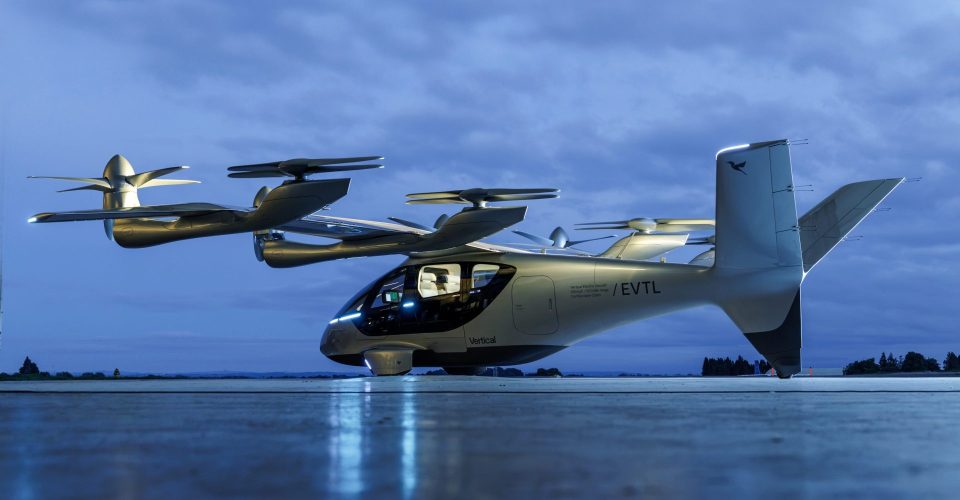
The Valo would offer airport transfers in minutes(Image: Getty)
A British firm has revealed bold plans for a ‘flying taxi’ service that will transport passengers to airports, with this cutting-edge travel option expected to cost no more than an Uber.
Vertical Aerospace claims its electric Valo aircraft, engineered to reach speeds of up to 150mph across distances of up to 100 miles, could provide swift and effective city-to-airport links, enabling travellers to bypass airport traffic jams. For instance, a journey from Canary Wharf to Heathrow Airport would take just 12 minutes by aircraft versus an hour by road.
The firm, which recently conducted flight trials at Cotswolds Airport, is now targeting airline-standard safety approval by 2028 before launching commercial operations in early 2029.
Vertical Aerospace has released images of its prototype aircraft, which it claims delivers a luxurious experience for up to six passengers, featuring ample baggage capacity. Pictures of the aircraft reveal a sleek, contemporary design with an interior boasting comfortable seating and big windows, reports the Express.
Despite the aircraft’s high-end appearance, the company intends to provide an affordable and accessible service. A spokesman confirmed: “Ultimately, the potential is for this aircraft to be a similar cost as hiring an Uber.”
Vertical has also announced its proposed route network at launch, which would initially link Cambridge and Oxford -Bicester with the capital as well as Heathrow and Gatwick Airport. Aside from airport transfers, the firm suggests these innovative aircraft could be used for emergency medical services, cargo delivery, and even defence operations.
Vertical confirmed plans to build seven aircraft in the UK for testing with the UK Civil Aviation Authority (CAA) and the European Union Aviation Safety Agency (EASA).
In a statement, Vertical announced approximately 1,500 pre-orders for Valo. The company projected that manufacturing these aircraft could generate 2,000 skilled jobs in the UK by 2035.
Stuart Simpson, CEO of Vertical Aerospace, stated: “Electric flight will transform how cities move, and London is one of the best places in the world to prove it. With Skyports and Bristow, we have the aircraft, infrastructure and operational strength to lead this market. These plans show the commercial potential of services we aim to see operating following regulatory approval in 2028 and we look forward to bringing them to life with our partners.”
However, gaining CAA approval could pose a challenge for these futuristic vehicles. At present, the CAA is conducting a consultation on vertical take-off and landing (VTOL) aircraft to ensure their safe operation within the UK.
The consultation commenced last month and will continue until the end of January 2026, inviting interested parties to share their views. This process will help establish safety standards for pilot licenses, aircraft, and landing sites, ensuring the proper regulation of VTOLs.
Have a story you want to share? Email us at webtravel@reachplc.com