
Market expectations for an October Federal Reserve rate hike tumbled to just over 50% on Tuesday after New York Fed President John Williams indicated he is in no rush to increase borrowing costs next month.
After the Federal Open Market

Market expectations for an October Federal Reserve rate hike tumbled to just over 50% on Tuesday after New York Fed President John Williams indicated he is in no rush to increase borrowing costs next month.
After the Federal Open Market
WASHINGTON — After two years of struggling to slow down the Trump administration agenda under a Republican governing trifecta, Democrats are hoping to capture both chambers of Congress in the upcoming midterms.
All 435 House of Representatives seats are up for election, with 37 considered competitive, 21 of them toss-ups, by the Cook Political Report — a respected polling analysis site. Republicans currently hold a 218-214 edge over Democrats, with two seats vacant and one independent in the chamber.
To control the House, Democrats need a net gain of four seats.
Recent polls have shown Democrats creeping up on or surpassing their Republican opponents as President Trump’s approval rating hovers under 40%, which may offer an opening in unexpected places. But still, in a time when a more progressive wing has risen in popularity on the left, even some moderate Democrats are suffering from associations with the current administration.
Here is a look at five competitive races:
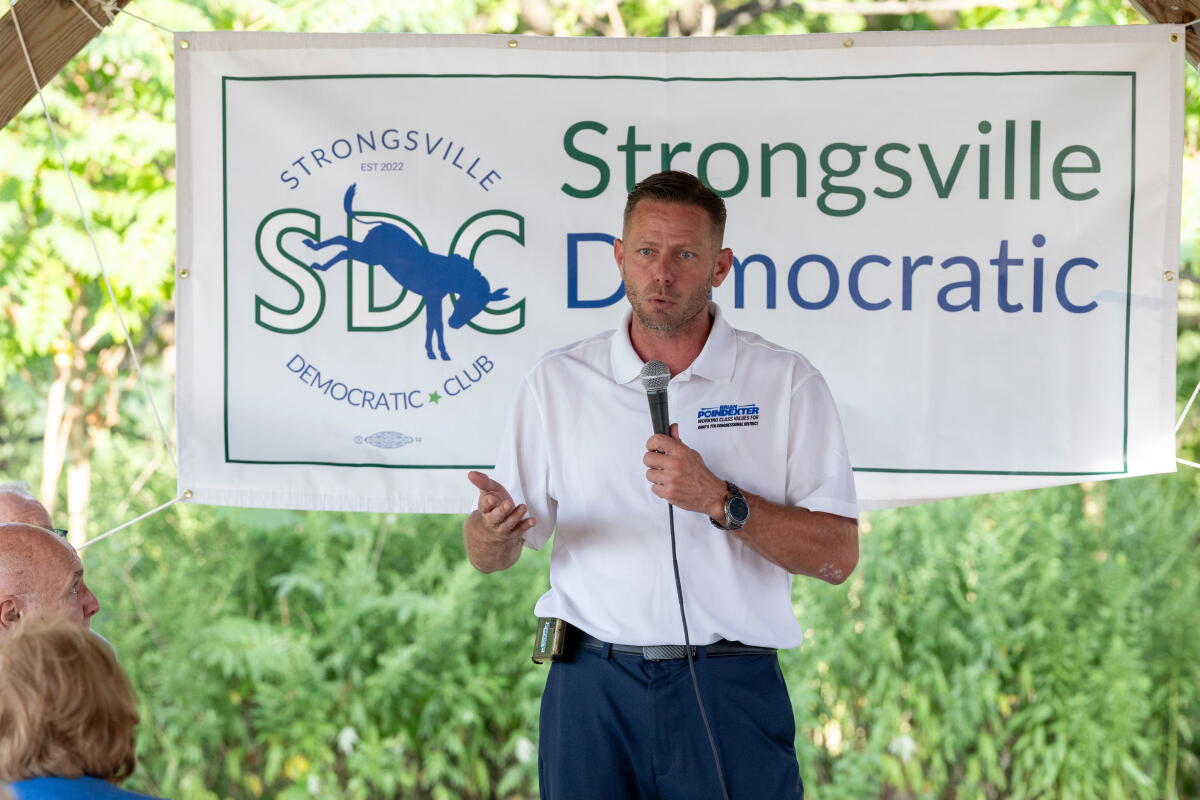
Incumbent Republican Max Miller, mired in controversy, will face union ironworker Brian Poindexter in a 7th Congressional District race that went from solidly Republican to a toss-up in the matter of weeks.
Miller, a second-term congressman, is facing a House Ethics Committee investigation after his ex-wife, Emily Moreno — daughter of Ohio Republican Sen. Bernie Moreno — accused Miller of extreme physical abuse, which he has denied.
Miller also faced accusations from former White House press secretary Stephanie Grisham that Miller had abused her during their relationship. An Ohio judge recently ordered both parties to remove social media posts about each other that were considered disparaging.

Brian Poindexter, Democratic nominee for Ohio’s 7th Congressional District, speaks at the Strongsville Democratic Club meeting on Aug. 5 in Strongsville, Ohio.
(Nate Manley / Associated Press)
Poindexter, a relative unknown, has surged in the meantime. According to a Co/efficient poll last month, Poindexter was leading Miller by 14 points, with 86% of respondents claiming they were aware of allegations against Miller.
Poindexter has centered his campaign on strengthening unions, retaining healthcare benefits for retirees and injured workers and raising wages.
Miller has attacked his opponent for a 1998 arrest in which Poindexter, a teenager at the time, allegedly tried to swallow a rock of crack cocaine during a traffic stop. Miller also homed in on an instance of alleged assault at a baseball game in 2013 by Poindexter.
Incumbent Democrat Vicente Gonzalez Jr. is attempting to retain his seat against challenger Eric Flores, an Army veteran endorsed by Trump.
Elected in 2016, Gonzalez held the 15th Congressional District for three terms until 2021, when a Texas redistricting shift absorbed his McAllen home into the 34th district. He is currently serving his second term under a new map, which favors Republicans and has shed many of his Latino constituents.
Flores, a political newcomer, made his first national appearance at the Republican National Committee’s midterm convention in Dallas, touting his commitment to border security and accusing Gonzalez of allowing migrants to make the community unsafe.
Immigration looms as an issue in the race. Gonzalez has introduced bills to prevent federal and state immigration enforcement officers from entering homes without an official warrant, and to force agents to wear clear identification. He has publicly criticized raids targeting hospitality, medical and construction workers.
Gonzalez has scored endorsements from several progressive organizations in the state, including LUPE Votes — a subsidiary of La Unión del Pueblo Entero.
In a Barbara Jordan Public Policy Research and Survey Center poll from August, Gonzalez was leading Flores, 45% to 42%, with 8% undecided.
Incumbent Democrat Rep. Donald Davis will have to contend with a district that has grown more conservative to retain his seat against Republican challenger Laurie Buckhout.
North Carolina’s 1st Congressional District was the state’s only swing seat held by a Democrat before last year’s redistricting, which made the area lean Republican. This will be a rematch of the 2024 race, which Davis won by less than 2 points, or around 6,000 total votes.

Laurie Buckhout speaks as President Trump and North Carolina Rep. Jennifer Balkcom look on during a campaign rally at the Gastonia Municipal Airport on Sept. 16 in Gastonia, N.C.
(Matt Kelley / Associated Press)
Cook Political Report ranked this race as leaning Republican, calling Davis “the most vulnerable House Democrat in the country.”
It is unclear whether the gerrymandering effort will have been effective enough to make the district flip to Republican. Trump endorsed Buckhout in March and reiterated his support last week.
New York Republican incumbent Rep. Mike Lawler is attempting to fend off a challenge from Democrat Cait Conley, a former White House director of counterterrorism on the National Security Council.
Cook Political Report rankings showed that early this year, the 17th Congressional District race went from likely Republican to a toss-up.
Pete Buttigieg went on the campaign trail last week with Conley to promote the candidate’s bid to unseat Lawler.
“Cait is as serious as it gets about keeping our country safe,” Buttigieg said on a rally stage in Tarrytown, “just like she is serious about bringing down the cost of housing, healthcare and energy.”
Lawler has presented a bipartisan image in Congress, but has come under fire in his purple district for aligning himself with the Trump administration on several issues, including his support for the Iran war.
At the Republican National Committee’s midterm convention, Lawler focused much of his speech on lambasting “socialist” Democrats and attempting to appeal to the more “common sense” wing of the opposition party.
“Radical socialists are winning Democratic primaries,” he said. “They claim to be well-meaning, but there is nothing kind-hearted about protecting criminals at the expense of American families … nothing compassionate about prioritizing illegal immigrants.”
Conley, however, has publicly refused to campaign with New York Mayor Zohran Mamdani or Rep. Alexandria Ocasio-Cortez — without condemning either figure — to avoid the open conflict between establishment figures and the more progressive wing of the party.
A July poll from co/efficient showed Lawler leading Conley 50% to 45%, with a nearly 3% margin of error.

Dr. Amish Shah, shown in July, is a Democrat running in Arizona’s 1st Congressional District.
(Ross D. Franklin / Associated Press)
A Democratic PAC plans to invest nearly $1 million to support Democrat state Rep. Amish Shah against Republican Jay Feely, a former NFL player with close ties to the president.
The 314 Action Fund — which seeks to elect Democrats with backgrounds in science, technology, engineering and mathematics — has made a big bet on the Democrat running in the 1st Congressional District, Arizona’s wealthiest, according to the Arizona Mirror.

Former professional football player Jay Feely, shown in April, is the Republican nominee in Arizona’s 1st District.
(Ross D. Franklin / Associated Press)
Subsequent ads have brought attention to Feely’s close association with Trump and his recent attendance at the Republican National Committee’s midterm convention in Dallas. Trump won the state by five points in 2024.
Elon Musk has also figured in this race, with his America PAC giving $24,000 to Republican candidates Feely in the 1st District and Juan Ciscomani in the 6th District, according to the Copper Courier.
The Cook Political Report called the 1st District “one of the most competitive … in the country.”
WASHINGTON — As Republicans contend with President Trump’s deep unpopularity, Democrats are attempting to seize the opening to take the U.S. Senate in the Nov. 3 midterm elections. Polls have shown Trump with an approval rating consistently below 40%, with no end in sight to the Iran war and voters expressing deep economic anxiety.
Republicans currently hold a 53-47 edge in the Senate, and 35 seats are on the November ballot.
Months of polling indicate that eight Senate seats — six of which are currently held by Republicans — are now up for grabs. Democrats will need to win at least four of them, while holding on to two contested seats currently held by their party, in order to flip the chamber.
Five key races are unexpectedly close, with some polls giving Democrats a better edge than expected, but the outcomes are still in doubt, as swaths of voters remain undecided. The Cook Political Report, a leading forecaster, rates each one a toss-up. Here’s how they are shaping up:
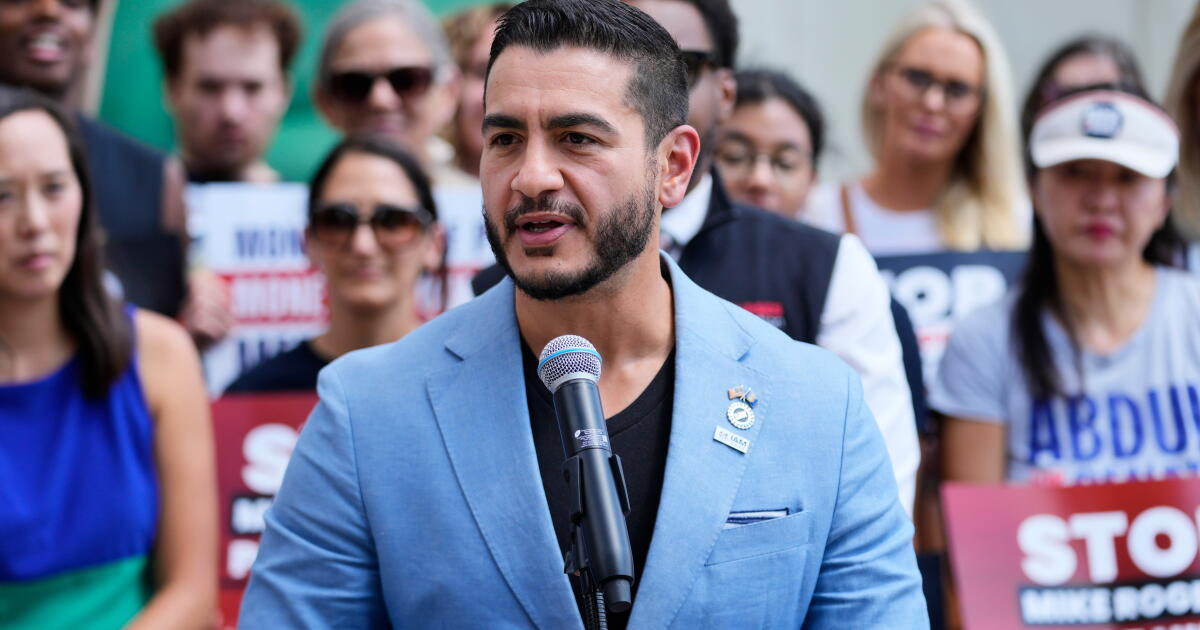
In perhaps the highest-profile contest, former public health official Abdul El-Sayed is facing Republican Mike Rogers for the seat being vacated by retiring Democratic Sen. Gary Peters.
El-Sayed, aligned with the party’s progressive wing, narrowly defeated moderate Rep. Haley Stevens in a heated Democratic primary. He is looking to rally her supporters as well as disaffected Republican voters.
Rogers is courting independents and a cohort of Jewish Democrats who view El-Sayed’s desire to reduce funding to Israel’s military as a dangerous proposition.
According to a CNN/SSRS poll of likely voters released Sept. 9, El-Sayed led Rogers 47% to 44%, a result within the margin of error. Notably, 26% of respondents said they could still be persuaded to vote for either candidate, leaving the race wide open.
The barbs in this race have become deeply personal, with anti-Muslim rhetoric taking center stage.
In a series of ads and artificial-intelligence-generated images, Republican groups — including the National Republican Senatorial Committee and Front Line Action — have cast El-Sayed as a supporter of terrorism. During speeches and interviews, members of the Trump administration, including the president, have repeatedly referred to the candidate by his full name, Abdulrahman Mohamad El-Sayed.
Rogers has continually drawn attention to a campaign event hosted by El-Sayed that included Hasan Piker — a Los Angeles-based online political commentator who recently drew widespread attention for a 2019 comment that “America deserved 9/11” while discussing blowback against U.S. foreign policy in the Middle East.
El-Sayed has railed against Rogers for refusing to debate and for his endorsement by Trump.
This week, El-Sayed stood alone on the Fox 2 Detroit debate stage after Rogers declined an invitation, dubbing his opponent “Mike Dodgers” on several occasions.
Rogers later accused the moderator of bias toward the Democratic candidate. The candidates have agreed to debate on Oct. 8 and 21.
State Rep. James Talarico is seeking to become the first Texas Democrat elected to the Senate since 1993.
His Republican opponent, state Atty. Gen. Ken Paxton, received Trump’s endorsement and defeated four-term incumbent Sen. John Cornyn in the primary.
While gaining a seat in Texas has long been a far-off dream for Democrats, Paxton’s controversies have dogged him during the race. A Mason-Dixon Research poll showed the Democrat leading Paxton 46 to 43, in a state that Trump won by nearly 14 points in 2024. Other polls, including one from Insider Advantage, had the margin at a single point.
Paxton is seen as a prominent fixture in the MAGA movement, using his position as attorney general to contest Obama-era clean energy and healthcare acts and launching lawsuits against the Biden administration for its immigration policy.
Talarico has made Paxton’s association with the president a key piece of his campaign, slamming Paxton as “the most corrupt politician in Texas” and spotlighting his impeachment by the Texas House of Representatives in 2023 over allegations of bribery, breach of public trust and misuse of his office to aid a donor. (Paxton survived the impeachment vote and denied wrongdoing.)
Several attack ads on Talarico, launched by Republican political action committees, have focused on his past support for transgender youth and accused him of exaggerating his faith to garner the Christian vote.
Six-term incumbent Republican Sen. Susan Collins is hoping to retain her seat as Democratic challenger Troy Jackson attempts to replicate the grassroots success of former nominee Graham Platner’s campaign.
Jackson, a former state lawmaker, was chosen by Maine Democratic Party delegates to run in place of Platner, who dropped out in July after sexual misconduct allegations against him. A former lumberjack, Jackson shares Platner’s working-class background and is running on Medicare for All and increased taxes for billionaires.
Collins has repeatedly demonstrated her staying power and won reelection in 2020 even as the state went blue in the presidential race. Her willingness to stand up to Trump could become a deciding factor this time around; Collins is working to highlight her votes to block Trump’s $1.8-billion Department of Justice anti-weaponization fund and against the Iran war.
She has mostly stuck to promoting her decades-long record on the campaign trail, which has recently focused on increased healthcare access for seniors, workforce development and Social Security benefit increases.
She has faced criticism from Jackson and others over her vote to confirm Supreme Court Justice Brett M. Kavanaugh, who faced sexual assault allegations, which he denied, and later voted to strike down Roe vs. Wade, which had granted a constitutional right to choose an abortion.
Jackson has had difficulty generating the same enthusiasm among voters as his predecessor, Platner, who consistently held town halls across the state and had a viral social media presence. Over Labor Day weekend, Jackson hosted at least a dozen events up and down Maine to make his first public introductions to voters deep into the cycle.
A recent poll from YouGov shows Jackson narrowly leading the incumbent, 46% to 44%, with a crucial 9% undecided.
Former Democratic Rep. Mary Peltola and incumbent Republican Sen. Dan Sullivan are leading a field of candidates — including another Dan Sullivan — ahead of a ranked-choice general vote.
Alaska hasn’t elected a Democratic senator since 1995, giving Peltola an uphill battle in a state that Trump won by 13 percentage points in 2024.
A late July poll by Change Research showed Peltola in the lead by six percentage points. A more recent poll from Alaska Survey Research had the race within 1 point in favor of Peltola.
Much of the media attention surrounding this race, however, has focused on the third-place candidate, who only received 2.5% of the primary vote — and also happens to be named Dan Sullivan.
Dan J. Sullivan, a retired teacher who made the top four in ranked-choice voting, has been accused by Republicans of being a Democratic plant that could potentially confuse voters. Sullivan has denied these accusations and the Alaska Supreme Court decided to keep him on the ballot.
If none of the candidates receive over 50% of first-place ranked-choice votes — which is likely in this race — the last-place candidate will be eliminated, with their vote distributed to their next choice until one candidate receives a majority of the total.
In a race that has seen the candidates trade political jabs in separate speeches on the same state fairgrounds, Republican Rep. Ashley Hinson and Democratic state Rep. Josh Turek are nearly neck and neck.
According to a Suffolk University poll, Hinson is leading Turek 45% to 40%, in a state where Trump won by 13 points in 2024. A poll conducted by YouGov, however, has Turek in front by a single point.
GOP incumbent Sen. Joni Ernst elected not to run this year, leaving the seat open for a potential flip.
Turek, a two-time Paralympics gold medalist, has attacked Hinson for past campaign ads in which she said: “I don’t trade stocks, and no one else in Congress should either.” Tucker pointed to the fact that Hinson purchased and sold stocks in Amazon, Tesla and insurance firms after she was elected, according to financial disclosure forms.
In return, Hinson criticized Turek for missing over half of his state Legislature floor votes, and labeled him an “anti-ag” activist.
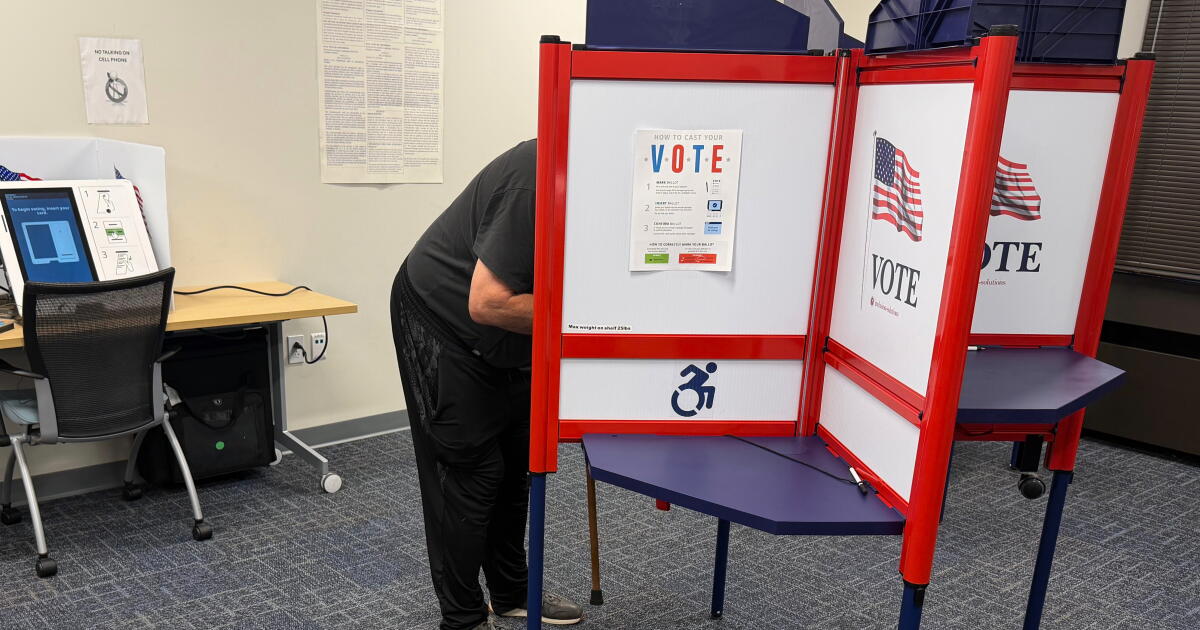
HENRICO, Va. — In-person voting for this year’s midterm elections began Friday, ushering in the final six weeks for Americans to decide which party they trust to lead Congress through a cost-of-living crisis, a prolonged war in Iran and other pressing issues.
Election administrators say they are prepared and confident the vote will be accurate and secure. Nevertheless, President Trump has continued with efforts to denigrate certain voting methods and reshape how elections are run, through court challenges, an expansive federal hunt for noncitizen voters and a pressure campaign to force election officials to share sensitive voter data.
Friday marked the start of early voting in Virginia. Voters in a handful of other states, including Idaho, Minnesota and South Dakota, can cast absentee ballots in person, typically at a local election office or voting center. More expansive early voting is scheduled to begin in those and other states in the coming weeks.
At a voting location in Fairfax, Virginia, 18-year-old college student Sanya Singhal was among the first to vote early in person Friday morning, arriving well before the site opened to get in line.
“Why not just have a little fun in life, you know, try to be the first early voter?” she said. “I really want to participate in my democracy.”
At a voting location in suburban Richmond, a poll worker rang a bell as the building opened and about a dozen voters in line began to file in. Stephen Gura was excited to be the first.
“This election is critical. We need to stop the Trump agenda. We need to start electing people who will stand up for people in this district,” said Gura, who added that he voted for U.S. Sen. Mark Warner, a Democrat, and Shannon Taylor, the Democratic nominee against Republican incumbent Rob Wittman in the 1st Congressional District.
The Nov. 3 election includes votes for governor and state legislature in most states and will determine whether Republicans maintain control of the U.S. House and Senate. If Democrats retake Congress, it will alter the trajectory of the final two years of Trump’s term, most likely leading to investigations and other oversight efforts.
At the suburban Richmond voting center, a steady stream of voters flowed in and out for the first hour of early voting. William Curry, a 74-year-old retiree who described himself as a libertarian-leaning independent conservative, voted for Warner’s Republican challenger, Bert Mizusawa, and Wittman. Curry said he generally approves of the job Trump has done, apart from the war with Iran.
“He’s in a mess he can’t get rid of,” Curry said of the conflict.
On a rainy day in Sioux Falls, South Dakota, Bill Goehring, 67, said he voted early at the county office because he will be traveling later. He voted for a mix of Democrats and independents, and said Trump’s “dictatorial tendencies are bad for America.”
The start of early voting comes at a time of deep angst among many Americans about issues including rising gas and grocery prices, the war in Iran, the looming risks of artificial intelligence and Trump’s aggressive immigration enforcement campaign.
It also follows an unprecedented spate of mid-decade redistricting for the U.S. House that began when Trump urged the Republican-controlled legislature in Texas to redraw its congressional map to help the party. California and other states followed.
The changes affect millions of people: Research shows 1 in 10 Americans this fall is a resident of a different congressional district than in 2024.
Those partisan efforts are expected to continue before the 2028 elections after a landmark ruling this year from the U.S. Supreme Court weakened the federal Voting Rights Act’s protections against racially discriminatory redistricting.
As the start of early voting approached, Trump was focused on efforts to assert federal control over election administration, even as the Constitution bestows the power to run elections on the states and, in some cases, Congress. The nation’s highest court rejected Trump’s bid to restrict mail ballots this week, but several of his administration’s other efforts to influence the voting process and mine state voter lists for illegitimate voters continue.
Virginia’s attorney general said Thursday that Trump’s administration may have violated several of the state’s laws after a whistleblower accused federal employees of misrepresenting themselves on voter lookup tools to hunt for noncitizen voters. In a letter, Attorney General Jay Jones demanded that the Department of Homeland Security confirm in writing whether it had directed anyone to access Virginia voters’ information without first obtaining permission from those voters.
Trump for years has raised the specter of widespread noncitizen voting in U.S. elections, and this year is no exception. But despite his administration’s insistence that hundreds of thousands of people are illegally on voting rolls across the country, research continues to show noncitizen voting is exceptionally rare.
David Becker, executive director and founder of the Center for Election Innovation and Research, said he wouldn’t be surprised if the Republican president continues “his disinformation campaign and his attack on election officials.” But he said he thinks despite that and other challenges, “ultimately the process will hold as it has in past years.”
Voting rights advocates have encouraged voters this year to cast mail ballots early, in part because of concerns about recent changes in U.S. Postal Service operations that could delay the application of postmarks to ballots.
“Voting early, whether in person or by mail, is good for all of our communities because it gives voters options, eases lines on Election Day and can even mean faster results,” said Hannah Fried, co-founder and CEO of the voting rights group All Voting Is Local.
The top official at the U.S. Postal Service also encouraged voters who cast ballots by mail to get them in early.
“We say seven days,” postmaster general David Steiner said in an interview. “Everything is solved if people vote early.”
In a news briefing Thursday, Minnesota Secretary of State Steve Simon urged people not to be swayed by stories they might have seen or read that cast doubt on election operations. They would be able to vote “just like they always have,” he said.
“I just want to reaffirm that Minnesota’s elections are fundamentally free, fair, accurate, honest and secure,” he said.
Swenson, Rankin and Raza write for the Associated Press. Swenson reported from New York and Raza from Sioux Falls, S.D. AP writer Mike Catalini in Philadelphia and AP video journalist Nathan Ellgren in Fairfax, Va., contributed to this report.