flexibility

Democrats want more spending flexibility from California voters

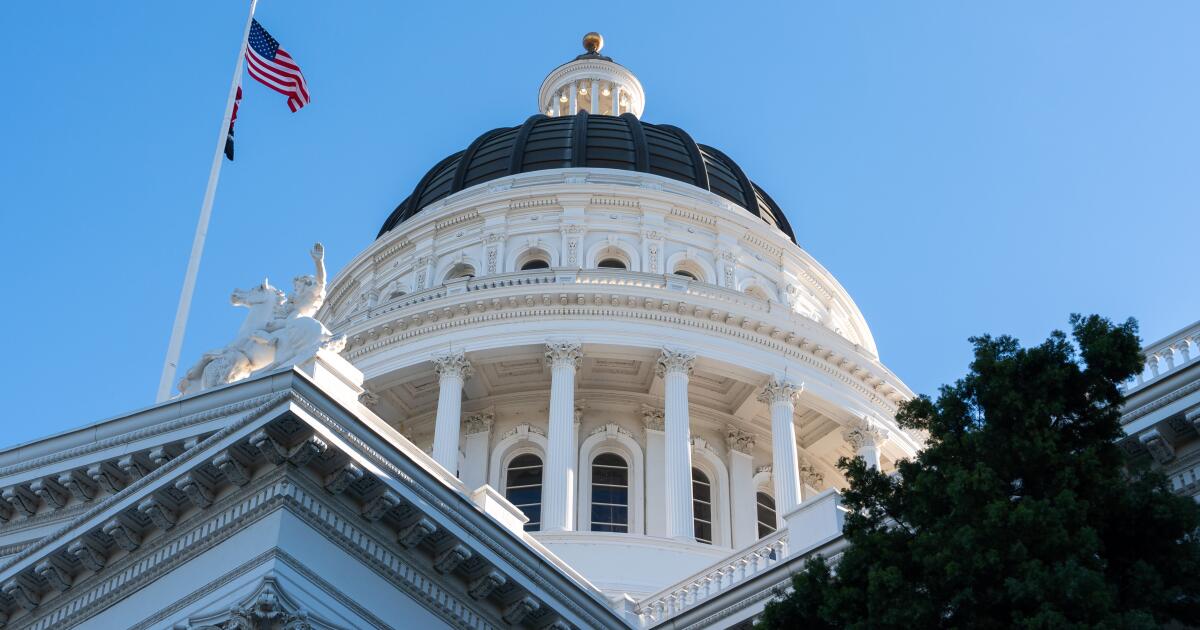
Gov. Gavin Newsom and Democratic leaders of the California Legislature plan to approve a proposed constitutional amendment this week that would ask voters to give them more flexibility over state spending and allow them to save money that could otherwise go back to taxpayers.

The proposal seeks to exempt deposits into state savings accounts from a spending limit that voters adopted through a series of ballot measures dating back to the late 1970s and to increase the share of tax revenue that can be put into the rainy day fund.

“Putting money aside to protect ourselves from future uncertainties isn’t just good government; it’s common sense,” Newsom said in a statement. “California is strong and resilient, but we’re not immune to economic headwinds. At a time when our essential services are under pressure, we have a responsibility to safeguard the programs and investments that Californians rely on.”

Assembly Constitutional Amendment 20, which Democrats are calling the “Save for California’s Future Act,” could receive push back from taxpayer advocates.

Under an existing state appropriations restraint, also known as the Gann limit, lawmakers cannot spend more than an amount determined by a formula that takes into consideration annual tax proceeds and changes to the population and cost of living. Tax revenue above the limit must be divided between schools and refunds to taxpayers.

With few exceptions, the limit applies to most appropriations of tax revenue, including money that lawmakers tuck away into the rainy day fund and other reserves. California voters have also capped the amount of money lawmakers can set aside in the rainy day fund to 10% of general fund proceeds in a given year.

Since taking office, Newsom has argued that it doesn’t make sense for savings to count as spending under state law.

State budget revenue is subject to dramatic swings from year to year based on stock market activity. The law, Newsom has said, prevents the state from saving more money in good years to stave off cuts to programs in bad years.

The proposed changes would exempt deposits into the rainy day fund and a short term reserve, called the “Projected Surplus Temporary Holding Account,” from the state appropriations limit. The cap on the rainy day fund would grow from 10% of general fund tax revenue to 20%.

“Californians live by a simple, bipartisan truth: set money aside when times are good so you’re ready when they’re not,” Assembly Speaker Robert Rivas (D-Hollister) said in a statement. “The Save For California’s Future Act is what responsible leadership looks like — and future taxpayers will thank us for it.”

The measure could incentivize Democrats to save more money because funds tucked away in the rainy day fund would no longer be considered expenditures counted toward the spending limit. By allowing lawmakers to set aside more money that is not subjected to state spending limits, it could also allow them to hold onto money that would be returned to taxpayers under current law.

The measure is slated for a vote Thursday. If approved by two-thirds of lawmakers, voters will consider the proposal on the November ballot.

Source link

Dodgers’ bullpen squanders strong start by Emmet Sheehan in loss

The boos were already loud when Cubs third baseman Alex Bregman, a member of the scandal-embroiled 2017 Astros, came up to bat in the eighth inning. They swelled when he launched a tying home run off Dodgers reliever Blake Treinen and rounded the bases.

Then in the ninth, Dodgers left-hander Tanner Scott surrendered a two-run home run to Dansby Swanson en route to the Dodgers’ 6-4 loss Friday.

The game flipped dramatically after Dodgers starting pitcher Emmet Sheehan left the game. He was charged with just one run and four hits, receiving a standing ovation as he walked to the dugout with one out in the seventh. He tied his career high with 10 strikeouts.

Sheehan cruised through the first three innings, recording seven strikeouts his first time through the Cubs’ batting order and retiring 10 batters in a row.

He finally gave up back-to-back hits, the first baserunners he allowed, in the fourth inning. But a dart of a throw to home from center fielder Andy Pages cut down former Dodgers prospect Michael Busch to keep the Cubs scoreless.

The only run charged to Sheehan came in the seventh inning, after he’d given up a single to Cubs designated hitter Moisés Ballesteros and then handed the ball over to Alex Vesia.

Dodgers pitcher Emmet Sheehan delivers during the third inning against the Chicago Cubs.

Dodgers pitcher Emmet Sheehan delivers during the third inning against the Chicago Cubs at Dodger Stadium on Friday night.

(Gina Ferazzi / Los Angeles Times)

Vesia surrendered a two-run triple to Swanson and an RBI single to Nico Hoerner, cutting the Dodgers’ lead to one.

The Dodgers had led since Will Smith’s three-run home run in the third inning. Then in the fourth, Hyeseong Kim drove in another run with a two-out single.

After Bregman’s home run, the Cubs came inches away from pulling ahead in the same inning. But with a runner on first, Pages cut off Ballesteros’ double before it reached the wall, and he slung the ball across his body to Kim, whose on-target throw home nabbed the Cubs’ Ian Happ as he slid headfirst toward the plate.

The Dodgers’ offense, however, didn’t score again, allowing the Cubs to extend their winning streak to 10.

Counsell doubles down on Ohtani exemption criticism

Days after Cubs manager Craig Counsell alluded to the rule that designates Shohei Ohtani as a “two-way player,” who doesn’t count against the 13-pitcher roster limit (14 in September), his team came face to face with Ohtani and the Dodgers.

“I was answering a different question,” Counsell said Friday, before the first game of the weekend series. “But what sometimes happens is, when you answer a question, whatever is more interesting about your answer is the part that gets printed.”

With the Cubs’ bullpen hit hard by injury, he was originally asked about the lack of flexibility in the roster makeup.

“I’ve never understood it, either,” Counsell told reporters Monday. “It’s an offensive rule, essentially. It’s a rule to help offense more than anything, if you ask me. And then there’s one team that’s allowed to carry basically one of both, and that he gets special consideration, — which is probably the most bizarre rule … for one team.”

His comments took on a life of their own, with a focus on the portion relating to Ohtani.

“Not surprised,” Dodgers manager Dave Roberts said. “That’s kind of what happens these days when you say certain things. And I don’t think he meant it really maliciously. I mean, they’re going through it on the pitching side.

“But again, this is a rule that’s applicable to Shohei. It’s not a Dodger rule, right? I mean, this was implemented when he was with the Angels. But not surprising, because he’s a very important player, so it gets a lot of attention.”

Counsell said something similar, while standing firm in his evaluation of the rule.

“Look, this is not a Dodger thing, it’s not an Ohtani thing,” Counsell said. “It is a bad rule.”

Source link