first black woman

What the candidates for California governor

You’re reading the L.A. Times Politics newsletter

Anita Chabria and David Lauter bring insights into legislation, politics and policy from California and beyond. In your inbox three times per week.

By continuing, you agree to our Terms of Service and our Privacy Policy.

To be elected governor of California, a candidate needs six vital assets.

Maybe not the entire six-pack, but almost. They include:

–A salable message. How’s the candidate going to make life better for the voter? Specifics, not just poll-generated platitudes. And beating up on President Trump isn’t going to be enough for Democrats next year.

Voters will probably be getting migraine headaches from listening to both Trump and his critics.

–Curb appeal. It greatly helps to have matinee-idol looks like Gov. Gavin Newsom. But that gift is rare. Average appearance, verbal skills and a good message will usually suffice.

–Boatloads of money. It costs tens of millions of dollars to market a gubernatorial aspirant’s message in far-flung, heavily populated and diverse California.

–A strong desire to win, also known as “fire in the belly.” Rather than relaxing in a recliner while watching the Rams or 49ers, the willingness to fly off to beg strangers for campaign donations.

–A thick skin. Top-tier candidates are constantly attacked by rivals and often covered by the news media in ways deemed unfair. But overreacting can destroy a candidacy.

–A strong record of public service to show voters you’re committed and won’t need lots of time with training wheels.

There also are other assets that can help. For example: youth.

“We are, in fact, going through a generational change in American politics,” says longtime Democratic strategist Darry Dragow. “That’s inevitable. New generations of voters have not been widely represented in government. The boomers have held political power for a very long time.”

Baby boomers are roughly ages 60 through 79 — born after World War II, between 1946 and 1964.

Another plus is political incumbency — the ability for a candidate to be identified on the ballot label as, for example, attorney general or lieutenant governor. That denotes credibility and a record. You’re not allowed to call yourself a “former” anything.

Democratic strategist Garry South calls the current crop basically “a field of formers” and says that saddles them with an extra burden.

So far, the 2026 race to replace the termed-out Newsom has been a boring trot.

That’s largely because the public’s political focus has been on Trump and the toady Republican Congress. But it’s also because none of the gubernatorial candidates possesses the full six-pack of vital assets.

For months, the contest was frozen in waiting mode: Waiting for former Vice President Kamala Harris and Sen. Alex Padilla to decide whether they wanted to run. Either would have been an early favorite, but not a shoo-in. They’d have faced a fight. And neither apparently felt the job was worth it. No fire.

Democratic donors and activists also were focused on Proposition 50 and waiting for the Nov. 4 redistricting election to be over. Most money and effort were going there.

Now that’s all behind us and the real race is underway.

“It’s a total free-for-all,” Sragow says. “None of these candidates is really on anybody’s radar.”

There’s no actual front-runner.

“You can’t read anything into the polls,” Democratic consultant Gale Kaufman says. “Just because somebody is a few points ahead doesn’t make them a front-runner. We don’t even know who all the candidates are yet.”

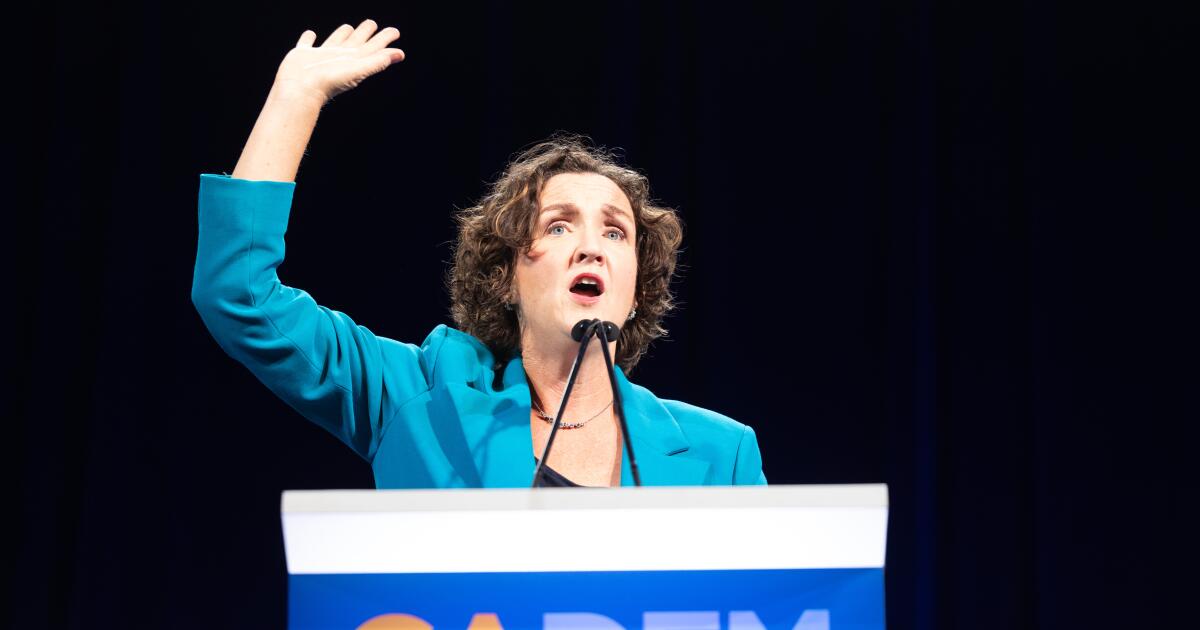
A late October poll of registered voters by the UC Berkeley Institute of Governmental Studies showed that 44% were undecided. Former Orange County Rep. Katie Porter led Democratic candidates with a scant 11%. Former U.S. Health Secretary Xavier Becerra was second at 8%.

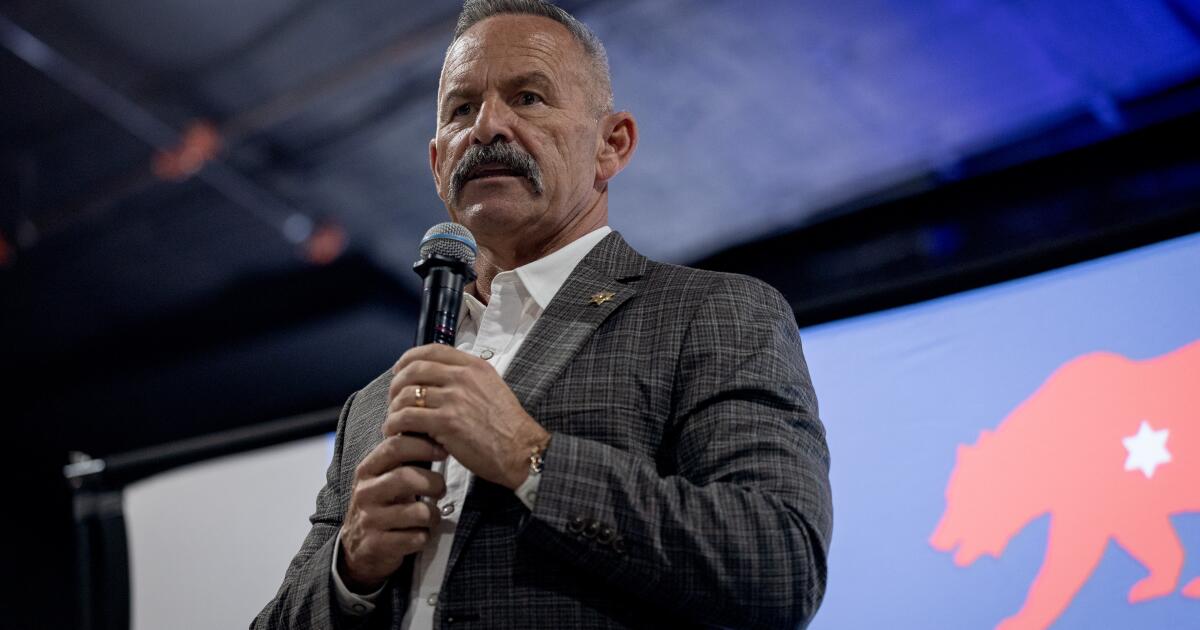
Riverside County Sheriff Chad Bianco, a Republican, was first overall with 13%. But never mind. No Republican has been elected to statewide office in California since 2006. And one won’t be 20 years later.

Last week, two more Democrats leaped into the race:

Billionaire hedge fund founder Tom Steyer, 68, who ran for president in 2020 and got nowhere. He has a good populist, anti-Sacramento message and tons of money to voice it. But he has never held elected office. And Californians have historically rejected mega-rich, self-financing candidates attempting to begin their political career at the highest level.

Rep. Eric Swalwell, 45, from the San Francisco Bay Area, who also ran unsuccessfully for president in 2020. He has a good message for progressives. But right now it may be too focused on Trump and not enough on Californians’ needs.

Aside from Steyer, none of the other Democratic aspirants are independently wealthy. They’ll need to raise barrels of money — ”24 hours a day, seven days a week,” Sragow says. That takes fire.

Other Democratic candidates:

–Porter, 51. She has curb appeal. But she publicly showed a thin skin with a contentious, rude performance during a TV interview in October. The nasty episode probably wasn’t fatal. But it apparently dropped her in polls, and that hurts fundraising.

–Becerra, 67. He has a respectful record as Health secretary, California attorney general and congressman. But questions were raised recently about Becerra’s judgment when federal prosecutors revealed the then-secretary didn’t notice that a top aide had raided his dormant political account for $225,000. Becerra wasn’t implicated. The aide pleaded guilty.

–Antonio Villaraigosa, 72, former Los Angeles mayor and state Assembly speaker. No one is more qualified to be governor. And he lets voters know where he stands. But they may be looking for someone younger.

–Betty Yee, 68, former state controller, Board of Equalization member and chief state budget honcho. She knows every inch of state government’s fiscal quagmire and has good ideas about unraveling it. But she’s short on curb appeal.

–State Supt. of Public Instruction Tony Thurmond, 57, the lone incumbent in the field. But he missed an opportunity to shine as state schools chief.

One of these people will probably be our next governor, although others could still enter the race. So, maybe it’s time to start paying attention.

What else you should be reading

The must-read: Pondering a run for governor, Atty. Gen. Rob Bonta faces questions about legal spending
C.A. vs. Trump: ‘Played with fire, got burned’: GOP control of House at risk after court blocks Texas map
The L.A. Times Special: California’s child farmworkers: Exhausted, underpaid and toiling in toxic fields

Until next week,
George Skelton


Was this newsletter forwarded to you? Sign up here to get it in your inbox.
Source link

Trump faces a ticking clock on healthcare costs

Republicans won a significant political victory this month when moderate Senate Democrats joined them to end the longest government shutdown in U.S. history, relenting from a showdown over the rising costs of healthcare.

But the fight is already back on, with mere weeks to spare before the Trump administration faces a potential uproar from the public over the expiration of Affordable Care Act tax credits on New Year’s Day, when premium costs will skyrocket.

The fast-approaching deadline, coupled with stinging defeats in elections earlier this month driven by voter concerns over affordability, has prompted a series of crisis meetings in the West Wing over a path forward on Capitol Hill.

The White House response that emerged this week is a political Hail Mary for an increasingly divided party entering an election year: a second megabill, deploying the parliamentary tool of reconciliation, addressing not just healthcare costs but Trump’s tariff policies under intense scrutiny at the Supreme Court.

“We’re going to have the healthcare conversation. We’re going to put some legislation forward,” White House Deputy Chief of Staff James Blair said Tuesday, addressing a breakfast event hosted by Bloomberg Government, as House Republican leaders pitched the plan to their members in a closed-door meeting.

“The president probably would like to go bigger than the Hill has the appetite for,” Blair added, “so we’ll have to see how that, you know, works out.”

You’re reading the L.A. Times Politics newsletter

George Skelton and Michael Wilner cover the insights, legislation, players and politics you need to know in 2024. In your inbox Monday and Thursday mornings.

By continuing, you agree to our Terms of Service and our Privacy Policy.

New plan, last minute

House Majority Leader Steve Scalise presented the plan to skeptical Republican lawmakers on Tuesday, arguing an extension of tax credits for what he called the “Unaffordable Care Act” — even if they are renegotiated on Republican terms — would only mask the problem of rising premium costs, ultimately burdening the taxpayer.

Trump sent a message to the caucus ahead of their meeting on Tuesday morning with a post on Truth Social, emphatic in all caps.

“THE ONLY HEALTHCARE I WILL SUPPORT OR APPROVE IS SENDING THE MONEY DIRECTLY BACK TO THE PEOPLE, WITH NOTHING GOING TO THE BIG, FAT, RICH INSURANCE COMPANIES, WHO HAVE MADE $TRILLIONS, AND RIPPED OFF AMERICA LONG ENOUGH,” Trump wrote. “THE PEOPLE WILL BE ALLOWED TO NEGOTIATE AND BUY THEIR OWN, MUCH BETTER, INSURANCE. POWER TO THE PEOPLE!”

“Congress, do not waste your time and energy on anything else,” Trump added. “This is the only way to have great Healthcare in America!!! GET IT DONE, NOW.”

Yet the plan is causing anxiety across a wide ideological range of Republican lawmakers, including moderates in vulnerable races entering next year’s midterm elections as well as those from deep red districts whose constituents rely on the Affordable Care Act, more widely known as Obamacare.

Nearly six in 10 Americans who use the ACA marketplace live in Republican districts, according to the Kaiser Family Foundation. Enrollment is highest across the South, where districts across Texas, Mississippi, Georgia, South Carolina and Florida consistently see more than 10% of their residents relying on the program.

Going for broke with reconciliation

Trump’s proposal would do away with the tax credits, potentially overhauling health savings accounts that would encourage Americans to save on their own and choose their healthcare plan.

But it’s unclear whether such a dramatic, last-minute change in the healthcare system, still in draft form, would garner enough Republican support to pass the House, where Speaker Mike Johnson (R-La.) can only afford to lose two Republicans on party-line votes.

The bill would come in a perilous political environment for Republican lawmakers, who one year ago faced a tie with Democrats on a generic ballot, according to an NPR/PBS News/Marist poll. In the group’s latest poll, Democrats are up by 14 points.

Even if Trump’s proposal were to secure House support, the Trump administration’s plan to pursue a bill through reconciliation in the Senate — which allows the upper chamber to pass legislation with a simple majority, instead of 60 votes — could face significant hurdles.

Senate parliamentary rules only allow reconciliation to be used for legislation that directly changes federal spending, revenues, or the debt limit. That could encompass an overhaul to health savings accounts, and potentially to codify Trump’s tariff policies, which have been approved through reconciliation in years past. But the fine print would be up to the discretion of the parliamentarian, whose cuts to tangential policy provisions could upend delicate negotiations.

Reconciliation was used in Trump’s last major push to repeal Obamacare, in 2017, when the late Sen. John McCain (R-Az.) surprised the nation with a thumbs-down vote on the measure.

That bill, McCain argued, would have repealed the healthcare of millions without a plan to replace it.

What else you should be reading

The must-read: Could Trump destroy the Epstein files?
The deep dive: A bombshell federal fraud case exploded inside Gov. Newsom’s powerful political orbit
The L.A. Times Special: This Arizona town is an unexpected magnet for Californians: ‘We do it our way’

More to come,
Michael Wilner

Was this newsletter forwarded to you? Sign up here to get it in your inbox.
Source link

Column: Sacramento scandal a wild card for Xavier Becerra and the governor’s race

You’re reading the L.A. Times Politics newsletter

Anita Chabria and David Lauter bring insights into legislation, politics and policy from California and beyond. In your inbox three times per week.

By continuing, you agree to our Terms of Service and our Privacy Policy.

So far, gubernatorial candidate Xavier Becerra has escaped the bright spotlight focused on Gov. Gavin Newsom in the money pilfering scandal involving their former top aides. But that could change.

It seems only a matter of time before one of Becerra’s campaign rivals seizes the federal fraud case for attack fodder. I can hear it already: “If the man who wants to be governor can’t protect his own political funds, he shouldn’t be trusted to safeguard your tax money.”

That might not be fair, but this is big-time politics. And the word “fair” isn’t in the political dictionary.

Neither Becerra nor Newsom is implicated in any wrongdoing.

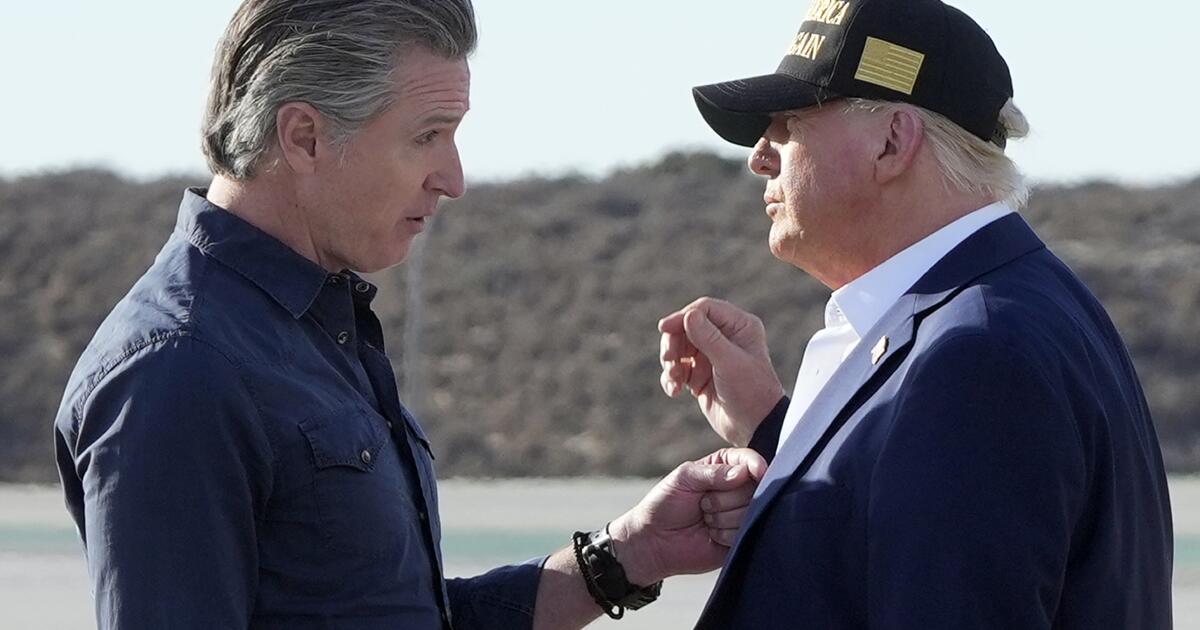
Newsom has drawn heavy media attention because his former chief of staff, Dana Williamson, is the central figure in the criminal case. Newsom also has made himself into a national political celebrity and the leader in early polling for the 2028 Democratic presidential nomination. That makes him prime news copy.

Becerra is low-profile by comparison, although he has achieved a very successful and respectable career: U.S. Health and Human Services secretary under President Biden, California attorney general and 12-term congressman.

It was Becerra’s dormant state political account that allegedly got pilfered of $225,000 while he was health secretary.

Federal prosecutors allege that Williamson, former Becerra chief of staff Sean McCluskie and Sacramento lobbyist Greg Campbell illegally diverted money to McCluskie’s wife, funneling the loot through shell companies for bogus consulting services.

McCluskie and Campbell both pleaded guilty to conspiracy to commit fraud and have been cooperating with the federal government.

Williamson, who allegedly fleeced Becerra’s political kitty when she owned a government relations firm before joining Newsom’s staff, pleaded not guilty to bank and tax fraud charges. Besides raiding Becerra’s account, she’s accused of falsifying documents involving a COVID small-business loan and claiming $1 million in personal luxuries as business expenses on her income taxes.

After news of the case broke last week with Williamson’s arrest, Newsom’s office said the governor suspended her last November after she informed him of the federal investigation.

There also was a sophomoric attempt by a Newsom spokesperson to link the federal case to the combative relationship between President Trump and the California governor. It’s true Trump has been targeting his “enemies.” But this three-year FBI probe began under the Biden administration.

Becerra issued a statement saying that the “formal accusations of impropriety by a long-serving trusted advisor are a gut punch.” He also said he had been cooperating with the U.S. Justice Department‘s investigation.

The federal indictment alleges that McCluskie and Williamson misled Becerra about how monthly withdrawals from his political account were to be used.

The account stash of nearly $2 million was raised for a 2022 attorney general reelection campaign that never occurred because by then Becerra was health secretary. But the money could be used in some future state race, such as for governor.

Political operatives I talked with were stunned that $225,000 could be siphoned out of a politician’s campaign account without him noticing.

“Did the account have no one watching it except the consultants who were pilfering from it?” asked veteran Democratic consultant Garry South. “Those of us who have run campaigns are scratching our heads. I can’t imagine how this would happen.”

I asked the Becerra campaign.

A spokesperson replied that the health secretary had authorized payments for “campaign management” after being misled by trusted advisors.

Also, the spokesperson added, Becerra was counseled by a Health and Human Services attorney to distance himself from any “campaign or political activity” prohibited by the federal Hatch Act and ethics rules. So he delegated responsibility for managing the account to advisors.

And he got snookered and ripped off.

Will it tarnish Becerra’s image and hurt his campaign for governor? We don’t know yet. But probably not that much, if any. His only sin, after all, was trusting the wrong people and following an attorney’s advice.

Even big scandals don’t seem to damage politicians in this era — Trump being the unfathomable best example.

It could crimp Becerra’s fundraising if potential donors wonder where their money is actually going and whether anyone credible will be watching it.

The gubernatorial race is still wide open without a real front-runner. No candidate is captivating the voters.

A late October poll by the UC Berkeley Institute of Governmental Studies showed paltry numbers for all candidates. Former Orange County Rep. Katie Porter led Democrats with 11% support among registered voters. Becerra was second with 8%. A whopping 44% of those surveyed were undecided.

Riverside County Sheriff Chad Blanco, a Republican, was first overall with 13%. But no Republican need apply for this job. California hasn’t elected a GOP candidate to a statewide office since 2006.

Becerra has as good a shot at winning as any current candidate. He was the leading Democrat among Latinos at 12%.

What else you should be reading

The must-read: Front-runner or flash in the pan? Sizing up Newsom, 2028
CA vs. Trump: At Brazilian climate summit, Newsom positions California as a stand-in for the U.S.
The L.A. Times Special: Indictment of ex-Newsom aide hints at feds’ probe into state’s earlier investigation of video game giant

Until next week,
George Skelton


Was this newsletter forwarded to you? Sign up here to get it in your inbox.
Source link

Newsom is running alone, for now. Is he vulnerable from the left?

Before flying to Brazil this week, showing up for the United States at an international summit skipped by the Trump administration, California Gov. Gavin Newsom made a stop in Texas. The redistricting fight that had started there had come to a halt in California thanks to the governor’s action. “Don’t poke the bear,” Newsom told an elated crowd of Democrats.

You’re reading the L.A. Times Politics newsletter

George Skelton and Michael Wilner cover the insights, legislation, players and politics you need to know in 2024. In your inbox Monday and Thursday mornings.

By continuing, you agree to our Terms of Service and our Privacy Policy.

In Washington, a handful of Senate Democrats had just voted with Republicans to reopen the government, relenting on a fight for an extension of healthcare tax credits. Newsom lashed out harshly against his party colleagues. “Pathetic,” he wrote online, later telling The Times, “you don’t start something unless you’re going to finish.”

They were just Newsom’s latest moves in an aggressive strategy to shore up early support for an expected run for president starting next year, after the 2026 midterm elections, when both parties will face competitive primaries without an incumbent seeking reelection for the first time since 2016.

The opportunity to redefine a party in transition and win its presidential nomination has, in recent cycles, led to historically large primary fields for both Democrats and Republicans, often featuring over 20 candidates at the start of a modern race.

And yet, one year out, Newsom appears to be running alone and out front in an open field, with expected competitors taking few steps to blunt his momentum, ceding ground in public media and with private donors to the emerging front-runner.

Former Vice President Kamala Harris remains well-respected among Democratic voters and is said to be flirting with another campaign. Other candidates, including Govs. Wes Moore of Maryland, JB Pritzker of Illinois, Andy Beshear of Kentucky, Josh Shapiro of Pennsylvania and Gretchen Whitmer of Michigan, Sens. Ruben Gallego of Arizona and Chris Murphy of Connecticut, New York Rep. Alexandria Ocasio-Cortez, and former Transportation Secretary Pete Buttigieg, are all said to be considering bids.

But Newsom has begun pulling away from the pack in public polling, emerging as the Democrats’ leading choice and running competitively against top Republican contenders.

“It’s very early, but at the moment Gov. Newsom seems to have his finger more acutely on the pulse of Democratic voters than his 2028 rivals,” said Sawyer Hackett, a Democratic strategist and content creator who worked on presidential campaigns for Barack Obama and Hillary Clinton.

“As a governor, Newsom has an advantageous perch to fight back and command attention,” Hackett said, “but he’s getting a significant head start in defining himself politically — as the guy who can take on Trump. And the battle for attention will only get harder as more contenders enter the ring.”

Running to the center

Over the summer, Newsom embraced a social media strategy leaning into the vitalist, masculine culture that has captured the attention of young American men and helped drive them to President Trump’s reelection campaign last year — a strategy that Newsom has said will be key to Democratic hopes of recapturing the White House.

“We need to own up to the fact that we ceded that ground — we walked away from this crisis of men and boys,” Newsom told CNN in an interview this week. “They were attracted to this notion of strength: strong and wrong, not weak and right.”

In a series of interviews and podcasts with with conservative commentators, the governor announced his opposition to transgender athletes competing in girls’ sports. He moved to limit access to California’s Medicaid program for immigrants without legal status. And he directed a crackdown on homeless encampments across cities in California that had blighted the state’s national image.

The moves were seen as an effort by Newsom to position himself as a centrist heading into the campaign, a posture that could benefit him in a general election. But it could also open the governor up to a robust challenge from the progressive left.

In 2014, as former Secretary of State Hillary Clinton was laying the groundwork for her run for president, polling showed her as the overwhelming favorite to win the Democratic nomination — and ahead of all competitors by 49 points in the crucial battleground state of New Hampshire. She would ultimately secure the nomination, but only after facing down a serious challenge from Vermont Sen. Bernie Sanders, who beat her soundly in the Granite State.

“One of the biggest pitfalls is who else might get in,” said Christian Grose, a professor of political science at USC and principal of Data Viewpoint, a data and polling firm. “At this stage with such a wide-open race, he is the front-runner, but who runs and who does not will shape his chances.”

Ocasio-Cortez could pose a similar challenge to an establishment candidate like Newsom, political analysts said. But her prospects in a Democratic primary and in a general election are different matters. In 2020, when Sanders once again appeared close to the nomination, other candidates cleared the field to help Joe Biden secure a victory and take on Trump.

“The shape of the field is still fuzzy,” said Jack Pitney, a politics professor at Claremont McKenna College. “AOC generates excitement, but no House member has gone directly to the White House since [James] Garfield in 1880.”

Risks to an early start

Newsom’s yearlong head start has earned him practical advantages. The campaign for Proposition 50, Newsom’s successful bid to redraw California’s congressional map along partisan lines, drew a new set of donors to a governor whose experience up until now had been limited to statewide office. Assertive exposure on social and legacy media has enhanced his name recognition nationwide.

He will need both to compete against Harris, a fellow Californian who could be convinced to stay out of the race if she isn’t confident she will win the primary, a source familiar with her thinking told The Times. Harris would enter the race with the benefit of widespread name identification and inherited donor rolls from her previous campaigns.

“This stage in the race for 2028 we generally call the ‘pre-primary’ period, in which would-be candidates compete for three resources: media attention, money, and staff. Newsom is definitely ahead in the “media pre-primary” at this point,” said Todd Belt, professor and director of the political management master’s program at George Washington University.

“A candidate definitely wants to be seen as the front-runner early on in order to attract the best staff,” Belt said. “It’s also good to get donors committed early on so they don’t contribute to others in the race, and you can then go back to them for more donations and bundling.”

But in a media environment where voters have increasingly short attention spans, Newsom could risk flaming out early or peaking too soon, analysts said.

Other centrist candidates could emerge with less baggage, such as Gallego, a young Latino lawmaker and Marine combat veteran from a working-class background.

“If Democrats care about winning the general election, Ruben Gallego is one to watch,” Pitney added. “He could appeal to groups with which Democrats have struggled lately. Newsom does not exactly give off blue-collar vibes.”

Grose, of USC, also said that Newsom’s association with coastal California could pose significant political challenges to the governor.

“There are pitfalls,” Grose said. “He needs to sell California, so any perceptions of the state’s problems don’t drag him down.”

What else you should be reading

The must-read: LAFD knew of firefighter complaints about Lachman mop-up and said nothing
The deep dive: Immigrant detainees say they were harassed, sexually assaulted by guard who got promoted
The L.A. Times Special: 26 Los Angeles restaurants to order Thanksgiving takeout from this year

More to come,
Michael Wilner

Was this newsletter forwarded to you? Sign up here to get it in your inbox.
Source link

Column: New York’s Zohran Mamdani’s win offers a lesson for Newsom

You’re reading the L.A. Times Politics newsletter

Anita Chabria and David Lauter bring insights into legislation, politics and policy from California and beyond. In your inbox three times per week.

By continuing, you agree to our Terms of Service and our Privacy Policy.

One takeaway from last week’s elections: The role model for California Gov. Gavin Newsom as he runs for president should be New York City Mayor-elect Zohran Mamdani.

Actually, Mamdani should be emulated not only by Newsom but by Democrats running for office anywhere.

Neither Newsom, of course, nor any candidate outside the most leftist burgs in America should wear the label “democratic socialist,” as Mamdani calls himself. That would frighten too many voters.

But what does appeal to voters — and always has in America — is a strong, positive message of hope. People like to think that a candidate understands their daily troubles and has a vision of how to make their lives better.

Mamdani is a 34-year-old Ugandan-born Muslim of Indian descent and a back-bench New York state assemblyman who the political experts would never figure to win a top-tier elective post such as New York mayor. But he has charisma, exudes authenticity and fills voters with hope.

OK, some of his campaign promises are undeliverable, even in liberal New York: free bus service, free child care and city-run grocery stores. But I suspect many voters didn’t take those pledges literally. It was the boldness and commitment to change for their betterment that drew people to him.

It’s a message framework that has been a winner throughout history.

Franklin D. Roosevelt promised “a new deal for the American people” and gave them hope with his radio fireside chats during the Great Depression.

John F. Kennedy offered a “new frontier.” Barack Obama chanted, “Yes we can” and ran on a slogan of “hope.”

They were all Democrats. But Republican founder Abraham Lincoln urged Americans to “vote yourself a farm and horses” and promised them homesteads on the western frontier.

Ronald Reagan declared: “Let’s make America great again.” Then Donald Trump stole the line and ruined it for any future candidate.

Newsom’s spiel has mostly been that Trump is lower than a worm. That has worked up until now. He has established himself as the Democrats’ most aggressive combatant against Trumpism — and the leader in early polling for the party’s 2028 presidential nomination.

Last week, his national party credentials were bolstered after orchestrating landslide voter approval of Proposition 50, aimed at countering Trump-coerced congressional redistricting in Texas and other red states.

Trump is desperate for the GOP to retain its narrow majority in the House of Representatives during next year’s midterm elections. But Proposition 50 gerrymandering could flip five California seats from Republican to Democrat — perhaps helping Democrats capture House control. Newsom becomes a party hero.

“He’s now a serious front-runner for the Democratic nomination,” says Bob Shrum, a former Democratic consultant who is director of the Center for the Political Future at USC.

Political strategist Mike Murphy, a former Republican turned independent, says “the Democratic presidential race in ‘25 has been won by Gavin Newsom. He made a bet [on Proposition 50] and it paid off.”

But Shrum, Murphy and other veteran politicos agree that Newsom at some point must change his script from predominantly anti-Trump to an appealing agenda for the future.

“He has to have an affordability message, for one,” Shrum says. “And he has to connect with voters. Voters just don’t go down a list of issues. FDR, JFK, Obama, they all were very connected with voters.”

Murphy: “He’s going to have to expand from fighting Trump to talking about his vision for helping the middle class. I’d say, ‘The era of Trump will soon be over. I have a way to bring back the American dream and here’s how I’m going to do it.’”

Easier said than done, especially if you’re the governor of troubled California.

“If it’s about a referendum on California, he has a vulnerability,” Murphy says. “He can’t run on ‘California is great.’”

Newsom consistently brags that California is a pacesetter for the nation. But lots of Americans want nothing to do with our pacesetting.

“You can’t have the highest unemployment, highest gas prices and the biggest homeless problem and tell Americans that everything in California is hunky-dory,” says Republican consultant Rob Stutzman. “Because voters don’t believe that.”

But Democratic consultant Bill Carrick, a South Carolina native, dismisses the effect of anti-California attitudes in Democratic presidential primaries.

“The notion that he can’t win in the South and border states, that’s nonsense,” Carrick says. “People who say that are Republicans. They don’t like Newsom or any other Democrat. People who vote in primaries are hardcore Democrats.”

But Carrick acknowledges that an anti-California bias could hurt Newsom in some states during a general election.

Here’s another takeaway from the elections: The Democratic Party is not in the toilet as far as it has been soul-searching since last November’s presidential election.

Last week, Democrats won everything from local commissioner to governor in much of the country. It confirmed my belief that the party’s chief problem in 2024 was a lousy presidential effort.

President Biden didn’t withdraw early enough for the party to hold primaries that would have allowed its nominee to build wide support. And Kamala Harris simply lacked appeal and didn’t inspire.

Democratic voter enthusiasm was contagious this time.

“There was one of the most exciting ground operations I’ve seen in a long time for 50,” says Democratic strategist Gale Kaufman. “Local party clubs, activists, union members all came together.”

Democrats can thank Trump.

“Voters really don’t trust Democrats but they‘re so angry with Trump it doesn’t matter,” says Dan Schnur, a political science instructor at USC and UC Berkeley.

Final takeaway: Trump has morphed into a Republican albatross.

What else you should be reading

The must-read: After outburst, Katie Porter’s support in the California governor’s race slips, new poll shows
The TK: Proposition 50 is a short-term victory against Trump. But at what cost?
The L.A. Times Special: Taking inspiration from Mamdani, democratic socialists look to expand their power in L.A.

Until next week,
George Skelton


Was this newsletter forwarded to you? Sign up here to get it in your inbox.
Source link

Is this the beginning of the end of the Trump era?

Ahead of Tuesday’s election, when Americans weighed in at the ballot box for the first time since President Trump returned to office, a vicious fight emerged among the president’s most prominent supporters.

The head of the most influential conservative think tank in Washington found himself embroiled in controversy over his defense of Nick Fuentes, an avowed racist and antisemite, whose rising profile and embrace on the right has become a phenomenon few in politics can ignore.

Fierce acrimony between Fuentes’ critics and acolytes dominated social media for days as a historically protracted government shutdown risked food security for millions of Americans. Despite the optics, Trump hosted a Halloween ball at his Mar-a-Lago estate themed around the extravagance of the Great Gatsby era.

Marjorie Taylor Greene, a congresswoman who rose to national fame for her promotion of conspiracy theories, took to legacy media outlets to warn that Republicans are failing the American people over fundamental political imperatives, calling on leadership to address the nation’s cost-of-living crisis and come up with a comprehensive healthcare plan.

And on Tuesday, as vote tallies came in, moderate Democratic candidates in New Jersey and Virginia who had campaigned on economic bread-and-butter issues outperformed their polling — and Kamala Harris’ 2024 numbers against Trump in a majority of districts throughout their states.

The past year in politics has been dominated by a crisis within the Democratic Party over how to rebuild a winning coalition after Trump’s reelection. Now, just one year on, the Republican Party appears to be fracturing, as well, as it prepares for Trump’s departure from the national stage and the vacuum it will create in a party cast over 10 years in his image.

“Lame duck status is going to come even faster now,” Erick Erickson, a prominent conservative commentator, wrote on social media as election results trickled in. “Trump cannot turn out the vote unless he is on the ballot, and that is never happening again.”

You’re reading the L.A. Times Politics newsletter

George Skelton and Michael Wilner cover the insights, legislation, players and politics you need to know in 2024. In your inbox Monday and Thursday mornings.

By continuing, you agree to our Terms of Service and our Privacy Policy.

A post-Trump debate intensifies

Flying to Seoul last week on a tour of Asia, Trump was asked to respond to remarks from top congressional Republicans, including the House speaker and Senate majority leader, over his potential pursuit of a third term in office, despite a clear constitutional prohibition against it.

“I guess I’m not allowed to run,” Trump told reporters aboard Air Force One. “If you read it, it’s pretty clear, I’m not allowed to run. It’s too bad.”

Less than a year remains until the 2026 midterm elections when Democrats could take back partial control of Congress, crippling Trump’s ability to enact his agenda and encumbering his administration with investigations.

But a countdown to the midterms also means that Trump has precious time left before the 2028 presidential election begins in earnest, eclipsing the final two years of his presidency.

It’s a conversation already brewing on the right.

“The Republican Party is just a husk,” Stephen K. Bannon, a prominent conservative commentator who served as White House chief strategist in Trump’s first term, told Politico in an interview Wednesday. Bannon has advocated for Trump to challenge the constitutional rule on presidential term limits.

“When Trump is engaged, when Trump’s on the ballot, when Trump’s team can get out there and get low-propensity voters — because that’s the difference now in modern politics — when they can do it, they win,” Bannon said. “When he doesn’t do it, they don’t.”

Trump has already suggested his vice president, JD Vance, and secretary of State, Marco Rubio, will be top contenders to succeed him. But an extreme faction of his political coalition, aligned with Fuentes, is already disparaging them as globalists working at the whims of a baseless conspiracy of American Jews. Fuentes targeted Vance last week, in particular, over his weight, his marriage to a “brown” Indian woman, and his support for Israel.

“The infighting is stupid,” Vance said on Wednesday in a post on the election results, tying intraparty battles to Tuesday’s poor showing for the GOP.

“I care about my fellow citizens — particularly young Americans — being able to afford a decent life, I care about immigration and our sovereignty, and I care about establishing peace overseas so our resources can be focused at home,” he said, adding: “If you care about those things too, let’s work together.”

Democratic fractures remain

Some in Republican leadership saw a silver lining in an otherwise difficult night on Tuesday.

The success of Zohran Mamdani, a 34-year-old democratic socialist who will serve as the youngest and first Muslim mayor of New York City, “is the reason I’m optimistic” for next year’s midterms, House Speaker Mike Johnson told RealClearPolitics on Wednesday.

Zohran Mamdani speaks at Tuesday night's victory celebration.

New York City Mayor-elect Zohran Mamdani speaks at Tuesday night’s victory celebration.

(Yuki Iwamura / Associated Press)

“We will have a great example to point to in New York City,” Johnson said. “They’ve handed the keys to the kingdom to the Marxist. He will destroy it.”

Mamdani’s victory is a test for a weak and diffuse Democratic leadership still trying to steer the party in a unified direction, despite this week’s elections displaying just how big a tent Democratic voters have become.

Republicans like Trump know that labeling conventional Democratic politicians as socialists and communists is a political ploy. But Mamdani himself, they point out, describes his views as socialist, a toxic national brand that could hobble Democratic candidates across the country if Republicans succeed in casting New York’s mayor-elect as the Democrats’ future.

“After last night’s results, the decision facing all Americans could not be more clear — we have a choice between communism and common sense,” Trump said at a White House event on Wednesday. “As long as I’m in the White House, the United States is not going communist in any way, shape or form.”

In an interview with CNN shortly after Mamdani’s victory was called, Hakeem Jeffries, the House minority leader hoping to lead the party back into the majority next year, refused repeated questioning on whether Mamdani’s win might hurt Democratic prospects nationwide.

“This is the best they can come up with?” he said, adding: “We are going to win control of the House of Representatives.”

Bannon, too, warned that establishment Republicans could be mistaken in dismissing Mamdani’s populist appeal across party lines to Trump’s base of supporters. Mamdani, he noted, succeeded in driving out low-propensity voters in record numbers — a key to Trump’s success.

Tuesday’s election, he told Politico, “should be a wake-up call to the populist nationalist movement under President Trump that these are very serious people.”

“There should be even more than alarm bells,” he added. “There should be flashing red lights all over.”

What else you should be reading

The must-read: Will these six California GOP House members survive new districts?
The deep dive: Shakedown in Beverly Hills: High-stakes poker, arson and an alleged Israeli mobster
The L.A. Times Special: Toting a tambourine, she built L.A.’s first megachurch. Then she suddenly disappeared

More to come,
Michael Wilner

Was this newsletter forwarded to you? Sign up here to get it in your inbox.

Source link

Column: California’s sleazy redistricting beats having an unhinged president

You’re reading the L.A. Times Politics newsletter

Anita Chabria and David Lauter bring insights into legislation, politics and policy from California and beyond. In your inbox three times per week.

By continuing, you agree to our Terms of Service and our Privacy Policy.

While President Trump was pushing National Guard troops from city to city like some little kid playing with his toy soldiers, California Gov. Gavin Newsom was coaxing voters into fighting the man’s election-rigging scheme.

It turned out to be an easy sell for the governor. By the end, Californians appeared ready to send a loud message that they not only objected to the president’s election rigging but practically all his policies.

Trump is his own worst enemy, at least in this solidly blue state — and arguably the California GOP’s biggest current obstacle to regaining relevancy.

Here’s a guy bucking for the Nobel Peace Prize who suggests that the country resume nuclear weapons testing — a relic of the Cold War — and sends armed troops into Portland and Chicago for no good reason.

The commander in chief bizarrely authorized Marines to fire artillery shells from a howitzer across busy Interstate 5. Fortunately, the governor shut down the freeway. Or else exploding shrapnel could have splattered heads in some topless convertible. As it was, metal chunks landed only on a California Highway Patrol car and a CHP motorcycle. No injuries, but the president and his forces came across as blatantly reckless.

And while Trump focused on demolishing the First Lady’s historic East Wing of the White House and hitting up billionaire grovelers to pay for a monstrous, senseless $300-million ballroom — portraying the image of a spoiled, self-indulgent monarch — Newsom worked on a much different project. He concentrated on building a high-powered coalition and raising well over $100 million to thwart the president with Proposition 50.

The ballot measure was Newsom’s and California Democrats’ response to Trump browbeating Texas and other red states to gerrymander congressional districts to make them more Republican-friendly. The president is desperate to retain GOP control of the House of Representatives after next year’s midterm elections.

Newsom retaliated with Prop. 50, aimed at flipping five California House seats from Republican to Democrat, neutralizing Texas’ gerrymandering.

It’s all sleazy, but Trump started it. California’s Democratic voters, who greatly outnumber Republicans, indicated in preelection polling that they preferred sleazy redistricting to an unhinged president continuing to reign roughshod over a cowardly, subservient Congress.

A poll released last week by the UC Berkeley Institute of Governmental Studies found that 93% of likely Democratic voters supported Prop. 50. So did 57% of independents. Conversely, symbolic of Trump’s hold on the GOP and our political polarization, 91% of Republicans opposed the measure.

Similar partisan voting was found in a survey by the Public Policy Institute of California. Pollster Mark Baldassare said that “96% of the people voting yes on 50 disapprove of Trump.”

Democrats — 94% of them — also emphatically disapproved of the Trump administration’s immigration raids, the PPIC poll showed. Likewise, 67% of independents. But 84% of Republicans backed how the U.S. Immigration and Customs Enforcement Agency was rounding up people living here illegally.

ICE agents shrouded in masks and not wearing identification badges while traveling in unmarked vehicles — raiding hospitals, harassing school kids and chasing farmworkers — are not embraced in diverse, immigrant-accepting California.

When the PPIC poll asked voters how undocumented immigrants should be handled, 69% — including 93% of Democrats — chose this response: “There should be a way for them to stay in the country legally.” But 67% of Republicans said they should be booted.

The ICE raids were among the Trump actions — and flubs — that helped generate strong support for Prop. 50. It was the voters’ device for sticking it to the president.

“Californians are concerned about the overreach of the federal government and that helped 50,” Democratic consultant Roger Salazar says. “It highlights how much the Trump administration has pushed the envelope. And a yes vote on Prop. 50 was a response to that.”

Jonathan Paik, director of a Million Votes Project coalition that contacted 2 million people promoting Prop. 50, says: “We heard very consistently from voters that they were concerned about the impact of Trump’s ICE raids and the rising cost of living. These raids don’t just target immigrants, they destabilize entire communities and deepen economic struggles.

“Voters saw Prop. 50 as a way to restore balance and protect their families’ ability to work, pay rent and live safely.”

The measure also provided a platform for Democratic U.S. Sen. Alex Padilla of California to explore possibly joining a crowded field of candidates running for governor. Newsom is termed-out after next year.

The Trump administration did Padilla a gigantic favor in June by roughing up the senator and handcuffing him on the floor when he tried to query Homeland Security Secretary Kristi Noem during a Los Angeles news conference about ICE raids. Such publicity for a politician is golden.

Padilla became a leading advocate for Prop. 50 while seriously considering a gubernatorial bid. The senator said he’d decide after Tuesday’s special election.

“I haven’t made any decision,” he told me last week. “Sometime in the next several weeks.”

But it’s tempting for this L.A. native, the son of Mexican immigrants who was inspired to enter politics by anti-immigrant bashing in the 1990s.

“I’d have an opportunity and responsibility to be a leading voice against that,” he said. “California can be a leader for the rest of the country on immigration, environmental protection, reproduction quality, healthcare…”

In many ways it already is. But Trump hates that. And California Republicans step in it by meekly following the hugely unpopular president. Prop. 50 is the latest result.

California Republicans can do better than behave like Trump’s wannabe reserve toy soldiers.

What else you should be reading

The must-read: A youth movement is roiling Democrats. Does age equal obsolescence?
The what happened: Most Americans have avoided shutdown woes. That might change.
The L.A. Times Special: Voters in poll side with Newsom, Democrats on Prop. 50 — a potential blow to Trump and GOP

Until next week,
George Skelton


Was this newsletter forwarded to you? Sign up here to get it in your inbox.

Source link