firms

S. Korea industry minister urges U.S. firms to expand investment

1 of 2 | South Korean Trade, Industry and Energy Minister Kim Jeong-kwan speaks during a meeting with the American Chamber of Commerce in Korea and U.S.-affiliated companies investing in South Korea at the Seoul Government Complex on Thursday. Photo by Asia Today

Jan. 9 (Asia Today) — South Korea’s industry minister Kim Jeong-kwan on Thursday urged U.S.-affiliated foreign-invested companies to continue expanding investment in South Korea, saying the government will work to reflect concerns raised by member companies of the American Chamber of Commerce in Korea in its policies.

Kim, the minister of Trade, Industry and Energy, made the remarks during a meeting with representatives of chamber member companies and U.S.-affiliated firms investing in South Korea at the Seoul Government Complex, the ministry said.

The meeting was held at the chamber’s request to review the domestic investment environment, discuss challenges faced by U.S.-affiliated firms and consider government support measures, the ministry said.

The session was the first formal communication event since the signing of what the ministry described as a South Korea-U.S. strategic investment memorandum of understanding in November and the proposal of a bill it called a special act on strategic investment management.

Kim thanked U.S. companies for what the ministry described as record-high investment in South Korea last year. The ministry cited figures showing U.S. investment fell from $8.7 billion in 2022 to $6.1 billion in 2023 and $5.2 billion in 2024, before rising 86.6% year-on-year to $9.77 billion in 2025.

Kim said the jump in U.S. investment came as South Korean corporate investment in the United States has been expanding following the conclusion of South Korea-U.S. tariff negotiations, calling it a symbolic outcome that reflects mutually beneficial investment cooperation.

“I consider all companies operating in Korea to be Korean companies, and especially value those investing in Korea,” Kim said, according to the ministry. He said the chamber and companies present were valuable partners.

Kim said he hopes to see continued investment in areas such as AI data centers, semiconductors and bio, adding that he wants this year to be one in which bilateral economic cooperation moves forward more dynamically.

AMCHAM Chairman James Kim said this year marks the 250th anniversary of the founding of the United States and the 144th anniversary of South Korea-U.S. diplomatic relations, calling it a meaningful year, according to the ministry.

He said rapid advances in AI and shifts in the geopolitical environment have heightened the importance of the bilateral partnership for economic security and sustainable growth.

He also referenced CES 2026 in Las Vegas, saying South Korea ranked third globally in the scale of national participation and that South Korean companies won about 60% of this year’s CES Innovation Awards, with many of the winners being small and medium-sized enterprises, the ministry said.

Companies at the meeting shared views on item-specific tariff talks and on the operation of foreign investment incentive systems, the ministry said, adding it will review suggestions raised and continue communication with major foreign-invested companies.

— Reported by Asia Today; translated by UPI

© Asia Today. Unauthorized reproduction or redistribution prohibited.

Source link

Trump threatens US defence firms over executive pay, slow production | Donald Trump News

United States President Donald Trump has issued a stern warning to defence contractors that supply the US military, accusing them of profiteering.

In a Truth Social post on Wednesday, he threatened to take action if the companies failed to take specific actions, including capping executive pay, investing in the construction of factories and producing more military equipment at a faster clip.

Recommended Stories

list of 3 itemsend of list

“MILITARY EQUIPMENT IS NOT BEING MADE FAST ENOUGH,” Trump wrote at one point in his lengthy, 322-word post.

“It must be built now with the Dividends, Stock Buybacks, and Over Compensation of Executives, rather than borrowing from Financial Institutions, or getting the money from your Government.”

Trump singled out the technology company Raytheon as the worst offender, in his eyes.

“I have been informed by the Department of War that Defense Contractor, Raytheon, has been the least responsive to the needs of the Department of War, the slowest in increasing their volume, and the most aggressive spending on their Shareholders rather than the needs and demands of the United States Military,” Trump wrote in a follow-up post.

The president threatened to sever government ties with Raytheon, now known as RTX, which earns billions from its defence contract work.

Just last August, the Department of Defence awarded the firm $50bn – the maximum possible – for a 20-year contract to supply the military with equipment, services and repairs.

“Our Country comes FIRST, and they’re going to have to learn that, the hard way,” Trump warned.

Defence spending fuels a significant portion of the US economy: As of 2024, Defence Department spending represented approximately 2.7 percent of the US gross domestic product (GDP).

Normally, the total defence budget hovers around $1 trillion. But in a Wednesday evening post on Truth Social, Trump announced that he would petition congressional Republicans to boost that amount to a record $1.5 trillion for fiscal year 2027.

“This will allow us to build the ‘Dream Military’ that we have long been entitled to and, more importantly, that will keep us SAFE and SECURE, regardless of foe,” Trump wrote.

Still, Trump’s threats sent stocks for defence contractors plummeting, amid uncertainty over the future of the high-stakes industry.

Since taking office for a second term, Trump has taken an aggressive, hands-on approach to private companies that have ties to national security concerns.

In June, for instance, the Trump administration was awarded a “golden share” in the metal company US Steel, in exchange for giving a green light to its merger with Japan’s Nippon Steel. That share allows the Trump administration to essentially have a veto over any major action US Steel may take to reorganise or dissolve.

Then, in August, the technology firm Intel struck a deal to sell the US government a 10-percent stake in its company, amid pressure from Trump.

The Trump administration has continued to snap up stakes in other private firms, most notably mining companies involved in the production of rare earth minerals and other raw materials used in technology.

It is not yet clear how Trump plans to enforce his demands for the defence contractors he blasted in Wednesday’s social media messages. Nor is it certain that Trump could legally enforce his orders.

But Trump aired a list of grievances against the companies, including that their executives’ pay was simply too large.

“Executive Pay Packages in the Defense Industry are exorbitant and unjustifiable given how slowly these Companies are delivering vital Equipment to our Military, and our Allies,” he wrote at one point.

At another, he called on the private firms to invest in new construction projects, a request he has made across industries, from the pharmaceutical sector to automakers.

“From this moment forward, these Executives must build NEW and MODERN Production Plants, both for delivering and maintaining this important Equipment, and for building the latest Models of future Military Equipment,” Trump said.

“Until they do so, no Executive should be allowed to make in excess of $5 Million Dollars which, as high as it sounds, is a mere fraction of what they are making now.”

He also complained that the defence companies were “far too slow” in offering repairs for their equipment.

Defence contractors are responsible for a range of services and products, from software to training to missiles and tanks. RTX, for example, designed the Patriot Missile, the US’s flagship surface-to-air missile system, and it keeps the US military supplied with spare parts and other updates.

Based in Virginia, the company boasted sales exceeding $80bn in 2024. Just this week, the US Federal Aviation Administration (FAA) awarded RTX a $438m contract to update its radar system.

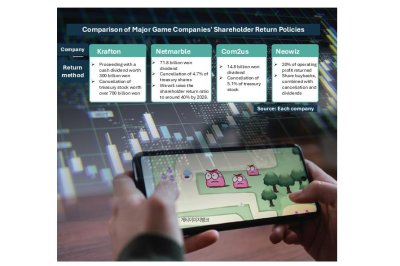
Still, Trump maintained that too much of that income was going to shareholders, executive pay and stock buybacks, wherein a company purchases its own shares in order to limit their supply and increase their value.

“Defense Contractors are currently issuing massive Dividends to their Shareholders and massive Stock Buybacks, at the expense and detriment of investing in Plants and Equipment,” Trump wrote.

“This situation will no longer be allowed or tolerated!”

Source link

South Korea firms cut hiring plans by 64,000 for early 2026

Job seekers look at job postings during a job fair at the COEX Magok Convention Center in western Seoul, South Korea, on 21 October 2025. File Photo by YONHAP /EPA

Dec. 30 (Asia Today) — South Korean companies plan to hire fewer workers through early next year, extending a cooling trend in the job market, the Labor Ministry said Tuesday.

The Ministry of Employment and Labor said in its 2025 second-half labor force survey that businesses with at least one employee planned total hiring of 467,000 for the fourth quarter of 2025 through the first quarter of 2026. That was down 64,000, or 12.1%, from the same period a year earlier.

The ministry also reported slower labor demand. As of Oct. 1, the number of workers businesses said they needed for normal operations stood at 449,000, down 78,000, or 14.8%, year-on-year. The labor shortage rate fell 0.4 percentage points to 2.4%.

Hiring plans diverged by company size. Firms with fewer than 300 employees planned to hire 410,000, down 69,000, or 14.4%, from a year earlier. Firms with 300 or more employees planned to hire 57,000, up 5,000, or 9.2%.

By industry, planned hiring fell in manufacturing, transportation and warehousing, construction and wholesale and retail trade. Manufacturing alone was down 15,000, the ministry said. Hiring plans rose in business facility management, business support and leasing services, as well as finance and insurance.

Other indicators also pointed to weakening momentum. In the third quarter, the number of job openings stood at 1.206 million, down 90,000 from a year earlier, while hires fell 68,000 to 1.105 million, the ministry said. Both measures increased among firms with 300 or more employees, widening the gap between large companies and small and medium-sized businesses.

A ministry official said overall hiring conditions have contracted as labor shortages eased, with the downturn most pronounced among smaller firms.

— Reported by Asia Today; translated by UPI

© Asia Today. Unauthorized reproduction or redistribution prohibited.

Source link

Professor says China’s tax, labor rules give firms edge over Korea

An Ethnic minority worker operates machinery at Aksu Huafu textile limited company in Aksu, western China’s Xinjiang Uyghur Autonomous Region during a government organized trip for foreign journalists, Aksu, China, 20 April 2021 (issued 30 April 2021). File Photo by WU HONG/EPA

Dec. 28 (Asia Today) — Hanyang University business professor Lee Woong-hee said South Korean companies face structural disadvantages versus fast-rising Chinese rivals, citing China’s lack of inheritance and gift taxes and fewer work stoppages tied to strikes.

In a column, Lee said many in South Korea view China as a socialist system with low economic freedom, but argued Beijing has increasingly tolerated business autonomy since its “reform and opening-up” era. He pointed to China’s 2004 constitutional recognition of private property rights as an example of what he described as a bold shift, even though the state retains land ownership.

Lee argued China has absorbed Western institutions such as private property rights and joint-stock companies into its system, rebranding them as “new socialism,” and said Chinese scholars have promoted theoretical justifications for that approach.

Lee said China holds advantages that South Korean firms do not, starting with taxation. He wrote that China does not currently levy inheritance, estate or gift taxes, unlike South Korea, where high inheritance and gift tax burdens can pressure founders to sell companies rather than pass them on to heirs.

He also said China faces fewer production disruptions from strikes. Lee noted China removed the right to strike from its 1982 constitution and allows only the All-China Federation of Trade Unions as a legal union structure, limiting independent organizing.

While acknowledging an increase in labor disputes, Lee cited reports estimating 1,509 labor incidents in 2024 and argued they remained relatively small-scale and dispersed, with authorities preventing wider escalation.

Beyond taxes and labor, Lee said China benefits from deeper pools of engineering talent and stronger industrial support. He also argued South Korea’s industrial electricity rates are significantly higher than China’s, and said Beijing offers broad policy backing for strategic industries.

Lee wrote that China’s startup momentum appears stronger, citing surveys suggesting higher startup rates among Chinese graduates and pointing to global rankings that placed Beijing among leading startup cities. He said China ranks second globally in the number of unicorn companies after the United States.

Lee concluded that China’s older socialist traits appear to be fading and that its entrepreneurial culture is reasserting itself, arguing it may only be a matter of time before China becomes more business-friendly than South Korea.

— Reported by Asia Today; translated by UPI

© Asia Today. Unauthorized reproduction or redistribution prohibited.

Caption:Professor Lee Woong-hee of Hanyang University’s business school. /Asia Today

Source link

Will Foe Throw Tobacco Firms a Lifeboat?

Does Rep. Henry A. Waxman (D-Los Angeles), who has tormented the nation’s cigarette manufacturers for 15 years, now loom as the tobacco industry’s savior ?

This scenario, which would have been thought surreal only months ago, suddenly seems only mildly far-fetched. And it reflects how far the fortunes of the once-mighty tobacco lobby have fallen, particularly amid damaging revelations in recent months.

Ever since Waxman, himself a former smoker, took over the Energy and Commerce subcommittee on health and environment in 1979, he has used the post as a bully pulpit to attack cigarette makers. When he embarked on his then lonely crusade against one of the country’s richest and most powerful interests, it was considered hazardous to a lawmaker’s health.

Nonetheless, it was Waxman’s bill in 1984 that created the current series of rotating warning labels on cigarette packs and advertising. In 1990, he sought to severely restrict tobacco companies’ ability to link their brands with glamorous and appealing models in print ads and on billboards. But Congress wasn’t ready to go that far just yet.

Then last year, the Environmental Protection Agency issued a landmark report stating that secondhand tobacco smoke poses a significant health risk to nonsmokers and is responsible for about 3,000 lung cancer deaths a year in the United States. Waxman jumped back in.

He has held a series of high-profile hearings, including a historic session where the heads of seven cigarette companies testified for the first time. These carefully staged media events–which critics have likened to an inquisition–have rocked the industry.

At the same time, the Food and Drug Administration, armed with newly disclosed industry documents, began to pursue evidence to declare nicotine an addictive drug. This is the most profound threat ever faced by the tobacco companies.

In recent months, the two efforts have merged, with FDA Commissioner David A. Kessler testifying before Waxman’s panel. The most explosive information that has come out includes allegations that cigarette companies have known their products are addictive and have manipulated nicotine levels to keep their customers hooked.

The tobacco executives have denied these assertions under oath.

If the FDA determines nicotine is indeed a drug, under the law it would then have to declare it “safe and effective” or ban it. Waxman says the agency would have no choice but to outlaw cigarettes, which the government blames for more than 400,000 deaths each year.

This specter could force the $50-billion-a-year industry to ask Waxman and other longtime, powerfully positioned adversaries to help craft compromise legislation that would empower the FDA to regulate advertising, promotion, sales and nicotine levels–in exchange for keeping cigarettes on the market.

This would be fine with Waxman. He insists he is not seeking to prohibit smoking for the nearly 50 million Americans who do so. Rather, he says he wants “to discourage people from smoking” by restricting the $4-billion-a-year campaign to market cigarettes, especially to young people, who represent the industry’s future lifeblood.

And he has sponsored legislation, which has passed his subcommittee, to restrict smoking to rooms with separate exhaust systems in all public places except bars, restaurants and prisons.

The FDA’s inquiry into regulating nicotine has begun to alter the dynamics on Capitol Hill. Thomas E. Sandefur Jr., chief executive of Brown & Williamson Tobacco, has accepted Waxman’s invitation to meet privately to discuss “reasonable regulation.” Other executives may be interested as well. Such a meeting would be a first.

This doesn’t mean, of course, that the industry is ready to embrace the diminutive lawmaker who some tobacco officials previously derided as “Hollywood Henry” –a sobriquet meant to suggest a publicity hound who was out of touch with mainstream America.

Only this week, Walker Merryman, vice president of the Tobacco Institute, described Waxman’s anti-cigarette efforts as “unmitigated zealotry, no question about that. Sort of like an 18-wheeler without brakes on the Golden State Freeway during rush hour.”

But, privately, even some tobacco advocates acknowledge that the day may come when they need the relentless Waxman, of all people, to help keep them alive.

“It would be ironic,” an industry activist mused. “We live in interesting times.”

Source link

China sanctions 30 US firms, individuals over Taiwan weapons sales | Weapons News

Beijing urged the US to cease ‘dangerous’ efforts to arm the island, which it claims as its own.

China has sanctioned a group of United States defence companies and senior executives over weapons sales to Taiwan, the latest move against Washington’s support for the self-governed island that Beijing claims as its own.

China’s Ministry of Foreign Affairs announced the measures on Friday, targeting 20 US defence firms and 10 individuals. It said the sanctions are retaliation for the US’s newly announced $11.1bn weapons package for Taiwan, one of its largest ever for the territory.

Recommended Stories

list of 3 itemsend of list

“Any provocative actions that cross the line on the Taiwan issue ‌will be met with a strong ⁠response from China,” said a statement from the ministry, urging the US to cease “dangerous” efforts to arm the island.

The sanctioned companies include Boeing’s St Louis branch, Northrop Grumman Systems Corporation, L3Harris Maritime Services and Lazarus AI.

The measures freeze these companies’ assets in China and bar domestic organisations and individuals from working with them, according to the ministry. They also seize the China-held assets of sanctioned individuals and ban them from entering China.

Targeted individuals include the founder of defence firm Anduril Industries and nine senior executives from the sanctioned firms. The measures take effect on December 26.

The US is bound by law to provide Taiwan, which rejects Beijing’s claim to the territory, with the means to defend itself. But US arms sales to the island have deepened tensions with China.

The latest US weapons deal with Taiwan, announced by President Donald Trump on December 17, includes the proposed sale of 82 High Mobility Artillery Rocket Systems, or HIMARS, and 420 Army Tactical Missile Systems, or ATACMS – worth more than $4bn.

The defence systems are similar to what the US had been providing Ukraine to defend against Russian aerial attacks.

The deal also includes 60 self-propelled howitzer artillery systems and related equipment worth more than $4bn and drones valued at more than $1bn.

Taiwan’s Ministry of National Defence praised the US for assisting Taiwan “in maintaining sufficient self-defence capabilities and in rapidly building strong deterrent power”.

Source link