Black Altadena fire victims clash with Edison over compensation
Outside a hall where Southern California Edison was celebrating Black History Month on Friday, a group of Altadena residents stood on the sidewalk, waving signs and talking of the homes and family members they lost in last year’s Eaton fire.
“They’re in there celebrating Black history and they’ve destroyed a Black town,” said Nicole Vasquez of My Tribe Rise, which helped organize the protest.
The Jan. 7, 2025 fire destroyed thousands of homes, including the majority of homes in west Altadena, a historically Black community. All but one of the 19 people who died were in west Altadena.
“If Edison’s tower did not ignite the fire, Altadena would still be there,” said Trevor Howard Kelley, who lost his 83-year-old mother, Erliene, in the fire.
Kelley, his daughter and two granddaughters had been living with his mother before her home was destroyed, he said.
The Black Altadena residents are part of a larger coalition that is asking Edison to advance each family who lost their home $200,000 in emergency housing assistance. They say that more than a year after the blaze many wildfire survivors are running out of the funds they had received from insurers.
The group protesting Friday also called for transparency from Edison. The company has said it believes it is likely its equipment caused the fire but has continued to deny it did anything wrong.
“We just want the truth,” said Felicia Ford, who lost her house in the fire. “What’s wrong with saying, ‘We got this wrong.’”
Scott Johnson, an Edison spokesperson, said Friday that the company continued to believe its voluntary compensation program was the best way to help victims of the fire. Edison has promised to quickly review each victim’s claim and pay it swiftly if approved.
Families who lost their homes can receive hundreds of thousands of dollars under the program, while those with damaged homes receive lesser amounts.
But many survivors say they don’t believe the offered amounts fully compensate their losses. And to receive the money, victims must agree not to sue — which many are not willing to do.
“We recognize the incredible struggles the community has faced,” Johnson said. “The intent of the program is to reach final settlements to allow the community to rebuild and move on.”
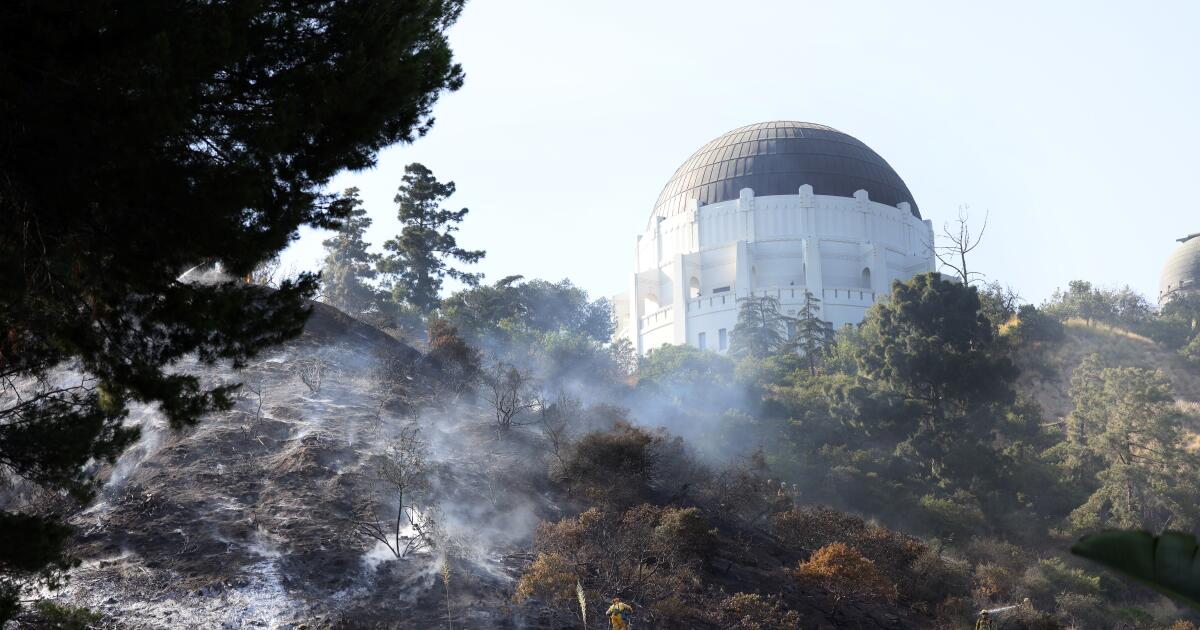
The investigation into the cause of the fire has not yet been released. Edison has said a leading theory is that its century-old transmission line in Eaton Canyon, which had not carried electricity for 50 years, somehow became reenergized and sparked the fire.
Company executives said they did not remove the old line because they believed it would be used in the future.

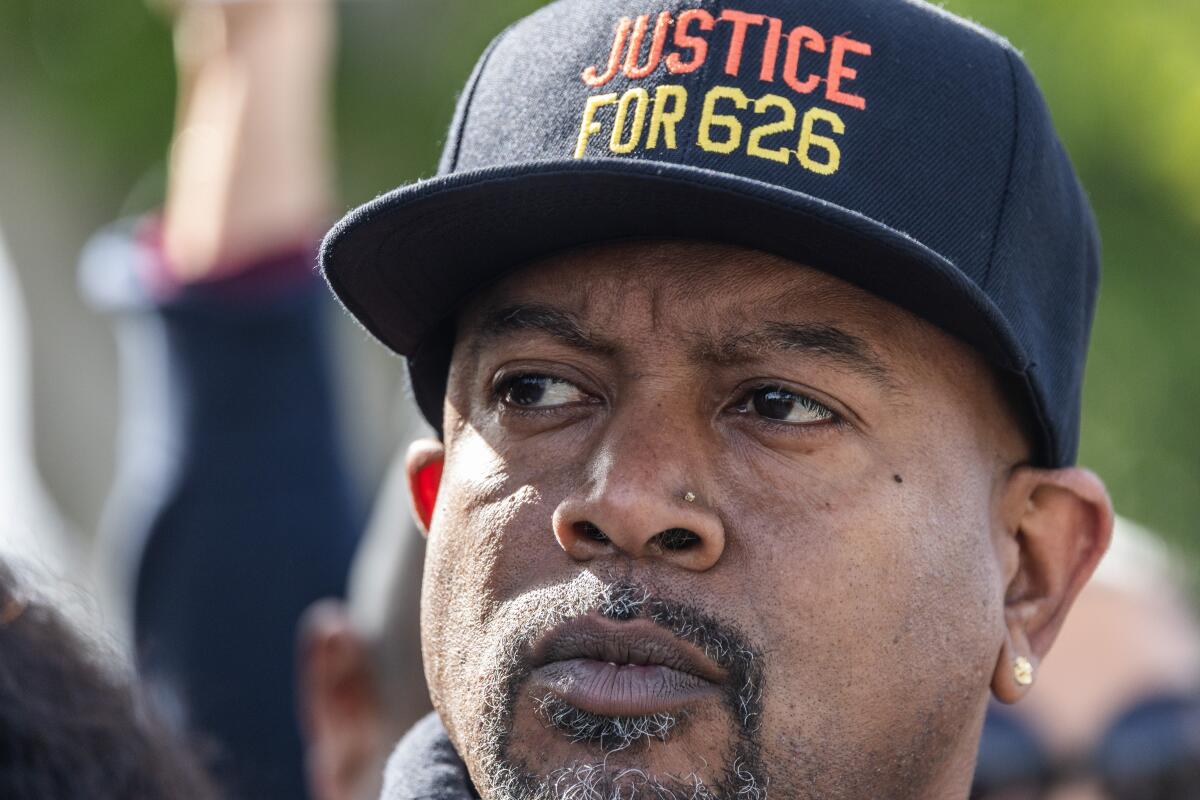
Tru Williams said he just wants to get his parents back home.
(Myung J. Chun / Los Angeles Times)
In December, state regulators ordered Edison to identify fire risks on its 355 miles of out-of service transmission lines located in areas of high fire risk and tell regulators how executives planned to use the lines in the future.
This week, Edison disclosed that the Los Angeles County district attorney was investigating whether Edison should be criminally prosecuted for its actions in the fire.
West Altadena became one of L.A.’s first middle-class Black neighborhoods in the 1960s, partly because discriminatory redlining practices for years kept Black homebuyers from settling east of Lake Avenue.
Heavenly Hughes, co-founder of My Tribe Rise, told the crowd she had lived in Altadena for 50 years.
“I was raised in a thriving working-class community and they have destroyed that community,” Hughes said, referring to Edison.
Added Ford, “The people making these decisions aren’t suffering at all. They’re still getting their paychecks, bonuses and stock options.”