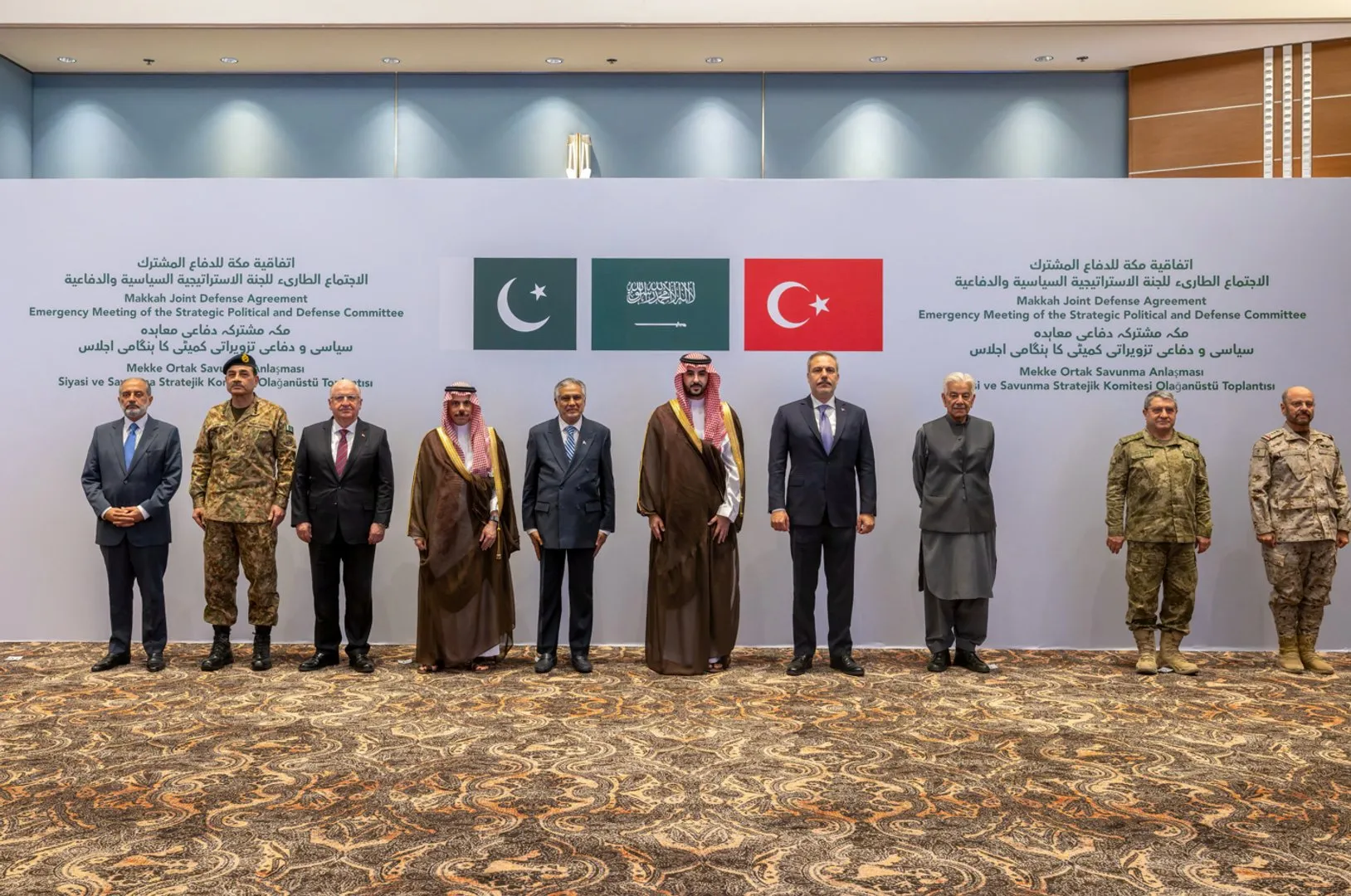
“The participants agreed to continue the dialogue to strengthen cooperation amongst the four regional countries, including for peace and security in the region,” the four nations said in a joint statement after the hastily called, last-ditch meeting concluded.
The meeting was the first meeting between Iran and the other three countries since they formed a new military alliance in August called the Mecca Joint Defense Agreement. The attendance of Saudi Arabia is of particular note as Iran struck Saudi Arabia repeatedly during Operation Epic Fury and Saudi Arabia hosted U.S. forces that attacked Iran. Iran’s proxies in Yemen, the Houthis, have been pummeling the Kingdom with drones and missiles as of late, too.
Regardless, details about the conclave are sparse, with officials saying this was just the first of what is expected to be a series of such efforts.
“Very good discussions took place between us,” Mohsen Rezaei, Secretary of Iran’s Supreme National Security Council, told Iranian state television. “I feel that a new atmosphere is emerging in the region… I sensed a very positive atmosphere in the discussions among the gentlemen.”
“We have reached an understanding with Pakistan, Turkey, and Saudi Arabia that the security of the region is achieved through its countries,” Rezaei added.
#عاجل | أمين مجلس الأمن القومي الإيراني: توصلنا لتفاهم مع باكستان وتركيا والسعودية بأن أمن المنطقة يتحقق عبر دولها pic.twitter.com/ILuUTH9k2r
The Tehran visit was called “as part of the continued efforts by the Makkah Joint Defense Agreement countries for de-escalation between parties involved in the ongoing crisis, and promoting dialogue and diplomatic solutions, in support of the mediation efforts carried out by the State of Qatar and the Islamic Republic of Pakistan,” Saudi Deputy Minister for Public Diplomacy Rayed Krimly said Monday on X before the meeting began. He used an alternative English spelling of the Saudi holy city.
HRH Prince Khalid bin Salman bin Abdulaziz Al-Saud, Minister of Defense, leads the Kingdom’s delegation to the meetings that will be held today in Tehran, capital of Iran, between Makkah Joint Defense Agreement countries and officials from the Islamic Republic of Iran, with…
Both Qatar and Pakistan have been key to previous efforts to find a diplomatic solution to the U.S.-Iran conflict. The two countries helped broker a 14-point Memorandum of Understanding (MoU) signed on June 17. The MoU provided a 60-day extension of the ceasefire to iron out an agreement to end fighting throughout the region, including Lebanon, prevent Iran from seeking nuclear weapons, end U.S. sanctions, and resume the flow of traffic through the Strait of Hormuz among other points.
That effort soon fell apart as the U.S. and Iran resumed striking each other. It has been more than a month, however, since the two nations traded direct blows.
“The visit underscores the pivotal role of Makkah Joint Defense Agreement countries in reinforcing regional security and stability, and working with all countries in the region to achieve that goal,” Krimly added about today’s Tehran meeting.
The Mecca Joint Defense Agreement was created as a pact designed to assist the Kingdom in its fight against the Houthis. An attack on one is supposed to be considered an attack on all. However, the agreement has evolved to take on the larger issue of overall regional stability amid concerns about the individual members’ own national security interests.
The Tehran meeting was attended by high-level officials, Krimly noted. Saudi Prince Khalid bin Salman bin Abdulaziz Al-Saud, Minister of Defense, led the Kingdom’s delegation, he stated. In addition, Field Marshal Asim Munir, Pakistani Chief of Army Staff, and Ibrahim Kalin, Director of the Turkish National Intelligence all met with the President of the Islamic Republic of Iran Dr. Masoud Pezeshkian, and Rezaei.
Before the meeting, Iranian Foreign Ministry spokesperson Esmaeil Baghaei said the discussions on regional security would include “Israel’s expansionist policies, developments in the Palestinian territories and Lebanon, and the repercussions of U.S. and Israeli military action against Iran,” according to Reuters.
Baghaei said the meeting, proposed during a visit by Munir to Tehran last week, could be a first step towards establishing regional security mechanisms based on the interests of countries in the region.
Iranian officials told Munir ahead of today’s meeting that there would be no talks with Washington until Tehran’s demands were met, Reuters reported, citing Iranian media.
It is unclear at this point whether any results from this round of meetings will change whatever plans U.S. President Donald Trump is drawing up for Iran. Before the meeting began, a senior U.S. official downplayed it to us when we asked about it.
“The United States is in a very strong position with control of the Strait of Hormuz and the Iranian economy collapsing,” the senior U.S. official told us in response to our question about whether the Tehran meeting will influence any decisions by Trump on his next moves toward the Islamic Republic. “Iran has been decimated, and one way or the other, the conflict in Iran will be over very soon. President Trump holds all the cards and will do whatever is best for the United States.”
The Tehran talks took place after Trump once again claimed he was at an inflection point on deciding his future approach toward Iran. On Sunday, the American leader said it’s “getting to be decision time” on whether he will make a new deal with Tehran or resume attacks as Iranian and Houthi threats against Americans in the Middle East continue to grow.
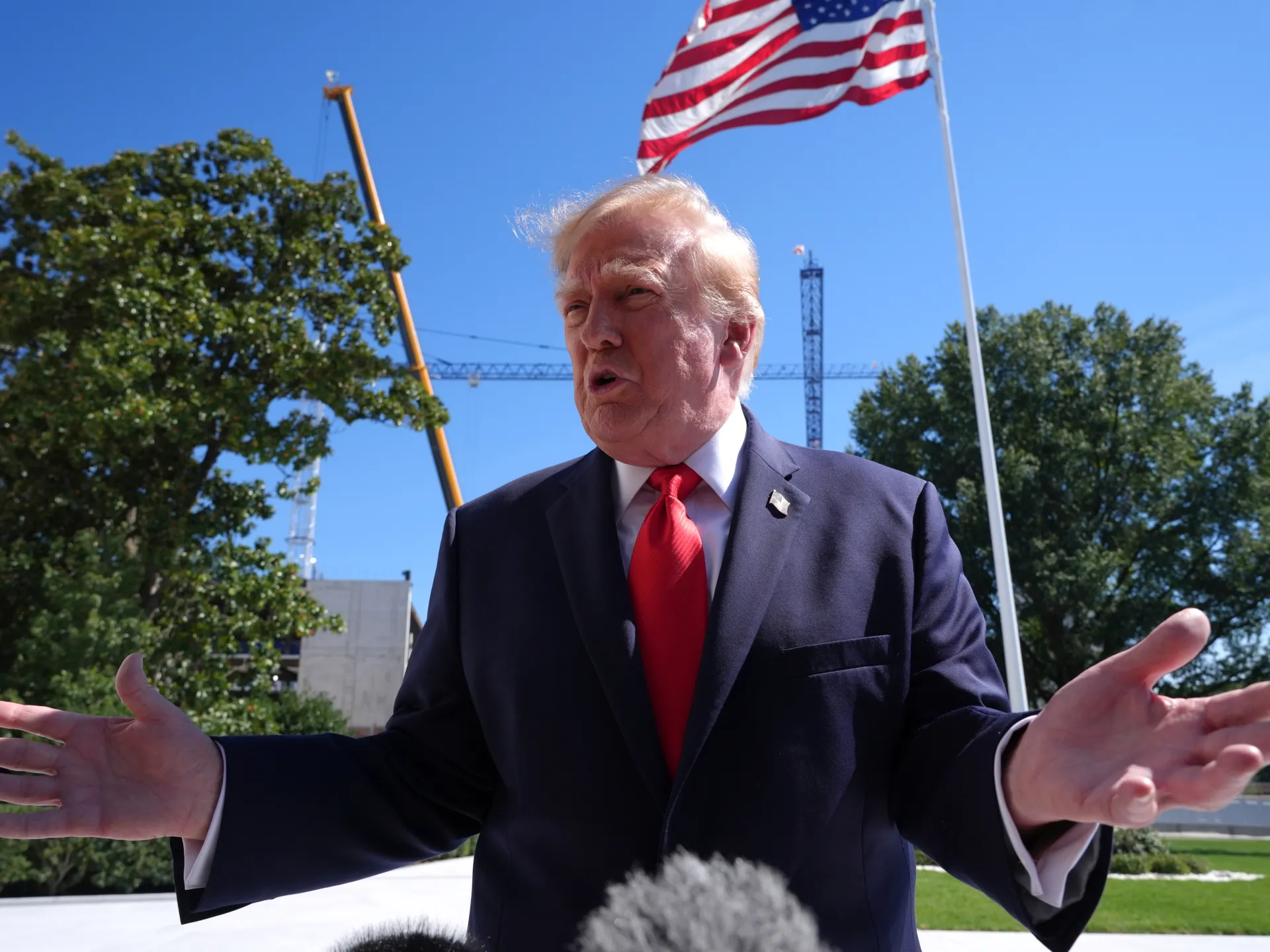
“I have a decision to make: Do I finish it off, which would be very easy to do, or do I make a deal? That’s all,” Trump said in an interview with Fox News’ Sunday Morning Futures. “We don’t play games.”
“There won’t be a strike today,” he told reporters later Sunday as he left the White House. On Friday, U.S. Ambassador to Turkey Tom Barrack suggested the U.S. could strike Iran as early as this past weekend, but that failed to materialize.
Still, tensions in the region are increasing.
U.S. forces in the Middle East “are prepared to launch new, potentially major, military operations against Iran ‘within 96 hours of receiving’ an order from President Donald Trump,” CNN reported on Sunday, citing two U.S. officials.
“Sufficient forces are now deployed in the region to carry out the potential attacks,” the sources told the network. “The scope of new U.S. military operations would likely go beyond efforts to simply ‘mow the lawn’ or maintain the status quo by striking radars, launchers and other Iranian assets that can be quickly reconstituted — as has been the case since Trump halted full combat operations earlier this year.”
You can read more about how the U.S. is deploying additional Navy, Marine and Air Force assets to the Middle East in our report about that here.
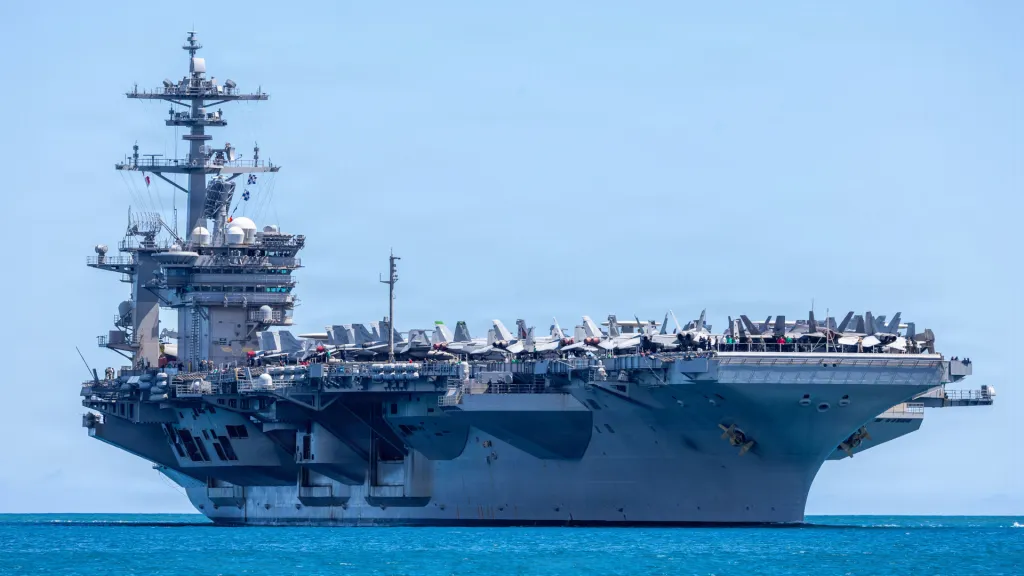
The aircraft carrier USS Theodore Roosevelt and its carrier strike group are reportedly being deployed to the Middle East. (USN)
Adding to U.S. concerns, on Saturday, The Wall Street Journal reported that “U.S. intelligence suggests Iranian preparations to attack Americans throughout the Middle East have reached ‘advanced stages,’ prompting a sudden exodus of personnel from embassies and military bases throughout the region.”
Jay Clayton, the director of national intelligence, “summarized that finding in a brief memo Friday to Secretary of State Marco Rubio,” the newspaper added.
“Iran has substantially increased efforts to target U.S. personnel. The lethal plotting efforts by the Iranians against U.S. citizens have reached advanced stages in both the Middle East and certain other countries,” Clayton wrote.
The U.S. in recent days also “ordered the departure of diplomats and staff from the embassy in Saudi Arabia and other countries, initially citing threats from the Iran-backed Houthi militants in Yemen,” the Journal noted. “The U.S. also has evacuated personnel from military bases across the region in preparation for renewed fighting, according to U.S. officials familiar with the planning.”
Trump on Sunday told reporters that there “are two very different sets of intelligence reports on Iran. I have them both. They are very different.”
Israel too appears to be continuing its planning for renewed hostilities with Iran. Its previous attacks during Operation Epic Fury were carried out in close coordination with the U.S., a cooperative effort that is ongoing.
Prime Minister Benjamin Netanyahu on Sunday repeated his warning that Iran or its proxies could launch an attack before the close election to disrupt the vote, citing intelligence.
“The (military) is ready both to defend and to strike,” he said in a video statement. “You will suffer disproportionate blows far greater than you can imagine.”
⚠️ 🇮🇱 Israeli Prime Minister Benjamin Netanyahu warned Sunday that Iran and its regional allies could launch attacks intended to disrupt Israel’s October 27 election, declaring that the Israeli military is prepared for both defensive and offensive operations.
In addition, Netanyahu and Israeli Defense Forces (IDF) Chief of Staff Lt. Gen. Eyal Zamir “clashed over a military action that could renew the conflict with Iran days before Israel’s elections,” according to the Jerusalem Post.
“Recently, Zamir received a directive from the political echelon to carry out an action, which security officials told N12 would ‘trigger a rapid escalation into a confrontation with Iran,’” the newspaper added. “Due to the sensitive nature of the action, N12 reported that Zamir requested an in-depth discussion and formal authorization before moving forward with the action.”
Israeli Defense Minister Israel Katz disputed those reports.
“I state unequivocally that there was no intention on Israel’s part to initiate an attack on Iran before the elections in Israel—when we made clear that if Iran attacks Israel, we will respond with great force, and all reports on the matter are entirely false,” Katz stated on X. “The attempt by opposition figures to exploit these reports to attack the Prime Minister and me and to cast doubt on our judgment—at a time when we are prevented for understandable reasons from addressing the details of the Iranian issue—is shameful and irresponsible. We will overcome this too.”
הפרסומים על פערים בין הדרג המדיני לצה”ל בנושא איראן הם מופרכים ושקריים לחלוטין.
מאז כניסתי לתפקיד שר הביטחון התיאום בין רה”מ וביני לבין צה”ל בנושא איראן הוא מלא – עם הישגים היסטוריים חסרי תקדים לטובת ביטחון מדינת ישראל.
Last Monday, in a phone call with Trump recorded live on Monday and posted on his X account, Netanyahu suggested future operations against Iran.
“Donald, we have a job to finish [in Iran]…and we’ll finish it together,” the Israeli leader told Trump. “We’ll finish it, and no one else will do it.”
That post appears to have been since been deleted.
Actions by both Trump and Netanyahu are taking place against a backdrop of heated domestic politics in their respective countries.
With continued Republican control of Congress on the line, the Nov. 3 midterm elections are a huge factor in Trump’s plans. The president has previously said the war with Iran would end “immediately after the election” and has reportedly told aides he expects to resume strikes on the Islamic Republic after the midterms. Domestic U.S. polls show the ongoing conflict continues to be deeply unpopular with voters, who are also eager to see it concluded.
Meanwhile, Netanyahu faces a vote on his future tomorrow in a nationwide parliamentary election, and there are concerns, as we noted last Friday, that the Israeli leader could use a new conflict with Iran to bolster his hold on office. Given the fractious nature of Israeli politics, election results will not necessarily immediately determine who Israel’s next prime minister will be.
“Coalition negotiations can take weeks or even months as parties attempt to reach agreements on who will govern and under what terms,” The National noted. “Israel has a history of political deadlock. Between 2019 and 2022, the country held five elections as parties repeatedly struggled to form stable governments.”
Israel’s Prime Minister Benjamin Netanyahu speaks to his supporters during a Likud Party meet-and-greet held as part of the campaign ahead of Israel’s legislative election. (Photo by JACK GUEZ / AFP) JACK GUEZ
Iran isn’t just threatening the U.S. and Israel.
“Following the intensification of Berlin’s anti-Iranian stance, Tehran has warned of the consequences should Germany directly enter the military conflict, emphasizing that facilities and military installations associated with Germany in the region could become targets within the scope of Iran’s legitimate defense,” the semi-official Iranian Fars News Agency reported on Sunday.
BIG: Iran has warned Germany that all German military bases and facilities across the region will be considered legitimate targets if Berlin openly joins military action against Iran.
Source: Iran’s Fars, citing information obtained by its security and defense correspondent
As mentioned earlier in this story, officials meeting in Tehran also addressed the ongoing fighting between the Houthis and Saudi Arabia and its proxies in Yemen.
“The urgency of the initiative was underscored by fresh explosions in Riyadh overnight and warnings of a hostile aerial threat, as the Houthis claimed another attack on the Saudi capital’s international airport,” Gulf News reported. In addition, the Houthis are expanding their attacks on oil infrastructure in Saudi Arabia, including a recent strike near the Shaybah oilfield. Combined with a spike in Iranian attacks on shipping in the Strait of Hormuz, the Houthi strikes on Saudi oil interests have sent the price of Brent crude rising. However, the Tehran talks may be tempering things. According to OilPrice.com, the per-barrel price of Brent crude was over $115 as of Monday evening, a slight drop from Friday, when it was more than $117.
With the issue of oil flow in mind, Adm. Brad Cooper, the commander of U.S. Central Command (CENTCOM), visited the Strait of Hormuz on Oct. 25 as U.S. forces reached “the milestone of assisting Gulf partners in exporting more than 1.5 billion barrels of crude oil since summer,” Cooper said.
Cooper “observed the current operational environment while flying in a U.S. Army CH-47 Chinook over the international waterway,” according to a CENTCOM post on X. “More than 3,000 commercial vessels have successfully transited the Strait of Hormuz with support from CENTCOM forces over the last six months.”
U.S. Navy Adm. Brad Cooper, commander of U.S. Central Command, observes a commercial vessel transiting the Strait of Hormuz while flying in a U.S. Army CH-47 Chinook over the international waterway, Oct. 25, 2026. (U.S. Central Command photo) Senior Chief Petty Officer Amanda Dunford
“We continue to stand shoulder to shoulder with our Gulf partners and the shipping industry,” said Cooper. “This visit underscores our strong commitment to continued freedom of navigation through the Strait of Hormuz.”
CENTCOM added that “American forces successfully cleared the strait’s international shipping lanes of sea mines laid by Iran’s Islamic Revolutionary Guard Corps (IRGC).”
“Today, primary transit routes in the Strait of Hormuz remain free and clear of Iranian sea mines thanks to incredible efforts by our people,” said Cooper. “We remain intensely focused on keeping commercial traffic flowing as we work with our teammates in the U.S. interagency, Gulf Cooperation Council, and shipping industry.”
In recent months, “over 95% of ships navigating the Strait of Hormuz have sailed through safely despite the IRGC’s unwarranted aggression, clearly demonstrating that the United States and regional partners control the international waterway,” CENTCOM claimed. TWZ cannot independently verify this.
That the four-way meetings between Iran, Saudi Arabia, Pakistan and Turkey will continue to seek a peaceful way forward is a positive sign. Still, how much, if at all, this effort changes the threat picture are open questions and the answers will be provided by Washington, Jerusalem and Tehran in the coming days and weeks.
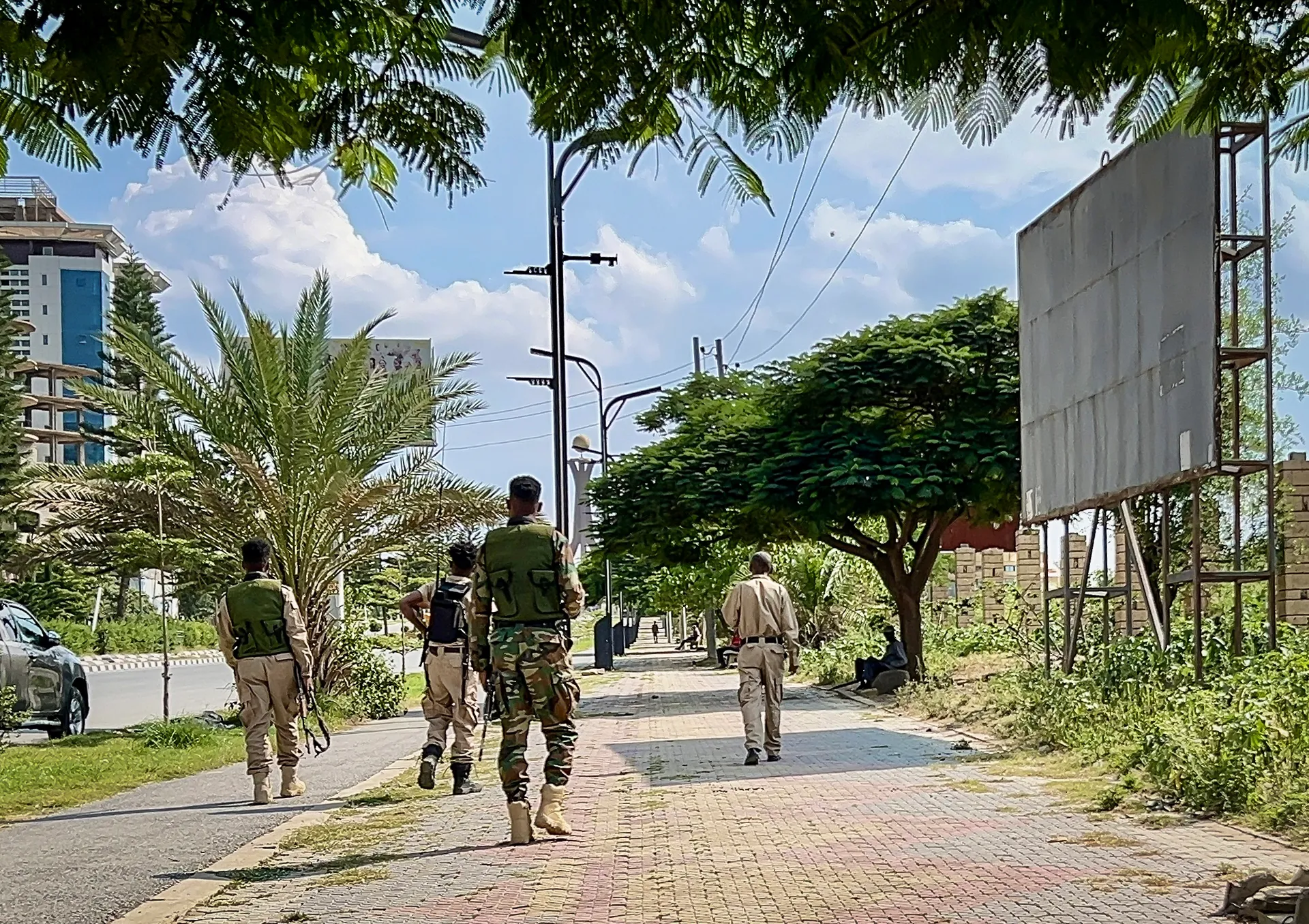
Hundreds of Ethiopians have crossed into Kenya, fleeing fighting in the border town of Moyale, which was reportedly prompted by loyalists publicly raising the flag of a neighbouring majority-Somali state.
Kenyan police said on Thursday that hundreds of Ethiopians, mostly women and children, crossed into Kenya through several entry points in Moyale, including the Sessi, Kore, Biashara, Foundation and Miti areas.
Recommended Stories
list of 3 itemsend of list
The people who crossed the border were fleeing tensions between leaders of Ethiopia’s Oromia and Somali regional states, according to Kenyan police.
The police reported gunfire and chaotic scenes in Moyale.
Ethiopian media reported that the fighting in Moyale started as a dispute over raising the flag of the Somali Regional State, a regional state in eastern Ethiopia, on Sunday.
Tensions escalated into fighting between forces from the Oromia and Somali regions.
Gunfire, chaos
The Kenya Red Cross said it was setting up temporary shelter and distributing essential items including cereal and porridge flour.
“The response will initially reach 1,000 households,” the Kenya Red Cross said in a statement on Thursday.
It added that experts were conducting an assessment to work out how many people were affected and what their needs were.
The regional clash is hundreds of kilometres away from a larger conflict in the northern Tigray region between government forces and a rebel alliance led by the Tigray People’s Liberation Front.
Amanda Cannon was taken ill while on holiday with her daughter
08:10, 19 Oct 2026Updated 08:16, 19 Oct 2026
Amanda Cannon is fighting for her life in Turkey(Image: Marisa White/SWNS)
A British nan is fighting for her life in Turkey after suffering a heart attack while on holiday as her family faces a £25,000 hospital bill.
Amanda Cannon, 58, was rushed to intensive care after collapsing during a trip with her daughter Marisa White on October 10. The grandmother-of-nine from Redhill, Surrey, reportedly went without oxygen for 10 minutes after suffering what doctors believe was an epileptic seizure and cardiac arrest.
She is currently on life support in a private hospital in Antalya, Turkey. Relatives say her treatment is costing around €3,500 (£3,000) a day, with the bill already reaching €30,000 (£25,000).
Hannah Cooper, the mum of Amanda’s grandchildren, flew to Turkey with her five-year-old daughter after receiving a distressing call from Marisa. She said Amanda suddenly “jolted backwards”, turned blue and stopped breathing. Marisa immediately began CPR before paramedics arrived and took over.
No travel insurance
But because she has no travel insurance, her former daughter-in-law Hannah said Turkish medics would not stop treatment for religious reasons. They fear the mounting costs could run into hundreds of thousands of pounds if her condition does not improve.
Hannah, 33, from Shoreham-by-Sea, Sussex, told Talk to the Press: “She’s now in a deep coma. She’s got kidney failure, liver failure. They said there’s a 20 per cent chance that she’ll wake up and if she does, she’ll be in a vegetative state.”
She added: “I got a phone call from her daughter saying that she just suddenly jolted backwards, went grey, purple, blue, started foaming from the mouth and stopped breathing. Her daughter gave her CPR. Then when the ambulance got there, they took over. She went without oxygen for about 10 minutes.”
Doctors later told the family Amanda had suffered what appeared to be a seizure as well as a heart attack. She was placed on life support and remains in coma.
Amanda travelled to Turkey with daughter Marisa, who Hannah said suffered from many severe physical and mental health conditions. Concerned she would struggle to deal with the crisis alone, Hannah booked flights and travelled out to support her.
She said: “She doesn’t have the mental capacity to cope with what’s going on. The language barrier is so hard. We have to keep going on Google Translate to speak to the doctor because he doesn’t understand us and we don’t understand him.”
Medical costs stacking up
As the family tried to come to terms with Amanda’s condition, they were shocked to learn of the mounting medical costs. Hannah said she received a phone call asking for £5,000 shortly after Amanda was admitted.
She said: “I said to them that I don’t have £5,000, but I’d be flying over to Turkey. Since then, I’ve had several emails asking for payment.”
Hannah later discovered Amanda’s stay in the private intensive care unit was costing around €3,500 every day. She also revealed that the hospital wouldn’t release her to a public one until they cleared half of the bill.
Hannah said: “I’ve asked for a transfer to a state hospital where it would still cost money, but not like this.”
The family launched a GoFundMe appeal with an initial target of £15,000, but now fear the total bill could be far higher. Despite no longer being with Amanda’s son, Hannah said the 58-year-old has remained a huge part of her life.
She said: “She’s been like a second mum to me for 17 years. She’s always been my biggest supporter.”
Toll on family
The ordeal has also taken a toll on Amanda’s grandchildren.
Hannah said: “My eldest is asking a lot of questions and is upset. My little girl just keeps saying she wants to see her nan.”
She said doctors would either wait until Amanda was biologically dead or keep her alive. Hannah and her daughter are set to return to the UK on Sunday, October 18, while Marisa plans to fly back to Turkey after collecting medication.
Hannah concluded: “We’re upset, shocked and confused. We just don’t know what’s going to happen next.”
Gulf ministers urge action against Houthis as fighting displaces more than 233,000 people across Yemen.
The Gulf Cooperation Council (GCC) has condemned repeated attacks by Yemen’s Iran-aligned Houthi fighters on Saudi Arabia and pledged support for the kingdom.
The political and economic bloc that includes Saudi Arabia, Bahrain, Kuwait, Oman, Qatar and the United Arab Emirates issued a statement on Sunday, shortly after their foreign ministers’ meeting in Manama, Bahrain.
Recommended Stories
list of 2 itemsend of list
The statement said an attack on any member affected all six, invoking a joint defence agreement and backing Saudi Arabia’s right to protect itself.
The condemnation came as the Saudi-led military coalition fighting the Houthis reported shooting down two drones near Riyadh and in Saudi Arabia‘s Eastern Province early on Sunday.
The coalition said another drone had been intercepted near the capital hours earlier, but did not identify who launched it.
Gulf ministers accused the Houthis of carrying out deadly strikes on civilian airports and vital facilities.
They also pressed for tighter enforcement of a United Nations arms embargo against the group and urged countries to formally designate it “a terrorist organisation”.
The ministers welcomed an October 15 statement from the UN Security Council (UNSC), the body responsible for maintaining international peace, which condemned Houthi strikes on Saudi Arabia and threats to Red Sea shipping.
Yemen’s internationally recognised government separately appealed to the UNSC to act against Houthi attacks on homes and state facilities.
In letters addressed to UN Secretary-General Antonio Guterres and the UNSC’s president for October, Aglaia Balta, the Yemeni government cited an attack on the presidential palace in Aden, where the government is temporarily based.
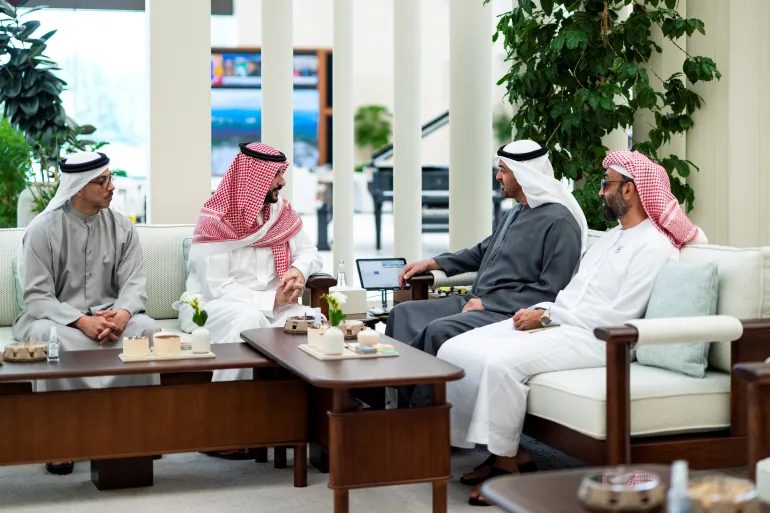
Separately on Sunday, UAE Vice President Sheikh Mansour bin Zayed Al Nahyan met Saudi Defence Minister Prince Khalid bin Salman Al Saud in Abu Dhabi to discuss regional security, the UAE’s state news agency WAM reported.
Sheikh Mohamed bin Zayed Al Nahyan, president of the United Arab Emirates, meets Prince Khalid bin Salman Al Saud, Saudi Arabia’s minister of defence, in Abu Dhabi, the United Arab Emirates, October 18, 2026 [UAE Presidential Court/Handout via Reuters]
Meanwhile, Saudi-backed Yemeni government forces press offensives on several fronts.
The Yemeni military said the Houthis fired missiles towards the central city of Marib on Sunday, while government troops reported gains in Taiz, further south.
Government-aligned commanders said eight soldiers died in fighting in Lahij province on Saturday.
Government forces also claimed to have killed 12 Houthi fighters in southern Taiz, figures that could not be independently confirmed.
This latest phase of the war followed Houthi gains along Yemen’s Red Sea coast last month.
Government forces launched a counteroffensive intended to recapture territory from the Houthis, who seized the capital, Sanaa, in 2014.
Civilians face deepening shortages
The fighting has uprooted more than 233,000 people, according to the International Organization for Migration, the UN’s migration agency.
About 121,000 are in Taiz province, where supply routes have been disrupted by the fighting.
Al Jazeera’s Hadeel al-Yamani, reporting from Taiz, said cooking gas was unavailable and food stocks were dwindling as Houthi forces blocked supplies through the city’s western entrance.
A local office tracking the siege said food prices had risen fivefold.
The World Health Organization, the UN health agency, warned that Taiz’s 12 hospitals had fuel for just four more days and had run out of surgical supplies.
Oxygen and medicines were also critically scarce as the city struggled with a cholera outbreak.
Emma Finucane said she will “come back fighting” for gold medals after narrowly missing out on the top step of the podium for the third time at the Track Cycling World Championships, external in Shanghai.
Finucane, 23, was forced to settle for bronze in Sunday’s keirin after being pipped to the finish line by neutral athlete Alina Lysenko and Lea Friedrich of Germany after leading into the home straight.
She finished just 14 thousandths of a second off top spot, with her bronze adding to silver medals won in the team sprint and individual sprint – both won by Chinese cyclists.
Finucane was part of Great Britain’s team sprint gold medal-winning trio at the Paris Olympics in 2024 and Finucane says retaining that title in Los Angleles is the big aim.
She told BBC Sport: “To medal in all three races at the world champs, I’d never done that before.
“The confidence I have gained this week and the way I’ve been riding my bike, I can take that into the years to come.
“I’m actually really proud. I am frustrated not to be on the top step but I’ll come back fighting. You can beat yourself up about races but I am learning all the time.
“Ultimately we are learning for the Olympics, that’s a huge goal. I put myself in winning positions in every race and that’s something I am proud of.”
Finucane, who took bronze in both the individual sprint and keirin in Paris, won Britain’s first Olympic gold in the women’s team sprint alongside Katy Marchant and Sophie Capewell.
In Shanghai, Rhianna Parris-Smith replaced the newly-retired Marchant in the team which was beaten by Chinese trio Jiang Yulu, Tong Mengqi and Yuan Liying.
Finucane says the strength in depth inside the British team will drive them to success at the LA Games in 2028.
She said: “We won the team sprint in Paris which is one of the best moments of my life and there are 10 girls back at home fighting to be in the team. That’s how we progress, and we will build on the momentum of this silver medal.
“Internal competition is how we win bike races. World records keep falling, we are pushing each other and it’s really exciting.”
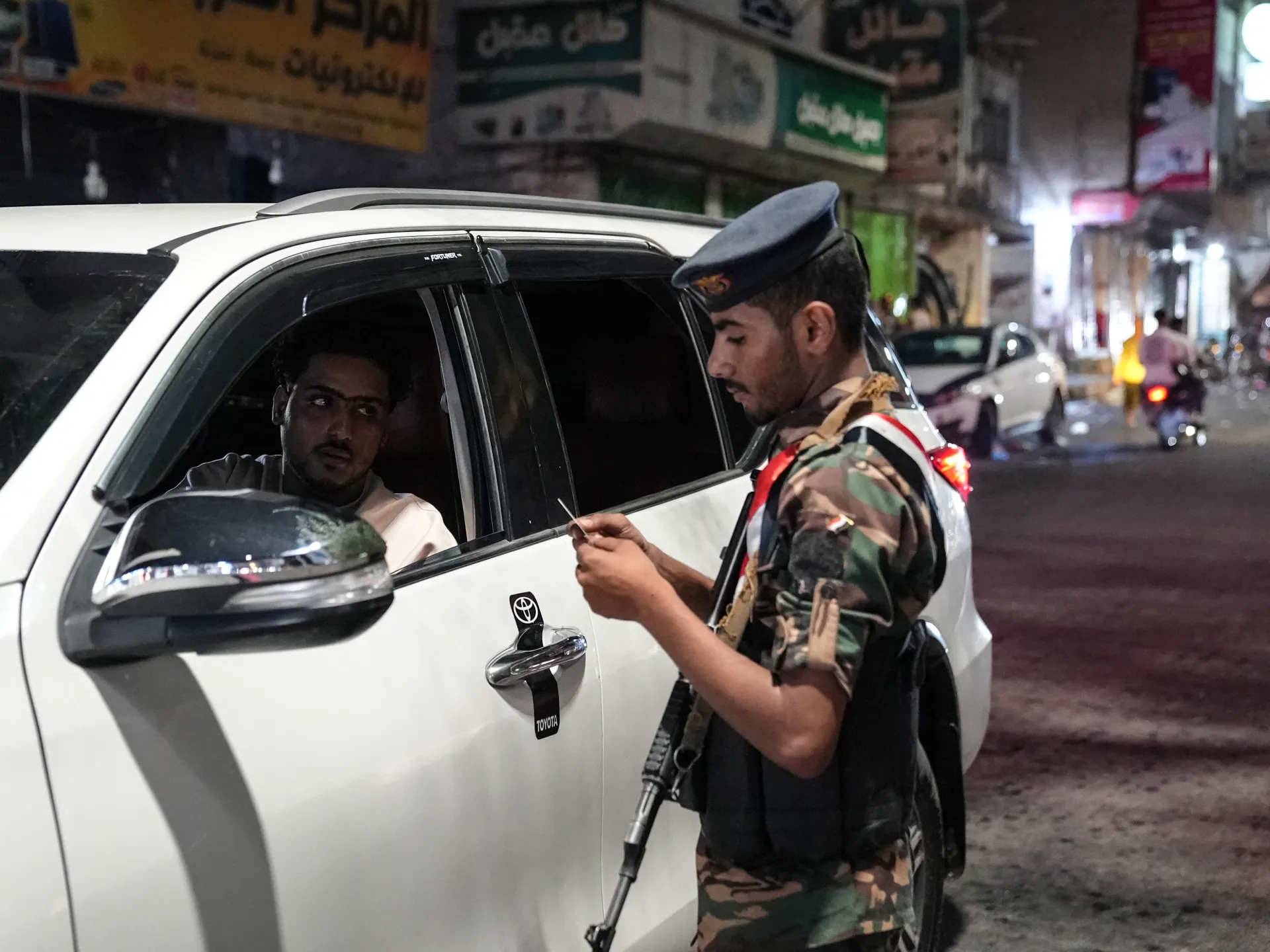
Forces aligned with Yemen’s government on Thursday said that they had intercepted a drone headed towards Medina in Saudi Arabia, and a missile fired towards Riyadh, amid escalating fighting between them and Yemen’s Houthi group.
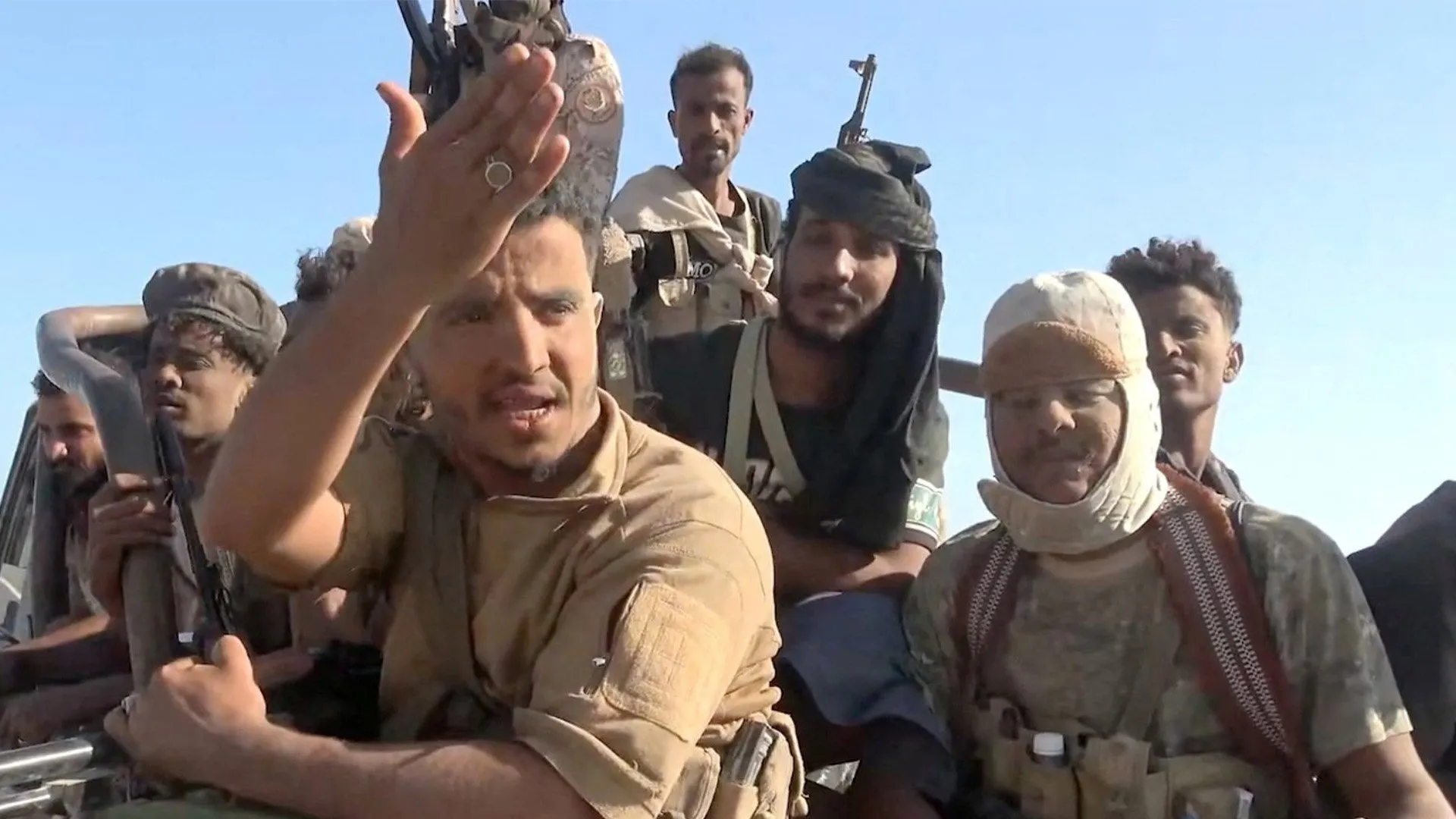
Fighting between the Saudi-backed Yemeni government forces and Iran-aligned Houthi rebels has intensified along the country’s western Red Sea coast, along with expanding Houthi attacks on oil facilities and airports in neighbouring Saudi Arabia.
Recommended Stories
list of 3 itemsend of list
On Wednesday, Yahya Saree, the military spokesman for the Houthis, also known as Ansar Allah or Supporters of God, said the group’s forces had conducted “a high-quality military operation targeting Aramco in Dhahran”, as well as strikes on Riyadh airport and a refinery in the capital.
He added that operations “will continue in the coming days, targeting Saudi enemy airports and oil facilities”.
A Saudi Ministry of Energy official confirmed that a building belonging to Aramco in Dhahran was hit, resulting in a “limited fire” but “no casualties or fatalities”. Dhahran is home to Aramco’s headquarters, a vast complex comprising numerous buildings and residential compounds.
Meanwhile, the Saudi-led coalition launched strikes against the Houthi stronghold in the Yemeni capital, Sanaa, which the armed group seized in 2014 and has held ever since. The coalition fought the Houthis, who also seized large quantities of Yemen’s military assets, until a ceasefire was agreed in 2022. That ceasefire has broken down in recent months.
Reporting from Sanaa, Al Jazeera’s Yousef Mawry said the war has become a tit-for-tat exchange of blows. The Iran-backed group “will continue to launch these air strikes and … its goal is to meet fire with fire – air strike for air strike, capital for capital, airport for airport, and energy facility for energy facility”.
Which sites have the Houthis targeted in Saudi Arabia?
Recent Houthi strikes on Saudi Arabia have mainly targeted key infrastructure on the outskirts of Riyadh, but they appear to be edging closer to the city centre.
Houthi attacks on Riyadh’s King Khalid international airport over the weekend killed 14 people and wounded more than 300 others. Houthi attacks have also been reported on other airports, including Abha international airport in southern Saudi Arabia, where two people were killed, and on Saudi Aramco energy facilities.
Authorities say Riyadh airport will remain shut at least until Saturday as several airlines cancelled flights, emptying the skies over the kingdom’s capital.
Al Jazeera’s Mawry said Saudi Arabia “has much more to lose” from tit-for-tat attacks disrupting air traffic, as Sanaa international airport has been closed for many years due to the damage it has sustained over the years of civil war. There are currently no Yemeni airliners at the airport.
Additionally, by disrupting security, the Houthis are signalling that Saudi Arabia will suffer mounting economic costs for its involvement in Yemen. Earlier this year, the Houthis similarly began launching strikes on Saudi-linked shipping in and around the Bab al-Mandeb strait at the entrance to the Red Sea. Saudi Arabia has increasingly relied on this shipping route for oil exports since Iran closed the Strait of Hormuz in March, under fire from the United States and Israel.
The kingdom is set to host a major investment conference in Riyadh later this month, dubbed “Davos in the desert”, but it is now unclear whether the event will go ahead amid the attacks.
Organisers of the Six Kings Slam tennis tournament, originally slated to begin next week in Riyadh, have announced the event will be pushed to December.
Saudi Arabia is also preparing to host the FIFA World Cup in 2034.
Al Jazeera’s Zein Basravi, reporting from the Qatari capital, Doha, said, “These military hits by the Houthi forces are meant to create a pressure campaign that is also having knock-on economic effects.”
“The Gulf Cooperation Council has become a place where these enormous events have been playing out over the past year, and if they carry on, the international implications for the global economy will continue to be negative,” he added.
What’s the situation on the ground in Yemen?

Yemeni government forces are currently engaged in a major counteroffensive operation, called “Dawn of Yemen“, to retake coastal territory seized in recent weeks by the Houthis near the Bab al-Mandeb strait, a vital maritime trade chokepoint.
The Saudi cabinet pledged in a meeting led by Crown Prince Mohammed bin Salman this week that it “will not allow its security or freedom of navigation in the Red Sea and Bab al-Mandeb strait to be threatened”.
On Wednesday, Yemeni government forces said they had carried out 2,309 “targeting operations” against the Houthis as part of their “Dawn of Yemen” military campaign.
The forces’ spokesperson, Majeed al-Nuzaili, said the operations were conducted using combat aircraft, drones, artillery and rocket launchers, and destroyed 460 Houthi military vehicles.
Government forces say they have retaken areas in Sabr al-Mawadim and al-Sarari in Taiz governorate and have repelled a large Houthi attack west of Taiz city in southwest Yemen, a government-held city that was besieged by Houthi fighters earlier this month. Taiz governorate includes the flat, western coastal region on the Red Sea, which contains the port city of Mocha and the Bab al-Mandeb. Much of the governorate also lies within Yemen’s highlands while its capital, Taiz, is nestled between mountains.
Al Jazeera’s Mawry said fighting has been so intense in the area because of its strategic value. “Whoever controls the altitude and gains control of the mountains controls the landscape. They control the Red Sea coastlines and even the city of Taiz,” he said.
The internationally recognised Yemeni government has been calling for more reinforcements as well as Saudi air attacks on the positions recently taken over by the Houthis, mainly in the district of al-Misrakh, south of Taiz, and the district of at-Turbah, which are the gateways to the city of Taiz.
Mawry reported that while the Saudi-led coalition’s aerial strikes are forcing the Houthis to withdraw and retreat, allowing government forces to advance, they have not been able to gain a full hold over some of those positions.
“It is then followed by another counter-military offensive by the Ansar Allah group to retake the area. And this is sort of the routine that we have been seeing since early September,” he said.
The Houthi siege of Taiz has resulted in civilian casualties and severe shortages of fuel, gas and other supplies. On Wednesday, the United Nations World Food Programme (WFP) reported that wheat flour stocks have been nearly exhausted.
The Red Cross said front-line hospitals in areas including Marib, Taiz and Yemen’s Red Sea coast are registering unprecedented numbers of weapon-wounded patients, with some facilities admitting more than 700 casualties in a single week.
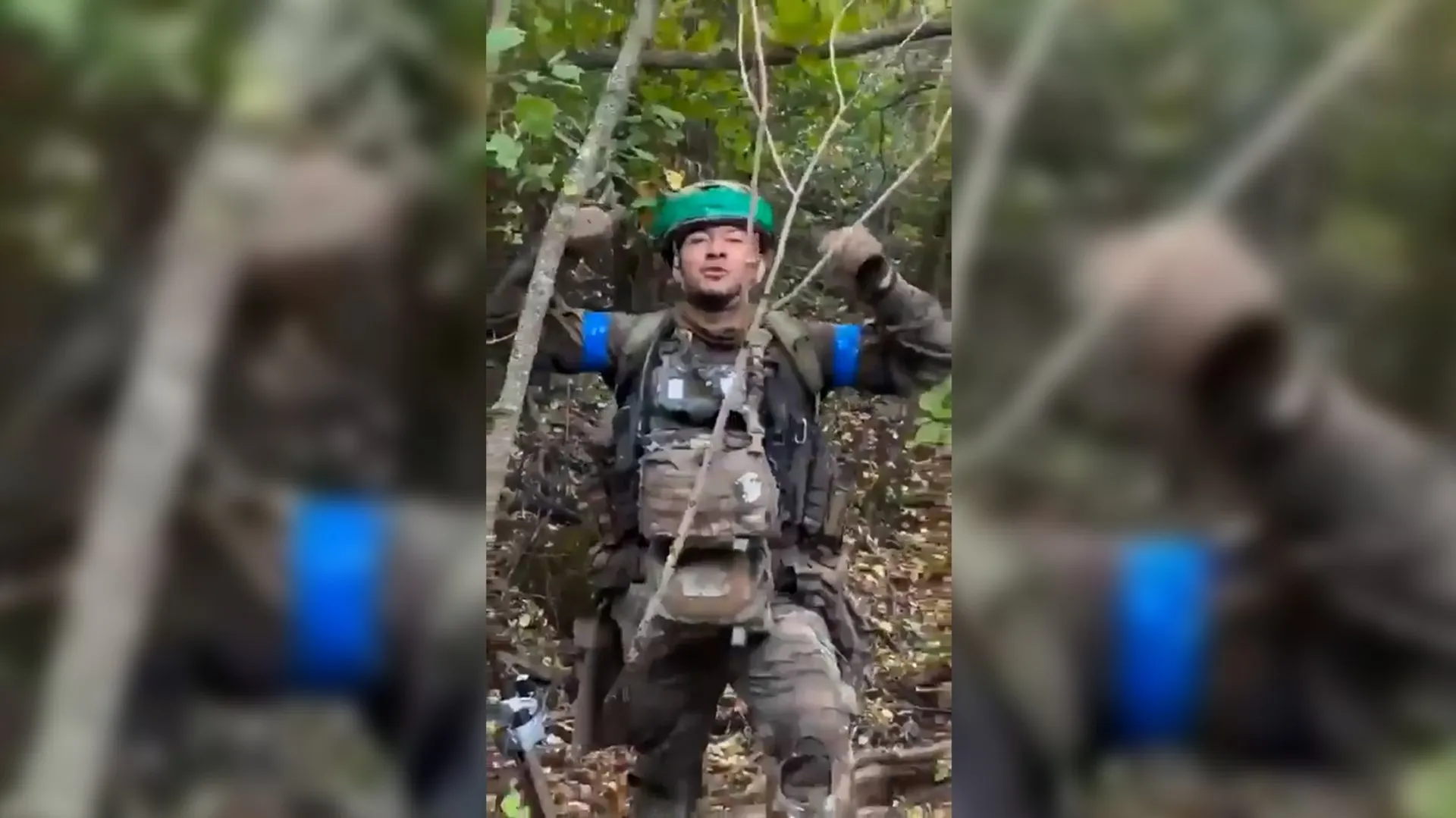
Mexico is investigating a viral video said to show mercenaries chanting drug cartel slogans in Ukraine. President Claudia Sheinbaum announced the inquiry. Mexico previously warned Kyiv cartel members were joining its International Legion to gain drone warfare experience.
Saudi Arabia’s Jazan and Najran airports were attacked as Saudi-led gov’t forces launched air strikes on Houthi sites in Yemen and claimed control of the Bab al-Mandeb strait. Houthi officials say the Iran-backed group maintains ‘firm control’ over recently captured territory.
During emergency talks in Riyadh, Turkiye and Pakistan agreed to send rapid deployment forces to Saudi Arabia. Yemen’s government forces, which are backed by Riyadh, launched a counter-offensive against the Houthis to regain lost territory.
Addis Ababa, Ethiopia – The capture of Tigray’s regional capital Mekelle by Ethiopian federal forces and allied Tigray Peace Force fighters has revived painful memories of the 2020–22 Tigray war, with residents fearing a return to prolonged violence, displacement and economic hardship.
The Tigray People’s Liberation Front (TPLF) confirmed on Saturday that it had withdrawn from Mekelle, saying its regional administration would temporarily operate from another location. Government forces and allied fighters entered the city on Saturday, with a pro-government militia source, a humanitarian worker and a Mekelle resident confirming to the Reuters news agency on Sunday that they were in control of the city.
The development comes less than four years after the Ethiopian government and the TPLF signed the Pretoria agreement that ended two years of devastating fighting.
Berihu, a 32-year-old bajaj driver in Shire, northwestern Tigray, said the latest fighting had been particularly difficult to watch.
“I feel very heartbroken knowing that Tigray has gone back to full-scale war,” he said in a phone interview with Al Jazeera. “We have already seen what the last war did to our people, and now it feels like we are going through it all over again.”
The 2020–22 war killed hundreds of thousands of people, according to estimates, displaced millions and caused extensive damage to infrastructure and livelihoods.
The African Union-facilitated agreement, signed in Pretoria in November 2022, ended the large-scale fighting, but key issues, including the status of disputed territories, the return of displaced people and the disarmament of Tigrayan forces, remained unresolved.
In July, the TPLF said the Pretoria agreement had effectively collapsed, accusing the federal government of failing to implement key provisions. The federal government rejected that characterisation, saying it remained committed to the peace process while accusing the TPLF of undermining the agreement.
The political dispute was accompanied by growing military tensions, including reports of sporadic clashes and drone strikes in parts of Tigray. The two sides also traded accusations over troop movements and preparations for renewed fighting.
The capture of Mekelle marks a major development in the renewed conflict, putting the city once again at the centre of the fighting.
Fear spreads beyond Tigray
In Addis Ababa, the developments have also alarmed residents who remember the consequences of the previous war.
“I woke up and heard that my city had been hit,” he said. “You hear about fighting in Tigray, and it feels far away. But when you hear about explosions in Addis Ababa, you start asking yourself what will happen next.”
Diplomatic sources said explosions were heard in several parts of the capital, including near the headquarters of Ethiopia’s military. Reuters separately reported that a source linked to an opposition alliance claimed the group had carried out drone strikes in Addis Ababa, including against military facilities. The claim could not be independently verified.
For Abel, the economic consequences are as concerning as the fighting itself.
“If the war becomes bigger, ordinary people will suffer,” he said.
Bisrat, a college student in Addis Ababa, said the overnight explosions had reinforced his fear that Ethiopia could be entering a much wider conflict.
“If Ethiopia goes into a full-scale war, ordinary people will suffer,” he said. “I fear seeing another Sudan.”
Sudan has been engulfed in war since April 2023, when fighting broke out between the army and the paramilitary Rapid Support Forces, displacing millions and creating a major humanitarian crisis.
The current fighting also involves a wider set of actors than the Tigray war that ended in 2022. The TPLF is part of a broader opposition alliance that includes armed groups from several parts of the country.
Fighting has also spread into Afar, while relations between Ethiopia and Eritrea have sharply deteriorated.
Ethiopian officials have accused Eritrea of interfering in Ethiopia’s internal affairs and supporting forces opposed to the federal government. Eritrea has rejected the accusations.
On Thursday, Ethiopia’s Ministry of Foreign Affairs announced the closure of its embassy in Asmara and declared 10 Eritrean diplomats persona non grata, saying they had been involved in activities that posed a threat to Ethiopia’s national security.
Eritrea subsequently announced that it was severing diplomatic relations with Ethiopia.
The diplomatic rupture has added to concerns that the renewed fighting could acquire a wider regional dimension.
Mekelle changes hands again
In Mekelle, residents were left trying to understand what comes next after the TPLF withdrawal.
Goitom, 37, said there was a period of uncertainty after TPLF forces left the city, with what he described as a security vacuum allowing theft in some areas, including government offices.
“On Friday night, we were hearing gunfire but did not know what was happening,” he said.
By Saturday, Ethiopian federal forces and allied fighters had taken control of key locations, including the airport, according to Goitom. Reuters and The Associated Press news agency also reported that government-aligned forces had entered Mekelle following the TPLF withdrawal.
“It feels like we are back to square one,” he said. “We have already seen what war can do to this city and to our families. People are worried about what will happen next.”
The TPLF, however, portrayed the withdrawal as a tactical decision rather than an end to the fighting.
In a statement issued on Saturday, the group said it had “temporarily moved out of Mekelle” and that the regional government would “operate from somewhere else”. It said the decision was intended to prevent further destruction in the city and indicated that its forces would continue the conflict from other positions.
For the federal government, the capture of Mekelle represents a significant step towards restoring federal control over the region.
Abraham Belay, former president of the Tigray Interim Administration, said on Sunday that preparations were under way to establish a new interim administration in Tigray, with the aim of holding regional elections within months.
“We are working to establish a new administrative structure that will enable the people of Tigray to govern themselves,” Abraham said in an interview with Fana Broadcasting Corporate.
He said new administrative structures would be organised from the kebele level upwards, with community participation, before regional elections were held.
The competing accounts leave the next phase of the conflict uncertain. The federal government says it is seeking to restore its authority and establish a new regional administration, while the TPLF says its forces will continue fighting from elsewhere.
Civilian fears return to the fore
For people who lived through the previous war, the return of fighting has brought back fears of displacement, destruction and another prolonged humanitarian crisis.
Berihu, the bajaj driver, said he had seen villages bombed and civilians caught up in the fighting during the previous conflict, experiences that have shaped his fears about what could follow.
“It is painful to even think that civilians could once again bear the cost,” he said.
After years of displacement, loss and disruption, he said, many people in Tigray simply want the fighting to stop.
“We have already suffered enough,” Berihu said. “We just want peace. We don’t want to go through the same thing again.”
Shaun Wright-Phillips is adamant he’s having a great time on Strictly Come Dancing – he just needs to tackle the issue of looking very serious on screen.
The former footballer, 40, showed plenty of technique in the opening week but was clearly thinking hard about the moves when he scored just 15, and he hopes to look more relaxed this weekend.
He and pro partner Alexis Warr are taking on a salsa to the Bee Gees Seventies classic ‘You Should Be Dancing’ from Saturday Night Fever as part of Movie Week on the BBC show.
On the BBC show, Shaun says: “It’s been way harder than I expected on multiple fronts, not just the atmosphere, not just the viewers watching, but to play the part and try and do the acting and smiling, as well as concentrating on the most difficult parts of the dance. That is kind of where I lost my happy face and went straight into ‘football serious mode’ to make sure I got all the steps right.
“And to be honest, that is one thing I was really happy about is the fact that the steps that I was taught and my arm placement was correct. And that’s what I went in there trying to do.”
He adds: “It’s not even about being the first out. I just want to be the best I can be at the dances that I’m taught. So the competitive edge is still there, but it’s more with myself to become the best that Alexis can possibly get me to than against all the other contestants.
“Yeah, of course I want to get to the final. Who doesn’t want to get to the final in Strictly? But the learning path and the journey and meeting the wonderful people behind the scene, the pros, the other cast, all plays a major factor in it as well for me.”
Strictly judge Motsi Mabuse said Shaun was too “shy” whilst Craig Revel Horwood mocked his hopes of dancing “like a pro” by saying that would take a good few weeks yet and then gave him a score of just ‘2’.
But unfazed, Shaun says: “I want to say I wasn’t shy. Of course, I was nervous and terrified in the moment, but that face wasn’t me not expressing myself.
“That was me expressing myself in a way that I’ve just known how all my life in terms of concentrating and focusing on what needs to be done at what times. You’ve got 90 seconds, so you have to hit everything on time, otherwise, it can mess up everything else. So it was just for my first dance, it was a lot to think about.
“Honestly, I’m used to being criticised and told how to make myself better through my football career. So everything the judges say, whether I agree or not, I respect it. They’re the masters of that trade and I’m going to try and implement it into this next dance coming up the best I can do and hopefully just keep growing with more and more with confidence.”
Alexis adds: “He definitely was enjoying it and he was making sound effects throughout this dance as well. We were hyping each other up, talking, saying, ‘Let’s go’.
“We are trying to experiment with what it’s like to be more animated and just to be more external with everything.”
Shaun, 44, played for Manchester City, Chelsea and England during his career, and is the adopted son of Arsenal legend Ian Wright. His mum Sharon is also a keen supporter and Strictly fan and they sometimes dance around the house together on a Sunday with music blaring out.
On his family feedback, Shaun says: I spoke to my dad after the show. He’s just proud that I’m doing it because he knows it’s way out of my comfort zone. And to do it, he’s just chuffed that I did it.
“But my mum was there and all she kept saying is, ‘Come on son, you’ve got to shake those hips a little bit more’. But that was about it. I just said, ‘You try being out there then’.”
His fancy footwork which used to see him gliding down the wing on the pitch may be an asset of sorts when it comes to Strictly, but he says the main thing that translates is his work ethic.
He it pushing hard this week in the hope that practice makes perfect.
“I would say the part that transfers over is that no matter how tired I am, if Alexis says, ‘Again’, I’m ready to go again. No matter how much it kills me, I will go again just to try and help it become more set into my body. I’d rather just keep doing it over and over again. No matter how tedious it might feel, I will just keep going.
Partner Alexis agrees and adds: “I definitely do see that being the biggest transfer over is his work ethic. It’s really impressive. I’m sometimes the one that has to be like, ‘Okay, give me five minutes’.
“This week we’re definitely not playing it safe, and so definitely pushing him to the max with certain things. But he is such a hard worker and is really putting in the effort. So I’m proud and I’m happy with where it’s at, so I’m really excited for the performance.”
And as a former Man City player, I also wondered if he had given much thought this week to the Premier League victory over the club in court over breaches of its financial regulations, which could see the club relegated or titles taken away from them.
But laid back Shaun is not letting it affect him at all.
“I’m over it to be totally honest with you,” he says, referring to the process which has taken a number of years.
“It’s been going on for that long. There’s one thing I can say on it, whatever has happened behind the scenes, the players and the fans, they didn’t pay for that. And no matter how much money you spend, it doesn’t buy you the Premier League. That’s my personal opinion.”
He adds: “It’s disheartening to see what’s out there, but at the end of the day, it will all resolve itself whatever way it’s going to do it, and it’s just onwards and upwards. But in terms of, for me, for here, I’ve got tunnel vision on right now.
“There’s way too much to think about in the routines that they are giving me to have any thought process outside of Strictly right now. I just hope everyone will vote for us this week and can help us get through.”
* Strictly Come Dancing continues tonight, Saturday October 3, on BBC1 and BBC iPlayer at 6.15pm.
Nearly 70 percent of Americans say the US-Israeli war is not worth fighting, marking a significant spike since July.
Published On 1 Oct 20261 Oct 2026
Approximately 70 percent of US adults in a new nationwide poll say the US-Israeli war has not been worth fighting, a five-point spike since July.
“Seventy-one percent of adults disapprove of how Trump is handling Iran and 69 percent say the war in Iran has not been worth fighting,” said the survey released on Thursday by The Associated Press-NORC Center for Public Affairs Research.
Recommended Stories
list of 3 itemsend of list
The poll, which surveyed more than 2,000 adults in the US, also suggested that Americans are deeply frustrated with US President Donald Trump’s handling of the economy and rising prices, with only 17 percent of US adults polled approving of his handling of the cost of living. Just 26 percent approved of his handling of the economy overall, marking a new low.
Public angst over fuel costs has surged, with about half of respondents now deeply concerned about being able to fill their tanks —up from 39 percent in July. Roughly half of respondents are also highly concerned about being able to afford food.
The data comes as Trump kickstarts his midterm campaign trail in an all-in effort to galvanise the Republican base, stumping first in Texas and Oklahoma amid widespread voter anxiety surrounding the war on Iran’s mounting economic fallout.
The poll also indicated that, despite their frustration, two-thirds of Republicans surveyed said that higher than usual prices are due to factors outside of Trump’s control, with about one-third saying it was directly related to Trump’s policies.
The sombre numbers suggest the president remains deeply unpopular nationally, with some Republicans also faulting him for failing to deliver on promised relief.
‘Pollsters are corrupt’
Overall, more than half of adult respondents said the national economy and the country as a whole are worse off since President Trump took office again in 2025.
In an interview with TIME magazine, published on Thursday, Trump was asked if the deeply unwanted war would threaten his party’s chances in November, to which he initially responded, “It’s possible,” before adding that “it should help, because Iran will not have a nuclear weapon.”
Confronted with sliding poll numbers, Trump said that the “pollsters are corrupt” and that the bad polls “are fake”, adding that he would beat anybody running today “by 20 points”.
Tehran, Iran – Iranians are stocking up on food and medicines as fears grow that the country will face dire shortages as the United States tightens an embargo on the country.
The Iranian government had managed to keep household staples flowing during the early months of the war. But a US naval blockade and pivot to draconian sanctions have led to fears that imports will be limited.
Addressing the United Nations General Assembly last week, Iranian President Masoud Pezeshkian condemned Washington for its blockade on his country, saying it will prevent food and medicine from reaching the Iranian people.
On Saturday, US President Donald Trump rejected Iran’s offer for a seven-day truce that would see it reopen the Strait of Hormuz in exchange for economic relief and other conditions.
As the war enters its eighth month and hopes for a diplomatic solution dim, Al Jazeera looks at how some Iranians are faring under a US embargo.
Consumers
Tehran’s stores remain stocked, but shoppers are keeping an eye on shop shelves. Their anxiety has deepened since a flurry of social media posts urging people to ensure they have several days of food before a possible new round of fighting with the US.
At one shopping centre, Ali, 51, was loading a trolley packed with rice, flour, pasta, pulses, cooking oil and canned food.
He is stocking up because he is convinced that Iran’s adversary is seeking to “starve” the people to push them to turn on their government.
“This is not a war in the traditional sense. It targets the people to put pressure on the authorities,” he said.
With flights to some nearby countries suspended, imports of certain medicines and mobile phone headsets are hard to find. The prices of those still available in shops have been pushed up.
Haj Pasandideh, a 71-year-old grocer, said he believed warehouses were well-stocked with basic goods at the moment. But the problem lies in the daily price increases due to Iran’s weakening rial, prompting him to bulk-buy goods before the expected hikes.
He sometimes caps cooking oil at one bottle per sale to ensure as many customers can purchase the goods as possible.
Exporters crushed
Farmers are also on edge due to the embargo, unable to ship out their produce and forced to sell to local markets.
The war has worsened the economic situation, even after years of sanctions that have pushed the country from being a regional exporter of agricultural and food products to being one of the region’s main importers.
Mehran, an apple grower, told Al Jazeera that due to the difficulties of exporting, he had sold only a third of this year’s harvest, all of it inside Iran.
Some neighbouring countries have halted trade with Iran in recent months, he said, while trucks now spend days at crossings they once cleared in a day, causing fruit to spoil before it reaches buyers.
“The blockade has not only closed the sea and air but also the land routes but in an undeclared manner,” he said.
Pharmaceutical shortages
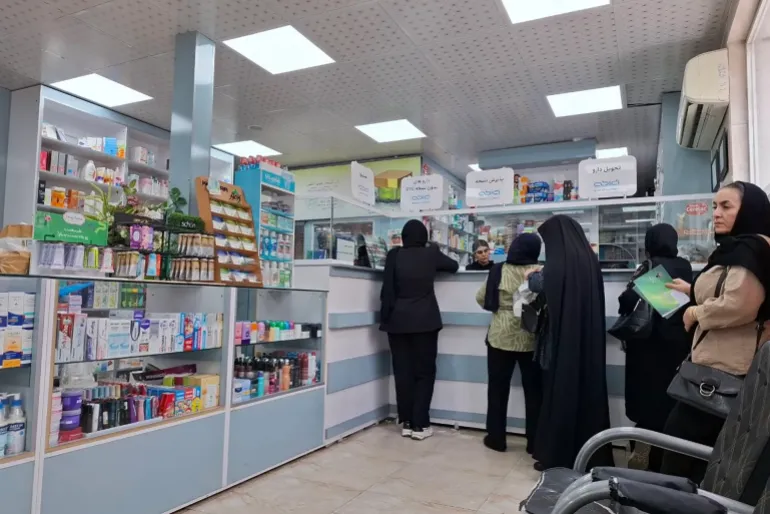
The war has also deepened an already-dire shortage of medications. Some pharmacies Al Jazeera visited in southern Tehran had run out of infant formula and dozens of other types of medications.
Although officials have assured Iranians that substitute products were available, pharmacy staff expressed concern about the increasing number of customers searching for infant formula in vain.
“Imported medicines are disappearing fast, and lately people have been coming in to buy certain items before they need them for fear they will run out in future,” Mahsa, a 23-year-old pharmacy assistant, told Al Jazeera.
She said the health authorities had introduced “smart systems” to track the quantity and type of medication each person buys.
Women queue at a pharmacy in Tehran [Al Jazeera]
Breaking the blockade
The prospect of a prolonged siege and deteriorating economic conditions have driven some Iranians to call for a military solution.
On Tehran’s main thoroughfare, several people told Al Jazeera that another round of fighting with the US was unavoidable. Some urged the government to break the blockade by force before it is tightened further.
Mohsen, a 23-year-old economics student, believes Washington’s goal is to strangle the Iranian economy and the cost will ultimately be felt by Iranian citizens.
Iran possesses many strong cards that it must use to break the air and sea blockade before they develop into a land blockade that would completely choke Tehran, he said.
Alireza Taghavinia, an Iranian international relations expert, told Al Jazeera that the gap between Washington and Tehran was too wide to be bridged. “The siege imposed by force will only be lifted by force,” he said.
In a worst-case scenario, falling living standards could bring protesters onto the streets, he added.
“The enemy is counting on stirring up chaos inside Iran because it believes no military strike will achieve its objectives without internal unrest,” he said.
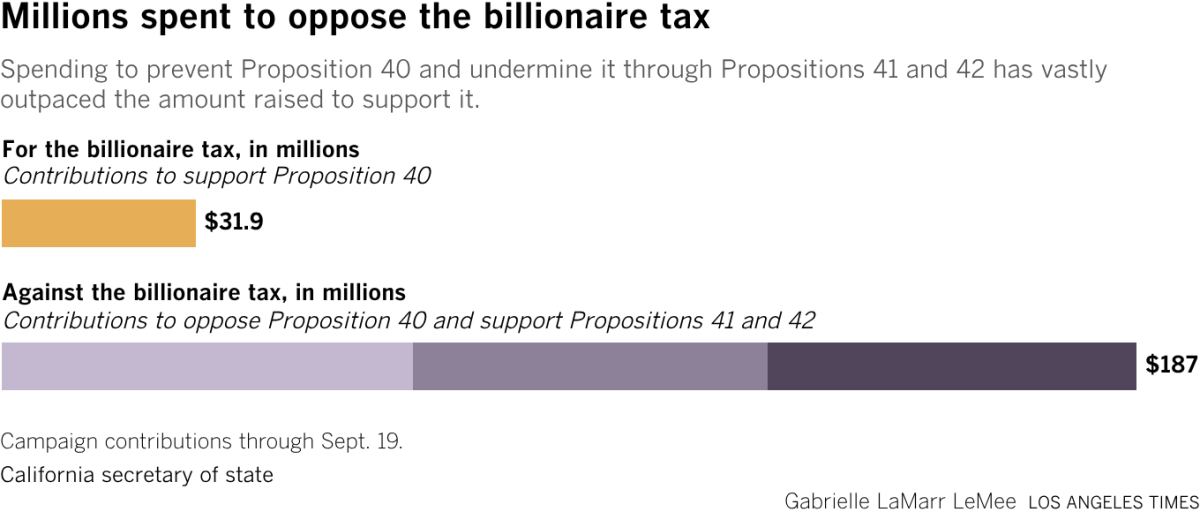
Opponents of the billionaire tax on the November ballot have vastly outraised the proposal’s supporters, with the anti-Proposition 40 effort and the backers of two other ballot measures crafted to nullify it raising $187 million compared to the $32 million raised by boosters of the wealth tax, according to campaign finance documents filed with the state.
The reports, filed Thursday, account for donations through Sept. 19 and do not include several million dollars that have poured into campaign coffers in recent days. The numbers are expected to vastly increase before the Nov. 3 election.
The bulk of the money raised by the proponents of Proposition 40, which would enact a one-time 5% tax on California billionaires’ assets, appears to have been spent on gathering signatures to qualify the measure for the November ballot. The campaign had only $207,000 in the bank, according to the latest campaign finance reports.
A leader of the union that crafted the proposal accused wealthy Californians who are spending heavily against the measure of lying to voters. The measure is designed to offset $100 billion in impending federal healthcare funding cuts expected to impacts millions of Californians.
“The billionaires take and take — tax break after tax break — and now they’re spending that money to deceive voters and avoid paying their fair share,” said Suzanne Jimenez, the chief of staff of the Service Employees International Union-United Healthcare Workers West. “Voters want their money back from the billionaires and want local emergency rooms to stay open. California does not need more tax breaks for billionaires. California needs emergency rooms for patients, hospitals that stay open, and healthcare people can access and afford.”
Opponents of the billionaire tax argue that it would do more harm than good.
“The more Californians learn, the more they see Proposition 40 for what it is — a harmful tax scheme that permanently damages the state’s budget and economy with zero accountability or safeguards to ensure funding actually improves care or lowers costs for patients,” said California Medical Assn. President Dr. René Bravo, the leader of one of the groups opposing the billionaire tax.
Proposition 41 would nullify the billionaire tax if, in the event that both measures are approved, it receives more “yes” votes. Proposition 41 would prohibit any new state tax from being excluded from a voter-approved cap that restricts how much tax revenue the state can spend each year.
“Californians deserve better results for their hard-earned tax dollars,” said Molly Weedn, a spokesperson for the Proposition 41 campaign.
Proposition 42 would prohibit new taxes on personal property, intellectual property, retirement accounts and other assets, and would limit situations in which a ballot measure or state lawmakers can impose or raise taxes retroactively — both of which are essential parts of Proposition 40. If both measures pass and Proposition 42 receives more “yes” votes, it would nullify the wealth tax.
The proposed billionaire tax has divided California Democrats, with Gov. Gavin Newsom opposing it while the state Democratic party supports it.
In recent polling, a majority of likely voters did not support any of the three proposals.
While 45% of likely voters supported the billionaire tax, 42% opposed it, according to a poll released Friday by UC Berkeley’s Institute of Governmental Studies and co-sponsored by the Los Angeles Times. Voters also are torn about the two ballot measures designed to nullify it.
The other measure receiving great attention, Proposition 39, which would require voters to show government-issued ID to cast ballots, faces a similar financial disparity. Opponents to the measure have raised $39.3 million compared to $15.6 million garnered by supporters.
Fifty-two percent of likely California voters oppose the voter ID proposal, while 39% support it and 9% are undecided, according to the Berkeley poll.
In the race to replace Newsom, Democratic former Biden cabinet member Xavier Becerra has raised $35.8 million, while his GOP rival, conservative strategist and television commentator Steve Hilton, has raised $22.3 million.
Becerra remains the front-runner in the governor’s race, which is not surprising since Democratic voters outnumber Republicans nearly 2 to 1. In last week’s Berkeley poll, the Democrat had the support of 58% of likely voters, while 33% backed the Republican.













![Women queue at a pharmacy in Tehran [Al Jazeera]](https://i0.wp.com/www.aljazeera.com/wp-content/uploads/2026/09/1arann-1790588624-1790672728.jpeg?w=640&ssl=1)