
fighting

North Korea opens museum commemorating troops killed fighting for Russia | Russia-Ukraine war News

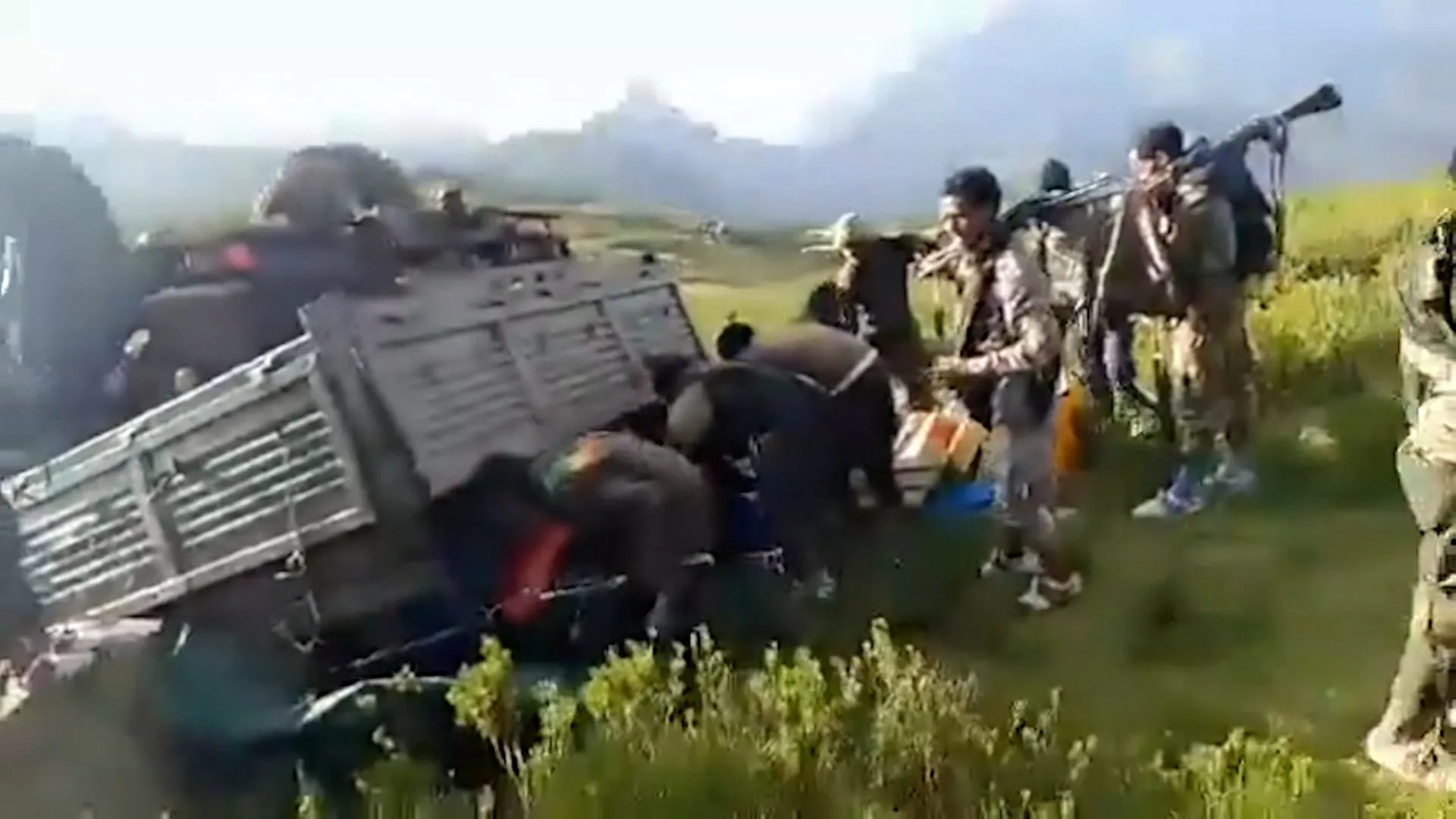
North Korea has opened a memorial museum in Pyongyang for its soldiers killed while fighting alongside Russian forces in the war in Ukraine, in the clearest sign yet of how central the conflict has become to the growing alliance.

The inaugural ceremony at the Memorial Museum of Combat Feats at the Overseas Military Operations was held on Sunday. It also marked the first anniversary of what the two countries describe as the end of an operation to “liberate” Russia’s Kursk border region from a Ukrainian incursion, the state-run Korean Central News Agency (KCNA) reported on Monday.

KCNA said North Korea’s leader Kim Jong Un attended the event along with senior Russian officials, including State Duma Chairman Vyacheslav Volodin and Defence Minister Andrei Belousov.

South Korea’s intelligence agency has estimated that North Korea deployed about 15,000 soldiers to fight for Russia in the Kursk region, and that about 2,000 of them were killed. Moscow and Pyongyang have not disclosed any figures.

During the ceremony, Kim sprinkled earth over the remains of one soldier and laid flowers for others whose bodies had been placed in a mortuary, according to KCNA. Kim and the Russian officials then signed a guestbook at the newly opened museum.

In his speech, Kim said the fallen North Korean troops would remain “a symbol of the Korean people’s heroism” and would support “a victorious march by the Korean and Russian people”.

He accused the United States and its allies of pursuing a “hegemonic plot and military adventurism” on the Russia-Ukraine front, praising Russian and North Korean forces for thwarting those efforts.

Meeting Belousov separately, Kim pledged full support for Russia’s policy of defending its sovereignty and security interests, KCNA said.

Russia’s TASS news agency quoted Belousov as saying that Moscow is ready to sign a military cooperation plan with Pyongyang covering 2027-31.

In a letter read by Volodin, Russian President Vladimir Putin said the new museum would be “a clear symbol of the friendship and solidarity” between the two countries and pledged to further strengthen their “comprehensive strategic partnership”.

Since Russia’s full-scale invasion of Ukraine in 2022, Kim has tilted his foreign policy decisively towards Moscow, supplying troops and conventional weapons in exchange, analysts say, for economic support and possibly sensitive technologies.

Officials in South Korea, the US and allied countries fear Russia could transfer advanced know-how to Pyongyang that would boost its nuclear and missile programmes.

Military experts say North Korean troops initially suffered heavy losses in Kursk due to their lack of combat experience and unfamiliarity with the terrain, making them vulnerable to Ukrainian drone and artillery fire.

But Ukrainian military and intelligence officials have assessed that the North Koreans later gained crucial battlefield experience and became central to Russia’s efforts to overwhelm Ukrainian forces by deploying large numbers of soldiers in the region.

Source link

2026 World Snooker Championship: Hossein Vafaei ‘fighting to make Iranians proud’

Vafaei beat Barry Hawkins in the first round at the Crucible last year before losing 13-10 to Mark Williams.

An injury wrecked the start of this season but an intensive physio programme got him back playing, although he then had a poor run of results following his return.

“With my injury, I took two or three months [out] and after that I lost my form,” he added. “It was a shoulder problem, it was hurting my fingers and all the nerves on my left side.

“It was tough to get back my form and to find something and the struggles started from there.

“I’m under lots of pressure. I’m not having a good season. A lot of people have been like ‘where is he? what’s he doing?’. They’re thinking I’ve stopped playing snooker.

“I’ve had a tough year mentally, personally, and everything.”

But there has been some encouragement on the table as before his success at qualifying, he beat Williams and Zhang Anda to reach the quarter-finals of last month’s World Open where he was beaten by Trump.

However, he said news from back home meant he was often not focused on snooker.

“You get a bad text in the day and you can’t focus on your job. How can I focus?” said Vafaei.

“No-one knows how tough it is but hopefully it will be over soon, then the safety comes back to my country.”

Source link

Liam Belcher: Hooker fighting for Cardiff start before thinking of Wales

All five of his Test appearances have been off the bench and he will look to feature against Barbarians, Fiji, Argentina and South Africa in June and July.

With Wales sweating on the availability of the injured Lake, Belcher is a contender along with Elias, fit-again Elliot Dee, Brodie Coghlan and clubmate Evan Lloyd.

“Everyone is playing well but there is also a hell of a battle here at Cardiff between me, Daf Hughes and Evan, while Tom Howe went really well for Wales Under-20s,” said Belcher.

“My main focus is on performing for Cardiff because if I don’t then there are very good players chomping at the bit.”

Of those rivals, physical teenager Howe is yet to make his senior debut but is already catching the eye.

“He was one of the shining lights for Wales Under-20s and if he keeps his head down and keeps doing what he is doing then he has a massive future,” said Belcher.

“It’s great to see a Cardiff boy doing what he did and he seems to be very down to earth. He is new to our environment but is a nice kid.”

Source link

Fragile Ceasefire Tested as Strait Closure and Lebanon Fighting Continue

A two day ceasefire between the United States and Iran has paused direct large scale strikes, but key flashpoints across the region remain active.

The closure of the Strait of Hormuz and escalating violence in Lebanon highlight the limited scope of the truce, exposing gaps in its coverage and enforcement.

Strait of Hormuz Remains Closed

Despite expectations that the ceasefire would stabilise energy markets, the Strait of Hormuz remains effectively shut.

This chokepoint normally handles a significant share of global oil shipments, with around 140 vessels passing through daily under normal conditions. In the first 24 hours after the ceasefire, only a handful of ships were able to transit the route.

The continued disruption has driven immediate delivery oil prices sharply higher, with some refiners in Europe and Asia reportedly paying near record levels.

Donald Trump publicly criticised Iran for failing to uphold what he described as an agreement to allow oil flows, while also signalling that shipments could resume soon without detailing mechanisms.

Disputed Scope of the Ceasefire

A central point of contention is whether the ceasefire extends beyond direct US Iran hostilities.

Iran maintains that the truce should include theatres such as Lebanon, where Hezbollah is engaged in conflict with Israel.

The United States and Israel reject this interpretation, arguing that Lebanon falls outside the agreement’s framework. This divergence has created parallel narratives of compliance and violation, undermining the credibility of the ceasefire.

Escalation in Lebanon

Fighting between Israel and Hezbollah has continued, with both sides exchanging strikes.

Israeli forces carried out large scale attacks shortly after the ceasefire announcement, while Hezbollah resumed missile launches following earlier indications it would pause operations.

Israeli Prime Minister Benjamin Netanyahu has since signalled a shift by expressing willingness to begin separate negotiations with Lebanon, focusing on disarming Hezbollah and establishing more stable relations.

Meanwhile, Lebanese officials are attempting to broker a temporary ceasefire as a stepping stone toward broader negotiations, indicating a parallel diplomatic track separate from US Iran talks.

High Stakes Talks in Islamabad

The first direct peace talks between the United States and Iran are scheduled to take place in Islamabad, which has been placed under heavy security lockdown.

Pakistan’s role as mediator underscores its diplomatic positioning, with tight security arrangements including restricted zones and controlled access around the negotiation venue.

The Iranian delegation is expected to be led by Mohammad Baqer Qalibaf, while the US side will be headed by JD Vance.

Competing Strategic Objectives

The talks are shaped by fundamentally different goals

The United States seeks

  • Limits on Iran’s nuclear programme
  • An end to uranium enrichment
  • Curtailment of missile capabilities
  • Withdrawal of support for regional allies

Iran, by contrast, is expected to demand

  • Removal of economic sanctions
  • Recognition of its authority over the Strait of Hormuz
  • Compensation for wartime damage

Iran’s leadership, now under Mojtaba Khamenei, has adopted a defiant posture, signalling that concessions will come at a high price.

Economic Fallout

The disruption in the Strait of Hormuz is already feeding into global economic indicators.

Oil price volatility is expected to influence inflation data, particularly in the United States, where upcoming consumer price figures may reflect the early economic impact of the conflict.

While futures markets have shown some optimism following the ceasefire, spot prices remain elevated, indicating persistent uncertainty about immediate supply conditions.

Military and Strategic Reality

Despite the ceasefire, the broader strategic objectives of the war remain unresolved

Iran retains missile and drone capabilities capable of targeting regional adversaries
Its nuclear programme continues, with a significant stockpile of enriched uranium
The political system has remained intact despite internal unrest

For the United States, initial goals such as dismantling Iran’s nuclear capacity and weakening its regional influence have not been fully achieved.

Analysis

The current situation reflects a fragmented ceasefire architecture in which the absence of a unified framework allows multiple conflicts to persist simultaneously. The continued closure of the Strait of Hormuz demonstrates how economic leverage can be maintained independently of formal military de escalation, reinforcing Iran’s bargaining position ahead of negotiations.

At the same time, the divergence over whether Lebanon is included in the truce highlights the limitations of narrowly scoped agreements in complex regional conflicts involving multiple state and non state actors. The persistence of Israel Hezbollah hostilities illustrates how parallel wars can undermine broader diplomatic efforts, creating a layered conflict environment.

The decision to proceed with talks in Islamabad despite ongoing violations suggests that both the United States and Iran view negotiations as strategically necessary, even in the absence of full compliance on the ground. This indicates a shift toward diplomacy driven not by stability but by mutual recognition of the costs of prolonged confrontation.

With information from Reuters.

Source link

Dutch scientist wins World Food Prize for fighting foodborne illness

March 25 (UPI) — Dutch scientist Huub Lilieveld has been named the recipient of the 2026 World Food Prize Wednesday for leading a food safety movement across 113 countries.

For six decades, Lilieveld has researched and advocated for food safety, using scientific evidence to inform regulations and legislation across the globe. His work has culminated in establishing modern global food safety, security, trade and aid standards.

The World Food Prize Foundation is recognizing Lilieveld’s contributions with a $500,000 award.

“Lilieveld lives by his conviction that access to safe food is a universal right — a philosophy shared by the late Dr. Norman Borlaug,” Mashal Husain, president of the World Food Prize Foundation, said in a statement. “Through his lifelong commitment to harmonizing regulations, he has lowered trade barriers, prevented the unnecessary destruction of safe food, promoted innovative food safety technologies worldwide and reduced the risk of foodborne illness outbreaks.”

Foodborne illnesses kill 420,000 people annually. There are about 600 million cases of foodborne illnesses per year.

Lelieveld established the Global Harmonization Initiative in 2004, to connect volunteers and food safety experts around the world to combat safe food insecurity and improve the distribution of safe foods.

“Companies large and small, as well as all consumers are negatively affected by unjustified differences in regulations,” Lelieveld said in a statement. “The Global Harmonization Initiative, therefore, strives not only to reach scientific consensus but also to ensure that findings are accessible to everyone, requiring simplification without compromising scientific accuracy and translation into local languages.”

Founder of the Women’s Tennis Association and tennis great Billie Jean King (C) smiles with representatives after speaking during an annual Women’s History Month event in celebration of the 50th anniversary of Title IX in Statuary Hall at the U.S .Capitol in Washington on March 9, 2022. Women’s History Month is celebrated every March. Photo by Bonnie Cash/UPI | License Photo

Source link

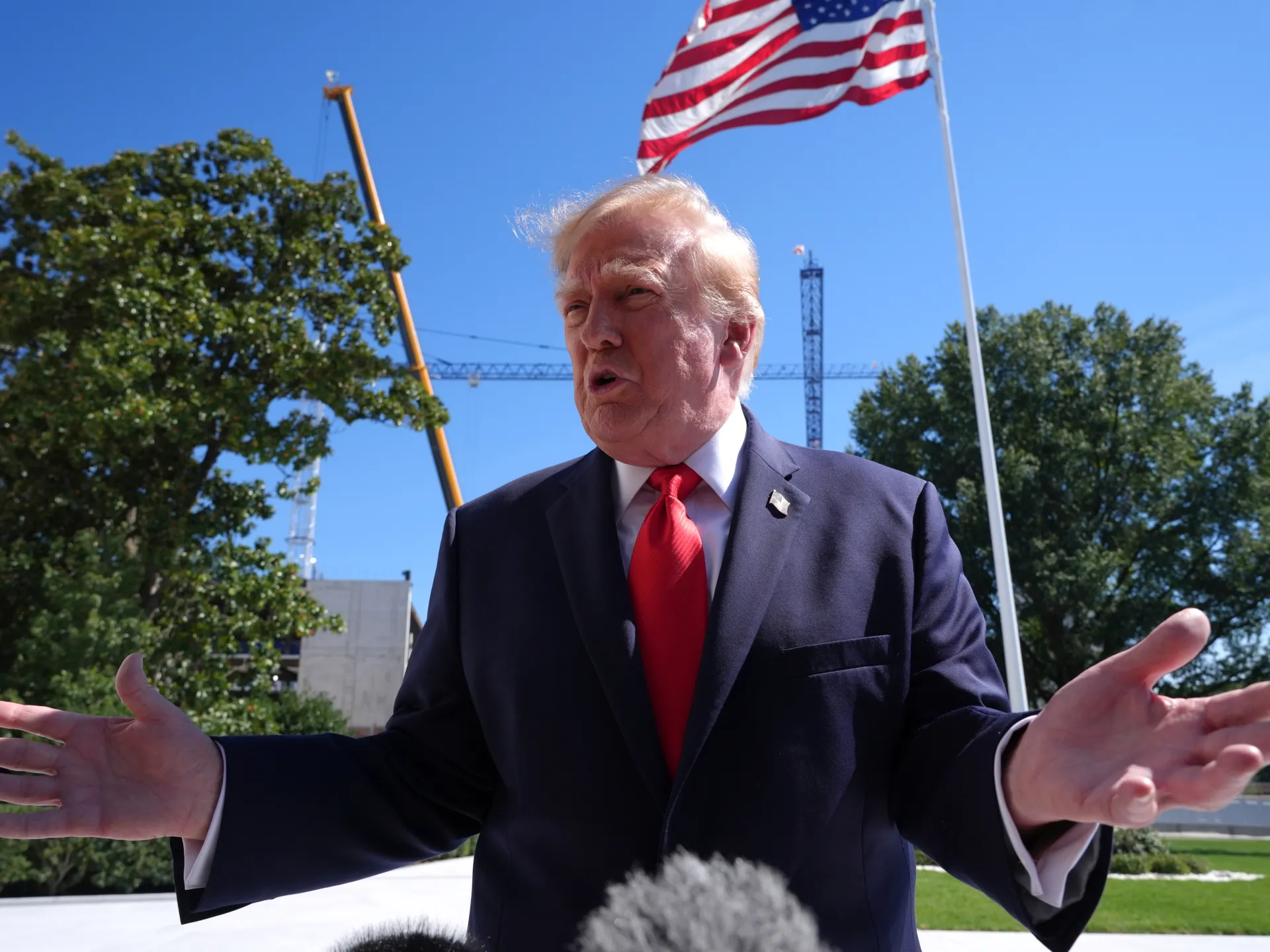
Trump’s failed strong-arming of allies on Iran shows that pressure is losing its effect

We’ve long had your back, now it’s our turn. That is how the famously transactional President Trump is framing his demands that allies help him with the Iran war. He wants to call in IOUs for decades of U.S. security guarantees.

The string of refusals indicates his stock of European goodwill is low. He has put allies through the wringer since returning to the White House, bullying them over tariffs, Greenland and other issues, and disparaging the sacrifices their soldiers made alongside U.S. troops in Afghanistan.

Now he’s demanding — not just requesting — that they send warships to help the U.S. unblock the Strait of Hormuz, through which a fifth of the world’s traded oil passes — essentially mop up behind the conflagration that he and Israel ignited in the Middle East.

The reply has been a “global raspberry.”

That’s how a veteran French defense analyst, François Heisbourg, described allied responses.

No close ally has come forward with immediate help. Britain is flat-out refusing to be drawn into the war. France says the fighting would have to die down first. Others are non-committal. China, which is not an ally but was also asked to help, is ignoring Trump’s call.

“This is not Europe’s war. We didn’t start the war. We were not consulted,” European Union foreign policy chief Kaja Kallas said Tuesday.

Trump’s frustration with the ‘Rolls-Royce of allies’

Trump has singled out the refusal from the United Kingdom. Prime Minister Keir Starmer cultivated ties with Trump and reached an early trade deal with the administration, but is now among allies who refuse to join a regional war with no clear endgame.

The U.K. “was sort of considered the Rolls-Royce of allies,” Trump said Monday, adding that he’d asked for British minesweeping ships.

“I was not happy with the U.K,” Trump said. “They should be involved enthusiastically. We’ve been protecting these countries for years.”

Starmer said Britain “will not be drawn into the wider war” and that British troops require the backing of international law and “a proper thought-through plan” — suggesting those were not in place.

He initially refused to let U.S. bombers attack Iran from British bases before accepting their use for strikes on Iran’s ballistic missile program.

Retired Lt. Gen. Ben Hodges, former commanding general of the U.S. Army in Europe, said allies are “looking at the United States in a way that they never have before. And this is bad for the United States.”

Having previously appeased Trump, some European leaders are “starting to realize that there’s no benefit or value in using flattery,” he said.

European leaders say it’s not their war

Going to war without consulting allies was in keeping with Trump’s America-first outlook.

“My attitude is: We don’t need anybody. We’re the strongest nation in the world,” he said Monday.

But failing to get an international mandate, as the U.S. did before intervening in the 1990 Gulf War, is boomeranging.

“It is not our war; we did not start it,” German Defense Minister Boris Pistorius said. “We want diplomatic solutions and a swift end to the conflict. Sending more warships to the region will certainly not contribute to that.”

French President Emmanuel Macron envisions possible naval escorts in the Strait of Hormuz — but only once fighting has died down.

“France didn’t choose this war. We’re not taking part,” he said.

After bruising tariff battles with Trump last year, the first months of 2026 have further strained alliances. Trump’s renewed pressure for U.S. control of Greenland, including a tariff threat against eight European nations, and his false assertion that allied troops avoided front-line fighting in the Afghanistan War, upset partners in the NATO military alliance.

“Allies, or at least the Europeans, aren’t willing to be at the beck and call of a demand from Donald Trump,” said Sylvie Bermann, a French former ambassador to China, the U.K. and Russia.

“And even in asking for a helping hand, he is doing so in a brutal manner, saying: ‘You’re useless, we’re the strongest, we don’t need you, but come,’” she said.

A dangerous mission

Retired naval officers say that unblocking the Strait of Hormuz with military escorts while the war rages and without Iran’s consent would be dangerous.

France, which has rushed its Charles de Gaulle aircraft carrier to the Mediterranean, is working with other countries to prepare such a mission once the air war has subsided. French military spokesman Col. Guillaume Vernet said any escorting would be conditional on talks with Iran, and Macron has publicized two calls in eight days with Iranian President Masoud Pezeshkian.

That has won points with Trump.

“On a scale of zero to 10, I’d say he’s been an eight,” Trump said Monday. “Not perfect, but it’s France. We don’t expect perfect.”

But he’s fuming at other allies.

“We will protect them, but they will do nothing for us, in particular, in a time of need,” Trump said Tuesday.

Trump has leverage, including in Ukraine

Allies in Europe and Asia need oil, gas and other products from the Middle East to flow again. That gives Trump some leverage.

Allies also know from experience that resisting Trump carries risks of retaliation.

“It really could be anything. Are the Europeans prepared for that?” asked Ed Arnold, a former British army officer and now a researcher at the Royal United Services Institute, a London think tank.

European allies need Trump’s continued blessing for U.S. weaponry, intelligence, and other support for Ukraine, as well as financial pressure on Russia. The U.S. has started to chip away at some sanctions on Moscow by temporarily allowing shipments of Russian oil to ease shortages stemming from the Iran war. Allies also want him to reengage in talks to end the war.

“That was what kept European leaders quiet for a lot of last year in the face of the rhetoric and actions,” said Amanda Sloat, a former U.S. national security adviser who now teaches at Spain’s IE University.

“It is also the thing that is making them a little bit nervous now.”

Leicester and Burrows write for the Associated Press. Burrows reported from London. AP journalists Jill Lawless in London, Lorne Cook in Brussels, Suman Naishadham in Madrid, Geir Moulson and Kirsten Grieshaber in Berlin, Simina Mistreanu in Taipei, Taiwan, and Mari Yamaguchi in Tokyo contributed to this report.

Source link