Maria Astorini, a retired character actress and a minor star, is 37 years late delivering her memoir. But the project, which she has tried her best to forget, has been pulled out from under the rug by her publisher. Forced to deliver a manuscript, Maria writes an autobiography clocking in at a shade over 200 pages.
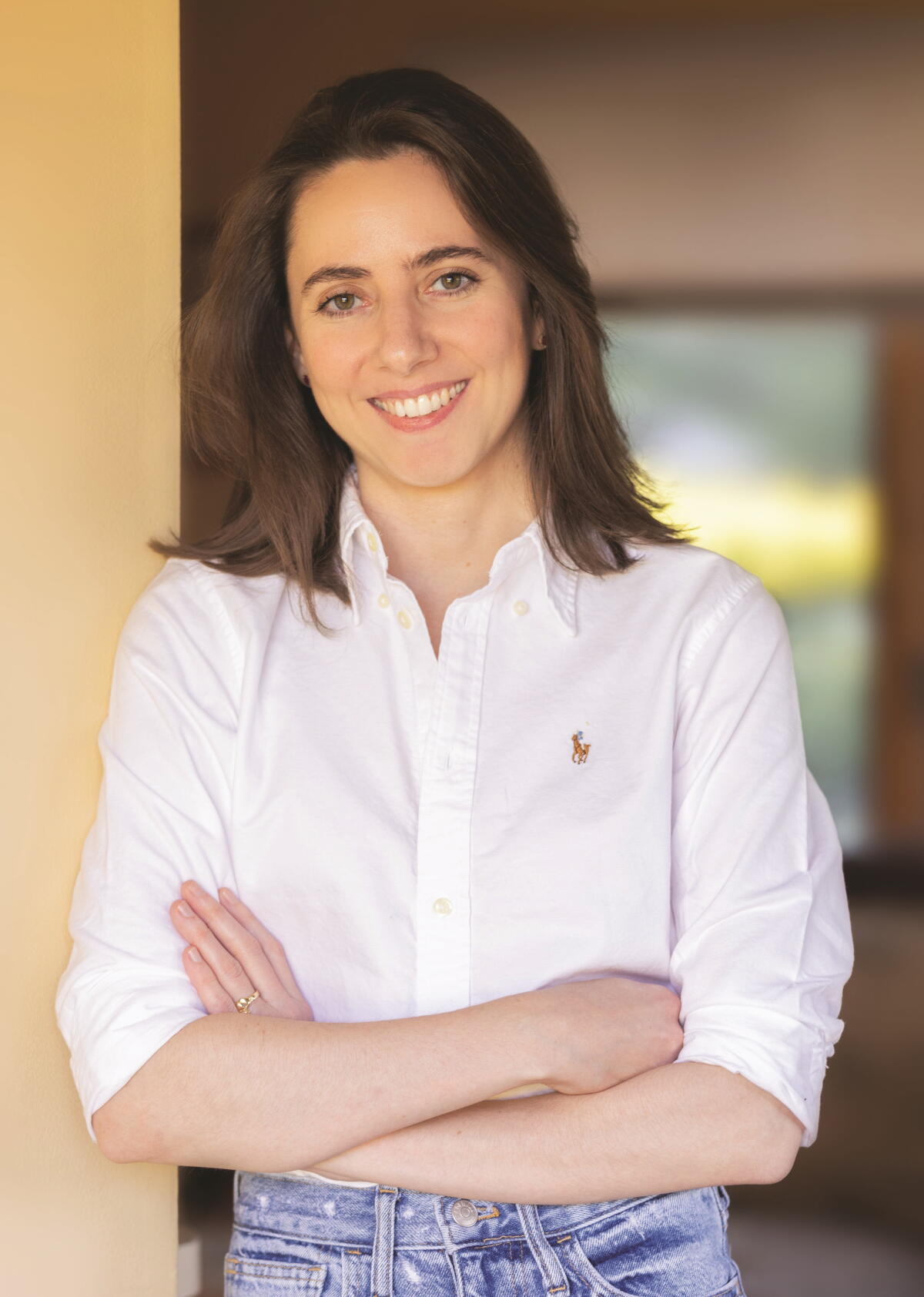
The result is Elizabeth Castellano’s second novel “Proof of Progress,” a wry, poignant and very funny twirl through a life that swerves past triumph and failure, boredom and joy, public life and private sorrow. I recently spoke with her about Bloomingdale’s, Calvin Trillin, and how cellphones are the enemy of good fiction.
You’re reading Book Club
An exclusive look at what we’re reading, book club events and our latest author interviews.
By continuing, you agree to our Terms of Service, which include arbitration and a class action waiver. You agree that we and our third-party vendors may collect and use your information, including through cookies, pixels and similar technologies, for the purposes set forth in our Privacy Policy such as personalizing your experience and ads.
✍️ Author Chat
”Proof of Progress” traces the life of your protagonist, Maria Astorini, from childhood to her mid-60s. It reminded me of something Bob Dylan wrote recently about growing older, which is that you finally get rid of the illusion that life is under your control.
For Maria, there is a lot of serendipity that feels like fate, of being in the right place at the right moment, or meeting the right person, which sends her off in a different direction. I like that in a novel. It was also helpful to be writing primarily about an era without phones, so that she’s able to meet a lot of people.
We’re seeing this a lot in contemporary narratives: writers setting their stories in pre-phone eras, so their characters can actually interact with each other.
She’s talking to people, she’s meeting people, so she’s able to be sent on different paths. Even meeting her husband probably wouldn’t have happened with the phone.
“Proof of Progress” is Elizabeth Castellano’s second novel.
(Harper Collins / Carl Timpone)
You have written a very funny book, and funny books don’t get the respect they deserve.
Anytime you have humor in a book, you’re not taken quite as seriously. Even in Barnes & Noble, when you look for humor, it’s on the back wall or on the floor. And that’s where you find the David Sedaris books, which is crazy. My last book was about a beach town, so I got lumped in with the beach read group. I had people who were looking for a fun beach read and then they picked up my book, and it’s about zoning code violations. I’m happy that this book is being marketed as literary and humorous. I’m in better shape in that sense.
It’s really hard to write funny. Or is it?
The best way I can describe it is like a stand-up comedian having a notebook full of jokes and anecdotes and she has to put together an HBO special. Sometimes I just had one line of something funny. I had all these ideas and thoughts and different things from old books that I was writing. I tried to put all of it together and find a character that could tell this story, and the through line that I could create from all of this material. So I wrote it backwards and out of order.
Who do you think is funny? Who do you like to read?
J.D. Salinger, David Sedaris, Maria Semple. I love Calvin Trillin. I think he’s a great writer.
Your protagonist is very late on a contract and has to rush to get the book written, which gives the narrative propulsion and momentum.
I had a two-book deal, so while I was working on the publicity for my first book, I raced to finish this book. And when I was finished, I realized it didn’t work and had to throw out the whole manuscript. I saved maybe six or seven little anecdotes from that original book. So it took another year to write. That was the inspiration for “Proof of Progress.”
Your writing career is a bit like Maria’s acting career, in that you chanced upon it.
I was a theater major. I don’t think I took one English course. Then I graduated right into the Recession of 2008. There were no jobs. Eventually, I applied to be an apprentice buyer at Bloomingdale’s, even though I hate shopping. That was the last resort. Then I decided, maybe I’ll be a writer, because it felt like something that I could do. I wrote a lot of things that were rejected before I wrote my first book, “Save What’s Left” [2023]. And that’s probably why I wrote Maria the way I did. We zig, we zag, we endure.
This Q&A was edited for length and clarity.
📰 The Week(s) in Books
Kyle MacLachlan’s new memoir is a funny, candid and self-aware reflection on his 40-year career in Hollywood.
(Christopher Patey / For The Times)
We loved him as Special Agent Cooper in “Twin Peaks” and as Jeffrey Beaumont in “Blue Velvet,” but according to Kyle Maclachlan’s new memoir, “Fictional Selves,” there is another unknown character: “Other Kyle,” the actor’s ever-present shadow figure. “There’s definitely another entity, an observer, the ego, the harder self,” MacLachlan tells Rachel Brodksy.
After a nine-year absence from fiction, John Green has returned with “Hollywood, Ending,” a darkly humorous show business cautionary tale that Green couldn’t have written “without spending a lot of time on film sets,” he tells Emily St. Martin. “I hope the book is a love letter to movies. But I also wanted to be honest about how difficult it is to make a work of art that, in order to be commercially successful, has to be loved by millions of people.”
Katya Suvorova’s memoir, “Ungrateful Immigrant Daughter,” is a “heart-wrenching tale of immigration” that “pulls back the velvety red curtain to reveal one story behind the oversexualized stereotypical post-Soviet mail-order bride narrative so ingrained in post-Cold War U.S. culture,” writes Diana Ruzova.
Finally, Vroman’s and Book Soup, two of L.A.’s most beloved bookstores, have been sold by longtime owner Joel Sheldon to tech executive Robert Hoffman, reports Suhauna Hussain.
📖 Bookstore Faves
Outpost Books is a new bookstore in South Pasadena.
(Simran Malik)
Walking into Outpost Books is like stepping into a smart book lover’s cozy den. With its southwestern-themed design and a well-curated selection of new and used books, the indie book store in South Pasadena already feels like home to this community of rabid book lovers. I spoke with owner Nicole Novembrino about her new store.
Why a bookstore?
I was a sales rep for a publisher of art books, but I looked at my life, wondering what I could do for a living that would give me real meaning and purpose. I love books, and so I decided to open a bookstore. It’s not easy, and you can second-guess yourself a million times along the way, or get a normal job. But I’m so glad I did it. Everyone in the neighborhood is so happy!
Why did you choose to open in South Pasadena?
I live in El Sereno nearby, and South Pasadena is such a great community. When we first opened, people were coming in and thanking us for opening in the neighborhood. There aren’t any other bookstores in this particular South Pasadena neighborhood. I definitely didn’t want to take any business away from other stores.
Pasadena loves its bookstores.
This is a very bookish community. The donations I’m getting from people are really smart volumes. I think I’ve had just one Nora Roberts book! The landlords are great, as well. They came to our opening and told me the store is all they could have dreamed of for the space, which is so sweet.
The kids section is really fun, with the tent and the fake tree stumps.
We have a lot of kids books with a southwestern theme. I’ve been collecting them over the years from my trips to the desert. You might find a book called “Armadillo Rodeo” in there.
How did you land on the western theme?
My mom is from New Mexico, so every family vacation was a trip to the Southwest, and I loved stopping and collecting things at the trading posts along the way. I wanted to give the store that kind of feel. I chose the name Outpost for that reason. It is a lived-in place where you can just hang out and find cool things and read.
Outpost Books, 1010 ½ Fair Oaks Ave., South Pasadena, (626) 399-0595
Chinese authorities have reportedly taken possession of an F-35 cockpit canopy and weapons-bay door that were inexplicably diverted to Hong Kong while being shipped from Australia to the United States. The incident appears to have left physical components that incorporate aspects of the fighter’s low-observable design in the hands of a country that has spent years doing whatever it could to gain information on the aircraft and America’s stealth technology secrets in general.
So, what does all this mean? Let’s put it in perspective.
The parts in question were being shipped by UPS from Australia to the United States in late May, according to people familiar with the matter cited by Bloomberg. The components from a Royal Australian Air Force F-35A were being sent to the United States for inspection and possible repair or disposal.
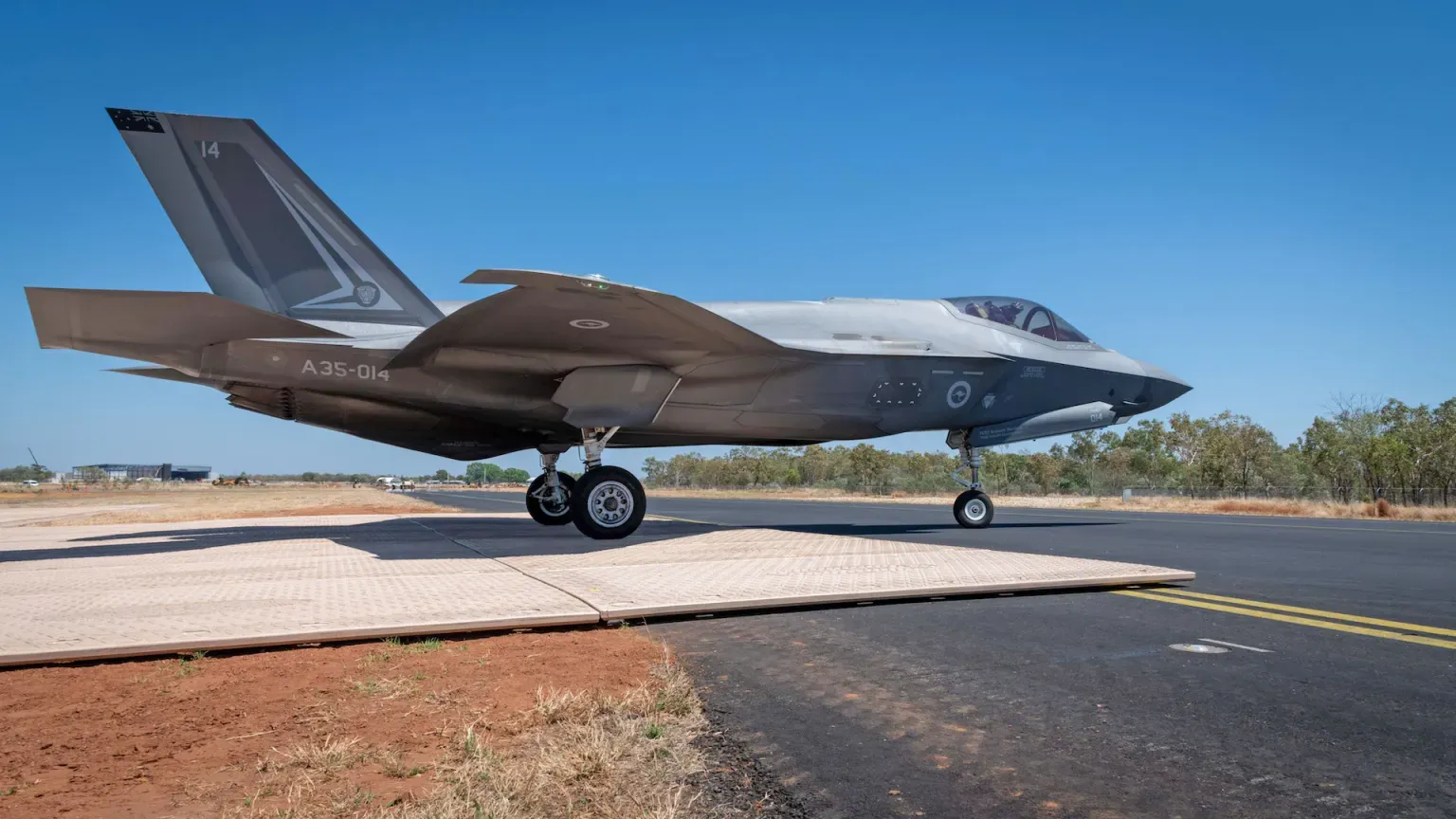
A Royal Australian Air Force F-35A from 75 Squadron taxiing at RAAF Base Tindal, Northern Territory. Australian Defense Force
F-35 sustainment procedures explicitly cover the movement of F-35 parts, including unserviceable components, through the program’s logistics network. The U.S. Air Force’s transportation guidance directs F-35 shipments outside the Defense Transportation System to follow approved Joint Program Office procedures. In other words, moving an unserviceable Australian F-35 component to the United States for inspection, repair, or disposition is consistent with the normal sustainment process.
What is highly unusual is where this particular shipment ended up. F-35 components moving through an established international logistics system apparently stopped in South Korea, were then routed to Hong Kong. Chinese authorities subsequently took possession of the parts and have not returned them, according to the sources cited by Bloomberg.
F-35 canopy component replacement at Luke Air Force Base, Arizona. U.S. Air Force photo by Senior Airman Ridge ShanSecretary of War Pete Hegseth autographs the weapons bay door of an F-35 at Lockheed Martin Air Force Plant 4, in Fort Worth, Texas. DoW photo by U.S. Navy Petty Officer 1st Class Alexander Kubitza
“For security reasons, we can’t discuss the status of specific shipments or our shipping procedures,” Lockheed Martin told us in response to a request for clarification about the incident. The company added that it “follows all U.S. regulations established by the Department of War and regulated by the Defense Logistics Agency (DLA) regarding the shipment of aircraft components. Our teams handle every shipment with the utmost diligence and safeguards to ensure the integrity of the F-35 program and the security of our allied partners.”
The Pentagon’s F-35 Joint Program Office has acknowledged a “shipment issue” involving F-35 components and said U.S. authorities and industry partners are working to recover them and investigate what happened.
Lockheed Martin, UPS, and the Pentagon have not publicly provided a detailed account of how the shipment was diverted or what happened to the parts after they reached Hong Kong.
Australian Defense Minister Richard Marles also confirmed that Canberra was aware of the incident and was working with the United States and Lockheed Martin.
Acting Prime Minister and Minister for Defense, Richard Marles, accompanied by Chief of Air Force Air Marshal Stephen Chappell at RAAF Base Edinburgh, South Australia. Australian Defense Force
Marles has sought to play down the potential security implications of the components, saying his understanding was that the shipment did not contain sensitive equipment or sensitive parts. That does not by itself answer the more specific question of what could potentially be learned from these particular pieces of an F-35. After all, not every physical component of an F-35 is necessarily highly classified or capable of revealing meaningful information about the aircraft’s design. At the same time, a cockpit canopy and weapons-bay door involve structures, materials, interfaces, tolerances, and treatments that all have to work within the aircraft’s low-observable design. If radar-absorbing material or other specialized treatments remain on the components, that could potentially make them far more sensitive from a technological exploitation standpoint.
The condition of the parts is also unknown. We do not know how much of their coatings or other treatments remain intact, whether Chinese authorities have examined them, or what information could actually be extracted from them in their current state.
Above all else, there is little specific information in the public domain about what F-35-related technical information Chinese intelligence already has acquired over the years, what physical components or materials it may already possess, or what additional information could be gained through espionage, cyber operations, industrial access, observation of deployed aircraft, or other means.
Without these facts, it is impossible to gauge what damage could have been done by this loss. Still, viewed in a vacuum of those unknowns, simply having an F-35 canopy and weapons-bay door in Chinese possession represents a significant loss of control over sensitive physical hardware — there is no way around that reality — and the severity of that loss could be substantial depending on the physical state of the parts.
The circumstances are particularly sensitive because, as we mentioned in the opening of this article, China has pursued multiple avenues for acquiring information on the F-35 for many years, with publicly documented cases involving cyber operations, technical information, supply chains, and human expertise. Some aspects of China’s subsequent stealth aircraft designs have also prompted comparisons with U.S. aircraft, although claims that China simply ‘cloned’ entire aircraft are not supported by the available evidence.
China And The F-35: A History Of Espionage
In 2014, U.S. authorities charged Chinese businessman Su Bin with conspiring with two other Chinese hackers to break into the computer systems of U.S. defense contractors. Prosecutors alleged that the group targeted information on aircraft including the F-35 and F-22. The alleged hacking campaign ran from 2009 to 2013.
Su Bin later pleaded guilty and was sentenced to nearly four years in prison. The Justice Department’s 2026 case against former Air Force fighter pilot Gerald “Runner” Brown connects the two cases. Prosecutors allege that Brown used a co-conspirator to negotiate his work training Chinese military pilots with Su Bin.
Brown, a retired U.S. Air Force major who spent more than 24 years in the service, subsequently worked as a contract simulator instructor training U.S. military pilots on the A-10 and F-35. In February 2026, the Justice Department charged him with providing and conspiring to provide unauthorized defense services to Chinese military pilots.
According to the criminal complaint, Brown traveled to China in December 2023, where he allegedly began training People’s Liberation Army Air Force (PLAAF) personnel. Prosecutors say he also answered questions about the U.S. Air Force for three hours on his first day in China. Brown has been charged, and the allegations have not been adjudicated. He is one of multiple former Western aviators alleged to have provided training services and/or intelligence to Beijing.
The Honeywell case provides yet another example, this time involving the defense industry’s supply of technical information.
In 2021, the State Department reached a $13-million administrative settlement with Honeywell over alleged violations of the Arms Export Control Act and International Traffic in Arms Regulations (ITAR). Honeywell had voluntarily disclosed alleged unauthorized exports and retransfers of ITAR-controlled technical data.
The case involved 71 engineering drawings containing dimensions, geometries and layouts for manufacturing castings and finished parts used across multiple aircraft, engines and military systems. The State Department said the unauthorized exports and retransfers involved Canada, Ireland, Mexico, China, and Taiwan.
Among the systems covered by the drawings were components associated with the F-35 and F-22. The case did not allege that Honeywell deliberately sought to provide China with sensitive military technology; rather, it concerned alleged violations of export-control requirements.
A U.S. Air Force F-22 (nearest camera) flies alongside an F-35A. U.S. Air Force photo by Lt. Sam Eckholm
There has also been a physical supply-chain precedent.
In 2022, F-35 deliveries were temporarily halted after the Pentagon discovered that a magnet in the aircraft’s Honeywell-built turbomachine pumps —which provide critical power functions to the jet — contained a cobalt and samarium alloy produced in China. The material itself was not considered a security or flight-safety threat, but the discovery demonstrated how difficult it can be to maintain complete visibility over a global supply chain involving thousands of companies and multiple tiers of subcontractors.
Taken together, these cases demonstrate several different pathways through which China has appeared in the F-35 security story: cyber theft, unauthorized technical-data transfers, supply-chain exposure, and alleged exploitation of former Western military expertise.
The Hong Kong incident would add another major category: physical access to actual F-35 components.
These are only some of the publicly documented examples. There is no public way to know the full extent of information or physical material Chinese intelligence may have acquired over the years, but is very likely far larger in scope than what is available in the open source.
Chinese Access Concerns Have Shaped F-35 Export Policy
The proposed sale of F-35s to the United Arab Emirates became deeply entangled in U.S. concerns about Abu Dhabi’s growing military and technology relationship with China.
A 34th Expeditionary Fighter Squadron F-35A conducts inflight refueling above the United Arab Emirates. U.S. Air Force photo by Tech. Sgt. Kat Justen
Washington had approved a potential package involving 50 F-35As, but U.S. officials and lawmakers expressed concerns about Chinese intelligence activity and technology in the UAE. Among the broader concerns were Chinese telecommunications infrastructure and the possibility of Chinese military or intelligence access to facilities associated with advanced U.S. weapons. A Congressional U.S.-China Economic and Security Review Commission report later cited the potential presence of Chinese intelligence collection capabilities and military facilities in the UAE as risks to the proposed F-35 sale.
The State Department recently approved a potential $24.3-billion sale to the Kingdom involving 48 F-35s and associated equipment. But U.S. intelligence agencies have reportedly warned that China’s military and technology relationship with Saudi Arabia could create opportunities for Beijing to obtain sensitive F-35 information.
According to reporting based on U.S. officials familiar with intelligence assessments, a Defense Intelligence Agency report raised concerns about Chinese military access to Saudi bases, Chinese technology in Saudi telecommunications infrastructure, and whether secure facilities could be maintained for F-35 operations. The assessments also questioned whether Saudi Arabia would limit contact between Chinese military and intelligence personnel and F-35-related sites.
What Could The Components Reveal?
As we noted earlier, there is no way to gauge the intelligence impact of the loss at this stage. The central unknown of what China already knows about the F-35, and what it may already have in its possession — especially related to these components — is the key variable here.
Regardless, an F-35 canopy and weapons-bay door can provide information that cannot otherwise be easily obtained and gives a different level of fidelity in terms of material exploitation than what construction data and blueprints alone could.
The F-35’s low observability is the product of an extremely complex combination of airframe shaping, construction materials, external coatings, manufacturing tolerances, speciality apertures, and more.
U.S. Air Force 325th Maintenance Squadron low-observable maintainers work on an F-35A at Tyndall Air Force Base, Florida, in August 2024. U.S. Air Force photo by Airman 1st Class Victoria Moehlman
A canopy is a particularly demanding part of any stealth aircraft. It has to satisfy optical and structural requirements while also controlling radar reflections. The cockpit is historically a major source of radar reflectivity, including the pilot’s helmet. Therefore the canopy’s materials, construction, interfaces, and specialized treatments can be critical to the aircraft’s overall low-observable performance, and especially from the critical frontal aspect.
The F-35’s canopy has been an ongoing work in progress for many years. It has had chronic material issues, especially when it comes to delamination. Multiple iterations spread over two decades have recently resulted in a major improvement of the issue. The tight balancing act of keeping the canopy transparent enough, while controlling the F-35’s stealthy signature and having that mix of materials be robust enough to last for a reasonable amount of time has been a major investment for the program. If the canopy is of a later variation, that loss alone could be substantial and could help China with their own low-observable canopy development programs even if they already had original information on the F-35’s canopy original design dating back years.
Evidence of the F-35’s canopy delamination issue on an early example of the F-35B. Crown Copyright
The F-35’s canopy has been a notorious work in progress, specifically the low observable coating/delamination issue which has improved a lot in recent years with new materials and processes. So no, you do NOT want to lose that in to China! https://t.co/9V0jdRAiwA
The F-35’s weapons-bay door has its of sensitivity issues. It is effectively a major section of the aircraft’s outer shell, with its structure, edges, interfaces, tolerances and treatments all having to function without creating unacceptable radar signatures. Its construction and material attributes can be reasonably extrapolated for the rest of much of the F-35’s outer mold-line. Above all else, if the radar absorbent material remained intact on the door, that would signify a major loss when viewed without any understanding of what China already knows about the F-35’s radar absorbing surface treatments. Historically speaking, RAM technology is among America’s closest guarded material sciences secrets.
A Belgian Air Force service member inspects the open weapons bay of an F-35A at Luke AFB, Arizona. U.S. Air Force photo by Airman 1st Class Tekorey Watkins
For the time being, Australian officials have said they do not understand the parts to be sensitive. The investigation will ultimately have to establish what the components actually contain and what could be learned from them.
The incident comes at a moment when China’s own stealth fighter efforts are undergoing an extraordinary expansion.
The PLAAF is now operating the J-20, China’s first operational fifth-generation stealth fighter, in increasingly large numbers. The smaller J-35 is also moving toward broader service, including a carrier role for the People’s Liberation Army Navy.
Aircraft maintainers clean the fuselage of a J-20 fighter during the Changchun Air Show in the Jilin Province of China, in September 2025. Photo by Zhang Xiangyi/China News Service/VCG via Getty Images
China has also moved into what Western observers generally describe as sixth-generation fighter development.
Two new tailless combat-aircraft designs emerged publicly in December 2024. One is the large Chengdu aircraft commonly referred to as the J-36, while the other is associated with Shenyang and is variously called the J-XDS or J-50. Both have continued flight testing and yielded several prototypes with individual refinements.
The exact capabilities and eventual operational roles of these aircraft remain uncertain. They are developmental designs, not established operational equivalents of the F-35 or other sixth-generation systems. However, China is clearly building an increasingly broad ecosystem of fifth- and next-generation low-observable combat aircraft, both crewed and uncrewed. In the latter category is a growing number of stealthy drones, including long-endurance types.
China didn’t likely need physical access to an F-35 canopy or weapons-bay door to develop the J-20, J-35, or its next-generation aircraft. But additional information about how a mature Western stealth aircraft handles materials, coatings, interfaces, manufacturing, and the integration of those elements can still have great potential value to an industry developing its own systems. This includes technologies intended to counter the U.S. combat aircraft and their low-observable characteristics.
The F-35 has been produced in large numbers, is operated by a growing coalition of countries, and has been subjected to years of testing and operational experience. Its low-observable design represents decades of accumulated U.S. research and industrial know-how. At the same time, the global scale of the program inevitably makes control over sensitive information more complicated. More aircraft, more maintainers, more industrial partners, and more international logistics mean more points at which information and physical hardware have to be controlled. Over time, a program of this size will see an erosion in its secrets, but a major loss can drastically accelerate what should be a more gradual and control decline in security.
The Lockheed Martin F-35 production line at Fort Worth, Texas. Lockheed Martin photo by Alexander H Groves
The potential intelligence value of the components also has to be considered in the context of foreign material exploitation, or FME. Major military powers maintain dedicated capabilities to recover, examine and characterize foreign weapons, aircraft, sensors, materials and other equipment. The objective is not necessarily to reproduce an entire system. More important is determining how something is built, what materials and manufacturing techniques are used, how individual components perform, and where industrial strengths or limitations may lie.
That is why countries have historically gone to extraordinary lengths to recover even crashed or damaged pieces of sensitive military hardware. The bigger the prize, the more risk an intelligence service would be willing to take in order to realize a recovery.
The sensitivity surrounding the physical remnants of an F-35 is not new. When a Japan Air Self-Defense Force F-35A disappeared over the Pacific in 2019, the search quickly became more than a rescue operation. U.S. and Japanese forces mounted an extensive effort to locate the wreckage, with U.S. Navy P-8A aircraft and a destroyer joining the search. TWZnoted at the time that even scattered F-35 wreckage could expose valuable technological secrets, while the aircraft’s location on the seabed raised the prospect of an underwater espionage and recovery operation.
That concern has also been evident in subsequent F-35 recovery operations. That concern has been reflected in subsequent F-35 recoveries. In 2022, the U.S. Navy recovered an F-35C from roughly 12,400 feet in the South China Sea after a carrier landing accident, removing the possibility that the aircraft could be accessed by another country.
Unanswered Security Questions
At this point, there is no public evidence that the Hong Kong diversion was a deliberate Chinese intelligence operation, although it is certainly possible. It is also unclear whether Chinese authorities have examined the F-35 parts or what level of new and useful information has been recovered from them.
If, as reported, Chinese authorities have taken possession of the parts and have not returned them, that would be an extraordinary development. If the diversion was genuinely the result of a shipping or logistics error, the outcome would itself be extraordinary. It would raise serious questions about the security controls surrounding the movement of F-35 hardware even without evidence of deliberate interference.
The timing is also notable. Chinese President Xi Jinping arrived in Washington this week for a state visit with President Donald Trump, with the two leaders meeting amid broader disputes involving technology, security, and the future of U.S.-China relations. Whether the F-35 shipment comes up directly in those discussions is not known, but it would be an obvious subject for U.S. and Chinese officials to address through diplomatic channels.
“Ladies and gentlemen, the President of the United States Donald J. Trump and First Lady Melania Trump, accompanied by the President of the People’s Republic of China Xi Jinping and Madame Peng Liyuan.” pic.twitter.com/hyPHOBC99Q
For now, however, the central question remains how the parts got there. Until that is answered, we won’t know if this was a simple logistics failure or a deliberate intelligence operation. And beyond that, what China already knew about the components it now may have in its possession — a question we may never truly get an answer to.
Born into an African American family with a grim history of enslavement, Marian Anderson was determined from an early age to master the art of singing for the concert hall. A contralto of great range and warmth, Anderson’s abundant gifts as a performer of spirituals, arias and German Leider brought her global fame even as she endured the indignities of racial discrimination at home. Her Easter Sunday performance at the Lincoln Memorial in 1939 in front of 75,000 spectators remains a touchstone of defiance in an age of racial violence.
Anthony Tommasini’s excellent biography of Anderson, “Voice of A Century,” reclaims the singer as a great artist who only embraced her power as a symbol of racial equality much later in life. I spoke with Tommasini about Anderson, Franz Schubert and Albert Einstein.
You’re reading Book Club
An exclusive look at what we’re reading, book club events and our latest author interviews.
By continuing, you agree to our Terms of Service, which include arbitration and a class action waiver. You agree that we and our third-party vendors may collect and use your information, including through cookies, pixels and similar technologies, for the purposes set forth in our Privacy Policy such as personalizing your experience and ads.
✍️ Author Chat
Anthony Tommasini’s biography reclaims Anderson as a great artist who embraced her power as a symbol of racial equality later in life.
(Ahna Tessler Photography)
I feel like people know Marian Anderson in the abstract, but they regard her as a symbol rather than an artist. And among the virtues of your book is that you reestablish Anderson’s legacy as a great singer and performer.
She was a contralto, which is the lowest female vocal register. But that register had such resonance, and she had complete control over it. She also had enormous range; the uncanny, beautiful thing about Anderson’s voice is that when she started ascending even into the soprano sphere, she held those notes so beautifully. They were emanating from below, grounded in that low voice. It made for a mesmerizing sound. I’ve made a playlist to accompany the book.
She embodied this kind of fierce dignity and grace in the face of racial discrimination. But as you point out, she was reluctant to make herself a symbol of the civil rights movement, preferring to let audiences focus on her artistry.
In 1939, she was banned from performing in Washington’s Constitution Hall because of her race, and her manager, with help from Eleanor Roosevelt, arranged a performance in front of the Lincoln Memorial on Easter Sunday. Yet, the night before the performance, she was trying to get out of it. She felt the whole affair had turned into a civil rights demonstration. When it came time to write her memoirs in 1956, she wanted to excise the event from the book. She felt that what she could do is be an example of excellence and possibility for aspiring black artists.
She did play to segregated audiences, even long after she had become a national star.
[This type of segregated performance featured what] was called vertical seating. But she refused to forsake her career, which she had worked so hard to attain, and so she played these segregated shows. Eventually, there was a performance in Virginia which was boycotted, and that sort of broke the trend. She then performed in front of an integrated audience in Florida.
There is an encounter with Albert Einstein, of all people, who counsels her to take a stand against these racist booking policies.
In 1937, she showed up for a concert in Princeton, New Jersey, only to discover she was being refused a room at the Nassau Inn. As it turns out, she had a friend in Princeton who had seen her at Carnegie Hall and had meekly gone backstage to meet her. This was Albert Einstein, who was teaching at Princeton University at the time, and who offered to put Anderson up for the night at his house. He really pressed her on being more outspoken on racial equality.
Anderson played Europe multiple times in the 1930s, right before the rise of Hitler and the Third Reich. As you write, German audiences were blown away by Anderson’s mastery of their music, specifically Franz Schubert’s Lieder, or art songs, which were among Anderson’s most beloved repertoire.
So extraordinary, right? She also made two tours of the Soviet Union during that time. They went crazy for her in the Scandinavian countries, as well. But for the German audiences who are so nationalistic about their Leider, it was confusing. They couldn’t imagine how a Black American woman could sing their music so beautifully.
Anderson was the first Black soloist to perform at the Metropolitan Opera in New York, in Verdi’s opera Un ballo in maschera.
That was really a huge risk and a huge leap for her. She wasn’t a trained opera singer, and she had to dig deep into that material. She was already 58 by that time. There is a radio recording of the performance. There’s this dignity, like she’s calling upon this power. It’s exhausting and it’s draining, but it’s also exhilarating.
This Q&A was edited for length and clarity.
📰 The Week(s) in Books
Book jacket for “Body Language” by Meg Howrey
(Los Angeles Times illustration; jacket from Doubleday)
Marlon James has published his highly anticipated new novel “The Disappearers,” a sprawling story about gay culture in ’80s Jamaica, and Mark Athitakis is quite taken with it. “James is … determined to unwind the cliches of gay fiction: the tragic victim, the heartwarming gestures of solidarity, the blunt porniness,” he writes. “Mere survival will have to be enough for most of these characters; the sense of fear is pervasive, but so is a determination to work through it.”
What’s it like to be the primary dissenting liberal voice on Fox News? Stephen Battaglio found out when he talked to Jesssica Tarlov about her hybrid memoir and self-help book “I Disagree.” “I have a good amount of shyness to me,” she tells Battaglio. “I have a lot of imposter syndrome. I’m constantly in wonder that I ended up getting to do this and that hopefully, am the right person to do it.”
Finally, Emily Wilson, the classicist who has been a lightning rod of controversy over her disparaging remarks in regard to the film version of “The Odyssey,” is going to translate Homer’s epic for a second time, reports Emily St. Martin.
📖 Bookstore Faves
The Hammer Museum’s gift shop is one of the best art book shops in L.A.
(Eric Petschek)
Sure, the Hammer Museum’s gift shop stocks the requisite art-themed mugs, tea towels and tchotchkes, but it’s also one of the best art book shops in L.A. Inside the sleekly designed Hammer Store is a vast inventory of monographs, children’s books and critical texts about modern and contemporary art. In an email exchange, store managers Sara Beattie and Brooke Berlin tell us what museumgoers are buying right now.
Hammer’s store is really the best museum bookshop in L.A. How do you decide what to put on the shelves?
We’re an eclectic bunch of book nerds and love the written word. We start by looking at upcoming programming, exhibitions and the season, and we buy accordingly. And we have a great team that gives us suggestions. We’ve learned to trust our instincts. The Hammer is an experimental institution, and we approach our buying in that spirit.
Do you have patrons that are not necessarily there to check out museum exhibits?
Of course! We’re not only a museum, but a cultural center, which means there’s always something happening — like mindful meditation on Thursdays, or family programming on weekends, or people coming in just to enjoy a meal at Lulu.
What kinds of books tend to do well for you?
Art monographs, especially on contemporary or Los Angeles artists; books about living more conscientiously; and everyone loves a children’s book (even if it’s just to heal your inner child). We love finding unique books that can’t be found elsewhere. Whenever we can, we work with small presses and book distributors. They often make books that can only fully be enjoyed or understood by seeing them in person.
Is there any particular title that is presently selling well?
Why do we still enjoy art books, when we can look at millions of paintings and sculptures on the internet?
Why go outside if you can look through a window? There is a lot of talk of people returning to the analog or physical media, and that includes renewed interest in physical books. BookTok is huge. People love talking about books and showing off their special deluxe book editions on TikTok. Art books by their very nature are deluxe, image filled and thoughtfully designed. A well-produced book is an art object in itself. Nothing beats the experience of paging through a beautiful book. That experience can’t be replicated on a screen.
The Hammer Museum store is located at 10899 Wilshire Blvd., Los Angeles.
As a young sportswriter studying journalism at the University of Missouri, Seth Wickersham looked to Los Angeles for inspiration. At the campus bookstore, Wickersham bought his first sportswriting anthology, “The Last of the Best,” a collection of columns from the Los Angeles Times’ Jim Murray, one of four sportswriters ever to win a Pulitzer Prize.
Collections of work from Murray, Rick Reilly, Frank Deford and others offered Wickersham a road map for the career he wanted to build — and he has, with 26 years’ worth of work at ESPN meriting an anthology of his own. “Be on That Hill: Stories From the Summits of Sport,” which will hit bookshelves Sept. 22, is Wickersham’s third book. He said assembling an anthology is both “the coolest thing you could ever imagine happening” and “this weird mind warp.”
“When you’re just on a treadmill like I’ve been, the years just go,” says Wickersham, who’s been covering sports since he was hired by ESPN The Magazine straight out of college. “You don’t realize it, but then you take stock of it, and you’re like, ‘Holy cow, I’ve been doing this 26 years …’ It’s surreal to go back and look at it.”
Football has always been Wickersham’s first love — he weaved his journey as a high school quarterback into “American Kings” — but his latest book features stories about a college basketball coach on the job hunt and an NHL enforcer’s attempts to avoid head injuries.
“I’m trying to write about people who have a certain level of inner turmoil,” Wickersham says, “whether it’s Sean McVay after he wins the Super Bowl, or Jerry Jones when he’s threatening to sue the NFL to stop Roger Goodell from signing a contract extension.”
The sports media industry has changed dramatically since Wickersham’s career began. ESPN The Magazine no longer exists. Access to coaches and players is increasingly hard to secure. But Wickersham’s journalistic goals are the same today as they were when he bought Murray’s anthology.
“I want to be a link on a chain,” he says. “It’s hopefully an installment of a body of work that one day might help me be a link on a chain of the best who did this.”
This Q&A was edited for length and clarity.
You’re reading Book Club
An exclusive look at what we’re reading, book club events and our latest author interviews.
By continuing, you agree to our Terms of Service, which include arbitration and a class action waiver. You agree that we and our third-party vendors may collect and use your information, including through cookies, pixels and similar technologies, for the purposes set forth in our Privacy Policy such as personalizing your experience and ads.
✍️ Author Recommendations
In addition to Jim Murray’s anthology, here are some other sports books that have inspired Wickersham.
“The Breaks of the Game” by David Halberstam: This is the Pulitzer-winning Halberstam’s first sports book, following the 1979-1980 Portland Trail Blazers. “When it comes to trying to decode a team, that’s the standard,” Wickersham says.
“Joe Namath and the Other Guys” by Rick Telander: Namath, the Hall of Fame New York Jets quarterback, serves as an example of quarterbacks’ rising celebrity profile in “American Kings,” and Telander is one of Wickersham’s favorite sportswriters. “The portrait he gave of Joe Namath in his twilight was just so rare,” Wickersham says. “I don’t think a book like that has ever been done.”
“When Nothing Else Matters” by Michael Leahy: Another book about an athlete in his twilight. This one documents Michael Jordan’s time with the Washington Wizards. “He worked his tail off as a reporter and really gave a brutally honest glimpse into what it was like to live and play with Michael Jordan the last few years of his career,” Wickersham says.
“The Franchise” by Michael MacCambridge: Wickersham read this history of Sports Illustrated in college. “It really not only gave a glimpse into how so many of these great stories by my heroes … were done,” he says, “but also how those guys got hired at Sports Illustrated. It was like a job road map.”
📰 The Week(s) in Books
Our fall book recommendations answer your call for learning and discovery this season.
(Kissi Ussuki / For The Times)
Our Fall Preview includes 29 books to keep on your radar this fall, as well as television and movies we’re excited about.
This week, we caught up with Raine De Leon, owner of Sons and Daughters Books, a formerly online bookstore that opened a brick-and-mortar location earlier this year. Here’s what they had to say about their IRL location, the local bookshops that inspired them and more.
This interview was edited for brevity and clarity.
Your bookstore began as an online store in 2024. What motivated you to open an online store? How did it grow from there?
A brick-and-mortar was always the end goal, since I wanted a physical space for writers, readers and other artists to come together for events and community building. Originally, the online store was actually an online poetry journal, where I published poets from around the world, wrote reviews, and held virtual readings. I wanted to translate that into an in-person experience.
What other bookstores, in Los Angeles or elsewhere, served as inspiration for the type of bookstore you wanted to open?
Skylight Books in Los Feliz and Village Well Books and Coffee in Culver City really inspired how I wanted the store to feel: warm, inviting and dynamic enough to serve both a neighborhood and a larger L.A. audience. I took inspiration from the Painted Porch in Texas in regard to curating the selection of books in the store. City Lights in San Francisco was also a huge inspiration for not only my store, but my life in general. The place it holds in the history of its community, the history of publishing and the history of poetry are profound, and I am trying to emulate that legacy as best I can.
What inspired the name Sons and Daughters Books?
The poet Charles Olson wrote a landmark essay, “Projective Verse,” in 1950. In it, he talks about poetic lineage and influence, and he says something to the effect of “We are the sons of the poets who came before us,” and that really spoke to me. I expanded it out to “Sons and Daughters,” with that same sentiment, to be a little more inclusive.
What type of selection can people expect at Sons and Daughters Books?
Our selection is almost all new books with focus on fiction, poetry, social sciences and more. We also have a cart of used books out on the floor every day, and on Sundays I bring out two more carts of used books.
For the new books, I selected each book in the store myself. I may not have read every book on these shelves, but I went line by line in our inventory sheets to select books that I wanted people to be aware of. Even though I am the only staff member, our “Staff Rec” table features reviews and picks from those closest to me. I wanted our selection to be extremely specific to me, my loved ones and the community the store is now in.
In the time you’ve been open, what events have been the most popular? Any particular upcoming events you’re excited about?
Our two most popular events are definitely our weekly stand-up comedy open mic night and our thriller book club.
September is our fullest month yet in regard to events, and I’m very excited for a few. We have two book launch events. The one on Sept. 26 is for “Valley Girl Manifesto” by Noelle Cope, a collection of both poetry and prose. The other, on Sept. 19, is for “Anger Is a Gift,” a new poetry anthology from FlowerSong Press. Both celebrate poetry, locality and connection.
Our full events calendar, which continues to grow, also features community workshops, silent reading clubs and more.
Sons & Daughters is located at 7817 Melrose Ave., Los Angeles.