Ferguson

In ‘American on Purpose,’ Craig Ferguson celebrates America’s unusualness

When Craig Ferguson left CBS’ “The Late Late Show” in December 2014, fulfilling a pledge made public the previous April, it was assumed by some that it had something to do with not being offered the chair being vacated by his illustrious lead-in, David Letterman. (Stephen Colbert, you may be aware, was named the new “Late Show” host.) Others simply couldn’t believe anyone would just walk away from such a job, which Ferguson had held for two weeks shy of 10 years, because, even in the less prestigious 12:30 time slot it seemed like a prize — but mostly because he was so good at it.

“That’s one of the odd things about that particular genre of television,” he told me in 2016. “The minute I started at 12:30, the question became when and do you want and how are you going to get 11:30? But I never wanted 12:30, never mind 11:30. Why is that a thing?”

Ferguson went on to other things. He’s hosted game shows (currently the CW’s “Scrabble,” with puckish energy); toured as a stand-up (he’s on the road into June); hosted a history-themed panel show, “Craig Ferguson: Join or Die”; launched “Joy, a Podcast,” which is as close as he’s come to the confessional freestyling of “The Late Late Show”; and published “Riding the Elephant: A Memoir of Altercations, Humiliations, Hallucinations & Observations.”

His latest show, premiering Saturday on CNN, is “American on Purpose,” which shares a title with his first memoir, a reference to the Scottish-born Ferguson becoming an American citizen. Timed generally to the 250th anniversary of the United States, it finds Ferguson in a five-episode crazy quilt of observations, interviews, inquiries, stunts, games and documentary vignettes forming a comical, but not unserious, somewhat wayward look at American ideas and ideals — freedom of speech, capitalism, patriotism, individualism and immigration. It’s a vision wide enough to include monster trucks, lowriders, underground comedy, Miami street art, Texas barbecue and haggis tacos, dreamed up by Ferguson and executed by celebrity chef Marcus Samuelsson.

A man stands behind a food cart as another man cups his hands around his mouth shouting toward the empty street.

Ferguson, a Scotsman, having haggis tacos on “American on Purpose.”

(CNN)

“You know me,” Ferguson said when we spoke over video call recently. “Less format is better for me always.”

His caveat to the producers was that he wouldn’t “make an anti-American show. I wouldn’t make a show pointing out everything that’s wrong. I feel that’s a market that’s heavily catered to. I’m not a f—ing idiot, I’m not making propaganda, I won’t make a jingoistic show. But I want to make a show which is celebratory,” Ferguson says. “And I want to be clear that the show I make for CNN will be the same as if I was making it for Fox News. It has to be my point of view, which is upbeat without being dumb — I hope. I feel like we got pretty close.” This conversation has been condensed and edited for clarity.

A good friend of mine, an Englishman, recently became an American citizen and had only wonderful things to say about the naturalization ceremony, the diversity of his fellow new Americans, and the graciousness of the people conducting it. What was your experience?

My ceremony was in Pomona fairgrounds in 2008. And I think it was 2,000 of us; I think it was 1,999 new Mexican Americans and one new Scottish American. And it was f—ing wonderful. And it is moving. I kind of wish it for my friends who are born here, American citizens, because you have to remove your everyday, “Oh my God, did you see the news today” cynicism, and remember what this place is about — freedom, second chances, third chances, escape, representation, individualism, different ideas coexisting in one country, wildly different points of view somehow managing to get along. That is f—ing beautiful. What I still feel as an immigrant American is a certain gratitude that doesn’t leave you. I’m not blind to the faults of the United States. Show me a country that doesn’t have faults. We talk about the bloody past. Show me a country that doesn’t have a bloody past. Humans have a bloody past. I’m not saying there’s nothing wrong, but I’m not looking at that in this show. I’m looking at what makes me feel great about this place, and it is a great place, an aspirational place. To my mind, we are still the big foam finger number one. I don’t think there’s anyone can touch us for … unusualness. We’re really unusual.

It’s a very optimistic show. Is that how you feel personally about the future of the country, and humanity?

Like most people, I have my moods. I got a real boost of optimism [hanging out] with very clever academics who kind of guard the Declaration of Independence in Philadelphia. And you say to them, “People say the country’s never been this divided.” They always laugh. They laugh at the idea it’s never been as bad as this, the rhetoric has never been this hateful. They’re like, “It’s always been like this. It’s always been an argument. The whole point of this place is that it is an argument.” The guys who started this country, some of them hated each other with just as much venom and outrage and indignance as political players hate each other today. I find that quite encouraging. Like I said, I’m not blind to the fact that there are issues and faults and deep things to worry about. But that’s not what this show’s about. It’s as if I was a musician, and I decided to write a happy song. People say, “Why aren’t you sad?” I’m like, “Well, I get that sometimes, but this song is a happy song, this is a rock song. I’ll do a power ballad later on.” It’s not terrible to to do something upbeat every now and again.

What did you discover in the course of making the show?

There were many things, actually. In L.A., I did a kind of run around with the guys who make the lowrider cars, and the community and the story of how that came about are really fascinating, a kind of parallel run of the rise of the automobile in America, but how it was taken on by the Mexican culture. Another that really stuck with me was in the Everglades, when I was with the Gladesman there, finding out that a large percentage of them [were descended from] displaced Scottish peasants, cleared out of the Highlands to make room for sheep for the landowners; they went to Canada, and they drifted all the way down to the southern tip of the United States. These guys there could trace their ancestry back to 100 miles from where I grew up. Americans would be kicked out of most of the countries of the world. So it makes us awesome. I mean, 40% of this country can trace themselves through Ellis Island, through that administration building in New York. That’s insane.

A man in a suit behind a desk next to two yellow chairs on a boardwalk.

Ferguson at Venice Beach in a segment on the show.

(CNN)

When did you get interested in history?

In Scotland, we’re surrounded by it all the time. There’s a lot of stuff still lying around from a long time ago. American history became interesting to me because it was so attached to Scotland. The Scottish Enlightenment is really kind of the origin story of the Declaration of Independence. Knowing that the philosophy that was coming out of Edinburgh in the 1700s was directly feeding into what these guys were doing, it felt like the continuation of a certain strain of Scottish history. It didn’t end with “Highlander” or “Shrek.”

There’s a road movie element to the series. Do you take trips around the country on your own time?

All the time. I don’t think you can know the United States unless you’ve driven across it at least a couple of times. If you can take a car from New Orleans to Northeastern Maine, Florida to Washington state, it’s worth doing. One of the things that was in the engine for me when I started this [series] was, I’ve seen over the years a lot of — probably more in Britain than in America — lazy kind of pseudo-intellectual documentaries where somebody will say, “Well, you know, the thing about America is…” Well, which America are you talking about? And they will go and get some guy that lives on his boat in Fort Lauderdale with a hat that’s got “Who Farted?” written on it and tell you that’s America. That guy’s there and he’s awesome, but it’s not the whole story. You know what I mean? It’s like saying “Well, you know, Hitler was a vegetarian.” That’s true, he was. But it’s not really the whole f—ing story, is it?

Source link

How Guardiola compares with Ferguson and other English managerial greats | Football News

Pep Guardiola won 17 trophies in his 10-year stay at Man City, but how does his record stand up in English football?

Pep Guardiola is leaving Manchester City after changing the face of English football over the last 10 years.

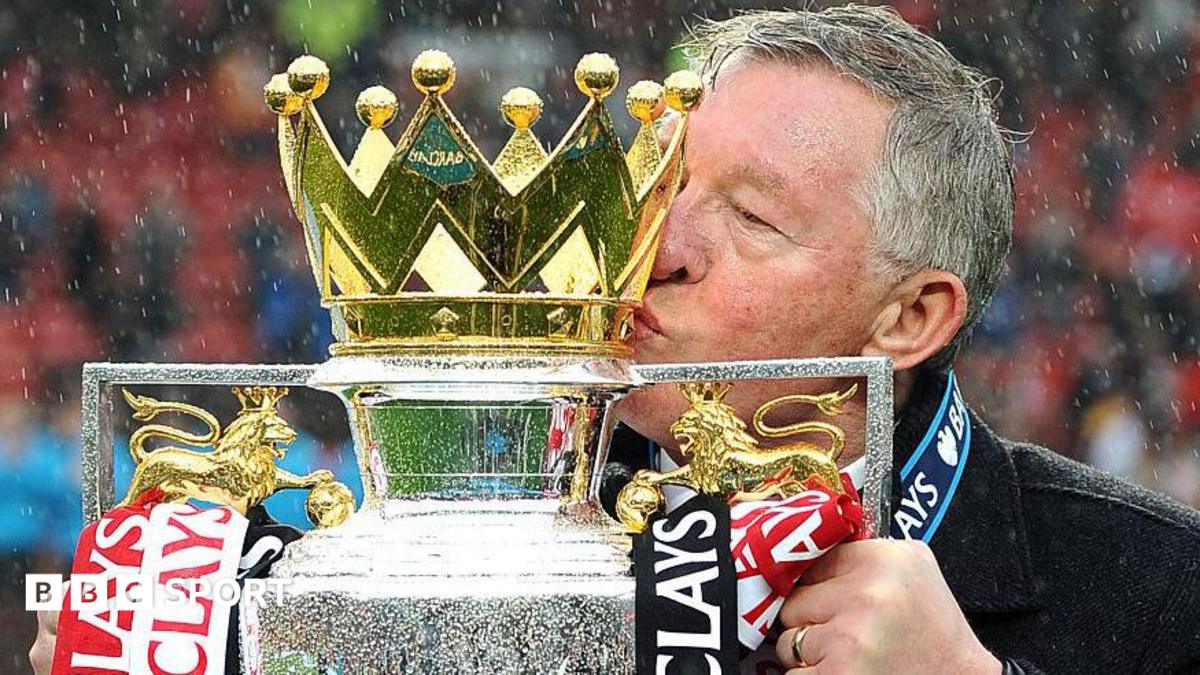
But how do his achievements at City compare with those of other great managers to have worked in England down the years, such as Alex Ferguson, Bob Paisley and Brian Clough?

Recommended Stories

list of 4 itemsend of list

The numbers and records nearly speak for themselves.

Pep and the Premier League

Guardiola always valued the domestic league higher than any other competition and he established an era of record-breaking dominance, leading City to six titles in his 10 seasons (60 percent) — including the unprecedented feat of four in a row (2021-24). Those six titles came in a seven-year span. He finished outside the top two on just two occasions.

As an overall percentage, only Paisley (66.67 percent) has a better title-winning record of modern-day managers. In his nine years at Liverpool (1974-83), he won the English league six times and was only outside the top two once.

Ferguson won the league title 13 times in 26 full seasons at United (1986-2013) but started out at a lower base, with the club being near the bottom of the standings and without a championship in 19 years when he took over. From the year of Ferguson’s first league crown (1993) to when he retired, United’s title-winning percentage was 61.9 percent – slightly higher than Guardiola’s but lower than Paisley’s.

Pep and the Champions League

For a club of City’s Abu Dhabi-fuelled resources, its record in the Champions League under Guardiola has been underwhelming — and he acknowledges that.

One title (2023), one more final (losing to Chelsea in 2021) and just one other semifinal appearance (2022) is a disappointing return for a team widely regarded as one of the best in Europe for most of his reign. Guardiola can, of course, point to two more Champions League titles in his four-year stint at Barcelona.

Ferguson won the Champions League twice with United, though even that was also regarded as a below-par return considering the team’s domestic dominance.

Of British managers, Clough and Paisley hold the most enviable records. Clough won the European Cup with Nottingham Forest in back-to-back years (1979 and 1980) — a remarkable feat at a provincial club — while Paisley won the competition three times (1977, 1978 and 1981) in five years.

Pep’s total trophy trail

Guardiola has won 17 major trophies in his decade at City, putting him only behind Ferguson in English football’s all-time list.

Ferguson captured 28 trophies, but had 16 years longer in the job than Guardiola.

Next comes Paisley, with 14 major trophies, followed by former Arsenal manager Arsene Wenger (10, of which a record seven were FA Cups), Clough (nine, across his spells at Derby and Forest) and former Man United manager Matt Busby (eight).

Pep’s points totals

Under Guardiola, City racked up two of the top three points totals in English top-flight history — 100 in the 2017-18 season (Guardiola’s second in charge) and 98 in the 2018-19 season. In that seven-season span from 2018-2024, City set new standards in consistent excellence by collecting more than 90 points in four league campaigns — helped by having a top-class rival in Liverpool pushing it all the way.

That Liverpool team under Jurgen Klopp picked up 99 points in 2019-20, when breaking up City’s run of titles, and 97 points in 2018-19 when taking City to the final game of the season.

In the era when it was two points for a win (before 1981), Liverpool held the record for most points in a season with 68 in 1978-79. That equates to 98 points if there had been three points for a win, but Liverpool played 42 games instead of the current 38-game campaign.

Also notable was Chelsea’s haul of 95 points in 2004-05, the first season of Jose Mourinho’s first spell there. That was a record at the time.

Pep’s records – and a first

Guardiola has never been shy to highlight the records he has set at City – and there have been many.

The only team in the nearly 140-year history of English football to win four top-flight league titles in a row. The first team to win 100 points in a top-flight season (2017-18). The most goals – 106 – scored in a single Premier League campaign (also 2017-18). The first team to win the domestic treble of the league, FA Cup and League Cup in the same season (2018-19).

Guardiola also emulated Ferguson in both winning the Premier League-FA Cup-Champions League treble (United in 1999, City in 2023) and wrapping up a Premier League title with five games still to play (United in 2001, City in 2018) — a record until it was broken by Liverpool in 2020 (seven games to play).

Something Guardiola never managed, however, was Wenger’s greatest feat of going an entire league season unbeaten (with Arsenal in 2004).

Source link

Scottish Gossip: Rohl, Maeda, McKenna, Ferguson, Conway, Lazetic, Clark, Ashia

Rangers’ Danny Rohl is among several names on Bayer Leverkusen’s shortlist for a new head coach, but Bild suggests that Crystal Palace’s Oliver Glasner is the top choice and Girona’s Michel is also a candidate. (Bulinews), external

Danny Rohl is not at risk of being sacked by Rangers and is unlikely to leave for Wolfsburg considering their relegation from the Bundesliga, but Union Berlin, in particular, and Bayer Leverkusen could be more attractive propositions amid Europe-wide interest in the 37-year-old. (Sky Germany), external

Kieran McKenna is committed to managing Ipswich Town after their promotion to the Premier League and will snub any advances from Celtic, Crystal Palace or Fulham this summer. (Football Insider), external

Celtic, Fulham and Rangers have made initial enquiries about winger Cameron Ashia, while Burnley, Cardiff City, Hoffenheim, Ipswich Town, Sheffield United and Stuttgart have registered an interest in the 21-year-old who could be available for as little as £500,000 despite Huddersfield Town taking an option to extend his contract by a further year. (Daily Mail), external

Celtic forward Daizen Maeda has emerged as a target for a number of Premier League clubs as the 28-year-old edges towards a move away from Glasgow this summer. (Football Insider), external

Lech Poznan have made a cut-price £2m offer for Celtic winger Luis Palma after the 26-year-old’s loan spell with the Polish club. (The National), external

Shin Yamada is on his way back to Celtic from the 25-year-old striker’s loan spell with Preussen Munster as head coach Alois Schwartz plans a squad overhaul following their relegation to Germany’s third tier. (The Herald), external

Celtic passed on signing Lewis Ferguson before the Scotland midfielder was sold for £2.5m by Aberdeen to Bologna in 2022 because they felt he was not good enough at penalty kicks, according to the 26-year-old’s agent. (Glasgow Times), external

Source link