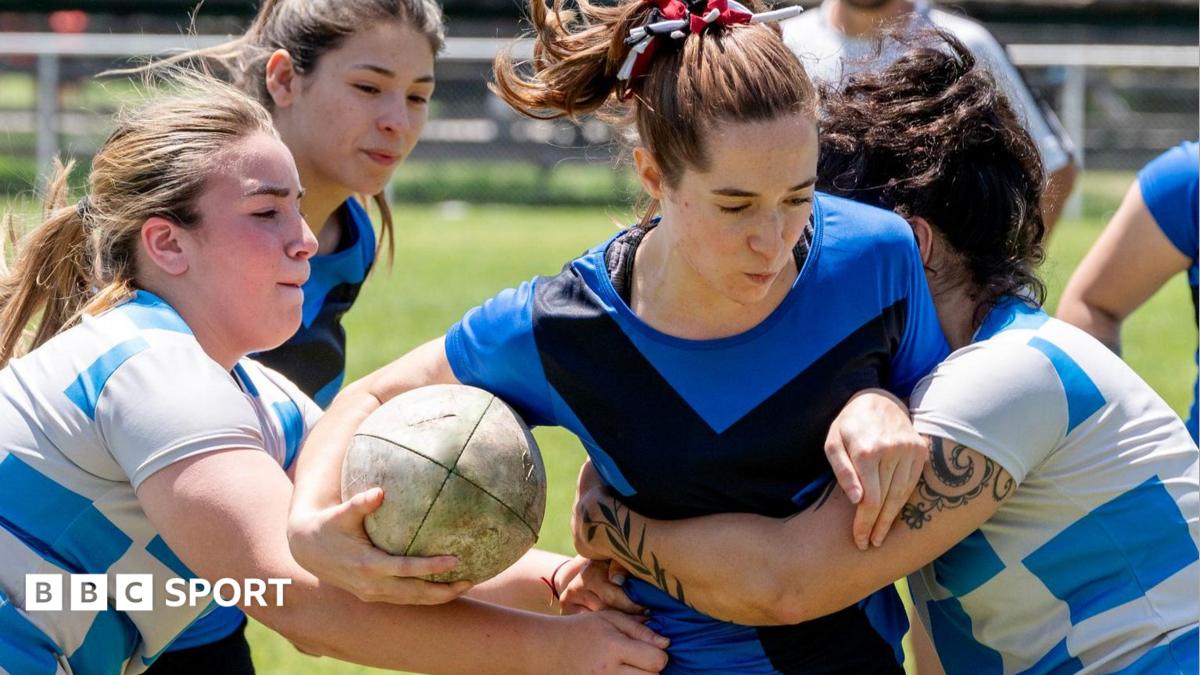
Concussion in rugby: Ex-players back first female-centred study
Former players have backed ground-breaking new research into the impact of concussion in women’s rugby.
Repeated blows to the head have been found to affect women differently to men, with female athletes more susceptible to concussion and reporting longer recovery times.
Symptoms can also vary, with men more likely to experience amnesia, while a proportionately greater number of women report prolonged headaches, mental fatigue and difficulty concentrating.
But despite the findings, rugby’s concussion guidelines are still largely based solely on the men’s game – something ex-internationals say needs to change.
Cardiff University’s medical engineering team is now aiming to create the first head impact assessment protocol designed specifically for female athletes.
The study followed 30 players from the university’s women’s rugby team, using specialised mouthguards, cognitive tests and MRI imaging.
Researchers hope to gather enough data by the end of the year to determine whether new guidelines can be set.
“The female brain is different from the male brain and women’s rugby is different from male rugby, so if we were only to use the same safety threshold as we do for men, that would seem inconsistent with the evidence that we understand so far,” said lead researcher Peter Theobald.