fee

Major UK airport to AXE free drop off with new fee starting this week

LONDON City Airport will introduce drop-off fees for the very first time.

In just a matter of days, the airport will charge those dropping off passengers at its airport.

London City Airport is adding a new drop-off feeCredit: Alamy
Drop-offs used to be free – but they now charge £8Credit: Alamy

London City Airport will introduce a drop-off charge of £8 from January 6, 2026.

On its website, the airport said: “The charge will be £8.00 for 0-5 minutes, then £1 per minute for any additional minutes, with a maximum stay of 10 minutes.”

Blue Badge holders are exempt, as are licensed black cab drivers.

London City is the last of the London airports to allow free drop-offs.

SHORE THING

‘It’s the best beach in England’ – Sun readers’ favourite Sussex seasides


LOOK OUT

Your fave North East seaside eats – from beach bars in boats to pirate chippies

The airport explained: “The charge will help London City meet its wider sustainability goals by reducing the number of vehicles travelling to and from the airport, supporting efforts to lower congestion, reduce emissions and improve air quality in the surrounding area.”

The hope is that the fee will encourage travellers to use public transport rather than arrive by car.

Currently, around 10 per cent of passengers arrive by car, with another 14 per cent using taxis.

Planes from London City Airport fly to over 30 destinations across Europe including Amsterdam, Spain and Greece.

London City is the most recent airport to announce its new drop-off charges, but other major airports are doing the same in 2026.

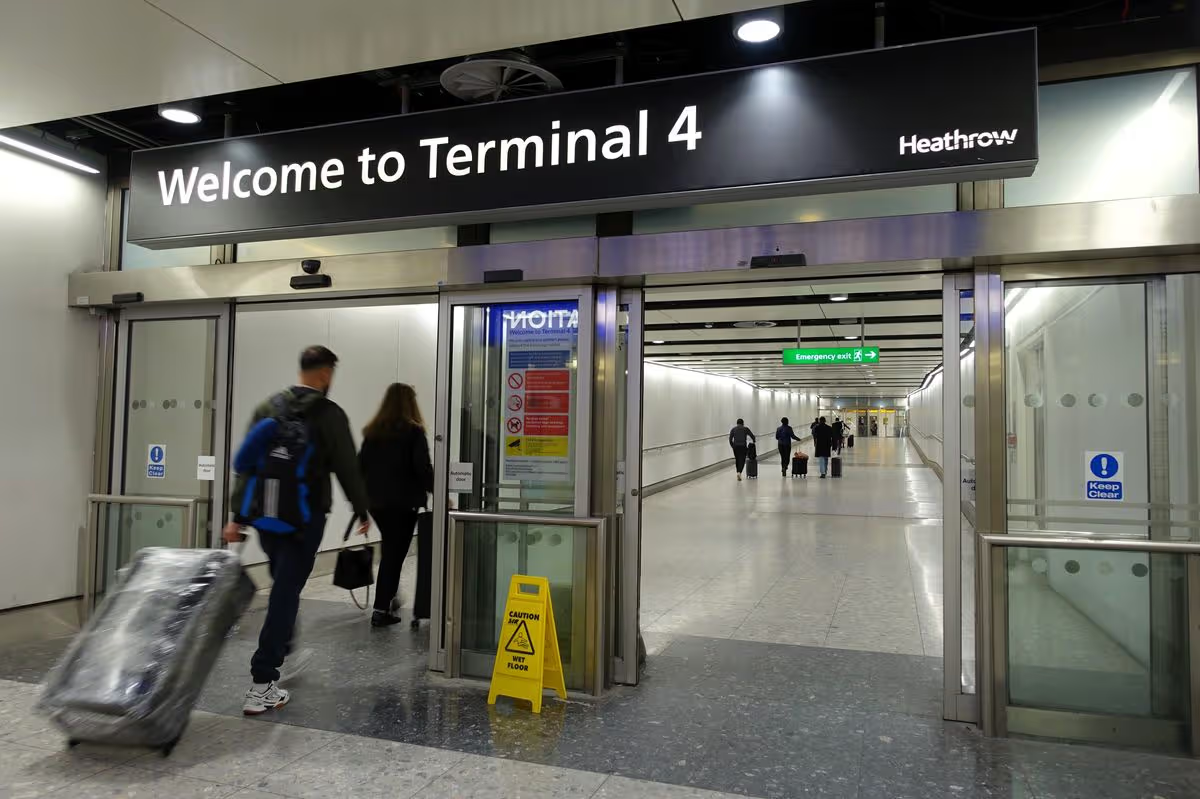
As of January 1, 2026, London Heathrow has increased its drop-off fee from £6 to £7.

London City will join other major UK airports in upping its drop-off feesCredit: Alamy

The last drop off increase at London Heathrow was in December 2024, from £5 to £6.

It is also introducing a strict 10-minute drop-off time, with drivers charged £80 if they go over the allocated time slot.

In just a matter of days, London Gatwick is also upping its drop-off fee.

From January 6, 2026, London Gatwick Airport will charge passengers being dropped off the new fee of £10.

Currently charging £7, the £3 increase (a 40 per cent jump) will apply to all drivers using the drop-off zone, excluding Blue Badge holders.

Major UK airport’s plans for millions more passengers ahead of £1.1bn expansion – with new flights to Europe this year.

My local airport was named the best in the UK – it beats London Heathrow and City by miles.

London City Airport has upped its fee from £0 to £8Credit: Alamy

Source link

Fury as one of the world’s most famous fountains to charge first ever tourist fee

AN iconic tourist attraction in Europe is set to introduce its first ever entry fee – but only for tourists.

The historic Trevi Fountain in Rome dates back to 1762, built to provide both water to citizens and to show off the Catholic Church’s wealth.

Rome’s Trevi Fountain could soon charge touristsCredit: Getty
The famous fountain welcomes millions of people a yearCredit: Getty

But new plans could see it charge tourists to visit from next year.

The fountain – while always drawing large crowds – has always been open to the public.

Around 5.3million tourists visited the fountain in the first half of 2025.

Proposed plans will enforce a €2 (£1.76) entry for holidaymakers, with a separate entrance from citizens

BOOK IT

Everything you can do at one of London’s most top attractions before it closes


KID ABOUT

Cornwall’s best family attractions from open-top bus journeys to adventure parks

Locals will not have to pay a fee to visit it.

It is suggested the rules could be going ahead as soon as January 7.

However, Rome‘s city council said they were considering the new fee but that there was no confirmation it would be going ahead next month.

The new rule has divided people with some backing it in the hopes to reduce crowds.

One person said on social media: “Good idea. I tried walking through the area last November and could barely move, so many people.”

However, most said it would “ruin the charm” of the fountain.

Others said: “Nothing like taking away from the beautiful view of the fountain.”

Another agreed: “More companies making money!”

A third said: “How does one completely ruin and destroy the beauty of historical Italian architecture and monuments? Stick an ugly turnstile entrance and barriers in front of it.”

Most people visit it to throw a coin in, with legend saying one coin to return to Rome, two for love and three for marriage.

All of the coins are donated to a local charity, with thousands taken every years.

And it isn’t the only place introducing fees does tourists.

The famous courtyard and balcony of Romeo and Juliet in Verona is introducing strict new fees.

Tourists will have to pay €12 (£10.54) to enter – previously free – and only be allowed to visit the balcony for 60 seconds.

The museum will reduce capacity to just 100 visitors at a time.

And Venice charges day trippers to visit the famous city – here’s how much.

Rumours say it could start charging from January 7Credit: Getty

Source link

BBC TV licence fee could be replaced by ‘sliding scale’ under Government review

Here’s what you need to know about potential changes to the BBC TV Licence

An annual fee in the UK could be replaced by “sliding scale” payment rates going forward. The BBC TV Licence could be due for some major changes.

The UK Government will examine reforms to the TV licence fee and explore additional commercial revenue streams for the BBC as part of proposals set out in its Royal charter review. The BBC’s existing charter, which spans a decade, concludes in December 2027.

The yearly licence fee has endured extensive examination under the previous Conservative administration, remaining static at £159 for two years before rising in April 2024 and again in April 2025 to £174.50, aligned with inflation rates.

As reported by the Daily Record, Culture Secretary Lisa Nandy has previously indicated she might be receptive to substituting the fixed licence fee with a graduated payment system. A fresh public consultation regarding these reforms has been initiated alongside the Green Paper and remains accessible until March 10, 2026.

The charter establishes the BBC’s public mission and serves as the constitutional foundation for the corporation, which is primarily financed through the licence fee, collected from UK households that watch television.

The Green Paper, outlining prospective BBC reforms was released on Tuesday and “consults on a wide range of options being considered for the future of the BBC”.

The Department for Culture, Media and Sport (DCMS) stated the UK Government will examine whether licence-fee reductions require updating, possibilities for the BBC to create additional commercial income, and funding alternatives for the World Service to ensure sustainable financing for minority-language broadcasting. Lisa Nandy expressed: “We want the BBC to continue to enrich people’s lives, tell Britain’s story and showcase our values and culture at home and overseas, long into the future.

“My aims for the charter review are clear. The BBC must remain fiercely independent, accountable and be able to command public trust. It must reflect the whole of the UK, remain an engine for economic growth and be funded in a way that is sustainable and fair for audiences.

“As a Government, we will ensure that this charter review is the catalyst that helps the BBC adapt to a rapidly changing media landscape and secures its role at the heart of national life.”

Options in the Green Paper the government is considering and seeking views on in this area include:

  • Strengthening the BBC’s independence so the public continues to have trust in the organisation and its programmes and content, including considering the government’s role in board appointments
  • Updating the BBC’s Mission and Public Purposes to give accuracy equal importance alongside impartiality and improving transparency of editorial decision-making to ensure the BBC explains journalistic processes and how its coverage evolves, especially during high profile events
  • Giving the BBC new responsibilities to counter mis/disinformation, potentially alongside additional requirements on media literacy to help the public navigate technological change and develop digital skills, including around AI
  • Introducing specific duties around workplace conduct to ensure BBC staff are protected and the organisation sets the standard for the rest of the sector to follow – including new responsibilities for the BBC Board to ensure action is taken against workplace misconduct

The DCMS said: “A BBC that is sustainably funded for decades to come to support its vital public service role.”

Options the UK Government is considering and seeking views on in this area include:

  • Reform of the licence fee, whether licence fee concessions should be updated, and options for the BBC to generate more commercial revenue
  • Options for funding the World Service and supporting sustainable funding for minority language broadcasting, including S4C
  • Options the government is considering and seeking views on in this area include:
  • Placing a new obligation on the BBC to drive economic growth, build skills and support the creative economy across the UK
  • Ways in which the BBC can further support the production sector across the nations and regions, including by ensuring budgets and decision-making power for commissioners are spread across the UK, and by supporting minority language broadcasting
  • Empowering the BBC to be an ethical and economic leader in adapting to new digital technologies, and enabling it to invest in Research and Development to support growth and drive public service benefits
  • Encouraging the BBC to deliver more through collaborations and partnerships for growth and public value outcomes, including with organisations across the creative economy, and with local news outlets

Public consultation

People across the UK are being encouraged to give their views on the UK Government’s Green Paper public consultation and answer a set of questions.

Responses will be used to help inform policy changes which will be set out in a White Paper expected to be published in 2026.

You can view the consultation on GOV.UK.

Source link