fcc

FCC commissioner joins Disney’s free-speech fight

Walt Disney Co. has picked up a vocal ally in its fight against the Federal Communications Commission: one of the panel’s three commissioners.

FCC Commissioner Anna Gomez — the panel’s lone Democrat — took a rare step of sending a letter to Disney Chief Executive Officer Josh D’Amaro Monday to describe what she sees as a pressure campaign to weaken not just Disney’s ABC network — but all media outlets that provide critical coverage of President Trump.

“What Disney and ABC are facing is not a series of coincidental regulatory actions but a sustained, coordinated campaign of censorship and control, carried out through the weaponization of the FCC’s authority as a federal regulator,” Gomez wrote.

The FCC’s efforts were all about “pressuring a free and independent press and all media into submission,” Gomez wrote in the four-page missive to D’Amaro — Disney’s recently installed chief executive.

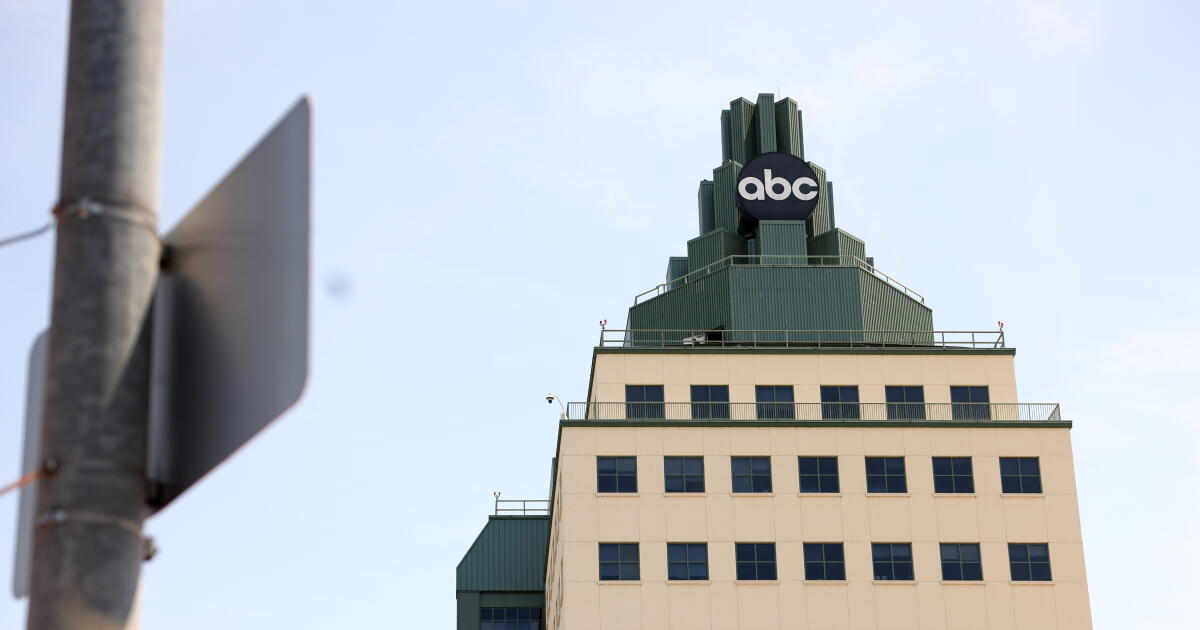
Her outreach comes after the FCC, in a highly unusual move, initiated an early review of the broadcast licenses for ABC stations that Disney owns, including KABC-TV Channel 7 in Los Angeles. Disney owns eight stations and its licenses were not set to expire for another two to five years.

The FCC also demanded that Disney’s Houston television station explain why the ABC daytime show, “The View,” should be entitled to an exemption from providing equal time rules for politicians whose opponent appears on a program.

Disney has said “The View” was granted an exemption — which is widely used among news programs — in 2002. Last Thursday, Disney sent a blistering letter to the FCC, challenging its inquiry on “The View.”

Gomez has been outspoken about the tactics of her colleague — FCC Chairman Brendan Carr, a Trump appointee — and the dangers she said that certain FCC actions represent to 1st Amendment freedoms. Monday’s letter escalated her criticism and gives Disney potent ammunition to use in its legal battle against the FCC.

Disney and the FCC did not immediately comment.

Gomez, a telecommunications attorney, listed four key events, which began when Disney decided to settle a defamation lawsuit brought by Trump one month after he was reelected for a second-term. Some free speech experts felt Disney had a chance to win that case, based on erroneous statements made by ABC News anchor George Stephanopoulos.

However, Disney agreed to pay $15 million in late 2024 to make the case go away.

“Whatever the legal calculations behind that decision, its effect was immediate and unmistakable,” Gomez wrote. “It told this administration that pressure works. It told every other company watching that capitulation was an option. And it opened the door to every action that has followed.”

Gomez said the administration’s goal has not been to bring challenges that the FCC would have to defend in court, but rather, to prompt TV networks to self-censor and tone down their news coverage as a way to avoid getting pulled into fights with the president and Carr.

“Most [FCC investigations] are destined never to be brought to any enforcement conclusion that could face judicial review,” Gomez wrote. “That is because the threat is the point.”

Source link

Bad Bunny Super Bowl complaints: FCC compalints over ‘disturbing’ show

Bad Bunny’s halftime show at this year’s Super Bowl was largely embraced as a milestone for Latin music and Puerto Rican culture on America’s most prominent pop-cultural stage.

Not everyone thought so, though.

The Federal Communications Commission has released a massive trove of viewer complaints against the musician, the show’s broadcast partner NBC, and the NFL.

Many of them expressed outrage at the supposed bawdiness of Bad Bunny’s Spanish-language lyrics and dancing on a broadcast watched by children.

“That was the most disgusting inappropriate show. I had to make all of my children go into the next room!” wrote one traumatized Las Vegas viewer. “The none use [sic] of inappropriate language should stand no matter what language it’s in. This is the most disturbing thing I’ve witnessed on live TV in a long time.”

“NFL halftime show showed 2 men in act of intercourse while behind a pickup truck door,” wrote one aghast Ohioan. “The ratings for NFL [sic] made it safe for my children to watch but they witnessed this and became disturbed.”

Another viewer from Charlotte, NC who, to their credit, seemed familiar with Bad Bunny’s catalog, wrote that they “take issue with the vocal performances of ‘Safaera,’ which is a track widely known for explicit sexual references and graphic lyrical content, and ‘Yo Perreo Sola,’ which had choreography featuring overtly sexualized movements, including widespread twerking, grinding, pelvic thrusts and other sexually suggestive conduct.”

Those viewers were likely not sated by the FCC’s February review of the performance, which found that the songs’ lyrics had been appropriately altered for the broadcast.

Rep. Randy Fine (R-FL) had called for the FCC to investigate the broadcast.”What Americans witnessed during the Super Bowl halftime show with Bad Bunny was despicable and never should be allowed to be shown on television again,” Fine told the New York Post.

Many of the viewer complaints mirror President Trump’s post-show social media criticism, calling the performance “one of the worst EVER!”

“Nobody understands a word this guy is saying, and the dancing is disgusting, especially for young children that are watching from throughout the U.S.A., and all over the World,” the president wrote at the time.

Just before the Super Bowl, Bad Bunny had won the Grammy for album with “Debí Tirar Más Fotos,” and joined a wave of artists speaking out against violent ICE raids in speeches at the ceremony. The superstar demurred on performing in the continental U.S. for similar fears, instead performing a lengthy Puerto Rican residency.

Source link

Disney’s ABC challenges FCC, escalating fight over free speech

Walt Disney Co.’s ABC is forcefully resisting Federal Communications Commission efforts to soften the network’s programming, accusing the federal agency of an overreach that violates 1st Amendment freedoms.

Last week, the FCC took the unusual step of calling in the licenses of eight Disney-owned television stations for early review. The move — widely interpreted as an effort to chill the network’s speech — came a day after President Trump demanded that ABC fire late-night talk show host Jimmy Kimmel over a joke about First Lady Melania Trump.

The FCC separately has taken aim at ABC’s daytime discussion show, “The View,” which delves deeply into politics.

The FCC has questioned whether the show, which prominently features Trump critics Whoopi Goldberg and Joy Behar, could continue toclaim an exemption to rules that require broadcasters to provide equal time for opponents of political candidates.

In its filing this week with the FCC, Disney’s Houston television station raised the stakes in the dispute over “The View,” calling the commission’s actions “unprecedented” and “beyond the Commission’s authority.” The ABC station’s petition for a declaratory ruling said “The View,” has long qualified as a “bona fide” news interview program with freedom to conduct interviews of legally qualified political candidates.

“The Commission’s actions threaten to upend decades of settled law and practice and chill critical protected speech, both with respect to The View and more broadly,” the Houston station KTRK-TV said in the filing.

The network’s firm stance sets up a clash with the Trump administration, including the president’s hand-picked FCC Chairman Brendan Carr, who has made no secret of his disdain for Kimmel and other ABC programming. Earlier this year, Carr announced that decades-old exemptions from the so-called “equal time rule” for news programs, including “The View,” were no longer valid.

ABC’s strenuous arguments mark a departure for the Disney-owned outlet.

In December 2024, a month after Trump was elected to a second term, the network quickly settled a lawsuit over statements made by news anchor George Stephanopoulos that Trump found offensive. ABC agreed to pay Trump $15 million to end his legal fight — sparking an outcry among free speech advocates, who accused the network of caving on a case it could have won.

“Some may dislike certain—or even most—of the viewpoints expressed on The View or similar shows,” the station said in its filing. “Such dislike, however, cannot justify using regulatory processes to restrict those views. The government does not get to decide ‘what shall be orthodox in politics, nationalism, religion, or other matters of opinion.’”

The station noted that, while the FCC has questioned the exemption for “The View,” which dates back to 2002, the FCC hasn’t showed interest in regulating programs on other networks, “including the many voices — conservative and liberal — on broadcast radio.”

“The danger is that the government will simply decide which perspectives to regulate and which to leave undisturbed,” ABC said.

On April 28, Carr called for a review of Disney’s broadcast licenses two years before any of them were set to expire, citing the agency’s year-old inquiry into Disney’s diversity, equity and inclusion policies and whether they violated federal anti-discrimination rules.

Source link

Kimmel vs. Trump’s FCC: What a license review means for ABC’s stations

Federal Communications Commission Chairman Brendan Carr has shown an ability to make a lot of noise at the government agency known in recent years to be a little sleepy.

But his April 28 announcement that the Walt Disney Co.’s eight ABC TV stations will undergo an early review of their broadcast licenses is his loudest action yet taken on behalf of President Trump, who repeatedly threatened media outlets that he believes are critical of him.

Carr is calling for the review two years before any of the station licenses are up, citing the agency’s inquiry into Disney’s diversity, equity and inclusion policies and whether they violated federal anti-discrimination rules.

The timing of Carr’s move is raising eyebrows as it comes after First Lady Melania Trump’s call for the firing of ABC late-night host Jimmy Kimmel over his April 23 comedy bit on the White House correspondents’ dinner. A tuxedo-clad Kimmel called Melania Trump “beautiful,” saying she had “the glow of an expectant widow.”

The first lady’s remarks came after a man armed with a shotgun, handgun and several knives breached security at the Washington black-tie event on April 25. The suspect, Cole Tomas Allen of Torrance, was arrested and faces three criminal charges, including attempting to assassinate the president.

Kimmel’s gag became ammunition for right-wing commentators, who claim the left is stoking political violence.

The host said the joke was about the age difference between the 79-year-old president and his wife. Kimmel denied it was a call for violence and has continued to mock the president on his show.

Carr insisted at a Washington news conference last week that his demand for a review is not related to Kimmel’s remarks.

Although many are skeptical, Carr, who was at the April 25 dinner, told The Times there would be an action related to ABC coming soon. The conversation occurred hours before the shots were fired.

The investigation into Disney’s practices began in March 2025, part of a broader effort by the Trump administration to reverse DEI initiatives across private companies, federal agencies, universities and other organizations.

After the 2020 police killing of George Floyd in Minneapolis, which spurred the Black Lives Matter movement, companies such as Disney and NBC-owned Comcast aggressively promoted their diversity efforts.

But experts believe Carr is acting on ABC at the behest of Trump, as the chairman has often expressed support on social media whenever the president criticizes one of the broadcast TV news outlets.

“It might be the case that Disney can get some early relief by saying this should be dismissed because this is really a 1st Amendment issue,” said James Speta, a professor at the Northwestern University School of Law. “We all know what’s going on here — the administration doesn’t like the speech that’s coming out of the talent on the broadcasting airwaves.”

Disney is not commenting on Carr’s DEI investigation, but it earlier defended the record of its TV stations, which are ratings leaders in most markets. “We are confident that record demonstrates our continued qualifications as licensees under the Communications Act and the First Amendment and are prepared to show that through the appropriate legal channels,” the company said.

Here’s a primer on what to know and the challenges Disney may face.

Why are TV stations licensed by the government?

Government licensing regulates the spectrum allocated to broadcast channels, largely to prevent interference between TV signals. When renewals come up, the license holder must demonstrate that the station is serving the public interest by providing local news, program diversity and educational and informational shows for children. The procedure once occurred every three years, but deregulation efforts have extended that period to the current span of eight years.

When was the last time a TV station faced a significant license renewal challenge?

The most notable recent example was Fox Corp.’s Philadelphia station WTXF, which was up for a license renewal in October 2023. Activist groups filing the challenge said Fox was unfit to own the outlet after a judge ruled earlier that year that the company’s Fox News Channel had spread falsehoods about voter fraud in the 2020 election.

Fox paid $787 million to settle a defamation lawsuit filed by Dominion Voting Systems that alleged the cable news channel damaged the company’s reputation.

Fox News, which operates on cable and satellite and is therefore not subject to FCC control, has a different management team than the parent company’s local TV stations, which mostly cover their communities and do not typically present political commentary. The FCC rejected the renewal challenge in January 2025, noting that none of the false information on Fox News was heard on the Philadelphia station. WTXF was not cited in Dominion’s lawsuit.

Are there any other examples?

Yes. Other White House administrations have threatened to pull TV station licenses in response to negative news coverage. At the height of the Watergate scandal in the 1970s, Richard Nixon’s allies unsuccessfully attempted to challenge the TV licenses of three stations then owned by the Washington Post.

Has a company ever lost its broadcast license?

RKO General, a unit of the General Tire and Rubber Co., was the last company to lose broadcast TV station licenses in 1987, including Los Angeles outlet KHJ. The case was related to corporate malfeasance and not broadcast content on the stations.

The process to revoke the RKO licenses took seven years from the moment the FCC voted in favor of the move.

But isn’t this case different?

Yes. Although the rule Carr mentioned is legitimate, the FCC has rarely if ever acted on it, according to one veteran TV executive who was not authorized to speak publicly on the matter. If Disney or any other company was found to violate the nondiscrimination rule, they would in previous eras probably be subjected to a just a fine, not the denial of a license, which would be viewed by many as government censorship.

What happens in the event that ABC licenses are not renewed?

Nothing immediately, as the licenses are in effect through 2028 to 2032, depending on the outlet. If Disney had to sell the stations, the price would probably be depressed due to pressure to unload the properties.

But public communications attorney Andrew Jay Schwartzman told The Times last month that the bar for denying a renewal is high and any effort would be tied up in court on constitutional grounds.

“The law intentionally sets out a very steep burden for the FCC to deny a license renewal; the process takes many years, during which time the licensee continues to operate normally under ‘continuing operating authority,’” Schwartzman said.

Source link

With Kimmel under fire, FCC moves to review ABC’s TV station licenses

The Federal Communications Commission is considering an early review of the Walt Disney Co.’s broadcast TV licenses amid criticism of ABC late-night host Jimmy Kimmel’s provocative jokes ahead of the White House Correspondents’ Assn. dinner.

The order could come as soon as Tuesday, according to Semafor, which first reported that the review is expected. The licenses for ABC’s stations — which include KABC in Los Angeles — were not scheduled for renewal until 2028.

Disney has not commented on the possibility of a review.

The move was likely in the works before the latest kerfuffle over Kimmel, who is under fire for a comedic bit that satirized the annual Washington gala that Trump attended for the first time. FCC Chairman Brendan Carr, who has targeted the political content on the ABC daytime talk show “The View,” told The Times on Saturday that an action related to ABC programming was coming this week.

Carr has suggested “The View” should not be exempt from the FCC’s equal time rule that requires broadcasters to bring on a politician’s rival to provide balanced coverage and multiple viewpoints.

Carr, who was at the Saturday dinner, made the remark just hours before the event was shut down after a Torrance man breached security at the Washington Hilton while armed with a shotgun, handgun and several knives. The suspect, Cole Tomas Allen, was arrested and faces three criminal charges, including attempting to assassinate President Trump.

Right-wing commentators have gone into heavy rotation with the claim that a routine by Kimmel inspired Allen to act.

During the bit that aired Thursday, a tuxedo-clad Kimmel called First Lady Melania Trump “beautiful,” saying she had “the glow of an expectant widow.” The comic explained Monday that the gag was a reference to the age difference between Trump and his wife.

“It was a very light roast joke about the fact that he’s almost 80 and she’s younger than I am,” Kimmel said. “It was not, by any stretch of the definition, a call to assassination. And they know that.”

Since becoming FCC chairman last year, Carr has repeatedly threatened to use the levers of power he has to punish TV and radio stations that irritate Trump. His behavior has alarmed free speech advocates, including the FCC’s lone Democratic appointee Anna Gomez, who noted that early station renewal reviews are exceedingly rare and largely futile.

“This is unprecedented, unlawful, and going nowhere,” Gomez said in a statement. “It is a political stunt and it won’t stick. Companies should challenge it head-on. The 1st Amendment is on their side.”

Other White House administrations have threatened to pull TV station licenses in response to negative news coverage. At the height of the Watergate scandal in the 1970s, Richard Nixon’s allies unsuccessfully attempted to challenge the TV licenses for three stations owned at the time by the Washington Post.

RKO General, a unit of the General Tire and Rubber Co., was the last company to lose broadcast TV station licenses in 1987, including Los Angeles outlet KHJ. The case was related to corporate malfeasance and not broadcast content on the stations.

The process to revoke the RKO licenses took seven years from the moment the FCC voted in favor of the move.

Source link